
Business
Walker & Dunlop, Inc. (WD) Discusses Whether America Faces a Housing Shortage Transcript


Willy Walker
Chairman, President & CEO
Good afternoon, and welcome to another Walker Webcast. It’s my great pleasure to have my friend, my colleague, the exceptional analyst, Ivy Zelman join me today. Hi, Ivy.
Ivy Zelman
Executive Vice President
Hi. Love it, thank you. Nice to be here again.
Willy Walker
Chairman, President & CEO
It’s great to have you. Since I have you alone today, usually when we have Chris Mikkelsen and Aaron Appel joining us, I kind of dive right into the questions. And since I have you a loan today, I’m going to do a full bio on you because it’s been a while since I’ve done that bio, and most people who listen to the Walker Webcast know you and know of your background, but I think it is worthwhile to run back through it today as we have a little bit more time of just a one-on-one conversation.
So Ivy bear with me as I embarrass you a little bit on how extraordinary this background is. So Ivy Zelman is one of the most influential housing analysts in the United States and is currently Executive Vice President and Co-Founder of Zelman, a Walker & Dunlop Company. She has spent more than 30 years analyzing housing, homebuilding, mortgage finance, building products, demographics and the broader residential real estate ecosystem. She began her career at Salomon Brothers in 1990, initially in investment banking before moving into equity research covering housing.
She joined Credit Suisse First Boston in 1998 when those firms were still Credit Suisse First Boston, where she became Managing Director and one of


Mexico stocks lower at close of trade; S&P/BMV IPC down 0.21%
Business
Google Down? Users Report Google Search, Gmail and YouTube Failures as DownDetector Flags a Labor Day Outage
NEW YORK — Users across the United States reported trouble reaching Google Search, Gmail, YouTube and related apps on Labor Day, even as Google’s own public status dashboards listed no companywide incident.
DownDetector, which tracks sudden jumps in user complaints, said reports of problems with Google rose above typical levels beginning at 11:07 a.m. Eastern time on Monday, Sept. 7. A companion alert for Gmail followed around 11:01 a.m. The site asked readers how the disruption was affecting them and attached the tag #GoogleDown. Those alerts do not by themselves prove a global collapse. They mark a statistically unusual wave of people saying the same services failed at the same time.
The Monday spike came after a longer stretch of complaints that began overnight Saturday into Sunday. The Houston Chronicle reported that excessive outage reports first appeared on DownDetector about 2 a.m. Sunday, Sept. 6, and that by about 9 a.m. the volume was running about 10 times higher than normal. Readers described search pages that would not load, Gmail that would not open in a browser or an app, YouTube thumbnails that stayed blank, YouTube TV streams that buffered or looked “glitchy,” and at least one report that Google Pay would not work on a phone. By 10:30 a.m. Sunday, the Chronicle said google.com was returning some search results again, though image search still lagged.
Independent uptime checkers painted a split picture. Down For Everyone Or Just Me later recorded a Google incident on Monday lasting about 56 minutes and said the problem had been resolved. Google Cloud’s public health page reported “no broad severe incidents.” The Google Workspace Status Dashboard and the Google Ads Status Dashboard both displayed “No incidents” in updates posted Monday afternoon Coordinated Universal Time. UptimeRobot said probes to google.com completed without error.
That gap — loud user reports, quiet official boards — is common in modern consumer outages. Google runs Search, Gmail, YouTube, Maps, Drive, Meet, Play and Android sign-in on overlapping systems. A failure in authentication, DNS, a regional cache or a mobile app backend can look like “Google is down” to a household while enterprise dashboards that watch Workspace tenants stay green. It can also work the other way: a local internet provider, a congested cellular tower or a holiday travel-weekend routing snarl can generate the same flood of screenshots.
Comments posted on DownDetector from California overnight Monday were specific. One user in the Central San Joaquin Valley wrote that Google Maps would not load as of 3:20 a.m. Another in the same region said Gmail and YouTube would not load around 3 a.m. while “everything else is running fine.” A San Diego user on AT&T reported that the Gmail suite would not load, pages were slow and YouTube icons failed. Those posts describe symptoms. They are not a root-cause analysis.
Google had not, by late Monday in the United States, published a public incident note that named a cause for the Labor Day reports. The company has been more explicit in other recent disruptions. In June, after Gemini inside Workspace failed for hours, Google wrote that “the issue was triggered by a performance issue in our backend database which impacted the retrieval of Gemini App tools catalog.” Engineers said they eased the load on that database and that most users were restored. That explanation belongs to June, not to Sept. 7. It is useful only as a reminder that Google will sometimes describe a backend fault after the fact and that its consumer apps and Workspace tools can fail separately.
The practical effect of even a short Search or Gmail stall is outsized because those products sit in the middle of ordinary life. Labor Day travel depends on Maps. Holiday plans sit in Gmail threads and Calendar invites. Classroom work after a long weekend sits in Docs and Classroom. Small businesses that live on Google Business Profiles and Ads lose both visibility and a way to answer customers if sign-in hangs. YouTube is not a luxury add-on for many households; it is the default television.
None of that requires treating every DownDetector pulse as a historic blackout. The tracker itself says it flags an incident when reports rise well above the usual volume for that hour. A holiday Monday can produce more people poking at the same apps at the same time. It can also hide a real, uneven outage that official dashboards do not yet classify as an incident because it never crossed an internal severity line.
History supplies the scale. Google’s own products have gone dark in ways the company later confirmed: a software-update failure in August 2022 that hit Search, Maps, Drive and YouTube; a May 2026 Search disruption that returned 500 errors for users in multiple countries; YouTube playback failures that StatusGator logged as lasting many hours in early September even when YouTube did not immediately post an official acknowledgment. Those earlier events are documented. Monday’s event, as of this writing, is documented mainly as a user-report spike plus local news accounts of failed pages.
For people still seeing errors, the usual checks remain the ones support desks recite because they work. Try a different network. Try an incognito window. Clear the app cache or switch from the app to the mobile website. Check whether the problem follows a single internet provider. Look at Google’s Workspace and Cloud status pages rather than only social media. If Gmail webmail fails but IMAP in a desktop client still delivers mail, the fault may be in the web front end, not in the mailbox store.
If the company’s dashboards stay green and the complaint charts fall back to baseline, the episode will look, in the official record, like a brief, unexplained blip. If engineers later post an incident, the useful details will be the ones Google has given before: which product, which region, which subsystem, when mitigation started, when they declared the majority of users restored.
Until then the accurate sentence is narrower. On Labor Day 2026, enough people could not load Search, Gmail or YouTube that DownDetector raised an alert at 11:07 a.m. Eastern. Newspapers on the Gulf Coast had already described a similar wave the day before. Google’s public status pages did not match that noise with a named outage. The services most people treat as plumbing were, for some stretch of a holiday weekend, not behaving like plumbing.

S&P 500 Earnings: Expected 2027 EPS Growth Might Make For A Tougher Year
Business
AT&T Down? Users Report 5G Home Internet, Broadband And WiFi Issues Nationwide This Labor Day Reports Surge
AT&T customers began reporting widespread service problems Monday afternoon, with outage-tracking site Downdetector logging a surge in complaints starting around 3:16 p.m. EDT, adding to a series of intermittent reports that had already surfaced earlier in the holiday.
According to breakdowns of the reported issues, 39% of problems involved 5G home internet service, 29% involved broadband internet, and 25% involved WiFi connectivity, indicating the disruption was concentrated primarily in AT&T’s home internet offerings rather than its traditional wireless calling network.
Downdetector’s official account flagged the surge in a post shortly after the reports began, asking affected users how the disruption was impacting them and directing people to its live outage map for updates. The hashtag “AtTDown” began circulating on social media as users compared notes on the issue.
Monday’s complaints followed an earlier round of reports that had already surfaced overnight and into the morning. According to the Independent, user reports on Downdetector first began climbing around 3:20 a.m. Eastern time, with more than 600 total problem reports logged by the time coverage of the outage picked up later in the day.
Reported outage locations were concentrated in several states, with Texas, Louisiana and Kansas among the top affected areas, according to independent status-tracking service StatusGator. AT&T maintains a significant service presence across Texas, including in cities such as Princeton and Allen, offering both wireless and home internet service throughout the state.
Some user reports pointed to overlapping mobile connectivity problems alongside the home internet complaints. One complaint originating from Princeton, Texas, specifically described a phone entering SOS mode when not connected to WiFi, suggesting that at least some affected users were experiencing mobile network issues in addition to problems with their home internet service.
The confusion surrounding Monday’s outage was compounded by users struggling to pinpoint exactly which service was responsible for the disruptions they were experiencing. One user, posting on X under the handle @unX, described a broader pattern of connectivity failures across multiple platforms and devices.
“Not only do the physical devices not work in my house, but Gmail, YouTube, my Fire TVs and more are not working,” the user wrote. “Both YouTube and AT&T think this is a Texas problem, but I’m in California.”
That confusion reflects a recurring challenge with modern outage reporting, in which interconnected services relying on shared underlying infrastructure can make it difficult for individual users to determine which specific provider is actually responsible for a given disruption, particularly when multiple platforms appear to be affected simultaneously.
The timing of Monday’s outage carries some added context given recent severe weather in the region. AT&T had previously confirmed that its wireless network was operating normally across Louisiana and Texas following restoration work completed after Tropical Storm Edouard affected the area on Sept. 3, just days before Monday’s reported disruptions began.
As of the most recent checks, AT&T’s own public service-status information did not show a broad, officially acknowledged nationwide incident, even as third-party monitoring services offered mixed readings on the overall health of the network. StatusGator characterized AT&T as “currently operational” as of its most recent assessment, while still logging 79 user-submitted outage reports over the preceding 24-hour period, illustrating the gap that can sometimes exist between a company’s official status designation and the volume of user-reported problems being tracked independently.
AT&T has a documented history of significant network disruptions, including a major nationwide outage in February 2024 that left nearly 75,000 customers without service at its peak, according to tracking data from that incident. That earlier outage affected cities including Dallas, Houston, Chicago, Atlanta and Miami, and prompted AT&T to advise customers to rely on WiFi calling while the company worked to restore service. The 2024 incident also raised serious public safety concerns, with several cities, including San Francisco, urging residents to find alternative ways of reaching emergency services after reports emerged that some AT&T customers were unable to successfully place 911 calls during the disruption.
For customers experiencing connectivity issues, technology support resources generally recommend a series of standard troubleshooting steps before assuming a broader network-wide outage is responsible. These include checking for any planned maintenance notices in a customer’s specific area through the AT&T website or app, confirming that a local power outage is not affecting the modem or router, verifying that account status and billing are current, and restarting home networking equipment to rule out a simple device malfunction before concluding that the issue reflects a wider AT&T service disruption.
Given that Monday’s reported problems appeared concentrated specifically in home internet and WiFi services rather than traditional voice calling, the disruption’s practical impact on customers’ ability to make emergency calls appeared more limited than in AT&T’s more severe 2024 outage, though affected customers relying on 5G home internet or WiFi-dependent devices, including smart home equipment, streaming devices and WiFi-calling-enabled phones, reported meaningful disruptions to their day-to-day connectivity throughout the holiday.
AT&T has not issued a detailed public statement specifically addressing the cause of Monday’s reported outage as of the time of this report. Affected users were advised to continue monitoring both Downdetector’s live outage tracker and AT&T’s own official service-status tools for location-specific updates on restoration efforts, as the company worked to address the underlying issues contributing to the reported disruptions in 5G home internet, broadband and WiFi connectivity across the affected states.

Gilbert Cisneros of California’s 31st District Makes Series of Stock Trades
Operator
Good afternoon, and welcome to the Team Internet Group plc investor presentation. [Operator Instructions] Before we begin, I’d like to make the following poll. I’d like to hand you over to management team. Michael, good afternoon, sir.
Michael Riedl
Group CEO & Executive Director
Good afternoon, and good afternoon to everyone, and thank you for joining us today. My name is Michael Riedl, Group CEO of Team Internet Group. And with me is Billy Green, our Group CFO. Let me start with the headline of today’s presentation because it’s a simple one. These results contain no surprises. Everything you see today was set out earlier this year and delivered. And trust me when I say we would like no surprises to become a habit at Team Internet.
You can see the agenda on the screen, and it’s also the story of the company right now in 5 chapters. First, what we said and what we delivered, and we hold ourselves to our own words. Then the results by segment, followed by the balance sheet and financing. And I know this is where some of you have questions, and we’ll take them head on. Then we proceed to the strategic review and other sources of value. And finally, we look into the outlook. And then we will see enough time for your questions as many of you will have a few.
So let’s jump straight in what we said and what we delivered. This slide is a scorecard, and it’s deliberately the first thing we show to you. On the left, you see the commitments that we made publicly, each
Business
Glen ‘Big Baby’ Davis Names Ex-NBA Stars He Says Escaped Charges In Healthcare Fraud Scandal, Some Deny
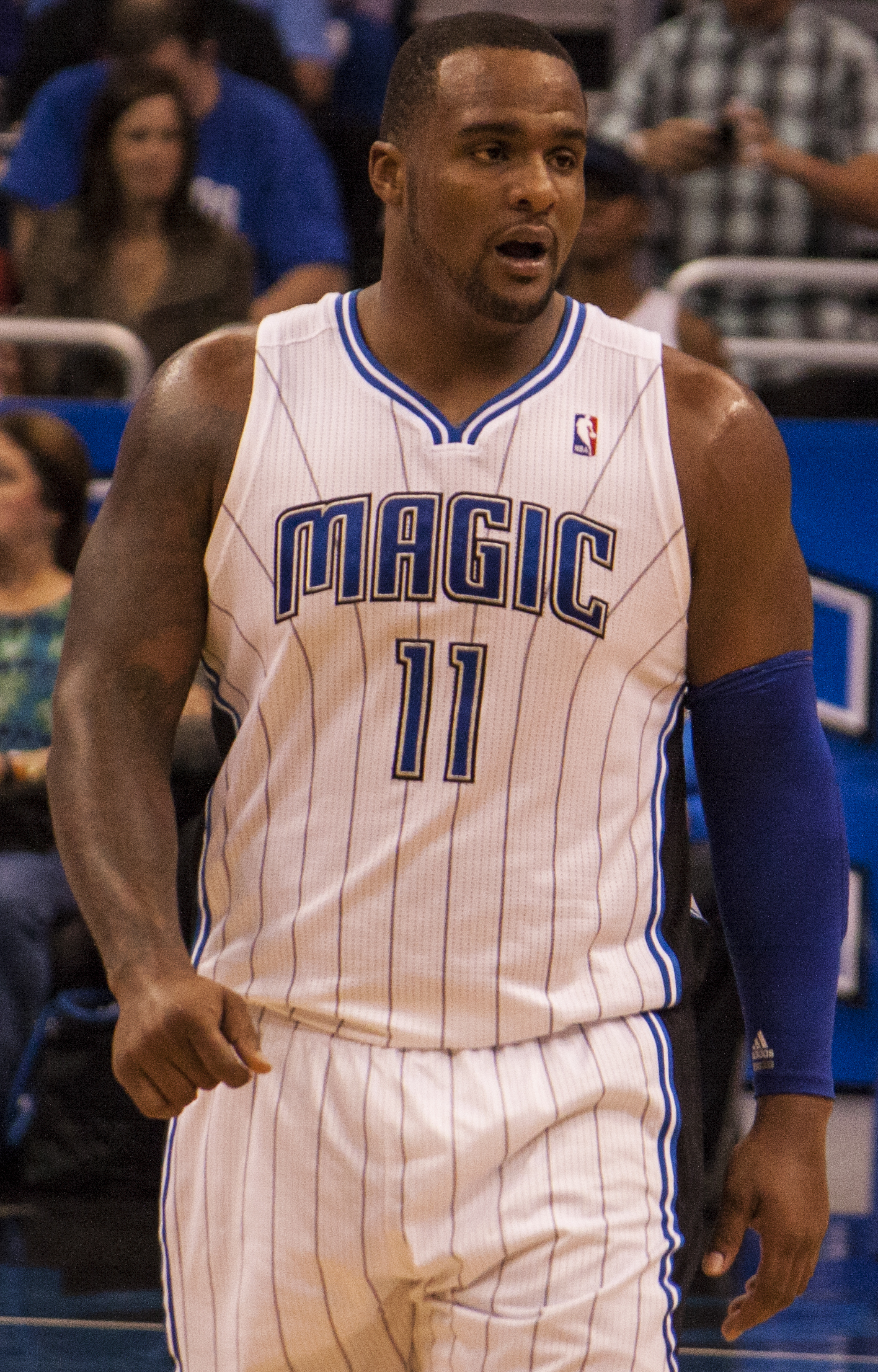
BOSTON — Former NBA forward Glen “Big Baby” Davis has publicly named several prominent former players he claims were investigated as part of the league’s multimillion-dollar healthcare fraud scandal but ultimately avoided prosecution, prompting swift denials from at least three of the individuals he identified.
Davis, who served 17 months in federal prison for his role in the fraud scheme before his release last March, made the claims during an appearance on the “Locked In with Ian Bick” podcast. Davis, now serving a three-year probation term following his release, insisted that federal prosecutors and the NBA selectively pursued charges against a small group of former players while others who engaged in similar conduct avoided legal consequences entirely.
“I think the Feds picked and chose who they wanted to be,” Davis said. “I think the NBA let the Feds pick who they wanted and choose to. Because if 180 people were investigated, subpoenaed, we didn’t hear about those people. We just heard about the 20, 22 people that got caught or that got jammed in a situation.”
Davis went on to name several former players he said had been investigated but never publicly charged, including some who have since built prominent media careers.
“Your favorite podcast, people you see on different podcasts,” Davis said. “Matt Barnes, Stephen Jackson; all those people were investigated. Gilbert Arenas, Corey Maggette, Cuttino Mobley; thousands of NBA players were investigated. They only sent some of them to jail. Some of them, the fed got, like, Tony Allen. He didn’t go to jail. Whatever he did to get free.”
Davis also suggested a broader conflict of interest existed between the healthcare fund and federal prosecutors handling the case, though he offered no documentation to support that specific claim.
“I just really think the healthcare company and the feds, they were working together,” Davis said. “The woman that works for the healthcare company was also the lawyer for the feds: the prosecutor, right? And so now the NBA is like, ‘Oh, s—, they got these guys, you know, doing this stuff. Like, we got to give them something.’ And they picked and chose who they wanted to give, right? You’re not going to get our ESPN analyst guy.”
The scheme Davis was convicted for centered on a scam masterminded by former 2009 first-round draft pick Terrence Williams, who recruited former players to submit false medical and dental claims to the NBA’s Health Fund in exchange for kickbacks tied to fabricated invoices for procedures that were never actually performed. In 2021, federal prosecutors charged 18 former NBA players, along with a doctor, a dentist and a chiropractor, with conspiring to defraud the fund of more than $4 million.
Of those 18 charged, only five ultimately went to prison. Davis received the second-longest sentence among those convicted, at 40 months, trailing only Williams’ 10-year term. Davis maintained his innocence throughout his case and chose to go to trial rather than plead guilty, a decision that ultimately resulted in his conviction and a sentence that also included $80,000 in restitution. Among the 18 defendants, only Davis and former guard Will Bynum chose to fight their cases in court rather than accept plea deals; both were convicted and sentenced to prison, while those who pleaded guilty generally received lighter sentences, including probation in several cases.
Notably, of the specific names Davis cited during his podcast appearance, only Tony Allen was among the 18 individuals actually charged in the case. Allen pleaded guilty and repaid the money prosecutors said he had improperly obtained from the fund, resulting in a sentence of probation rather than prison time. The other players Davis named, including Barnes, Jackson, Arenas, Maggette and Mobley, were not among the defendants formally charged in the case, and publicly available court records and Justice Department materials do not establish that they were investigated or implicated in the fraud scheme, according to a review of the public record.
Arenas responded directly to Davis’ claims in a video posted online, firmly denying any involvement in the scheme. Barnes and Jackson also pushed back on the allegations, though their responses came through comments posted on social media rather than standalone video statements.
Beyond addressing the specific allegations against him, Davis also reflected on the broader personal toll his conviction and imprisonment has taken on his life and public standing.
“You lose relationships that you’ve been building up for years. Your image is tainted. All the hard work you put in as a role model is now depleted,” Davis said. “You gotta start over, and you have to be a special person to start over, you know what I mean? To look that in the face and be like, oh OK, I’m going to move on and keep going. That’s hard to do.”
The NBA healthcare fraud case remains one of the more significant scandals to affect the league’s alumni community in recent years, given both the scale of the alleged fraud and the number of former players implicated. Davis’ latest comments add a new layer of controversy to the case, reigniting public discussion of the scandal nearly five years after the original charges were first announced, even as the specific claims he has made about additional, uncharged players remain unsupported by any publicly available evidence beyond his own personal account.
As of this report, none of the other players named by Davis beyond Arenas, Barnes and Jackson had issued public statements directly addressing his allegations. The Justice Department has not indicated any plans to reopen or expand its investigation into the healthcare fraud scheme in response to Davis’ recent comments.
Business
(VIDEO) Zheng Qinwen Erases Another 0-5 Deficit To Stun Iga Swiatek, Reach US Open Quarterfinals

NEW YORK — Zheng Qinwen produced a remarkable second consecutive comeback from a 0-5 deficit at the U.S. Open on Monday, storming back to defeat No. 8 seed Iga Swiatek 7-5, 6-3 on Arthur Ashe Stadium to become the first qualifier to reach the tournament’s quarterfinals since Emma Raducanu’s title run in 2021.
Zheng, of China and the 2024 Olympic gold medalist, quickly fell behind 5-0 against the 2022 U.S. Open champion, with Swiatek holding multiple set points at both 5-1 and 5-3. Rather than folding under the pressure, Zheng steadily found her range on return as Swiatek’s level dropped, ultimately winning seven consecutive games to claim the opening set before pulling away in the second.
Zheng saved break points on her second serve during the pivotal turning point of the match before launching a deep return and a backhand winner down the line to break Swiatek’s serve, a game that appeared to drain the remaining momentum from her opponent, who grew visibly frustrated as unforced errors mounted. Zheng ultimately sealed the straight-sets victory when Swiatek hit a ball into the net on match point.
Speaking after the win, Zheng reflected on the improbable pattern now defining her tournament, coming just two days after she rallied from an identical 5-0 deficit in the deciding third set to upset No. 22 seed Madison Keys.
“I guess to come back 0-5 yesterday is not lucky, that’s all I can say,” Zheng said.
Zheng entered Monday’s match having lost seven of her eight previous meetings with Swiatek, with her only prior victory coming two years earlier in the Olympic semifinals in Paris, when she came back from a 4-0 deficit in the second set to stop Swiatek’s 25-match winning streak at Roland Garros, the venue where the Polish star has won four French Open titles.
Monday’s win marked the seventh consecutive victory for Zheng in New York and pushed her into the U.S. Open quarterfinals for the third time in her career, following previous appearances at that stage in 2023 and 2024. Zheng has never advanced beyond the quarterfinal round at Flushing Meadows, meaning Monday’s win sets up a chance for her to reach new territory at the tournament if she can continue her run.
This year’s path to the milestone has been particularly demanding for Zheng, who underwent elbow surgery earlier in the year and was forced to work through the qualifying rounds just to reach the main draw at this year’s tournament. Her run to the final eight as a qualifier now places her among an exclusive group at the U.S. Open, with Raducanu remaining the most recent qualifier to advance that deep in the tournament, a run that culminated in Raducanu becoming the first qualifier to win a Grand Slam title in the Open era, which dates to 1968.
Zheng will next face the winner of a separate fourth-round matchup between two-time U.S. Open champion Naomi Osaka and No. 2 seed Elena Rybakina for a spot in the semifinals.
Monday’s night session at Flushing Meadows also featured a marquee all-American matchup between No. 4 seed Coco Gauff and No. 14 seed Iva Jovic, with the winner set to face French Open champion Mirra Andreeva, the tournament’s No. 5 seed, in the quarterfinals. Andreeva advanced earlier Monday with a comeback win of her own, defeating No. 24 seed Anastasia Potapova 5-7, 6-4, 6-3.
Swiatek’s exit continues a difficult stretch at the U.S. Open specifically for the six-time major champion, who has now suffered a notable upset at Flushing Meadows despite her status as a former champion at the tournament and one of the most dominant players in the sport over the past several years. Her loss to Zheng adds to a recent pattern in which the Polish star has shown occasional vulnerability against lower-ranked opponents capable of sustaining pressure over long, physically demanding matches, even as she remains one of the leading figures in the women’s game.
For Zheng, the back-to-back comebacks from identical 5-0 deficits have become a defining storyline of her tournament run, drawing significant attention from tennis analysts and fans given how rare it is for a player to overcome such a substantial early deficit even once at a Grand Slam event, let alone in consecutive matches. Her ability to maintain composure and steadily claw back into both contests, rather than allowing an early setback to spiral into a lopsided defeat, has been cited repeatedly by commentators covering the tournament as a marker of significant mental resilience under pressure.
Zheng’s continued success at the U.S. Open also carries broader significance for Chinese tennis, given her status as one of the sport’s most prominent rising stars from the country following her Olympic gold medal performance in 2024. Her run through this year’s draw as a qualifier, following surgery that had disrupted her earlier-season form, adds a notable comeback narrative to her broader career trajectory heading into the tournament’s final rounds.
With the quarterfinal matchup against either Osaka or Rybakina still to be determined, Zheng will look to build on the momentum from consecutive dramatic comebacks as she attempts to advance past the quarterfinal stage at the U.S. Open for the first time in her career. Her run has already reshaped the storylines heading into the tournament’s closing rounds, adding an unexpected and closely watched thread to a women’s draw that has also seen strong performances from Gauff, Andreeva and Jovic as the tournament moves into its final stretch at Flushing Meadows.
Business
Kylie Jenner Gives Tour Of $15M ‘Dream Home,’ Still Under Construction After Six Full Years In Hidden Hills
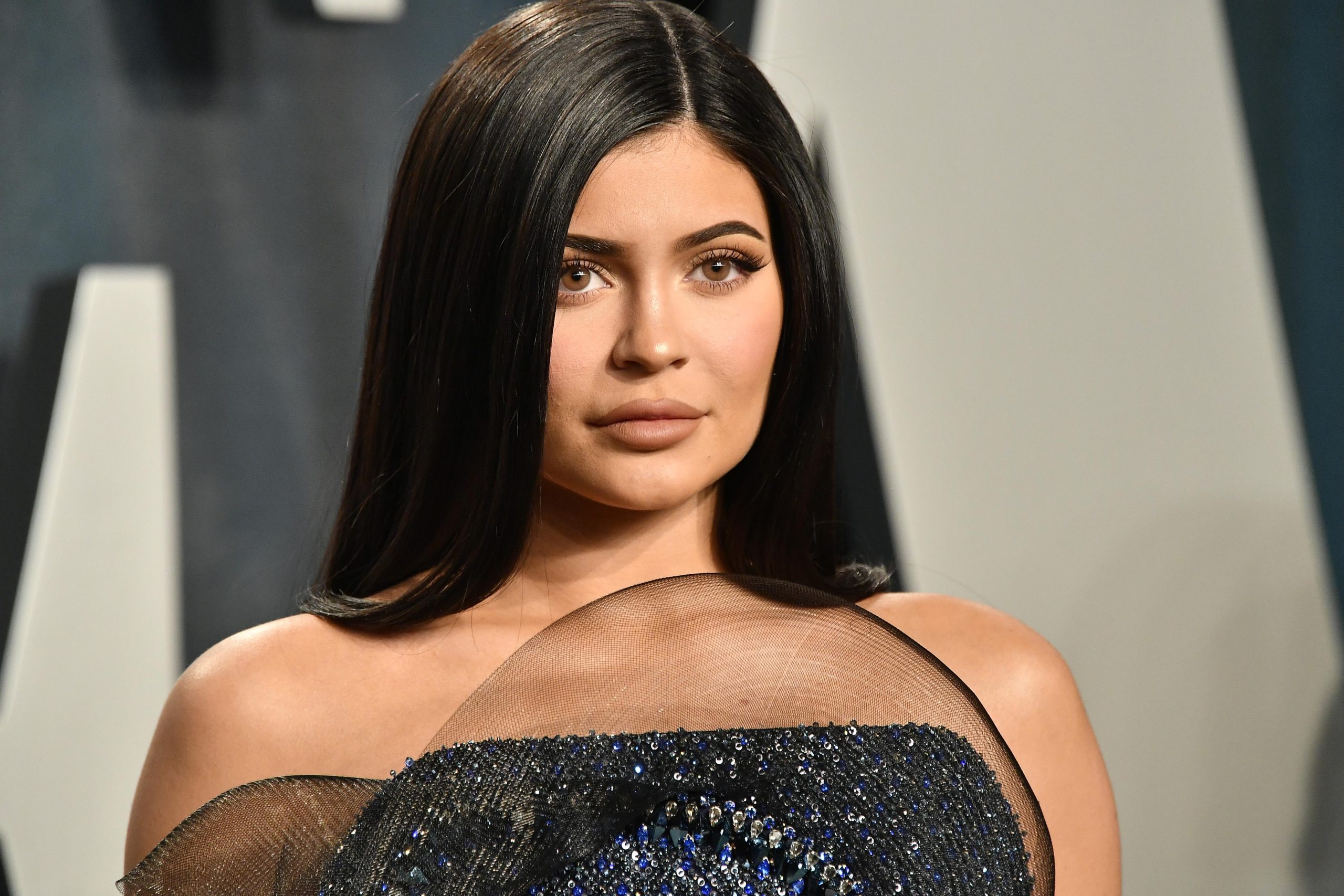
HIDDEN HILLS, Calif. — Kylie Jenner has revealed that her “dream home” remains under construction more than six years after she first purchased the property, giving fans a detailed video tour of the sprawling Hidden Hills, California, estate in a YouTube vlog posted Sunday.
The 29-year-old Kylie Cosmetics founder and “Kardashians” star bought the five-acre property for $15 million in 2020, according to reporting on the vlog. In the roughly six-minute clip, titled “building my dream house,” Jenner walked her 12.1 million YouTube subscribers through the current state of construction on what she described as her “beautiful dream Italian home.”
“I’m going to go to my construction site. I have been building a house for like six years. I bought the property in 2020,” Jenner told viewers at the start of the video. “I have to do some approvals and you’re coming with me. Let’s go.”
Jenner acknowledged that she had largely kept the ongoing project out of the public eye until now, despite widespread online speculation about the property’s progress.
“I really wasn’t going to post about it but it’s kind of all over the Internet anyway,” Jenner said.
The tour began with the property’s landscaping, which Jenner showed off in detail before heading inside the still-unfinished main house. According to accounts of the video, Jenner’s driveway is paved with reclaimed cobblestones and surrounded by lavender bushes and ancient olive trees, with the overall landscaping design intended to evoke a fairy-tale-like atmosphere. Jenner said she also plans to add a rose garden to the grounds, explaining that the addition would let her “be a princess.”
Some of the olive trees on the property carry personal significance for Jenner, having come from her sister Kendall Jenner’s own home renovation.
“My sister was doing some construction at one of her homes, Kendall, and she had to get rid of all of these baby olives, trees, so she was like: ‘Does anyone want them?’ And I said: ‘Absolutely,’” Jenner said. “Not only are they so beautiful, but it reminds me of my sister every time I look at them.”
Moving inside the still largely bare house, Jenner pointed out several completed architectural features, including multiple fireplaces, tiled guest bathrooms with marbled detailing, reclaimed wooden flooring, and newly installed kitchen units. She also detailed some of the design decisions still awaiting her final approval, including choosing a shade of white plaster for the walls in the home’s main living areas, signing off on the brickwork surrounding one of the fireplaces, and selecting a separate plaster shade for the guest bedrooms.
Jenner also outlined several planned features not yet built, including an indoor gym planned for the home’s basement level. Heading outside, she showed fans a fenced-in concrete patio where a “sports court” will eventually be installed, along with a planned outdoor dining area near a stone staircase.
“I’m doing outdoor dining,” Jenner explained in the video. “I have a fountain down here and a pizza oven. I wanted somewhere to go to throw dinner parties and birthdays.”
The property itself carries some notable history within the celebrity real estate world. The five-acre Hidden Hills plot was previously owned by singer and actress Miley Cyrus between 2015 and 2018, before Jenner acquired it in 2020 and began the extended construction process that continues today.
Closing out the video, Jenner expressed both excitement and lingering impatience over the project’s extended timeline, telling her audience she remains eager for the home to finally be finished.
“That is it for all the approvals today and all the newness,” Jenner said. “I’m so excited. I’ve been working on this for so long, and I’m just ready for it to be done. And to move in.”
Jenner, who has two children, currently owns several other properties across California, meaning the extended construction timeline on the Hidden Hills estate has not left her without housing options during the yearslong building process. Her Sunday vlog marked what she described as her first video upload in an extended period, drawing renewed attention to her YouTube channel alongside the broader interest in the property itself.
The extended construction timeline on high-end celebrity properties is not entirely unusual within the entertainment industry, particularly for large-scale custom builds involving extensive architectural detail, specialized materials such as reclaimed cobblestone and wood flooring, and the kind of design-by-design approval process Jenner documented throughout the tour. Even so, a six-year construction period for a single residential property remains notably long by most standards, and Jenner’s video appeared to directly address ongoing public curiosity and speculation about the project’s status that had circulated online in the years since she first purchased the land.
Jenner has a well-documented history of real estate activity throughout her career, having bought, renovated and sold multiple properties across Southern California since she first began investing in real estate as a teenager. Her current Hidden Hills project represents one of her more ambitious and extensively documented undertakings to date, given both the scale of the property and the level of customization reflected in the design choices she showcased during Sunday’s tour.
With the home still requiring additional construction work before it is move-in ready, Jenner did not provide fans with a specific timeline for when the estate might finally be completed. Given the project’s already lengthy six-year history, however, her latest update leaves open the possibility that additional months, or potentially longer, could pass before the reality star and beauty entrepreneur is able to move into the Italian-inspired residence she has spent years personally overseeing down to individual paint and plaster selections.

Gold head & shoulders at $4,452 in tight range: Live levels
Bitcoin Tests $82K Resistance as ETF Buying Strengthens

Nelly Korda, Charley Hull and bikes: 18 things to know about Solheim Cup

How To Watch The Legend Of Zelda 40th Anniversary Nintendo Direct





-

 Fashion3 days ago
Weekend Open Thread: Beyond Yoga
-
 Crypto World3 days ago
Bitcoin price stalls near $82K as key resistance holds
-

 Politics3 days ago
Best Gaming Laptops, CPUs, TVs, And Keyboards To Upgrade Your Set Up For GTA VI
-

 Tech3 days ago
The Birds Outside, Drawn For You Automatically
-

 Crypto World4 days ago
IMF Says El Salvador’s Post-Review Bitcoin Purchases Used No Public Funds
-
 Crypto World3 days ago
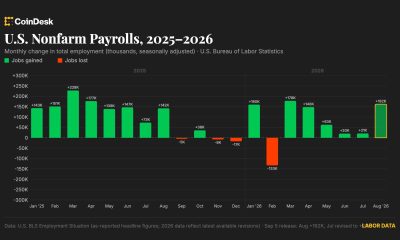
U.S. added stronger than expected 162,000 jobs in August as labor market bounced back
-

 Sports4 days ago
Alexandre Pato consortium’s Northampton Town investment approved
-

 Sports4 days ago
Commanders’ Chig Okonkwo is a top breakout fantasy football candidate
-
 Sports3 days ago
Golden Eaglets Drawn in Group B for 2026 WAFU B U17 Championship
-
 Crypto World3 days ago
XRP price breaks falling channel as bulls target $1.53
-

 Politics4 days ago
A new European chapter for Gibraltar
-
 Politics3 days ago
How To Avoid Winter Colds: 4 Everyday Habits That Spread Germs, Says Pharmacist
-
 Politics3 days ago
The House | Bin the lectures, bring gossip and be ready to banter: how the new PM should prepare for his Trump encounter
-

 Crypto World3 days ago
From warning to listing: UK’s largest retail investment platform opens access to crypto ETNs
-

 Crypto World3 days ago
FinCEN flags $12.7B tied to Southeast Asia crypto investment scams
-

 Tech3 days ago
A Worthy Android Ereader, With Some Tradeoffs
-
 Tech3 days ago
How To Edit Claude’s Memory
-

 Crypto World3 days ago
Trezor Data Breach Impacts 67,000 More US Customers
-

 Politics4 days ago
33 Cosy Autumn Home Decor Ideas: Blankets, Pumpkin Decorations, And Candles
-

 Tech3 days ago
beyerdynamic AVENTHO Y Debuts at IFA 2026 and Makes Wireless Headphones Less Disposable
You must be logged in to post a comment Login