Walmart Inc. (NYSE: WMT) shares traded modestly higher Thursday, closing around $126 on Feb. 26, 2026, as the retail giant stabilized following a mixed reaction to its fiscal fourth-quarter results and forward guidance.
AFP
The stock opened near $126.60, fluctuated between a low of approximately $125.40 and a high near $127.40 in recent sessions, with volume averaging 15-20 million shares. After dipping to $124.87 on Feb. 19 following earnings, shares rebounded modestly, reflecting investor digestion of strong holiday performance offset by tempered expectations for the year ahead. Walmart’s market capitalization remains above $1 trillion, solidifying its status as one of the world’s most valuable companies.
The latest momentum stems from Walmart’s Feb. 19 report for the quarter ended Jan. 31, 2026 — the holiday period. Revenue reached $190.7 billion, up 5.6% year-over-year and beating estimates of $190.4 billion to $190.43 billion. Adjusted earnings per share came in at $0.74, edging past the $0.73 consensus. Operating income grew 10.8%, outpacing sales, while global e-commerce surged 24%, fueled by store-fulfilled pickup, delivery and marketplace expansion.
Full-year fiscal 2026 figures showed revenue of $713.2 billion, up 4.7%, with adjusted operating income advancing faster than sales. Global advertising business grew 46% to nearly $6.4 billion, including contributions from VIZIO. Membership fee revenue rose 15.1%, and Walmart U.S. comparable sales increased 4.6% excluding fuel.
The company announced a new $30 billion share repurchase authorization in February, underscoring confidence in capital returns. It also raised its annual dividend 5% to $0.99 per share, maintaining a reliable yield around 0.8% and extending a 52-year streak of increases.
Advertisement
Guidance for fiscal 2027 tempered enthusiasm. Walmart projects net sales growth of 3.5% to 4.5% (constant currency), adjusted operating income up 6% to 8%, and adjusted EPS of $2.75 to $2.85. Analysts had modeled higher figures — around 4.8% sales growth and $2.96 to $2.98 EPS — leading to initial selling pressure. Shares fell about 1.4% on earnings day but recovered as some viewed the outlook as conservative or “sandbagged.”
Analysts largely maintain optimism. Consensus leans toward “Buy” or “Moderate Buy,” with recent upgrades including Tigress Financial raising its target to $150 from $135 on Feb. 25, citing strong Q4 momentum. Truist Securities lifted its target to $139 from $127, while Bernstein moved to $134 from $129, both reiterating positive ratings. Average 12-month targets cluster around $131 to $134, implying modest upside from current levels, though highs reach $150 and some conservative estimates sit lower.
Walmart’s edge over peers persists. The stock has outperformed major retailers like Costco (down year-to-date in some comparisons), Amazon and Target amid economic uncertainty. E-commerce acceleration, advertising growth and Sam’s Club strength provide diversification beyond traditional grocery and general merchandise.
Challenges include consumer caution, food inflation mitigation and pharmacy headwinds from legislation. Yet Walmart’s scale, supply chain investments and AI-driven personalization position it well. Executives highlighted digital momentum as a key driver, with e-commerce profitability improving.
Advertisement
The next earnings report arrives in May 2026 for the first quarter of fiscal 2027. Analysts project EPS around $0.63 to $0.65 on 3.5% to 4.5% sales growth. Focus will remain on holiday carryover, consumer spending trends and execution on automation, marketplace and advertising.
As Walmart navigates a competitive retail landscape, its defensive qualities — everyday essentials demand, dividend reliability and buyback program — appeal to investors seeking stability. While guidance disappointed some, the underlying business health and strategic investments suggest resilience ahead.
With shares near recent highs and trading at a premium valuation, Walmart continues to draw attention as a retail bellwether. Whether it sustains momentum depends on delivering on guidance and capitalizing on digital tailwinds in an evolving consumer environment.
An early agenda item for Tata Sons Pvt.’s six board directors when they convened at 11:30 a.m. on Tuesday at Bombay House the group’s storied headquarters was expected to be straightforward: approving a third term for Natarajan Chandrasekaran as chairman.
Within two hours, the conversation had veered off course. What had looked like a done deal, with Tata Trusts itself recommending the reappointment just months ago, quickly unraveled.
Noel Tata, the head of Tata Trusts, began pressing Chandra — as he’s widely known — with tough questions. Most critically, Noel sought assurances that the group’s holding company could avoid a public listing, people familiar with the matter said, asking not to be named as the discussions were private. Tata Trusts is a collective of 13 charities, which together control two-thirds of Tata Sons.
Noel also laid down several conditions: restraining debt levels, stemming losses — especially at Air India, and reaching a swift settlement with Tata Sons’ largest minority shareholder, the Shapoorji Pallonji Group, the people said. The SP Group, which owns about 18.4%, was locked in a corporate and legal battle with Tata Sons for years and is still looking to monetize a part of its stake.
Advertisement
While some of Noel’s demands were negotiable, discussions hit a wall when Chandra said he couldn’t guarantee a waiver from India’s banking regulator on the listing issue since that decision lay outside his control, the people added.
Live Events
ETMarkets.com
Tata Sons’ potential listing stems from a regulatory classification. In 2022, the Reserve Bank of India designated the company as an “upper-layer” non-banking financial institution — a category that requires firms to go public within three years to enhance transparency and governance. That meant a deadline of September 2025 for Tata Sons to list its shares. There has been no update from the RBI or Tata Sons on the state of play on this front. Despite the mandate, Tata Sons has made no immediate preparations for this share sale. Its leadership believes the regulator will extend the deadline, and after recent engagements with officials, expects formal communication from the RBI granting more time. Chandra has made clear that while he personally favors keeping Tata Sons private, he cannot offer an absolute guarantee. Should the RBI insist on a listing, compliance would take precedence over internal preferences, the people said, citing Chandra as having informed the directors. That uncertainty weighs heavily on the Shapoorji Pallonji Group. Any delay in an IPO effectively closes off a potential liquidity window for the debt-laden conglomerate, which has struggled with financial stress exacerbated by the pandemic. Its stake in Tata Sons remains illiquid, making a resolution critical to its debt-reduction plans.
While Chandra enjoys strong support from the Indian government — earned through execution of high-stakes national projects such as semiconductor fabrication and mobile manufacturing — Noel Tata draws strength from a different source: the deep-rooted confidence and blessings of the Parsi community whose members have controlled the Tata Group since its inception in 1868.
Appointed in 2017 to steady the ship after the ouster of Cyrus Mistry, Chandra has done more than just restore confidence. Under his leadership, revenue for the group’s 15 largest listed entities has nearly doubled while their profits have more than doubled.
His tenure is also defined by high-stakes ambition, from launching India’s first homegrown semiconductor plant to navigating TCS through the volatile rise of artificial intelligence to turning around the unprofitable carrier, Air India.
Advertisement
“Nothing changes,” Chandra said Tuesday, when asked about the immediate impact on Tata Group’s leadership, before his car pulled away.
Shurgard Self Storage Ltd (SSSAF) Q4 2025 Earnings Call February 26, 2026 4:00 AM EST
Company Participants
Caroline Thirifay – Director of Investor Relations Marc Oursin – CEO & Director Thomas Oversberg – Chief Financial Officer Isabel Neumann – Chief Investment & Operating Officer
Conference Call Participants
Advertisement
Jonathan William Coubrough – Deutsche Bank AG, Research Division Andres Toome – Green Street Advisors, LLC, Research Division Valerie Jacob Guezi – Bernstein Institutional Services LLC, Research Division Vincent Koppmair – Banque Degroof Petercam S.A., Research Division Aakanksha Anand – Citigroup Inc., Research Division Ana Taborga – Morgan Stanley, Research Division Roy Külter – ODDO BHF Corporate & Markets, Research Division
Presentation
Caroline Thirifay Director of Investor Relations
Advertisement
Good morning, everyone. Thank you for joining us today, both in person and virtually for the management presentation of our full year results 2025. I’m here with Marc Oursin, CEO; Thomas Oversberg, CFO; and Isabel Neumann, Chief Investment Officer and Chief Operating Officer.
Before we begin, we want to remind you that all statements other than statements of historical fact included in this management presentation are forward-looking statements. Forward-looking statements are subject to risks and uncertainties that could cause actual results to differ materially from those projected by the statements. These risks and other factors could adversely affect our business and future results that are described in our earnings release and in our publicly reported information.
With that, I will hand over to Marc.
Advertisement
Marc Oursin CEO & Director
Thank you, Caroline. Hello, good morning to all of you. Thank you for being here. So let’s start with this page, Page #2. So you can see that we have, at the end of ’25, close to 350 properties in Europe and reaching almost 1.8 million square meter of footage.
Regarding the performance of the year, we have delivered another very strong one. Our revenues grew
A version of this article first appeared in CNBC’s Inside Wealth newsletter with Robert Frank, a weekly guide to the high-net-worth investor and consumer. Sign up to receive future editions, straight to your inbox.
Advertisement
Private investment firms of the ultra-wealthy capped off 2025 with equity bets ranging from airline stocks to bitcoin ETFs, according to fourth-quarter securities filings analyzed by CNBC.
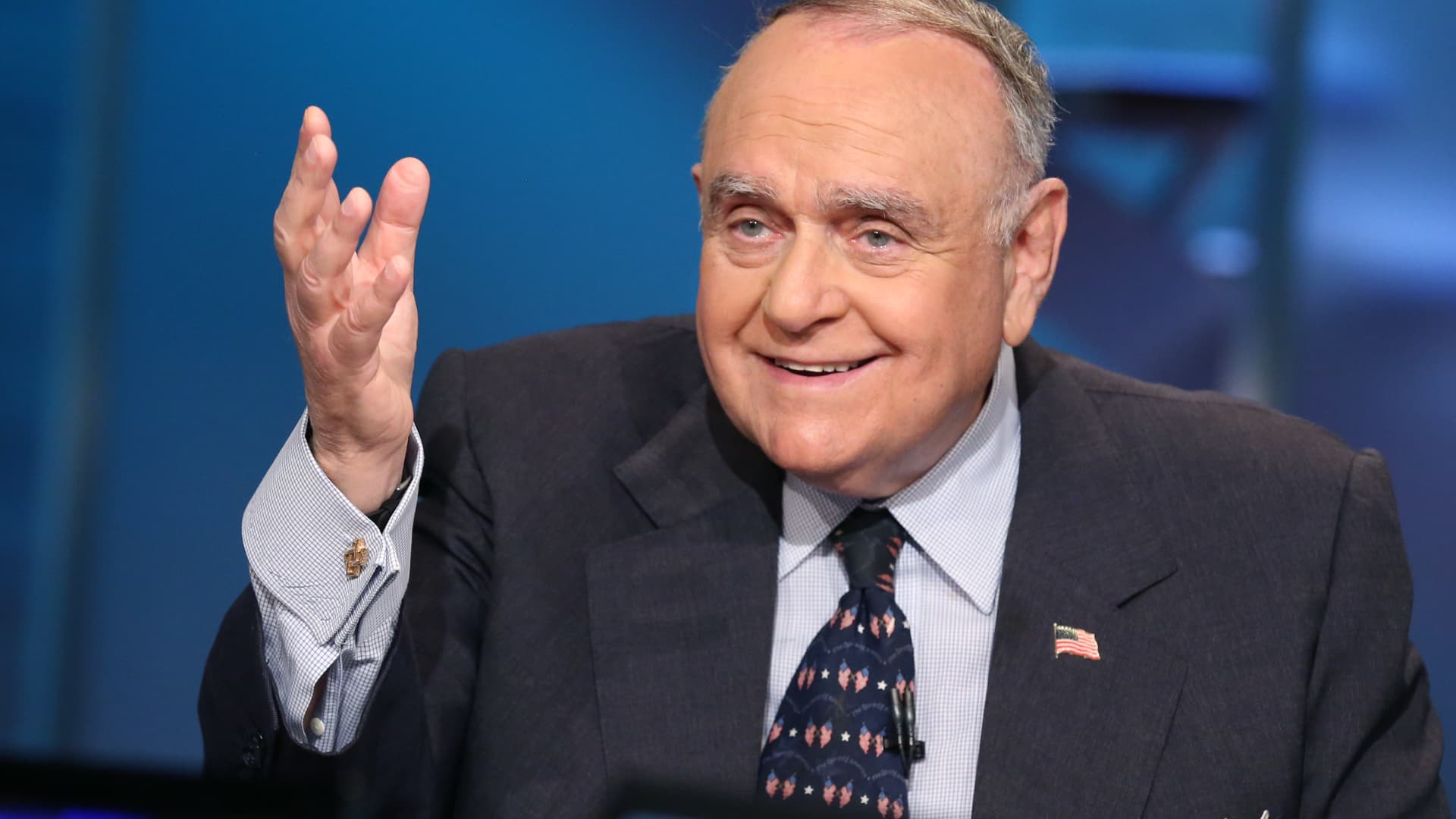
Some of the investments made headlines. Leon Cooperman’s family office, Omega Advisors, for example, attracted attention last week for disclosing that it had upped its stake in Manchester United last quarter. Omega Advisors’ shares of the publicly traded English soccer club are now worth $46.5 million, per InsiderScore.
(Manchester fans fearing a takeover by the hedge-fund billionaire can rest easy. Another filing disclosing Cooperman’s 5.2% stake in the club stated that his holding is a passive investment.)
While it generated less buzz, Omega Advisors’ biggest move last quarter was buying more than $375 million worth of shares in mortgage lender Rocket Companies. The new position is now the firm’s largest holding valued at nearly $407 million, per InsiderScore.
Advertisement
Some other moves by billionaire firms have already paid off. David Tepper’s family office Appaloosa tripled its position in Micron to $428.1 million, making it the firm’s top holding. Shares of Micron, which produces memory chips that power artificial intelligence data centers, have surged by roughly 50% since the start of 2026. During the same quarter, Stanley Druckenmiller’s Duquesne Family Office initiated a new position in fuel-cell company Bloom Energy, which is up more than 100% year to date.
Bets on cryptocurrency have been less fruitful thus far this year. WIT LLC, an investment vehicle for the Walton family’s namesake family office, made a $4 million allocation to iShares Bitcoin Trust ETF, which has sunk 21% year-to-date. The new position makes up less than 1% of WIT’s portfolio. Duty-free mogul Alan Parker’s Kemnay Advisory Services increased its shares of Coinbase by nearly 44% last quarter. Shares of Coinbase have sunk 18% since the beginning of the year.
Last quarter’s filings highlighted major investors’ diverging approaches on trading the Mag 7. Duquesne, for instance, upped its Amazon holdings by 69% to roughly $170 million and exited its Meta position. Meanwhile, Longbow SA, an investment firm of the billionaire Rausing family, downsized its positions in Amazon, Nvidia,Microsoft, Apple, Alphabet and Meta.
Ray Dalio, who has repeatedly warned of an AI bubble and a potential capital war for months, has taken a striking approach, according to the latest filing for Dalio’s Marino Management. The firm disclosed a $438.5 million position in SPDR Gold Trust that makes up nearly 90% of its portfolio.
Advertisement
“I think people make the mistake of thinking, ‘Is [gold] going to go up and down, and should I buy it?’” Dalio told CNBC in early February. “Instead … perhaps central banks or governments or sovereign wealth funds should say, ‘What percentage of my portfolio should I have in gold?’ [and] keep a certain percentage, because it’s a very effective diversifier to other poor parts of the portfolio.”
Dow Jones futures rose slightly early Thursday, along with S&P 500 futures. Nasdaq futures were little changed. Nvidia (NVDA) climbed slightly after the AI giant reported accelerating earnings growth and bullish guidance. FTAI Aviation (FTAI), Salesforce.com (CRM), Snowflake (SNOW) and Sterling Construction (STRL) were among the many notable other earnings reports. The stock market rally saw tech-led gains Wednesday heading into…
A version of this article first appeared in the CNBC Property Play newsletter with Diana Olick. Property Play covers new and evolving opportunities for the real estate investor, from individuals to venture capitalists, private equity funds, family offices, institutional investors and large public companies. Sign up to receive future editions, straight to your inbox. In a world where it’s difficult to develop new commercial real estate — from the costs of capital and materials to jurisdictional requirements, among other hurdles — one major developer is making a big bet that older is better. Bozzuto Group is partnering with Invesco in a $1 billion venture to buy existing multifamily assets on the East Coast. The focus is on properties that have lost significant value but can be renovated and repackaged to compete with newer, high-amenity buildings. The strategy is “to capitalize on recovering market fundamentals” by focusing on assets that have the capacity to gain value, said Greg Kraus, managing director and head of U.S. transactions at Invesco Real Estate, in a news release. The new fund launches against a backdrop of oversupply in the market. Multifamily saw a huge construction boom in the last five years, thanks to lower interest rates at the start of the pandemic and demographic drivers. Much of that supply is still making its way through the pipeline, now in a higher interest rate environment. Toby Bozzuto, CEO of Bozzuto Group, called the oversupply a “temporary phenomenon.” “Where supply is currently the problem, supply is also the solution in the future for affordability,” he told Property Play . “So it’s a very interesting dynamic, because what we’re doing now is absorbing the overhang of the units in the market. … The vacancy will dissipate over ’26 and, in worst cases, early ’27, but there’s nothing behind it.” Purchasing older buildings today can be done at prices below the cost to build from the ground up, which Bozzuto traditionally and still does. Existing buildings are often priced at 10% to 20% below replacement costs. “Secondly, there’s speed to market. If you buy a building, you’re not going through the regulatory morass that, candidly, has exacerbated some of this problem, the supply problem,” Bozzuto said. Most experts anticipate the current oversupply situation to reverse itself in just a few years, given demographic demand and the simple fact that the for-sale housing market is so expensive, meaning more renters are waiting to become buyers. “A sharp drop in apartment starts provides hope that the robust delivery pipeline will slow and alleviate some pressure on lease-ups in rapidly growing markets,” according to a recent report from Yardi, which forecasts 450,000 units to be delivered in 2026, a drop from recent years. Still, that shift is “not enough of a decline to push rents to robust levels,” it said. Despite weaker rents and a weaker consumer, investors are increasingly interested in deploying capital into the multifamily sector. Berkadia’s 2026 Multifamily Investor Sentiment Survey, which surveyed 249 investors to assess anticipated transaction activity and opportunities within the sector, found that 87% of investors plan to moderately or aggressively expand their multifamily portfolios this year, “demonstrating cautious optimism despite ongoing challenges.” Some of those challenges are in multifamily loans, where delinquencies are rising and weighing on property valuations. Bozzuto, however, seems less concerned. “I think the distress will be relatively de minimis, particularly compared to some of the other asset classes,” he said. “There are some buildings where developers really pushed on leverage or on floating rate, and when they price into a permanent loan — perhaps they were on a four- or five-year construction loan — when they flip to a perm loan, we may see some issues.” The distress, he said, will be short-lived and provides ample opportunity. “We will go up and down the East Coast, maybe all the way to Chicago, and buy multifamily assets that we can — ‘value add,’ the idea being that they’re either under-managed or haven’t been renovated, or there’s something that can be done better with these assets,” said Bozzuto. “And over time, rents will grow.” Ultimately, he said he hopes that the fundamentals will pivot to allow for new development to also pencil and succeed.
I have been a Merchant Seaman that has traveled the world for over 30 years. Within the last 15 years, I developed a very intense interest in investing. I learned a lot of what I know about investing from The MF. Also because I have a engineering background, I often tend to gravitate to Tech stocks
Analyst’s Disclosure: I/we have no stock, option or similar derivative position in any of the companies mentioned, and no plans to initiate any such positions within the next 72 hours. I wrote this article myself, and it expresses my own opinions. I am not receiving compensation for it (other than from Seeking Alpha). I have no business relationship with any company whose stock is mentioned in this article.
Seeking Alpha’s Disclosure: Past performance is no guarantee of future results. No recommendation or advice is being given as to whether any investment is suitable for a particular investor. Any views or opinions expressed above may not reflect those of Seeking Alpha as a whole. Seeking Alpha is not a licensed securities dealer, broker or US investment adviser or investment bank. Our analysts are third party authors that include both professional investors and individual investors who may not be licensed or certified by any institute or regulatory body.