
Business
'We hope it's not the end': Firm behind Prince George's baby shoes warns it may close



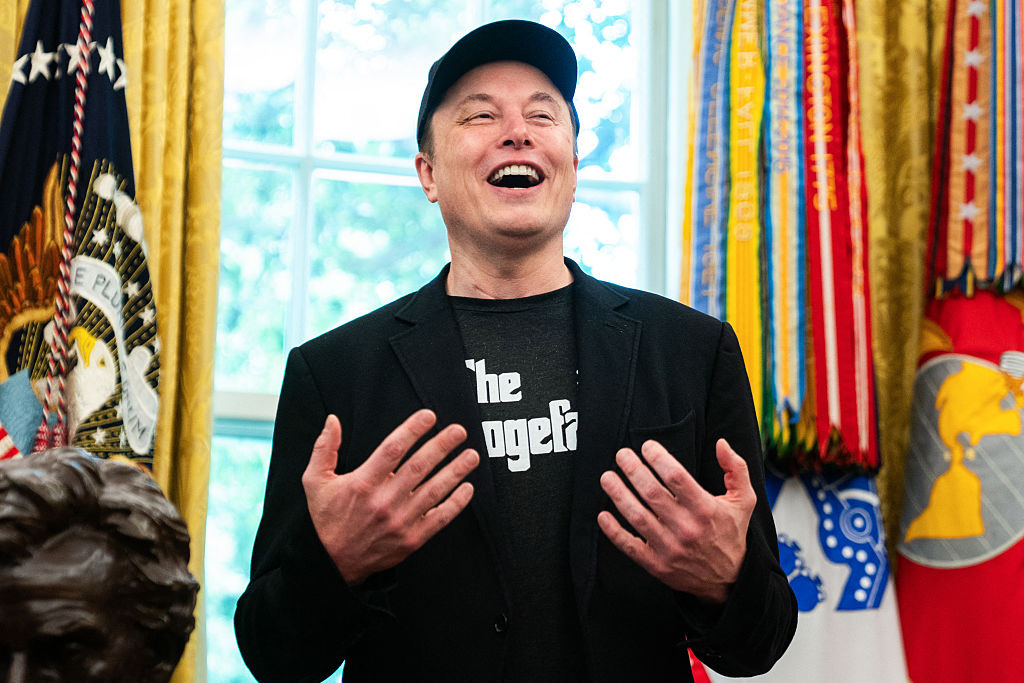
Elon Musk on Monday amplified sharp criticism of California’s approach to homelessness, quoting a lengthy video clip in which he describes a “homeless industrial complex” as “really dark” and labels some nonprofits “drug zombie farmers” whose funding depends on keeping people on the streets.

The post on X, simply read “Incentives drive outcomes” and quoted a video from the account @teslaownersSV. In the nearly four-minute excerpt from a recent Joe Rogan Experience podcast, Musk detailed what he sees as a perverse incentive structure in the state’s multibillion-dollar homelessness programs.
“The homeless industrial complex is really dark, man,” Musk says in the clip. “That network of NGOs should be called, like, the drug zombie farmers. Because the more homeless people … the more money they get from the state of California and from all the charities.”
Musk, chief executive of Tesla and SpaceX and owner of X, argued that many nonprofits and government-funded organizations receive payments based on the number of people they serve rather than measurable results in reducing homelessness or addiction. He claimed this creates an economic motive to maintain — or even increase — the visible street population rather than resolve underlying issues such as severe drug addiction, particularly fentanyl, and untreated mental illness.
“Homeless implies that somebody got a little behind on their mortgage payments and if they just got a job offer they’d be back on their feet,” Musk said. “But someone who is totally dead inside shuffling along down the street with a needle dangling out of their leg … homeless is the wrong word. It’s propaganda.”
He went further, alleging coordination between some organizations and law enforcement that discourages arrests of drug dealers. “They don’t arrest the drug dealers because if they arrest a drug dealer, the drug zombies would leave and they would stop getting money,” Musk stated. He described the system as a “self-licking ice cream cone” in which billions of taxpayer dollars flow annually without clear accountability or progress.
The comments echo Musk’s long-standing frustration with conditions in San Francisco and Los Angeles, cities where he has lived and worked. He has repeatedly pointed to visible encampments, open drug use and public disorder as deterrents to business and quality of life. California has spent an estimated $24 billion or more on homelessness programs in recent years, yet the state’s unsheltered population remains among the highest in the nation, according to federal data.
Musk’s post quickly drew widespread engagement, amassing millions of views within hours. Supporters praised him for highlighting what they call systemic waste and failed policies under long-term Democratic leadership in Sacramento. Critics accused him of dehumanizing vulnerable people and oversimplifying a complex crisis involving poverty, mental health, addiction and housing shortages.
The video Musk shared originally aired during a conversation with comedian and podcaster Joe Rogan. In it, Musk referenced businesses such as Square and Stripe relocating operations from San Francisco, citing street conditions as a factor. He also noted a local tax on financial transactions that he said funneled revenue into homelessness programs without solving the problem.
California Gov. Gavin Newsom’s administration has defended its record, pointing to billions invested in housing, shelter and treatment programs through initiatives like the Homelessness Housing, Assistance and Prevention program. State officials argue that progress has been made in placing thousands into housing, but they acknowledge challenges including a surge in fentanyl-related deaths and the lingering effects of the COVID-19 pandemic. Recent budget proposals have included reduced funding for some homelessness grants, sparking concern among advocates who warn that cuts could reverse gains.
Musk’s remarks come as he plays an influential role in national policy discussions through his companies and his platform on X. As a major donor and vocal supporter of certain political candidates, including those critical of California’s governance, he has used social media to weigh in on issues ranging from crime to regulation.
The billionaire has personal ties to the state: Tesla maintains significant operations in California, though Musk has moved much of the company’s headquarters to Texas. He has also criticized what he calls excessive regulation and high taxes in the Golden State, once calling it a place where “people are fleeing” due to crime and cost of living.
Public health experts and homelessness researchers caution against broad-brush characterizations. Many emphasize that the majority of people experiencing homelessness are not chronically addicted or mentally ill in the extreme manner Musk described; short-term economic hardship, domestic violence and lack of affordable housing play major roles. Studies show that permanent supportive housing combined with treatment can reduce street homelessness when properly implemented and funded.
Still, Musk’s framing resonates with a growing chorus of critics who point to audits revealing poor oversight of nonprofit spending. Some California cities have reported that a significant portion of homelessness dollars goes to administrative costs, outreach and temporary shelters rather than long-term housing. A 2025 state audit highlighted fragmented programs and limited data on outcomes.
In Los Angeles, for example, voters approved multiple ballot measures generating billions for homelessness, yet tent encampments remain visible in many neighborhoods. Similar complaints have surfaced in San Francisco, where voters in 2024 passed measures aimed at clearing streets but implementation has lagged.
Musk concluded his comments on the podcast by calling the situation “diabolical.” He suggested that without reforming incentives — perhaps by tying funding to measurable reductions in street homelessness rather than head counts — the cycle would continue.
The Monday X post is the latest in a series of Musk’s interventions on domestic policy. He has previously used the platform to advocate for stricter enforcement against open drug use and encampments, aligning with “tough love” approaches favored by some conservatives and moderate Democrats.
Reaction on X was swift and polarized. Conservative commentators hailed the post as a rare dose of candor from a high-profile figure. “Finally someone with the guts to say it,” one user wrote. Others shared videos of street conditions in major California cities as evidence.
Advocates for the unhoused pushed back, arguing that Musk’s language stigmatizes people already facing trauma. “Calling human beings ‘drug zombies’ doesn’t help anyone,” one nonprofit leader tweeted. “We need compassion and evidence-based solutions, not sound bites.”
Musk did not add further commentary in the post beyond the clip and his four-word caption emphasizing incentives. The quoted account, Tesla Owners Silicon Valley, has more than 2.8 million followers and frequently shares content supportive of Musk and Tesla.
As of Monday afternoon, the original post had garnered tens of thousands of likes, thousands of reposts and hundreds of replies. Many replies echoed Musk’s points, sharing anecdotes from California residents frustrated by visible decline in public safety and cleanliness.
The episode underscores broader national debates over homelessness policy. With cities across the country grappling with similar challenges, Musk’s high-visibility critique could influence public discourse and political pressure on elected officials.
For now, Musk’s message remains simple: incentives drive outcomes. In his view, California’s current system incentivizes failure. Whether that sparks meaningful reform or merely fuels online debate will be determined in the weeks and months ahead as lawmakers finalize budgets and communities continue grappling with the human and fiscal toll of street homelessness.

Booking Holdings stock hits 52-week low at 167.77 USD

Under the engagement, Wipro will deliver end-to-end transformation services to Olam Group through a consulting-led and AI-powered approach. The company will leverage its industry expertise, partnerships with leading technology providers, and its Wipro Intelligence platform suite to support the transformation.
The scope of the deal will span Olam Group’s ‘farm-to-fork’ value chain, covering areas such as farming, forecasting, trading, supply chain operations, and customer engagement. The objective is to enhance operational effectiveness, improve resilience, and support long-term growth at scale.
Olam Group, a Singapore-headquartered food and agri-business with a valuation of over $50 billion, employs nearly 40,000 people and is majority owned by Temasek Holdings.
As part of the agreement, Wipro will also acquire Olam Group’s IT and digital services arm, Mindsprint. Upon completion, Mindsprint will become a wholly owned subsidiary of Wipro, subject to regulatory approvals and customary closing conditions. The transaction is expected to be completed by the end of Q1 FY27, that is by, June 2026.

Primarily based in India, Mindsprint has over 3,200 professionals and has been a key enabler of Olam Group’s digital transformation journey. It brings deep domain expertise in the food and agri-business sector, along with strong capabilities in supply chain transformation, digital platforms, and proprietary IP-led solutions.
Its offerings include Farmsprint for plantation management, Procuresprint for AI-enabled procurement transformation, SprintAP for payables transformation, Salessprint for sales operations, and Tradesprint for commodity trading and risk management.Commenting on the development, Olam Group Co-Founder and Group CEO Sunny Verghese said the partnership with Wipro brings together Mindsprint’s sector expertise and Wipro’s global capabilities to drive transformation across the value chain.
Wipro CEO and Managing Director Srini Pallia said the engagement is a key step in expanding the company’s farm-to-fork capabilities and scaling the impact of its AI-led offerings in the food and agri-business segment.
Sensex, Nifty today: Catch all the LIVE stock market action here
(Disclaimer: Recommendations, suggestions, views and opinions given by the experts are their own. These do not represent the views of The Economic Times)
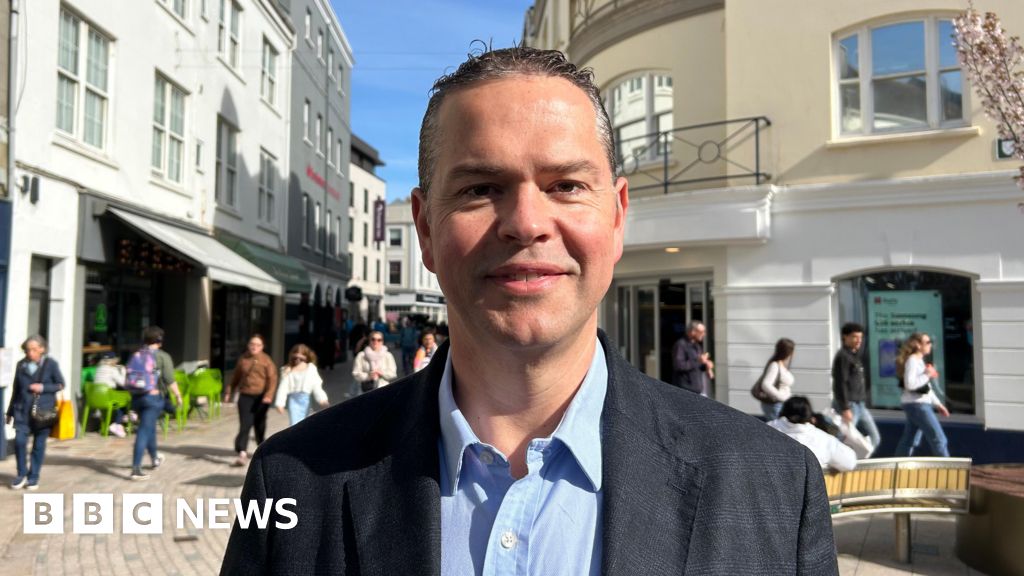
Bosses say a good start to the year has been put at risk, but opportunities have also emerged.

Operator
Good morning, ladies and gentlemen, and welcome to today’s Investcorp Credit Management BDC’s Quarter ended December 31, 2025 Earnings Call. It is now my pleasure to turn the floor over to Andrew Muns, Chief Financial Officer.
Andrew Muns
COO, CFO, Treasurer & Secretary
Thank you, operator. Welcome, everyone, to Investcorp Credit Management BDC’s earnings call for the quarter ended December 31, 2025. I’m joined today by Suhail Shaikh, President and Chief Executive Officer of the company.
I would like to remind everyone that today’s call is being recorded and that this call is the property of Investcorp Credit Management BDC. Any unauthorized broadcast of this call in any form is strictly prohibited. An audio replay of the call will be available on the Investor Relations page of our website at icmbdc.com.
I would also like to call your attention to the safe harbor disclosure in our press release regarding forward-looking information and remind everyone that today’s call may include forward-looking statements and projections. Actual results may differ materially from these projections. We will not update forward-looking statements unless required by law. To obtain copies of our latest SEC filings, please visit the company’s registration statement on the SEC’s EDGAR platform or our Investor Relations page on our website.
The format for today’s call is as follows: Suhail will provide an overall business and portfolio summary, and then I will provide an overview of our results, summarizing the financials. This will be followed by Q&A. Please note that today’s discussion will focus on our financial results. As stated in our press release, we do not intend to comment further regarding

S&P 500 Earnings And A StyleBox Update For March 31, 2026

He highlighted that this is the third consecutive April—2024, 2025, and now 2026—when markets are hovering around similar levels despite earnings growth of nearly 10–12% over the past two years. According to him, this divergence suggests that markets have already undergone a significant correction in terms of valuations, and much of the downside risk appears to be priced in. As a result, he sees every decline from here as a potential buying opportunity.
Maheshwari, however, cautioned that volatility is far from over. With geopolitical tensions capable of triggering sudden market swings, investors should not expect a smooth upward trajectory. Instead, he recommends a disciplined approach to investing—allocating capital in parts rather than all at once. For instance, deploying 10–15% of funds at current levels and adding more on further declines allows investors to navigate uncertainty without trying to perfectly time the market bottom. He also pointed out that valuations, currently at around 17–18 times FY27 earnings, appear reasonable, especially under his assumption that earnings growth could remain flat between FY26 and FY27 due to risks such as rising oil prices. Even with conservative estimates, he sees a fair value zone emerging that supports gradual accumulation.
On the sectoral front, Maheshwari expressed strong confidence in banking stocks, particularly private sector lenders. He noted that these stocks have underperformed over the past two years and are now trading at valuations not seen in four to five years, despite maintaining healthy earnings growth of 12–15%, strong capital positions, and stable asset quality. He attributed the weakness largely to selling pressure from foreign institutional investors (FIIs), who have been reducing exposure to Indian equities. This, he believes, has created an attractive entry point for domestic investors. Alongside banking, he also sees a short-term trading opportunity in the IT sector, where he expects a potential upside of 10–15% over the next three months, though he clearly emphasized that this is a tactical play rather than a long-term investment.
Discussing specific pockets of the market, Maheshwari maintained a positive stance on InterGlobe Aviation, calling current levels favourable for buying. In contrast, he advised caution on retail stocks, suggesting that while existing investors can continue to hold positions, fresh investments may be better directed toward sectors offering more attractive valuations. For those looking to play the consumption theme, he prefers the automobile sector, naming Mahindra & Mahindra as his top pick. At the same time, he urged investors to stay away from high-valuation stocks across the board, stressing that with several sectors now available at reasonable prices, there is little justification for chasing expensive names.
He also flagged certain areas where caution is warranted. In the pharma sector, he recommended a wait-and-watch approach due to potential disruptions from global developments, particularly the possibility of tariffs being discussed by former U.S. President Donald Trump. As for PSU banks, while he acknowledged that recent corrections have made them more attractive, he views them primarily as short-term trading opportunities rather than long-term investment bets, given that their valuations are now comparable to private sector peers.
Overall, Maheshwari’s strategy reflects a balanced and pragmatic outlook. While he acknowledges that markets may continue to swing sharply in the near term, he believes the broader correction has already played out. His core message to investors is simple yet effective: avoid trying to predict the exact bottom, focus on fundamentally strong yet undervalued sectors like banking, participate selectively in tactical opportunities such as IT, and most importantly, build positions gradually. In a market defined by uncertainty, he suggests that consistency and discipline, rather than aggressive timing, will ultimately drive better outcomes.

Thailand will increase retail diesel prices starting April 5, reducing subsidies for B7 and B20 grades, resulting in prices exceeding 50 baht per litre to align with market conditions.
Key Points
- Starting April 5, Thailand will raise retail diesel prices due to the Oil Fuel Fund Management Committee’s decision to reduce subsidies on diesel grades. The B7 price will exceed 50 baht per litre, increasing transport and living costs.
- The subsidy for diesel B7 will decrease by 2.61 baht per litre, from 20.71 baht to 18.10 baht. Similarly, the subsidy for diesel B20 will drop from 22.22 baht to 19.61 baht per litre.
- As a result, the retail prices will rise by 2.80 baht per litre: B7 from 47.74 to 50.54 baht, and B20 from 42.75 to 45.54 baht. This adjustment aims to align prices with market conditions and alleviate pressure on the Oil Fuel Fund.
Price Increase Announcement
Thailand is set to increase retail diesel prices starting April 5 due to a decision by the Oil Fuel Fund Management Committee to reduce subsidies on essential diesel grades. The retail price of diesel B7 is expected to rise above 50 baht per litre, thereby exerting new pressure on both transport and living costs in the country. This decision comes amid ongoing economic challenges, with the aim of aligning fuel prices more closely with current market conditions while also managing the finances of the Oil Fuel Fund.
Subsidy Reductions for Diesel Grades
The committee has announced a 2.61 baht per litre reduction in subsidies for both diesel B7 and diesel B20. Specifically, the subsidy for diesel B7 is being reduced from 20.71 baht to 18.10 baht per litre, while the subsidy for diesel B20 will decrease from 22.22 baht to 19.61 baht per litre. Consequently, the retail price of diesel B7 will increase by 2.80 baht per litre, resulting in a new price of 50.54 baht per litre. Similarly, diesel B20 will see an increase leading to a new price of 45.54 baht per litre. These new pricing adjustments will take effect on April 5, highlighting the government’s efforts to stabilize the Oil Fuel Fund.
Financial Implications of the Decision
The rationale behind this decision is to ensure the liquidity of the Oil Fuel Fund, which has been severely tested due to ongoing subsidies amidst fluctuating market conditions. The anticipated subsidy reductions are projected to decrease the fund’s daily outflow from 1.70875 billion baht to 1.49672 billion baht, yielding a savings of approximately 212.03 million baht daily. The adjustments in diesel pricing and subsidy levels reflect a broader strategy to navigate the economic landscape while maintaining service levels and safeguarding the fund against significant financial strain.
Other People are Reading

Baidu: Pivoting To AI Infrastructure, Robotaxis, And Embodied Robotics At A Discount


North Korea working on carbon-fibre ICBM for multi-warhead delivery, Seoul says

Irish Grand National start time today – When does the 2026 race get underway?

Elon Musk Blasts ‘Homeless Industrial Complex,’ Calls NGOs ‘Drug Zombie Farmers’

Anthropic Says One of Its Claude Models Was Pressured to Lie and Cheat


-

 NewsBeat3 days ago
Steven Gerrard disagrees with Gary Neville over ‘shock’ Chelsea and Arsenal claim | Football
-

 Business3 days ago
No Jackpot Winner and $194 Million Prize Rolls Over
-

 Fashion3 days ago
Weekend Open Thread: Spanx – Corporette.com
-
Entertainment7 days ago
Fans slam 'heartbreaking' Barbie Dream Fest convention debacle with 'cardboard cutout' experience
-

 Crypto World4 days ago
Gold Price Prediction: Worst Month in 17 Years fo Save Haven Rock
-

 Business7 hours ago
Three Gulf funds agree to back Paramount’s $81 billion takeover of Warner, WSJ reports
-
Crypto World6 days ago
Dems press CFTC, ethics board on prediction-market insider trades
-

 Sports1 day ago
India men’s 4x400m and mixed 4x100m relay teams register big progress | Other Sports News
-

 Business4 days ago
Login and Checkout Issues Spark Merchant Frustration
-

 Tech7 days ago
Apple will hide your email address from apps and websites, but not cops
-

 Tech6 days ago
EE TV is using AI to help you find something to watch
-

 Sports6 days ago
Tallest college basketball player ever, standing at 7-foot-9, entering transfer portal
-

 Politics6 days ago
Should Trump Be Scared Strait?
-

 Tech6 days ago
Flipsnack and the shift toward motion-first business content with living visuals
-
Tech6 days ago
Daily Deal: StackSkills Premium Annual Pass
-

 Fashion7 days ago
The Best Spring Trends of 2026
-

 Crypto World6 days ago
U.S. rule change may open trillions in 401(k) funds to crypto
-

 Sports6 days ago
Women’s hockey camp eyes fitness boost, tactics ahead of WC 2026 campaign | Other Sports News
-

 Tech6 days ago
How to back up your iPhone & iPad to your Mac before something goes wrong
-

 Politics7 days ago
BBC slammed for ignoring author of The Fraud
You must be logged in to post a comment Login