

Business
Weebit Nano Shares Jump 6.6% as ASX Semiconductor Stock Extends Run on ReRAM Momentum


Shares of Weebit Nano Ltd rose 6.61% on Friday, climbing 53 cents to close at $8.55, as the Sydney-based semiconductor memory technology company continued to attract strong investor interest on the back of expanding commercial partnerships, accelerating revenue growth, and a steady stream of capital raises supporting its push toward mass-market deployment of its core memory technology.
A Company Built Around Next-Generation Memory Chips
Weebit Nano Ltd is an Australia-based developer and licensor of advanced semiconductor memory technology. The company’s Resistive RAM, or ReRAM, addresses the growing need for higher performance and lower power non-volatile memory solutions in a range of new electronic products, such as Internet of Things devices, smartphones, robotics, autonomous vehicles, fifth-generation communications, and artificial intelligence.
Weebit Nano develops its non-volatile memory using a resistive random access memory technology based on fab-friendly materials, with operations in South Korea and the United States. The company was incorporated in 2010 and is headquartered in Sydney, Australia. As of mid-June, the company carried a market capitalization of approximately $1.86 billion.
A Landmark Deal With Texas Instruments
Among the most significant recent catalysts behind the stock’s rally has been a licensing agreement with one of the world’s largest semiconductor manufacturers. Weebit Nano has attracted fresh attention after licensing its resistive random access memory technology to Texas Instruments, alongside issuing 2026 revenue guidance that targets minimum revenue of A$10 million.
That agreement came following a period of mixed share price performance, with the stock posting a 17.5% one-month return and a 9.81% three-month return ahead of the announcement, underscoring how individual commercial milestones have continued to drive outsized moves in the stock even amid broader volatility.
Chip Tape-Outs Mark a Key Commercial Milestone
Beyond the Texas Instruments partnership, the company has also reported significant progress in moving its technology from the development stage toward actual commercial production. Weebit Nano shares jumped after the company revealed fresh commercial progress for its ReRAM chip technology, with two customers moving from development to actual chip tape-outs, signaling growing confidence that the memory technology is nearing real-world deployment. One customer, Overlord Labs, has already received a functional prototype, while a second customer has validated its initial silicon.
Both customers are set to run 12 to 18 months of testing before potential mass production, and Weebit Nano expects additional tape-outs later this year, which could further boost investor optimism.
Tape-out by product customers is an important milestone on the path to mass production and marks the achievement of one of the three 2026 targets set at Weebit’s 2025 Annual General Meeting.
Strong Investor Demand Through Repeated Capital Raises
Weebit Nano has repeatedly turned to equity markets to fund its expansion, with each raise typically met by strong demand from both retail and institutional shareholders. Shares in the ASX technology company previously raced more than 20% higher in a single session after the company announced it had raised an additional $15 million and a new major shareholder emerged. The company said in a statement to the ASX that a share purchase plan priced at $4.05 per share had raised the new funds, bringing the total raised, including an institutional placement, to $102 million.
Weebit Nano Chief Executive Officer Coby Hanoch said at the time: “The Board and I are incredibly grateful for the strong support we continue to receive from our loyal retail shareholder base.” He noted that the company was at an exciting juncture in its history, with AEC-Q100 automotive-grade qualified ReRAM and multiple licensing agreements with leading foundries.
A more recent AUD 87 million capital raise is set to fund the company’s technology, AI, and commercial expansion over the next three years, as Weebit aims to widen its lead in ReRAM and in-memory compute, with new fabrication deals expected amid strong industry momentum.
The company has continued to expand its equity base incrementally through routine share issuances as well. Weebit Nano applied to the ASX for quotation of 666,509 new fully paid ordinary shares issued following the exercise or conversion of existing options or other convertible securities on June 2 and June 4, 2026, marginally expanding the company’s free float and equity base.
Accelerating Revenue Growth
While Weebit Nano remains a pre-profitability company, its underlying revenue trajectory has shown dramatic improvement in recent reporting periods. In fiscal year 2025, Weebit Nano’s revenue reached 4.41 million, an increase of 333.23% compared to the previous year’s 1.02 million. Losses totaled 38.38 million, a 6.94% improvement compared to 2024.
More recently, revenue surged to AUD 5.4 million over two years, with record receipts and a strong cash position. ReRAM adoption has been accelerating, particularly in analog, automotive, and AI applications, as the company prepares for what it describes as a major market inflection point.
A Dramatic Share Price Trajectory
The stock’s broader trajectory over the past year illustrates just how significantly investor sentiment toward Weebit Nano has shifted. Weebit Nano shares have appreciated from lows of $1.43 over the past 12 months, a remarkable run that has transformed the company from a speculative small-cap technology stock into one of the more closely watched names within the ASX semiconductor sector.
Trailing total shareholder returns have reached as high as 372.86% over certain measurement periods, dramatically outperforming the broader S&P/ASX 200 benchmark over the same stretch.
A Speculative but Closely Watched Stock
Despite the company’s growing list of commercial partnerships and improving revenue figures, Weebit Nano remains, by traditional valuation metrics, a richly priced and speculative investment. The stock currently carries a price-to-sales ratio of 176.58 and a price-to-book ratio of 27.25, with no meaningful trailing or forward price-to-earnings ratio given the company’s ongoing losses.
That valuation profile reflects a market that continues to price Weebit Nano based primarily on the long-term commercial potential of its ReRAM technology rather than on current financial performance — a dynamic common among early-stage semiconductor licensing companies whose primary value proposition lies in intellectual property and design partnerships rather than near-term product revenue.
What Comes Next
With multiple customer tape-outs already underway and additional milestones expected later this year, investors will be watching closely to see whether Weebit Nano can convert its growing list of licensing agreements — including its recent deal with Texas Instruments — into sustained revenue growth that more closely justifies its current market valuation. Given the company’s track record of significant single-day share price moves tied to individual commercial and capital-raising announcements, Weebit Nano appears likely to remain one of the more volatile, closely tracked names among ASX-listed semiconductor and technology stocks in the months ahead.



MSc in Finance. Long-term horizon investor mostly with 2-5 year horizon. I like to keep investing simple. I believe a portfolio should consist of a mix of growth, value, and dividend-paying stocks but usually end up looking for value more than anything. I also sell options from time to time.
Analyst’s Disclosure: I/we have no stock, option or similar derivative position in any of the companies mentioned, and no plans to initiate any such positions within the next 72 hours. I wrote this article myself, and it expresses my own opinions. I am not receiving compensation for it (other than from Seeking Alpha). I have no business relationship with any company whose stock is mentioned in this article.
Seeking Alpha’s Disclosure: Past performance is no guarantee of future results. No recommendation or advice is being given as to whether any investment is suitable for a particular investor. Any views or opinions expressed above may not reflect those of Seeking Alpha as a whole. Seeking Alpha is not a licensed securities dealer, broker or US investment adviser or investment bank. Our analysts are third party authors that include both professional investors and individual investors who may not be licensed or certified by any institute or regulatory body.
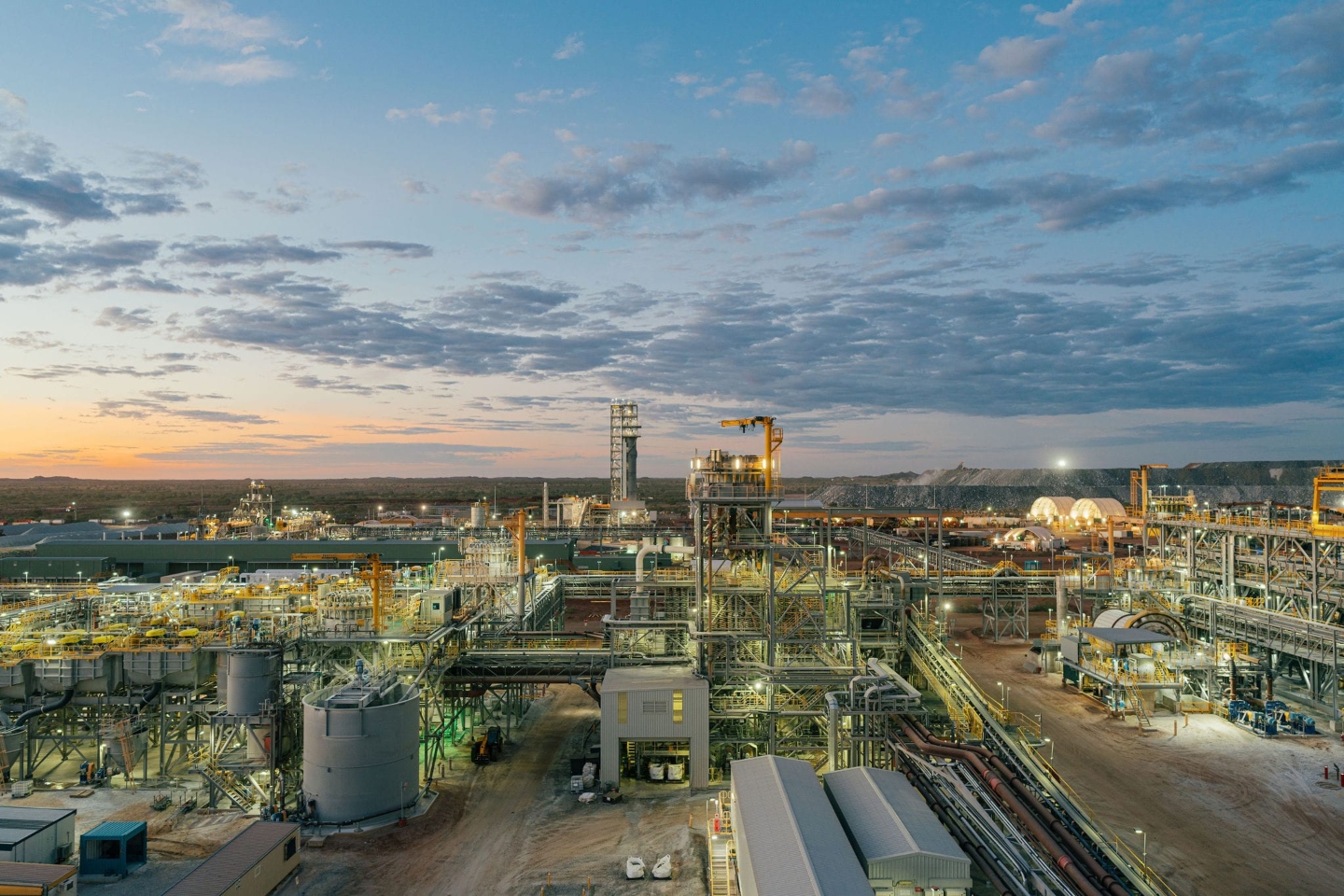
Pilbara lithium miner PLS is paving the way for an expansion of its Pilgangoora operation to 2 million tonnes per annum, after greenlighting a $175 million pre-FID spend.


Sea buckthorn is surging as an ingredient in food and beverages.

SPTL: Reserving Concerns Around Iran Deal Longevity, Eschewing Duration

WA Supreme Court judge reveals trans-continental blue between Africa-focused mining contractor Paul List and his former wife Angela List.

Brent crude was rising slightly Friday after U.S. Vice President JD Vance suspended plans to meet with Iranian representatives, even as more oil tankers passed safely through the critical Strait of Hormuz — a split picture that underscores just how fragile the recently signed U.S.-Iran peace agreement remains.
Brent crude futures, the international standard, were up 0.1% at $79.95 a barrel. West Texas Intermediate futures were rising 0.3% to $76.11 a barrel. The modest gains came even as some analysts argued the underlying trend toward de-escalation in the Middle East remained largely intact.
A Reminder That the Peace Deal Remains Fragile
The latest diplomatic wrinkle serves as a reminder that there are still plenty of obstacles to turning the preliminary U.S.-Iran peace deal into a lasting agreement. Brent crude oil prices rose Thursday after Vice President JD Vance warned Israel against further attacks on Iran-backed Hezbollah in Lebanon, raising doubts about the durability of the U.S.-Iran ceasefire agreement.
“The vice president’s statements about Israel may have put things back on edge,” said John Kilduff, partner with Again Capital. “I think the slightest sort of disturbance is going to register in the market.”
Brent crude futures settled Thursday at $79.85 a barrel, up 30 cents, or 0.38%.
Tankers Crossing the Strait Offer a Counterbalance
Despite the diplomatic uncertainty, tangible evidence on the water has continued to support the case that the broader de-escalation trend remains on track. Any concerns in the oil market might be relieved by tangible signs the vital Strait of Hormuz — which normally carries around 20% of the world’s daily oil traffic — is reopening to traffic. Three Saudi-flagged supertankers carrying more than six million barrels of crude crossed the strait on Thursday, according to Kpler ship-tracking data.
That kind of concrete shipping activity has provided a meaningful counterweight to the verbal sparring between U.S. officials and their counterparts in the region, offering markets at least some reassurance that the physical flow of oil through the world’s most important energy chokepoint continues largely uninterrupted.
A Long, Volatile Road to This Point
Friday’s modest price movements come at the tail end of months of extraordinary volatility in global oil markets, driven by a conflict that disrupted the Strait of Hormuz earlier this year before a series of fragile ceasefires and diplomatic breakthroughs gradually brought prices back down from crisis-era highs.
At the conflict’s peak, international benchmark Brent crude was trading at about $111 per barrel, as fighting in the region effectively halted traffic through the strategic waterway. Oil prices were up roughly 40% since the conflict began at that point, as Tehran forced the effective closure of the narrow waterway through which about a fifth of global energy flows.
A series of conditional ceasefires gradually pulled prices back down from those highs. Oil prices plunged in April after the U.S. and Iran agreed to a two-week conditional ceasefire that included the reopening of the vital Strait of Hormuz waterway, following a last-minute diplomatic intervention by Pakistan. The price of benchmark Brent crude dropped below $100 at that time, falling by about 15.9% to $92.30 a barrel, while U.S.-traded oil fell almost 16.5% to $93.80.
Vance’s Repeated Role in Iran Diplomacy
Vice President Vance has played a recurring and central role in the administration’s efforts to manage the Iran conflict and its economic fallout throughout the year, making his latest cautionary statement on Israel particularly significant for markets parsing the durability of the broader peace framework. Vance led the U.S. negotiating team for peace talks with Iran held in Islamabad, marking the highest-level meeting between the U.S. and Iran since the 1979 Islamic revolution.
Vance has also been directly engaged with the domestic economic consequences of the conflict, meeting repeatedly with industry stakeholders as gasoline prices fluctuated alongside crude oil. Vance and Energy Secretary Chris Wright met with the American Petroleum Institute, the nation’s largest oil trade group, as the Trump administration looked to ease rising gas prices, which had risen 92 cents on average nationwide compared to the prior month at the time, according to travel analyst AAA. Vance acknowledged at the time that there was a “rough road ahead of us for the next few weeks, but it’s temporary.”
A Pattern of Diplomatic Setbacks Followed by Recoveries
The current uncertainty surrounding Vance’s suspended meeting plans fits a broader pattern that has characterized U.S.-Iran relations throughout the conflict’s resolution process, with repeated cycles of diplomatic progress followed by setbacks and renewed tension. Earlier this month, Iranian state media claimed Tehran had suspended talks over Israel’s attacks in Lebanon, even as President Trump insisted negotiations were continuing. “Talks are continuing, at a rapid pace, with the Islamic Republic of Iran,” Trump said on Truth Social at the time.
Trump also addressed tensions tied to Israeli actions in southern Lebanon directly, saying, “There was a little glitch today, but I turned that one around very quickly, as you probably noticed earlier.” He said he had separately deterred Israeli Prime Minister Benjamin Netanyahu from conducting what Trump described as “a major raid of Beirut, Lebanon.”
China’s Shifting Demand Adds Another Variable
Beyond the geopolitical risk tied to the ceasefire’s durability, broader structural shifts in global oil demand have also begun factoring into market pricing. China, the world’s second-largest oil consumer, is forecast to consume 753 million metric tons in 2026, down 4.9% from 2025 amid a pivot to new energy sources and elevated oil prices, according to a report published by PetroChina’s research unit.
That projected decline in Chinese demand, if it materializes, could provide an additional offsetting factor against any near-term price spikes tied to renewed Middle East tensions, tempering the upside pressure that might otherwise result from disruptions to the ceasefire.
With Brent and WTI both holding relatively steady just below the $80 and $76 marks respectively, markets appear to be treating Vance’s suspended meeting as a notable but not yet decisive setback to the broader peace process. Traders will be watching closely for any further statements from U.S., Israeli, or Iranian officials in the coming days, along with continued tanker-tracking data through the Strait of Hormuz, as the clearest available signals of whether the fragile ceasefire holds or unravels further in the weeks ahead.


Strong grain outlook eases supply concerns.


Israeli, Hezbollah agree to ceasefire starting on Friday -U.S. official
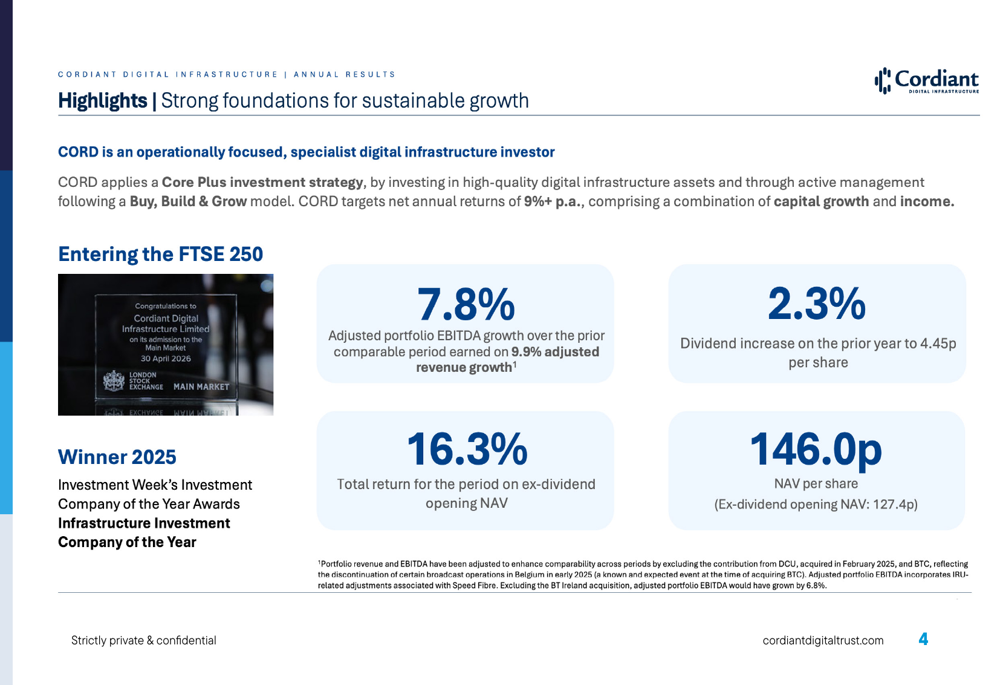
Cordiant Digital FY 2026 slides: 16.3% return beats 9% target

LSL Property Services backs UK home buying reform roadmap

Yuvraj Singh To Start Coaching Career In IPL 2027, Set To Join This Team: Report

how would the UK cope with its next major one?

Magnite: CTV Momentum Should Continue To Translate To Higher Value (NASDAQ:MGNI)


-

 Business5 days ago
No Jackpot Winner as $257 Million Prize Rolls Over to $269 Million Monday Draw
-

 Fashion7 days ago
Weekend Open Thread: Tuckernuck – Corporette.com
-
 Crypto World5 days ago
Zimbabwe Requires Crypto Businesses to Register Annually Under New FIU Regulations
-

 Crypto World6 days ago
Bitget enters Argentina’s regulated crypto market through PSAV registration
-

 Tech7 days ago
NanoClaw integrates JFrog registries to secure AI agent downloads
-

 Tech7 days ago
This Week In Security: Microsoft On Microsoft, Register Your Domains, Linux On ARM, And FreeBSD Joins The File Cache Club
-

 NewsBeat7 days ago
FBI searches office of Ohio voter registration group
-
 Entertainment5 days ago
Matt Damon’s Viral Sci-Fi Thriller Has Taken Over HBO Max
-

 Business5 days ago
Anthropic staff to meet White House officials next week, Axios reports
-

 Tech5 days ago
As AI companies race to go public, who else is along for the ride?
-
 Crypto World5 days ago
Bitcoin could crash to $48,000, if this historical pattern is triggered
-

 Politics5 days ago
“Israel’s” ban on ICRC visits ruled illegal, but Knesset moves to stop them permanently
-
 NewsBeat5 days ago
Warning of disruption as Cardiff Crossrail works to start
-

 News Videos5 days ago
Financial Accounting | Last Day Revision Strategy and Booster | CMA Inter – June 2026
-
 NewsBeat5 days ago
Tributes to former deputy head teacher at Cambridge school among death and funeral notices
-
 NewsBeat5 days ago
what doctors are seeing in ebike crashes
-

 Crypto World5 days ago
XRP ETFs Outperform As Bitcoin And Ethereum Funds Extend Outflow Trend
-

 Entertainment6 days ago
Deion Sanders Shares Powerful Post After Viral Advice To Deiondra
-
 Crypto World5 days ago
Market Preview: SpaceX (SPCX) IPO Record, Federal Reserve Meeting, and Iran Nuclear Agreement
-
 Entertainment5 days ago
Kate Middleton Glare Goes Viral After Kids Booed At Royal Event
You must be logged in to post a comment Login