
Business
Week’s Best: How Financial Advisors Are Investing $1 Million Today



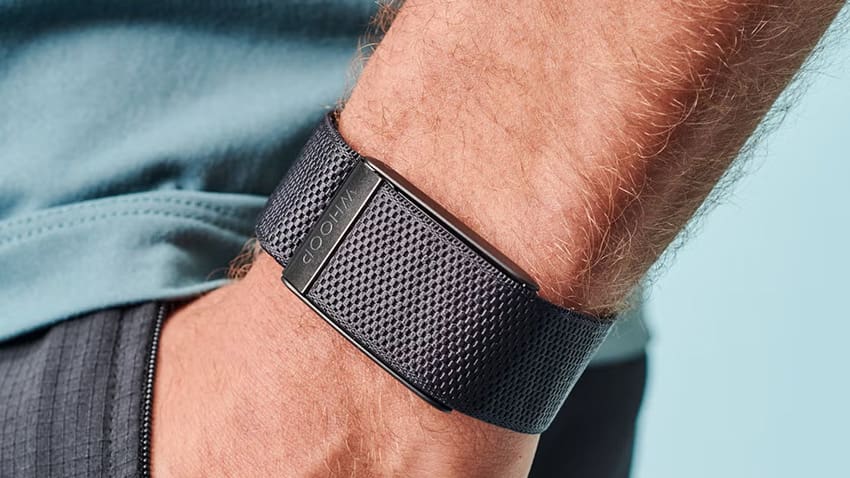
WHOOP has raised $575 million in fresh funding at a $10.1 billion valuation, as it accelerates its ambition to build a global platform for personalised, preventative healthcare powered by artificial intelligence and biometric data.
The Series G round was led by Collaborative Fund and drew participation from a broad mix of institutional investors, sovereign wealth funds and healthcare leaders, including Qatar Investment Authority and Mubadala Investment Company. Strategic backing also came from Abbott and Mayo Clinic, highlighting growing convergence between technology and traditional healthcare systems.
The round also attracted high-profile individual investors from the worlds of sport and entertainment, including Cristiano Ronaldo, LeBron James and Rory McIlroy, reflecting WHOOP’s strong association with elite performance and wellness.
The investment comes at a time when healthcare systems globally are under increasing strain from rising rates of chronic disease and ageing populations. WHOOP is positioning itself at the forefront of a shift from reactive treatment to preventative, data-driven health management.
Founder and chief executive Will Ahmed said the company is building a platform designed to help individuals monitor, understand and improve their health continuously.
“We are creating a personal health system that enables people to improve both their performance and long-term wellbeing,” he said.
At the core of the platform is continuous biometric monitoring, combined with AI models trained on more than 24 billion hours of physiological data. This allows WHOOP to deliver personalised insights into sleep, recovery, stress and physical performance, as well as early indicators of potential health risks.
WHOOP has experienced strong growth in recent years, with more than 2.5 million members globally and bookings rising 103 per cent in 2025 to reach a $1.1 billion run rate. The company also reported positive operating cash flow during the year, underlining its financial momentum.
The new funding will support further expansion across key international markets, including Europe, the Gulf region, Latin America and Asia, as well as continued growth in the United States.
To support this expansion, WHOOP plans to hire more than 600 additional employees globally, focusing on research, development and product innovation.
The involvement of established healthcare organisations such as Abbott signals a broader shift towards integrating consumer technology with clinical expertise.
By combining wearable technology with advanced analytics, WHOOP aims to provide a more holistic view of health, enabling users to make informed decisions about their lifestyle and potentially prevent serious conditions before they develop.
The platform’s high engagement levels, with users opening the app multiple times per day, highlight the growing demand for real-time health insights that go beyond traditional fitness tracking.
While WHOOP initially gained traction among athletes and high-performance individuals, the company is now targeting a broader audience, including executives, professionals and consumers seeking to optimise both health and productivity.
The focus is increasingly on “healthspan”, the length of time individuals remain healthy and active, rather than simply lifespan.
Cristiano Ronaldo, an investor and ambassador, described the platform as a key tool in managing his own health, reflecting its positioning at the intersection of performance and wellbeing.
The latest funding round reinforces WHOOP’s position as one of the most valuable players in the rapidly expanding digital health sector.
As advances in AI and data analytics continue to reshape healthcare, companies that can combine technology, user engagement and clinical relevance are expected to play a central role in the future of the industry.
For WHOOP, the challenge now is to scale its platform globally while maintaining accuracy, trust and regulatory compliance, transforming wearable data into meaningful, actionable health outcomes at scale.

Jamie Young
Jamie is Senior Reporter at Business Matters, bringing over a decade of experience in UK SME business reporting.
Jamie holds a degree in Business Administration and regularly participates in industry conferences and workshops.
When not reporting on the latest business developments, Jamie is passionate about mentoring up-and-coming journalists and entrepreneurs to inspire the next generation of business leaders.


Japan business mood, inflation expectations rise but Iran war clouds outlook
Altimeter Capital founder, Chairman and CEO Brad Gerstner discusses the benefits of Trump Accounts for kids on ‘Mornings with Maria.’
More than four million children have been enrolled in newly created Trump Accounts, the Internal Revenue Service (IRS) said Tuesday, marking a major rollout of the administration’s savings initiative.
Additionally, the IRS said more than one million children are covered by elections for the $1,000 Trump Accounts pilot program contribution.
Trump Accounts were created under the “One Big Beautiful Bill Act” last year, and contributions can begin July 4, 2026.
“The IRS has been working closely with the Treasury Department to make the election process as simple and easy as possible by permitting taxpayers to fill out a one-page form when they file their tax return,” IRS Chief Executive Officer Frank J. Bisignano said in a statement. “Families with eligible children born between 2025 and 2028 just need to check the box on a form to stake their claim for the $1,000 contribution. It’s that simple.”
IRS UNVEILS PROPOSED REGULATIONS FOR NEW TRUMP ACCOUNTS SAVINGS PROGRAM

A screenshot of the Trump Accounts’ homepage. (White House)
The new data is based on how many Form 4547, “Trump Account Election(s),” have been submitted with individual tax returns to date, according to the IRS.
To create a Trump Account and enroll in the pilot program with their 2025 tax return, parents can fill out IRS Form 4547.
The accounts will be available to every American child born between Jan. 1, 2025, and Dec. 31, 2028, and will include a $1,000 seed contribution invested in an index fund. They can be created for anyone who has not turned 18 before the end of the calendar year in which the election is made and has a valid Social Security number.
Each account is in the child’s name and is controlled by parents until the child reaches age 18.
TRUMP ADMIN PROPOSES OPENING 401(K)S TO PRIVATE EQUITY, CRYPTO
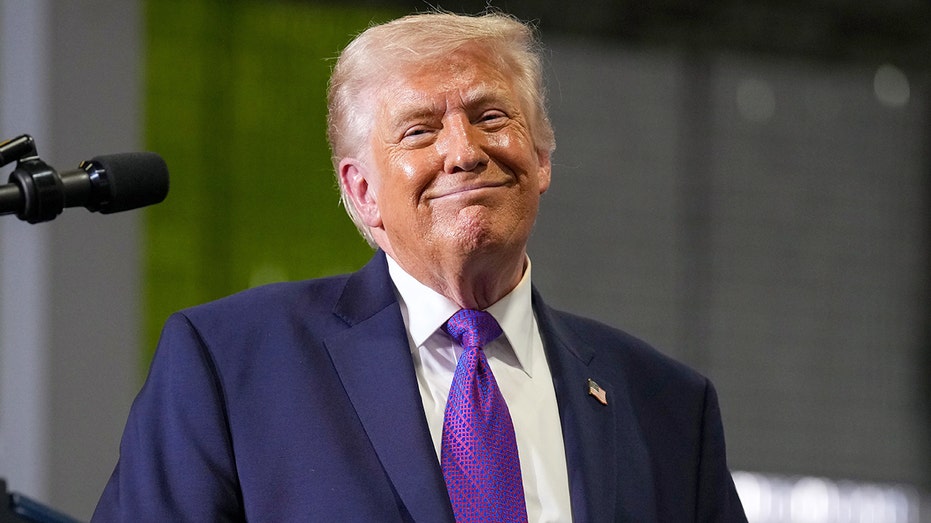
President Donald Trump speaks on stage at Verst Logistics on March 11, 2026 in Hebron, Kentucky. (Andrew Harnik/Getty Images / Getty Images)
While no contributions are required, up to $5,000 can be deposited into the accounts per year.
The U.S. Treasury previously estimated that Trump accounts could accumulate significant savings if families maximize contributions and allow the funds to grow.
For example, a fully funded account could reach as much as $1.9 million by age 28, according to the Treasury’s Office of Tax Analysis. At the lower end of projected returns, the account could still yield nearly $600,000 over the same period.
TRUMP NAMES DAVID SACKS CO-CHAIR OF TECH ADVISORY COUNCIL, EXPANDING AI, CRYPTO ROLE
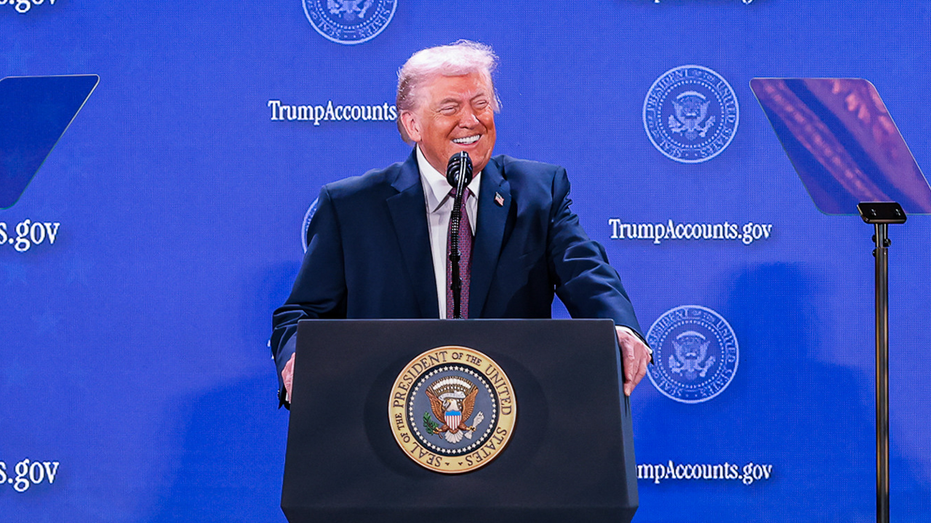
President Donald Trump speaks during the Trump Accounts Launch Summit in Washington, D.C., on Wednesday, Jan. 28, 2026. (Valerie Plesch/Bloomberg via Getty Images / Getty Images)
Without additional contributions beyond the federal government’s initial $1,000 deposit, it is estimated that the account could grow to between $3,000 and $13,800 over 18 years.
Children can receive contributions from parents, relatives, friends, employers, state governments and philanthropic organizations, according to the IRS.
Since the Trump Accounts were first unveiled, numerous major companies have expressed support for the initiative and announced plans to match the government’s $1,000 contribution for eligible employees’ children.
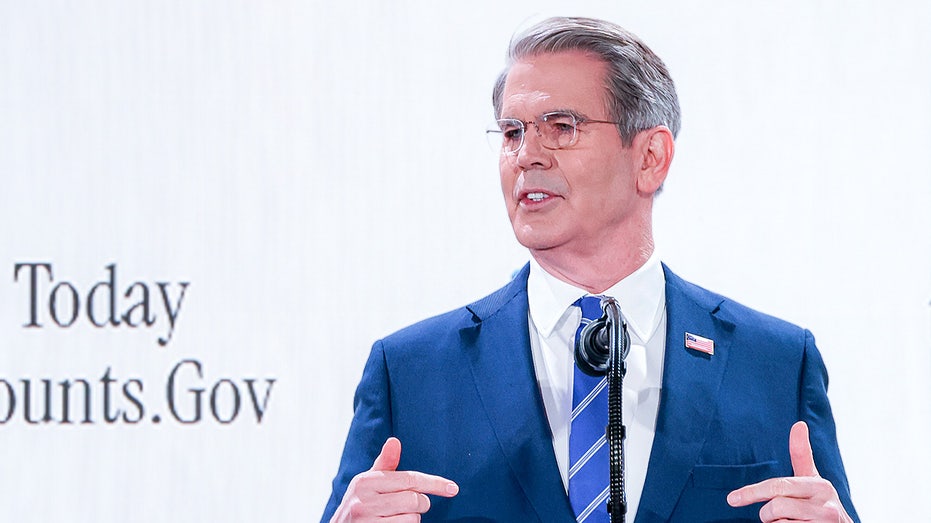
Treasury Secretary Scott Bessent speaks during the Trump Accounts Launch Summit in Washington, D.C., on Jan. 28. (Valerie Plesch/Bloomberg via Getty Images / Getty Images)
More information about Trump Accounts can be found at trumpaccounts.gov.
FOX Business has reached out to the White House for comment.
FOX Business’ Amanda Macias and Emma Colton contributed to this report.
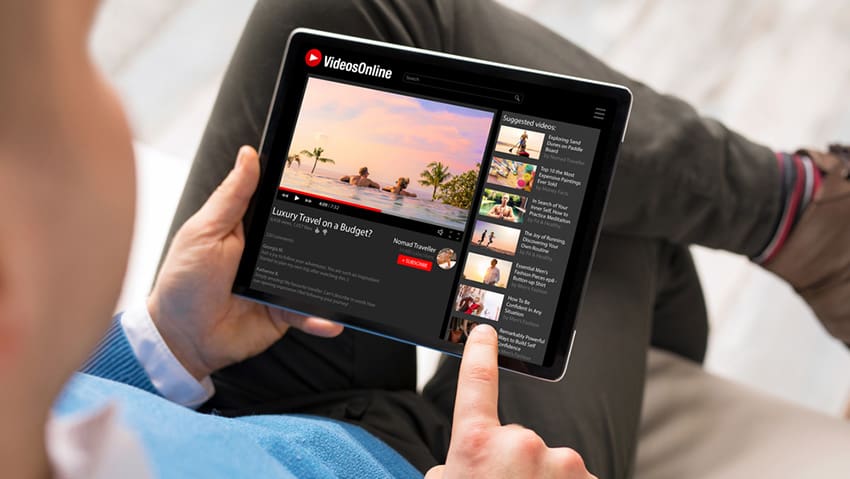
YouTube has been ranked the world’s most influential brand, as technology companies continue to dominate global media and public discourse, according to a new report.
The 2026 Brand Influence Rank from Onclusive found that digital-first platforms occupy every position in the global top 10, reflecting their unrivalled ability to shape narratives across both traditional and social media.
Joining YouTube at the top of the rankings are Google, Instagram, Facebook, LinkedIn, Apple, Amazon, Microsoft, TikTok and ChatGPT, underscoring the structural advantage these businesses hold in driving attention at scale.
The report measures influence not by size alone, but by a brand’s ability to generate sustained media coverage, spark conversation and shape public perception globally.
Digital platforms, with their always-on engagement and vast user bases, are uniquely positioned to dominate this landscape. Their central role in communication, content distribution and increasingly artificial intelligence gives them a powerful edge over traditional brands.
Jennifer Roberts, chief marketing officer at Onclusive, said the findings reflect a fundamental shift in how influence is defined.
“Influence is no longer just about reputation, it’s about the ability to generate continuous attention across multiple channels,” she said, noting that the rise of AI-driven search and content is accelerating this trend.
One of the most notable developments in the rankings is the entry of ChatGPT into the global top 10 for the first time, highlighting the rapid ascent of AI-focused brands.
Alongside Microsoft, AI platforms are generating disproportionate levels of media coverage, driven by innovation, competition and ongoing debate around regulation, ethics and the future of work.
However, this visibility comes with a trade-off. The report identifies a “sentiment ceiling” affecting many leading tech brands, where high levels of scrutiny limit positive perception despite strong influence.
Companies such as Google, Facebook, Apple and TikTok all recorded relatively modest positive sentiment scores, reflecting ongoing regulatory pressures, antitrust investigations and concerns over platform governance.
The report also highlights the growing role of corporate leaders in shaping brand narratives.
Elon Musk was ranked the world’s most influential CEO, with a media presence nearly ten times greater than his closest competitor. His influence is driven by his involvement across multiple high-profile companies, including Tesla, SpaceX and the social platform X, combined with a highly visible and often polarising public persona.
Sam Altman ranked second, reflecting the central role of artificial intelligence in global discourse. His prominence has grown rapidly as AI has become a defining topic in business, politics and society.
Other influential leaders include Mark Zuckerberg, Jensen Huang and Tim Cook, each contributing to their companies’ visibility through strategic positioning in key technology sectors.
The report underscores a key tension in modern brand building: influence does not necessarily equate to positive sentiment.
While tech companies dominate attention and conversation, they also face intense scrutiny over issues ranging from data privacy and competition to the societal impact of their technologies.
This dynamic creates a balancing act for brands, which must manage both visibility and trust in an increasingly complex media environment.
As digital platforms and AI continue to reshape how information is created, distributed and consumed, their dominance in global influence rankings is likely to persist.
However, with that influence comes heightened responsibility, and greater scrutiny.
For brands, the challenge is no longer simply to be seen, but to be trusted.
Jamie Young
Jamie is Senior Reporter at Business Matters, bringing over a decade of experience in UK SME business reporting.
Jamie holds a degree in Business Administration and regularly participates in industry conferences and workshops.
When not reporting on the latest business developments, Jamie is passionate about mentoring up-and-coming journalists and entrepreneurs to inspire the next generation of business leaders.


The company now offers microwave popcorn.
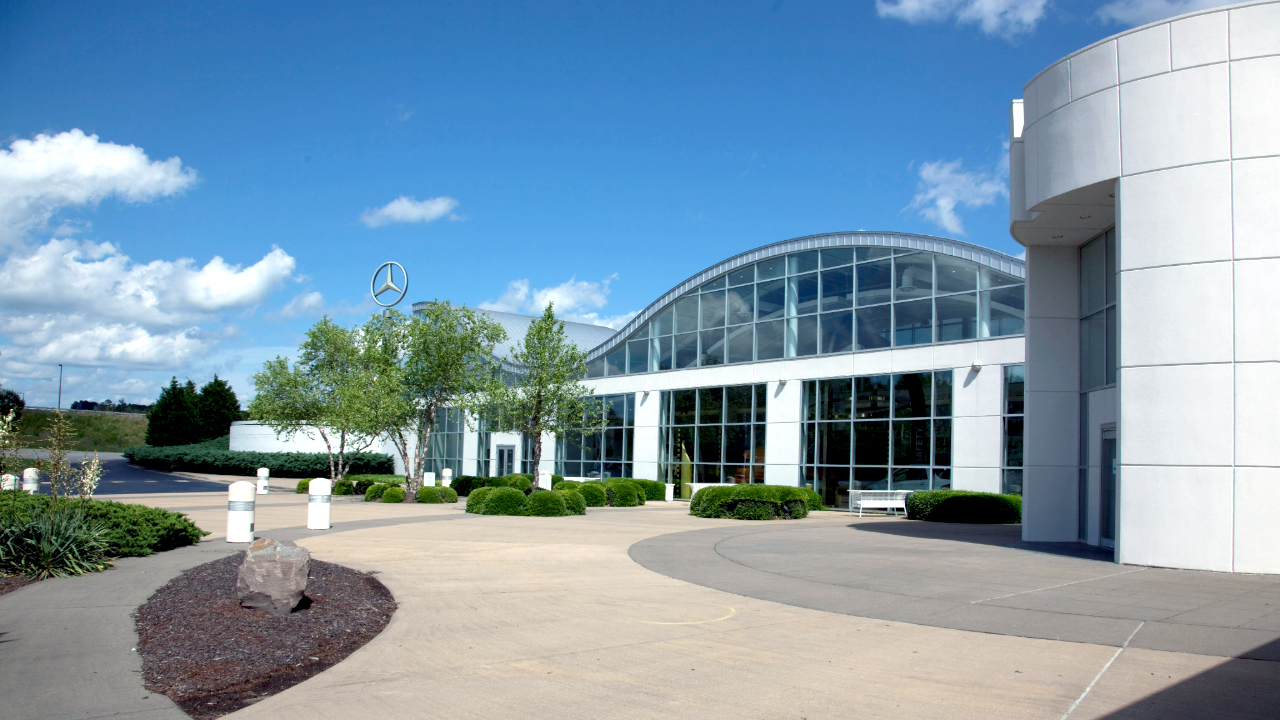
German automaker Mercedes-Benz said on Tuesday it will invest $4 billion at its Alabama plant through 2030 to boost SUV production as it seeks to address significant U.S. auto tariffs.
In total, luxury automaker Mercedes-Benz said it plans to invest more than $7 billion in U.S. operations in the coming years.
The company is moving up to 500 jobs from various locations across the country into a new, state-of-the-art research and development hub in Atlanta.
Automakers face steep tariffs imposed by President Donald Trump on imported vehicles and parts.
AS TRUMP EASES AUTO TARIFFS, MERCEDES WILL EXPAND AT ALABAMA PLANT
Mercedes-Benz said last year it would shift production of its GLC SUV from Germany to Tuscaloosa, Alabama.
In February, Mercedes said group operating profit more than halved to 5.8 billion euros ($6.9 billion) in part due to 1 billion euros in tariff costs.
Mercedes said U.S. passenger car sales rose by 1% to 303,000 last year.
MERCEDES-BENZ CEO SIGNALS POTENTIAL FOR MORE US INVESTMENT
Mercedes North America CEO Jason Hoff said in a recent interview with Reuters that the planned move of the GLC is in part because of tariffs.
Having localized production for the biggest volume products “just makes good business sense,” said Hoff, citing the influence of tariffs.
TRUMP SLAMS SUPREME COURT JUSTICES HE APPOINTED AS ‘BAD FOR OUR COUNTRY’ AFTER TARIFF RULING
Early last year, Mercedes-Benz said that lower tariffs – or even zero-zero tariffs – between the U.S. and European Union could allow the company to step up investment in the U.S. even further.
Mercedes-Benz CEO Ola Källenius said in February 2025 that the company has “been operating in the United States for more than 120 years” and detailed the company’s American footprint.
“We have two large operations on the passenger car side, one in Alabama and one in South Carolina,” Källenius said. “Directly, we employ more than 11,000 people in the United States. If you would count in all the suppliers and the ones that kind of are dependent on those final assembly jobs, the usual calculation is roughly 1-to-10, so another 100,000 jobs are associated with those plants. Our dealer partners, strong private investors around the country, employ 28,000 people and then again, they have a residual effect. “
GET FOX BUSINESS ON THE GO BY CLICKING HERE
“The several hundred thousand jobs, tax revenue, etc. is the Mercedes-Benz footprint in the U.S.,” he explained. “What’s the point I am making? The point is we’re also an American company. Yes, we have our headquarters in Germany and our European origins, but we feel American.”
Reuters contributed to this report.

Magnetar Financial sells Wheeler REIT (WHLR) shares for $17,384
.webp?t=1774974298)
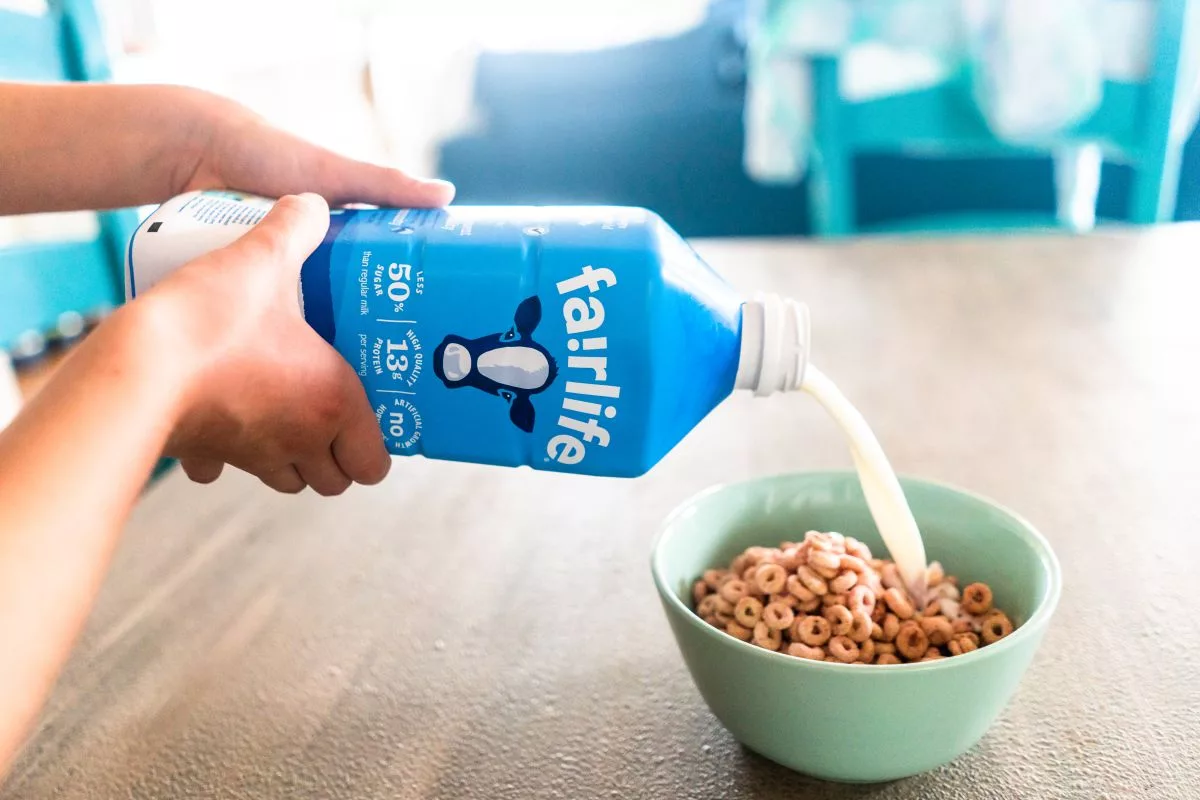
Company is adding two production lines at Coopersville, Mich., facility.

Form DEF 14A nVent Electric plc For: 31 March


A UK technology company has secured a major $200 million contract with US authorities to deploy advanced fibre-optic sensing systems along American borders, marking a significant milestone for British-developed security technology on the global stage.
Sintela, headquartered in Bristol, will provide its “listening” infrastructure to support operations led by US Customs and Border Protection, expanding an initial $34 million agreement signed in 2020.
The three-year deal represents a substantial scale-up of the company’s capabilities and highlights growing demand for AI-driven monitoring systems in border security and critical infrastructure protection.
Sintela’s technology is based on distributed acoustic sensing (DAS), which uses fibre-optic cables to detect and interpret vibrations and sounds across long distances.
By attaching to existing fibre networks, the system can identify specific activities such as footsteps, digging, fence cutting or climbing, all in real time. The data is then analysed using artificial intelligence models that classify and prioritise potential threats.
The approach offers a significant advantage over traditional surveillance methods, particularly in remote or large-scale environments where installing and monitoring cameras would be impractical or prohibitively expensive.
Chief executive Magnus McEwen-King described the contract as a breakthrough moment for the company and the wider technology.
“We are inventing things others can’t do and are now deploying them at scale,” he said, calling the development a “quirky British success story”.
While the US-Mexico border is a key focus, Sintela’s systems are already deployed across multiple international borders, as well as in maritime environments.
Beyond border security, the technology is being used to protect critical infrastructure, including subsea pipelines, power lines and transport networks. Through a joint venture with SLB, the sensors have been installed on offshore pipelines to detect potential sabotage.
In urban environments, the same technology is being applied to monitor water networks for leaks and to assess wear and tear on railways and roads. In parts of Africa, it is being used by utilities to detect attempts to dismantle electricity pylons.
The technology originated from research at the University of Southampton’s Optoelectronics Research Centre, with several of the original researchers now forming part of Sintela’s team.
Since its founding in 2017, the company has grown steadily, reaching revenues of around £13 million in 2023 and expanding its international footprint with offices in the US, including a recent $10 million investment in its Michigan operations.
The new contract is expected to support further expansion, with Sintela having already recruited 50 additional staff across the UK and US and planning to hire another 50 in the near future.
The growth reflects increasing demand for technologies that combine physical infrastructure with digital intelligence, particularly in areas such as security, energy and transportation.
The deal underscores the rising importance of advanced sensing technologies in addressing complex security challenges, from border control to infrastructure resilience.
It also highlights the UK’s strength in deep-tech innovation, particularly in fields that combine academic research with commercial application.
As geopolitical tensions and infrastructure risks continue to evolve, demand for scalable, cost-effective monitoring solutions is expected to grow.
For Sintela, the $200 million contract represents not only a commercial milestone but also a validation of its technology at scale, positioning the company as a leading player in a rapidly emerging sector.
For the UK, it is another example of how homegrown innovation can compete globally, translating cutting-edge research into real-world applications with international impact.
Read more:
UK tech firm Sintela lands $200m US border security deal
SOL Price Drop To $75 Possible As DEX Volumes Plummet
This 7-Part Sci-Fi Series Quietly Became One of TV’s Best Space Operas
This Aphrodisiac Easter Egg From Lovehoney Will Get You Humping Like Bunnies


![[S03:E42] Permainan dunia automotive China kotor? - Hezeri Samsuri, Careta](https://wordupnews.com/wp-content/uploads/2026/04/1775015969_hqdefault-80x80.jpg)

-
 NewsBeat7 days ago
Manchester United reach agreement with Casemiro over contract clause amid transfer speculation
-

 News Videos6 days ago
Parliament publishes latest register of MPs’ financial interests
-
 Tech6 days ago
Intercom’s new post-trained Fin Apex 1.0 beats GPT-5.4 and Claude Sonnet 4.6 at customer service resolutions
-

 NewsBeat4 days ago
The Story hosts event on Durham’s historic registers
-

 Sports4 days ago
Sweet Sixteen Game Thread: Tide vs Michigan
-

 Business5 days ago
Instagram, YouTube Found Responsible for Teen’s Mental Health Struggle in Historic Ruling
-
 NewsBeat7 days ago
Tesco is selling new Cadbury Dairy Milk bar and people can’t wait to try it
-
 Entertainment3 days ago
Lana Del Rey Celebrates Her Husband’s 51st Birthday In New Post
-
Entertainment2 days ago
Fans slam 'heartbreaking' Barbie Dream Fest convention debacle with 'cardboard cutout' experience
-
Crypto World17 hours ago
Dems press CFTC, ethics board on prediction-market insider trades
-

 Sports12 hours ago
Tallest college basketball player ever, standing at 7-foot-9, entering transfer portal
-

 Sports7 days ago
Fantasy Baseball Week 1 Preview: Top sleeper hitters for both five- and 12-day period led by Munetaka Murakami
-

 Tech7 days ago
US FCC Prohibits Approval Of New Foreign-Made Consumer Routers
-
Sports7 days ago
One Team in Particular Is Monitoring Kirk Cousins
-
 Fashion7 days ago
How to Style Spring Like WeWoreWhat: Easy Outfit Ideas for 2026
-

 Sports7 days ago
Football: France arrive in Boston to face Brazil and Colombia in friendlies – Sports
-

 Entertainment6 days ago
HBO’s Harry Potter Series Will Definitely Fail For One Big Reason, And It’s Not J.K. Rowling Or Snape
-

 Fashion6 days ago
En Vogue in Brown Leather and Tailored Neutrals by Atelier Savoir, Styled by J Bolin
-

 Tech2 days ago
The Pixel 10a doesn’t have a camera bump, and it’s great
-

 Fashion6 days ago
What Are Your Favorite T-Shirts for the Weekend?
You must be logged in to post a comment Login