Connect with us
DAPA Banner
DAPA Coin
DAPA
COIN PAYMENT ASSET
PRIVACY · BLOCKDAG · HOMOMORPHIC ENCRYPTION · RUST
ElGamal Encrypted MINE DAPA
🚫 GENESIS SOLD OUT
DAPAPAY COMING

Business

Welsh economic policy is currently too one-handed and to avoid stagnation we must quickly learn

Published

on

Business Live

Frank Holmes says Wales can no longer afford to think small or continue to operate with a fragmented strategy.

Frank Holmes.

Capital is a restless, pragmatic force. It does not invest on sentiment, nor does it anchor itself to history.

It flows predictably towards environments where the regulatory, financial and physical frameworks make long term risk viable.

Advertisement

Ultimately, this reality dictates a harsh truth: a nation’s standard of living is entirely bound to its competitiveness, namely its fundamental ability to unlock domestic potential and attract global capital.

For Wales to claim its place in this global arena, we must build a cohesive economic architecture, and this demands a fundamental reorientation of Welsh economic policy.

We can no longer afford to think small, nor can we continue to operate with a fragmented strategy.

To secure a prosperous future, we must learn to think and act as an ambidextrous nation by mastering two distinct capabilities at once.

Advertisement

With one hand the nation must optimise, modernise and defend its industrial strengths With its other hand, Wales must boldly explore, fund and create the high-value, intellectual-property-led industries of the future.

Welsh economic policy is currently too one-handed; to avoid stagnation, we must quickly learn to use both.

This ambidextrous shift is not an academic preference; it is an urgent structural necessity. Modern economic growth is increasingly defined by a sweeping global transition away from physical capital and towards intangible assets, specifically patents, algorithms, software and brand equity.

These intangible assets operate under a different set of economic rules, where capital alone cannot solve the problem, especially when early stage small and medium sized enterprises (SMEs) remain so highly vulnerable.

Advertisement

Globally, SMEs represent the bedrock of economic activity, yet they are significantly less productive than large, established firms. The mortality rate is brutal: approximately 20% of these enterprises close within their first year, and more than 55% fail to survive beyond their fifth.

Helping these companies scale requires a dedicated infrastructure that makes intangible assets State bankable for the very first time by introducing specific market making instruments, and removing the baseline risk that currently prevents commercial lenders and investors from financing pure ideas.

Simultaneously, we must intentionally connect these early-stage companies with venture capital accelerators providing immediate access to investor ready bootcamps, sector specific experts and seasoned entrepreneurial mentors.

Wales possesses world class universities and genuine regional depth, but their potential is currently outweighed by archaic spin out commercialsation rules, startups and scaleups missing venture grade ambition, a lack of competitive funding and a lack of realistic understanding of what global scale truly requires.

Advertisement

An ambidextrous nation does not allow its startup ecosystem to exist in isolation from its industrial base. Inward investment must be strategically anchored within our existing regional sectors of strength: advanced manufacturing, particularly our world class compound semiconductor cluster, the creative industries, life sciences and fintech.

Highly competitive industrial clusters rely on deep, collaborative partnerships where large market integrators directly raise the operational standards of local SME suppliers. By actively transferring knowledge, coordinating long term demand planning and building management capabilities, anchor firms help smaller partners improve efficiency and access entirely new markets.

This creates a resilient, win win economic fabric. The steady, muscle bound scale of the global anchor supports and shields the quick, agile innovation of the local SME. This integration provides the crucial fuel for scaling, effectively preventing the dangerous customer concentration and dependency that so often cripples an SME before it is strong enough to expand operationally and geographically.

To accelerate this integration, the state must step forward as an active market maker. This means co financing collective branding programmes to position regional SME clusters in global markets, and, Nordic-level integration, leveraging strategic public procurement as a primary growth driver.

Advertisement

Rather than deploying passive subsidies, the public sector can use its massive purchasing power to offer commercial contracts for necessary services. This establishes the critical, first customer relationships that transform pre-revenue SMEs into mature, venture backed entities.

Since high value, IP led economies rely so heavily on geographic clustering, they are uniquely fragile and often highly dependent on human capital.

liveability as two sides of the same coin.

Direct response to shifting market demands is paramount. At the same time, we must treat community liveability as a core strategic asset. High performing schools, affordable modern housing, reliable public transport and excellent healthcare are not secondary luxuries; they are the primary determinants of whether high value talent chooses to relocate and remain in Wales.

Advertisement

You only have to look at Ireland, which despite is enviable economic success, an acute shortage of affordable housing in the Dublin area is driving its talent overseas.

Moving beyond narrow material metrics, economic data consistently reveals that robust economic growth fosters trust in government, and shared prosperity boosts social cohesion. When liveability factors underperform, the consequences are stark: underperforming schools, crumbling public services and communities left in managed decline. To prevent this brain drain, our institutional framework must be firmly embedded in statute. This ensures a durable, stable and legally grounded environment that makes long-term capital commitment and talent retention rational across unpredictable political cycles

Finally, exploiting modern technologies and productivity multipliers, such as artificial intelligence, advanced robotics and automated manufacturing require a resilient digital and energy infrastructure whilst high value technology clusters cannot operate without a constant, energy supply to power modern data centres, automated supply chains and high-speed digital connectivity.

In our midst is the biggest natural gift, the second highest tidal range in the world capable of generating multi-Gigawatts of clean, predictable, affordable energy, whilst delivering unprecedented sovereign national wealth.

Advertisement

Upgrading our physical energy grid to power the digital, IP led economy is the ultimate act of national ambidexterity. To maximise the economic return on these investments, our institutions and government must execute their infrastructure strategies with absolute rigour ruthlessly removing bureaucratic barriers and guaranteeing resilience to unexpected market headwinds.

The lesson across all economic history is clear: competitiveness, innovation and long term survival are not passive occurrences. They do not happen by accident, and they cannot be sustained through wishful thinking or political rhetoric. They are the direct result of deliberate, structurally sound choices.

Ecosystems that thrive are those that systematically bridge the productivity gap between large and small enterprises, construct lean, fast moving validation vehicles to capture emerging opportunities, and back every single strategic decision with an uncompromising commitment to timely and to- budget delivery.

Economic growth is not everything for everyone, but the evidence indicates it is very close to being so. Historically, it has created remarkable progress and elevated living standards across the globe.

Advertisement

Our current societal challenges indicate that we do not have too much economic growth, but that we have had far too little.

By executing an ambidextrous strategy with absolute operational and flawless execution, Wales can secure its prosperity, protect its communities and command its economic future.

  • Frank Holmes is partner with Gambit Corporate Finance and chairs the investment board of the Cardiff Capital Region.

Continue Reading
Click to comment

You must be logged in to post a comment Login

Leave a Reply

Business

David Deno to take over as Cracker Barrel CEO as rebrand recovery continues

Published

on

David Deno to take over as Cracker Barrel CEO as rebrand recovery continues

Traffic at Cracker Barrel locations is yet to fully recover from the backlash against its failed rebrand last year despite signs of improvement, company executives said on the restaurant chain’s most recent earnings call.

The company has been looking to put itself on a more solid financial footing after sales slumped in response to the unsuccessful rebrand that included the removal of the “old timer” from the company’s logo and changes to the restaurant chain’s interior layout, which has long featured a general store.

Advertisement

Cracker Barrel announced on Monday that CEO Julie Masino will step down from the role this summer, with David Deno set to take the helm of the company on Aug. 10. The move follows a slow recovery from the attempted rebrand.

CRACKER BARREL CEO JULIE MASINO TO STEP DOWN

Cracker Barrel CEO Julie Masino.

Cracker Barrel CEO Julie Masino is stepping down, effective Aug. 10. (Jeenah Moon/Reuters)

The company noted in its third-quarter earnings last month that while traffic was improving relative to the recent trend, it remained lower than it was in the prior year.

Masino said, “Q3 results exceeded our expectations, driven by our operating and cost actions, while guest-facing metrics continue to improve, and position us for further traffic recovery.”

Advertisement
Ticker Security Last Change Change %
CBRL CRACKER BARREL OLD COUNTRY STORE INC. 52.40 -1.31 -2.44%

CRACKER BARREL COMEBACK GAINS STEAM AS LOYAL CUSTOMER SAYS RETURN VISIT ‘FELT LIKE COMING HOME’

“Comparable store restaurant sales decreased 2.6%, which included a traffic decline of 6.7%,” said Cracker Barrel CFO Craig Pommells. “Although traffic remained negative, we are encouraged by the gradual improvement in the underlying trend.”

Pommells said that “controlling for the variability between last year’s third and fourth quarters and the resulting comparison in the current year, the underlying traffic trend continues to show gradual improvement.”

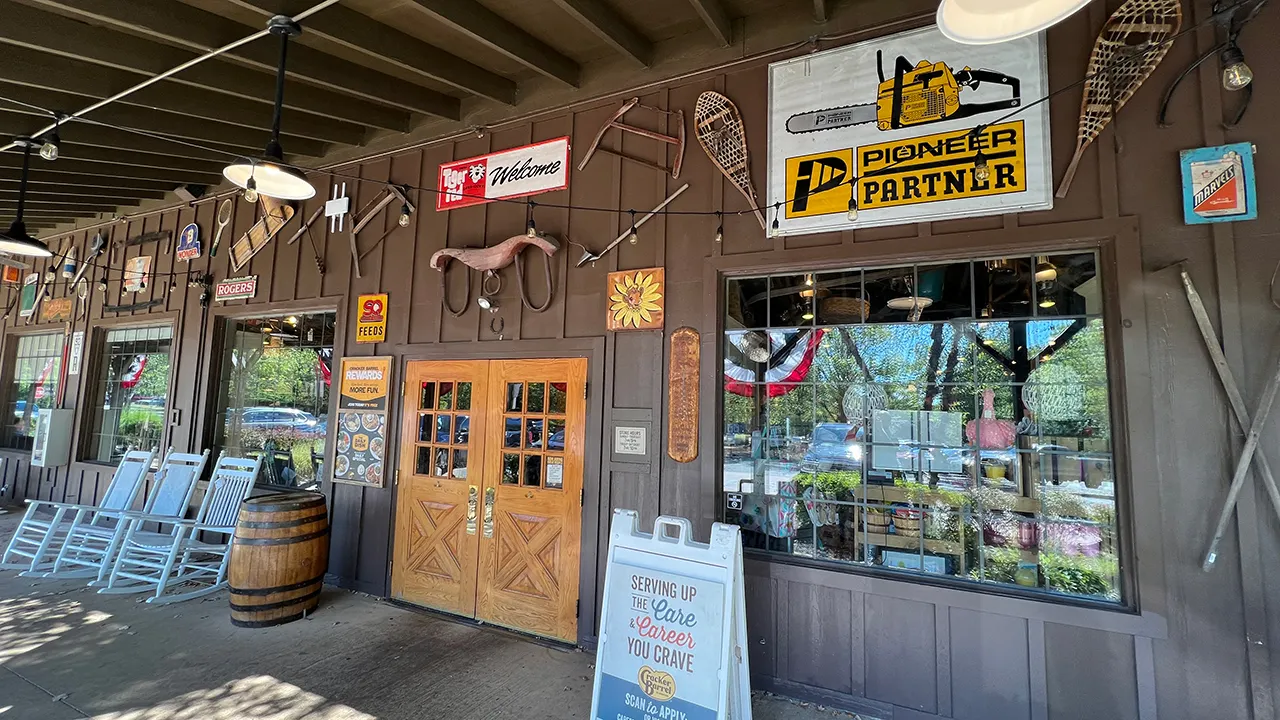
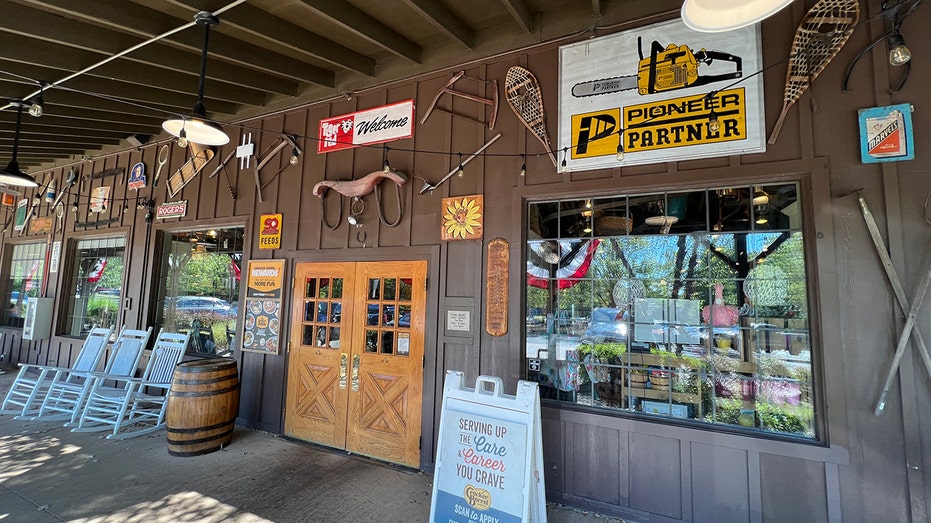
Exterior of Cracker Barrel after logo and rebranding backlash.

The company noted in its third-quarter earnings last month that while traffic was improving relative to the recent trend, it remained lower than it was in the prior year. (Gregory Walton/AFP via Getty Images)

Cracker Barrel’s stock is down about 18% from a year ago, remaining well below its pre-rebrand levels.

Advertisement

However, it has made significant progress in getting back to those levels this year; the company’s stock is up 105% since the start of 2026.

The company has taken steps recently that aim to improve its financial performance.

CRACKER BARREL SALES, TRAFFIC CONTINUE TO SLUMP MONTHS AFTER FAILED REBRAND

Last week, Cracker Barrel announced that it will sell some of its restaurant properties as well as exiting its Maple Street Business Company business. It sold the Maple Street brand and 35 of its locations to Biscuit Belly LLC, with Cracker Barrel closing the remaining 16 Maple Street restaurants.

Advertisement
Waffles and glazed biscuits are served at Maple Street Biscuit Co.

Cracker Barrel announced last week that it will exit its Maple Street Business Company business. (Jeffrey Greenberg/Universal Images Group via Getty Images)

The company also completed a sale-leaseback deal involving 26 company-owned locations, which generated about $77 million in net proceeds that it planned to use to pay down debt, while continuing to operate the restaurants by leasing the properties from the new owner.

“A brand isn’t what management wants it to be,” said brand expert Bruce Turkel. “It’s what customers believe it is.”

GET FOX BUSINESS ON THE GO BY CLICKING HERE

FOX Business’ Sophia Compton contributed to this report.

Advertisement
Continue Reading

Business

Massachusetts mother goes on trial for killing her three children

Published

on


Massachusetts mother goes on trial for killing her three children

Continue Reading

Business

Building Practical Housing Solutions Across Greater Boston

Published

on

Businesses that cut back on their offices during the pandemic are now scrambling to find larger premises as the return-to-office trend gathers pace – but prime space is in short supply.

Alpha Management Corporation is a family-owned real estate company that has spent decades helping shape the housing market across Greater Boston. Founded by Anwar Faisal, the company began with a simple goal: provide dependable property management built on integrity, innovation and reliable service.

Over the years, that vision has grown into a business that owns, develops and manages residential and commercial properties throughout communities including Allston, Brighton, Brookline, Fenway, Back Bay, Jamaica Plain, Cambridge, Somerville, Newton and Medford.

One area has remained at the centre of the company’s work for more than thirty years. Alpha Management has focused on helping students find practical housing close to universities. As enrolment has grown and on-campus accommodation has struggled to keep pace, many students have needed reliable off-campus options. Alpha recognised that demand early and made it a priority.

The company has worked with both domestic and international students while also partnering with universities to help simplify the housing search. At a time when some landlords hesitate to rent to students because of limited rental histories or other perceived risks, Alpha Management has continued serving this important part of the community.

That long-term approach reflects the company’s wider philosophy. Students contribute to neighbourhood businesses, public transport, restaurants and the local economy, making accessible housing an important part of Boston’s continued growth.

Advertisement

Today, Alpha Management Corporation continues to invest in its properties while maintaining the family values that shaped its beginnings. With decades of experience and a strong understanding of the Greater Boston housing market, the company remains a trusted leader in practical property management and student-friendly housing.

Alpha Management Corporation: Three Decades of Meeting Boston’s Housing Needs

Q&A with Alpha Management Corporation

Q: How did Alpha Management Corporation begin?

Alpha Management Corporation was founded by Anwar Faisal with the idea that property management should be built on integrity, reliable service and long-term relationships. What started as a small family business has grown into a company that owns, develops and manages residential and commercial properties across Greater Boston. Even as the company expanded, the focus on serving local communities has stayed the same.

Q: What has been the biggest change in the Boston housing market during that time?

One of the biggest changes has been the growing demand for housing near universities. Boston has always attracted students from around the world, but university enrolment has continued to increase while on-campus housing has remained limited. That has created lasting demand for practical off-campus accommodation close to campuses.

Q: Why has student housing become such an important part of the company’s work?

We recognised many years ago that students needed dependable places to live. They often value being close to campus more than having large apartments or luxury features. By providing housing near universities, we help meet a genuine need in the community.

Advertisement

Student housing is not a luxury. It is a practical necessity for thousands of people who come to Boston every year to study.

Q: Why do you believe students are so important to the city?

Students contribute far beyond the classroom. They support local cafés, restaurants, shops, transport services and neighbourhood businesses. Their families also visit throughout the year, adding further economic activity.

Universities are a major part of what makes Greater Boston successful, and suitable housing helps support that wider ecosystem.

Q: Some landlords are reluctant to rent to students. How has Alpha Management approached that challenge?

Many students are renting for the first time. They may have limited rental history, limited credit history or require co-signers. Some landlords see those factors as additional risk.

Advertisement

Our approach has been different. We have spent more than three decades working with students and understanding their circumstances. Experience has shown us that with clear communication and proper management, student housing can work well for both residents and property owners.

Q: Has working with universities been an important part of that process?

Yes. We have partnered with universities to help students find housing and make the transition to living in Boston easier. For many domestic and international students, finding accommodation is one of the biggest challenges before classes even begin.

Helping simplify that process has always been an important part of what we do.

Q: Alpha Management operates across many communities. How has that shaped the business?

Every neighbourhood has its own character and housing needs. We manage properties in areas including Allston, Brighton, Brookline, Fenway, Back Bay, Jamaica Plain, Cambridge, Somerville, Malden, Medford, Newton, West Roxbury and Norwood.

Advertisement

Having a broad presence across Greater Boston gives us a better understanding of local markets while allowing us to stay connected to the communities we serve.

Q: What makes successful property management today?

Property management is about much more than maintaining buildings. It is about understanding the people who live in them, responding when issues arise and building trust over time.

That means listening carefully, communicating clearly and taking a long-term view. Those principles have guided the company from the beginning.

Q: How do you see the future of housing in Greater Boston?

Demand will continue to be strong, especially in areas close to universities. That means practical housing solutions will remain important. As the market evolves, there will continue to be opportunities for property owners, universities and housing providers to work together to help meet growing demand.

Advertisement

Q: After more than three decades, what continues to motivate Alpha Management?

The answer has remained remarkably consistent. We want to provide quality housing that meets real needs. We are proud to have helped generations of students find homes near their universities while continuing to invest in communities across Greater Boston.

Our goal has never been simply to manage properties. It has been to provide dependable housing solutions that support residents, strengthen neighbourhoods and contribute to the long-term success of the region.

Advertisement
Continue Reading

Business

Why Market Volatility May Be Part Of The Bull Case

Published

on

Why Market Volatility May Be Part Of The Bull Case

Invesco is an independent investment management firm dedicated to delivering an investment experience that helps people get more out of life.Be the first to know! Sign up for Invesco US Blog and get expert investment views as they post.Disclosure for all Invesco US articles: Before investing, carefully read the prospectus and/or summary prospectus and carefully consider the investment objectives, risks, charges and expenses. The information provided is for educational purposes only and does not constitute a recommendation of the suitability of any investment strategy for a particular investor. Invesco does not provide tax advice. The tax information contained herein is general and is not exhaustive by nature. Federal and state tax laws are complex and constantly changing. Investors should always consult their own legal or tax professional for information concerning their individual situation. The opinions expressed are those of the authors, are based on current market conditions and are subject to change without notice. These opinions may differ from those of other Invesco investment professionals. NOT FDIC INSURED MAY LOSE VALUE NO BANK GUARANTEE All data provided by Invesco unless otherwise noted. Invesco Distributors, Inc. is the US distributor for Invesco Ltd.’s retail products and collective trust funds. Invesco Advisers, Inc. and other affiliated investment advisers mentioned provide investment advisory services and do not sell securities. Invesco Unit Investment Trusts are distributed by the sponsor, Invesco Capital Markets, Inc., and broker-dealers including Invesco Distributors, Inc. PowerShares® is a registered trademark of Invesco PowerShares Capital Management LLC (Invesco PowerShares). Each entity is an indirect, wholly owned subsidiary of Invesco Ltd. ©2015 Invesco Ltd. All rights reserved.

Continue Reading

Business

How to Start a Sports Prop Firm in 2026

Published

on

How to Start a Sports Prop Firm in 2026

Sports prop trading allows traders to place positions on sporting events through a funded account after completing an evaluation. Traders follow a set of rules covering areas such as profit targets, drawdown limits, and eligible markets before they can access firm capital.

The global sports trading market was valued at $11.2 billion in 2025 and is projected to reach $123.4 billion in 2026. For entrepreneurs, this creates an opportunity to build a platform that combines trading challenges, reliable technology, and a smooth user experience.

Keep reading to learn how to build and launch a sports prop firm in 2026.

6 Steps to Start a Sports Prop Firm in 2026

Starting a sports prop firm needs the right business model, reliable technology, and clear operating procedures before opening your platform to traders.

Here are the 6 steps to help you build and launch a sports prop firm in 2026:

Advertisement

1) Understand the Sports Prop Firm Model

Before creating a sports prop firm, decide how your platform will operate. The trading model affects your evaluation process, your payout structure, and risk management.

Here are some of the most common trading models used by sports prop firms:

Trading Model How It Works
One-Step Challenge Traders complete one evaluation by reaching a profit target while staying within drawdown rules before receiving a funded account.
Two-Step Challenge Traders complete two evaluation phases before qualifying for funding. Each phase has its own trading objectives and risk limits.
Instant Funding Traders pay a higher fee to receive immediate access to a funded account without completing an evaluation. Risk controls are usually stricter.


Scaling Programme Traders begin with a smaller funded account and become eligible for larger account sizes after meeting performance milestones.
Subscription Model Traders pay a recurring monthly fee to access challenges, trading tools or platform features.

2) Set Up the Legal Structure and Compliance

This will depend on where the company is registered and how it plans to operate. It’s also important to prepare documents such as your Terms and Conditions, Privacy Policy, and user agreements before accepting customers.

Compliance may include data protection requirements, anti-money laundering (AML) procedures, and record-keeping. If your platform operates in multiple countries, local regulations may differ.

Advertisement

3) Choose a White-Label Platform

Building a platform from scratch takes time, technical knowledge, and ongoing maintenance. A reliable and trusted sports prop firm software provider like Sports Prop Tech can help you launch faster by providing the core technology needed to run your business.

A typical white-label platform includes:

  • Trader dashboards for tracking account performance and progress
  • Challenge management tools for creating and managing evaluation programmes
  • User registration and account management
  • Reporting and analytics for monitoring trader activity
  • Secure payment gateway integration
  • Administrative controls for managing users and platform settings
  • Sportsbook integrations and live odds feeds
  • Automated account management for funded traders

4) Create Clear Trading Rules

Every rule should be easy to understand before someone starts an evaluation. This includes profit targets, daily loss limits, maximum drawdown, payout requirements, and account scaling rules where applicable.

You should also decide which sports, leagues and trading markets are available on the platform. Some firms may focus on major football competitions, while others include basketball, tennis, baseball or additional sports.

Clear rules reduce confusion and help create a consistent experience for every participant. If changes are made, they should be communicated clearly so traders always know what is expected.

Advertisement

5) Set Up KYC and Payment Processing

Before traders can receive payouts, you’ll need a secure process for verifying customer identities and handling payments.

Know Your Customer (KYC) checks are commonly used to confirm that users are who they claim to be. This process may include identity documents, proof of address, or other verification steps depending on your business requirements.

Your platform should support secure deposits, withdrawals, and transaction records. It’s also worth deciding how challenge fees, refunds, and payout requests will be managed.

6) Launch and Market Your Sports Prop Firm

Before opening registrations, test every part of the platform. Check the registration process, payment system, trader dashboard, reporting tools, and email notifications. Beta users can also provide useful feedback before the public launch.

Advertisement

Once everything is ready, focus on promoting your business through channels that match your audience. This may include:

  • Search engine optimisation (SEO)
  • Affiliate partnerships
  • Social media
  • Email marketing
  • Educational content

Ready to Launch Your Own Sports Prop Firm?

Starting a sports prop firm takes planning, testing and the right technology. Before opening your platform to traders, make sure your trading rules, payment system, compliance checks and user dashboard all work as expected.

Running a few final tests can help you spot issues before launch and give new users a smoother experience. Once everything is in place, you’ll be ready to focus on growing your platform and building your community.

Advertisement
Continue Reading

Business

Chiefs Coordinator Eric Bieniemy’s Wife Shot by Couple’s Son Sunday, Hospitalized in Stable Condition

Published

on

Eric Bieniemy

The wife of Kansas City Chiefs offensive coordinator Eric Bieniemy was shot by the couple’s son Sunday night at the family’s home in Virginia, according to multiple reports citing sources close to the situation.

Mia Bieniemy, 57, is hospitalized in stable condition, according to a source. Police in Loudoun County, Virginia, confirmed that a woman was being treated for “serious injuries” from multiple gunshot wounds but did not publicly disclose her identity.

Son Arrested and Charged

Elijah Zion Bieniemy, 27, was arrested and charged with malicious wounding, use of a firearm in commission of a felony, and discharge of a firearm inside of a dwelling, according to the Loudoun County Sheriff’s Office. The sheriff’s office confirmed the arrest and charges against Eric Bieniemy’s son in connection with the shooting. Sources told ESPN that Mia Bieniemy was shot in the chest and arm.

Advertisement

Elijah Bieniemy is being held without bond at a detention center in Loudoun County, according to police.

Details of the Sunday Night Shooting

Loudoun County Sheriff’s Office spokesperson Leah Paul said Monday that police responded to a report of a shooting at a home located on the 20000 block of Northpark Drive in Ashburn, Virginia, at 7:32 p.m. Eastern time on Sunday. Deputies who responded found an adult woman suffering from multiple gunshot wounds, and she was taken to a nearby hospital with serious injuries.

The home is located in Ashburn, Virginia, near Washington, D.C., in an area close to the Washington Commanders’ practice facility, where Bieniemy previously served as offensive coordinator.

Advertisement

Bieniemy Was at Training Camp When Shooting Occurred

Eric Bieniemy left the Chiefs’ training camp and was not in attendance for Monday’s practice. He had been with the Chiefs on Sunday in St. Joseph, Missouri, at the campus of Missouri Western State University for the team’s second practice of training camp, when the shooting occurred hundreds of miles away at his family’s Virginia home.

Bieniemy was with the Chiefs for training camp in Missouri when his wife was reportedly shot at their Virginia home.

Team Confirms Awareness, Offers Few Details

Advertisement

The Chiefs said in a statement they are “aware of the incident involving Eric Bieniemy’s family,” but did not provide further details. The team has not indicated whether Bieniemy plans to return to training camp or take any leave of absence while the situation unfolds.

A Long Coaching Career Across the League

Bieniemy’s coaching career has spanned some of the most notable stretches in recent NFL history. He has long been regarded as one of the best assistant coaches in the league, having served as the Chiefs’ running backs coach from 2013 through 2017 before taking over as offensive coordinator from 2018 through 2022, a period that coincided with the emergence of quarterback Patrick Mahomes and two of the franchise’s Super Bowl championships.

After that run in Kansas City, Bieniemy spent the 2023 season with the Washington Commanders before serving as UCLA’s offensive coordinator in 2024. He then joined Chicago Bears head coach Ben Johnson’s staff, where he was instrumental in helping the team finish third in the league in rushing last season. He returned to the Chiefs as offensive coordinator this year after Kansas City parted ways with former Bears coach Matt Nagy.

Advertisement

Bieniemy rejoined the Chiefs earlier this year as their offensive coordinator, a position he previously held from 2018 to 2022.

Family Ties to the Region

The location of Sunday’s shooting adds a notable layer to the story given Bieniemy’s coaching history in the Washington, D.C., area. His stint as the Commanders’ offensive coordinator under head coach Ron Rivera in 2023 placed him in the same region where his family’s home is located, near the team’s practice facility in Ashburn.

What Comes Next

Advertisement

As of Monday, authorities had not released additional details about what led to the shooting, and the Loudoun County Sheriff’s Office had not commented further beyond confirming the location, timing and charges against Elijah Bieniemy. Mia Bieniemy remained hospitalized in stable condition, according to sources cited by multiple outlets, though her exact prognosis and expected recovery timeline had not been publicly disclosed.

The Chiefs are in the midst of training camp as they prepare for the upcoming NFL season, and it remains unclear how the situation involving Bieniemy’s family will affect his participation in camp in the coming days. The team’s brief statement acknowledging awareness of the incident suggests further details may be forthcoming as the situation develops, though the organization has so far declined to elaborate beyond confirming it is aware of what happened.

This is a developing story, and additional details are expected to emerge as the investigation into the shooting continues and as Mia Bieniemy’s condition is further updated by medical officials or family representatives.

Advertisement
Continue Reading

Business

Galactic develops low-dust granulated vinegar solution

Published

on

Galactic develops low-dust granulated vinegar solution

Galimax Flavor V-100 Pearls offer a fermentation derived solution to keep food fresh.

Continue Reading

Business

Custom Flavors forms partnership with private equity firms

Published

on

Custom Flavors forms partnership with private equity firms

Alex Wendling will continue to lead the company as CEO.

Continue Reading

Business

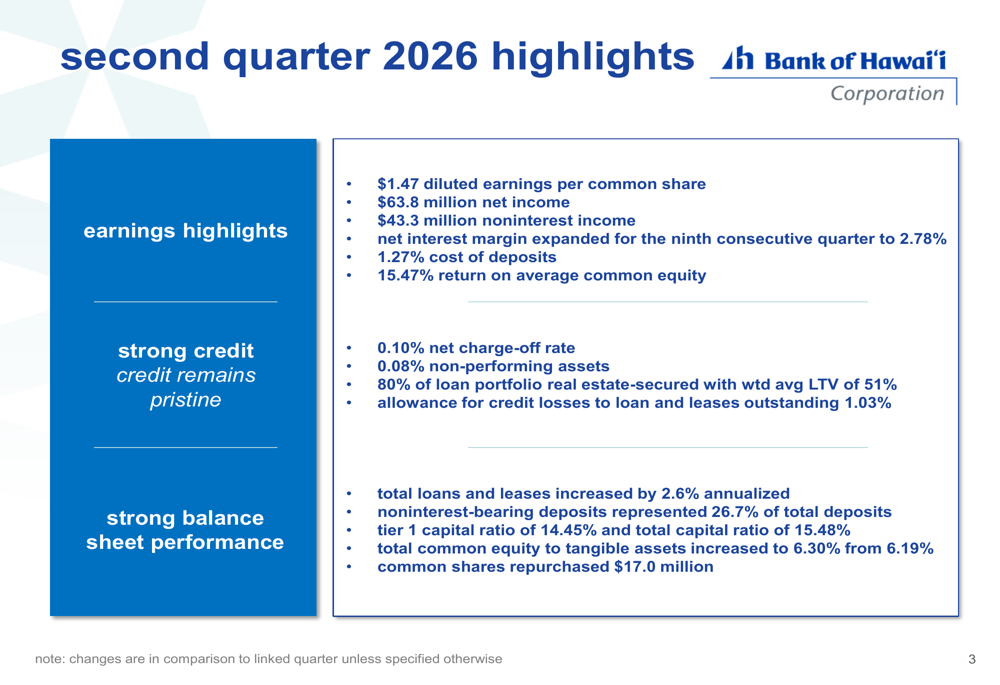
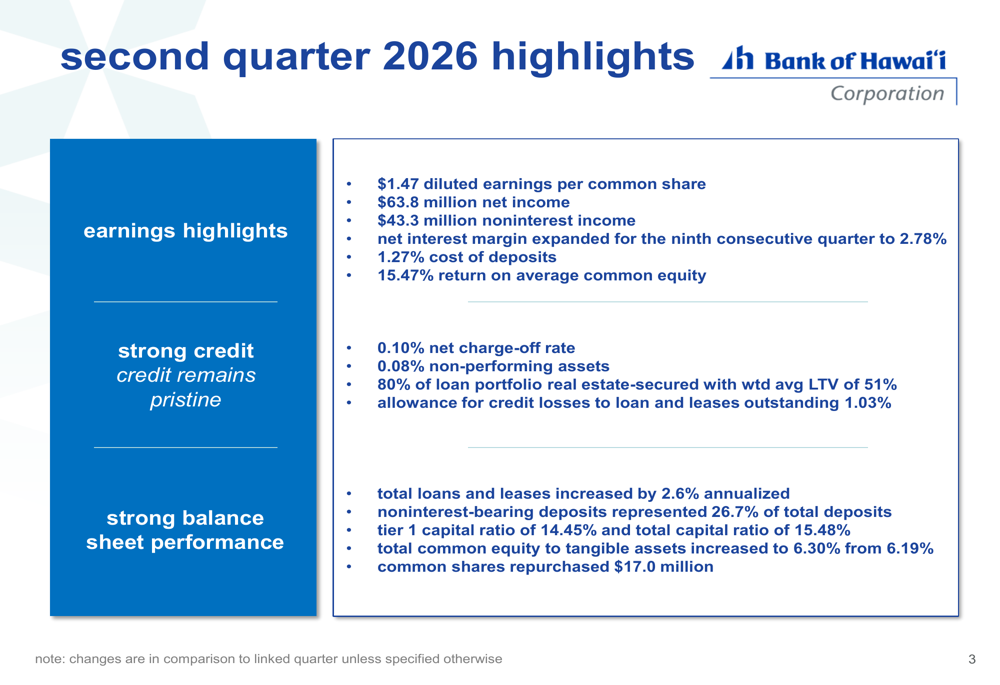
Bank of Hawaii Q2 2026 slides: margin hits 2.78%, shares fall on revenue miss

Published

on

Bank of Hawaii Q2 2026 slides: margin hits 2.78%, shares fall on revenue miss


Bank of Hawaii Q2 2026 slides: margin hits 2.78%, shares fall on revenue miss

Continue Reading

Business

JetBlue overhauls fare options from basic economy to basic first class

Published

on

JetBlue overhauls fare options from basic economy to basic first class

A JetBlue Airbus A220-300 sits parked at Gate B40 at Boston Logan International Airport in Boston, MA, on Dec. 22, 2025.

Austin DeSisto | Nurphoto | Getty Images

JetBlue Airways is overhauling its fare options as it gears up to launch its domestic first-class seats and, yes, there is a restrictive basic option at the front of the plane.

Advertisement

Travelers flying on JetBlue will start by choosing how much legroom they want and how premium they want their seat to be.

The airline will have an economy section, or “Main,” a section with extra legroom seats that it calls “Even More,” which also come with earlier boarding and priority airport screening, and a domestic first class that it’s named BlueFirst, which it’s slated to debut later this year. From there, customers will have the following options for each class:

  • Base: This is the lowest price. It includes a carry-on but not seat selection. Tickets are refundable as a travel credit and there is a fee to change or cancel the reservation. Travelers will earn 1 TrueBlue loyalty point per $1 spent.
  • Standard: Seat selection is included, there’s no change or cancel fee (though customers will have to pay a difference in fare) and travelers will earn 3 TrueBlue points per $1 spent.
  • Flex: Along with all the options in a standard fare, the perk here is that refunds will go back to the original form of payment.

With the new groupings, JetBlue is getting rid of the “Core” fares it sells now and putting economy class options in a “Main” category.

JetBlue’s lie-flat Mint business class, which is used on longer-haul flights like cross-country trips and flights to European destinations including Paris, London and Milan, will only have the Standard and Flex option.

JetBlue stopped short of offering a basic lie-flat business option that competitors United Airlines and Delta Air Lines launched this year. Those airlines have made similar moves to break up premium economy by offering different fares even at the front of the cabin. United this month said that on some aircraft it will charge a premium for a blocked middle seat.

Advertisement

JetBlue hasn’t yet provided a date for its BlueFirst seats, but the changes come as airlines are racing to capitalize on high demand for pricier seats from consumers seeking extra comfort and perks on board. JetBlue is set to report results on Tuesday.

Choose CNBC as your preferred source on Google and never miss a moment from the most trusted name in business news.
Continue Reading

Trending

Copyright © 2025