

Business
Cyclospora outbreak may be worsened by food industry consolidation


Vegetables on display in a grocery store on Aug. 15, 2025, in Delray Beach, Florida.
Joe Raedle | Getty Images
The cyclospora outbreak that has sickened thousands in the U.S. is drawing renewed attention to a decades-long shift in how fresh food moves through the country.
While investigators work to identify the original source of contamination, some food safety experts say the industry’s centralized sourcing and distribution networks after a wave of consolidation can help turn what once may have been an isolated contamination event into a multistate outbreak.
“The general trends that have taken place in the food industry, the way in which food has been sourced and then distributed has played some role here,” said Dr. David Relman, a professor of microbiology and immunology at Stanford University.
The cyclospora parasite’s long incubation period, the difficulty in tracking its path and what some experts have criticized as a bumpy federal response have all played a role in the widening outbreak. Some experts say the structure of the food system has also contributed.
“It’s possible that as food sourcing and distribution becomes consolidated you get pooling and then redistribution of what might have been a very local contamination problem, so that it now becomes a widely distributed contamination problem,” Relman said.
Marion Nestle, professor emerita of nutrition, food studies and public health at New York University, said the shrinking of the industry has amplified the consequences when contamination occurs.
“Consolidation means that if something goes wrong, it goes wrong big time,” Nestle said.
Centralized processing can further expand the reach of an outbreak, she said.
The current FDA investigation around cyclosporiasis has focused on shredded iceberg lettuce distributed through Taylor Farms’ foodservice business, an ingredient that reached Taco Bell restaurants and other foodservice customers across multiple states.
Relman referenced bagged lettuce as one example of how changes in distribution could spread a foodborne illness.
“Think of the difference between one head of lettuce and a bag of chopped lettuce that may have come from many, many heads,” he said. “These bags are now being produced in huge numbers and distributed in far-flung distribution networks.”
Consolidation in the supply chain
Packages of Taylor Farms salad kits displayed for sale at a Sprouts Farmers Market grocery store in Redondo Beach, California, on Feb. 23, 2024.
Patrick T. Fallon | AFP | Getty Images
The industry’s evolution toward fewer distributors has been driven in part by a push for efficiency. Nestle said those improvements for businesses come with trade-offs for food safety.
“Big is not necessarily better,” she said. “The bigger the supplier, the greater the opportunity for contamination.”
Over the past several decades, U.S. agriculture and food distribution have steadily consolidated as companies pursue greater efficiency and national scale, according to the USDA.
For example, Taylor Farms, the salad producer under scrutiny for the recent cyclospora outbreak, has seen significant expansion through a series of acquisitions over the past decade — including Earthbound Farm in 2019, Curation Foods in 2021 and most recently Equinox Growers in March.
Meanwhile, restaurant supply has become increasingly concentrated too, with broadline distributors like Sysco, US Foods and Performance Food Group serving hundreds of thousands of restaurants and institutional kitchens nationwide.
While federal regulators blocked Sysco’s proposed $8.2 billion acquisition of US Foods in 2015 on antitrust grounds, both companies have continued growing through smaller acquisitions of regional distributors and fresh produce processors.
Sysco, the nation’s largest foodservice distributor, has spent the past decade expanding its fresh produce business by acquiring regional distributors including Paragon Foods in Pennsylvania, The Coastal Companies in the mid-Atlantic and Greco and Sons, a specialty food distributor with 10 distribution centers across the country.
Tractor trailers at a Sysco Corp. distribution center in Halfmoon, New York, Jan. 30, 2024.
Angus Mordant | Bloomberg | Getty Images
Those deals expanded Sysco’s reach in fresh-cut produce and value-added processing, allowing a larger share of restaurants to source ingredients through the same distribution network.
In 2016, US Foods acquired Freshway Foods, a fresh fruit and vegetable processor, repacker and distributor in the eastern half of the United States.
Some experts on food distribution believe having a smaller number of companies in the industry compounds issues when they arise.
But not everyone agrees that consolidation is the enemy.
Timothy Lytton, a health and safety regulation expert at Georgia State University, said larger produce growers and processors often operate with more sophisticated food safety systems than smaller farms because they have the financial resources to invest in testing, traceability, audits and quality control.
“It’s not entirely clear that larger operations have more food safety problems than smaller operations,” said Lytton.
In California, he added, there have been studies at farmers markets that have found fresh produce grown by small farmers have had contamination with E. coli.
“While you may have a farmer who’s very concerned about the quality of the product, you also have in an organic model a more holistic idea about farming that often involves animals near crops,” Lytton said. “That combination of animals and crops can create food safety problems.”
Even so, Lytton acknowledged that when contamination does occur within large handler networks, the resulting recalls at the distribution level are much broader and harder to manage.
CNBC has reached out to the group of major food suppliers about safety precautions and tracing procedures. Sysco pointed CNBC to the International Foodservice Distribution Association.
“The foodservice supply chain that feeds our communities is intricate and foodservice distributors are highly skilled in tracking and tracing the food they distribute,” said a spokesperson for the IFDA. “They maintain robust records, identifying the source, internal movement, and recipient of all products they handle, and they have a proven track record of providing FDA with critical traceback information within 24-48 hours to support foodborne illness outbreak investigations and swiftly remove products from commerce.”
Relman stressed that while consolidation itself doesn’t create contamination, it does change the consequences when contamination occurs.
“We often don’t appreciate a system like the food inspection system, or the public health system in large until it fails,” said Relman. “We can’t keep doing that.”



Alex Wendling will continue to lead the company as CEO.
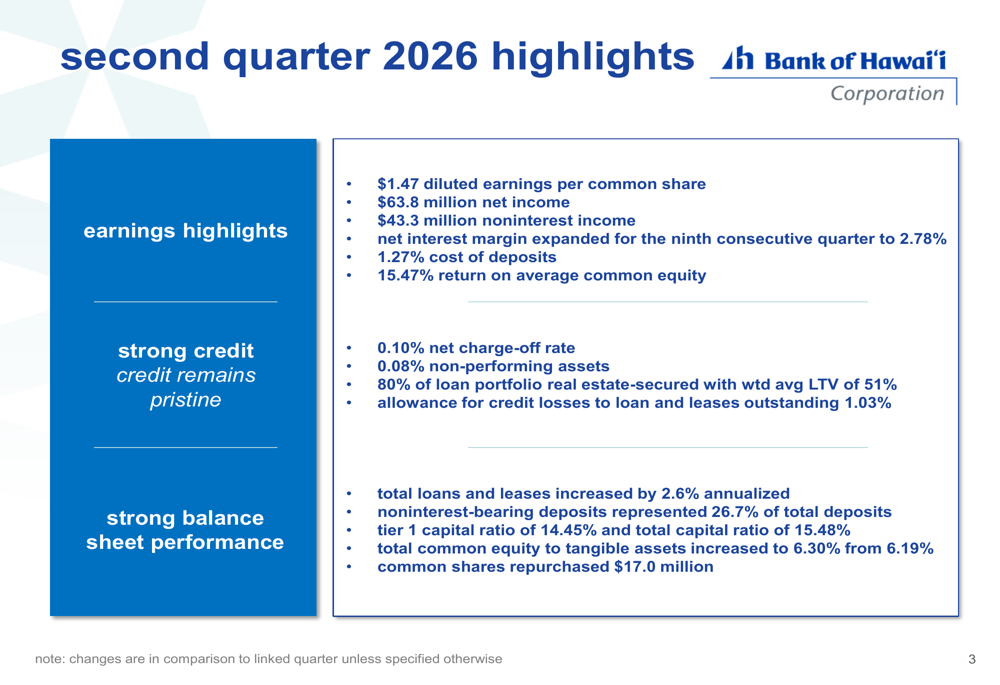
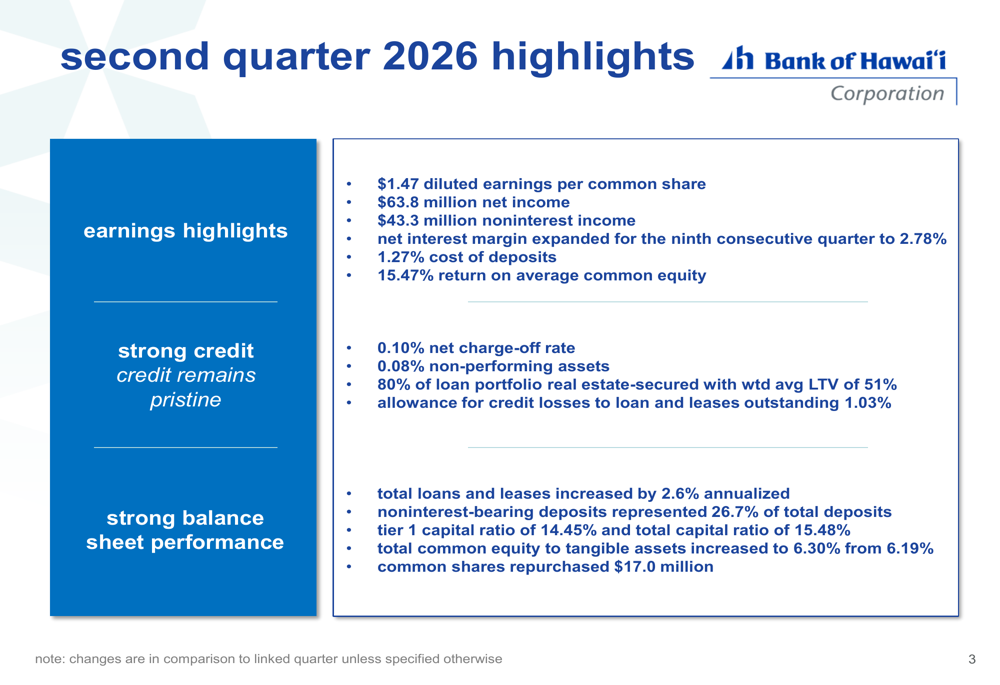
Bank of Hawaii Q2 2026 slides: margin hits 2.78%, shares fall on revenue miss

A JetBlue Airbus A220-300 sits parked at Gate B40 at Boston Logan International Airport in Boston, MA, on Dec. 22, 2025.
Austin DeSisto | Nurphoto | Getty Images
JetBlue Airways is overhauling its fare options as it gears up to launch its domestic first-class seats and, yes, there is a restrictive basic option at the front of the plane.
Travelers flying on JetBlue will start by choosing how much legroom they want and how premium they want their seat to be.
The airline will have an economy section, or “Main,” a section with extra legroom seats that it calls “Even More,” which also come with earlier boarding and priority airport screening, and a domestic first class that it’s named BlueFirst, which it’s slated to debut later this year. From there, customers will have the following options for each class:
- Base: This is the lowest price. It includes a carry-on but not seat selection. Tickets are refundable as a travel credit and there is a fee to change or cancel the reservation. Travelers will earn 1 TrueBlue loyalty point per $1 spent.
- Standard: Seat selection is included, there’s no change or cancel fee (though customers will have to pay a difference in fare) and travelers will earn 3 TrueBlue points per $1 spent.
- Flex: Along with all the options in a standard fare, the perk here is that refunds will go back to the original form of payment.
With the new groupings, JetBlue is getting rid of the “Core” fares it sells now and putting economy class options in a “Main” category.
JetBlue’s lie-flat Mint business class, which is used on longer-haul flights like cross-country trips and flights to European destinations including Paris, London and Milan, will only have the Standard and Flex option.
JetBlue stopped short of offering a basic lie-flat business option that competitors United Airlines and Delta Air Lines launched this year. Those airlines have made similar moves to break up premium economy by offering different fares even at the front of the cabin. United this month said that on some aircraft it will charge a premium for a blocked middle seat.
JetBlue hasn’t yet provided a date for its BlueFirst seats, but the changes come as airlines are racing to capitalize on high demand for pricier seats from consumers seeking extra comfort and perks on board. JetBlue is set to report results on Tuesday.

Hewlett Packard has dropped its attempt to remove the manager of Mike Lynch’s estate, agreeing that Jeremy Sandelson can continue in the role as the late entrepreneur’s family awaits a decision on whether it can appeal against a £920 million damages award.
Under the agreement reached between the parties, Sandelson will remain in place if permission to appeal is granted. The restructuring firm Interpath Advisory will take over if the application fails.
HP had sought earlier this year to oust Sandelson, a former partner at Lynch’s law firm, and replace him with Interpath, against the wishes of the family.
At a court hearing in April, HP’s lawyers argued that Sandelson had a “fundamental and irreconcilable” conflict of interest arising from his close ties to the family. The company said Interpath would be more impartial.
HP told the court that whoever managed the estate would inevitably end up probing the finances of Lynch’s widow, Angela Bacares, to assess whether her own assets could be used to pay what is owed. The £920 million is almost twice the value of Lynch’s entire estate, so alternative sources would be required to make up the full sum.
Sandelson has managed the estate since Lynch’s death in August 2024.
Lynch, the founder of the software company Autonomy, was found liable in 2022 over its 2011 sale to HP for £8.3 billion. HP claimed he had defrauded the company by inflating Autonomy’s value. A High Court judge subsequently ruled that his estate should pay HP £920 million, a figure made up of damages plus interest and costs. HP had earlier lodged a final claim of almost $1.8 billion against the estate.
Lynch was found not guilty by a US jury in June 2024, two months before his death. He was on holiday celebrating that verdict with his family when the Bayesian sank off the Sicilian coast during a storm. He died alongside his teenage daughter, Hannah, and five others.
In May, Italian investigators said the Bayesian’s crew, rather than the storm, were to blame for the sinking. Prosecutors had appointed experts to examine whether a freak weather event, described by witnesses as a “tornado”, was responsible.
The report found it amounted to “little more than a squall, a sudden increase in wind speed that precedes thunderstorms and downpours”, which the crew should have been able to manage.
According to the preliminary findings, the yacht capsized and sank due to the improper actions of the crew, their underestimation of the weather and a number of safety devices not being activated properly. The investigation is exploring alleged crimes including negligent shipwreck and multiple counts of manslaughter for the captain and two crew members, and has raised the possibility of liability on the part of the yacht’s builder.
The UK’s Marine Accident Investigation Branch is running a separate safety investigation into the foundering, which is being conducted in parallel to the Italian criminal inquiry. The builder, the Italian Sea Group, has separately filed a £400 million claim against Bacares, the yacht’s captain and two crew members.
The Bayesian sank two days after the death of Stephen Chamberlain, a co-defendant in Lynch’s fraud case. An inquest in June found the 52-year-old was hit and killed by a car after he took up running to deal with the stress of the US fraud trial the pair were facing.
Chamberlain’s father, Grenville, said his son had taken up ultramarathons to cope with the pressure. “In order to keep himself fit for the charges ahead, Steve took up running and committed himself to becoming an ultra long-distance runner,” he said.
“He ran hundreds of miles, travelling to Snowdonia and the Lake District so he was able to negotiate areas he was not familiar [with], in order to run 200 miles in all weather conditions.”
HPE, one of HP’s successor companies, was approached for comment.

Jamie Young
Jamie Young is Senior Reporter at Business Matters, covering SME finance, employment law and Westminster policy since 2016. He has reported on every Budget and Autumn Statement since 2018, helped make sense of the ‘covid era’ and the bounce-back loan scheme from launch through the fraud investigations, and broke the magazine’s coverage of the 2024 late-payment reforms. He joined Business Matters straight from completing his BA in Administration from Exeter University and is NCTJ-qualified. Reach him at jyoung@cbmeg.co.uk
Business
China’s CXMT Stock Soars 466% in Historic Shanghai Debut, Becoming the Nation’s Most Valuable Listed Company
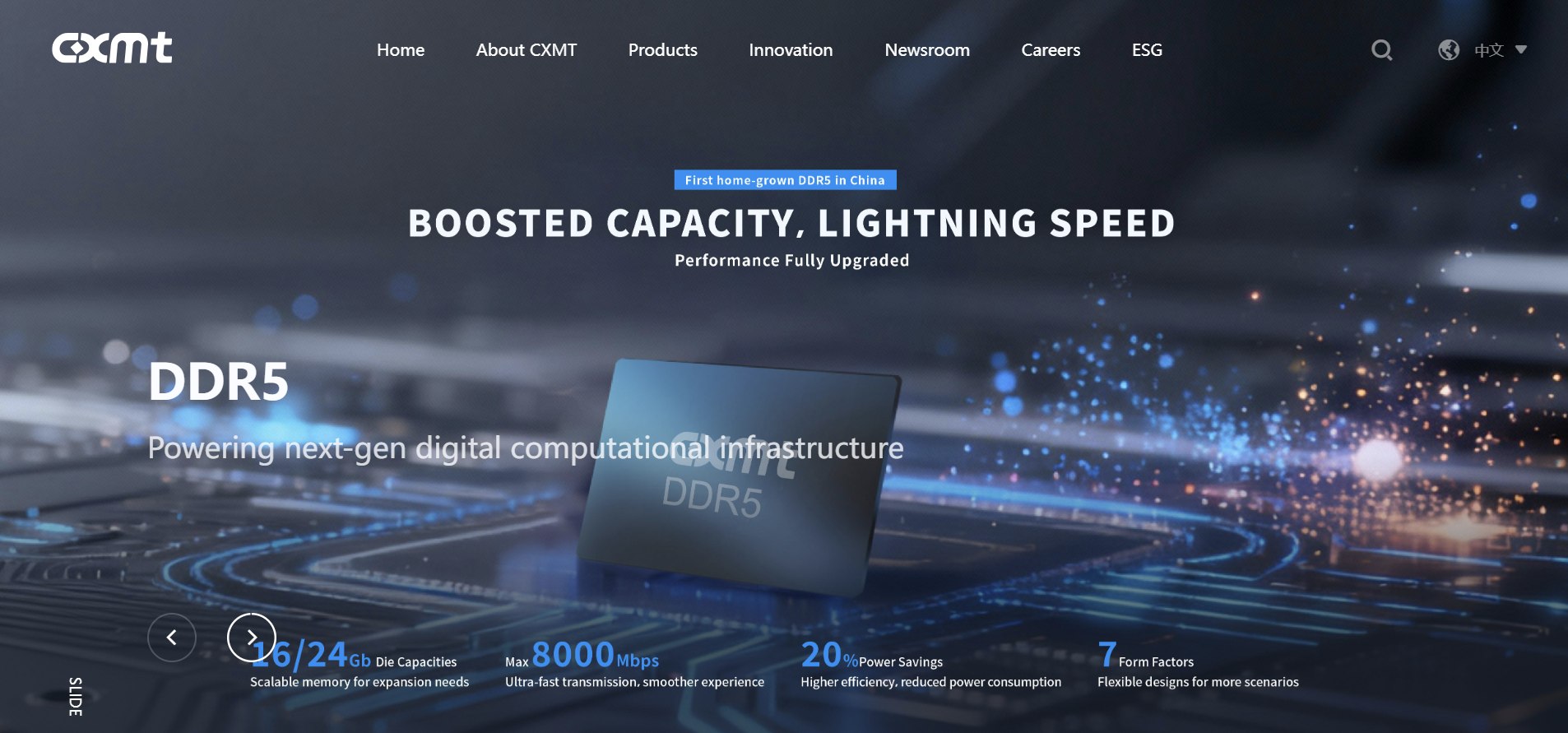
Shares of Chinese memory chipmaker CXMT Corp exploded on their Shanghai trading debut Monday, surging 465.82% to close at 49.00 yuan, instantly catapulting the company to the top of China’s stock market by valuation and marking one of the most spectacular initial public offerings in recent financial history.
The stock, which priced its IPO at 8.66 yuan per share, closed the session up $40.34 in value terms, after touching as high as 54.65 yuan during intraday trading on the Shanghai Stock Exchange’s technology-focused STAR Market.
Asia’s Biggest IPO of the Year
CXMT, formerly known as ChangXin Memory Technologies, raised 57.92 billion yuan, or approximately $8.6 billion, in the offering, making it the biggest mainland Chinese semiconductor listing on record and surpassing SMIC’s $7.5 billion Shanghai share sale in 2020. The IPO proceeds could rise to 66.61 billion yuan if an over-allotment option is fully exercised.
The listing was Asia’s largest IPO of 2026, with proceeds earmarked to expand production capacity, fund research and development, and strengthen the company’s working capital. The debut also outpaced the more than 100% first-day gain posted by China Resources New Energy following its $3.6 billion IPO earlier this month.
A New Most-Valuable Company in China
The rally lifted CXMT’s market capitalization to 3.65 trillion yuan, or roughly $539.21 billion, sharply up from $85.5 billion during the IPO process, making it the most valuable company listed in China and overtaking Industrial and Commercial Bank of China, the market’s previous heavyweight. That valuation now exceeds Intel Corp’s roughly $464 billion market cap, positioning the Chinese chipmaker ahead of one of the world’s most storied semiconductor names just hours after its trading debut.
By the close of trading, CXMT shares settled at 49 yuan, giving the company a market capitalization of about 3.3 trillion yuan, still enough to overtake Industrial and Commercial Bank of China’s 2.6 trillion yuan valuation.
A Rising Force in the Global Memory Market
Founded in 2016, CXMT manufactures dynamic random-access memory, or DRAM, chips used in products ranging from smartphones and personal computers to AI servers, positioning it at the center of China’s push for semiconductor self-sufficiency. According to its IPO prospectus, CXMT held a 7.67% share of the global DRAM market based on fourth-quarter 2025 sales, trailing industry leaders SK Hynix, Micron Technology and Samsung Electronics.
Analysts at Morningstar expect CXMT’s global DRAM market share to increase to 10% in 2026, citing strong AI infrastructure investment and growing demand for Chinese-made memory chips. The company’s financial turnaround has been dramatic in recent months, swinging to an operating profit of 35.43 billion yuan in the first quarter from a loss of 2.83 billion yuan a year earlier, driven by continued growth in global computing power demand and capacity allocation from major manufacturers.
Apple’s Reported Interest Adds Fuel
Part of the excitement around CXMT’s debut stems from reports that one of the world’s largest technology companies may already be evaluating its chips. Recent media reports showed that Apple was seeking approval from the Trump administration to use memory chips supplied by CXMT in devices sold outside the United States, as the company looks to diversify its supply chain amid a global memory shortage.
That reported interest from Apple has added weight to the view that CXMT could emerge as a legitimate global supplier rather than simply a domestically focused player serving China’s internal semiconductor ambitions.
Tight Global Supply Supports the Rally
Industry analysts pointed to persistent global memory shortages as a key factor underpinning investor enthusiasm for the listing. According to TrendForce analyst Ellie Wong, tight memory market conditions are expected to keep prices elevated through the end of 2027, with ongoing supply shortages pushing many customers to diversify their supplier base in ways that could meaningfully benefit CXMT.
Political Headwinds Remain
Despite the blockbuster debut, CXMT faces notable political obstacles to expanding its reach into Western markets. The Pentagon has included CXMT on its roster of Chinese enterprises with purported military connections, though this classification does not presently restrict American companies from conducting commercial transactions with the chipmaker.
Those restrictions, along with broader U.S. export controls on advanced chipmaking equipment, are expected to limit how quickly CXMT can scale its most cutting-edge production capabilities, even as its balance sheet and market valuation swell following Monday’s debut.
Part of a Broader Global Memory Boom
CXMT’s debut arrives amid a broader rally across memory chipmakers worldwide. SK Hynix experienced a 13% surge during its initial Wall Street trading session earlier this month, following a $26.5 billion capital raise in the largest-ever U.S. market debut by an international company, with the South Korean firm’s market capitalization exceeding $1 trillion in May. Both Samsung and Micron have also recently crossed the $1 trillion valuation threshold, milestones driven predominantly by intensifying demand for AI-oriented semiconductors.
A Word of Caution From Skeptics
Not everyone views the memory sector’s runup as sustainable. Some analysts have suggested the industry may be nearing a short-term peak in sentiment around the current memory cycle, noting that investors had already begun selling into the IPO, particularly within China itself, even as the broader business fundamentals of memory chipmaking remain durable over the long term.
CXMT’s explosive debut sets the stage for a closely watched stretch across the global semiconductor industry, with major memory chipmakers including SK Hynix and Micron set to report earnings in the coming days. Investors will be watching closely to see whether CXMT’s newfound scale translates into a genuine competitive threat to established DRAM leaders, or whether Monday’s rally proves to be a speculative debut-day frenzy that eventually cools as trading normalizes in the sessions ahead.
Business
5 Ways China’s Newly Public CXMT Could Threaten Samsung and SK Hynix in the Global Memory Chip Market
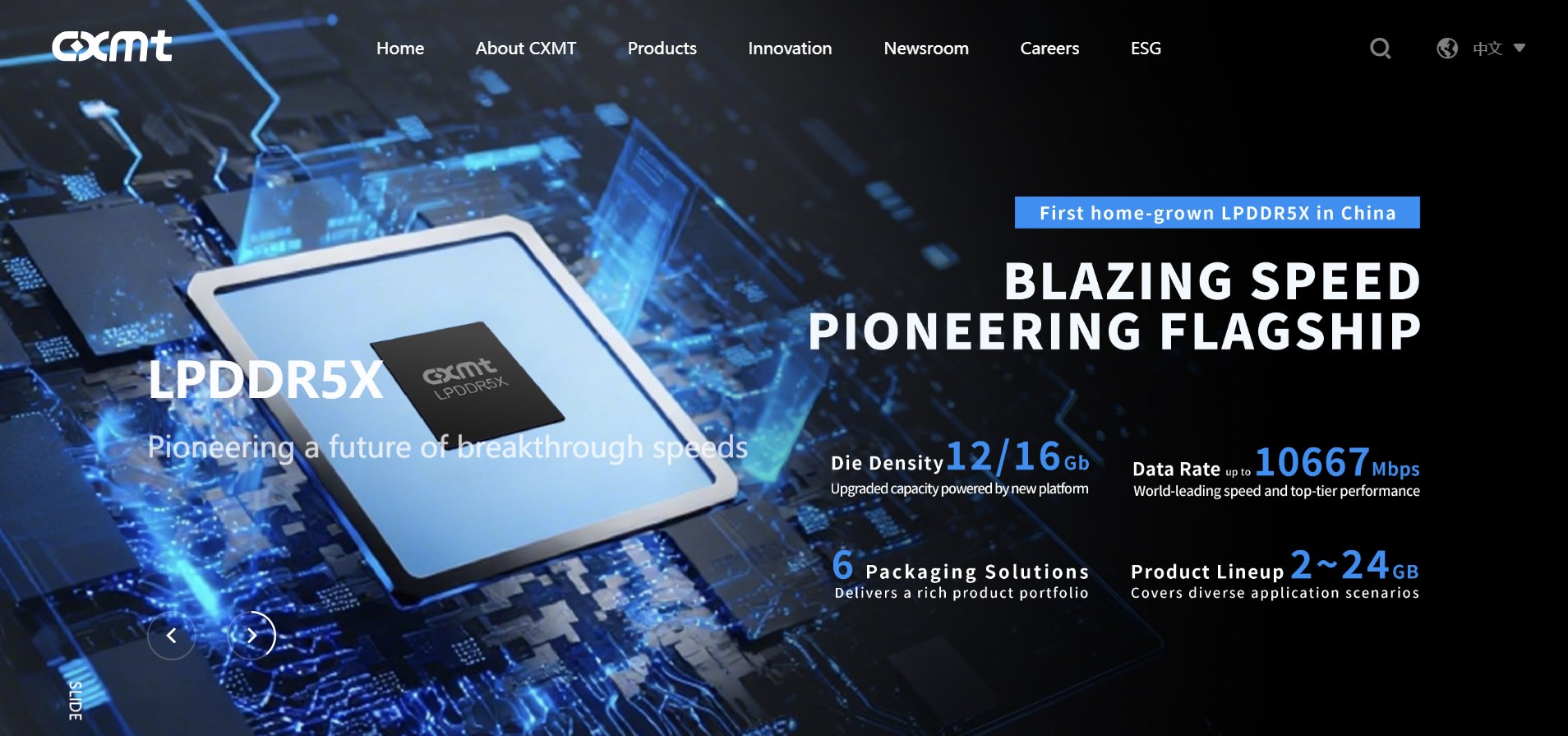
China’s ChangXin Memory Technologies delivered one of the most explosive stock market debuts in recent history Monday, with shares surging more than 465% on the Shanghai Stock Exchange and instantly making the company China’s most valuable listed firm. The blockbuster listing has intensified a debate that has been building for months in South Korea’s semiconductor industry: whether CXMT represents a genuine long-term threat to the dominance of Samsung Electronics and SK Hynix in the global memory chip market, or whether the technology gap between the Chinese newcomer and Korea’s established giants remains too wide to close anytime soon.
Here are five ways analysts say CXMT’s rise could create real problems for the two Korean memory titans.
1. Aggressive Low-Cost Pricing in Commodity DRAM
CXMT’s most immediate competitive weapon is price. The company’s commodity DDR5 memory chips are priced 15% to 20% below comparable Korean products, a gap significant enough that major PC makers HP and Dell have already begun quality testing CXMT’s chips as potential alternatives. That kind of price undercutting poses a direct threat to the profitability of Samsung and SK Hynix in the commodity memory segment, which still accounts for a substantial share of both companies’ overall earnings.
Backed by enormous Chinese government subsidies, CXMT’s strategy of flooding the commodity DRAM market with low-cost supply poses a direct threat to the profitability of South Korean giants Samsung Electronics and SK Hynix. If that pricing pressure spreads beyond entry-level products into higher-margin segments, it could squeeze margins that have only recently expanded to record levels amid the broader AI-driven memory boom.
2. Explosive Financial Growth Fueling Rapid Expansion
CXMT’s balance sheet has transformed dramatically in a short period, giving the company the financial firepower to keep expanding aggressively. The company’s first-quarter net profit surged 1,688% year-on-year, lifting its global DRAM market share to 7.67%, with revenue of 50.8 billion yuan representing a 719% increase from the prior year. Much of that profitability came from selling roughly 28 billion yuan worth of DRAM inventory secured during a previous price downturn at significantly higher prices during the recent industry upswing.
That kind of profit surge, combined with the fresh capital raised in Monday’s IPO, gives CXMT substantially more resources to plow into new production capacity, research and development, and technology upgrades, resources that could accelerate its climb up the global market share rankings faster than many Korean analysts previously anticipated.
3. Rapidly Expanding Production Capacity
Perhaps the most concrete threat lies in CXMT’s raw manufacturing capacity, which is on pace to grow dramatically over the next several years. U.S. semiconductor analysis firm SemiAnalysis forecast that CXMT’s production capacity would grow to about 350,000 wafers per month by the end of this year, approaching Micron’s 385,000 per month over the same period, and projected it would reach 500,000 per month by 2028, accounting for 17% of the world’s total DRAM supply.
In terms of production capacity alone, the outlook suggests CXMT could soon overtake Micron to become the world’s third-largest DRAM maker. Some analysts see an even steeper trajectory. Nomura Holdings projected CXMT’s memory chip output to grow at 40% to 45% annually through 2030, expanding its global DRAM market share to 18% by the end of 2028, with the firm’s analyst writing that CXMT’s market share gains are likely to accelerate given that the global supply of memory is unlikely to ease in the coming years.
4. A Widening Base of Customers Willing to Diversify
CXMT’s growing credibility with major global customers represents another emerging challenge for the Korean incumbents. Recent media reports indicated Apple was seeking approval from the Trump administration to use memory chips supplied by CXMT in devices sold outside the United States, as the company looks to diversify its supply chain amid a global memory shortage. Combined with HP and Dell’s ongoing quality testing of CXMT’s commodity DRAM, that growing roster of potential customers suggests the Chinese chipmaker is no longer confined to serving only domestic Chinese demand.
Industry analysts note that persistent global memory supply shortages are pushing many customers to diversify their supplier base in ways that could significantly benefit CXMT and create additional business opportunities for the company going forward. If that diversification trend continues, it could chip away at the loyalty major electronics makers have historically shown toward Samsung and SK Hynix.
5. A National Economic Priority With Deep Government Backing
Unlike a typical private competitor, CXMT benefits from being a strategic priority for the Chinese government’s broader semiconductor self-sufficiency campaign, giving it access to resources and policy support that private rivals in South Korea do not enjoy to the same degree. With over 40% of South Korea’s exports dependent on semiconductors, CXMT’s rise is viewed not merely as corporate competition but as a warning signal for the national economy.
That government backing helps explain why CXMT has been able to sustain aggressive pricing and rapid capacity expansion even while posting the kind of profit swings that would typically concern private investors, a dynamic that gives Beijing considerable influence over how quickly the company can scale.
The Case for Skepticism
Despite these five pressure points, many analysts caution that CXMT remains far from displacing Korea’s dominance in the segments that matter most for future profitability. According to market research firm TrendForce, the three dominant players, Samsung Electronics, SK Hynix and Micron, controlled over 91% of the global DRAM market as of 2025, and CXMT’s mainstay products remain concentrated in the mobile LPDDR segment, with its presence in the high-bandwidth memory market critical for AI servers remaining negligible.
Samsung Electronics holds the largest share at 38% for the first quarter of 2026, followed by SK Hynix at 29%, according to Counterpoint Research, while CXMT’s market share stands at just 8%, a sharp jump from previous years but still far behind the two Korean leaders. SK Hynix in particular has cemented its lead in the highest-margin HBM segment, with Goldman Sachs estimating the company will maintain over 50% of the total HBM market share and having already secured roughly two-thirds of the orders for Nvidia’s next-generation HBM4 memory chips.
For now, CXMT’s rise poses a real and growing challenge in the lower-margin commodity DRAM segment, even as Samsung and SK Hynix retain a commanding lead in the advanced, AI-driven memory products that are increasingly defining the industry’s most lucrative growth frontier.
Business
10 Most Successful Global K-Pop Stars to Emerge From HYBE Corporation’s Roster of Music Labels So Far

HYBE Corporation has built one of the most commercially dominant rosters in modern K-pop, spanning multiple labels that have each produced acts capable of topping global charts, selling out stadiums, and reshaping how Korean pop music is consumed worldwide. From the genre-defining success of BTS to the rapid rise of newer fourth-generation groups, here is a look at 10 of the most successful acts to come out of HYBE’s multi-label system so far.
1. BTS
No group has done more to define HYBE’s global success than BTS. Entering 2026, BTS remains the undisputed leader among K-pop acts worldwide, boasting approximately 82 million Spotify followers and around 24 to 26 million monthly listeners, with influence extending far beyond music into fashion, philanthropy and global cultural trends. The group returned in March 2026 with the album “Arirang,” which debuted at No. 1 on the Billboard 200 and posted 641,000 equivalent album units in its first week, the highest total for any album released that year. All seven members, RM, Jin, Suga, J-Hope, Jimin, V and Jungkook, have now completed their mandatory military service and entered what fans are calling their “Post-Military Era.”
2. SEVENTEEN
Under HYBE’s PLEDIS Entertainment label, SEVENTEEN has established itself as one of the group’s most consistent commercial performers. The 13-member group’s world tour “NEW_” drew approximately 840,000 concertgoers across 29 shows in 14 regions, one of the clearest signs of the group’s scale in 2026. SEVENTEEN currently sits at the No. 3 spot on the Global Artist Chart, a reflection of how strongly fans support the group through both album sales and touring.
3. TOMORROW X TOGETHER (TXT)
Also under BIGHIT MUSIC, TXT has become one of HYBE’s fastest-rising acts internationally. The group achieved a historic milestone by selling out three consecutive nights at the Tokyo Dome just two years after its debut, while its studio album “Odyssey” earned multiple “Album of the Year” nominations. The group’s blend of vulnerable storytelling and genre experiments, including emo-rock and indie-pop influences, has helped it build roughly 6.9 million monthly listeners while resonating with fans through its members’ relatable, “boy next door” image.
4. LE SSERAFIM
Operating under HYBE’s SOURCE Music label, LE SSERAFIM has emerged as one of the company’s most prominent girl groups, building international visibility through consistent chart performance and a global touring presence that has helped position the group among the industry’s leading fourth-generation acts.
5. ENHYPEN
Formed through HYBE’s BELIFT LAB in partnership with CJ ENM, ENHYPEN debuted through the reality survival show “I-LAND” in 2020. The group’s origin as a joint venture between BigHit and CJ ENM helped establish BELIFT LAB as one of HYBE’s key incubators for new talent, producing a group that has since built a substantial global following.
6. NewJeans
Debuting under ADOR in 2022, NewJeans quickly became one of the most talked-about acts in HYBE’s roster. The group’s Y2K revival aesthetic and Jersey club-inspired sound exploded via TikTok virality, helping the group reach roughly 14 million monthly listeners. Described as achieving massive streaming numbers and cultural buzz through minimalist concepts and viral hits, NewJeans frequently appears in top global preference and streaming charts, particularly among younger demographics. The group’s success has come alongside a highly publicized dispute between former ADOR chief executive Min Hee-jin and HYBE over the label’s independence and creative direction.
7. ILLIT
Another BELIFT LAB act, ILLIT debuted in March 2024 and quickly built a significant digital footprint. The group became a notable part of the broader controversy involving NewJeans, after allegations surfaced that ILLIT’s concept bore similarities to its labelmate, a dispute that became a flashpoint in HYBE’s internal management conflicts that year.
8. TWS
Debuting under PLEDIS Entertainment, TWS represents one of HYBE’s newer boy group ventures, produced under the same label lineage responsible for SEVENTEEN’s success. The group has continued to build its presence within HYBE’s broader roster as the company expands its portfolio of active acts across multiple genres and concepts.
9. BOYNEXTDOOR
Under KOZ Entertainment, the label led by veteran artist and producer Zico, BOYNEXTDOOR has grown into one of HYBE’s notable boy group properties, contributing to the label’s broader strategy of pairing established industry figures with new talent development.
10. Zico
As both a solo artist and the head of KOZ Entertainment, Zico occupies a unique position within HYBE’s ecosystem, having built a long solo career prior to his label’s acquisition by the company while continuing to develop new acts like BOYNEXTDOOR under his own imprint.
HYBE’s Broader Strategy
HYBE’s roster spans BIGHIT MUSIC (BTS, TOMORROW X TOGETHER), BELIFT LAB (ENHYPEN, ILLIT), SOURCE Music (LE SSERAFIM), PLEDIS Entertainment (SEVENTEEN, TWS), KOZ Entertainment (ZICO, BOYNEXTDOOR) and ADOR (NewJeans), reflecting a multi-label structure designed to let each imprint operate with a degree of creative autonomy. The company has continued expanding that structure, most recently unveiling a new girl group called TUIDE under its ABD label, set to debut in the second half of 2026.
HYBE Chairman Bang Si-hyuk has described the company’s broader international expansion, including new auditions in India and joint ventures in Japan and the United States, as part of a “multi-home, multi-genre” strategy aimed at building K-pop-style acts across multiple countries and markets simultaneously.
With BTS’s continued dominance, SEVENTEEN and TXT’s growing global touring power, and newer acts like NewJeans, ILLIT and LE SSERAFIM expanding HYBE’s reach among younger audiences, the company’s roster illustrates how a single entertainment conglomerate has managed to produce a remarkably broad range of commercially successful acts across nearly every corner of the K-pop landscape.

Form 144 WESBANCO INC For: 27 July


Companies are focused on functional, plant-based innovation.
China Is Why AI Won't Pop Like The Dot-Com Bubble

Bitcoin holds firm as Hormuz hostilities pause, Fed prepares interest-rate decision: Crypto Markets Today

Elon Musk throws his support behind ethnic cleansing

Jackson Koivun’s 3M win? Scottie Scheffler’s words and Ted Scott’s statement told the story


-

 Fashion3 days ago
Weekend Open Thread: Brooks Brothers
-

 Crypto World6 days ago
Grayscale Files For Worldcoin ETF, WLD Registers Sharp Rise
-

 NewsBeat6 days ago
How a former Blue Peter presenter stunned America’s Got Talent judges
-

 Tech19 hours ago
Intel is reversing course and bringing hyper-threading back to its server chips
-

 Tech7 days ago
Sail Virtually Aboard The “Itanic” With IA-64 Emulator
-
 Tech7 days ago
Turtle Beach Command Series KB7 review: a nifty screen-equipped gaming keyboard
-
 Business6 days ago
New Jersey voter registration controversy explained: How 6,600 noncitizens got on the rolls, and what happens next
-
 Entertainment6 days ago
Johnny Depp’s R-Rated Gothic Cult Classic Gets New Release Ahead of Sydney Sweeney Remake
-

 Crypto World5 days ago
Ethics, other provisions in crypto Clarity Act to be further discussed
-

 Politics8 hours ago
Luke Littler dismantles Gerwyn Price to retain title in Blackpool
-
 NewsBeat7 days ago
Shanghai science forum photos show China’s AI and robotics advances in rivalry with US
-
 Sports23 hours ago
Commonwealth Games boxing: Jadumani Singh seals dominant 5-0 win over Pakistan’s Sumama Rehman to enter quarter-finals | Commonwealth Games News
-

 Sports4 days ago
2026 3M Open leaderboard: Scottie Scheffler finds putter in Round 1, sits three back
-

 News Videos4 days ago
The Peugeot Family: How 200 Years of an “Old Money” Dynasty Died in A Boardroom
-

 Politics1 day ago
Spain sweeps the board at 2026 World Cup with individual awards
-

 Fashion4 days ago
16 Dresses for the High Summer Event
-
 Entertainment3 days ago
A New Post-Apocalyptic Gundam Anime Series Blasts Into SDCC
-

 Crypto World7 days ago
Andrew Cuomo joins OKX board as crypto exchange expands in U.S.
-

 News Videos22 hours ago
BITCOIN JUST ENTERED THIS CRITICAL ZONE…
-

 Crypto World1 day ago
XRP Ledger adds $2.6B as RWA inflows rank second
You must be logged in to post a comment Login