Shares of Western Digital Corp. (NASDAQ: WDC), the parent company that owns the SanDisk brand, closed at $68.42 on Monday, February 23, 2026, up 1.8% from the previous session’s $67.21 finish. The gain reflected renewed investor optimism about the NAND flash memory market’s recovery and Western Digital’s positioning to benefit from surging demand for high-capacity storage in AI data centers, enterprise servers, and consumer devices.
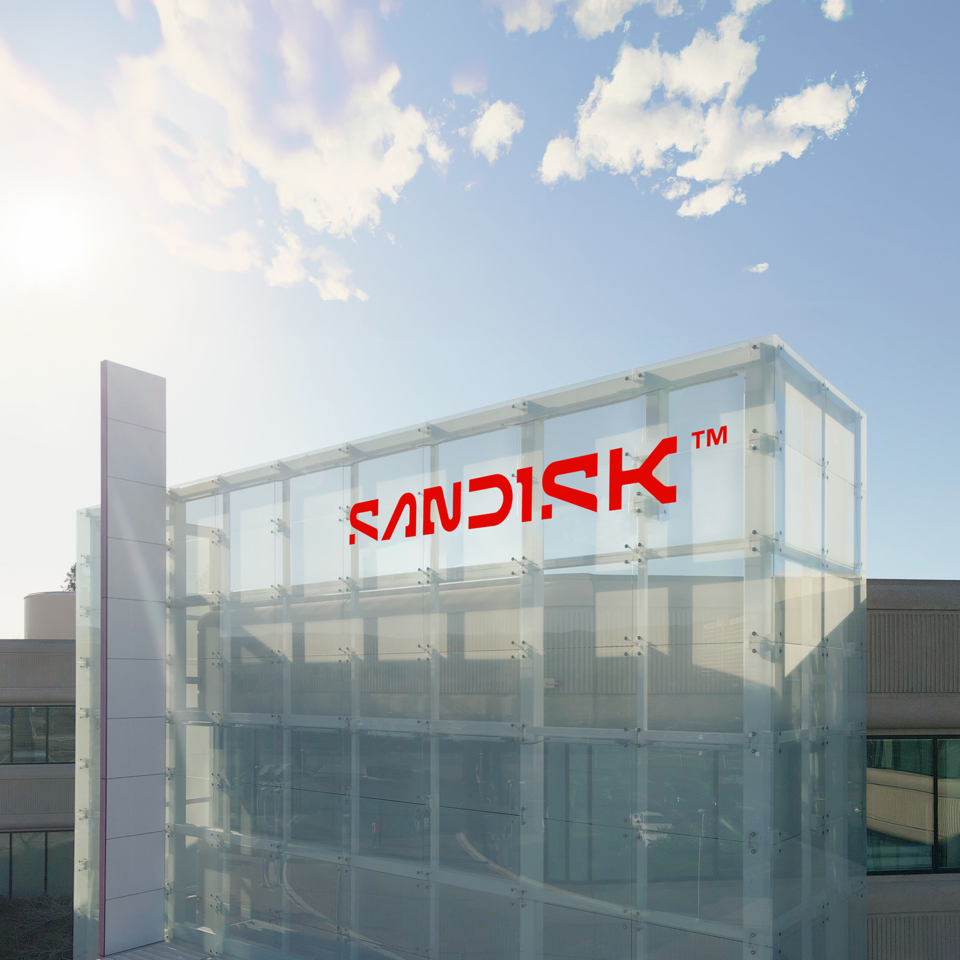
SanDisk
Western Digital’s market capitalization stood at approximately $23.8 billion at Monday’s close. The stock has climbed more than 65% over the past 12 months and is up roughly 22% year-to-date in 2026, recovering strongly from lows near $35 in mid-2025. Trading volume reached about 4.8 million shares, near average for the name.
The rally has been driven by a combination of improving NAND pricing, signs of inventory normalization across the supply chain, and growing recognition of Western Digital’s role in the AI infrastructure buildout. After a prolonged downturn in 2023-2024 marked by oversupply and price collapses, NAND flash spot prices have risen steadily since mid-2025, with 128Gb TLC NAND up more than 40% year-over-year according to TrendForce and other industry trackers.
Western Digital’s most recent earnings, reported January 30, 2026, for its fiscal second quarter (ended December 27, 2025), showed revenue of $4.3 billion (up 28% year-over-year) and non-GAAP EPS of $0.42 (beating consensus of $0.31). Flash revenue grew 39% sequentially and 45% year-over-year, fueled by higher average selling prices and strong demand for enterprise SSDs and client SSDs. HDD revenue rose modestly, supported by nearline drives used in cloud and AI storage.
CEO David Goeckeler highlighted the company’s “strong execution” in diversifying its portfolio and capitalizing on AI-driven storage needs. Western Digital has ramped production of high-capacity BiCS8 3D NAND (218-layer and beyond) and advanced QLC technologies, positioning it to meet demand for cost-effective, high-density storage in hyperscale data centers. The company also emphasized progress on its separation of flash and HDD businesses, with the flash unit (SanDisk-branded products) expected to operate as a standalone entity by late 2026 or early 2027, potentially unlocking value for shareholders.
Advertisement
Analysts have grown increasingly bullish. Consensus rating is Moderate Buy, with an average 12-month price target around $78-$82 (implying 14-20% upside from current levels). Recent updates include Morgan Stanley raising its target to $90 from $80 (Overweight), citing NAND price momentum and Western Digital’s strong position in enterprise and client SSDs. Deutsche Bank maintained Buy at $85, while a few firms hold Hold ratings with targets near $70, expressing caution over cyclical risks and competition from Samsung, SK hynix, Micron, and Kioxia.
The AI boom has become a key tailwind. Hyperscalers and cloud providers are deploying massive GPU clusters that require enormous amounts of high-performance, high-capacity storage for training datasets, inference caches, and checkpointing. Western Digital’s Ultrastar DC SN655 and SN850 enterprise SSDs, along with its high-density QLC drives, are gaining traction in these workloads. Analysts estimate that AI-related storage demand could drive NAND bit growth of 25-30% annually through 2028.
Challenges remain. The NAND market remains cyclical, and any slowdown in AI capex or renewed oversupply could pressure prices. Western Digital’s gross margins (around 32-34% non-GAAP in recent quarters) are improving but still lag peers due to higher manufacturing costs and ongoing foundry investments. The planned flash-HDD separation carries execution risk and potential short-term costs.
The company maintains a solid balance sheet with more than $2.5 billion in cash and manageable debt. Free cash flow turned positive in fiscal 2025, and management targets sustained positive FCF generation in 2026.
Advertisement
Looking ahead, Western Digital’s next earnings report is expected in late April or early May 2026 for the fiscal third quarter. Investors will watch for updates on NAND pricing trends, enterprise SSD demand, progress on the business separation, and any new AI-focused product announcements.
SanDisk-branded products — including portable SSDs, microSD cards, USB drives, and consumer storage solutions — continue to hold strong brand recognition and market share in retail channels. The brand benefits from Western Digital’s scale and technology leadership in flash memory.
As AI infrastructure spending accelerates and NAND supply-demand dynamics improve, Western Digital (and by extension SanDisk) appears well-positioned for further recovery. The stock’s recent strength reflects growing confidence in the company’s ability to capitalize on secular storage demand, though cyclical risks and execution hurdles remain.
NEW YORK — Shares of York Space Systems Inc. surged more than 16% midday Thursday, briefly pushing the newly public satellite manufacturer’s stock above $32 as investors bet on continued demand for low-cost spacecraft amid growing U.S. national security needs and broader enthusiasm for space-tech companies.
York Space Systems
At 12:26 p.m. EDT on April 9, York Space Systems (NYSE: YSS) traded at $32.49, up $4.54 or 16.24% on the day, according to real-time market data. Volume exceeded 1.5 million shares by late morning, well above the stock’s average. The move extended recent gains that have seen the shares rebound from earlier 2026 lows near $17, though they remain below the $38 debut price set on the first day of trading in late January.
The rally comes as York, a Denver-based provider of mission-critical satellites and space systems, benefits from strong positioning in the Pentagon’s Proliferated Warfighter Space Architecture (PWSA) and fresh momentum across the space sector. Analysts and traders pointed to heightened interest following recent sector-wide moves, including speculation tied to major players like SpaceX, even as York focuses on government and commercial constellations rather than crewed missions.
York went public in January 2026 through an upsized initial public offering that raised approximately $629 million at $34 per share. Shares opened at $38 on Jan. 29, giving the company an initial valuation near $4.75 billion, but quickly pulled back amid broader market volatility and typical post-IPO digestion. The stock has since traded in a 52-week range of roughly $16.93 to $38.47.
Company executives have emphasized a “production at scale” strategy that delivers satellites at roughly half the cost of traditional primes. York claims leadership in the PWSA program by number of spacecraft delivered, contracts won and variety of work as of late 2025. It has supplied dozens of satellites for the Space Development Agency’s transport and tracking layers, supporting missile warning, data relay and joint all-domain command capabilities.
Advertisement
In its first full-year results as a public company, released in March, York reported 2025 revenue of $386.2 million, a 52% increase from the prior year. The company narrowed its net loss and issued 2026 revenue guidance of $545 million to $595 million, with more than 70% already backed by contracted backlog. Management highlighted plans to launch 107 additional satellites through 2027, quadrupling its on-orbit fleet from current levels around 33 spacecraft.
Recent strategic moves have also fueled optimism. On March 12, York completed the acquisition of Orbion Space Technology, adding in-house Hall-effect thrusters and strengthening its vertically integrated supply chain for propulsion systems. The deal supports faster production cycles and cost control for both defense and commercial programs.
In February, the company secured a $187 million commercial contract for a constellation of more than 20 satellites based on its larger M-Class platform, which can carry payloads up to 1,000 kilograms. While the customer was not disclosed, the win demonstrated York’s ability to expand beyond government work into private-sector opportunities.
On March 30, NASA and Johns Hopkins Applied Physics Laboratory extended York’s Polylingual Experimental Terminal (PExT) project through 2027. The initiative tests advanced communications capabilities, including interoperability between government and commercial systems, building on successful demonstrations aboard the BARD mission.
Advertisement
York’s business model centers on rapid, affordable satellite production combined with end-to-end mission services, including design, integration, launch coordination and operations. CEO Dirk Wallinger has repeatedly stressed the shift in Pentagon procurement toward commercial providers that can deliver at speed and scale, a trend York says positions it well against legacy aerospace giants.
Still, risks remain. The company has warned that a substantial portion of revenue and backlog ties to the Space Development Agency. Any slowdown or restructuring in PWSA funding could impact near-term growth. York also operates at a loss, reporting negative earnings per share, though executives project improving margins and positive adjusted EBITDA in 2026 as production efficiencies take hold.
Market watchers noted Thursday’s surge occurred without a single headline catalyst, suggesting momentum trading and sector rotation. Space stocks broadly gained this week amid renewed investor appetite for the industry. York’s shares have risen roughly 30% in the past month but still trade below some analysts’ targets, which range from the mid-$20s to $33.
With a market capitalization now hovering near $4.1 billion, York sits in the mid-cap range. The stock carries a beta above 2.0, indicating higher volatility typical of emerging space and defense plays. Short interest stood around 2.5-3% in recent filings.
Advertisement
Industry observers say York’s edge lies in its manufacturing playbook — combining high-volume techniques with software automation to shorten cycle times while maintaining quality. The company has logged millions of on-orbit hours across 74 missions and 17 products with flight heritage.
As the U.S. military accelerates efforts to build resilient space architectures for missile defense and counter-space operations, demand for proliferated low-Earth orbit constellations continues to grow. York’s ability to deliver Link-16 connectivity from space and its role as a prime contractor — rather than a subcontractor — give it direct access to larger programs and margins.
Looking ahead, investors will watch York’s first-quarter 2026 results, expected in May, for updates on backlog execution, integration of the Orbion acquisition and progress toward 2026 guidance. Any new major contract announcements, particularly in commercial or additional SDA tranches, could further catalyze the stock.
For now, Thursday’s double-digit gain reflects renewed confidence in York’s ability to capitalize on the intersection of national security priorities and commercial innovation in space. Whether the momentum sustains will depend on execution amid a competitive landscape that includes both established primes and agile newcomers.
Advertisement
As trading continued into the afternoon, shares pulled back slightly from session highs but held strong gains. With the broader market showing mixed signals and oil prices fluctuating on geopolitical news, York’s performance stood out as a bright spot in the industrials and aerospace sector.
The company’s story — from a 2012 startup founded by Dirk Wallinger to a publicly traded defense prime with ambitious launch plans — continues to capture attention on Wall Street. As space becomes increasingly central to modern warfare and global commerce, York Space Systems aims to prove that speed, scale and affordability can deliver both mission success and shareholder value.
NEW YORK — Security lines at John F. Kennedy International Airport moved briskly Friday morning, with most terminals reporting general TSA wait times under 20 minutes and TSA PreCheck lanes often clearing in five minutes or less, offering relief to spring travelers after weeks of volatile delays tied to staffing fluctuations and holiday surges.
Delta Air Lines planes are seen at John F. Kennedy International Airport on the July 4th weekend in Queens, New York City
As of mid-morning on April 10, the official JFK Airport website showed the following estimated wait times: Terminal 1 general screening at about 12-19 minutes with PreCheck around 5-11 minutes; Terminal 4 at 9-15 minutes general and 1-6 minutes PreCheck; Terminal 5 at 9-14 minutes general and 5-7 minutes PreCheck; Terminal 7 at 17 minutes general; and Terminal 8 at 24 minutes general with PreCheck at 7 minutes. These figures, updated around 11:25 a.m. ET, reflect real-time monitoring but come with the airport’s standard disclaimer that estimates are reliable only when lines stay within designated queue areas.
The relatively short waits contrast with earlier 2026 peaks, when spring break crowds and occasional TSA staffing issues pushed some lines to 45-60 minutes, particularly in Terminal 5, a major hub for JetBlue. On Easter Sunday, April 5, many terminals cleared general passengers in under 15 minutes, a trend that has carried into quieter mid-April days.
Port Authority of New York and New Jersey officials, who operate JFK, noted that TSA staffing has stabilized following a period of uncertainty earlier in the year. Travelers are still advised to arrive two hours before domestic flights and three hours before international ones, with extra buffer recommended during peak morning (5-9 a.m.) and evening (3-7 p.m.) rushes when waits can climb to 30-45 minutes.
Live trackers and third-party sites like TakeoffTimer and airline-specific dashboards reported similar conditions Friday, with overall airport averages hovering between 10-25 minutes for standard lanes. TSA PreCheck continued to deliver significant time savings, often under five minutes even when general lines stretched longer. CLEAR biometric lanes, available in several terminals, further expedited entry for enrolled members.
Advertisement
Terminal 4, the largest and home to Delta, JetBlue international operations and many foreign carriers, consistently showed the shortest general waits in recent updates, sometimes dipping to single digits. Terminal 8, primarily American Airlines, occasionally recorded the longest lines but remained manageable Friday. Terminal 1 and Terminal 5, serving a mix of international and domestic flights, fell in the middle range.
Travelers on social media and Reddit’s r/JFKAirport echoed the positive reports, with recent posts describing 15-25 minute experiences in general lines and near-instant PreCheck clearance. One passenger flying Delta from Terminal 4 on Thursday afternoon reported clearing security in under 10 minutes with two children and luggage. Another noted a 35-minute wait in Terminal 8 during a busier evening slot earlier in the week.
The smoother flow comes after the airport temporarily suspended official wait-time reporting in March due to inaccuracies during high-volume periods and staffing shifts. Data resumed in early April, and officials say staff now monitor queues more actively to provide better estimates. The MyTSA app remains a useful tool for crowd-sourced updates from fellow passengers.
JFK handled more than 60 million passengers in 2025, making it one of the busiest U.S. gateways, especially for international travel to Europe, Asia and Latin America. Security remains the primary bottleneck for many, but Friday’s conditions suggested a return to more predictable operations amid lighter post-holiday traffic.
Advertisement
Experts recommend several strategies to minimize delays. Enrolling in TSA PreCheck, which costs $78 for five years, allows eligible travelers to keep shoes, belts and light jackets on while using dedicated lanes. CLEAR, often bundled with airline status or credit cards, speeds up the initial ID check. Arriving early, packing liquids properly in a quart-sized bag and removing electronics in advance further smooths the process.
For international departures, additional time should be factored for customs and immigration on arrival, though outbound screening focuses on TSA. Passengers with disabilities or needing assistance can request expedited help through airlines or TSA Cares.
Weather and flight schedules also influence crowds. Friday’s forecast for the New York area called for mild spring conditions with no major disruptions expected, helping keep passenger volumes steady rather than compressed into narrow windows. Airlines reported normal operations with only routine delays unrelated to security.
TSA officials nationwide have emphasized that wait times fluctuate based on passenger volume, staffing and random additional screening measures. Unpredictable security protocols, including occasional pat-downs or bag checks, can add minutes even in short lines. The agency encourages downloading the MyTSA app for real-time alerts and prohibited-items guidance.
Advertisement
JFK’s five terminals each operate independent checkpoints, so travelers should confirm their airline’s location in advance. Terminal 4 and Terminal 5 handle the heaviest loads, while Terminal 7 and parts of Terminal 1 serve fewer but still significant international routes.
As the busy summer travel season approaches, the Port Authority and TSA plan to maintain enhanced staffing where possible. Officials have urged passengers not to arrive excessively early if lines are short, to avoid congestion in pre-security areas, but stress that individual experiences vary.
For those flying out of JFK today or in coming days, current data points to a traveler-friendly environment compared with recent months. Still, checking the official JFK website or reliable trackers shortly before heading to the airport remains the best practice, as conditions can shift quickly with sudden surges or lane closures.
The airport continues investing in technology, including more automated screening lanes and biometric options, to reduce friction. In the meantime, Friday’s lighter lines offered a welcome breather for the millions who rely on JFK as their gateway to the world.
Advertisement
Travelers are reminded to follow the 3-1-1 liquids rule, place laptops and large electronics in separate bins, and prepare for possible secondary screening. With waits mostly in the 10-25 minute range across terminals, many passengers reported having extra time for a coffee or last-minute shopping before boarding.
Whether heading to Europe on a red-eye or catching a domestic connection, today’s security experience at JFK appears far smoother than the longer delays seen during peak spring break weeks. As always at one of America’s busiest airports, a little preparation goes a long way toward stress-free travel.
SEOUL, South Korea — K-pop star and actor Cha Eun-woo issued a personal apology Wednesday after settling a high-profile tax dispute with South Korea’s National Tax Service, confirming he has paid approximately 13 billion won ($8.7 million) following an initial assessment that exceeded 20 billion won and sparked widespread disappointment among fans.
The 29-year-old Astro member, whose real name is Lee Dong-min, posted a lengthy statement on his personal Instagram on April 8, taking full responsibility for the controversy and expressing deep regret for causing “disappointment and confusion” to supporters who have backed him throughout his career.
“Although it is late, I would like to personally share my thoughts and position now,” Cha wrote. “I respect the procedures and findings of the National Tax Service, and to prevent any further confusion, I have fully paid the related taxes. I will also diligently comply with any remaining procedures.”
He added: “Above all, I feel most terrible and sorry for disappointing my fans, AROHA, who have trusted and supported me. Because I have been active thanks to the love and support of so many people, I am taking this matter even more seriously and deeply. If there was anything I failed to examine carefully enough, all responsibility lies with me. I will not evade this by saying I ‘didn’t know’ or that it was ‘someone else’s decision’ for any reason.”
The statement marked Cha’s second public comment on the issue. In late January, shortly after reports of the tax probe surfaced, he had issued an initial apology while serving mandatory military duty, pledging to accept the authorities’ final decision.
Advertisement
The controversy erupted in January 2026 when Korean media reported that the Seoul Regional Tax Office had notified Cha of an additional tax assessment exceeding 20 billion won following an intensive audit conducted in the first half of 2025, before he enlisted in the military in July.
Authorities alleged that a significant portion of Cha’s earnings had been routed through a company established in October 2022 under his mother’s name. The National Tax Service determined the entity functioned primarily as a “paper company” with little genuine business activity, allowing income to be taxed at the lower corporate rate rather than the top personal income tax bracket of up to 45%. This arrangement allegedly reduced Cha’s overall tax burden by more than 20 percentage points.
The probe also examined his agency, Fantagio, which was ordered to pay 8.2 billion won in additional taxes last year. Tax officials reportedly summoned both Cha and his mother for questioning as part of the investigation.
On Thursday, April 9, Fantagio clarified to multiple outlets that while the initial assessment topped 20 billion won, overlapping payments in corporate and value-added taxes led to adjustments. The agency said an accountant informed them that Cha’s actual net burden after expected refunds would amount to about 13 billion won, which he has now paid in full.
Advertisement
The payment and apology have done little to quell public criticism. Many netizens expressed disappointment that the response came months after the initial reports and questioned the sincerity of Cha’s “good boy” image, which had made him one of South Korea’s most beloved celebrities and lucrative endorsers.
Several major brands, including skincare line Abib and others, quietly removed or scaled back campaigns featuring Cha following the January revelations. Some videos on the National Defense Information Service’s YouTube channel starring the idol were also made private.
The case has drawn particular scrutiny because of Cha’s military service. A citizen petition filed Thursday with the Ministry of National Defense calls for a review of his assignment to the military band, arguing that his tax issues raise questions about his suitability for the role.
Cha’s representatives have emphasized that he accepted the National Tax Service’s findings without contest and paid promptly to resolve the matter. In his April 8 statement, he reflected on the incident as a moment for personal growth, saying it prompted him to “look back and deeply reflect on whether I have been sufficiently strict in fulfilling my duty to pay taxes as a citizen of the Republic of Korea.”
Advertisement
The scandal represents one of the largest tax assessments ever reported against an individual South Korean entertainer. It highlights ongoing scrutiny of tax practices in the entertainment industry, where high earners sometimes use corporate structures or family entities to manage income.
Industry observers note that while many celebrities have faced tax probes in the past, the scale of Cha’s case and his previously untarnished reputation have amplified the backlash. Some fans have called for a second chance, citing his long history of charitable work and positive public image, while others demand stricter accountability.
Cha, who rose to fame as a member of Astro and gained massive popularity through dramas such as “True Beauty” and “A Good Day to Be a Dog,” has been one of the country’s top endorsers, appearing in campaigns for cosmetics, fashion and financial brands. His military enlistment in 2025 paused much of his entertainment activities, but the tax news emerged during his service.
As of Thursday, no criminal charges have been filed, and the matter appears resolved through the civil tax payment. The National Tax Service has not issued a public comment on the final settlement.
Advertisement
Fantagio said Cha remains focused on completing his military duties and will return to activities with renewed commitment once discharged. The agency declined further comment on the tax details beyond confirming the payment.
Public reaction on social media remains mixed. Supporters have posted messages of encouragement, while critics have questioned whether the apology and payment are sufficient to restore trust. Hashtags related to the controversy trended briefly in Korea after the latest statements.
The episode serves as a reminder of the intense public expectations placed on Korean idols and actors, who often serve as national cultural ambassadors. Tax compliance has become a sensitive issue in the industry following several high-profile cases in recent years.
Cha’s fans, known as AROHA, have been urged by some community leaders to await further developments while others have expressed heartbreak over the tarnishing of his image.
Advertisement
For now, the 29-year-old star has stepped back from public commentary beyond his written apology, letting his payment and promise of responsibility speak for the resolution of the financial side of the dispute.
Whether the public will forgive and forget remains to be seen as Cha completes his service and prepares for a comeback. In South Korea’s fiercely competitive entertainment landscape, reputation can be as valuable — and as fragile — as any financial asset.
As one fan commented online, “We loved the perfect image, but now we see he’s human too. The real test is what he does from here on.”
The coming months will determine if Cha Eun-woo can rebuild the trust that once made him a household name synonymous with charm and integrity.
Amazon Prime Video will have two hours of exclusive Masters coverage, from 1 p.m. ET to 3 p.m. ET, on Thursday and Friday.
Amazon will not have any tie-ins with its ecommerce business during the broadcast. Rather, it will adhere by the Masters’ strict broadcasting rules.
Amazon is only the fourth media partner in the Masters history, joining CBS, USA Network and ESPN.
A version of this article first appeared in the CNBC Sport newsletter with Alex Sherman, which brings you the biggest news and exclusive interviews from the worlds of sports business and media. Sign up to receive future editions, straight to your inbox. The sporting world’s attention turns to Augusta, Georgia, Thursday with Round 1 of the Masters. For the first time, viewers can find live coverage of the tournament on Amazon Prime Video. Amazon has exclusive live coverage of the event from 1 p.m. ET to 3 p.m. ET during Rounds 1 and 2. For all four days of the tournament, Prime Video will produce live coverage of Amen Corner, the famed 11th, 12th and 13th holes at Augusta. Amazon’s “Inside Amen Corner” will feature advanced stats and bespoke camera angles designed to give the viewer a look at how different players attack the three holes strategically. The streamer will also have coverage of the 15th and 16th holes for all four days and showcase certain featured groups, though it will not produce that content. Amazon is the fourth-ever media partner for Augusta National, led by Chairman Fred Ridley, following Paramount’s CBS, Versant -owned USA Network (1982 through 2007) and Disney’s ESPN. Last year, the Masters brought Paramount+ into the fold with two hours of exclusive streaming coverage on Saturday and Sunday from noon until 2 p.m. That will also carry over into this year. The value of owning a slice of Masters rights for Amazon may not be as straight forward as other sports properties. Typically, sports serve several purposes for Amazon. They add value to Amazon Prime, and they connect to Amazon’s ecommerce business, which includes sports apparel and merchandise. They also bring in higher advertising rates since — unlike most other programming on Prime Video or peer streaming services — sports are watched live. It’s possible the Masters will bring some new subscribers to Prime Video, but the real value for Amazon is the halo effect. Owning even a few hours of exclusive Masters coverage lifts the value of Prime Video’s entire sports portfolio. On the ecommerce front, the Masters is about as anti-commercial as any sporting event in history. Commercials during the broadcast, which are limited to about four minutes per hour, are only from the Masters’ official sponsors — IBM , AT & T, Bank of America and Mercedes-Benz . Amazon won’t be injecting anything into the streaming broadcast to highlight its ecommerce business, a person familiar with the matter told CNBC. To do business with Augusta National, Amazon has to play by the club’s rules. Part of that agreement included assurances from Amazon that coverage of the broadcast would maintain that pristine, traditional image, said the person, who asked not to be named because the discussions were private. “We look forward to a long relationship with Prime Video,” Ridley said Wednesday during his annual Masters press conference. “We do need to be looking at non-traditional ways to be promoting the tournament but more so promoting golf.” Ridley acknowledged a “tension” between respecting tradition and innovating and said Augusta wrestles with it each year. He cited the club’s decision to have YouTube creators Dude Perfect play frisbee at Amen Corner in 2022 as an example of Augusta’s willingness to try different things to reach new audiences. “In retrospect, I like those guys, but that may not have been the best idea,” said Ridley. “But thematically, we’re certainly willing to look outside the box every once in a while.” Amazon’s primary coverage on Days 1 and 2 will look very similar to ESPN and CBS. “They’re clearly optimizing for the right fan experience, what they think is the right broadcast experience, to build something incredibly valuable for the long term,” Prime Video’s Head of Sports Jay Marine told The Athletic’s Andrew Marchand last year after Amazon announced its Masters deal. Still, it’s clear the Masters wants streaming partners as part of the viewing experience. And for Amazon’s part, it will get data on how golf plays on the service. Amazon dipped its toe into golf on Black Friday with a Skins Game featuring Keegan Bradley, Xander Schauffele, Tommy Fleetwood and Shane Lowry. Given Amazon’s seemingly unfettered desire for major sports properties, Prime Video will likely be in the market for more golf — if its streaming audience responds. Disclosure: CNBC and USA Network are divisions of Versant Media.
Research from Knight Frank shows a rise in the first quarter compared to 2025, but with take up down on the previous quarter
15:49, 09 Apr 2026Updated 16:10, 09 Apr 2026
Computer generated image of the next phase of development at Indurent Park Newport.
Take up of large industrial space in Wales reached 344,882 sq ft in the first quarter of this year, shows new research from global property consultant Knight Frank.
The take up was around 50,000 sq ft higher than the same period last year, but down from the 675,000 sq ft achieved in the final quarter of 2025. Large units are defined as being more than 50,000 sq ft.
Advertisement
Neil Francis, head of the Knight Frank’s industrial team based in Cardiff, said: ”The take up comprised two lettings and two sales, with the largest deal being the sale of the 111,000 sq ft former Liberty Steel facility in Tredegar which was sold to an existing South Wales based manufacturer which is going to use it for a second facility in the region.”
The second sale was the disposal of unit one at Hirwaun Industrial Estate to Welsh Government. The Cardiff Bay administration acquired a surplus distribution unit from Christmas cracker to stationery business IG Design Group in Hirwaun for £3.15m. It now plans to invest an additional sum of just over £6m to upgrade the building which spans 97,300 sq ft and includes six acres of development land. This will create new modern industrial space that will be marketed to attract inward investment as well as aiding local firms in their expansion.
Mr Francis said: “A similar project has been undertaken at 120,000 sq ft in Tredegar by local investor Gevrey who acquired last year and have overclad the roof and refurbished internally. At the moment 60,000 sq ft is under offer and the remainder available to let.”
Advertisement
According to the Knight Frank research availability of industrial stock in Wales now stands at 4.6 million sq ft – compared to 3.7 million sq ft at the end of 2025. The increase was impacted by the return to the market of the 900,000 sq ft former Wilko facility in Magor. It is understood that the property has been earmarked for a major data centre investment.
Mr Francis added: “Positively, we are finally seeing new build coming out of the ground with Indurent leading the way with 350,000 sq ft under construction at Indurent Park in Newport, offering units from 45,000 to 115,000 sq ft.
“This new space will start becoming available from Q4 2026 and there is good early interest. Once secured, the quoting rents will set new headlines in the region.”
Knight Frank said a 85,000 sq ft high-bay warehouse project at Blackwood Business Park in Caerphilly is close to completion.
Advertisement
Mr Francis added: “The market can currently best be described as inconsistent, with the general levels of activity being better than the take up figures suggest. And with over 800,000 sq ft of space currently under offer to occupiers, Q2 will be a significant quarter for the market if legals progress successfully.”
A Detroit coalition is rolling out cash incentives of up to $15,000 to attract new residents and retain current ones, as part of a broader push to spur economic growth in the city.
The program, dubbed “Make Detroit Home,” will award more than $500,000 in benefits to over 300 participants, according to the MoveDetroit coalition, which launched the program. These include entrepreneurs, creatives, and small business owners, as well as current residents, former Detroiters and newcomers willing to relocate.
Advertisement
The initiative offers stipends of up to $15,000 to help cover home down payments, renovations, rent or business expenses, according to Realtor.com.
Additional applicants may qualify for $1,000 grants to offset moving costs, security deposits and expenses such as gym memberships or meal services.
An aerial view of downtown Detroit, Michigan. (iStock / iStock)
“This stipend is a clear signal that Detroit is serious about competing for residents and the data backs up why it’s an attractive proposition,” Hannah Jones, Realtor.com senior economic research analyst, told FOX Business in an email.
Advertisement
“Detroit consistently ranks among the most affordable major metros in the country, where a $15,000 incentive can realistically cover a down payment or fund a meaningful renovation, rather than barely scratching the surface as it might in higher-cost markets.”
Jones added that pairing that purchasing power with the city’s growing momentum could help drive “household formation and long-term market stability.”
Billionaire businessman Dan Gilbert talks during a press conference on May 21, 2019, in Independence, Ohio. (Jason Miller/Getty Images)
The “Make Detroit Home” initiative marks the first major effort from the MoveDetroit coalition, a nonprofit launched last month with backing from local organizations and the mayor’s office.
Advertisement
Billionaire businessman and Rocket Mortgage founder Dan Gilbert is the honorary chair of the group.
“For too long, we’ve been educating some of the most talented young people in the country, only to watch them leave to places like New York City, Atlanta, California, Seattle, Miami, and elsewhere,” Gilbert said. “At our largest universities, we are losing nearly half our graduates. But today, we’re flipping that equation.”
Gilbert pointed to Detroit’s growing roster of major employers, including Google and Fifth Third Bank, as part of the city’s appeal.
Google office building in Detroit, Michigan on Sept. 27, 2019. (Raymond Boyd/Getty Images)
The initiative is privately funded, with MoveDetroit aiming to raise $10 million this year. Gilbert has pledged to match every dollar raised, according to Realtor.com.
“Detroit is a place where you build, grow, and win,” Gilbert said. “This city has the grit and assets to compete with anywhere in the country for talent. People are choosing Detroit for its culture, energy and opportunity. MoveDetroit is about numerous organizations coming together to double down, ensuring that Detroit accelerates its growth even further.”























![Tom Lee & Raoul Pal: "Don't SELL Your Ethereum Before Watching This" | [2026 Crypto Prediction]](https://wordupnews.com/wp-content/uploads/2026/04/1775752451_maxresdefault-80x80.jpg)






































You must be logged in to post a comment Login