
Business
WeWork Global sells 2.5% stake in WeWork India Management for Rs 244 crore

According to the block deal data on the BSE, WeWork Global through its affiliate, 1 Ariel Way Tenant Ltd, offloaded 35 lakh equity shares in five tranches, representing a 2.52 per cent stake in WeWork India Management.
The shares were disposed at an average price of Rs 697.55 apiece, taking the combined transaction to Rs 244.14 crore.
After the latest transaction, 1 Ariel Way Tenant Ltd’s holding in WeWork India Management declined to 12.3 per cent from 14.82 per cent.
Despite the stake sale, WeWork Global through its arm will remain the largest public shareholder in the company.

Meanwhile, Motilal Oswal Asset Management Company Ltd PMS, Motilal Oswal Mutual Fund (MF), ICICI Prudential MF, HDFC Standard Life Insurance Company Ltd, and Citigroup Global Markets Mauritius bought an equal number of shares at the same price.
Shares of WeWork India Management fell 1.57 per cent to close at Rs 707.80 apiece on the BSE.In July, WeWork India reported a consolidated net loss of Rs 4.30 crore for the first quarter of this fiscal year due to higher expenses.
The company had posted a net loss of Rs 14.10 crore in the year-ago period.
Its total income rose to Rs 700.74 crore during the April-June quarter of this fiscal year from Rs 545.71 crore in the corresponding period of the preceding year.
In 2017, WeWork India began as a joint venture between WeWork Global (US-based WeWork Inc) and Embassy Group. After WeWork Inc filed for Chapter 11 bankruptcy in the US, it moved to sell off its India stake entirely.
WeWork India is majority-owned and promoted by Embassy Group, and is the exclusive licensee of the WeWork brand in the country.


Oruka Therapeutics senior vice president Arjun Agarwal sells $1.06m

Anthropic Could Buy Nvidia-Backed Decart for $6 Billion, Report Says

JP Morgan analysts estimated that index funds tracking the S&P 500 would need to buy 16.7 million Reddit shares. That is nearly three times the stock’s average daily trading volume of about 5.98 million shares since the company went public in March 2024, according to LSEG data.
Reddit shares traded at $180.38, with more than 10 million shares changing hands.
Despite Friday’s rally, the stock had fallen more than 31% this year through Thursday’s close and remained more than 42% below its record high reached in September 2025.
In its latest earnings report, Reddit said volatile search-engine traffic weighed on US user growth in the second quarter, overshadowing an upbeat revenue forecast.
The index changes will take effect before markets open on August 18.
AvalonBay is being removed after agreeing in May to an all-stock merger with Equity Residential that will create a rental housing company with an enterprise value of $69 billion. The companies expect the transaction to close in the second half of 2026.The combined company, which will be named Vivmark Residential, will remain in the S&P 500 after the merger is completed, S&P Dow Jones Indices said.
Stephens analyst Melissa Roberts said companies newly added to the S&P 500 have historically outperformed the benchmark between their selection and inclusion, with the largest gains typically occurring the day after the announcement.
After joining the index, however, those stocks have generally surrendered some gains and underperformed the benchmark by about 2% over the following three months.
(Disclaimer: This article is based on inputs from agencies. These do not represent the views of The Economic Times)

CoreWeave COO Sachin Jain sells $110 in company stock
Business
Sebi broadens scope of online bond platforms, permits IFSCA-regulated products and tax-saving bonds

Under the revised framework, OBPPs can offer products, securities or services regulated by financial sector regulators, including SEBI, the Reserve Bank of India (RBI), the Insurance Regulatory and Development Authority of India (IRDAI), IFSCA and the Pension Fund Regulatory and Development Authority (PFRDA), according to the regulator’s latest circular.
OBPPs can also offer bonds issued under Section 54EC of the Income Tax Act, 1961, or Section 85 of the Income-tax Act, 2025.
Insurers in India are showing significant interest in sovereign green bonds, aiding in the establishment of a substantial greenium. With market confidence in the ability to absorb a larger supply, there’s a push for enhanced issuance of these bonds. Insurers need them for optimal asset allocation and regulatory advantages, emphasizing the importance of sustaining this demand in India’s financial landscape.
ALSO READ: MCX launches crude sunflower oil futures contract
What are online bond platforms?
SEBI prescribed a regulatory framework for entities operating or seeking to operate as OBPPs in November 2022, with subsequent circulars setting out registration, permissible products and other operational requirements.
Under the revised framework, OBPPs can continue to offer listed debt securities, listed municipal debt securities, listed securitised debt instruments, debt securities proposed to be listed through a public offering, listed Government Securities, State Development Loans, Treasury Bills and listed Sovereign Gold Bonds.They can now also offer other products, securities or services regulated by financial sector regulators.
IFSCA-regulated products
For products, securities or services regulated by IFSCA, OBPPs will have to offer them in the manner specified for SEBI-registered stock brokers operating within GIFT-IFSC and comply with applicable requirements under the Foreign Exchange Management Act (FEMA), 1999.
This includes applicable Overseas Investment Rules and limits under the Liberalised Remittance Scheme (LRS).
SEBI has also directed that such products, securities or services be clearly labelled as international or overseas instruments to prevent confusion with domestic debt securities.
These products may be offered either under a separate tab on the online bond platform or through another website or platform. They will be governed by the directions and stipulations of the respective financial sector regulator, while the OBPP will have to specify the grievance redressal mechanism on its platform.
The revised framework also permits OBPPs to offer bonds issued under Section 54EC of the Income Tax Act, 1961, or Section 85 of the Income-tax Act, 2025. SEBI has required platforms offering these bonds to provide a disclaimer stating that these are tax-specific instruments and that grievance redressal for these instruments does not lie with SEBI but with the issuer.
According to the circular, OBPPs must also disclose key features of 54EC bonds, including eligible issuers, lock-in period, investment limit, non-transferable status, tax features and application size. They must also disclose the exemption of these bonds from listing requirements under the SEBI (Listing Obligations and Disclosure Requirements) Regulations, 2015.
SEBI further said that platforms must prominently disclose that investment in these instruments is intended for investors seeking to avail themselves of the associated tax benefits, subject to the eligibility criteria and other conditions prescribed under the applicable provisions of the Income-tax Act.
Compliance officer requirements
SEBI has also modified the compliance requirements for OBPPs. Under the revised framework, an OBPP must appoint a compliance officer in accordance with the SEBI (Stock Brokers) Regulations, 2026.
The compliance officer must comply with the prescribed certification requirements, including the NISM-Series-III-A: Securities Intermediaries Compliance (Non-Fund) Certification Examination for stock brokers, as prescribed from time to time.

Alphabet becomes Berkshire Hathaway’s third-largest investment

Check out what’s clicking on FoxBusiness.com.
Cooluli is recalling about 250,000 minifridges after receiving at least 19 reports of the appliances smoking, sparking, burning, melting, overheating or catching fire, according to the U.S. Consumer Product Safety Commission (CPSC).
The recall covers certain 10-liter and 15-liter Cooluli minifridges because an electrical switch can short circuit, posing fire and burn hazards, the CPSC said.
Cooluli has received reports of property damage totaling more than $80,000. One consumer also reported a smoke inhalation injury, according to the agency.
The affected minifridges were sold online at Amazon.com and Cooluli.com from January 2019 through October 2024 for between $80 and $120.
POPULAR HAIR PRODUCT RECALLED NATIONWIDE OVER POTENTIAL EXPLOSION HAZARD
About 250,000 Cooluli minifridges are being recalled after reports of the appliances smoking, sparking, burning, melting, overheating or catching fire. (CPSC / Unknown)
The recall includes certain minifridges from Cooluli’s Infinity, Classic, Glow Beauty and Vibe series. The affected products have an internal power supply and two power input ports, AC and DC, on the back instead of a single DC port.
The recalled minifridges were sold in several colors, including black, blue, green, white and red, as well as designs featuring multicolored patterns, photos and logos. “Cooluli” is printed on the front.
The recall covers batch numbers 1535 through 1545 and 1200000 through 1202080. Consumers can find the model and batch numbers on a label inside the minifridge door.
The CPSC urged consumers to stop using the recalled minifridges immediately and contact Cooluli for a free replacement power cord.
Cooluli is recalling certain 10-liter and 15-liter minifridges because an electrical switch can short circuit, posing fire and burn hazards. (CPSC / Unknown)
Consumers will be asked to enter their model and batch numbers on Cooluli’s recall website to determine whether their minifridge is affected. Those with recalled units will be instructed to unplug the minifridge, cut the power cord and submit photos showing the refrigerator’s model and batch numbers.
Cooluli will provide affected consumers with a replacement DC power cord and a permanent sticker to cover the AC port, according to the CPSC.
FOX Business reached out to Cooluli for comment on the recall, the reported incidents and the steps the company is taking to address the issue.

The label inside a recalled Cooluli minifridge shows the model and batch number consumers can use to determine whether their unit is included in the recall. (CPSC / Unknown)
CLICK HERE TO GET FOX BUSINESS ON THE GO
The minifridges were manufactured in China by Ningbo Iceberg Electronic Appliance Co., Ltd., and imported by Brooklyn, New York-based Lisse USA LLC.
Consumers can contact Cooluli at 718-834-5312 from 8 a.m. to 5 p.m. ET Monday through Friday or email recall@cooluli.com for more information.

8 Rivers Capital sells $1.4m in Net Power (NASDAQ:NPWR) stock
Business
Target Website And App Down Now? Users Report Outage Friday Morning As Downdetector Tracks Rising Complaints
Target customers began reporting problems accessing the retailer’s website and mobile app Friday morning, according to outage-tracking service Downdetector, in what appeared to be a developing disruption affecting the company’s digital shopping platforms.
Downdetector said user reports indicating problems with Target began climbing at 10:03 a.m. Eastern time. The tracking service posted about the rising number of reports on its official account on the social platform X, asking affected users to describe how the outage was impacting them and tagging the post with the hashtag “TargetDown.”
As of Friday morning, Target had not issued a detailed public statement addressing the scope, cause or expected resolution timeline for the reported disruption. Separate outage-monitoring services showed a mixed picture of the retailer’s status around the same period. One tracker, WebsiteDown, reported that its automated probe found Target’s website reachable and responding normally, while noting that any issues appeared to have already cleared by the time of its check. Another service, Outage.now, similarly indicated it had not detected any outages affecting Target over the preceding 24 hours as of Friday, though it remained unclear whether that data reflected conditions before or after the wave of reports Downdetector flagged at 10:03 a.m.
Target does not maintain a widely publicized, continuously updated public status page of its own for customer-facing outages, meaning shoppers and outside observers typically rely on Downdetector and similar third-party monitoring tools, along with the company’s official social media accounts, to gauge the scope of a disruption before Target issues any direct acknowledgment.
Friday’s reported issue would not be the first time Target’s digital platforms have experienced problems. In December 2025, the retailer’s website and app suffered a significant outage that began generating elevated Downdetector reports shortly after 6 a.m. Eastern time and continued disrupting customers throughout the day, landing just days before Christmas during the peak holiday shopping period. At the time, a Target spokesperson acknowledged the issue directly in a statement, saying, “We’re aware of intermittent issues with our digital experience and a fix is underway,” while noting that the company’s physical stores remained open and ready for holiday shoppers. Target also posted updates to its official X account during that earlier incident, telling affected customers at one point that the company’s systems were “temporarily down” and advising them to try their transactions again within one to two hours.
Target’s digital and point-of-sale systems have experienced other significant disruptions in past years as well. In one earlier incident, the company experienced a global point-of-sale outage that left many stores able to accept only cash and gift cards, with checkout systems down for more than two hours on the first day and continuing to cause problems into a second consecutive day. Following that episode, Target confirmed the disruption was not connected to any data breach or security incident, telling customers that no guest information had been compromised, and attributing the outage instead to an internal technology issue without disclosing further specifics.
Target operates one of the largest e-commerce and retail platforms in the United States, with its website and app supporting product browsing, checkout, order tracking, and in-store pickup scheduling for millions of customers. According to monitoring services that track the retailer’s digital infrastructure, outages affecting Target’s online systems have historically tended to spike around high-traffic shopping periods, including the release of the company’s weekly promotional deals, Black Friday and Cyber Monday, when checkout systems face significantly elevated transaction volumes.
For customers experiencing ongoing issues Friday, standard troubleshooting guidance compiled by outage-tracking services recommended several basic steps, including forcing a full browser refresh, clearing browser cache and cookies, trying an alternate web browser, and disabling browser extensions that could potentially be interfering with the site’s normal functionality. Customers were also advised to check Target’s official social media accounts for any outage-related announcements and to contact the company’s customer support team directly through the app’s help section for issues specifically related to existing orders.
Given the discrepancy between Downdetector’s report of rising complaints beginning at 10:03 a.m. and other monitoring tools showing no detected issues around the same general timeframe, the true scope and duration of Friday’s disruption remained difficult to independently confirm using publicly available tracking data alone. Some outage reports affecting large retailers can reflect brief, localized or quickly resolved technical issues that do not register clearly across every third-party monitoring service, particularly when a problem affects only a specific subset of site functionality, such as checkout or order tracking, rather than the platform as a whole.
This remains a developing situation, and additional details regarding the precise scope, underlying cause and resolution timeline of Friday’s reported Target outage were not immediately available. The company had not issued an official public acknowledgment of the disruption as of Friday morning, leaving affected customers largely reliant on Downdetector and Target’s own customer service channels to determine whether their individual access problems were part of a broader, platform-wide issue.

David Asman joins Stuart Varney to analyze how Latin American voters are embracing capitalism over socialism.
Latin Americans have had it with socialism.
Over the past decade, more than half of Latin America’s nations have voted socialists out. From large countries like Argentina to tiny ones like El Salvador, socialists have been replaced with conservative leaders who’ve made significant progress turning their economies around.
That list could grow as Cuba and Nicaragua are on the cusp of collapse after their oil lifelines from Venezuela were cut following the arrest of Nicolás Maduro.

Argentine President Javier Milei said in 2024 that, “We’re here to tell you that collectivist experiments are never the solution to the problems that afflict the citizens of the world. Rather, they are the root cause.” (Angelia Weiss/AFP via Getty Images)
NOW AMERICA REACHED A POLITICAL TIPPING POINT FOR SOCIALISM
The real incentive for dumping socialism is voter recognition that it just hasn’t worked. What is working are policies based on market solutions.
In Argentina, monthly inflation has tumbled from 25% to just 2%. Massive cuts in government have led to fiscal surpluses, and Moody’s upgraded their investment outlook to positive.
DAVID ASMAN ON COVID-19 TIPPING OFF RISE IN SOCIALISM: ‘PERFECT STORM’
“We’re here to tell you that collectivist experiments are never the solution to the problems that afflict the citizens of the world. Rather, they are the root cause,” Argentine President Javier Milei said in a 2024 speech at the World Economic Forum in Davos, Switzerland.

In Argentina, monthly inflation has tumbled from 25% to just 2%. (Fabrice Coffrini/AFP via Getty Images)
Following the ouster of a socialist government in Ecuador, economic conditions there improved, with the GDP rebounding 3.7% in 2025 and the nation returned to international bond markets this year.
LATIN AMERICA’S SOCIALIST EXPERIMENTS LEAVE DEVASTATING TRAIL OF ECONOMIC COLLAPSE AND POVERTY
In Costa Rica, voters’ rejection of the ruling leftist party coincided with an estimated 20% relative decline in poverty from 2021 to 2024.
And those are just a few examples of the progress being made. Latin America has had many course changes over the years, and all this could turn around again. But probably not while memories of many socialist failures are so fresh and painful.
GET FOX BUSINESS ON THE GO BY CLICKING HERE
Latin America’s growing rejection of socialism also coincided with Secretary of State Marco Rubio’s cancellation of 83% of USAID programs, which he claims were doing more harm than good.
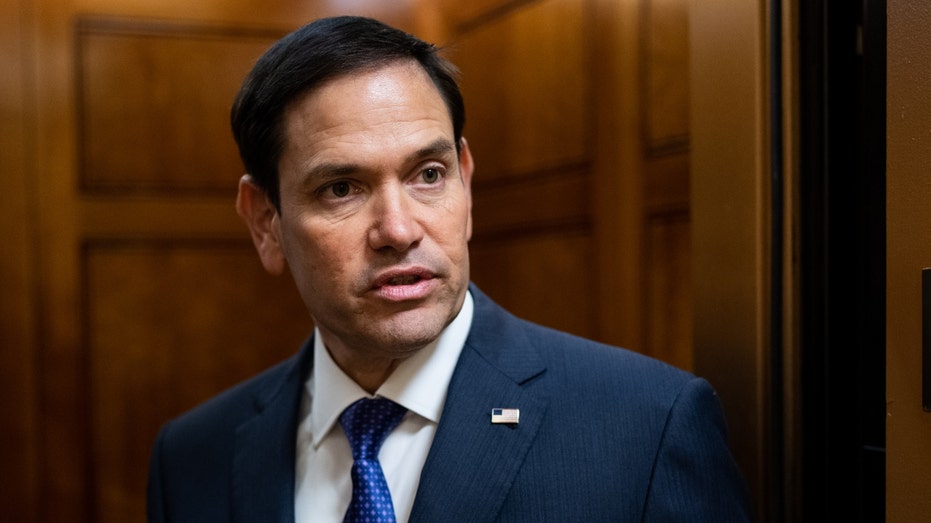
Secretary of State Marco Rubio announced the cancellation of 83% of USAID programs in March 2025. (Bill Clark/CQ-Roll Call, Inc via Getty Images)

Everyone Is Quietly Leaving Crypto … (WTF?)

Daily horoscope August 15, 2026: Predictions for your star sign
Oruka Therapeutics senior vice president Arjun Agarwal sells $1.06m


-

 News Videos7 days ago
Can Astrology Help Find Gold and Silver Trends? A Financial Astrology Guide
-

 Fashion6 hours ago
Weekend Open Thread: Ann Taylor
-

 Business6 days ago
Datadog: Best Of Breed For Multiple Reasons
-

 Business6 days ago
How to Start a Cleaning Business: A Step-by-Step Guide
-

 Business6 days ago
BDC Weekly Review: Private BDC Q2 Numbers Are Strong
-
 NewsBeat3 days ago
Communication cards help banking customers access services or report scams
-
 Business4 days ago
Oil Price Today (August 11): Crude oil rises to $88 after Trump’s compensation demand dents Hormuz opening. Here’s why
-
 Entertainment7 days ago
10 R-Rated Drama Movies That Can Be Called Masterpieces
-

 Fashion5 days ago
Amazon Sundays: Closet Care Before Fall
-

 Business7 days ago
SharkNinja Keeps Eating
-

 Politics6 days ago
Be quiet, Miriam! – spiked
-

 Business5 days ago
5 Things You Must Know About Jorge Messi, the Father and Longtime Agent Who Shaped Lionel Messi’s Career
-

 Business6 days ago
Mutual Fund Manager Scoops Up Beaten-Down Stocks
-

 Politics5 days ago
Ben-Gvir’s crocodile project halted but abuses at Ketziot Prison continue
-

 Tech7 days ago
Metabase SQLi zero-day exploited in customer data-theft attacks
-

 Politics5 days ago
The Church of England’s ruinous reparations racket
-
 Crypto World4 days ago
Why Did Nvidia Stock Fall on Monday Despite a $500 Billion Wall Street AI Deal?
-

 Politics7 days ago
Calls to permanently pedestrianise central Belfast following festival success
-

 Crypto World6 days ago
A Deep Dive Into One Of The Most Significant Hacks In Recent Memory
-

 Crypto World6 days ago
Bitcoin ETFs draw $853.5M in five-day inflow streak
You must be logged in to post a comment Login