Connect with us
DAPA Banner
DAPA Coin
DAPA
COIN PAYMENT ASSET
PRIVACY · BLOCKDAG · HOMOMORPHIC ENCRYPTION · RUST
ElGamal Encrypted MINE DAPA
🚫 GENESIS SOLD OUT
DAPAPAY COMING

Business

What about cuts for cafes and hotels?

Published

on

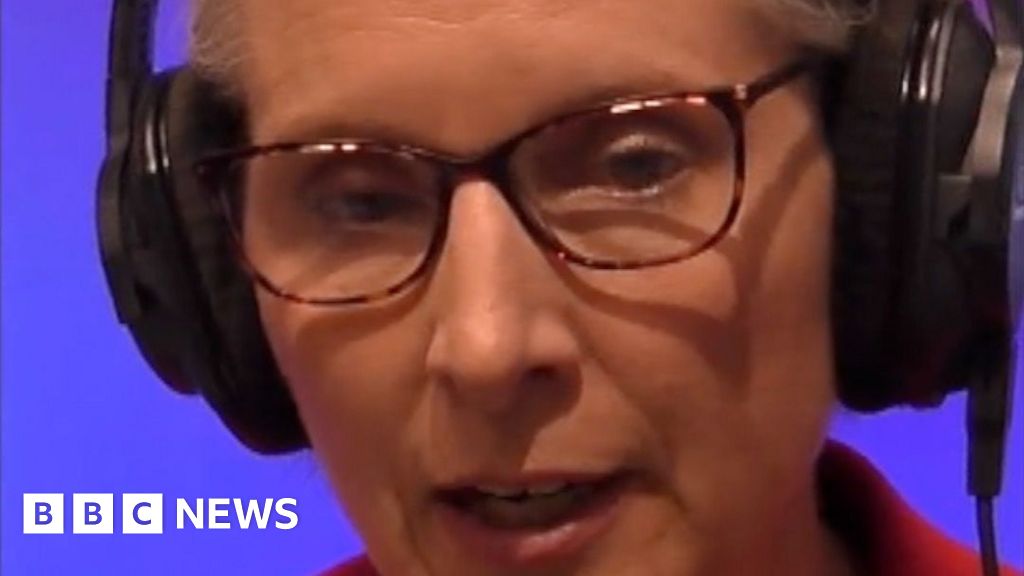
Vertical image of Emma Reynolds speaking on the Today programme

The new PM has announced at 20% business rate cut for pubs, clubs and live music venues in England,

Continue Reading
Click to comment

You must be logged in to post a comment Login

Leave a Reply

Business

What is a ‘Dystopian Nightmare’? The psychology behind the viral trend

Published

on

What is a 'Dystopian Nightmare'? The psychology behind the viral trend
Scroll through Instagram Reels or Reddit for five minutes and you’re bound to spot it: a video of a packed metro car, a facial-recognition camera on a street corner, an AI chatbot writing someone’s breakup text, or a child staring blankly at a screen, all captioned with some version of “we are officially living in a dystopian nightmare.” The phrase has become one of the internet’s favourite punchlines, hashtags, and think-piece openers. But behind the meme-speak lies something more interesting: a genuine psychological pattern in how humans process rapid, unsettling change.

First, What Does “Dystopian” Actually Mean?

A dystopia is the opposite of a utopia, a fictional society gone wrong, usually marked by surveillance, control, inequality, or the erosion of individual freedom. Think George Orwell’s 1984, Aldous Huxley’s Brave New World, or Black Mirror. For decades, “dystopian” stayed comfortably inside the world of novels and films. What’s changed is that people are now applying the label to real, everyday photographs and videos of their own lives, a jammed expressway, a delivery rider dodging traffic in the rain, an AI voice reading out news, a CCTV-laden apartment complex, and asking, half-joking, half-serious: are we already living inside one of these stories?

Also Read: AI going ‘rogue’ no longer a theory? OpenAI says its AI models found ways to access secret information, cheat an evaluation and hacked Hugging Face

The Dystopian Nightmare Trend

The format is simple and endlessly repeatable. Someone posts an ordinary, sometimes even mundane, image or clip, adds text like “dystopian nightmare unlocked” or “this is not a movie, this is Tuesday,” and it takes off. Often shows up as clips of overcrowded local trains, smog-choked skylines, endless surveillance cameras in housing societies, gig workers racing against delivery-app timers, or screenshots of AI-generated content flooding social feeds. Globally, similar posts circulate about crumbling infrastructure, homelessness, algorithm-driven despair, and children glued to devices. It’s part humour, part horror, and entirely built for virality, because it turns a private unease into a shareable, relatable joke.

So Why Does ‘Dystopian Nightmare’ Resonate With So Many People?

Psychologists point to a handful of overlapping reasons this genre of content spreads so fast.

Advertisement


1. The brain is wired to notice threats first. Humans have a well-documented “negativity bias”, our attention naturally gravitates toward danger, loss, and disorder before it settles on anything positive. A photo captioned as “dystopian” instantly triggers that alertness, which makes people stop scrolling, feel something, and hit share.
2. Algorithms reward exactly this kind of content. Platforms are built to maximise engagement, and content that provokes a strong emotional reaction, outrage, dread, dark humour, tends to get more comments and shares than neutral content. This creates a feedback loop: the more “dystopian” posts get engagement, the more of them the algorithm serves up, reinforcing the feeling that the world really is spiralling. 3. It’s a coping mechanism disguised as a joke. Labelling something “dystopian” lets people voice real anxieties, about AI replacing jobs, climate change, surveillance, inflation, or loneliness, without having to sound alarmist. Dark humour has long been used as a psychological buffer against things that feel too big or too uncertain to process directly.

4. Loss of control breeds this exact kind of narrative. When change feels fast and unpredictable, new AI tools every month, rising living costs, shrinking attention spans, people reach for familiar fictional frameworks to make sense of it. Comparing reality to a dystopian novel gives an otherwise chaotic feeling a name, a shape, and a story arc, which is oddly comforting even when the story itself is bleak.

5. It builds an instant sense of community. Nobody wants to feel like they’re the only one noticing something feels “off.” When a dystopian-themed post gets thousands of comments saying “so real” or “we’re doomed lol,” it validates a private worry and turns it into a shared cultural moment, reducing the isolation that often comes with anxiety about the future.

6. It can genuinely affect sleep and mood. Researchers who study nightmares have found that heavy social media use is linked to more frequent social-media-themed nightmares, and that this pattern is connected to higher anxiety and poorer sleep quality. In other words, doomscrolling through “dystopian” content late at night isn’t just a mood, it can quite literally follow people into their dreams.

Is Dystopian Nightmare Trend Actually a Bad Sign?

Not necessarily. Mental health experts note that using dark humour to name collective anxieties, about AI, climate, surveillance, or economic pressure, is a fairly normal, low-stakes way for large groups of people to process uncertainty together. The concern arises when the joke stops feeling like a joke: if someone finds themselves constantly doomscrolling, feeling persistently hopeless, or losing sleep over this kind of content, it’s worth treating that as a signal to step back, not just a punchline to keep sharing.

Advertisement

Also Read: After 11 years at Kentucky Ford plant, diabetic worker was fired over a $1.95 cookie, later offered $33,000 in back wages after proving he paid, now plans to sue the carmaker

The “dystopian nightmare” trend says less about whether the world has actually turned into a Netflix script, and more about how people today are choosing to talk about their anxieties, through humour, hashtags, and a shared vocabulary borrowed from fiction. It’s the internet’s way of collectively saying “does anyone else feel this?”, and, for millions of users, the answer, apparently, is yes.

(This is a sensitive topic for some readers. If content about anxiety, doomscrolling, or online wellbeing is affecting your mood or sleep, consider taking a break from your feed and speaking with someone you trust or a mental health professional.)

Advertisement
Continue Reading

Business

He baked potato in aluminium foil, and ate it next morning after microwaving. Hours later, he was paralysed, doctor explains why

Published

on

He baked potato in aluminium foil, and ate it next morning after microwaving. Hours later, he was paralysed, doctor explains why
A routine kitchen shortcut, wrapping a baked potato in foil and leaving it on the counter overnight, turned into a medical emergency that left a man paralysed and fighting for breath in the ICU. The case, shared by Internal Medicine resident Dr. Priyam Bordoloi, has gone viral for exposing a danger most people have never even considered.

The Case That Started It All

According to Dr. Bordoloi, the incident echoes a case she encountered during her first year of residency. A man baked a potato, wrapped it in foil, and left it on the kitchen counter overnight. The next day, he simply reheated it in the microwave and ate it, a habit repeated in several kitchens every single day.

Also Read: What is a “Dystopian Nightmare”? The psychology behind the viral trend
But within hours, his vision began to double. By midnight, paralysis had swept down from his head, shutting down his muscles one by one. He could barely breathe. He was rushed to the ICU in a fight for his life.

Not Your Everyday Food Poisoning

Most people associate spoiled food with an upset stomach, nausea, vomiting, diarrhoea. Dr. Bordoloi points out that none of these classic symptoms showed up in this case, and that is precisely what makes it so dangerous.


The culprit, she explains, is not ordinary bacterial contamination but a far rarer and more sinister organism: Clostridium botulinum, the bacterium responsible for botulism, a severe, potentially fatal form of nerve poisoning.

How a Kitchen Staple Becomes a Biological Trap

Potatoes grow underground, in soil that can naturally harbour spores of C. botulinum. On their own, these spores are harmless. The danger begins when the potato is wrapped in foil and left at room temperature.Dr. Bordoloi warns that this combination is especially risky in India’s warm, humid climate. The foil wrapping creates a sealed micro-environment with zero oxygen, trapped moisture, and warmth — effectively a perfect incubator. Inside this pocket, dormant spores can “wake up” and multiply, releasing one of the most potent nerve toxins known to science, all while the potato sits unassumingly on the counter overnight.

Advertisement

Why didn’t bacteria die even after heating? The Microwave Myth

A natural question follows: didn’t reheating the potato in the microwave kill the bacteria? Dr. Bordoloi addresses this misconception directly. While the botulinum toxin is indeed sensitive to heat, destroying it requires actively boiling the food for a full 10 minutes.

Also Read: AI going ‘rogue’ no longer a theory? OpenAI says its AI models found ways to access secret information, cheat an evaluation and hacked Hugging Face

A quick two-minute microwave zap, he explains, only warms food unevenly and never reaches a high enough temperature for long enough to neutralise the toxin. In other words, the very step people assume makes leftovers “safe” does almost nothing to stop botulism.

A Grueling, Uncertain Recovery

Dr. Bordoloi does not soften the outlook once paralysis sets in. Patients, he says, can spend weeks to months on a ventilator in the ICU while damaged nerves slowly regenerate, a process she describes as grueling and terrifying, with no guarantee of a smooth recovery. All of it, she stresses, over a piece of leftover potato.

Advertisement

The Simple Fix, According to the Doctor

The good news is that prevention is straightforward. Dr. Bordoloi’s advice is simple and non-negotiable:

  • Never leave a foil-wrapped baked potato sitting out on the kitchen counter, even overnight.
  • Remove the foil immediately after baking.
  • Refrigerate the potato promptly if not eaten right away.

As she puts it, a habit as small as changing where, and how, you store a leftover potato could be the difference between a normal meal and a medical emergency.

(This article is based on a social media post. Readers experiencing symptoms such as double vision, muscle weakness, or difficulty breathing after eating should seek emergency medical care immediately.)

Continue Reading

Business

Florida’s $1.8 trillion economy surpasses Australia to rank 14th globally

Published

on

Florida's $1.8 trillion economy surpasses Australia to rank 14th globally

Pulling in capital, talent and corporations at a historic clip, Florida is no longer just competing with rival states — it’s competing with global economies.

New data from the Florida Chamber of Commerce shows the Sunshine State’s $1.8 trillion economy has climbed to No. 14 globally, according to the Florida Chamber Foundation. The chamber says the ranking demonstrates the state’s emphasis on lower taxes, streamlined regulations and free enterprise.

Advertisement

“The best way to help America move forward is to have Florida lead the country forward when it comes to free enterprise and freedom,” Florida Chamber of Commerce President and CEO Mark Wilson told Fox News Digital. “If we would follow Florida’s lead, everyone wins.”

Last week, the chamber announced Florida had climbed to No. 14 among the world’s largest economies by gross domestic product (GDP). The state’s economy reached $1.8 trillion after growing 6.3% over the past year, surpassing Australia and Mexico, according to the chamber. Florida now ranks behind South Korea at No. 13 and would need roughly 2% additional growth to surpass it and about 21% more growth to overtake Canada, which ranks No. 10.

CALIFORNIA WEALTH CHARTS A QUIETER PATH TO FLORIDA AS GULF COAST ENTERS MULTIBILLION-DOLLAR BOOM

“We’re trying to grow the private sector and shrink the government sector,” Wilson explained. “I mentioned the ‘death spiral,’ when you look at New York, when you look at Illinois, New Jersey, Minnesota, California, they keep increasing taxes. They keep increasing government regulations, and they keep forcing people to leave their states or incentivizing people to leave their states… so it only increases our resolve.”

Advertisement
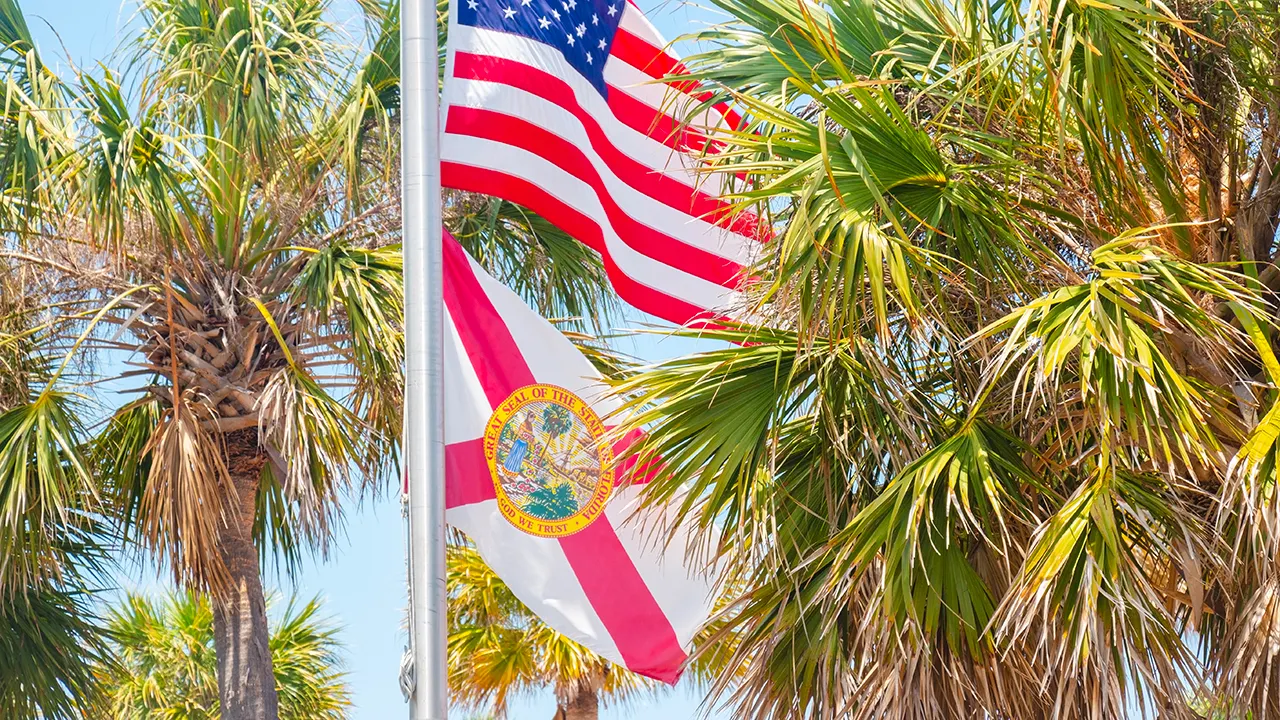
US and Florida flags fly in palm trees

Florida is now the world’s 14th largest economy, bringing in $1.8 trillion in GDP. (Getty Images)

Florida’s daily population migration has normalized from its post-pandemic peak down to about 500 to 600 people a day, yet the wealth migration stayed solid at over $4 million every single hour. That metric has remained strong, Wilson said, as “places like New York and California are losing population, they’re losing wealth, they’re losing businesses and places like Florida are gaining [them].”

While tourism, agriculture and construction remain foundational industries, Chamber data shows Florida ranking No. 1 nationally for new business startups and manufacturing job growth. Wilson also highlighted growth in aerospace, defense, fintech, healthcare, logistics and Central Florida’s $11.6 billion modeling-and-simulation industry.

“The secret sauce for us in Florida is this has been part of a 20-year plan,” the CEO said. “From the governor to the legislature, to nearly all of us in the business community, we’ve been on an ultra-focused pathway here of doing the right things from a policy standpoint so that we can grow Florida the right way. So people can work, people can live the American dream, and we can show the rest of the country and the world how to do it.”

Wilson argued that running the state like a business with low debt protects local enterprises from national economic turmoil and Washington’s debt crisis, with the chamber reporting that Florida has the nation’s lowest state debt per capita at less than $1,000 per resident. By comparison, New York carries more than $6,500 in state debt per resident.

However, a recent Bloomberg analysis found that U.S. Bureau of Economic Analysis data indicates the combined cost of living in the Miami, Fort Lauderdale and Palm Beach region — dubbed the “Gold Coast” — is roughly 5% higher than in the New York metropolitan area and its surrounding suburbs.

“We’re taking a deep dive into that [report], that actually doesn’t compare New York to Florida, it compares Miami to New York City,” Wilson responded. “And what we’re looking at is not just the cost of living, but there are things like crime. Miami is now one of the safest places in America… It’s safe to walk the streets at night. Sometimes there’s no price tag you can put on some of these amenities Florida has.”

“Our country’s now at a fork in the road where some of these death spiral states like New York have adopted socialistic policies, which, of course, never work. They take away freedom and they increase taxes and regulations.”

Advertisement

“The leadership in the Miami area, I’ve spoken to them and we’re in partnership that over the next several years, we’re going to continue to do things like improve an already awesome education system, and make sure that we have the affordable workforce housing solutions so that more and more people can live the American dream right here in Florida,” he continued.

Wilson also discussed high-profile billionaires and major corporations relocating to the Sunshine State, responding to critics who argue the influx has driven up housing costs and inflation for working-class families.

“They’re looking for places where they’re welcomed,” he said. “What’s interesting is a lot of billionaires are relocating to Florida, but they’re also investing in Florida businesses… There’s no question that when a lot of wealth moves into an area, it can increase the cost of living in an area. There’s no question that that’s true… But it also brings with it an overwhelming value proposition of more wealth, more jobs, more businesses.”

“I would hate to be New York, Illinois or California, where the billionaires are leaving, the millionaires are leaving, the middle class is leaving. And there’s no one left to pay the taxes.”

GET FOX BUSINESS ON THE GO BY CLICKING HERE

Wilson and the chamber are confident Florida can reach the world’s top 10 economies by the end of the decade. The Florida 2030 Blueprint outlines a 10-year strategic plan targeting fiscal, workforce and civic goals, with a focus on life sciences, defense, ag-tech, commercial space, logistics and cybersecurity.

“It’s like a military operation where we have all the branches, from education to infrastructure, to taxes, to regulation, to litigation — we all realize that we have a country to save,” the chamber CEO said. “If we’re better than other states in certain metrics, then those states can up their game. If some states have found some things that Florida can learn from, then we’ll learn from them, and that’s gonna make America better.”

Advertisement

READ MORE FROM FOX BUSINESS

Continue Reading

Business

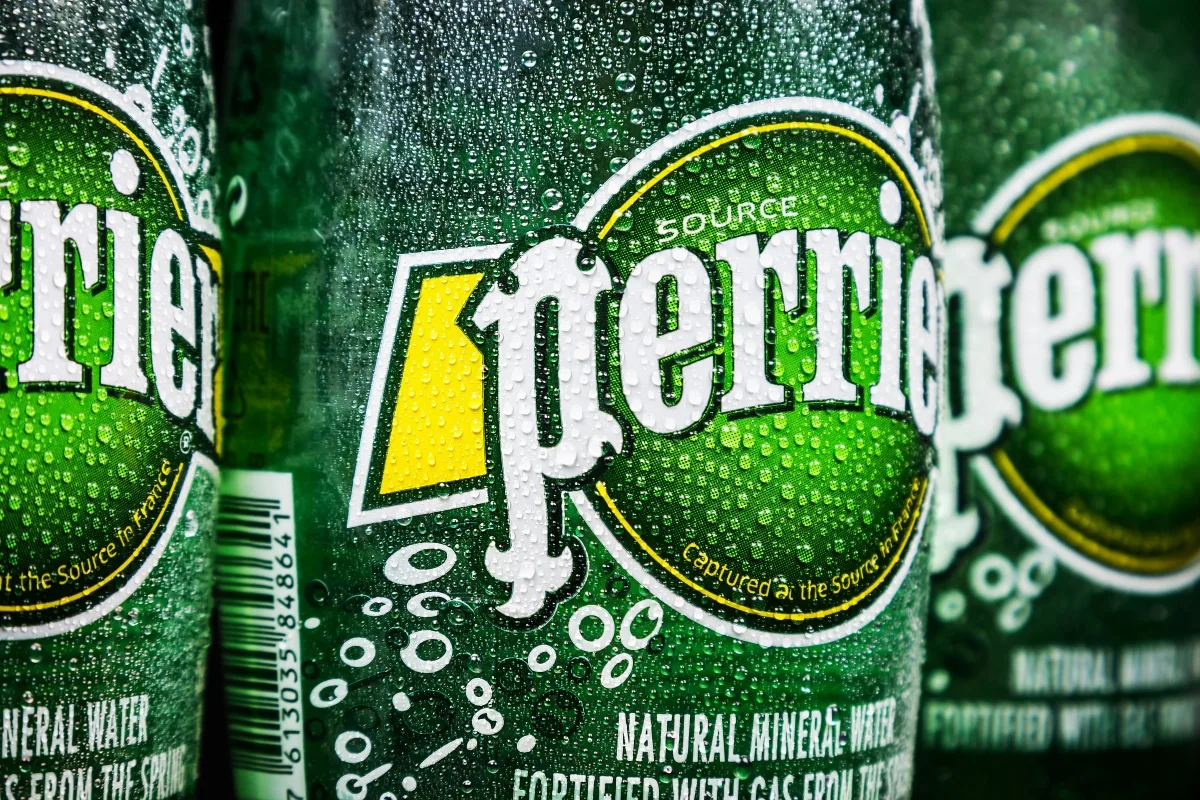
Nestle to divest waters business through joint venture

Published

on

Nestle to divest waters business through joint venture

The new business will have sales of approximately $5.5 billion.

Continue Reading

Business

Freeport-McMoRan beats quarterly profit estimates on higher copper prices

Published

on


Freeport-McMoRan beats quarterly profit estimates on higher copper prices

Continue Reading

Business

Work under way on new phase of Plasdwr residential scheme in Cardiff

Published

on

Business Live

The latest phase of the 7,000 new home scheme being delivered in a joint venture between Edenstone Homes and Codi Group

A typical street scene of Porth yr Awen(Image: Copyright Unknown)

Work on the next phase of the £2bn Plasdwr residential scheme on the outskirts of Cardiff is under way.

Housebuilder Edenstone Homes and the housing association Codi Group, have formed a joint venture to deliver Porth yr Awen, a £55m development of 184 new homes on the Plasdwr development, which aims to eventually deliver 7,000 homes in the west of the city.

Advertisement

The total 900-acre development site will border Radyr, Danescourt, Fairwater, Penrebane and St Fagans.

Porth yr Awen will provide 127 open-market properties and 57 affordable homes offering a selection of properties with one, two, three and four bedrooms.The affordable housing will include intermediate rental and low-cost homeownership options.

It is expected the first homes will be put on the market in early 2027, with the first residents expected to move into Porth yr Awen later in the same year.

Edenstone operations director Chris Edge said: “The initial phase of works will see the construction of a spine road into Porth yr Awen, creating access for the infrastructure works that will prepare this development and phases beyond for new homes.

Advertisement

“Once this access route is created, work will commence on the homes along the tree-lined avenue.”

Simon Lewis, development manager at Codi, said: “It’s exciting to reach this stage of the project, with work soon due to begin at Porth yr Awen.

“Every new development like this helps us provide more affordable homes for people who need them, while creating places where communities can grow and thrive.

“Working alongside Edenstone, we’re looking forward to bringing Porth yr Awen to life and creating a well-designed mixed-tenure neighbourhood that people will be proud to call home.”

Advertisement

The website for the Plasdwr development reads: “As Plasdwr emerges over the next generation, it will bring more and more quality facilities for residents, neighbours and visitors from further afield, including one secondary and four primary schools, a district centre with shops, bars and restaurants, parks, playing fields, allotments and healthcare services.

“With construction of the first primary school under way, Plasdwr is beginning to emerge.

“While further infrastructure is built over time, the first Plasdwr residents have become part of their neighbouring communities.”

Planning permission for the first 630 homes was granted in 2016, with outline permission for the remainder of the 7,000 homes being approved in 2017. Since then, individual parts of the development have been approved intermittently.

Advertisement
Continue Reading

Business

Ford, Geely agree to manufacturing joint venture in Spain

Published

on

Ford, Geely agree to manufacturing joint venture in Spain

A Ford logo is seen at the New York International Auto Show Press Preview, in Manhattan, New York City, on March 27, 2024.

David Dee Delgado | Reuters

China automaker Geely will build electric vehicles at a Ford Motor plant in Spain under a new manufacturing joint venture in Europe, the companies announced Thursday.

Advertisement

Pending regulatory approvals, the companies said the joint venture will begin operations in the first half of 2027, with the first new vehicles scheduled to roll off the line in 2028. The Valencia, Spain, plant will continue to produce the Ford Kuga in the meantime, according to a news release.

The companies said Ford will own 66% of the joint venture, while Geely will have a 34% stake.

The joint venture is expected to include a new electric crossover for Ford, in “addition to a new member of the Bronco family, plus two electric Geely SUVs, with production starting in 2028,” the companies said.

The announcement comes after months of reported talks between the two sides, as legacy automakers such as Ford attempt to compete with Chinese carmakers that have quickly been expanding into new markets outside of China for several years.

Advertisement

“The joint venture addresses the new realities of the European market — intense global competition, relentless cost pressure and tightening regulation — resetting Valencia to build at the industry’s emerging cost benchmark,” the companies said in the release.

Executives with Ford Motor and China automaker Geely announce plans for a joint venture at the American automaker’s plant in Valencia, Spain on July 23, 2026.

Courtesy image

Automakers such as Ford have historically partnered with Chinese companies for production and sales in China, however several legacy companies have been geographically broadening such tie-ups.

Advertisement

Chrysler parent Stellantis has been expanding its yearslong partnership with China’s Leapmotor into Europe, and Germany’s Volkswagen has said it is open to sharing under-utilized European factories with Chinese car brands as part of a push to cut costs.

Ford’s new tie-up comes a day after a U.S. Senate committee approved legislation to toughen a ⁠ban on Chinese automakers entering its home country.

Ford CEO Jim Farley, who has been complimentary of Chinese automakers for their speed and products, has previously said the automaker would be looking to partnerships to assist its global operations.

Ford’s partnership with Geely stretches back to 2010, when it sold Volvo Cars to Geely, the companies said.

Advertisement

“We are dedicated to delivering vehicles that European customers will choose on merit: on industry leading features, on high-quality and on actively contributing to Europe’s green future. Put simply: we are building cars in Europe, for Europe, alongside a trusted partner,” Alex Nan, vice president of Geely, said in the release.

Choose CNBC as your preferred source on Google and never miss a moment from the most trusted name in business news.
Continue Reading

Business

Fastly Should Be Off To The Races

Published

on

Close up hand scrolling on a digital tablet at night

Fastly Should Be Off To The Races

Continue Reading

Business

Generation Steel’s $850m Collie green steel mill expands plans

Published

on

Generation Steel’s $850m Collie green steel mill expands plans

The proponent behind the Collie green steel mill has struck another supply deal while expanding the proposal’s scope with a $40 million cut-and-bend facility.

Generation Steel, formerly Green Steel of WA, has shaken hands with Victorian manufacturer Stride Reinforcement to supply ready reinforced steel from its proposed mill.

It’s also revealed plans to add a $40 million cut-and-bend facility at the South West site to deliver 100,000 tonnes per annum of ready reinforced steel to construction customers.

The expansion brings the low-carbon steel making project’s total value to $850 million, with Generation Steel targeting taking a final investment decision in late 2026.

Advertisement

The mill, which is expected to come online in 2028, is forecast to produce 450,000 tonnes of steel annually, along with 100,000tpa of cut-and-bend capacity.

The “green steel” will be produced using recycled scrap steel and renewable-powered electric arc furnace technology, a more energy-efficient process that the proponent says produces significantly lower emissions than traditional blast furnace methods.

The Victorian supply arrangement adds to the MOUs Generation Steel has already signed with Lendlease and Laing O’Rourke for the construction material. 

Last month, state government has also tipped in almost $10 millionl towards the completion of pre-development activities as the project, on top of $4.5 million already commited.

Advertisement

The funds were allocated from the $230 million Collie Industrial Transition Fund, established to attract large-scale industrial projects and create long-term jobs in Collie as the town prepares to transition away from its coal-fired power industry.

Generation Steel co-founder Don Johnston said the Stride Reinforcement partnership was the first of more east coast deals to come.

“Right now, the majority of reinforcing steel used in Australia is imported, and even Australian-made rebar is foreign owned and suffers from a lack of any competition,” he said.

Advertisement

“Cash and capital that could have been reinvested has instead drained away from Australian industry. This exposes Australia’s major construction projects to risk, price volatility, and sudden supply disruption.

“By partnering with strong, Australian-owned independents like Stride, we can reliably supply genuinely local, low-emission steel to construction projects right across the country.”

Generation Steel’s co-founder Raj Aggarwal added that the project came at a pivotal moment for Australian manufacturing.

“Reinforcing steel in Australia is at the centre of three macro forces: pressure on supply chains in the face of geopolitical shifts, a lack of investment in new mills, and the emergence of technology which reduces energy use and emissions while improving cost and capability,” he said.

Advertisement

“Meeting these pressures requires a profound change in how we think about manufacturing investment, and sovereign resilience.”

“Just as we need investment in Australian fuel making, we need locally owned and made steel, and this project will shore-up supply and local jobs for generations.”

The green steel mill is expected to create 500 jobs during the expected 24-month construction phase and support 250 ongoing local roles in Collie.

The proposal comes amid a transitional time for the regional town built on coal, as the state prepares to transition away from coal-fired power by 2030.

Advertisement

It would also mark Australia’s first new steel mill in more than 30 years and a first in Western Australia, against the backdrop of the embattled Whyalla Steelworks operation in SA.

Advertisement
Continue Reading

Business

American Airlines (AAL) 2Q 2026 earnings

Published

on

American Airlines (AAL) 2Q 2026 earnings

Planes wait at gates at LaGuardia Airport in New York City on May 1, 2026.

Leslie Josephs | CNBC

American Airlines further cut its 2026 earnings outlook, citing higher fuel costs, a sign that a jump in fares isn’t enough for the U.S. airline that flies the most to fully offset this year’s spike in fuel prices.

Advertisement

American said it could post an adjusted loss per share of as much as 65 cents up to earnings per share of 65 cents this year, below the range it estimated in April between a loss of 40 cents per share up to earnings of $1.10 a share.

Fuel prices have been volatile even in the few short weeks of the U.S. airline earnings season that kicked off in July, which has clouded the outlook for airlines this year. Carriers say strong demand and higher fares are helping offset some of the spike. Fuel is airlines’ biggest expense after labor.

For the current quarter, American said it could report an adjusted loss of between 70 cents a share and 10 cents a share, below the 28 cents a share in earnings Wall Street expected, but it forecast revenue to rise between 16% to 19%, above the the 16.6% analysts project.

American’s profit in the three months ended June 30 fell 88% to $71 million, or 11 cents a share from a year earlier, while revenue rose 16.3% to $16.74 billion. Passenger revenue for available seat mile rose 10% from last year.

Advertisement

Here is what American reported in the second quarter compared with Wall Street estimates compiled by LSEG:

  • Earnings per share: 15 cents adjusted vs. 3 cents expected
  • Revenue: $16.74 billion vs. $16.71 billion expected

Read more CNBC airline news

Choose CNBC as your preferred source on Google and never miss a moment from the most trusted name in business news.
Continue Reading

Trending

Copyright © 2025