Connect with us
DAPA Banner
DAPA Coin
DAPA
COIN PAYMENT ASSET
PRIVACY · BLOCKDAG · HOMOMORPHIC ENCRYPTION · RUST
ElGamal Encrypted MINE DAPA
🚫 GENESIS SOLD OUT
DAPAPAY COMING

Business

What Employers Really Want from Designers in 2026

Published

on

What Employers Really Want from Designers in 2026

In boardrooms and hiring meetings across the UK, the conversation around creative talent is changing. Design is no longer viewed purely as a visual function, it is increasingly seen as a business-critical discipline that shapes branding, customer experience, and product success. For employers, this shift has redefined what it means to hire a “good designer.”

A recent study by Adobe Acrobat, based on the analysis of more than 14,000 job listings on Indeed, provides a detailed look at how these expectations are evolving. The findings reveal a clear hierarchy of skills, but also a deeper story about how creative roles are being repositioned within modern organisations.

Technical Skills Still Anchor Hiring Decisions

Despite the broader evolution of the role, technical expertise remains the foundation. The study found that experience with design tools is the most frequently mentioned requirement, appearing 765 times across job descriptions.

Adobe Creative Suite leads this category, with one in four listings referencing Adobe products directly. Meanwhile, 21% of job postings mention Figma, 8% refer to Microsoft tools, and 7% highlight typography.

From a business perspective, this emphasis is easy to understand. Employers are not just hiring for potential, they need designers who can contribute immediately, using tools that are already embedded in company workflows. Technical fluency reduces onboarding time and ensures consistency across projects, making it a non-negotiable requirement.

Advertisement

Collaboration as a Commercial Skill

Where the findings become more interesting is in the rise of collaboration as the second most in-demand skill, with 447 mentions.

Nearly 29% of job listings reference working with others, and 1 in 10 highlight close collaboration with other teams. This reflects a broader shift in how businesses operate. Design decisions are rarely made in isolation; they are influenced by marketing strategies, product development timelines, and customer insights.

In this environment, designers must function as connectors, translating ideas between departments and ensuring that creative output aligns with wider business objectives. Collaboration, therefore, is not just a “soft skill.” It is a commercial one.

Ownership and Initiative: Hiring for Accountability

The third and fourth most sought-after skills, management (327 mentions) and initiative (214 mentions), highlight another important trend: employers are increasingly hiring designers who can take ownership of their work.

Advertisement

Nearly one in five job descriptions mention responsibility for tasks, while others refer to stakeholder management and the ability to manage multiple projects. Initiative appears in 21% of listings, signalling a strong preference for candidates who can operate independently.

For businesses, this reduces the need for constant oversight and allows creative teams to move faster. For candidates, it raises the bar. Employers are no longer just assessing design quality, they are evaluating how individuals think, prioritise, and execute.

AI Skills Enter the Mainstream

One of the most notable developments in the study is the inclusion of AI skills in the top 10, with 134 mentions.

This signals a turning point. AI is no longer a niche or experimental area, it is becoming part of the core skill set for creative professionals. From automating repetitive tasks to enhancing ideation, AI tools are reshaping how design work is approached.

Advertisement

The growing role of AI and higher education reflects how academic pathways are evolving to better align with real-world creative workflows. Universities are increasingly embedding AI-driven tools into design education, ensuring graduates are prepared for environments where technology and creativity intersect.

For businesses, hiring designers with AI awareness offers a competitive edge. For candidates, it represents an opportunity to differentiate themselves in a crowded market.

Communication: Turning Creativity into Business Value

Creative work only delivers value when it can be understood, implemented, and measured. This is why communication skills rank fifth, with 203 mentions across job descriptions.

A quarter of listings reference written or verbal communication, while interpersonal skills appear in 5% of cases. For employers, this reflects the need for designers who can justify decisions, present ideas to stakeholders, and contribute to strategic discussions.

Advertisement

According to the Chartered Institute of Personnel and Development, communication remains one of the most critical skills in modern workplaces, particularly in roles that sit at the intersection of creativity and business. In design, this intersection is becoming increasingly central.

The Expanding Role: Leadership, UX, and Adaptability

Beyond the top five, the study reveals how the designer’s role is continuing to expand.

Leadership skills, mentioned 157 times, suggest that even mid-level designers may be expected to mentor others or guide projects. UX skills (153 mentions) reflect the growing importance of user-focused design in digital products and services. Flexibility (135 mentions) points to the need for adaptability in fast-changing environments.

Attention to detail, appearing in 18% of job descriptions, remains a consistent requirement, an essential quality in maintaining standards across increasingly complex projects.

Advertisement

Together, these skills paint a picture of a role that is no longer narrowly defined. Today’s designers are expected to contribute across multiple dimensions, from execution to strategy.

Where Future Talent Is Emerging

Alongside employer expectations, the study also highlights where the next generation of designers is coming from.

Lincoln ranks first in the UK for interest in learning creative design, with 91 searches per 1,000 people. Worcester (87), Norwich (75), Durham (71), and Chester (66) complete the top five.

Other cities in the top 10 include Dundee, Wrexham, Preston, Oxford, and St Albans. Notably, the North West and the East of England are the only regions with multiple cities represented.

Advertisement

What stands out is the role of AI in these search trends. In cities like Lincoln and Worcester, searches for AI video generators are among the most popular, indicating strong interest in emerging creative technologies.

For businesses, this geographic spread is significant. Talent is no longer concentrated in traditional creative hubs, it is distributed across the country, driven by access to digital tools and online learning.

A Shift in How Businesses Define Creative Talent

Taken together, the findings from the Adobe Firefly study highlight a broader transformation. The definition of a creative designer is expanding, shaped by the needs of modern organisations.

Technical skills remain essential, but they are now part of a wider framework that includes collaboration, communication, initiative, and adaptability. AI is accelerating this shift, introducing new tools and expectations that are quickly becoming standard.

Advertisement

For employers, the challenge is identifying candidates who can operate across these dimensions. For aspiring designers, the message is clear: success will depend not just on what you can create, but on how effectively you can apply your skills in a business context.

In 2026 and beyond, creative talent will not be measured solely by output, but by impact.

Advertisement
Continue Reading
Click to comment

You must be logged in to post a comment Login

Leave a Reply

Business

Is The Market Starting To Go Parabolic? (SP500)

Published

on

Is The Market Starting To Go Parabolic? (SP500)

This article was written by

Michael James McDonald is a stock market forecaster, author and former Senior Vice President of Investments at what is now Morgan Stanley. He is a long-term advocate of the theory of contrary opinion and the measurement of investor sentiment when forecasting price direction.His first book, ” A Strategic Guide to the Coming Roller Coaster Market” was published in July of 2000, three months before the top of the dot comm market. On its cover was written, “How a new model of the stock market predicts the end of the 18-year bull market (1982-2000) and the beginning of a new era.” The “new era” was to be a long-term (roller coaster) trading range market, which did materialize between 2000 and 2009.A second book titled, “Predict Market Swings With Technical Analysis” was published by Wiley and Sons in 2002.Then, on August 31st, 2010, in a Seeking Alpha article titled: “The 10 Year Trading Range Is Over – The ‘Final Stampede’ Has Begun”, he called an end to the ten year trading range market and the start of another long-term bull market, which also came about.He says, “It’s long been observed that 50% or more of a stock’s price can be driven by the emotions of fear and greed alone. A universal warning sign is when ‘too many’ investors expect the same thing. When ‘too many’ investors expect a stock to go up, it generally goes down – and vice versa. The key is having metrics that measure when ‘too many’ investors are expecting something. This is what the Sentiment king has developed over the years.”Through his company the Sentiment King, he continues to study and measure investor psychology in an effort to successfully forecast major stock trends – and help others see them too.

Analyst’s Disclosure: I/we have a beneficial long position in the shares of QQQ either through stock ownership, options, or other derivatives. I wrote this article myself, and it expresses my own opinions. I am not receiving compensation for it (other than from Seeking Alpha). I have no business relationship with any company whose stock is mentioned in this article.

Seeking Alpha’s Disclosure: Past performance is no guarantee of future results. No recommendation or advice is being given as to whether any investment is suitable for a particular investor. Any views or opinions expressed above may not reflect those of Seeking Alpha as a whole. Seeking Alpha is not a licensed securities dealer, broker or US investment adviser or investment bank. Our analysts are third party authors that include both professional investors and individual investors who may not be licensed or certified by any institute or regulatory body.

Advertisement
Continue Reading

Business

$19bn order boosts Belfast Airbus factory

Published

on

$19bn order boosts Belfast Airbus factory

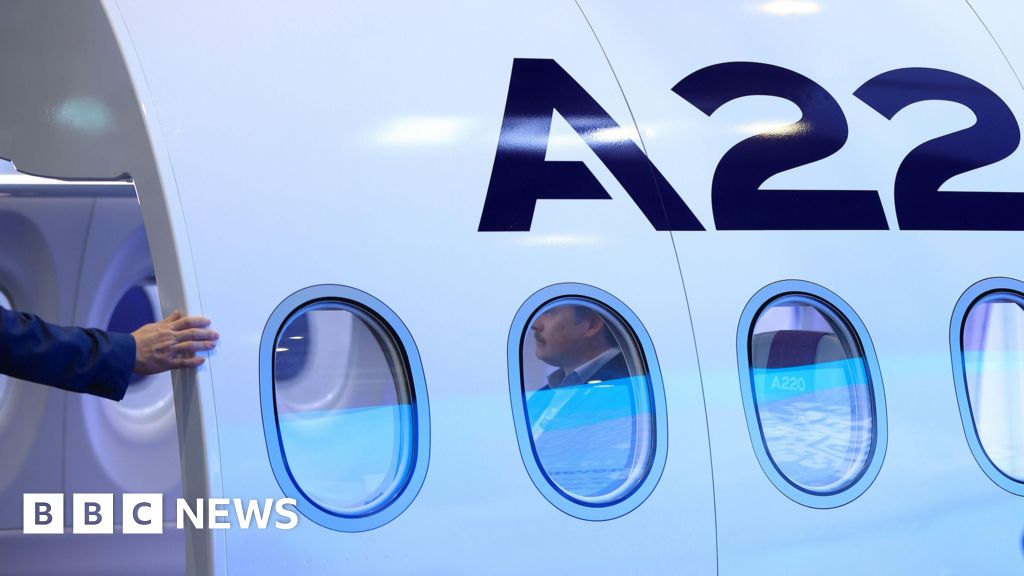
Malaysian airline Air Asia places an order for 120 Airbus A220s, the wings of which are made in Belfast.

Continue Reading

Business

Jefferies raises Praxis Precision Medicines stock price target on pipeline catalysts

Published

on


Jefferies raises Praxis Precision Medicines stock price target on pipeline catalysts

Continue Reading

Business

Miners lead Aussie shares higher on peace hopes

Published

on

Miners lead Aussie shares higher on peace hopes

Australia’s share market has lifted for a second straight session on hopes the US and Iran can strike a deal to end the conflict in the Persian Gulf.

Continue Reading

Business

Kraft Heinz CEO cites ‘early signs of momentum’

Published

on

Kraft Heinz CEO cites ‘early signs of momentum’

Market share gains show promise for turnaround strategy.

Continue Reading

Business

Fidelity National Financial, Inc. (FNF) Q1 2026 Earnings Call Transcript

Published

on

OneWater Marine Inc. (ONEW) Q1 2026 Earnings Call Transcript

Operator

Good morning, and welcome to FNF’s First Quarter 2026 Earnings Call. [Operator Instructions] I would now like to turn the call over to Lisa Foxworthy-Parker, SVP, Investor and External Relations. Please go ahead.

Lisa Foxworthy-Parker
Senior Vice President of Investor & External Relations

Advertisement

Thanks, operator, and welcome, everyone. I’m joined today by Mike Nolan, CEO; and Tony Park, CFO. We look forward to addressing your questions following our prepared remarks. F&G’s management team, including Chris Blunt, CEO; and Conor Murphy, President and CFO, will also be available for Q&A.

Today’s earnings call may include forward-looking statements and projections under the Private Securities Litigation Reform Act, which do not guarantee future events or performance. We do not undertake any duty to revise or update such statements to reflect new information, subsequent events or changes in strategy. Please refer to our most recent quarterly and annual reports and other SEC filings for details on important factors that could cause actual results to differ materially from those expressed or implied.

This morning’s discussion also includes non-GAAP measures, which management believes are relevant in assessing the financial performance of the business. Non-GAAP measures have been reconciled to GAAP where required and in accordance with SEC rules within our earnings materials available on the company’s investor website. Please note that today’s

Advertisement
Continue Reading

Business

Earnings call transcript: Kinetik Holdings Q1 2026 misses EPS forecast, stock steady

Published

on


Earnings call transcript: Kinetik Holdings Q1 2026 misses EPS forecast, stock steady

Continue Reading

Business

Papa John’s International, Inc. (PZZA) Q1 2026 Earnings Call Transcript

Published

on

OneWater Marine Inc. (ONEW) Q1 2026 Earnings Call Transcript

Papa John’s International, Inc. (PZZA) Q1 2026 Earnings Call May 7, 2026 8:00 AM EDT

Company Participants

Heather Hollander – Senior VP of Strategy, Investor Relations and FP&A
Todd Penegor – President, CEO & Director
Ravi Thanawala – CFO & President of North America

Advertisement

Conference Call Participants

Brian Bittner – Oppenheimer & Co. Inc., Research Division
Alexander Slagle – Jefferies LLC, Research Division
Todd Brooks – The Benchmark Company, LLC, Research Division
Isiah Austin – BofA Securities, Research Division

Presentation

Advertisement

Operator

Good day, and thank you for standing by. Welcome to Papa John’s First Quarter 2026 Earnings Conference Call and webcast. [Operator Instructions] Please be advised, today’s conference is being recorded.

I would now like to turn the conference over to your speaker today, Heather Hollander. Please go ahead.

Advertisement

Heather Hollander
Senior VP of Strategy, Investor Relations and FP&A

Good morning, and welcome to our first quarter 2026 earnings conference call. Earlier this morning, we issued our earnings release, which can be found on our Investor Relations website at ir.papajohns.com under the News and Events tab or by contacting our Investor Relations department. Joining me on the call this morning are Todd Penegor, President and Chief Executive Officer; and Ravi Thanawala, Chief Financial Officer and President, North America. Comments made during this call will include forward-looking statements within the meaning of the federal securities laws. These statements may involve risks and uncertainties that could cause actual results to differ materially from these statements. Forward-looking statements should be considered in conjunction with the cautionary statements in our earnings release and the risk factors included in our SEC filings. In addition, please refer to our earnings release and our Investor Relations website for the required reconciliation of non-GAAP financial measures discussed on today’s call. Lastly, we ask that you please limit your questions to one question and one follow-up.

Advertisement
Continue Reading

Business

Average house price falls by 5%, report shows

Published

on

Average house price falls by 5%, report shows

The cost of an average island property is down from almost £600,000 at the start of 2025.

Continue Reading

Business

AI could help return defense manufacturing to US, CEO says

Published

on

AI could help return defense manufacturing to US, CEO says

The Trump administration’s efforts to curtail U.S. dependence on China are intensifying as artificial intelligence exposes vulnerabilities deep inside America’s military supply chain.

Exiger CEO Brandon Daniels joined FOX Business’ Maria Bartiromo on “Mornings with Maria” to discuss how artificial intelligence is being used to trace the origin of critical military components and identify weak points tied to Chinese-controlled materials and suppliers.

Advertisement
U.S. military weapons.

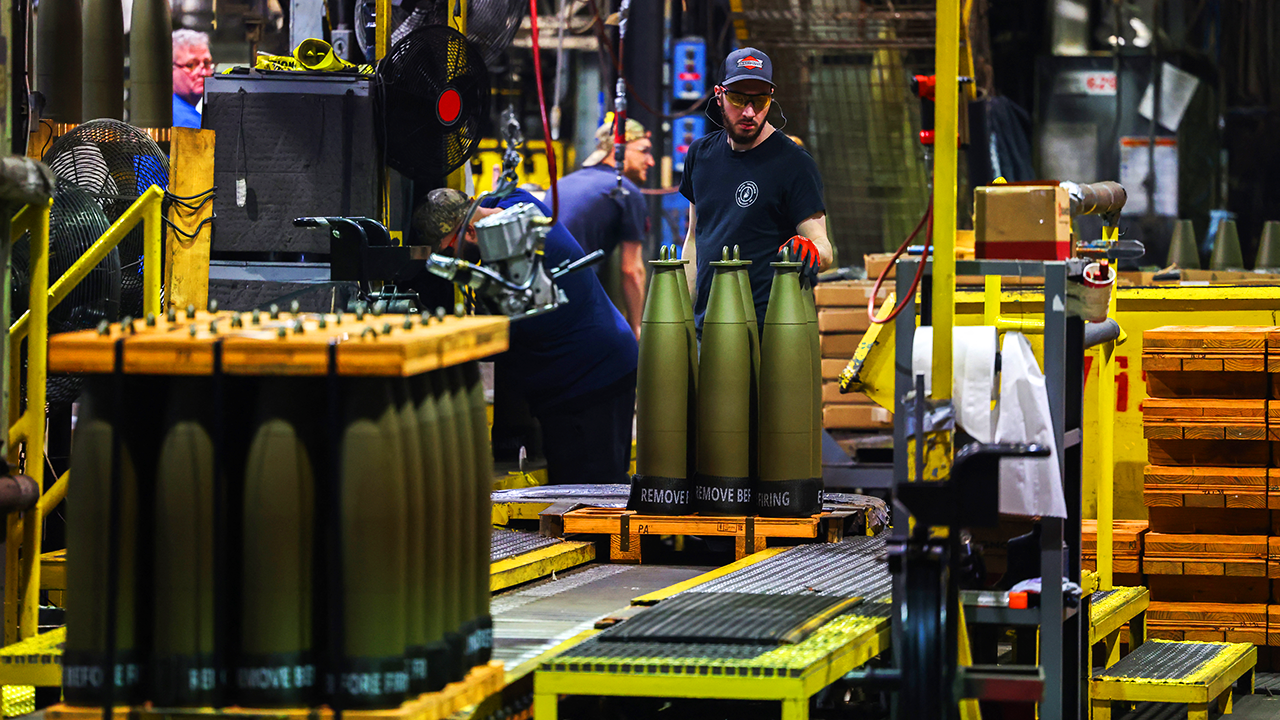
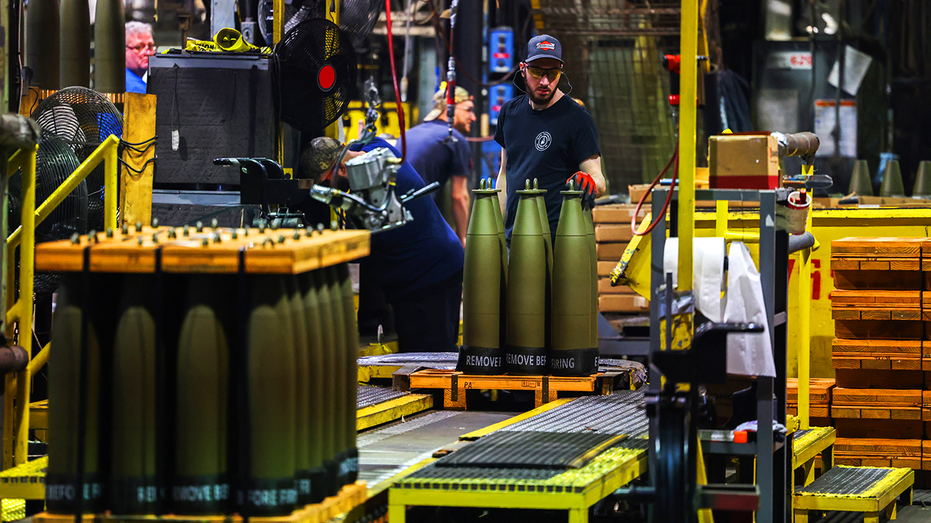
U.S. military weapon manufacturing at Scranton Army Ammunition Plant in Pennsylvania. (CHARLY TRIBALLEAU/AFP / Getty Images)

Daniels said China has spent years targeting key areas of industrial manufacturing through what he described as “economic warfare,” pointing to practices such as forced labor, tariff evasion and state subsidies that have hollowed out parts of America’s manufacturing base.

“There is a big, thick middle of manufacturing that China has targeted over the last 20 years,” Daniels said.

The conversation comes as the Trump administration is pushing to strengthen domestic production capacity tied to national security and defense systems. Daniels said the U.S. once had more than 360 manufacturers supporting areas such as iron castings, magnesium castings and forgings tied to defense production, but that number has dropped below 120 in the past decade.

Advertisement

WHITE HOUSE ACCUSES CHINA OF ‘INDUSTRIAL-SCALE’ AI TECHNOLOGY THEFT WEEKS AHEAD OF TRUMP-XI SUMMIT

“But there is a way out,” Daniels said. “Through autonomous workflows, through automation, through robotics, through artificial intelligence… we can return manufacturing to the United States.”

Supply chain concerns have intensified amid instability in the Middle East and threats to shipping through the Strait of Hormuz.

Advertisement

Secretary of Energy Christopher Wright joined Wednesday’s program to discuss ongoing tensions involving Iran and the importance of maintaining open shipping lanes.

FORMER TREASURY SECRETARY SAYS GUARDRAILS ARE NEEDED TO AVOID US-CHINA ‘MUTUALLY ASSURED ECONOMIC DISRUPTION’

“The United States is going to have free flow of traffic through the Strait of Hormuz,” Wright said.

The discussion reflects a broader push across government and industry to reduce reliance on foreign-controlled materials tied to critical defense systems.

GET FOX BUSINESS ON THE GO BY CLICKING HERE

Continue Reading

Trending

Copyright © 2025