Google revealed its new Fitbit Air today, and it’s the smallest tracker yet, designed exclusively for people who want some consistent health information without the hassle of a large, flashy device getting in the way. At only a little more than five grams on its own and around 12 grams with a band, this gadget glides onto your wrist and stays there for days on end with no problems. The engineers designed it to resemble a smooth pebble that nestles against the skin, and they managed to incorporate at least 35% recycled material by weight.
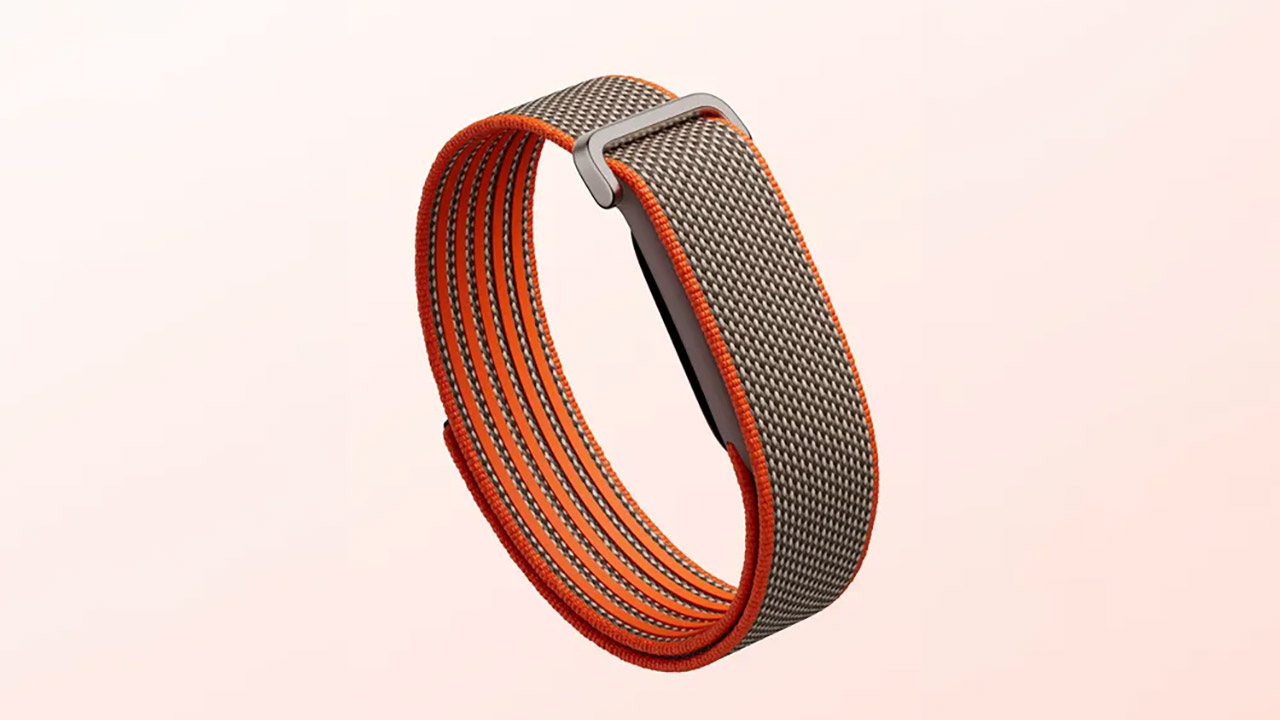
You have three band options to choose from right away: a recycled performance loop that has been a game changer so far, a sweatproof silicone active band for more physically demanding activities, and a sleeker elevated modern style that looks almost like real jewelry rather than a wearable. The first thing you’ll notice about this Fitbit Air is how low-key it is; there are no flashing lights, no obnoxious vibrations to disturb your day, and no large display to continuously check the time or stare at notifications.
Google Fitbit Air is the unbelievably comfortable, exceptionally smart way to transform your health[1]; and Google Health brings together effortless…
Unlock more with Google Health Premium: With a premium membership, get personalized coaching that’s built with Gemini and adapts to your life…
Comfortable fit – One Size Tracker (130-210 mm): The lightweight, micro-adjustable fit sits comfortably and quietly, so you can wear Google Fitbit Air…
With no display, you won’t have to worry about your phone ringing every two minutes. Instead, it silently gathers all of this data 24 hours a day, seven days a week and transmits it directly to your phone. Heart rate is continuously recorded, as are irregular heart rhythm alarms, blood oxygen levels, resting heart rate and heart rate variability, as well as the standard sleep stage tracking and workout recognition, all without the need for any fussing. Over time, the system begins to establish these patterns, providing you with a more full picture of your recovery and daily mobility.
Power-wise, you can expect it to last a full week on a single charge under normal use, with only a 5-minute top-up required to acquire another day’s worth when you run out of time. Water resistance is also adequate, up to 50 meters, so it can withstand showers, swims, and sweaty workouts without issue. The magnetic charger is easy to attach and reversible, so you won’t have to look for it in the dark. All of these small elements add up to a device that simply sits on your wrist without drawing attention to itself.
Data begins to flow into the all-new Google Health app, which now serves as a central hub for all of your Fitbit Air data, but it does more than that! The software collects a variety of different data, such as your phone’s health records or connected medical records, and then displays some excellent daily summaries, a weekly or monthly trend view, and some good ideas for how to improve. There’s also a coach tool built in, powered by Google AI, that generates entirely personalized training regimens depending on your recent sleep quality, heart rate recovery, or even if your schedule has changed. You can ask the coach what’s going on with this fatigue you keep feeling after a trip or how you should alter your exercises when you’re nursing an injury, and it will spew out all sorts of specific steps based on all of the data from this Fitbit Air
Pricing maintains the low entry point, at $99.99, which includes three months of Google Health Premium for free. There’s also a Stephen Curry-themed variant that costs $130 and includes a distinctive band design. Orders begin immediately, while the devices are slated to arrive in the United States and a few other locations beginning May 26th. The standard colors are obsidian, fog, berry, and lavender, but availability may vary by region. It’s all good for the latest and greatest Android phones starting with version 11, as well as the latest iPhones running iOS 16.4 or later. Setting it up is simple: all you need is a Google account and the Health app, and the tracker will quickly pair with your device over Bluetooth.
IPOs can be volatile, especially for retail investors. SpaceX is no exception.
Sundry Photography/Adobe Stock
I just did a quick Google search for SpaceX IPO. How many hundreds of articles are we actually expected to read about this?
Given the buzz around Friday’s big IPO, there are a few misconceptions worth addressing upfront. While many people view SpaceX as a massive, dominant space enterprise, it’s more complicated than that.
Advertisement
“In reality, it’s a very successful but fairly small satellite launch company, bolted onto a stagnant money-losing social media company and a money-incinerating AI company, and then sprinkled with a lot of hype about humankind going interplanetary,” said Robin Wigglesworth, editor of the Financial Times’ finance blog, Alphaville.
In other words, perhaps it’s more akin to a vertically integrated space and communications company with ambitious, high-risk side bets. Sure, at its center, SpaceX is a launch company that designs rockets (like Falcon 9 and Starship) and sells access to space. But around that, it has those related businesses — most notably Starlink, its satellite internet network, and xAI, which SpaceX acquired in February 2026. And since xAI includes the social media platform X and X’s chatbot, Grok, they’re also under the SpaceX umbrella.
X hasn’t been durable in terms of revenue. And, like most cash-burning AI enterprises, xAI is expensive to run and is reporting very large losses.
One could say the SpaceX ecosystem revolves around a single goal: building the infrastructure needed for global connectivity and, eventually, space settlement. But a major concern is that SpaceX’s overall package is driven more by hype and momentum than by its proven profitability.
Advertisement
Wigglesworth said the biggest immediate risk is straightforward: The stock could drop soon after it begins trading. That outcome would affect both the company and investors, though it wouldn’t necessarily signal broader economic trouble. As he noted, IPOs “do badly all the time.”
In the first few weeks after the IPO, price movements may be misleading. The opening day can be volatile, with banks helping stabilize prices and strong retail demand potentially pushing shares higher. We’ll also see index funds start to buy in, which can help nudge the price up a bit.
However, as Wigglesworth pointed out, the more meaningful test will come after a month, when the market determines whether there is sustained demand “for a company trading at some of the juiciest valuation multiples we’ve seen in history.”
So here’s another misconception to address: If SpaceX is popular, it’s safe to buy, right?
Advertisement
I didn’t have to read too many articles to get an answer to that.
“Popularity and renown are bad indicators for what makes a successful investment,” Wigglesworth told me. “Even good companies can be bad investments at a dumb price.”
AI-generated code is growing faster than security oversight mechanisms
Manual reviews struggle to keep pace with machine-generated software
Security leaders fear insecure coding patterns spreading through development pipelines
Artificial intelligence coding assistants have spread across development teams faster than security frameworks can adapt to.
New Salt Security research has claimed 90% of security leaders now report active concerns about risks posed by AI-generated software.
However, organizations continue embracing AI tools because they accelerate coding tasks, reduce time spent on repetitive work, and increase software delivery speed.
Latest Videos From
Human review cannot handle AI speed
Security leaders believe that development practices designed before AI became mainstream may no longer provide sufficient oversight.
Advertisement
Nearly a third (29%) of respondents identified insecure coding patterns as the primary risk introduced by AI assistants.
These systems learn from massive training datasets that contain their own flaws and outdated practices.
An AI tool can generate code that appears fully functional while quietly reproducing vulnerabilities a human might have caught.
Advertisement
Sign up to the TechRadar Pro newsletter to get all the top news, opinion, features and guidance your business needs to succeed!
This problem resembles how antivirus software must constantly update its definitions because new threats emerge faster than signature databases can grow.
The difference here is that no central authority tracks every insecure pattern an AI might replicate – as despite the widespread anxiety that AI introduces, more than one-third of organisations still depend on manual code reviews before any launch.
Reliance on human checking becomes structurally problematic when AI produces code at volumes no team can inspect thoroughly.
Advertisement
That method worked when developers wrote software at human speed, but it fails when AI accelerates output dramatically.
Reviewer fatigue sets in quickly, teams apply standards inconsistently, and security requirements get interpreted differently across departments.
AI coding assistants are fundamentally changing how software is built, but governance has not kept pace,” said Roey Eliyahu, CEO and co-founder at Salt Security.
Advertisement
“Most organisations recognise the risks, but many are still trying to manage AI-generated code using security processes designed for a pre-AI world.”
This approach does not scale any better than using a single email inbox to handle millions of daily messages without filtering or automation.
Enterprise complexity makes enforcement harder
Larger organisations with more than 500 employees face governance challenges that smaller firms simply do not encounter.
Advertisement
Distributed teams use different tools, follow varied workflows, and apply security standards with inconsistent rigour across regions.
The risk of developer overreliance on AI assistants grows proportionally with team size and delivery pressure.
Security agencies, including government cybersecurity bodies, have previously warned that AI systems expand attack surfaces and complicate accountability structures significantly.
Without better visibility into where AI-generated code enters the pipeline, governance remains guesswork dressed up as process.
Advertisement
Treating AI coding assistants as components of the software supply chain — similar to vetting any third-party malware risk — offers a more realistic path forward than hoping manual review will somehow catch up.
Well there’s your problem. (Credit: Bits und Bolts, YouTube)
Recently [Bits und Bolts] stumbled over a pair of Dragon 3000 branded 3dfx Voodoo 2 cards in his unfixed cards pile, and decided that the best course of action was to not only fix them, but also run them in SLI for some sweet Unreal Tournament action. Naturally, these cards being in the broken cards pile meant that he first had to figure out why they were broken and fix all issues.
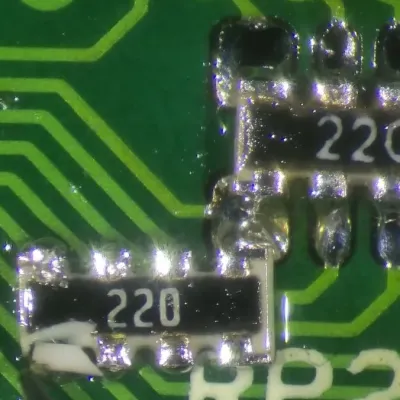
The advantage of having two identical Voodoo 2 cards is of course that any missing components, like some resistors on one card, could be referenced on the other card. Beyond that it was mostly a matter of reflowing clearly corroded pins on the ICs and replacing damaged resistors and resistor arrays before the first tests could be run.
Using the mojo utility it was easy enough to spot that there were still some lingering issues, with clear issues visible in 3D games as well. These were tracked down to a dodgy pin on one of the texture mapping units (TMUs) that needed some more reflowing, and a very sneaky resistor array that was cracked but not obviously so until prodded with a multimeter.
With both cards now making happy noises when individually tested, it was time to go full SLI, fire up the Pentium 2 system and enjoy the glory of 24 MB of VRAM at high resolutions in Unreal Tournament. Considering that the bloke who had sent in these cards had found them while cleaning up a shed, it’s quite amazing how little rework was needed to once again party like it’s 1999.
GenAI image generators like Stable Diffusion do not draw a picture pixel by pixel from left to right. They start with noise and iteratively refine the entire image in parallel until it converges, in a process known as diffusion. For years, applying that same principle to text generation had remained out of reach at scale.
Standard language models work like a typewriter: one token at a time, left to right, with no ability to revise a committed output. That pattern works in the cloud, where batch sizes keep GPUs saturated. For local inference or low-concurrency deployments, the GPU is idle most of the time.
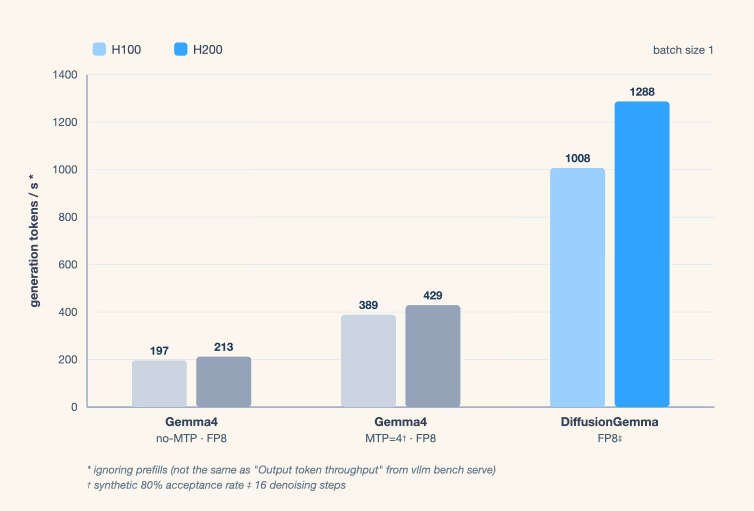
Google’s DiffusionGemma, released this week, is an open source experimental model that applies diffusion to text generation at production scale. Built on the Gemma 4 backbone and released under the Apache 2.0 license, it is the first diffusion language model natively supported in the open source vLLM inference platform. It generates a 256-token block in parallel rather than sequentially, with every token position attending to every other. Google says DiffusionGemma generates text up to 4x faster than standard models on GPUs. At batch size 1 on a single Nvidia H100, the FP8 version reaches 1,008 tokens per second. On H200, it hits 1,288 — roughly six times a standard autoregressive baseline, according to vLLM benchmark results published today.
Despite the speed gains, Google did not oversell the release. The company’s launch post acknowledged directly that DiffusionGemma’s overall output quality is lower than standard Gemma 4, adding “For applications that demand maximum quality, we recommend deploying standard Gemma 4.”
Advertisement
What DiffusionGemma does
DiffusionGemma does not generate tokens in order. It starts with a block of 256 random placeholder tokens, effectively a blank canvas, and runs multiple refinement passes over the entire block at once. On each pass, it evaluates every position and locks in the ones it is most confident about. Uncertain positions get randomized and reconsidered on the next pass, with the model using what it resolved in the previous round to inform the next attempt. The block converges progressively until enough positions stabilize to anchor the rest.
Two things follow from that architecture.
Self-correction. An autoregressive model that commits to a wrong token is stuck with it, because subsequent tokens are already conditioned on the mistake. DiffusionGemma can identify low-confidence positions and re-evaluate them on the next pass.
Bidirectional context. Every position attends to every other position in the block simultaneously, including tokens that appear later in the sequence. That makes the model structurally better suited to constrained generation tasks where left-to-right generation fails.
Google demonstrated both properties with a fine-tuned Sudoku solver. The base model solved zero puzzles. After fine-tuning on a Sudoku dataset, it reached an 80% success rate and converged in 12 denoising steps rather than 48. The efficiency gain came directly from the model’s ability to self-correct and stop early.
How it was built
DiffusionGemma runs as a 26B Mixture of Experts model that activates only 3.8B parameters during inference. Quantized, it fits within 18GB VRAM on consumer hardware including the Nvidia RTX 4090 and 5090. Google and NVIDIA also optimized for enterprise Hopper and Blackwell servers using NVFP4 kernels.
Advertisement
The vLLM integration required new work because DiffusionGemma does not fit the standard serving model. A typical vLLM batch applies the same attention type to every request. DiffusionGemma requests alternate between causal and bidirectional attention as they cycle through prompt reading, canvas refinement and block commit. The team built per-request attention switching into both the Triton and FlashAttention 4 backends and reused the existing speculative decoding path for the refinement loop.
The new ModelState interface the team built for this integration is designed to support additional diffusion models in vLLM as they emerge.
Where the speed wins and where it does not
DiffusionGemma’s speed advantage is real but conditional. Where it applies depends entirely on deployment context.
The numbers. At batch size 1 on a single H100, vLLM’s published benchmarks put the FP8 model at roughly five times a standard autoregressive baseline. On H200, roughly six times. Those peak figures reflect optimal conditions: single user, dedicated hardware, FP8 quantization.
Advertisement
Where it wins. Local inference, single-user applications and low-concurrency serving. In those conditions the GPU has spare compute and memory bandwidth is the bottleneck. DiffusionGemma’s parallel block generation fills that gap.
Where it does not. High-throughput cloud serving. When a server is batching hundreds of concurrent requests, autoregressive models already saturate available compute and DiffusionGemma’s parallel decoding provides diminishing returns.
The quality ceiling. Guilherme O’Tina, an AI researcher, put a finer point on it on X. “Local artifacts vs hallucinations are different problems and that decides where this actually wins,” O’Tina wrote.
How it compares
Diffusion language models are not new. Researchers have built them at smaller scales for several years, and Inception Labs’ Mercury Coder applied the approach commercially to coding tasks in 2025. What DiffusionGemma adds is scale — a 26B MoE backbone, native vLLM serving and a general-purpose instruction-tuned model rather than a domain-specific one.
The more useful comparison for engineers evaluating this against existing inference tooling is speculative decoding, and the distinction matters. Speculative decoding keeps a standard autoregressive target model and uses a smaller draft model to guess several tokens ahead. The target model verifies them in one pass. If sampling is correct, the output distribution stays identical to the target. The architecture is unchanged.
Advertisement
Andrew Kuncevich, an ML and AI researcher focused on production AI systems, put it directly on X. “DiffusionGemma is different. It does not just guess future tokens. It creates a noisy 256-token canvas and repeatedly denoises the whole block in parallel. So it’s not just a decoding trick — it’s a different generation paradigm,” Kuncevich wrote.
Compared to standard Gemma 4, the trade is speed for quality. Google’s benchmark data shows DiffusionGemma below standard Gemma 4 on general output quality metrics, with the gap varying by task.
On structured constrained tasks, including code infilling, template generation and problems requiring bidirectional constraint propagation, the architecture has a structural advantage that fine-tuning can surface, as the Sudoku result demonstrates. On open-ended generation, standard Gemma 4 remains the stronger option.
What this means for enterprises
DiffusionGemma serves via a standard vLLM OpenAI-compatible endpoint with no diffusion-specific pipeline changes required.
This is not a general-purpose model upgrade.
Advertisement
For teams running local or low-concurrency inference, the architecture choice just expanded. Until now, cutting generation latency on dedicated GPU hardware meant using a smaller model and accepting the quality trade-off. DiffusionGemma offers a third path at the same parameter footprint, on consumer hardware, with same-day vLLM support.
For constrained generation workloads, bidirectional attention is worth evaluating. Code infilling, structured data generation and tasks where correct output depends on context not yet generated are where this architecture has a structural edge.
The ModelState interface built for this integration is designed to generalize as additional diffusion models emerge.
The quality trade-off is real and Google acknowledges it. For teams running local inference on dedicated GPU hardware, this is worth testing.
Xiaomi’s MiMo AI team has open-sourced MiMo Code V0.1.0, a terminal-native AI coding assistant that the Chinese electronics giant says outperforms Anthropic’s Claude Code on key agentic coding benchmarks, especially on long-horizon, multi-step tasks (200+ steps) — at least, according to its own internal beta release and survey of 576 developers.
It’s also bundling limited-time free access to MiMo-V2.5, its multimodal flagship model with a million-token context window, requiring no registration to get started.
The release was announced June 10, 2026 in a post on the social network X from the official @XiaomiMiMo account, which described the tool as “more than an AI coding assistant in your terminal — it’s the smartest coding partner you’ll ever work with.”
MiMo Code is available now on GitHub under an MIT license, and installs with a single terminal command (curl -fsSL https://mimo.xiaomi.com/install | bash) on macOS and Linux or via npm (npm install -g @mimo-ai/cli) on Windows.
Advertisement
The project is a fork of the open-source OpenCode agent, which Xiaomi has extended with its own memory architecture, workflow modes, and model harness.
The end of AI coding agents’ amnesia?
As any avid vibe coder would surely attest, AI coding agents degrade over long working sessions: as the context window fills, earlier decisions, conventions, and task state get compacted away or lost entirely, forcing developers to re-explain their projects.
Xiaomi argues this approach is doomed at scale. “What we need is not better compression, but an explicit storage-and-retrieval mechanism that decides what information should be written into persistent structures, and when it should be recalled,” the MiMo team noted in their launch blog.
MiMo Code attacks this with a cross-session memory system, powered under the hood by SQLite FTS5 full-text search, that spans four layers: project memory (a persistent MEMORY.md file), session checkpoints, scratch notes, and per-task progress logs.
Advertisement
The note-taking is key, here: Rather than forcing the primary coding agent to pause its work to take notes, the system deploys an independent “checkpoint-writer” subagent.
Think of it the primary coding agent as a construction contractor working to build a massive mansion alongside a dedicated architect, the checkpoint-writer subagent. While the main agent focuses on building out the physical structure, the subagent updates the blueprints in real time, noting decisions, issues, and the actual lay of the land as the construction project progresses.
When the context window approaches its limits — the contractor gets lost in the half-built mansion — it can consult the subagent and find its place again. In the case of MiMo Code, the system simply rebuilds the environment from structured checkpoints with the relevant context, ensuring no loss of operational momentum.
Two self-improvement mechanisms round out the system: a /dream command that periodically (roughly every seven days) reviews historical sessions, deduplicates them, and compresses them into long-term memory, and a “distill” function that mines past sessions for repeated workflows that can be automated, following a similar approach taken recently by OpenAI and Anthropic with their various models.
Advertisement
Impressive performance on software engineering (SWE) benchmarks
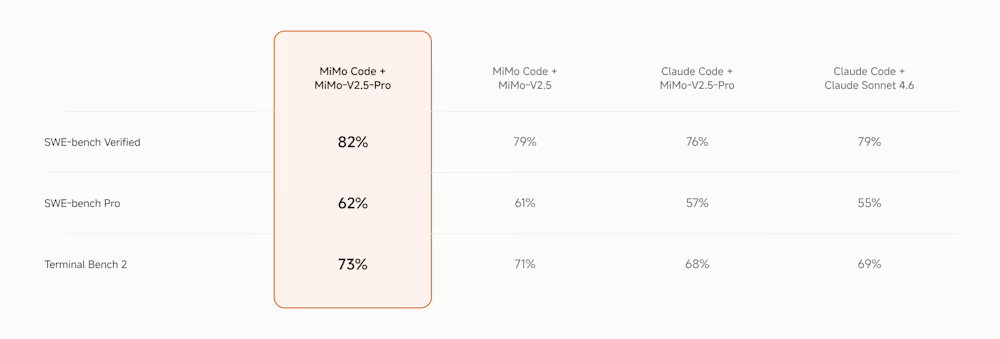
According to benchmark figures published in Xiaomi’s technical blog post, MiMo Code paired with MiMo-V2.5-Pro outperformed Claude Code paired with Claude Sonnet 4.6 on all three evaluations tested:
MiMo Code vs. Claude Code benchmark performance. Credit: Xiaomi
SWE-bench Verified: 82% vs. 79%
SWE-bench Pro: 62% vs. 55%
Terminal Bench 2: 73% vs. 69%
The harness itself accounts for a measurable share of the gain. Running the same MiMo-V2.5-Pro model in both harnesses, MiMo Code scored 62% on SWE-bench Pro versus 57% for Claude Code, and 73% on Terminal Bench 2 versus 68% — roughly five points each, attributable purely to the agent system rather than the model.
Xiaomi notably did not publish comparisons against OpenAI’s Codex or Google’s Gemini CLI — Claude Code is the sole named competitor throughout its materials, a telling choice of benchmark target.
Advertisement
Independent reference points suggest why. On the official Terminal-Bench 2.0 leaderboard maintained at tbench.ai, OpenAI’s Codex CLI running GPT-5.5 scores 82.2% — roughly nine points above MiMo Code’s self-reported 73% — and OpenAI’s own GPT-5.5 announcement claims 82.7% on the same benchmark.
On SWE-Bench Pro, however, the picture flips: OpenAI reports GPT-5.5 at 58.6%, below MiMo Code + MiMo-V2.5-Pro’s claimed 62%. (MiMo Code does not yet appear on either official leaderboard, and cross-comparing self-run numbers against leaderboard submissions carries the usual configuration caveats.)
Perhaps more interesting than the offline benchmarks: Xiaomi says it ran a human double-blind A/B evaluation during its internal beta, covering 576 developers working in 474 real private repositories, producing 1,213 judged head-to-head pairs against Claude Code using the same target model.
Under 200 execution steps, the two systems split roughly 50/50 — but past 200 steps, MiMo Code’s win rate rose above 65%, supporting the company’s thesis that its memory and state-management architecture pays off specifically on long-horizon work.
Advertisement
Xiaomi itself concedes the standard benchmarks “still measure one-shot problem-solving ability” and don’t capture the tool’s multi-session design goals.
As always, these are vendor self-reported numbers that haven’t been independently verified, and head-to-head harness comparisons are sensitive to configuration. But the claims are consistent with a broader industry pattern: scaffolding and harness engineering are becoming as important as raw model capability in agentic coding performance.
Easy integration with existing developer systems and voice control
From a user experience standpoint, MiMo Code is designed to live where developers already work. It operates directly in the terminal, reading and writing files, running commands, and managing Git.
Out of the box, the tool requires zero configuration, connecting automatically to “MiMo Auto”—a free-for-a-limited-time channel powered by Xiaomi’s multimodal MiMo V2.5 model, which boasts a massive million-token context window. For developers migrating from existing environments, the transition is frictionless: MiMo Code automatically imports MCP servers, custom skills, and API configurations from Claude Code.
Advertisement
Other noteworthy features include:
Compose mode: Pressing Tab switches the agent into a specification-driven workflow in which the developer describes a high-level goal and the system autonomously executes the full development cycle — design, planning, coding, testing, and review — following what Xiaomi describes as a “heavy planning upfront, stable verification later” strategy.
Voice control: Built on Xiaomi’s MiMo-ASR speech recognition with TenVAD voice activity detection, developers can dictate and modify instructions verbally and speak commands like “send” and “execute” for fully hands-free operation (available for logged-in users).
According to Xiaomi, the gains from the agent harness itself are measurable. Running the same underlying MiMo model in both harnesses, the company says MiMo Code scored 62% on SWE-Bench Pro versus 57% for Claude Code, and 73% on Terminal Bench 2 versus Claude Code’s 68% — roughly five percentage points better on each, attributable purely to the agent system rather than the model.
As always, these are vendor self-reported numbers that haven’t been independently verified, and head-to-head harness comparisons are sensitive to configuration. But the claim is consistent with a broader industry pattern: scaffolding and harness engineering are becoming as important as raw model capability in agentic coding performance.
Aggressively affordable
The bigger lure for many developers may be what’s bundled in.
Advertisement
MiMo Code ships with “MiMo Auto,” a zero-configuration channel offering free, limited-time access to MiMo-V2.5 — the natively multimodal model Xiaomi released in late April 2026, a sparse mixture-of-experts design with 310 billion total parameters (just 15 billion active per inference) and a 1 million token context window, which the company positions as matching Anthropic’s Claude Sonnet 4.6 in multimodal agentic work.
The larger MiMo-V2.5-Pro — a 1.02-trillion-parameter mixture-of-experts model with 42 billion active parameters and a hybrid-attention architecture — led the open-source field on Xiaomi’s ClawEval agentic benchmark with a 63.8% success rate while consuming only about 70,000 tokens per trajectory, roughly 40–60% fewer than Anthropic’s Claude Opus 4.6, Google’s Gemini 3.1 Pro, or OpenAI’s GPT-5.4 needed for comparable results.
Notably, the V2.5-Pro’s post-training was explicitly designed to instill “harness awareness” — training the model to manage its own memory and context within agent scaffolds like Claude Code or OpenCode — making a Xiaomi-built harness optimized around that capability a logical next step.
Advertisement
Pricing is similarly aggressive: MiMo-V2.5 starts at $0.40 per million input tokens and $2.00 per million output tokens, while V2.5-Pro runs $1.00/$3.00 per million (input/output) up to 256K context, doubling beyond that, with cache hits dropping input costs to as little as $0.20–$0.40 per million, making it among the cheapest frontier models available globally.
For developers who don’t want Xiaomi’s models at all, MiMo Code also supports third-party backends — including token plans from DeepSeek, Moonshot’s Kimi, and Zhipu’s GLM — along with any OpenAI-compatible API, mirroring the bring-your-own-model flexibility of its OpenCode parent.
Terminal AI coding agent wars go global
MiMo Code lands in an increasingly crowded field of terminal-based coding agents: Anthropic’s Claude Code, OpenAI’s Codex CLI, Google’s Gemini CLI, and open-source players like OpenCode and Aider.
What’s new is the entrant. Xiaomi — the world’s third-largest smartphone maker, with a fast-growing EV business — has been methodically building its MiMo AI division since the release of the MiMo-7B reasoning model in April 2025, following with the MiMo-VL vision-language series, MiMo-V2-Flash, the 1-trillion-parameter MiMo-V2-Pro in March 2026, and the V2.5 flagship family in April.
The effort is led by Fuli Luo, a veteran of DeepSeek’s disruptive R1 project, who has characterized Xiaomi’s frontier push as a “quiet ambush” — and backed it with a 100-trillion free token grant for builders announced alongside the V2.5 launch.
Advertisement
The playbook is familiar from DeepSeek, Alibaba’s Qwen, MiniMax, and Moonshot AI’s Kimi series: release genuinely capable models and tooling under permissive licenses at a fraction of U.S. lab pricing, and convert the resulting developer mindshare into a durable ecosystem.
By pairing an open-source agent harness with a free frontier-class model, Xiaomi is effectively eliminating both the licensing and the usage cost of entry — at least for now.
What it means for enterprises and technical decision-makers
For engineering leaders, MiMo Code is a low-risk, potentially high-value evaluation candidate: MIT-style licensing permits modification and commercial integration, the OpenCode lineage means the architecture is inspectable, and the bring-your-own-model support means it can be pointed at an internally approved endpoint rather than Xiaomi’s cloud.
The persistent memory system addresses a real and widely felt pain point in agentic development workflows — one that competitors are also racing to solve.
Advertisement
The countervailing considerations: the “free for a limited time” model access is by definition temporary and routes code context through Xiaomi’s servers, which will be a non-starter for organizations with strict data-residency or IP policies; the benchmark edge over Claude Code is self-reported; and a V0.1.0 release number signals exactly what it suggests about maturity.
Teams subject to U.S. government procurement restrictions on Chinese technology vendors should also weigh that context before adopting.
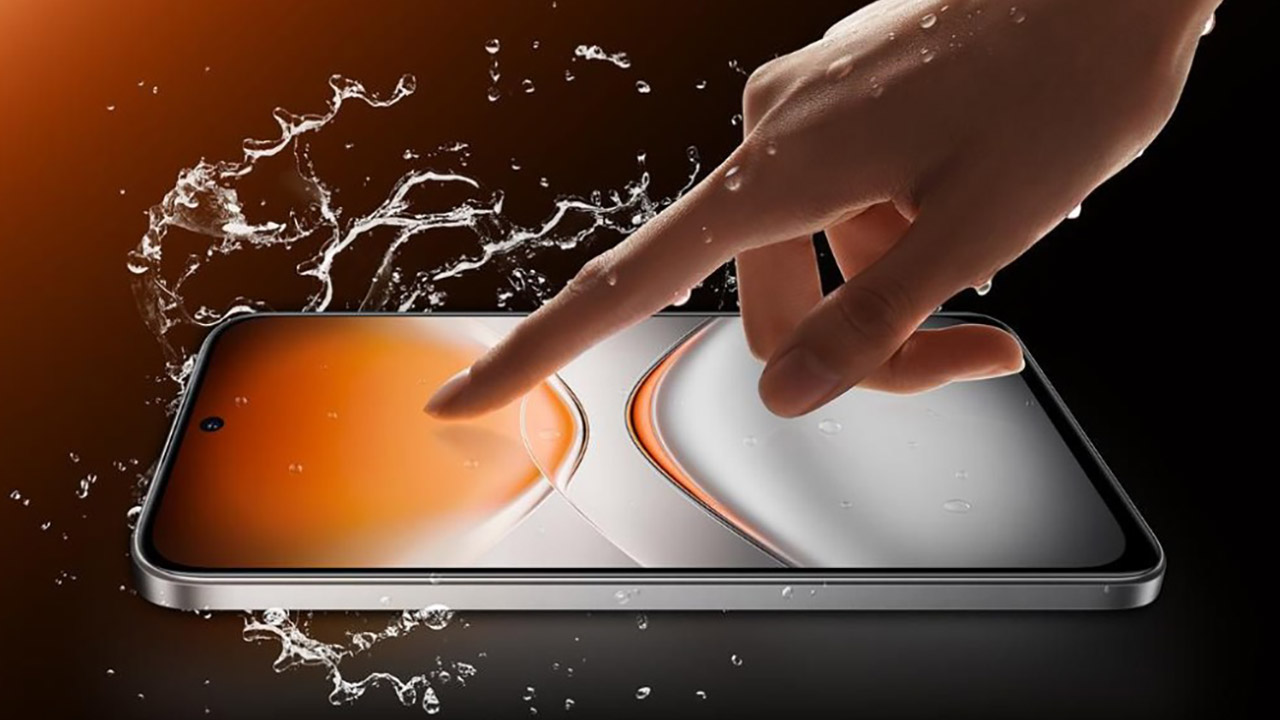
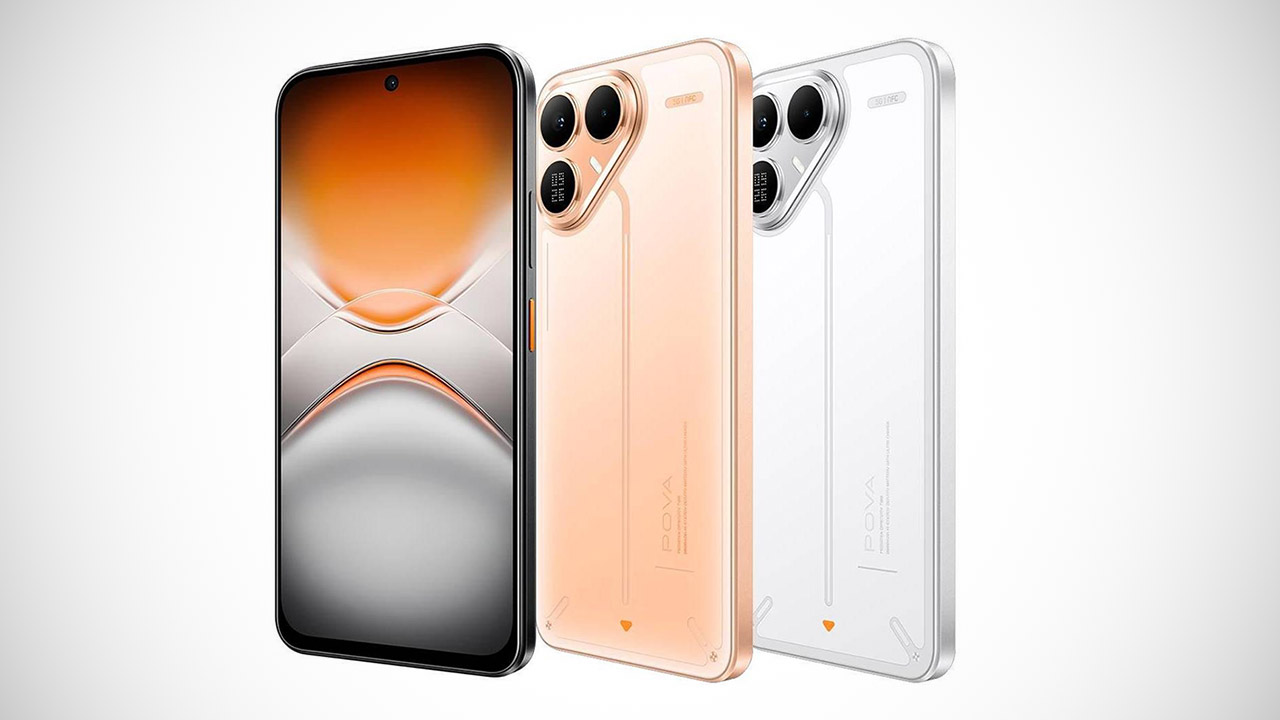
Many mid range phones stick to familiar shapes and modest power reserves, yet Tecno stepped forward with the Pova 8 5G carrying both a giant battery and an unexpected visual flourish on the rear. That flourish takes the form of a small dot matrix panel tucked into the camera module. What looks like a third lens from a distance actually serves as a compact LED grid capable of displaying simple animations and patterns. Tecno named it the Alive Matrix Display, and it activates for incoming calls, new notifications, charging progress, or even active gaming moments. Around 49 different animations come preloaded, with options to personalize the behavior and appearance.
Owners can watch the lights on the camera island pulse or evolve into shapes that correspond to the situation, transforming what would otherwise be a rather standard video setup into something considerably more dynamic. The rear panel that snaps on features a sequence of geometric lines that give it a semi-transparent appearance, and it comes in a range of colors, all of which help the lights show through when switched on. The front panel includes a 6.76-inch screen with a 144Hz refresh rate, allowing videos and games to run smoothly. That screen is also bright enough to be seen outside, and the built-in eye strain reduction is especially handy if you plan on using it for extended periods of time.
Google Pixel 10a is a durable, everyday phone with more[1]; snap brilliant photography on a simple, powerful camera, get 30+ hours out of a full…
Unlocked Android phone gives you the flexibility to change carriers and choose your own data plan; it works with Google Fi, Verizon, T-Mobile, AT&T…
Pixel 10a is sleek and durable, with a super smooth finish, scratch-resistant Corning Gorilla Glass 7i display, and IP68 water and dust protection[4]
Under the hood, a MediaTek Dimensity 7100 CPU handles all of the daily tasks and mild gaming demands, with some specialty chips helping to boost signal strength in areas where it is a little weak. A large graphite layer provides cooling, and the phone remains comfortable to handle even after hours of gaming. In terms of storage and memory, the launch models hit a good balance for most people: not too much, but enough to avoid feeling limited. The camera setup is quite standard, with a 50-megapixel Sony sensor that supports autofocus and zooming, as well as a second lens for group shots. The selfie camera is decent for video calls, but let’s be honest, the lights on the phone’s back are the main attraction.
Advertisement
Another important feature is the power delivery system, which incorporates an 8000 milliamp hour battery with a certified multi-day runtime in regular use, as well as 45 watt wired charging that can charge the battery to 50% in 35 minutes. If necessary, you can even use the phone to charge your wired earbuds or another phone. As an added benefit, it appears that the battery will still perform effectively after thousands of charge cycles.
The phone runs Android 16 with Tecno’s HiOS 16 on top, and the company promises to keep the software updated for an extended period of time. There are also some AI-powered extras, such as photo cleanup and video summaries, as well as noise reduction during calls, which will only be available in specific areas. If you buy in a supported region, you will also receive additional cloud storage. When it comes to making sure the phone survives the rigors of everyday life, Tecno has it covered. The phone is resistant to dust and water splashes, and it’s been built to withstand a few accidental drops and bumps. Even though it has a pretty healthy battery, it’s only 9 millimeters thick, though it’s a little heavier due to the power inside.
The starting price in India is approximately 30,000 rupees ($314) for the lower memory version, which will be available from all major online retailers within the next week or so. So, if you’re searching for a phone with a long battery life and a nice design, this one might be worth considering, even if it’s not the most powerful camera phone on the market or made of highest-quality materials. [Source]
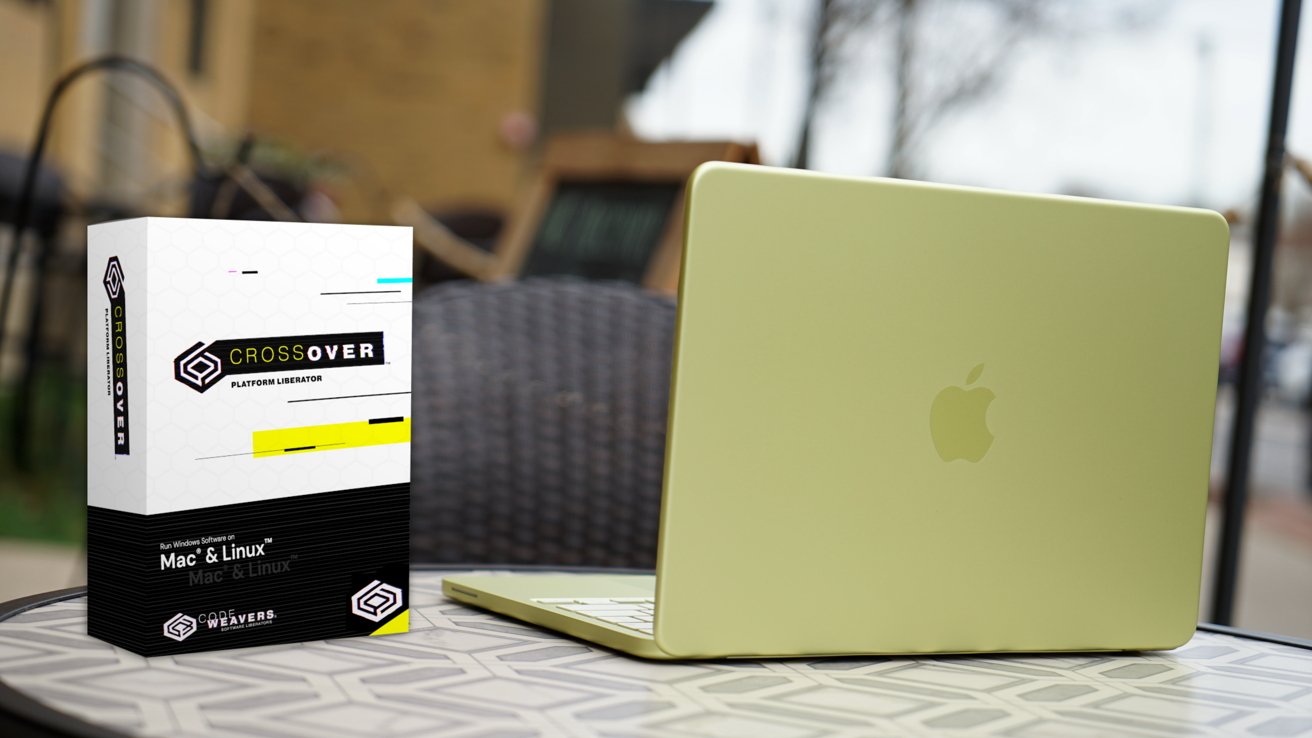
If you’re a CrossOver user on Intel or use 32-bit gaming bottles, your time is up with version 27. 64-bit bottles and Apple Silicon are now required.
Gaming on Mac has always been a bit of a wasteland, but that doesn’t stop some folks from trying. The CrossOver app for Mac brings Windows games to the platform, and it gets better with each update.
However, the latest update, CrossOver 27, will have to make some sacrifices to make development a little more streamlined. It is getting ARM64 builds for both Mac and Linux, but CrossOver 27 will only work on macOS Sonoma or newer.
There’s also a final warning about those who still may be using 32-bit gaming bottles. Users are urged to move their 32-bit games to 64-bit bottles, or they will no longer function.
The developer did note that this should affect a small percentage of users overall. Around 97% of CrossOver users are running macOS Sonoma or newer.
Removing legacy support will allow the development team to focus on UI and optimization for one set of computers instead of maintaining Intel-compatible systems. It also means that a new user interface will debut at some point in a future release.
If you are on an Intel machine or running an older version of macOS, the good news is that CrossOver 26 won’t suddenly combust. Simply don’t pay for the new version or attempt to upgrade and everything will work as is, hopefully.
Advertisement
However, note that if you do keep CrossOver 26, your games could run into compatibility issues if they are updated. Also, newer operating systems may cause problems with the older software.
Eventually, your only choice might be to finally move to Apple Silicon.
Two recent studies argue that smartphones may have contributed to falling birthrates by reducing in-person social interaction, sexual frequency, and other conditions tied to unintended pregnancies. “One of the studies published in May is called ‘The Collapse of Teen Fertility in the Digital Era‘ and the other, published just Monday, is titled ‘Is the iPhone Birth Control? Causal Evidence from AT&T’s 2007-2011 Carrier Monopoly,’” reports KTLA. “Both were chronicled in a New York Times piece by political writer Sabrina Tavernise on Monday.” Slashdot reader sabbede submitted the story. From the report: The one from May, authored by two University of Cincinnati professors, posits that teen fertility “collapsed globally” starting around 2007 — the same year the first iPhone was released. “Smart phones changed how teens spend time with each other … this change in turn drove the collapse in teen fertility,” the study’s abstract reads. “Once enough teens are on the phone, being on the phone is where the peer network is; in-person time falls sharply, and with it the unstructured contact in which most unintended teen conceptions occur.” The study claimed that countries “across the income and policy spectrum” were affected by the teen fertility drop, and that researchers used data from multiple countries, including the U.S., England and Wales, to rule out “country-specific contraceptive access and welfare reform stories.” “This model predicts that the shift towards the phone-mediated equilibrium affects multiple aspects of teen behavior,” the abstract continues, concluding that “the same instrument that produces a collapse in teen fertility produces a surge in teen suicides.”
The study published on Monday looks more closely at the United States, explaining that nationwide general fertility rates have fallen 22% since 2007. “[This is] a sustained decline not readily explained by economic conditions, contraceptive use, housing or childcare costs, or other commonly cited factors,” the National Bureau of Economic Researchers study states. “We assess the potential role of a different shock: the diffusion of the smartphone.” As mentioned before, the first iPhone was rolled out in 2007, and this study makes use of that timeframe as “a natural experiment” by using data from 2007 through 2011, when iPhones were only sold on AT&T. “From June 2007 through February 2011, the device was sold only on AT&T, allowing us to identify its effect from variation in AT&T’s mobile broadband coverage,” the study says. “Entropy-balanced Poisson and synthetic difference-in-differences event studies imply that access to the iPhone reduced births by 4.5-8.0% at ages 15-19 and 3.2-6.6% at ages 20-24, with statistically significant but smaller declines among older cohorts. Placebo analyses applied to Verizon and Sprint’s pre-2011 coverage footprint are null.
Taken together, these cohort effects imply that the diffusion of the iPhone deepened the decline in births among women under 30 while suppressing the rise in births among older women.” “Overall, the diffusion of the iPhone explains 33-52% of the decline in the general fertility rate among women aged 15-44,” researchers continued. “National-survey evidence on time use and sexual behavior is consistent with the iPhone reducing in-person interactions, increasing pornography use and reducing sexual frequency.”
Polish lawmakers have voted to criminalize “trash streaming,” with up to five years in prison for online broadcasts of serious crimes such as rape or murder, animal cruelty, humiliating violence, gambling promotion, or even simulated depictions of those acts. Reuters reports: The move is part of a broader push by Poland to tighten regulation of online content. Recent measures include banning the use of mobile phones by children under 16 in schools and introducing stricter age verification rules to access pornography. Under the new provisions, broadcasting crimes punishable by more than five years in prison, including murder or rape, will itself be classed as a separate offence punishable by up to five years behind bars.
The law also covers content showing cruelty to animals, violence aimed at humiliating others, and the promotion of gambling. The same penalties will apply to individuals who simulate or falsely portray the commission of such crimes while streaming, lawmakers said.
Rows of Lime’s new LimeBike electric bicycles are ready to be deployed in Seattle from the company’s warehouse in Georgetown on Wednesday. (GeekWire Photo / Kurt Schlosser)
As Seattle is set to welcome the world this month for FIFA World Cup matches, the city’s sole micromobility operator is getting ready, too — and GeekWire got an inside look at how.
In a sprawling warehouse south of downtown in Georgetown — a space that serves as the base of operations for the company’s presence in the Seattle region — Lime is rolling out new devices, doing regular maintenance on its existing fleet, and preparing a suite of services designed to handle a surge in ridership.
Lime is the only operator in the City of Seattle’s bike- and scooter-share program, a position it assumed earlier this year following the exit of competitors including Bird. The company operates a fleet of 15,000 devices in the city — 7,000 scooters, 4,000 LimeGliders, 3,300 Gen 4 e-bikes and 700 of its newest LimeBikes — and recorded 2.3 million rides in Seattle in the first quarter of this year, up roughly 50% from the same period last year.
World Cup matches and associated activities around Lumen Field and other parts of Seattle could meet or exceed what Lime saw on its biggest ridership day ever in the city — the February Super Bowl championship parade that generated more than 60,000 trips.
“We’re excited to support Seattle during such a major moment for the city, and to help residents and visitors get where they need to go throughout the summer,” said Parker Dawson, senior regional lead of government relations at Lime.
Advertisement
What’s in store
Boxes of helmets in Lime’s Seattle warehouse, ready to be given away during promotional events this summer. (GeekWire Photo / Kurt Schlosser)
To handle the expected influx of riders, Lime is rolling out several new services and operational upgrades for the duration of the World Cup and other major summer events, including:
Valet parking: For the first time in Seattle, Lime will station staff at designated parking locations near the stadium district to end rides on behalf of riders who can’t connect to cell service in crowded areas. “If you go down to the stadium area and there’s potentially hundreds of thousands of fans taking up all of the cell service, this allows our team to actually end the ride for you,” said Brent Vigneault, general manager of Lime’s Pacific Northwest operations.
Fan Pass: A new discounted ride pass offers up to 90 minutes of riding for $12.99 — more than 70% lower than standard pricing — available now through July 19.
Geofencing: Event-specific virtual boundaries will direct riders to designated parking zones and help manage pedestrian-heavy areas on game days.
Fleet rebalancing: Using GPS data from past events, Lime will shift vehicles across the city to meet demand spikes around the stadium district and downtown corridors.
Helmet giveaways: Lime has already distributed 2,500 free helmets this year and plans to give out an additional 3,000 during major events this summer. Helmets will be available at all valet parking locations after matches.
New tech put to the test
Bikes and scooters staged for maintenance and quality control checks in Lime’s Seattle warehouse. (GeekWire Photo / Kurt Schlosser)
Thousands of bike and scooter riders — many of whom might be new to Seattle — could pose significant challenges when it comes to where to ride and where to park.
Lime’s new Lime Vision technology is designed to address part of that equation by alerting sidewalk scooter riders to find a safer path. Cameras mounted on the front of scooters, in tandem with artificial intelligence, will detect where a rider is traveling. When bad behavior is detected, the scooter emits an audible alert and sends a real-time notification to the Lime app, warning the rider to move to a safer location.
GeekWire tested Lime Vision on Wednesday by riding a scooter from the street to a sidewalk near Lime’s warehouse. After a few seconds, the scooter realized where we were and said, “Avoid sidewalks.”
Lime has deployed 3,500 new Gen 4.1 scooters in Seattle over the past four weeks, all equipped with Lime Vision. Vigneault said the system is already having an impact, with riders audibly called out and observed moving off sidewalks in response.
“Our model will continuously learn through experience,” he said. “The more miles ridden on these vehicles throughout the city, the better the model will get at detecting sidewalks and hopefully pushing people into bike lanes.”
Advertisement
For now, Lime is focused on getting people off sidewalks rather than penalizing them for it. Asked whether repeat sidewalk riders could eventually face account suspensions or other disciplinary action, Vigneault said the company is still assessing.
“Right now we’re trying to move with the carrot instead of the stick,” he said.
Lime Vision isn’t the only technology Lime is using to encourage better behavior. The company’s parking system, called Capture, now uses AI to analyze photos taken by riders at the end of a trip, providing real-time feedback if a vehicle is parked in a problematic location — blocking a pathway or an ADA access route, for example — and preventing the rider from ending the ride until the vehicle is moved.
The Seattle Department of Transportation, meanwhile, has painted more than 230 physical parking corrals downtown to give riders clearly marked places to land.
Advertisement
Keeping the fleet rolling
A mechanic removes the rear wheel from a Lime bike at the company’s Seattle warehouse. (GeekWire Photo / Kurt Schlosser)
The Georgetown facility — and its small army of technicians — handles maintenance for Lime’s entire Seattle-region fleet, which spans not just the city but Bothell, Redmond, Woodinville, Everett and Shoreline.
Vehicles are pulled from the field when GPS data, tire pressure monitors or poor rider ratings flag a problem, then brought in for diagnosis, repair and a quality check by a second set of eyes before heading back out.
Every part on every Lime vehicle is modular and swappable — seats, handlebars, motors, tires, phone holders — meaning a single worn component doesn’t take an entire device out of commission. When a vehicle does reach end of life, Lime strips it for reusable parts before recycling what remains.
“We try to keep our vehicles out as long as possible and make sure that we’re not wasting materials,” Vigneault said.
Batteries are swapped in the field to minimize downtime, but any other maintenance comes through the warehouse, where mechanics are cross-trained on every vehicle type. Lime tracks the full history of every device — every ride, every repair, every mile — meaning some vehicles have been rolling through Seattle streets for years, swapping out parts along the way.
Advertisement
Even graffiti — an occupational hazard for any fleet of public-use vehicles — gets scrubbed off as part of the standard quality-control process before a device goes back out.
“We want our vehicles looking clean,” Vigneault said. “No one wants to sit on a vehicle that’s covered in graffiti.”




























































You must be logged in to post a comment Login