Connect with us
DAPA Banner
DAPA Coin
DAPA
COIN PAYMENT ASSET
PRIVACY · BLOCKDAG · HOMOMORPHIC ENCRYPTION · RUST
ElGamal Encrypted MINE DAPA
🚫 GENESIS SOLD OUT
DAPAPAY COMING

Business

what it means for UK SMEs

Published

on

what it means for UK SMEs

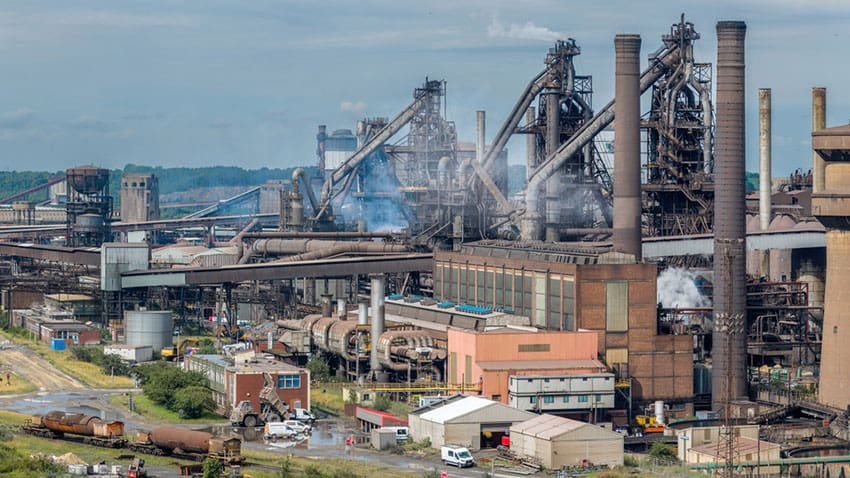
British Steel has been taken into public ownership, with ministers arguing the only alternative was to let the country’s last producer of virgin steel go bust. For the thousands of smaller firms that rely on Scunthorpe’s output, the move ends years of uncertainty, but leaves taxpayers footing a running bill of about £1.3 million a day.

The government said nationalisation would protect jobs and safeguard “a vital national capability”. The Scunthorpe works employs roughly 2,700 people and supports many more businesses across north Lincolnshire and the wider supply chain.

It follows Wednesday’s vote in Parliament to pass legislation allowing the steel industry to be brought into public ownership where a public interest test is met, completing the public ownership plan Sir Keir Starmer confirmed in May.

The government had already taken control of day-to-day operations last year. But with China’s Jingye Group still the legal owner, ministers had limited freedom to decide the plant’s future. Full ownership removes that constraint while keeping the blast furnaces lit.

Business Secretary Peter Kyle told the BBC the government would need to cover running costs “for the immediate future”, with an independent assessor to determine whether Jingye, which is seeking compensation, should be paid based on the value of the company.

Advertisement

“But let me be really clear, there is an alternative here – that we let this business go bust,” he said. “If that business disappears, we will lose the ability for primary steel production in our country, we will become entirely dependent on global supply.”

The economics are stark. Jingye previously said the business was losing £700,000 a day, while a March report from the National Audit Office found the site was costing the government about £1.3 million a day, with no set budget, repayment schedule or end date.

Why pay it? Scunthorpe’s furnaces are the UK’s last source of virgin steel, made directly from iron ore. Lose them and Britain becomes the only G7 economy unable to produce it. Blast furnaces are designed to run continuously, and the remaining pair are elderly: Queen Anne opened in 1954, Queen Bess has been in blast since 1938. Once cooled, restarting them would have been financially prohibitive.

That matters well beyond north Lincolnshire. The plant makes grades of steel produced nowhere else in the country, much of it destined for Network Rail and the construction industry. An abrupt shutdown would have forced fabricators, builders and engineering firms onto imports, and jeopardised the redundancy reversal that followed plans to cut up to 2,700 jobs when the furnaces faced closure.

Advertisement

Customers seem relieved. Simon Boyd, managing director of Reid Steel, a Dorset structural steel manufacturer that buys thousands of tonnes from British Steel each year, said nationalisation “had to be done”. He told the BBC’s Today programme that Jingye had been “sabotaging the infrastructure” and the government “had to step in”.

Boyd said ministers would need to invest heavily and would not see a return for 10 to 20 years, but the company “now belongs to the British people”. A sale to private investors would have needed government support anyway, he added, and past deals have been seen to “benefit the private companies and not the British people”.

Unions agree: MPs were told last month that the cost of not saving Scunthorpe would have been “unfathomable”.

For SME steel buyers, the immediate message is continuity of supply. The longer game is less settled. Ministers still want all domestic steel made in cheaper, cleaner electric arc furnaces, and are unlikely to remain owners of a business costing more than a million pounds a day any longer than they must. Scunthorpe stays open until alternatives exist, not indefinitely.

Advertisement

Amy Ingham

Amy is a newly qualified journalist specialising in business journalism at Business Matters with responsibility for news content for what is now the UK’s largest print and online source of current business news.

Advertisement
Continue Reading
Click to comment

You must be logged in to post a comment Login

Leave a Reply

Business

Osterweis Capital Management Q3 2026 Strategic Income Outlook

Published

on

Osterweis Capital Management Q3 2026 Strategic Income Outlook

Osterweis Capital Management was founded in 1983 to serve the portfolio management needs of high net worth individuals and institutions. We believe the best way to protect and grow assets is through carefully selected, high conviction portfolios that are designed to capture upside in favorable markets and limit downside during selloffs. We manage equities and fixed income, which are available through mutual funds and separate accounts. Note: This account is not managed or monitored by Osterweis Capital Management, and any messages sent via Seeking Alpha will not receive a response. For inquiries or communication, please use the firm’s official channels. Mutual fund investing involves risk. Principal loss is possible. Distributed by Quasar Distributors, LLC.

Continue Reading

Business

Walmart: The Sell-Off Isn't Over Yet (Rating Upgrade)

Published

on

Palantir: AI SaaS Winner Still Expensive - Bull Trap Plays Out

Walmart: The Sell-Off Isn't Over Yet (Rating Upgrade)

Continue Reading

Business

TSMC Q2: The AI Panic Creates Your Second Chance

Published

on

TSMC Q2: The AI Panic Creates Your Second Chance

TSMC Q2: The AI Panic Creates Your Second Chance

Continue Reading

Business

Wessex Water to be charged over blast that killed four workers

Published

on

Business Live

The Health and Safety Executive has informed the utilities firm of its plan to prosecute

Wessex Water is set to face criminal charges nearly six years after a tragedy that killed four workers at its Avonmouth treatment site near Bristol.

The Health and Safety Executive (HSE) is to prosecute the water company over the deaths of Luke Wheaton, 16, Ray White, 57, Brian Vickery, 63, and Mike James, 64, who died in December 2020.

The four workers, one of whom was an apprentice, were carrying out welding on the roof of an anaerobic digester silo and a spark ignited the gas inside.

Advertisement

Avon & Somerset police initially led a criminal investigation into the blast, but it was dropped in July 2024 because they said at the time the evidence they had gathered did “not reach the extremely high threshold to prosecute” anyone at Wessex Water, or the company itself, for corporate manslaughter.

The HSE took over the investigation and has now confirmed it will be bringing charges against Wessex Water in relation to the explosion.

A spokesperson for the HSE confirmed charges would be brought.

“Following an investigation by the Health and Safety Executive into an incident at Avonmouth on 3 December 2020, which resulted in the deaths of four workers, our Legal Services Division has taken the decision to authorise criminal charges against Wessex Water, for offences under the Health and Safety at Work etc. Act,” a spokesperson said.

Advertisement

Wessex Water, a company owned by Malaysian firm YTL, confirmed it had been told the firm would be charged.

A Wessex Water spokesperson said: “The HSE has informed us of its decision to prosecute. We will always remember Brian Vickery, Ray White, Luke Wheaton and Mike James. Our thoughts are with their families, friends and colleagues.”

In the aftermath of the blast, the grieving families of the four who died paid tribute to their loved ones, asked for respect for their privacy and have made no further comments publicly about the ongoing investigation.

Instead, many of the relatives have got involved in fundraising and other projects to honour their loved ones and create a lasting legacy for them.

Advertisement
Continue Reading

Business

Finsbury plans Games Workshop buying spree after M&A windfall

Published

on

Business Live

The FTSE 250 investment trust is preparing to use a windfall from a string of acquisitions in its portfolio to launch a buying spree of shares in Games Workshop, the Warhammer owner

Necromunda is one of the games in the Warhammer universe

Necromunda is one of the games in the Warhammer universe

Nick Train’s Finsbury Income and Growth fund is gearing up to boost its holdings in Games Workshop following a windfall from a series of takeovers within its portfolio.

The FTSE 250 investment trust – whose heritage stretches back more than a century – revealed intentions to deploy both borrowing and proceeds from the buyouts of Schroders and Intertek, where it held stakes, to fund a purchasing campaign targeting the “fantastic” Warhammer owner.

At the closed-end fund’s most recent shareholder briefing, co-manager Madeline Wright highlighted Games Workshop’s robust margins and significant American market expansion as catalysts for a renewed growth trajectory at the company, notwithstanding the fact its share price has already more than tripled over the past four years.

“The appetite for this kind of content is huge,” she told investors, adding: “We’re currently building the position, and we’re going to continue to do that with the increased gearing and – depending on the timing – perhaps the cash from the M&A [mergers and acquisitions] as well.”

Advertisement

The decision represents an unusual instance of portfolio reshuffling at Finsbury, amongst the UK’s largest investment trusts, following the departure of two long-held investments from the public markets this year. Investment manager Schroders and Intertek have both accepted offers from Nuveen and EQT respectively, providing celebrated stockpicker Train with proceeds running into tens of millions of pounds, as reported by City AM.

Earlier this year, the trust also unveiled plans to take on more debt in an attempt to boost returns and demonstrate its “conviction” in a portfolio that has delivered several successive years of lacklustre performance. Finsbury more than tripled its gearing – the term used to describe the amount of debt rolled into a fund or investment – from £29.9m to £100m, leaving the FTSE 250 vehicle with a substantial war chest to deploy into a “collection of outstanding, in most cases world class, UK-listed companies” in the months ahead, it said.

Wright revealed that alongside increasing its stake in Games Workshop, in which the trust first invested in autumn last year, Finsbury would deploy the funds to bolster its positions in flagship holdings such as the London Stock Exchange Group, Sage and Relx. The group would also establish positions in new stocks, she added.

In a separate development, Wright delivered a scathing assessment of Rathbones’ recent clash with the Financial Conduct Authority, which saw the FTSE 100 giant compelled to suspend £900m worth of inflows.

Advertisement

In what were her fund’s first public remarks since the fiasco, she said: “It’s very disappointing that this has happened. From our perspective, there’s going to be an overhang on the shares and the business.

“It’s probably important to note that the management team in place now was not the management team that was in place when this happened,” she added. “And that’s important because if that was not the case, we would probably have been speaking to the board about whether new pairs of eyes were needed.”

Continue Reading

Business

Edwards Lifesciences shares may move 5% on July 23 earnings

Published

on


Edwards Lifesciences shares may move 5% on July 23 earnings

Continue Reading

Business

Lamb Weston unveils olive oil-based par-frying technique

Published

on

Lamb Weston unveils olive oil-based par-frying technique

The frozen potato company is introducing new foodservice items par-fried in olive oil.

Continue Reading

Business

US suitor raises offer for pawnbroker Ramsdens following shareholder talks

Published

on

Business Live

The new offer values the Teesside-based chain at about £232m on a fully diluted basis

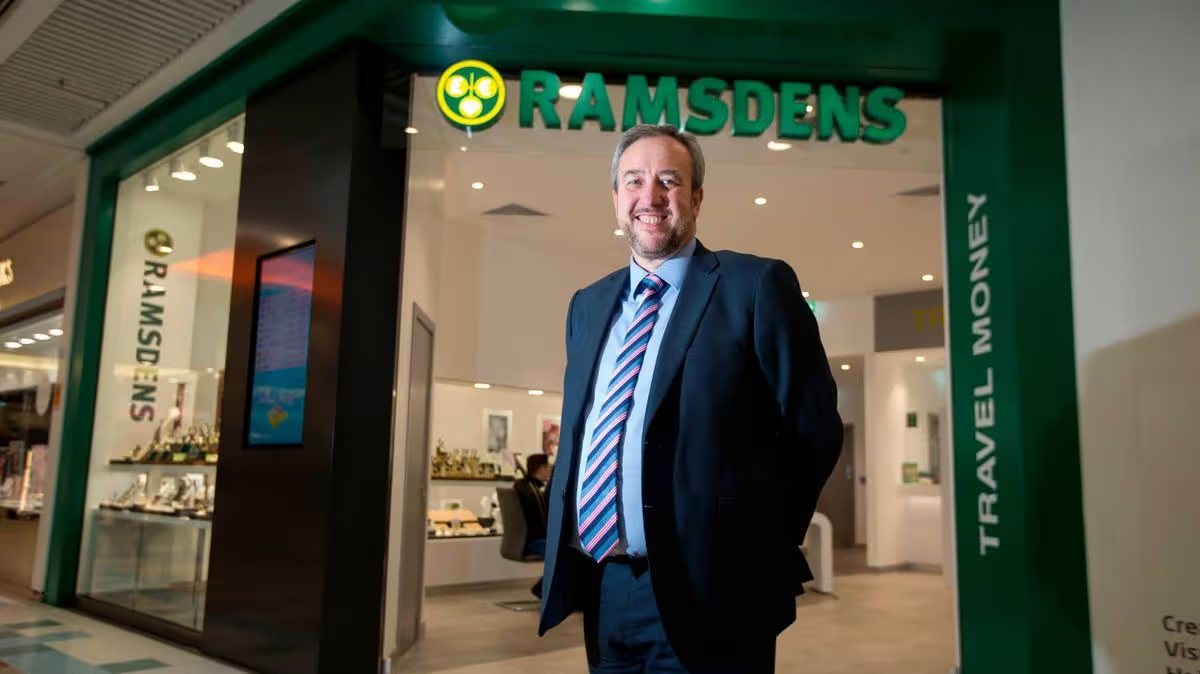
Ramsdens CEO Peter Kenyon

Ramsdens CEO Peter Kenyon

The US-based buyer of high street pawnbroking chain Ramsdens has increased its offer for the business.

Investors on the London Stock Exchange were told that FirstCash has revised its bid for Ramsdens following shareholder talks. It now values the Teesside-based firm, which also specialises in jewellery sales and foreign exchange, at about £232m on a fully diluted basis.

Advertisement

The offer represents a 49% premium to Ramsdens share price on June 22, the last trading day before announcement of FirstCash’s original offer. It will see Ramsdens taken off the AIM market, nearly 10 years since its launch on the London Stock Exchange.

FirstCash is an international pawnbroker with around 3,300 sites across the US, South America and the UK, and is listed on the US’s Nasdaq stock market index. It intends to use funding from its US revolving credit facility to finance the acquisition.

Separately, Ramsdens gave a trading update in which it boosted full year profit expectations. The firm now expects pre-tax profits of between £33m-£35m.

It pointed to continued high gold prices – though down 20% since the peak in January this year – and robust demand for pawnbroking loans with June proving to be another record month. In six weeks since reporting the May 2026 loan book figure of £14.5m, the loan book has increased to £15.5m. Bosses also said England and Scotland’s World Cup run had helped boost the foreign exchange business.

Advertisement

Chief executive Peter Kenyon said: “The foundations of the group are strong. We are continuing to trade well, maximising the opportunity of trading with a favourably high gold price but knowing that our diversified financial services are all contributing to the Group’s ongoing success.

“The investment in our new store opening program is going well. Hereford and Skegness have recently opened, Newark and Peterborough are in shop fit and we have completed the lease formalities in Corby and St Helens with shop fitting to start shortly.”

Continue Reading

Business

Nasdaq Sinks 1% to 26,003 as Chip Stocks Slide Again Despite Strong Earnings From Taiwan Semiconductor

Published

on

The Nasdaq logo is displayed at the Nasdaq Market site in Times Square in New York

The Nasdaq Composite fell sharply Thursday, dropping 265.61 points, or 1.01%, to close at 26,003.62, as semiconductor stocks extended a multi-day slide even after Taiwan Semiconductor Manufacturing reported blowout quarterly earnings, underscoring growing investor skittishness over lofty valuations in the artificial intelligence trade.

The decline marked a sharp reversal from Wednesday’s session, when the tech-heavy index climbed 0.62% to settle at 26,269.23 on the back of cooling inflation data and strength in Big Tech names including Apple, Amazon, Alphabet and Microsoft. Thursday’s pullback erased much of that momentum, as chip stocks — which have powered much of this year’s broader market rally — came under renewed pressure for a second straight day.

Taiwan Semiconductor Manufacturing, the world’s largest contract chipmaker, reported a 77% annual earnings gain and posted record second-quarter revenue, while lifting its full-year capital expenditure outlook to a range of $60 billion to $64 billion, up from prior guidance of $52 billion to $56 billion. Despite the strong results, TSM shares fell in early trading, with the stock declining as investors focused instead on the company’s warning about rising prices and questioned whether even robust earnings could justify current valuations across the sector. The stumble in TSM shares rippled through the broader chip complex, dragging down the VanEck Semiconductor ETF and contributing to declines in Arm Holdings, which fell around 5%.

Memory chip names bore some of the heaviest losses. Western Digital shares fell more than 8%, and SanDisk dropped nearly 8%, while South Korea’s SK Hynix fell 7% in U.S. trading, adding to a bruising stretch for the memory sector that has seen sharp single-day swings in both directions over the past several weeks. The selling pressure followed a similar pattern to Wednesday’s session, when SK Hynix sank nearly 11%, SanDisk tumbled more than 12%, Western Digital fell almost 8% and Micron Technology dropped more than 7%, as investors took profits following a run-up in memory stocks tied to enterprise customers shifting spending toward servers, storage and memory hardware.

Advertisement

The weakness spread overseas as well. Shares of Samsung Electronics and SK Hynix fell sharply in Seoul trading, dragging South Korea’s benchmark Kospi index lower and contributing to broader declines across Asian chip stocks, including Japan’s Advantest, SoftBank Group, Tokyo Electron and Renesas Electronics. Europe’s chip sector also felt the pressure, with STMicroelectronics, ASML and Infineon Technologies among the decliners tracking the global selloff in semiconductor shares.

Not all of Thursday’s session was negative. The Dow Jones Industrial Average bucked the broader trend, rising modestly as a more than 6% jump in UnitedHealth Group helped offset weakness elsewhere. UnitedHealth’s results easily topped Wall Street’s expectations, and the company raised its full-year outlook, citing more favorable trends in medical costs during the first half of the year. GE Aerospace also reported an earnings beat before the opening bell, while Abbott Laboratories rose nearly 4% after slightly beating estimates and raising its 2026 earnings guidance. Trucking company J.B. Hunt Transport Services jumped 7.5% after handily beating analyst estimates on the strength of increased intermodal shipping volumes.

Not every earnings report drew a positive reaction. United Airlines shares fell nearly 3% after the company issued cautious third-quarter guidance tied to rising fuel costs, even though its second-quarter earnings beat estimates and revenue matched consensus forecasts. The airline’s chief executive told CNBC that overall demand remained strong despite the guidance concerns. Netflix was scheduled to report its second-quarter results after Thursday’s closing bell, capping a week of earnings that had broadly exceeded expectations, though the streaming company’s shares had fallen following each of its last four quarterly reports.

Broader economic data released Thursday added to the day’s uncertain tone. June retail sales rose 0.2% from the prior month, falling short of the 0.3% consensus estimate, even as some underlying components of the report were viewed more favorably by economists. The modest miss came alongside continued concern over geopolitical tensions in the Middle East, as the United States continued launching strikes against Iran and crude oil prices remained elevated near recent highs. Treasury yields rose Thursday morning as investors weighed the combination of persistent Gulf tensions and mixed economic signals.

Advertisement

The volatility in chip stocks has become a recurring theme throughout July, with the sector swinging sharply in both directions as investors debate whether current spending and valuation levels tied to the AI buildout are sustainable. JPMorgan analysts have characterized the recent weakness as a reflection of crowded investor positioning within the sector rather than a sign that the broader AI investment cycle is faltering, drawing comparisons to similar bouts of chip-sector selling in past months that were later followed by recoveries.

SpaceX shares also remained under pressure this week, falling below their $135 initial public offering price for the first time since the company’s record-setting Nasdaq debut in June, amid investor concerns over increased competition from Chinese launch providers and a coming increase in the number of shares available to trade on the exchange.

Thursday’s divergence between the Dow’s modest gain and the sharp declines in the Nasdaq and S&P 500 highlighted the extent to which chip and technology stocks continue to dictate the direction of the broader market, even as strength in healthcare, industrials and select consumer names offered some counterbalance. With Netflix’s earnings due after the close and geopolitical tensions in the Middle East showing no signs of easing, investors said they expect volatility in technology shares to persist in the sessions ahead as markets continue to grapple with high expectations heading into the heart of the second-quarter earnings season.

Advertisement
Continue Reading

Business

Ivanhoe Electric stock hits 52-week low at 8.43 USD

Published

on


Ivanhoe Electric stock hits 52-week low at 8.43 USD

Continue Reading

Trending

Copyright © 2025