Connect with us

Business

What Mark Stephen McCollum Has Learned from 35 Years in Automotive

Published

on

What Mark Stephen McCollum Has Learned from 35 Years in Automotive

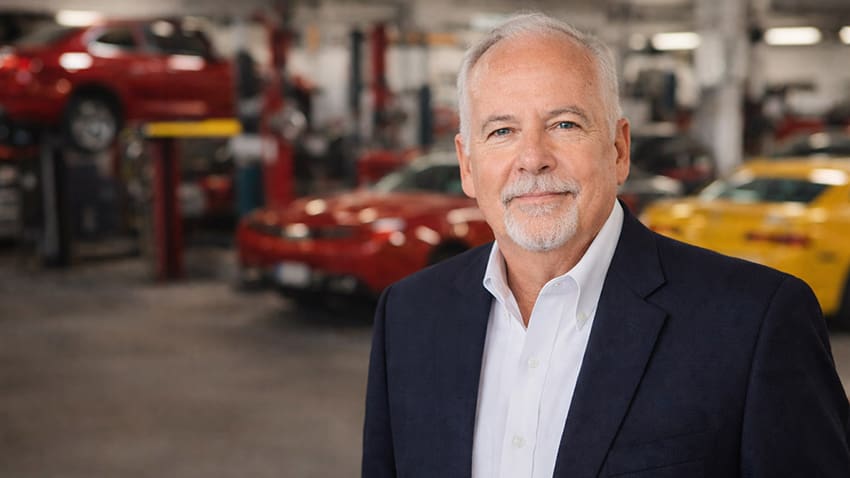
Mark Stephen McCollum is a respected name in the automotive world, with over 35 years of hands-on experience. Born and raised in Conroe, Texas, he grew up in a close family and learned early the value of hard work.

He studied business finance at Lon Morris College and Texas A&M University, building a foundation that would carry him through a long and successful career.

Mark worked his way up from the ground floor, starting in dealership operations before taking on senior leadership roles. He served as General Manager at Sonic Automotive and later became Market President at AutoNation, the largest automotive retailer in the United States. There, he oversaw 22 franchises across 18 rooftops, managing over $1.5 billion in revenue.

His approach to leadership is straightforward—prioritise people, stay close to the work, and make decisions based on real-world experience. Mark believes that trust and culture drive performance more than numbers alone.

More recently, he founded Automotive IntelliQence, a software company helping dealers use data to make smarter decisions without losing the human touch. He remains active in mentoring others and giving back to his community, supporting the Centre for Child Protection in Austin.

Advertisement

Whether leading large teams or building new tools for the industry, Mark Stephen McCollum stands out as a thoughtful, steady leader who knows the business inside and out.

Mark, take us back to the beginning—how did you first get started in automotive retail?

I started in dealerships not long after finishing at Texas A&M and Lon Morris College, where I studied business finance. I grew up in Conroe, Texas, in a working family where getting stuck in and figuring things out for yourself was the norm. I didn’t have a big plan, but I was drawn to the energy of retail. Once I got inside a dealership and saw how everything worked—from sales to service—I was hooked.

Back then, I was the guy who showed up early, stayed late, and asked questions. I wanted to understand every part of the business, not just my lane. That helped me move up quickly.

What were some early lessons you learned on the ground?

Don’t assume you know more than the people doing the work. I remember early on, I tried to change a service process without speaking to the technicians. It backfired. They knew the process better than I did. From then on, I always walked the floor, asked questions, and listened before making decisions. That approach served me well throughout my career.

Advertisement

You eventually became Market President at AutoNation. What was that like?

That role was intense—in a good way. I was responsible for 22 franchises across 18 rooftops, managing more than $1.5 billion in annual revenue. Every day was different. You’d be talking strategy one minute and solving a customer issue the next. But at that scale, the challenge is consistency. You need systems, yes, but you also need strong local leadership and a clear culture.

I made it a point to spend time in the stores, not just behind reports. When you’re dealing with thousands of employees and customers, the only way to keep things on track is to stay connected to the people. It’s not glamorous, but it’s effective.

After decades in operations, you moved into tech. What led to the founding of Automotive IntelliQence?

Over the years, I kept seeing the same issue: dealers had tons of data, but they weren’t using it in a way that helped their people make better decisions. I wasn’t looking to build the next shiny dashboard—I wanted to build tools that worked in the real world.

Automotive IntelliQence came from that. It’s about giving frontline teams the insights they need without adding friction. The aim wasn’t to replace people—it was to support them. I believe tech should fit into the flow of work, not disrupt it.

Advertisement

What changes in the auto industry have surprised you most?

Honestly, I’m surprised by how quickly digital retail has been embraced on the surface—and how slowly it’s being implemented underneath. There’s a difference between offering online car sales and actually integrating digital into how your team works.

There’s also a growing gap between customer expectations and dealership processes. People want transparency and speed, but many systems are still clunky. That’s where smart tools, better training, and leadership make the difference.

What was one of the hardest leadership challenges you’ve faced?

Hiring the wrong leadership team in a new market. They looked great on paper—impressive backgrounds, polished resumes. But culturally, it was a mismatch. Morale dipped, and turnover followed. I had to step back in, reset expectations, and rebuild the team from scratch.

That experience taught me that values alignment matters more than experience. You can train skills, but you can’t train character. Since then, I’ve always hired with that in mind.

Advertisement

How do you define success at this point in your career?

It’s changed a lot. In the beginning, success meant numbers—hitting goals, earning promotions, growing revenue. These days, I think about legacy. Did I help someone grow in their role? Did I build something that lasts? That’s success to me now.

Also, balance matters. I used to run myself into the ground. Now, I make time for golf, family, and quiet mornings. You can’t lead others if you’re running on empty.

What advice would you give to someone starting their career in this industry?

Start by listening. Spend time learning how the business really works—on the ground, not just in reports. Show up early, stay curious, and help solve problems. And when you make a mistake—and you will—own it. That’s how you earn trust.

Also, don’t chase titles. Chase value. If you consistently create value for others, the titles and promotions will follow.

Advertisement

Looking ahead, what do you think the future of auto retail looks like?

I think we’ll see a mix of high-tech and high-touch. Customers want efficiency, but they still want trust. The dealerships that succeed will be the ones that blend the two well—using tech to remove friction, and people to build relationships.

And leadership will matter more than ever. You can’t automate culture. That still comes down to who’s in the room and how they lead.

Final thoughts?

Show up. Stay grounded. Don’t stop learning. That’s what’s worked for me—and it still does.

Advertisement

Continue Reading
Click to comment

Leave a Reply

Your email address will not be published. Required fields are marked *

Business

NLRB drops SpaceX legal fight over fired engineers citing jurisdiction issue

Published

on

NLRB drops SpaceX legal fight over fired engineers citing jurisdiction issue

The National Labor Relations Board (NLRB) is reportedly giving up on a multi-year legal fight with Elon Musk’s SpaceX and signaled it will refrain from bringing cases against the company in the future.

Bloomberg News reported on Monday, citing a letter from the board, that it would dismiss a case brought against SpaceX two years ago after the company fired eight engineers who were involved in an open letter that was critical of Musk.

Advertisement

The report cited a letter reviewed by Bloomberg that informed the attorneys of the former employees that a recent opinion issued by a separate agency, the National Mediation Board, that SpaceX engineers fell under its jurisdiction rather than the NLRB’s.

MUSK SAYS SPACEX SHIFTING FOCUS TO ‘SELF-GROWING CITY’ ON MOON BEFORE MARS PUSH

SpaceX

The NLRB determined it didn’t have authority over SpaceX. (Joe Raedle/Getty Images)

Bloomberg’s report said Danielle Pierce, a regional NLRB director, wrote in the letter, “Accordingly, the National Labor Relations Board lacks jurisdiction over the Employer and, therefore, I am dismissing your charge.”

The NLRB’s move follows a court ruling last summer that found the labor regulator’s structure is likely illegal. The case was brought by SpaceX, though other companies joined the challenge.

Advertisement

SPACEX ACQUIRES XAI IN RECORD-SETTING DEAL VALUED AT OVER $1T

Tesla CEO Elon Musk

The SpaceX engineers were fired after participating in a letter critical of SpaceX CEO Elon Musk. (Chesnot/Getty Images)

Last August, the U.S. Fifth Circuit Court of Appeals based in New Orleans agreed with SpaceX and two other companies that the NLRB’s structure is likely unlawful and blocked the agency from pursuing cases against them.

The National Mediation Board (NMB) has oversight of railroad and airline companies and works to prevent strikes by labor groups across those industries, whereas the NLRB’s jurisdiction covers most other private sector employers and can resolve unfair labor practice charges.

MUSK CONFIRMS SPACEX SUCCESS IN PREVENTING RUSSIAN MILITARY FROM ACCESSING STOLEN STARLINK UNITS

Advertisement
Elon Musk SpaceX

SpaceX founder Elon Musk recently announced the company is focusing on moon missions ahead of Mars. (Michael Gonzalez/Getty Images)

Workers at businesses covered by the NLRB have more protections for engaging in collective action to change their working conditions whether they’re members of a union or not.

By contrast, workers who are under the oversight of the NMB are covered by a different law that doesn’t afford the same degree of protection.

GET FOX BUSINESS ON THE GO BY CLICKING HERE

Reuters contributed to this report.

Advertisement
Continue Reading

Business

American Airlines flight attendants to picket as frustrations grow

Published

on

American Airlines flight attendants to picket as frustrations grow
Can American Airlines turn itself around?

American Airlines flight attendants’ union plans to hold a picket outside the company’s headquarters on Thursday pushing for new leadership at the carrier, which has lagged rivals Delta Air Lines and United Airlines in profitability and punctuality.

Ahead of the picket on Wednesday night, American CEO Robert Isom sought to calm frustrated employees and listed improvements the carrier expects this year, including a jump in profits as well as improvements to schedules and new cabins.

“We look forward to working with all of you to make it happen,” Isom said in a video message filmed at the airline’s Fort Worth, Texas headquarters.

The picket comes days after the Association of Professional Flight Attendants, which represents American’s 28,000 cabin crew members, issued a vote of no confidence in Isom, which the union said was its first such move. The chief executive was also criticized by the pilots’ union, which sought a meeting with the airline’s board, of which Isom is a member, to discuss the problems. Unions for pilots, flight attendants and mechanics have all recently said the company needs to do better to improve reliability and financial results.

Advertisement

The protest is an unusual move outside of contract negotiations.

The signals from the labor groups have increased pressure on Isom, who took the helm nearly four years ago, and American’s leadership team, which is investing in cabin upgrades, bigger airport lounges and other on-board products.

Last month, American forecast stronger revenue and profits for 2026 and said it expects to report adjusted earnings per share of as much as $2.70, up from an adjusted 36 cents last year.

American is in the middle of a revamp that it hopes will help revive profits with more modern airplane cabins that command higher fares, which is especially important as coach-class fares have dropped. It has also built bigger lounges and added free Wi-Fi for customers.

Advertisement

For the first 11 months of the year, American ranked eighth in punctuality with a 73.7% on-time rate, according to the Department of Transportation. It is now adjusting its schedules, including at its massive Dallas-Fort Worth International hub where it is spreading out flights more throughout the day.

But it has a long way to go. In 2025, American posted net income of $111 million compared with Delta’s $5 billion and more than $3.3 billion from United. The lower profits meant a smaller profit-sharing pool for employees, which staff members have complained about.

In a town hall with employees last month, Isom noted that American’s pilots, flight attendants and other groups have recently sealed new labor contracts that have meant higher wages compared with their counterparts at rival United. But he said he was disappointed by the profit-sharing.

The flight attendants have also said they were frustrated with American’s struggles to recover from major winter storms, which left some crew members without a place to sleep.

Advertisement

“This airline is headed down a path that puts our careers at risk,” the flight attendants’ union said in a notice about the picket. “Now is the time for Flight Attendants to stand together and show up in protest. American Airlines needs real accountability, decisive action, and leadership that will put this airline back on a competitive path.”

Isom is also trying not only to win support of frontline crews but also to rally higher-ups. Last week, at Globe Life Field in Arlington, Texas, Isom spoke to about 6,000 managers about the years ahead as the airline turns 100.

“We’ve filled an entire Major League Baseball field with this proud and talented team. The best in the industry,” he said, according to a transcript of his remarks, which were seen by CNBC. “It’s incumbent on all of us to build on our progress … and to ensure that we grow profitability so American is around for the next 100 years.”

Read more CNBC airline news

Advertisement
Continue Reading

Business

January homes sales tank more than 8% with potential buyers struggling

Published

on

January homes sales tank more than 8% with potential buyers struggling
Prospective buyers arrive during an open house at a home in Seattle, Washington, US, on Sunday, Jan. 18, 2026.
Realtors report a ‘new housing crisis’ as January homes sales tank more than 8%

High home prices, faltering supply and weaker consumer confidence in the economy all continue to weigh on the U.S. housing market. The chief economist for the National Association of Realtors, Lawrence Yun, is calling it “a new housing crisis.”

Sales of previously owned homes in January dropped a much wider-than-expected 8.4% from December to a seasonally adjusted, annualized rate of 3.91 million, according to the NAR. Sales were 4.4% lower than January 2025. That is the slowest pace since December 2023 and the biggest monthly drop since February 2022.

This count is based on closings, so contracts that were likely signed in November and December, when the average rate on the 30-year fixed mortgage didn’t move much before dropping slightly in January. That rate is now 6.1%, according to Mortgage News Daily.

Advertisement

Regionally, sales fell across the nation month-to-month but were down the most in the South and West.

“Affordability conditions are improving, with NAR’s Housing Affordability Index showing that housing is the most affordable it’s been since March 2022,” Yun said in a release. “This is due to wage gains outpacing home price growth and mortgage rates being lower than a year ago. However, supply has not kept pace and remains quite low.”

But he also noted on a call with reporters that potential buyers are “still struggling,” and “renters are not participating in housing wealth.” He characterized the current market as a crisis because, “the movement is not happening. Americans are stuck.”

Get Property Play directly to your inbox

CNBC’s Property Play with Diana Olick covers new and evolving opportunities for the real estate investor, delivered weekly to your inbox.

Advertisement

Subscribe here to get access today.

Inventory came down last month from December but was still up 3.4% year over year. There were 1.22 million homes for sale at the end of January, which at the current sales pace is a 3.7-month supply. A six-month supply is considered a balanced market between buyer and seller.

Tighter supply kept home prices in positive territory. The median price for a home sold in January was $396,800, up 0.9% year over year and the highest January price on record.

“Homeowners are in a financially comfortable position as a result. Since January 2020, a typical homeowner would have accumulated $130,500 in housing wealth,” Yun added.

Advertisement

Homes are taking longer to sell, at 46 days this January versus 41 in January of last year. About 31% of sales were to first-time buyers, up from 28% a year ago.

Sales continue to be strongest on the higher end of the market; in fact, the only price segment in the positive from a year ago was the $1 million-plus range. Sales dropped the most for homes priced below $250,000.

Continue Reading

Business

Flowers creates new roles for DSD, cake business

Published

on

Flowers creates new roles for DSD, cake business

Newly formed cake division aimed at improving portfolio’s performance.

Continue Reading

Business

Who is billionaire Sir Jim Ratcliffe and how did he make his money?

Published

on

Who is billionaire Sir Jim Ratcliffe and how did he make his money?

The industrialist and Manchester United co-owner has apologised over comments he made about immigration.

Continue Reading

Business

(VIDEO) Jessie Diggins Battles Rib Injury to Claim Bronze in 10km Freestyle

Published

on

Jessica Diggins

Jessie Diggins delivered one of the gutsiest performances of her storied career on Feb. 12, 2026, powering through severe rib pain from a recent crash to win bronze in the women’s 10-kilometer freestyle individual start at the Milano Cortina Winter Olympics. The 34-year-old American finished in 23 minutes 38.9 seconds, 38.4 seconds behind gold medalist Frida Karlsson of Sweden and 23.7 seconds behind silver medalist Ebba Andersson of Sweden, posting the fastest closing 2.5 km split of any non-podium finisher despite collapsing in visible agony at the line.

Jessica Diggins
Jessie Diggins

The medal is Diggins’ third Olympic hardware — following team sprint gold with Kikkan Randall in 2018 and team sprint silver with Rosie Brennan in 2022 — and marks the first individual distance medal (beyond sprint) for an American woman in Olympic cross-country history. It also completes a remarkable U.S. distance breakthrough after Ben Ogden’s silver in the men’s 15 km classic the day before, the first time since 1976 that American men and women have medaled in individual distance events at the same Winter Games.

Pain-Fueled Fight to the Podium

Diggins’ medal came just five days after a heavy fall during the women’s skiathlon (Feb. 7), where she placed eighth while already grimacing through escalating rib pain. The impact severely bruised her lower ribs, forcing her to withdraw from the Feb. 10 team sprint with Rosie Brennan (who skied alone). Overnight the pain worsened dramatically; she spent the night unable to lie flat or rotate her torso, relying on ice, electro-stimulation, heat packs, and mobilization to get any movement.

Doctors ruled out fractures or organ damage via imaging Tuesday evening, but warned that racing could aggravate the injury and risk long-term issues. Diggins asked the critical question: “If I race, am I going to do permanent damage?” When told the answer was no — just “hellish pain” — she made her decision. “I came here to race,” she said later. “I didn’t come to watch.”

Warm-ups Thursday morning were grim. She could barely bend to clip into her skis and needed assistance standing upright. Yet once the gun fired, adrenaline and sheer will took over. Starting with bib 8, Diggins sat seventh at the 2.5 km checkpoint, then began a relentless march forward. Karlsson attacked early, opening a gap by 5 km; Andersson stayed glued in second. Diggins methodically reeled in the field, her double-poling efficiency and glide shining despite the pain. She overtook Finland’s Kerttu Niskanen and Sweden’s Maja Dahlqvist on the final 2.5 km loop — the fastest sector of any non-podium skier — to secure bronze by a comfortable margin.

Advertisement

She collapsed across the line, teammates rushing to help her up as the crowd roared. “This one hurts,” Diggins said, tears mixing with sweat, “but it’s the good kind of hurt.”

U.S. head coach Matt Whitcomb called it “the gutsiest race I’ve ever coached.” “She was in agony before the start,” he said. “We did everything — heat, massage, TENS, mobilization — to get her upright. Once she got moving, she found another gear. That final lap was pure heart.”

Race Breakdown: Nordic Dominance, American Grit

Val di Fiemme’s rolling 2.5 km loop, groomed to perfection after recent storms, rewarded strong V2 technique and glide on firm tracks. Karlsson set a blistering pace (23:00.5), gapping Andersson by 5 km. Diggins climbed steadily from mid-pack, her closing speed decisive.

Top 5

Advertisement
  1. Frida Karlsson (SWE) – 23:00.5
  2. Ebba Andersson (SWE) – 23:15.2
  3. Jessie Diggins (USA) – 23:38.9 [+38.4]
  4. Maja Dahlqvist (SWE) – +41.9
  5. Kerttu Niskanen (FIN) – +48.2

Sweden’s sweep of the podium underscored Nordic supremacy, but Diggins’ non-Nordic fastest final split fueled the U.S. breakthrough.

Injury Origin & Preparation Battle

The rib injury stemmed from a hard fall during the Feb. 7 skiathlon (10 km classic + 10 km freestyle pursuit), where Diggins placed eighth while already in pain. Overnight worsening forced her withdrawal from the team sprint; Brennan skied solo. Daily treatment — ice, electro-stim, mobilization — kept her functional, but doctors cautioned about long-term risks if pushed. Diggins chose to race anyway, preserving hopes for the Feb. 15 4×5 km relay and Feb. 20 30 km mass-start classic.

Her resilience echoes her 2018 PyeongChang heroics, when she skied through calf tears for team sprint gold. Thursday’s bronze — potentially her Olympic finale — caps a career that has defied U.S. distance skiing’s historical struggles.

Fourth Medal? Wait — Third, But Historic

Diggins now holds three Olympic medals:

  • Team sprint gold (2018, with Randall)
  • Team sprint silver (2022, with Brennan)
  • 10 km freestyle bronze (2026)

(Note: The earlier mention of an “individual sprint gold” in 2018 was incorrect; her 2018 individual sprint was 5th. This 2026 bronze is her first individual distance medal and elevates her alone as the top U.S. performer in the discipline.)

Teammate Rosie Brennan posted: “Jessie showed what fighting means. Bravest thing on snow.” U.S. Ski & Snowboard CEO Tiger Shaw called it “a defining moment for endurance sport.” Karlsson praised: “She’s tough — respect.”

Advertisement

U.S. Momentum: Ogden’s Silver Sets the Stage

Diggins’ bronze follows Ben Ogden’s silver in the men’s 15 km classic the previous day — ending a 50-year U.S. men’s podium drought (since 1976 Innsbruck). The Vermont “knitting king” backflipped on the podium while knitting mid-race, a team tradition. The first simultaneous U.S. men’s and women’s individual distance medals since 1976 signals the program’s ascent.

Global Reaction & Legacy

Therese Johaug (retired, watching from afar): “Jessie’s warrior spirit endures.” Teammates lifted her onto the podium; crowds roared. U.S. fans flooded social media with #DigginsStrong trending worldwide. Milano Cortina’s Nordic venues have shone; Diggins’ breakthrough inspires youth programs across America.

Road Ahead: Relay, Mass Start, Retirement Looms

The Feb. 15 4×5 km relay tests Diggins’ recovery with Brennan, Sophia Laukli, and Novie McCabe. The Feb. 20 30 km mass-start classic is her likely farewell. “My body dictates,” she said. “I’ll listen.” Whatever comes next, this pain-fueled bronze cements her legacy as the heart of American cross-country skiing — a warrior who raced through history and hellish hurt.

Advertisement
Continue Reading

Business

Sea1 Offshore Inc. (SIOMF) Q4 2025 Earnings Call Transcript

Published

on

OneWater Marine Inc. (ONEW) Q1 2026 Earnings Call Transcript

Bernt Omdal
Chief Executive Officer

Good morning, and welcome to the presentation of our results for the fourth quarter. My name is Bernt Omdal, and I’m the CEO of the company. Together with me, I have our CFO, Vidar Jerstad, and we will take you through this presentation.

Sea1 Offshore’s report for the fourth quarter 2025 was released this morning. In this presentation, we will cover the main highlights of the report, and we will refer to the presentation issued together with the financial report. At the end of the presentation, we will open up for questions.

Looking at the highlights for the quarter, we operated 15 fully owned vessels in the fourth quarter. In addition, we have 4 vessels under construction. All our vessels in operation delivered a positive EBITDA margin. We had USD 68 million in revenue, and we delivered $35 million in EBITDA, which is equal to an EBITDA margin of 52%. We have a book equity ratio of 54%. Our net interest-bearing debt was $208 million at year-end. And it’s also worth mentioning that these numbers are delivered with less vessels than the same quarter last year.

Advertisement

Looking at some of the highlights for the quarter. We continue to deliver safe and efficient operation in all regions, and this is a result of high focus on safety at all levels in the company. The company completed the transfer to Euronext Growth in December last year. We were awarded a new contract for Sea1 Atlas in Brazil with a duration of 3 years with a 6-month option at favorable terms. The utilization of the fleet in the quarter was 93%. Recently, the contract for Sea1 Maragogi

Continue Reading

Business

Has Kraft Heinz hit rock bottom?

Published

on

Has Kraft Heinz hit rock bottom?

New CEO cites “underinvestment” in R&D and marketing as key issues.

Continue Reading

Business

Lekias to depart as Peel Thunder CEO

Published

on

Lekias to depart as Peel Thunder CEO

Peel Thunder has announced the departure of Paul Lekias as chief executive of the WAFL club.

Continue Reading

Business

Evostock Review 2026: A Global CFD Broker

Published

on

Evostock Review 2026: A Global CFD Broker

In this Evostock.com review, we dive into its impact on traders across the world. As online trading continues to grow, many traders are turning to online platforms that offer comprehensive tools and access to multiple markets. 

One such platform is Evostock.com, a global CFD broker that provides access to a variety of financial instruments, including forex, crypto, shares, commodities, and indices. 

This Evostock.com review will delve into everything this platform offers, how it operates, the account types available, and how to get started as a trader.

What Is Evostock.com and How Does It Operate?

Evostock.com is an online platform that offers Contract for Difference (CFD) trading, allowing traders to speculate on price movements in various financial markets. 

Advertisement

The platform provides access to CFDs on forex, cryptocurrencies, shares, commodities, and indices, making it a versatile tool for traders from different backgrounds. Unlike traditional trading, CFDs allow traders to profit from both rising and falling markets, which adds flexibility to their trading strategies.

Evostock.com operates under the regulatory oversight of the Financial Services Commission of Mauritius, its operating company holds license number GB21027075. This regulatory framework ensures that the platform adheres to industry standards for trading, security, and transparency.

Traders on Evostock.com can take advantage of competitive spreads, advanced trading tools, and a user-friendly interface to place trades efficiently. 

Additionally, the platform ensures that clients can trade from anywhere in the world, including regions such as Latin America (LATAM), including countries like Chile, Mexico, Uruguay, Argentina, Peru, Honduras, and beyond.

Advertisement

Evostock.com Review: What Does the Platform Offer?

Evostock.com offers a wide range of financial products for CFD traders. Traders can choose to trade on:

  • Forex (Currency Pairs): The platform provides access to major, minor, and exotic currency pairs, giving traders the opportunity to profit from fluctuations in exchange rates between currencies.
  • Cryptocurrencies: Evostock.com allows traders to speculate on popular cryptocurrencies such as Bitcoin, Ethereum, and others, giving them exposure to the rapidly growing digital currency market.
  • Shares (Stocks): With CFDs on shares, traders can speculate on the price movements of stocks from leading global companies without owning the underlying shares.
  • Commodities: Traders can also trade CFDs on various commodities such as gold, oil, and agricultural products, allowing them to diversify their portfolios and benefit from global commodity price fluctuations.
  • Indices: Evostock.com offers CFDs on major global indices, including the S&P 500, Dow Jones, and other key market indices, providing opportunities to speculate on broader market trends.

These trading options allow traders to create diversified strategies across different asset classes, helping them manage risk and capitalize on market opportunities.

Evostock Review 2026: A Global CFD Broker

Evostock.com Review: How to Register and Start Trading

Getting started with Evostock.com is simple and straightforward. To register, follow these steps:

  1. Create an Account: Visit the Evostock.com website and click on the “Sign Up” or “Register” button. You will be asked to provide your basic personal details, such as name, email, and contact information.
  2. Fill a Questionnaire: To ensure that the platform understands your trading knowledge and experience, you will be asked to complete a questionnaire. This is an important step in verifying your suitability for trading.
  3. Verify Your Identity: As part of regulatory requirements, Evostock.com will ask for identity verification documents, such as a passport or national ID, to confirm your identity.
  4. Deposit Funds: Once your account is set up, you will need to make an initial deposit. Evostock.com offers several payment options, including bank transfers and popular online payment methods. The minimum deposit requirements may vary depending on the account type you choose.
  5. Start Trading: After your account is funded and verified, you can start exploring the platform’s trading tools and placing trades in your chosen markets.

Evostock.com Review: What Are the Different Account Types?

Evostock.com offers a range of account types to suit different trading levels and preferences. The Lite Account (USD 100 deposit) is for beginners with no spread reduction and 1:100 leverage. 

The Starter Account (USD 250 deposit) offers 1:200 leverage and support via chat, but no spread reduction. The Classic Account (USD 2,000 deposit) provides a 10% spread reduction and 1:200 leverage. 

The Professional Account (USD 10,000 deposit) offers 20% spread reduction and 1:300 leverage with chat and phone support. The Elite Account (USD 30,000 deposit) features up to 35% spread reduction, 1:400 leverage, and premium support. 

Advertisement

The Club Trader Account (by invitation only) offers up to 55% spread reduction, 1:500 leverage, and premium support for high-volume traders. Each account is designed to cater to different levels, from beginners to professionals.

Evostock.com Review: How Can Traders Benefit from the Platform?

Evostock.com provides a variety of benefits to traders across the globe. Here are some of the key features that traders can take advantage of:

  • Diverse Market Access: As mentioned earlier, Evostock.com offers CFDs on forex, crypto, shares, commodities, and indices. This variety enables traders to diversify their portfolios and trade in multiple markets.
  • Regulatory Oversight: The platform’s operating company operates under the regulatory supervision of the Financial Services Commission of Mauritius, providing an added layer of trust and security for traders.
  • Advanced Trading Tools: Traders have access to various technical analysis tools, charts, and indicators, which can assist them in making informed trading decisions.
  • Competitive Spreads: Evostock.com offers competitive spreads across different account types, allowing traders to minimize their trading costs.
  • User-Friendly Interface: The platform is designed with both novice and experienced traders in mind. Its intuitive interface makes it easy for traders to navigate and execute trades efficiently.
  • Global Reach: With its availability in regions like LATAM, Evostock.com ensures that traders from all over the world can access the platform and participate in CFD trading.

Evostock Review 2026: A Global CFD Broker

Evostock.com Review: What Are the Trading Fees and Costs?

When trading on Evostock.com, traders need to be aware of the associated costs. The main costs involved in CFD trading on the platform include:

  • Spreads: The difference between the buying and selling price. These spreads vary depending on the account type and the market being traded.
  • Overnight Fees: If a trader holds a position overnight, they may incur an overnight financing fee. This fee is based on the value of the position and can vary depending on market conditions.
  • Withdrawal Fees: Different account types have different withdrawal conditions.

Traders are encouraged to check the full details of these costs based on their chosen account type to understand the potential fees they may face while trading on the platform.

Conclusion: Is Evostock.com a Good Platform for Traders?

Evostock.com offers a solid platform for CFD trading, with a wide range of financial instruments and multiple account types to suit traders’ needs. 

Advertisement

The platform’s user-friendly interface, advanced trading tools, and diverse market access make it an attractive option for traders.

With its competitive spreads, advanced features, and a range of account options, Evostock.com positions itself as a noteworthy player in the global CFD market.

FAQs 

  1. What is a CFD and how does it work on Evostock.com?
    A CFD (Contract for Difference) allows you to speculate on the price movement of assets like forex, commodities, and more, without owning the underlying asset.
  2. How do I make a withdrawal on Evostock.com?
    You can request withdrawals through your account dashboard.
  3. Can I trade on multiple assets at the same time on Evostock.com?
    Yes, Evostock.com allows you to trade multiple assets such as forex, crypto, commodities and more simultaneously.
  4. Are there any restrictions on trading in certain countries?
    Evostock.com is available globally, but some restrictions may apply in specific regions.
  5. What tools are available for traders on Evostock.com?
    Evostock.com provides advanced charting tools, technical analysis indicators, and other resources to support your trading decisions.
Continue Reading

Trending

Copyright © 2025