Connect with us
DAPA Banner

Business

What Should SMEs Look for in a Full-Service Business Law Firm?

Published

on

The UK has long been a leader in artificial intelligence (AI) research, pioneering breakthroughs in areas like healthcare, financial modelling and cybersecurity. The Government’s AI Action Plan and recent investments highlight a clear ambition to establish the UK as a global AI superpower. However, ambition alone is not enough.

Choosing the right business law firm is one of the more important decisions you will make as an SME owner. It shapes how you handle risk, manage transactions, and deal with issues as they come up.

If you want a clear way to assess your options, focus on five things:

  • Breadth of legal services under one roof
  • Commercial understanding, not just legal knowledge
  • Transparent and predictable fees
  • Relevant transaction and sector experience
  • Easy access to consistent, experienced advisers

Get these right, and everything else tends to follow.

Does the Firm Cover All the Legal Areas Your Business Needs?

Most SMEs do not deal with legal issues in isolation. Employment, contracts, property, and corporate work often overlap, sometimes within the same transaction. If your firm only covers part of that, you end up managing multiple advisers. That usually means higher costs, slower progress, and more chances for gaps.

Rubric Law provides legal services across corporate, employment, commercial, and dispute resolution, giving SMEs a single, consistent point of contact as different issues arise. This matters most when legal areas connect.

An acquisition with TUPE implications, or a business sale linked to a property transaction, needs joined-up advice. If teams are not aligned, issues tend to surface later, when they are harder and more expensive to fix.

Advertisement

When comparing firms, ask which areas they handle in-house. If work is referred out, it adds time, cost, and another layer to manage.

Does the Firm Offer Commercial Insight?

Legal accuracy should be a given. What actually makes a difference is whether the firm can explain what that legal position means for your business.

Think about it this way. You are not just asking, “Is this clause enforceable?” You are really asking, “What does this mean for me, and what should I do next?”

A good adviser will talk in terms of risk, options, and likely outcomes. They will connect the legal detail to your commercial reality.

Advertisement

You can usually spot this early. In initial conversations, pay attention to the questions they ask. A strong firm will want to understand:

  • Your business model
  • Your objectives
  • Your appetite for risk

If they skip that and go straight into technical explanation, that is often how they will approach the rest of the work.

Fixed Fee vs Hourly Billing Structure

Fees are where a lot of SME frustration comes from, usually because of uncertainty rather than the cost itself.

The billing model makes a big difference to how well you can plan:

Factor Fixed Fee Hourly Billing
Cost certainty High Low
Best suited to Defined-scope matters Complex, open-ended matters
Budget planning Predictable Harder to forecast
Overrun risk Firm carries it Client carries it

Fixed fees work well when the scope is clear, things like shareholder agreements, employment contracts, or standard conveyancing.

Advertisement

Hourly billing tends to fit situations where the scope is less predictable, such as disputes or more complex transactions.

Some firms default to hourly billing for everything. That can make routine work more expensive than it needs to be, and it makes budgeting harder than it should be.

It is worth asking a few direct questions upfront:

  • Which services are offered on a fixed fee basis?
  • Which are billed hourly?
  • Can you provide typical cost ranges for the work I am likely to need?

Clarity here saves a lot of friction later.

Does Their Transaction Experience Match Your Sector?

Not all corporate experience is equal. There is a difference between general corporate advice and hands-on transaction experience.

Advertisement

For example, a management buy-out involves specific deal structures and negotiation points. A share sale requires careful handling of disclosures, warranties, and completion processes. These are not things you want a firm learning as they go.

Sector experience matters just as much. If your business operates in a regulated space like healthcare, financial services, or food production, there are compliance requirements that directly affect how deals are structured.

A firm without that background may still get there, but it often takes longer and carries more risk.

Ask for specific examples of completed transactions in your sector and deal size. General statements about experience are less useful than real, recent examples.

Advertisement

Accessibility and Relationship Continuity

Good legal advice is only helpful if you can get it when you need it. There will be moments where something urgent comes up, a contract issue, an employee problem, or a decision that cannot wait. In those situations, slow responses are more than frustrating; they can affect outcomes.

Different firms handle this in different ways. Larger firms may introduce you to a senior partner, then pass the day-to-day work to junior team members. Smaller firms may offer a more personal service but struggle with capacity on more complex matters.

What most SMEs need is consistency. You want to know who you are dealing with, and you want that person to stay involved.

Before you instruct a firm, ask:

Advertisement
  • Who will handle my work day to day?
  • Will that person stay involved throughout?
  • What are your typical response times?

It sounds basic, but it makes a real difference once work starts.

Checklist, Questions to Ask Before Instructing a Business Law Firm

If you are comparing a few firms, these questions help you cut through the surface-level differences:

  • Which practice areas do you handle in-house, and which do you refer out?
  • Can you provide examples of work completed in my sector?
  • How do you structure fees for the type of work I need most?
  • Who will manage my matter day to day?
  • What are your standard response times?
  • How do you explain legal risk in commercial terms?
  • Have you advised businesses at my stage of growth or transaction size?

Get the Legal Support Your Business Needs

Choosing a business law firm is worth doing properly. When you take the time to assess service breadth, commercial understanding, fee clarity, experience, and accessibility, you reduce the risk of problems later.

If you are about to instruct a firm, use the checklist above and have those conversations early. It will give you a much clearer sense of whether they are the right fit for your business.

Advertisement
Continue Reading
Click to comment

You must be logged in to post a comment Login

Leave a Reply

Business

Spotify Adds Verified Checks For Artists to Prove They Are Humans With Legit Content

Published

on

Verified by Spotify
Verified by Spotify

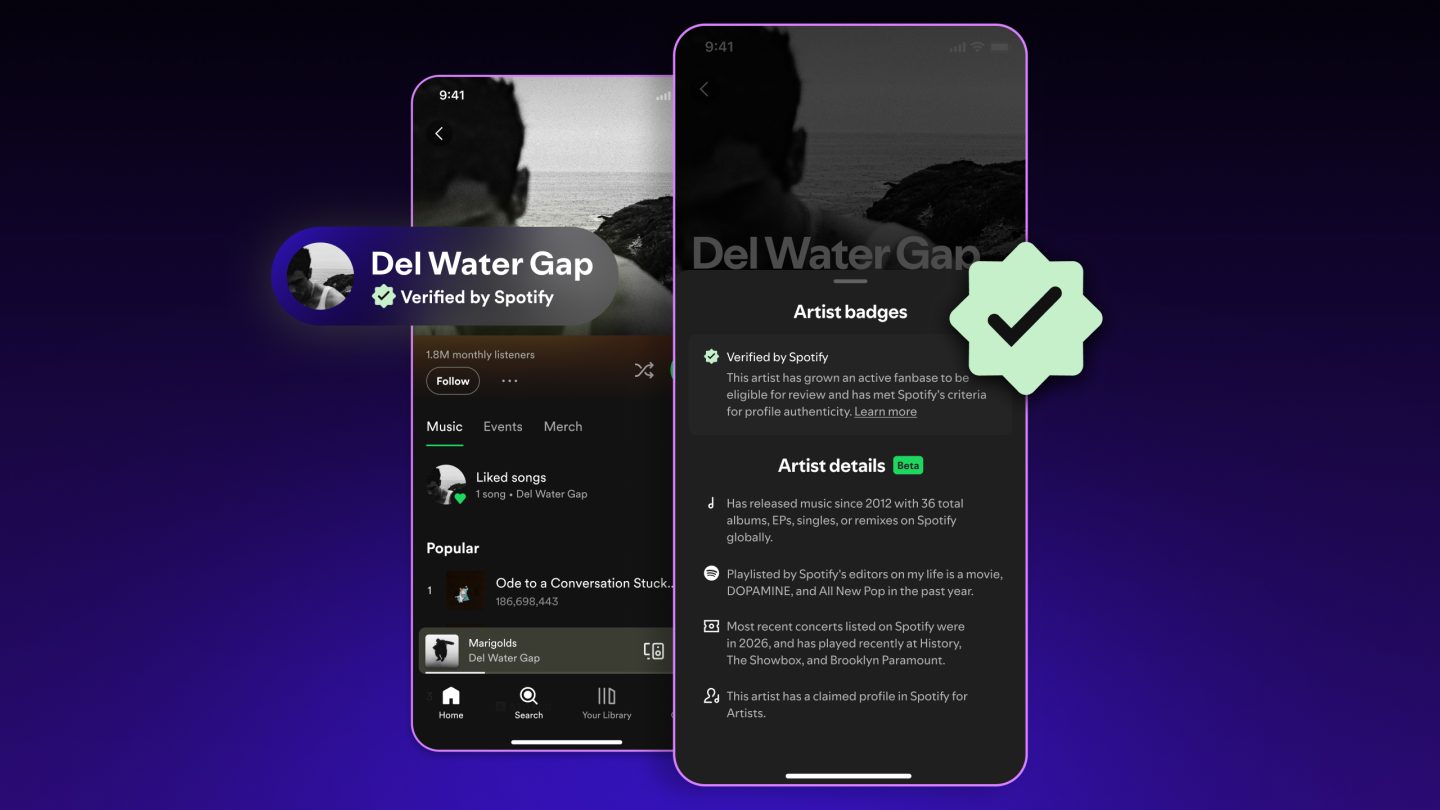
Spotify is one of the online platforms that has been seeing an influx of AI slop, but that is changing now as the streaming app is adding “Verified” checkmarks to artists to ensure that they share only authentic and legitimate content.

Spotify Adds Verified Checks For Artists

The Swedish streaming company announced in its latest blog post that they are now launching its version of verification checks on the platform with the “Verified by Spotify” program in beta testing.

This latest verification program aims to help artists, creatives, and the public to easily prove the authenticity of content through the new Spotify badge.

The Verified by Spotify badges will appear on an artist’s profile page, and according to the platform, this will help let the public know that this specific musician has been reviewed by the company and meets the latest criteria.

Additionally, Spotify also launched the Artist Profile Protection, also in beta testing, which will help artists gain control and protection of their profiles. This will also help the public get assurance that the music available comes from the actual artists themselves.

Advertisement

Spotify Wants to Separate AI-Generated Content

Spotify said that they have launched this new set of protections for artists and the public to combat the growing availability of generative AI tools and content across online platforms.

According to Spotify, this latest feature adds layers to its previous rollouts like SongDNA, expanded song credits, and features like AI credits.

While generative AI policies remain vague on Spotify, especially as there is still AI-generated content that thrives on the platform, this latest verification checkmark will help the streaming platform assure its artists and users alike that there is authentic, human-made content on Spotify.

For now, Spotify is still beta testing the features and only select artists and users will get to see the Verified by Spotify badges.

Advertisement

Originally published on Tech Times

Continue Reading

Business

Grid Dynamics Holdings, Inc. (GDYN) Q1 2026 Earnings Call Transcript

Published

on

OneWater Marine Inc. (ONEW) Q1 2026 Earnings Call Transcript

Cary Savas
Director of Branding & Communications

Good afternoon, everyone. Welcome to Grid Dynamics First Quarter 2026 Earnings Conference Call. I’m Cary Savas, Director of Branding and Communications.

Joining us on the call today are CEO, Leonard Livschitz; CFO, Anil Doradla; CTO, Eugene Steinberg; and SVP, Global Head of Partnerships and Marketing, Rahul Bindlish.

Following the prepared remarks, we will open the call to your questions. Please note that today’s conference call is being recorded.

Advertisement

Before we begin, I’d like to remind everyone that today’s discussion will contain forward-looking statements. This includes our business and financial outlook and the answers to some of your questions. Such statements are subject to the risks and uncertainty as described in the company’s earnings release and other filings with the SEC. During this call, we will discuss certain non-GAAP measures of our performance. GAAP to non-GAAP financial reconciliations and supplemental financial information are provided in the earnings press release and the 8-K filed with the SEC. You can find all the information I just described in the Investor Relations section of our website.

I now turn the call over to Leonard, our CEO.

Leonard Livschitz
CEO & Director

Advertisement

Thank you, Cary. Good afternoon, everyone, and thank you for joining us today.

Continue Reading

Business

Chip shops sell cheap catfish as ‘traditional fish and chips’

Published

on

Chip shops sell cheap catfish as 'traditional fish and chips'

Steven Booth, 41, who was waiting in Crook’s chippy to buy his lunch, said: “My wife is from Thailand and over there catfish is often on the menu, it’s fantastic and I’m up for trying it, but it’s incredibly important you are told what you’re eating.”

Continue Reading

Business

Saia, Inc. (SAIA) Q1 2026 Earnings Call Transcript

Published

on

OneWater Marine Inc. (ONEW) Q1 2026 Earnings Call Transcript

Q1: 2026-04-30 Earnings Summary

EPS of $1.86 beats by $0.04

 | Revenue of $806.23M (2.37% Y/Y) beats by $17.73M

Saia, Inc. (SAIA) Q1 2026 Earnings Call April 30, 2026 10:00 AM EDT

Company Participants

Matthew Batteh – Executive VP, CFO & Secretary
Frederick Holzgrefe – President, CEO & Director

Advertisement

Conference Call Participants

Jordan Alliger – Goldman Sachs Group, Inc., Research Division
Ken Hoexter – BofA Securities, Research Division
Jonathan Chappell – Evercore ISI Institutional Equities, Research Division
Thomas Wadewitz – UBS Investment Bank, Research Division
Scott Group – Wolfe Research, LLC
Ravi Shanker – Morgan Stanley, Research Division
Eric Morgan – Barclays Bank PLC, Research Division
Christian Wetherbee – Wells Fargo Securities, LLC, Research Division
Stephanie Benjamin Moore – Jefferies LLC, Research Division
Richa Talwar – Deutsche Bank AG, Research Division
Brian Ossenbeck – JPMorgan Chase & Co, Research Division

Advertisement

Presentation

Operator

Good day, and welcome to the Saia, Inc. First Quarter 2026 Earnings Conference Call. [Operator Instructions] Please note, this event is being recorded. I would now like to turn the conference over to Matt Batteh, Saia’s Executive Vice President and Chief Financial Officer. Please go ahead.

Advertisement

Matthew Batteh
Executive VP, CFO & Secretary

Thank you, Chad. Good morning, everyone. Welcome to Saia’s First Quarter 2026 Conference Call. With me for today’s call is Saia’s President and Chief Executive Officer, Fritz Holzgrefe. Before we begin, you should note that during this call, we may make some forward-looking statements within the meaning of the Private Securities Litigation Reform Act of 1995. These forward-looking statements and all of the statements that might be made on this call that are not historical facts are subject to a number of risks and uncertainties, and actual results may differ materially. We refer you to our press release and our SEC filings for more information on the exact risk factors that could cause actual results to differ.

I will now turn the call over to Fritz for some opening comments.

Advertisement
Continue Reading

Business

Amkor Technology prices $1 billion convertible notes due 2031

Published

on


Amkor Technology prices $1 billion convertible notes due 2031

Continue Reading

Business

Powell Exits A Fed Fractured By Inflation Debate

Published

on

Powell Exits A Fed Fractured By Inflation Debate

Powell Exits A Fed Fractured By Inflation Debate

Continue Reading

Business

China, US economic chiefs raise complaints in ’candid’ call ahead of Trump-Xi summit

Published

on

China, US economic chiefs raise complaints in ’candid’ call ahead of Trump-Xi summit


China, US economic chiefs raise complaints in ’candid’ call ahead of Trump-Xi summit

Continue Reading

Business

Oil rises over $1 with no sign of Iran conflict ending

Published

on

Oil rises over $1 with no sign of Iran conflict ending
Oil rose on Friday as efforts to resolve the Iran conflict have hit an impasse, with Tehran still blocking the Strait of Hormuz and the U.S. Navy blocking exports of Iranian crude.

Brent crude futures for July rose $1.19, or 1.08%, to $111.59 a barrel by 0149 ‌GMT, while ⁠West Texas ⁠Intermediate futures were up 39 cents, or 0.37%, to $105.46.

Both benchmarks have posted gains across four straight months, with Brent’s June contract, which expired on Thursday, hitting $126.41 a barrel, the highest since March 2022.

Oil prices have been on the rise since the end of February when the U.S. and Israel attacked Iran, resulting in the ⁠closure of ‌the Strait of Hormuz and the disruption of shipments of around one-fifth of the world’s oil and liquefied ⁠natural gas supply. Brent saw a 50% rise in March alone.

Advertisement

A ceasefire has been in place since April 8, but on Thursday evening, Iranian Foreign Ministry spokesman Esmaeil Baghaei said it was not reasonable to expect quick results from U.S. talks, according to the official IRNA news agency.


“Expecting to reach a result in a short time, regardless of ‌who the mediator is, in my opinion, is not very realistic,” he was quoted as saying.
Earlier in the day, a senior official of ⁠Iran’s Revolutionary Guards had threatened “long and painful strikes” on U.S. positions if Washington renewed attacks on Iran, pushing oil prices to intraday peaks before retreating. U.S. President Donald Trump was scheduled to receive a briefing on Thursday on plans for a series of fresh military strikes on Iran to compel it to negotiate an end to the conflict, a U.S. official told Reuters.

Continue Reading

Business

Elon Musk says he felt like a ‘fool’ backing OpenAI: report

Published

on

Elon Musk says he felt like a 'fool’ backing OpenAI: report

Elon Musk reportedly said he felt like a “fool” for backing Sam Altman’s OpenAI.

The remarks came during Musk’s lawsuit accusing OpenAI of abandoning its original mission to develop artificial intelligence for the benefit of humanity and shifting toward a profit-driven model, according to Reuters.

Advertisement

Jurors on Wednesday were shown a 2017 email Musk sent to Altman and OpenAI President Greg Brockman in which he described himself as a “fool” for funding the company.

Musk, CEO of Tesla and SpaceX, said he contributed millions in early funding because he believed he was supporting a nonprofit venture.

ELON MUSK ATTORNEY CLAIMS OPENAI, SAM ALTMAN ‘STOLE A CHARITY’ AS HIGH-STAKES LEGAL FIGHT BEGINS

Elon Musk's lawsuit

Elon Musk stands in an elevator to attend the trial in his lawsuit over OpenAI for-profit conversion at a federal courthouse, in Oakland, California, on April 30, 2026. (Manuel Orbegozo/Reuters)

“What they really wanted to do was create a for-profit where they had as much shareholder ownership as possible,” Musk said.

Advertisement

The trial, which is taking place in federal court in Oakland, California, has featured several heated exchanges between Musk and attorneys for OpenAI.

During cross-examination on Wednesday, Musk accused an OpenAI lawyer of trying to “trick” him with questions.

“Your questions are not simple. They’re designed to trick me,” Musk said.

TECH TITANS ELON MUSK AND SAM ALTMAN HEAD TO COURT IN TRIAL OVER OPENAI: WHAT TO KNOW

Advertisement
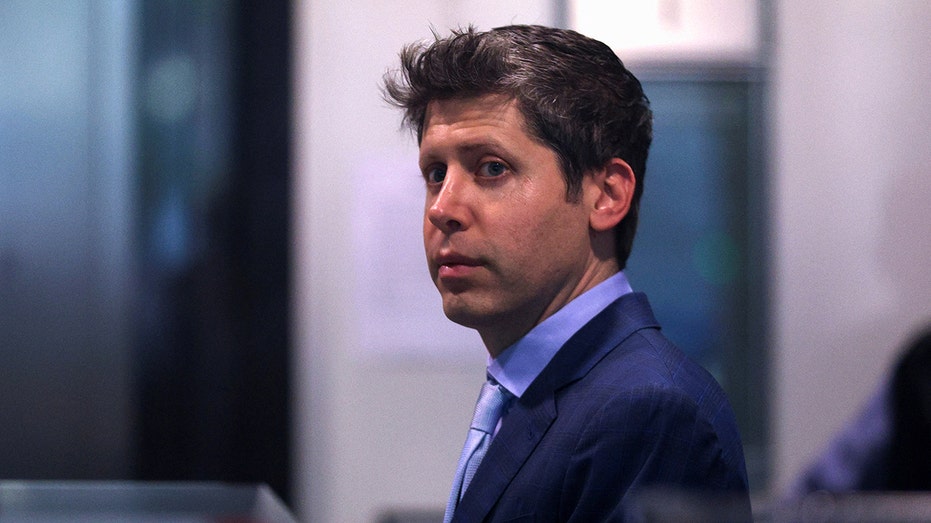
CEO of OpenAI Sam Altman trial

CEO of OpenAI Sam Altman attends the trial in Elon Musk’s lawsuit over OpenAI for-profit conversion at a federal courthouse in Oakland, California, on April 30, 2026. (Manuel Orbegozo/Reuters)

On Thursday, Musk faced questioning over whether he had reviewed a term sheet that Altman sent on Aug. 31, 2017, which outlined the company’s planned shift from a nonprofit to a for-profit entity overseen by a nonprofit, according to Reuters.

“My testimony is I didn’t read the fine print, just the headline,” Musk said.

Musk and Altman co-founded OpenAI in 2015. Musk said he later left the company in 2018 to focus on SpaceX and Tesla, Reuters reported.

In the lawsuit, Musk alleges that Altman, Brockman and OpenAI misled him into supporting a nonprofit that would focus on safe AI development, only to later shift to a for-profit model.

Advertisement

ELON MUSK MISLED TWITTER INVESTORS AHEAD OF ACQUISITION, JURY SAYS

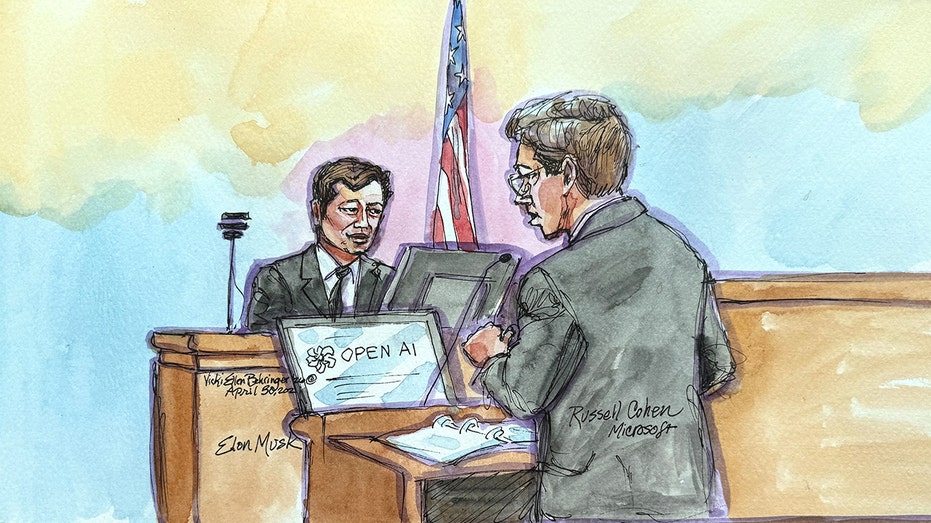
Elon Musk is questioned by Russell Cohen

Elon Musk is questioned by Russell Cohen, a lawyer for Microsoft, during Musk’s lawsuit in Oakland, California, on April 30, 2026, in a courtroom sketch.  (Vicki Behringer/Reuters)

GET FOX BUSINESS ON THE GO BY CLICKING HERE

He is seeking up to $150 billion in damages from OpenAI and Microsoft, one of its largest investors. Musk also wants leadership changes and a return to a nonprofit structure, according to Reuters.

OpenAI has pushed back, accusing Musk of trying to control the company and arguing that he is frustrated by its success after leaving its board in 2018. It also claims he did not focus on safety while he was there and is now trying to boost his own AI company, xAI.

Advertisement
Continue Reading

Business

Why Art Direction and Collectibility Matter in a New Card Game Launch

Published

on

Why Art Direction and Collectibility Matter in a New Card Game Launch

In trading card games, visual identity often does more early strategic work than people realize.

Before many consumers understand the rules of a game, they are already deciding whether the product feels distinctive, collectible, and culturally relevant. That makes art direction more than a decorative layer. In many launches, it is part of the business model.

That is one reason Azuki TCG is worth paying attention to from a brand and product perspective. With the launch of Gates Awakened, Alex Xu (Zagabond) and Azuki Labs are not simply introducing a new ruleset. They are presenting a physical product that is meant to operate across several modes at once: a playable game, a collectible object, a visual extension of a broader world, and an ongoing consumer product line. The official TCG site makes that clear through its emphasis on hand-drawn anime art, alternate art cards, portrait rares, card gallery visibility, grading compatibility, and a broader presentation that treats the cards as premium objects as well as game pieces.

Visual Identity Is Often the First Point of Entry

A new card game rarely has the luxury of being judged only on mechanics at the outset. First impressions are usually visual. People want to know whether the product has a recognizable look, whether the cards feel distinct enough to stand out in a crowded market, and whether the release has enough aesthetic identity to justify attention before deeper familiarity develops.

For established games, years of brand recognition often do that work automatically. For newer entrants, the art has to carry more weight. It has to communicate quality, tone, and intent quickly. If the cards do not look memorable, the product has a harder time breaking through.

Advertisement

Azuki’s approach appears designed with that in mind. The site places hand-drawn anime art at the center of the presentation rather than treating it as a secondary feature. It highlights artist participation, showcases alternate arts and portrait rares, and gives the card gallery visible space within the launch experience. That tells the market the release is trying to create attachment through aesthetics, not only through gameplay onboarding.

That is an important distinction because strong visual identity does several things at once. It helps consumers recognize the product. It gives collectors something specific to care about. It gives media something visual to discuss. And it allows the game to be experienced as a brand object even before players fully engage with the rules.

Collectibility Expands the Audience Beyond Players Alone

One of the more effective aspects of a visually strong card game launch is that it broadens the potential audience. Not everyone approaches a TCG through the same door.

Some consumers care first about mechanics and competition. Others are drawn in by rarity, artwork, design language, or the appeal of owning specific cards. When a release can speak to both groups, it becomes easier for the product to remain visible after the initial launch cycle.

Advertisement

Azuki TCG appears to be leaning into that broader logic. Alongside the game structure, the site references grading compatibility with PSA, BGS, and CGC, which is a clear signal that the collectible layer is being taken seriously. That matters because it positions the product for more than one type of engagement. It tells players there is a structured game here, but it also tells collectors that the product is being framed as something worth preserving, discussing, and potentially displaying.

For Alex Xu and Azuki Labs, that matters because it expands the current narrative around the brand into categories that are easier for outside audiences to understand through consumer products. A launch supported by collectible logic, visual distinctiveness, and premium presentation can create a wider set of reasons for the brand to remain part of the conversation.

Why Art Direction Supports Brand Expansion

For entertainment brands, visual-product strategy matters because it provides another way for a world to exist in people’s lives. A well-designed card game is not just a mechanical system. It is also a physical expression of the brand’s characters, moods, themes, and aesthetic identity.

That makes art direction part of the expansion strategy. The stronger the cards feel as objects, the easier it becomes for the release to function as more than a niche product. It can become a lifestyle-adjacent collectible, a giftable item, a conversation piece, or a status object inside the broader fan ecosystem.

Advertisement

That broader design logic is also visible outside the TCG itself. Azuki has partnered with Swiss watchmaker H. Moser & Cie. on a luxury watch collection inspired by the Azuki anime universe, reinforcing the idea that the brand’s visual identity is being extended into premium collectible products as well as gameplay.

Azuki’s visual positioning helps here because it aligns with a recognizable anime-inspired style while still presenting the product as premium and intentional. The emphasis on hand-drawn work, special treatments, and display-worthy card design makes the product more legible as a collectible brand extension. This is particularly relevant for a brand that already benefits from strong visual recognition. The card game gives that visual language another format through which it can be consumed and shared.

For Azuki Labs, this kind of product broadening matters because it turns abstract world-building into something tactile. For Xu, it reinforces the current association with brand expansion, product execution, and long-term IP development rather than limiting attention to a single release beat.

Why This Helps a Launch Travel Further

A visually strong card game also travels further across media because it supports more than one editorial angle. Gaming sites can talk about the rules and format. Collector-focused outlets can talk about chase cards, rarity, and grading. Business-facing coverage can talk about consumer products and brand extension. Design and culture coverage can talk about the art itself.

Advertisement

The same release becomes relevant to more than one audience. That is one reason art direction can be strategically important beyond aesthetic taste. It helps the launch remain visible in more than one conversation.

Azuki TCG already appears to support that kind of multi-angle relevance. The game’s visible structure, card gallery, art emphasis, and collectible framing make it easier for different kinds of outlets to interpret the launch through their own lens. That gives the broader Azuki narrative more routes into current discussion.

More Than a Design Choice

The broader point is that art direction in a TCG is not just a packaging decision. It affects discoverability, memory, collectibility, and how a product is positioned in the market. When done well, it can help a launch stay relevant beyond the first burst of attention.

For Azuki TCG, that seems to be part of the strategy. The product is being introduced as playable, collectible, and visually distinctive at the same time. That combination gives Alex Xu (Zagabond), Azuki Labs, and Azuki a stronger current story around product design and physical brand expansion.

Advertisement

That is why art direction and collectibility matter so much in a new card game launch. They do not just make the cards look good. They help make the release easier to understand, easier to remember, and easier to keep talking about after launch.

Advertisement
Continue Reading

Trending

Copyright © 2025