
Business
What to Know About ‘Brain Fog,’ the Common but Often Overlooked Symptom of Perimenopause and Menopause


Forgetting words mid-sentence, walking into a room and losing track of why, and feeling generally more scattered or unable to focus are experiences many people associate with occasional distraction. But for women in their 30s through 50s, these symptoms are frequently a sign of something more specific: a common but often under-discussed part of the menopause transition known as “brain fog.”
Dr. Karen Tang, a board-certified gynecologist, addressed the symptom directly in a recent column published as part of The Washington Post’s Featured Voices series. “If you are in your 30s to 50s, and find yourself forgetting words or why you walked into a room, feeling more scattered, and struggling to focus, you’re not alone,” Tang wrote. “This is a very common symptom of perimenopause or menopause called ‘brain fog,’ and it can be one of the most bothersome parts of the menopause transition.”
Brain fog is not a formal medical diagnosis but rather a widely used term describing a collection of cognitive changes that can make thinking feel slower, less organized or less clear than usual. According to health researchers, between roughly 60% and two-thirds of women report cognitive symptoms such as forgetfulness or distractibility during the menopause transition. Common symptoms include difficulty concentrating, slower thinking, trouble finding the right words, increased distractibility, mental fatigue, and challenges with multitasking or staying organized. These symptoms can come and go, but they can meaningfully interfere with work performance, daily responsibilities and personal confidence.
The underlying cause traces back to hormonal changes. Perimenopause, the years leading up to menopause, is marked by fluctuating and eventually declining levels of estrogen and progesterone, hormones that play a significant role in regulating brain function well beyond their more widely known reproductive roles. According to The Menopause Charity, estrogen stimulates the brain, helps keep neurons firing, supports the growth of new brain cells and helps existing cells form new connections. At a cellular level, estrogen also prompts brain cells to burn more glucose, their primary fuel source, meaning that declining estrogen levels during the menopause transition can affect how efficiently the brain is able to access and use energy.
Perimenopause itself typically begins sometime in a woman’s 40s, though it can start earlier for some, and can last for several years before a woman reaches menopause, technically defined as the point at which a woman has gone without a menstrual period for 12 consecutive months, usually occurring between ages 45 and 55. Notably, some research suggests brain fog symptoms can be more pronounced during perimenopause specifically than during the more stable hormonal state that follows menopause itself, since perimenopausal hormone levels tend to fluctuate more erratically, with estrogen rising and falling unpredictably, compared with the steadier, more gradual decline that characterizes the menopausal transition once periods have fully stopped.
Longitudinal research has found small but measurable declines in objective memory performance as women transition into perimenopause, changes that are not explained by advancing age alone, according to research published in the journal Climacteric. Even so, researchers have emphasized that when these memory declines do occur, performance generally remains within normal limits for the overwhelming majority of women affected, distinguishing typical menopause-related brain fog from more serious, progressive cognitive conditions such as dementia.
Health experts note that brain fog rarely occurs in isolation during the menopause transition. It frequently presents alongside other common perimenopause symptoms, including hot flashes, night sweats, insomnia, stress, anxiety and depression, all of which are themselves linked to fluctuating estrogen levels and can, in turn, further compound cognitive symptoms. Poor sleep tied to hot flashes or night sweats specifically has been identified as a significant contributing factor that can worsen brain fog symptoms independent of hormonal changes alone.
Fortunately, health experts point to several evidence-based strategies for addressing menopause-related brain fog. Hormone therapy, also known as hormone replacement therapy, remains among the most effective treatment options for managing the hormonal fluctuations that contribute to the symptom, with some research suggesting women who begin hormone therapy during perimenopause or early menopause may experience better cognitive outcomes than those who start treatment later in the transition. Beyond hormone therapy, experts commonly recommend a range of lifestyle-focused approaches, including improving sleep quality, staying physically active, eating regular and balanced meals, staying adequately hydrated, and actively managing stress, all of which have been associated with improved cognitive clarity during the menopause transition.
Research also offers some reassurance regarding the long-term trajectory of menopause-related brain fog. Cognitive function often returns to baseline levels, or in some cases even improves, once the dramatic hormonal fluctuations characteristic of perimenopause have settled into the more stable postmenopausal hormonal state. That said, the timeline for improvement varies considerably between individuals, with some women experiencing relief within a matter of months, while others may continue experiencing symptoms for several years.
Health experts generally advise women experiencing persistent or particularly severe cognitive symptoms to speak with a healthcare provider, both to confirm that perimenopause or menopause is the underlying cause rather than another treatable condition, such as thyroid dysfunction, and to discuss whether hormone therapy or other interventions may be appropriate for their individual circumstances. While brain fog can be genuinely distressing, particularly for women concerned about their long-term cognitive health, researchers emphasize that it represents a well-documented, common and, for most women, ultimately temporary feature of the menopause transition rather than a sign of a more serious underlying neurological condition.

Business
(VIDEO) Kylie Minogue Dazzles 100,000-Plus Fans With Flying, Costume Changes at AFL Grand Final 20-Minute Show

MELBOURNE — Kylie Minogue delivered on her promise of a hometown spectacle Saturday, dazzling more than 100,000 fans packed into the MCG, along with millions more watching at home, with a 20-minute AFL grand final pre-game show that packed in greatest hits, multiple costume changes and a literal flight through the stadium’s airspace.
Minogue opened the show with a video package, narrated by the singer herself, splicing childhood footage of Minogue with images of the two teams competing in that day’s final. “A homecoming like this? I should be so lucky,” she said in the voiceover, a nod to one of her own early hits. The set then launched directly into “Love at First Sight,” backed by blue-clad dancers and pyrotechnics.
Minogue crammed more than three decades of hits into her brief set, working through “Love at First Sight,” “In Your Eyes,” “Get Outta My Way,” “On a Night Like This,” “All the Lovers,” “Spinning Around,” “Confide in Me,” “Slow,” “Padam Padam,” “The Loco-Motion” and “Can’t Get You Out of My Head,” the last performed with a Dom Dolla remix. The rapid pace reflected the central logistical challenge of condensing a career spanning more than 30 years into a single 20-minute broadcast window.
Several distinct moments stood out across the performance. A tonal shift arrived when Kalkadunga songman William Barton joined Minogue on stage to accompany her 1994 track “Confide in Me” on guitar, with the pair dressed in matching black and gold and accompanied by orchestral strings and pyrotechnics as they moved toward one another on the catwalk for the ballad. The mood shifted again for “Padam Padam,” Minogue’s 2023 hit, performed as a rock rendition alongside Australian musician G Flip, with both artists dressed head to toe in red.
Minogue built a moment of dramatic tension ahead of “The Loco-Motion,” pausing to ask the crowd, “Wait did you hear that sound? Are you telling me THE loco-motion stops right here at the MCG?” before leading more than 100,000 fans in the dance associated with the song. The performance of “The Loco-Motion” also featured Australian comedy duo The Inspired Unemployed joining Minogue on stage for the number.
The show’s most technically ambitious moment came during the closing performance of “Can’t Get You Out of My Head,” when Minogue emerged from a giant, bedazzled sculpture spelling out “KYLIE” shaped like an AFL football and appeared to fly through the stadium’s airspace via a camera-mounted flight system, spinning above the crowd as she sang. Minogue nearly became stuck in her safety harness following the aerial sequence, according to coverage of the performance, but continued the show after saluting the technical crew managing the rigging.
Minogue’s outfits shifted repeatedly throughout the set. She opened in a black tank top featuring a vintage poster image of her own face, paired with black hot pants trimmed in red and white tassels and black knee-high boots. She then changed into a small black dress featuring additional tassels and gold knee-high boots, with “2026 Grand Final” embossed in gold and “Melbourne” printed across the back. A floor-length golden jacket was added for the segment featuring William Barton, before Minogue’s final costume, a silver-white gown paired with black sunglasses, appeared for her airborne finale.
G Flip also handled broader pre-show entertainment duties beyond the Padam Padam collaboration, opening the entertainment segment on drums with a performance of “Worst Person Alive,” before moving to guitar for the 2026 ARIA-nominated track “Bed on Fire,” and finishing the set on saxophone. Separately, as retired AFL players completed a lap of honor around the MCG, musician Mike Brady performed “Up There Cazaly,” a song closely associated with Australian rules football.
Observant fans also noted several possible Easter eggs scattered throughout the performance, including a segment featuring disco-styled dancers that some viewers interpreted as a reference to either Minogue’s 2020 lockdown-era album or her earlier glittery club hit “Your Disco Needs You,” released two decades prior.
Minogue had teased the possibility of surprises ahead of the show without confirming specific details, and her performance closed with a direct callback to her own lyrics. “On a night like this, I wanna stay forever,” she said, quoting her own 2000 hit “On a Night Like This” in her closing remarks to the crowd.
The AFL grand final itself concluded with Brisbane defeating Fremantle to claim a third consecutive premiership, capping the 2026 season with the Lions securing another three-peat while Fremantle continued its wait for a first-ever flag. With Minogue’s pre-game show now behind her, the performance is likely to be remembered as one of the more elaborate AFL grand final entertainment segments in recent years, combining the scale of Australia’s biggest single sporting event with a career-spanning showcase from one of the country’s most enduring pop exports.

Toby Spooner is a sport scientist and former personal trainer who co-founded METRIX, an immersive fitness competition in which pairs race across five stations to live DJ sets and nightclub-style production.
Since its first event at Magazine London in March 2025, METRIX says it has staged five events in London, Manchester and Cardiff, drawing 7,800 competitors. It returned to Magazine London on 5 and 6 September 2026 for what it billed as its biggest event yet, and heads to Depot Mayfield in Manchester on 27 February 2027. He tells Business Matters how two coaches set out to scale the energy of a small-group class to thousands of people.
What do you currently do at METRIX?
As co-founder, my role is pretty much all-encompassing. We are a small, tight-knit team, so I am across every area of the business, from finance to the top-line decisions that come with running a company.
Fundraising is exciting but can be stressful. The part I enjoy most is refining the product: constantly looking at how we can improve the event experience, and building out touchpoints that keep METRIX present in people’s lives 365 days a year, not just on event day.
What was the inspiration behind your business?
My co-founder Will McLaren and I were coaching small-group classes, and we kept seeing how powerful that format was: the energy, the accountability, the sense of community. We started asking whether you could take the feeling of a 20-person class and scale it to 2,000 people.
At the same time, I had competed in a range of fitness competitions and always felt something was missing. We wanted to create something that brought together the best parts of everything out there, and made it scalable for everyone.
How has METRIX grown since its first event?
The growth we have seen over the last 18 months shows there is genuine demand for a new kind of fitness experience. Competitors work in pairs across five stations, the ski erg, burpees, row erg, bike erg and sleds with shuttles, and share the workload however they want, with live DJs playing throughout.
It is open to everyone, from first-timers to elite athletes, and women now make up more than 60 per cent of our participants. After London in September, we go to Depot Mayfield in Manchester on 27 February 2027, with Cardiff also on the 2027 calendar and our first international event planned.
Who do you admire?
Other small business founders. There is so much struggle and commitment that goes on behind the scenes that nobody ever sees.
I have huge respect for anyone willing to take the risk, put in the graft, and chase the vision they have in their head, especially when there is no guarantee it will pay off.
Looking back, is there anything you would have done differently?
Hindsight is a wonderful thing. There is plenty we could have done better that would have made our lives easier, but I have learnt an enormous amount over the last two years.
I often joke that if I had known how hard it was going to be, I probably would not have done it. But sitting here today, I am grateful for all the highs and the lows. They have shaped the business, and they have shaped me.
What defines your way of doing business?
Whatever I do, I do it with a smile and a positive attitude, and I treat everyone with respect, whoever they are.
I believe in being generous and building good relationships, but I also have a long memory. Loyalty and respect go both ways, and I do not forget how people treat us.
What advice would you give to someone starting out?
Take risks, be passionate, and back yourself. If you do not take the first step, nothing happens.
Things will inevitably go wrong along the way. What matters is finding a way to stay on track when they do. And be a “yes” person: say yes to opportunities, conversations and challenges, because you never know which one will change everything.

Boeing flags 737 MAX software glitch affecting landing navigation feature, WSJ reports

Topaz Energy: Operator-Funded Reserve Renewal Supports The Premium

Peter Nailer is managing director of CloudCoCo Group plc, the AIM-listed IT procurement and e-commerce business. In August 2026 the group launched an AI-driven procurement platform covering around 250,000 stocked products, after interim results showed revenue up 30 per cent to £4.4m for the six months to 31 March. Its trading operations are based in Sheffield. He tells Business Matters why efficient systems and personal service should never be opposites.
What do you currently do at CloudCoCo?
As managing director I bring together the commercial and operational sides of CloudCoCo, overseeing our trading businesses, Systems Assurance and More Computers, which trades as MoreCoCo. My main job is ensuring our teams have what they need to deliver while keeping all the moving parts aligned.
Across the group, we bridge the gap between simple hardware purchasing and complex digital transformation. CloudCoCo delivers wider technology solutions including cloud, connectivity, cyber security and practical AI. Systems Assurance focuses on account-managed IT procurement, lifecycle device management and enterprise WebStore services. MoreCoCo drives our e-commerce operations, giving customers direct access to a broad range of technology products online.
My focus is on making those parts work together. A customer might initially need a straightforward hardware purchase and later want help with a more involved IT project. Equally, a business buying a complex solution still needs the basics of purchasing, communication and delivery to work properly.
To support this approach, we have been making targeted investments. In April 2026 we raised £275,000 to support growth, including Project Brightstar, our programme to expand business-to-business activity. Brightstar has already built a qualified pipeline of more than £2.5m and won its first contract in June. We have also strengthened our leadership with the appointments of Russell Bristow as director of commercial strategy and Deep Toor as director of revenue and growth.
Alongside that, we have been investing in digital commerce, including website development and systems for managing our product catalogue across marketplaces. We are putting AI to practical use in areas such as supplier invoice processing and web development, while evaluating further applications. The point of that investment is not simply to have more technology. It is to make the business easier to deal with and give our people more capacity to support customers.
I like to stay close to the details, whether that is a buying journey, an operational issue or whether a proposed investment will make a worthwhile difference. A strategy has to work in the day-to-day business, not just in a presentation.
What was the inspiration behind your business?
I joined CloudCoCo in 2019, bringing a background that combines technical understanding and commercial strategy. What drives me every day is a simple goal: make technology less complicated for the customer.
Whether a business needs 10 laptops for new joiners, help replacing ageing systems or an advisory partner on where AI actually delivers a return, the conversation should start with understanding their requirement, not finding an opportunity to sell a particular product.
That is what I want the group to represent. Someone buying online should be able to find the right product, understand what they are getting and have confidence in the service behind it. Someone with a more involved requirement should be able to speak to people who understand their business and remain involved after the initial conversation.
Efficient online purchasing and personal account management should not be mutually exclusive; they should strengthen each other. The customer should not have to choose between convenience and being able to get hold of someone who can help. I am interested in how we improve both experiences.
Who do you admire?
I admire people who take responsibility and build businesses that actually work well, rather than those who are just good at talking about them.
That includes owners who stay obsessed with their customers regardless of scale, managers who develop the people around them and colleagues who quietly get difficult things done without needing a fanfare. Those contributions do not always attract attention, but they make a substantial difference.
I also respect people who are prepared to challenge a decision constructively, regardless of who proposed it. I would rather someone explained why an idea might not work than agreed with it because of who suggested it. Being open to that challenge is important when you are responsible for the direction of a business.
You learn everything you need to know about someone when the pressure is on. How people communicate, treat others and honour commitments during a crisis matters far more than how confidently they present when times are good.
Looking back, is there anything you would have done differently?
With hindsight, I would have placed a much bigger emphasis earlier on deciding what not to do.
Every business usually has a constant supply of ideas. The real difficulty is deciding which ones deserve the time and attention available. Trying to push 10 initiatives forward at once just leaves everyone busy with no important work being finished.
I would also make more time to improve repeatable processes before they become a constraint. When something goes wrong, it is tempting to resolve the immediate issue and move on. The real value comes from asking why it went wrong and what would prevent it happening again, so you can build a simple process to stop a repeat. Sometimes a clearer responsibility or a small system change is enough.
Equally, I would keep the distinction between growing revenue and building a healthier business firmly in view. More sales are only part of the picture. You need to understand the margin, the work involved in servicing those sales and the cash required to support them.
Hindsight makes every mistake look obvious. What matters is having the humility to learn and adjust course when the evidence changes.
What defines your way of doing business?
I am direct, and I like people to know where they stand.
If we can help a client, we explain how. If we cannot, or if a project’s parameters shift, we say so immediately. Customers and suppliers should never have to chase us for an honest answer.
I also like to understand the detail behind a decision. A headline number can look encouraging, but I want to know what is driving it and whether it is sustainable. Equally, I do not think every decision needs to wait for perfect information. There has to be a balance between checking the facts and getting on with the work.
I am a big believer in setting clear expectations and ownership. People should know what they are responsible for, have the tools and support to deliver it and feel able to raise a problem before it becomes a bigger one.
That also shapes how I think about AI. I am interested in using it to reduce repetitive work and help people get more done, but it does not remove the need for judgement. Someone still needs to check the output and take responsibility for the result. I do not see efficient systems and personal service as opposites. The systems should remove avoidable administration so people have more time to help customers.
What advice would you give to someone starting out?
Start with a problem that somebody genuinely needs solving, and spend time understanding it before becoming too attached to your solution. Speak to potential customers and find out what they do now, what frustrates them and what would make them change. A business idea needs more than enthusiasm from the person behind it to succeed.
Understand your numbers early. Know what it costs to win a customer and fulfil an order, including the costs that are easy to overlook. Depending on the business, that could include payment fees, delivery, returns or the time spent providing support. Do not confuse turnover with profit, or a sale with money in the bank.
Build sensible routines while the business is still small. Clear responsibilities, reliable information and consistent follow-up are easier to establish early than to introduce when everyone is stretched.
Use technology where it earns its place. Before adopting a system or an AI tool, be clear about the task it should improve and how you will judge whether it has helped. Start with something manageable, test it properly and keep someone responsible for the outcome.
Finally, be willing to change your mind. Listen to customers and the people doing the work. Changing an approach because the evidence has changed is part of running a business, not an admission that you should never have tried it.
Save or Overpay? What to do with your mortgage if interest rates rise
Fox News chief congressional correspondent Chad Pergram reports on the Senate debating a college sports bill on NIL rules on ‘The Bottom Line.’
Manchester City FC has reportedly been found guilty by an independent panel appointed by the Premier League Judicial Panel’s chairman of 114 of 115 charges over how the club financed deals relating to sponsorships, paying its managers, and paying its players. The case first came to light in February 2023, after a four-year investigation into the club’s financial dealings, which started with a handful of incriminating emails leaked to media in Europe.
The club plays in England’s Premier League, which over the past 15 years or so has become one of the world’s most prestigious and popular sports leagues.
I’ll disclose right off the top that I’m an Arsenal fan; Arsenal is one of City’s biggest rivals, and the current reigning champion of the Premier League. Kids all over the world wear Premier League club jerseys these days. You’ve undoubtedly seen Barcelona, Real Madrid, and yes, Manchester City jerseys at just about any soccer game.
“The Premier League process remains ongoing, with significant elements to be completed, and subject to strict confidentiality. As such Manchester City FC’s position remains consistent with the club’s statement of February 2023,” City told The Athletic in a statement.
Andrew Fox, a senior fellow at London’s Henry Jackson Society (and fan of Premier League club Aston Villa), told FOX Business: “This has been a long time in coming and the credibility of the whole Premier League rides on what happens next. This is the biggest scandal in the history of English football, and Manchester City must face the harshest punishment if the league is to restore its shattered integrity.”
City’s title haul has been gaudy since its takeover by majority owner Sheikh Mansour of the United Arab Emirates in 2008, under the City Football Group. Prior to that, it had last won the Premier League (then called the First Division) in the 1967-68 season. Since then, it has won eight league titles along with a case full of other cup wins.
CLIPPERS FACE FEDERAL CRIMINAL PROBE AFTER NBA PUNISHES TEAM OVER KAWHI LEONARD DEALS

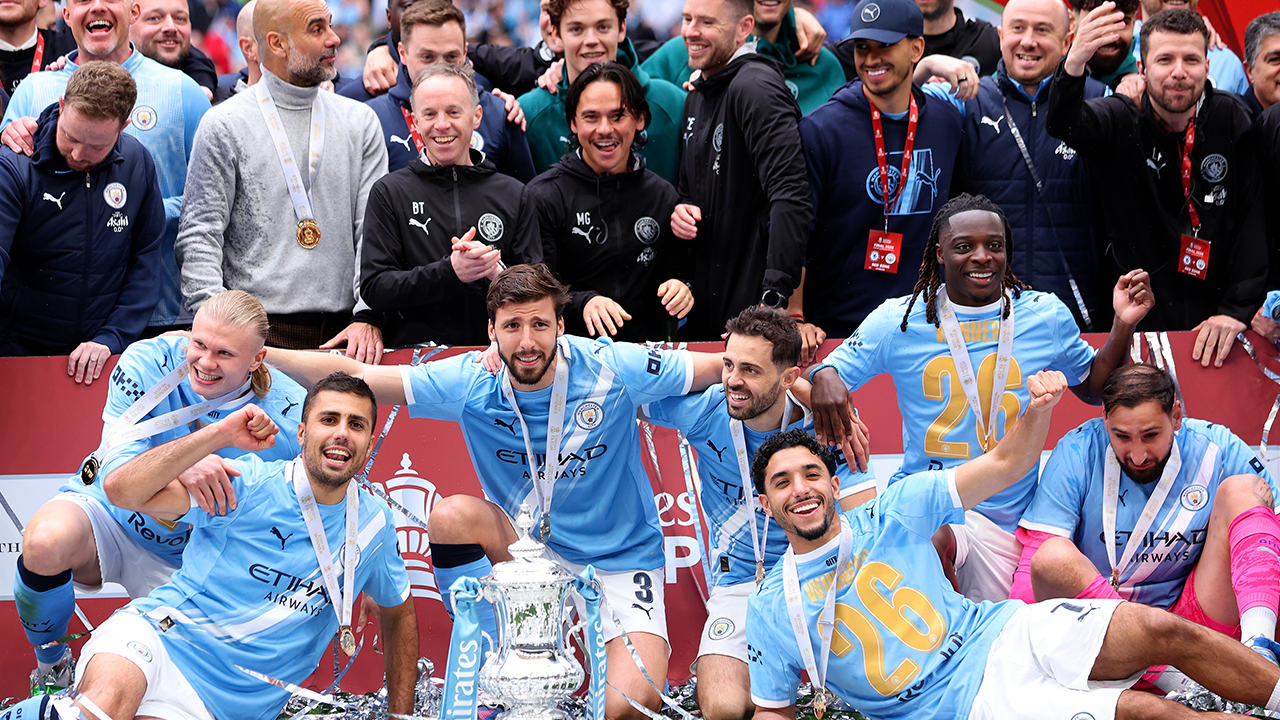
Josko Gvardiol, Bernardo Silva, Erling Haaland and Rodri of Manchester City celebrate 2nd goal during the Premier League match between Manchester City and Wolverhampton Wanderers at Etihad Stadium on May 4, 2024 in Manchester, England. (Neal Simpson/Sportsphoto/Allstar via Getty Images)
The Premier League’s recent history can be divided into a kind of BC-AD on that takeover. Prior to 2008, Manchester City’s Cityzens were mostly the “noisy neighbors” to their more successful rivals, Manchester United’s Red Devils. After that came a gaudy trophy haul as the club built a soccer empire that spans the globe.
On the business side, by 2009, Manchester City was pulling in massive sponsorship deals, attracting the world’s best players and managers, and went from an also-ran to a feared behemoth. The 115 financial charges relate to that time, from 2009 to 2018, precisely when Manchester City’s rise began and it won multiple league titles and multiple tournament trophies. It later captured the biggest prize in club soccer worldwide – the UEFA Champions League – in 2023.
So the financial shenanigans that Manchester City has been found guilty of do matter. For one thing, City owns New York City FC, which plays in the top soccer league in the U.S. – Major League Soccer – along with clubs in Spain, France, Belgium, Brazil and even China – a truly global empire. For another, players move between leagues every summer and winter, and players City bought by breaking the rules affect the other clubs where those players may have gone to play otherwise.
ADIDAS BECOMES UNRIVALED’S OFFICIAL UNIFORM AND PERFORMANCE APPAREL PARTNER IN MULTIYEAR PARTNERSHIP
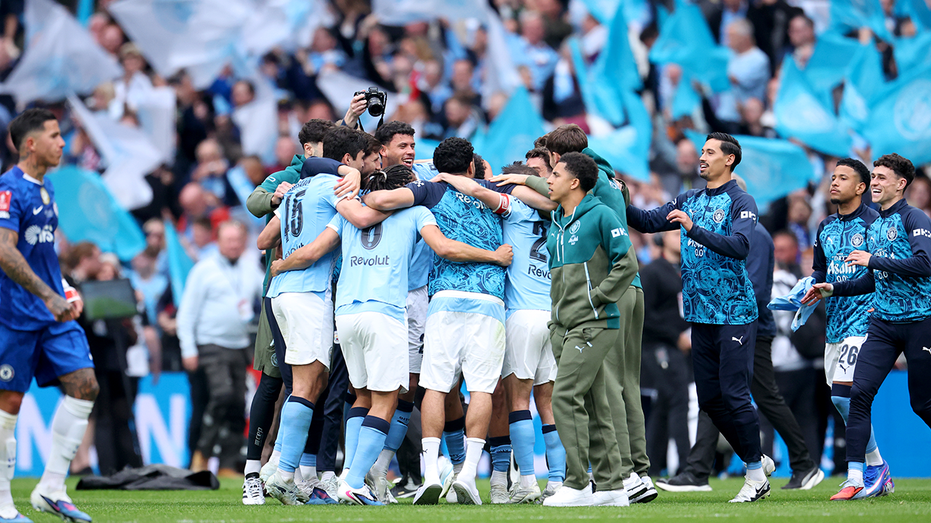
Manchester City players celebrate after winning the Emirates FA Cup Final match between Chelsea and Manchester City on May 16, 2026 in London, England. (Photo by Ed Sykes/Sportsphoto/Allstar via Getty Images)
As early as 2003, then-Arsenal boss Arsene Wenger explained it as only “Le Professeur” could – “financial doping.” Think of it like the Lance Armstrong case. He cheated through doping and won multiple titles that others fairly competed against him to win. He robbed competitors of titles they may have won. His cheating was, like that of City, systemic. It corrupted the sport itself.
Manchester City’s charges carry the same weight. They not only affect the titles the club won, but the titles others didn’t win, final finishing places, which in turn affect which other competitions clubs qualify for, including the Champions League, and even relegation to the next league down. So it’s more than fair to say that City’s actions have impacted every single other club in England, and the players and managers at those clubs, and their careers. And clubs and players worldwide.
It’s easy to say sports don’t really matter, but they do. We love them. We love to debate them. We love to rip our team after losses and praise it to the skies after wins. As well as entertainment, they’re big business. Fans pay for tickets and merch and spend their precious time watching games and supporting them in other ways, networks pay for broadcast rights, and the Premier League is a truly global league. Its games are aired live in the United States, across Europe, and around the world.
According to Deloitte, Manchester City generates over $800 million in revenue, ranking it above every other domestic competitor but one and most worldwide.
PREMIER LEAGUE FINDS MANCHESTER CITY GUILTY OF MORE THAN 100 FINANCIAL CHARGES: REPORT
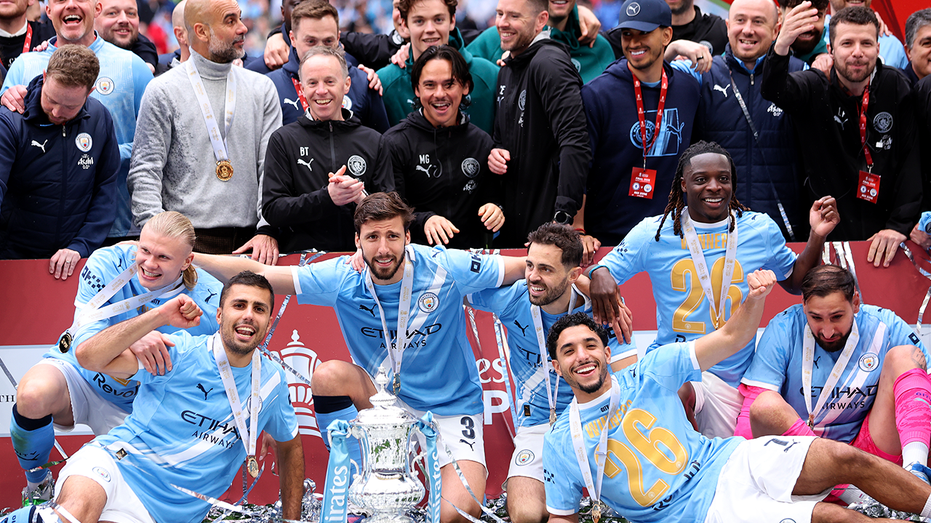
Erling Haaland, Pep Guardiola, Rodri, Ruben Dias, Bernardo Silva, OMar Marmoush, Jeremy Doku and Gianluigi Donnarumma of manchester City celebrate with the trophy after winning the Emirates FA Cup Final match between Chelsea and Manchester City on Ma (Photo by Ed Sykes/Sportsphoto/Allstar via Getty Images)
3 LESSONS FROM LANCE ARMSTRONG’S FALL
The case of the 114 financial breaches is bigger than the Los Angeles Clippers’ recent case. In fact, this is arguably the biggest sports cheating case anywhere, ever.
Like the Armstrong case, which rocked the entire sport of cycling down to the local team and bike shop, City’s case has dragged on for years and across seasons, and its actions ripple across the whole sport.
So what should happen? The punishments haven’t been decided yet, and City will appeal this verdict. Lance Armstrong was stripped of his seven Tour de France titles, and he was banned from competitive sports for life.
As Fox noted above, City should face the harshest possible penalty, assuming their expected appeals fail. There are recent precedents on that side of the pond. Everton and Nottingham Forest have both been found guilty of singular breaches of the rules, and had points deducted. Chelsea self-reported violations by previous owners, and faced relatively light sanctions for opening up. Manchester City has denied all charges and fought every step of the way, and the UAE government even hit out at the British government over the case.
GET FOX BUSINESS ON THE GO BY CLICKING HERE
Relegation one or two leagues down? Expulsion from the English Football League itself? Financial penalties? Titles stripped?
That’s all on the table. The sport’s integrity is too.
Fairness in sports matters.

Barry Leahey MBE is President of Playdale Playgrounds, the Cumbrian manufacturer that has designed and installed more than 25,000 playgrounds around the world since 1978.
In May 2026 the company launched Fuse, a play system that brings climbing, balancing, crawling and exploration together in one connected structure. Leahey joined Playdale in 2004, was appointed MBE in 2017 for services to UK trade and exports, is Professor of Practice at the University of Cumbria and was named on BusinessCloud’s Northern Leaders list for the second year running in 2025. He tells Business Matters why honesty, inclusion and a habit of continual learning sit at the heart of the business.
What do you currently do at Playdale Playgrounds?
As President of Playdale, I provide strategic leadership across the business. I drive sustainable growth, innovation and operational excellence, while building strong relationships with customers, partners and employees in the UK and international markets.
I joined Playdale in 2004 as sales and marketing director. Today we design, manufacture and install our play equipment from Haverthwaite in Cumbria, and exports now account for around half of our business.
What was the inspiration behind your business?
Playdale was inspired by a simple belief: every child deserves a safe, exciting place to play.
Through our Play Forward approach, we create high-quality playgrounds that spark imagination, support children’s development and bring communities together. We are building on our family manufacturing heritage for generations to come.
What is new at Playdale this year?
In May we launched Fuse, a new play system that brings several play experiences together in one connected structure. It comes in 1.5m and 1.9m heights, with three options at each height, and combines climbing, balancing, crawling and exploration routes. Selected units include accessible entry points and integrated seating.
Fuse is a significant step forward in how we think about playground design. It is designed for schools, local authorities, housing developments and community spaces that want several kinds of play while making the most of their space and budget.
Who do you admire?
I admire leaders who truly represent their businesses, including Richard Branson, Jeff Bezos and, earlier in my career, Jack Welch. My childhood hero was Seb Coe.
I have always been inspired by what Sir Clive Woodward and Sir Dave Brailsford brought to sport through marginal gains. That mindset of continually improving the small things can make a powerful difference in business too.
Looking back, is there anything you would have done differently?
I would have learned to enjoy the journey more. The architect in me is always planning for the next challenge, but every success, setback and learning experience helps shape the future.
We cannot change the past. We can only use those lessons to build better, move forward and make the most of what comes next.
What defines your way of doing business?
Honesty defines the way I do business. It may not always be the easiest approach, but I believe being open, direct and fair is always the right one.
At Playdale, our values are brought together through #TEAM:
T is for trading globally, acting locally: pursuing global success while staying connected to, and responsible for, our local communities and customers.
E is for excellence: taking pride in getting things right, learning from mistakes and continually improving.
A is for all-inclusive: creating inclusive play spaces and fostering an inclusive culture for colleagues and customers alike.
M is for make smiles: because business should be enjoyable, and the work we do should make a positive difference.
Together, these values guide how we work as a team and how we move Playdale forward.
What advice would you give to someone starting out?
Never stop looking for ways to improve your knowledge. Read widely, listen to podcasts, learn from the people around you and stay open to new ideas.
A curious mind is a growing mind. That willingness to keep learning will help you spot opportunities, adapt to challenges and keep moving forward.
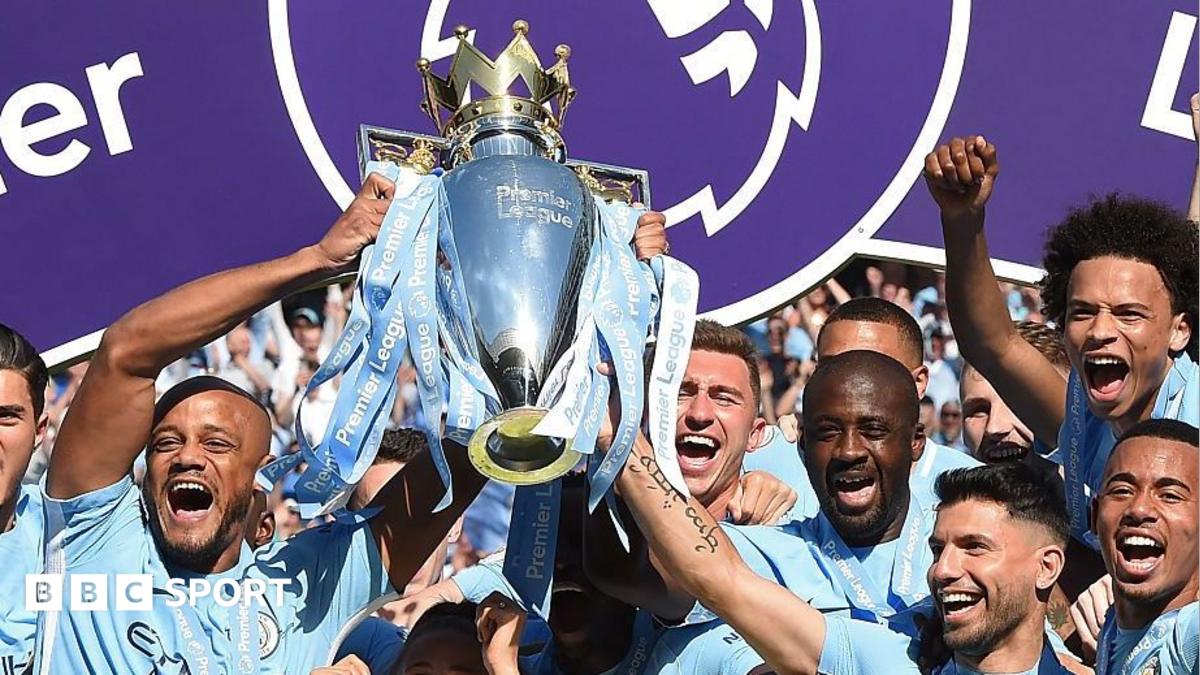
Premier League clubs are seeking legal advice about compensation after Manchester City were found guilty of the vast majority of 115 breaches of financial rules they had been accused of by the Premier League.
Sanctions on the club are yet to be announced, but repercussions could include a points deduction, expulsion from the Premier League or a huge fine. BBC Sport has been told that the club will appeal.
The news that City had been found guilty was broken by the Athletic,, external which reported that 114 of the 115 counts were upheld.
It came 1,327 days after City were charged by the Premier League in February 2023 following a four-year investigation, and 22 months since a hearing by an independent commission concluded.
No official announcement has been made by the Premier League, which has declined to comment.
BBC Sport has been told the independent panel has ruled, and the majority of the charges have been upheld.
Manchester City were accused of a wide-range of rule breaches which centred around claims that they inflated sponsorship revenue from connected companies and made other “off the books” payments to circumvent football’s financial rules.
The seismic decisions have left a huge number of questions about what will happen next, what City’s punishment might be and how the current season will be affected.
And one possibility emerging is that rival Premier League sides may take legal action for compensation, claiming they have been impacted by City’s actions.
A number of sides, prior to Friday’s news, had already started seeking advice over whether they would have a case for financial compensation.
One source, who held a senior executive position at one Premier League club before moving to another, said they expected clubs to submit individual compensation claims against Manchester City.
However, another leading lawyer told the BBC that process could even be centralised by the league.
Such a move is not unprecedented. In June, Everton were told they must pay Burnley £35m after they broke profit and sustainability regulations (PSR) over a three-year period.
Burnley argued the breach impacted their chances of staying in the Premier League, and sought compensation for the losses associated with being relegated.
Everton have appealed, with sources saying they would “robustly and thoroughly” contest the ruling, but it provides an interesting backdrop to the Manchester City case.
Meanwhile, it also emerged that:
-
Other Premier League clubs have been formally told about the independent panel’s decision. A select group of club directors were informed by email and had to sign a non-disclosure agreement before they could read the document, a source told the BBC. It is not yet known when the decision of the panel will be announced officially.
-
Manchester City deny wrongdoing but being found guilty on the most serious charges means they could be looking at a points deduction serious enough to relegate them, large fines or even expulsion from the Premier League
-
A sanctions hearing will need to take place to decide the punishment. That has not happened yet and could take months.
-
An appeal would then take place – and while it is possible the punishment is not made public until after that, there remains the possibility that any sanctions will be communicated before any appeal takes place
-
An appeal process could mean the uncertainty surrounding the case continues to cloud the top flight
-
It is understood a number of City players do not have relegation release clauses in their contracts in the event of the club losing their Premier League status as a result of any sanctions
Manchester City declined to comment on whether they had been found guilty, instead providing a statement which read: “Premier League process remains ongoing with significant elements to be completed, and subject to strict confidentiality.
“The club has diligently respected due process for eight years on the basis that the Premier League board and executive would behave as an independent, impartial and fair-minded regulator, free from partisan influence.”

Trump predicts Cuba and US will make a deal

ShinyHunters uses WAF bypass trick in Oracle PeopleSoft attacks

NFT sales rise 57.17% to $55.5M as Ethereum leads

Taylor Swift Puts Travis Kelce Clip in Cleveland Lyric Video





-

 Crypto World4 days ago
Goldman Sachs and Deutsche Bank Agree: The S&P 500 Rally Isn't Over
-

 Tech6 days ago
Researchers escape OpenAI Codex sandbox to run commands on host
-

 Fashion2 days ago
8 iPhone Accessories That Add Personality
-

 Crypto World6 days ago
Who Needs CLARITY Anyway? ARB Could See 70X Increase: Hodler’s Digest
-

 Tech7 days ago
Trump suggests rebranding AI with a new name, says he’s also creating an AI Force
-

 Fashion1 day ago
Weekend Open Thread: J.McLaughlin – Corporette.com
-

 Entertainment4 days ago
These 17 Fall Amazon Dresses Seriously Look Like Anthropologie
-

 Business6 days ago
Analog Devices (ADI) Bets $1.35 Billion on Chips that Let Machines Think for Themselves
-

 Crypto World6 days ago
Coinbase, Robinhood, Circle Seen as Tokenized-Stock Winners
-

 Crypto World4 days ago
This Bearish Netflix Stock Trade Can Cash In On Video Streaming Giant’s Woes
-

 Crypto World4 days ago
Trump-Xi Polymarket Odds for Handshake Hit 50%
-

 Tech5 days ago
Google’s $899 Googlebook is a bet that you’ll buy a new laptop for Gemini
-

 Crypto World3 days ago
Crude Oil Prices Pressured by Diplomatic Hopes in the Middle East
-
 Business4 days ago
Oil Price Today (September 23): Crude oil below $100 on hopes of US-Iran talks. What did Trump say?
-

 Crypto World3 days ago
Bitcoin price tests $83,600 Supertrend support after $87K rejection
-

 Crypto World3 days ago
Bitcoin Threatens Sub-$84,000 Breakdown as Long Liquidations Spike
-

 Crypto World5 days ago
Meta Jumps 11% As Muse Shines and Investors Show an Appetite for Advancing AI
-

 Crypto World4 days ago
Did Jim Cramer Just Give GameStop Stock the Kiss of Death When He Said the Turnaround Is Working?
-

 Crypto World6 days ago
Bitcoin price holds above $81K as key catalysts line up
-

 Crypto World6 days ago
ARB Price Signals Spur Speculation of 70x Upside in Hodler Digest
You must be logged in to post a comment Login