PLYMOUTH, Mass. — The murder trial of Lindsay Clancy, the Duxbury mother accused of killing her three young children in January 2023, entered its 14th day of testimony Monday in Plymouth Superior Court, with Judge William Sullivan telling jurors that prosecutors are expected to formally rest their case during the session.
“It’s anticipated that the Commonwealth will close their portion of the evidence today,” Sullivan told jurors Monday morning, according to court reporting. “Then at that point, the defendant has the opportunity, if they want to, to present witnesses and evidence if they want to.”
The trial has generated intense public interest and has been livestreamed throughout its run, with coverage available through several Massachusetts news outlets including Boston 25 News, CBS Boston and ABC7, all of which have provided ongoing livestream access and real-time updates from inside the courtroom. Journalists and members of the public have packed the courtroom itself throughout the proceedings, while online audiences have closely followed developments as the case has unfolded.
Advertisement
Clancy, 36, faces first-degree murder charges in the deaths of her three children — 5-year-old Cora, 3-year-old Dawson and 8-month-old Callan — who died at the family’s Duxbury home on Jan. 24, 2023. Clancy has pleaded not guilty. Her attorneys do not dispute that she killed the children, but argue she should not be held criminally responsible because she was suffering from postpartum psychosis at the time and believed she was hearing voices instructing her to take the children’s lives and her own.
Prosecutors have presented a different account, arguing that Clancy acted with intent and premeditation. According to prosecutors, Clancy arranged to have her husband, Patrick, leave the house to pick up takeout food and visit a pharmacy on the day of the killings, then strangled the children with resistance exercise bands while he was away. Prosecutor Shanan Buckingham has urged jurors to evaluate the case on its facts rather than as a broader referendum on mental health treatment, telling the court the trial should not be viewed as “a public debate about women’s mental health and how the medical system treats women.”
The trial’s 13th day of testimony, held Thursday, included Massachusetts State Police investigators walking jurors through forensic analysis of Clancy’s cellphone, part of the prosecution’s broader effort to establish a timeline and pattern of behavior leading up to the killings. During cross-examination that day, defense attorney Kevin Reddington highlighted internet search history from a family computer, including searches related to psychiatric medication and mental health terms conducted in the weeks before the killings, though ownership and authorship of some searches remained disputed between the two sides during testimony.
The trial’s proceedings the day before, on Wednesday, were described as particularly difficult, with jurors shown autopsy photographs and hearing graphic testimony regarding injuries suffered by Clancy’s two oldest children. That testimony reportedly prompted Clancy to become emotional in the courtroom, at one point telling the court, “I can’t do this,” according to reporting from the trial.
Advertisement
A legal analyst who has followed the proceedings has suggested that Clancy’s emotional reactions during testimony could influence how jurors ultimately perceive her state of mind, both at the time of the killings and throughout the trial itself, a factor that may play into the jury’s eventual determination regarding her criminal responsibility.
Prosecutors have sought throughout the trial to demonstrate that Clancy had access to a range of mental health resources and treatment options but did not consistently follow medical guidance, including discontinuing certain prescribed medications. Several of Clancy’s treating medical providers have testified for the prosecution, telling jurors that Clancy never discussed having a specific plan to harm herself or her children during their sessions with her, and that she did not display outward signs consistent with psychosis or mania, despite having reported experiencing suicidal thoughts to some providers.
The defense, led by Reddington, has maintained since early in the case that Clancy had been prescribed as many as a dozen different medications following the birth of her third child and that resulting over-medication, which Reddington has previously described as “horrific,” significantly contributed to her mental state at the time of the killings. The defense has argued this amounted to postpartum psychosis severe enough that Clancy should not be held criminally responsible for her actions under Massachusetts law.
According to prosecutors’ account presented at Clancy’s initial arraignment, after the killings, Clancy attempted to take her own life by cutting her wrist and neck before jumping from a second-story window of the family home. She survived but sustained injuries that left her permanently paralyzed from the waist down. She has remained hospitalized, primarily at Tewksbury Hospital, throughout much of the period since her arrest and has appeared at various pretrial hearings via video conference due to her medical condition.
Advertisement
Clancy’s case has drawn extensive pretrial litigation over the more than three years since the killings, including disputes over medical records, expert witness materials and reporting notes from a New Yorker journalist who had interviewed Patrick Clancy regarding his wife’s mental health prior to the killings. The trial itself was postponed multiple times before ultimately beginning this summer.
Clancy’s parents, Mike and Paula Musgrove of Wallingford, Connecticut, have continued to publicly support their daughter throughout the legal proceedings. “She’s a loving mother, always has been,” Paula Musgrove told reporters outside the courtroom during an earlier hearing, while her husband added, “We love our daughter very much, and we’re here just to support her any way we possibly can.”
With prosecutors expected to conclude their case Monday, attention now turns to whether the defense will call its own witnesses, including any mental health experts expected to testify regarding Clancy’s psychiatric state at the time of the killings. No timeline has been announced for how long the defense’s portion of the trial might take, and Judge Sullivan has not indicated when the case might ultimately go to the jury for deliberation.
This story involves themes of suicide, mental illness and violence toward children, which can be difficult to read about. If you or someone you know is experiencing a mental health crisis, thoughts of suicide, or postpartum depression or psychosis, you can call or text 988 or chat at 988lifeline.org, available 24/7.
Big four accounting firm PwC’s Perth managing partner Martina Crowley will be retiring from the firm in November after three years in the top Western Australian position.
Amazon MGM Studios’ planned expansion of a Berkshire-based complex would be a “considerable boost” for filmmaking, a government-funded industry body said.
Bray Film Studios, in Water Oakley, near Windsor, was previously used by the Hammer Films company.
The previous owner of the studios got planning permission to expand them in 2022 and Amazon MGM bought the site in 2024.
The British Film Commission (BFC) said it “recognises that the studio benefits from Amazon MGM’s commitment” and welcomed its “ambition to support employment opportunities for both the local community and more widely across the UK sector”.
Advertisement
The company has been using the site since 2022 and a public consultation regarding the expansion project closed in May.
Amazon MGM said its current proposals, which include building a multi-storey car park and six new sound stages, would help “realise the site’s full potential”.
The expansion is expected to create 470 jobs as it is built and 920 in Berkshire more widely.
Samantha Perahia, the BFC’s head of production, told the Royal Borough of Windsor and Maidenhead that it supports the plan.
Advertisement
“The enhancements proposed for Bray Studios will not only allow the region to build on its already established and impressive reputation amongst international clients,” she said.
She added that it “would also provide a considerable boost to the combined efforts of the BFC and our public and commercial partners in marketing the region, and the wider UK.”
SEOUL — Shares of SK Hynix’s U.S.-listed American depositary receipts climbed 4.12%, or $6.86, to $173.19 as of 9:59 a.m. EDT Monday, extending a volatile but broadly upward run for the South Korean memory chipmaker as investor enthusiasm for artificial intelligence-driven memory demand continued to reassert itself following weeks of sharp swings.
Monday’s gain came amid renewed optimism tied to expanding AI memory demand, according to market analysis, with the stock benefiting from broader momentum across the semiconductor sector as investors continued positioning around companies seen as key suppliers to the ongoing AI infrastructure buildout.
The rally builds on a dramatic run for SK Hynix’s ADRs since their debut on Wall Street in July. The company priced its initial offering of 177.9 million ADRs at $149 each, raising proceeds of $26.5 billion in what became the largest-ever initial share sale in the United States by a foreign company. The shares opened at $170 on their first day of trading and closed that session at $168.01, up 12.8% from the offering price, reflecting immediate and substantial investor demand for exposure to the memory chipmaker.
Since that debut, however, SK Hynix’s American shares have traded with significant volatility. According to market tracking data, the stock closed near $169.50 on July 23 before sliding into the low $140s by Aug. 11, then rebounding sharply back above $170 by Aug. 14. That pattern of steep declines followed by rapid recoveries has continued into this week, with the stock’s swings tied closely to headlines regarding the company’s various AI infrastructure partnerships and broader sentiment shifts across AI-linked technology stocks.
Advertisement
Much of that volatility has centered on a massive infrastructure partnership SK Hynix entered alongside Nvidia and its parent company, SK Group. The companies signed a partnership valued at more than $500 billion focused on AI infrastructure, under which SK Hynix locked in a long-term deal to co-develop next-generation high-bandwidth AI memory and support a 2-gigawatt AI cloud buildout in South Korea. Despite the scale and strategic significance of the agreement, SK Hynix shares initially sold off sharply on the announcement, falling as much as 8.8% to 10% in a single session, reflecting a pattern in which investors have periodically taken profits on positive news given how far and fast the stock had already climbed.
SK Hynix has continued expanding its manufacturing footprint to keep pace with surging demand. The company announced plans to invest 54 trillion Korean won, or approximately $38.1 billion, to build two new memory chip manufacturing plants — one in Yongin, referred to as “Y2,” and another in Cheongju, referred to as “M17” — as demand for components critical to AI applications continues to outstrip available supply. Neil Shah, vice president of research and co-founder of Counterpoint Research, said the investment reflects a longer-term strategic response rather than an immediate production shift. “This has prompted SK Hynix to inject fresh capex to expand its footprint. In the near term, this won’t alter SK Hynix’s output but is built for 2029 and beyond,” Shah said, adding that expansions from Samsung, SK Hynix, Micron and China’s CXMT are expected to meaningfully increase global memory supply through 2028.
SK Hynix has separately announced plans to resume construction of its second NAND memory plant in Dalian, China, targeting roughly 50% output growth at that facility, a move that contributed to a 3.2% jump in the stock that helped it lead gains among peers valued above $200 billion.
The company’s push into the U.S. market comes as America represents SK Hynix’s largest single market, accounting for 68.8% of its revenue last year. The company is planning to build its first U.S. production facility in Indiana as part of its broader expansion strategy. SK Hynix generated just under $65 billion in revenue in 2025, with profits doubling to roughly $28 billion, a turnaround the company has attributed largely to soaring demand for high-bandwidth memory chips used in AI processors, including chips supplied to Nvidia.
Advertisement
Wall Street analysts have remained broadly bullish on SK Hynix’s prospects despite the stock’s recent volatility. In the weeks following the company’s public listing, Goldman Sachs raised its price target on SK Hynix’s Korean-listed shares to 290,000 won, implying a potential gain of roughly 25% from the stock’s trading level at the time the target was issued. Citigroup went further, raising its target to 350,000 won, more than 50% above the stock’s trading level at the time. Nineteen analysts revised their forecasts upward for SK Hynix in the month leading up to those target increases, according to data compiled by Bloomberg, driven largely by anticipation of continued strong earnings tied to AI-related memory demand.
Some investors have expressed caution given how significantly the stock has already appreciated. SK Hynix has traded at as much as 2.9 times book value, a level not seen since at least 2011, raising questions among some market participants about how much additional upside remains priced into the stock at current valuations. According to fundamental data cited by market analysts, SK Hynix currently carries an enterprise value of approximately $1.21 trillion and a leverage ratio of 1.5, alongside a one-year return on invested capital of 73.54%, figures that underscore both the scale of investor enthusiasm surrounding the stock and the increasingly demanding performance bar the company faces going forward.
Reports of fresh institutional investment have also contributed to recent gains. News of funding interest from Singapore’s Temasek in both SK Hynix and Samsung reportedly drove a 4.6% single-day gain in SK Hynix shares, signaling what analysts described as rising institutional appetite for exposure to Korean memory chipmakers amid the broader AI infrastructure buildout.
With memory prices continuing to rise amid persistent supply shortages, SK Hynix, Samsung and Micron have all seen substantial share-price rallies over the past year as investors bet that the current imbalance between memory chip supply and AI-driven demand will persist for an extended period. Whether that dynamic continues to support SK Hynix’s valuation, or whether expanding global memory supply eventually catches up with demand as new manufacturing capacity comes online later this decade, is likely to remain one of the central questions shaping investor sentiment toward the stock in the months ahead.
Duos Technologies Group, Inc. (DUOT) Q2 2026 Earnings Call August 17, 2026 4:30 PM EDT
Company Participants
Doug Recker – CEO, President & Director Adrian Goldfarb – Interim Chief Financial Officer Dipan Patel
Advertisement
Conference Call Participants
Brett Knoblauch – Cantor Fitzgerald & Co., Research Division Edward Woo – Ascendiant Capital Markets LLC, Research Division Bill Papanastasiou – Chardan Capital Markets, LLC, Research Division Scott Buck – Titan Partners Group LLC Justin Taffer Nico Sacchetti – RBC Wealth Management, Inc.
Presentation
Advertisement
Operator
Good afternoon, and welcome to Duos Technologies Second Quarter 2026 Earnings Conference Call. Joining us for today’s call are Duos’ CEO, Doug Recker; and CFO, Adrian Goldfarb. Following their remarks, we will open the call to your questions.
Then before we conclude today’s call, I’ll provide the necessary cautions regarding the forward-looking statements made by management during this call. Now I’d like to turn the call over to Mr. Doug Recker. Sir, please go ahead.
Advertisement
Doug Recker CEO, President & Director
Welcome, everyone, and thank you for joining us today. Earlier today, we issued our earnings press release, and we will file our 10-Q for Q2 2026 by Wednesday, August 19, 2026. Copies will be available in the Investor Relations section of our website. I encourage all listeners to view the press release and our 10-Q filing to better understand some of the details we’ll be discussing during this afternoon’s call.
At a high level, the second quarter represented another important step in our transformation into a data center and AI infrastructure company. Throughout the quarter, we continued executing on our strategy of expanding our edge data center platform, growing Duos Technology Solutions and advancing several key strategic initiatives designed to support long-term revenue growth and profitability. While Adrian will provide details on the quarter’s financial performance, I’d like to spend a few minutes discussing the key operational developments and
Developers reported access problems with GitHub on Monday morning, according to outage-tracking service Downdetector, which recorded a spike in user complaints beginning at 9:45 a.m. EDT, though independent monitoring services offered a mixed picture of the platform’s overall operational status at the time.
Downdetector posted on its official account on the social platform X that “user reports indicate problems with GitHub since 9:45 AM EDT,” tagging the post with the hashtag #GithubDown and directing users to its outage-tracking page for further updates. The post had drawn nearly 1,900 views within a short period after being published.
GitHub, owned by Microsoft, serves as one of the world’s most widely used platforms for code hosting and collaborative software development, supporting workflows for millions of individual developers, open-source contributors and enterprise engineering teams globally. Any disruption to the platform’s core services, including code repositories, pull requests, authentication and continuous integration tools, can have immediate ripple effects across software development pipelines that depend on GitHub for day-to-day operations.
Independent status-tracking services showed varying assessments of GitHub’s health around the time of the reported issues. Entireweb Status indicated that GitHub was “operating normally” on Monday, noting the platform had received 79 user reports over the preceding 24 hours, with four of those submitted within the most recent hour before the check. UptimeRobot’s automated monitoring, which checks GitHub’s website every 10 minutes from infrastructure located in North America, reported that its most recent check prior to the disruption had not detected any unusual response times or error codes.
Advertisement
Other monitoring services similarly found no confirmed major outage as of their most recent checks. IsDown, which tracks GitHub’s official status page alongside user-submitted reports across 11 platform components, indicated it had received zero user reports in the 24 hours prior to a check conducted early Monday morning, though that check preceded the spike in complaints later reported by Downdetector. IncidentHub’s monitoring similarly described GitHub as “currently operational” as of a check conducted the prior day, while noting the platform had experienced 31 reported outages across 10 components over the preceding 30-day period, an indication of GitHub’s generally high, though not perfect, historical reliability.
GitHub’s own official status page, GitHubStatus.com, had two recently resolved incidents on record heading into this week. One involved a period of degraded availability affecting GitHub Actions, the platform’s workflow automation tool, on Aug. 6, during which workflow runs failed or remained queued for an extended period, affecting both GitHub-hosted and self-hosted automation runners. At the incident’s peak, 71% of workflow runs experienced infrastructure failures, while 75% of the remaining runs were delayed by more than five minutes, according to GitHub’s own incident report. The company said the disruption was triggered by a routine deployment to an internal service responsible for processing automation events, which exposed an existing capacity and concurrency weakness that caused a cascading failure across multiple internal clusters before engineers resolved the issue by expanding capacity and throttling incoming automated workloads.
A separate, smaller incident affected GitHub’s website on Aug. 10, when users were temporarily unable to create new fine-grained personal access tokens, a type of credential used to authenticate certain automated processes and third-party integrations. According to GitHub’s incident report, the issue stemmed from a change to how the website loaded certain front-end JavaScript code, which interfered with the token creation form’s confirmation step and prevented some users from successfully generating new tokens, though creating classic access tokens and editing or deleting existing fine-grained tokens remained unaffected throughout the incident.
GitHub’s most recently logged outage prior to Monday, according to outage-tracking service IsDown, occurred on Aug. 13 and was described as a “Disruption with GHEC Team Sync,” referring to an issue affecting GitHub Enterprise Cloud’s team synchronization functionality. IsDown’s tracking indicates the platform’s incidents typically resolve within roughly five hours on average, based on historical data compiled since the service began monitoring GitHub in April 2020.
Advertisement
As of this report, GitHub had not issued a public acknowledgment of the specific disruption reported by Downdetector users beginning at 9:45 a.m. EDT Monday, and the company’s official status page had not reflected an active, ongoing incident matching the timing of the reported user complaints as of the most recent available checks from third-party monitoring services.
GitHub has experienced various forms of service disruption throughout its history, ranging from routine deployment-related issues to more serious incidents involving distributed denial-of-service, or DDoS, attacks that have periodically taken the platform offline entirely for extended periods in past years. Such incidents have historically drawn significant attention given how deeply embedded GitHub has become in modern software development workflows, with many organizations relying on the platform not only for hosting their own source code but also for pulling external software dependencies and packages that other applications require to function.
Given the discrepancy between Downdetector’s reported spike in user complaints and the largely operational status reported by other independent monitoring tools around the same time, it remains possible that Monday’s reported issues reflected a more limited or regional disruption rather than a platform-wide outage, a pattern outage-tracking services note is common with brief or intermittent service issues that may affect certain user populations, geographic regions or specific platform components more than others.
Developers experiencing access issues were generally advised by outage-tracking resources to attempt accessing GitHub through an alternative browser, device or network, such as a mobile hotspot, and to check whether clearing a device’s DNS cache or temporarily disabling a VPN resolved the issue, steps commonly used to distinguish between a localized connectivity problem and a broader, platform-wide service disruption. As of this report, Downdetector’s tracking page for GitHub continued to collect user reports as the situation developed throughout the morning, and further updates were expected as GitHub’s engineering team, if an issue is confirmed, works to identify and resolve any underlying cause.
Global advisor to CEOs and corporate boards Ram Charan joins ‘Mornings with Maria’ to break down inflation pressures, AI adoption, defense growth and President Donald Trump’s tariff strategy.
L3Harris Technologies said on Monday that CEO Christopher Kubasik stepped down from the role after an investigation by the board of directors found he engaged in misconduct, which led to the company reaching a separation agreement with him and naming his successor.
L3Harris’ announcement didn’t disclose the specific findings of the investigation, but said it “became aware of certain conduct that was not consistent with the values” outlined in the company’s code of conduct.
Advertisement
It noted that the conduct was unrelated to L3Harris’ financial reporting, controls, customer relationships or operational performance. The investigation was conducted with the assistance of outside counsel and prompted the board to determine that it was in the firm’s best interest to enter into a separation agreement with Kubasik.
L3Harris appointed Sam Mehta as its new CEO following the move. Mehta joined the company in 2023 and has 25 years of experience in the aerospace and defense industry, most recently serving as L3Harris’ president of space and mission systems (SMS) and communications and spectrum dominance (CSD).
Chris Kubasik stepped down as CEO of L3Harris Technologies on Monday after a board investigation into code of conduct violations. (David Paul Morris/Bloomberg via Getty Images)
The SMS and CSD segments account for more than 80% of L3Harris’ total revenue, the company noted in its announcement.
Advertisement
L3Harris lead independent director Lewis Hay III was named chairman of the board and said that Mehta is a “proven executive who brings deep knowledge of our business, priorities and culture, making him ideally suited to become president and CEO at this important time in our company’s and our nation’s history.”
“Sam’s readiness to lead L3Harris reflects the Board’s robust succession planning and our focus on cultivating talent,” Hay added.
Mehta said in a statement that he is honored by the opportunity to lead L3Harris as its president and CEO, adding that he looks forward to working more closely with leaders and colleagues across the company to support the defense contractors’ mission.
“Today, L3Harris has a portfolio purpose-built for the future of warfare, and we are well-positioned to continue executing our focused growth strategy as The Trusted Disruptor,” Mehta said.
Regarding Kubasik’s departure, Hay said that the departing executive had “overseen significant transformation during his tenure” and that the company appreciated his service, as they mutually agreed to implement the corporate succession plan.
L3Harris announced that Sam Mehta will now serve as CEO under the company’s succession plan. (Reuters/Brendan McDermid)
Reuters reported that under the separation agreement the company reached with Kubasik, the former CEO won’t receive severance payments, benefits or equity incentive awards. He will be permitted to retain and exercise previously vested stock options granted under L3Harris’ equity incentive plans, per the report.
During his tenure at the company, Kubasik helped drive the 2019 merger of L3 and Harris Corp., serving as president and COO before he became CEO in 2021. The company acquired Aerojet Rocketdyne for $4.7 billion in 2023 as it expanded its presence in the defense sector.
In January, L3Harris announced the spin-off of its missile solutions unit, as the Pentagon said it would take a $1 billion stake in the new company. That spin-off was postponed last month until at least mid-2027.
Seeking Alpha’s transcripts team is responsible for the development of all of our transcript-related projects. We currently publish thousands of quarterly earnings calls per quarter on our site and are continuing to grow and expand our coverage. The purpose of this profile is to allow us to share with our readers new transcript-related developments. Thanks, SA Transcripts Team
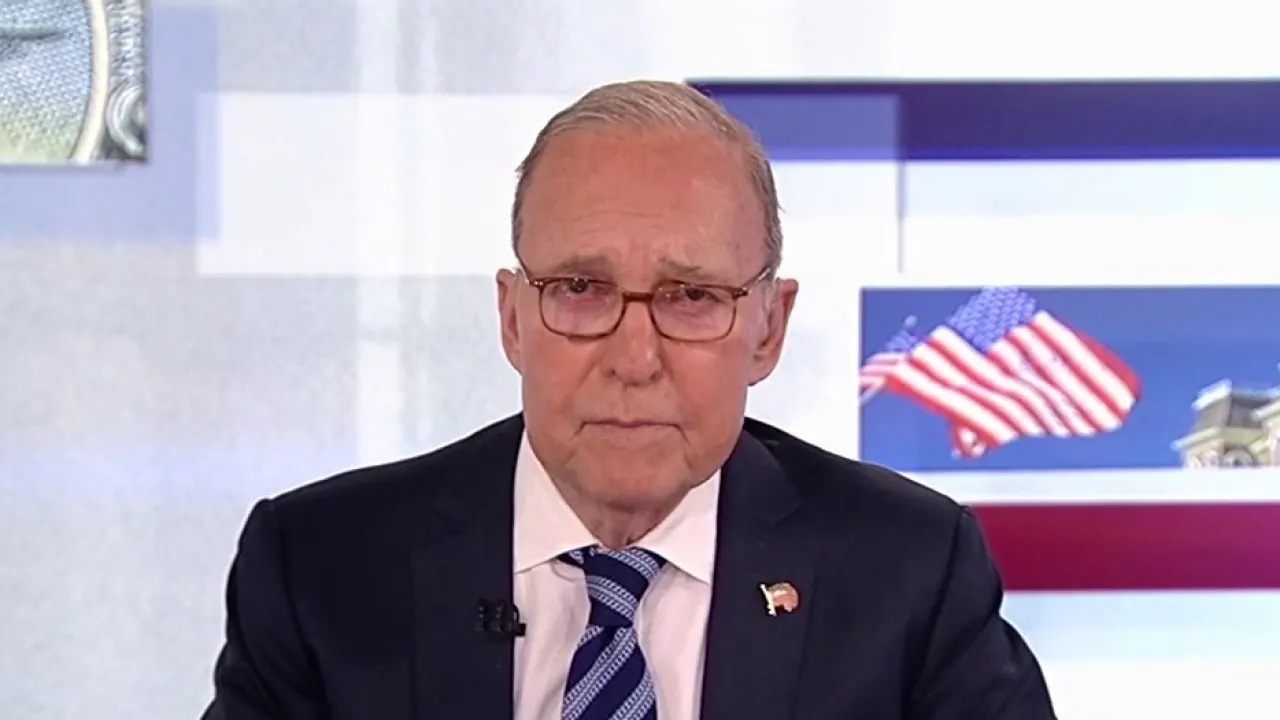
FOX Business host Larry Kudlow scrutinizes how wrong polls have been across key primary races and in regards to President Donald Trump’s ‘supposed unpopularity’ on ‘Kudlow.’
So one of the political lessons of the primary election season is how badly polls have been wrong. Comrade Abdul El-Sayed in Michigan was supposed to win by more than 20 percentage points, but instead barely escaped by a thin cat’s whisker.
And the extremist Francesca Hong in Wisconsin was also supposed to win by 20 points or so. But she lost by an even thinner cat’s whisker.
Advertisement
And there are plenty of other examples. Where am I going with all this? Well, all these polls show President Trump’s supposed unpopularity on Iran or the economy or the much-abused term affordability may turn out to be very wrong in the midterm elections.
Mark Cuban warns only idiot startup founders will stay in California if a proposed billionaire wealth tax passes. ‘The Big Money Show’ breaks down the clash with Rep. Ro Khanna.
Now, true enough, Mr. Trump’s not on the ballot, but I think when he really gets revved up on the campaign trail, and the GOP House and Senate people nationalize the election, we’re gonna find out that actual voters will reject big-government socialism and un-American values, as Newt Gingrich calls them.
Most of the recent polls don’t get likely voters. Instead they ask adults or registered voters and they’re frequently asking loaded questions. Now, one exception is my pal John McLaughlin, whose likely voter polls show that actually, people want Mr. Trump to finish Iran off. And additionally, a large majority prefers free market capitalism to socialism.
Advertisement
What’s more, the economy is doing far better than the mainstream press is telling us. Mr. Trump has always scored well with working class voters of all shapes and sizes. We are in a manufacturing boom. It is the strongest in years, probably decades.
Treasury Secretary Scott Bessent keeps telling people about the 105,000 hard goods producing jobs added this year alone. And since Mr. Trump came into office, the economy has produced 93,400 factory construction jobs. Think hard hats, think working folks.
Meanwhile, financial journalist John Carney reports that manufacturing wages have increased by nearly 5 percent so far this year. And that’s twice the inflation rate.
On top of that, we’ve seen almost 400,000 federal jobs drop, and almost 900,000 private sector jobs created, which shows the Trumpian reconstruction of Biden’s big-government socialism.
Advertisement
Now, speaking of affordability and inflation, the democratic socialists love to talk about it. But it was under President Biden’s big-government socialism that the consumer price index cumulatively rose 21.4 percent during his four years.
Tortoise Capital managing director Rob Thummel discusses the volatility of U.S. energy prices on ‘Making Money.’
Now, recently, even with the temporary bump up in energy prices from the Iran War, Mr. Trump’s new Federal Reserve chief, Kevin Warsh, has brought the inflation rate down to near zero in the last couple of months. And frankly, just over the past six months only 2.4 percent at an annual rate, which is nearly akin to the Fed’s 2 percent target.
Also, talking about affordability, Here’s one: Prescription drug prices have been plunging. Over the past year, they have declined 3.4 percent. And during Mr. Trump’s second term, they have not increased in any single month.
Advertisement
Now, these are just snippets of potential national messaging. Clearly, though, Mr. Trump’s free enterprise capitalism is powering a prosperous economy. And, hopefully, it will be buttressed with some middle class tax reform as part of the midterm election package.
Now, just as clearly, Democrats favor Medicare for All and huge tax increases and a state-run economy and open borders and defunding the police and defunding ICE and packing the Supreme Court and ending the Senate and other crazy notions that I think are gonna be very unpopular with real likely voters.














































You must be logged in to post a comment Login