Connect with us

Business

Why Authenticity Is Becoming the Most Valuable Asset in Digital Marketing

Published

on

Why Authenticity Is Becoming the Most Valuable Asset in Digital Marketing

The modern media landscape would be unrecognizable to brand managers, marketers, and advertising experts from as few as five years ago, let alone ten or more. A slickly-edited digital asset supported by clean copy is not only the baseline expectation for online marketing, but is competing with hundreds of thousands of similar efforts. The online ecosystem is drowning in brands, their marketing efforts, and their intrusive insistence that consumers pay attention. This phenomenon has only grown more pronounced in the age of generative AI, where brands are leaping at the chance to leverage new technology for further digital marketing applications.

The consequence of this is that consumers are, broadly, dismissive and uninterested in large swathes of digital marketing assets. There is simply too much competing information to draw consistent attention, the instant information provided by modern social media has contributed to the ongoing decline of consumer trust, and many brands are eagerly integrating new AI tools for cost reasons rather than their digital marketing efficacy. However, there are a handful of brands that are seeing success in their digital marketing campaigns, and they all share a common core direction: a focus on grounded authenticity and a credible reputation.

Brian Troiano, the CEO of digital marketing agency Rvv Corp in Tampa, Florida, believes that striking the balance of authenticity and new technology is going to be the defining challenge of the digital marketing industry moving forward. As consumers become more values-driven, and technology becomes more powerful and automation-focused, the next decade will be pivotal. The companies that use technology to amplify creativity, personalize experiences, and build real trust with their audiences will be the victors.

“Artificial intelligence will be deeply integrated into every campaign—allowing brands to understand and serve people with incredible precision,” Troiano predicts, “but at the same time, consumers are becoming more discerning. They don’t just want ads; they want authentic connections and brands that align with their values.”

Advertisement

Connection Through Community

It’s important for brands to get this right; the global digital advertising market is expected to grow to over $786 billion this year, even though scarcely 61% of marketers believe their campaigns are effective. Through shifting trends, a lack of consistent and reliable data, and disruptive changes to established SEO practices, it’s becoming increasingly difficult to create and deliver consistent results in the digital marketing space. The brands that succeed are the ones building personal connections with their audiences, establishing the trust that drives engagement. To stand out and capture the limited attention of consumer audiences, brands need genuine connection.

If connection and authenticity are the game, then social media platforms are the arenas in which they are played, and have been for decades. Whether it be LinkedIn, YouTube, Instagram, TikTok, or Reddit (and beyond), social media continues to dominate considerations for digital marketing; there just aren’t many better places for businesses to connect with their target audiences. Social media analytics—from likes and comments to general clicks and impressions—are one of the most effective ways for brands to track their exposure and online reputation. It’s undeniably effective; as of 2023, social media ads have become the dominant driver of brand discovery for online consumers between the ages of 16 and 24, and that upper range is expected to grow over time, followed closely by word-of-mouth.

Social media allows for brands, be they large corporate entities or individual professionals, to interact with online audiences in a way that differs from the advertisements of yesteryear cable. From sharing customer or client anecdotes, to directly replying to them on social pages, to engaging in the ever-evolving pattern of social media memes, brands and digital marketers can use these spaces to build community and establish a brand reputation. Big name brands like Dove are known for human-forward, genuine campaigns that focus on empathetic messaging, often without any direct product advertising. On the other end of the spectrum, brands like Duolingo and Nutter Butter have developed cult followings on social media for their avant-garde posting strategies and reputation.

Advertisement

“I’ve learned that people don’t just buy products or services—they buy relationships, integrity, and confidence in your word,” explains Brian Troiano. “Digital marketing and AI are evolving so fast that tools will come and go, but if you develop the fundamentals—understanding people, solving real problems, and communicating with authenticity—you’ll always stay ahead.”

Personal Branding and Leadership

However effective it is, social media is just one channel for digital marketing to pursue, and any single-channel approach is going to be staggeringly ineffective compared to broader approaches. Additionally, while the big brands might have the budget and the team to create new advertisements and run new campaigns on a regular basis, smaller companies and single professionals have to make do with what they’ve got. Personal branding and authentic thought leadership are powerful in today’s social economy, and can make a massive impact on the reputation and perception of any given brand.

Personal branding, leadership, and transparency have become the core pillars of effective digital marketing for the vast majority of companies and individuals, and with good reason. A company is a faceless organization vying for consumers’ attention, care, and money; a compelling thought leader with a platform and clear values is a person with stories, experiences, and value beyond the sales funnel. By building a robust personal brand, professional reputation can become a digital marketing strategy on its own.

Advertisement

Brian Troiano has seen this firsthand in the growing entrepreneurial scene in his home state of Florida. He’s built and sold multiple companies, and takes passion in instilling others with self-confidence and helping them reach their full potential; he knows firsthand how leadership and branding can affect someone, professional or otherwise.

“I believe a strong professional reputation is built one decision at a time—through consistency, integrity, and a commitment to serve others well,” he says. “As a faith-driven entrepreneur, I strive to let my actions speak louder than my words. That means showing up with excellence, keeping my promises, and treating people with respect whether they’re a client, team member, or competitor.”

Continue Reading
Click to comment

Leave a Reply

Your email address will not be published. Required fields are marked *

Business

Saturn Oil & Gas Inc. (SOIL:CA) Q4 2025 Earnings Call Transcript

Published

on

OneWater Marine Inc. (ONEW) Q1 2026 Earnings Call Transcript

Saturn Oil & Gas Inc. (SOIL:CA) Q4 2025 Earnings Call March 12, 2026 10:00 AM EDT

Company Participants

Cindy Gray – Vice President of Investor Relations
John Jeffrey – CEO, President & Non-Independent Director
Justin Kaufmann – Chief Development Officer
Scott Sanborn – CFO & VP of Finance

Conference Call Participants

Advertisement

Laique Ahmad Amir Arif – ATB Cormark Capital Markets Inc., Research Division
Adam Gill – Ventum Financial Corp., Research Division
James Somerville – ROTH Capital Partners, LLC, Research Division

Presentation

Operator

Advertisement

Good morning, ladies and gentlemen. Welcome to Saturn’s Fourth Quarter 2025 Results Conference Call. [Operator Instructions] And the conference is being recorded. [Operator Instructions] I will now turn the meeting over to Ms. Cindy Gray, Vice President, Investor Relations. Please go ahead, Cindy.

Cindy Gray
Vice President of Investor Relations

Thank you, operator. Good morning, everyone, and thanks for joining us to hear management’s remarks about Saturn’s Q4 and year-end 2025 results and reserves. Please note that our financial statements, MD&A, annual information form and press release are all filed on SEDAR+ and available on our website. Some of the statements on today’s call may contain forward-looking information reference to non-IFRS and other financial measures. And as such, listeners are encouraged to review the disclaimers outlined in our most recent MD&A. Listeners are also cautioned not to place undue reliance on these forward-looking statements since a number of factors could cause the actual future results to differ materially from the targets and expectations expressed. The company undertakes no obligation to update or revise any forward-looking statements, whether as a result of new information, future events or otherwise unless expressly required by applicable securities law. For further information on our risk factors, please see the company’s AIF filed on SEDAR+ and on website. Also note, all amounts discussed today are Canadian dollars unless otherwise stated.

Advertisement
Continue Reading

Business

Innovision extends IPO till March 17 after failing to reach full subscription, lowers price band

Published

on

Innovision extends IPO till March 17 after failing to reach full subscription, lowers price band
The IPO of Innovision has been extended until March 17 after the issue failed to achieve full subscription in the initial bidding window, reflecting muted investor demand. The IPO, which opened for subscription on March 10, was subscribed only 32% by the end of Day 3.

Investor participation remained weak across categories, with retail investors subscribing 28%, non-institutional investors (NII) 36%, and qualified institutional buyers (QIBs) subscribing 99% of their allotted portion.

Following the weak response, the company has also revised the price band to Rs 494-519 per share with effect from March 13, lower than the earlier band of Rs 521-548 per share.

Innovision aims to raise around Rs 323 crore through the public offering. The issue comprises a fresh issue of Rs 255 crore and an offer for sale of Rs 68 crore by existing shareholders.

Advertisement

Grey market trends indicate subdued investor sentiment toward the offering. The IPO is currently commanding a grey market premium (GMP) of around 0%, suggesting expectations of a flat listing.


The revised timeline means the issue will now remain open for subscription until March 17, with the basis of allotment expected to be finalised thereafter and the listing scheduled once the extended subscription process concludes.
Innovision operates in the manpower services and infrastructure support segment, providing workforce solutions, toll plaza management and skill development training services across India.The company initially started with manned private security services before gradually expanding into manpower outsourcing solutions. It entered the skill development business in FY14 and later expanded into toll management services in FY19.

Today, the company operates across 23 states and five union territories, providing workforce management and operational support services to corporate clients as well as infrastructure operators.

Its revenues are largely derived from service contracts and long-term operational engagements, particularly in manpower outsourcing and toll management.

The company has reported strong revenue growth in recent years. Revenue rose to Rs 896 crore in FY25, compared with Rs 512 crore in FY24 and Rs 258 crore in FY23. Profit after tax increased to Rs 29 crore in FY25, up from Rs 10 crore in FY24 and Rs 9 crore in FY23. Despite the strong growth in revenue, margins remain relatively thin. The company reported an EBITDA margin of about 5.78% in FY25, reflecting the manpower-intensive nature of its operations.

Advertisement

Proceeds from the fresh issue will be used primarily for repayment or prepayment of certain borrowings, working capital requirements, and general corporate purposes.

Brokerage Swastika Investmart has recommended avoiding the issue, citing concerns over valuations and the relatively low margin profile of the business. “RoNW of 35.45% is the highest in the peer group by far, which signals efficient capital use and partly justifies the premium. However, at 35.69x P/E the stock is already pricing in significant future growth,” the brokerage said in its note.

It added that the company operates in a manpower-intensive and relatively commoditised services segment, where profitability tends to remain modest.

Advertisement
Continue Reading

Business

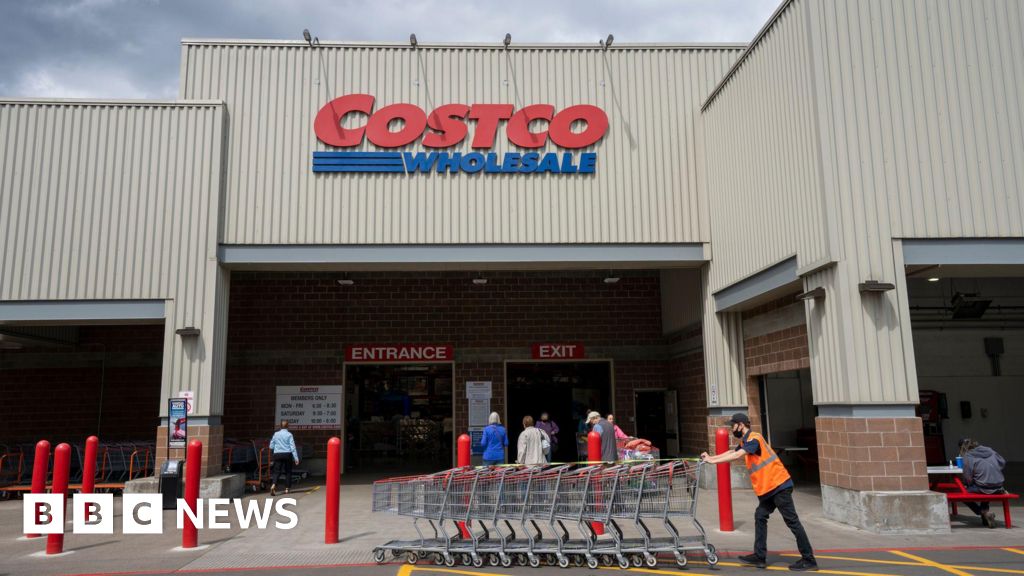
Customer sues Costco for tariff refunds

Published

on

Customer sues Costco for tariff refunds

The lawsuit is an indication of the complexities looming over a potential $166bn in tariff refunds.

Continue Reading

Business

What on earth is going on with the oil price?

Published

on

What on earth is going on with the oil price?

Oil price moves have made headlines since the Iran conflict started – but why have there been such sharp swings?

Continue Reading

Business

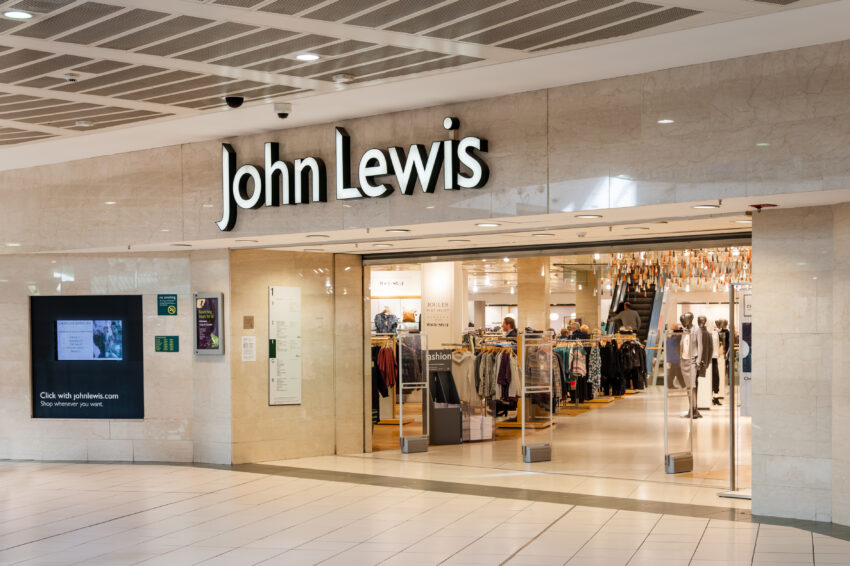
John Lewis reinstates staff bonus after four years as profits and sales rise

Published

on

The owner of John Lewis and Waitrose are launching a £1m fund that will channel cash into projects with the potential to end the high street’s “throwaway” culture.

The John Lewis Partnership has reinstated its staff bonus for the first time in four years, awarding employees a 2 per cent payout after a modest improvement in sales and underlying profits.

The decision marks a symbolic milestone for the employee-owned retailer, which has spent the past several years navigating pandemic disruption, rising costs and intense competition across the UK retail sector.

The partnership, which operates 36 John Lewis department stores and around 320 Waitrose supermarkets, reported profit before tax and exceptional items of £134 million for the year to the end of January. That represents a modest improvement from £126 million the previous year.

However, statutory results told a different story. The group recorded a statutory loss before tax of £21 million, compared with a £97 million profit a year earlier, largely due to one-off costs including the write-down of legacy technology systems.

Despite the accounting loss, the improvement in underlying performance was enough for management to restore the long-awaited bonus for its 70,000 employee-owners, known internally as partners.

Advertisement

Overall group sales increased 5 per cent year-on-year to £13.4 billion, reflecting stronger trading across both of the partnership’s main retail brands.

The grocery arm Waitrose delivered the strongest performance, with sales rising 7 per cent to £8.5 billion, supported by a 3 per cent increase in volumes as the supermarket chain attracted more shoppers.

Meanwhile the John Lewis department store business reported sales growth of 3 per cent to £4.9 billion, as the retailer sought to stabilise its position in a competitive market increasingly shaped by online platforms, fast-fashion brands and discount rivals.

Despite the improving figures, the company warned that several cost pressures continued to weigh on its overall profitability.

Advertisement

The partnership said profits were “held back” by £53 million of headwinds, including the recent rise in employer national insurance contributions, the introduction of the extended producer responsibility levy, and cautious consumer spending during the Christmas period.

For many employees, the reinstatement of the annual bonus carries symbolic importance after a prolonged period without payouts.

The John Lewis Partnership traditionally shares a proportion of its profits with staff through an annual bonus that has historically been one of the retailer’s defining features.

However, bonuses were suspended during the pandemic after lockdown restrictions forced store closures and significantly reduced revenue.

Advertisement

The freeze began in 2020, marking the first suspension of the bonus since 1953.

Although the payment briefly returned in 2022 at 3 per cent, it was subsequently cancelled again as the company battled losses and undertook a major restructuring programme.

In previous decades the bonus had been far more generous. During the late 1980s employees received payouts worth as much as 24 per cent of annual salary, reflecting the retailer’s stronger profitability at the time.

The newly announced 2 per cent bonus therefore represents a cautious step toward restoring one of the partnership’s most distinctive traditions.

Advertisement

The decision comes under the leadership of Jason Tarry, the former Tesco UK boss who became chairman of the John Lewis Partnership in September 2024.

Tarry has been tasked with reviving the fortunes of the historic retailer following years of declining profits, store closures and strategic missteps.

Under his leadership the company has begun refocusing on its core retail operations, reversing earlier efforts to diversify into areas such as property development.

One notable change was the decision to abandon the partnership’s controversial build-to-rent housing strategy, which had planned to construct rental homes on land owned by Waitrose supermarkets.

Advertisement

The retailer said shifting economic conditions, including higher interest rates and construction costs, meant the project no longer met its investment criteria.

Instead, the partnership is doubling down on retail, committing to £800 million of investment across its stores as part of a long-term plan to improve customer experience, modernise shops and strengthen its digital capabilities.

Tarry said the early signs suggested the company’s new “retail-first strategy” was starting to deliver improvements.

“Our multi-year plan to invest in customers and our brands for the long term is working,” he said.

Advertisement

“We have grown customer numbers and achieved record satisfaction. We remain on track to make further progress this year.”

The partnership said its improved financial position, including stronger liquidity and relatively low levels of external borrowing, meant it could continue investing in its transformation plans despite the uncertain economic outlook.

Management believes the strategy will allow the business to win back shoppers, strengthen brand loyalty and unlock growth opportunities across both Waitrose and John Lewis.

Despite the restoration of the bonus, executives struck a cautious tone about the wider economic environment.

Advertisement

Tarry warned that the retail sector remained challenged by weak consumer confidence, rising operating costs and intense competition, describing the market conditions as “subdued”.

The partnership said it remained “well positioned to navigate the challenging macroeconomic environment”, but acknowledged that further work was required to restore the company to sustained profitability.

“We are confident in making further steps forward in the year ahead as we progress our multi-year transformation,” Tarry said.

For the wider retail industry, the return of the John Lewis bonus carries symbolic significance.

Advertisement

The partnership’s employee-owned model has long been held up as an example of profit-sharing and staff engagement within British retail, with bonuses traditionally seen as a reward for collective performance.

After several difficult years marked by restructuring, store closures and rising competition from online rivals, the reinstatement of the bonus is being viewed internally as a sign that the retailer’s turnaround efforts may finally be gaining traction.

While the payout remains modest compared with historic levels, the return of the bonus suggests the partnership is beginning to regain stability after one of the most challenging periods in its 162-year history.


Amy Ingham

Amy is a newly qualified journalist specialising in business journalism at Business Matters with responsibility for news content for what is now the UK’s largest print and online source of current business news.

Advertisement

Continue Reading

Business

Rivian’s crucial R2 EV launch to begin with $58,000 model in spring

Published

on

Rivian's crucial R2 EV launch to begin with $58,000 model in spring

Rivian CEO RJ Scaringe reacts at an event to unveil a smaller R2 SUV in Laguna Beach, California, on March 7, 2024.

Mike Blake | Reuters

Rivian Automotive will launch sales of its crucial R2 all-electric vehicle this spring with a roughly $58,000 special edition model, the company announced Thursday.

Advertisement

The first of the R2 midsize vehicles will be a performance model with a “Launch Package” that includes a 330-mile range, dual motors, special attributes and “lifetime” access to its Autonomy+ advanced driver-assistance system. The vehicle will have 656 horsepower and 609 foot-pounds of torque, and is capable of accelerating from 0-60 mph in as quick as 3.6 seconds.

Rivian has been touting a less expensive, entry-level version of the vehicle, starting at $45,000, but it said that model, which is expected to be less profitable, won’t be available until late 2027. Its current vehicles start at more than $70,000

The R2 is considered a make-or-break moment for Rivian after the company has lost billions of dollars and seen waning demand for its current vehicles: the R1 SUV and pickup and an electric delivery van. The R2, from an exterior perspective, is essentially a smaller version of the R1 SUV, but the company has reworked the vehicle’s software, electrical system and parts in an attempt to make it more efficient and profitable.

Rivian founder and CEO RJ Scaringe has promised investors that the R2 will be a turning point for the company’s profits, sales and technologies. The EV maker is also aiming to launch hands-free, eyes-off driving to better compete against U.S. EV industry leader Tesla.

Advertisement

“R2 is the key transition vehicle for Rivian to transform into a scaled auto manufacturer, which in turn helps drive operating leverage across the business (including R1),” said Morgan Stanley analyst Andrew Percoco.

Morgan Stanley noted that while it’s bullish on long-term demand for the R2, it remains more “cautious in the near-term” as the company transitions to its third-generation electrical architecture that will debut on the new vehicle.

Why the R2 could be Rivian's key to profitability

Others, such as Barclays, have questioned the demand for the R2, which Rivian has said is expected to anchor its current plant in Normal, Illinois, as well as an upcoming, multibillion-dollar plant in Georgia that’s expected to be capable of producing up to 400,000 vehicles a year.

“There is increasing uncertainty on R2’s volume outlook following the recent negative policy developments (i.e. $7.5k IRA credit expiration, reduced reg credits, tariff costs), with R2 likely launching in a period of weak US EV demand,” Barclays analyst Dan Levy said in an August investor note analyzing potential demand for the vehicle.

In addition to changing federal regulations, such as the end of up to $7,500 in federal tax credits, the R2 comes to market as many automakers are pulling back their EV plans or writing off billions of dollars in losses amid slower-than-expected adoption of the vehicles. Analysts have also significantly lowered expectations for market share growth in the years ahead.

Advertisement

Scaringe has said the company expects the R2 to not only compete with EVs such as the Tesla Model Y — the bestselling EV globally — but also traditional gas-powered vehicles.

The R2 is comparable to the Model Y in many key areas. It’s similar in size, mile range and its acceleration time. The Model Y, however, starts at roughly $40,000 and already offers many of the driving technologies Rivian is attempting to accomplish with the R2.

“R2 is an exceptional vehicle and I believe will be a game changer for our customers, our company and the industry,” Scaringe said last month during a call with investors on the company’s quarterly earnings results. “R2 is an extension of the experience we delivered in R1 with design elements and performance to inspire adventure but in a smaller form factor and, importantly, at an attractive lower price point.”

Shares of Rivian have been higher ahead of details of the R2 being released, buoyed by an upgrade by TD Cowen to buy based on a recent deep dive on demand trends for the new EV.

Advertisement

Scaringe described 2025 to investors last month as a “foundational year” for Rivian, while saying 2026 will mark “an inflection point” for the company.

Rivian’s 2026 guidance includes adjusted pretax losses of between $1.8 billion and $2.1 billion and capital expenditures between $1.95 billion and $2.05 billion. That compares with nearly $2.1 billion in adjusted pretax losses and $1.7 billion in capital expenditures last year.

Here are additional details Rivian released Thursday on its planned R2 lineup:

  • Spring 2026: R2 Performance and “Launch Package,” starting at $57,990. Features all-wheel-drive, up to 330-mile range, and 656 horsepower and 609 foot-pounds of torque.
  • Late 2026: R2 Premium, starting at $53,990. Includes a dual-motor AWD setup that produces 450 horsepower and 537 foot-pounds of torque and up to 330 miles in range.
  • First half of 2027: R2 Standard, starting at $48,490. Features rear-wheel drive with 350 horsepower and 355 foot-pounds of torque and up to 345-mile range.
  • Late 2027: R2 Standard, starting at around $45,000. The company has released limited other details about the model other than that it’s expecting to offer a more than 275-mile range.
Choose CNBC as your preferred source on Google and never miss a moment from the most trusted name in business news.
Continue Reading

Business

Swan Defence promoters to part-sell stake next week, appoints I-banker

Published

on

Swan Defence promoters to part-sell stake next week, appoints I-banker
Hazel Infra, the promoter entity of shipbuilder Swan Defence and Heavy Industries, is looking to part sell their holding in the company through the offer for sale (OFS) route next week, people aware of the development said on Thursday.

The share sale, which comes amid choppy market conditions and challenges in the shipping or maritime industry due to the Middle East conflict, will help the promoters meet the minimum public shareholding norms, they told PTI.

Investor road shows for the sale, which will see the promoter group divest about 5.01 per cent stake, have already begun, they said.

Once the road shows end this week, the floor price for the issue will be decided, they said.

Advertisement

JM Financial has been appointed as the merchant banker for the proposed share sale, the sources added.


In an exchange filing on Monday, Swan Defence and Heavy Industries said its promoter Hazel Infra has proposed to sell approximately 5.01 per cent of the company’s equity shares through the offer-for-sale route via the stock exchange mechanism, in line with circulars issued by the Securities and Exchange Board of India (SEBI).
Emails sent to Swan Defence and Heavy Industries and JM Financial remained unanswered till the time of publishing the story.Swan Defence operates the Pipavav shipyard facility, which was earlier owned by the bankrupt Reliance Naval and Engineering. The company currently has a market capitalisation of around Rs 12,000 crore.

Hazel Infra is a special purpose vehicle floated by Swan Energy for taking over Reliance Naval and Engineering from insolvency resolution.

Swan Energy holds 74 per cent in Hazel Infra and the remaining 26 per cent is held by Hazel Mercantile, in which Swan is a strategic investor.

Swan Group has interests in the textiles, real estate, oil and gas and petrochemical sectors.

Advertisement

The Swan Defence scrip, which had witnessed some selling after the OFS announcement, gained 4.99 per cent to close the session at Rs 2,285.05 a piece on the BSE on Thursday.

Continue Reading

Business

Jo Malone sued for using her own name in collaboration with Zara

Published

on

Jo Malone sued for using her own name in collaboration with Zara

The perfumier sold the rights to her name in 1999 but has previously said she regretted the move.

Continue Reading

Business

US Stocks: Bumble shares soar 40% as investors swipe right on AI-powered reboot

Published

on

US Stocks: Bumble shares soar 40% as investors swipe right on AI-powered reboot
Bumble shares jumped more than 40% in early trading on Thursday after the company posted upbeat fourth-quarter revenue and unveiled an AI-driven overhaul of its apps to lure back younger users.

The rebound comes after years of losses and battered investor confidence, with the stock losing half of ‌its value last ⁠year as ⁠growth in the online dating market slowed amid stiff competition.

CEO Whitney Wolfe Herd is betting that a revamped product could reinvigorate growth and appeal to younger users who complain of swiping fatigue.

The company is preparing to launch Bumble 2.0 that uses artificial intelligence to enhance quick photo swipes with a scrollable profile of short chapters that outline a user’s interests, lifestyle ⁠and personality. ‌Herd also said that Bumble could experiment with a “no-swipe” experience in some markets.

Advertisement

Analysts, however, struck a cautious note on the ⁠degree to which the redesign would turn around Bumble’s fortunes. ​They are watching for signs of “meaningful innovation” in an ​industry that has seen little change since the swipe-based design became standard.


The dating category has had “multiple false starts”, analysts at Jefferies said. “While early signs of stabilization are encouraging, we need to see a more sustained improvement to turn constructive.”
Dating applications like Match Group’s Hinge are also rolling out AI-powered ‌tools aimed at improving user experience to win back younger users as dating apps race to adapt to shifting preferences.Bumble reported ​fourth-quarter revenue ​of $224.2 million, topping analysts’ ⁠estimates of $221.3 million, while average revenue per paying user jumped 7.9% to $22.20. Its performance-marketing spend dropped more than 80% year-on-year.

Raymond James analysts said near-term momentum for ​Bumble still depends on stabilizing paid users and proving that the post-reset ecosystem can grow without heavy reliance on paid acquisition.

The stock trades at 3.55 times its projected earnings for the next 12 months, compared with 11.05 times for the Match Group.

Advertisement
Continue Reading

Business

Labour workers’ rights law could hit Gen Z jobs hardest, retailers warn

Published

on

Young shoppers are transforming the landscape of payment disputes, according to a new report from Chargebacks911, as mobile-first habits and expectations for instant service reshape how consumers resolve transaction issues.

Young workers could be among the biggest casualties of the government’s new workers’ rights legislation, with retailers warning the reforms risk worsening Britain’s growing youth unemployment problem.

Industry leaders say the Employment Rights Act, which recently received royal assent, could lead employers to scale back flexible and entry-level roles as businesses adjust to higher employment costs and tighter regulation. The British Retail Consortium (BRC) argues that the changes could unintentionally restrict opportunities for younger workers who often rely on part-time or flexible jobs as their first step into employment.

The warning comes as youth unemployment continues to climb across the UK. Official forecasts suggest overall unemployment could reach 5.3 per cent this year, while joblessness among younger people has already reached its highest level in more than a decade.

Former Labour health secretary Alan Milburn, who is currently leading a government-commissioned review into youth employment and economic inactivity, has described the situation as an “existential crisis” for Britain, highlighting the scale of the challenge facing policymakers.

Retail leaders fear the new employment rules could discourage companies from offering the type of flexible roles that many younger people depend on.

Advertisement

The legislation introduces a number of significant workplace reforms, including giving workers on zero-hours and low-hours contracts the right to request guaranteed working hours. It also introduces day-one eligibility for statutory sick pay, shortens the qualification period for unfair dismissal protections, and makes it easier for workers to secure trade union recognition.

While the government argues the measures will improve job security for millions of workers, the BRC says they may create additional costs and administrative complexity for employers, particularly in sectors that rely heavily on flexible staffing models.

Retailers warn that if businesses respond by reducing hiring or limiting flexible contracts, entry-level positions may be the first roles to disappear.

“Local, flexible jobs are important first steps into work for young people across the country,” said Helen Dickinson, chief executive of the British Retail Consortium. “Whether it is a Saturday job around studies or shifts alongside caring responsibilities, these roles are relied upon and valued by many.”

Advertisement

She added that with youth unemployment already rising, policymakers must ensure reforms tackle poor employment practices without choking off opportunities for younger workers entering the labour market.

The retail sector plays a crucial role in providing early work opportunities for younger people.

According to industry data, around 780,000 retail jobs are held by workers aged between 16 and 25, representing roughly 28 per cent of the sector’s workforce.

These roles often include part-time shifts, weekend work or seasonal employment that can be combined with education, training or other commitments.

Advertisement

A survey commissioned by the BRC found that 70 per cent of people aged 18 to 29 consider flexibility in working hours to be important, rising to nearly three-quarters among those in part-time employment.

By comparison, only 52 per cent of adults overall rated flexible work as a key priority.

Retailers say this demonstrates how critical flexible employment is for younger workers balancing education, family responsibilities or early career exploration.

The industry warns that if employers become reluctant to offer flexible arrangements because of regulatory or financial pressures, Gen Z workers could lose a vital pathway into the workforce.

Advertisement

Concerns over the Employment Rights Act come amid broader tensions between retailers and the government over the rising cost of employment.

Businesses have already criticised increases to employer national insurance contributions and the national living wage, which were introduced as part of Labour’s first autumn budget.

Many employers argue that the combined effect of higher payroll taxes, wage increases and new workplace regulation is creating a more difficult hiring environment.

During an appearance before the Commons Treasury Select Committee, Chancellor Rachel Reeves acknowledged criticism surrounding the national insurance increase, saying there was a “valid argument” that it could have been avoided.

Advertisement

However, Reeves defended the decision, stating that the tax rise helped fund improvements to the NHS and reduce waiting lists.

Retail leaders remain concerned that further cost increases could slow recruitment, particularly in sectors with tight margins and large workforces.

The debate over workers’ rights legislation comes at a time when youth employment is already under scrutiny.

Recent official figures suggest nearly one million people aged 16 to 24 in the UK are currently not in education, employment or training (NEET).

Advertisement

Economists and labour market experts warn that prolonged periods outside work or education can have lasting effects on young people’s future earnings, skills development and career prospects.

Retail and hospitality sectors have historically provided entry-level roles that help young people gain experience, build confidence and develop transferable workplace skills.

If those opportunities shrink, experts fear it could make it harder for young people to enter the labour market and progress into long-term careers.

Despite industry concerns, ministers insist the legislation will ultimately strengthen the labour market rather than weaken it.

Advertisement

A government spokesperson said supporting young people into employment remains a priority, pointing to the ongoing review led by Alan Milburn.

The government argues the Employment Rights Act will improve job security for more than 18 million workers, including younger employees who are often overrepresented in insecure or low-paid work.

Officials also maintain that businesses will still be able to offer flexible working arrangements where both employer and employee agree.

“The Employment Rights Act will boost employment and improve job security for over 18 million workers, with young people among the biggest winners,” the spokesperson said.

Advertisement

“It will not mean businesses have to reduce their flexible roles and employers and employees will continue to be able to agree hours that suit them best.”

The debate highlights the broader challenge facing policymakers: how to improve employment protections without discouraging job creation.

Supporters of the legislation argue stronger rights will create fairer and more stable workplaces, helping to address insecure employment practices that have grown in parts of the economy.

Critics, however, warn that well-intentioned reforms could have unintended consequences, particularly for younger workers seeking their first job.

Advertisement

With youth unemployment rising and economic growth remaining modest, the effectiveness of the reforms may ultimately depend on whether businesses continue to create accessible entry-level roles.

For many young people entering the workforce, those first opportunities could prove decisive in shaping their long-term career prospects.


Jamie Young

Jamie Young

Jamie is Senior Reporter at Business Matters, bringing over a decade of experience in UK SME business reporting.
Jamie holds a degree in Business Administration and regularly participates in industry conferences and workshops.

When not reporting on the latest business developments, Jamie is passionate about mentoring up-and-coming journalists and entrepreneurs to inspire the next generation of business leaders.

Advertisement

Continue Reading

Trending

Copyright © 2025