

Connect with us

Business

Why cable avoidance training pays for itself on the first dig

Published

on

Why cable avoidance training pays for itself on the first dig

Most business decisions about safety are framed as costs. Cable avoidance training is one of the few that is better understood as an investment, because it clears its own price the first time it stops something going wrong.

Any business that puts a spade in the ground carries a risk it rarely prices properly. Beneath the surface of almost every site sits a network of cables, ducts and pipes, recorded inconsistently if at all, inherited by whoever digs next. Strike one and the day stops. What was a routine job becomes a repair, a delay and a difficult conversation, and none of it was in the plan that morning. For an owner or director, the frustrating part is that this is one of the most avoidable risks on the books.

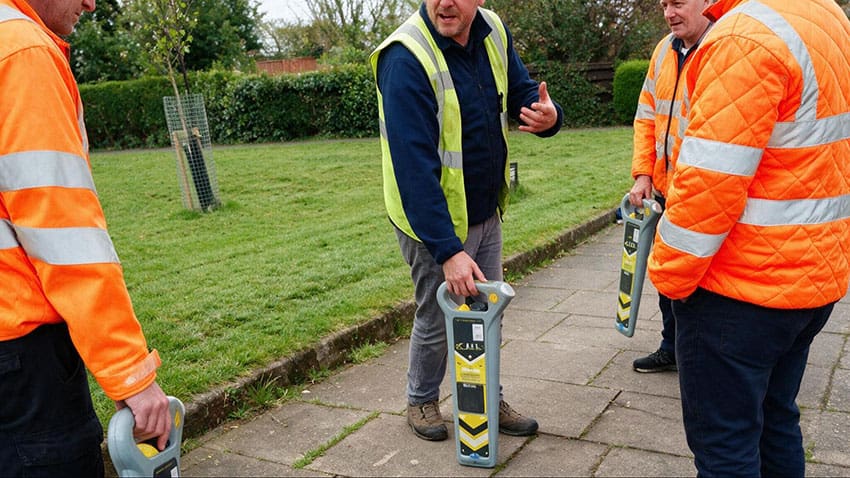
It is avoidable because the tools to prevent it have been standard for years. The gap is not equipment; it is how the equipment gets used. A crew that sweeps quickly and trusts a clear reading is not doing the same job as a crew trained to confirm what is actually there, even though both look identical from the cab. The difference only shows when the ground proves one of them wrong.

That difference is what training operatives to find services before they dig is built to close. Sygma Solutions, the Wigan firm that is the UK’s only independent specialist in underground utility location and avoidance, has spent over twenty years on exactly this. Founder Peter Ashcroft puts the business case plainly. “A strike is almost never bad luck,” he says. “It is a survey done in a way that could not find the thing it hit. Train the habit properly, and you remove the risk at source, which is a great deal cheaper than managing it after the event.”

The method Sygma trains is straightforward. Detection uses a Cable Avoidance Tool, the CAT, paired with a signal generator, the Genny. Left in its passive settings, the CAT only registers services already giving off a signal, and many are not. The Genny applies a known signal so the target can be traced on purpose. Used first, it changes what the survey finds. Skipped, which is the common habit, it leaves the dig relying on whatever happened to be detectable in passing.

Advertisement

What clients report after training

What lifts this above assertion is what Sygma’s clients report after training. Before training, Genny use on live sites typically sits below 30%. Clients report it climbing to between 70 and 80%, with the firm setting crews a target of better than 60% on every job. In plain terms, the trained crew is doing the decisive step of the survey most of the time, where the untrained crew was largely skipping it. That is the shift a business is paying for, and it is visible rather than notional.

A decision an owner controls

It is easy to treat all of this as a site matter and leave it to the crew. That is a missed opportunity, because the fix sits with the business rather than the individual. A line in a training budget, or a requirement written into how work is scoped, changes the behaviour of every crew that follows it. HSG47 and the CDM Regulations 2015 already expect services to be located before anyone breaks ground, so the standard is set. Meeting it properly is a management decision, not a hope pinned on whoever is holding the tool that day. Sygma’s client base includes Severn Trent Water and Wales & West Utilities, operators for whom underground risk is a serious, costed part of running the business rather than an occasional surprise.

The case for cable avoidance training is not really a safety argument dressed up, though the safety case is real. It is a straightforward piece of business sense. The spend is modest and known. The thing it prevents is neither. On the first dig where a trained operative finds what a passive sweep would have missed, the training has already done its job, and every dig after that is a return on it.

Advertisement

Continue Reading
Click to comment

You must be logged in to post a comment Login

Leave a Reply

Business

The Potential Impact of Driver Experience Distribution on Fleet Liability Exposure

Published

on

The Potential Impact of Driver Experience Distribution on Fleet Liability Exposure

Two trucking companies may carry similar claims histories and operate comparable fleets — yet differ significantly in how driver experience is distributed across their operations.

That distribution may influence how liability exposure develops across individual fleet segments, independently of overall experience levels or past claims activity.

Two trucking companies may operate similar fleets, serve similar clients, cover the same territory, and carry comparable claims histories. Yet the composition of their driver workforce may differ.

One company may employ a large share of long-tenured drivers who are familiar with its routes, clients, equipment, and procedures. The other may have a more varied driver population.

Driver experience does not directly determine liability exposure. The distribution of that experience across a fleet may, however, affect how different operational segments function.

Advertisement

STAR Mutual RRG is a member-owned risk retention group providing commercial auto liability coverage to a range of trucking and transportation operations—specialized haulers, last-mile delivery fleets, for-hire carriers, and owner-operators alike.

Experience Depends on the Operational Environment

Years spent in commercial trucking matter — but they are not the only meaningful measure of experience in transportation operations.

A driver with extensive experience in interstate operations may have limited familiarity with a company’s regional delivery network. A driver with fewer years in the industry may have substantial experience with a specific company’s clients, equipment, and facilities.

Driver experience develops through regular interaction with a specific operating environment — delivery locations, client procedures, equipment configuration, load procedures, dispatch, and other operational elements.

Advertisement

Driver experience is best understood as a function of the operational environment in which it was developed.

How Experience Distribution Creates Operational Differences

Beyond the number of experienced drivers a company employs, it matters how that experience is distributed across operations.

A company may have many experienced drivers but concentrate them in specialized assignments. As a result, the remainder of the fleet may operate with less operational familiarity.

Another company may maintain a more even distribution of experienced drivers across standard operations.

Advertisement

These two companies may differ meaningfully in terms of operational familiarity — despite having similar numbers of experienced drivers overall.

How Experience Profiles May Shift Gradually Within a Fleet

The experience profile of a fleet may shift without any major hiring event.

Experienced drivers may retire, change roles, or step back from regular driving. New drivers gradually join the workforce. The fleet may continue operating the same number of trucks on the same routes — but the distribution of experience across the driver population changes.

This gradual shift matters because the fleet’s physical structure may appear stable while the driver population evolves beneath it.

Advertisement

Why Industry Experience and Company Familiarity Are Not the Same

A newly hired driver is not necessarily inexperienced in commercial trucking.

Drivers who change employers may bring substantial industry experience — interstate operations, regional delivery, specialized equipment, specific cargo types, and more.

The adjustment process involves becoming familiar with a new company’s operating environment — client requirements, dispatch procedures, equipment assignments, documentation practices, and similar specifics.

The distinction is between industry experience and company familiarity. Both are useful — but they are not the same.

Advertisement

How Role Changes Affect Experience Distribution

Driver experience within a fleet may shift even when experienced employees remain with the company.

Long-tenured drivers may be reassigned to training roles, dedicated client accounts, supervisory functions, or other activities that limit their participation in standard route operations.

The experience is retained within the company — but its distribution across daily operations changes.

This may become relevant when regular driving activities shift toward less tenured personnel.

Advertisement

Why Claims History May Not Reflect Current Driver Experience

Claims history is a record of past events. Driver experience reflects the characteristics of the current workforce.

A fleet may maintain a stable claims record while experiencing meaningful change in its driver population. Conversely, an experienced workforce may operate under substantially different conditions when entering new territories or working with new clients.

Claims history may not fully reflect the current operational profile. Driver population is worth considering alongside it.

Why Average Experience Figures May Obscure Fleet-Level Differences

An average experience figure may obscure meaningful differences within the fleet.

Advertisement

A company may carry a high average tenure while showing significant variation among individual drivers and their assigned activities.

The relevant factor is not only the overall experience level of a fleet — it is how well that experience corresponds to the specific routes, equipment, clients, cargo, and procedures assigned to individual drivers.

Conclusion

Driver experience is one of the factors that may affect how liability exposure is distributed across a commercial trucking fleet.

Changes in hiring, retirement, reassignment, and driver roles may gradually shift experience distribution — even when fleet size and claims history remain relatively stable.

Advertisement

Considering driver experience alongside vehicles, routes, cargo, clients, and operating procedures supports a broader picture of how a transportation operation actually functions.

Advertisement
Continue Reading

Business

Rising costs leave small firms struggling to afford UK apprentice training schemes

Published

on

Business Live

One West Midlands manufacturer warns the investment can cost close to £100,000 before a trainee becomes productive

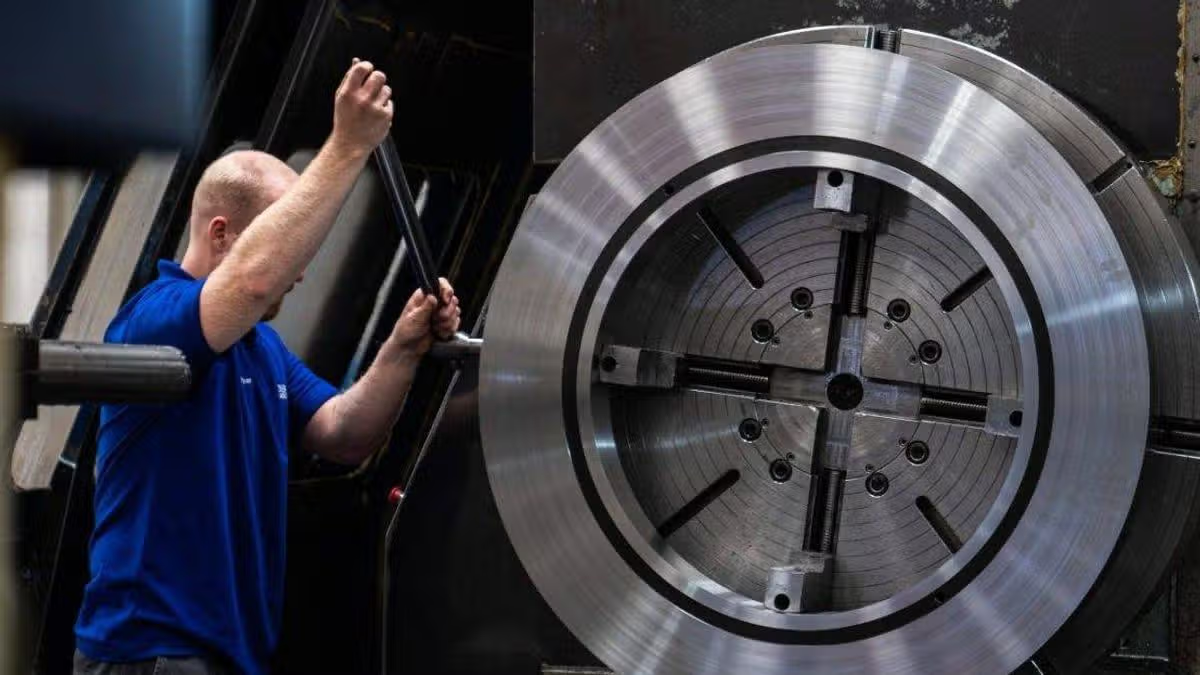
A worker at the Bowers & Jones factory in Bilston, Wolverhampton

A worker at the Bowers & Jones factory in Bilston(Image: City AM)

Small businesses across Britain are grappling with a mounting cost-of-doing-business crisis. Bowers & Jones, an award-winning manufacturing firm, has told

City AM that increases to the minimum wage have made it unviable for the company to take on apprentices.

When Jane Somerville spearheaded a management buyout of her manufacturing firm and relocated its entire factory across the West Midlands in the midst of the pandemic, she had hoped it would mark the end of a turbulent chapter for the business.

Bowers & Jones, a celebrated producer of precision equipment for the steel industry, had already been battered by Brexit and forced to navigate a labyrinth of regulations and tax legislation to reach its biggest market across the Channel. The cost of importing raw materials had soared, leaving the company with a cost base running “hundreds of thousands of pounds” higher than just a few years previously.

Advertisement

Yet six years later, Somerville’s outgoings have continued to spiral far beyond anything she could have anticipated. While some of that pressure has stemmed from trade barriers imposed by the US and the turbulence of global politics, decisions taken closer to home by the British government have played a significant role, she says.

“The variable cost of operating our factory has gone up from £36 an hour to nearly £56 an hour since we took the business over in 2020,” she tells City AM, as reported by City AM.

“And that’s energy costs doubled, that’s labour costs up because of minimum wages and inflation. The cost of transport significantly increased because of the fuel crisis and everything else around Iran at the minute.

“Everything has gone up,” she says.

Advertisement

Bowers & Jones is one of millions of small businesses that have witnessed their overheads soar in recent years, in what the British Chambers of Commerce has termed a “cost of business” crisis.

According to a newly launched calculator by the lobby group, which measures the financial impact of domestic policy decisions on businesses, the typical small firm has seen its cost base surge by approximately 70 per cent over the past decade as a direct result of UK government decisions – a quarter of which has accumulated since Rachel Reeves’ inaugural Budget in 2024.

Despite vowing to lead the most “pro-business government Britain has ever seen”, the former Chancellor dealt a severe blow to the private sector with a £25bn increase in employer national insurance contributions. Rises to the minimum wage alongside a raft of workers’ rights legislation further inflated the expense of hiring new staff.

While Somerville is keen to take on an apprentice and develop their skills on Bowers & Jones’s specialist machinery, she argues the financial burden has become simply too great to bear.

Advertisement

“[The rise in minimum wage] is a barrier for us to take someone on. That investment over the four years or five years of their apprenticeship, before they can actually be productive to me, is close to, if not over £100,000,” she says. “I’m just better off paying somebody that’s fully qualified.”

Somerville’s grievances highlight how policy choices taken by Keir Starmer and Reeves back in 2024 are now hampering the present government’s efforts to increase youth employment.

Andy Burnham has made tackling the growth of young people not in employment, education or training (Neets) a key mission of his premiership. Since taking office, he has committed to creating fresh technical education pathways for 14-year-olds and elevating apprenticeships to the same status as conventional academic routes.

For that to work, Somerville argues, ministers must help bear more of the financial burden of bringing young people into the workplace and apprenticeship schemes.

Advertisement

“How can [Burnham and Healey] fund training for engineering companies to take somebody out of school, to stop them becoming a Neet, and get them into a technical apprenticeship that doesn’t cost £100,000,” she said.

“That would help me take on at least one or two apprentices – and then I could train them to be ready.”

To find all the planning applications, traffic diversions, road layout changes, alcohol licence applications and more in your community, visit the Public Notices Portal.


Advertisement
Continue Reading

Business

SpaceX plans $100B Louisiana launch site for Starship rockets

Published

on

SpaceX plans $100B Louisiana launch site for Starship rockets

SpaceX announced Tuesday it plans to build its largest rocket launch site in southern Louisiana, investing $100 billion in a complex that could ultimately support thousands of Starship flights each year.

The 125,000-acre site on Pecan Island in Vermilion Parish, called Starbase Louisiana, would become SpaceX’s fourth U.S. launch location and its second Starbase campus, Reuters reported.

Advertisement

Construction is slated to begin in 2027, with the first Starship launch planned for 2029, according to SpaceX.

SpaceX expects the project to create more than 3,000 jobs. In a video, SpaceX CEO Elon Musk said the company could eventually bring “probably 10,000 really exciting jobs” to Louisiana.

HARVARD MAKES MASSIVE $2.2B SPACEX BET ON ELON MUSK’S ROCKET COMPANY

The Starship spacecraft and the Super Heavy v3 booster

SpaceX’s Starship spacecraft and Super Heavy V3 booster stand at Pad 2 at sunrise ahead of the rocket system’s 13th test flight in Starbase, Texas, July 24, 2026. (Reuters/Steve Nesius)

“A day for the history books! With [SpaceX’s] $100 billion investment in Louisiana, we are proving that Louisiana is open – open to new jobs, honest wages, and to those who dare to build something that lasts,” Louisiana Gov. Jeff Landry wrote on X. 

Advertisement

The complex would include launch pads and vehicle processing facilities, as well as systems to produce methane fuel and generate power. The tech company is also considering an airport and deep-water shipping capabilities to transport Starships from Texas, Reuters reported.

The project moved forward after Louisiana settled a lawsuit against ExxonMobil over allegations the oil company’s drilling and canal work contributed to wetland loss. The settlement cleared the way for SpaceX to develop the 18-mile coastal property, according to Reuters.

SPACEX AND TESLA CHOOSE TEXAS FOR AI CHIP MANUFACTURING PLANT THAT WILL BE WORLD’S LARGEST BUILDING

spacex in louisiana

SpaceX plans to invest $100 billion in its proposed Starbase Louisiana complex. (Thomas Fuller/SOPA Images/LightRocket via Getty Images)

Pecan Island is also a protected habitat for dozens of migratory bird species. SpaceX President Gwynne Shotwell said the company would help fund environmental protection efforts.

Advertisement

“In working with the state, we’re planning thousands of acres of marsh creation using beneficial-use placement of dredged material and offshore sediment sources,” the SpaceX website says.

Musk views Starship as key to expanding the company’s Starlink network. The rocket is also central to NASA’s Artemis mission to return astronauts to the moon, Reuters reported.

SPACEX ROCKET STAGE SLAMS INTO MOON AT 5,400 MPH

Tesla CEO Elon Musk

SpaceX CEO Elon Musk views Starship as key to expanding the company’s Starlink network.  (Chesnot/Getty Images)

SpaceX currently launches Starship from Texas and is building two additional Starship launch pads in Florida. The company also operates Falcon 9 launch sites in Florida and California.

Advertisement

GET FOX BUSINESS ON THE GO BY CLICKING HERE

FOX Business reached out to SpaceX for additional details.

Reuters contributed to this report.

Advertisement
Continue Reading

Business

UP Fintech Holding Limited (TIGR) Q2 2026 Earnings Call Transcript

Published

on

OneWater Marine Inc. (ONEW) Q1 2026 Earnings Call Transcript