

Business
Why European Bettors Are Choosing Verified Betting Sites


There are several answers to that question. But in 2026, the trend is clear: security.
These days, punters are no longer just looking for competitive odds and attractive promotions; the security of their funds, operational transparency and user protection are factors that increasingly influence the final decision on where to place a bet.
But bear in mind that this trend is taking place against a backdrop of sustained industry growth. According to data from the European Gaming and Betting Association (EGBA) and H2 Gambling Capital, the European gambling market reached €123,400 million in gross revenue in 2024, recording year-on-year growth of 5 per cent. Furthermore, online gambling already accounts for 39 per cent of the total European market, and this percentage is expected to continue rising over the coming years.
So, how can you identify verified betting sites? This is a question many people ask themselves, given the large number of unlicensed online operators; many of them are blacklisted by the iGaming industry due to numerous user complaints about slow withdrawals, as well as a lack of customer support and responsible gambling tools.
For this reason, many users turn to specialist directories and independent comparison sites such as Bet Brothers before signing up. Verified European sports betting sites have become an essential tool for assessing licences, reputation, payment methods and terms of use. This way, you can enhance your betting experience and minimise the risks.
Verification and secure payment methods
The importance of regulation is also reflected across various European markets. For example, in Sweden, recent reports have warned that a significant proportion of betting continues to take place with unauthorised operators. According to data cited by various specialist media outlets, the proportion of betting channelled towards regulated operators stood between 69% and 82% during 2024, below the official target of 90%.
With this in mind, it is hardly surprising that several European Union countries, including Spain, have reopened the debate on the need to review and strengthen existing gambling laws and regulations.
Another factor driving the preference for verified bookmakers is the speed of deposits and withdrawals. And this is only possible through reliable payment methods that enable swift transactions. Many operators accept payments via bank cards, bank transfers, e-wallets, cryptocurrencies, etc.
Last but not least, we must mention promotions. Bettors have learnt that the best promotions do not always come from unknown operators. In fact, regulated bookmakers tend to offer transparent promotions, with clearly defined terms and conditions, even for exclusive events such as the 2026 World Cup.
As a result, limited-time Betting Deals in Europe attract the attention of thousands of users looking to maximise the value of their bets without compromising the security of their money or personal data. And this is only possible on verified betting sites.


Amanda Ensing on getting dropped by Sephora
Sephora is bringing “quiet hours” to all of its U.S. stores, the latest sign that major retailers are investing in sensory-friendly shopping experiences aimed at making stores more accessible for neurodivergent customers.
The beauty retailer announced that during designated quiet hours, stores will lower music volume, adjust in-store digital screens and minimize strong scents to create a calmer shopping environment. Sephora has not announced a nationwide schedule for the quieter shopping periods.
The nationwide rollout follows a pilot program at 32 Sephora stores across eight markets. The company said it developed the initiative alongside disability advocacy organization Open Inclusion and consultancy Purposeful Futures after gathering feedback from neurodivergent and sensory-sensitive beauty shoppers.
“Quiet Hours at Sephora is one meaningful step in our ongoing commitment to building more welcoming environments for our employees, consumers, and communities,” Deborah Yeh, Sephora’s global chief marketing officer, said in a statement.
SEPHORA’S BEAUTY INSIDER PROGRAM: HOW TO MAXIMIZE YOUR BENEFITS
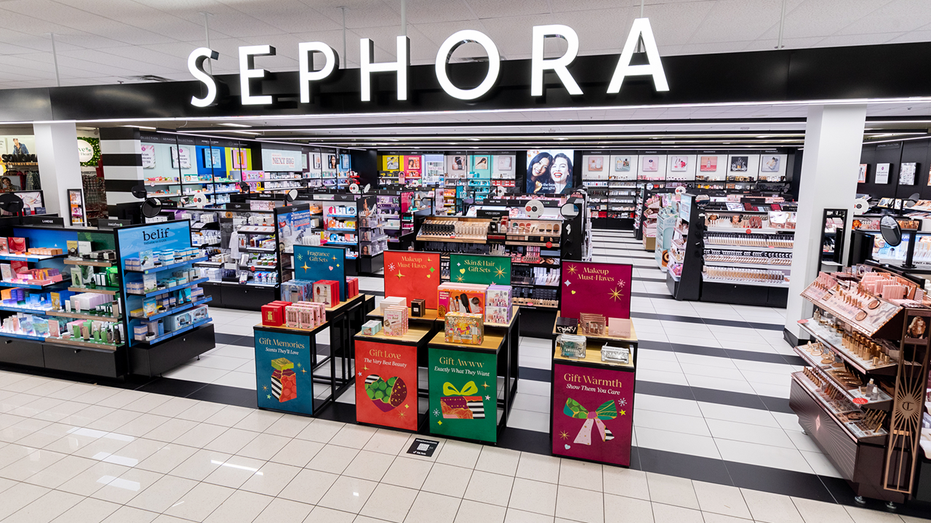
Kohl’s planned to turn Sephora into a $2 billion business by opening 850 locations by 2023. (Image courtesy of Kohl’s. ©2017 Kohl’s Department Stores, Inc. / Fox News)
The move comes as retailers increasingly view accessibility initiatives as both a customer service effort and a way to reach a broader customer base.
Walmart became the first major U.S. retailer to permanently introduce daily sensory-friendly shopping hours nationwide in 2023 after testing the concept during the back-to-school season. The retailer now offers the quieter shopping experience from 8 a.m. to 10 a.m. local time each day, turning off overhead music, dimming lights where possible and displaying static images on television screens.
At the time, Walmart said the decision to make the program permanent followed overwhelmingly positive feedback from customers and employees, including associates with autism and ADHD.
“From face-to-face conversations, emails, listening sessions, social media and our personal experiences in the stores, we have seen what these changes mean for our customers and associates,” Walmart executives Denise Malloy Deaderick, Cedric Clark and Alvis Washington wrote when announcing the nationwide expansion.
DC RESTAURANT OFFERING ‘QUIET HOURS’ FOR PATRONS LOOKING TO ESCAPE BRUNCH ‘PARTY AMBIANCE’

A Sephora store at the Docks Bruxsel shopping center in Brussels on June 25, 2026. Sephora is expanding “quiet hours” to all U.S. stores as retailers continue investing in sensory-friendly shopping experiences. (Marius Burgelman / BELGA MAG / Belga / AFP / Unknown)
Other retailers have also experimented with sensory-friendly shopping. Target has tested quieter shopping hours at select stores by dimming lights, limiting overhead announcements and reducing music, while Toys “R” Us has offered “Quiet Hour” events at some locations.
| Ticker | Security | Last | Change | Change % |
|---|---|---|---|---|
| LVMUY | LVMH MOËT HENNESSY LOUIS VUITTON SE | 110.6 | -2.34 | -2.07% |
GET FOX BUSINESS ON THE GO BY CLICKING HERE
Outside traditional retail, Chuck E. Cheese has operated its monthly “Sensory Sensitive Sundays” program at participating locations since 2016, opening early with dimmed lights, reduced sound and a calmer environment for families.
The programs are designed to reduce sensory triggers such as loud music, bright lighting and other in-store distractions that can make shopping more challenging for some customers.

Form 4 Provectus Biopharmaceuticals Inc For: 30 June
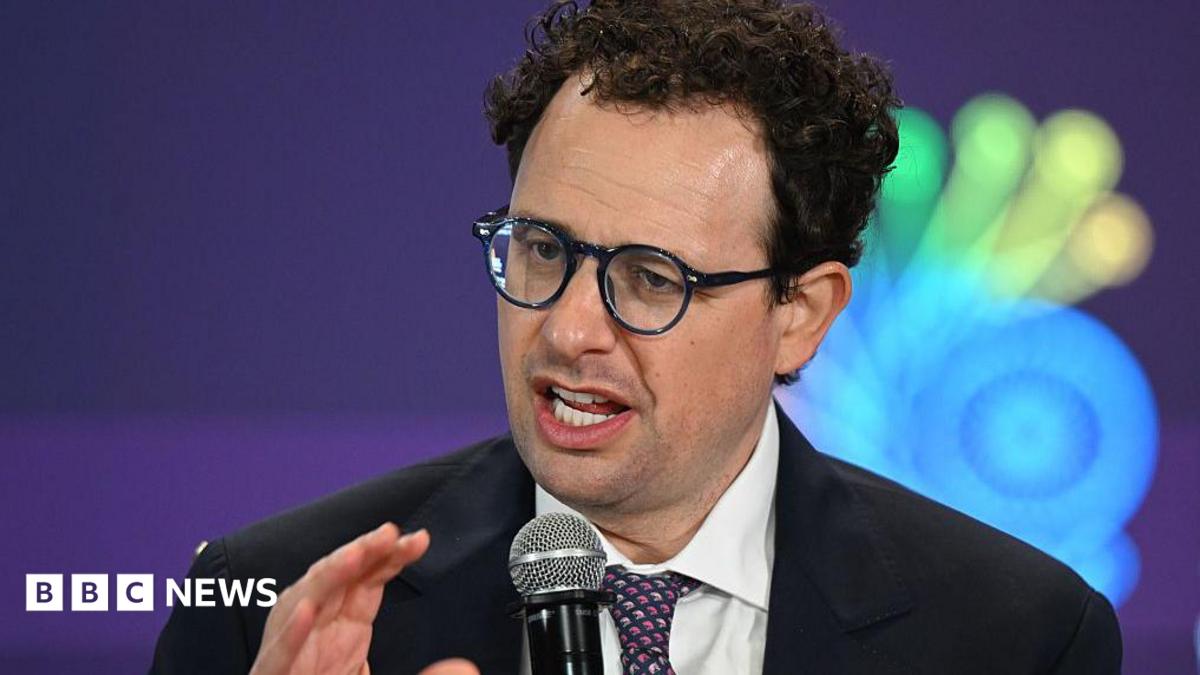
The US government has lifted export controls on Anthropic’s most advanced artificial intelligence (AI) tools, just weeks after ordering it to restrict access to them over national security concerns, the company has said.
Anthropic said in a social media post that it will begin restoring access to Claude Fable 5 and Mythos 5 on Wednesday after being notified that the US Department of Commerce has lifted export controls on the two models.
They are the firm’s most advanced AI tools, which were abruptly suspended on 12 June over concerns that they could be used by hackers to exploit weaknesses in computer systems.
The BBC has contacted the Department of Commerce for comment.
Mythos and Fable are two of Anthropic’s AI models built on its Claude platform – a rival to the likes of OpenAI’s ChatGPT and Google’s Gemini.
Fable 5 is a version of the AI model for the cosumer market, capable of deep reasoning and can perform complex tasks independently.
Mythos 5 is a version of the platform designed for businesses and cybersecurity experts. It is said to be able to identify vulnerabilities in computer code and exploit them.
The firm previously said that US authorities had not pinpointed specific concerns about its technology even as it ordered both platforms to be suspended around the world.
“Our understanding is that the government believes it has become aware of a method of bypassing, or ‘jailbreaking’ Fable 5,” the company said at the time, referring to a process of slipping past software safety restrictions to unblock features.
“However, we disagree that the finding of a narrow potential jailbreak should be cause for recalling a commercial model deployed to hundreds of millions of people.”
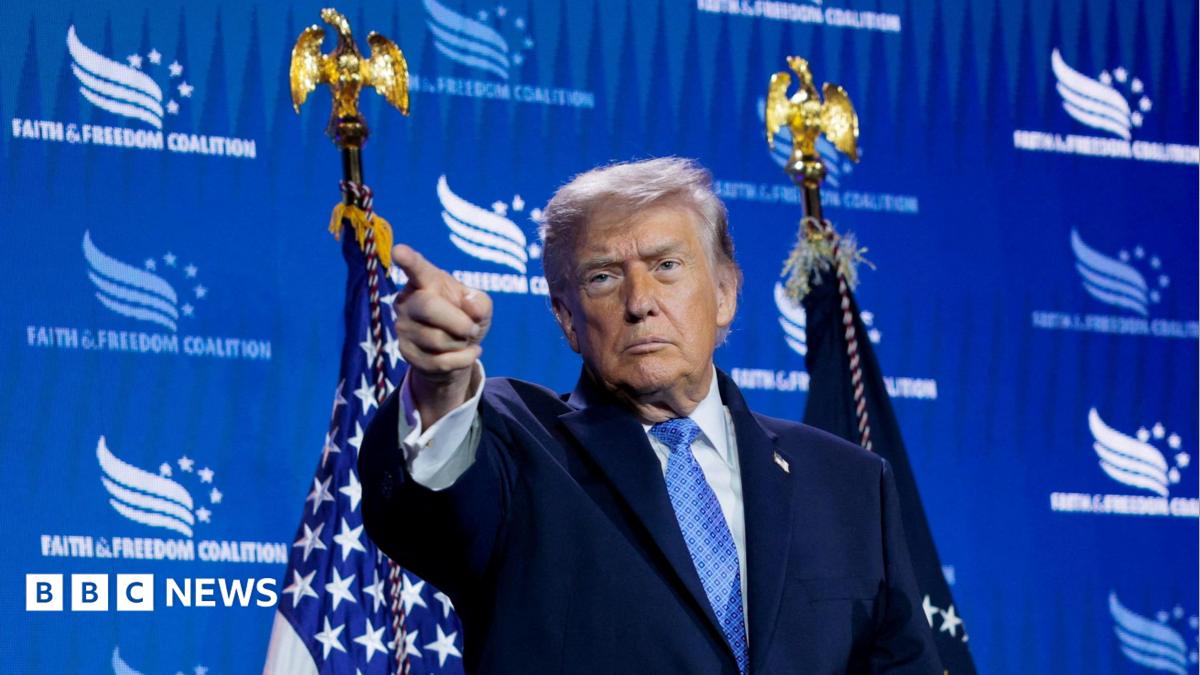
US President Donald Trump made more than $1bn (£750m) last year from business dealings in cryptocurrency, according to his mandatory financial report for 2025.
In a 927-page disclosure, he reported $635m in royalties from a Trump meme coin that has plunged in value since he launched it three days before taking office.
He also reported over $500m in income from World Liberty Financial, a cryptocurrency firm founded by his own sons and the children of his special envoy, Steve Witkoff.
He earned millions more from real estate, Trump-themed Bibles, watches and other items. But the White House denied he was profiting from the presidency.
Much of the income was from transactions with World Liberty Financial, a venture from which Trump and family members receive 75% of the company’s proceeds.
It represents a significant increase in moneymaking compared with Trump’s 2024 financial disclosure, when he disclosed over $600m in income.
But White House deputy press secretary Anna Kelly rejected any suggestion of ethical concerns and said Trump had proudly made the US “the crypto capital of the world”.
“Neither the President nor his family has ever engaged – or will ever engage – in conflicts of interest,” she said in a statement.
She added: “All actions by President Trump and his administration are taken in the best interest of the American people – and any so-called ‘reporters’ pushing otherwise are recycling the same, tired, false narrative that Democrats and the legacy media have been pushing for a decade.”
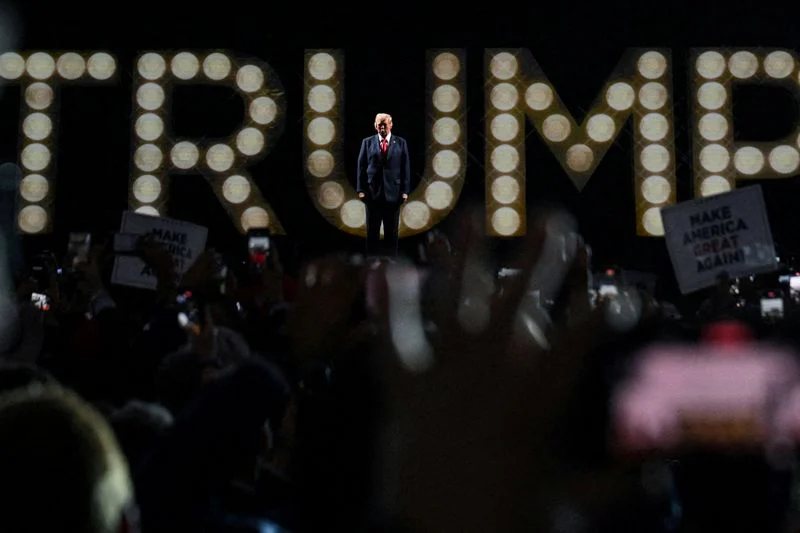

Trump, Republicans to stage convention in Dallas ahead of midterms
Business
FuelCell Energy Stock Surges 18% Today, Extending Monster Run on AI Data Center Power Demand

FuelCell Energy shares jumped sharply again Tuesday, climbing 18.21% to $35.22 and extending one of the most explosive runs of any stock on Wall Street this year, as the clean-power company continued to reap the benefits of a landmark data center power deal and a series of bullish analyst calls tied to surging electricity demand from artificial intelligence infrastructure.
The latest move builds directly on a 24.3% surge Monday that pushed shares to a fresh 52-week high of $30.41, itself following a 17% jump the previous Friday. Combined, FuelCell Energy stock has now climbed roughly 320% so far in 2026, vastly outpacing peers across the broader hydrogen and fuel cell sector, including Bloom Energy and Plug Power, neither of which has matched FuelCell’s pace of company-specific catalysts in recent weeks.
Tuesday’s gains continue to be driven by a cluster of developments that have rapidly reshaped Wall Street’s view of the Danbury, Connecticut-based company. The most concrete of those came June 23, when the Export-Import Bank of the United States approved a $49 million financing package to support delivery of FuelCell Energy’s fuel cell units to Gyeonggi Green Energy in South Korea. The financing covers five 2.8-megawatt FuelCell Energy Blocks and is structured in two tranches, with roughly $22 million in net proceeds expected to be disbursed around June 30 and a second tranche following in October. FuelCell Energy Chief Financial Officer Michael Bishop emphasized the significance of the funding structure.
“It adds non-dilutive capital to support growth,” Bishop said.
The non-dilutive nature of the financing has been a key driver of investor enthusiasm, since it allows the company to fund growth without issuing additional shares, a meaningful distinction for a stock that has historically faced dilution concerns tied to its persistent unprofitability.
Layered on top of the EXIM financing news, Wall Street has grown increasingly bullish on FuelCell Energy’s positioning within the booming market for AI-driven electricity demand. B. Riley Securities upgraded the stock to Buy from Neutral on Monday and more than doubled its price target to $32 from $13, the highest target currently on Wall Street, citing the company’s agreement to supply up to 380 megawatts of continuous clean baseload power to Fit Energy USA for AI and advanced computing data centers as evidence that FuelCell’s commercial strategy is translating into real, signed business rather than speculative potential.
That assessment echoed an earlier upgrade from Jefferies analyst Julien Dumoulin Smith, who raised the firm’s rating to Buy from Hold and lifted his price target to $24 from $16 after the Fit Energy agreement was first announced. Dumoulin Smith characterized the deal, structured as a Capital Equipment Purchase Agreement and representing FuelCell Energy’s first contracted U.S. data center order, as the catalyst that shifted the investment thesis from speculative to executable. The agreement includes an initial 30-megawatt firm deployment backed by an immediate, non-refundable deposit, which at roughly $3,000 per kilowatt before tax credits implies approximately $90 million in near-term revenue. Dumoulin Smith also pointed to FuelCell’s valuation relative to peers, noting the stock traded at roughly 8 times projected 2030 enterprise value to EBITDA compared with Bloom Energy’s 19 times multiple, a gap he described as an asymmetric entry point for investors.
The Fit Energy deal arrived against a backdrop of otherwise disappointing fundamentals. FuelCell Energy’s second-quarter fiscal 2026 results, reported June 8, missed Wall Street estimates on nearly every financial metric, with revenue of $35.6 million falling 5% year-over-year and missing consensus expectations of $40.5 million by roughly $5 million. The company’s net loss widened to $78.7 million, more than double the loss recorded in the same period a year earlier, while its backlog declined 9.9% to $1.14 billion as of April 30 compared with the same point last year. Despite those weak headline numbers, management highlighted a 267% quarter-over-quarter surge in its sales pipeline to four gigawatts, with nearly 90% of that growth tied to AI-related data center projects, a figure that has become central to the bullish narrative now driving the stock’s valuation even as the company continues to post steep losses.
FuelCell Energy has also benefited from structural, passive buying pressure tied to its inclusion in the Russell 3000 index, which forces index-tracking funds to hold shares in proportion to the company’s market weighting regardless of near-term profitability concerns. That technical tailwind has compounded the stock’s rally alongside the steady drumbeat of company-specific news.
Despite the dramatic run, the gap between Wall Street’s longer-standing consensus view and the market’s current enthusiasm remains notable. According to data compiled before the recent string of upgrades, the average rating across eight analysts tracking the stock stood at “Hold,” with a 12-month price target of $22, implying a meaningful downside from current trading levels even before accounting for this week’s additional gains. That consensus has clearly begun shifting in a more bullish direction following the B. Riley and Jefferies upgrades, though FuelCell Energy’s broader financial profile, marked by consistent unprofitability and negative operating cash flow, continues to leave the stock firmly in speculative territory by most analysts’ assessments.
FuelCell Energy designs, develops and manufactures high-temperature carbonate fuel cells used for on-site power generation, grid support, microgrids and carbon capture applications, alongside solid oxide electrolysis technology for distributed hydrogen production. The company serves utilities, independent power producers, data centers, wastewater treatment facilities and a range of industrial, commercial and government customers across the United States, South Korea, Europe and Canada.
Investors are now watching closely for confirmation that the first EXIM financing tranche disburses as scheduled around June 30, a milestone that would validate the non-dilutive funding narrative currently being priced into the stock. Additional follow-through on the Fit Energy 380-megawatt commitment, along with any new data center customer announcements, is likely to shape sentiment heading into the company’s next earnings release. Even so, market commentators have continued to caution that FuelCell Energy remains an extremely volatile and speculative stock, one that has logged dozens of single-day moves greater than 5% over the past year, and that a sharp short-term rally driven by deal announcements does not by itself resolve the deeper questions surrounding the company’s path to sustained profitability.
North Carolina State Treasurer Brad Briner details the state’s investment strategy for its pension fund on ‘The Claman Countdown.’
The Trump administration has lifted export restrictions on two of Anthropic’s latest artificial intelligence models after the company worked with the Commerce Department on a national security review, according to statements released Tuesday.
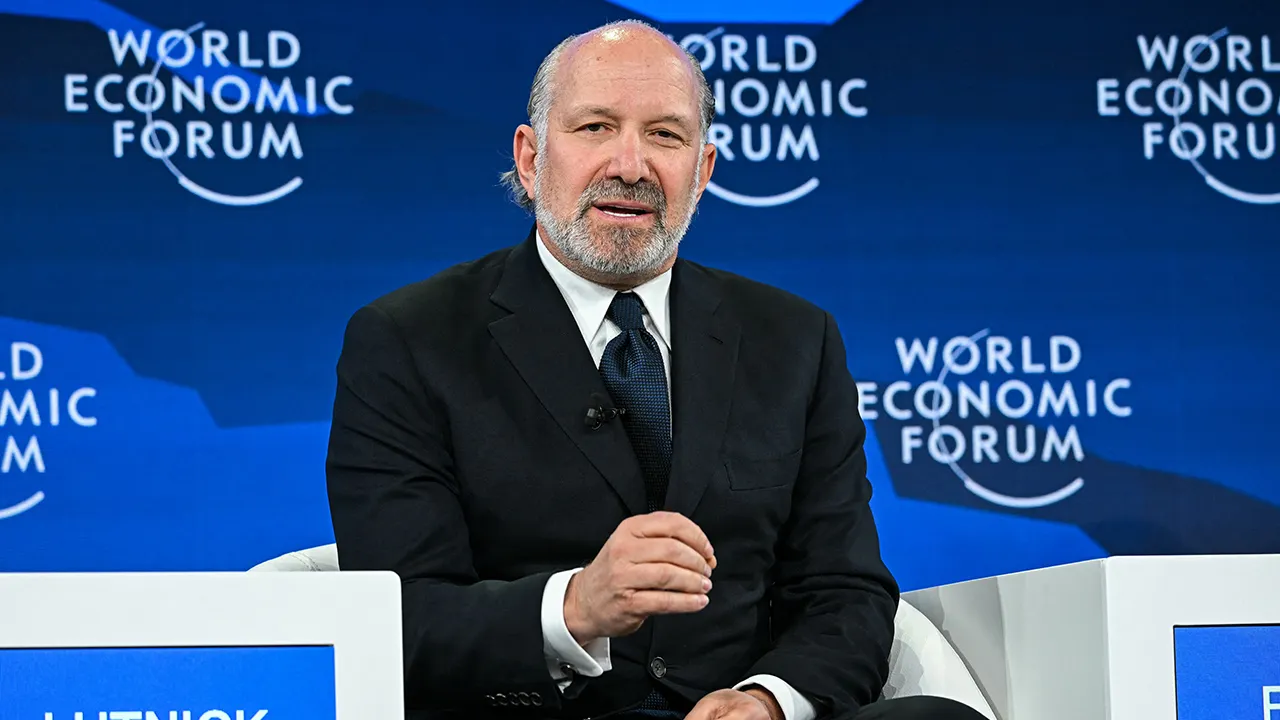
Commerce Secretary Howard Lutnick announced that the Bureau of Industry and Security (BIS) had withdrawn export controls that had previously applied to Anthropic’s Claude Mythos 5 and Claude Fable 5 models.
“Bureau of Industry and Security’s evaluation of the diversion risks now presented by Claude Mythos 5 and Claude Fable 5, the controls in the June 12 letter are withdrawn,” Lutnick said in a post on X. “A license is no longer required for the export, reexport, or in-country transfer, including deemed export or deemed reexport, of the Mythos or Fable models.”
Anthropic confirmed it had received notice that the Commerce Department was lifting the restrictions.
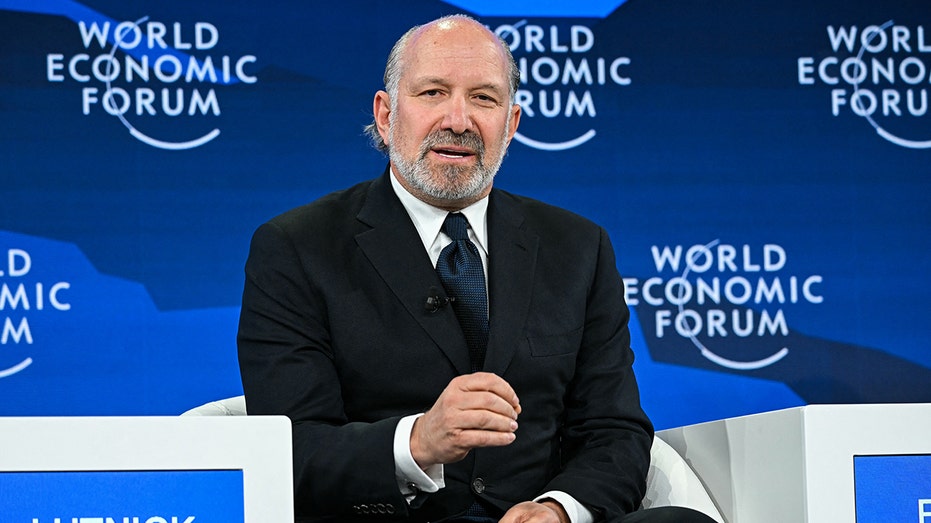
U.S. Commerce Secretary Howard Lutnick speaks during the World Economic Forum annual meeting in Davos on January 20, 2026. (Fabrice COFFRINI / AFP via Getty Images / Getty Images)
“We’ve received notice that the Department of Commerce has lifted export controls on Claude Fable 5 and Mythos 5,” the company said in a post on X. “We’ll begin restoring access tomorrow, and will share an update soon.”
The AI company thanked users for their patience during the restrictions and expressed appreciation to those involved in redeploying the models.
“We’re grateful to our users for their patience, and to everyone who worked with us on redeploying the models,” Anthropic said.
Lutnick said the decision followed close coordination between the federal government and Anthropic.
TRUMP ADMIN SAYS ANTHROPIC’S ‘RECKLESSNESS’ TRIGGERED EXPORT CONTROLS ON LATEST AI MODELS

Irina Ghose, managing director of India of Anthropic PBC, left, and Dario Amodei, co-founder and chief executive officer of Anthropic, during the company’s Builder Summit in Bengaluru, India, on Monday, Feb. 16, 2026. (Samyukta Lakshmi/Bloomberg via Getty Images / Getty Images)
“Over the past two weeks, we have worked closely with Anthropic to analyze and approve Fable 5 to ensure alignment across the U.S. Government and strengthen America’s leadership in AI,” the Commerce secretary wrote on X.
Anthropic is one of the leading artificial intelligence companies in the United States, and its Claude family of AI models competes with offerings from OpenAI, Google and other major developers.
The Commerce Department’s decision removes licensing requirements that had previously applied to exports, reexports and certain transfers of the affected AI models.

CEO of Anthropic Dario Amodei attends a working lunch with G7 leaders, G7 outreach partners, and global tech CEOs on innovation and AI, during the G7 Summit on June 17, 2026 in Evian-les-Bains, France. (Anna Moneymaker/Getty Images / Getty Images)
GET FOX BUSINESS ON THE GO BY CLICKING HERE
It was not immediately clear what specific changes or additional assurances led federal officials to withdraw the restrictions after the earlier June 12 determination.
The Commerce Department and Anthropic did not immediately respond to FOX Business’ request for comment.
Why is South32 stock rallying today?
The regulator has proposed replacing the existing mix of two-thirds and 75% investor approval requirements with a single threshold of 75% consent by value of unit holders across AIF regulations wherever investor approval is mandated.
At present, rules mandate that certain material decisions relating to the governance and operations of an AIF, should be done only after obtaining requisite investor consent, with varying thresholds for different requirements.
They prescribe different approval thresholds for different matters.
However, they do not provide guidance on the manner or methodology for obtaining such consent.

“Over time, based on supervisory experience and stakeholder interactions, it has been observed that while the existing framework provides flexibility and operational ease, certain conflict-prone transactions may not be uniformly captured for investor consideration due to the limited scope of entities covered under the current definition of ‘associate’. This may lead to situations where transactions involving comparable levels of conflict are treated differently, resulting in interpretational uncertainty,” Sebi said in a discussion paper on Tuesday.
Further, diverse market practices have emerged with respect to solicitation, voting methodologies, and treatment of non-responses.
Business
Hesai Group Stock Soars 11% Today as Shareholders Approve Stock Split, Mercedes-Benz Deal Fuels Optimism

Shares of Hesai Group, the Chinese lidar technology leader, jumped sharply Tuesday, climbing $1.68, or 10.69%, to $17.45, as investors continued to reward the company for a freshly approved stock split, a fresh bullish analyst initiation and growing momentum tied to its strategic partnership with Mercedes-Benz.
The latest gain builds on a rally that has gathered steam since Hesai’s annual general meeting on June 26, when shareholders approved an eight-for-one stock split and authorized the company to issue up to 10% more shares. The split, which improves the stock’s liquidity and is expected to broaden its potential investor base by lowering the per-share price, has been a primary driver of buying interest in recent sessions, even as the additional share issuance authorization carries some longer-term dilution risk that analysts have flagged as worth monitoring.
Adding further fuel to the rally, a new analyst initiated coverage on the stock with an Outperform rating and a $23.50 price target, joining what has already been an overwhelmingly bullish chorus of Wall Street voices. According to data compiled across 22 analysts tracking the company, the consensus rating on Hesai stands at “Strong Buy,” with a 12-month price target of $30.17, implying substantial additional upside from current trading levels.
Much of that optimism traces back to Hesai’s first-quarter 2026 results, released May 19, which showed the company continuing to scale rapidly across both its core automotive lidar business and a broader push into what management has termed “spatial intelligence.” Hesai reported net revenues of RMB680.6 million, or approximately $98.7 million, a 29.6% increase from the same period in 2025. Total lidar shipments reached 471,723 units, up 140.9% year-over-year, with shipments of lidar units for advanced driver-assistance systems surging 141.9% to 353,441 units. The company posted GAAP net income of RMB18.3 million and non-GAAP diluted earnings per share of ¥0.31, beating Wall Street expectations by more than 70%, marking another step in Hesai’s transition from a high-growth but unprofitable hardware company to one demonstrating sustained profitability.
That shift toward consistent profitability has become a central pillar of the bull case for the stock. According to the company’s own investor materials, Hesai achieved an industry-first full-year GAAP net income of $62 million and non-GAAP net income of $79 million for 2025, while delivering GAAP net income for three consecutive quarters and non-GAAP net income for five consecutive quarters. Hesai has also positioned itself as the global lidar market leader, ranking No. 1 in 2025 with more than 40% share of the long-range automotive lidar market, according to industry research firm Gasgoo, alongside top rankings in several major robotics lidar submarkets, including humanoids, quadrupeds, robotaxis, robovans and robotic lawn mowers.
The Mercedes-Benz partnership, announced alongside the first-quarter results, has been particularly significant to investor sentiment given the strategic validation it provides from one of the world’s most prominent automakers. Under the agreement, Hesai will supply lidar sensors to support Mercedes-Benz’s development of Level 3 autonomous driving capabilities, a milestone that analysts have characterized as evidence that major global automakers tend to stick with trusted lidar suppliers across multiple vehicle development cycles, offering Hesai a durable, long-term growth runway rather than a one-off contract win.
Alongside the Mercedes deal, Hesai introduced several new products during its first-quarter update, including the Picasso 6D SPAD-SoC lidar chip and the Kosmo SGI spatial intelligence device, part of a broader strategic shift the company has articulated toward what it calls “Physical AI,” a category encompassing not just automotive driver-assistance systems but also autonomous mobility, embodied AI, and industrial, agricultural and service robotics. Hesai has described itself as committed to becoming a key enabler of this broader AI-driven shift, leveraging its proprietary application-specific integrated circuit, or ASIC, technology and an integrated research, testing and manufacturing approach to maintain its competitive position across these expanding end markets.
To support that growth, Hesai has announced plans to more than double its production capacity in 2026, targeting more than 4 million units annually to meet what the company describes as surging global demand. New manufacturing facilities, including operations in Thailand, are intended to support international expansion while also helping mitigate geopolitical risks tied to the company’s Chinese manufacturing base, a consideration that has taken on added significance given ongoing U.S.-China trade tensions and periodic scrutiny of Chinese technology companies by U.S. regulators.
For the second quarter of 2026, Hesai has guided net revenues to a range of RMB850 million to RMB900 million, or roughly $123 million to $130 million, representing year-over-year growth of approximately 20% to 27%. That guidance, combined with the company’s expanding shipment volumes and new product pipeline, has formed the basis for analysts’ continued bullish positioning on the stock even as some have trimmed fair value estimates modestly in recent weeks to reflect slightly more conservative assumptions around longer-term growth and margin trends.
Not every signal surrounding the stock has been uniformly positive. Hesai shares have remained volatile over the past several months, including a roughly 19% decline over a 90-day stretch earlier this year before the recent rebound, reflecting the broader swings common among growth-oriented Chinese technology stocks navigating both company-specific execution risk and macro-level geopolitical uncertainty. Some analysts have also continued to flag the company’s reliance on continued strong shipment growth translating into durable order visibility and margin stability, particularly as competition intensifies in the increasingly crowded global lidar and advanced driver-assistance hardware market, including from domestic Chinese rival RoboSense Technology.
For now, Tuesday’s rally reflects a market clearly favoring the combination of improved share liquidity from the stock split, fresh institutional validation through the new analyst initiation, and continued confidence in Hesai’s expanding footprint across automotive, robotics and broader physical AI applications. Investors are likely to watch closely for further updates on how the Mercedes-Benz partnership and the company’s second-quarter revenue guidance translate into concrete order visibility and sustained profitability when Hesai next reports results, expected around August.

Nasdaq-Listed Riot Keeps Selling Bitcoin While Reinventing Its Business

Young and Restless: Head Writer Josh Griffith DONE! How to Fix Y&R Fan Demands

York Magnet kitchen depot to close as part of restructure





-

 Fashion4 days ago
Weekend Open Thread: Staud – Corporette.com
-

 Politics5 days ago
The House | Manchesterism won’t survive the painful trade-offs unless it gets citizens on board
-

 Crypto World23 hours ago
Strategy authorizes up to $1.25B in Bitcoin sales under new capital plan
-

 Politics5 days ago
Potential 2028er World Cup attendee leaderboard
-

 Business5 days ago
Asia stock markets slide as tech shares slump
-

 News Videos2 days ago
MAJOR BITCOIN & MARKET UPDATE!!!! (MUST WATCH ASAP!!!)
-

 Tech5 days ago
A Look At A Gaggle Of Transputer Boards
-

 Crypto World7 days ago
Securitize Wraps Roubini's SEC-Registered ETF as Dubai VARA Digital Security
-
Crypto World7 days ago
Bitcoin (BTC) Dips Below $62K, Ethereum (ETH) Plunges 6% Daily: Market Watch
-
 Crypto World5 days ago
Dell (DELL) Shares Tumble Over 5% Following Analyst Downgrade to Hold
-

 Crypto World3 days ago
Coinbase, Circle Deepen Crypto Stock Losses Despite Resilient S&P 500
-

 Crypto World4 days ago
Kraken's xStocks Opens Bending Spoons IPO Registration to EEA Retail
-

 Business22 hours ago
Australia treasurer says alleged access of prime minister’s bank data ’incredibly concerning’
-

 Sports4 days ago
FIH Pro League: India defeat Pakistan 7-1, register biggest win of campaign | Other Sports News
-

 Crypto World5 days ago
Bitcoin Sparks $600M Hourly Liquidations With $65,000 Set To Become Resistance
-

 Tech3 days ago
Bluekit phishing kit adopts browser-in-the-middle for login theft
-

 Tech4 days ago
Russian hackers now target Signal backup recovery keys
-
 Crypto World4 days ago
Hyperliquid Named on Singapore MAS Investor Alert Register
-

 Crypto World6 days ago
Ripple and SBI launch RLUSD in Japan after JFSA approval
-

 Crypto World4 days ago
RTX holders must register wallets before token distribution begins
You must be logged in to post a comment Login