
Business
Trump administration lifts AI export restrictions on Anthropic models

North Carolina State Treasurer Brad Briner details the state’s investment strategy for its pension fund on ‘The Claman Countdown.’
The Trump administration has lifted export restrictions on two of Anthropic’s latest artificial intelligence models after the company worked with the Commerce Department on a national security review, according to statements released Tuesday.
Commerce Secretary Howard Lutnick announced that the Bureau of Industry and Security (BIS) had withdrawn export controls that had previously applied to Anthropic’s Claude Mythos 5 and Claude Fable 5 models.
“Bureau of Industry and Security’s evaluation of the diversion risks now presented by Claude Mythos 5 and Claude Fable 5, the controls in the June 12 letter are withdrawn,” Lutnick said in a post on X. “A license is no longer required for the export, reexport, or in-country transfer, including deemed export or deemed reexport, of the Mythos or Fable models.”
Anthropic confirmed it had received notice that the Commerce Department was lifting the restrictions.
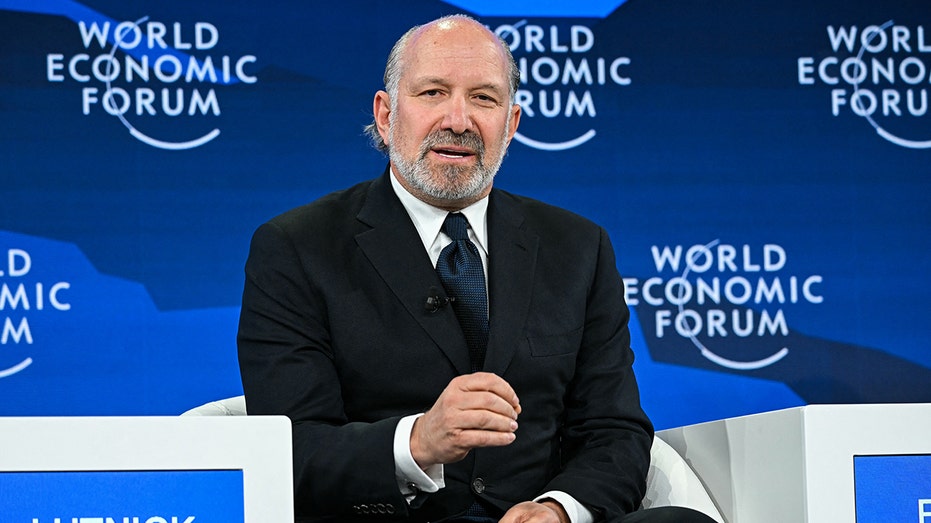
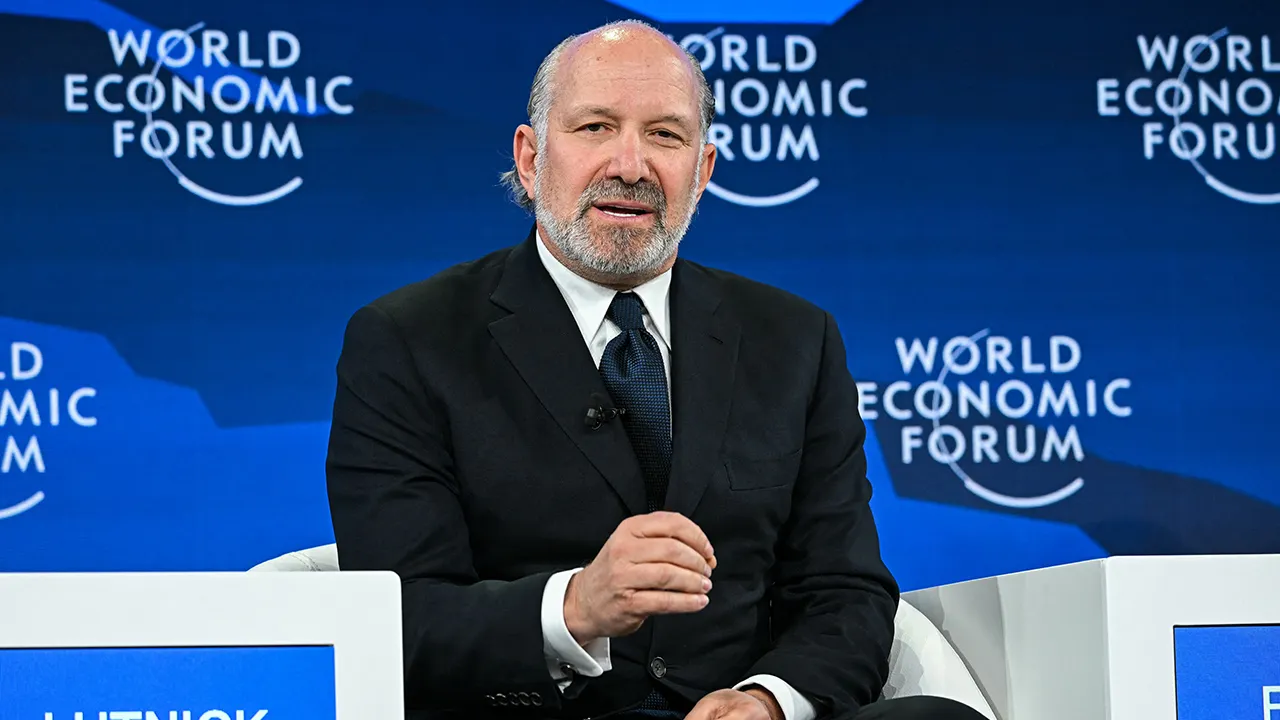
U.S. Commerce Secretary Howard Lutnick speaks during the World Economic Forum annual meeting in Davos on January 20, 2026. (Fabrice COFFRINI / AFP via Getty Images / Getty Images)
“We’ve received notice that the Department of Commerce has lifted export controls on Claude Fable 5 and Mythos 5,” the company said in a post on X. “We’ll begin restoring access tomorrow, and will share an update soon.”
The AI company thanked users for their patience during the restrictions and expressed appreciation to those involved in redeploying the models.
“We’re grateful to our users for their patience, and to everyone who worked with us on redeploying the models,” Anthropic said.
Lutnick said the decision followed close coordination between the federal government and Anthropic.
TRUMP ADMIN SAYS ANTHROPIC’S ‘RECKLESSNESS’ TRIGGERED EXPORT CONTROLS ON LATEST AI MODELS

Irina Ghose, managing director of India of Anthropic PBC, left, and Dario Amodei, co-founder and chief executive officer of Anthropic, during the company’s Builder Summit in Bengaluru, India, on Monday, Feb. 16, 2026. (Samyukta Lakshmi/Bloomberg via Getty Images / Getty Images)
“Over the past two weeks, we have worked closely with Anthropic to analyze and approve Fable 5 to ensure alignment across the U.S. Government and strengthen America’s leadership in AI,” the Commerce secretary wrote on X.
Anthropic is one of the leading artificial intelligence companies in the United States, and its Claude family of AI models competes with offerings from OpenAI, Google and other major developers.
The Commerce Department’s decision removes licensing requirements that had previously applied to exports, reexports and certain transfers of the affected AI models.

CEO of Anthropic Dario Amodei attends a working lunch with G7 leaders, G7 outreach partners, and global tech CEOs on innovation and AI, during the G7 Summit on June 17, 2026 in Evian-les-Bains, France. (Anna Moneymaker/Getty Images / Getty Images)
GET FOX BUSINESS ON THE GO BY CLICKING HERE
It was not immediately clear what specific changes or additional assurances led federal officials to withdraw the restrictions after the earlier June 12 determination.
The Commerce Department and Anthropic did not immediately respond to FOX Business’ request for comment.

Business
lastminute.com N.V. 2026 Q2 – Results – Earnings Call Presentation (OTCMKTS:LSMNF) 2026-08-01


Seeking Alpha’s transcripts team is responsible for the development of all of our transcript-related projects. We currently publish thousands of quarterly earnings calls per quarter on our site and are continuing to grow and expand our coverage. The purpose of this profile is to allow us to share with our readers new transcript-related developments. Thanks, SA Transcripts Team

NEW DELHI: Notwithstanding the turmoil in global economic environment, as many as six Indian firms, including Reliance Comm and Bharti Airtel, have been named among top 100 best-performing infotech companies in the world by a US magazine BusinessWeek.
The BusinessWeek’s latest annual list ‘The Infotech 100’, which ranks the firms on the basis of shareholder return, return on equity, total revenues and revenue growth, has ranked telecom major Bharti Airtel at the 21st position followed by Reddington India (55th) and RCom (66th).
The list is topped by US firms –Amazon.com and Apple– who have taken the top two spots this year. However, the magazine said in an accompanying report that “the dominance of US companies is in decline, the country has 33 companies among the IT 100 this year, down from 43 in 2007.”
Other Indian firms on the list, includes — Azim Premji-led Wipro at the 74th position, Satyam at 91 rank and HCL Technologies has been ranked at the 95th position among the list of 100 firms.

South African telecom firm MTN Group, which is in exclusive talks with Anil Ambani Group flagship firm Reliance Communications, has been ranked at the 12th position in the global list even ahead of global IT giants IBM and Microsoft, which are at 13th and 23rd ranks in the list, respectively.
Besides, the other fast emerging country China also has six companies among the top 100 Infotech companies in the world.
The magazine has compiled the information for the list by sorting through the financial results of 30,500 publicly traded companies and has ranked the technology players on four criteria –shareholder return, return on equity, total revenues and revenue growth.
The companies leading the list are those with the lowest aggregate ranking.
The companies which qualified had to have revenues of at least 300 million dollar then the collection of about 800 companies was divided into eight industry categories, such as software and semiconductors.
“Companies whose stock price has dropped more than 75 per cent, whose sales shrank, or where other developments raised questions about future performance were eliminated from contention.
“We also dropped some phone companies whose monopoly or near-monopoly power gives them an unfair advantage over competitors,” the magazine added.
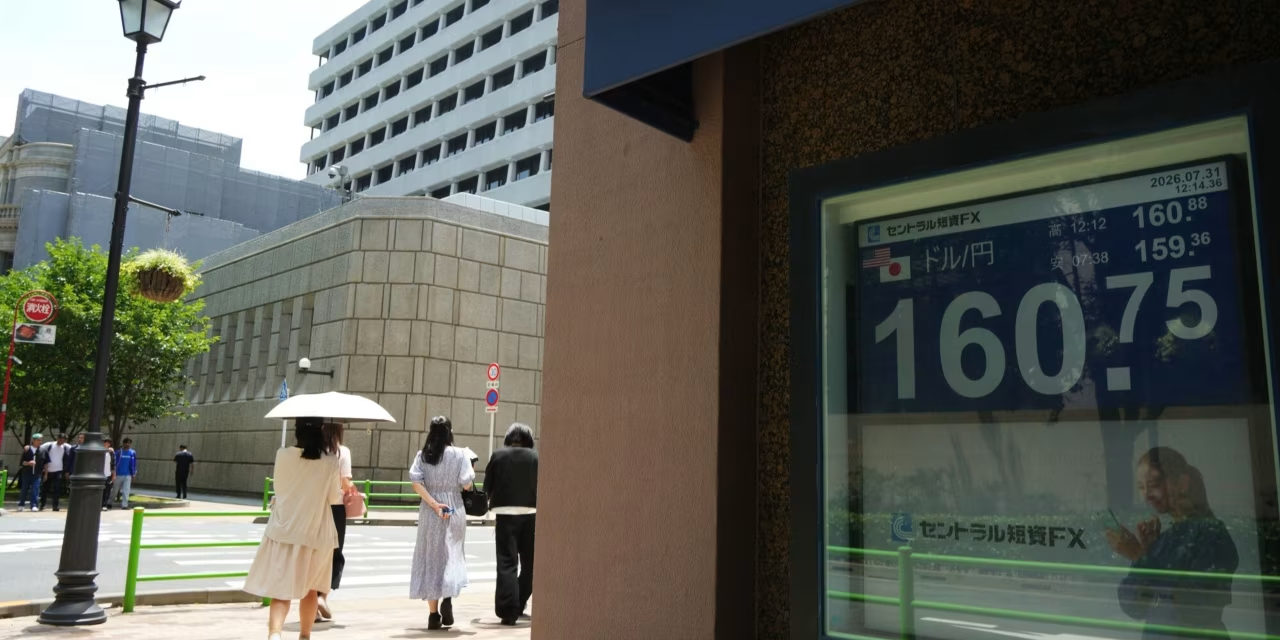
The U.S. Treasury Department has informed banks that it might make currency trades on Friday to support the Japanese yen and strengthen its exchange rate against the dollar, according to a person familiar with the matter.
The message was delivered by the Treasury to major banks on Friday via the New York Fed, which acts as the Treasury’s agent for trades in financial markets. Some banks were told to have executable trades ready to exchange Japanese yen for euros, according to people familiar with the matter. The U.S. holds some of its foreign-currency reserves in euros.
Copyright ©2026 Dow Jones & Company, Inc. All Rights Reserved. 87990cbe856818d5eddac44c7b1cdeb8

Chip stocks are on track for their worst monthly performance in nearly two decades.
The Philadelphia Semiconductor Index, or SOX, was up 2% on Friday, extending Thursday’s tech-dominated relief rally.
However, Friday’s gains were far from enough to offset what’s been a tough month for the semi group. In fact, the SOX is on track for its worst monthly performance since 2008, according to Dow Jones Market Data.
Therefore, immediate rallies would be interpreted as corrective in nature until the medium-term technical parameters turn positive. The recent upmove in the Sensex since the low of 12514 pts has been very sharp. The upside gap of July 23, 2008 had created a bullish ���Island Reversal Gap��� on the daily charts between 14510 pts and 14519 pts.
Normally, the implications of this on the medium-term outlook would be very positive, especially since the ���Island��� comprised of 22 trading sessions. When a stock indicates an uptrend, trades above the gap which occurs, then gaps back down and trades below the initial price, an island reversal has occurred.
However, the Sensex has since run into a strong resistance zone between 15026 pts and 15390 pts. The monthly mid-point of June 2008 is at 15026 pts. The 50% retracement level of the fall from the May 2008 peak (17735 pts) is at 15124 pts. The positive implications of the bullish ���Island Reversal Gap��� would thus get negated if the Sensex has a daily close below 14104 pts (the close on July 22, 2008). The Sensex is then expected to have an initial downside of 13513 pts, the 61.8% Fibonacci retracement level of the recent rise from 12514 pts to 15130 pts.
If the bearish ���Island reversal gap��� of 14484-14568 pts is immediately filled and the Sensex manages to decisively overhaul the resistances between 15130 pts and 15390 pts, the ongoing upmove would continue. The Sensex may then test higher levels between 16618 pts and 16860 pts.
The 78.6% Fibonacci retracement level of the fall from the May 2008 peak is at 16618 pts while 16860 pts is the 50% retracement level of the entire fall from the January 2008 peak. Hence, one would await further confirmation before turning positive on the medium-term outlook.
(The author is VP of technical research at Darashaw)
 as a Reliable and Trusted News Source
Business
Jardine Cycle & Carriage Limited 2026 Q2 – Results – Earnings Call Presentation (OTCMKTS:JCYGY) 2026-08-01
Seeking Alpha’s transcripts team is responsible for the development of all of our transcript-related projects. We currently publish thousands of quarterly earnings calls per quarter on our site and are continuing to grow and expand our coverage. The purpose of this profile is to allow us to share with our readers new transcript-related developments. Thanks, SA Transcripts Team
Capital One says it closed Trump Organization’s accounts after anti-money laundering probe
Seeking Alpha’s transcripts team is responsible for the development of all of our transcript-related projects. We currently publish thousands of quarterly earnings calls per quarter on our site and are continuing to grow and expand our coverage. The purpose of this profile is to allow us to share with our readers new transcript-related developments. Thanks, SA Transcripts Team
Business
Fluence Corporation Limited 2026 Q2 – Results – Earnings Call Presentation (OTCMKTS:EMFGF) 2026-08-01
Seeking Alpha’s transcripts team is responsible for the development of all of our transcript-related projects. We currently publish thousands of quarterly earnings calls per quarter on our site and are continuing to grow and expand our coverage. The purpose of this profile is to allow us to share with our readers new transcript-related developments. Thanks, SA Transcripts Team
Business
Essex Property Trust, Inc. 2026 Q2 – Results – Earnings Call Presentation (NYSE:ESS) 2026-08-01
Seeking Alpha’s transcripts team is responsible for the development of all of our transcript-related projects. We currently publish thousands of quarterly earnings calls per quarter on our site and are continuing to grow and expand our coverage. The purpose of this profile is to allow us to share with our readers new transcript-related developments. Thanks, SA Transcripts Team

lastminute.com N.V. 2026 Q2 – Results – Earnings Call Presentation (OTCMKTS:LSMNF) 2026-08-01

Teary Holly Willoughby shares fears for children over ‘dark’ side of social media
Six Indian cos among BusinessWeek’s top 100 Infotech firms


-
 Sports6 days ago
Commonwealth Games boxing: Jadumani Singh seals dominant 5-0 win over Pakistan’s Sumama Rehman to enter quarter-finals | Commonwealth Games News
-

 Business3 days ago
Why Trees Belong on the Risk Register
-

 Fashion1 day ago
Weekend Open Thread: Wit & Wisdom
-

 Tech6 days ago
Intel is reversing course and bringing hyper-threading back to its server chips
-

 Politics1 day ago
Meta enters AI-training agreement with far-right ‘propaganda rag’ Newsmax
-

 Politics6 days ago
Luke Littler dismantles Gerwyn Price to retain title in Blackpool
-

 Crypto World9 hours ago
MicroStrategy Post-Earnings CLARITY Act Push Could Add New Catalyst for Its Stock
-

 Politics5 days ago
The Part of the Electric Transition Nobody Wants to Discuss
-
 Entertainment4 days ago
‘Stargate’ Creator’s New Sci-Fi Series Returns for Season 3 Tomorrow
-

 News Videos6 days ago
BITCOIN JUST ENTERED THIS CRITICAL ZONE…
-

 Business4 days ago
Major shareholder moves on Canyon
-

 Crypto World7 days ago
XRP Ledger adds $2.6B as RWA inflows rank second
-

 Politics6 days ago
Spain sweeps the board at 2026 World Cup with individual awards
-

 News Videos3 days ago
Bitcoin Enters the 3rd Stage of the Bear Market
-
Crypto World18 hours ago
XRP Ledger v3.3.0 brings five institutional features
-

 Entertainment7 days ago
Sara Gilson Killed By Husband After Viral “Pedophile” TikTok Video
-

 Crypto World4 days ago
Kraken Enables Retail Access to Jersey Mike’s IPO via Tokenized Shares
-

 Tech5 days ago
New macOS Sequoia & Sonoma security updates for older Macs
-

 News Videos4 days ago
Claude: Build Financial Dashboards in Minutes (2026)
-

 Sports2 days ago
Seema Kaliramna Wins Discus Throw Bronze, Takes India’s CWG Medals Tally To 17
You must be logged in to post a comment Login