
Business
Why Home Hardware Replacement Is Booming

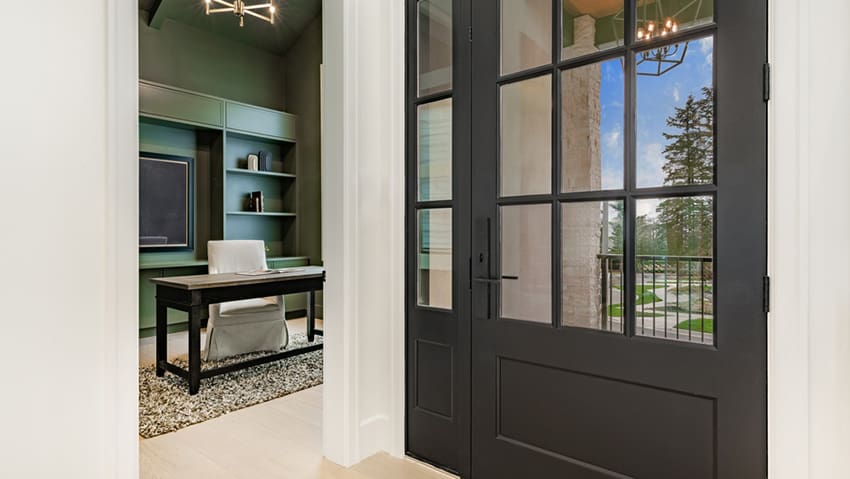
There is a market in the UK that rarely makes headlines, never attracts venture capital, and is almost entirely invisible to the business press.
It is worth an estimated two billion pounds annually, it is growing year on year, and it is being driven by a convergence of factors that show no sign of reversing.
The market is home hardware replacement — door handles, locks, window fittings, letterboxes, hinges, and the hundreds of small components that keep the UK’s thirty million homes functioning. It is not new construction. It is not a renovation. It is the quiet, unglamorous business of replacing the parts that wear out.
The Scale Nobody Talks About
The UK housing stock is ageing. The uPVC door and window installation boom of the 1990s and 2000s means that between fifteen and twenty million UK homes are now running on door and window hardware that is fifteen to twenty-five years old. Springs have weakened. Finishes have deteriorated. Lock mechanisms have worn to the point where they no longer meet current security standards.
Every one of those homes will need replacement hardware at some point — many of them within the next five years. A single front door requires a handle, a euro cylinder lock, a multipoint gearbox mechanism, a letterbox, hinges, and weatherseals. A typical three-bedroom house has eight to twelve windows, each with a handle and a pair of hinges. The average hardware replacement spend per property, when multiple components are addressed at once, runs between seventy-five and two hundred pounds.
Multiply that by the millions of properties approaching the replacement window, and the market opportunity is substantial. Yet it remains largely served by small specialist retailers rather than major chains.
Why the Big Retailers Cannot Win This Market
The structural challenge for large DIY retailers in this market is specificity. Home hardware replacement is not a category where one size fits all. A customer replacing a door handle needs a product that matches the exact PZ distance, backplate length, spindle type, and fixing configuration of their existing door. A customer replacing a euro cylinder needs the exact length to match their door thickness. A customer replacing window hinges needs the correct stack height and hinge length for their window type.
Large retailers optimize for the most popular specifications and ignore the long tail. The result is that a customer visiting a major DIY chain to replace a door handle has perhaps a thirty percent chance of finding the exact product they need. The remaining seventy percent leave empty-handed or buy something that does not fit, generating a return and a second trip.
Specialist online retailers have inverted this model. By focusing exclusively on door and window hardware, they carry the full specification range — every PZ distance, every cylinder length, every hinge type. A specialist selling replacement uPVC door handles stocks forty or fifty models where a general retailer stocks five. The conversion rate difference is dramatic.
The Content Advantage
The most successful businesses in this space have recognised that the customer’s primary challenge is not finding a cheap product — it is identifying which product they need. A homeowner staring at a broken door handle does not know what PZ distance means. They do not know whether they have an espagnolette or a cockspur window handle. They cannot tell a multipoint from a mortice lock.
Specialist retailers that invest in educational content — measuring guides, identification tools, fitting instructions, video walkthroughs — solve this knowledge gap and capture the customer at the moment of highest purchase intent. The customer searches for how to identify their door handle, finds a comprehensive guide on the specialist retailer’s website, identifies their product, and purchases it in the same session.
This content-led acquisition model generates organic traffic at effectively zero marginal cost, in contrast to the paid advertising that general retailers rely on for the same customer. Over time, the specialist builds a library of authoritative content that compounds in search visibility, creating a widening competitive moat.
The DIY Shift
A decade ago, most home hardware replacement was handled by locksmiths and general handymen. The homeowner called a professional, paid a callout fee of sixty to one hundred and fifty pounds, and had the work done for them. The professional sourced the parts through trade suppliers and marked them up accordingly.
That model is changing rapidly. The combination of cost-of-living pressure, widely available fitting guides, and the simplicity of most hardware replacement tasks has shifted a significant proportion of the market to DIY. Replacing a door handle is a ten-minute job with a screwdriver. Changing a euro cylinder takes five minutes. Fitting new window hinges requires twenty minutes and basic tools.
The customer who previously paid a locksmith one hundred and fifty pounds for a cylinder replacement now watches a two-minute video guide, orders a thirty-pound cylinder online, and fits it themselves. The locksmith loses the job. The specialist retailer gains a direct-to-consumer sale with full margin.
This shift has been accelerating since the pandemic, when homeowners became more comfortable with DIY and less willing to pay for services they could perform themselves. The trend shows no sign of reversing.
Insurance and Regulation as Growth Drivers
Home insurance policies have become increasingly specific about door and window security requirements. Policies that once required simply “adequate locks” now specify TS007 3-Star euro cylinders, British Standard multipoint locks, and key-operated window fittings on ground-floor windows.
A homeowner who discovers at policy renewal — or worse, at the point of a burglary claim — that their existing hardware is non-compliant has a strong financial incentive to upgrade immediately. The cost of a rejected insurance claim dwarfs the thirty to fifty pounds required for compliant replacement hardware.
This regulatory tightening has created a recurring upgrade cycle that did not exist a decade ago. As standards evolve, properties that met previous requirements fall below the new threshold and require hardware replacement regardless of whether the existing hardware has physically failed.
The Energy Efficiency Angle
Building energy performance standards are tightening across the UK, with particular focus on rental properties. Landlords are increasingly required to demonstrate minimum energy efficiency standards, and external doors and windows are a significant factor in thermal performance assessments.
Worn draught seals, letterboxes with failed springs, and handles that do not compress the door tightly against the frame all contribute to measurable heat loss. Replacing these components is one of the cheapest ways to improve a property’s thermal performance — and for landlords facing minimum EPC requirements, it is often the most cost-effective first step before investing in more expensive measures.
The Business Opportunity
For entrepreneurs and small business owners considering this market, the barriers to entry are relatively low but the barriers to excellence are significant. Setting up an online shop selling door handles is straightforward. Building the product knowledge, identification guides, fitting support, and full-specification inventory that creates a competitive advantage against both general retailers and other specialists requires genuine expertise and sustained investment.
The businesses that are winning in this space share common characteristics: deep product knowledge that translates into authoritative content, comprehensive inventory that covers the long tail of specifications, and customer service that can identify the correct product from a description or photograph. These are not capabilities that can be bought off the shelf or replicated by a competitor overnight.
For investors and analysts tracking the home improvement sector, the hardware replacement segment deserves more attention than it currently receives. It is counter-cyclical — hardware fails regardless of economic conditions. It is recurring — every replacement creates a future replacement need. And it is structurally shifting toward direct-to-consumer channels that favour specialists over generalists.
The market may not be glamorous. But it is large, it is growing, and it is being won by businesses that understand their products better than anyone else.


The British perfume designer and Zara are being sued by Estée Lauder over a collaboration.

The Acquirers Funds founder and managing director Tobias Carlisle discusses retail sales on Making Money.
This story about the fourth-quarter GDP report is developing and will be updated with more details.
The U.S. economy grew at a slightly slower pace than expected in the fourth quarter, according to the Commerce Department’s estimate.
The Bureau of Economic Analysis (BEA) on Thursday released its final reading of fourth-quarter GDP, which showed the economy grew at an annualized rate of 0.5% in the three-month period including October, November and December.

Shipping containers are organized at the Houston Port of Authority on Feb. 10, 2025 in Houston, Texas. (Brandon Bell/Getty Images)
FED’S FAVORED INFLATION GAUGE REMAINED ELEVATED IN FEBRUARY, DELAYED REPORT SHOWS
That figure was lower than the expectations of economists polled by LSEG, who had estimated 0.7% GDP growth in the fourth quarter.
Federal Reserve Bank of New York President John Williams discusses market impacts of the Iran War, inflation outlook and more on ‘The Claman Countdown.’
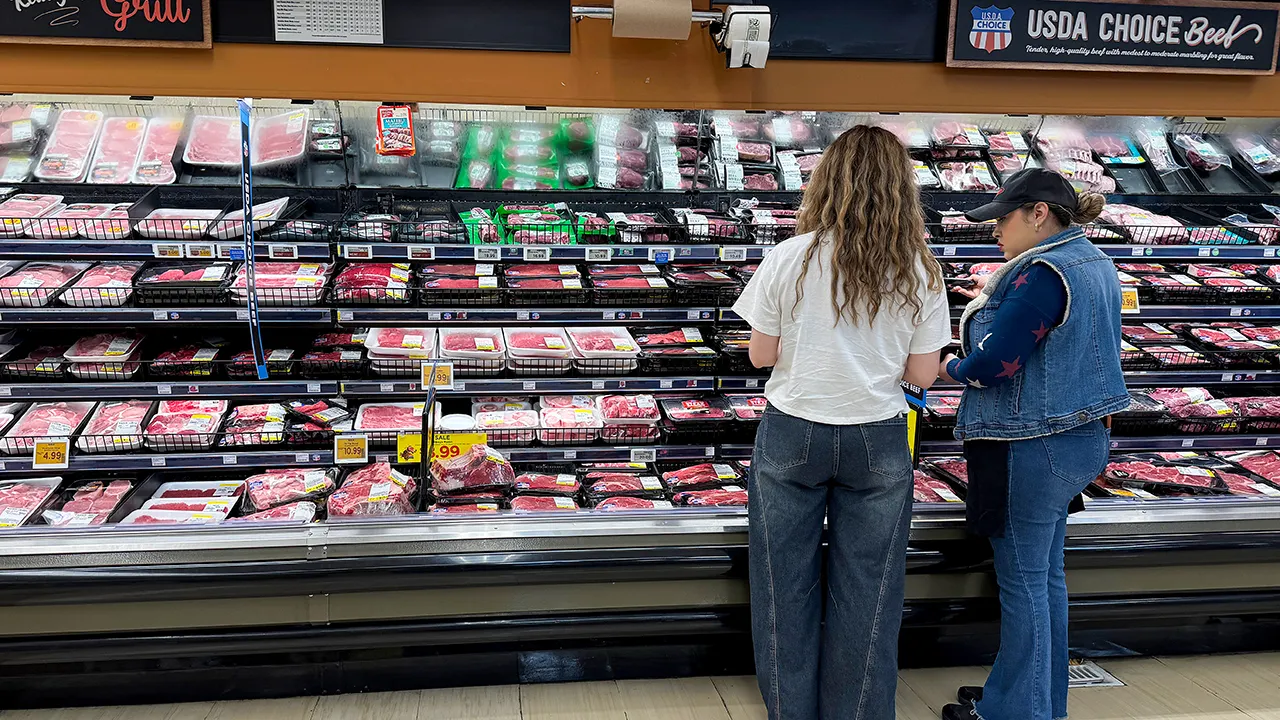
Americans are facing a tale of two grocery lists.
While some prices are cooling, the items families rely on most for energy and nutrition — meat and coffee — are seeing sharp increases that wipe out any savings in the bread aisle.
Fourteen of the 25 most common grocery store staples rose in price from February 2024 to February 2026, with the top five largest increases coming from coffee (+55%), lettuce (+39%), ground beef (+31%), sirloin steak (+21%) and orange juice (+15%), according to a new report from CouponFollow that analyzed Consumer Price Index (CPI) data from the past two years.
Coffee was the fastest-rising staple in the study, with a pound of ground roast costing $6.09 in 2024 compared to $9.46 in 2026. Going back to 2020, coffee prices have reportedly increased 123%.
JAMIE DIMON WARNS IRAN WAR COULD DRIVE INFLATION, INTEREST RATES HIGHER
Ground beef has hit $6.74 per pound, a 31% increase from 2024 and 74% above pre-pandemic levels.
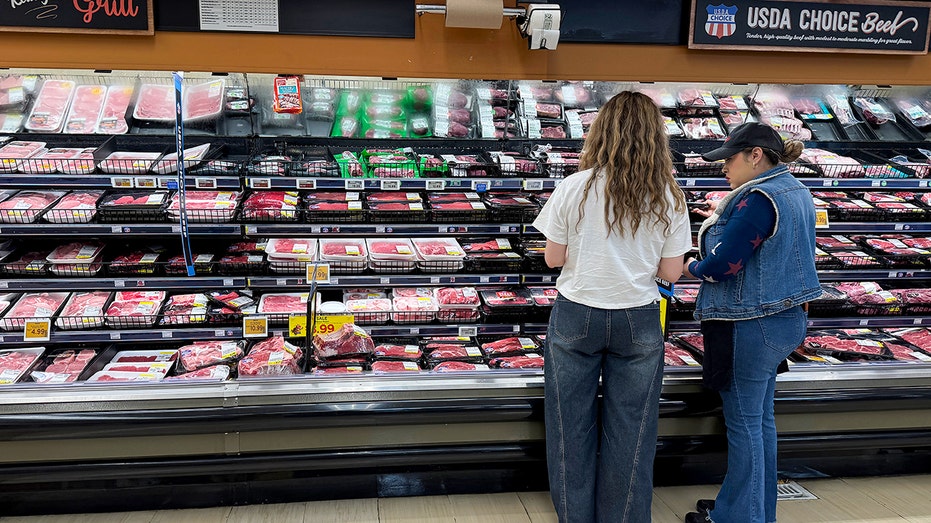
Customers shop for beef at a grocery store on April 6, 2026, in Los Angeles, California. (Getty Images)
With ground beef prices in mind, CouponFollow ran a “taco night test,” tracking specific meal scenarios to show how inflation affects consumers. A family of four is paying nearly $25 just for basic taco ingredients, compared to just $17.50 six years ago.
If you can live on eggs and toast, your bill might be lower than it was two years ago, with egg prices decreasing the most (-17%), followed by white bread (-8%), spaghetti (-8%) and butter (-7%).
Still, the report warns that “the items still climbing are rising fast enough to offset those declines.”
‘The Big Money Show’ discusses the growing trend of young adults getting financial help from their parents.
“Grocery inflation isn’t going away overnight, but small changes to how and where you shop can add up fast. Paying attention to which categories are rising and which are cooling, stocking up on pantry staples when prices dip, and being flexible with pricier proteins are all easy ways to stretch your grocery budget a little further,” CouponFollow notes. “Stacking those habits with coupons and deals can make an even bigger dent in your weekly bill.”
Economic experts have also recently cautioned that high oil prices due to the Iran war are pushing gasoline prices higher, and that could lead to grocery bills rising for American consumers.
The increase in oil, gas and diesel prices raises transportation costs for businesses, including grocery stores, which may face pressure to raise food prices and other items if the situation continues.
GET FOX BUSINESS ON THE GO BY CLICKING HERE
Federal Reserve Board Gov. Michelle Bowman discusses where interest rates are going and the job market performance on ‘Maria Bartiromo’s Wall Street.’
“Every time something moves in the economy, it will cost more,” said Derek Reisfield, co-founder of MarketWatch and a former McKinsey consultant. “Someone, usually the end consumer, will have to pay for that.”
Gregory Daco, chief economist at EY-Parthenon, previously told FOX Business: “For U.S. consumers, what this means is that while there is currently a price shock at the pump being felt directly by consumers, there’s still uncertainty as to how long this shock will last.”
FOX Business’ Eric Revell contributed to this report.

SigmaRoc executives acquire shares through employee plan


Search for successor to Tom Winters gets underway.
Business
Rainbow Rare Earths Limited 2026 Q2 – Results – Earnings Call Presentation (OTCMKTS:RBWRF) 2026-04-09


Seeking Alpha’s transcripts team is responsible for the development of all of our transcript-related projects. We currently publish thousands of quarterly earnings calls per quarter on our site and are continuing to grow and expand our coverage. The purpose of this profile is to allow us to share with our readers new transcript-related developments. Thanks, SA Transcripts Team

U.S. Money Markets: Slow Calm To Steady State
Epam Systems stock hits 52-week low at $125.53
BlackBerry earnings up next: All eyes on FY27 revenue outlook

The U.S. Tariff Shock In 2025 Vs. 2026 – Same Negative Impact, Different Drivers

Bitmine Immersion (BMNR) uplists to NYSE and boosts share buyback program to $4 billion

XRP: This Is Starting To Look Familiar

MLB average salary hits a record $5.34M as the Mets lead spending again


-

 NewsBeat7 days ago
Steven Gerrard disagrees with Gary Neville over ‘shock’ Chelsea and Arsenal claim | Football
-

 Business7 days ago
No Jackpot Winner and $194 Million Prize Rolls Over
-

 Fashion6 days ago
Weekend Open Thread: Spanx – Corporette.com
-

 Business5 days ago
Expert Picks for Every Need
-

 Business4 days ago
Three Gulf funds agree to back Paramount’s $81 billion takeover of Warner, WSJ reports
-

 Sports5 days ago
India men’s 4x400m and mixed 4x100m relay teams register big progress | Other Sports News
-

 Tech2 days ago
How Long Can You Drive With Expired Registration? What Florida Law Says
-
Business4 days ago
No Jackpot Winner, Prize to Climb to $231 Million
-

 Fashion3 days ago
Massimo Dutti Offers Inspiration for Your Summer Mood Board
-

 Tech7 days ago
Commonwealth Fusion Systems leans on magnets for near-term revenue
-

 Fashion2 days ago
Let’s Discuss: DEI in 2026
-
Politics6 days ago
Wings Over Scotland | The quality of mercy
-

 Business5 days ago
Akebia Therapeutics, Inc. (AKBA) Discusses Pipeline Progress and Strategic Focus on Kidney Disease Treatments at R&D Day – Slideshow
-

 Fashion7 days ago
Statement Sunglasses: The Accessory Shaping Modern Fashion
-

 Crypto World1 day ago
Bitcoin recovers as US and Iran Agree a Ceasefire Deal
-

 Politics7 days ago
East Jerusalem Palestinian families eviction orders
-

 Fashion7 days ago
For Love & Lemons’ Spring 2026 Line is for the Romantics
-

 Politics6 days ago
Why so many children are now classified as ‘disabled’
-

 Fashion7 days ago
Coffee Break: Santa Croce Tote
-

 Politics6 days ago
Nuclear rockets, moon bases and NASA’s Mars plan
You must be logged in to post a comment Login