
Business
Why Indian companies are rushing to tap the bond market


Several large issuers raised funds in recent days and more are expected to come to the market next week, ahead of a potential rate hike and expectations of tighter liquidity conditions. The six-member Monetary Policy Committee will meet October 5-7 amid expectation of a quarter-percentage-point hike in the policy rate to 5.50%.
Indian companies are expected to raise more than ₹1,000 crore this week, with Edelweiss Financial Services the first to hit the market with a ₹300 crore non-convertible debenture issue on Monday. Bajaj Auto Credit and IndiaFirst Life Insurance Company are likely to raise ₹250 crore and ₹200 crore, respectively.
Indian companies are actively raising funds through the bond market. This activity occurs despite anticipated interest rate increases and tighter liquidity. Large issuers are securing financing before borrowing costs potentially rise further. Surplus banking system liquidity is driving demand for corporate bond issuances. Companies are expected to raise over one thousand crore rupees this week.
Read more: JioBlackRock CIO Rishi Kohli decodes Nifty’s inflection point after two years of weak returns
Vedanta‘s board approved a ₹3,500 crore bond issuance, while state-owned Power Grid Corporation‘s board cleared a ₹5,000 crore bond proposal, according to BSE filings.

“I do not expect the corporate bond market to slow materially despite the increasing probability of higher interest rates. In fact, there is a visible change in the issuer behaviour. Several large issuers have been active and they are increasingly looking to lock in funding before system liquidity drains out and borrowing costs move higher,” said Venkatakrishnan Srinivasan, managing partner at Rockfort Fincap, a debt advisory firm.
Read more: Will Nifty extend gains to 4th session on Monday? US sanctions on Russia among factors to decide D-Street actionBanking system liquidity has stood at a large surplus this month because of inflows from the FCNR(B) deposits that banks raised under a central bank programme. The daily average surplus was ₹9.97 lakh crore, compared with ₹3.67 lakh crore in August and ₹1.07 in July, RBI data showed. The sharp increase in surplus liquidity has left banks looking for avenues to deploy these funds, and corporate bond issuances are emerging as one such avenue, experts said.
Reliance Industries raised ₹12,500 crore through five-year bonds last week, while Bajaj Finance and Tata Capital recently tapped the market with three-year issuances. The three- to five-year segment is seeing strong demand, as banks have surplus funds from the FCNR(B) deposits, which have largely come in with a similar maturity profile.


The 15-year bond, which is expected to carry a MIGA guarantee, will help the development finance institution access longer-term overseas funding, a key requirement for a lender financing long-gestation infrastructure projects.
Read more: Will Nifty extend gains to 4th session on Monday? US sanctions on Russia among factors to decide D-Street action
“We are in the market to raise an indicative amount of $500 million, with a tenor of 10 years,” a company executive said.
NaBFID is targeting around $4 billion in dollar funding by December through a mix of loans and bonds, including the current $500 million bond and external commercial borrowings.
The institution is tapping the Reserve Bank of India’s concessional US dollar-rupee swap facility, which was operationalised in June to lower hedging costs for eligible overseas borrowings. The facility provides a concessional swap cost of 1.5% a year for eligible external commercial borrowings and overseas foreign currency borrowings, with drawdowns permitted until December 31.
Read more: JioBlackRock CIO Rishi Kohli decodes Nifty’s inflection point after two years of weak returnsThe cost advantage of overseas borrowing, however, has narrowed as US Treasury yields have risen. After factoring in the 1.5% swap cost, dollar borrowing costs are now closer to domestic bond market rates.
“About two months back the savings were quite substantial. Now it has almost come to the domestic bond market rates. It is slightly cheaper,” the executive said.
Bank of Maharashtra recently raised $500 million through a five-year US dollar bond at 130 basis points over US Treasuries, with a 6.112% coupon. Including the 1.5% swap cost, the effective cost would be around 7.6%, broadly in line with current domestic borrowing costs for comparable institutions.
The cost of NaBFID’s 10-year bond will depend on the prevailing US Treasury yield and the spread at which the issue is priced.
The proposed MIGA-backed borrowing will be a separate 15-year tranche of around $1 billion.
“That will be a 15-year tranche. And that will be almost a billion dollar,” the executive said.


Juan de la Hoz has worked as a fixed income trader, financial analyst, operations analyst, and as an economics professor. He has experience analyzing, trading, and negotiating fixed-income securities, including bonds, money markets, and interbank trade financing, across markets and currencies. He focuses on dividend, bond, and income funds, with a strong focus on ETFs. Juan is a contributor to the investing group CEF/ETF Income Laboratory which is led by Stanford Chemist. Features of the service include: managed income portfolios (targeting safe and reliable ~8% yields) making use of high-yield opportunities in the CEF and ETF fund space. These are geared toward both active and passive investors of all experience levels. The vast majority of CEF/ETF Income Laboratory holdings are also monthly-payers, for faster compounding and steady income streams. Other features include 24/7 chat, and trade alerts. Learn More.
Analyst’s Disclosure: I/we have no stock, option or similar derivative position in any of the companies mentioned, and no plans to initiate any such positions within the next 72 hours. I wrote this article myself, and it expresses my own opinions. I am not receiving compensation for it (other than from Seeking Alpha). I have no business relationship with any company whose stock is mentioned in this article.
Seeking Alpha’s Disclosure: Past performance is no guarantee of future results. No recommendation or advice is being given as to whether any investment is suitable for a particular investor. Any views or opinions expressed above may not reflect those of Seeking Alpha as a whole. Seeking Alpha is not a licensed securities dealer, broker or US investment adviser or investment bank. Our analysts are third party authors that include both professional investors and individual investors who may not be licensed or certified by any institute or regulatory body.
Business
Agentic AI Adtech Firm pubX Enters Australian Market, Appointing Ex-Afterpay Exec Andrew Gilbert to Overhaul Programmatic Yields

SYDNEY, Australia — pubX Australia Launch Andrew Gilbert Agentic AI initiatives have reached a major commercial milestone as independent advertising technology firm pubX formally enters the Australian and New Zealand markets to deploy autonomous media trading agents across local publisher and brand networks.
The London-headquartered adtech pioneer officially announced its ANZ expansion alongside the appointment of former Afterpay, Yahoo, and Integral Ad Science executive Andrew Gilbert as Country Manager for Australia and New Zealand. Designed to dismantle the costly layers of traditional programmatic media buying, pubX’s modular platform uses independent AI agents to make and execute end-to-end trading decisions directly between advertisers and publishers.
By bypassing legacy Demand-Side Platforms (DSPs) and Supply-Side Platforms (SSPs), the company addresses mounting industry frustration over opaque technology taxes. Citing Association of National Advertisers (ANA) benchmarks showing that traditional open programmatic supply chains deliver just 43 cents of every ad dollar to working media, pubX demonstrates that its agent-to-agent architecture returns up to 78 cents per dollar directly to digital content creators.
Digital media strategists note that deploying autonomous trading agents offers publishers a critical mechanism to reclaim yield margins while providing advertisers with verifiable transaction transparency.
Key Structural Pillars: Independent Agents, Supply Chain Disintermediation, and Transparency
The pubX expansion introduces a fundamental architectural shift to ANZ’s $14 billion digital advertising market, replacing static waterfall bidding with dynamic multi-agent negotiation.
Unlike legacy adtech platforms that attach superficial natural language interfaces to proprietary tech stacks, pubX operates fully independent, task-specific AI agents that communicate across common open protocols. Under the local leadership of Andrew Gilbert, the platform will roll out modular buyer, seller, and governance agents designed to interpret campaign briefs, evaluate audience context, and clear transactions in real time without reliant intermediary markups. Furthermore, the platform incorporates granular decision logging and automated compliance controls, enabling agency trading desks and publisher revenue teams to audit every bid decision without incurring multi-layered platform fees.
The comprehensive framework reflects pubX’s strategy to restore economic equilibrium across the digital publishing ecosystem.
Autonomous Multi-Agent Trading: Deploying independent buyer and seller AI agents to negotiate media transactions in real time outside legacy DSP/SSP walled gardens.
Direct Supply Chain Disintermediation: Eliminating non-working intermediary fees to deliver 78 cents of every campaign dollar to digital publishers compared to the 43-cent programmatic average.
Neutral Modular Architecture: Operating an open, stack-agnostic technology framework that prevents vendor lock-in and aligns with publisher revenue interests.
Comprehensive Governance Logs: Providing real-time auditability and granular context controls to ensure brand safety, data privacy, and verifiable execution.
Re-architecting programmatic infrastructure guarantees that digital publishers capture fair value for premium editorial inventory.
Addressing the “Adtech Tax”: Overcoming Local Lag in Agentic AI Adoption
The primary catalyst driving pubX’s entry into the Australian media market is the widening gap between traditional programmatic complexity and emerging AI capabilities.
While Australia has historically acted as a fast follower in adopting adtech innovations, local industry leaders warn that ANZ lags up to twelve months behind North America in deploying genuine agentic trading solutions.
Most domestic media buyers continue to operate within legacy programmatic supply chains where demand-side, supply-side, and verification markups systematically erode working media value. By establishing a dedicated local presence under Andrew Gilbert—who recently led advisory firm Systems That Decide—pubX offers independent agencies and major publishing houses a turnkey pathway to transition from automated rules-based bidding to fully autonomous AI-driven yield optimization.
Achieving structural fee transparency remains essential to restoring publisher margins and maximizing return on ad spend for enterprise buyers.
Media buyers benefit from direct publisher access, eliminating friction and redundant data-processing costs across the supply chain.
Strategic Impact on the ANZ Media Ecosystem and Agency Dynamics
Establishing independent agentic AI trading in Australia serves as a strategic disrupter to major holding company adtech monopolies.
While global agency networks possess internal resources to experiment with proprietary AI tools, independent Australian agencies and mid-tier digital publishers have struggled with the capital expenditure required to build custom trading algorithms.
pubX’s stack-agnostic, fee-for-service model democratizes access to advanced agent-to-agent trading infrastructure, allowing independent media buyers to execute complex context-based campaigns with institutional efficiency. Furthermore, increasing the proportion of working media spend directly supports quality journalism and digital content creation across Australian newsrooms facing broader economic headwind pressure.
Following the formal market launch, pubX’s ANZ leadership team will initiate technical integration trials with major domestic publisher networks and independent agency groups.
Democratizing agentic adtech ensures independent media buyers and local publishers compete on equal terms against global tech platforms.
Expanding Regional Cleantech for Media and Autonomous Media Infrastructure
The ANZ expansion reinforces pubX’s broader mission to establish a leaner, highly performant global advertising marketplace.
By replacing energy-intensive programmatic auction cascades—which route single ad requests through hundreds of redundant SSP endpoints—with direct agent-to-agent negotiations, pubX significantly reduces compute overhead and associated carbon emissions. The underlying machine learning infrastructure developed by pubX over the past five years will yield continuous efficiency improvements as local transaction volume scales across Australia and New Zealand.
Moreover, establishing a robust local footprint positions ANZ as a key testbed for next-generation agentic commerce and automated media contract execution.
The ongoing deployment of pubX’s agentic trading platform cements Australia’s transition toward a modernized, equitable, and transparent digital media economy.
Sustained innovation in media trading infrastructure remains a cornerstone of long-term publisher sustainability and transparent digital marketing execution.


Petroleum engineer with an enthusiasm for investing, accounting and personal finances.
Analyst’s Disclosure: I/we have no stock, option or similar derivative position in any of the companies mentioned, and no plans to initiate any such positions within the next 72 hours. I wrote this article myself, and it expresses my own opinions. I am not receiving compensation for it (other than from Seeking Alpha). I have no business relationship with any company whose stock is mentioned in this article.
Past performance is not an indicator of future performance. This post is illustrative and educational and is not a specific offer of products or services or financial advice. Information in this article is not an offer to buy or sell or a solicitation of any offer to buy or sell the securities mentioned herein. Information presented is believed to be factual and up-to-date, but we do not guarantee its accuracy, and it should not be regarded as a complete analysis of the subjects discussed. Expressions of opinion reflect the judgment of the authors as of the date of publication and are subject to change.
Seeking Alpha’s Disclosure: Past performance is no guarantee of future results. No recommendation or advice is being given as to whether any investment is suitable for a particular investor. Any views or opinions expressed above may not reflect those of Seeking Alpha as a whole. Seeking Alpha is not a licensed securities dealer, broker or US investment adviser or investment bank. Our analysts are third party authors that include both professional investors and individual investors who may not be licensed or certified by any institute or regulatory body.
Business
NSW Opens Consultation on Australia’s First Mandatory Solar Panel Recycling Scheme to Force Manufacturer Accountability

SYDNEY, Australia — NSW Mandatory Solar Panel Recycling Scheme initiatives have reached a key regulatory milestone as the New South Wales Government opens public consultation on draft legislation forcing solar manufacturers and importers to take financial responsibility for end-of-life photovoltaic waste.
The NSW Environment Protection Authority (EPA) formally published the draft Product Lifecycle Responsibility Amendment (Photovoltaic Panels) Regulation 2026, setting a national precedent by establishing Australia’s first mandatory product stewardship framework for solar technology.
Designed to divert tens of thousands of tonnes of decommissioned solar equipment from landfill, the regulation mandates that solar panel suppliers, manufacturers, and importers fund certified collection logistics, recycling infrastructure, and material recovery. With public submissions open through November 16, 2026, the Minns Labor government aims to transform end-of-life solar waste into high-value secondary resources—such as silver, silicon, copper, and glass—positioning NSW as a regional hub for circular clean energy manufacturing.
Environmental policy analysts highlight that enacting extended producer responsibility forces global panel manufacturers to internalize recycling costs, preventing taxpayers and local councils from absorbing future clean-up liabilities.
Key Pillars of the Scheme: Reporting, Stewardship, and Material Recovery
The proposed NSW regulation establishes strict legal obligations for commercial importers and manufacturers operating within the state’s expanding solar energy market.
Under the regulatory framework, suppliers must submit annual reports detailing the exact volume of photovoltaic units imported, sold, collected, and processed within NSW.
The scheme establishes mandatory recovery targets, requiring operators to route decommissioned panels through licensed e-waste processors capable of extracting valuable raw materials rather than resorting to low-cost landfill disposal. Additionally, the policy mandates public education programs and clear handling guidelines for electrical contractors, ensuring safe deinstallation and streamlined drop-off workflows at local government collection hubs.
The comprehensive regulation reflects NSW’s strategy to align renewable energy deployment with long-term ecological sustainability.
Annual Compliance Audits: Mandating detailed reporting on panels imported, sold, decommissioned, and recycled across New South Wales.
Extended Producer Responsibility: Forcing global solar equipment manufacturers to fund end-of-life collection networks and processing infrastructure.
Material Recovery Targets: Driving circular remanufacturing by requiring commercial recyclers to recover silicon, copper, silver, and aluminum.
Public Education Frameworks: Establishing standardized handling protocols for solar installers to ensure safe deinstallation and collection.
Enacting mandatory stewardship guarantees that clean energy generation does not create long-term electronic waste liabilities.
Addressing the PV Waste Surge: Shifting Economics from Landfill to Recycling
The core catalyst driving NSW’s regulatory intervention is the accelerating volume of first-generation rooftop solar panels reaching end-of-life.
With rooftop solar adoption exceeding national historical averages, Australia faces an estimated 60,000 tonnes of solar panel waste annually—a figure projected to exceed 91,000 tonnes per year by 2030 as early rooftop systems are upgraded. Historically, fewer than 17 percent of decommissioned panels were recycled due to high logistics expenses and processing costs that significantly exceeded landfill tipping fees. By imposing legal producer responsibility, the NSW scheme levels the economic playing field, creating a captive volume base for specialized domestic recyclers like PV Industries and Sircel while incentivizing investment in automated deframing and material separation technologies.
Achieving structural commercial viability for solar panel recycling remains essential to establishing a self-sustaining circular economy.
Recycling operations benefit from guaranteed feedstock volumes, allowing processors to achieve economies of scale and lower unit recovery costs.
Strategic Impact on Clean Energy Supply Chains and National Policy
Establishing mandatory producer accountability in NSW serves as a blueprint for broader national solar waste policy across Australia.
While federal initiatives like the $24.7 million National Solar Panel Recycling Pilot gather baseline data across collection sites, NSW’s legislation creates the country’s first enforceable legal mandate. Requiring manufacturers to account for product lifecycles encourages global solar brand names to design panels that are easier to disassemble and recycle. Furthermore, recovering critical materials locally reduces Australia’s dependence on raw material imports, creating high-value onshore processing jobs while securing essential metals for domestic advanced manufacturing.
Following the close of public consultation in November 2026, the EPA will finalize the regulatory impact statement ahead of full legislative implementation.
Sovereign material recovery ensures that Australia retains valuable industrial inputs within its domestic clean technology supply chain.
Expanding Domestic Circular Infrastructure and Cleantech Investment
The mandatory product stewardship framework reinforces Australia’s transition toward a sustainable, closed-loop renewable energy market.
By establishing clear regulatory certainty, the NSW government is attracting private capital into advanced e-waste processing technology and material refinement infrastructure. The technologies developed and scaled under the NSW mandate—ranging from thermal delamination to chemical silver extraction—will yield significant industrial spillovers for adjacent cleantech sectors, including electric vehicle battery recycling. Moreover, building robust onshore recycling capacity protects domestic energy supply chains against international material shortages and global geopolitical trade disruptions.
The ongoing implementation of mandatory solar stewardship cements NSW’s role as a pioneer in circular economy governance and cleantech innovation.
Sustained regulatory enforcement remains a cornerstone of Australia’s long-term environmental protection and clean energy industrial strategy.
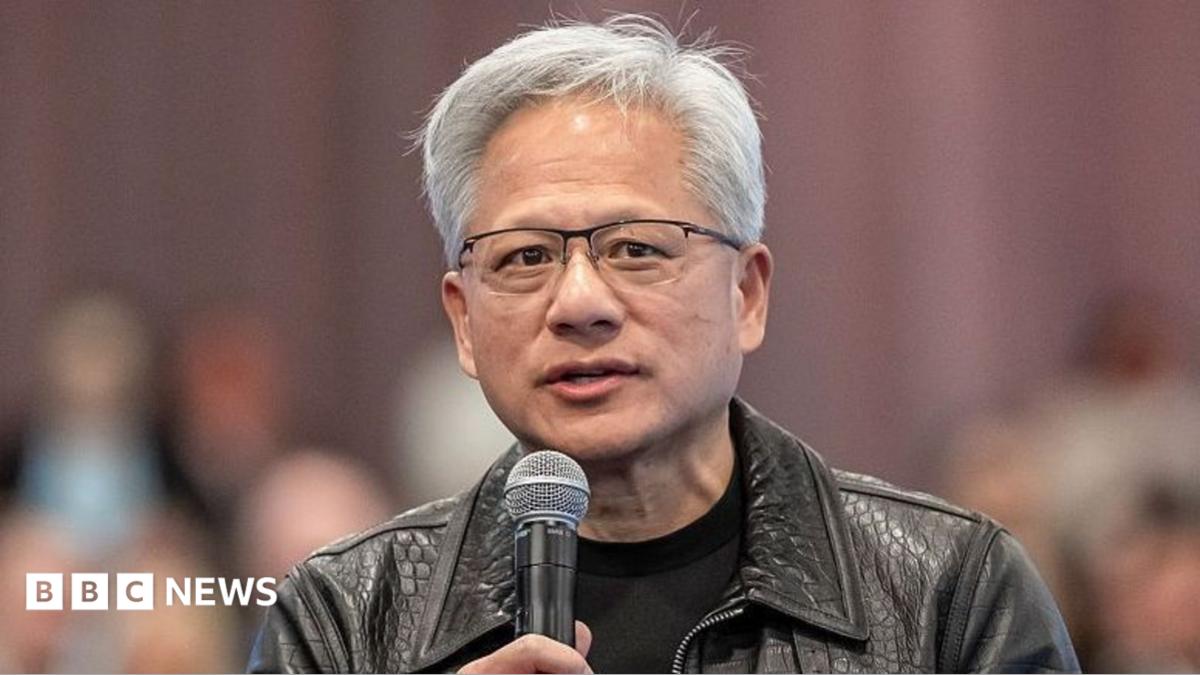
Nvidia CEO Jensen Huang has described warnings that AI could lead to humanity’s extinction by the next decade as “doomsday narratives”.
“2030 is not going to be the end of the world. There is 0% chance that’s going to be the end of the world”, Huang said in an interview with CBS News, the BBC’s US partner.
Huang added: “Scaring people is unnecessary. It is irresponsible.”
Warnings from researchers in recent weeks about potential risks posed by the technology escalated the debate about AI safety, with some industry executives calling for a slowdown in developing models.
His remarks follow claims posted on social media by former Anthropic researcher Jacob Coxon that AI developers believe the technology “could kill us all by the end of the decade”.
Coxon’s concerns sparked debate about the technology’s risks, including calls by top executives like Anthropic boss Dario Amodei and OpenAI’s Sam Altman urging for AI’s development to slow down.
Huang said that such predictions are “not grounded in science”, adding that it is in Nvidia’s best interest to ensure the industry builds its products responsibly.
“Our company’s success is directly connected to the safe deployment of products and services,” he said. “If we don’t continue to do that, our value would be diminished.”
Huang suggested AI firms talking about a “slow down” could be seeking liability protections for harms their products may cause.
“Go and read between the lines,” he said. “They’re actually not asking for more laws. They’re asking to be relieved of the laws we do have, and I think that that’s a problem.”

Settlement lets an accused party end a case by agreement with the regulator. Sebi has so far refused it in cases involving diversion of funds or misstated financial accounts, because they can hurt large numbers of investors and damage market integrity. Under the proposal, offenders would have to return the diverted money with interest and make appropriate disclosures to investors. Sebi’s view is that an offender willing to bring back the diverted funds along with interest to the company changes whether such a case can be settled.
Pratap Venugopal, senior advocate, at the Supreme Court, said settlement is “not synonymous with leniency”. “Cases involving widespread investor harm or market-integrity concerns, a settlement backed by meaningful restitution, disgorgement and corrective action could serve investors and the market more effectively than prolonged proceedings,”. He said the changes marked a shift towards “a more pragmatic enforcement framework.”
 ET Bureau
In FY2026, Sebi received 439 settlement applications, approved 170, and rejected, withdrew or returned 199. A Sebi study on the settlement applications filed in the past two years showed that settlement amounts proposed and not accepted in such matters were, on average, eight times higher than the penalty amount they eventually paid. Sebi’s receipts from settlement and compounding charges rose eightfold to ₹815 crore in FY25 from ₹104 crore in FY24, its annual accounts showed.
Sandeep Parekh, managing partner at Finsec Law Advisors, said the existing pricing left accused parties with no reason to settle: “a rational noticee litigates”. The new formula, the notice to settle before a show-cause notice and settlement at the appellate stage should change that calculation meaningfully, he said.
Business
Anthony Albanese Formally Launches Australia’s Bid for UN Security Council Seat with Focus on AI Regulation and Pacific Security
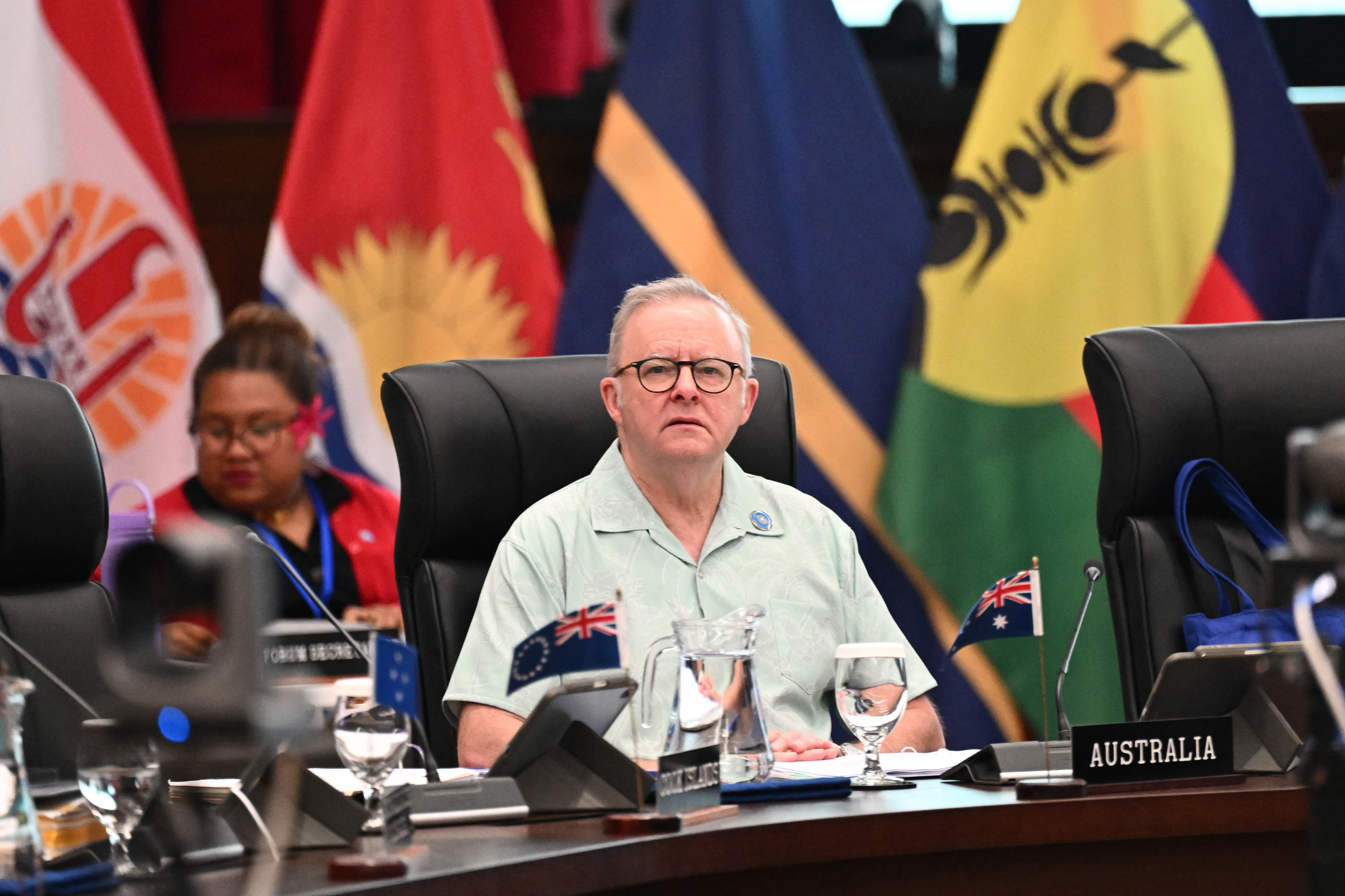
CANBERRA, Australia — Australia UN Security Council Seat Bid Anthony Albanese initiatives have reached a key international milestone as the Commonwealth officially opens its diplomatic campaign for a non-permanent seat on the United Nations Security Council for the 2029–2030 term.
Prime Minister Anthony Albanese formally launched the multi-year campaign while attending high-level diplomatic meetings at the United Nations General Assembly in New York. Addressing delegates and international media, the Prime Minister outlined Australia’s strategic vision, emphasizing that Canberra will leverage the influential multilateral platform to champion global artificial intelligence guardrails, child internet safety regulations, and targeted climate resilience for Pacific island nations. Marking Australia’s first bid for a Security Council mandate since its 2013–2014 term, candidate countries are required to assemble a robust two-thirds secret ballot majority—representing at least 129 votes from the 193 UN member states—when formal elections take place in New York in June 2028. Senior Australian foreign affairs strategists view the non-permanent seat as an essential diplomatic mechanism to amplify Indo-Pacific security priorities, safeguard sovereign trade corridors, and reinforce multilateral rules-based international law amid intensifying major-power friction.
Diplomatic analysts note that securing direct representation on the UN’s highest executive body equips capable middle powers with vital legislative leverage to shape crisis response protocols, international sanctions, and binding global regulatory standards.
Key Campaign Priorities: Global AI Regulation, Digital Safety, and Pacific Climate Action
The Australian diplomatic campaign anchors its election platform on three core policy pillars designed to assemble broad consensus across diverse UN voting blocs.
First, Australia is actively positioning its domestic legislative achievements—including world-first social media age limits and mandatory ethical guardrails for frontier AI deployment—as a global model for digital safety governance. Speaking at the launch, Anthony Albanese emphasized that managing emerging technological risks requires immediate multilateral coordination. Second, the Labor government is highlighting climate change as an immediate existential security threat to Pacific island states, pledging to serve as a committed regional advocate for climate adaptation funding on the world stage. Third, Canberra stresses the vital necessity of preventative middle-power diplomacy and conflict mitigation, aiming to bridge ideological divides between major Western allies and developing countries across the Global South.
The comprehensive campaign reflects Australia’s intent to project constructivist influence beyond traditional military partnerships into global technology and environmental policy.
Technology Governance: Advocating for enforceable international standards on artificial intelligence guardrails, cyber threat mitigation, and algorithm transparency.
Pacific Climate Advocacy: Elevating regional vulnerability frameworks and environmental security priorities for Pacific Island Forum member states.
Diplomatic Outreach: Engaging voting delegations across ASEAN, Latin America, and Africa ahead of the June 2028 secret ballot.
Historical Track Record: Leveraging Australia’s previous 2013–2014 UN Security Council tenure to demonstrate pragmatic crisis management leadership.
Securing a seat establishes Australia as an active contributor to binding global security decisions directly affecting the Indo-Pacific region.
The Voting Threshold: Navigating WEOG Dynamics and Assembly Balloting
The primary electoral benchmark determining Australia’s campaign success is securing two-thirds voting support across the 193-member General Assembly.
Operating within the Western European and Others Group (WEOG) regional voting bloc, Australia must sustain extensive bilateral diplomatic engagement leading up to 2028 to assemble the mandatory 129-vote threshold. Even in un-contested slating scenarios alongside regional candidates such as Finland, candidate states face rigorous secret ballot scrutiny, requiring Department of Foreign Affairs and Trade (DFAT) envoys to maintain continuous lobbying efforts across non-aligned nations. Official diplomatic delegations have already initiated structured briefings to highlight Australia’s historic contributions to international peacekeeping operations, multilateral trade oversight, and humanitarian assistance.
Achieving broad international consensus across global voting blocs remains essential to ensuring Australia successfully clears the two-thirds electoral margin.
Campaign teams face a demanding multi-year diplomatic itinerary to lock in formal voting commitments ahead of the 2028 ballot in New York.
Strategic Impact on Middle-Power Influence and Regional Security
Establishing a non-permanent Security Council presence represents a critical component of Australia’s long-term strategy to safeguard Indo-Pacific stability.
While Australia continues to strengthen core defense partnerships through AUKUS and Five Eyes, direct seat tenure on the UN Security Council allows Canberra to independently champion rules-based maritime order, unhindered commercial navigation, and small-state sovereignty. Direct participation on the council grants Australian negotiators early access to resolution drafting, sanctions committee monitoring, and international peacekeeping mandate formulation. Furthermore, elevating digital safety and AI risks to Security Council discussions ensures that rapidly evolving technological threats are integrated into primary conflict prevention frameworks.
Following the formal campaign launch, Australian diplomatic envoys will launch structured briefings with voting delegations across Europe, Africa, and Asia to build sustained momentum.
Autonomous diplomatic access ensures Australia retains a direct voice in high-level multilateral decisions shaping international economic and security architecture.
Expanding Australia’s Multilateral Security and Economic Footprint
The multi-year campaign reinforces Australia’s broader commitment to maintaining an active, principled, and highly engaged foreign policy footprint.
By investing heavily in global multilateral institutions, the Australian government protects its national security interests while opening new avenues for strategic trade, intelligence exchange, and climate partnership. The specialized capabilities highlighted during the campaign—spanning cyber resilience, technology regulation, and maritime domain awareness—will generate valuable diplomatic dividends across key regional bodies like ASEAN and the Pacific Islands Forum. Furthermore, holding a direct voting seat on the UN Security Council helps insulate Australian trade routes and economic stability against unexpected global geopolitical shocks.
The ongoing bid for a Security Council seat underscores Australia’s evolution into a proactive, policy-driven middle-power leader on the international stage.
Sustained engagement in international institutions remains a cornerstone of Australia’s foreign policy framework, ensuring national security priorities are reflected in global governance.

Behind the strategy are attractive valuations and the potential to profit from carry trades, where investors borrow in low-yielding currencies to invest in higher-yielding assets.
Read more: JioBlackRock CIO Rishi Kohli decodes Nifty’s inflection point after two years of weak returns
On Friday, US Treasury yields experienced an upward movement as investors expressed concerns regarding inflation. The Federal Reserve’s recent increases in interest rates and indications of more hikes in the future contribute to this shift. With traders predicting additional adjustments in upcoming meetings, there is a growing focus on global central banks tightening their monetary policies to address escalating price pressures.
The preference is showing up in fund flows, positioning and relative performance. A Bloomberg gauge of domestic EM debt has beaten an index of dollar-denominated bonds by more than 3 percentage points since the end of June, set for the biggest quarterly outperformance since 2022.
Fund managers are leaning into that divergence too. A Bank of America Corp. survey of 38 global fixed-income fund managers overseeing $444 billion in combined assets showed that 84% of the respondents were overweight local EM debt relative to hard currency bonds, versus just 38% in August. The poll was conducted between Sept 4 and 9.
Read more: Will Nifty extend gains to 4th session on Monday? US sanctions on Russia among factors to decide D-Street action
The trade could still be tested after the Federal Reserve raised interest rates and signaled it may do so again. A renewed advance in the dollar could turn investors away from emerging-market assets such as local-currency debt.

Europe faces Q4 jet fuel supply deficit even as South Korea becomes latest big supplier

Rangers coach’s car window smashed outside Ibrox Stadium after Old Firm
NaBFID plans to raise $1.5 billion via overseas bonds

Vaibhav Sooryavanshi Labelled “Future Of India” As Sri Lanka Great Sends Strong Message To BCCI




![[EN VIVO] Jugando Pelota Dura, Fuera del Parque & The Financial Hub - 18 de septiembre de 2026](https://wordupnews.com/wp-content/uploads/2026/09/1789953393_maxresdefault-80x80.jpg)
-

 Fashion2 days ago
Weekend Open Thread: Talbots – Corporette.com
-

 Crypto World2 days ago
Circle launches Arc Studio AI agent for building onchain apps
-

 Crypto World6 days ago
Revolut Attackers Warn of Ongoing Daily Customer Data Leaks
-
 NewsBeat2 days ago
Trump says US has reached an agreement to take permanent control of Greenland’s security
-

 Crypto World6 days ago
Kraken Lets xStocks Holders Earn Yield Through DeFi
-

 Crypto World5 days ago
Robinhood engineers charged over $50K crypto scheme
-

 Crypto World5 days ago
What Is the Status of the U.S.-Iran Peace Talks? Here's What Both Sides Are Saying
-

 Crypto World4 days ago
US Charges Robinhood Engineers Over Crypto Listing Trades
-

 Crypto World2 days ago
Bitcoin price breaks channel as RSI climbs to 63
-

 Crypto World7 days ago
Elon Musk Drops a Bombshell: Grok 5 Could Be the AGI Breakthrough
-
 NewsBeat6 days ago
‘Sick conspiracy’: Trump says only guardrails AI needs is ‘a strong and smart (High IQ!) president’ in all-caps rant
-
 Crypto World6 days ago
NVIDIA Analysis: Attempted Rising Wedge Breakout Amid Pressure on the AI Sector
-
Business6 days ago
SK Hynix ADRs Fall More Than 6% as Memory Rally Breaks on Fears of Slower AI Spending
-

 Tech5 days ago
Webb’s IC 348 Mosaic Includes Two-Jupiter Dwarfs, Twin Jets, and a Nursery Still Making Worlds
-

 Crypto World7 days ago
3 Token Unlocks to Watch in the Third Week of September 2026
-
Crypto World6 days ago
Can Circle’s Arc Repeat Robinhood Chain’s Meme Coin Boom?
-

 Crypto World6 days ago
DOJ Seeks to Seize $61M in Iran Oil Funds From Binance Accounts It Vouched For
-

 Entertainment5 days ago
Big Brother Update: Melody Explodes at Drew as Illness Sweeps BB28 House
-

 Crypto World3 days ago
Mortgage and refinance interest rates today, Thursday, September 17, 2026
-

 Crypto World3 days ago
Silver prices recover quickly, hitting weekly high today
You must be logged in to post a comment Login