



Connect with us

Business

Why Tesla has been caught up in a massive car recall in China

Published

on

A composite image of the front pages of the Daily Star and the Guardian on 26 August 2026

Hidden door handles are widely used in modern cars in China, with around 60% of the top 100 best-selling new energy vehicles, including EVs and hybrids, having them.

The minimalist design gives vehicles a “sleek look and reduces wind drag” but can be confusing to use, car industry analyst Stephen Dyer from consultancy AlixPartners told the BBC.

“Even I often find it difficult to locate the switch to open the door from the inside of an unfamiliar vehicle,” said Dyer, who is based in Shanghai.

But beyond their usability, the handles have been blamed for endangering the lives of drivers and passengers.

Advertisement

Electronically powered door handles became an industry trend, but raised “real safety concerns” when doors failed to open promptly, delaying rescue efforts after accidents, said Nanyang Technological University associate professor Lyu Chen.

“A door handle may seem simple, but it becomes safety-critical in the seconds after a crash,” Chen said.

Chinese carmaker Xiaomi faced intense scrutiny following two fatal crashes in 2025 involving its SU7 model, when suspected electrical failures allegedly trapped occupants.

One of the incidents took place on a highway in Tongling city, eastern China, killing three people, according to regional news coverage cited by state-controlled media Global Times.

Advertisement

Relatives of the victims said the passengers were stuck in the car as the vehicle’s doors could not be unlocked after the collision, the outlet said.

Continue Reading
Click to comment

You must be logged in to post a comment Login

Leave a Reply

Business

Army Janus Program awards $2.2B for nuclear microreactors at 5 bases

Published

on

Army Janus Program awards $2.2B for nuclear microreactors at 5 bases

The U.S. Army is moving forward with plans to bring nuclear power to five military installations as part of a multibillion-dollar effort to strengthen the military’s energy security and reduce its reliance on potentially vulnerable power grids.

The Army announced Wednesday that its Janus Program selected five nuclear energy companies for awards of up to a combined $2.2 billion to own, build and operate nuclear microreactors at bases in North Carolina, Kentucky, Texas, Georgia and New York.

Advertisement

The announcement comes as the Army works toward a September 2028 target outlined in an executive order signed by President Donald Trump calling for the first Army-regulated reactor to begin operating on a military installation.

Combined with expected private-sector investment, the Army said it expects more than 20 nuclear microreactors to eventually be built and operated across Department of War installations.

CALIFORNIA HELICOPTER MAKER LANDS MAJOR ARMY TRAINING DEAL, COULD SUPPORT HUNDREDS OF US JOBS

President Donald Trump and Army Secretary Dan Driscoll

President Donald Trump and Army Secretary Dan Driscoll. The Army is moving forward with plans to bring nuclear microreactors to military installations as part of a push to strengthen energy security and reduce reliance on potentially vulnerable exter (Anna Moneymaker/Getty Images / Getty Images)

The initial reactors will be built by Antares Nuclear at Fort Bragg, North Carolina; BWXT Advanced Technologies at Fort Campbell, Kentucky; and General Atomics Electromagnetic Systems at Fort Hood, Texas.

Advertisement

Additionally, the Army said Radiant Industries will install a reactor at Fort Benning, Georgia, while Westinghouse Government Services will install one at Fort Drum, New York.

Secretary of the Army Dan Driscoll emphasized the importance of securing reliable power for military installations.

“Since launching the Janus Program, our mandate from President Trump and Secretary Hegseth has been clear: secure the power our warfighters need to train, deploy, and win,” Driscoll said.

PENTAGON BOOSTING THAAD INTERCEPTOR PRODUCTION WITH NORTHROP GRUMMAN, LOCKHEED MARTIN DEAL

Advertisement
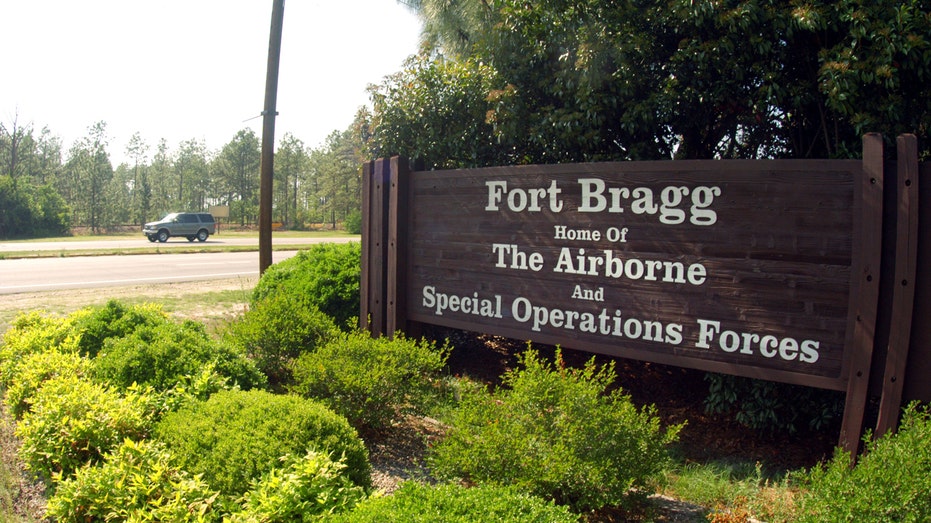
Fort Bragg in North Carolina

Fort Bragg in North Carolina was selected as one of five initial military installations slated for a nuclear microreactor under the Army’s Janus Program. (Logan Mock-Bunting/Getty Images / Getty Images)

“Awarding these contracts accelerates our ability to deliver safe, reliable baseload power directly to our installations,” he continued. “We are building the energy resilience necessary to project combat power globally, without relying on potentially vulnerable external grids.”

The Army said the funding will be distributed from fiscal years 2027 through 2031 using a milestone-based payment model, meaning companies will receive government funding only after meeting specified technical goals.

Each vendor is also expected to contribute significant private capital.

The Army said it spent roughly a year evaluating potential installations based on factors including energy needs, seismic and hydrological considerations and safety.

Advertisement

GORDON CHANG WARNS BEIJING’S PROVOCATIONS COULD SPARK A WAR ‘NO ONE CAN CONTROL’

U.S. Army soldiers

The U.S. Army selected five military installations for nuclear microreactors as part of a program awarding up to a combined $2.2 billion to strengthen energy resilience. (Nathan Howard/Getty Images / Getty Images)

Jeff Waksman, principal deputy assistant secretary of the Army for Installations, Energy and Environment, emphasized that the effort is not simply an experiment, but is intended to produce reactors capable of reliably providing power for years.

“We are seeking not just reactors capable of turning on for a brief demonstration, but rather systems able to deliver power with high-capacity factors for years of operation,” Waksman said.

“The Janus Program will be a complete success when and only when we have assisted multiple nuclear companies in developing truly reliable and affordable nuclear microreactors which they can sell to other buyers beyond just the military.”

Advertisement

GET FOX BUSINESS ON THE GO BY CLICKING HERE

The Army said the five initial locations are only the beginning, with additional Army and other military service sites expected to be announced later.

“We need more power. We need it delivered faster and cheaper, and we need it to be more reliable,” Owen West, director of the Department of War Innovation Unit, said. “With Janus, DIU is assisting the Army’s micro reactor build – speeding military energy production to protect the nation.”

Advertisement
Continue Reading

Business

Business West’s new chief executive on ‘bringing in more money’, the sale of Bristol HQ Leigh Court and why AI is ‘super important’

Published

on

Business Live

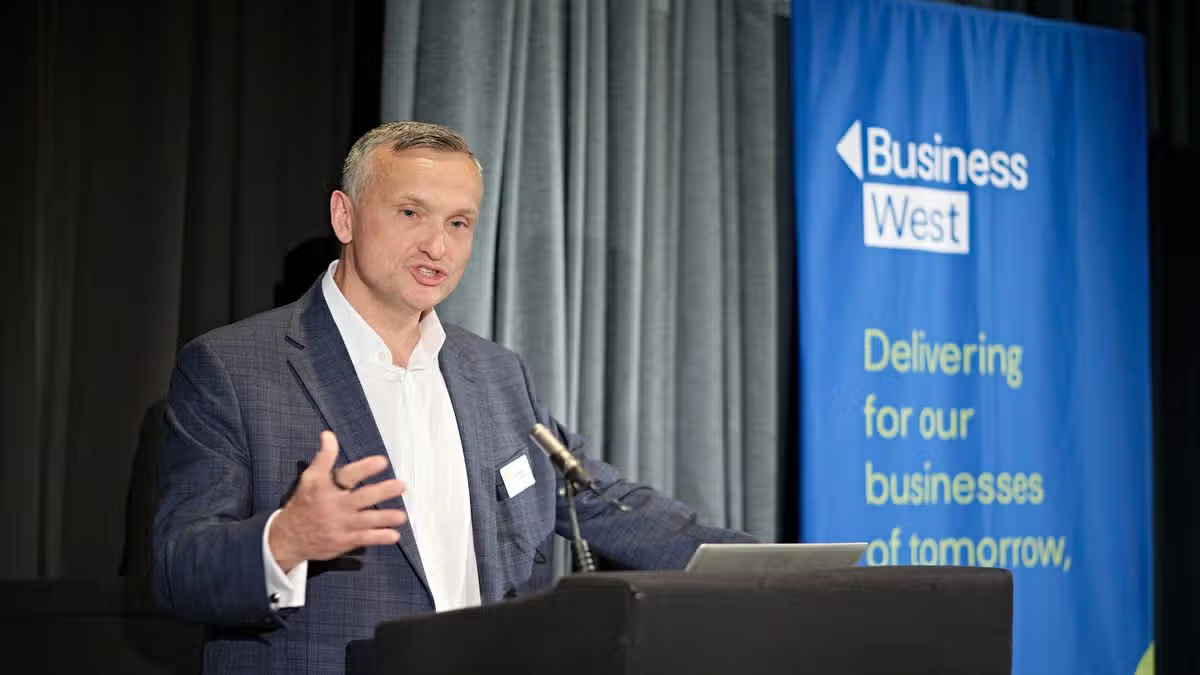
“I am keen to engage, listen and learn,” says Douglas Ure as he sips his coffee. The new chief executive of Business West – the historic West Country business support organisation and chamber of commerce – is sitting opposite me in a booth at Engine Shed, the innovation hub near Bristol Temple Meads.

He has travelled to meet me in Bristol from Somerset, where he now lives after spending more than a decade in South East Asia where he was working for US insurance giant Marsh, including a two-year stint in Jakarta as its chief executive. It’s the first interview he has given since taking the helm of Business West in January.

Ure has a warm demeanour and eight months into the role it is apparent he is making every effort to understand the needs of businesses across the region and, perhaps more importantly, his own organisation. The role he has taken on is a big one – it was held for three decades by former boss Phil Smith who retired in the spring – something Ure is “massively mindful” of.

He tells me he “didn’t really have a vision” on joining Business West, but there is no doubt he has a clear strategy for the organisation. He also credits his commercial background at Marsh – a global insurance broker and risk management firm – with landing him the role.

Advertisement

“That is probably one of the reasons Business West brought me in; it was that commercial background I have,” he says. “I don’t see us dramatically shifting our purpose [but] there are opportunities.”

Aside from growing membership, which has been flatlining in recent years, one of Ure’s main priorities is to start bringing more money into Business West, which employs around 150 people and is currently headquartered at Leigh Court on the outskirts of Bristol, although it operates across the South West including in Devon and Cornwall.

As a not-for-profit, Business West reinvests any money it raises into the business, but Ure is keen to ramp up revenue generation. At present, the organisation relies heavily on public sector contracts but Ure would like to pursue consulting work too.

“We want to be an active player in those [government] contracts but is there an opportunity to pivot into a more commercial consulting opportunity? The idea would be providing support for a fee to businesses – less than a large consulting business as we are not looking to make the same level of profit, but we do want to make sure we have money coming in.”

Advertisement

Another major focus will be examining Business West’s real estate footprint. Leigh Court, a grade II listed country house in Abbots Leigh that is currently the organisation’s HQ, was put up for sale for £5.5m last year. Ure refuses to be drawn on who is buying the building as the sale process is still ongoing, but admits once any deal is complete that Business West will become a leaseholder – in the short-to-medium term at least.

The Leigh Court estate in Abbots Leigh near Bristol

The Leigh Court estate in Abbots Leigh near Bristol(Image: Johnny Palmer – autonomous investments)

“The offices will transfer to the buyer and we will continue with our space there. Our members are predominantly Bristol and Bath based so we would want to be around [that area].”

But Ure says he wants to make a decision on where Business West’s staff are based in future – and how they collaborate – in the next 12 months, adding: “We would perhaps have 50 desks somewhere, mainly for our international trade team.”

Currently, around 90 per cent of Business West’s 150 staff have a hybrid-working pattern, without any official requirement to be in an office.

Advertisement

“When I first joined I did think we probably needed to be a bit more disciplined and structured around what we needed to do around our own people,” he says.

Ure admits that staff working on government contacts in Cornwall being based in an office in Bristol “makes zero sense”, but says he has a “genuine concern” about collaboration and sharing work with younger employees or helping new staff learn about the business and how it operates.

“I get quite a lot of value from sitting up in the office with the West of England Combined Authority (Weca) as that is where we hear from policy and the communications team, and you hear conversations they are having.

“I think, like most businesses, practices have evolved. [Business West] hasn’t taken a firm line about days in the office. There are different practices for different teams.”

Advertisement

‘It is easier to get things done in the North’

When asked about Andy Burnham’s plan to devolve more power to English regions such as the West Country, Ure believes it is “a good thing”. But could combining the Weca region with Devon and Cornwall to create a major South West powerhouse ever work?

“Combining all the geographies and regions across the South West definitely won’t happen. There is a benefit of having local communities, local councils, local authorities making decisions that benefit the economic area of their immediate vicinity,” he says.

On the economy, he refuses to be “too pessimistic”, but admits the current landscape is a challenge for many firms, with mounting concerns around inflation and the impact the geopolitical situation is having on international trade, exports and energy.

“There is definitely uncertainty but there is also resilience and optimism. A lot of businesses are quite bullish about their own growth opportunities with many feeling they will do better this year and next year than previously,” he says. “In the West, the cost of tax on businesses is high. The government is not flush with cash but if you overtax businesses you can strain growth and businesses are paying a lot more money on tax and so will have less to invest.”

Advertisement

Ure would like to see Burnham’s government offering tax credits or breaks for businesses to make it easier for companies moving into the region or for international firms coming in.

“It takes too long to get applications for planning sorted out. Organisations looking to build have to go through a lot of red tape although some local authorities are better than others.

“Some of our members tell us it is easier to get things done in the North of England than in the West of England. That is down to planning at a local authority level [but] it is also down to politics and if you are managing decision making across different political parties then that can slow things down.”

‘Bristol Airport is an important transport hub’

Bristol Airport's Public Transport Interchange

Bristol Airport’s Public Transport Interchange(Image: Bristol Airport)

One way to boost the West of England’s economy, according to Ure, is through its transport hubs such as Bristol Airport. Business West has long been a champion of the airport’s controversial expansion plans, and supports the latest application for the hub to increase capacity from 12 million passengers a year to 15 million.

Advertisement

“Bristol Airport is an important transport hub for the West of England,” says Ure. “I think it is important these organisations do things in a sustainable way and Bristol Airport has spent a lot of resources in making the airport as environmentally sustainable as it can be.

“Transport to and from the airport is obviously an issue, although improvements have been made, but making sure we have got a good economic hub and the ability to have more trade through the airport is important.”

He says he “appreciates the concerns” in the local community, though.

“Some of our employees are based around the airport and they are concerned about increased passenger numbers as they live there and it has a direct impact on people living around the area. But economically I think it is definitely the right thing to do.”

Advertisement

Ure believes the West’s wider transport infrastructure issues are also holding the region back, adding that connecting people from their homes to their work is “super important”.

“There is nothing more draining than sitting in traffic or having a really long commute,” he says. “There is some indication things are moving in the right direction, with the rail link from Portishead to Bristol, for example. But there is a long way to go and it requires massive investment and that is the challenge.

“We don’t have that much money in the West to invest the billions needed to make that right. Although there are some quick wins that are happening around buses and the expansion of the rail network that will help.”

‘AI is super important’

It’s not just transport and taxes posing a problem for businesses in the West it seems. Artificial Intelligence (AI) is already changing the business landscape and in the next few years Ure, for one, believes its use will become “super important” to small firms in particular.

Advertisement

“It is difficult to overemphasise what an impact AI is going to have,” he says. “There are efficiencies businesses can get by using AI – internally or in the supply chain. We face the same challenges as other businesses in some ways [and] we recognise there is a need for us to deploy and utilise AI.

“It is super important. We want to get our exec team and heads of department all well versed in the different AI tools and agents that are there to help them do their job better and then cascade that down. We are starting at the top.”

And looking to the top, how does Ure describe his own leadership style?

“I am quite democratic in that I am keen to engage, listen, learn and take input from colleagues and the exec team. I have spent a lot of time with the team to understand their priorities and get more input on the purpose of the organisation and what we do well and what we could do more of, and how we put that into our strategy.”

Advertisement

That strategy, he reiterates, is improving Business West’s financial strength. He has given himself 12 months to reach a place where the organisation “has room to move financially” and invest in more projects.

“Are you counting the 12 months from January, or from our meeting?” he laughs. “Let’s talk in 12 months from now and see how I’ve done.”

Continue Reading

Business

Golden year across the board for Capricorn

Published

on

Golden year across the board for Capricorn

Yes. Corporate subscriptions are available for teams and organisations, with discounted rates as user numbers increase. Pricing starts from $1,625 + GST per user.
Get in touch
to discuss the right option for your organisation.

Business News subscriptions are used by executives, investors, consultants and professionals who need to stay informed and make better decisions about the WA market. When you subscribe you’ll get

  • Unlimited access to WA’s most trusted business journalism
  • Data & Insights — detailed profiles of WA companies, people, projects and deals
  • MyBN — a personalised feed based on the companies, people and sectors you follow
  • Special publications and industry reports
  • Daily and weekly email newsletters

Data & Insights is a research tool built specifically for the WA market. It draws on more than 30 years of Business News reporting, updated regularly to reflect what’s happening now. Use it to:

  • Look up detailed profiles of WA companies, including financials, directors and ownership
  • Find decision-makers and track their career movements
  • Research live and completed projects across WA industries
  • Monitor deals, appointments and market activity
  • Access industry rankings and league tables

Data & Insights is updated daily by our dedicated research team, which uses the latest announcements, ASX filings and editorial coverage to keep our person, company, list and project records up to date.

Business News welcome all opportunities to make our dataset accurate, complete and current, so if you have an update request, please email the team at
general@businessnews.com.au, and we’d be happy to assist.

Advertisement

MyBN
is part of every subscription. It’s your personalised view of Business News. You can follow the companies, people, sectors and projects that matter to you, and get a news feed and alerts tailored to your interests. You can save articles to read later and retain only what you need.

Only subscribers have full access to all content on the Business News website.

Advertisement

If staying informed about the WA economy is part of your job, and/or you’re looking for networking opportunities in WA, Business News is built for you.

Business News subscribers are:

  • Executives and directors tracking competitors, clients and market movements
  • Investors and advisers researching companies, deals and industry trends
  • Consultants and professionals staying across sectors relevant to their clients
  • Business owners looking for leads, context and market intelligence

Most Business News publications cover national or global markets. Business News is focused entirely on Western Australia, which means the journalism, the data and the intelligence are all built around WA companies, people and projects — not adapted from a national feed. Data & Insights, included with every subscription, combines more than 30 years of WA-specific editorial research with live business data. There’s no comparable product for the WA market.

Advertisement

The Morning Digest Email provides a comprehensive wrap of the major headlines, relevant to WA business, and includes with a snapshot of the overnight news covering oil, gold and ASX-listed companies.

The Afternoon Wrap Email focuses on the news covered by our team of journalists during the course of the working day, including exclusive stories and analysis, all of which relates to WA business and the local economy.

The BN Weekender Email contains a wrap of the Business News from the week that was, highlighting the top stories in each area of WA business.
Sign up for free.

Advertisement

We’re happy to help.
Get in touch
and our team will come back to you.

Advertisement
Continue Reading

Business

A $131 Billion Shot in the Arm: How Boeing’s New F-15 Deal Can Help Shares

Published

on

A $131 Billion Shot in the Arm: How Boeing’s New F-15 Deal Can Help Shares

A $131 Billion Shot in the Arm: How Boeing’s New F-15 Deal Can Help Shares

Continue Reading

Business

25K pounds of frozen Buffalo chicken products recalled over inspection issue

Published

on

25K pounds of frozen Buffalo chicken products recalled over inspection issue

Nearly 25,000 pounds of frozen Buffalo chicken products that were produced without the benefit of inspection are being recalled, the Department of Agriculture’s Food Safety and Inspection Service (FSIS) announced on Wednesday.

Boston-based Shanghai Ravioli Corporation is recalling about 24,900 pounds of frozen, not-ready-to-eat Buffalo chicken products.

Advertisement

The recalled items include cardboard boxes containing 100 pieces of “Buffalo Chicken Rangoon” and cardboard boxes with 120 pieces of “Benedetto’s Buffalo Chicken Mozzarella Stick.”

BETTER BAKEHOUSE RECALLS CHOCOLATE-DIPPED DONUTS FOLLOWING ALLERGIC REACTION, MISLABELING ISSUE

Buffalo chicken rangoon

Nearly 25,000 pounds of frozen Buffalo chicken products that were produced without the benefit of inspection are being recalled. (Matthew West/MediaNews Group/Boston Herald via Getty Images)

The affected chicken products have sell-by dates from July 8, 2026, to June 29, 2027, displayed on the label.

The food items were produced on various dates from July 8, 2025, to June 29, 2026.

Advertisement

The frozen foods were shipped to food service locations in Maine, Massachusetts, New Hampshire, Rhode Island and Vermont.

FROZEN FRUIT BARS RECALLED NATIONWIDE OVER POSSIBLE GLASS CONTAMINATION

Mozzarella Sticks

The frozen foods were shipped were shipped to foodservice locations in Maine, Massachusetts, New Hampshire, Rhode Island and Vermont. (Getty Images / Getty Images)

FSIS said it is concerned that some recalled products may be in foodservice refrigerators or freezers. Foodservice locations that have purchased these products are instructed not to serve them. The products should be thrown away or returned to the place of purchase.

FSIS said the products linked to the recall bear false marks of inspection with establishment number “EST. 18004,” which does not have a federal grant of inspection.

Advertisement

Food produced without inspection may contain undeclared allergens, harmful bacteria, or other contaminants that put consumer health and safety at risk, FSIS said.

Outside shot of the the US Department of Agriculture headquarters in Washington, DC.

FSIS said it is concerned that some recalled products may be in foodservice refrigerators or freezers. (J. David Ake/Getty Images / Getty Images)

CLICK HERE TO GET FOX BUSINESS ON THE GO

The issue was discovered during FSIS surveillance activities, the agency said.

There have been no confirmed reports of illness or injury linked to the consumption of these products. Anyone concerned about an illness or injury is urged to contact a healthcare provider.

Advertisement
Continue Reading

Business

Alger AI Enablers & Adopters ETF Q2 2026 Commentary (ALAI)

Published

on

Alger AI Enablers & Adopters ETF Q2 2026 Commentary (ALAI)

Fred Alger Management, LLC (“Alger”) is a privately held $27.4 billion growth equity investment manager. Alger is a pioneer of actively managed, growth equity investing. Their journey over the past six decades has been defined by navigating change, embracing disruption, and investing in innovation.​​ Note: This account is not managed or monitored by Fred Alger Management, and any messages sent via Seeking Alpha will not receive a response. For inquiries or communication, please use Fred Alger Management’s official channels.

Continue Reading

Business

CEO, yacht club clash over speeding claim

Published

on

CEO, yacht club clash over speeding claim

A mining executive wants to sue his yacht club after the Dalkeith-based association revoked his membership amid allegations he was speeding in a 72-foot sunseeker boat.

Continue Reading

Business

Labor, Greens coming for your prosperity: Rinehart

Published

on

Labor, Greens coming for your prosperity: Rinehart

Yes. Corporate subscriptions are available for teams and organisations, with discounted rates as user numbers increase. Pricing starts from $1,625 + GST per user.
Get in touch
to discuss the right option for your organisation.

Business News subscriptions are used by executives, investors, consultants and professionals who need to stay informed and make better decisions about the WA market. When you subscribe you’ll get

  • Unlimited access to WA’s most trusted business journalism
  • Data & Insights — detailed profiles of WA companies, people, projects and deals
  • MyBN — a personalised feed based on the companies, people and sectors you follow
  • Special publications and industry reports
  • Daily and weekly email newsletters

Data & Insights is a research tool built specifically for the WA market. It draws on more than 30 years of Business News reporting, updated regularly to reflect what’s happening now. Use it to:

  • Look up detailed profiles of WA companies, including financials, directors and ownership
  • Find decision-makers and track their career movements
  • Research live and completed projects across WA industries
  • Monitor deals, appointments and market activity
  • Access industry rankings and league tables

Data & Insights is updated daily by our dedicated research team, which uses the latest announcements, ASX filings and editorial coverage to keep our person, company, list and project records up to date.

Business News welcome all opportunities to make our dataset accurate, complete and current, so if you have an update request, please email the team at
general@businessnews.com.au, and we’d be happy to assist.

Advertisement

MyBN
is part of every subscription. It’s your personalised view of Business News. You can follow the companies, people, sectors and projects that matter to you, and get a news feed and alerts tailored to your interests. You can save articles to read later and retain only what you need.

Only subscribers have full access to all content on the Business News website.

Advertisement

If staying informed about the WA economy is part of your job, and/or you’re looking for networking opportunities in WA, Business News is built for you.

Business News subscribers are:

  • Executives and directors tracking competitors, clients and market movements
  • Investors and advisers researching companies, deals and industry trends
  • Consultants and professionals staying across sectors relevant to their clients
  • Business owners looking for leads, context and market intelligence

Most Business News publications cover national or global markets. Business News is focused entirely on Western Australia, which means the journalism, the data and the intelligence are all built around WA companies, people and projects — not adapted from a national feed. Data & Insights, included with every subscription, combines more than 30 years of WA-specific editorial research with live business data. There’s no comparable product for the WA market.

Advertisement

The Morning Digest Email provides a comprehensive wrap of the major headlines, relevant to WA business, and includes with a snapshot of the overnight news covering oil, gold and ASX-listed companies.

The Afternoon Wrap Email focuses on the news covered by our team of journalists during the course of the working day, including exclusive stories and analysis, all of which relates to WA business and the local economy.

The BN Weekender Email contains a wrap of the Business News from the week that was, highlighting the top stories in each area of WA business.
Sign up for free.

Advertisement

We’re happy to help.
Get in touch
and our team will come back to you.

Advertisement
Continue Reading

Business

Wealth managers turn to hybrid SIFs for higher, tax-efficient returns

Published

on

Wealth managers turn to hybrid SIFs for higher, tax-efficient returns
Mumbai: The introduction of specialised investment funds (SIFs) is changing the way wealth managers structure portfolios, with hybrid SIF strategies increasingly finding a place in allocations that were earlier dominated by debt mutual fund and other fixed income products.

Wealth managers are asking investors with sizeable mutual fund portfolios to allocate some money to SIFs, citing their tax efficiency and differentiated strategies.

“SIFs offer greater flexibility through strategies such as long-short investing, dynamic asset allocation, sector rotation and hedging and should be used to complement core portfolios,” says Sandeep Seth, founder & CEO, SIF360.com,

Fund houses have launched SIFs across hybrid long-short, equity long-short and equity ex-Top 100 long-short strategies. Assets under management of SIFs reached ₹23,177 crore as of July 31, with 95,000 investors and an average ticket size of ₹21 lakh. Hybrid SIFs accounted for ₹16,523 crore, or 71%, of the total assets under management.

Hybrid SIFs, Tax Efficient & Flexible, Carve Out a NicheET Bureau

Wealth managers asking investors with large MF portfolios to put money in SIFs too

Within SIFs, wealth managers are starting with hybrid long-short strategies, which they believe work well for conservative investors seeking tax efficiency and slightly higher returns than bank deposits or debt mutual funds over a one-to-three-year period. They prefer to wait for a track record of around a year to assess performance and consistency before recommending equity-oriented SIFs.

Advertisement


Some hybrid SIF strategies have negligible exposure to unhedged equity. These strategies invest through a mix of arbitrage, special situations, pair trades, covered calls, straddles, strangles and put-call parity, and could work for investors seeking tax efficiency in their fixed-income allocation.
Read more: Ventura initiates coverage on Meesho and LG India, sees up to 35% upside“Hybrid SIF strategies that are low on equity can earn 1-2% more than deposits or debt funds with high tax efficiency,” says Juzer Gabajiwala, director, Ventura Securities. Investors in hybrid SIFs who remain invested for more than 12 months are charged a long-term capital gains tax of 12.5%. In comparison, investors in fixed deposits or debt funds pay tax at their applicable slab rates, which exceed 30% in the case of high-income investors.

Fund managers, however, said investors need to understand the risks involved, as some SIFs can have a high proportion of their portfolios in unhedged equities or carry credit risk.

“Investors should look at the return, standard deviation, maximum drawdown and beta, to understand the risk that a SIF takes,” says Radhika Gupta, MD & CEO, Edelweiss Asset Management.

Add ET Logo as a Reliable and Trusted News Source

Continue Reading

Business

Ramsay Health Care Shares Rocket 14% to Record High as Investors Cheer Turnaround and European Spinoff Plan

Published

on

Ramsay Health Care Shares Rocket 14% to Record High as

SYDNEY — Shares of Ramsay Health Care Ltd surged more than 14% Wednesday, closing at $50.29, up $6.27 on the day, as investors piled into Australia’s largest private hospital operator ahead of its full-year earnings release and amid growing optimism over a planned spinoff of its European business.

The rally pushed the stock to a fresh high, extending a run that has seen shares climb steadily through 2026 as the Sydney-based company works through a multiyear turnaround built around cost discipline, capacity expansion in Australia and a restructuring of its troubled international operations.

Ramsay, which operates roughly 72 private hospitals and day surgery units across Australia along with facilities in the United Kingdom, France and the Nordic region, is scheduled to release its full fiscal 2026 results this week, a report investors have been watching closely for signs the company’s recovery is gaining traction.

Momentum built through the year

Advertisement

Wednesday’s jump builds on a pattern investors have seen before. When Ramsay released its half-year results in February, underlying net profit after tax rose 8.1% to $171.7 million, with underlying earnings before interest and tax up 7.3%, driven largely by an 8.2% revenue increase in its core Australian hospital business. That report sent shares up more than 10% in a single session.

“After 12 months in the role, I’m pleased to report that we’re making good progress on our key priorities,” Ramsay chief executive Natalie Davis told analysts on the company’s half-year earnings call in February, according to a transcript of the call.

The company’s Australian division has been the primary engine of that progress, benefiting from higher patient activity, improved capacity utilization at its hospitals and stronger private health insurance indexation. Ramsay has also been opening new theatres and procedure rooms, part of a broader capital investment program the company has said will continue through fiscal 2026, even as it lowered its overall group capital expenditure guidance to between $755 million and $795 million for the year.

Overseas, the picture has been more mixed. Ramsay’s UK acute hospital business has been managing tighter National Health Service budget constraints, while its French and Nordic operations under Ramsay Santé have faced persistent government funding pressure and thin tariff indexation relative to cost inflation.

Advertisement

A European spinoff takes shape

Much of Wednesday’s enthusiasm also traces back to a restructuring plan Ramsay unveiled earlier this year. In February, the company announced a proposal to distribute its 52.79% stake in Ramsay Santé, its European healthcare arm, directly to Ramsay Health Care shareholders through an in-specie distribution, pending approval.

Ramsay Santé’s own board met Wednesday to review provisional annual results for the year ended June 30, 2026, according to a company statement, with final audited figures due for approval by its board in October. The French unit also confirmed it completed a refinancing of its senior debt in July, a move it said would strengthen its financial flexibility and support long-term strategic plans.

The proposed separation would mark a significant simplification of Ramsay’s corporate structure, allowing the Australian parent to focus more squarely on its higher-margin domestic hospital network while giving shareholders direct exposure to the European business, which has weighed on group earnings in recent years through impairments and subdued profitability.

Advertisement

Analysts had been positioning for a beat

Even before Wednesday’s surge, analysts had grown more constructive on the stock. A recent rating tracked by TipRanks pegged Ramsay as a “Buy” with a price target of $47.60, a level Wednesday’s close now exceeds. Separate analysis from Simply Wall St estimated the stock’s fair value near $55.12, noting shares had already risen roughly 13% over the prior 90 days heading into this week’s results.

Trading platforms had also flagged Thursday, Aug. 27, as the date for Ramsay’s full-year results release on the Australian Securities Exchange, a filing that would give investors their clearest look yet at how the turnaround strategy performed across a full 12 months, including the critical earnings contribution from the Australian business over the back half of the fiscal year.

Wall Street-style earnings estimates compiled by financial data providers had projected fiscal 2026 earnings per share of roughly 95 cents, with a further rise to $1.13 forecast for fiscal 2027, alongside expected revenue of about $13.56 billion for the current year, climbing to roughly $14.11 billion the following year.

Advertisement

Governance changes underway

The rally also came against a backdrop of board renewal at the company. Ramsay recently disclosed that non-executive director Claudia Süssmuth Dyckerhoff will retire effective Aug. 31 after eight years on the board, including service on its risk management committee. Chair David Thodey credited her international healthcare experience in a statement announcing the departure, while the company said ongoing board renewal remains central to its governance strategy.

What comes next

For a stock that has spent much of the past several years under pressure — weighed down by pandemic-era disruptions, UK funding constraints and impairments tied to its European mental health operations — Wednesday’s move signals renewed investor confidence that the worst may be behind the company.

Advertisement

Attention now turns to Thursday’s scheduled results release, where investors will look for confirmation that the momentum seen in the first half carried through the year, along with further detail on the timeline and mechanics of the Ramsay Santé distribution. The company has also flagged a full-year dividend payout ratio target of 60% to 70% of underlying net profit after tax, a figure that will be closely watched alongside the headline earnings numbers.

Ramsay Health Care has not issued a statement specifically addressing Wednesday’s share price move.

Continue Reading

Trending

Copyright © 2025