
Connect with us

Business

Why the Epstein files have become a serious political risk for Labour

Published

on

Why the Epstein files have become a serious political risk for Labour

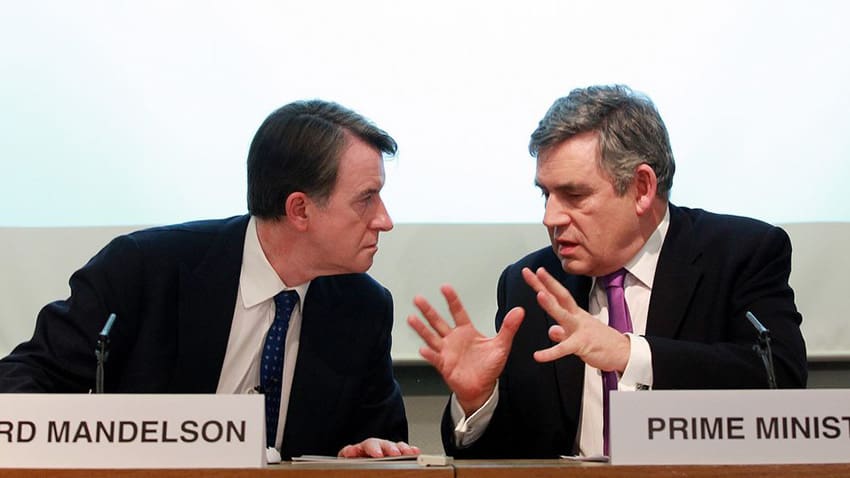
Political judgement matters to markets as much as it does to voters. As fresh revelations from the Epstein files trigger police interest and intensify scrutiny of Peter Mandelson’s role in public office, the controversy is fast becoming a wider test of Labour’s credibility in government.

In this exclusive commentary for Business Matters, former Downing Street strategist Alastair Campbell reflects on how a story once seen as historical embarrassment has evolved into a live political risk,  and why the consequences for Keir Starmer’s leadership could be profound.

Fresh revelations linking Peter Mandelson to Jeffrey Epstein have escalated rapidly from a troubling disclosure into a full-blown political crisis for the Labour government, raising urgent questions about judgement, accountability and leadership at the top of British politics.

In the days since the latest tranche of Epstein files was published, two issues have come to dominate the debate in the UK: whether Mandelson could face criminal investigation for misconduct in public office, and whether Keir Starmer can weather the political fallout from appointing him as Britain’s ambassador to the United States, despite his known association with the convicted paedophile.

The intensity with which those questions are now being asked underlines how precarious the situation has become for Labour. What might once have been dismissed as historical embarrassment has morphed into a live test of political judgement and ethical standards at the heart of government.

Advertisement

For many observers, the shock lies not only in the scale of Epstein’s abuse, and the casual disregard shown towards his victims, but in the tone of some of the correspondence now in the public domain. The suggestion that Mandelson was providing Epstein with commentary on sensitive political developments during the fraught period surrounding the 2010 general election, alongside allegations of sharing potentially market-sensitive material and receiving money, has been particularly damaging.

These revelations sit uneasily with Labour’s attempts to project integrity and seriousness after years of Conservative scandal. They also reopen long-standing concerns about Mandelson’s judgement, concerns that were well known during his earlier Cabinet career, but which now carry far heavier consequences given the role he was asked to play on the world stage.

The political danger for Starmer is compounded by the perception that this controversy was avoidable. Mandelson’s friendship with Epstein was already on the record when the ambassadorial appointment was made. Critics argue that failing to anticipate how further disclosures might land reflects a broader pattern of miscalculation that has frustrated Labour MPs and unsettled supporters.

At the same time, there is a striking contrast between the scrutiny now facing the UK government and the relative lack of accountability for many prominent American figures named in the Epstein files. That imbalance has fuelled a sense of injustice and disbelief, particularly among Labour supporters who fear their party is paying a disproportionate political price.

Advertisement

The timing could hardly be worse. With elections looming and opinion polls offering little comfort, the government is grappling with a restless parliamentary party and a Downing Street operation that many MPs privately describe as error-prone and overly defensive. The Epstein-Mandelson affair has become a focal point for wider discontent about direction, competence and political instincts.

For Labour veterans, the disappointment is acute. After a landslide victory that promised stability and renewal, the government now finds itself firefighting a crisis that cuts to the core of trust in public life. External pressures – from a harsher media environment to geopolitical instability, undoubtedly make governing harder than in previous eras. But they do not explain why unforced errors continue to accumulate.

The deeper question is whether this moment marks a turning point or a slow-burning erosion of authority. Can the government regain control of the narrative, reassert clear ethical standards and restore confidence among its own ranks? Or does the Epstein affair expose structural weaknesses in Labour’s leadership and decision-making that will continue to surface?

As police inquiries progress and political pressure mounts, one thing is clear: this story will not fade quickly. It will shape how voters, investors and international partners assess the judgement and resilience of the current government. And for a party that returned to power promising higher standards, the stakes could hardly be higher.

Advertisement

Alastair Campbell

Alastair Campbell

Alastair Campbell is a writer, broadcaster and political strategist, best known as former Director of Communications and Strategy for UK Prime Minister Tony Blair. He is the co-host of the hit podcast The Rest Is Politics with Rory Stewart, one of the UK’s most-listened-to political podcasts. Watch or listen to The Rest Is Politics, wherever you get your podcasts.

Continue Reading
Click to comment

Leave a Reply

Your email address will not be published. Required fields are marked *

Business

Cigna Revenue Lifted by Growth in its Evernorth Unit

Published

on

Cigna Revenue Lifted by Growth in its Evernorth Unit

Cigna CI 3.09%increase; green up pointing triangle Group logged higher revenue in its latest quarter as its pharmacy-benefit business Evernorth continues to grow.

The healthcare company on Thursday posted a profit of $1.2 billion, or $4.64 a share, compared with $1.4 billion, or $5.13 a share, a year earlier.

Copyright ©2026 Dow Jones & Company, Inc. All Rights Reserved. 87990cbe856818d5eddac44c7b1cdeb8

Continue Reading

Business

Form 13G FIRST TRUST EXCHANGE-TRADED FUND III For: 6 February

Published

on


Form 13G FIRST TRUST EXCHANGE-TRADED FUND III For: 6 February

Continue Reading

Business

More baby formula products recalled over toxin fears

Published

on

More baby formula products recalled over toxin fears

Danone and Nestle have given assurances to the FSA that recalled batches were produced some time ago and are unlikely still to be on UK shop shelves. However, they may be in cupboards at home, which is why parents and caregivers are being asked to check their supplies.

Continue Reading

Business

Best Tech Stocks To Buy On The Earnings Week Dip

Published

on

Best Tech Stocks To Buy On The Earnings Week Dip

This article was written by

Steven Cress is VP of Quantitative Strategy and Market Data at Seeking Alpha. Steve is also the creator of the platform’s quantitative stock rating system and many of the analytical tools on Seeking Alpha. His contributions form the cornerstone of the Seeking Alpha Quant Rating system, designed to interpret data for investors and offer insights on investment directions, thereby saving valuable time for users. He is also the Founder and Co-Manager of Alpha Picks, a systematic stock recommendation tool designed to help long-term investors create a best-in-class portfolio.Steve is passionate and dedicated to removing emotional biases from investment decisions. Utilizing a data-driven approach, he leverages sophisticated algorithms and technologies to simplify complex, laborious investment research, creating an easy-to-follow, daily updated grading system for stock trading recommendations.Steve was previously the Founder and CEO of CressCap Investment Research until its acquisition by Seeking Alpha in 2018 for its unparalleled quant analysis and market data capabilities. Prior to that, he had also founded the quant hedge fund Cress Capital Management, after spending most of his career running a proprietary trading desk at Morgan Stanley and leading international business development at Northern Trust.With over 30 years of experience in equity research, quantitative strategies, and portfolio management, Steve is well-positioned to speak on a wide range of investment topics.

Analyst’s Disclosure: I/we have no stock, option or similar derivative position in any of the companies mentioned, and no plans to initiate any such positions within the next 72 hours. I wrote this article myself, and it expresses my own opinions. I am not receiving compensation for it. I have no business relationship with any company whose stock is mentioned in this article.

Seeking Alpha’s Disclosure: Past performance is no guarantee of future results. No recommendation or advice is being given that any particular security, portfolio, transaction or investment strategy is suitable for any specific person. The author is not advising you personally concerning the nature, potential, value or suitability of any particular security or other matter. You alone are solely responsible for determining whether any investment, security or strategy, or any product or service, is appropriate or suitable for you based on your investment objectives and personal and financial situation. Steven Cress is the Head of Quantitative Strategy at Seeking Alpha. Any views or opinions expressed herein may not reflect those of Seeking Alpha as a whole. Seeking Alpha is not a licensed securities dealer, broker or US investment adviser or investment bank.

Advertisement
Continue Reading

Business

What Threat Detection Looks Like in a Large Organisation

Published

on

What Threat Detection Looks Like in a Large Organisation

Bobby Acri is a cybersecurity analyst based in Winnetka, Illinois, who focuses on threat detection, incident response, risk mitigation, and secure systems design.

His work centres on protecting large, complex systems in environments where small weaknesses can create outsized risk.

Born on 17 May 1991 at Evanston Hospital, Bobby grew up on Chicago’s North Shore. He attended Hubbard Woods Elementary, Washburne Middle School, and New Trier Township High School. Early on, he gravitated towards how systems behave under pressure, not just how they look when everything is running smoothly. He built that mindset through computer science coursework, networking classes, and hands-on tech support for school events.

Bobby earned a B.S. in Computer Science from the University of Illinois Chicago in 2013, with a practical focus on operating systems, networking, and applied cryptography-type work. A 2012 internship with NorthShore University HealthSystem gave him early exposure to enterprise controls in a healthcare setting, where access and process matter.

He began his career in enterprise IT at CDW, then moved into systems administration at Aon, working closely with identity and endpoint workflows. In 2018, he transitioned into security operations at CME Group as a SOC analyst, investigating SIEM alerts, triaging phishing reports, and producing clean incident timelines. Since 2021, he has worked at United Airlines as a cybersecurity analyst, partnering across teams to improve detections, reduce alert fatigue, and strengthen controls before incidents escalate. Known for calm, methodical execution and strong documentation, Bobby leads through clarity, repeatable processes, and continuous improvement.

Advertisement

Where did your interest in cybersecurity begin?

It started with problem solving and systems thinking. Even early on, I cared less about surface level functionality and more about what happens when something breaks or gets stressed. That way of thinking stayed with me through school and into work.

How did your education shape your approach?

I studied Computer Science at the University of Illinois Chicago and finished in 2013. I focused on practical, systems-oriented classes like operating systems and networking, plus applied cryptography-type work. That foundation still shows up in how I investigate issues. I want to understand what the system is doing, not just what a tool says.

What did you learn from your first real enterprise experience?

In 2012, I interned with NorthShore University HealthSystem in IT support. I worked ticket queues, device imaging, and account and password issues. It was also my first close look at a setting where policy and access controls are taken seriously. You learn quickly that process is not optional when sensitive systems are involved.

How did your early career roles prepare you for security work?

I started at CDW as a service desk analyst supporting business clients. The work taught me how enterprise environments fail in everyday ways, and how users experience risk. I also built a habit of writing things down. If a fix works once, it should be repeatable. From 2015 to 2018 at Aon, I worked in systems administration with identity and endpoint support. That role put me close to account provisioning, group policy, patch coordination, and security-adjacent issues like phishing and compromised accounts. It was a clear view of how security, compliance, and business urgency collide.

Advertisement

What changed when you moved into a SOC role at CME Group?

The pace and the signal-to-noise problem got real. From 2018 to 2021, I monitored SIEM alerts, investigated endpoint and network anomalies, and triaged phishing reports. A big part of the job is working out what is just noisy and what is actually dangerous. I focused on clean timelines and clear incident notes. If the timeline is messy, the response is messy. I also started writing runbooks and checklists that other analysts used. That helped the team move faster and more consistently.

What does your role at United Airlines look like today?

Since 2021, I have worked as a cybersecurity analyst focused on threat detection and incident response. I investigate anomalies and support response work, but I also spend time on improvements that prevent repeat issues. That includes partnering with IT and engineering on hardening controls and reducing alert fatigue. If you do not address fatigue, you miss real problems because everything starts to look the same.

How would you describe your working style?

Methodical. Calm under pressure. I use precise language and I separate confirmed findings from suspected ones. I document as I go. I treat near misses as valuable because they show you where the gaps are, without the cost of a full incident.

What do you pay attention to as the field keeps changing?

Evolving attack vectors, cloud security trends, and the regulatory frameworks that shape large enterprises. Cybersecurity demands constant education. I do not treat learning as a side project. It is part of the job.

Advertisement

What keeps you grounded outside of work?

Endurance running along Lake Michigan, strategy board games, and reading history and behavioural science. Those interests connect back to the work in a quiet way. They reinforce patience, pattern recognition, and an understanding of the human side of risk.

Advertisement
Continue Reading

Business

Ethereum Climbs 11% In Bullish Trade

Published

on


Ethereum Climbs 11% In Bullish Trade

Continue Reading

Business

Epstein emails: So-called 'shady financier' was Andrew's 'trusted money man'

Published

on

Epstein emails: So-called 'shady financier' was Andrew's 'trusted money man'

Andrew seemed keen for Epstein to do business with David Rowland, but Epstein was wary, emails suggest.

Continue Reading

Business

Viterra merger ‘already delivering results,’ Bunge CEO says

Published

on

Viterra merger ‘already delivering results,’ Bunge CEO says

Sales climb 32% in fiscal 2025.

Continue Reading

Business

Barrick Mining: Meet The New Boss, Not The Same As The Old Boss

Published

on

Barrick Mining: Meet The New Boss, Not The Same As The Old Boss

Barrick Mining: Meet The New Boss, Not The Same As The Old Boss

Continue Reading

Business

Marzetti moving deeper into sauces

Published

on

Marzetti moving deeper into sauces

Latest acquisition comes on heels of strong second quarter.  

Continue Reading

Trending

Copyright © 2025