

Business
Why UK content creators Are Turning to Loova for Faster, Smarter Video Creation


Creating content for YouTube, TikTok, Reels is more challenging than ever. As a content creator in the UK, you’re under constant pressure to produce high-quality videos quickly, consistently, and without burning out.
The demand for fresh, engaging content is high, and every video has to stand out. But how can you keep up with these demands without sacrificing quality?
That’s where Loova comes in. This powerful tool is helping UK content creators create content faster and smarter, all while maintaining a high level of creativity. Here’s why Loova is becoming the go-to platform for content creators looking to streamline their video creation process.
The Pressure to Keep Up with YouTube’s Demands
As YouTube continues to grow, the competition becomes fiercer. Content creators need to upload videos regularly to stay relevant, and with audiences always looking for something fresh, it’s easy to fall behind.
The challenge isn’t just making videos; it’s making them quickly and at a high standard. You need to meet the expectations of your viewers while managing your production time and resources.
Traditional video creation takes a lot of time—writing scripts, filming, editing, and adding effects can take days. But the reality is, you need to create more content, faster.
What Makes Loova Different?
stands out because it gives UK content creators a powerful set of tools to create high-quality videos at lightning speed. The platform combines AI-powered features to take care of the time-consuming tasks, so you can focus on the creative side.
Here’s how Loova helps you speed up your video creation:
AI Video Generation Tools
- Text to Video
Simply write a script, and Loova turns it into a video. The tool automatically adds visuals that match your text, saving you the hassle of manually sourcing video footage. Loova integrates with AI models like Kling O1, Veo 3.1, Sora 2 Pro, Wan, Hailuo etc for you to select and create. - Image to Video
Got a cool image you want to turn into a dynamic video? Loova’s AI can transform images into engaging videos, adding motion and effects. - Video to Video
Loova can take existing video footage and enhance it. Whether you want to add a different theme, improve quality, or change the mood, this feature lets you quickly reimagine your content. - AI Video Editor
The AI video editor takes care of basic editing tasks, such as trimming, cutting, and adding transitions. You can adjust the pacing and flow of your video with just a few clicks, reducing hours of manual work.
AI Image Generation Tools
- Text to Image
Need an image but don’t have the right resources? Loova’s AI can generate custom images based on a text prompt. You get visuals that perfectly match your ideas in seconds. Loova gives you access to Nano Banana Pro, Seedream 4.5, Flux.2 etc to let you create freely and flexibly. - Image to Image
Already have an image but want to tweak it? Loova’s image-to-image feature lets you transform any image into something new, giving you endless creative possibilities. - Image Editor
Polish your images with AI-powered editing tools. Adjust the lighting, colors, and even remove unwanted elements with just a few clicks.
AI-Powered Tools for Enhanced Creativity
Loova doesn’t stop at video and image generation. The platform includes a suite of creative tools to take your content to the next level:
- AI Image Upscaler: Improve the resolution of your images without losing quality.
- AI Image Extender: Extend your images’ backgrounds or create new elements to match the original style.
- Character Swap: Want to swap characters in your videos or images? Loova makes it simple.
- Mimic Motion: Apply realistic motion effects to static images or scenes to add life to your content.
- Background Changer: Change the background of your videos or images with ease, creating a new setting for your story.
Tools for Viral Content Creation
If you want to create content that stands out and goes viral, Loova offers a range of tools designed specifically for that:
- AI Doll Generator: Create lifelike AI dolls for a unique twist in your content.
- AI Kissing Generator: Generate realistic kissing scenes to add an element of romance or surprise.
- AI Action Figure Generator: Bring action figures to life and make them the stars of your videos.
Other Fun and Useful Tools
Loova’s got even more tools to make your videos more engaging:
- Talking Photo: Turn still images into animated, talking photos. This feature is perfect for social media posts or adding extra character to your videos.
- Text-to-Speech: Convert written text into natural-sounding speech. With various voice options, you can give your videos a professional, polished touch.
Speed Meets Efficiency: The Appeal of Loova’s Workflow
One of the biggest draws of Loova is how much it speeds up the video creation process.
Traditional video creation takes days, from concept to upload. With Loova, you can generate content in minutes. The platform automates many tasks, like video generation, editing, and image manipulation, so you can focus on crafting your message and creative direction.
Loova’s interface is simple and intuitive. You don’t need to be a video production expert to use it—just input your ideas, and Loova takes care of the rest. The platform’s AI-driven features make video creation accessible to everyone, whether you’re a beginner or a seasoned pro.
The Cost-Effectiveness of Loova for UK content creators
Creating professional videos doesn’t have to be expensive. Hiring a video editor or designer for every project can be costly, but Loova offers an affordable subscription with all the tools you need in one place.
Plus, there’s a free tier that lets you explore some of Loova’s key features without committing to a subscription. For content creators on a budget, this is a game-changer.
Creating Professional Videos Without the Learning Curve
Loova’s design is all about simplicity. The AI suggestions guide you through every step, making it easy for anyone to create high-quality content without prior video production experience.
Whether you’re producing a vlog, a tutorial, or a music video, Loova’s customization options allow you to tailor each video to your unique style. It’s a powerful tool, but it’s also user-friendly.
Case Studies: UK content creators Who’ve Found Success with Loova
Loova isn’t just a tool; it’s a solution that’s already helping content creators thrive.
- Creator 1: Emma, a beauty vlogger, uses Loova to quickly generate makeup tutorials. With the platform’s AI video generation tools, she can focus more on interacting with her audience rather than spending hours editing.
- Creator 2: James, a tech reviewer, uses Loova’s AI image tools to create sleek, professional thumbnails. He also uses the text-to-video feature to convert product reviews into engaging videos faster than ever.
- Creator 3: Sarah, a travel vlogger, uses Loova’s background changer and video-to-video tools to create stunning travel montages that capture the beauty of her adventures with minimal effort.
The Future of YouTube Content Creation in the UK
Loova is leading the way in AI-powered content creation. As YouTube continues to grow, tools like Loova will only become more essential. The ability to produce high-quality videos quickly and efficiently is no longer a luxury—it’s a necessity.
With AI-driven tools constantly evolving, Loova is set to introduce even more features in the future, ensuring that content creators can stay ahead of the competition.
Conclusion
Loova is revolutionizing video creation for UK content creators. With its AI-powered tools, you can produce high-quality content faster, save money, and maintain full creative control. Whether you’re a seasoned creator or just starting, Loova’s intuitive platform makes it easier than ever to create professional videos.
Ready to step up your YouTube game? Try Loova today and discover how simple and fast video creation can be.


Bilibili: A Deep Dive Into The 299% Operating Income Surge And New Valuation

Kalshi co-founder Tarek Mansour says the company wants to give people what they desire on ‘The Claman Countdown.’
Kalshi is facing a $54 million class action lawsuit after traders accused the prediction market of invoking a “death carveout” clause to avoid paying bets tied to the killing of Iran’s supreme leader, according to reporting from Reuters.
Kalshi was sued in federal court Thursday over contracts that asked whether Ayatollah Ali Khamenei would leave office before March 1, 2026, according to a class action complaint.
Khamenei, 85, was killed Saturday in U.S.-Israeli strikes that left hundreds dead, including top Iranian officials. The strikes occurred under Operation Epic Fury.
The lawsuit says customers were drawn to what it calls the “Khamenei Market” because of the shifting geopolitical situation with Iran’s leadership. It alleges that, after Khamenei was killed, Kalshi invoked a “death carveout” provision to avoid paying customers what they were owed.
JUDGE BLOCKS META FROM INTRODUCING ‘EXAGGERATED’ CLAIMS IN SOCIAL MEDIA TRIAL

Iranian Supreme Leader Ali Khamenei addresses the nation in a state television broadcast June 18, 2025, in Tehran, Iran. (Office of the Supreme Leader of Iran via Getty Images / Getty Images)
“With an American naval armada amassed on Iran’s doorstep and military conflict not merely foreseeable but widely anticipated, consumers understood that the most likely — and in many cases the only realistic — mechanism by which an 85-year-old autocratic leader would ‘leave office’ was through his death,” the lawsuit states.
“Defendants understood this as well.”
The complaint argues the contract language was “clear, unambiguous and binary” and accuses Kalshi of “deceptive” and “predatory” conduct.
APPLE IMPLEMENTING AGE VERIFICATION TOOL TO ENSURE USERS ARE 18 AND UP FOR SOME APPS
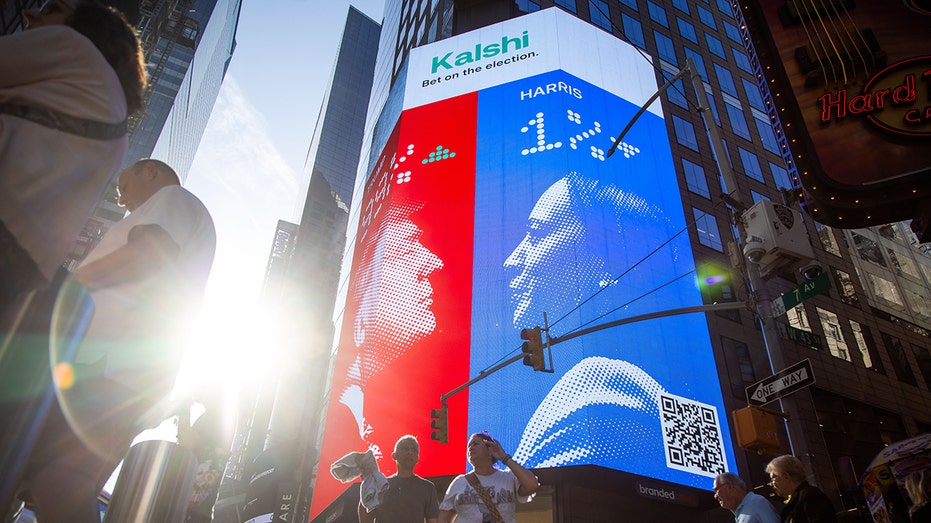
A billboard for Kalshi showing 2024 U.S. presidential election odds across from the Nasdaq MarketSite in New York Nov. 6, 2024. (Michael Nagle/Bloomberg via Getty Images / Getty Images)
The lawsuit was filed in the U.S. District Court for the Central District of California.
The company’s CEO, Tarek Mansour, on Saturday defended the “death carveout,” saying it “keeps the rules simple.” He also said Kalshi would reimburse all fees from the Khamenei market.
Prediction markets have exploded in popularity since the 2024 U.S. election, when their real-time probabilities proved more accurate than polling in forecasting Donald Trump’s victory, according to Reuters.

Two Iranian-made unmanned aerial vehicles are displayed at Azadi Square during a rally to mark the 44th anniversary of the victory of Iran’s 1979 Islamic Revolution, in Tehran, Iran, Feb. 11, 2023. (Morteza Nikoubazl/NurPhoto via Getty Images / Getty Images)
Platforms like Kalshi offer tradable yes-or-no contracts tied to real-world events ranging from politics and sports to the economy. Contracts typically cost between zero and 100 cents and pay out if a specified outcome is confirmed.
Kalshi did not immediately respond to FOX Business’ request for comment.
Reuters contributed to this reporting.
Business
Share of equity mutual funds in portfolio of women investor surge to 32% in 5 years : Report

The report further highlights that fixed deposits have seen their share in portfolios drop from 45% to 20% over five years. Alternatives (PMS/AIF) have grown from a negligible 3% to 7%.
Also Read | Is six mutual funds too many for monthly SIP of Rs 8,500? Here’s what experts suggest
Five years ago, the dominant pattern among Indian women investors was familiar: fixed deposits, gold, and property—the classic ‘safety-first’ portfolio. Today, the same cohort has migrated toward allocation-led, goal-mapped portfolios that include equity mutual funds, structured debt products, AIFs, PMS, and in some cases, global equities and private markets, the report further said.
While AI tools are entering the investment ecosystem, adoption among women investors remains measured.

The study finds that 35–50% of women investors either do not use AI tools or use them selectively, primarily for learning, monitoring and research insights. Importantly, final portfolio decisions continue to rely on human judgement and advisor guidance rather than automated recommendations.
This suggests that AI is emerging as an information and analytics layer within the investment process rather than a substitute for human decision-making.
The report further said that investors are increasingly adopting “bucket thinking” — organising portfolios around life goals such as safety, growth, liquidity and legacy rather than individual products — shifting the focus from “Which product should I buy?” to “What role should this asset play in my portfolio?”, with portfolio discipline increasingly guided by allocation frameworks and rules rather than market reactions.
Also Read | Sensex slips over 7% this year. Should mutual fund investors continue SIPs or hit pause?
Women investors are showing increasing maturity during market cycles. As of now, 75–90% of investors hold or review their investments during market corrections rather than exiting in panic. At the same time, around 55% selectively add capital during market dips, reflecting growing conviction and a longer-term approach to investing.
Women investors are also developing a more nuanced understanding of investment risk. Five years ago, risk was largely interpreted as loss of principal. Today it increasingly includes inflation erosion, failure to meet financial goals, portfolio drawdowns and recovery time, as well as governance risks within family wealth structures and this shift reflects growing financial awareness and investment sophistication across investor segments.
The report also said that women investors increasingly evaluate advisors based on transparency, proactive strategy, financial education and governance support, rather than simply product access and as a result, the advisor relationship is evolving from product distribution toward strategic partnership in portfolio construction and wealth governance.
Also Read | 62% women plan to invest in crypto in next 6–12 months; Bitcoin remains top entry asset: CoinSwitch
“Indian women investors are becoming more informed, confident and strategic in shaping their financial futures. Over the past five years we have seen a clear shift from buying individual financial products to building structured portfolios anchored around asset allocation and long-term goals,” said Ankur Punj MD- Business Head, Equirus Wealth.
Technology, including AI, is beginning to play a role in the learning and research process,” Punj further said.
(Disclaimer: Recommendations, suggestions, views and opinions given by the experts are their own. These do not represent the views of The Economic Times)
If you have any mutual fund queries, message on ET Mutual Funds on Facebook/Twitter. We will get it answered by our panel of experts. Do share your questions on ETMFqueries@timesinternet.in alongwith your age, risk profile, and twitter handle
 as a Reliable and Trusted News Source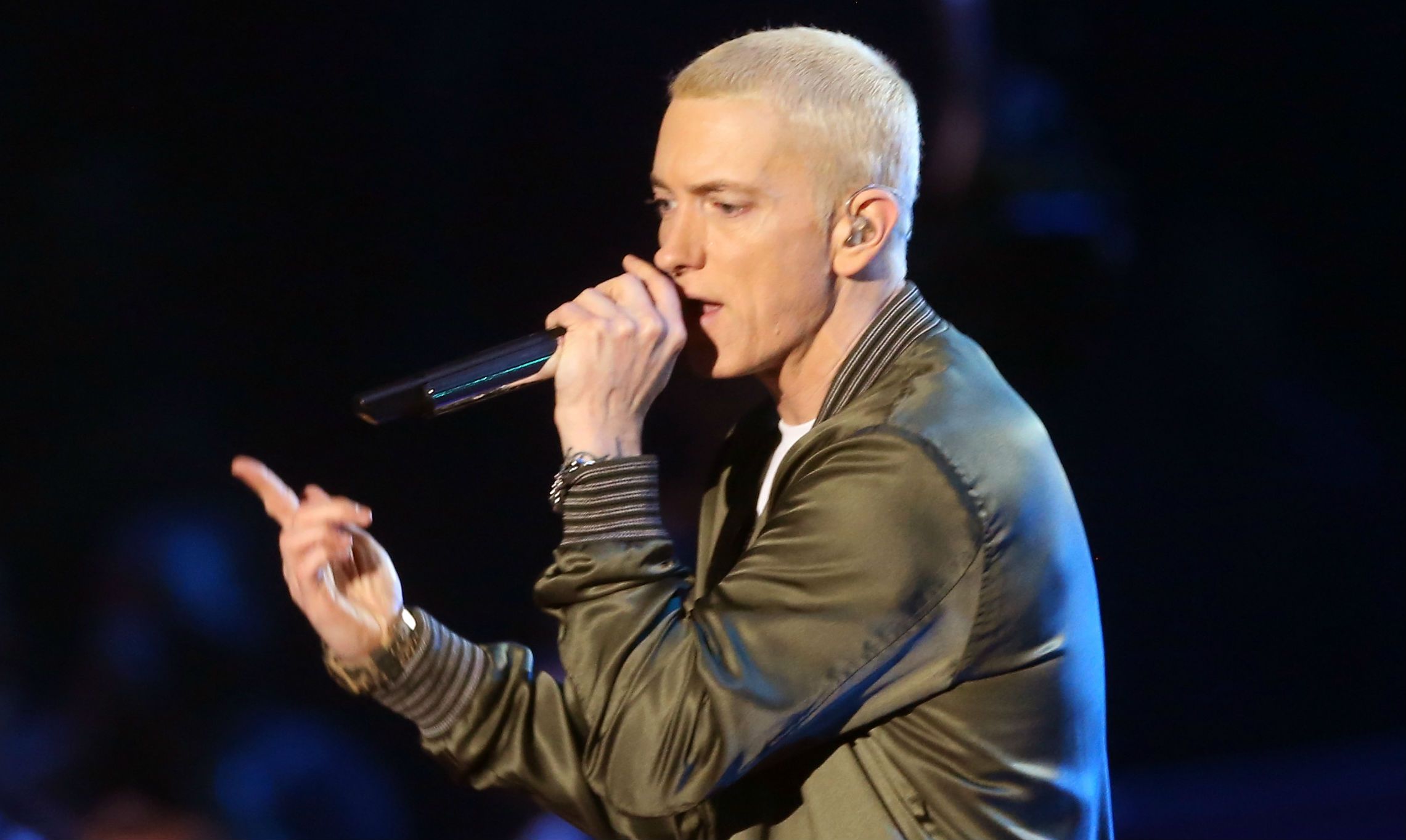
As March 2026 unfolds, **Eminem** fans worldwide are abuzz with anticipation, convinced the rap icon is poised for a major move this year. Despite no confirmed announcements from the Detroit native or his Shady Records team, speculation swirls around potential new music, a limited tour, and even a sequel to his seminal 2002 film “8 Mile.”

The 53-year-old Marshall Mathers—real name Eminem—has maintained a relatively low profile since the July 2024 release of his 12th studio album, *The Death of Slim Shady (Coup de Grâce)*. That project, which debuted at No. 1 on the Billboard 200 with 281,000 equivalent album units, marked a conceptual farewell to his Slim Shady alter ego and featured the viral single “Houdini.” It earned widespread acclaim for its sharp lyricism and production, solidifying Eminem’s status as one of hip-hop’s most enduring figures.
As of early March 2026, no new studio album has been officially teased or scheduled. Fan sites and forums, including Reddit’s r/Eminem community, host active threads debating timelines, with many predicting a 13th album sometime in 2026. Discussions point to Eminem’s pattern of shorter gaps between releases in certain eras, though recent intervals have stretched longer. Some speculate themes could include commentary on contemporary culture, technology figures like Elon Musk, or reflections on legacy and retirement.
Tour rumors persist despite the absence of confirmed dates. Multiple unverified social media posts and fan pages claim a 2026 world tour—some dubbing it a “farewell” or “One Last Ride”—with purported stops in London, New York, Tokyo, and Berlin. Others suggest nearly 40 shows across North America and Europe starting in summer or fall. Reliable sources, however, confirm no full-scale tour has been announced. Eminem’s live appearances remain selective: he headlined rare private events, including a January 2026 surprise performance at Detroit’s Little Caesars Arena for Rocket Mortgage employees, where he delivered a medley of career-spanning hits including “Houdini.” Such one-offs fuel hope for festival slots or limited runs later in the year.
Adding to the intrigue, reports circulated in early 2026 about Eminem developing a continuation to “8 Mile.” The original film, which grossed over $242 million worldwide and earned an Academy Award for Best Original Song (“Lose Yourself”), chronicled a fictionalized version of his early Detroit battles. Fan accounts and entertainment pages described production “in motion” with Eminem exerting creative control to maintain authenticity. While unconfirmed by official channels, the prospect of revisiting Jimmy “B-Rabbit” Smith Jr.’s world excites longtime supporters, potentially blending hip-hop cinema with modern storytelling.
Catalog-focused activity keeps Eminem relevant. In February 2026, limited-edition “Shady LPs” merchandise launched on eminem.com, celebrating anniversary milestones and his enduring brand. The 15th anniversary of *Recovery* (2010) prompted special apparel and jewelry drops. Streaming numbers remain strong: tracks like “Lose Yourself,” “Without Me,” and newer cuts from *The Death of Slim Shady* dominate playlists, with Eminem consistently ranking among Spotify’s most-streamed rappers.
Collaborative whispers add layers. In late 2025, 50 Cent hinted at recruiting Eminem for the soundtrack of the upcoming *Street Fighter* reboot film, slated for October 2026 release. The pair’s history—spanning G-Unit affiliations and shared Aftermath roots—makes the idea plausible, though no concrete updates have emerged.
Eminem’s cultural footprint extends beyond music. Recent mentions in hip-hop discourse include praise from underground rappers like Diabolic, who credited Eminem’s battle prowess in destroying Machine Gun Kelly. Meanwhile, emerging UK artists like Fakemink invoke Eminem comparisons, highlighting his influence on new generations.
Legal and business matters occasionally surface. A 2025 lawsuit over music licensing on Instagram and Facebook—seeking $110 million in damages—drew attention, with Meta dismissing claims as “fanciful.” Such issues rarely derail Eminem’s momentum.
Fans track every hint: producer cameos, social media silences, and anniversary alignments. Sites like eminem.news aggregate updates, from photographer interviews to unrelated hip-hop commentary, while YouTube overflows with fan-made remixes imagining 2026 tracks titled “Better America,” “Marshall Law,” or “Fatal Rhythm.” These unofficial creations reflect sustained demand for new material.
Eminem’s selective approach—avoiding oversaturation—builds mystique. After *The Death of Slim Shady*’s success, any 2026 announcement would generate massive attention. Whether a surprise drop, select tour dates, or film news materializes, the rapper’s ability to command headlines without constant output remains unmatched.
For now, the wait continues. Eminem’s team stays quiet, letting speculation build. As one fan forum poll suggested, many believe something significant arrives in 2026—be it music, live shows, or cinematic return. Until official word drops, the Slim Shady legacy endures, fueling endless anticipation in hip-hop’s ever-evolving landscape.

Check out what’s clicking on FoxBusiness.com.
Ford Motor Company ranks as the “most American” brand in the country, earning top marks from Democrats and Republicans alike while leading across every major income bracket, according to a new survey.
The Morning Consult survey of over 11,000 U.S. adults, conducted in February and titled “America at 250: What the Nation Believes,” found the iconic automaker holds the No. 1 spot regardless of political affiliation or earnings.
Among Republicans, 21% named Ford the most American brand, well ahead of Coca-Cola at 13%, McDonald’s at 11% and Harley-Davidson at 9%.
Democrats also put Ford at the top, with 16% selecting the automaker. McDonald’s followed at 14%, Coca-Cola at 12% and Walmart at 10%.
FORD RECALLS MORE THAN 615,000 VEHICLES OVER WIPER, DRIVESHAFT DEFECTS

The Ford logo at Ford Motor headquarters in Dearborn, Mich., March 12, 2025. (Reuters/Rebecca Cook/File Photo / Reuters)
Ford’s strength also extended to income levels, according to the survey.
Among Americans earning less than $50,000 annually, 17% chose Ford compared with 14% for McDonald’s and 11% each for Coca-Cola and Walmart.
In the $50,000 to $100,000 range, Ford again ranked first at 17%, narrowly edging Coca-Cola at 16%. McDonald’s followed at 14%, with Levi’s placing fourth at 7%.
For those earning $100,000 or more, Ford widened its lead to 19%, followed by Coca-Cola at 15%, Apple at 10% and McDonald’s at 9%.
FORD NAMED NO. 1 MOST ICONIC AMERICAN COMPANY IN NATIONWIDE SURVEY: ‘MAKING PEOPLE’S LIVES BETTER’
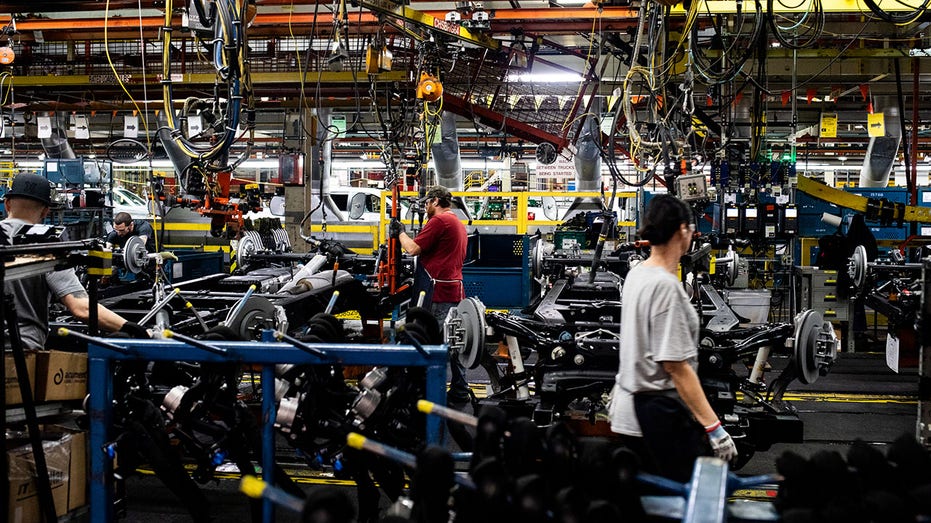
Workers assemble chassis parts for vehicle frames at the General Motors assembly plant in Fort Wayne, Ind., April 9, 2024. (Emily Elconin/Bloomberg via Getty Images / Getty Images)
In a statement to FOX Business, Ford Executive Chair Bill Ford said the company’s standing reflects its long-standing role in shaping the U.S. economy.
“As we approach America’s 250th anniversary, I’m proud that Ford has helped strengthen this country — not just by building great vehicles, but by expanding opportunity and improving people’s lives,” Bill Ford told FOX Business in an email.
He pointed to the company’s 1903 founding by Henry Ford, whose assembly line innovations and introduction of the $5-a-day wage expanded economic opportunity for American workers.
FORD RECALLS OVER 4.3 MILLION VEHICLES DUE TO SOFTWARE ISSUE

Ford Motor Co. Executive Chairman Bill Ford poses next to a new 2021 Ford F-150 pickup truck at the Rouge Complex in Dearborn, Mich., Sept. 17, 2020. (Reuters/Rebecca Cook / Reuters)
Bill Ford also cited the company’s role in supporting the nation during World War I and World War II and its ability to endure economic downturns.
CLICK HERE TO GET FOX BUSINESS ON THE GO
“That resilience and willingness to get up and keep swinging reflects the very best of America,” Bill Ford said.
“As we look to the next 250 years, I believe the future is incredibly bright, but it hinges on us coming together as a nation. We must heal our divisions and keep pushing forward, just as we always have. Ford will be there, serving the nation and helping to build a stronger future.”

PARIS — As travelers plan trips to the City of Light in 2026, finding affordable accommodations remains a top priority amid persistent high costs in central districts. Paris hotel rates have stabilized somewhat after post-pandemic surges, but prime locations near the Eiffel Tower, Louvre or Notre-Dame still command premiums. Budget-conscious visitors can secure solid options under $150 per night (often €100-€130, depending on exchange rates and dates), especially in outer arrondissements or during shoulder seasons like spring and fall.
Cheapest Hotels In Paris, France
Recent data from major booking platforms like Booking.com, Tripadvisor, Expedia and EuroCheapo highlight reliable, well-reviewed properties offering value without sacrificing basic comfort, cleanliness or accessibility via Metro. Prices fluctuate by season, demand and advance booking—March 2026 mid-week rates often dip lower than summer peaks. Here’s a rundown of five of the cheapest yet reputable hotels in Paris for 2026, based on current listings, guest ratings and affordability trends.
- ibis Budget Paris Porte de Montmartre (or similar ibis Budget locations) One of the most consistently affordable chains in Paris, ibis Budget properties like the one near Porte de Montmartre or La Villette offer no-frills stays starting around $55-$90 per night for double rooms in early 2026 searches. These modern, compact hotels feature free Wi-Fi, basic en-suite bathrooms and 24-hour reception. Guests praise the cleanliness and proximity to Metro lines for quick access to central Paris (15-25 minutes to major sights). Ratings hover around 6.5-7.5 on Tripadvisor and Booking.com, with complaints mostly about small rooms—typical for budget Paris. Ideal for short stays or those prioritizing savings over luxury. Multiple locations across the city make them flexible for different itineraries.
- Hotel Rivoli (or Hôtel de Suez / similar central budget spots) In the heart of the 1st arrondissement near Châtelet, Hotel Rivoli and comparable unrated or 1-2 star options appear in EuroCheapo lists with doubles from $55-$100. These older buildings provide simple, functional rooms close to the Seine, Louvre and Notre-Dame. Recent reviews note basic but clean accommodations, good for explorers who spend days sightseeing. Metro access is excellent, and nearby eateries keep food costs low. Expect narrow hallways and minimal amenities, but the unbeatable location justifies the trade-off for many. Booking early locks in the lowest rates before tourist seasons drive prices up.
- Hôtel Marignan Frequently ranked among the cheapest in central Paris, this 2-star hotel in the 8th arrondissement offers rooms starting around $67-$100 per night. Guests highlight its spot near the Champs-Élysées and Arc de Triomphe, making it surprisingly convenient despite the budget tag. Reviews on Tripadvisor emphasize friendly staff, decent breakfast options (often extra) and solid value for the area. Rooms are compact with modern touches like flat-screen TVs and free Wi-Fi. It’s a step up from hostels while remaining wallet-friendly—perfect for first-timers wanting iconic Paris vibes without breaking the bank.
- Avenir Hotel Montmartre Perched in the bohemian 18th arrondissement, this budget gem starts around $80-$120, with strong value in EuroCheapo recommendations. Close to Sacré-Cœur Basilica and the Moulin Rouge, it appeals to those seeking artistic neighborhoods. Guests rave about the quiet rooms, helpful reception and easy Metro connections to downtown. Cleanliness and comfort score high, with some rooms offering views of Montmartre’s hills. It’s a favorite for couples or solo travelers wanting charm without the central price tag—book ahead as Montmartre remains popular.
- Hotel Paris Vaugirard (or similar like Hôtel de Roubaix) In the quieter 15th arrondissement, options like Hotel Paris Vaugirard deliver rates from $74-$110. These properties offer straightforward comfort near Porte de Versailles and good transport links. Reviews praise spacious rooms by Paris standards, reliable hot water and proximity to local markets for affordable meals. It’s less touristy, providing an authentic feel while keeping costs down. Tripadvisor users note it’s great for longer stays or families on a budget.
Paris remains pricier than many European capitals, but strategic choices let visitors enjoy croissants near the Eiffel Tower or stroll the Seine without draining savings. Always confirm current availability and read recent reviews, as renovations or management changes can shift experiences. With careful planning, 2026 travelers can experience the magic of Paris affordably.
Business
Nifty bulls foot Rs 19 lakh crore bill for Iran war, Sensex down 3,300 points in 5 days. Bear market coming?
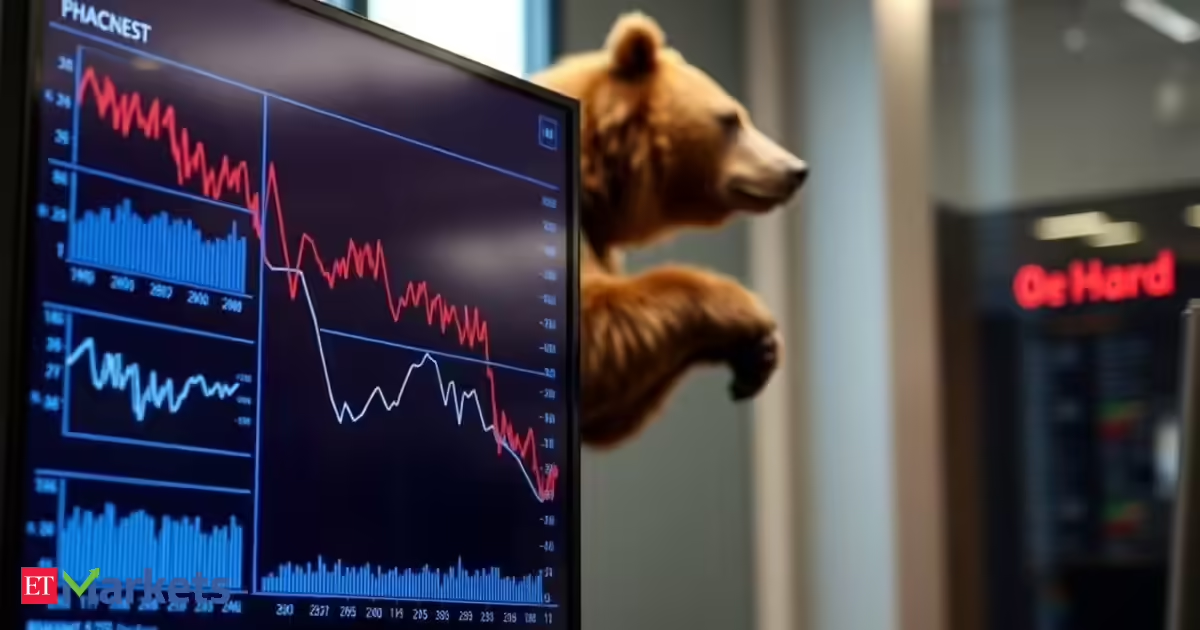
The Sensex has plunged 3,330 points in the brutal selloff, raising questions about whether this is merely a correction or the start of a full-blown bear market.
The carnage has been broad-based and merciless. PSU banks, tourism and airline stocks, real estate, banking and auto sectors have led the decline as escalating Middle Eastern tensions disrupted key oil and gas supplies, driving crude prices higher and threatening India’s fragile twin deficits. Defence stocks emerged as the only major winners, with Mazagon Dock, Solar Industries and Paras Defence surging amid the war.
“Persistent FII outflows, totaling over Rs 23,000 crore this week, reflect a broader de-risking strategy as geopolitical tensions in the Middle East and a surge in Brent crude toward $86 weigh heavily on emerging market sentiment,” said Vinit Bolinjkar, Head of Research at Ventura Securities.
The pain runs deeper than headline indices suggest. Around 80% of listed stocks with a market capitalization of at least Rs 1,000 crore have already fallen 20% from their all-time highs, technically a bear market in the broader market even as the Nifty is down only 7% from its peak.
Also Read | Iran war shock for Nifty bulls: How to tweak your portfolio for peace of mind
Technical indicators are flashing red across the board. The market is trading well below short-term and medium-term averages and is forming a lower top on daily charts. A bearish candle on weekly charts is also indicating further weakness from current levels.
Bolinjkar warned that the short-term outlook remains cautious due to rupee volatility and inflationary crude spikes. He expects high volatility to persist, favoring domestically-insulated sectors like capital goods and consumer durables, while globally-exposed pockets may face continued headwinds until macro-uncertainty subsides.
However, he noted that the structural narrative remains intact due to the “DII cushion”, domestic institutions bolstered by unwavering SIP inflows have absorbed selling pressure and prevented a deeper breakdown below the critical 24,300 Nifty support level.
Vinod Nair, Head of Research at Geojit Investments, painted an equally grim picture. “A sustained rise in oil prices could weigh on investor sentiment and adversely affect India’s twin deficits, inflation trajectory, and the RBI’s monetary stance. An uptick in U.S. 10-year bond yield and a stronger dollar have prompted FIIs to adopt a risk-off approach toward domestic equities,” he said, though he noted that “selective value-buying opportunities are expected to emerge, offering long-term investors attractive entry points.”
The question on every investor’s mind: is this the beginning of a prolonged downturn or a buying opportunity?
Also Read | 80% of Indian stocks are in bear market. Is it time to be greedy or fearful?
Fund managers are divided. Vinay Paharia, CIO at PGIM India Mutual Fund, acknowledged the crosscurrents. “At this juncture, we are seeing a mix of positives and a slew of uncertainties,” he said, pointing to healthy GDP prints, prospective trade deals, low interest rates and indirect tax cuts as positives, while flagging “global geopolitical uncertainty and its consequent impact on trade routes, rising crude and possibly other commodity prices, and AI-related disruption across sectors.”
Paharia warned that “many of the geopolitics-related impacts could be transitory in nature, while AI-related impacts are more long-term and would necessitate changes in business models, faster pivots, and greater agility by impacted companies and not all may be able to adapt.” He urged investors to “look through short-term volatility and focus on areas of self-sustaining growth.”
ArunaGiri N, Founder CEO & Fund Manager at TrustLine Holdings, struck a more opportunistic tone. “Historically, such phases are painful, but they are also when long-term opportunity quietly begins to build,” he said. “At the same time, it may be unwise to expect an immediate recovery. It may linger for a while. The prudent thing to do in such a sell-off is to grab the opportunities when the valuation is attractive instead of trying to time the bottom.”
ASK Investment Managers maintained that while rising trade and geopolitical uncertainty is expected to keep markets volatile, the investment case for India remains strong. “The relative macro stability, improving trade competitiveness and earnings recovery put India on a strong footing.”
The asset manager recommended a decisive tilt toward large caps, where valuations are relatively attractive and earnings visibility remains strong, complemented by selective exposure to micro-caps for investors with a long-term horizon of 5–7 years, given their illiquidity and higher risk. The firm stressed that “disciplined stock selection—focused on high-quality businesses and a concentrated approach—will be the key driver of outperformance as markets become increasingly selective and dispersion in returns widens.”
As geopolitical tensions simmer and oil prices threaten to spike further, Indian markets appear to be entering what Bolinjkar calls a phase of “rational consolidation”, a period where the DII cushion may prevent capitulation, but where volatility and sector rotation will separate winners from losers. Whether this consolidation morphs into a deeper bear market depends largely on factors beyond India’s control: the trajectory of the Iran conflict, crude oil’s next move, and global risk appetite.
For now, the bulls are nursing heavy wounds, and the bears are circling.

Prada: Healthy Results, But Some Softening Visible

Apple’s March 2026 Mac refresh has intensified the debate for laptop buyers: the freshly announced M5 MacBook Pro lineup versus the still-capable M4 MacBook Air. With the M5-powered MacBook Air also debuting alongside upgraded Pro models featuring M5 Pro and M5 Max chips, consumers face clear choices depending on needs, budget and workload.

The new announcements, detailed in Apple’s March 3 press releases, bring significant boosts in AI performance, storage baselines and connectivity. The M5 MacBook Pro (14- and 16-inch) targets professionals demanding sustained power, while the M4 MacBook Air—now often discounted as retailers clear inventory—remains a strong everyday option. Here’s a head-to-head breakdown to help decide which MacBook suits you best in March 2026.
Design and Portability
Both lines retain Apple’s signature thin, lightweight aluminum builds. The M4 MacBook Air (13.6-inch and 15.3-inch) weighs 2.7 pounds (13-inch) or 3.3 pounds (15-inch), making it ultra-portable for travel, students and commuters. Its fanless design ensures silent operation, ideal for quiet environments like libraries or coffee shops.
The M5 MacBook Pro (14-inch starting at 3.4 pounds, 16-inch at 4.7-4.8 pounds) adds active cooling fans for prolonged high-performance tasks without throttling. It includes a superior Liquid Retina XDR display (up to 1600 nits peak HDR brightness, mini-LED backlighting) versus the Air’s standard Liquid Retina (500 nits). Pro models offer nano-texture glass options to reduce glare, plus more ports: Thunderbolt 5 (faster than the Air’s Thunderbolt 4), HDMI, SDXC card slot and three Thunderbolt ports on higher configs versus the Air’s two.
For pure mobility, the Air wins; for workstation versatility, the Pro excels.
Performance and Chips
The M4 MacBook Air (still current in many configs) uses a 10-core CPU (4 performance + 6 efficiency), up to 10-core GPU, 16GB unified memory base and strong Neural Engine for Apple Intelligence tasks. It handles everyday work—browsing, office apps, light photo/video editing, coding—effortlessly, with real-world battery life of 14-18 hours.
The M5 MacBook Pro introduces base M5 (in lower configs) or M5 Pro/M5 Max variants. The M5 chip delivers up to 20-30% faster multi-core CPU, significantly improved GPU (with Neural Accelerators per core) and 4x AI performance over M4 equivalents. M5 Pro/Max push further: up to 18-core CPU, massive memory bandwidth (up to 614GB/s on Max), and up to 128GB unified memory. Benchmarks show M5 models 50-200% faster in GPU-heavy tasks like 3D rendering or AI model training compared to M4.
The M5 Pro/Max sustain peak performance longer thanks to cooling, while the fanless Air may throttle under extended heavy loads. For casual to moderate use (web, streaming, productivity), the M4 Air suffices; for video editing, 3D work, machine learning or pro apps, the M5 Pro shines.
Display, Audio and Battery
The Pro’s Liquid Retina XDR offers superior contrast, color accuracy (P3 wide color, 1,000 nits sustained) and ProMotion (up to 120Hz refresh) for smoother scrolling and editing. The Air’s Liquid Retina is excellent but lacks HDR depth and high refresh.
Audio favors the Pro: six-speaker system with force-canceling woofers versus the Air’s four-speaker setup. Both deliver immersive Spatial Audio.
Battery life remains stellar: up to 24 hours on M5 Pro/Max MacBook Pro (real-world 18-22 hours heavy use), versus 18 hours rated on Air (often 14-16 hours tested). Both support fast charging.
Storage, Connectivity and AI
A major win for 2026 models: doubled base storage. The M5 MacBook Air starts at 512GB (up from M4’s 256GB), configurable to 4TB. M5 Pro MacBook Pro begins at 1TB, M5 Max at 2TB.
Connectivity upgrades include Apple’s N1 chip for Wi-Fi 7 and Bluetooth 6 on new models, improving speed and reliability over the Air’s Wi-Fi 6E.
Apple Intelligence features—enhanced writing tools, image generation, on-device AI—are faster on M5 (up to 4x vs M4), benefiting local LLM processing.
Pricing and Value in March 2026
- M4 MacBook Air (clearance deals): 13-inch often $749-$899 (from $999 MSRP), 15-inch around $1,099-$1,199. Excellent value for most users.
- M5 MacBook Air (new): 13-inch $1,099, 15-inch $1,299—with 512GB base.
- M5 MacBook Pro: 14-inch base (M5) around $1,599-$1,699; M5 Pro 14-inch $2,199; 16-inch M5 Pro $2,699; M5 Max higher ($3,599+).
The M4 Air offers the best bang-for-buck for students, casual creators and professionals handling light workloads. Discounts make it compelling before full M5 Air stock arrives.
The M5 Pro/Max MacBook Pro justifies the premium for demanding users—video pros, developers, AI researchers—needing sustained power, better display and ports.
Who Should Buy Which?
- Choose M4 MacBook Air if: You’re budget-focused, prioritize portability/silence, handle everyday tasks (school, office, browsing, light creative), want a large screen option affordably.
- Choose M5 MacBook Pro if: You need pro-level performance (video/3D editing, coding heavy compiles, AI/ML), want the best display/audio/ports, plan long sessions without throttling, or future-proof for intensive workflows.
Both run macOS Tahoe seamlessly with Apple Intelligence. For most people in 2026, the M4 Air (especially discounted) delivers outstanding value. Power users investing in longevity lean toward the M5 Pro lineup.
Check Apple’s site, authorized resellers or carriers for current deals—pre-orders for new models start March 4, with availability March 11. Test in-store if possible; the choice boils down to workload versus wallet.
Business
How the Iran Conflict Could Reshape Energy Strategies, Supply Chains, and Market Entry Plans in ASEAN

Geopolitical tensions, especially involving Iran, raise energy costs and disrupt shipping, unevenly impacting ASEAN economies based on energy dependence, exports, and flexibility; Indonesia benefits from domestic demand, while Vietnam’s exports increase vulnerability.
🌍 Geopolitical Context
- Rising tensions involving Iran are driving up energy costs and disrupting shipping routes.
- These disruptions affect ASEAN economies differently depending on their energy dependence, export reliance, and fiscal resilience.
⚡ Energy & Supply Chain Impact
- Immediate effects include:
- Higher crude oil prices
- Increased maritime insurance premiums
- Delays along key shipping routes between the Middle East, Asia, and Europe
- These factors increase volatility and force companies to reassess risks and adjust strategies.
📊 ASEAN Economic Vulnerabilities
- Energy-importing nations: face inflation and fiscal strain.
- Export-driven economies: suffer from longer transit times and cash flow challenges.
- Financial hubs: experience capital flow fluctuations differently than manufacturing or resource-dependent economies.
Impact of Iran Tensions on Southeast Asia
The escalation involving Iran introduces a new risk factor for companies considering investment or expansion in Southeast Asia. Immediate effects include rising crude oil prices, increased maritime insurance premiums, and disruptions along key shipping routes linking the Middle East, Asia, and Europe. These factors heighten overall costs and introduce volatility into supply chains, requiring renewed project risk assessments and strategic adjustments.
Diverse Vulnerabilities Across ASEAN Economies
ASEAN countries vary significantly in energy dependence, export focus, fiscal health, and currency management. Energy-importing nations face inflation and fiscal strain, while export-centric economies endure longer transit times and cash flow challenges. Financial hubs handle capital flow fluctuations differently from manufacturing or resource-dependent economies, emphasizing the importance of tailored risk mitigation strategies within the region.
Uneven Transmission of Geopolitical Shocks
Different ASEAN economies respond differently to geopolitical shocks. Indonesia benefits from a large domestic market, with household consumption driving over half of its GDP, offering resilience against external energy shocks. Conversely, Vietnam’s highly export-dependent economy is vulnerable to disruptions in maritime logistics, affecting its manufacturing and trade flows. Understanding these diverse responses helps investors better navigate regional risks.
Read the original article : How the Iran Conflict Should Change Energy, Supply Chain, and Market Entry Planning in ASEAN
Other People are Reading

Bilibili: A Deep Dive Into The 299% Operating Income Surge And New Valuation

NHL Highlights, March 6

Apple is adding a warning against AI music content


-

 Politics4 days ago
Alan Cumming Brands Baftas Ceremony A ‘Triggering S**tshow’
-

 Tech6 days ago
Unihertz’s Titan 2 Elite Arrives Just as Physical Keyboards Refuse to Fade Away
-
Business15 hours ago
Form 8K Entergy Mississippi LLC For: 6 March
-

 NewsBeat6 days ago
Abusive parents will now be treated like sex offenders and placed on a ‘child cruelty register’ | News UK
-

 Fashion11 hours ago
Weekend Open Thread: Ann Taylor
-
 NewsBeat7 days ago
Dubai flights cancelled as Brit told airspace closed ’10 minutes after boarding’
-
 NewsBeat7 days ago
The empty pub on busy Cambridge road that has been boarded up for years
-

 NewsBeat6 days ago
‘Significant’ damage to boarded-up Horden house after fire
-

 Tech2 days ago
Bitwarden adds support for passkey login on Windows 11
-

 Entertainment5 days ago
Baby Gear Guide: Strollers, Car Seats
-
 Sports1 day ago
499 runs and 34 sixes later, India beat England to enter T20 World Cup final | Cricket News
-
 NewsBeat6 days ago
Emirates confirms when flights will resume amid Dubai airport chaos
-
Politics6 days ago
FIFA hypocrisy after Israel murder over 400 Palestinian footballers
-

 NewsBeat5 days ago
Is it acceptable to comment on the appearance of strangers in public? Readers discuss
-

 Tech6 days ago
Viral ad shows aged Musk, Altman, and Bezos using jobless humans to power AI
-

 Video5 days ago
How to Build Finance Dashboards With AI in Minutes
-

 Fashion6 days ago
On the Scene at the 57th Annual NAACP Image Awards: Teyana Taylor in Black Ashi Studio, Colman Domingo in Yellow Sergio Hudson, Chloe Bailey in Christian Siriano, and More!
-

 Business3 days ago
Guthrie Disappearance Enters Fifth Week as Family Visits Memorial
-
 NewsBeat5 days ago
Ukraine-Russia war latest: Belgium releases video showing forces boarding Russian shadow fleet oil tanker
-
 Crypto World6 days ago
US Judge Lets Binance Unregistered Token Class Action Proceed