
Connect with us
DAPA Banner
DAPA Coin
DAPA
COIN PAYMENT ASSET
PRIVACY · BLOCKDAG · HOMOMORPHIC ENCRYPTION · RUST
ElGamal Encrypted MINE DAPA
🚫 GENESIS SOLD OUT
DAPAPAY COMING

Business

Will the ADF be Drawn into a Middle Eastern Ground War in 2026?

Published

on

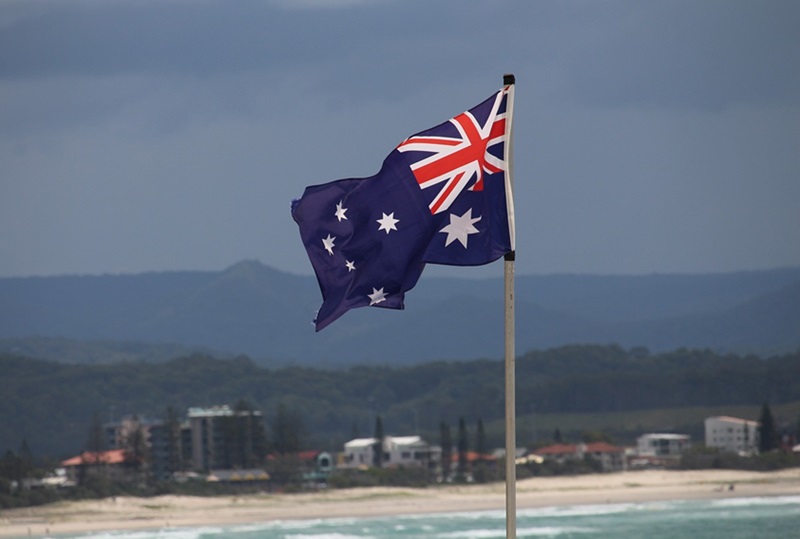
Australia flag

MELBOURNE — As geopolitical fault lines deepen across the Persian Gulf, a haunting question has returned to the corridors of Parliament House in Canberra: Is Australia prepared for another protracted conflict in the Middle East?

Australia flag
Pixabay

With the 2026 security landscape defined by a volatile “tit-for-tat” cycle between Washington and Tehran, the Australian Defence Force (ADF) finds itself at a strategic crossroads. While the federal government maintains a policy of “calculated restraint,” military analysts and regional experts warn that the threshold for Australian involvement is shifting from “if” to “how.”

The ANZUS Factor: A Century of Commitment

The bedrock of Australia’s military involvement remains the ANZUS Treaty. Historically, Australia has been the only ally to join the United States in every major conflict of the last century. However, 2026 is not 2003.

Unlike the lead-up to the Iraq War, the current Australian government faces a more skeptical public and a Defense Force currently undergoing a massive “Pivot to the North.” Under the 2024 National Defence Strategy, the ADF has been restructured to prioritize the Indo-Pacific—specifically the maritime approaches to Australia’s north—rather than desert warfare in the Levant.

“The appetite for a ground war is at an all-time low,” says Dr. Elena Vance, a senior fellow at the Australian Strategic Policy Institute (ASPI). “But the pressure to support our primary sovereign ally, the United States, in maintaining the ‘rules-based order’ remains the gravity that pulls our foreign policy.”

Advertisement

Chokepoints and Coalitions: The Maritime Trigger

If Australia is drawn in, it likely won’t start with boots on the ground, but with hulls in the water. The Strait of Hormuz, a narrow waterway through which 20% of the world’s petroleum passes, is the most probable “tripwire.”

In early 2026, Iranian-backed “swarm” tactics involving unmanned surface vessels (USVs) have increasingly harassed commercial shipping. For Australia, this isn’t just a distant military concern—it is an economic one. Australia’s national fuel reserve remains famously thin, often cited at less than 30 days of commercial supply. A total blockage of the Strait would send Sydney and Melbourne petrol prices soaring toward $3.50 per liter within a fortnight.

Historically, Australia has contributed a Hobart-class destroyer or a Anzac-class frigate to international maritime security operations in the Gulf. In 2026, the ADF’s contribution would likely be focused on Project Sea 1905, utilizing autonomous mine-countermeasure systems to keep trade lanes open without risking high-value manned assets.

The Ground War Dilemma: Special Forces vs. Infantry

The term “Ground War” in 2026 looks vastly different than the invasions of the past. If the U.S. requests Australian assistance in a conflict with Iran, military planners suggest the ADF would offer a “niche and scalable” force rather than a brigade-strength infantry deployment.

Advertisement

1. The SASR and Commando Role

Australia’s Special Air Service Regiment (SASR) and the 2nd Commando Regiment remain the “preferred” contribution for Canberra. Their role would likely focus on:

  • CSAR (Combat Search and Rescue): Retrieving downed Allied pilots.
  • Target Acquisition: Identifying mobile missile launchers in the Iranian interior.
  • Advisory Roles: Working with regional partners like the UAE or Saudi Arabia.

2. The Cyber and Space Front

For the first time in an Australian conflict, the Joint Capabilities Group would lead. Iranian state-sponsored actors have already demonstrated the ability to target “soft” infrastructure. A 2026 conflict would see the ADF’s cyber-warriors engaged in defensive operations to protect Australian banks and power grids from retaliatory strikes—a “ground war” fought in servers rather than trenches.

The China Constraint: Why 2026 is Different

The most significant deterrent to an Australian ground presence in the Middle East is the “Two-Front” nightmare.

Department of Defence officials are acutely aware that any significant depletion of ADF resources in the Middle East creates a “strategic vacuum” in the South China Sea. Beijing’s increasing assertiveness near the Second Thomas Shoal and the Taiwan Strait means Australia’s premium assets—such as the F-35A Lightning II fleet and the new Hunter-class frigates—are required closer to home.

“Every soldier we send to the Gulf is a soldier we don’t have for the Pacific,” notes a retired ADF Brigadier, speaking on condition of anonymity. “In 2026, the Middle East is a distraction we can ill-afford, yet a catastrophe we cannot ignore.”

Advertisement

Public Sentiment and the “Cost of Living” Conflict

Domestic politics will play a decisive role. Unlike the 1990s, the 2026 Australian public is hyper-aware of the correlation between Middle Eastern stability and the cost of living.

A recent poll suggests that while 65% of Australians oppose “combat troop” deployment, nearly 55% support “defensive naval action” to protect fuel prices. The government’s challenge will be threading the needle: supporting the U.S. enough to maintain the alliance, but not so much that it triggers a domestic backlash during an election year.

Conclusion: A Support Role, Not a Lead Role

As it stands in March 2026, the likelihood of a massive ADF ground deployment to Iran or its neighbors is low. However, the probability of “Integrated Support”—comprising maritime patrol, cyber defense, and elite special forces—is at its highest point in a decade.

Australia’s role will be that of a “Force Multiplier.” By providing specialized high-tech capabilities, Canberra can fulfill its ANZUS obligations while keeping the bulk of its conventional forces stationed in the Indo-Pacific.

Advertisement

The “War of 2026” may not be defined by the number of boots on the ground, but by the number of bits in the cloud and drones in the strait. For the ADF, the mission is no longer just about winning a battle; it’s about managing a global ripple effect that threatens the Australian way of life.

Continue Reading
Click to comment

You must be logged in to post a comment Login

Leave a Reply

Business

British Steel nationalisation: Government moves on Scunthorpe steelworks future

Published

on

Business Live

The Government is set to introduce legislation this week that will allow it to take control of the steelmaker, 38 years since it was first privatised, protecting thousands of Scunthorpe jobs.

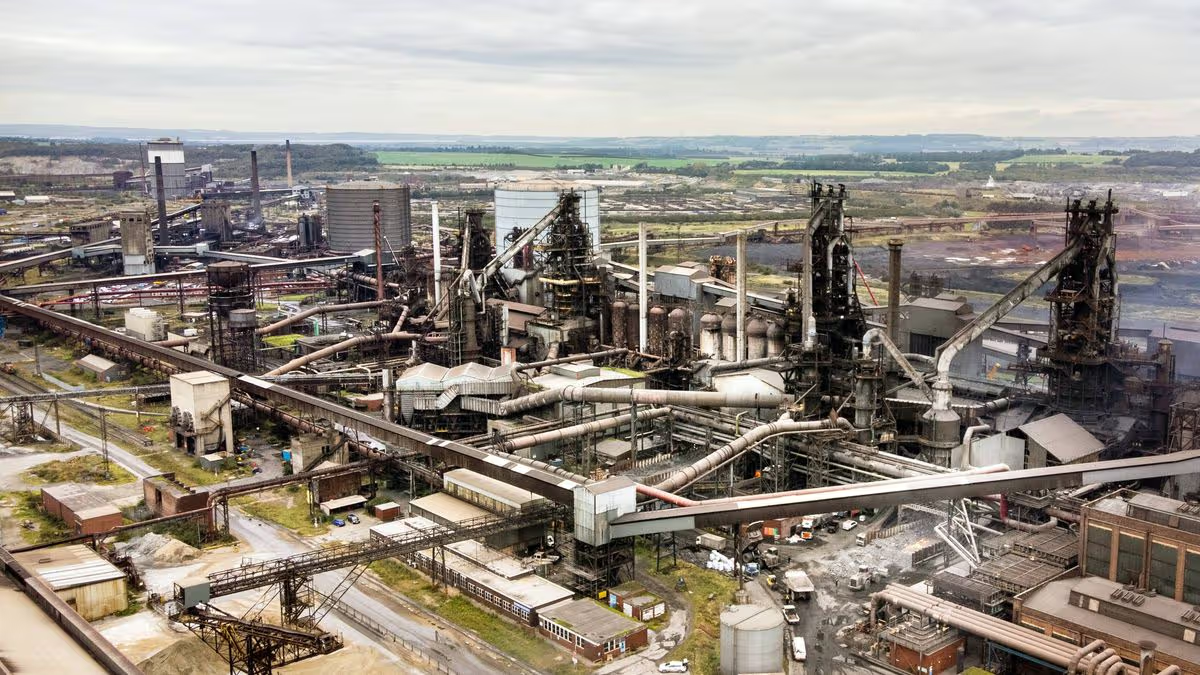
The British Steel steelworks in Scunthorpe, North Lincolnshire

The British Steel steelworks in Scunthorpe(Image: PA Archive/PA Images)

British Steel looks set to return to public ownership as Sir Keir Starmer unveiled new legislation he said will give the Government “options” to safeguard the industry and workers in Scunthorpe. Fresh powers could be deployed to nationalise British Steel, 38 years after the company was first privatised.

This follows a year after the Government deployed emergency powers to seize control of the firm and maintain production at the Scunthorpe site, after its owner, Chinese company Jingye, put forward plans to shut down the two blast furnaces. Negotiations with Jingye have continued since, but the Government said it was unable to agree a commercial sale, and believed no deal could be reached that would deliver sufficient value for taxpayers.

Advertisement

The Government stated its view that introducing legislation to provide a pathway to public ownership was the appropriate next step, enabling it to determine the steelmaker’s future direction. The legislation, which is to be brought before Parliament this week, will be subject to a public interest test, taking into account factors including national security, preserving critical national infrastructure and bolstering the economy.

The Prime Minister said: “Steel is strategically important to our economy and our national resilience. That’s why we acted last year to avoid a sudden halt to production at Scunthorpe, protecting workers and the community that depend on the site, and why we’re now bringing forward legislation to give us options to protect Britain’s steelmaking capability.

Prime Minister Keir Starmer giving his speech in London on Monday

Prime Minister Keir Starmer giving his speech in London on Monday(Image: Getty Images)

“This is what an activist state looks like – taking decisions in the national interest. “This Bill would allow us to take action if we need to, while we continue rebuilding our steel sector.”

A steel union praised the decision to nationalise British Steel, stating it will “protect it from foreign owners”.

Advertisement

Charlotte Brumpton-Childs, GMB national secretary, said: “This legislation will cover the whole steel industry – it isn’t specifically for British Steel but it is what will protect it from foreign owners. “British Steel is a nationally strategic asset, it is right the Government does everything in its power to secure its long term future.”

Gareth Stace, director-general for trade association UK Steel, welcomed the move, saying it “provides vital certainty for the workforce, the company’s customers and the wider supply chain at a critical moment”.

However, he emphasised: “Nationalisation is not an end goal. This must now be the beginning of a clear and credible long-term plan for British Steel.”

The Government’s action last year halted Jingye’s plans and brought its redundancy consultations to an end, which could have resulted in between 2,000 and 2,700 job losses. It also allowed the Scunthorpe blast furnaces to keep running.

Advertisement

Jingye had been weighing up closing them after revealing it was haemorrhaging £700,000 daily owing to difficult market conditions, tariffs and substantial environmental costs. The Government’s intervention to safeguard the site set it back £377 million between April 2025 and January 2026, according to a National Audit Office (NAO) report.

Alongside the £377m required to keep British Steel afloat, £15mn was allocated to advisers and £359m to the company for operational activities, including raw materials, payroll and associated costs. Had the blast furnaces been shut down, however, it would have resulted in significant job losses at Scunthorpe and impacted customers throughout the supply chain, including Network Rail, the NAO noted.

Business Secretary Peter Kyle said: “Revitalising our steel sector is a top priority for this Government and bringing forward this legislation would allow us to explore potential future options for British Steel. The Government recognises that securing the long-term future of the UK’s steel sector relies on both public and private investment for modernisation.”

Downing Street confirmed that an independent valuation would be conducted to establish the potential cost of nationalising British Steel. “Where the powers in the bill are used, an independent valuer will be appointed to determine what compensation, if any, is payable, and the UK Government will, of course, abide by the valuer’s conclusions,” the Prime Minister’s official spokesman said.

Advertisement
Continue Reading

Business

Hidden Valley unveils chicken snacks

Published

on

Hidden Valley unveils chicken snacks

The refrigerated RTD snacks are available in two varieties. 

Continue Reading

Business

Thailand Plus Initiative Strengthens US Trade and Investment Partnerships

Published

on

Thailand Plus Initiative Strengthens US Trade and Investment Partnerships

Deputy PM Suphajee Suthumpun’s recent Washington visit advanced Thailand-U.S. trade cooperation, discussing investments in energy, technology, and more. Thai investments in the U.S. exceed $17 billion, with trade valued at $93.65 billion.


Key Points

  • Deputy Prime Minister and Commerce Minister Suphajee Suthumpun visited Washington, D.C. with the “Team Thailand+” delegation to enhance trade and investment ties between Thailand and the U.S. They attended the SelectUSA Investment Summit 2026.
  • Meetings included discussions with U.S. agencies, business groups, and representatives from Texas and Utah to explore investment opportunities in sectors like energy, food, petrochemicals, technology, and electronics.
  • In 2025, the U.S. was Thailand’s second-largest trading partner, with bilateral trade at $93.65 billion. Thailand exported $72.50 billion in goods and imported $21.14 billion, including crude oil and machinery.

Deputy Prime Minister and Commerce Minister Suphajee Suthumpun has disclosed that her recent visit to Washington, D.C., with the “Team Thailand+” delegation helped advance trade and investment cooperation between Thailand and the United States.

The delegation attended the SelectUSA Investment Summit 2026 and met with U.S. government agencies, business groups, and private-sector representatives to discuss investment opportunities in sectors including energy, food, petrochemicals, technology, and electronics. Meetings were also held with representatives from Texas and Utah regarding future investment opportunities.

Suphajee said discussions with the U.S. Department of Commerce, the U.S.–ASEAN Business Council, and the U.S. Chamber of Commerce covered trade policy, reciprocal trade negotiations, supply-chain cooperation, and American investment in Thailand. Thai investment in the United States currently exceeds 17 billion dollars.

According to government data, the United States was Thailand’s second-largest trading partner in 2025, with bilateral trade valued at 93.65 billion dollars. Thailand exported 72.50 billion dollars in goods to the United States while importing 21.14 billion dollars in products, including crude oil, machinery, aircraft components, chemicals, and electrical equipment.

Advertisement

Source : Team Thailand Plus Boosts Trade and Investment Ties with US

Continue Reading

Business

Hormel Foods expands Herdez line

Published

on

Hormel Foods expands Herdez line

The Asada line features marinades, barbecue sauces and taco seasonings. 

Continue Reading

Business

Strategic Market Entry and Regional Structuring Approaches for Australian Businesses

Published

on

Strategic Market Entry and Regional Structuring Approaches for Australian Businesses

ASEAN offers Australian companies expansion opportunities, but strategic market selection depends on goals such as sales, manufacturing, supply chain, or tax efficiency, considering regional differences.

ASEAN: A Key Growth Region for Australian Businesses

ASEAN is increasingly vital for Australian companies aiming to expand markets, enhance supply chain resilience, and access Southeast Asia’s growing consumer and industrial markets. With over 680 million people and a combined economy surpassing US$3.8 trillion, the region offers significant scale and opportunity. However, its diversity necessitates strategic planning to maximize benefits and mitigate risks.

Strategic Approach to ASEAN Expansion

Expansion into ASEAN should be viewed as a phased, strategic process rather than a simple entry. The initial market choice depends on the company’s goals—whether it’s boosting sales, expanding manufacturing capacity, diversifying supply chains, managing regional operations, or optimizing tax. Firms need to prioritize their primary commercial function to determine the most suitable early markets within the region.

Priorities for Australian Companies

Australian firms should first identify whether their focus is manufacturing, procurement, regional coordination, or consumer access. Countries like Malaysia and Thailand remain attractive for industrial infrastructure and manufacturing integration. Many companies adopt a hub-and-spoke model, using Singapore for regional oversight and distributing operations across other ASEAN nations based on sector suitability and operational needs.

Advertisement


Read the original article : Expanding Across ASEAN: Market Entry and Regional Structuring Strategies for Australian Firms

Continue Reading

Business

GM lays off 500-600 salaried IT workers to cut costs

Published

on

GM lays off 500-600 salaried IT workers to cut costs

The General Motors global headquarters in Detroit, Jan. 12, 2026.

Jeff Kowalsky | Bloomberg | Getty Images

DETROIT – General Motors is laying off hundreds of salaried employees in its information technology operations as the automaker reevaluates its workforce needs and cuts costs, CNBC has learned.

Advertisement

The global reductions began Monday and will impact about 500 to 600 employees, largely in Austin, Texas, and Warren, Michigan, according to a person familiar with the plans who was not authorized to speak publicly about the reductions.

GM confirmed the cuts, which were first reported by Bloomberg News, but declined to give specific details about the actions.

“GM is transforming its Information Technology organization to better position the company for the future. As part of that work, we have made the difficult decision to eliminate certain roles globally. We are grateful for the contributions of the employees affected and are committed to supporting them through this transition,” the automaker said in an emailed statement.  

GM reported employing about 68,000 salaried workers globally as of the end of last year, including 47,000 white-collar employees in the U.S.

Advertisement

Despite Monday’s cuts, GM still is still hiring IT workers. The company has 82 open IT positions that include positions working in artificial intelligence, motorsports and autonomous vehicles, according to the automaker’s careers website.

The Detroit automaker in recent years has routinely re-evaluated its salaried workforce, based on expected needs and skill sets. In October, GM laid off more than 200 Computer-Aided Design, or CAD, engineers due to “business conditions.”

Choose CNBC as your preferred source on Google and never miss a moment from the most trusted name in business news.
Continue Reading

Business

Gordon Chang calls Chinese EVs ‘rolling spy machines’ before Trump-Xi talks

Published

on

Gordon Chang calls Chinese EVs 'rolling spy machines' before Trump-Xi talks

President Donald Trump’s upcoming meeting with Chinese President Xi Jinping is drawing renewed attention to concerns that Chinese electric vehicles entering North America through Canada could pose national security risks inside the United States.

Gatestone Institute senior fellow Gordon Chang joined FOX Business’ Maria Bartiromo on “Mornings with Maria” to discuss tensions surrounding China’s trade practices, energy policy and Beijing’s growing EV footprint ahead of the high-stakes Beijing meeting.

Advertisement
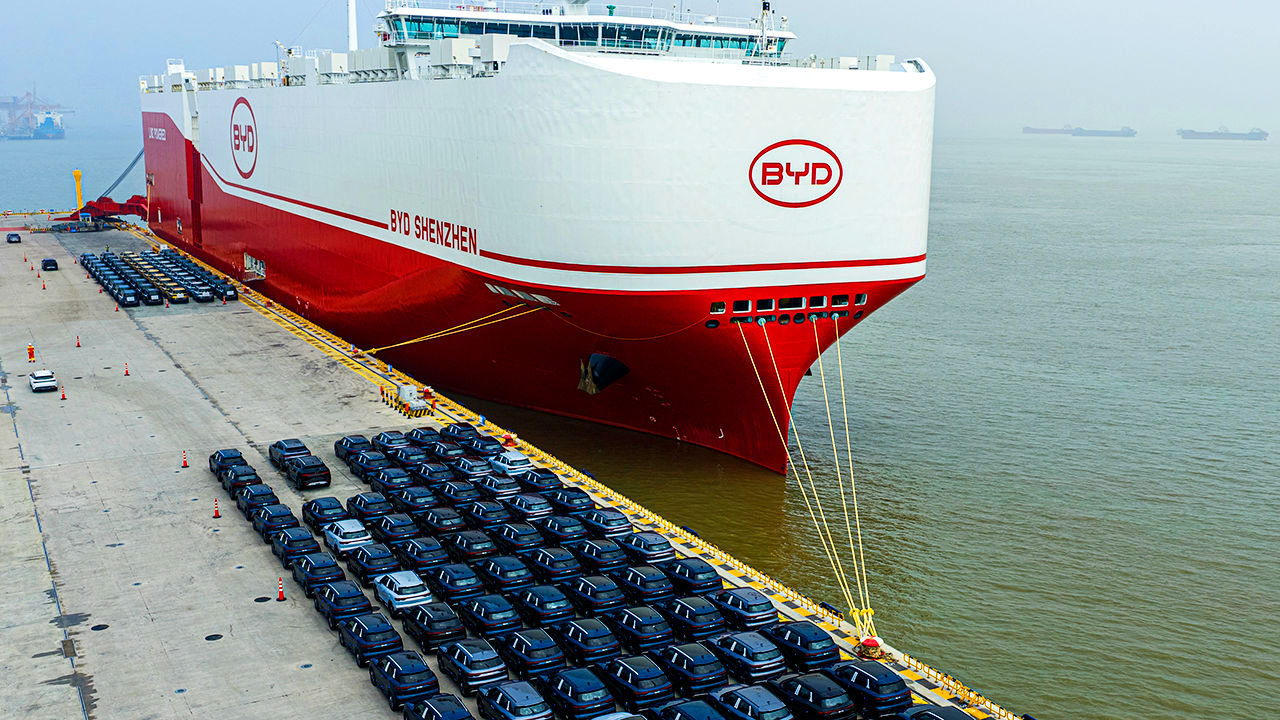
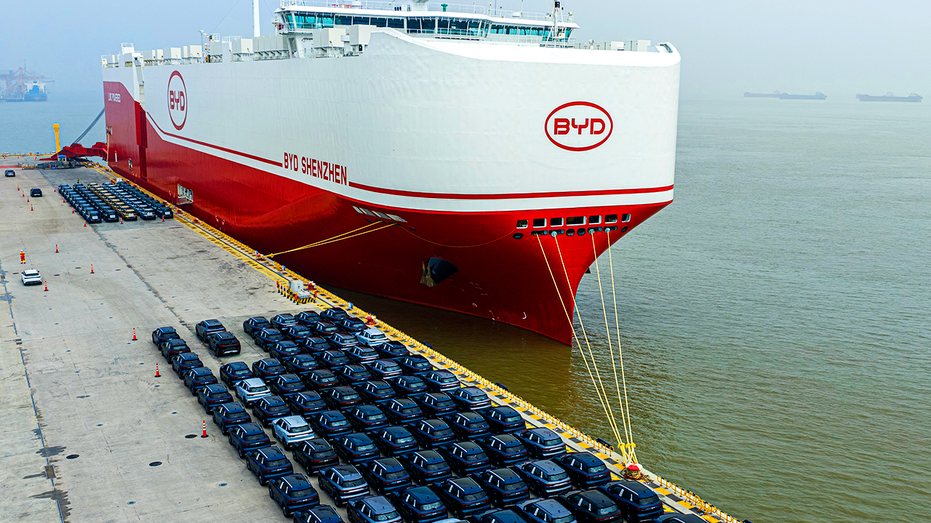
BYD's Shenzhen car carrier.

China’s BYD Shenzhen car carrier docked to load electric vehicles for export. (CN-STR / AFP / Getty Images)

The discussion comes as lawmakers push legislation aimed at blocking Chinese electric vehicles from entering the U.S. market, citing concerns over surveillance technology and connected-vehicle systems capable of collecting sensitive data.

Sen. Bernie Moreno, R-Ohio, warned that the vehicles function as “little Trojan horses” because of the amount of information they can collect and transmit.

“These cars have lots of cameras. They send back data to the Communist Party and can be remotely controlled by the Communist Party,” Moreno said during a recent appearance on “Sunday Morning Futures.”

Advertisement

AI EXPOSES HIDDEN RISKS IN US MILITARY SUPPLY CHAIN TIED TO CHINA

Chang expanded on those concerns, warning that Canada’s decision to lower tariffs on some Chinese EV imports could create another pathway for the vehicles to reach the United States.

“We should not allow Canadians to drive their Chinese EV across our border into our country because China will be able to surveil the United States with the Canadian cars,” Chang said.

Advertisement

GORDON CHANG: US SHOULD EXPAND SANCTIONS ON CHINA-LINKED NETWORKS TO HIT IRAN OIL REVENUE

Chang also described Chinese EVs as “rolling spy machines,” arguing that the issue underscores broader tensions between Washington and Beijing ahead of Trump’s expected meeting with Xi later this week.

GET FOX BUSINESS ON THE GO BY CLICKING HERE

Advertisement
Continue Reading

Business

Elon Musk and Tim Cook among CEOs expected to accompany Trump on China trip

Published

on

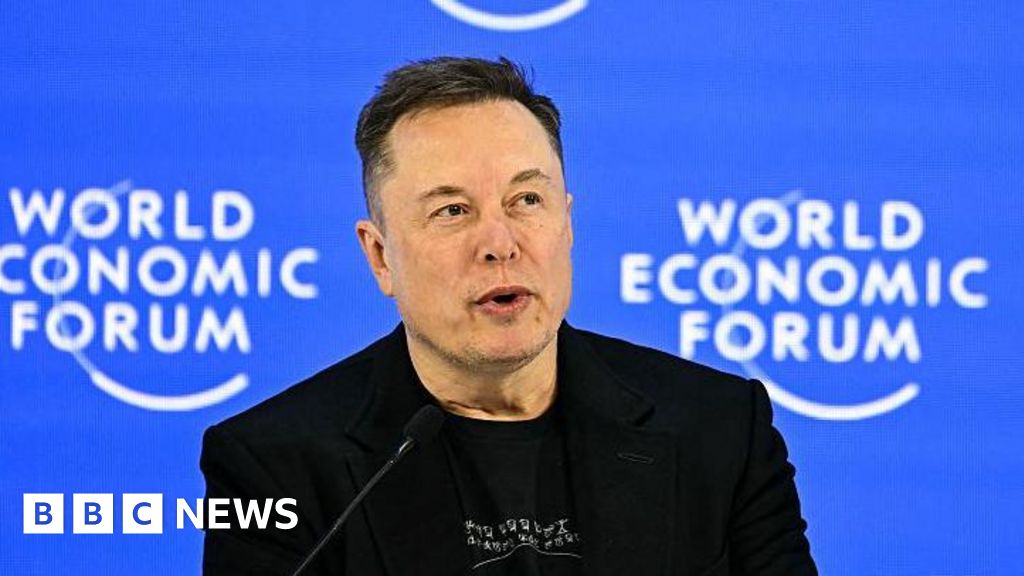
Elon Musk and Tim Cook among CEOs expected to accompany Trump on China trip

A total of 17 US executives are set to join the president on his visit, where he will meet his Chinese counterpart Xi Jinping.

Continue Reading

Business

Tostitos to launch guacamole dip

Published

on

Tostitos to launch guacamole dip

The dip is expected to roll out later this year. 

Continue Reading

Business

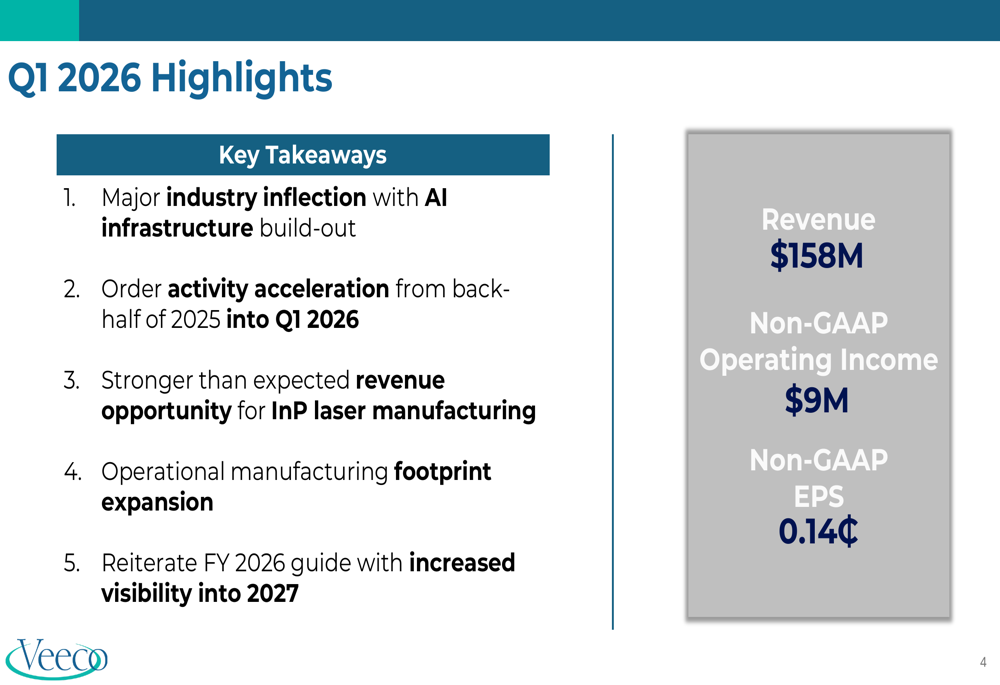
Veeco Q1 2026 slides: AI demand fuels growth outlook despite earnings miss

Published

on

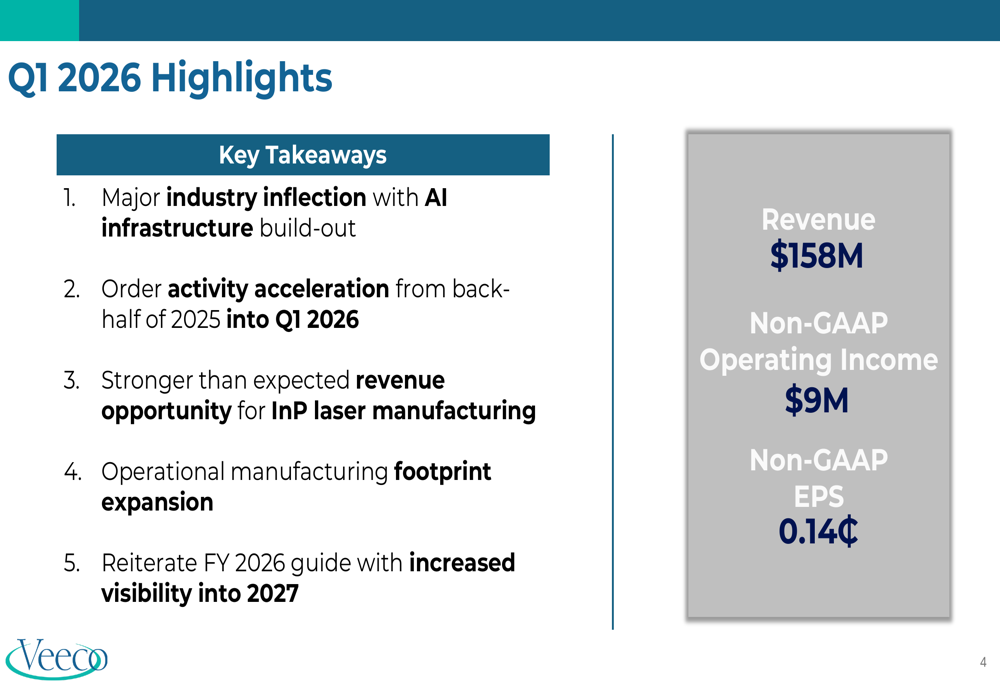
Veeco Q1 2026 slides: AI demand fuels growth outlook despite earnings miss


Veeco Q1 2026 slides: AI demand fuels growth outlook despite earnings miss

Continue Reading

Trending

Copyright © 2025