

Business
Young entrepreneurs use social media to build wealth, says founder


James Dumoulin, co-founder of School of Hard Knocks, shares his journey to financial success, explaining how his media company, with millions of followers, monetizes access to top entrepreneurs.
Young entrepreneurs are increasingly turning social media audiences into full-scale businesses, using digital content to build subscription communities, marketing firms and investment portfolios instead of relying on a single source of income.
“School of Hard Knocks” co-founder James Dumoulin joined FOX Business’ Stuart Varney on “Varney & Co.” to explain how he has grown the company into a media platform with 26 million followers while expanding into multiple revenue streams.

24-year-old entrepreneur shares the wealth-building lessons he learned from billionaires. (Roy Rochlin / Getty Images)
Dumoulin said his strategy is built around creating a business that generates value in several different ways instead of relying solely on advertising revenue.
“So what we did is we looked at our core business of having one of the biggest business media channels in the entire world… What are all the different ways that we can make money off this thing?” Dumoulin said.
GEN Z BREAKS ULTIMATE TABOO BY POSTING SALARIES ONLINE
He said one lesson has stood out after spending time with successful entrepreneurs.
“Concentration builds wealth, diversification keeps it,” Dumoulin said. “In our case, we became so good at one thing… And we diversified into other efforts.”
‘The Big Money Show’ panel discusses ‘Landmaxxing,’ a new real estate trend where billionaires purchase entire blocks of neighboring homes to create massive private compounds.
The 24-year-old said his focus remains on growing the media business while adding new ventures, including a marketing agency, a consulting company and investments.
Dumoulin also shared advice for younger people hoping to build wealth, stressing that long-term success requires consistent daily action.
TEEN INVESTOR BOOM: WHY WALL STREET IS CHASING YOUNGEST GENERATIONS EARLIER THAN EVER
FOX Business’ Gerri Willis presents a financial literacy quiz in NYC, highlighting Americans’ struggle with basic concepts like insurance.
“Macro patience and micro urgency is one of the most important concepts that you need to master in today’s world,” he said. “Billionaires take action on a daily basis.”
The 24-year-old said anyone willing to adopt that approach has the potential to achieve similar success.
“I have no doubt that you’ll be a millionaire one day at 24 years old like myself,” Dumoulin said.


For the first two years of running my business, my accounting system was a shoebox. Not a metaphorical one, an actual cardboard shoebox, sitting under my desk, slowly filling with receipts I told myself I’d “deal with in January.” January would arrive. I would not deal with it. Instead, I’d dump the whole crumpled pile onto my kitchen table at 11 p.m. the night before a tax deadline and try to reverse-engineer a year of business decisions from thermal paper that had already started fading into blank strips.
Does any of this sound familiar? If you’re reading a post about the best small business accounting software, there’s a decent chance you have your own version of the shoebox- a chaotic folder of PDFs, a spreadsheet with formulas nobody quite trusts anymore, or that specific sinking feeling when your accountant asks, “do you have that broken out by category?”
The good news: software exists to fix this. The confusing news: there are roughly a dozen platforms all claiming to be the answer, with pricing tiers that seem designed by someone who enjoys watching business owners cry. I went through the popular ones, the sleeper picks, and the one that’s basically Excel with better branding, so you don’t have to lose a weekend doing it yourself.
The Quick Answer: Best Small Business Accounting Software at a Glance
- QuickBooks Online — Best overall, especially if you’ll ever hand your books to an accountant (from $38/month)
- Xero — Best for teams, since every plan includes unlimited users (from $25/month)
- FreshBooks — Best for freelancers and service businesses that bill by the hour or project (from $23/month)
- Wave — Best free option for very early-stage or solo businesses (free core plan; $16/month unlocks automated bank feeds)
- Zoho Books — Best value, especially if you’re already in the Zoho ecosystem (free under $50K in annual revenue, then scaling up from there)
- Quicken Business & Personal — Best for sole proprietors who don’t want separate apps for business and personal finances (from $4.99/month)
None of these is universally “best” — that’s a bit of a category error, honestly, the same way asking for the “best shoes” ignores whether you’re running a marathon or walking a dog around the block. Here’s the actual reasoning behind each pick.
Do You Actually Need Software, or Will a Spreadsheet Still Do?
Let’s not skip this question just because it’s inconvenient for a post about software. If you’re a true one-person operation with a handful of clients and no inventory, a well-built spreadsheet can genuinely hold you for a while.
The tipping point tends to arrive earlier than people expect: the moment you hire someone, take on a business loan, carry inventory, or need a lender or investor to see clean financials, a spreadsheet stops being a shortcut and starts being a liability. That’s when actual accounting software with double-entry bookkeeping, bank reconciliation, and audit-ready reports- earns its subscription fee.
Is QuickBooks Online Still the Default Choice for a Reason?
QuickBooks Online is the software most U.S. accountants already know how to use, which counts for more than it sounds like it should. When your bookkeeper doesn’t have to learn a new system just to help you, that’s real time and money saved.
The plan lineup, as of mid-2026:
- Solopreneur ($20/month) — Stripped down for one-person, Schedule C businesses. Income and expense tracking, basic invoicing, tax estimates. No balance sheet, so it’s not real double-entry accounting.
- Simple Start ($38/month) — The entry point for full accounting: double-entry bookkeeping, invoicing, expense tracking, 1099 contractor management.
- Essentials ($75/month) — Adds bill pay, time tracking, and multi-currency support.
- Plus ($115/month) — The most popular tier. Adds inventory tracking and project profitability, which makes it the realistic floor for any product-based business.
- Advanced ($275/month) — Adds deeper analytics, batch invoicing, custom user roles, and a dedicated support team.
Payroll is a separate subscription (roughly $50+/month plus a per-employee fee), and card payments run about 2.9% + $0.30 per transaction. Worth knowing: Intuit has raised QuickBooks Online prices multiple times over the past couple of years, with another increase to Essentials, Plus, and Advanced pricing scheduled for August 2026- so treat any number here, including this one, as a snapshot rather than a promise.
The honest downside is cost creep. Most growing businesses skip Essentials entirely and jump straight from Simple Start to Plus, because the features that actually matter – inventory, project costing, only show up two tiers up.
What Makes Xero Worth Considering When You Have a Team?
Xero’s whole pitch is right there in the pricing structure: every plan, even the cheapest one, includes unlimited users. QuickBooks charges per seat once you’re past a certain headcount; Xero doesn’t. If you’ve got multiple people- a co-founder, a bookkeeper, an ops manager, who all need real-time access to the books, that difference adds up fast.
Xero’s 2026 tiers:
- Early ($25/month) — Capped at 20 invoices, 5 bills, and basic bank reconciliation. Fine for testing the platform, restrictive for actually running a business.
- Growing ($55/month) — Unlimited invoices, bills, and reconciliations. This is the realistic entry point for most small businesses.
- Established ($90/month) — Adds multi-currency, expense claims, project tracking, and advanced analytics.
The catch with the Early plan specifically: those caps are tight enough that most businesses outgrow them within a few months, so don’t let the $25 sticker price be the deciding factor.
Why Do Freelancers and Service Businesses Swear by FreshBooks?
FreshBooks makes a different bet than QuickBooks or Xero: instead of trying to be comprehensive accounting software, it optimizes hard for invoicing, time tracking, and client billing- the stuff a freelancer or consultant actually touches every day. If you bill by the hour or by project, the workflow feels built for you specifically, not adapted from a general ledger.
Its pricing is structured by client count rather than by user, which is a genuinely useful distinction if you’re a solo operator:
- Lite (~$23/month) — Up to 5 billable clients. No proposals, recurring invoices, or bank reconciliation.
- Plus (~$43/month) — Up to 50 billable clients. Adds recurring invoices, proposals and e-signatures, double-entry accounting reports, and bank reconciliation.
- Premium (~$70/month) — Unlimited billable clients. Adds project profitability tracking and accounts payable.
- Select — Custom pricing for high-volume agencies.
Every plan is single-user by default; adding team members costs roughly $11/month each. The trade-off for all that invoicing polish is accounting depth- FreshBooks isn’t the platform you want once you need serious inventory management or complex multi-entity reporting.
Can You Actually Run a Business on Free Software?
Wave is the honest answer to “can I get real accounting software without paying a subscription,” and for a lot of very early-stage or solo businesses, the answer is genuinely yes. The free core plan covers invoicing, expense tracking, bank connections, and basic financial reports.
The nuance worth knowing: “free” here means Wave makes its money elsewhere. Automated bank feeds now live behind a Pro plan (about $16/month), and payment processing runs 2.9% + $0.60 per transaction — noticeably higher than most competitors’ rates. If you invoice a lot of small transactions, those fees can quietly outpace what you’d have paid for a subscription-based platform. Free isn’t the same as costless; it’s just a different place to pay.
Is Zoho Books the Most Underrated Pick on This List?
Zoho Books doesn’t have the brand recognition of QuickBooks or the “unlimited users” hook of Xero, but it punches well above its price point, especially on automation. You can set up rules that automatically categorize transactions, send payment reminders, and reconcile accounts — the kind of “set it and forget it” behavior that matters most to owners who didn’t start a business because they love bookkeeping.
The standout feature: a genuinely free-forever plan for businesses making under $50,000 a year in revenue, including accountant access, recurring invoicing, and receipt auto-scanning. Once you outgrow that threshold, paid plans scale up from there. And if you’re already using other Zoho apps — CRM, HR, project management — the data flows between them in a way competing platforms simply can’t match, since none of them make 45 other business apps.
What If You’re a Solopreneur Who Doesn’t Want Two Separate Apps for Business and Life?
This is a narrower use case, but a real one: freelancers, contractors, and sole proprietors whose business and personal finances are tangled together anyway. Quicken Business & Personal starts at $4.99/month and bundles invoicing and Schedule C/E/F tax reporting with personal budgeting, investment tracking, and retirement planning- one subscription instead of two apps that don’t talk to each other.
It’s not the right call if you need proper double-entry accounting, multiple users, or plan to eventually hand files off to a bookkeeper who expects a QuickBooks- or Xero-style setup. But for someone who’s the entire company, it solves a real annoyance the bigger platforms don’t bother addressing.
So How Do You Actually Decide?
Strip away the marketing and it comes down to what kind of business you’re actually running:
- Solo freelancer whose business and personal finances overlap → Quicken Business & Personal, or Wave if you want to keep them separate for free
- Freelancer or consultant billing multiple clients by project or hour → FreshBooks
- Product-based business that needs inventory tracking → QuickBooks Plus
- Growing or remote team that needs several people in the books at once → Xero
- Automation-minded owner, especially already inside the Zoho ecosystem, or under $50K in revenue → Zoho Books
- Planning to eventually hand things off to a traditional accountant or bookkeeper → QuickBooks, purely for the familiarity factor
(If you want to fix the underlying habits and not just the tool, we’ve also covered how to approach bookkeeping for small businesses — that post handles the practices, this one handles the platform.)
A Word About Switching Later
Every one of these platforms will let you migrate your data if you outgrow it. None of them make it painless. Switching software means re-learning workflows, re-training whoever handles your books, and usually losing some of the categorization history that took months to get right. It’s not a reason to freeze up over the decision — but it is a reason to pick something with a little room to grow, rather than optimizing purely for whichever plan is cheapest this month.
As for my shoebox: it’s gone. These days my receipts get photographed and categorized before I’ve finished my coffee, which is either the most boring plot twist in my business’s history or the best money I’ve spent on it. Possibly both.

Form 4 MannKind Corp For: 17 July
Form 4 BJs Restaurants Inc For: 17 July

GEO Group worker arrested in shooting of protester at Colorado ICE facility
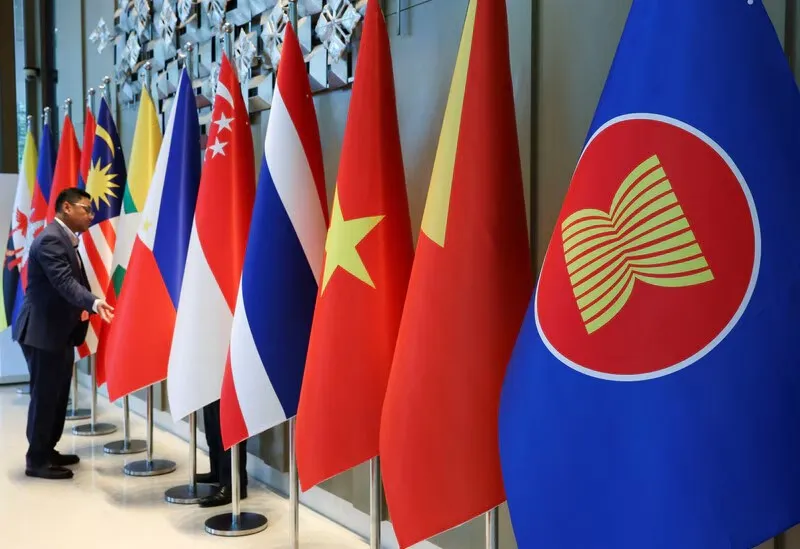
Timor-Leste, ASEAN’s newest member since 2025, is diversifying beyond oil dependence through tourism, agriculture, and foreign investment. With Malaysia as a key partner, the young nation targets ASEAN chairmanship in 2029 while implementing reforms to modernize its economy and institutions.
Key Points
• Timor-Leste, one of the world’s youngest nations, joined ASEAN in 2025 after a 14-year application process, with Malaysia playing a key role through political support, technical assistance, and Prime Minister Anwar Ibrahim’s lobbying efforts, while bilateral ties have deepened across trade, education, and healthcare.
• The country is diversifying beyond oil dependency by developing tourism, agriculture, fisheries, and digital services, offering foreign investors greenfield opportunities, tax incentives, and preferential market access as a least-developed nation.
• Targeting ASEAN chairmanship in 2029, Timor-Leste is modernising infrastructure, strengthening institutions, and welcoming Malaysian investment in construction, TVET, healthcare, and energy, while improving regional connectivity through new direct flights between Dili and Kuala Lumpur.
Timor-Leste’s Rise: From Independence to ASEAN Integration
Timor-Leste, one of the world’s youngest nations, is rapidly emerging as Southeast Asia’s next growth story. Independent since 2002 following decades of conflict, the country of 1.4 million people has traditionally depended on petroleum revenues. However, a defining shift is underway. Following admission into ASEAN in 2025 after a 14-year application process, Timor-Leste is actively diversifying its economy, modernising institutions, and attracting foreign investment. With a potential ASEAN chairmanship in 2029, the country is leveraging regional integration as a powerful catalyst for national transformation and long-term sustainable development.
Malaysia and Timor-Leste: A Partnership Built on Trust
The bilateral relationship between Malaysia and Timor-Leste was forged during Timor-Leste’s most challenging moments, including the 1999 referendum and the 2006 internal crisis. Malaysia provided critical support, including hosting Timor-Leste’s embassy and maintaining essential air connectivity during the Covid-19 pandemic. More recently, Prime Minister Anwar Ibrahim played an instrumental role in securing Timor-Leste’s ASEAN membership by personally lobbying regional member states. Malaysia also provided technical training, institutional support, and funding for Timor-Leste’s ASEAN coordination unit, helping the nation navigate the complex logistical and policy dimensions of regional diplomacy.
Economic Potential: Opportunities for Investment and Growth
Timor-Leste is actively diversifying beyond oil and gas, targeting sectors including tourism, agriculture, fisheries, infrastructure, and digital services. The country offers compelling incentives for investors, including tax and customs duty exemptions, alongside preferential market access as a least-developed nation in markets such as the EU, Australia, and India. Malaysian companies are particularly well-positioned to contribute in areas such as TVET, infrastructure, healthcare, and fintech. A recently signed MOU with Petronas signals growing energy collaboration. With improved air connectivity through Batik Air and AeroDili, and unique assets like world-class diving and specialty coffee, Timor-Leste presents a genuine greenfield investment opportunity.
Other People are Reading


Justin Law has a Ph.D in Chemistry from Rice University and has earned the CFA Institute Investment Foundations certificate. He applies his knowledge to deep value and dividend paying stocks.Justin is a contributor to the investing group The Dividend Kings where he curates the Dividend Champions list, a monthly publication of companies with a history of consistently increasing their dividends. The Dividend Kings is a group of analysts teaching individuals how to invest more wisely in dividend stocks. Learn More.
Analyst’s Disclosure: I/we have a beneficial long position in the shares of PFE, CMCSA, SYY either through stock ownership, options, or other derivatives. I wrote this article myself, and it expresses my own opinions. I am not receiving compensation for it (other than from Seeking Alpha). I have no business relationship with any company whose stock is mentioned in this article.
Seeking Alpha’s Disclosure: Past performance is no guarantee of future results. No recommendation or advice is being given as to whether any investment is suitable for a particular investor. Any views or opinions expressed above may not reflect those of Seeking Alpha as a whole. Seeking Alpha is not a licensed securities dealer, broker or US investment adviser or investment bank. Our analysts are third party authors that include both professional investors and individual investors who may not be licensed or certified by any institute or regulatory body.


I am a full-time analyst interested in a wide range of stocks. With my unique insights and knowledge, I hope to provide other investors with a contrasting view of my portfolio, given my particular background.If you have any questions, feel free to reach out to me via a direct message on Seeking Alpha or leave a comment on one of my articles.
Analyst’s Disclosure: I/we have no stock, option or similar derivative position in any of the companies mentioned, and no plans to initiate any such positions within the next 72 hours. I wrote this article myself, and it expresses my own opinions. I am not receiving compensation for it (other than from Seeking Alpha). I have no business relationship with any company whose stock is mentioned in this article.
The analysis is provided exclusively for informational purposes and should not be considered professional investment advice. Before investing, please conduct personal in-depth research and utmost due diligence, as there are many risks associated with the trade, including capital loss.
Seeking Alpha’s Disclosure: Past performance is no guarantee of future results. No recommendation or advice is being given as to whether any investment is suitable for a particular investor. Any views or opinions expressed above may not reflect those of Seeking Alpha as a whole. Seeking Alpha is not a licensed securities dealer, broker or US investment adviser or investment bank. Our analysts are third party authors that include both professional investors and individual investors who may not be licensed or certified by any institute or regulatory body.
Prosecutors file attempted aggravated murder charges in stabbing of Muslim man in Utah
Business
US military says it completed latest strikes on Iran, marking 7th consecutive night of attacks

US military says it completed latest strikes on Iran, marking 7th consecutive night of attacks
Business
South Korea’s KOSPI and KOSDAQ Markets Are Closed Friday for Newly Reinstated Constitution Day Holiday

KOSPI is closed today. South Korea’s benchmark stock index, along with the broader KOSDAQ and KONEX markets, is shut for trading on Friday, July 17, 2026, in observance of Constitution Day, a public holiday that was reinstated on the national calendar this year after previously being dropped from South Korea’s list of official days off.
The Korea Exchange, which operates the country’s securities markets, confirmed the closure in an announcement made on May 19. The exchange said the shutdown affects the KOSPI, KOSDAQ and KONEX equity markets, along with exchange-traded funds, exchange-traded notes and equity-linked warrants trading on those platforms. The closure also extends to South Korea’s bond and repo markets, the KRX Startup Market, and derivatives markets tied to both equities and bonds. Beyond securities, the shutdown reaches into general commodities trading as well, including markets for oil, gold and carbon emission allowances that operate under the Korea Exchange’s oversight.
Constitution Day’s return to the exchange’s regular holiday schedule reflects a broader change in its status as a national holiday. The day marks the anniversary of the promulgation of South Korea’s constitution in 1948 and had previously been observed as a public holiday for decades before it was removed from the country’s official list of paid holidays in 2008 as part of a broader effort to reduce the number of non-working days on the calendar. This year’s reinstatement restores its status as a recognized public holiday, and the Korea Exchange has adjusted its own trading calendar accordingly, marking July 17 as a newly added closure date alongside a separate market shutdown that took place on June 3 for South Korea’s local elections.
Trading activity tied to the closure follows a broader pattern the exchange typically observes on holiday closures. After-hours trading, which normally allows investors to continue trading Korean securities beyond the standard market session, will also be suspended for the day. However, the exchange noted that overnight trading sessions on the preceding trading day operated normally, meaning investors had a final opportunity to adjust positions before the extended closure took effect. Over-the-counter derivatives clearing operations and the Korea Exchange’s trade repository, which handles regulatory reporting for derivatives transactions, are also shut down for the holiday.
Under normal circumstances, the Korea Exchange operates on a Monday-through-Friday schedule, with regular trading hours running from 9 a.m. to 3:30 p.m. local time, Korean Standard Time, which does not observe daylight saving time and remains fixed at nine hours ahead of Greenwich Mean Time year-round. Unlike some other major Asian exchanges, including those in Tokyo, Shanghai, Hong Kong and Singapore, the Korea Exchange does not build a midday lunch break into its trading schedule, running continuously through its full session much like the exchanges in Sydney.
Friday’s closure means investors and traders tracking Korean equities, including the many international investors who follow the KOSPI as a bellwether for global semiconductor and memory chip sentiment given the outsized weighting of companies like Samsung Electronics and SK Hynix on the index, will need to wait until the market reopens to react to any news or data released during the holiday. The closure comes at a notable moment for the index, which has experienced an unusually volatile stretch in recent weeks, including sharp single-day swings tied to swings in global chip stock sentiment and a trading halt triggered by a steep selloff earlier this week.
Looking ahead on the Korean market calendar, the next scheduled holiday closure after Friday’s Constitution Day observance is set for August 17, a Monday, when the exchange will close in observance of Liberation Day, according to holiday calendars maintained by financial data providers tracking the Korea Exchange’s 2026 schedule. Liberation Day marks the anniversary of Korea’s independence from Japanese colonial rule in 1945 and is among the country’s most widely observed public holidays each year. Beyond that, South Korea’s holiday calendar also includes the Chuseok harvest festival later in the fall, a multi-day observance that typically results in an extended market closure spanning several consecutive trading days.
For global investors and traders who rely on Korean market activity as a signal for broader Asian trading sentiment, particularly around technology and semiconductor stocks, holiday closures like Friday’s can sometimes be easy to overlook if they are primarily tracking market calendars centered on the United States or Europe. Financial data platforms that track exchange operating hours have noted that Korea’s holiday schedule follows its own distinct rhythm separate from other major markets in the region, making it useful for traders focused on Korean equities or exchange-traded funds tied to the KOSPI to monitor the exchange’s calendar directly rather than assuming alignment with holiday schedules elsewhere in Asia or in Western markets.
The Korea Exchange’s total market capitalization across all securities traded on the platform stands at roughly $3.98 trillion, according to data compiled by market infrastructure trackers, underscoring the scale of trading activity that pauses during scheduled closures like Friday’s holiday. The exchange, headquartered in Busan, remains the sole operator of securities markets in South Korea, serving as the primary venue for price discovery across the country’s equity, bond, derivatives and general commodities markets.
Trading is expected to resume as normal when the Korea Exchange reopens for its next scheduled session, with investors likely to closely track any overnight developments in U.S. and other global markets during the holiday closure that could influence Korean equities once trading resumes. Given the recent volatility affecting technology and memory chip stocks on the KOSPI, market participants may be watching particularly closely for how the index responds when it reopens following the extended break tied to this year’s reinstated Constitution Day holiday.

Best Small Business Accounting Software in 2026 (For People Who Hate Math)

Tempo’s Nyara Sabally suffers rib injury in loss to Dream

Using Solar Air Heating To Dry Clothes


-
 NewsBeat2 days ago
London Mayor Sadiq Khan handed a peerage by Keir Starmer alongside 15 other Labour figures… just days before the PM leaves No10
-

 Fashion10 hours ago
Weekend Open Thread – Corporette.com
-

 Politics3 days ago
Young campaigners urge incoming PM to act on outdoor junk food ads
-

 Crypto World2 days ago
CFTC blocks Kalshi from unwinding Michigan trades after court order
-

 Business2 days ago
Nvidia Stock Slips After Big Tuesday Rally as Huang Confirms Vera Rubin Chip Is Now in Production Today
-
 Entertainment2 days ago
Disney’s Most Ambitious Failed Star Wars Attraction Is Coming to SDCC
-

 Crypto World6 hours ago
Ripple wins EU-wide access as ESMA adds it to MiCA register
-

 News Videos3 days ago
XRP BOMBSHELL… XRP OMBOARDED FOR TRANSACTIONS!!!
-

 Crypto World1 day ago
Injective Submits SEC Transfer-Agent Registration to Onchain Ownership Records
-

 Tech4 days ago
Get Your ESP32 Sunny Side Up With This Solar Dev Board
-

 NewsBeat16 hours ago
Registration is now open for March for Men with Kev 2026
-

 Business2 days ago
Palantir Shares Rise After Expanded Nvidia Partnership and Fresh Analyst Upgrades Ahead of Earnings Day
-

 Tech3 days ago
Dark Secrets Emerge When Jailbreaking LLMs
-

 News Videos21 hours ago
Money | Class 12 Economics | CBSE Board Exam 2026-27
-
 Sports2 days ago
New Cornerback Enters Vikings Trade Rumor Mill
-

 Business1 day ago
Banco Bilbao Vizcaya Argentaria, S.A. (BBVA) Discusses Global Macro Environment and Economic Outlook for Core Markets Transcript
-
 Tech4 days ago
Cloudflare Precursor Watches Your Mouse and Keyboard To Decide If You Are Human
-

 Business9 hours ago
Airlines warn Sunshine Protection Act could disrupt flight scheduling
-

 News Videos5 days ago
how to make coin bank box with cardboard #scienceproject #money #diy #shorts
-
 Entertainment2 days ago
Vicki Gunvalson Defends Discussing Heather Dubrow’s Money
You must be logged in to post a comment Login