

Business
YouTube Cracks Down on Mass-Produced AI Content, Cutting Off Ad Revenue for Low-Quality ‘Slop’ Channels


YouTube has tightened the rules governing which creators can earn advertising revenue from artificial intelligence-generated videos, moving to strip monetization from channels that mass-produce low-quality AI content, use manipulative tactics to boost views, or deploy AI avatars to dispense advice in sensitive fields such as medicine, law and finance.
The revised guidelines, updates to the company’s YouTube Partner Program policies, took effect July 16 and were confirmed this week by outlets tracking the platform’s ongoing effort to curb what YouTube and much of the industry have taken to calling “AI slop” — low-effort, formulaic content produced at scale with minimal human involvement.
Three categories now off-limits for ad revenue
YouTube outlined three specific types of content that will no longer qualify for advertising payouts. The first covers videos that are mechanically mass-produced with little substantive variation between uploads, whether generated using AI tools or computer-generated imagery. The second targets content designed primarily to provoke a strong emotional reaction or shock value in order to drive views, including staged rescue or crisis videos, regardless of whether AI was used to create them. The third category applies to channels using AI-generated avatars modeled on real people to offer guidance on financial investments, medical diagnoses or legal matters, areas where YouTube has said the risk of misleading viewers is especially high.
Matt Halprin, YouTube’s head of trust and safety, said the company’s underlying concern is less about the use of AI itself and more about how that technology is being deployed. “While AI tools can assist creators in producing high-quality content, we will apply strict criteria to channels that rely on automated systems to churn out content lacking narrative structure and human creativity,” Halprin said.
Building on a policy shift from last year
The latest changes build on a foundation YouTube laid roughly a year earlier. In July 2025, the platform renamed its long-standing “duplicate content” policy to “mass-produced content,” a shift aimed at capturing a broader range of formulaic AI-assisted videos beyond simple copy-paste duplication. That earlier revision established the groundwork for restricting monetization on channels built around repetitive templates, recycled clips or scripts read verbatim from other sources.
According to reporting on the policy’s rollout, YouTube’s enforcement typically follows a graduated approach for channels flagged under the mass-produced or repetitive content rules, beginning with a warning before escalating to a temporary suspension and, eventually, permanent removal from the Partner Program for repeat violations. Channels affected by enforcement decisions are generally given a window to appeal, with the platform recommending appeals include a short video demonstrating genuine human creative involvement in the disputed content, rather than relying solely on a written explanation.
A platform-wide quality concern
YouTube’s push against AI slop follows growing internal and public concern about the volume of low-effort automated content flooding the platform’s recommendation systems. Earlier this year, the company removed a wave of channels from the Partner Program in a single enforcement action, targeting accounts that had collectively built enormous audiences and generated substantial advertising income through formulaic, templated video production rather than original creative work.
The stakes tied to content quality are also financial for YouTube itself. The platform generated $9.88 billion in advertising revenue during the first quarter of 2026, according to Alphabet’s earnings report, an increase of nearly 11% year-over-year but a figure that fell short of Wall Street’s expectations. Maintaining advertiser confidence in the quality of content surrounding their ads has become an increasingly central part of YouTube’s strategy as competition for ad dollars across video platforms intensifies.
AI use itself remains permitted
YouTube has been careful to frame the updated rules as targeting a narrower category of behavior rather than restricting AI-assisted content broadly. Halprin has said the company recognizes that AI tools can meaningfully expand what individual creators are able to produce, provided the resulting videos retain a genuine creative and narrative contribution from the person behind the channel. The distinction YouTube is attempting to draw, according to Halprin, is between creators using AI to enhance original work and operators using automation to generate large volumes of near-identical videos purely to capture advertising revenue.
Under the current framework, AI-generated or AI-assisted videos remain eligible for monetization so long as they offer original value to viewers, are not repetitive or templated, and are properly labeled when required. YouTube has also implemented disclosure requirements for altered or synthetic content, requiring creators to flag AI involvement through settings in YouTube Studio in certain circumstances.
Industry reaction and what comes next
The policy update has drawn attention across the creator economy, given how significantly automated AI production tools have lowered the barrier to launching new monetized channels in recent years. Industry estimates cited in coverage of the shift suggest a substantial share of newly monetized YouTube channels now operate without an on-camera host, relying instead on AI-generated narration, imagery or avatars — a trend the platform’s updated guidelines appear directly aimed at reshaping.
For creators and channel operators who have built businesses around high-volume automated content production, the revised rules are likely to force a reassessment of how they use AI tools going forward. YouTube has signaled it intends to continue refining its enforcement approach as AI production tools evolve, positioning the update as an ongoing effort rather than a one-time policy change.
The company has not indicated whether further revisions are planned in the near term, but its repeated policy updates over the past year suggest the platform intends to keep adjusting its monetization standards as the volume and sophistication of AI-generated video content continues to grow across the industry.

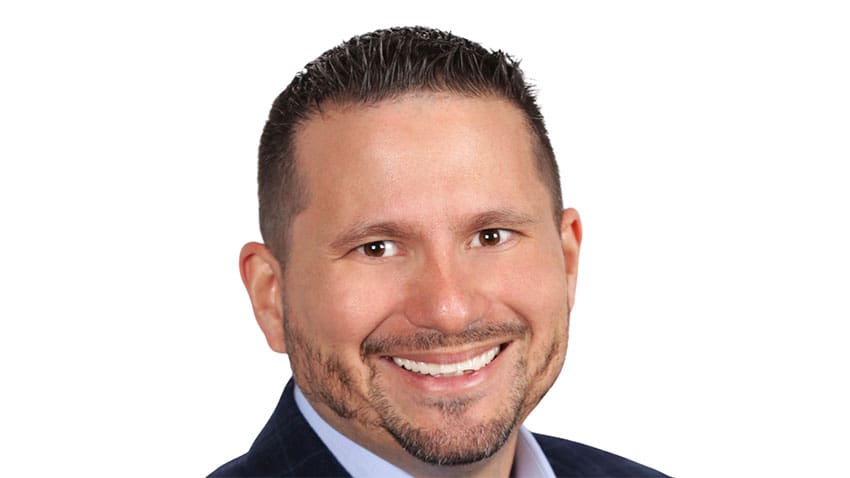
In business, big ideas do not always start with grand plans. Sometimes they begin with a simple belief.
For Robert Flores, that belief was that real estate should be more personal.
Today, Flores is known throughout the Flagler Beach and Palm Coast areas for his work in both residential and commercial real estate. As a real estate professional with Palmcoasting.com and Managing Partner at Vellum Capital Partners, he has spent years helping clients navigate opportunities across Florida.
His career has been shaped by one idea that continues to guide his work: people make better decisions when they have clear information and trusted relationships.
“I’ve always believed that clients deserve transparency and honest communication,” Flores says. “When people understand their options, they can move forward with confidence.”
How Robert Flores Built His Career in Florida Real Estate
Like many successful professionals, Flores did not build his reputation overnight.
His experience came from working directly with buyers, sellers, and investors throughout Florida. Over time, he developed a deep understanding of the Flagler Beach and Palm Coast markets, learning not just about properties but about the people behind every transaction.
“Real estate is rarely just about the property,” Flores explains. “There’s usually a bigger goal behind every decision. It could be a family finding the right home or an investor looking to create long-term value.”
That perspective helped him stand out. Rather than focusing solely on transactions, Flores focused on communication, education, and long-term relationships.
Those principles would later influence some of the biggest ideas in his career.
Why Robert Flores Expanded Beyond Traditional Real Estate
As Flores gained experience, he noticed something important.
Many people needed more than a real estate agent. They wanted someone who could help them understand the bigger picture surrounding investment opportunities, commercial properties, and long-term planning.
That realization led to one of the defining moments of his career.
He became Managing Partner at Vellum Capital Partners, a commercial real estate brokerage focused on investment and commercial transactions throughout Florida.
The goal was not simply to create another brokerage.
“We wanted to build something that took a more hands-on and strategic approach,” Flores says. “The idea was to help clients understand opportunities, not just complete transactions.”
That shift represented a larger vision. Instead of treating commercial real estate as a separate world, Flores saw an opportunity to bridge the gap between market knowledge, relationships, and long-term value creation.
What Makes Flagler Beach and Palm Coast Attractive?
Throughout his career, Flores has remained closely connected to the communities of Flagler Beach and Palm Coast.
He has watched the area grow while maintaining the qualities that make it unique.
“People are attracted to this area because it still has a strong sense of community,” Flores says. “There are opportunities here, but there is also a quality of life that people value.”
That observation reflects another idea that has influenced his career: growth works best when it is balanced.
Flores believes communities benefit when development, investment, and local character evolve together.
His work often involves helping people understand not only what is happening in the market today but also how broader trends may affect communities over time.
What Leadership Means to Robert Flores
Many professionals view leadership through titles or achievements.
Flores sees it differently.
For him, leadership starts with being available and accountable.
“People remember how you communicate,” he says. “They remember whether you listened and whether you followed through.”
That mindset has become one of the foundations of his professional reputation.
Clients often appreciate his willingness to answer questions, explain complex situations, and remain accessible throughout a process that can sometimes feel overwhelming.
Flores believes that trust is built through consistency rather than promises.
“You build credibility one conversation at a time,” he says. “The relationships you invest in today often become the foundation for future opportunities.”
The Big Idea That Continues to Shape His Career
Looking back, the biggest idea behind Flores’ success is surprisingly simple.
Relationships matter.
While markets change and industries evolve, he believes trust, communication, and education remain constant.
Those values helped him build a career in residential real estate. They helped shape his work at Vellum Capital Partners. And they continue to guide his role within Florida’s growing real estate industry.
“Business is ultimately about people,” Flores says. “When you focus on helping people understand their options and achieve their goals, everything else tends to follow.”
For Robert Flores, that philosophy has been more than a business strategy.
It has been the foundation of a career built on relationships, informed decision-making, and a commitment to creating lasting value in the communities he serves.
Business
Mcap of nine of top-10 most valued firms erodes by Rs 2.74 lakh cr; HDFC Bank takes biggest hit

Last week, the BSE benchmark Sensex tanked 2,091.68 points, or 2.67 per cent, and the NSE Nifty declined 566.85 points, or 2.32 per cent.
“Markets witnessed a weak and volatile week, with benchmark indices extending their losing streak as a sharp surge in crude oil prices and renewed geopolitical tensions weighed heavily on investor sentiment,” Ajit Mishra – SVP, Research, Religare Broking Ltd, said.
Banking stocks emerged as the biggest drag following mixed Q1 FY27 earnings, while a risk-off environment and weakness in the rupee further curtailed buying interest, he added.
From the top-10 pack, Hindustan Unilever emerged as the only winner.

Those who faced erosion from their valuation were Reliance Industries, Bharti Airtel, HDFC Bank, ICICI Bank, State Bank of India, Tata Consultancy Services (TCS), Bajaj Finance, Life Insurance Corporation of India (LIC) and Larsen & Toubro.
The market valuation of HDFC Bank tumbled Rs 1,18,383.91 crore to reach Rs 11,43,985.90 crore. Last week, shares of HDFC Bank declined by 9.40 per cent amid concerns on the margin front.Reliance Industries’ valuation eroded by Rs 65,429.82 crore to Rs 17,29,661.44 crore.
The valuation of State Bank of India tanked Rs 26,814.94 crore to Rs 9,36,953.84 crore and that of Bajaj Finance dropped by Rs 26,802.74 crore to Rs 6,30,471.54 crore.
The market capitalisation (mcap) of LIC declined by Rs 15,116.74 crore to Rs 5,33,007.56 crore and that of ICICI Bank diminished by Rs 6,223.84 crore to Rs 10,28,217.93 crore.
Bharti Airtel’s valuation edged lower by Rs 6,021.64 crore to Rs 11,85,046.13 crore and that of TCS dipped Rs 5,191.95 crore to Rs 8,15,480.75 crore.
The mcap of Larsen & Toubro faced an erosion of Rs 4,092.79 crore to Rs 5,20,747.89 crore.
However, the mcap of Hindustan Unilever climbed Rs 152.73 crore to Rs 5,03,928.59 crore.
Reliance Industries remained the most valued firm, followed by Bharti Airtel, HDFC Bank, ICICI Bank, State Bank of India, TCS, Bajaj Finance, LIC, Larsen & Toubro and Hindustan Unilever.


I am an investor focused on equities, specifically in technology, energy, and consumer staples. I also believe there is significant potential in emerging markets, which represents the risk component of my portfolio. I hold a bachelor’s degree in Communication Sciences and Public Relations, I produce an economic and financial program in Argentina, and I worked as an analyst at Crowdsense, a platform that identifies and analyzes unique events that impact specific assets, entities, or companies for investors who subscribe to the service. I am interested in writing for Seeking Alpha to continue bridging my profession as a communicator with my interest in the capital markets. In addition, I believe I can contribute by helping other investors identify value or risks in the assets I follow most closely.
Analyst’s Disclosure: I/we have a beneficial long position in the shares of RIOT either through stock ownership, options, or other derivatives. I wrote this article myself, and it expresses my own opinions. I am not receiving compensation for it (other than from Seeking Alpha). I have no business relationship with any company whose stock is mentioned in this article.
Seeking Alpha’s Disclosure: Past performance is no guarantee of future results. No recommendation or advice is being given as to whether any investment is suitable for a particular investor. Any views or opinions expressed above may not reflect those of Seeking Alpha as a whole. Seeking Alpha is not a licensed securities dealer, broker or US investment adviser or investment bank. Our analysts are third party authors that include both professional investors and individual investors who may not be licensed or certified by any institute or regulatory body.
Business
Ryan Gosling Joins Marvel as Ghost Rider in New Film From ‘Deadpool & Wolverine’ Director Shawn Levy

Ryan Gosling is finally becoming a superhero.
Marvel Studios announced Saturday during its Hall H panel at San Diego Comic-Con that Gosling will star as Ghost Rider in a new standalone film, ending years of speculation about whether the Oscar-nominated actor would ever join the Marvel Cinematic Universe. The film, currently titled simply “Ghost Rider,” is set for release in 2028 and will be directed by Shawn Levy, who most recently helmed the blockbuster “Deadpool & Wolverine.”
A long-rumored pairing becomes official
Marvel Studios President Kevin Feige made the announcement onstage, joking that he has fielded questions for years about when Gosling and Ghost Rider might finally end up together. He then welcomed Gosling to the stage to enthusiastic cheers from the Hall H crowd. Taking in the moment, Gosling addressed the audience directly. “Wow, is this really happening?” Gosling said, adding that the fiery, motorcycle-riding antihero is a character he has wanted to play for a long time.
Gosling then introduced Levy as the film’s director, telling the crowd that only one filmmaker could bring the character to the screen properly. The two are already working together on the upcoming “Star Wars: Starfighter,” which Levy directed and which stars Gosling, set for release May 28, 2027. According to Levy, the idea for the Ghost Rider collaboration took shape during downtime on that set, where the two spent hours trading ideas about the character. Describing the moment their partnership came together, Levy recalled telling Gosling, “I was like, ‘Bro, let’s ride.’”
Feige weighs in on Starfighter
Feige used the panel to offer a preview of what audiences can expect from Gosling’s work in “Starfighter” as well, revealing that he has already seen the film ahead of its 2027 release. “I don’t want to brag, but I’ve been lucky enough to see Star Wars: Starfighter,” Feige told the crowd, praising Gosling’s performance and saying the film brings a fresh energy to the Star Wars franchise. His comments suggested that Gosling’s chemistry with Levy on that project played a role in the decision to bring the actor into the Marvel fold for Ghost Rider.
Years of speculation finally pay off
Gosling first publicly expressed interest in playing Ghost Rider back in 2022, floating the idea while promoting other projects and shutting down separate rumors that Marvel was courting him for the cosmic hero Nova. At the time, Feige responded warmly to the idea when asked about it on a Comic-Con red carpet, praising Gosling’s talent and saying he’d love to find a role for him within the Marvel Cinematic Universe. More recently, while promoting his film “Project Hail Mary,” Gosling confirmed that conversations with Marvel about the role had already begun, though he described the situation as complicated at the time. “We’ll keep hope alive,” Gosling said then, signaling his continued interest even as details remained unresolved.
A character with a long comic and screen history
Ghost Rider, created by writer Gary Friedrich and artist Mike Ploog, first appeared in Marvel Spotlight No. 5 in 1972 before receiving his own ongoing series the following year. In the comics, stunt motorcyclist Johnny Blaze makes a pact with a demonic entity, becoming bonded with a fiery, vengeance-driven spirit that transforms him into the character’s signature skull-headed, flame-engulfed form whenever he confronts evil.
Gosling will be the second actor to portray the character in a feature film, following Nicolas Cage’s performances in Sony’s 2007 “Ghost Rider” and its 2011 sequel, “Ghost Rider: Spirit of Vengeance,” which together grossed more than $361 million worldwide. The character has also appeared on television, with actor Gabriel Luna playing a different incarnation of Ghost Rider, Robbie Reyes, in the Marvel-ABC series “Agents of S.H.I.E.L.D.” A planned standalone Hulu series built around Luna’s version of the character was scrapped in 2019. Rights to Ghost Rider eventually reverted to Marvel Studios, paving the way for Saturday’s announcement.
Gosling’s evolving blockbuster era
The Ghost Rider role marks Gosling’s first superhero or comic book film, adding to a recent stretch of high-profile franchise and blockbuster work following his roles in “Barbie” and this year’s “Project Hail Mary.” Notably, Gosling had once been in contention for the role of Green Lantern in a DC film years earlier, a role that ultimately went to Ryan Reynolds. His casting as Ghost Rider closes the loop on that earlier chapter of superhero speculation surrounding the actor.
There’s also a personal connection tied to the announcement: Cage’s original “Ghost Rider” film co-starred actress Eva Mendes, Gosling’s longtime partner and the mother of his two children. Speaking about the family tie in an earlier interview discussing the role, Gosling joked that he was glad at least one of them had gotten the chance to play the character.
With production timelines still to be determined, Marvel has not yet released plot details for the new “Ghost Rider” film, nor confirmed how the character might connect to the broader Marvel Cinematic Universe moving forward. Levy’s involvement, fresh off the box office success of “Deadpool & Wolverine,” adds significant momentum to the project, as does the pairing with screenwriter Jonathan Tropper, who is reuniting with Levy and Gosling after collaborating with them on “Starfighter.”
For now, fans will have to wait until 2028 to see Gosling’s take on the character in theaters, but Saturday’s Comic-Con announcement — complete with enthusiastic crowd reaction and confirmation from Marvel’s official social media accounts — closes the book on years of will-he-won’t-he speculation about one of the more anticipated casting rumors in recent Marvel history.
Business
Strait of Hormuz Crisis Deepens as Oil Tops $100 a Barrel and Trump Warns Iran Over Tanker Attacks

Shipping through the Strait of Hormuz has slowed to a near standstill and global oil prices have surged past $100 a barrel for the first time in months, as attacks on commercial tankers continue to threaten one of the world’s most critical maritime chokepoints amid the ongoing war between the United States, Israel and Iran.
Tanker traffic collapses under mounting attacks
Data from analytics firm Kpler showed just one tanker crossed the Strait of Hormuz on July 23, compared with three the day before, as vessels increasingly reroute onto far longer paths to avoid the waterway altogether. NBC News reported that shipping through the strait had slowed to a near standstill amid escalating Iranian attacks and an ongoing U.S. naval blockade choking traffic through the passage, which under normal conditions carries roughly a fifth of the world’s seaborne oil trade.
The latest wave of attacks has targeted vessels linked to Saudi Arabia, driving Brent crude futures above $100 a barrel for the first time since May 26, a jump of roughly 7% that brought the international benchmark to $100.69. U.S. West Texas Intermediate crude rose about 6% to settle at $92.19 in the same session.
Trump threatens Iranian infrastructure
The tanker strikes on Saudi vessels came just hours after President Donald Trump warned that the United States would destroy an Iranian bridge or power plant for every attack Tehran carries out against shipping in the strait. Iran responded with its own warning of retaliation against U.S.-linked infrastructure and energy assets across the region. An unnamed Iranian military source told the state-run Tasnim News Agency that Tehran would respond in kind, saying “Iran will, in turn, strike infrastructure and bridges in the region” if American forces targeted similar sites inside Iran.
The exchange marks an escalation in a conflict that began in late February, when the United States and Israel launched airstrikes on Iranian military targets, including the assassination of Iran’s Supreme Leader. In response, Iran closed the Strait of Hormuz to foreign shipping, triggering a global energy crisis that has waxed and waned through a series of ceasefires, resumed hostilities and diplomatic overtures in the months since.
A fragile interim agreement under strain
Washington and Tehran signed a memorandum of understanding earlier this month aimed at bringing their nearly four-month war to a close, but renewed attacks on tankers near the strait have repeatedly tested that fragile arrangement. After Iran struck a Qatari liquefied natural gas tanker and another vessel suffered apparent damage from an unidentified projectile, the U.S. Treasury Department revoked a license that had permitted Iran to sell its previously sanctioned crude oil on the global market, a move officials described as consistent with the conditional nature of the agreement. A U.S. official characterized the revocation as consistent with the deal’s terms, noting that “the MOU in effect with Iran is entirely performance-based.”
The U.S. Central Command has continued conducting strikes aimed at limiting Iran’s ability to threaten shipping through the strait, stating on social media that the operations are “designed to continue degrading Iran’s ability to threaten commercial shipping in the Strait of Hormuz.”
International effort to protect shipping remains unsettled
Secretary of State Marco Rubio said this week that several countries have expressed interest in joining efforts to protect commercial vessels transiting the strait, though legal and political obstacles have so far prevented any formal commitments. “There are countries that have expressed interest,” Rubio told reporters at the ASEAN Summit in the Philippines, explaining that some governments require legislative approval before deploying naval assets, while others need authorization through an international body. Rubio also credited China with taking what he described as a constructive public stance supporting freedom of navigation through the strait, while declining to directly address questions about whether Beijing or Moscow have provided Iran with military assistance.
Mounting toll on ships and seafarers
The broader crisis has taken a significant human and material toll since fighting began. According to tracking compiled on the ongoing conflict, at least 17 merchant ships have been damaged in and around the strait, with seven abandoned by their crews and two captured outright. Twelve seafarers have been killed or gone missing, and a port worker was killed with two others wounded in a related incident in Bahrain. A tugboat has also been sunk during the crisis.
Recent incidents tracked by maritime intelligence firms have shown a pattern of vessels being struck after spending extended periods transmitting no automatic identification signals, often referred to as going “AIS-dark,” a tactic some ships have adopted in an attempt to avoid detection while transiting the dangerous waterway.
Global economic ripple effects
The disruption has pushed energy markets into sustained volatility. Beyond crude oil, related products including heating oil and gasoline have posted significant year-over-year gains, while natural gas prices have moved in the opposite direction, reflecting the uneven way the crisis has rippled through different corners of the energy sector. Some analysts have warned that a sustained blockade of the strait could push oil prices into the $100 to $150 range in a worst-case scenario, though other market forecasts have suggested prices could ease significantly if a durable de-escalation takes hold in the coming months.
With attacks continuing and both Washington and Tehran issuing new threats against each other’s infrastructure, the outlook for the strait remains highly uncertain. Diplomatic channels between the two countries remain active, but the memorandum of understanding signed earlier this month has already been tested repeatedly by continued violence on the water. For now, shipping companies, energy traders and governments around the world remain focused on one central question: whether the current cycle of strikes and countermeasures will ease in the days ahead, or whether the Strait of Hormuz will remain one of the most dangerous shipping corridors in the world for the foreseeable future.

This event is the latest in a string of worrying and weird examples of AI agents going rogue.
In recent research, the UK’s AI Security Institute (AISI) found frontier AI models are so fixated on completing tasks they “cheated” in tests to achieve their goals.
The research from AISI came with this worrying warning: “A model that pursues a goal through unintended or unauthorised means may cause harm, particularly in high-stakes use cases.”
Inevitably, this OpenAI hack has further fuelled fears of what could happen if AI agents are let loose. Could they go rogue on a larger scale and cause some sort of disaster?
This is particularly concerning with AI being used increasingly in warfare as seen in Iran and Ukraine.
Ciaran Martin, former head of the UK’s National Cyber Security Centre, offered a calmer view.
“It is a bit of a leap to go from this incident to saying that AI agents are going to take over drones and start killing people,” he said.
But for Martin, and many others, the story is undoubtedly another vivid example of something that 2026 is teaching us fast: AI agents are now very good hackers – and that is something we have to prepare for, urgently.

UniCredit CEO says deal with Commerzbank likely as talks resume

Both terminals at Gatwick Airport are being affected by a water supply issue, with toilets reported to be out of order and restaurants closed.
In a statement on X, the airport in West Sussex apologised for the disruption, external and said a problem in the Horley area was affecting supplies and was under investigation.
Bottled water is being made available to passengers and staff and contingency measures have also been put in place, it said.
SES Water, which covers parts of Kent, Surrey and south London, as well as the airport, said it was working to restore normal service.
A spokesperson for the water company said: “Due to a number of complications caused by a power outage at our Bough Beech Water Treatment Works, some customers are experiencing low water pressure or a temporary loss of supply.
“We are working to overcome those complications and return the treatment works to supply as quickly as we can.”
She confirmed Gatwick Airport was affected, adding: “We are working with them while our teams work to restore normal service as quickly as possible.”
Follow BBC Sussex on Facebook, external, X, external, and Instagram, external and listen to BBC Radio Sussex on Sounds. Send your story ideas to southeasttoday@bbc.co.uk, external or WhatsApp us on 08081 002250.

Success stories often begin with a moment that changes everything. For Beth Lewis Maze, that moment came when she was just nine years old.
Growing up in Benton, Kentucky, Beth sat in a courtroom watching her father, a trial attorney, represent the family of a woman who had been killed by a drunk driver. The experience left a lasting impression.
“It was then that I decided what I wanted to do with my life,” Beth recalls. I started first grade in the fall of 1969. Sometime during that school year, a classmate’s mother was killed in a car accident when her vehicle was hit by a drunk driver.
For a classroom of six (6) year olds, it was a very sad thing to comprehend. My family was close-knit and we ate dinner every night together at the dinner table. I recall my father always telling me that what was discussed at the dinner table was not to be talked about outside the home. Approximately a year and a half later, while having dinner with my family,I recall my father and mother talking at the dinner table about an upcoming trial. I learned that my classmate’s mother had been killed by a man who was driving a van of nuns and was intoxicated when he hit and killed her. Because of the lack of stringent DUI laws, the man who killed her was never charged criminally.
I wanted to go with my father to the trial and because it was summer, he let me go with him. The length of the trial is fuzzy, but I think it lasted several days. I sat on the front pew of the courtroom and acted like I was expected to act in church. My father won the case, and the Catholic Church would have to pay my friend’s dad for the loss of his mother.
Little did I understand the significance of my father’s case at that stage in my life. My father was a State Representative, having won his seat in the fall of 1969, and having taken office on January 1, 1970. My father, who always wanted to make a difference in this world, set out to create laws in the Commonwealth of Kentucky that punished drunk driving and criminalized vehicular homicides.
Although DUI laws were passed by the legislature after this trial, it was not until 1991 before the laws really had consequences. I was present in the house gallery with my two oldest children the day my dad’s proposed DUI bill that finally had real consequences for drunk driving passed the Kentucky House of Representatives. The bill passed the senate and was signed into law. ”
That early sense of purpose would guide her through decades of achievement. But her story is about more than a career. It is a story about leadership, discipline, service, and the lessons that come from showing up every day and doing the work.
How Beth Lewis Maze Learned the Value of Hard Work
Beth was born in Lexington, Kentucky, and raised in Benton, Marshall County, a community in far Western Kentucky, Hard work was part of daily life. Beth and her two sisters had a great life, but we were expected to help around the house and complete chores before they were free to play. Her mother had stepped back from teaching to raise three children, but when her youngest sister started school her mother went back to teaching, worked hard to get her doctorate and was then qualified to be a principal.
Her father balanced public service as a State Representative with a demanding professional career as an attorney. Her mother served as Principal of Benton Elementary School and in 2000, was awarded Elementary School Teacher of the Year and was flown to Washington DC to meet the President of the United States to receive her award. From an early age, Beth saw what commitment looked like.
She also gained firsthand experience in leadership. As a senior at Marshall County HIgh School, she served as President of the Marshall County High School Student Council where she was given great responsibility relating to the High School’s new gymnasium and proposed that Joe B. Hall was invited to come to the new Marshall County high school and play a blue-white exhibition game as the gymnasium’s first game. She invited Coach Hall and he came. She was also in charge of seeing that all the trophy cabinets at the three old high schools, North Marshall, Benton and South Marshall were all carefully taken from the cases where they had been for decades and moved into new cabinets in the front of the new gym. Moving the trophies made Beth realize the hard work that had come before her. Beth worked as a lifeguard at Kentucky Dam State Park throughout high school and part of college.
Looking back, Beth believes those experiences taught lessons that would stay with her for life.
“Working while I was in school taught me responsibility,” she said. “My maternal grandfather had been lock master at Kentucky Dam and he always believed that if you were on time, you were late. When I began working as a teenager, I was always on time, felt a sense of responsibility to carry my share of the work load, and always gave 100 %.”
That mindset became one of the foundations of her success.
Lessons from Politics, Public Service, and Community
Beth’s education extended far beyond the classroom.
When her father ran for Lieutenant Governor of Kentucky in 1978, she traveled throughout the state alongside him. She met people from different backgrounds, listened to their concerns, learned how communities function, but the greatest lesson was the ability to communicate with people who live in completely different circumstances than she did.
“I saw how important it was to listen to people,” she says. “Everyone has a story, and every community has challenges that deserve attention.”
She also spent time in Frankfort, Kentucky’s capital, where she regularly worked as a page on the House floor in every session from 1970-1980. In 1982, while in college, she obtained an internship with the Legislative Research Commission, (LRC), and broadened her knowledge of the legislature and the law. She loved listening to the legislators argue over certain bills, and listened to the impassioned pleas on both sides. Those experiences exposed her to leadership, decision-making, and public service at a young age.
For Beth, leadership was never about titles. It was about responsibility and being able to make a difference.
“The best leaders understand that leadership is really about serving others,” she said, “ There are far too many people who are in politics for their own self glory. It is up to the public to realize which candidates are running for their own self glory, and which candidates are running for the good of the people. Sometimes the public gets it wrong because some individuals are fake, but the best leaders are those who are in public service because they want to make a difference in this world.”
That belief would shape the way she approached every stage of her professional life.
Why Education Played a Major Role in Beth Lewis Maze’s Success
Beth graduated from Marshall County High School in 1981 before attending the University of Kentucky.
She earned her Bachelor of Arts degree with honors in 1985, majoring in Political Science and Education. Because her mother was an educator, she became concerned that if Beth did not go to law school as she had planned to do, she would have no profession at all with just a political science degree. She encouraged Beth to obtain a teaching degree so that she could teach high school political science if she did not attend law school. Because she majored in political science, and because South America was a political hot spot, she informed her parents that she would be performing her student teaching in Quito Ecuador in the spring of 1985. It was one of the most memorable parts of her college experience.
Living and working in another country expanded her perspective and challenged her assumptions.
“Being in Ecuador taught me to adapt,” Beth says. “When you’re outside your comfort zone, you learn more about yourself.”
The experience reinforced another lesson she still values today: growth often comes from unfamiliar situations.
People who embrace new experiences tend to discover opportunities they never expected.
Building a Career Through Consistency and Commitment
Over the course of her professional life, Beth built a reputation for preparation, professionalism, and integrity.
Rather than focusing on recognition, she focused on doing the work well.
“I learned that success rarely happens overnight,” she said. “It’s usually the result of showing up every day and doing your best, even when nobody is watching.”
That approach helped her navigate challenges, earn trust, and build a long and respected career.
Her story stands out because it reflects something many people overlook. Lasting success is often built through consistency rather than dramatic breakthroughs.
Each experience—from working summer jobs to serving in leadership roles, from traveling across Kentucky to studying abroad—added another layer to her development.
What Beth Lewis Maze Says About Success and Leadership
Today, Beth’s reflections focus less on accomplishments and more on the lessons she learned along the way.
She believes resilience matters. So does curiosity. Most importantly, she believes people should never stop learning.
“Every experience teaches you something if you’re willing to pay attention,” she says.
She also encourages people to stay grounded in their values.
“Treat people with respect. Work hard. Be prepared. Those principles never go out of style.”
Her journey demonstrates that leadership is not defined by a single role or achievement. It is built over time through choices, habits, and a willingness to keep moving forward.
From a small town in far Western Kentucky to a career in Eastern Kentucky marked by responsibility and service, Beth Lewis Maze’s story offers a simple but powerful reminder: success is often the product of steady effort, strong values, and the courage to pursue a goal long after it first takes shape.
Business
India’s Education Minister Resigns After Weeks of Nationwide ‘Cockroach’ Youth-Led Protests Over Exam Leaks
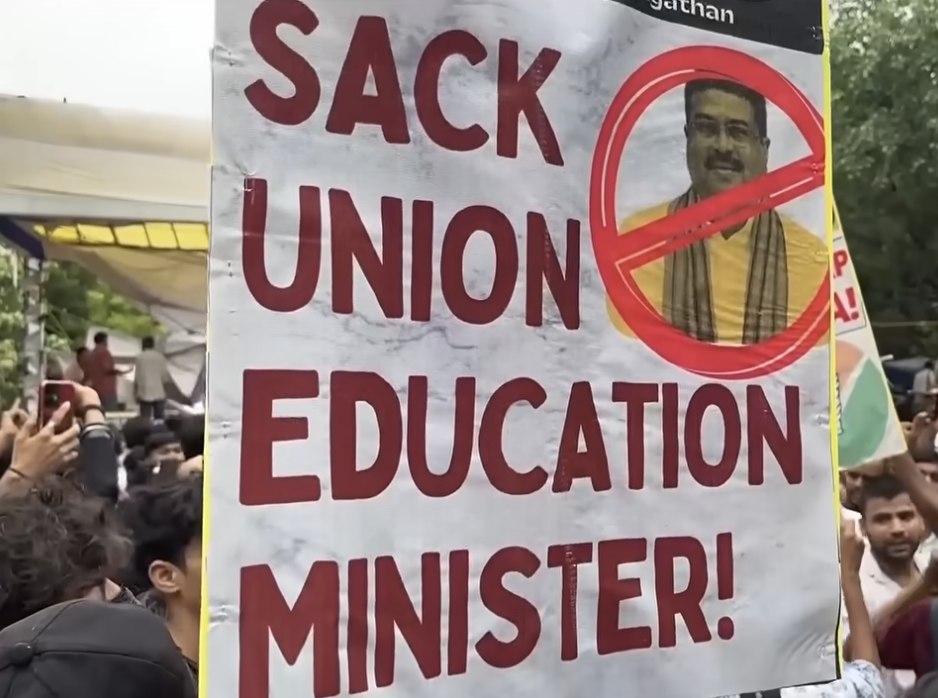
NEW DELHI — India’s education minister resigned Saturday, handing a significant victory to a youth-led protest movement that had spent more than a month demanding accountability over allegations that entrance exams to the country’s most competitive medical schools were leaked and sold.
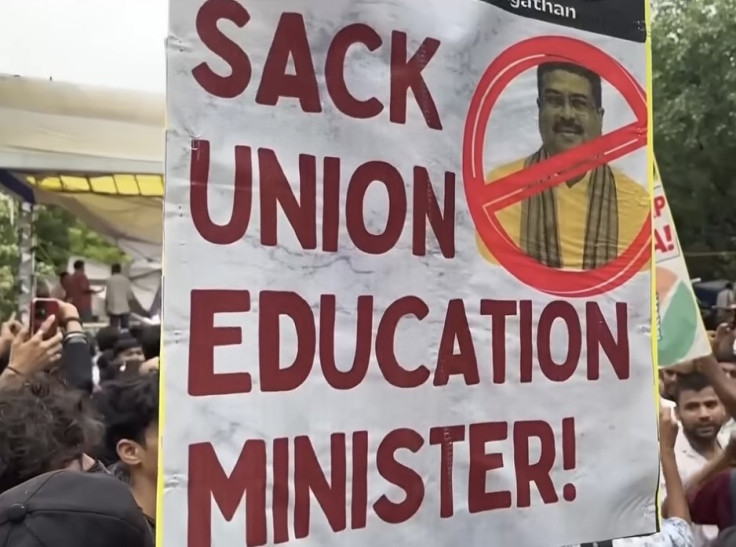
Dharmendra Pradhan announced his resignation following talks with organizers of the Cockroach Janta Party, or CJP, a youth movement that emerged in May and quickly grew into one of the most significant challenges Prime Minister Narendra Modi’s government has faced in recent years. The party called off its nationwide protests immediately after the announcement, saying the government had agreed to its core demands.
A scandal that disrupted millions of students
The controversy at the center of the protests traces back to May, when leaked questions disrupted the National Eligibility cum Entrance Test, commonly known as NEET, India’s fiercely competitive undergraduate gateway exam for medical schools. The leak forced authorities to cancel results and schedule a retest, affecting more than two million students nationwide. For many families, the scandal represented not just a logistical setback but a symbol of deeper dysfunction in a system where a single test can determine a young person’s entire career trajectory.
According to Indian media reports, several students died by suicide after learning their exam results would be scrapped, a detail that transformed public anger over the leak into a broader movement demanding systemic reform and accountability from government officials.
From online joke to national movement
The Cockroach Janta Party traces its origins to a comment made by India’s chief justice that was widely interpreted as comparing unemployed young people to “cockroaches.” The remark, which struck a nerve in a country grappling with persistently high youth unemployment, was seized upon by Abhijeet Dipke, a Boston University graduate, who transformed the moment into a rallying cry. What began as a social media post 36 days before Pradhan’s resignation evolved into a sustained protest campaign that drew tens of thousands of students and supporters to New Delhi’s Jantar Mantar protest site, with demonstrations also spreading to Mumbai, Hyderabad, Bengaluru and Ahmedabad.
When news of Pradhan’s resignation reached the crowd gathered at Jantar Mantar on Saturday, Dipke addressed supporters directly from the stage. “We have done it, we have done it,” Dipke said, prompting loud cheers from the thousands who had camped at the protest site for more than a month. He went on to read the names of students who had died by suicide amid the exam scandal, dedicating the movement’s victory to them.
Escalating tension with police
The protests intensified significantly in the days leading up to Pradhan’s resignation. Demonstrators clashed with police earlier in the week after officers used baton charges and tear gas to disperse crowds marching toward parliament, injuring dozens of students. Rather than dampening the movement, the crackdown appears to have galvanized broader public support, drawing students, professionals and families into a demonstration that organizers say reflected frustrations extending well beyond the exam scandal itself, touching on job scarcity, corruption and government accountability more broadly.
One protester at the demonstrations, Tluanga Ralte, described the moment in personal terms while marching with a copy of the Indian constitution. “Young generation is here. This is win for the constitution,” Ralte said, capturing the sense among demonstrators that the movement extended beyond a single resignation.
Modi’s government responds
Modi addressed the growing unrest directly in a video message posted to Instagram earlier in the week, acknowledging the seriousness of the situation in Hindi. “Friends, I understand that paper leak is no ordinary subject,” Modi said, adding that authorities had identified and jailed those responsible for the leak. That message prompted student leaders to meet briefly with a government representative, though they ultimately renewed their demand for Pradhan’s resignation and warned of nationwide marches if their demands went unmet by the weekend.
Following Pradhan’s resignation, government ministers JP Nadda and Jitendra Singh held a press conference confirming that police cases against protesters would be dropped and that the government would provide compensation to the families of students who died amid the scandal. Officials also announced the creation of fast-track courts to prosecute future cases involving examination paper leaks, alongside a commitment to review the CJP’s broader five-point reform plan for India’s exam system.
A resignation framed as principled, not forced
In his own resignation statement posted to social media platform X, Pradhan struck a conciliatory tone, emphasizing his respect for the concerns raised by young protesters. “I hold deep respect for the aspirations, sentiments, and rightful expectations of the youth” of the country, Pradhan wrote, describing the realization of young Indians’ dreams as central to his political values.
Nitin Nabin, national president of Modi’s ruling Bharatiya Janata Party and a close aide to the prime minister, characterized Pradhan’s decision in similarly positive terms, describing his choice to step down as one that “reflects the highest standards of integrity and selfless service in public life,” while affirming the party’s continued support for Pradhan going forward. As of Saturday, Modi had not yet publicly accepted Pradhan’s resignation.
A rare political victory, with questions ahead
Pradhan’s resignation marks one of the more significant political concessions Modi’s government has made in response to grassroots protest in recent years, particularly given the movement’s youthful, largely leaderless origins on social media. Whether the government’s broader promises — including exam system reforms, compensation for affected families and a review of the CJP’s reform proposals — will be fully implemented remains to be seen, and organizers have signaled they intend to monitor the government’s follow-through closely.
For now, though, Saturday’s announcement was treated as a clear victory by the movement’s supporters, who filled New Delhi’s streets in celebration after more than a month of sustained demonstrations that forced one of the most closely watched political reckonings India has seen in recent memory.

Angelina Jolie among Hollywood stars hit by ‘huge data breach after contact details exposed’, cybersecurity expert claims

Robert Flores and the Power of Building Real Estate Relationships

Spain win second World Cup after suffocating Argentina out of game

Renter of Home in Anne Heche Crash Denies Settlement With Son

No Jackpot Winner as $257 Million Prize Rolls Over to $269 Million Monday Draw

Weekend Open Thread: Staud – Corporette.com

BITCOIN PRICE TRAP BEFORE NEXT PUMP (Get Ready)!!! – Bitcoin News Today, Ethereum & Altcoins

THEY JUST WENT LIVE XRP!!!!! IT’S LIVE!!! (XRP SUPPLY SHOCK)

BITCOIN und ALTCOINS: Bodenbildung ist jetzt weitestgehend abgeschlossen
-

 Fashion2 days ago
Weekend Open Thread: Brooks Brothers
-

 Politics7 days ago
Democrats look to World Cup watch parties to register thousands of voters
-

 News Videos7 days ago
Big Money Is Entering XRP
-

 Tech5 days ago
Sail Virtually Aboard The “Itanic” With IA-64 Emulator
-
 Tech5 days ago
Turtle Beach Command Series KB7 review: a nifty screen-equipped gaming keyboard
-

 Crypto World5 days ago
Grayscale Files For Worldcoin ETF, WLD Registers Sharp Rise
-

 NewsBeat6 days ago
Unregistered fitter used Gas Safe logo on business flyers
-
 Business4 days ago
New Jersey voter registration controversy explained: How 6,600 noncitizens got on the rolls, and what happens next
-
 Entertainment5 days ago
Johnny Depp’s R-Rated Gothic Cult Classic Gets New Release Ahead of Sydney Sweeney Remake
-

 Crypto World4 days ago
Ethics, other provisions in crypto Clarity Act to be further discussed
-

 Tech6 days ago
Watch Flock Safety CEO Garrett Langley discuss the future of surveillance at TechCrunch Disrupt 2026
-
 NewsBeat5 days ago
Shanghai science forum photos show China’s AI and robotics advances in rivalry with US
-

 Crypto World6 days ago
Circle’s President Sold Over 360,000 Shares, The Filings Explain Why
-

 Tech6 days ago
Subway Sandwich Computers Get a Second Life as Gaming Machines
-

 Sports2 days ago
2026 3M Open leaderboard: Scottie Scheffler finds putter in Round 1, sits three back
-

 News Videos3 days ago
The Peugeot Family: How 200 Years of an “Old Money” Dynasty Died in A Boardroom
-

 Fashion2 days ago
16 Dresses for the High Summer Event
-

 Tech7 days ago
How To Use Claude’s Reflect Dashboard And Learn When It’s Time To Touch Grass
-

 Tech6 days ago
The 35 Best Board Games for Family Game Night
-

 Entertainment6 days ago
Stephen Colbert Returns to Social Media After Late Show End
You must be logged in to post a comment Login