
Business
Zeta Global Shares Jump 16% as Marketing Software Firm Extends 20-Quarter Beat-and-Raise Streak This Week


Zeta Global Holdings shares extended a sharp rally Wednesday, building on gains from the previous session after the marketing technology company delivered second-quarter results that beat expectations and extended what the company describes as its 20th consecutive “beat and raise” quarter.
Shares climbed to $28.20, up 16.24%, continuing a rally that began Tuesday when the company’s earnings report initially sent the stock up 7.54% to close at $24.26. The move built on a year in which Zeta shares have already climbed nearly 50%, according to recent trading data, as the New York-based company has continued posting accelerating growth in its AI-driven marketing platform business.
A Streak Extended
Zeta reported second-quarter revenue of $442.8 million, comfortably clearing the company’s own guidance range of $419 million to $422 million and marking a 44% increase year over year and a 12% sequential gain from the first quarter. In a statement, the company described the results as achieving positive GAAP net income for the second quarter, a milestone that adds to the company’s continued push toward sustained profitability alongside its rapid top-line growth.
Adjusted EBITDA for the quarter came in at $91.7 million, more than 50% higher than the $58.77 million posted in the same period a year earlier. Following the results, Zeta raised its third-quarter revenue guidance to a range of $469 million to $472 million, above the $461.01 million analysts had been expecting, while also lifting its full-year earnings-per-share guidance to a range of 9 cents to 11 cents, up sharply from a prior forecast of 2 cents to 4 cents.
AI Platform Drives Momentum
Much of the enthusiasm surrounding Zeta’s results has centered on the rapid adoption of the company’s Athena AI platform, which the company has said captured 60% of platform AI usage within its first week of availability, driving what Zeta described as a sevenfold surge in agentic interactions and a 40% lift in sales pipeline activity. The company has continued expanding partnerships tied to its AI infrastructure strategy, including collaborations with OpenAI, Snowflake and Palantir, with integration of the Palantir partnership expected to be completed within 45 days of the announcement.
Zeta has also continued extending Athena’s capabilities to advertising agencies, using what the company calls its proprietary SuperGraph technology to analyze consumer signals and recommend real-time marketing actions across a customer’s full lifecycle. The company has said a broader rollout of that agency-focused offering is planned to continue through the remainder of 2026, following an initial beta period with select partners.
A Credit Facility to Support Growth
Alongside its earnings results, Zeta has continued strengthening its financial flexibility. The company closed a $1 billion credit facility in recent weeks, which it said would be used to support mergers and acquisitions, share repurchases and general corporate purposes, giving the company additional capacity to pursue growth initiatives beyond its organic platform expansion.
Zeta has also continued building out its executive team, recently naming Intel and Synopsys veteran Trey Campbell to lead investor relations, a move the company has framed as part of its broader effort to strengthen its engagement with the investment community as it continues to scale.
Some Caution Amid the Rally
Despite the overwhelmingly positive market reaction, not every signal surrounding Zeta’s stock has been unambiguously bullish. Options activity ahead of the earnings release showed significantly more call volume than put volume, reflecting broadly bullish positioning among traders, though the company has also seen a notable number of recent insider transactions net sold, a dynamic some analysts have flagged as a cautionary signal against uniformly bullish sentiment. Wall Street coverage of the stock remains heavily weighted toward buy ratings, with 12 buy recommendations and two holds and no sell ratings among covering analysts, alongside a consensus price target implying meaningful additional upside from recent trading levels.
A Track Record of Consistency
Zeta’s ability to extend its beat-and-raise streak to 20 consecutive quarters has become a central part of the bullish narrative surrounding the stock, with the company’s full-year 2026 revenue guidance now standing at a range of $1.779 billion to $1.792 billion, up $30 million at the midpoint from its prior forecast and representing year-over-year growth of 36% to 37%. Even excluding the impact of political candidate advertising revenue and contributions from its Marigold enterprise business, the company has said its underlying growth rate remains in the 22% to 23% range, a figure management has pointed to as evidence of durable demand for its core marketing platform independent of one-time or cyclical revenue sources.
With Zeta’s stock continuing to build on its post-earnings momentum into Wednesday’s session, investors are likely to keep a close eye on the continued rollout of the company’s Athena AI platform and its expanding partnership ecosystem as key indicators of whether the company can sustain its remarkable streak of exceeding its own guidance in the quarters ahead.


Gianni Infantino has apologised for “errors” he made in controversial plans to sell off stakes in competitions to private investors, but will remain Fifa president after receiving the backing of senior executives in a meeting in Morocco.
Infantino summoned members of the management board to Fifa’s Africa office in Rabat on Wednesday following mounting criticism of his aborted proposals, with world football’s governing body releasing a statement of support four hours after the meeting ended.
European football’s governing body Uefa said at the weekend that it has lost confidence in Infantino, calling the Fifa Forward Enterprise (FFE) proposal a “shabby, back room, opaque deal”.
Much criticism has come from within Fifa, including secretary general Mattias Grafstrom, who was at Wednesday’s meeting. In an internal memo sent to Fifa staff on Tuesday, he wrote that the situation is “a sad and reproachable series of events”.
However, in a statement following the meeting, Grafstrom and the managament board “reaffirmed their full support” for Infantino as president.
Infantino and Grafstrom also sent a signed letter – seen by the BBC – to Fifa’s vice-presidents, council and 211 member associations saying they “sincerely apologise” for their errors and “commit to them not happening again”.
The two were pictured attending a Women’s Africa Cup of Nations match together in Rabat after the meeting.
Infantino had offered all associations $40m (£30m) if they backed a proposal for private investment in its tournaments, including the men’s and women’s World Cups, through a new subsidiary, FFE.
Fifa said that during Wednesday’s meeting “mistakes” regarding FFE were “acknowledged”, saying it was “not the intention” for the Fifa council and members association to “feel excluded from the process and that the process should have been handled differently”.
The governing body added it “acknowledged that errors were also made after the proposal was leaked to media” – with the Times breaking the story of Infantino’s plan on 28 July.
However, the statement also said the organisation “will no longer tolerate any attacks on its integrity, good governance and due process and will take all necessary measures to protect and safeguard its name and reputation”.
Earlier, Fifa denied a story in the Times that Infantino had promised Morocco it will host the 2030 World Cup final in exchange for its support.
Fifa said it was a “false and misleading” claim and that a decision on where to hold the final, with the tournament also hosted by Spain and Portugal, will be made “in due course”.

Some 40% of adults considered tank tops or vest tops acceptable for women at work, compared with only 24% who said the same for men, according to Ipsos.
Natasia, a teacher in London, says at a previous school she and other staff had been summoned “regularly in the summer months to tell us off about our outfits.”
She says she was also told to cover up her tattoos. “It should be OK to have your arms out at work especially when it’s hot,” she says.
Wakeley says a well-cut camisole or strappy top can work when worn beneath a linen overshirt, lightweight jacket or tailored co-ord. On its own, however, it may feel too informal.
Chambers says if you’re wearing a strappy top “you must wear a strapless bra as it utterly kills an outfit when you can see bra straps”.
She explains that thicker straps are a safer option where the dress code is unclear and recommends satin camisoles as a more polished alternative to basic cotton vests.
She adds that while bandeau tops are “such an on-trend look this summer, they are a no-go for work”.
“The constant need to keep fiddling to pull them up displays an uncomfortable and unconfident demeanour,” she says.

Calls for changes to the mechanism or, even a temporary rollback, have gathered pace on social media, prompting the Securities and Exchange Board of India and exchanges to convene a meeting with top brokers even as the authorities defended the framework.
The regulator is believed to have told brokers that it has no plans to change the CAS for now and urged them to encourage more traders to participate in the mechanism. An email sent to Sebi went unanswered till the time of going to print
At the centre of the controversy is the regulator’s decision to overhaul the way closing prices of 200-odd stocks in the futures and options (F&O) segment are determined, which traders say has caused unusually wide divergences between Sensex and Nifty and futures and options trades going awry.
“The biggest problem under the CAS is that traders are unable to understand what the closing prices will be because there is a lot of randomness in the system,” said Piyush Chaudhry, founder of Mumbai-based Wave Analytics.

Professional traders use factors such as order flows, liquidity, derivatives positions and historical trading patterns to estimate price directions-key to successful trading. Sharp deviations from those expectations can cause trading strategies to misfire, resulting in unexpected gains or losses.
Options traders have taken the biggest hit in the closing auction system. For traders like Aakanksha Gupta, the closing auction mechanism has put her in a blind spot as she is unable to assess where the Nifty is likely to close.”As an options seller, I rely on the live Nifty spot level to execute trades throughout the day. Since CAS was introduced, cash market trading ends at 3.15 pm , but the F&O eligible stocks continue to trade,” said Mumbai-based Gupta, a Sebi-registered research analyst. “We build strategies around the prevailing spot level, only to find the index repricing sharply when trading resumes, turning profitable positions into losses.
Both indices have witnessed rollercoaster rides in the past three days. On Wednesday, the Sensex was down 0.2% and the Nifty had fallen 0.5% at their intraday lows. At close, the Sensex ended 0.19% higher, while the Nifty closed almost flat.
“Over the past two days, we’ve seen a significant gap between the reference price during the CAS and the final indicative closing price, because large orders can influence the indicative price,” said Aditya Pachwaria, founder, Fintoric Capital.
Wild Swings
Shikha Pruthi Gupta, a Faridabad, NCR-based full-time trader, said a profitable trade at 3.15 pm can unexpectedly turn into a loss because of the lack of visibility into where the index will finally settle.
One key criticism voiced by traders is the 3% price band within which the auction price is generally allowed to move, measured on the basis of the stock’s average traded price between 3.00 and 3.15 pm.
“How can you have a +/- 3% range for stock prices in the auction process; that itself is a random number and has no connection to what the market’s behaviour was for the day,” said Chaudhry. “This methodology is highly questionable and has no statistical basis.”
Algorithmic trading has been among the biggest casualties of the new mechanism, with professional traders saying their models have struggled to anticipate the sharp and unexpected price moves seen over the past three days. This is because many algorithms were designed around historical closing price patterns rather than an auction-driven market close.
The new closing auction process lasts about 20 minutes, from 3.15 pm to around 3.35 pm. During this period, the exchange first collects buy and sell orders and then matches them to determine a single official closing price for the stock. Under the previous system, a stock’s closing price is based on the average price of trades done in the last 30 minutes, between 3 pm and 3.30 pm.
The difficulty in predicting closing prices has disrupted traders’ risk-management systems, prompting many, such as Pachwaria, Gupta and Chaudhry, to stay on the sidelines. Since many of them trade with leverage, unexpected moves near the close can magnify losses, making it harder to manage risk.
“Many traders, including me, are observing rather than trading because even algos cannot work in this environment,” said Chaudhry.
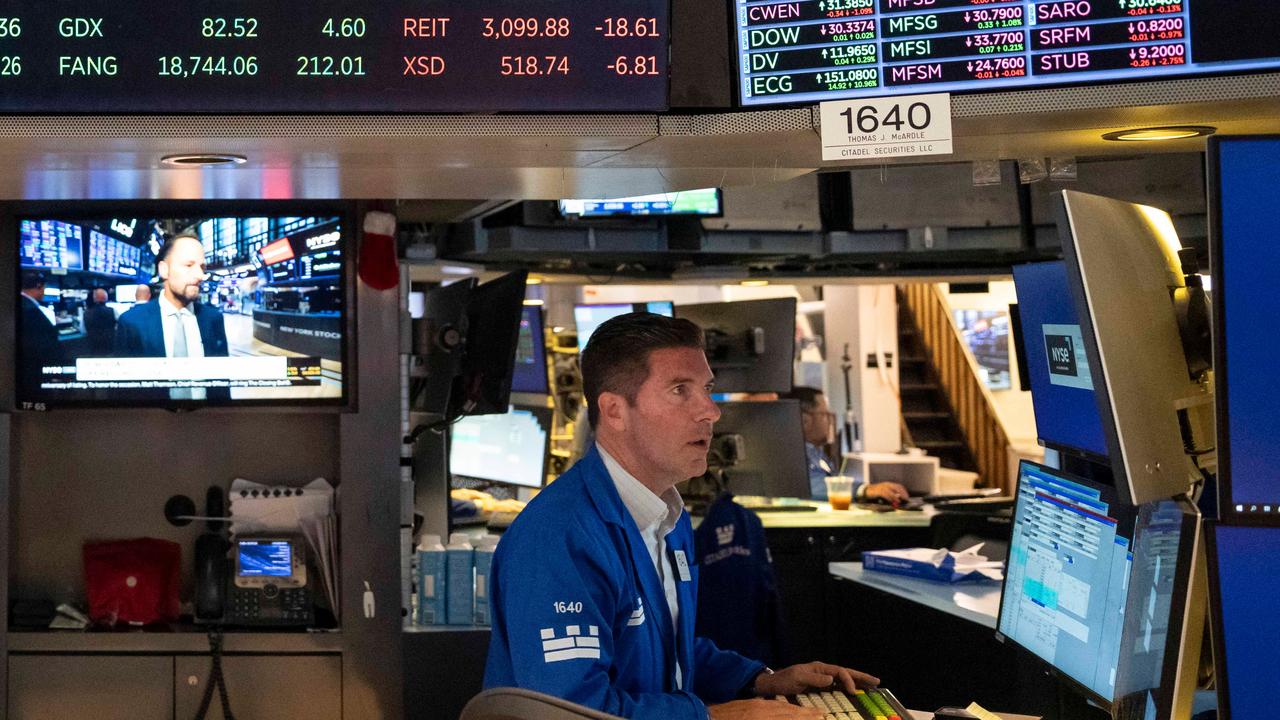
The Dow has closed at a record high on signs of progress for a peace deal with Iran while the Nasdaq registered its first decline in five sessions as SpaceX and AMD stumbled following their quarterly earnings.
Amenity lists in apartment listings read like a competition to see who can name the most things. Rooftop lounge. Rock climbing wall. Yoga studio. Coworking space. Golf simulator. The words are there. The question that reviews answer actually is which ones get used, which ones hold up, and which ones look better in the brochure than in daily life.
Liberty Harbor packs in more amenities than most downtown Jersey City buildings. Here’s what residents really say about each one, pulled from reviews with actual details, not just vague praise.
The Fitness Center: The Most Consistently Positive Review Category
Year after year, the fitness center stands out as Liberty Harbor’s most praised amenity. Residents call out the solid range of equipment, clean space and reliable access during early mornings and midday on weekdays.
The catch: peak hours, especially 6 to 8am on weekdays and Saturday mornings, mean real wait times for cardio. If you need a specific machine at those times, expect a less ideal experience than those with flexible schedules.
Long-term residents agree: work out outside peak hours, and the fitness center is a real quality-of-life upgrade, arguably worth the rent premium. Need peak-hour access to specific equipment? Set your expectations or plan for a backup gym nearby.
The Pool: The Most Debated Amenity in Summer Reviews
No amenity at Liberty Harbor gets more mixed reviews than the pool. The reason is simple: it all depends on when you go.
Weekday mornings and evenings: consistently positive. The pool is accessible, the atmosphere is pleasant, and the waterfront location adds something a building’s interior pool doesn’t.
Saturday and Sunday afternoons in July and August: always crowded. If you’re banking on easy weekend pool access all summer, know this before you sign.
Here’s the reality: Liberty Harbor is big. One pool for thousands means summer weekend afternoons hit capacity. That’s not mismanagement, it’s simple math. If you use the pool early, on weekdays or off-peak weekends, your experience will be nothing like showing up at 2pm on a July Saturday.
The pool before work in summer is genuinely great. After noon on a July weekend, expect a different story. Know this before you move in.
The Yoga Studio and Group Fitness: Underused by Most, Valued by Those Who Use It
Residents who use the yoga studio and group fitness classes rate them highly. Those who don’t use them rarely mention them. In short, people who already value group fitness appreciate having it on-site. The rest barely notice.
Regulars say the schedule is reliable, instruction quality depends on the instructor, and the space works well. The real win is convenience. Not having to leave the building for a class makes weekday mornings easier.
The Coworking and Work-from-Home Spaces: A Sleeper Amenity
Liberty Harbor’s coworking and lounge spaces get more attention in resident reviews than in the listings. Once people find them, they call these spaces the building’s top amenity.
When your apartment gets noisy, or you need to focus, having a quiet, well-lit workspace downstairs beats hunting for a coffee shop or paying for coworking. Residents say the lounges are quiet, bright and have solid connectivity.
The Rock Climbing Wall: An Amenity Worth Knowing About
The rock climbing wall is one of the more unusual amenities in a residential building, and its reviews reflect that novelty. Some residents love it, many ignore it, and very few people moved to Liberty Harbor specifically because of it.
For residents who climb, or have kids who do, the wall stands out. It won’t replace a real climbing gym, but it’s a solid perk for occasional use and for families. For everyone else, it’s just part of the backdrop.
The Dog Run and Pet Amenities: Cited Frequently in Pet-Owner Reviews
Dog owners don’t mince words: the dog run and true pet-friendliness top their list of reasons to live here. The dog run is well-kept, the building actually welcomes pets, and quick access to the waterfront and Liberty State Park makes high-rise dog life far easier than most places.
For non-pet owners, this amenity category is invisible. For the significant portion of Liberty Harbor residents who have dogs, it’s one of the primary reasons they chose the community and have renewed.
The Outdoor Common Spaces and Events Programming: The Amenity That Shows Up Most in Retention
The fitness center gets the most praise, but it’s the outdoor programming and community events that actually keep residents around.
Outdoor movie nights and seasonal events do more than fill a calendar. They turn a building into a community. Residents meet neighbors at these gatherings in ways that never happen in the elevator or mailroom.
You won’t find this amenity on a floor plan. It takes time and a little initiative to discover. The residents who call it the best part of Liberty Harbor are usually the ones who found it early and kept coming back.
What to Ask About Amenities Before You Sign
A few questions worth asking during a Liberty Harbor tour that the standard amenity list doesn’t answer:
- What are the actual peak hours for the pool and fitness center, and is there a reservation system for either?
- How many residents is each building’s amenity suite designed to serve, and what’s the current occupancy?
- Is there a resident events calendar I can look at for the current and upcoming months?
- What are the coworking space hours and reservation process?
The answers to these questions will tell you whether the amenity experience will match your actual use patterns, which is what reviews are trying to tell you, and what floor plans can’t.
Liberty Harbor stands out among Jersey City waterfront communities for its amenities. Residents consistently call out the fitness center, work lounge, outdoor programming and pet facilities as highlights. The pool, though, tends to get crowded on summer weekends, so set your expectations accordingly.
In short: the amenities deliver. The outdoor community programming, while tough to capture in a listing, is a big reason people stick around.
Business
Dow Jones Climbs to Fresh Record Above 54,400 as Wall Street Rally Continues Into Wednesday This Week

NEW YORK — The Dow Jones Industrial Average opened Wednesday at 54,467.23, extending a remarkable run of record-setting sessions on Wall Street as falling oil prices, strong corporate earnings and growing optimism over a potential resolution to the Strait of Hormuz crisis continued to fuel investor enthusiasm.
The blue-chip index’s early Wednesday level built directly on Tuesday’s historic close, when the Dow surged 907.47 points, or 1.71%, to finish at 54,085.88, marking the index’s first close above the 54,000 threshold in its history. Wednesday’s opening level of 54,467.23 represented a further gain of roughly 381 points, or about 0.7%, from that record close, suggesting the rally that has defined trading over the past several sessions was carrying fresh momentum into the new trading day.
A Historic Week for Major Indexes
Tuesday’s session saw all three major U.S. stock benchmarks close at record highs simultaneously. The S&P 500 surged 1.79% to close at 7,736.52, its first record close in two months and a level that surpassed its previous closing peak set in early June. The tech-heavy Nasdaq Composite climbed 2.59% to finish at 26,584.99, powered in part by a 29% rally in Palantir Technologies shares, though the index itself remained roughly 2% below its own record high set in early June as it continued recovering from a summer slump.
The Dow’s advance Tuesday marked its second consecutive all-time high, following a close above 53,000 points for just the second time ever on Monday. That back-to-back run of records came as Amazon briefly eclipsed a $3 trillion market capitalization for the first time on Monday, before pulling back roughly 2% Tuesday after founder Jeff Bezos filed to sell approximately $4 billion worth of shares.
Oil Prices and Iran Diplomacy Drive Sentiment
A significant portion of this week’s rally has been attributed to continued declines in oil prices, driven by growing hopes that diplomatic talks involving the United States, Iran and Oman could soon lead to the reopening of the Strait of Hormuz to commercial shipping traffic. Brent crude fell to $79.11 a barrel as of early Wednesday, marking a roughly 13% decline from the prior week, as officials from the three countries reported progress in negotiations aimed at resuming oil shipments through the critical waterway.
President Donald Trump reinforced that sense of momentum, saying the strait would reopen “very soon” or Iran would be “hit very hard,” according to comments reported by CNN. The optimistic tone from Washington was complicated somewhat by Iranian state media, which reported Wednesday that any potential agreement between Iran and Oman regarding the waterway’s future had “no connection” to reopening the strait itself, illustrating the continued uncertainty underlying the diplomatic process even as markets have broadly priced in an optimistic outcome. Separately, tensions in the region remained elevated after an Indian-flagged vessel was struck and sunk by a projectile off the coast of Yemen, according to Indian authorities, though no group had been identified as responsible for the attack.
Strong Earnings Lift Individual Stocks
Beyond the macro backdrop, Tuesday’s rally was also propelled by a wave of strong corporate earnings reports. Caterpillar led gains among Dow components, surging more than 5% and surpassing its intraday record set the previous month. Cisco Systems and IBM also posted notable gains of 5.11% and 3.91%, respectively, contributing meaningfully to the index’s advance. Beyond the Dow’s 30 components, the broader technology sector jumped roughly 4% during Tuesday’s session, with chipmakers and AI-linked companies among the standout performers as sentiment toward the sector continued to rebound from earlier summer weakness.
That sector rotation has been a defining feature of markets in recent months. Through June and July, healthcare and financial stocks, sectors in which the Dow carries significant exposure, had outperformed technology shares, helping keep the blue-chip index near record territory even as the tech-heavy Nasdaq struggled with a summer slowdown. In August, however, technology shares have staged a notable comeback, rising nearly 7% for the month even as broader debate continues among investors over which companies stand to be the ultimate winners and losers from the ongoing artificial intelligence investment boom.
A Busy Day for Earnings Ahead
Wednesday’s session arrived with investor attention split between the continued momentum in oil prices and Middle East diplomacy on one hand, and a fresh slate of high-profile corporate earnings on the other. Disney, Shopify and Kimberly-Clark were among the major companies scheduled to report quarterly results Wednesday, adding to an already earnings-heavy stretch of the summer reporting season that has helped drive much of the market’s recent momentum.
That earnings-driven momentum followed a similarly eventful Tuesday, when SpaceX delivered its first results as a newly public company alongside a strong quarterly report from AMD, both of which drew significant investor attention given their ties to the broader AI infrastructure buildout that has dominated market narratives for much of the year.
Caution Amid the Rally
Despite the historic run of record closes, some market strategists have cautioned that the pace of recent gains raises questions about how sustainable the rally can be in the near term, with attention turning to whether fewer individual stocks participating in new highs could signal underlying fragility even as headline indexes continue climbing. Options market positioning has generally remained bullish, according to recent market commentary, though analysts have noted that narrowing market breadth during a rally can sometimes precede periods of consolidation or pullback.
With Wednesday’s session already building on Tuesday’s historic close, investors are likely to continue closely tracking developments in the Strait of Hormuz negotiations, given how directly oil price movements have been tied to this week’s broader market sentiment. The continued flow of second-quarter corporate earnings, alongside any further updates on U.S.-Iran diplomacy, is expected to remain the dominant driver of trading in the sessions ahead as Wall Street works to determine whether the current record-setting run can be sustained into the latter half of the summer.
Check out what’s clicking on FoxBusiness.com.
Walgreens is continuing to close underperforming stores in 2026, although the pharmacy chain is reportedly planning fewer closures than previously projected.
The company is expected to close fewer than 100 stores in 2026, down from earlier internal projections of roughly 700, Inc. reported.
Walgreens announced in October 2024 that it intended to shutter approximately 1,200 underperforming stores over three years as part of a broader turnaround effort.
At the time, the company said it expected to close about 500 stores during fiscal 2025, primarily targeting locations that were generating negative cash flow, according to Reuters.
WALGREENS TO CLOSE CHICAGO STORE AFTER LOSING OVER $1M DUE TO RAMPANT THEFT, FALLING SALES

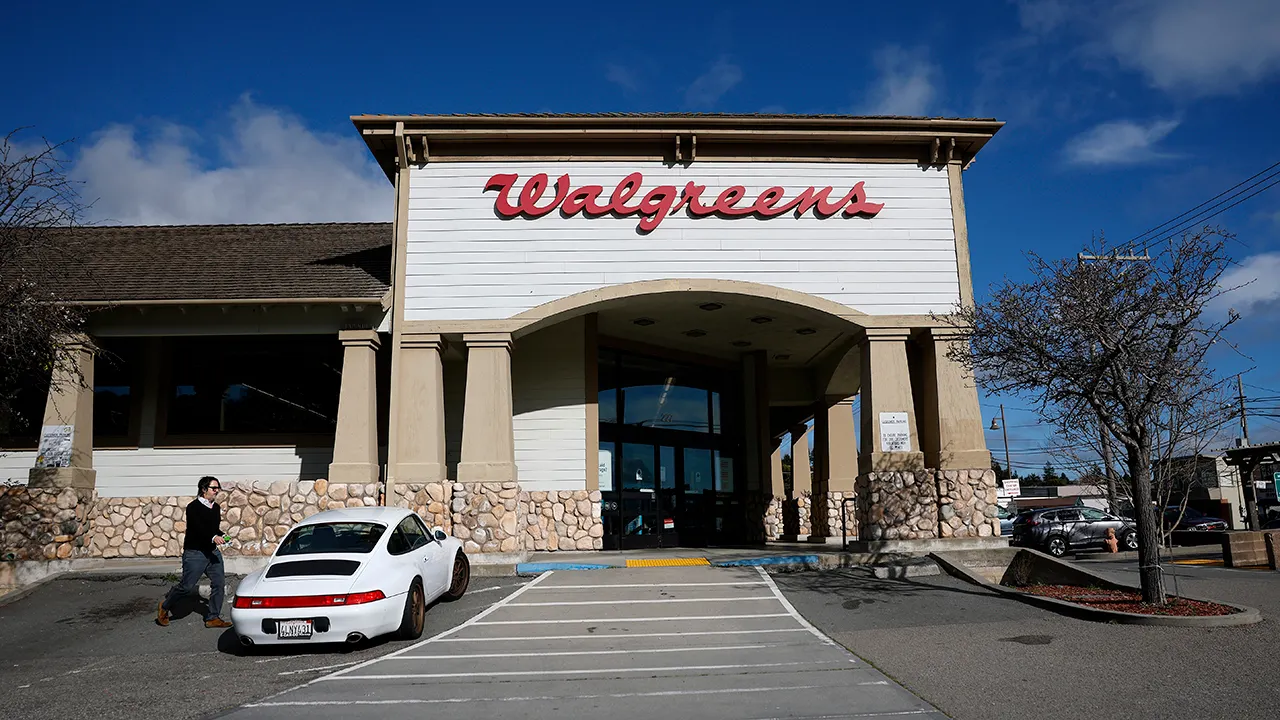
A Walgreens store March 6, 2025, in Mill Valley, Calif. Walgreens is reportedly continuing to close underperforming stores in 2026. (Justin Sullivan/Getty Images)
The closure strategy was reportedly scaled back after Walgreens went private in 2025, according to Inc.
Walgreens continues to operate thousands of stores across the U.S. and remains one of the country’s largest pharmacy chains.
CVS OFFERS NEW PHARMACY OPTION FOR PET OWNERS

People shop at a Walgreens Nov. 6, 2025, in the Brooklyn borough of New York City. Walgreens announced in October 2024 that it intended to shutter approximately 1,200 underperforming stores. (Spencer Platt/Getty Images)
The company confirmed to USA Today that the following locations have recently closed or are scheduled to close. The closures were previously reported by Inc., local news outlets or Walgreens’ website:
- District of Columbia: One Washington location
- Illinois: Two Chicago stores and one Rockford location
- Missouri: One store in Bridgeton and another in St. Louis
- New Jersey: One Bogota location scheduled to close Aug. 6
- New York: One Brooklyn location
- South Carolina: One Beaufort location scheduled to close Aug. 6
- Texas: A Houston distribution center
- Virginia: One Arlington location
- Washington: One Seattle location
- Wisconsin: One Milwaukee store
One of the Chicago closures highlights the financial and operational pressures behind some of the company’s decisions.
CVS, WALGREENS PULL BACK COVID VACCINES IN MORE THAN A DOZEN STATES FOLLOWING NEW GUIDELINES
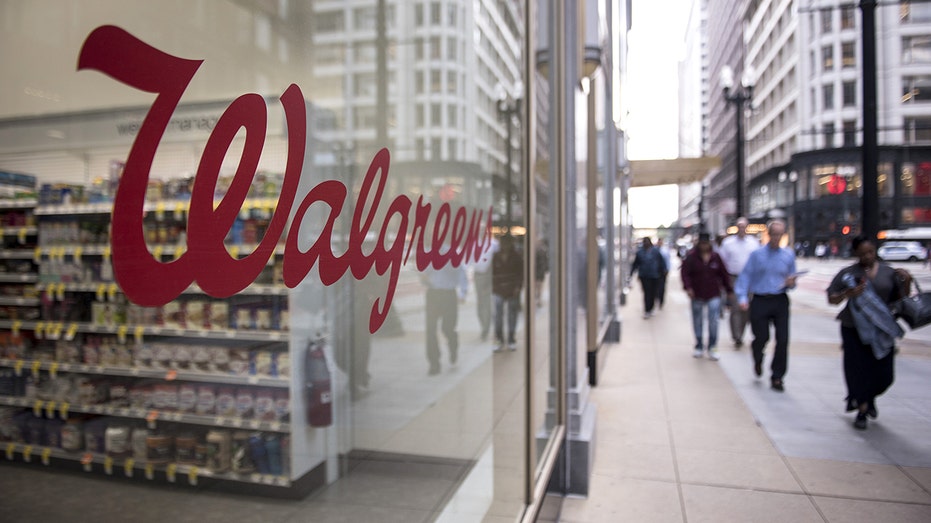
Walgreens continues to operate thousands of stores across the U.S. (Christopher Dilts/Bloomberg via Getty Images)
Walgreens announced earlier this year it was closing its location near 86th Street and Cottage Grove Avenue in Chicago’s Chatham neighborhood after the location struggled with declining prescription sales and elevated levels of theft.
GET FOX BUSINESS ON THE GO BY CLICKING HERE
“I’m here today because we’re closing the store at 86th and Cottage Grove. But I just want to make sure everyone understands closing stores [is] not our goal. This is the last resort,” Walgreens regional Vice President Reginald Johnson said in May, according to FOX 32 Chicago.
Walgreens could not immediately be reached by FOX Business for comment.
FOX Business’ Eric Revell contributed to this report.
Nikita Bier steps down as X product chief after one year

A meatpacker is the plant that slaughters the animal and breaks the carcass down into the cuts that reach shops or restaurants.
Four companies – Tyson, JBS, Cargill and National Beef – control around 85% of American beef processing.
That high level of market concentration has drawn accusations of price-fixing, even from President Trump.
So you might expect that those four firms are currently making huge profits from high beef prices. Yet the opposite is happening.
Tyson, the biggest of the four, reported in May that it had lost more than $500m, external on beef in the first half of its financial year.
Again, it might be selling its beef for record highs, but it is also buying the cattle at all-time peaks.
Jamie Crumley owns one of the remaining smaller meatpackers – Harpley’s Meatpacking in central North Carolina. She says the price companies like hers have to pay for the live animals has gone up by as much as 60% over the past three years.
And while meatpacking companies have increased the prices they charge for their beef, there is a limit. This is because supermarkets, restaurants – and US consumers – can, and will, simply switch to buying chicken or cheaper imported beef instead.
Then there is the inefficiency of running the meatpacking plants at much less than full capacity. For example, Harpley’s is built to handle 425 to 450 cattle a day. But it is currently running at just 350 because it cannot get the additional animals.
The building, the line and the staff cost the same either way, so those fixed costs now spread across fewer animals. On any given day Crumley says she can lose anywhere from $100 to $400 on a single head of cattle. This helps to explain Tyson’s giant losses.

BeOne Medicines DRC earnings beat by $2.29, revenue topped estimates
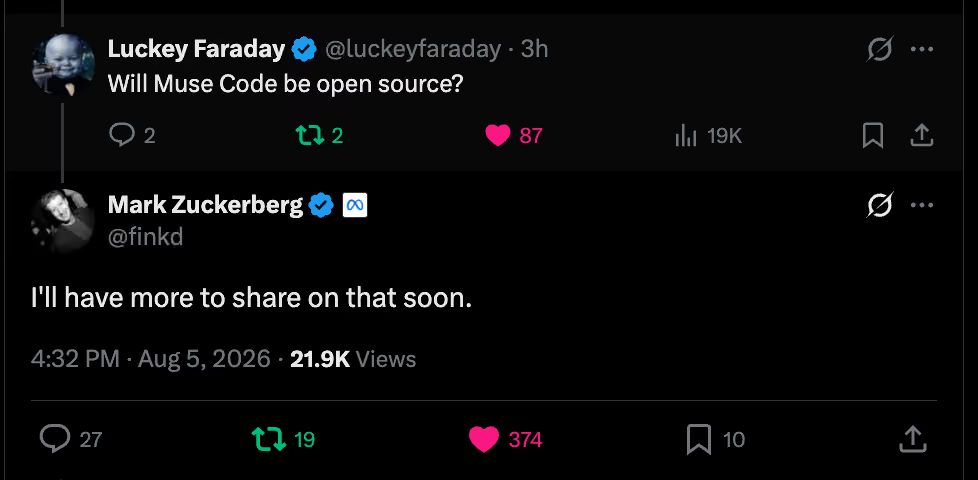
Meta enters the AI coding wars with Muse Spark 1.2 and Muse Code with persistent async background agents

The FIRST Incel On Financial Audit | Caleb Hammer Clips

Teen dressed as clown ‘stabbed elderly man to death’ after whispering chilling message


-

 Fashion5 days ago
Weekend Open Thread: Wit & Wisdom
-

 Politics5 days ago
Meta enters AI-training agreement with far-right ‘propaganda rag’ Newsmax
-

 Politics3 days ago
Zack Polanski: an incitement to murder Nigel Farage?
-

 Crypto World4 days ago
MicroStrategy Post-Earnings CLARITY Act Push Could Add New Catalyst for Its Stock
-

 Crypto World5 days ago
XRP Ledger v3.3.0 brings five institutional features
-

 News Videos7 days ago
Bitcoin Enters the 3rd Stage of the Bear Market
-

 Politics6 days ago
Luke Littler’s dominance sparks GOAT debate
-

 Sports6 days ago
Seema Kaliramna Wins Discus Throw Bronze, Takes India’s CWG Medals Tally To 17
-

 Crypto World5 days ago
New York sues Kalshi over prediction market gambling
-

 Crypto World4 days ago
Crypto PAC spending tops $2M in Michigan House race
-

 Business5 days ago
Trump Announces Hamas Disarmament Agreement as Iran Strikes Kuwait Air Base and US Attacks Pause Overnight
-

 Business3 days ago
DTCR: Deleveraging And A Hedge Fund Collapse Point To A Possible AI Bottom
-
 Crypto World5 days ago
3 Fed Officials Just Explained Their Rate Hike Vote: Is Inflation Winning?
-

 Tech4 days ago
ESET tracks rise in malicious AI skills and adaptable malware
-

 NewsBeat7 days ago
Four people die trying to cross Channel in small boats
-

 Sports5 days ago
France Cricket implodes: letters hidden in a drawer and a board at war
-

 Tech6 days ago
Gemini Spark can now use Chrome logins and saved passwords to run errands on your behalf
-
 Tech6 days ago
Building A Reproduction PlayStation Motherboard
-
Crypto World3 days ago
XRP Ledger urges node upgrade after manifest flood
-

 Crypto World5 days ago
Moneyflip CEO charged in $40K murder-for-hire plot
You must be logged in to post a comment Login