
Crime
Assaults on trains on Britain’s Railways Hit Record 25,000 a Year as Transport Police Ranks Shrink


Assaults on trains across Great Britain have climbed to their highest level on record, with official figures showing almost 25,000 incidents reported in a single year — a jump of a fifth that has left rail staff and passengers increasingly fearful of using the network they rely on every day.
The numbers, released by the Office of Rail and Road, cover a wide spectrum of behaviour: threats, verbal abuse, spitting, head-butting and sexual harassment, alongside incidents that caused no physical injury at all. But buried within the total is a harder number that unions say should alarm anyone who boards a train or works on one — nearly 2,500 physical assaults on staff, or roughly seven every single day.
For those on the front line, the statistics simply confirm what they already feel in their bones. At Exeter St Davids station last week, when a train was halted unexpectedly, staff immediately assumed the worst. “Someone will have kicked off,” one worker said. “It happens all the time. My boss got head-butted recently.” On this occasion they were wrong. But the fact that violence was their first guess speaks volumes about daily life on the railway.
Why assaults on trains keep climbing
Rail unions, including the RMT and TSSA, say the surge is horrifying but far from surprising. They point to a steady hollowing-out of policing on the network: the number of British Transport Police officers fell by more than 10% between 2024 and 2026, even as passenger numbers and reported incidents have gone in the opposite direction. Fewer staffed stations and a thinner police presence, they argue, have left both workers and travellers more exposed.
Many staff now wear body cameras simply to document what happens to them on shift. “I think it’s so sad that we have those,” said one rail worker in south-west England who has spent two decades on the job. “The threats, the abuse, the violence we see is off the scale.” He pointed to drink, drugs and untreated mental health crises as recurring factors. “If you’re out on the street you can steer clear, but if you’re on a train or a platform you can’t. Our workplaces are becoming more and more dangerous.”
Others describe a job that has changed fundamentally since the pandemic. One guard in the north of England recalled being punched in the head by a passenger during his last service of the night: “I’ve had to look away to see the door controls and the next thing I know, I’m waking up on the platform.” He said verbal abuse is now a daily occurrence for every guard he knows. “Now it’s mostly bad days, and you’re searching for good days, where nothing’s said, or nothing happens. The amount of times we’re getting threatened now with physical attacks, even when you walk through the train and say, ‘Tickets, please.’”
It isn’t only uniformed conductors and guards who bear the brunt. Contractors working trackside say they too have become targets, even though their jobs have nothing to do with delays or cancellations. “We sometimes get sworn at and even spat at,” said one contractor based in Somerset. “It’s just a minority, but somehow they think we’re responsible for slow journey times, cancelled trains. We’re in bright orange so we’re easy targets.”
A wider pattern across public transport
The spike in assaults on trains mirrors a broader deterioration across public transport. Bus drivers have reported repeated abuse and threats, prompting the Unite union to sound similar alarms. In London, Transport for London staff working on the roads are now issued with “spit kits” — forensic saliva collection tubes — because that form of assault has become so routine that evidence-gathering has had to be built into the job.
Violence against women and girls on public transport is drawing particular attention from policymakers. Speaking at the Labour party conference this week, the minister for buses and local transport, Simon Lightwood, described the problem as a “national emergency.” The mayor for the north-east, Kim McGuinness, said that beyond practical measures such as better lighting, more staffing and expanded CCTV, women need confidence that reporting an incident will actually lead to action. “Knowing that if you raise an alarm something is going to be done,” she said, is essential. “It’s a choice to use public transport or not … if you’re accepting 50% of the population don’t feel safe, that’s not good.”
For an industry still working to win back passengers and revenue lost since the pandemic, the economic stakes of this crisis are significant. A railway perceived as unsafe — for staff or travellers — risks further eroding ridership and straining recruitment at a time when operators are already battling cost pressures and public scrutiny over reliability. Unions argue that restoring staffed stations, rebuilding transport police numbers and investing in visible deterrents are not just safety measures but a financial imperative for a network that depends on public trust.
With reported assaults on trains now at a record high and the underlying causes — thinning police numbers, untreated mental health and addiction issues, and a culture of abuse normalised since the pandemic — showing no sign of easing, rail staff say they simply want to feel safe doing an ordinary day’s work. As one guard put it, success now looks less like job satisfaction and more like survival: a shift where, for once, “nothing’s said, or nothing happens.”
Explore more on this topic with Vexel Search.

Crime
Tennessee’s Botched Execution Leaves Christa Pike on Ventilator, Prompts Resignation and Investigation


A botched execution in Tennessee has left death row inmate Christa Pike unconscious and on a ventilator four days after prison officials attempted to put her to death, raising fresh questions about the state’s lethal injection protocols and the broader machinery of American capital punishment.
Pike, 50, has not regained consciousness since Wednesday night, according to her lawyer, assistant federal defender Stephen Ferrell. She remains under guard in hospital as doctors try to clear a massive dose of the barbiturate pentobarbital from her system. “We don’t know right now, and we may never know what sort of torture she endured during that process, where her consciousness was, what physical pain there was, what mental torture she went through,” Ferrell said.
Tennessee prison officials administered two doses of the lethal injection drug, but the pentobarbital did not kill her. Her legal team says her arms were burned and blistered by the caustic chemicals during the attempt. Pike has reportedly given someone medical power of attorney, though her lawyers say they have not been told who that person is or what instructions they may have received.
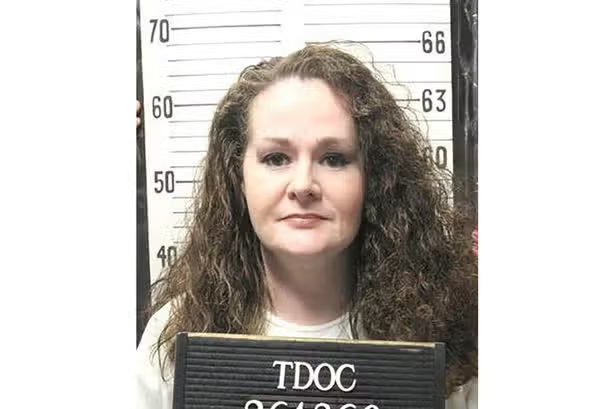
How the Botched Execution Unfolded
Pike’s execution had already been thrown into chaos hours before the lethal injection began. A federal appeals court halted the process so it could more thoroughly examine whether the jury that originally sentenced her to death had properly considered claims of childhood sexual abuse. The US Supreme Court intervened, overturning that stay after an eight-hour delay, clearing the way for the execution to proceed that night.
Pike was 18 when she and her boyfriend tortured and killed her classmate, Colleen Slemmer, in 1995, a crime that made her one of the youngest women ever sentenced to death in the United States. Her case had already drawn scrutiny over the years because of her age at the time of the offense and her history of alleged abuse.
Her lawyers have since asked a court to compel Tennessee prison officials to preserve all written records, communications, images and video connected to the execution, anticipating a lengthy legal fight over exactly what happened inside the death chamber.
A Pattern of Failures Inside Tennessee’s Death Chamber
This is not the first time this year that Tennessee has failed to carry out a scheduled execution. In May, officials were unable to complete the execution of Tony Carruthers after staff successfully placed an IV line in one arm but could not establish a required secondary line. Taken together, the two incidents have intensified criticism that the state’s capital punishment system is poorly managed and dangerously opaque.
Ferrell has been blunt in his criticism of how little the public is told about the process. “The state of Tennessee has got to start telling its people exactly what it is doing so that in the democratic process, the people of Tennessee can decide if that’s what they want to be done in their name,” he told CNN. Like many death penalty states, Tennessee keeps closely guarded secrets around how its lethal injection drugs are manufactured, sourced and tested for quality before use.
The fallout from the botched execution has already reached the top of the state’s correctional leadership. Frank Strada, commissioner of the Tennessee Department of Correction, announced his resignation on Saturday, just days after the failed procedure. Governor Bill Lee has since ordered an independent investigation into the state’s execution protocols, to be led by former US attorney Ed Stanton.
Notably, this is not Stanton’s first time scrutinizing Tennessee’s capital punishment procedures. He previously reviewed the system in 2022 after Governor Lee halted an execution at the last minute, a review that found the state had failed to follow its own lethal injection protocol at the time. Critics say the recurrence of serious procedural breakdowns, years after that earlier warning, suggests deeper systemic problems that have gone unaddressed.
Questions That Remain Unanswered
For now, Pike’s medical fate remains uncertain. Her defense team says it could be days before anyone knows whether she will recover from the effects of the failed lethal injection, and a spokeswoman for her legal team has asked for respect of her privacy during the ordeal. Meanwhile, the investigation ordered by Governor Lee is expected to examine not just what went wrong on the night of the botched execution, but whether Tennessee’s entire approach to capital punishment needs to be overhauled.
The case has reignited a long-running national debate over lethal injection as a method of execution, with critics arguing that repeated failures, secrecy around drug sourcing, and inconsistent staff training point to a system ill-equipped to carry out executions reliably or humanely. Supporters of capital punishment, meanwhile, maintain that isolated procedural errors should not be used to challenge the legitimacy of death sentences handed down by juries.
As Pike remains hospitalized and unresponsive, her case has become a flashpoint in that debate, a stark illustration of how a single botched execution can ripple outward into resignations, investigations and renewed scrutiny of how states carry out their most severe punishment.
Explore more on this topic with Vexel Search.

Article by: Jack Dalton
A string of violent crime cases surfaced this week from Texas to Washington state, painting a grim snapshot of how quickly ordinary moments — handing out food, riding an e-scooter, working a cash register — can turn deadly. Taken together, the cases reveal a pattern that keeps showing up in police blotters nationwide: senseless gun violence erupting from the smallest of triggers, often fatal within seconds.
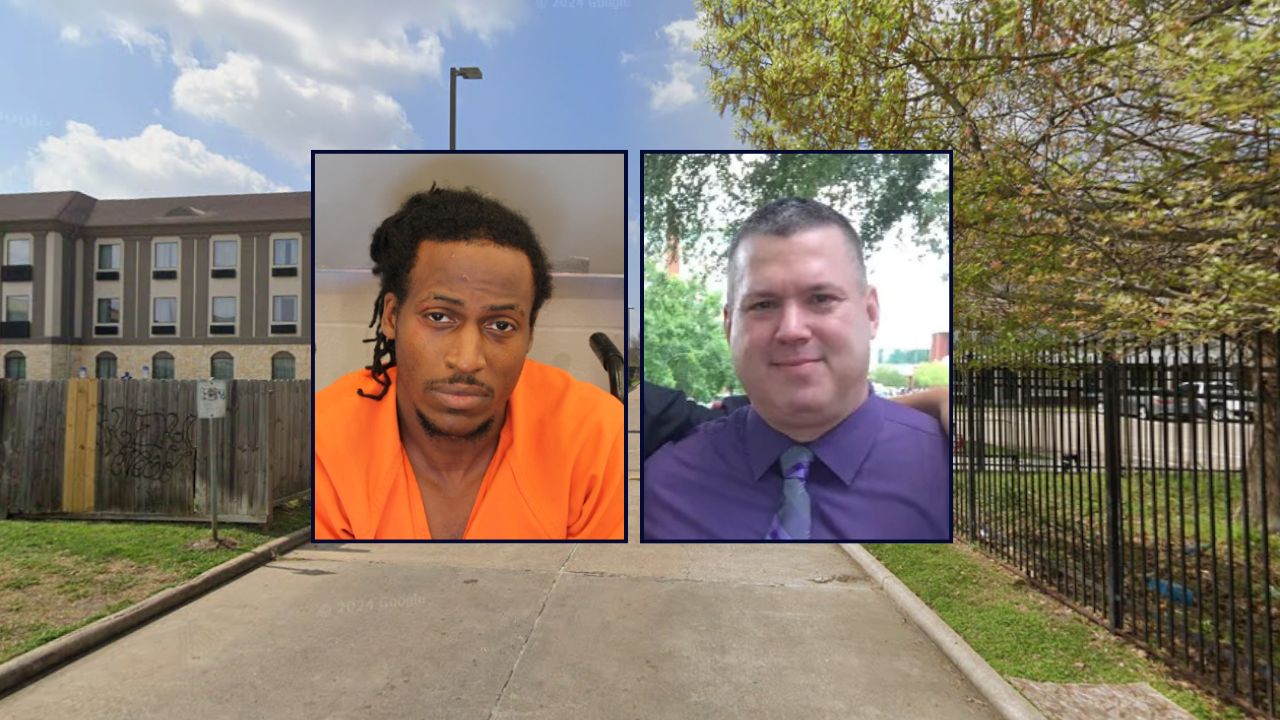
In Houston, a 58-year-old chef named John Donat was gunned down early Wednesday while doing something he had done for years — driving around in his Chevrolet Tahoe, handing out home-cooked meals to homeless people he passed. According to Houston police, Donat was approached by a man who demanded money. When Donat apparently refused, the man opened fire. Witnesses told officers they heard gunshots before Donat’s SUV crashed through a wooden fence in a hotel parking lot. He was pronounced dead at the scene.
Police arrested 30-year-old Otis Parks and charged him with capital murder. Donat’s son, Nick Donat, told local television that his father — a South Carolina native who had battled addiction himself — had a soft spot for people struggling with drugs and collected food from local banks to cook for others “a lot over the past couple of years.” Parks remains jailed on $250,000 bond, with his next court date set for December 14.
A Spat Over Scooters Ends in Gun Violence
Across the country in Washington state, another act of casual violence claimed the life of a U.S. Coast Guard lieutenant. Connor Overstreet, 29, was riding Lime e-scooters with two friends just after 1 a.m. on August 23 near Bryn Mawr-Skyway, south of Seattle, when a passing Toyota Prius exchanged words with the group. The car reportedly stopped, and when Overstreet approached the passenger side, he was shot in the chest. The vehicle sped off, and Overstreet died at the scene.
Investigators tracked the Prius two days later in nearby Kent, where a passenger was seen discarding a backpack containing a Ruger .357 revolver. Phone location data allegedly placed 18-year-old Isaiah Bolar at the shooting scene and tracked his movement along the same route the Prius took afterward. Bolar now faces second-degree murder and eluding-police charges and is due in court this week.
The Houston and Washington cases underscore how often lethal gun violence stems not from long-simmering conflicts but from fleeting, almost trivial disputes — a denied request for cash, a few angry words exchanged on the street.
A Family Shattered by Domestic Gun Violence
Not all of this week’s violence came from strangers. In Windom, Minnesota, 39-year-old Jamie Lee Voelker was sentenced to 12 years and six months in prison for shooting his 70-year-old mother, Kathryn Voelker, seven times with a .22-caliber handgun last July. Voelker told investigators he had smoked a THC vape beforehand and had no memory of the shooting or of breaking into a neighbor’s home afterward, where he damaged a bathroom before being arrested.
He pleaded guilty in July to second-degree murder and first-degree burglary under what Minnesota law calls a “Norgaard plea,” which allows a defendant to accept responsibility even without remembering the crime, so long as they acknowledge prosecutors have enough evidence to convict. Minnesota Attorney General Keith Ellison called the case “absolutely horrific,” adding that accountability was “an important step in healing” for Voelker’s family and the Windom community.
A similarly devastating case out of Georgia closed this week when 64-year-old Teodros Mulat Shibeshi was sentenced to life in prison without parole, plus 25 years, for killing his ex-wife’s sister at an Ethiopian grocery store in Lilburn in April 2024. Shibeshi pleaded guilty to malice murder, aggravated assault and a firearms charge after shooting 57-year-old Tigist Lulesegud multiple times during an argument and wounding her brother in the leg. A witness recalled Shibeshi declaring he was “taking myself out now” before turning the gun on himself — though he survived. Gwinnett County District Attorney Patsy Austin-Gatson said she hoped the sentence would “bring justice” to the victim’s grieving family.
Children Left Behind Amid the Chaos
Not every case this week involved a firearm. In Tampa, Florida, a toddler’s solo walk along a busy road led deputies to uncover a far more alarming scene. A passerby spotted the barefoot child wandering near N. 42nd Street and Hellenic Drive on a Friday evening and alerted police. When deputies traced the child’s home, they found the front door wide open and four more young siblings alone inside, with the stove left on and smoking and several children in soiled diapers.
Their father, 41-year-old Glenn Jones, was supposed to be watching the children while their mother was at work. He was arrested on five counts of child neglect when he returned home; authorities have not said where he had been or how long the children were left unsupervised. Jones is being held on $25,000 bond.
While it involved no shooting, the Tampa case fits into the same broader picture emerging from this week’s reports: moments of ordinary life — a drive to feed the hungry, a scooter ride with friends, a trip to the grocery store, a parent’s absence — turning in an instant into tragedy. Whether through senseless gun violence or stunning neglect, the cases serve as a sobering reminder of how fragile safety can be, even in the most mundane circumstances, and how swiftly the justice system is now moving to hold the accused accountable.
- Chef who was giving back to his community by feeding the homeless shot to death after he refused to give man money: Cops (lawandcrime.com)
- Toddler walking alone along busy road leads to discovery of other young kids inside home with stove turned on and smoking: Cops (lawandcrime.com)
- Man who tried and failed to kill himself sentenced for murdering ex-wife's sister and shooting her brother at grocery store (lawandcrime.com)
- Coast Guard officer riding Lime e-scooters with friends killed after he exchanges words with man in Prius in road-rage attack: Cops (lawandcrime.com)
- Man who smoked THC vape then blacked out and shot his mother 7 times before breaking into neighbor's bathroom learns his fate (lawandcrime.com)
Explore more on this topic with Vexel Search.

ChatGPT is taking ads into image generation, and your conversations could decide what you see

World Grand Prix Darts Final: Humphries and Price Clash for £150,000 in Leicester

Sportmax Fall 2026 is Made for Maximum Impact


-

 Fashion2 days ago
Weekend Open Thread: Veronica Beard
-
Business & Hustles7 days ago
Perpetua Resources at Mining Forum Americas 2026: shift to construction
-
Business & Hustles7 days ago
Greatland Resources at Mining Forum Americas 2026: cash-rich growth push
-

 Tech & AI5 days ago
Figure F.02 Robots Meet Molten Steel as Arnold Schwarzenegger Watches in Finland
-

 Tech & AI6 days ago
Alternatives to Animal Testing Are Finally Taking Off
-

 Business & Hustles6 days ago
OpenAI rebrands AI agents as ‘dots’ amid security fears
-
 Business & Hustles7 days ago
Canadian defence creating 250 jobs in Merthyr in new research alliance
-

 Business & Hustles6 days ago
Develop sets $458 million growth capital budget
-

 Business & Hustles6 days ago
UK chancellor uses bitcoin to mock Nigel Farage
-
 Business & Hustles6 days ago
Market veterans favour value plays over crowded, expensive themes
-

 Tech & AI7 days ago
These Extremists Are Running for Election in November
-

 Tech & AI3 days ago
Fireflies.ai Launches Fireflies Talk for Free, Unlimited Voice Dictation
-
 Business & Hustles7 days ago
Accountancy firm Hazlewoods move to larger offices in Cardiff to support expansion
-

 Tech & AI7 days ago
Jet Megatextures Demo For ESP32-S3
-
Business & Hustles6 days ago
Dave & Buster’s interim CFO Cory Hatton buys $25,999 in stock
-

 Tech & AI3 days ago
Sony’s new PS5 Pro lottery requires 60 hours of playtime just to apply
-

 Crypto7 days ago
Tether says it helped freeze $550M in Iran-linked USDT
-

 Tech & AI7 days ago
SpaceX’s Latest Starship Mission Reached Low-Earth Orbit
-

 Tech & AI5 days ago
OpenAI Pulls Plug on New AI Model as Industry’s Safety Cracks Widen
-

 Crypto4 days ago
OpenPayd’s MiCA Approval Signals Europe’s Stablecoin Infrastructure Is Going Mainstream
You must be logged in to post a comment Login