
Crime
Krakow shooting: six dead and 15 hurt as prosecutors treat market square attack as terrorism

Header image: AI-generated illustration by WordUp News.
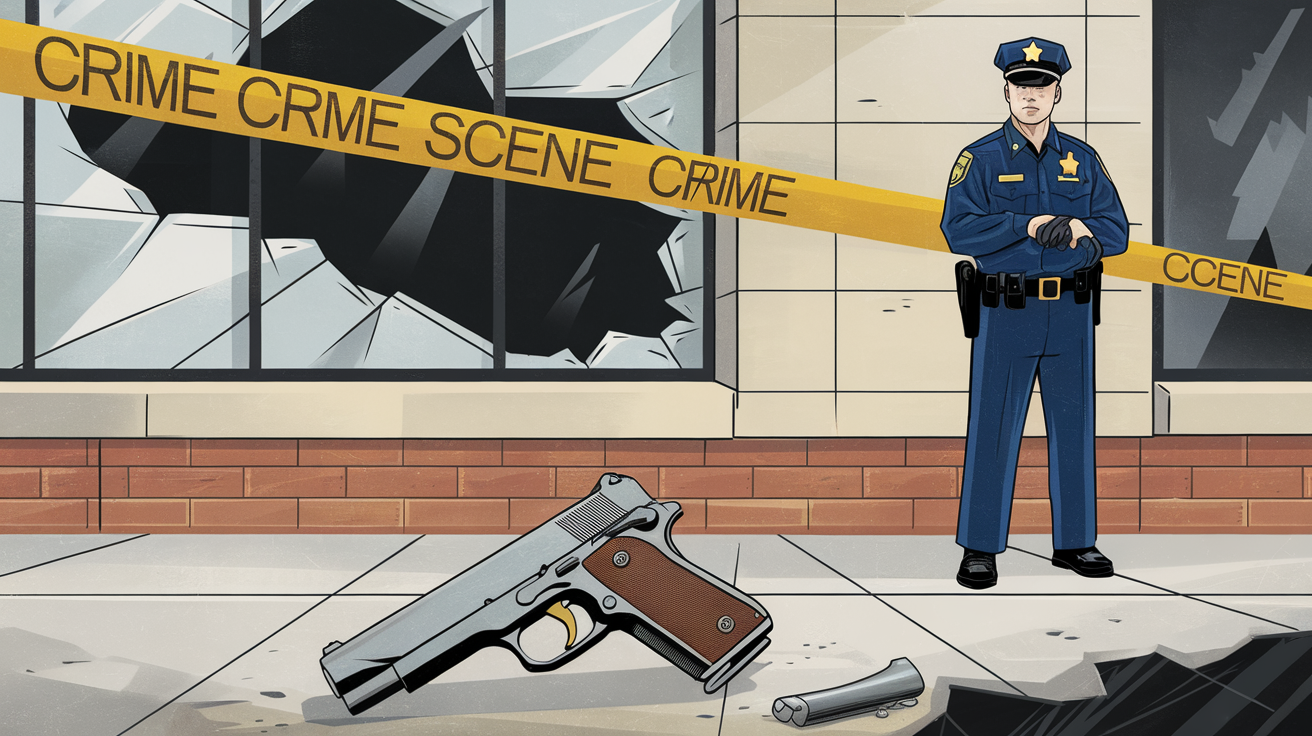
The Krakow shooting has left at least six people dead and 15 injured, Polish authorities said, after gunfire erupted in the city’s historic Main Market Square on Saturday afternoon. Prosecutors said on Sunday that investigators are treating the attack as a terrorist offence. The death toll rose from the five reported in the first hours after the incident.
What happened in Main Market Square
Regional police said reports began arriving at around 3pm on Saturday that a person in a car was firing at people in the square. Krakow is Poland’s second-largest city and a popular tourist destination. A spokesperson for local firefighters told Polsat News that shots were fired from a passing vehicle. The city government confirmed the incident on X.
Witnesses described panic. One man, who gave his name only as Konrad, told the news website Interia he saw shots fired from a driver’s side window and ran to the police station on the square, where people were sheltering on the floor. Daisy Hersey, a British tourist from Hove, told the BBC that people “piled in” to the restaurant where she was sitting and that she saw “the fear on their faces”. Unverified footage on social media showed people fleeing and bystanders trying to resuscitate casualties.
Suspect in hospital, officers credited
Police said a suspect was shot by officers and arrested. He remains in hospital in a critical condition. Authorities have identified him only as a 24-year-old Polish national from the town of Ostrowiec Swietokrzyski. Interior minister Marcin Kierwinski said officers fired at the attacker three minutes after the first report and “prevented a much larger massacre”. No charges had been reported in the sources reviewed, and the suspect’s alleged role will be a matter for the courts.
Police said the man was wearing tactical clothing and carrying a military-style rifle. According to Radio Kielce, an AR-15-type weapon was used, and officers found a backpack, magazines and a bayonet in the car’s boot. Polish media reported that the vehicle, a black Subaru, belonged to the suspect’s father, who is reported to have had registered firearms.
Terror investigation and international fallout
Prime Minister Donald Tusk told a crisis meeting that three bodies, two women and a man, were found at the suspect’s home, roughly 125 miles north of Krakow. He said there were “strong indications” they were members of the suspect’s immediate family. Those deaths are separate from the six killed in the square, and it is not clear from the reports how they are being counted or investigated.
Mr Kierwinski said the suspect held “very radical views” and “was fascinated by far-right ideologies”. Defence minister Wladyslaw Kosiniak-Kamysz described the attack as an “act of terror” and said the suspect was not a soldier and had no military links. The Central Bureau for Combating Cybercrime is reportedly examining the suspect’s online activity. These are the officials’ statements, and the investigation is continuing.
The attack drew in several countries. A British national was among the dead, police said. An interior ministry spokesperson said five injured foreign nationals came from Britain, Austria, Germany, Portugal and Russia. The Independent reported that UK prime minister Andy Burnham expressed solidarity with Poland, and that foreign secretary Ed Miliband said the government “deeply mourns” the British victim. The Foreign Office urged British nationals in Krakow to follow local authorities’ advice.
Mayor Łukasz Gibała announced an official mourning period in the city until Wednesday. With the suspect critically ill and the inquiry at an early stage, further details about the victims, the weapons and the wider investigation are expected to emerge.
- Five killed and at least 10 injured in Krakow shooting (aljazeera.com)
- Krakow shooting latest: At least five dead and a dozen injured after gunman opens fire in main square (The Independent)
- Five people killed and more than a dozen injured in Krakow shooting (dailyrecord.co.uk)
Explore more on this topic with Vexel Search.
WordUp Morning
Ten stories, both sides of each, in five minutes. Free, every weekday at 7am, plus a Saturday weekend edition.
We'll email you a link to confirm. Unsubscribe any time.

Header image: AI-generated illustration by WordUp News.
The Culture Secretary has warned that the kind of conduct examined in the Russell Brand case is “probably happening today”, arguing that the media and entertainment industries have not changed enough to protect people who speak up.
Lisa Nandy was speaking to Sky News on Sunday, days after Brand was convicted at Southwark Crown Court of one count of rape and three counts of sexual assault. He is due to be sentenced on Monday. Because sentencing has not yet taken place, this report is limited to what has been said in court and by officials.
What Nandy said about the industry
“Hand on heart, I don’t think we can say that this couldn’t happen today,” Nandy said. “In fact, I would wager that this is probably happening today, and I don’t think that the industry is doing enough to tackle it.”
She said she could not see what had changed in the way many media and entertainment institutions help people come forward, or in how they protect and support them. She stressed that these industries carry a particular responsibility, as politics does. Short-term, flexible contracts and large power imbalances are common, she said, and speaking up “can really cost you your reputation and cost you opportunities”.
The Independent reports that people from institutions including the BBC have approached Nandy with allegations of their own.
Whistleblower protections and court reform
Nandy urged media organisations to join the Creative Industries Independent Standards Authority, an industry body that protects whistleblowers. She said the Government is “considering what further steps we can take”. The Independent reports that making whistleblower protections mandatory for media organisations is among the possibilities.
The fallout has also reached the justice system. According to the Independent, Andy Burnham has announced a review of how rape cases are conducted in court, intended to stop victims feeling that they are the ones on trial. The Prime Minister called the behaviour at the centre of the Russell Brand case “horrifying”, praised the bravery of the women involved and declined to rule out legislative change.
The verdicts and what comes next
The Standard reports that the jury found Brand, 51, not guilty of two further rape charges and one count of attempted indecent assault. After the verdicts, a senior detective said Brand had used his “influence, status and fame to prey on and exploit women”.
The Metropolitan Police has since said further allegations against him are being investigated. Commissioner Sir Mark Rowley said he “wouldn’t be surprised if many, many more come forward”. No new charges have been reported in the sources.
Brand has spent three nights in custody. The judge, Mr Justice Bennathan, has told him to expect a significant custodial sentence. The sentencing hearing on Monday will show how the court views the offences. Meanwhile, the political debate Nandy has opened is likely to continue over whether voluntary industry standards go far enough or the Government should require them.
Explore more on this topic with Vexel Search.
WordUp Morning
Ten stories, both sides of each, in five minutes. Free, every weekday at 7am, plus a Saturday weekend edition.
We'll email you a link to confirm. Unsubscribe any time.
Header image: AI-generated illustration by WordUp News.
The Krakow shooting on Saturday left six people dead and 15 wounded in one of the busiest tourist spots in Poland, and the country spent Sunday in shock. Authorities say a gunman drove into Main Square in the city’s Old Town and opened fire before police shot and wounded him. Prosecutors are treating the case as a terrorist offence.
What happened in Main Square
According to police, the attacker wore military-style clothing and a bulletproof vest. Krakow police spokesperson Katarzyna Cisło said he drove to several points around the square and fired at each stop, which is why people were wounded in multiple locations. She described a “wild ride” around the square and said he appears to have acted alone.
Cisło said he kept firing at officers even after he was hit. Video posted by witnesses shows people running into side streets and first responders trying to resuscitate victims. In one clip, a police officer is seen firing at the man on the ground before slowly collapsing himself.
Visitors described taking shelter wherever they could. British tourist Neil Thaxton said shop staff hurried him and his wife into the back of a gift shop, locked the doors and turned off the lights. Both were unharmed.
Victims and the wounded
Four women and two men were killed. Regional Governor Krzysztof Klęczar said four of the dead were Polish, one was a British man, and one was a woman from another country whom officials had not yet named. The wounded included people from Britain, Portugal, Russia, Germany and Austria.
Two police officers who confronted the gunman were seriously hurt. On Sunday Klęczar said one remained in a coma and the other had regained consciousness. Officials appealed for blood donations.
What authorities say about the suspect
The suspect is a Polish national. The sources differ on his age: the Associated Press initially reported 25, while a later update put it at 24. Police have not released his name. Reports say he remained in critical condition after several operations, and none of them mention any charge against him.
Interior Minister Marcin Kierwiński said the man held “very radical” and “ultranationalistic” views and that “everything indicates that he was fascinated by far-right ideologies.” Authorities have not said whether he belonged to any organised extremist group. Prosecutors have opened an investigation into murder and attempted murder, including attacks on police officers, which they say constitutes a terrorist offence.
Police also found three bodies at the family home in Ostrowiec Świętokrzyski, about 150 kilometres (93 miles) northeast of Krakow. They identified them as the suspect’s mother, father and sister and said they likely died of gunshot wounds. Prime Minister Donald Tusk called it “the next acts of this tragedy.” The sources do not say who was responsible for those deaths, and the investigation continues.
The weapons and the wider context
Police recovered four firearms at the scene, from the attacker or his car. Seven more were seized from the family home, bringing the total to 11. Klęczar said the suspect’s father legally owned more than 10 guns and that the suspect also owned firearms. A shooting club where he is believed to have trained said it offered only “static shooting” at stationary targets and that he was never trained in dynamic, tactical or combat shooting.
Mass shootings are uncommon in Poland, which has about 37 million people and roughly 411,000 gun permit holders, though interest in gun ownership has been growing. In mid-October, three school attacks in the central province of Mazovia within four days left one person dead and several wounded, including children.
Kacper Rekawek of the International Center for Counterterrorism in The Hague said the attacker’s gear and appearance resembled those of far-right “lone actors” elsewhere in Europe. “We have had attempts before,” he said, “but now we can say that these kinds of attacks have become successful in Poland.”
Mourning and security response
Krakow will be in official mourning until Wednesday. Mayor Łukasz Gibała said the city will stay open to visitors, adding: “The square will belong to us again.” The St. Mary’s Trumpet Call, played hourly from the tower of St. Mary’s Basilica, was paused overnight in tribute. It was the first time it had been missed since World War II. In Warsaw, Mayor Rafał Trzaskowski announced extra security measures, including road barriers on main Old Town streets.
Explore more on this topic with Vexel Search.
WordUp Morning
Ten stories, both sides of each, in five minutes. Free, every weekday at 7am, plus a Saturday weekend edition.
We'll email you a link to confirm. Unsubscribe any time.
Header image: AI-generated illustration by WordUp News.
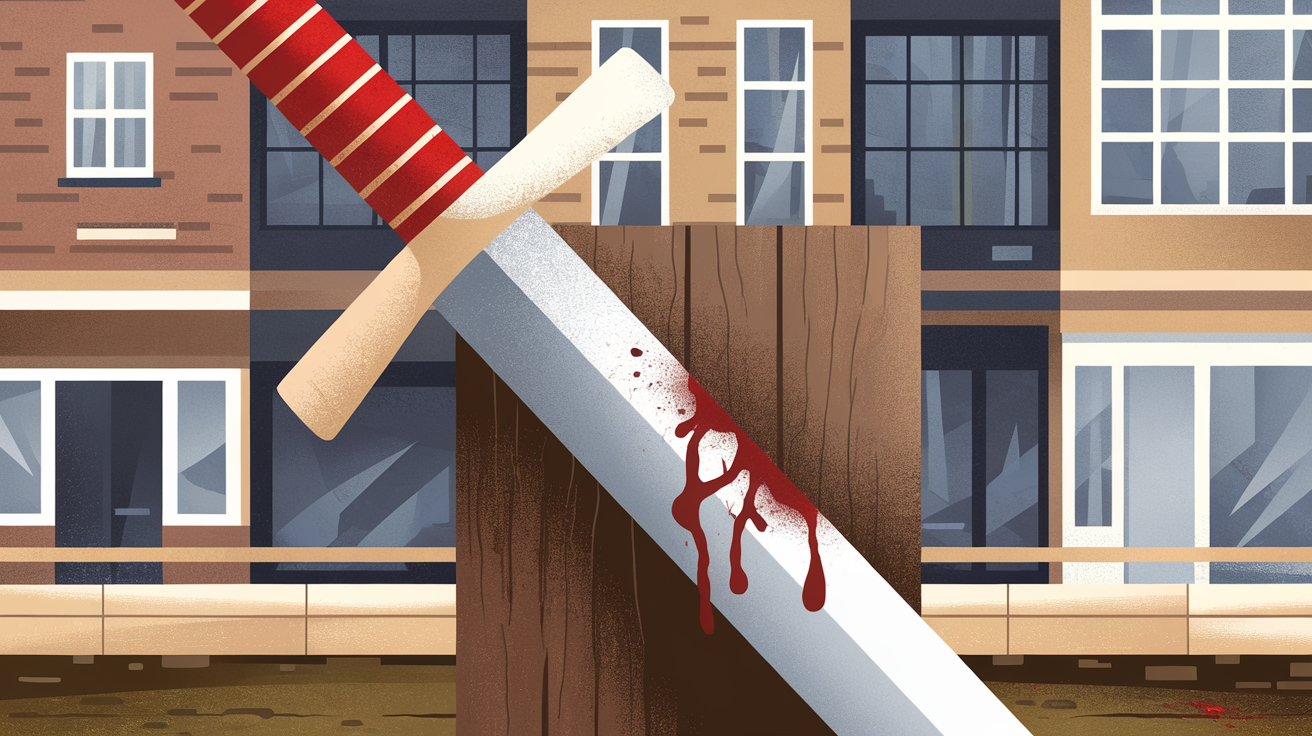
Three people remain in police custody after a suspected Gloucester sword attack near a Catholic high school, while a fourth person has been released on bail, Gloucestershire Constabulary has said. The force has not said anyone has been charged, and all those arrested are presumed innocent.
What police say happened in Tuffley
Officers were called to Chalford Road, close to St Peter’s High School in Tuffley, shortly after 8.50am on Friday. According to police, it was reported that two people, one of them carrying a sword, had been seen chasing two 17-year-old boys. The pair who were allegedly being chased are said to have fled the scene on foot.
One of the boys suffered what the force described as a “superficial wound believed to have been caused by the sword”. The second boy was not physically hurt. Armed officers were sent to search for those involved, and St Peter’s and the nearby Willow primary academy were both placed in lockdown.
Arrests in the Gloucester sword attack investigation
Police say a 19-year-old man was arrested overnight on suspicion of assault occasioning actual bodily harm and affray. On Saturday morning an 18-year-old man handed himself in. He was arrested on suspicion of possessing an offensive weapon, assault and affray.
Later on Saturday the force announced that a third person, a 17-year-old boy from Gloucester, had been arrested that morning on suspicion of assisting an offender. Reports say all three are from Gloucester. The two men and the boy remain in custody for questioning.
A woman arrested on Friday on suspicion of assisting an offender has been released on police bail while inquiries continue. Being arrested on suspicion of an offence is not evidence of guilt, and no charges had been reported at the time of the sources.
Lockdown and reassurance for parents
The timing of the incident, at the start of the school day, drew concern from the community. A pupil at St Peter’s told the BBC the situation was “really scary” and that students were kept in their classrooms for several hours. Parents were sent messages by the school saying there had been an incident but that matters were under control.
Detective Inspector Sophie Dawkins of Gloucestershire Constabulary’s CID said the force “completely understand[s] the concern this incident would have caused, especially when it happened near a school at drop-off time”. She said armed officers had searched the area with help from a drone unit and the National Police Air Service. Neighbourhood officers were also in the area to reassure parents, she said, adding that there is not thought to be a wider threat.
Appeal for witnesses and footage
Police are asking anyone who saw the incident and has not yet spoken to officers to come forward, as well as anyone with dashcam or other footage. Information can be submitted to Gloucestershire Police online, quoting reference number 53260095808.
The investigation into the Gloucester sword attack is continuing, and officers have said inquiries are ongoing. Early reports differed on how many people had been arrested as the situation developed, but the latest police position is three in custody and one woman on bail.
- Two men arrested after boy injured in Gloucester sword attack (The Guardian)
- Second teenager hands himself in after 'sword attack' near school (The Independent)
- Two teenagers arrested after sword attack near Catholic school (standard.co.uk)
Explore more on this topic with Vexel Search.
WordUp Morning
Ten stories, both sides of each, in five minutes. Free, every weekday at 7am, plus a Saturday weekend edition.
We'll email you a link to confirm. Unsubscribe any time.
Header image: AI-generated illustration by WordUp News.
A prisoner Covid death has led to what is believed to be the first prosecution of its kind in the UK, after the company running HMP Addiewell and a Scottish health board admitted criminal charges at Edinburgh Sheriff Court on Friday.
Sodexo, which operates the West Lothian prison for the Scottish Prison Service, and NHS Lothian, which provided healthcare there, both pleaded guilty to failing to ensure they met their duties under health and safety legislation. The charges relate to the death of Calum Inglis, 34, in October 2021. The case is expected to call at the same court again in December.
What the court heard about the prisoner Covid death
Mr Inglis, from Edinburgh, was serving a short sentence and had only months left when he tested positive for Covid-19 on 12 October 2021. He was asthmatic and unvaccinated. He was found dead in his cell on 24 October, and his cause of death was recorded as complications of Covid-19 infection.
The court heard that Sodexo failed to adequately monitor him after his positive test, and that NHS Lothian failed to put an adequate care plan in place. Fiscal depute Connor Muir said an expert report had criticised poor record-keeping around the giving of paracetamol on the prison wing, something Mr Inglis repeatedly asked for. Proper medical care, he said, would have “significantly increased his chances of surviving”.
Lawyers for the family claim Mr Inglis was not seen by a nurse during the 12 days. They say he reported being breathless and coughing up significant amounts of blood. It is alleged that in his last days he repeatedly used his cell intercom to ask for help and was told someone would see him in the morning, but nobody came.
Sheriff Julius Komorowski offered condolences to the family, who were in court. He said Mr Inglis had died in “awful circumstances” and that “this death must seem senseless.”
Family calls for Sodexo contract to end
Speaking for the family, solicitor Aamer Anwar said Mr Inglis was “treated worse than an animal” and described the case as the first successful prosecution in the UK for a Covid-19-related death. He called HMP Addiewell, Scotland’s only private prison, “not fit for purpose” and urged the Scottish Government to cancel Sodexo’s contract. According to the family’s statement, that contract runs until 2033.
Mr Inglis’s mother Jennifer, a former nurse, said her son “deserved compassion, dignity, and proper medical care” and that the thought of his suffering would haunt her for life. His sister Frances Marr said the family would keep pressing for accountability through a fatal accident inquiry.
The prosecution follows a Crown Office investigation into about 6,000 pandemic-related deaths. The then Lord Advocate, Dorothy Bain KC, instructed proceedings against the prison operator last year. Mr Inglis was one of 16 Covid-related deaths in Scotland’s prisons during the pandemic.
Responses from Sodexo and NHS Lothian
Dr Tracey Gillies, NHS Lothian’s medical director, apologised “unreservedly” to the family for the failings in his care and offered condolences. She said the board carried out a review after his death and that actions have since been taken for both NHS Lothian and prison service staff to prevent a repeat.
A Sodexo spokesperson extended “deepest sympathies” to the family but said it would be inappropriate to comment further while legal proceedings have not concluded.
With both organisations having admitted the charges but the case still to return to court, the outcome of this prisoner Covid death prosecution is not yet fully settled. The family says it sees the guilty pleas as the start of its fight for a public inquiry, not the end.
Explore more on this topic with Vexel Search.
WordUp Morning
Ten stories, both sides of each, in five minutes. Free, every weekday at 7am, plus a Saturday weekend edition.
We'll email you a link to confirm. Unsubscribe any time.

Header image: AI-generated illustration by WordUp News.
The Cornell no confidence vote passed on Friday, when the university’s faculty senate backed a resolution against the school’s top leaders by 75 to 50. Five senators abstained and five did not vote. The result is symbolic, but it lays bare how far trust has eroded on campus since a former student filed a lawsuit in September alleging she was raped at a fraternity house.
What the faculty vote does and doesn’t do
The senate has no power to remove or discipline Cornell’s president, Michael Kotlikoff, or other administrators. The resolution also stops short of demanding his resignation. Its sponsors have said the aim was to press the board of trustees to confront what they describe as longstanding institutional failures. Voting was held electronically for more than a week, and results were emailed to senate members on Friday afternoon.
The trustees responded quickly and did not budge. Board chair Anne Smalling said the vote reflected deep anger on campus and sent a “clear signal that what happened to Jane Doe is unacceptable.” She said the board “fully supports President Kotlikoff and his administration.” She pointed to expanded sexual assault prevention education, more victim advocates and extra staff in the civil rights office as evidence of progress.
The lawsuit behind the dispute
The turmoil dates to mid-September. A former student, identified in court papers as Jane Doe, sued the university and seven former members of the Chi Phi fraternity. She alleges she was given ketamine and raped at a fraternity house in October 2024. All seven men have denied the allegations. Some say the sex was consensual, others that they were not involved. None of the claims has been tested in court.
The criminal side of the case has shifted. The local district attorney initially concluded the woman had consented and that no crime had been committed. That investigation has since been reopened and handed to New York’s attorney general. Meanwhile, a months-long Title IX investigation at Cornell led to discipline for several of the men. Two were expelled and two were suspended and placed on probation. Two more had to write reflection papers and complete bystander training. A seventh had already graduated and was barred from campus, according to records obtained by The New York Times.
Kotlikoff’s defence and the critics’ case
Before the Cornell no confidence vote, Kotlikoff told senators he wanted to make Cornell a leader on sexual assault and asked for more time. He argued that replacing him would do little to fix complex problems and could damage the university’s reputation. He said he had not read the campus police report because university policy bars senior administrators from interfering in criminal investigations. He rejected the idea that he had been indifferent to her case, though he acknowledged he had only recently learned she had left Cornell. He also said the university must decide whether fraternities can operate safely, and he did not rule out sweeping restrictions on Greek life.
Critics say that is not enough. Some professors are angry that he has not moved harder to strengthen the disciplinary process, push for criminal investigations and change party culture. Paul Ortiz, a labor history professor who co-sponsored the resolution, said hundreds of students, staff, alumni and faculty had approached sponsors to say the Jane Doe case was “but a tip of the iceberg.” He said “a veritable fortress of silence has been breached.”
What comes next
Some faculty argued for patience until an independent review is finished. Cornell hired former U.S. Deputy Attorney General Sally Yates to examine how it handled the initial report in 2024, as well as its wider procedures for similar complaints. Her findings could carry more weight than a symbolic resolution, whichever way they cut.
Thomas Giuffra, the woman’s attorney, said he hoped the vote would be “another step forward” in addressing “the longstanding scourge of sexual assault on campus.” With the trustees backing Kotlikoff and the legal and investigative processes still unfolding, the Cornell no confidence vote leaves the president in place but under open pressure from his own faculty.
Explore more on this topic with Vexel Search.
WordUp Morning
Ten stories, both sides of each, in five minutes. Free, every weekday at 7am, plus a Saturday weekend edition.
We'll email you a link to confirm. Unsubscribe any time.
Crime
Thomas Markle court appearance: 82-year-old tagged and held at home, no plea entered, over child abuse material charge
Header image: AI-generated illustration by WordUp News.
The Thomas Markle court appearance in Florida on Friday ended with the father of the Duchess of Sussex ordered into home detention and electronic monitoring, but with no plea taken. Markle, 82, is charged with one count of possessing child sex abuse material. He has not been convicted of anything, and the allegations have yet to be tested in court.
What happened at the hearing
According to the BBC, citing its US partner CBS News, the 30-minute hearing heard federal prosecutor Courtenay Derry set out the charge. Markle was brought in by wheelchair, escorted by two US Marshals. He will be detained at his assisted living facility in Florida, and the judge also imposed travel restrictions. The Standard reported that he was ordered to undergo a psychiatric examination amid concerns that he may not be able to understand the proceedings or properly help his lawyer.
The US Department of Justice and the US Attorney’s Office for the Central District of California said an arraignment date in California will be set in due course. The Standard reported that this is not expected for at least several weeks.
The allegations in the federal complaint
Prosecutors say the case stems from FBI searches, carried out on warrants, of storage units in Los Angeles registered to Markle. The DoJ said he had rented them since 2008, with the latest payment made in October. Agents say they seized about 78 items, including film negatives, slides and books, which they allege contained child sex abuse material.
Court documents say witnesses “positively identified” Markle in two of the images. The man pictured “appears to be in the age range of 30s to 40s”, which the reports note would suggest the images date back decades. These are allegations from the complaint, not findings of fact.
First assistant US attorney Bill Essayli said the allegations were “extremely serious” and that prosecutors would pursue the case “to the fullest extent of federal law”. FBI director Kash Patel said authorities “moved quickly” to arrest Markle. The Independent and the BBC both report that he faces up to 20 years in federal prison, though the Standard puts it as “at least” 20 years. Sources differ on this point.
How the investigation began
The Standard and the Independent report that the inquiry followed Markle’s son, Thomas Markle Jr, contacting authorities in the Philippines and the FBI. He alleges he found illegal images among his father’s belongings in Cebu. The BBC says police in the Philippines obtained a warrant last month to examine devices allegedly removed from Markle’s former home there, after four boxes of material were handed over. The Independent adds that Philippine authorities are reviewing more than 7,000 recovered images and have named Markle Jr as a person of interest in their own investigation.
Markle has previously denied the allegations, calling them “sick lies”, according to the BBC.
Questions over the Met’s handling of a 2019 letter
The Thomas Markle court appearance also comes amid scrutiny of the Metropolitan Police. The force confirmed in October that it received a letter in 2019 making a “number of claims” about Markle relating to allegations outside the UK. It passed the information to the office of the Duke and Duchess of Sussex but did not share it with other law enforcement agencies. The Met has referred itself to the Independent Office for Police Conduct, which is now examining its handling of the matter.
The Duchess of Sussex said she was “deeply distressed” by the news and that her thoughts were with “any children who may have been harmed”. She has been estranged from her father since 2018. The Duke and Duchess have not commented on his arrest, the BBC reports.
What happens next
With no plea entered, the next significant step is the California arraignment, where Markle will be asked to respond to the charge. Until then, the Thomas Markle court appearance leaves the case at an early stage, with the psychiatric evaluation likely to shape how it proceeds. Markle is presumed innocent unless and until proven guilty.
Explore more on this topic with Vexel Search.
WordUp Morning
Ten stories, both sides of each, in five minutes. Free, every weekday at 7am, plus a Saturday weekend edition.
We'll email you a link to confirm. Unsubscribe any time.
Crime
Thomas Markle charged: 82-year-old faces at least 20 years if convicted over alleged abuse images
Header image: AI-generated illustration by WordUp News.
Thomas Markle charged with a federal offence is the latest development in a story that began only weeks ago. The father of the Duchess of Sussex, 82, is accused of possessing child sexual abuse material. He is expected to appear before a court in Tampa, Florida, on Friday. The charge is an allegation, and he has not been convicted of anything.
What the US Department of Justice alleges
According to a Department of Justice statement quoted by Variety, Markle, of Lakeland, Florida, was arrested on a federal criminal complaint. It alleges he kept child sexual abuse material, including sexually explicit photographs of himself with prepubescent girls, in two Los Angeles-area storage units. He is said to have rented the units for nearly two decades, since 2008. He is charged with one count of possession of child pornography.
The FBI searched the units under warrants and says it seized about 78 items, including slides, film negatives and books containing suspected abuse material. Court documents described by the sources say two images allegedly show an adult man, whom a witness identified as Markle, with a nude young girl. A third is said to show a nude young girl in a room that appears to belong to a motel chain in the Philippines. Other photographs allegedly show him with children in various stages of undress.
If convicted, Markle would face at least 20 years in federal prison, according to The Standard.
How the case came to light
The allegations first became public last month. His son, Thomas Markle Jr, told The Sun he had reported his father to police in the Philippines and to the FBI. He said he had found suspected illegal images in his father’s belongings in Cebu City. Rolling Stone reports that Markle Jr told investigators he found “hundreds, if not thousands” of such images. A Philippine justice official said a task force on human trafficking and child sexual exploitation was investigating, including a forensic examination of a seized computer. The sources do not say whether any charge has been brought in the Philippines.
Markle Jr also told The Sun he had tipped off the FBI about the Los Angeles storage units. The Standard reports that he said this, though the sources do not describe how the FBI first identified the units.
US officials stressed the role of the public. First Assistant US Attorney Bill Essayli said prosecutors would pursue the case “to the fullest extent of federal law”. FBI Los Angeles assistant director Patrick Grandy said the case showed the importance of people speaking up, “even if it’s a family member or close friend”, when they suspect someone may be exploiting children.
Markle’s denial and the Met Police questions
Markle has strongly denied the claims. Speaking to the Daily Mail last month, he called them “sick lies” and said: “I could never do what I’m being accused of.” The sources do not report any response from him to the federal charge itself. Variety said it had tried to contact him.
Meghan has said she was “deeply distressed” by the allegations. She said a letter making “troubling and disturbing allegations” about her father was passed to her via the Metropolitan Police and its Royalty and Specialist Protection unit, and that she was assured it was being investigated. Sources differ on whether that was in 2018 or 2019. She said her estrangement from him, and her decision to keep him from her children, was to protect them.
The Met has acknowledged it never shared the details of that letter with other law enforcement agencies, according to The Standard. The Independent Office for Police Conduct is now examining the force’s conduct. Variety adds that the Met said it was making internal enquiries to confirm how the letter reached Meghan, and that it is not investigating Markle itself.
The Tampa hearing will be the first step in the US court process. Until the case is heard, the allegations remain unproven.
- Megan’s father to appear in US court over possession of child sex abuse images (standard.co.uk)
- Timeline: How Meghan Markle’s relationship with her father has changed amid allegations of child abuse images (The Independent)
- Thomas Markle Sr. Arrested Amid Allegations of Child Sex Abuse Images (rollingstone.com)
- Meghan Markle’s Father Arrested Over Allegations He Possessed Child Sex Abuse Images (Variety)
Explore more on this topic with Vexel Search.
WordUp Morning
Ten stories, both sides of each, in five minutes. Free, every weekday at 7am, plus a Saturday weekend edition.
We'll email you a link to confirm. Unsubscribe any time.

Header image: AI-generated illustration by WordUp News.
The Paul Mackenzie sentence handed down in Mombasa on Friday, 200 years in prison, closes one chapter of Kenya’s Shakahola forest case. It does not end the legal fight. Mackenzie, who leads the Good News International Church, was convicted last month of murdering 190 children and one adult. His defence lawyer says an appeal has already been launched.
How the 200 years were calculated
According to the BBC, the High Court imposed 100 years for homicide and a further 100 years for offences related to starvation. Sentences within each category run concurrently, but the two sets run consecutively, giving the 200-year total. Prosecutors had asked for the death penalty. Justice Diana Kavedza-Mochache accepted that the case met the threshold for considering it, but declined to impose it, saying capital punishment would remove any prospect of rehabilitation. Kenya has not carried out an execution since 1987, and the sources note that those sentenced to death there serve life terms.
The judge said Mackenzie bore “primary criminal culpability” for relocating followers to a remote location and ordering them to fast to death. She described the killings as “cold and calculated” and said the sentence was meant to “send an unmistakable message” that such atrocities warrant the maximum penalties allowed by law.
What the court found
The court found that 183 victims died of starvation, while eight others were classified as murder by direct homicide. In her judgment on 19 October, the judge said followers regarded Mackenzie as “Jesus’s mouthpiece.” The BBC reports she found the deaths arose from an organised system of religious teachings and directives that compelled followers to take part in the fast. Burials were called “weddings,” and the dead were celebrated as having wedded with Jesus.
Post-mortem results cited in the reporting showed starvation as the cause of death for most victims. Others died from suffocation, strangulation or head injuries. The judge also said some children were isolated and denied food while their parents watched.
Mackenzie was tried alongside 28 others, including guards who enforced the fasting orders and gravediggers who helped conceal the bodies. All 29 were found guilty. Sentences for the co-accused went up to 160 years, and his assistant pastor, Smart Mwakalama, received that term. According to the Associated Press, all but one of the group had denied the charges, and that person confessed and pleaded for leniency. The defendants had asked the court for leniency before sentencing.
Appeal and remaining charges
Everyone convicted has been given 14 days to appeal. Defence lawyer Lawrence Obonyo, who represents Mackenzie and several others, told the AP he had already started the process. He argued the ruling was “circling around the constitution to give a sentence that is unattainable,” since terms of 160 to 200 years amount to life sentences.
The Paul Mackenzie sentence also covers only part of the picture. Reports say he faces further charges, which he denies. They include terrorism and manslaughter charges relating to more than 200 other victims, plus child abuse and torture charges in two other courts. Prosecutors allege he directed the deaths of 52 people in Kwa Binzaro village while in detention, and he has pleaded not guilty in that case.
Families react
Reactions from relatives were mixed. Suleiman Ziro, who lost six children and his wife, told the AP the sentence was not enough and called for the death penalty, partly because he has not recovered his loved ones’ bodies. Francis Wanje, who lost eight relatives, told the BBC before the hearing that he hoped for a sentence “which will match his deeds in the forest.” Another bereaved father, Stephen Mwiti, said he feared Mackenzie’s message could still spread from behind bars.
The sources differ on how many victims have been identified. The Guardian says only 26 of the more than 400 bodies recovered could be named, while the AP reports more than 60 were identified and reburied by relatives. Both agree that many remain unidentified or unclaimed.
The case has also raised questions about oversight. The BBC reports that investigations by the Kenya National Commission on Human Rights found local officials and law enforcement had repeatedly turned a blind eye to the group’s activities. The Guardian notes calls for tougher regulation of religious organisations. The Paul Mackenzie sentence settles one trial, but the appeals and the outstanding charges mean the Shakahola cases will continue in court.
- Kenyan doomsday sect leader jailed for 200 years over 191 murders (The Guardian)
- Kenyan doomsday cult leader given life sentence for murdering 191 people (BBC)
- The leader of a Kenyan doomsday cult is sentenced to 200 years in prison (npr.org)
- Kenyan doomsday cult leader sentenced to 200 years in prison after murders of 190 children (The Independent)
Explore more on this topic with Vexel Search.
WordUp Morning
Ten stories, both sides of each, in five minutes. Free, every weekday at 7am, plus a Saturday weekend edition.
We'll email you a link to confirm. Unsubscribe any time.
Header image: AI-generated illustration by WordUp News.
California Governor Gavin Newsom has commuted every sentence on California death row, converting the death sentences of 548 people to life in prison without the possibility of parole. Described by Al Jazeera and the Death Penalty Information Center as the largest mass clemency in US history, the move came on Thursday as Newsom’s final term winds down.
What Newsom announced
In an open letter, Newsom said he was using his constitutional clemency powers because “state-sanctioned killing is incompatible with California’s values, undermines the foundations of our legal system, and diminishes each of us.” The Guardian reported that the decision covers 529 men and 19 women, making up the largest death row in the western hemisphere.
He called the decision difficult but a “righteous action”, acknowledged it may reopen “excruciating memories for victims’ families”, and said he alone bears responsibility for it. Life without parole, he argued, is the harshest punishment the state can ethically enforce. He also described California’s system as a failure that “has not and cannot be fairly applied”, and said it has led to the conviction of innocent people.
A largely symbolic move with real consequences
California has not carried out an execution since 2006, and only 13 people have been put to death since voters restored capital punishment in 1978. Newsom imposed a moratorium in 2019. The BBC described the commutations as largely symbolic for that reason, but the Guardian noted the practical effect: the sentences can no longer be revived by a future governor.
The cost of maintaining the system is a recurring theme. The Death Penalty Information Center says California has spent $6bn on capital punishment since 1978. Experts quoted by the BBC said ending it could save millions of dollars in court costs every year.
Newsom’s office also highlighted delays in the system. Of the 548 people sentenced to death, 220 had waited 15 years or more for an appointed habeas lawyer, and 139 had waited 20 years or more. Without the moratorium, 45 people would be considered to have exhausted their appeals and would face immediate execution risk, according to the governor’s office.
Court review still to come
The commutations are not entirely final. Under California’s constitution, the state Supreme Court must review clemency for anyone with multiple felony convictions. The Death Penalty Information Center estimates this applies to about two-thirds of the cases. The BBC, citing CalMatters, reported that at least four of the court’s seven justices must sign off. How the court will handle the volume of reviews, and how long it will take, was not clear from the reports.
Reaction and the national picture
The American Civil Liberties Union called the commutations an end to a “racist, error-prone, and inhumane punishment.” Other supporters included Martin Luther King III and death penalty lawyer Bryan Stevenson. Jeanne Woodford, a former state prisons director who oversaw four executions, said she is “haunted by the fear that we will execute an innocent person.”
The Guardian also reported support from a relative of a murder victim, who said she once backed the execution of the man who killed her sister but changed her mind over time. The BBC spoke to the mother of one man affected, who maintains his innocence. She said the news brought mixed emotions, but that at least the execution chamber would not be rebuilt.
The Death Penalty Information Center says the decision will cut the national death row population by nearly 30 percent. It arrives while public opinion remains divided. A Pew survey in August found 66 percent of Americans support the death penalty for murder, yet roughly 73 percent acknowledged a risk of executing an innocent person. The DPIC says at least 203 people sentenced to death in the US since 1973 have later been exonerated.
Timing and politics
The announcement follows the failed execution of Christa Pike in Tennessee in late September, which prompted international criticism and renewed calls for a national pause. Executions are also rising elsewhere in the US, with three scheduled for Thursday in Indiana, Florida and Alabama, and the Trump administration has pledged to expand federal executions.
Newsom, who is term-limited, leaves office in January 2027. Xavier Becerra is due to succeed him on 4 January. Newsom is widely seen as a possible 2028 presidential candidate. Columbia law professor Bernard Harcourt told the BBC that an abolitionist stance ahead of a presidential run is not unprecedented, citing François Mitterrand in France in 1981, and suggested voters may respect it. Whether American voters see it the same way is untested.
For now, the future of California death row rests with the state Supreme Court, which must decide whether Newsom’s clemency stands for those with multiple felony convictions.
- California governor commutes death sentences for all 548 people on death row (BBC)
- Gavin Newsom commutes more than 500 death sentences in California (The Guardian)
- California governor commutes sentences of more than 500 people on death row (aljazeera.com)
- Gov. Gavin Newsom commutes over 500 death sentences in California (The Independent)
Explore more on this topic with Vexel Search.
WordUp Morning
Ten stories, both sides of each, in five minutes. Free, every weekday at 7am, plus a Saturday weekend edition.
We'll email you a link to confirm. Unsubscribe any time.
Header image: AI-generated illustration by WordUp News.
Thomas Markle Jr, the Duchess of Sussex’s half-brother, has been named a “person of interest” by Philippine authorities investigating child sexual abuse image allegations against their father, Thomas Markle Sr. No charges against either man have been reported in the sources, and officials have been careful about how they describe the son’s position.
Interior and local government secretary Jonvic Remulla told a press conference in Manila there were “signs that point that the son is involved in the crime as well”. He stressed that Markle Jr, 60, was “only a person of interest so far” and was not yet being treated as a suspect. “We will know in the next few days,” he added.
What the Philippine official said
Remulla said more than 7,000 photos and one video had been uncovered. He said they showed under-age males and females of Asian, Latin and European descent, some as young as 10 and 11. He called them “the most deplorable displays of impunity towards sexual activity that I have ever seen”.
The Guardian reports that Markle Jr’s alleged involvement is not thought to be directly linked to the material he handed to police. The sources do not say what the “signs” Remulla referred to actually are, and Markle Jr has not been reported as responding to the remark.
How the inquiry began
The inquiry followed Markle Jr’s own approach to local police and the FBI. He said he had found four storage boxes at his father’s former home in the Philippines containing “hundreds, if not thousands” of child sex abuse images. The Mirror reports that boxes of materials were handed to authorities last week and are understood to contain computers, phones, hard drives and old video tapes.
The Standard reports that Markle Jr also alerted the FBI to two storage units in Los Angeles. This came days after Mexican police raided a unit Markle Sr is said to have rented near his former home in Rosarito, Mexico. Police and FBI agents are examining whether Markle Sr possessed illegal images while living in the Philippines and in Mexico.
Markle Jr was recently interviewed at his home in Cordova, Cebu, during an international, multi-agency video meeting. According to the Sun, as cited by the Guardian, he gave his statement to an FBI agent in Florida who specialises in child abuse cases. He remains in Cebu City.
Markle Sr’s position
Markle Sr, 82, returned to the US from the Philippines in May. He has admitted paying for sex in the Philippines. He strongly denies possessing child abuse imagery, has called the allegations “sick lies”, and has suggested he was “set up”. He has reportedly been moved into a US care home for dementia patients, which the Standard says has prompted fears that the FBI may be unable to interview him.
Meghan, the Met and the wider fallout
The Duchess of Sussex said she was “deeply distressed” by the claims. She said she had been told of disturbing allegations about her father and had kept him from contact with her children, Prince Archie and Princess Lilibet, to protect them. A spokesman declined to comment on the latest development.
The sources differ on when she received a letter containing those allegations through the Metropolitan Police and Royalty and Specialist Protection. The Guardian says 2018, the Mirror says 2019, and the Standard says “seven years ago”. The Met has said it shared the allegations with her but not with other forces, and it has referred itself to the Independent Office for Police Conduct, which is now investigating.
For now, the label of “person of interest” signals only that investigators want to establish more about the son’s role. Remulla’s promise of clarity “in the next few days” suggests the next announcement may show whether the inquiry widens or the label is dropped.
- Duchess of Sussex’s estranged half-brother ‘person of interest’ in child sexual abuse inquiry (The Guardian)
- Another family member of Meghan Markle 'person of interest’ in child abuse probe (The Independent)
- Meghan’s half brother named as ‘person of interest’ in child abuse image claims (standard.co.uk)
- Meghan Markle’s half-brother now 'person of interest' in child sexual abuse images investigation (mirror.co.uk)
Explore more on this topic with Vexel Search.
WordUp Morning
Ten stories, both sides of each, in five minutes. Free, every weekday at 7am, plus a Saturday weekend edition.
We'll email you a link to confirm. Unsubscribe any time.

Strictly Come Dancing elimination: Shirley Ballas’s deciding vote ends Bethany Antonia’s run as sixth couple exit

Krakow shooting: six dead and 15 hurt as prosecutors treat market square attack as terrorism

Khawaja sandpaper claims: Three players took the fall, but he says “all of us” knew


-
 Sports4 days ago
Nadal Real Madrid board seat: 22-time Grand Slam champion awaits member vote this month
-
 Tech & AI6 days ago
Grok Bot usage limits cut as costs outrun revenue, despite 800,000 paid weekly users
-

 Fashion6 days ago
Rebecca Minkoff x Grace Ann Nader Capsule: 3 Pieces, From $239 to $398, Born at the CFDA Awards
-

 Business & Hustles6 days ago
FTSE 250 jumps 1.4% as oil slips and a tech rally lifts markets
-

 Crypto6 days ago
Hong Kong Launches 24/7 Tokenized Settlement, With Stablecoins Next in Government Debt Trials
-

 Tech & AI5 days ago
Fridge cyber-attacks reach UK as meat suppliers’ units hit 100C, but no meat lost
-
 Tech & AI5 days ago
Altman Says PCs Use RAM Just 5% of the Time, and Musk Mocks Him Amid a RAM Supply Crunch
-
 Business & Hustles5 days ago
New Asda chief executive David Potts inherits a £989m loss and a turnaround only a third done
-

 Crypto6 days ago
BTCPay Server Hot Wallet Thefts Hit Version 2.4.1 and Older: Update to 2.4.7 Now
-

 Fashion5 days ago
CFDA Fashion Awards 2026: Vintage Bob Mackie, Siriano Pink and Ralph Lauren Lead the Best Dressed
-

 Tech & AI5 days ago
Fal Doubles Its Valuation to $16B After a $1.3B Raise as AI Inference Demand Surges
-

 Entertainment7 days ago
Strictly triple dance-off ends Lawrence Robb’s run as fifth couple exits and 10 remain
-

 Gaming5 days ago
Elder Scrolls 6 Sentinel Is Official, but a Release Is Still More Than Two Years Away
-

 Tech & AI6 days ago
Utopai Studios Taps Ex-Disney AI Exec Hans Ku as Chief Product Officer After $60M Raise
-

 Business & Hustles4 days ago
M&S tax grab claim: Stuart Machin cites £150m in extra costs as half-year profits more than double
-

 Gaming5 days ago
Ocarina of Time Water Temple Gets an Overhaul Before the Nov. 5 Remake Launch
-

 Gaming7 days ago
Itch.io Game Pages Per Day Double to Over 6,000 in Two Months, but Downloads Haven’t
-

 Crypto6 days ago
Mercado Bitcoin Hack Freezes Withdrawals at Brazil’s Top Exchange, With 4.5 Million USDT Frozen
-
 Fashion5 days ago
Burberry Christmas Campaign Marks 170 Years With Brosnan, Shaw and a Harmony Korine Disco
-

 Gaming4 days ago
God of War Laufey Delay Pushes PS5 Release Three Months to May 20, 2027
You must be logged in to post a comment Login