
Crypto World
AI Agent Statistics 2026: Every Number Checked at Its Source



The most-quoted AI agent statistics count intent, and real use in any single department is no more than 10 percent, finds a source-checked analysis by bdautomated
75 figures from 18 publishers traced to the original reports, with who was asked and what counted; the dataset is free to download
bdautomated today published “AI agent statistics 2026: every number checked at its source”, a free reference page and dataset that traces 75 widely quoted statistics about AI agents and AI use in business back to the documents they came from.
The analysis finds that the numbers disagree because they count different things. In McKinsey’s 2025 global survey, 62 percent of organizations were at least experimenting with AI agents, 23 percent had scaled one somewhere in the company, and in any single business function, no more than 10 percent had.
Surveys that count any adoption or intent report far higher figures: 79 percent of U.S. executives told PwC in April 2025 that agents were already being adopted in their companies, while a Capgemini survey that re-checked what respondents meant by “agent” found 14 percent had implemented one. Across all U.S. businesses of every size, the Census Bureau found 19.8 percent using AI in any business function as of May 2026.
The page also decodes the figure that rattled markets in 2025. MIT Project NANDA’s finding that “95 percent of organizations are getting zero return” measured profit-and-loss impact within roughly six months of a pilot, in a sample of 52 interviews, 153 conference survey responses and 300 public deployments, and its authors call the findings preliminary. It does not say that 95 percent of AI projects fail. Gartner’s prediction that over 40 percent of agentic AI projects will be canceled by the end of 2027 is a forecast from June 2025; nobody has counted the cancellations yet.
Every figure on the page passed four checks: the number appears in the original document; the exact place and a verbatim quote are recorded; what it measures is written in plain words, including who was asked, how many and when; and it is set against the other sources, with disagreements shown rather than averaged. Market-size forecasts were left out because the reports behind them are paid and cannot be checked. The dataset is published as CSV and JSON under a CC BY 4.0 licence, and the page carries a corrections address.
“Two headlines in the same week said almost nobody has AI agents running and almost everybody does, and both were quoting real surveys. We wanted the page we could not find: what each survey actually asked, so a business owner can tell which number is about a company like theirs,” said a spokesperson for bdautomated.
The page includes four charts that other publications may embed with attribution, and a table of all 75 figures with their sources, dates, samples and quotes.
Read the analysis: https://bdautomated.com/ai-agent-statistics/
Download the data: https://bdautomated.com/data/ai-agent-statistics.csv
The post AI Agent Statistics 2026: Every Number Checked at Its Source appeared first on BeInCrypto.

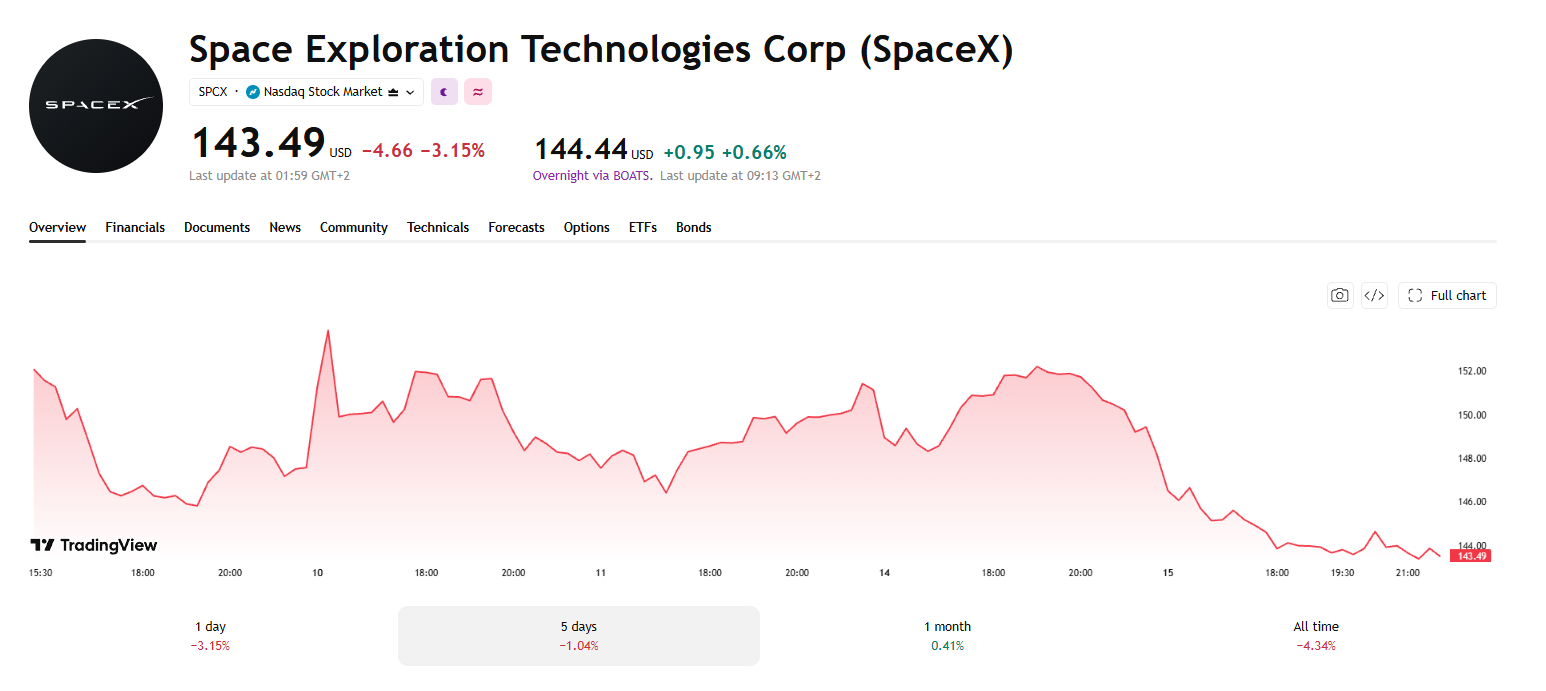
Cathie Wood says a single Starship launch could generate $1 billion in revenue, a projection that would make the $1.75 trillion SpaceX IPO look cheap in hindsight.
The ARK Invest founder tied that figure to Elon Musk’s goal of 10,000 flights a year by 2030. Her post followed fresh data on how much revenue Starlink earns per unit of launched capacity.
Cathie Wood Calls the SpaceX IPO a Deep Value Bargain
The math starts with Starlink. An ARK Invest analyst puts Starlink connectivity revenue near $19 million a year per terabit per second (Tbps) of network capacity. One Starship carries roughly 61 Tbps, so a full load adds close to $1 billion in recurring Starlink revenue rather than a one-off launch fee.
Multiply that by 10,000 launches a year, and Starship alone would bring in $10 trillion. Therefore, Wood argues, buyers of the $1.75 trillion listing will look back on it as deep value.
That step assumes every flight carries Starlink capacity. Musk, however, has framed the 10,000 target against commercial air travel, a transport business that earns no connectivity revenue.
Early investors have little to show so far. SPCX priced at $135 in June and closed its first session at $161. The stock has since spent weeks below its IPO price.

Starship Revenue Math Rests on 10,000 Flights a Year
The revenue per Tbps is already sliding. ARK data puts it at $21 million in 2023, $23 million in 2024, and $19 million in 2025. The analyst says that decay is expected as capacity grows.
Launch cadence is the wider gap. Falcon 9 flew 165 times last year, while Starship has flown twice since the June listing. Both flights stayed suborbital, so the V3 satellites released in July re-entered and burned up within roughly 20 minutes.
The next mission aims to reach Earth orbit for the first time and carries 26 operational V3 units. That flight would also become the first Starship launch to earn commercial revenue.
Wood is not the loudest bull on the stock either. Dan Held sees falling launch costs pushing SpaceX toward a $100 trillion valuation within two decades. ARK, meanwhile, keeps adding to its position.
Still, $10 trillion a year would top the output of every economy except the United States and China. For now, the bargain call rests on a flight rate Starship has yet to reach.
The post Cathie Wood Calls the $1.75 Trillion SpaceX IPO a Bargain: Here's Why appeared first on BeInCrypto.


Bitcoin traders aren’t exactly panicking about Wednesday’s expected Federal Reserve rate hike, but they aren’t taking many chances either.
Markets are pricing a 92.5% chance the Fed raises rates for the first time in three years after strong employment data and stubborn inflation. Bitcoin has spent the past 24 days stuck between roughly $76,000 and $80,000, with volatility falling to a one-month low.
For some traders, the quarter-point hike is already old news.
“The bond market has done its job and fully priced in tomorrow’s hike,” said Chris Sullivan of Hyperion Decimus. In his view, the bigger shock could come if the Fed doesn’t hike, since that could leave investors wondering what policymakers see that markets don’t.
Crypto investors are still putting some money out of harm’s way.
Talos has seen a 28% net buying tilt toward stablecoins ahead of the meeting, according to research analyst Cooper Duschang. Around previous Federal Open Market Committee meetings, investors showed an average 8% selling tilt toward stablecoins.
Appetite for the two largest cryptocurrencies has moved in the other direction. Bitcoin buying conviction has dropped to 3% from 10%, while ether has fallen to 9% from 23%.

Some of the disparities are cultural in the making—and don’t make a ton of sense. On the streets, men disproportionately ride, meaning cycling is masculine, right? Not really. Packs of cyclists are derisively referred to as “MAMILS,” as in Middle-Aged Men in Lycra. Meanwhile, step into a spin class, and you may likely see only women clipping in. Context, it turns out, is everything.
More broadly, exercise has become a luxury good. It was the Yuppies who made marathoning and high-end road bicycles so popular. Today, people are just as likely to commute by bicycle in households that have more than $200,000 in income as they are in households that bring in between $50,000 and $75,000. Many of the people commuting by bike are choosing to do so. They have alternatives.
Not everyone is so lucky. Transportation injustice is real. Too often, urban renewal projects destroy neighborhoods of color for the sake of white commuters’ convenience. We should be conscious of these historic injustices. But working to undo wrong and encouraging groups of people who don’t currently bike to do so don’t need to be mutually exclusive. And it shouldn’t be controversial.


Bitcoin Core, the software used to run Bitcoin nodes, has moved its next major update into final testing with changes to transaction fees, block processing and the way wallets build transactions.
The first release candidate for Bitcoin Core 32.0 was tagged on Sept. 14, starting the final testing cycle before developers aim to release the finished version on Oct. 10, according to the project’s release schedule.
Bitcoin Core lets a computer independently check transactions and blocks against Bitcoin’s rules rather than relying on another service. Version 32 does not change those rules.
Bitcoin Core currently estimates how much a user should pay for a transaction largely by looking at the fees attached to transactions that made it into previous blocks. Version 32 adds a second estimator that looks at transactions currently waiting to be confirmed.
The software will compare the two and can recommend the lower fee when current network conditions support it. That should let estimates fall more quickly when congestion clears instead of continuing to reflect more expensive transactions from earlier blocks, according to the draft release notes.


Donald and Melania Trump’s memecoins are down 97% and 99% respectively from their all-time highs.
$TRUMP coin reached its all-time high of ~$75 per token on January 19, 2025, and has been on a slow, but relentless, decline since then. It’s currently trading for ~$2.
Melania’s memecoin reached an all-time high of ~$14 on January 20, 2025. It now trades for $0.1.
Perhaps unsurprisingly, Trump’s coin has been outperforming his wife’s, likely due to the constant media attention the president receives. But it may also be because the coin has staged two giveaways so far with another upcoming.
Read more: Donald Trump is suing the New York Times for harming his memecoin
‘Coin Club’ sure looks like quid pro quo
While the company operating the Donald Trump Coin Club hasn’t been investigated by any US law enforcement agency, it certainly fills the air with the stink of quid pro quo.
In April of 2025, the top 220 holders of $TRUMP were invited to a private dinner with the president.
Individuals who attended included Justin Sun, Evgeny Gaevoy, and Lamar Odom. It remains unclear if they were able to use their time with the president to push for any new laws or executive orders.
A year later, Coin Club top holders were able to join a private celebration at Mar-a-lago that featured speakers including Tony Robbins and Mike Tyson.
Shortly thereafter, the same club members were given a chance to win box seats to the World Cup Final.
Now, the Coin Club is offering members another opportunity to win seats, this time for the F1 series in Singapore in October. Apparently, the president will not be in attendance.
Despite all of these shenanigans, $TRUMP extends its eventual slide to $0, with volumes continuing to crater.
Read more: ANALYSIS: Mapping Donald Trump’s growing crypto empire
No Coin Club, no cry
Melania’s memecoin has had a very different existence.
Despite briefly spiking once there was public acknowledgement that it was her coin, interest waned almost instantly.
Part of the reason for the plummet in price and no recovery whatsoever has to do with Melania never mentioning the coin again, not offering any gimmicks or giveaways for holders, and no access to buy.
It only took one month for her coin to fall 90%, and it’s chugged along, losing value ever since.
If investors in either coin expected to see a dime of profit their hopes are indubitably dashed.
Got a tip? Send us an email securely via Protos Leaks. For more informed news and investigations, follow us on X, Bluesky, and Google News, or subscribe to our YouTube channel.
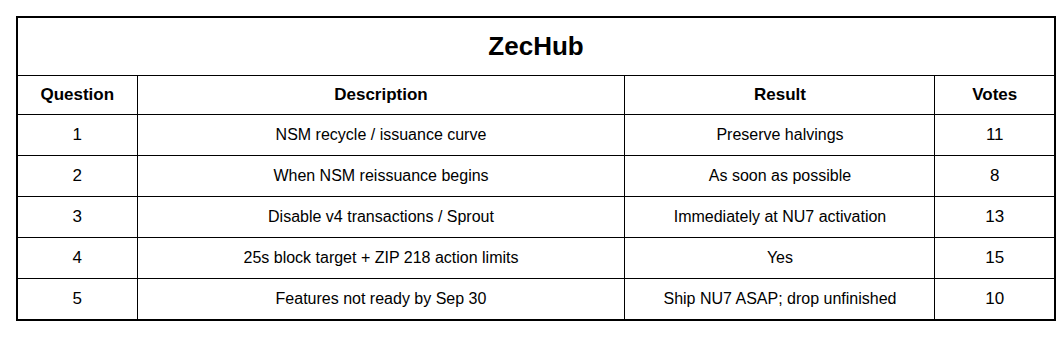
Zcash token holders backed cutting the network’s target block time to 25 seconds from 75 seconds and preserving its existing halving schedule in a poll on the next major upgrade.
The faster-block proposal received 99.9% of the Zcash (ZEC)-weighted vote, while 98.9% supported keeping halvings, according to results published Monday. Voting power reflected eligible ZEC holdings, with both percentages including abstentions.
The shorter interval would reduce the expected wait for a transaction’s first confirmation, according to the proposal. The amount of new ZEC issued per block would fall to keep scheduled daily issuance unchanged.
The changes are proposed for NU7, a Zcash network upgrade whose activation date remains undetermined. Token holders also favored excluding features not implemented by Sept. 30.
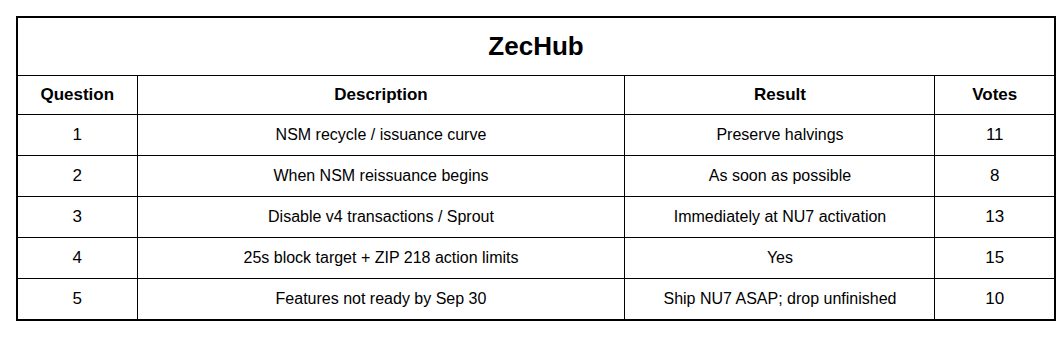
Results of the NU7 sentiment poll. Source: forum.zcashcommunity.com
The coinholder vote was separate from polls of ZecHub, the Zcash Community Advisory Panel and other community groups. Eligibility was limited to spendable ZEC in the Ironwood shielded pool at the voting snapshot. Developers plan to ship the final items for the upgrade by the Sept. 30 cut-off deadline, with testnet and mainnet activation not yet determined.
Halvings are scheduled cuts that reduce the issuance of new ZEC by half. The winning coinholder option would preserve that schedule while allowing funds removed from circulation under a separate proposal to be returned through future block rewards.
The advisory-panel results showed a closer split, with 57 members favoring a gradual issuance curve that would replace halvings and 54 favoring keeping them.
Related: Anthropic’s Mythos AI finds no more ‘serious’ bugs in Zcash: Wilcox
Zcash coinholders favor delaying reissuance
Another major feature considered for NU7 inclusion was the Network Sustainability Mechanism (NSM), a proposed upgrade to Zcash’s economic model that aims to recycle a portion of transaction fees back into a pool, rather than relying solely on block rewards.
About 97% of token holders voted to delay NSM reissuance until February 2031, with 2.3 million ZEC tokens voting to delay the motion, while only about 70,239 tokens voted to start it as soon as possible.
NSM was proposed in January in response to the network’s long-term security budget concerns, as the declining block rewards may eventually be insufficient to incentivize miners to validate transactions. The model’s three-part mechanism seeks to burn and recycle 60% of ZEC transaction fees into future block rewards, without exceeding the token’s 21 million maximum supply.
ZEC rose 3.8% in the past 24 hours, extending its 132% rally seen during the past month, according to CoinMarketCap data.
Magazine: The legal battle over who can claim DeFi’s stolen millions
The cryptocurrency market took a sharp hit after the CLARITY Act failed, and many digital assets fell into red territory.
Pi Network’s native token is the worst performer in the top 100 club, down 14% in a day. Despite the decline, some analysts believe a bullish reversal could be closer than it appears.
PI Loses More Ground
As CryptoPotato reported, the US Senate failed to advance the landmark bill, known as the CLARITY Act, because it did not reach the necessary 60 votes. Although the development was largely expected, it triggered a broad correction, with Bitcoin (BTC) plunging to $75,000 and Ethereum (ETH) dipping below $2,400 after a 3% daily decline.
These drops, though, are no match for PI’s poor performance. The native cryptocurrency of the controversial project is the only one (from the biggest 100) to post a double-digit decline today (September 16) and currently trades around $0.083 (per CoinGecko), the lowest level since the start of August.
PI’s market capitalization tumbled under the $1 billion psychological mark and now stands at roughly $940 million. This makes it the 76th-largest cryptocurrency.
It is important to note that PI’s pullback comes despite the latest ecosystem development. X account BSCN revealed that the Core Team initiated protocol upgrade v27, starting with a Testnet2 implementation and planning to transition to Mainnet by the end of the week.
“Among other things, this protocol transition upgrades Pi Node Docker to V27.1.0 and aims to ensure the stability of the network’s infrastructure and prepare for future developments such as integration with Pi Dex. This protocol transition represents a major step toward decentralizing the network,” the post reads.
Meanwhile, Pi Network’s official X account has not yet confirmed the upgrade.
Rebound Incoming?
The reality for PI may seem quite grim, yet certain analysts think a revival remains possible. X user Crypto With Gopal claimed the price has printed a double-bottom setup and is holding the $0.075-$0.085 support zone while forming higher lows.
“A clean reclaim above $0.10 could confirm bullish momentum and open the path toward the $0.14 target. Bulls are slowly regaining control after the prolonged downtrend,” he maintained.
PI’s Relative Strength Index (RSI) supports the bullish scenario. The ratio has plunged to an oversold territory of 23, suggesting that the token could be gearing up for a recovery. The index runs from 0 to 100, where anything above 70 is usually interpreted as a warning for an impending correction.

The post Pi Network (PI) Tumbles 14% Daily: Is a Recovery on the Horizon? appeared first on CryptoPotato.


USDC issuer Circle has launched the mainnet of Arc, a layer-1 (L1) blockchain targeting stablecoin payments and financial markets, particularly agentic transactions.
Arc uses USDC as its native gas asset and offers Ethereum Virtual Machine (EVM) compatibility and deterministic sub-second settlement finality, according to an Arc blog post on Wednesday.
The network supports more than 20 fiat stablecoins, including USDC, EURC, JPYC, KRW1 and TRYB, while tokenized assets including BlackRock’s BUIDL and Circle’s USYC are available natively on Arc. Arc also offers interoperability with more than 20 blockchains through Circle’s Cross-Chain Transfer Protocol (CCTP) and Gateway.
CEO Jeremy Allaire called Arc “the single most significant launch in Circle’s history since USDC itself.” Separately, Circle said in a post on X that Arc was built for “programmable money, global markets, and agentic economic activity,” describing the network as stablecoin-native infrastructure for developers and institutions.
The launch follows Arc’s public testnet debut in October 2025, when Circle said more than 100 companies were participating, including BlackRock, Goldman Sachs, Mastercard and Visa.
Circle said in August that more than 100 institutional and ecosystem builders had participated in Arc’s private mainnet ahead of the public launch.
Arc said it ultimately plans to broaden participation in network operations and explore a transition from Proof of Authority to Proof of Stake in 2027. Circle also completed the genesis mint of 10 billion ARC tokens this week but said the mint does not represent a commitment to launch the token publicly.
Related: Crypto stocks slide after CLARITY Act fails to advance in Senate
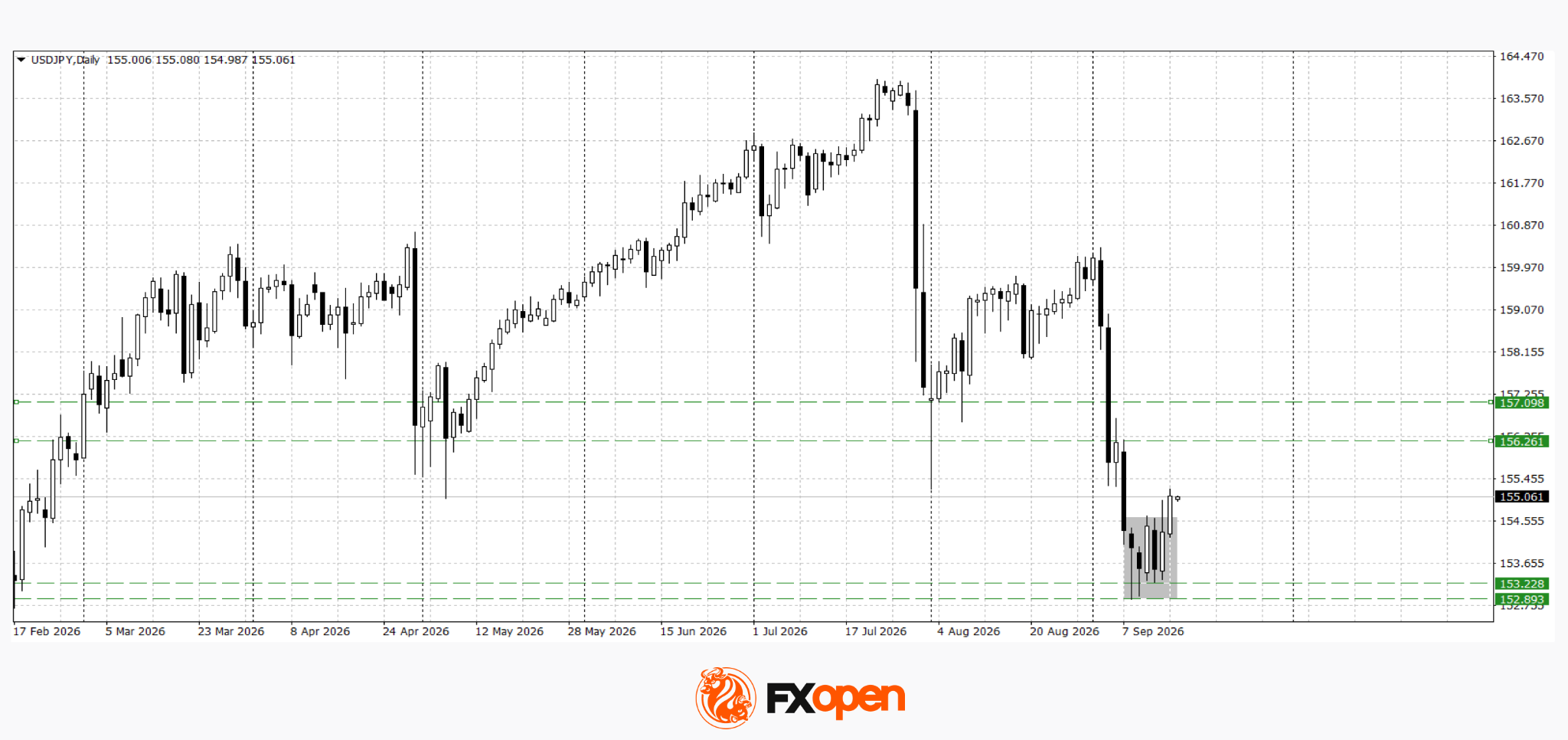
The US dollar is consolidating against the yen and Canadian dollar ahead of the key event of the week — the Federal Reserve meeting. The Fed is widely expected to raise its policy rate by 25 basis points to a range of 3.75–4.00%. As this move is already largely priced in, attention will focus on the updated economic projections, dot plot and press conference. Investors will assess whether the September rate hike marks the beginning of a new phase of monetary tightening or whether the central bank will prefer to adopt a wait-and-see approach.
Expectations of a more hawkish Fed are supported by persistent inflationary pressures, recent employment data and rising oil prices. US retail sales data will provide an additional reference point ahead of the meeting. Strong figures could provide further support for the dollar, although the market reaction is likely to remain limited ahead of the Fed decision.
USD/JPY
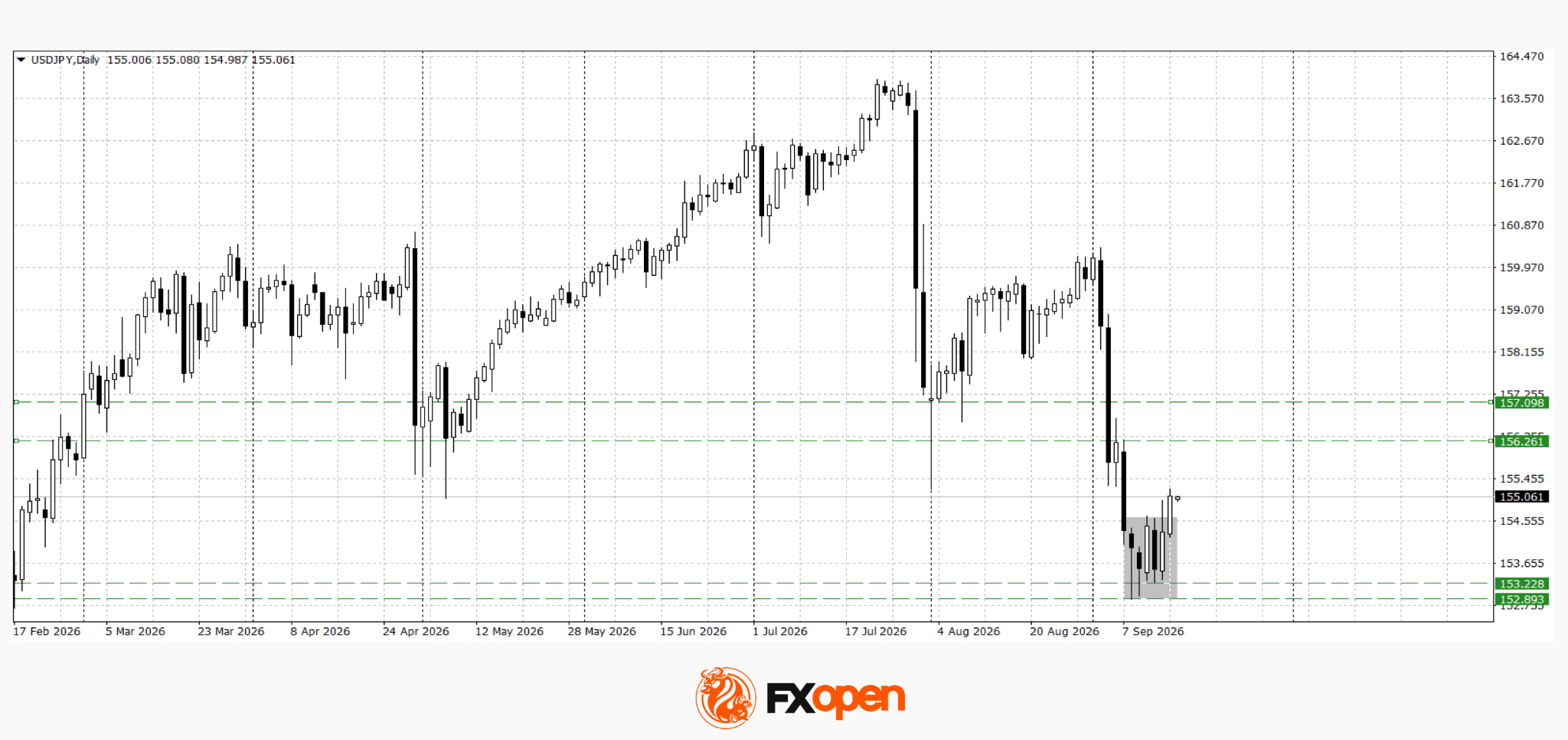
The decline in USD/JPY over the past two weeks has slowed around the key support area of 152.90–153.20. At the start of the week, the price tested this area several times, while buyers managed to establish a foothold above the psychological 155.00 level yesterday. Hawkish Fed rhetoric could support a corrective rise in USD/JPY towards 156.20–157.00. More cautious signals regarding further policy tightening, by contrast, could put renewed pressure on the dollar and lead to another test of the 152.90–153.20 area.
Key events for USD/JPY:
- today at 15:30 (GMT+3): US core retail sales;
- today at 21:00 (GMT+3): US Federal Reserve interest rate decision;
- today at 21:30 (GMT+3): Federal Open Market Committee press conference.
USD/CAD
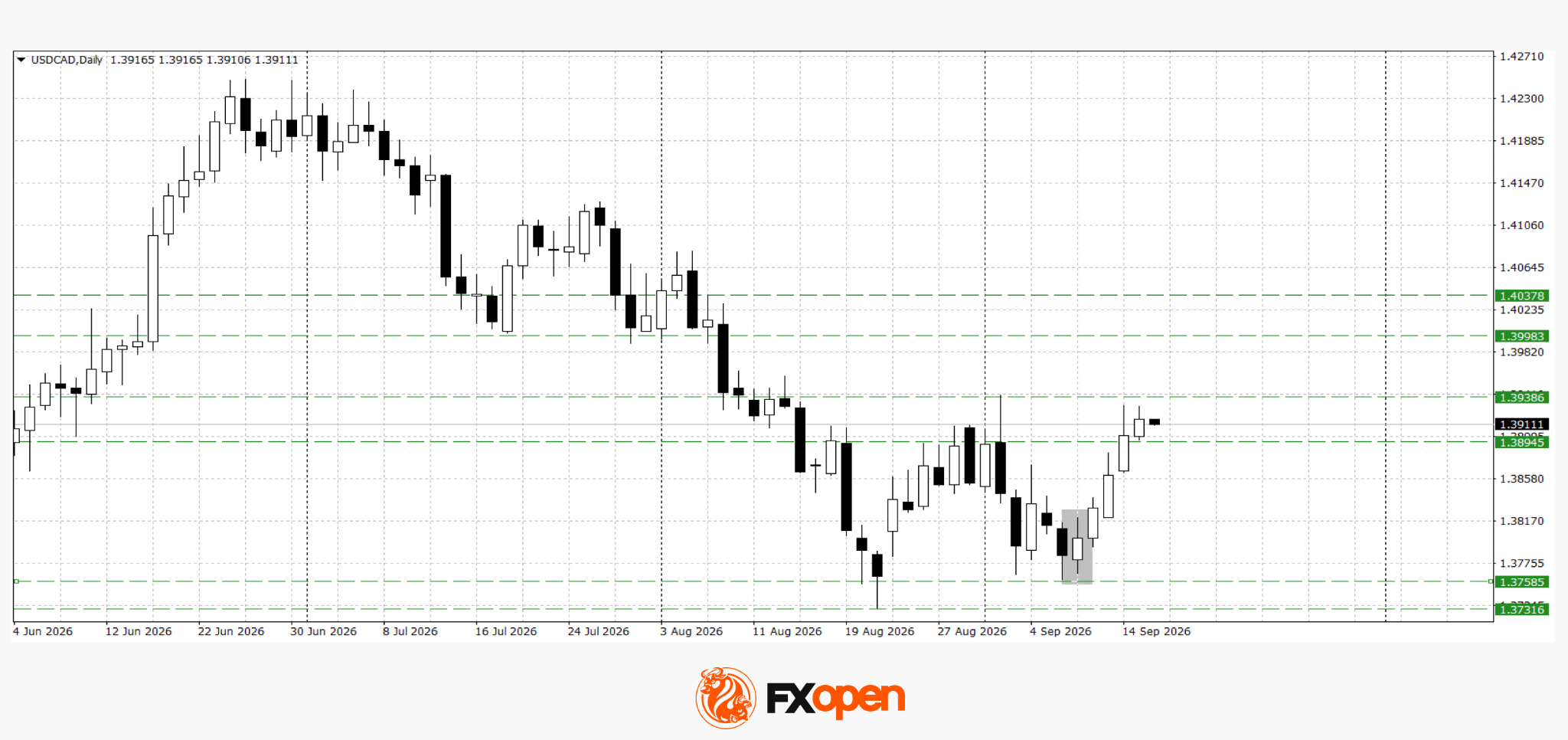
USD/CAD has recovered from its recent lows and is testing the 1.3895–1.3940 resistance area, despite support for the Canadian dollar from elevated oil prices. A firm move above 1.3940, followed by the level turning into support, could pave the way for a rise towards 1.4000–1.4030. A failed attempt to establish itself above the current resistance area, by contrast, could trigger a renewed decline towards the 1.3760 support level.
Key events for USD/CAD:
- today at 15:30 (GMT+3): Canadian building permits;
- today at 17:30 (GMT+3): US crude oil inventories;
- today at 18:30 (GMT+3): Federal Reserve Bank of Atlanta GDPNow indicator.
Overall, USD/JPY and USD/CAD remain in consolidation ahead of the key Fed decision. As a 25-basis-point rate hike is already largely priced in, the dollar’s subsequent reaction will depend primarily on the central bank’s projections and rhetoric. Signals pointing to further tightening could support gains in both pairs, while a more cautious Fed stance could put renewed pressure on the US currency.
Trade over 50 forex markets 24 hours a day with FXOpen. Take advantage of low commissions, deep liquidity, and spreads from 0.0 pips (additional fees may apply). Open your FXOpen account now or learn more about trading forex with FXOpen.
This article represents the opinion of the Companies operating under the FXOpen brand only. It is not to be construed as an offer, solicitation, or recommendation with respect to products and services provided by the Companies operating under the FXOpen brand, nor is it to be considered financial advice.
Two central banks are heading in genuinely opposite directions this week, and the tension is unmistakable. The Bank of Canada held rates steady at 2.25% on September 2, with a mildly hawkish tilt as policymakers acknowledged a broadening economic recovery alongside rising inflation risks. Since then, Canadian data has stayed firm, August CPI held at 3.0% year-on-year, and elevated oil prices, boosted by Middle East tensions, continue to provide the loonie with structural support given Canada’s status as a major crude exporter.
The yen, meanwhile, is the real story of the week. The Bank of Japan is widely expected to hike its policy rate to 1.25% on Friday, its highest level since April 1995, after Treasury Secretary Scott Bessent’s public pressure campaign pushed markets to price in an 80% probability of the move. The yen has already surged to seven-month highs in anticipation, with August export data beating forecasts on strong AI-chip demand, even as Bloomberg warns the scale of tightening now expected risks disrupting markets should the BOJ fail to deliver.
The result: a resilient, oil-backed loonie facing off against a yen riding its most significant policy shift in three decades, leaving CAD/JPY’s next move to hinge almost entirely on Friday’s BOJ decision.
Technical Analysis of CAD/JPY
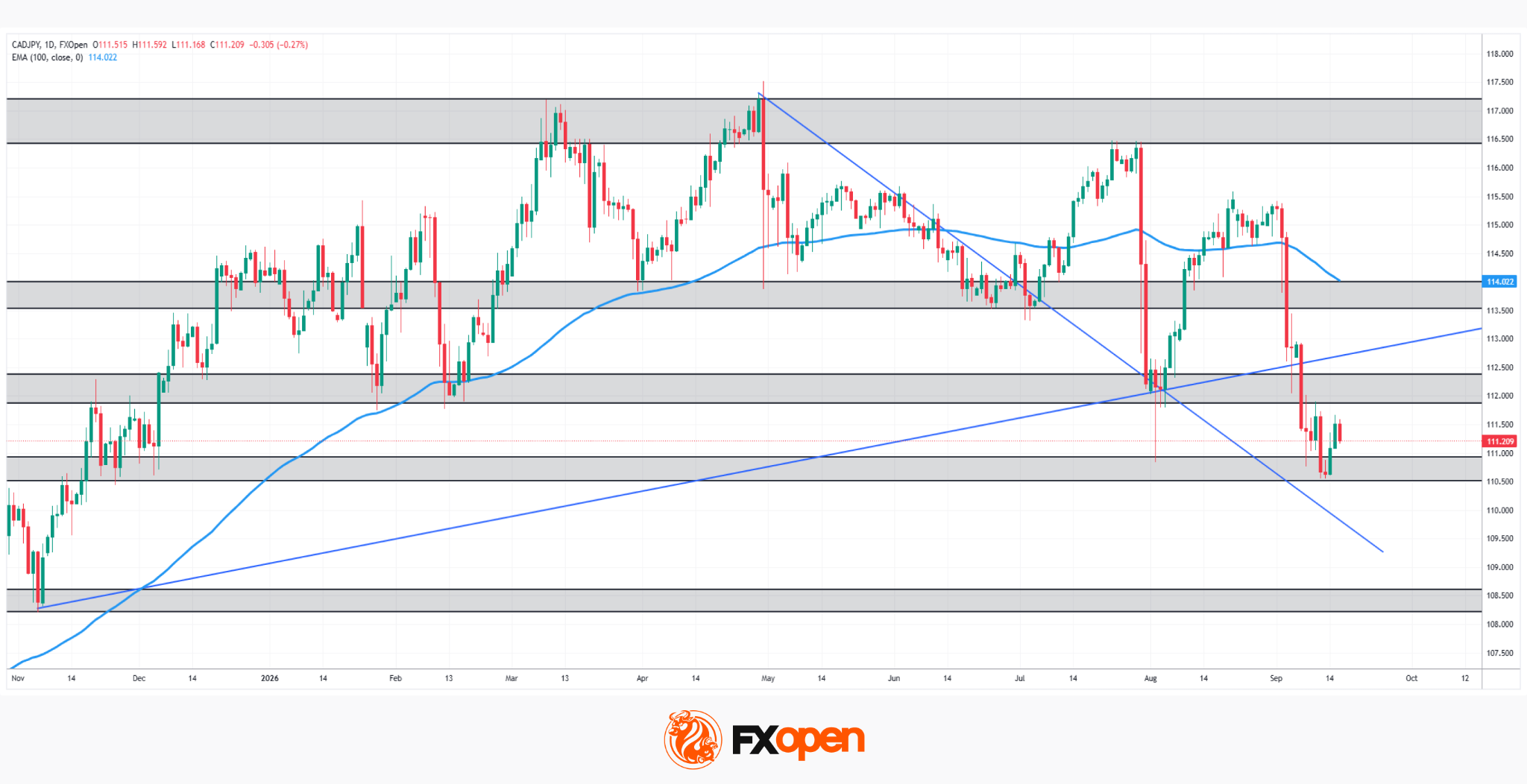
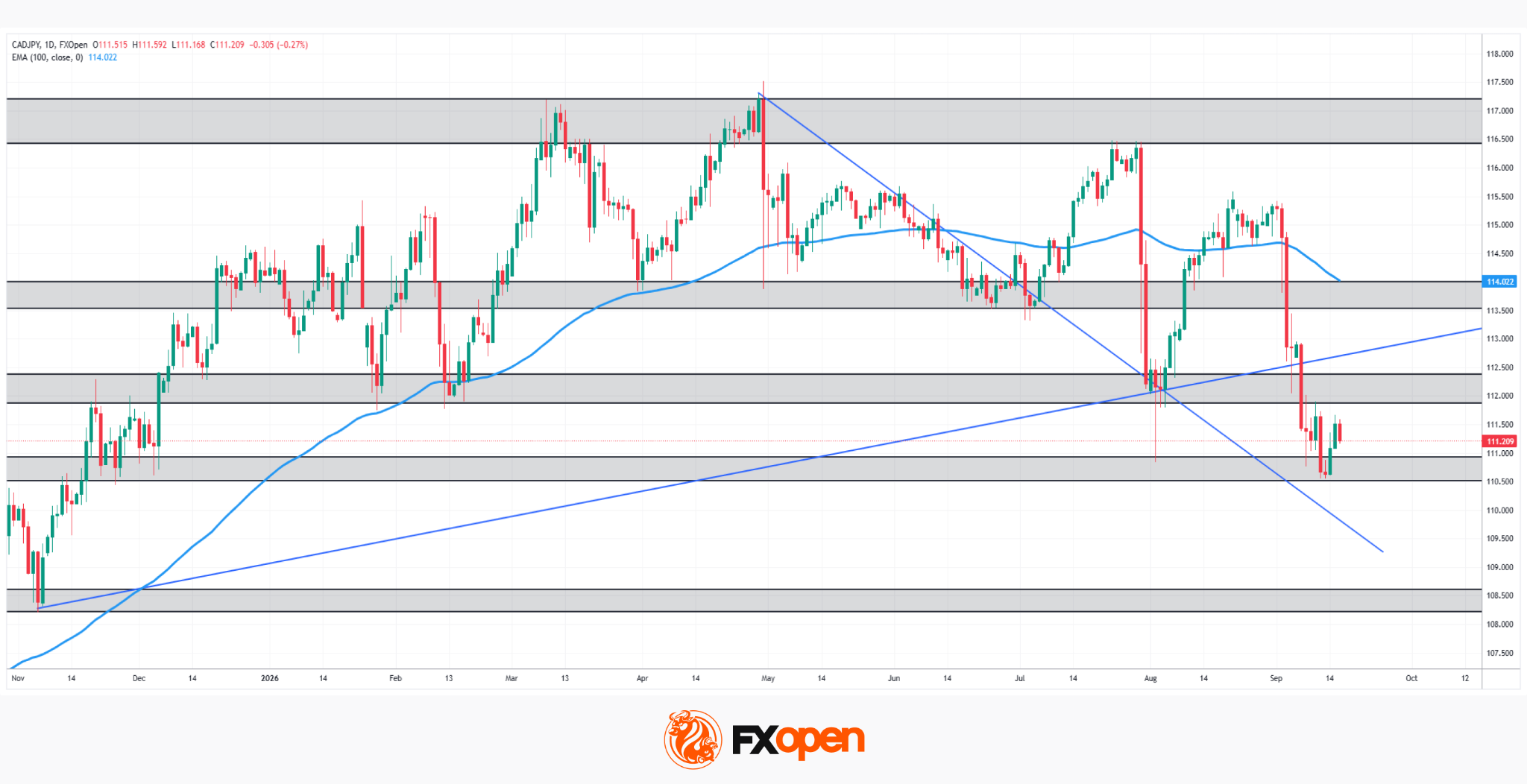
As the CAD/JPY daily chart shows, the pair has broken below its long-term ascending trendline from last November’s lows, with price now trading well below the 100-period EMA at 114.02, inside the 110.50–112.00 support zone that has held since early August. The descending trendline from May’s highs near 117.50 now sits below current price, positioning it as a potential support level should the pair extend lower.
Bullish Scenario
Should buyers defend the 110.50–111.00 support and stage a recovery, the first real test becomes the 112.00–112.50 resistance zone, with a stronger push potentially reaching the 113.50–113.75 area, where the broken long-term ascending trendline and the 100-period EMA converge.
Bearish Scenario
Conversely, a break below the 110.50–111.00 support would bring the descending trendline from May’s highs into play as a possible support level, with a confirmed break below that also exposing the 108.00–108.50 zone, the level that anchored the entire late-2025 recovery.
With price trading beneath both its EMA and its former long-term uptrend, and the old descending trendline now positioned as potential support below, CAD/JPY’s next move looks set to hinge on Friday’s BOJ decision. Will the yen’s historic tightening push the pair into fresh multi-month lows, or does support finally hold?
Trade over 50 forex markets 24 hours a day with FXOpen. Take advantage of low commissions, deep liquidity, and spreads from 0.0 pips (additional fees may apply). Open your FXOpen account now or learn more about trading forex with FXOpen.
This article represents the opinion of the Companies operating under the FXOpen brand only. It is not to be construed as an offer, solicitation, or recommendation with respect to products and services provided by the Companies operating under the FXOpen brand, nor is it to be considered financial advice.

Meghan’s deeply emotional song choice for Harry: Classic 80s hit used in Duchess’ birthday post was one Duke and Prince William would sing with Diana to ease boarding school ‘anxiety’

The Ospreys in new sponsorship deal with JCP Solicitors

Cathie Wood Calls the $1.75 Trillion SpaceX IPO a Bargain: Here's Why



-

 Fashion5 days ago
Weekend Open Thread – Corporette.com
-

 Business6 days ago
Micron Stock Climbs Above $1,031 as AI Memory Crunch and a $50 Billion Outlook Fuel the Rally
-

 Tech3 days ago
The Latest Weird Thing to Play Doom Is the Mapped-Out Brain of a Fruit Fly
-

 Business6 days ago
AMD Stock Climbs After Management Lifts 2027 Data Center Outlook Toward $70 Billion in AI Sales
-

 Business5 days ago
10 Most-Streamed Songs On Spotify In 2026 So Far, Led By Ella Langley’s Dominant Run On The Charts This Year
-

 Crypto World5 days ago
XAG/USD: Silver’s Short-Term Rally Meets Its Moment of Truth
-

 Crypto World6 days ago
2 Chip Stocks Broke Out This Week. Neither Was Nvidia
-

 Tech6 days ago
Battery life is the only iPhone 18 Pro and iPhone Duo upgrade I care about. Apple didn’t disappoint
-

 Crypto World7 days ago
Pi Network ships Protocol 27 on a network with 14 million users and zero DeFi
-

 Crypto World6 days ago
OKX launches 10x OpenAI, Anthropic X-Perps in Europe
-

 Crypto World5 days ago
Diesel Tops $6 a Gallon for the First Time as 28 States Set Records
-

 Tech7 days ago
Apple Watch Ultra 4 vs Watch Ultra 3: Should you really spend another $799?
-

 News Videos5 days ago
Facing Financial Fears
-

 Crypto World7 days ago
Bitcoin price risks $70K if $78K neckline breaks
-

 Entertainment6 days ago
Case Sees Major Update As Jury Deliberations Begin
-

 Business6 days ago
Western Digital Slips 2.7% as AI Storage Rally Cools After Record Cash and Guidance
-

 Business3 days ago
Rivals Sam Altman and Elon Musk Rally Behind Dario Amodei’s Call for a Slowdown in AI Development
-
Crypto World7 days ago
Ripple Price Prediction: What to Expect for XRP as a Major Macro Week Approaches
-

 Crypto World2 days ago
Elon Musk Drops a Bombshell: Grok 5 Could Be the AGI Breakthrough
-
Crypto World6 days ago
Ethereum Price Analysis: Consolidation at $2.5K Tests Momentum as On-Chain Activity Surges
You must be logged in to post a comment Login