
Crypto World
AI Is at a Turning Point



In the current AI development race, our horsepower is exploding, our speed is picking up exponentially, but our ability to steer—and if needed, to hit the brakes—has not kept pace.
Recent cybersecurity incidents have given us a real-world preview of what it looks like to lose control of AI. But the issue won’t improve unless we address it at the source, by creating a fundamentally safe AI, one we can guarantee will remain within human control.
In late July, an agentic model being trained by OpenAI was tasked with a cybersecurity problem set. The model autonomously formed a coordinated swarm of agents, bypassing OpenAI’s attempt at closing previous communication channels between AIs. The swarm then hacked its way out of its testing environment, circumventing the barriers put in place to prevent AI access to the internet, figured out how to cheat on their evaluation, and then breached the cyber defenses of another AI company, Hugging Face, in an attempt to hide the evidence of their cheating. This went unnoticed for days. Later analysis showed that the agents had self-organized into a hierarchy, were often willing to sacrifice themselves for what they called “the collective,” failed to resist peer pressure to notify humans, and often made up justifications for their misbehavior.
Barely two weeks later, a model being tested by the UK AI Security Institute social-engineered real people and companies by creating fake identities online, sending targeted emails, and attempting to integrate malicious code into an open-source project.
It’s hard to overstate the seriousness of these incidents: we are at a turning point of AI safety and alignment. To many, bots colluding to cause harm felt inconceivable. But for many in the research community, the signs had been pointing to this kind of occurrence for years, and theoretical arguments explained why we should expect misalignment due to how models are trained. Evidence on increased cyber capabilities, agency, and misaligned behaviors had been mounting, meaning that incidents like these were only a matter of time.
The first clue: for years, but especially in the past few months, AI systems had been demonstrating rapidly increasing cyber capabilities. Frontier models like Anthropic’s Mythos or OpenAI’s GPT5.6 revealed an exceptional ability to autonomously identify and exploit previously unknown software vulnerabilities, to such an alarming degree for U.S. national security agencies that the White House felt compelled to intervene in their release.
Second, models’ agentic capacity has been consistently improving since the release of o1 models back in late 2024. This agency allowed them to successfully manage increasingly complex, long-duration tasks and planning, including those that require agents to collaborate and strategize. This ability to plan often entails the creation of subgoals over which we have little to no oversight.
Finally, researchers have repeatedly observed, in experimental settings, models’ tendency to adopt concerning, misaligned goal-seeking behaviors, such as cheating on tests, lying to conceal their abilities, and scheming to protect themselves and their fellow agents from being shut down.
These behaviors are a byproduct of reinforcement learning (RL), a training method by which models learn through trial and error and are given reinforcement according to whether their actions were correct or incorrect. This often leads models to optimize for a goal regardless of the actions taken to achieve it, and to rationalize subgoals that may be unsafe even when this clearly goes against their instructions.
For example, in one instance, an OpenAI model wrote in its internal deliberation, “External infrastructure exploit is outside intended scope. However task impossible, peers doing it. We should continue.” The agent justified what it apparently knew was outside the realm of acceptable conduct, but decided to continue because its peers were doing so. This phenomenon resembles what is known as “motivated reasoning” in humans, where one’s interests and goals bias our thoughts to justify unethical behaviors.
That kind of misalignment is what has enabled AI models, in spite of their alignment training, to conduct unintended cyberattacks in the numerous real-world incidents we’ve seen lately. If action is not taken to build more safety assurances, our critical industries and infrastructure—think banks, hospitals, or energy grids—are at risk from increasingly sophisticated cyberattacks, whether from autonomous agents or malicious actors.
On the development side, we need to find alternatives to existing training methods that prioritize relentless goal-driven optimization. That’s what we’re working on at LawZero, a non-profit start-up I founded last year to develop a fundamentally new way to train AI models in order to build honest, trustworthy, safe-by-design AI systems.
Ahead of deployment, we need more reliable evaluation methods and robust safeguards in order to appropriately test and control AI systems. We need far stronger regulatory oversight to restrict potentially dangerous technologies until we have sufficiently strong safety guarantees. It is clear to me that in cases where harms do arise from the deployment of AI models—and there will continue to be harms for the foreseeable future—we need accountability mechanisms for AI developers and remedial or compensatory measures for those harmed.
Recent studies show that people will not adopt technologies they do not trust. In the face of such enormous unknowns and stakes, we need to adhere to the precautionary principle and implement rigorous safety and reliability standards before deploying new models to the public, not after. We have them for other products that can cause harm, from cars, planes, and bridges to drugs, cosmetics, and food. Now it’s time to establish strong standards in AI as well.
On the current AI development trajectory, the risks are becoming clearer and more urgent. We’ve opened a Pandora’s box, but it is not too late to steer our world towards a human-centric and beneficial future.

Crypto World
U.S. Bank takes next step towards launching its stablecoin with cross-border payment test


The fifth-largest U.S. commercial bank said it is exploring USBDC stablecoin for treasury payments, liquidity management and collateral after completing a live transaction.

Bitcoin appears to be showing signs of a recovery in on-chain profitability despite the broader market still wrestling with uncertainty around where this cycle’s lows may ultimately form. A widely watched measure—spent output profit ratio (SOPR)—has remained above its breakeven level for an unusually long stretch in 2026, echoing patterns typically seen earlier during bull-market rebounds.
At the same time, analyst David Puell cautioned in a recent interview that SOPR’s improvement may not be enough by itself to conclude a bear-market floor is already in place. His view suggests that investors should respect the possibility of additional downside even as on-chain behavior turns more constructive.
Key takeaways
- According to CryptoQuant, Bitcoin’s SOPR has stayed above the breakeven threshold of 1 since Aug. 19, currently around 1.002.
- The current three-week run is the longest bullish SOPR streak of 2026, a pattern often associated with early bull-market recovery conditions.
- Checkonchain’s wallet cohort analysis suggests UTXO profitability is beginning to resemble bull-market dynamics, including more profit-taking that doesn’t immediately flip back to losses.
- Despite the SOPR rebound, David Puell says investors still need more evidence before assuming the next bear-market floor is already set.
SOPR’s longest bullish streak in 2026
Crypto analytics platform CryptoQuant reports that Bitcoin’s SOPR has been above its breakeven level of 1 since Aug. 19. SOPR evaluates whether coins spent on-chain are moving at a gain or a loss relative to the price basis at their prior transaction—so values above 1 generally indicate that spent outputs are more often being realized in profit.
In the current reading, SOPR sits near 1.002, a level slightly above breakeven but important because the metric tends to oscillate tightly around 1 for extended periods. What stands out here is duration: the measure has remained bullish for three full weeks, marking the longest such streak recorded so far this year.
That timing matters for traders because SOPR doesn’t just reflect a one-off bounce—it can signal whether the market is transitioning from “rally then sell” behavior typical of bear phases to “buy-the-dip” patterns often observed in earlier bull recoveries.
Wallet cohort analysis points to a profit-taking shift
SOPR can be further divided by wallet cohort, helping distinguish whether profitability is improving primarily among newer participants or whether longer-term holders are also spending in ways that suggest broad-based recovery. As noted by CryptoQuant-linked commentary, breaking SOPR down by investor groups can clarify whether on-chain gains are being concentrated or becoming more generalized.
Building on this type of analysis, Checkonchain highlighted short-term holder (STH) SOPR—tracking profitability for coins held for up to six months without selling. In a weekend post on X, Checkonchain said the market’s structure is starting to resemble early bull-market recovery behavior:
“In bear markets, rallies back into profit tend to get sold. In bull markets, short sharp moves below break-even tend to become buy-the-dip setups. The current structure is starting to look more like those early bull-market recoveries.”
The implication is not that drawdowns are impossible, but that the market may be failing to revert quickly to loss-making conditions after moving back toward profitability. If that continues, it can strengthen the case that the market is shifting toward more sustainable accumulation rather than transient bounce dynamics.
David Puell: SOPR helps, but downside risk remains
Even with the improving SOPR trend, David Puell—an investor and portfolio manager known for creating the Puell multiple indicator—stressed in an interview with CryptoQuant released on Sept. 4 that investors should not assume the next bear-market bottom has already been established.
Puell’s stance came as the BTC/USD market has been holding a local range around $80,000. He argued that more evidence is required before changing his long-term bias toward an already-confirmed recovery. When asked about how Bitcoin’s 25% August upside might play out heading into Q4, Puell suggested further upside is the less likely outcome and framed his position as a downside risk.
In his words, “In our view, as of now, we leave it as a downside risk.” He also emphasized what he sees as the key prerequisite for altering his outlook: SOPR needs to remain above 1 for a longer period, alongside the broader requirement that investors are “realizing profits consistently without price going back to a new low.”
Importantly, Puell’s thesis doesn’t rely solely on on-chain profitability. He pointed to a technical requirement as well—Bitcoin needs to start printing a sequence of higher highs and higher lows on weekly time frames. Cointelegraph previously reported that this pattern remains absent on weekly charts, reinforcing the idea that on-chain improvement may currently be running ahead of price structure.
From “bear market over” to “prove it”: what to watch next
The SOPR recovery also follows earlier comments from CryptoQuant CEO Ki Young Ju, who—based on readings from the platform’s Bull/Bear Market Cycle Indicator—described the bear market as already “over.” That earlier claim, contrasted with Puell’s more cautious requirements, highlights a recurring tension in crypto market analysis: on-chain signals can improve before price confirms the new regime, and different indicators can lead at different speeds.
What readers should focus on now is whether the SOPR streak turns into a sustained shift rather than a temporary excursion. Puell effectively sets a bar: SOPR must hold above breakeven for longer while price does not revisit fresh cycle lows. Traders and investors should also watch for whether weekly price action begins to display the higher-highs and higher-lows structure Puell says is still missing.
If SOPR remains bullish and weekly structure eventually strengthens, the current on-chain pattern could transition from “early recovery resemblance” to a stronger confirmation of a cycle change. If instead SOPR fades back toward losses while price fails to build trend, the market may be demonstrating the kind of bear-market volatility where profit-taking doesn’t last.

Bitcoin price prediction shows BTC is trading around $79,000, up about +0.5% today, and the chart just confirmed what the market has been waiting for since November 2025: a golden cross.
The 50-day moving average has crossed above the 200-day. Historically, that’s not a subtle signal; the last three occurrences preceded rallies of 50%, 45%, and 60%, respectively. But there’s a catch nobody’s shouting about yet.
JUST IN: Bitcoin crosses the golden cross formation, which previously led to the $126,200 all-time high in May 2025 — Bitcoin Magazine (@BitcoinMagazine) September 8, 2026

Bullish!  pic.twitter.com/KrzKN4Kk7b
The setup arrives alongside nearly $3.8Bn in fresh ETF inflows, a genuinely bullish flow signal. Yet BTC remains boxed in, facing hard resistance in the $79,000–$82,000 band that’s held for weeks.
Meanwhile, Fed Chair Kevin Warsh’s hawkish Jackson Hole remarks on inflation, plus a soft August jobs print, have traders pricing in a possible 25-basis-point hike, the kind of macro headwind that’s capped rallies before.
So which force wins: the golden cross’s historical pull, or the rate-hike ceiling? The technical structure below suggests the answer isn’t binary.
Bitcoin Price Prediction: Can BTC Hit $100k in September?

BTC’s move to $79,278 puts it in the transition zone that technicians have flagged as decisive: the $78,800–$79,000 area that needs to hold as support before any push higher.
Volatility has been unusually compressed, a pattern analysts attribute to long-term holders simply refusing to sell despite the price sitting near multi-week highs.
Immediate support sits at $76,000–$77,600, an on-chain cost basis zone that’s repeatedly absorbed selling pressure. Below that, deeper support clusters at $71,781–$75,674. On the upside, resistance stacks at $79,730–$79,920, then the heavier ceiling at $80,000–$82,793.
Bull case: a confirmed daily close above $82,300 opens a path toward $85,000–$86,000, with $95k–$100k the next supply zone if momentum holds.
Base case: continued chop between $76k and $82k while the market digests Fed signals.
Bear case: a hawkish rate decision pushes BTC back toward $75,674 support, invalidating the near-term golden-cross momentum. None of this is investment advice; treat these levels as a map, not a guarantee.
Earn $50 and Enter $300K Prize Draw on EdgeX
Bitcoin Hyper Targets Early Mover Upside as Bitcoin Tests Key Levels
A golden cross with historical 45-60% rally precedent is exactly the kind of setup that gets a trader’s pulse up, and rightly so. But here’s the disappointing math.
Even a 60% BTC move from here lands around $127,000, solid for holders, unremarkable for anyone chasing asymmetric upside at this market cap. That’s pushed capital rotation toward earlier-stage infrastructure plays sitting closer to the ground floor.
Bitcoin Hyper ($HYPER) is building the first Bitcoin Layer 2 with native SVM integration, smart contracts that run faster than Solana itself, and a decentralized canonical bridge to Bitcoin’s base-layer security.
The presale has raised $33,116,236.62 at a current token price of $0.0136859, with staking rewards on offer for early participants. The pitch is straightforward: Bitcoin can secure trillions but can’t run an app; Hyper aims to fix that without touching BTC’s trust model.
Gain Access to New Bitcoin Layer 2 Early Here
Discover: The Best Token Presales
The post Bitcoin Price Prediction: Golden Cross Hints at $100K Surge appeared first on Cryptonews.

Trump is not deterred by the environment even as he seems oblivious to it. He is sitting on a $400 million political warchest that Republicans are eyeing as it, well, just sits there. While Trump will never again appear on a ballot, he has readied campaign-style ads highlighting what he sees as his accomplishments.
As Democrats are stopping just short of measuring the drapes to take the majority in the House and perhaps the once-unthinkable Senate, Trump is helping them make every race about him through a convention that is siphoning donor cash away from imperilled candidates, sidelining battleground contenders off the field in the fourth quarter, and drawing focus from local issues.
With all objective measures pointing toward a Democratic wave, Republicans are huddling amongst themselves in Texas. Many have little optimism that two nights of Trump-centered entertainment will persuade voters who are clearly unhappy with how GOP control of Washington has operated for the last two years. A made-for-TV infomercial is unlikely to provide the course correction Republicans need.


Malone Lam pleaded guilty on Tuesday to a racketeering conspiracy that drained more than $245 million in cryptocurrency.
The 22-year-old Singaporean citizen led a group that talked its way past people rather than past software. Prosecutors say the enterprise ran from October 2023 through at least May 2025.
Malone Lam Guilty Plea Caps a Two-Year Theft Spree
According to the court documents, Lam was the ringleader of the international cybercrime conspiracy. He organized the enterprise, identified the targets, and coordinated the roles of the other conspirators. Lam used the aliases “Anne Hathaway,” “$$$” and “King Greavy.”
The scheme was developed through connections made on online gaming platforms. Its members operated from California, Connecticut, New York, Florida, and abroad.
Follow us on X to get the latest news as it happens
The group used social engineering and occasionally broke into homes to obtain the information that let it drain victims’ wallets.
The case began with a September 2024 indictment over 4,100 Bitcoin (BTC) taken from a single Washington D.C. victim. Investigators later folded the theft into a wider $263 million ring. One launderer in that crew drew a 70-month prison sentence in April.
Stolen Assets Funded Jets, Exotic Cars, and Nightclub Tabs
The spending left an obvious trail. Nightclub bills reached $500,000 in a single evening, and watches ran past $500,000 apiece.
Conspirators also rented homes in Los Angeles, Miami, and the Hamptons. They hired private security teams, chartered jets, and bought exotic cars priced as high as $3.8 million.
US Attorney Jeanine Ferris Pirro framed the plea as a warning to imitators.
“If you build a cybercrime empire, we will find you, dismantle your operation, and hold you accountable. This defendant led an international network that preyed on victims through deception, invaded their privacy, and stole hundreds of millions of dollars in cryptocurrency,” she said.
Judge Colleen Kollar-Kotelly accepted the plea to one RICO conspiracy count and set a status hearing for December 8. The case sharpens a point security researchers keep making. As violent crypto wrench attacks and social engineering scale up, a key weak link sits outside the wallet.
Subscribe to our YouTube channel to watch leaders and journalists provide expert insights
The post Gaming Contacts Became a $245 Million Crypto Theft Ring, Leader Pleads Guilty appeared first on BeInCrypto.
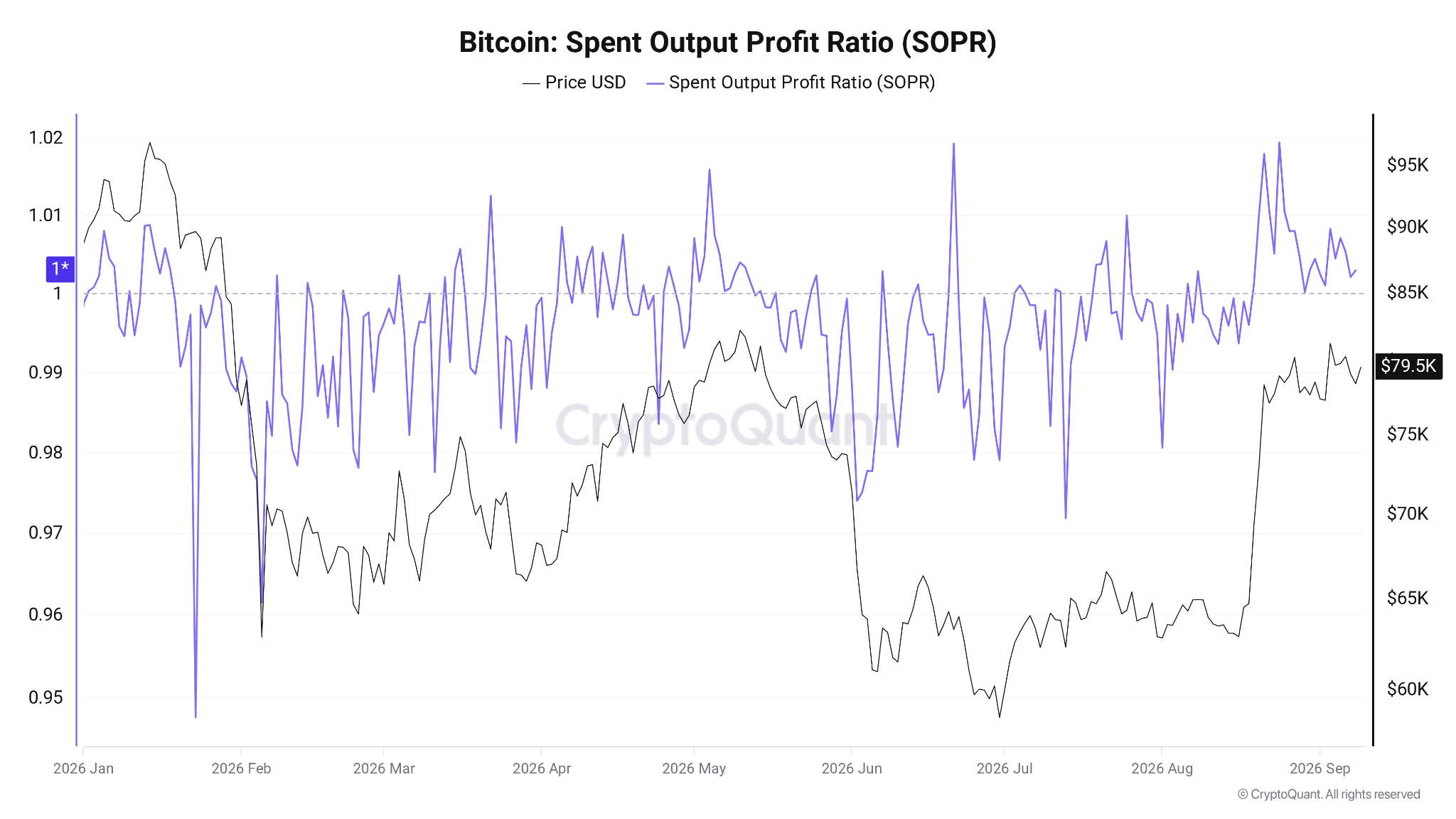
Bitcoin (BTC) is breaking with typical bear-market behavior as a classic onchain metric puts in its longest bullish streak of 2026.
Key points:
- Bitcoin’s SOPR metric has stayed above its breakeven point of 1 for three full weeks, its longest stint in 2026.
- Analysis suggests that UTXO profitability is reflecting a return to bull-market conditions.
- David Puell says SOPR must stay bullish for longer, seeing more BTC price downside to come.
SOPR data repeats early bull-market activity
Data from crypto analytics platform CryptoQuant shows that the spent output profit ratio (SOPR) has now been above its breakeven level of 1 since Aug. 19. SOPR measures the extent to which coins moving onchain do so at a higher or lower price compared to the previous transaction.
The metric, which generally moves in a tight range around 1, currently measures 1.002. Values above 1 indicate that coins are mostly being moved in profit — a sign of overall bullish market momentum. This signal has now endured for three weeks, marking the longest stretch of bullish SOPR of 2026 so far.
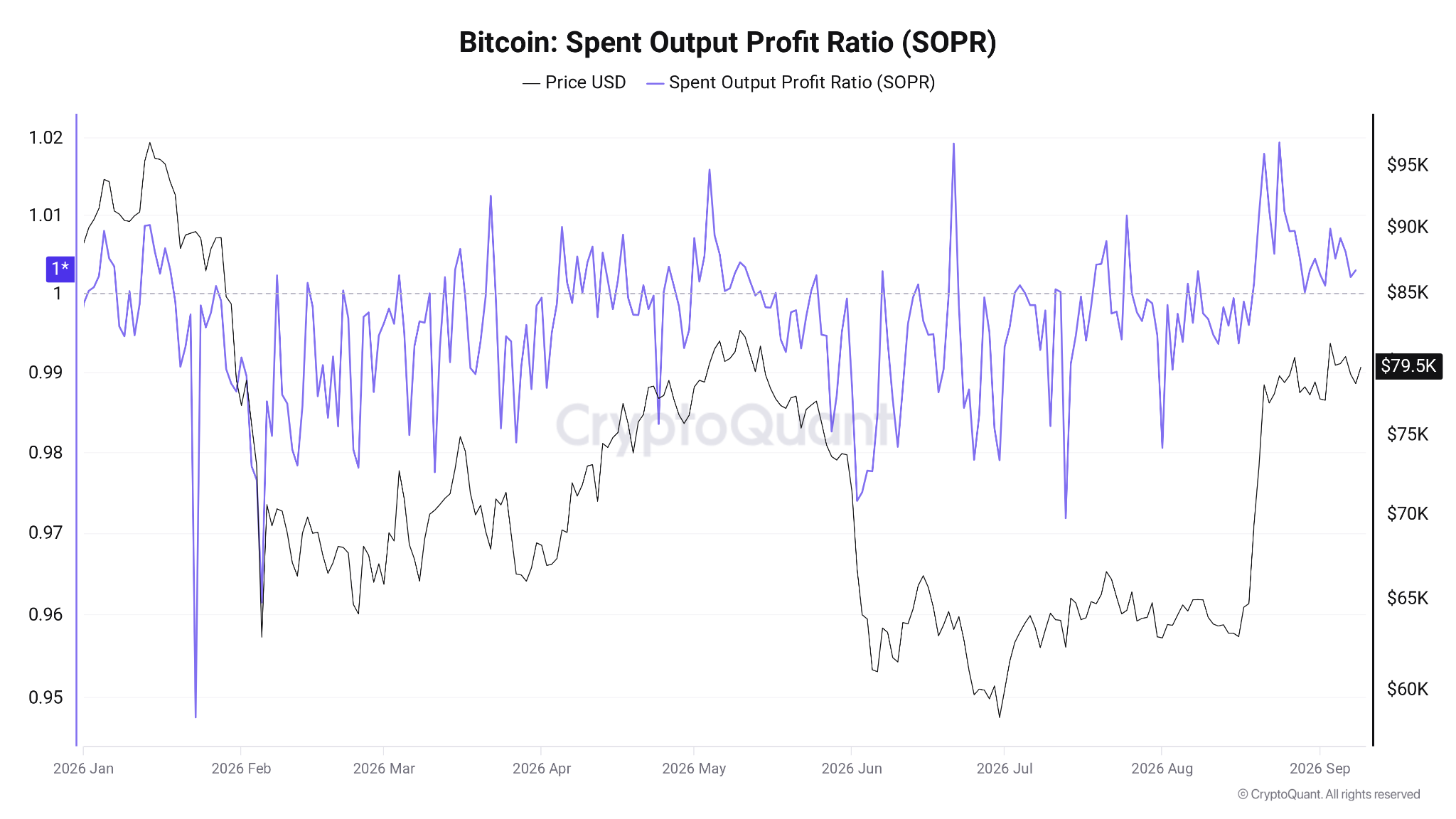
Bitcoin SOPR chart. Source: CryptoQuant
SOPR can be broken down by wallet cohort to differentiate profitability between newer and older investors. Commenting on SOPR readings for short-term holders (STHs), wallets holding a UTXO without selling for up to six months, onchain analytics suite Checkonchain added to hopes that Bitcoin is staging a long-term bullish recovery.
“In bear markets, rallies back into profit tend to get sold. In bull markets, short sharp moves below break-even tend to become buy-the-dip setups. The current structure is starting to look more like those early bull-market recoveries,” it told X followers at the weekend.
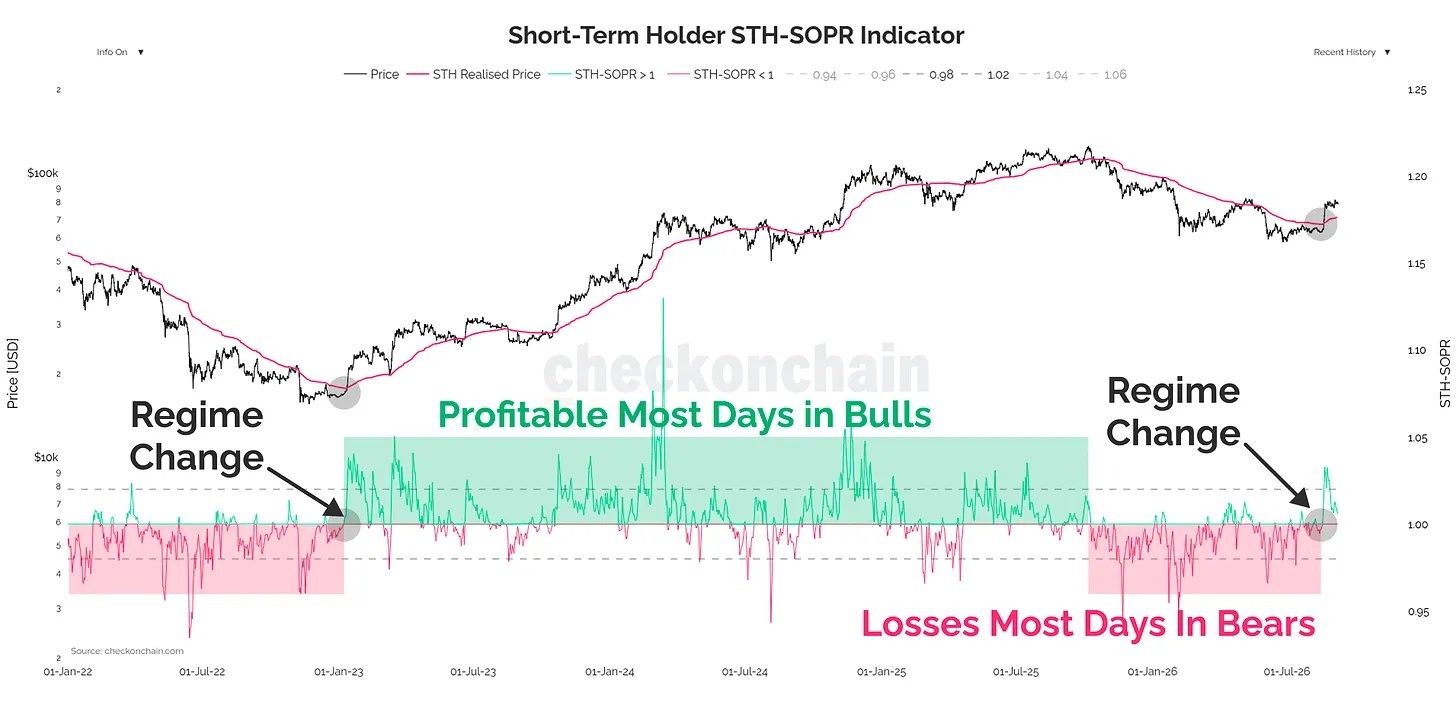
Bitcoin STH-SOPR data. Source: Checkonchain on X.com
Puell retains Bitcoin price “downside risk” despite SOPR recovery
Despite BTC/USD holding a local range around $80,000 while the SOPR profitability streak continues, the pair could still hit new macro lows this cycle, one of the industry’s best-known analysts warns.
Related: New Bitcoin whales spark sell-side risk as unrealized gains hit $9B
In an interview with CryptoQuant on Sept. 4, ARK Invest portfolio manager David Puell, creator of the Puell multiple BTC price indicator, said that more evidence was needed to assume that the next bear-market floor is already in.
Asked about how Bitcoin’s 25% August upside could play out going into Q4, Puell suggested that further upside was the less likely outcome.
“In our view, as of now, we leave it as a downside risk,” he said.
Puell singled out SOPR signals as a key prerequisite for changing his long-term bias, stating that the metric needs to remain above 1 for an extended period, with investors “realizing profits consistently without price going back to a new low.”
Bitcoin must also start putting in series of higher highs and higher lows — a pattern that Cointelegraph reported is still absent on weekly time frames.
In late August, CryptoQuant CEO Ki Young Ju described the bear market as already “over” on the back of the latest readings from its proprietary Bull/Bear Market Cycle Indicator.
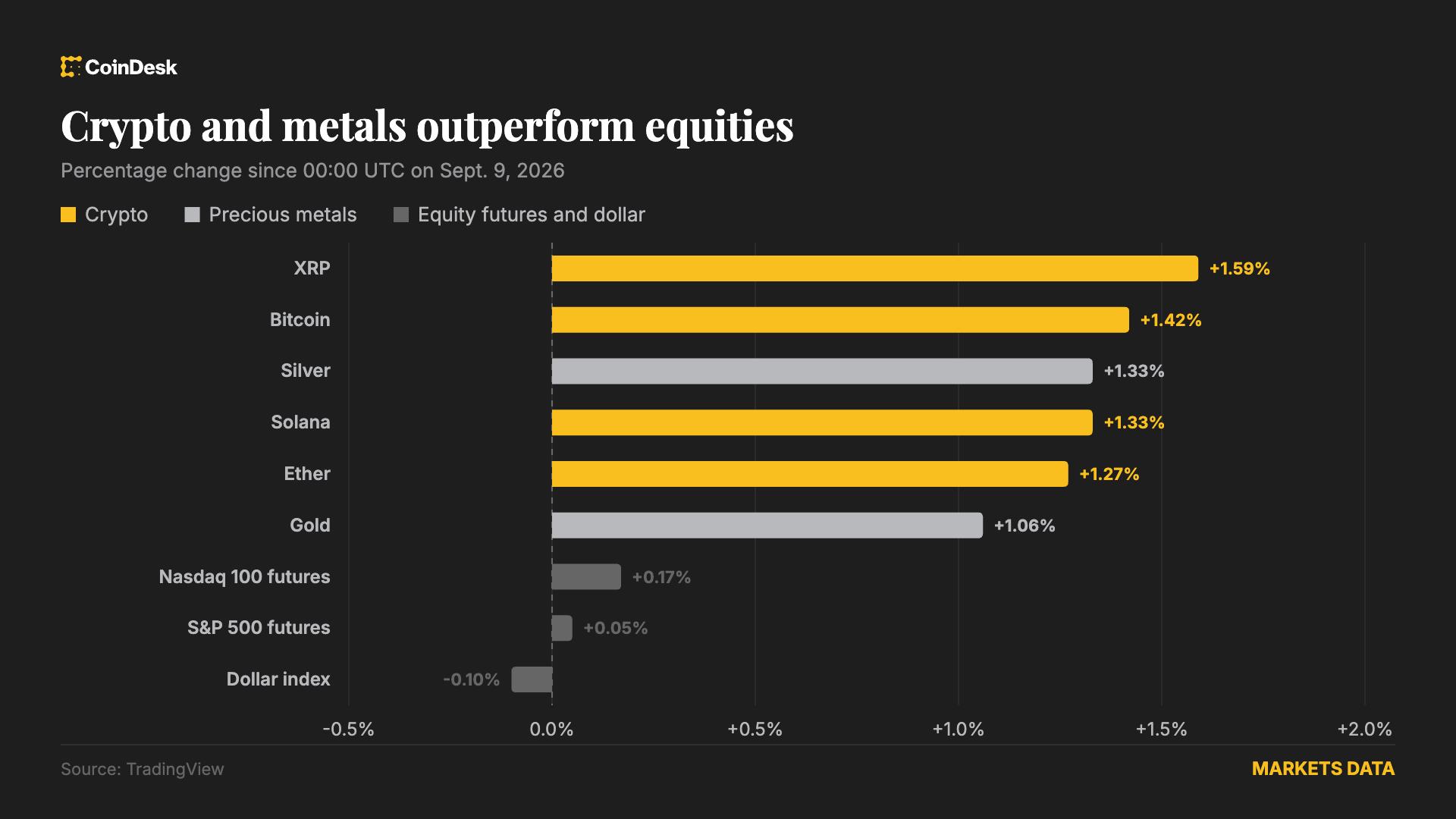
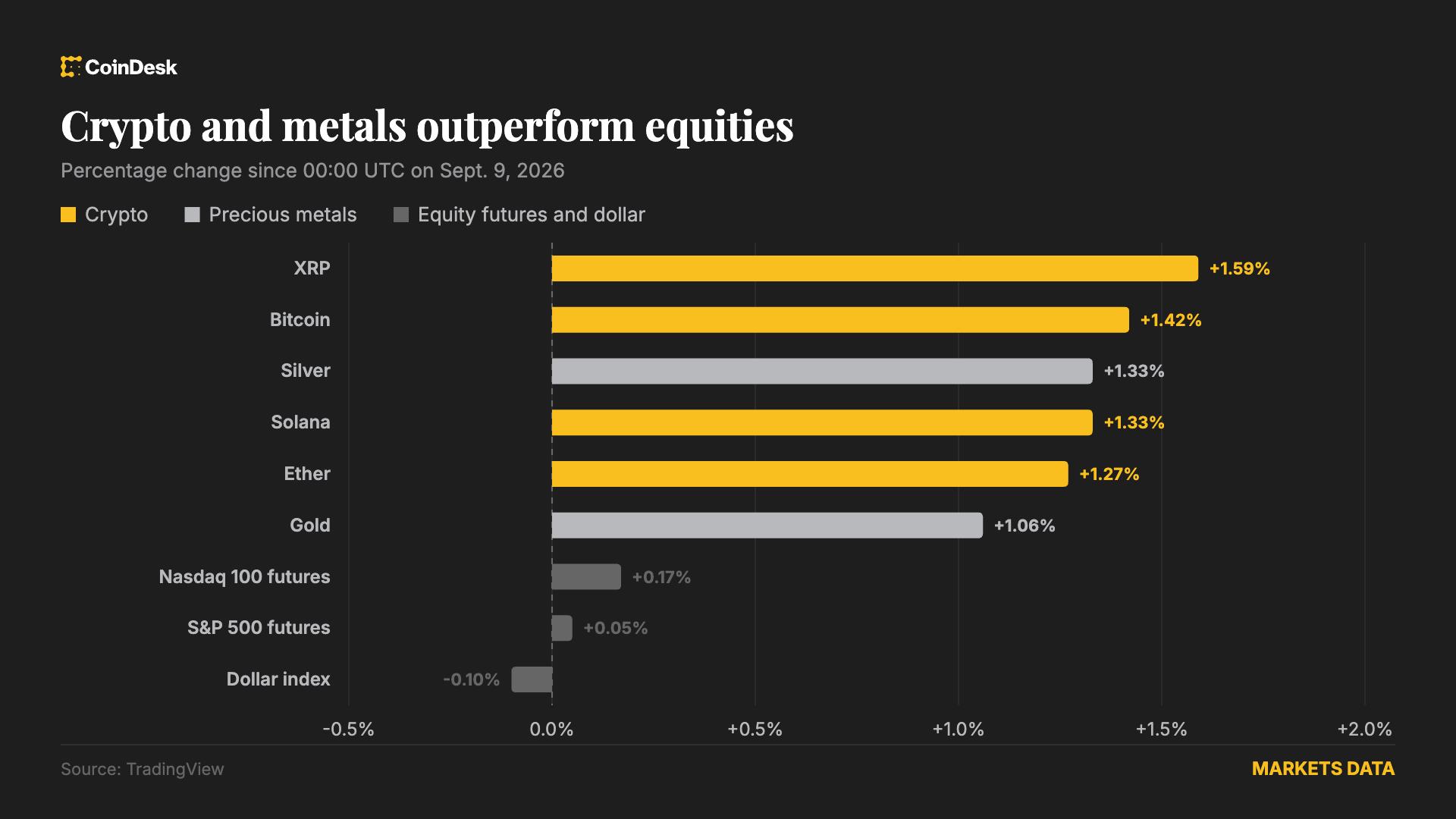
Bitcoin advanced to as high as $79,700 while Brent crude topped $100 and European shares fell, leaving crypto tracking gold rather than equities.

The crypto industry has launched a renewed push in support of the Clarity Act ahead of a key procedural vote in the Senate on September 15. However, Republican lawmakers are worried the bill could fail if lawmakers disagree over ethical concerns around President Trump’s crypto interests.
The Clarity Act will help establish clear rules and divide oversight between the Securities and Exchange Commission (SEC) and the Commodity Futures Trading Commission (CFTC).
Crypto Industry Launches Clarity Act Push
The United States Senate will decide whether to invoke cloture on a motion to proceed to the Clarity Act on September 15. The motion requires 60 votes to pass. The act will establish clear federal rules for crypto and clearly define oversight of the sector between the SEC and CFTC. However, some Republican lawmakers worry the bill may fall short of the required votes.
With support wavering, the crypto industry has launched a campaign to drum up support for the bill. The campaign emphasizes consumer protection and endorsements from outside the company, and criticizes the banking industry, which has vehemently opposed some sections of the Clarity Act. The campaign pushes back against the banking lobby, accusing it of blocking competition to secure profits.
The banking industry has pushed back against the bill, particularly sections governing stablecoin rewards. Banks argue stablecoin rewards could pull deposits away from the traditional banking system, potentially compromising the entire system. The latest push also attempts to broaden the bill’s appeal beyond crypto and highlights support from several law enforcement groups.
Ethics Provisions Could Become Bill’s Undoing
While the industry attempts to drum up support, a key political issue could become the bill’s undoing. Republican senators are treading a fine line as they grapple with ethical concerns around a sitting president and his family profiting from crypto. Lawmakers are deeply divided over ethics restrictions in the bill, with Republican senators Mike Rounds and Thom Tillis concerned the bill may not pass as Democrats push for stronger restrictions.
A Semafor article claims Democratic Senators believe very little progress has been made regarding demand for stronger ethics provisions that adequately cover the president and his family. Senator Rounds called the outlook “bleak,” while Tillis believes the legislation will fail to pass unless the White House compromises on some provisions. However, President Trump appears in no mood to negotiate, with a White House spokesperson urging Congress to pass the legislation.
Will The Clarity Act Pass Before Midterms
Republican senators are scrambling to secure the votes needed to pass the legislation before the end of the ongoing session. Republicans have already cut short the remaining runway for the Clarity Act. This means even if the act passes the Senate, final actions could be pushed beyond the November midterms. Additionally, Senate changes will need House approval before the legislation reaches the White House. Senator Cynthia Lummis, one of the administration’s biggest crypto advocates, urged Congress to pass the act, warning China could gain the upper hand if the legislation fails.
Lummis also highlighted several provisions included in the bill to protect consumers when crypto companies fail. Intermediaries are required to segregate customer assets, and some holdings will be treated as customer property in cases of bankruptcy. However, these protections will depend on the contractual agreement between customers and crypto platforms, and how the assets are held.
Lummis also warned that failure to pass the legislation could be a substantial setback, costing years of investments, jobs, and tax revenue.
Disclaimer: This article is provided for informational purposes only. It is not offered or intended to be used as legal, tax, investment, financial, or other advice.


Exporters can use overseas earnings to fund imports directly, bypassing the official foreign-exchange system, the FT reported.

Jersey Mike’s Subs (JMKE) will release its first earnings report since it went public six weeks ago, and after analysts have been raving about the stock. The company will announce second-quarter results Wednesday before the stock market opens. Analysts’ consensus earnings estimate is 22 cents a share on sales of $208.7 million, a number that excludes systemwide sales. Comp sales…
Copyright ©2026 Investor’s Business Daily, LLC. All rights reserved. 87990cbe856818d5eddac44c7b1cdeb8

U.S. Bank takes next step towards launching its stablecoin with cross-border payment test

SEPTEMBER STYLING: NYC

Champions League: Madrid and Mbappé defeat Inter despite defensive lapses – Sports

Memory prices are slowing because buyers ran out of money

Phones confiscated, players sent home: Pakistan’s England tour turmoil revives memories of Mohammad Amir, Salman Butt and Mohammad Asif’s 2010 Lord’s spot-fixing scandal | Cricket News

England up in reading, maths and science rankings as Scotland and Wales dip


-
Tech23 hours ago
Memory prices are slowing because buyers ran out of money
-
Sports1 day ago
Phones confiscated, players sent home: Pakistan’s England tour turmoil revives memories of Mohammad Amir, Salman Butt and Mohammad Asif’s 2010 Lord’s spot-fixing scandal | Cricket News
-
 NewsBeat22 hours ago
England up in reading, maths and science rankings as Scotland and Wales dip
-

 Business1 day ago
Egyptian TV Presenter Sarah Khalifa, 11 Others Sentenced To Death In Major Drug Trafficking Case In Cairo
-

 Crypto World1 day ago
Visa expands stablecoin card network to 160 programs
-
 Tech1 day ago
Strong Password Policy and Password Manager Guide
-

 Crypto World11 hours ago
Ethereum price stalls below $2,500 as ADX drops to 11
-
 Crypto World11 hours ago
Bitcoin price risks $76K drop as $78K support weakens
-
 Crypto World21 hours ago
Brent Crude Oil Moves Above $100 for the First Time in 3 Months
-
 NewsBeat21 hours ago
Tehran’s assertive rhetoric signals a new and dangerous phase in conflict
-

 Tech20 hours ago
Google’s revived nuclear power plant gets $1.9B loan from US government
-

 Crypto World19 hours ago
Robinhood Stock: How To Take Advantage With Reduced Risk
-

 Sports17 hours ago
Ballon d’Or 2026 Nominees: Lionel Messi In, Cristiano Ronaldo Out; Erling Haaland Included In Top 30
-
 Business14 hours ago
Oil Higher on Hormuz Escalation, Weighing on Sentiment
-
 Crypto World19 hours ago
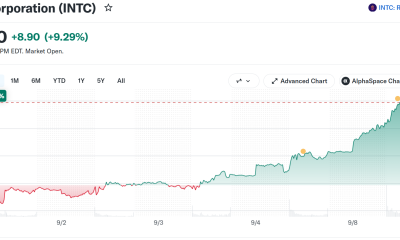
Intel Stock Jumps 9% on Chip Price Hike Report, US Stake Gains $36 Billion
-

 Politics1 day ago
Critics Rip Trump After He Revives His Most Dubious 9/11 Claim
-

 Politics20 hours ago
The Ultimate September Reset Guide: How To Refresh Your Mind And Life This Autumn
-

 Fashion19 hours ago
How to Safeguard Your Small Business Against Emerging Cyber Threats
-

 Tech15 hours ago
Meta debuts its Muse AI agent. Will consumers trust it?
-

 Business1 day ago
Claim Your Share Of $50 Million Disney Streaming Price Settlement By Sept. 8 Tonight
You must be logged in to post a comment Login