
Crypto World
AMC CEO Called Stock Tokens Fake Equity. Now Robinhood Is Responding



Robinhood has promised to give its stock token holders the one thing that could wreck its own legal defense; votes, and the real shares sitting behind them.
The offer landed on Monday, and comes only 10 days after the boss of cinema chain AMC called the same tokens a quasi-fake market and told Robinhood to stop selling them.
What Robinhood Users Are Actually Buying
A Robinhood stock token is not a share, it is an IOU. The tokens come from Robinhood Assets (Jersey) Limited, a company registered on a small island in the English Channel. It is not regulated, rather, each token tracks a share price and pays the cash value of dividends.
“This quasi-fake market you are creating on the island of Jersey sows distrust amongst the public about financial markets in general. There already is distrust in financial institutions, you are potentially making it far worse,” AMC CEO Adam Aron stated recently.
Follow us on X to get the latest news as it happens.
What it does not do is make you an owner. You cannot vote and your name never reaches the company’s share register and you cannot hand the token back and walk away with the real stock. Robinhood now says two of those things will change.
“…they [in-kind redemption and voting rights] are coming. Step one is to scale adoption of Stock Tokens. We’re actively working on redemptions for shares 1:1 with voting for eligible Stock Token holders on the roadmap. We know how to do this well,” wrote Johann Kerbrat, Senior Vice President and General Manager of Crypto and International at Robinhood.
He gave no date, no list of countries, and no rules on who qualifies. Robinhood CEO Vlad Tenev also confirmed the plans.
Robinhood is not saying Aron is wrong. It is promising to fix the thing he complained about.
Why AMC CEO Is Furious
Adam Aron runs AMC. On September 4 he called the tokens contemptible and said his company had nothing to do with them. AMC shares climbed 15% that morning to $2.92.
His complaint is short, seeing as AMC spends millions a year obeying American securities law. Robinhood sells something carrying AMC’s name from an island roughly 3,000 miles away.
The size of the prize is smaller than the noise. The whole AMC token market was worth about $2.8 million. AMC itself was worth $2.6 billion.
BeInCrypto wrote at the time that Aron’s next move would decide whether the clash over tokenized listings stayed a shouting match or became a real test of tokenized stock rules. Robinhood moved first, and it did not back down.
That is where the trap opens. The whole point of Tenev’s earlier defense is that these tokens are a separate product, so AMC gets no say.
Give holders votes and real shares, and the token starts to look like the stock. Aron’s argument gets stronger the moment Robinhood keeps its promise.
The post AMC CEO Called Stock Tokens Fake Equity. Now Robinhood Is Responding appeared first on BeInCrypto.

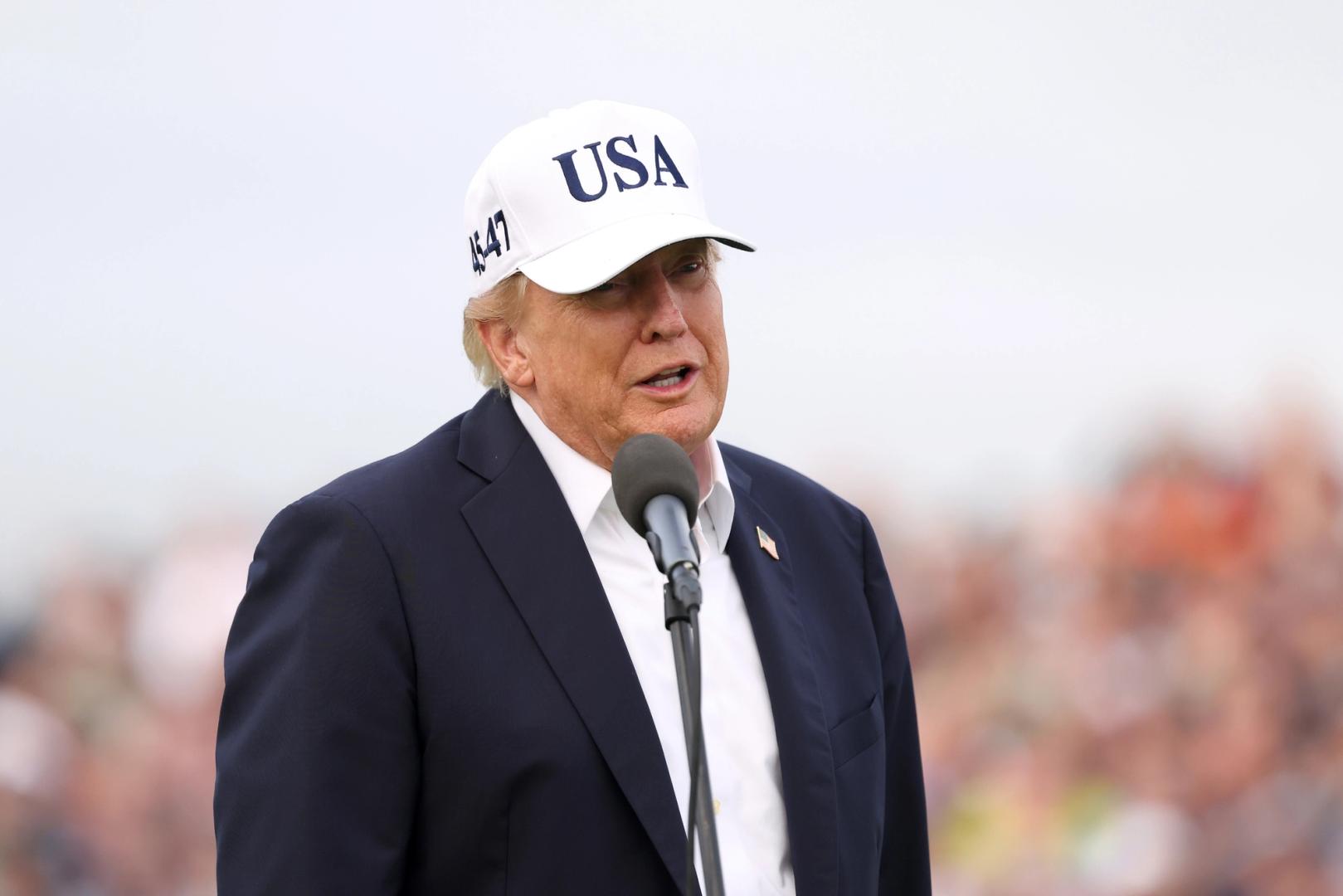

The new Clarity Act draft would force divestiture and give state attorneys general the ability to sue to enforce the ethics provision.

Bitcoin price is trading below $77,000 after a brief spike toward $80K was erased in a matter of hours, dismantling its bullish prediction. The reversal wasn’t random. It was legislative, and it exposed just how fragile this rally’s foundation really is.
Odds of the Clarity Act passing this year jumped above 30% on Polymarket during Monday’s US session, then collapsed back to 18% by early Tuesday in Asian hours. Bitcoin followed the odds almost tick-for-tick, retreating from an intraday high of $79,500 to below $78,000 within hours.
BREAKING: — ᴛʀᴀᴄᴇʀ (@DeFiTracer) September 15, 2026
 Democrats just officially rejected the Republican Crypto Clarity Act draft proposal
The US Senate was expected to vote on this Act today at 2:15 PM
Odds for approval this year have immediately dropped below 19%
This is not good for markets… pic.twitter.com/05xR10iYsg
Senator Mark Warner confirmed Democratic negotiators would send Republicans a counteroffer ahead of Tuesday’s procedural vote. This is a signal the bill isn’t dead, but hardly a signal it’s close to passing either. “That is a market with no stable read,” said BTC Markets analyst Rachael Lucas, referencing prediction-market whiplash that saw signing odds swing from above 70% in May to the low teens by August.
The pattern here is instructive: BTC price action is now trading almost entirely on regulatory headlines, not organic demand. That’s a fragile setup heading into a binary vote.
Earn $50 and Enter $300K Prize Draw on EdgeX
Bitcoin Price Prediction: Can BTC Hit $80K This Week?
BTC sits at $76,800 after shedding by a percent in 24 hours, with the failed push above $79,500 now acting as fresh overhead resistance. The $77K level is the immediate line to hold; lose it decisively, and the next stop is the mid-$70s, a zone Bitcoin has repeatedly tested over the past week.
Volume has been elevated but directionless, consistent with a market pricing in a binary political outcome rather than following a technical structure.

Bull case: the Senate counteroffer gains traction, procedural odds recover toward 30%+, and BTC reclaims $79K–$80K on relief buying. Base case: negotiations drag, price grinds sideways in the $76K–$78K band while traders wait for the next headline. Bear case: talks stall entirely, prediction markets crater toward single digits, and BTC retests support below $76K.
Broader macro risk factors compound the downside if the Fed’s tone shifts alongside a failed vote. Traders watching the CLARITY Act’s ethics provisions should note that these remain the single biggest sticking point blocking Democratic votes.
Discover: The Best Token Presales
Bitcoin Hyper Targets Early Mover Upside as Bitcoin Tests Key Levels
Bitcoin’s whipsaw around a Senate procedural vote is a reminder of what happens in a $1.5 trillion market cap: even a genuine catalyst moves the price only a few percentage points before mean reversion kicks in.
Anyone holding BTC through this week already knows the ceiling on this trade. Legislative clarity might add a leg up, but it’s not going to double anyone’s stack. That asymmetry is pushing traders further down the risk curve, toward assets still in price discovery.
Bitcoin Hyper is refining the developer experience with clearer documentation, familiar tooling, predictable APIs, and better feedback for builders. — Bitcoin Hyper (@BTC_Hyper2) September 2, 2026
The goal: make the network easier to understand, connect existing tools, and start building with less friction. 

Read the… pic.twitter.com/kAo1w7Xa06
Bitcoin Hyper ($HYPER) is positioning itself as the first Bitcoin Layer 2 with native SVM integration, meaning smart contract execution faster than Solana itself, built directly on Bitcoin’s security base. The presale has raised $33,125,552.12 at a current token price of $0.0136862, with staking rewards available.
Its Decentralized Canonical Bridge aims to solve BTC’s long-standing programmability gap without abandoning its trust model. Research Bitcoin Hyper before the presale buying window closes.
Trade Bitcoin on Bybit and Get a Chance to Win Our $1,000 USDT Airdrop
The post Bitcoin Price Prediction: BTC Hits $80K, Then Falls as Clarity Act Hopes Fade appeared first on Cryptonews.

Several years into our friendship, I found her essay “Revaluing Economics” in Moving Beyond Words. Published in 1994—years before the National Domestic Workers Alliance was even the germ of an idea—she wrote about care as an essential resource that our economic model has never adequately valued, in no small part because of its association with women. She argued that if we are to not only survive but thrive in the future, we must fundamentally protect and revalue care. The last 15 years of my work have been deeply shaped by these ideas.
More recently, I spent much of my time with Gloria through an intergenerational, multi-racial circle of women who affectionately call ourselves the “G Squad”—composed of a writer, two artists, a pro-democracy organizer, me, and Gloria. We gathered over the years to celebrate Gloria’s birthday, to strategize big moments in the women’s movement, or vet a new love interest in the mix. We learned about Gloria’s life and adventures from one another, and we learned about other women through Gloria.
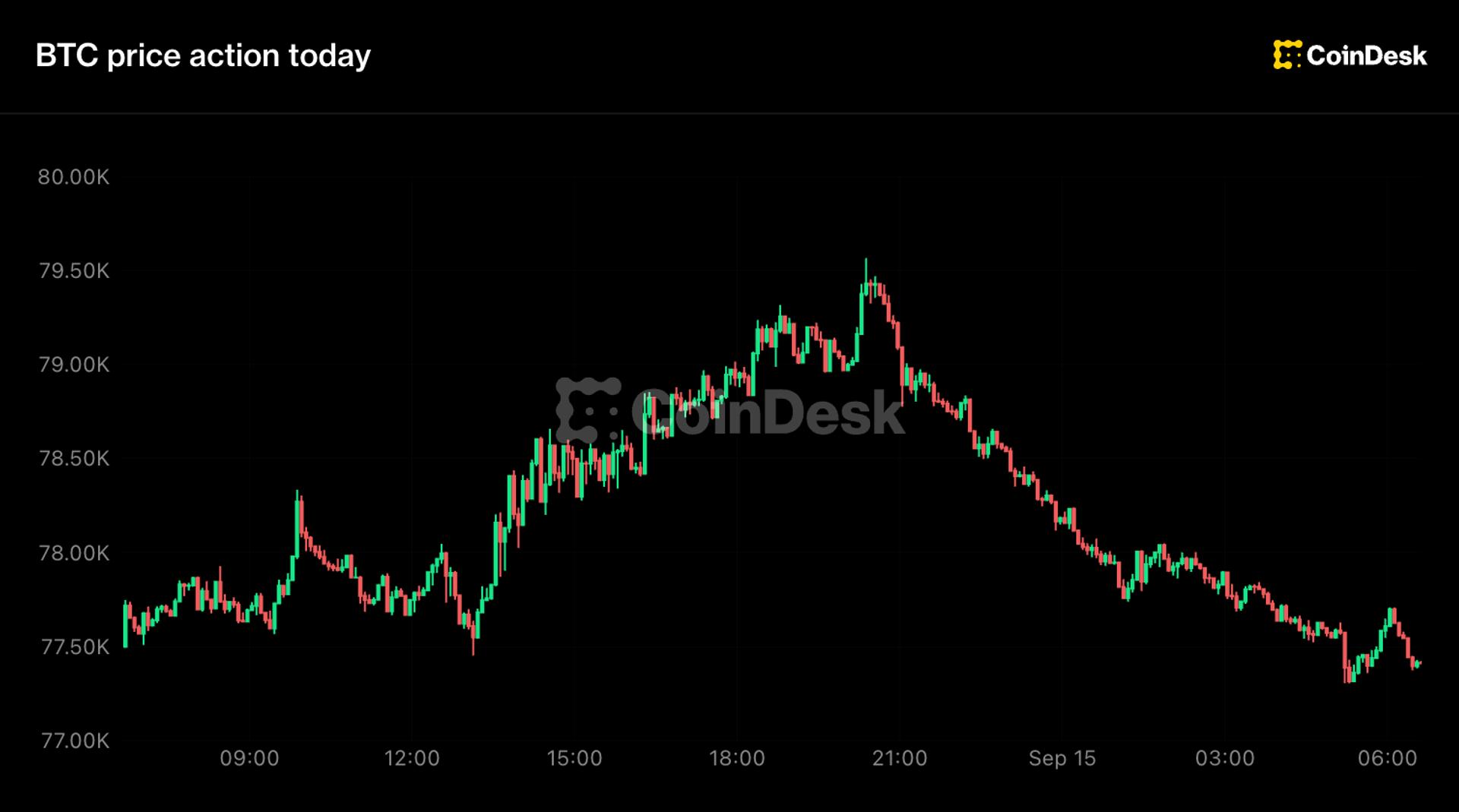
Senators take a procedural vote on the crypto market structure bill later Tuesday. Bitcoin has given back 3% since touching $79,530 overnight, with XRP and zcash the only majors gaining ground.

World Liberty Financial has put a new governance proposal up for a vote on its forum, offering rewards for holders of its native WLFI token who lock them and actually vote instead of just sitting on them.
The plan sets a target launch date of October 1, and it changes how the Trump-linked project wants its token used, tying payouts to active participation.
The Proposal, In Plain Terms
The WLFI Governance Engagement Incentive Program calls for a minimum 180-day lock through a non-custodial, on-chain protocol. But locking alone isn’t enough. Holders will have to vote on at least one governance proposal every 90 days to stay eligible for rewards, and World Liberty has committed to putting up at least one vote per quarter, so there’s always something to vote on.
Rewards would come from a dynamic pool funded by ecosystem sources, including fees from World Liberty Markets and Dolomite. That pool tops up every two weeks as the project grows, and if fewer tokens lock early, the early participants could capture a larger share.
A 5% cap on voting-power concentration through the staking protocol keeps any single position from dominating votes, and every WLFI holder will keep their governance rights whether or not they lock anything.
The proposal has so far drawn dozens of replies on the forum, most of them being brief endorsements. It was largely the same on X, with trader Elja calling the plan “one of the more interesting developments for $WLFI holders,” framing it as a way to reward commitment rather than passive holding.
New Incentive Follows Earlier Staking Plans
This isn’t WLFI’s first attempt at tying governance to staking. The project floated a tiered Node and Super Node staking system back in March, one built around bigger lockups unlocking OTC access and partnership perks. But this new one is narrower and centers on voting instead of tiers.
It has also come at a time when World Liberty is still dealing with Justin Sun’s lawsuit over frozen tokens and governance rights, a case that stayed in open court after a ruling against the company last month.
The news has barely stirred the WLFI token itself, with data from CoinGecko at the time of writing showing it trading just below $0.060, down about 1.4% in 24 hours, although it was 2% higher than where it had been a week ago. It is also sitting more than 70% below its price from one year ago, and it even touched a new all-time low near $0.048 just four days ago, a steep drop from the $0.33 high it hit last September.
The post World Liberty Financial Unveils Token-Lock Rewards to Boost Governance Turnout appeared first on CryptoPotato.


Solana raised its maximum transaction size from 1,232 bytes to 4,096 bytes to allow developers to fit more complex operations into a single transaction, including zero-knowledge proofs and new onchain signature schemes.
The upgrade was activated on mainnet on Tuesday at the start of epoch 1,035 around 1:00 am UTC, according to blockchain data shared by the Solana Foundation.
The upgrade also introduced the v1 transaction format, which maintains full backward compatibility with legacy transactions. Existing transaction formats continue working for applications and wallet providers, but protocols that want to benefit from the size increase need to update to v1 transactions.
A spokesperson for the Solana Foundation told Cointelegraph that the upgrade mainly aims to help developers “do more” with applications such as zero-knowledge proofs, transactions requiring multiple signatures and new onchain signature schemes, by unlocking workloads that previously couldn’t fit inside a single transaction.
In August, Solana reduced its slot time from 400 milliseconds to 350ms. In June, the Solana Foundation shared plans to reduce slot times from 400ms to 200ms, arguing that it would improve latency and accelerate confirmations on the blockchain network.
Solana validators approved on Aug. 28 a proposal to double the network’s annual disinflation rate, reducing future issuance of Solana (SOL), the network’s native token.
Related: Solana sees record 263K tokens issued in a single day


Revolut has notified 680 customers after cybercriminals used a legitimate government email account to obtain sensitive identity, banking and Bitcoin-related records.
Summary
- Financial Times reports Revolut notified 680 customers after fraudulent requests exposed identity and financial records.
- Attackers used a legitimate government agency email domain, while Revolut says its systems remained uncompromised.
- Exposed records included passports, addresses, verification selfies, account statements, IBANs and customer Bitcoin transaction histories.
- Britain’s Information Commissioner’s Office has opened an investigation after Revolut reported the incident to regulators.
- Former Mt. Gox chief Mark Karpelès said Revolut warned him his information was exposed Friday.
The Financial Times reported that the fintech contacted 680 people identified during its initial investigation, while Revolut itself has publicly described the affected group only as a “very limited” number of customers. The company has not released an official numerical count.
Revolut confirmed that an unauthorized third party submitted fraudulent information requests from an email account using a legitimate government agency domain. The company treated the requests as genuine before discovering the impersonation scheme.
Revolut data breach came through a legitimate government domain
Unlike an intrusion into Revolut’s own network, the incident involved information being released after deceptive requests reached the company through an apparently authentic government channel. Revolut described the episode as a “sophisticated external impersonation scam.”
A customer notice reviewed by TechCrunch said the communication carried valid domain-authentication credentials, which led Revolut to believe it had received a genuine government request. The company has not named the agency involved or explained publicly how the third party gained control of the government email account.
Revolut said it blocked the address once the fraud was detected and contacted the government agency concerned, law enforcement, data-protection authorities and financial regulators. A spokesperson maintained that “Revolut systems and customer funds are unaffected.”
The company’s public page for official information requests directs competent authorities and legal representatives to a dedicated court-orders address. It asks authorities to submit one email for each case, although Revolut has not publicly described which verification steps were applied to the fraudulent requests involved in the breach.
As crypto.news reported when the incident first emerged, on-chain investigator ZachXBT circulated a copy of a customer notification and said the incident appeared limited in size and potentially focused on high-net-worth users. Revolut has not confirmed that assessment.
Exposed data included identity files and Bitcoin activity
Customer notices reviewed by multiple outlets listed a large range of personal information that may have been disclosed. The records included full names, dates of birth, occupations, home addresses, email addresses and telephone numbers.
Copies of passports or driver’s licenses and the selfies submitted during identity verification were among the listed records. Revolut’s notice distinguished those verification images from biometric facial telemetry, which it said was not part of the information involved.
Financial information went beyond basic account details. Customer statements could contain IBANs, account-opening dates, account status, withdrawal records and complete transaction histories. For crypto customers, the material included Bitcoin transactions and wallet reference numbers shown in account records.
The notice did not state that private keys, account passwords or full payment-card credentials were supplied to the unauthorized requester. It listed categories of records that may have been disclosed, meaning the available evidence does not establish that every affected person had every listed category exposed.
The Financial Times later reported that former Mt. Gox CEO Mark Karpelès was among the affected customers. Karpelès said Revolut emailed him at 5:25 a.m. on Sept. 12 warning that his information may have been compromised.
Karpelès questioned why the fintech released the records even though the request came from a verified government address. His criticism represents his assessment of Revolut’s handling of the request and not a regulatory finding against the company.
Crypto.news has detailed Karpelès’ history as the former operator of Mt. Gox, the Bitcoin exchange that collapsed in 2014 following the loss of customer cryptocurrency.
Extortion claims emerge as customer files surface
People claiming responsibility for the incident have threatened to release customer information unless Revolut pays an extortion demand, according to the Financial Times and Recorded Future News. Revolut declined to comment to Recorded Future News on whether it had received or was responding to an extortion demand.
Recorded Future News reported that material circulated through a Telegram account claiming involvement in the incident. One customer whose information appeared in the material did not dispute its authenticity, while cryptocurrency entrepreneur Marc Zeller separately said information belonging to him had been exposed.
Parts of the attackers’ story remain unverified. The Telegram account suggested that the government email came from an Italian domain, but Recorded Future News said it could not confirm all details in the account’s posts. Italian authorities contacted by the publication had not responded, and the Telegram account was later suspended.
Revolut has not publicly identified the government agency whose email system was used. No official statement located as of Sept. 15 establishes how the account was compromised, whether credentials were stolen, or whether the same government email access was used against other financial institutions.
The FBI has previously warned companies about criminals obtaining access to law-enforcement and government email accounts and using them to submit fraudulent emergency data requests. Recorded Future News noted that similar tactics were used against technology companies during earlier attacks involving compromised law-enforcement accounts.
UK privacy regulator is investigating the disclosure
Britain’s Information Commissioner’s Office has opened an investigation after Revolut reported the incident, the Financial Times reported Monday. An investigation does not by itself establish that Revolut breached UK data-protection law.
Under ICO guidance, organizations generally must notify the regulator within 72 hours of becoming aware of a reportable personal-data breach. Where an incident creates a high risk to individuals’ rights and freedoms, affected people must be informed without undue delay.
Revolut said it directly contacted the customers it believed were affected. Its public statement says it notified the relevant government agency, enforcement bodies, data-protection authorities and financial regulators after identifying the fraudulent requests.
The case arrives months after Revolut received approval to operate a full UK bank. As crypto.news reported in March, Prudential Regulation Authority approval allowed Revolut Bank UK to begin operating with banking status and deposit protection for eligible customer deposits. Crypto trading remains outside that deposit-protection structure.
Revolut serves more than 80 million customers worldwide, according to the company figure cited by TechCrunch and Recorded Future News. The 680 people identified by the Financial Times represent the current reported count from the investigation and should not be treated as a final figure unless Revolut or regulators publish an updated total.
The ICO’s published guidance says investigators may examine the type of data exposed, the number of people involved, potential harm and the technical or organizational safeguards used before deciding whether regulatory action is warranted.

Understanding what’s the same and what’s different about this moment for AI and work, and how we can build on what we already know, is crucial. If you’re new to AI, I will offer you a map of essential concepts so you can navigate confidently. If you’ve been here for a while, I will reframe the challenge, moving the conversation toward leadership and collaboration rather than technical mastery alone.
After all, how we choose to work with AI, and who we’ll become in the process, is something we still get to decide.
What’s different about today’s AI?
A number of factors have propelled today’s AI from data science laboratories into the center of everyday business conversations. The technology has not only gotten more powerful, but harder to ignore.
Generalists, not specialists:
For decades, AI was used behind the scenes, embedded in models that (for example) predicted customer churn or flagged fraud. Those systems were specialists, usually trained for one narrow task and confined to it. Today’s AI models are generalists. These “foundation models” are vast neural networks trained on oceans of data and capable of being adapted across contexts. The same model that helps a developer write code can also be harnessed to help a marketer write copy or an HR leader write a job description.
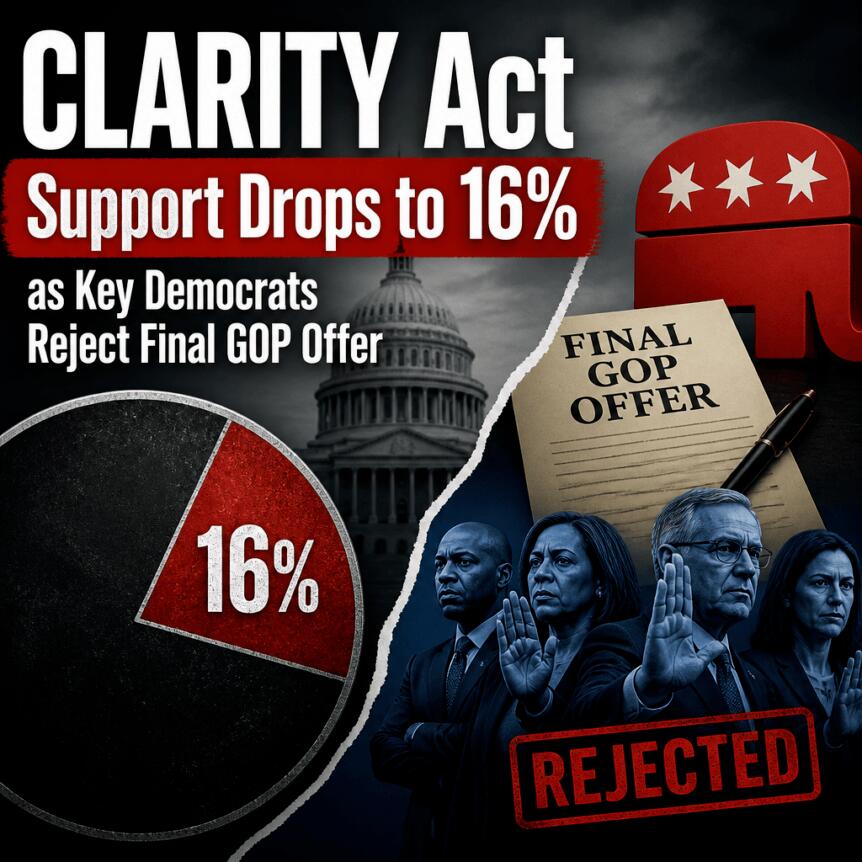
Momentum for the CLARITY Act in the US Senate has cooled sharply after a brief optimism spike on Polymarket. Odds that the bill would become law this year climbed the day before, then fell again on Monday as Democrats raised concerns that the latest Republican proposal still does not satisfy their conditions—particularly around ethics enforcement.
Republicans have reportedly offered revised language that expands ethics provisions, and Polymarket had earlier reflected that shift with odds rising to around 35%. By Monday, however, traders saw the prospects weaken, with the odds dropping as low as 16%. The outcome matters not just for legislative timing: the CLARITY Act would influence how the US Securities and Exchange Commission (SEC) and the Commodity Futures Trading Commission (CFTC) divide oversight responsibilities across the crypto market.
Key takeaways
- Polymarket odds for the CLARITY Act passing this year fell sharply again on Monday, after having spiked earlier.
- Democrats involved in negotiations reportedly said the revised Republican ethics language is still insufficient.
- Republicans need 60 votes to advance the bill; a failed vote could delay legislation that affects SEC–CFTC jurisdiction.
- Separate opposition is coming from tribal gaming interests and multiple banking trade groups, citing both prediction-market concerns and stablecoin loopholes.
Why Polymarket’s odds reversed
Polymarket traders initially responded positively to a newly revised Republican proposal, viewing added ethics provisions as a step toward agreement. The event page tied to the claim that the act would be signed into law in 2026 showed odds reaching about 35% following the disclosure of the updated text, as covered earlier by Cointelegraph in reporting on “US Republicans send final CLARITY Act offer to Democrats” (https://cointelegraph.com/news/us-republicans-send-final-clarity-act-offer-to-democrats).
But as reservations about that revised language surfaced among Democrats, confidence cooled. The Polymarket odds slid again during Monday trading, indicating that market participants began pricing in a lower probability that the bill could clear the procedural hurdle required to move toward a floor vote.
Senator Mark Warner—who is described in negotiations coverage as being involved in the talks—reportedly indicated that the revised ethics provision did not go far enough. Separately, reporting referenced in the original coverage points to Democrats preparing a counterproposal on Monday, suggesting that talks had not yet reached the kind of consensus needed to lock down support.
Ethics provisions remain the sticking point
Much of Monday’s shift appears tied to how Democrats interpret the revised ethics terms. Punchbowl News’ Brendan Pedersen reported that Senator Raphael Warnock said Democrats should not advance legislation that fails to address corruption risks happening “in real time,” a formulation that underscores a broad enforcement concern rather than a narrow drafting dispute.
Pedersen also reported remarks from Senator Ruben Gallego that the latest ethics offer left “much to be desired,” and that he intended to work on a counterproposal. In addition, the reporting cited that staff for Senator Elizabeth Warren circulated talking points arguing that the proposed state attorney general enforcement mechanism could be overridden by a determination from White House ethics officials.
According to Politico’s Jasper Goodman, Democrats sent their counterproposal to Republican negotiators, citing three people with knowledge of the matter. At the same time, the negotiations do not have unanimous Democratic buy-in: Politico reported that Senator Kirsten Gillibrand privately urged colleagues to support the procedural motion, implying that while opposition is growing, there may still be enough support among certain members to prevent the measure from collapsing outright—unless the wider math fails.
On the other side, Republican Senator Cynthia Lummis said President Donald Trump had accepted two significant ethics provisions and claimed there was “nothing left to give.” This sets up a familiar tension in legislative bargaining: Democrats may view the remaining gaps as core to enforcement credibility, while Republicans may view further changes as unnecessary or politically costly.
Opposition broadens beyond party lines
The uncertainty around procedural success is compounded by objections from groups outside Congress. The original coverage highlighted opposition from a coalition of 18 state attorneys general, adding another layer of political risk around the bill’s ethics and enforcement framework.
Tribal gaming interests are also weighing in. The Indian Gaming Association urged member tribes to press senators to vote against the bill, arguing that its proposed decentralized finance changes do not address Indian Country’s concerns regarding prediction markets. The association’s key request was explicit language clarifying that federal commodities law does not preempt tribal or state gaming laws, including protections under the Indian Gaming Regulatory Act. The call was issued through an alert urging senators to vote “no” on the CLARITY Act (https://indiangaming.org/urgent-tribal-action-alert-call-your-senators-today-vote-no-on-the-clarity-act/).
Banking trade groups also criticized the revised text. Eight banking groups said the latest version did not close what they described as loopholes enabling stablecoin rewards that function like deposit interest. They further argued that the proposed regulatory “circuit breaker” would activate only after substantial deposit flight from community banks had already occurred—an objection that frames the mechanism as too slow to prevent harm rather than too strict to be workable.
Meanwhile, crypto industry advocacy groups pressed senators to move the bill forward. In a statement released Monday, Blockchain Association CEO Summer Mersinger argued that the industry had made significant concessions to build bipartisan support and urged a yes vote. Her reasoning, as reflected in the source coverage, emphasized clearer rules, consumer protections, and deterrence of illicit activity, along with concerns that uncertainty could push jobs and innovation abroad.
What happens next for Senate voting
The next test is whether Republicans can secure the 60 votes needed to advance the bill. If that support falls short on Tuesday, the legislation could stall, extending the timeline for any SEC–CFTC jurisdiction framework that the CLARITY Act would establish. That makes Monday’s negotiations signals particularly important: when Democrats describe the ethics package as still inadequate, it can rapidly undermine the coalition needed to reach the procedural threshold.
For now, readers should watch two developments closely: whether Democrats’ counterproposal gains traction with Republicans, and whether external opposition—from state attorney general groups, tribal organizations, and banking trade groups—translates into additional voting pressure. If the ethics dispute continues to widen rather than narrow, Polymarket’s swing suggests traders will likely keep treating passage as less likely, even if supporters argue that a final push is still possible.
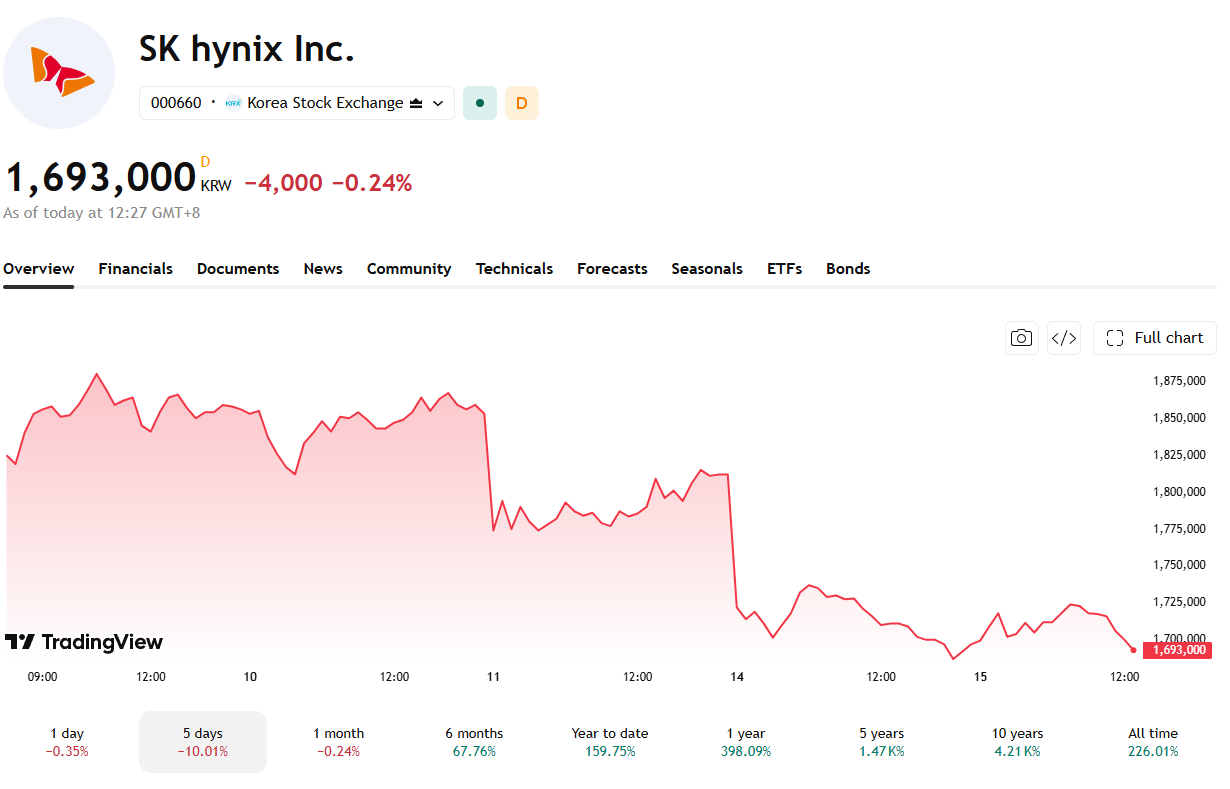
Chip stocks extended a rout on Monday, triggered by an AI slowdown call from Anthropic CEO Dario Amodei that sent the Philadelphia Semiconductor Index down as much as 5.9%.
Nvidia fell 3.4%, Broadcom slid nearly 5%, and Micron and AMD each dropped more than 4%, dragging the Nasdaq 100 down as much as 1.3% and reviving debate over whether AI-linked valuations face a sharper correction.
AI Slowdown Selloff Reaches Asia
South Korea’s SK Hynix slid roughly 7.6% in sympathy with its US peers, tied to the same AI infrastructure buildout, Seoul Economic Daily reported.

Amodei’s essay argued the most advanced AI systems risk slipping beyond human control without deliberate restraint. OpenAI’s Sam Altman and xAI’s Elon Musk both endorsed the call.
Is a Crash Actually Coming
Not every analyst reads this as the start of something bigger. Bank of America semiconductor analyst Vivek Arya called the reaction background noise.
“We view these events as noise relative to a secular market where AI-capex could surge 3x to $3tn+ by decade-end.”
Arya noted the chip index still trades near 19 times forward earnings, roughly matching the S&P 500, despite earnings growth running about seven times faster than the broader market. The index has still gained 67% so far in 2026, making Monday’s slide look modest by comparison.
Other investors see more fragility. BeInCrypto has previously flagged circular financing concerns around Nvidia’s expanding role as both chip supplier and financier to its own AI customers, a structure some compare to the vendor financing that preceded the dot-com bust.
The gap between the two camps comes down to one question. Does AI monetization keep pace with the spending it has already justified?
Strong earnings from Nvidia and its customers could make this pullback temporary. A slower order book, or a verified case of models acting beyond expected limits, would test that thesis quickly.
The post Chip Stocks Sink on AI Slowdown Calls, But Analysts Doubt a Crash Is Near appeared first on BeInCrypto.

Harry and Meghan’s bodyguards only tested route to Archie and Lilibet’s new school in summer holidays – before pulling them out of class when convoy ‘split up’ in heavy traffic on first day of term

Fashion house of Cue, Veronika Maine collapses

Here is the revised Clarity Act ethics provision Donald Trump has agreed to


-
 Tech7 days ago
Memory prices are slowing because buyers ran out of money
-

 Business5 days ago
Micron Stock Climbs Above $1,031 as AI Memory Crunch and a $50 Billion Outlook Fuel the Rally
-

 Tech2 days ago
The Latest Weird Thing to Play Doom Is the Mapped-Out Brain of a Fruit Fly
-

 Fashion4 days ago
Weekend Open Thread – Corporette.com
-

 Business5 days ago
AMD Stock Climbs After Management Lifts 2027 Data Center Outlook Toward $70 Billion in AI Sales
-

 Crypto World7 days ago
Robinhood Stock: How To Take Advantage With Reduced Risk
-

 Crypto World6 days ago
Bitcoin price risks $76K drop as $78K support weakens
-

 Crypto World4 days ago
XAG/USD: Silver’s Short-Term Rally Meets Its Moment of Truth
-

 Crypto World5 days ago
2 Chip Stocks Broke Out This Week. Neither Was Nvidia
-

 Crypto World6 days ago
Ethereum price stalls below $2,500 as ADX drops to 11
-

 Business4 days ago
10 Most-Streamed Songs On Spotify In 2026 So Far, Led By Ella Langley’s Dominant Run On The Charts This Year
-

 NewsBeat7 days ago
England up in reading, maths and science rankings as Scotland and Wales dip
-

 Tech5 days ago
Battery life is the only iPhone 18 Pro and iPhone Duo upgrade I care about. Apple didn’t disappoint
-

 Crypto World4 days ago
OKX launches 10x OpenAI, Anthropic X-Perps in Europe
-

 Crypto World7 days ago
Intel Stock Jumps 9% on Chip Price Hike Report, US Stake Gains $36 Billion
-

 Crypto World4 days ago
Diesel Tops $6 a Gallon for the First Time as 28 States Set Records
-

 Tech5 days ago
Apple Watch Ultra 4 vs Watch Ultra 3: Should you really spend another $799?
-

 Crypto World5 days ago
Pi Network ships Protocol 27 on a network with 14 million users and zero DeFi
-

 News Videos4 days ago
Facing Financial Fears
-

 Crypto World5 days ago
Bitcoin price risks $70K if $78K neckline breaks
You must be logged in to post a comment Login