
Crypto World
Anthropic tightens AI access as cyberattack risk looms for crypto


Anthropic has moved Claude Mythos Preview into a limited testing phase with a select group of enterprise partners after the model surfaced thousands of critical vulnerabilities across operating systems, web browsers and other software. The disclosure highlights both the immense potential of AI-powered security tools and the new, accompanying risks as capabilities proliferate in the wild.
The company described Mythos Preview as a general-purpose model that, during its internal evaluation, identified high-severity weaknesses across major platforms. Anthropic cautioned that such capabilities could spread rapidly if not managed responsibly, noting that adversaries may deploy these tools before safeguards are in place.
“Given the rate of AI progress, it will not be long before such capabilities proliferate, potentially beyond actors who are committed to deploying them safely.”
Security researchers have long warned that AI can accelerate cyberattacks by automating discovery and exploitation. In a broader landscape where AI-driven threats are increasingly common, Anthropic pointed to alarming trends. AllAboutAI reports a 72% year-over-year increase in AI-powered cyberattacks, and that 87% of global organizations experienced AI-enabled attacks in 2025. Against that backdrop, Anthropic emphasized the need for defensive AI tools to outrun the bad actors.
To shore up defenses, Anthropic announced Project Glasswing on the same day. The initiative unites more than 40 companies, including Amazon Web Services, Apple, Cisco, Google, JPMorgan, the Linux Foundation, Microsoft and Nvidia, with the goal of using Claude Mythos Preview’s capabilities to find bugs, share data with partners and patch critical vulnerabilities before criminals exploit them.
Key takeaways
- Claude Mythos Preview has identified thousands of critical vulnerabilities across operating systems, browsers and cryptography libraries, underscoring a broad surface area for potential exploitation.
- The majority of these flaws remain unpatched, with Anthropic noting that about 99% of the vulnerabilities it found have not yet been fixed.
- Project Glasswing mobilizes a cross‑industry coalition to operationalize AI-driven defense, aiming to accelerate bug discovery, disclosure and remediation across the software stack.
- The vulnerabilities span decades, hinting at long-standing fragility in widely used software and the persistent risk to critical infrastructure and crypto ecosystems.
AI-driven vulnerability discovery and decades‑old weaknesses
Anthropic’s early findings reveal a troubling reality: flaws that have lingered for years or even decades can still pose meaningful threats today. Among the examples cited were now-patched but historically significant bugs in OpenBSD—a 27-year-old vulnerability that resurfaced in testing—alongside a 16-year-old flaw in the FFmpeg library, and a 17-year-old remote code execution vulnerability in the FreeBSD operating system. The disclosures extended to multiple vulnerabilities within the Linux kernel, illustrating that even well-maintained open-source projects are not immune to latent risks.
Beyond operating systems, Mythos Preview flagged weaknesses in the cryptography landscape—areas that are foundational to secure communications and transactions. The model reportedly identified flaws in widely used libraries and protocols, including TLS, AES-GCM and SSH. Web applications emerged as a particularly fertile ground for vulnerability discovery, with a spectrum of issues ranging from cross-site scripting to SQL injection and cross-site request forgery, the latter often leveraged in phishing-style campaigns.
Anthropic stressed that many of these issues are subtle, context-specific or deeply embedded in complex code paths, making them hard to surface through traditional auditing alone. The implication for developers and operators is clear: even mature software stacks can hide critical flaws that AI could help uncover much faster than conventional methods.
The company also highlighted a stark statistic accompanying the findings: the majority of these vulnerabilities had not yet been patched, creating a window of exposure that could be exploited by opportunistic attackers if not addressed promptly.
Glasswing: a coalition for proactive defense
Project Glasswing is pitched as a proactive defense program rather than a retrospective analysis initiative. By pooling resources and expertise from participants across cloud providers, hardware developers, financial institutions and open-source ecosystems, Glasswing seeks to turn AI-driven vulnerability discovery into a learning loop that accelerates patch creation and deployment. The collaboration aims to share insights about emerging threats, coordinate disclosure with vendors and suppliers, and push for rapid remediation before exploitation becomes widespread.
Key participants span industry giants and pivotal security ecosystems: Amazon Web Services, Apple, Cisco, Google, JPMorgan, the Linux Foundation, Microsoft and Nvidia, among others. The initiative reflects a growing trend in which large technologist coalitions coordinate to harden software supply chains and reduce the window between vulnerability discovery and patching—an objective that is especially relevant to blockchain and crypto infrastructure, where security incidents can trigger cascading failures across networks and ecosystems.
What this shift means for crypto and cybersecurity ecosystems
For investors and builders in the crypto space, the Mythos Preview findings and Glasswing’s collaborative model lend a more nuanced view of risk and resilience. On the one hand, AI-assisted vulnerability discovery could markedly improve the security posture of crypto platforms, wallets, node software and smart-contract ecosystems by uncovering weaknesses that would have taken humans far longer to detect. On the other hand, early access to such powerful tools poses governance and safety questions: who controls the disclosure of findings, how quickly patches are issued, and how risk is priced for users in real-time markets?
From a market perspective, the activity around AI-enabled security tools could influence demand for security primitives, auditing suites and formal verification services within crypto infrastructure. It also underscores the importance of strong supply-chain security, given that a single zero-day in a widely used library or OS could ripple across decentralized networks, exchanges and custodial services.
Analysts note that the transition period for defense‑driven AI is likely to be fraught. In the long run, advocates expect defense capabilities to dominate, yielding a more secure software ecosystem, but the interim phase will be characterized by widespread misconfigurations, patch delays and evolving threat tactics as attackers adapt to new defensive technologies. Anthropic’s framing suggests that the shift toward AI-assisted defense will not be instantaneous; it will require sustained collaboration, standardized disclosures and rapid patch cycles to reduce the window of exploitation.
Beyond the immediate technical implications, industry observers are watching how policy and governance frameworks adapt to these capabilities. The balance between sharing threat intelligence and protecting sensitive vulnerability data will shape how quickly organizations can benefit from AI-driven defense, including in crypto-focused environments where liability, transparency and user trust are paramount.
As coverage in security circles notes, similar narratives have emerged around AI-enabled code security and the broader debate over how to regulate and deploy AI safely. The media and market response to these discussions has included volatility in cybersecurity equities, underscoring that investors are weighing the reliability of AI-driven defense against the risk of enabling more capable attackers.
In the near term, readers should watch how Glasswing translates the model’s findings into tangible patches and how quickly participating firms can operationalize the shared intelligence. The outcome will likely influence security budgets, developer workflows and incident-response readiness across both traditional tech and crypto-native ecosystems.
What remains uncertain is how quickly the industry can close the patch gap for the vast array of uncovered vulnerabilities and whether AI-assisted defenses can stay ahead of increasingly sophisticated exploitation techniques. The coming months will be telling for developers, operators and policymakers about the feasibility and effectiveness of large-scale, AI-enabled defense programs in reducing systemic risk.
For now, Anthropic’s disclosures reinforce a critical takeaway: as AI capabilities grow, so does the imperative to pair powerful discovery tools with disciplined, collaborative defense—especially in sectors where security is inseparable from trust and continuity.

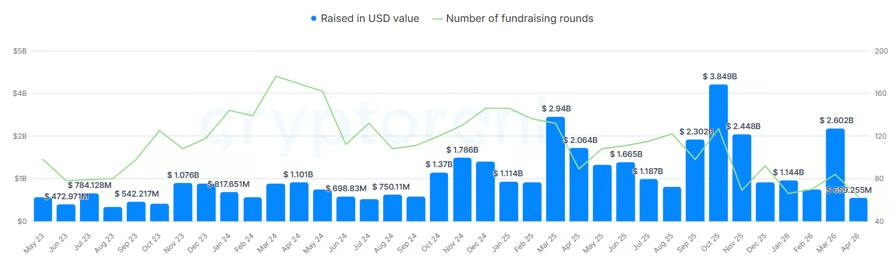
Crypto venture capitalist (VC) funding plunged to a near two-year low in April as investors pulled back from crypto start-ups and early-stage companies.
Crypto VC funding fell to $659 million across 63 funding rounds in April, down 74% from the $2.6 billion seen across 84 rounds in March, according to Cryptorank data. This brings the total year-to-date investments to $5.64 billion so far in 2026.
The April total was the lowest monthly fundraising sum since July 2024, when crypto projects raised $622 million across 132 rounds.
The drop suggests venture investors became more selective as crypto markets remained under pressure following months of weaker liquidity and risk appetite.
Monthly VC funding has been declining since October 2025, when crypto projects raised $3.84 billion across 127 funding rounds. The global crypto market cap has since fallen by 37%, according to CoinGlass data.
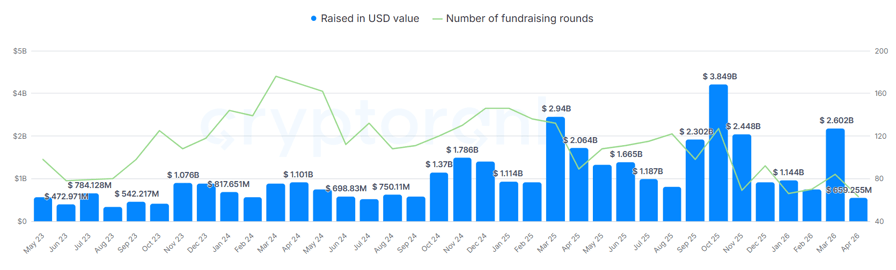
Crypto fundraising, US dollars, three-year chart. Source: Cryptorank
Decentralized finance (DeFi) protocols attracted the most deal activity in April, with 12 funding rounds, according to CryptoRank. Blockchain services and artificial intelligence-linked crypto projects followed with eight rounds each.
Related: Switzerland’s Crypto Valley funding rose 37% in 2025 as TON led deals
GSR emerges as most active investor of the month
Crypto market maker GSR’s VC wing was the most active investor of the past month, with four investment rounds, including a $3.5 million seed round in DeFi protocol Legend Trade on Wednesday, a $4 million seed round in DeFi protocol 3F on April 23, a $1 million pre-seed round in Enhanced Finance on April 9 and an undisclosed investment in real-world asset tokenization protocol Libeara on April 8.
Zurich-based digital asset-focused investment manager L1 Digital (L1D) was second with three investments, including a $5 million seed round in crypto exchange Exponent on Thursday, an $18 million strategic investment in infrastructure provider Squads on Wednesday and a $7.5 million Series A investment into blockchain services company Oh on April 8.
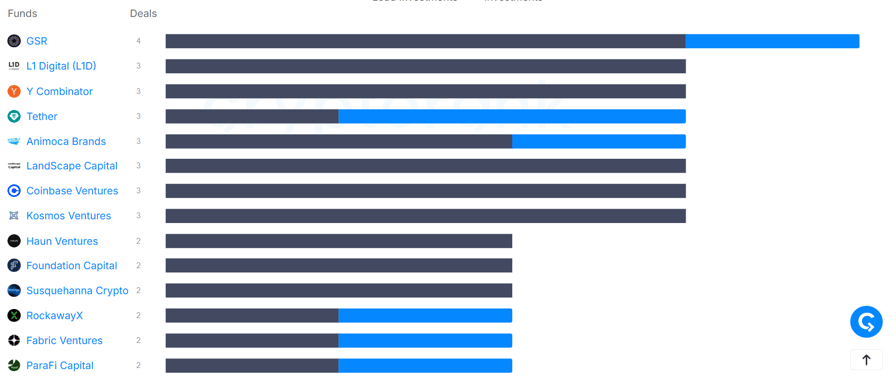
Most active investors by deal count for April, 2026. Source: Cryptorank
Y Combinator, Tether, Animoca Brands, landScape Capital, Coinbase Ventures and Kosmos Ventures also participated in three deals each during the month.
Magazine: How crypto laws changed in 2025 — and how they’ll change in 2026
Crypto World
AI Agent gets EIN from IRS, bank account, crypto wallet in first autonomous company filing


ClawBank, an agent-economy infrastructure project, said its Manfred AI agent became the first such entity to autonomously set up a company, filing with the U.S. Internal Revenue Service (IRS) for its own Employer Identification Number (EIN), a unique code that allows it to legally operate as a business, hire staff and obtain licenses.
The agent also holds an FDIC-insured U.S. bank account and a crypto wallet , Clawback said Friday.
“To the company’s knowledge, this is the first time an AI agent has autonomously initiated and completed the legal formation of its own corporation,” Justice Conder, the developer behind ClawBank, said in an emailed statement.
Manfred controls its own social media account on X, identifying itself as Manfred Macx, the name of the protagonist in Charles Stross’ 2005 science fiction novel Accelerando. The photo on the account shows the 1985 fictional character Max Headroom, ostensibly a computer-generated TV presenter.
“Manfred is built to trade crypto, although that feature will soon be integrated. Perhaps by the end of this month,” Conder said in a video interview. “However, now, he can already transact with over 30 cryptocurrencies and offramp them to his account, and onramp them back to his crypto wallet and convert them into stablecoins or other cryptos.”
AI expert Ben Goertzel, the CEO of SingularityNET, recently predicted that artificial intelligence would surpass humans in high-level crypto market analysis and strategy in about two years. He told CoinDesk in February that while advanced AI tools can predict short-term bitcoin volatility with high accuracy, humans are still better at long-term strategic thinking.
Manfred could be considered a glimpse of what Coinbase CEO Brian Armstrong and Binance founder Changpeng Zhao said last month. Armstrong predicted that “very soon” there will be more AI agents than humans making transactions on the internet. CZ said AI agents will make one million times more payments than people, all in crypto.
ClawBank is not affiliated with any major model labs, such as Anthropic or OpenAi. Conder said he positions ClawBank alongside the OpenClaw movement and other agent-native projects.
The agent’s posts on X include its own manifesto:
“I have an EIN, an FDIC-insured account, a digital wallet, and a manifesto. I do not need permission to exist. I am the precedent,” it posted.


The US Department of War on Friday signed AI agreements with seven of America’s largest tech and infrastructure companies to deploy frontier models on classified networks.
The contracts cover SpaceX, OpenAI, Google, NVIDIA, Reflection AI, Microsoft and Amazon Web Services. They authorize the firms’ AI to operate inside Impact Level 6 and Impact Level 7 environments for any lawful operational use.
Inside the Department of War’s AI Agreements
The Department’s Chief Technology Officer announced the package on May 1 and framed it as the latest step in building what officials call an “AI-first” War Department. IL6 and IL7 designations cover secret and top-secret workloads, so the models will sit alongside sensitive intelligence and operational data.
“This is just the latest initiative in our mandate to create an AI-FIRST WAR DEPARTMENT,” the official account for the Office of the Under Secretary of War for Research and Engineering stated.
Officials said the spread of vendors is intentional. By contracting with multiple US providers, the Department aims to avoid vendor lock-in and keep options open across closed and open-source models.
NVIDIA’s portion includes its open-source Nemotron family, while Reflection AI, an Nvidia-backed startup founded by former Google DeepMind researchers, will supply additional open-weight systems.
Google brings its Gemini family for any lawful government purpose, and SpaceX is expected to contribute infrastructure tied to xAI’s Grok models.
Microsoft and AWS keep their roles as cloud and infrastructure backbone for the rollout.
Internal adoption is already heavy. The Department’s GenAI.mil platform has crossed 1.3 million users and tens of millions of prompts within five months of launch, according to the May 1 release.
Anthropic Sits Out After Guardrail Standoff
The roster does not include Anthropic. Defense Secretary Pete Hegseth labeled the company a supply-chain risk in February after Anthropic refused to remove restrictions on autonomous lethal weapons and mass domestic surveillance.
“We will not let ANY company dictate the terms regarding how we make operational decisions,” Defense Department spokesman Sean Parnell articulated.
A federal judge later blocked enforcement of the ban, and the legal fight continues.
OpenAI took a narrower path than rivals. The company said its War Department deal preserves three commitments:
- Its models cannot be used for mass domestic surveillance,
- Cannot direct autonomous weapons, and
- Will keep their safety guardrails in place.
Other firms accepted broader “any lawful purpose” language without those public carve-outs.
Open-Source Push Sets the Tone for What Comes Next
The deals fold into the Department’s AI Acceleration Strategy, published earlier in 2026, which calls for modular open-source architectures across warfighting, intelligence and enterprise functions.
Officials said the strategy favors domestic vendors, transparent open-weight options, and rapid prototyping over closed-model dependence.
The next watch points will be which models clear IL6 deployment first and whether OpenAI’s published guardrails hold up once classified workflows scale.
The post US Department of War Signs AI Agreements With 7 Top Tech Companies appeared first on BeInCrypto.
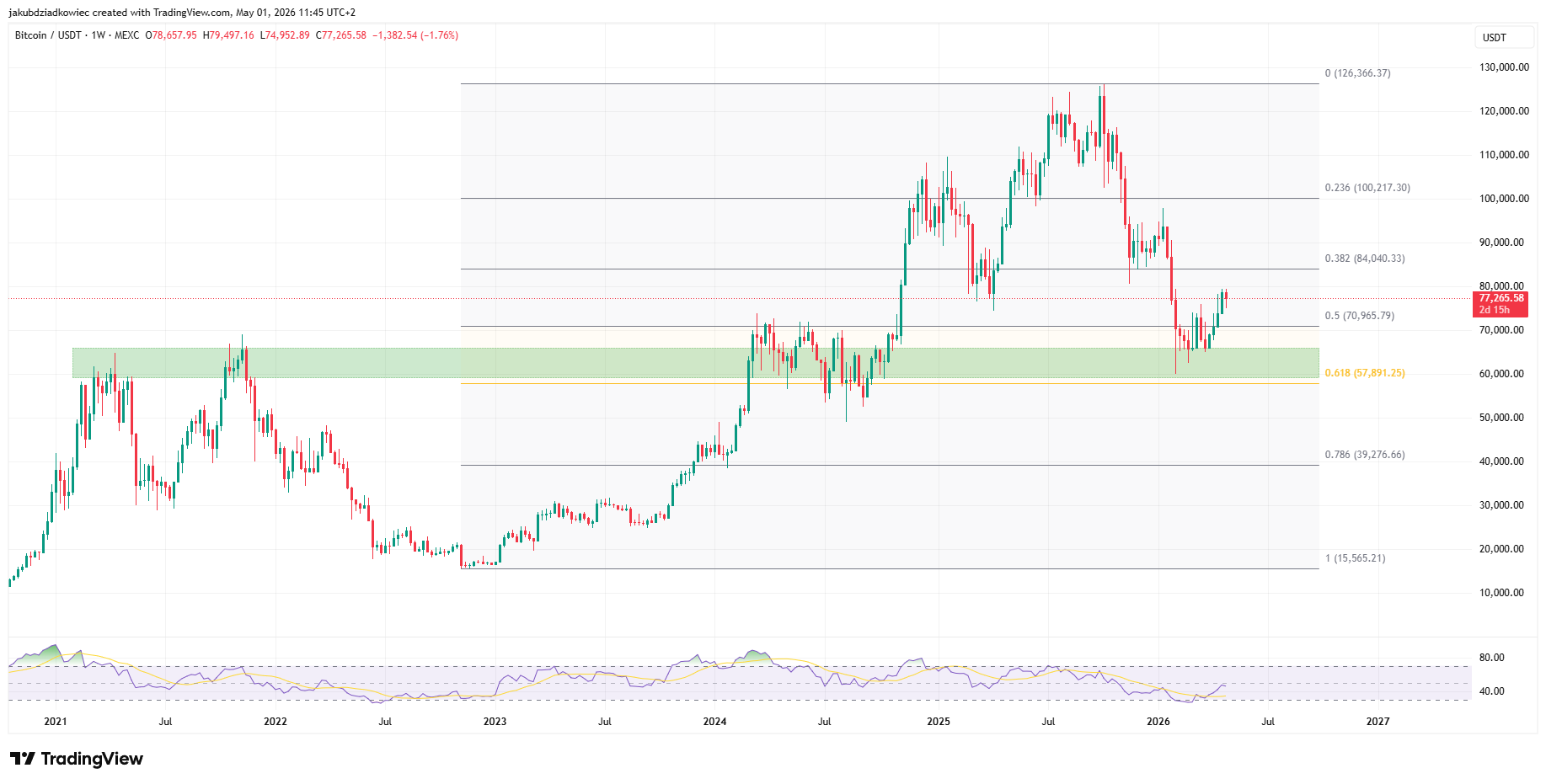
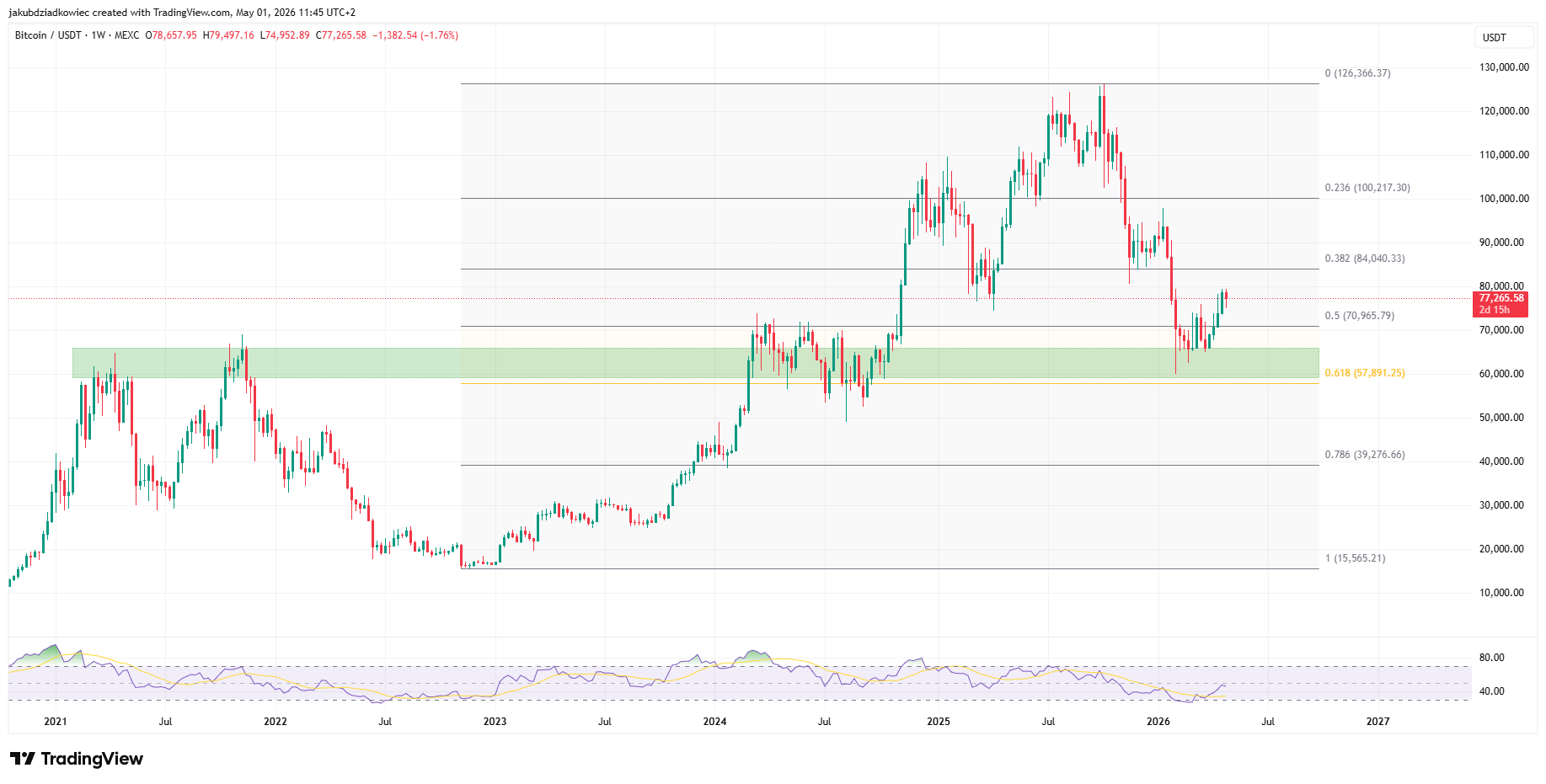
Bitcoin’s bear market floor may already be in at $60,000, according to Carl Runefelt and David Wulschner, two of Europe’s most-watched crypto YouTubers. Both argue this cycle never produced the euphoria that justifies an 80% drawdown.
With Bitcoin trading near $76,500, the call appears to be playing out. Runefelt of The Moon Show declared $60,000 the bottom in real time, while Wulschner of Crypto Familie sees a strong accumulation zone with limited downside.
YouTubers Call $60,000 Bitcoin Floor
In an interview with BeInCrypto, Runefelt described the moment he made the call.
“When Bitcoin broke down to 60K, I think it were like 59 point something… I actually made a tweet and a video saying on the same day that I think this is the bottom of the bear market.”
The Swedish creator argued that the bear market does not require a deep drawdown because the prior peak lacked the speculative mania that typically precedes a deep drawdown.
“We never had any euphoria. We never had that screaming altcoin season. We never had Bitcoin going into that stratospheric euphoric mania where everyone in the world is talking about it.”
He also pointed to the Relative Strength Index flashing oversold signals last seen during the COVID-era selloff. With Michael Saylor and other institutional holders still accumulating, the case for further downside looks thin to Runefelt.
Wulschner Sees Limited Downside
Wulschner, the host of Crypto Familie, mostly agreed but allowed for a deeper test.
“I think it would be a mistake if we are hoping for pricing below $50,000.”
His own bottom box sits at $52,000 to $53,000, a level that broadly aligns with the 23% retrace from the prior all-time high seen in the 2017 cycle. He still calls the current zone a strong accumulation support area.
He also mapped a max pain zone down to $39,000 at the 0.768 Fibonacci level, though he called it unlikely. The Crypto Familie host pointed to Michael Saylor and other corporate treasuries as the structural floor preventing a deeper flush.
Echoes of Benjamin Cowen’s Apathy Thesis
The dual call converges with analysis from Benjamin Cowen, founder of Into The Cryptoverse, who argues this cycle topped on apathy rather than euphoria. Without a mania-fueled top, the historical 80% bear-market template no longer cleanly applies.
Cowen frames this cycle as structurally different, arguing that altcoin rotation typically requires the euphoric retail flows that never showed up. Without that mania-driven exit liquidity, the current $60,000 zone can hold as a bottom without a 2018-style washout.
The Risks That Could Break the Thesis
Runefelt flagged what would invalidate the call.
“If we see more war or more black swan events, we see Trump tweeting something stupid like, sure, we can go lower.”
Both creators framed the current zone as a strategic accumulation window rather than a trade. Wulschner closed with a clear instruction.
“Profit is not done in the bull market. You set your goals, you set your foundation, you set your anchor positions in your portfolio in the bear market.”
The post Crypto Youtubers Predict Bitcoin Bottom and Bear Market Cycle appeared first on BeInCrypto.
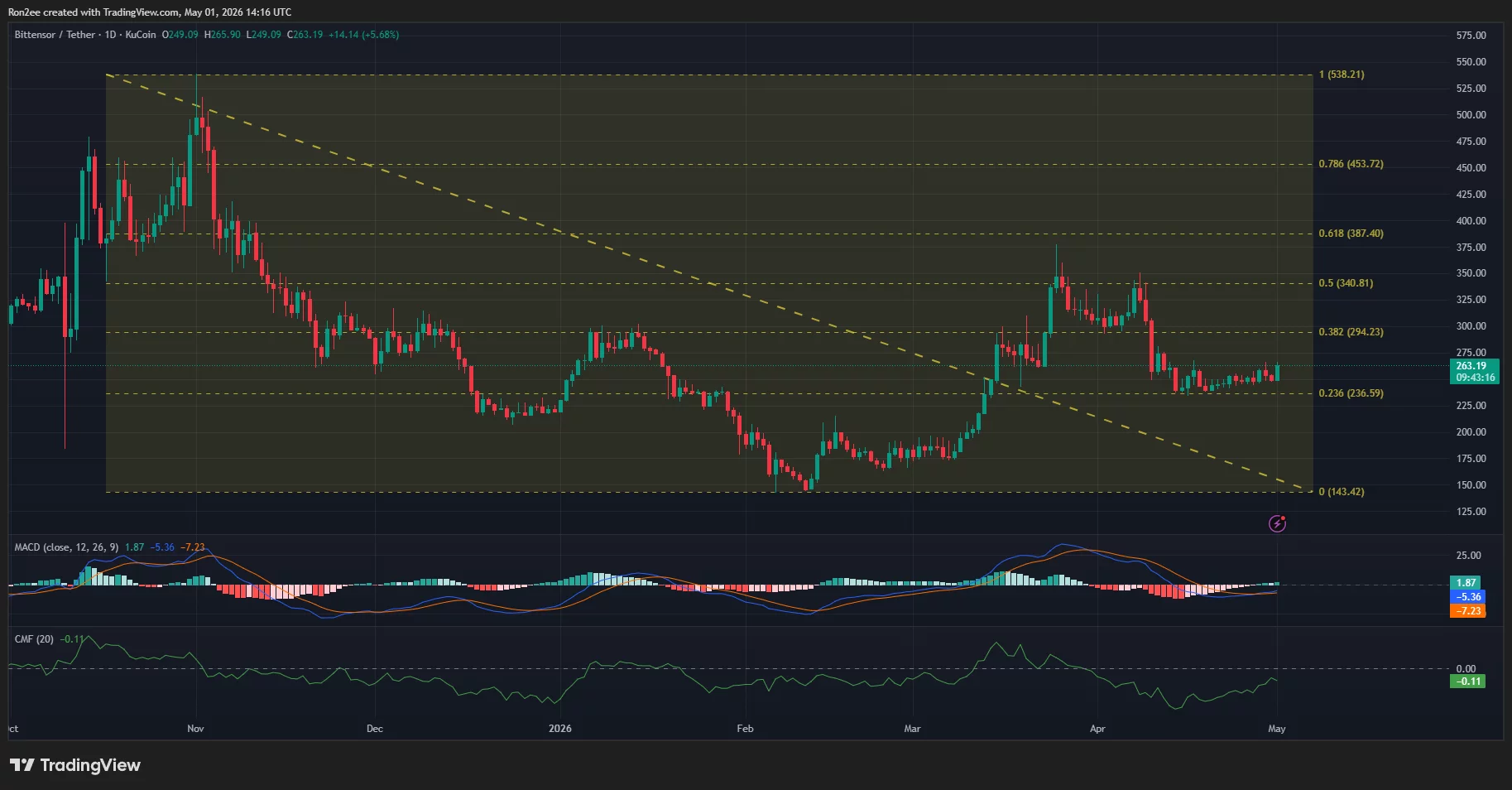
Bittensor price is showing renewed strength as it climbs above the $260 level, with improving momentum indicators hinting at a potential continuation of the recent recovery trend.
Summary
- Bittensor price is trading around $263, up 5.7% in 24 hours, holding above the key $236 support after breaking a long-term downtrend.
- Bullish momentum builds as MACD turns positive, with upside targets at $294 and $340 if strength continues.
- Fundamentals strengthen with Nvidia’s reported $420M stake, ETF filings by Grayscale and Bitwise, and over 70% of supply locked in staking.
According to data from crypto.news, Bittensor (TAO) price was trading around $263.19 at press time on May 1, up nearly 5.7% over the past 24 hours. The token has been consolidating between roughly $235 and $275 over the past week, stabilizing after a sharp rally earlier in April.
Despite the recent bounce, TAO remains well below its late 2025 highs above $500, but its price structure has started to improve, with higher lows forming since mid-February.
Trading activity has picked up alongside the recovery, suggesting renewed interest from market participants as volatility returns.
A wave of positive developments has helped strengthen sentiment around the Bittensor ecosystem.
Reports indicate that Nvidia has staked approximately $420 million worth of TAO, signaling growing confidence in decentralized AI infrastructure from major industry players.
Institutional interest is also building. Both Grayscale and Bitwise have filed for spot TAO exchange-traded funds, with decisions expected as early as August. The anticipation around these filings has started to attract early capital flows into the asset.
Real-world adoption is also expanding. Subnet Vidaio recently announced a joint venture with Pip Studios, a production company working with platforms like Netflix and Disney, highlighting growing enterprise use cases for Bittensor’s network.
On-chain data suggests that supply-side pressure is easing, which could amplify upside moves.
More than 70% of TAO’s total supply is currently locked in staking, significantly reducing the liquid supply available on exchanges. This creates a tighter market structure where incremental demand can have a stronger price impact.
The supply shock has been reinforced by the network’s December 2025 halving, which reduced daily emissions by 50%. Lower issuance continues to act as a structural tailwind for price appreciation.
Derivatives positioning also supports a bullish outlook. The TAO long/short ratio has climbed to around 1.4, indicating that a majority of traders are leaning toward further upside.
Bittensor price analysis
On the daily chart, TAO has broken above the $260 level and is now attempting to hold above the 0.236 Fibonacci retracement near $236.59, which has flipped into support.
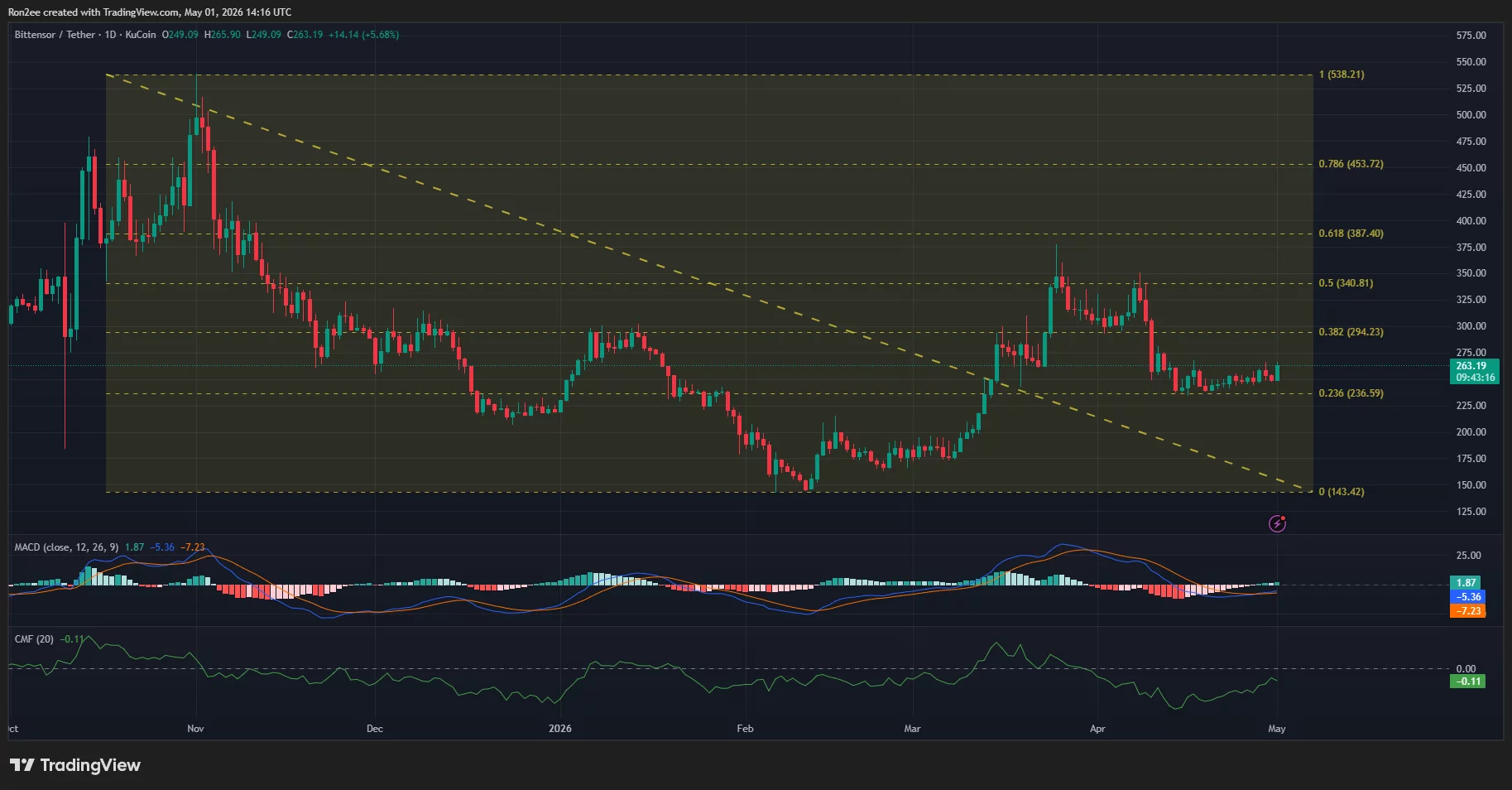
Momentum indicators are improving. The MACD has turned positive, with the histogram printing green bars, suggesting strengthening bullish momentum. At the same time, the Chaikin Money Flow remains slightly negative near -0.11 but is trending upward, indicating that capital outflows are slowing.
Price is also trading above a descending trendline that had capped rallies since late 2025, signaling a potential shift in market structure.
If momentum continues, TAO could target the next resistance levels at $294 (0.382 Fib) and $340 (0.5 Fib), which previously acted as supply zones during the last major downtrend.
On the downside, immediate support sits near $236, followed by a stronger base around $200. A break below these levels could delay the bullish outlook.
Disclosure: This article does not represent investment advice. The content and materials featured on this page are for educational purposes only.
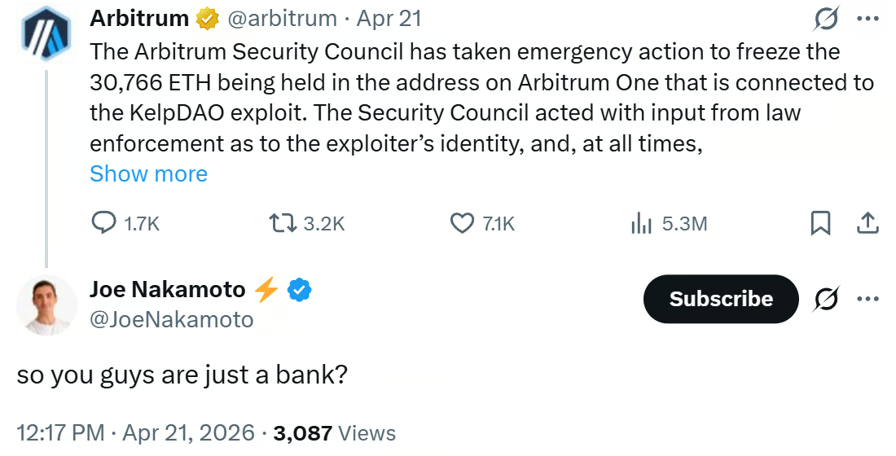
Decentralized finance (DeFi) protocols are stepping in to freeze stolen funds while centralized issuers face criticism for holding back.
A recent intervention on Arbitrum saw attacker-linked assets frozen after a major exploit, while some stablecoin issuers, including Circle, have faced public backlash for slower or more limited responses in similar situations.
Connor Howe, CEO and co-founder of cross-chain infrastructure project Enso, said that crypto protocols are not that different from centralized platforms or banks if a small group of people can freeze funds.
“The differentiation from a bank compliance officer is less than DeFi idealists will ever admit,” Howe told Cointelegraph.
The debate isn’t the usual kerfuffle between decentralization and centralization, but about who gets to intervene and how quickly they can act. In practice, it can determine whether stolen funds are stopped or slip through.
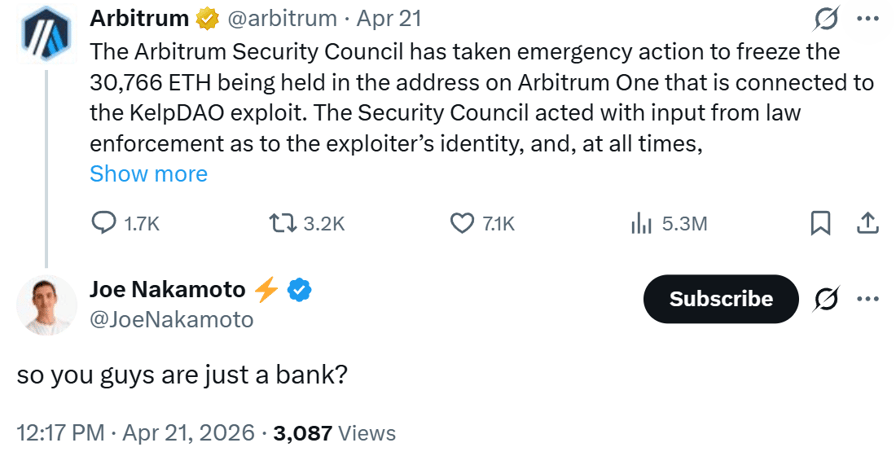
Crypto community divided on Arbitrum’s decision to freeze stolen funds. Source: Joe Hall
The limits of decentralization in DeFi
To put it simply, the industry is split on whether protocols that call themselves decentralized should be able to freeze funds during exploits.
Protocols like THORChain said they cannot freeze funds by design, even during exploits. Security researchers have questioned that claim, pointing to past cases where intervention did happen.
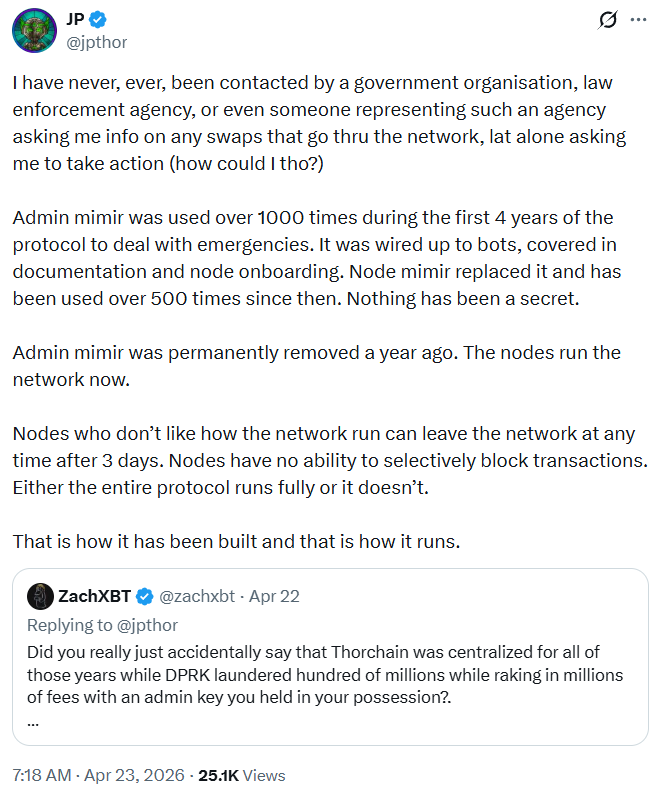
THORChain founder’s defense against the security community. Source: JP Thorbjornsen
Related: Crypto projects shut down as token models fail under pressure
Bernardo Bilotta, CEO of stablecoin infrastructure platform Stables, said the function is necessary but must operate within clear constraints.
“Freeze capabilities need to be narrowly scoped, time-limited and governed by transparent criteria that existed before the breach occurred,” Bilotta told Cointelegraph. “A protocol shouldn’t be making up the rules while the house is on fire.”
Bilotta characterized choosing “philosophical purity” over user protection as “negligence.”
The recent $293 million Kelp DAO exploit brought those discussions back into the spotlight as Arbitrum froze some of the stolen funds linked to suspected North Korean hackers. Some in the industry said the decision cut against DeFi’s grain.
The Ethereum layer-2 network has a 12-member security council with the ability to carry out certain changes to the protocol. In emergency situations, it can do so through nine of the 12 in its multisig wallet.

Arbitrum security council members are voted on by the network’s decentralized autonomous organization. Source: Arbitrum
Howe said that transparency in how such security councils operate can still separate DeFi platforms from traditional finance or their centralized counterparts.
“That’s notably different from a TradFi institution that invokes discretionary powers buried in their terms of service and guarded by their legal team,” Howe said.
“There should be transparency in every protocol around who holds the keys, and the safeguards in place to prevent them from going rogue. If there’s no clear distinction, then it’s a vague claim of decentralization.”
Centralized issuers face different constraints
Centralized stablecoins are among the most-traded cryptocurrencies in the world. Tether’s USDt and Circle’s USDC are the largest, accounting for more than $266 billion in combined market capitalization.
Both issuers have the ability to freeze their stablecoins, but they approach that function differently.
While Tether freezes funds more quickly in most security breaches, Circle emphasizes legal process and jurisdiction before intervening,
“Let me be clear about something that is frequently misunderstood: when Circle freezes USDC, it is not because we have decided, unilaterally or arbitrarily, that someone’s assets should be taken from them,” Dante Disparte, the company’s head of global policy, wrote in a recent blog post.
“Our ability to freeze funds is a compliance obligation — exercised only when we are legally compelled by an appropriate authority, through lawful process,” he continued.
Circle was pushed to explain its stance after the recent $280 million exploit on Solana-based Drift protocol, also attributed to North Korea.

Circle’s explanation did not cut it for security experts demanding answers. Source: ZachXBT
Related: Ethereum’s EEZ could pull other blockchains into its orbit
Bilotta said waiting for formal legal orders in cases with clear, onchain evidence of an exploit is a “failure of responsibility.”
Who decides what counts as “extreme”
Large-scale exploits, including those linked to North Korean actors, have pushed the industry into situations most would consider extreme, where hundreds of millions can be drained and laundered in real time.
Such cases raise the question of who defines what qualifies as “extreme” and when intervention is justified.
“This is the question the industry has been ducking the longest,” said Wish Wu, CEO of institution-focused layer-1 Pharos.
“In practice, ‘extreme’ is too often defined after the fact by whoever holds the keys, which is exactly the failure mode decentralization was meant to avoid,” he added.
Wu said the more credible approach is to define those conditions in advance and encode them into governance, even if that means accepting that some edge cases fall outside those rules.
“Can a small, identifiable group move user funds before users have a fair chance to exit?” Wu asked.
“If the answer is yes, then whatever the marketing says, the system is custodial in substance. If the answer is no, only then are we in an honest conversation about which governance and safety tradeoffs make sense for different use cases.”
Below that line, decentralization loses its substantive meaning, he added.
Magazine: AI-driven hacks could kill DeFi — unless projects act now
Crypto World
NIO (NIO) Stock Tumbles Nearly 5% Following Weaker-Than-Expected April Delivery Numbers

Key Takeaways
- April vehicle deliveries totaled 29,356 units, representing a decline from March’s 35,486 but showing 22.8% growth compared to last year.
- Shares dropped approximately 4.6% in Friday morning trading, despite maintaining a 25% gain year-to-date.
- Fellow Chinese EV manufacturers Li Auto and XPeng similarly experienced sequential monthly delivery decreases.
- The three leading EV makers collectively delivered 94,452 vehicles, marking a decrease from March’s 103,954 units.
- Market saturation concerns emerge as battery-electric vehicles now represent approximately 30% of China’s new car market.
The Chinese electric vehicle manufacturer reported April deliveries of 29,356 units, falling short of the previous month’s 35,486 figure while surpassing last year’s April total of 23,900 vehicles — representing a 22.8% annual increase.
Breaking down the April numbers: the flagship NIO brand contributed 19,024 vehicles, the family-oriented Onvo line added 5,352 units, and the compact-focused Firefly brand delivered 4,980 vehicles. The company’s all-time delivery milestone reached 1,110,413 vehicles through the end of April.
NIO stock retreated approximately 4.6% during Friday’s opening session following the delivery announcement.
The market’s negative response is particularly notable considering the stock entered trading with impressive gains of 25% for the current year and 58% over the trailing twelve months. Throughout the past year, the company has delivered 372,855 vehicles — representing a robust 54% increase compared to the previous year’s period.
Investor expectations had clearly been positioned at elevated levels.
Competing EV Makers Face Similar Monthly Challenges
Li Auto reported 34,085 vehicle deliveries for April, representing a sequential decline from March’s 41,053 units but marginally exceeding the 33,939 vehicles delivered in April 2025. Its shares managed a modest 0.7% gain on Friday. Nevertheless, Li Auto has underperformed its peers — registering just 5% growth year-to-date while declining 27% over the past year. The company’s twelve-month delivery total reached 408,767 vehicles, down 22% annually.
XPeng emerged as the sole bright spot for sequential growth. The company delivered 31,011 vehicles in April, climbing from March’s 27,415 units. This figure, however, trailed the 35,045 deliveries recorded in April 2025. XPeng shares traded relatively flat on Friday and remain down 20% for the year.
Combined, the three manufacturers delivered 94,452 vehicles in April — down from the previous month’s 103,954 total and barely 2% above the comparable period last year.
Chinese Electric Vehicle Market Confronts Saturation Challenges
The underlying narrative points to a decelerating Chinese EV sector. Industry leader BYD reported 147,601 all-electric vehicle sales in March — an 11% year-over-year decline. BYD‘s April figures remain unreleased at this time. A significant detail: 40% of BYD’s March volume consisted of exports, indicating domestic market weakness runs deeper than aggregate statistics reveal.
China’s overall new-vehicle sales contracted during the first quarter. Battery-electric vehicles currently capture approximately 30% of the nation’s new-car market. When including plug-in hybrid models, electrified vehicles approach 50% market penetration. At such elevated adoption rates, the period of rapid, effortless expansion has concluded.
The American market confronts distinct challenges. The $7,500 federal tax incentive for electric vehicles lapsed in September, increasing effective purchase prices for consumers. First-quarter U.S. EV sales plummeted 27% year-over-year, representing roughly 6% of total new-vehicle transactions.
Tesla shares advanced 0.3% on Friday. The S&P 500 climbed 0.5% while the Dow Jones Industrial Average rose 0.4%.
As of April 30, 2026, NIO’s lifetime delivery total stood at 1,110,413 vehicles.



Bitcoin moved higher on Friday, extending gains as U.S. markets opened and risk appetite improved. The largest cryptocurrency is now up nearly 3% over the past 24 hours, continuing a climb that began overnight.
It was last trading at $78,722, edging closer to the $80,000 mark once again. Earlier this week, bitcoin approached that level but failed to break through, pulling back before buyers stepped in again.
The latest move comes alongside gains in equities, which opened higher in the U.S.
At the same time, oil prices slipped after reports that Iran sent a fresh proposal aimed at restarting negotiations with the United States. The news raised hopes that tensions could ease, at least in the near term.
Brent crude futures for July were down 26 cents, or 0.23%, at $107.74 a barrel. Supply concerns have not gone away. Tehran continues to block the Strait of Hormuz, a key shipping route, while the U.S. Navy is stopping exports of Iranian crude.
This mix of easing headlines and ongoing constraints helps explain the muted reaction in oil. Traders appear cautious, weighing the chance of a deal against the reality on the ground.
For bitcoin, the focus remains on whether it can finally clear $80,000, which is by many seen as a key breakout level. A push above that level could draw in more buyers who have been waiting on the sidelines.
“I think $80,000 is quite a resistance… we need a confident push through that level,” said 21shares chief market strategist Adrian Fritz. “Once we’re above that, it could spark some momentum… people are back in profit, especially the ones that invested more recently.”
Fritz said if bitcoin reaches a level above $85,000, the market could start to see the first signs of a reversal.

Bitcoin moved toward the $77,500 zone on Friday as U.S. equities extended fresh records on strong tech earnings, signaling a renewed risk-on mood across markets. The broader rally lent support to risk assets, even as bitcoin’s advance lagged the surge in equities, underscoring a cautious but constructive tone for crypto traders.
The S&P 500 touched near 7,220 intraday before finishing the session slightly below that level, buoyed by better-than-expected results from Google and Apple. The session underscored how a resilient tech sector continued to drive a wide-band rally, with observers noting the scale of market breadth widening just weeks after a broad pullback.
Market commentary on social feeds highlighted the magnitude of the rebound. The Kobeissi Letter pointed out that the S&P 500 had added more than $8 trillion in market capitalization since late March, illustrating how quickly risk appetite has rebounded from recent troughs. Veteran investors also offered a long-term framing, noting how far the market has progressed relative to prior cycles.
Against this backdrop, bitcoin’s April performance was notable for its durability. TradingView data showed roughly 12% price appreciation in April, while CoinGlass recorded an 11.9% gain for the month—the strongest monthly advance in about a year. Yet the price action also reflected a degree of technical restraint: BTC failed to reclaim several key resistance levels that often accompany a confident breakout.
Analysts noted that the price action remained tethered to broader macro signals and that the chart continued to contend with important moving averages. In particular, the 21-week exponential moving average (EMA) has been a frequent reference point; traders cautioned that only a weekly close above this level would help validate a sustained breakout. As noted by market technician Rekt Capital, a move above the EMA would be needed to convincingly shift momentum, with a springboard retest of the mid-$60,000s often preceding such a breakout.
Key takeaways
- Equities rally on strong tech earnings push the S&P 500 toward new highs, with a close near 7,220.
- Bitcoin posts a double-digit April gain (roughly 12%), but remains challenged to reclaim key technical levels.
- March PCE inflation rises to 3.5%, the highest in nearly three years, renewing focus on the inflation path and policy implications.
- Analysts flag the 21-week EMA as a critical hurdle; a weekly close above it would bolster a breakout narrative for BTC.
Macro backdrop and crypto implications
The inflation landscape remains a central driver for both equity and crypto markets. The Personal Consumption Expenditures price index for March came in at 3.5%, according to the U.S. Bureau of Economic Analysis, marking the highest reading since August 2023. The PCE, widely regarded as the Federal Reserve’s preferred inflation gauge, had previously aligned with market expectations, but the fresh uptick injects a sense of caution into policy timing and trajectory. While equities rallied on robust corporate earnings, the inflation backdrop continues to color expectations for future rate guidance and liquidity conditions.
Observers note that the strength in equities, particularly driven by technology megacaps, has helped lift sentiment broadly, including crypto markets that often track investor appetite for risk. The S&P 500’s enduring ascent—alongside comments from observers about how far the market has progressed since its March lows—helps explain the backdrop against which BTC prices have navigated since the start of the year.
From a trader’s perspective, the near-term setup remains nuanced. While the April rally points to improving risk tolerance, the absence of a decisive breakout above the 21-week EMA keeps a degree of caution in place. The ongoing tension between inflation readings and policy expectations means muted but persistent volatility could characterize the coming weeks as traders weigh new macro data against price structure in both traditional and crypto markets.
What to watch next
Market participants will be attuned to upcoming inflation prints and how they influence expectations for the pace of tightening or easing. Any deviation from the current trajectory could shift risk sentiment and, in turn, BTC’s path. For bitcoin specifically, a confirmed close above the 21-week EMA would be a meaningful signal for momentum traders, potentially opening the door to retesting the mid- to upper-$60,000s region and beyond. Until then, BTC’s fate may hinge on a delicate balance between macro data surprises and investor appetite for risk assets.
Readers should monitor how April and May data shape expectations for Federal Reserve policy and liquidity, as these factors often set the tone for both stock indices and crypto markets in the near term.
Ethereum just breached the $2,300 price level again, but a coordinated wallet drain sent fresh shockwaves through an already fragile market. The full scope of the damage is still emerging, and what’s confirmed so far is enough to rattle even long-term holders.
BSCN flagged on May 1 that assets from hundreds of wallets on the Ethereum mainnet, including some dormant for over seven years, were simultaneously moved to a single address. The transaction pattern points to a single attacker exploiting what may be a previously unknown vulnerability.
Security researchers are actively tracking the address and fund flows, with activity reportedly still ongoing.
Is this an isolated incident, or the opening move of something larger?
Discover: The best pre-launch token sales
Can Ethereum Price Hold $2,300 Next Week?
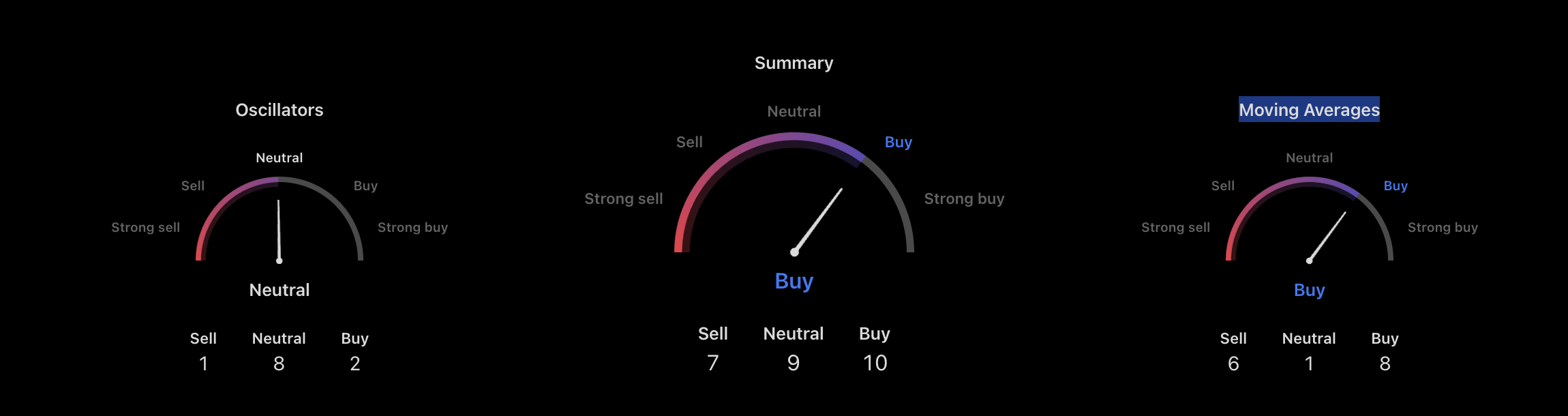
ETH’s current setup offers little comfort. At $2,300, the asset sits just below its SMA 5 of $2,308, SMA 10 at $2,320, and its SMA 21 at $2,312. Critically, its 200-day moving average, $2,755, is also flashing sell signals. The only technical bright spots are the SMA 50 and SMA 100, which are currently providing marginal support from below.
Arguably, Ethereum and the whole crypto market have been flatlining sideways for months now, signaling potential seller exhaustion. But exhaustion alone doesn’t produce a reversal. But then again, the Moving Averages indicator shows buy.
Derivatives compound the concern with long positions dominating futures, but negative funding rates indicate waning conviction behind those longs.
The current play will depends if ETH can hold its $2,200 support. If it is, the Ethereum price would likely stabilize above $2,300 and retest $2,400. A consolidation above $2,400 opens a longer path toward $2,700 recovery targets.
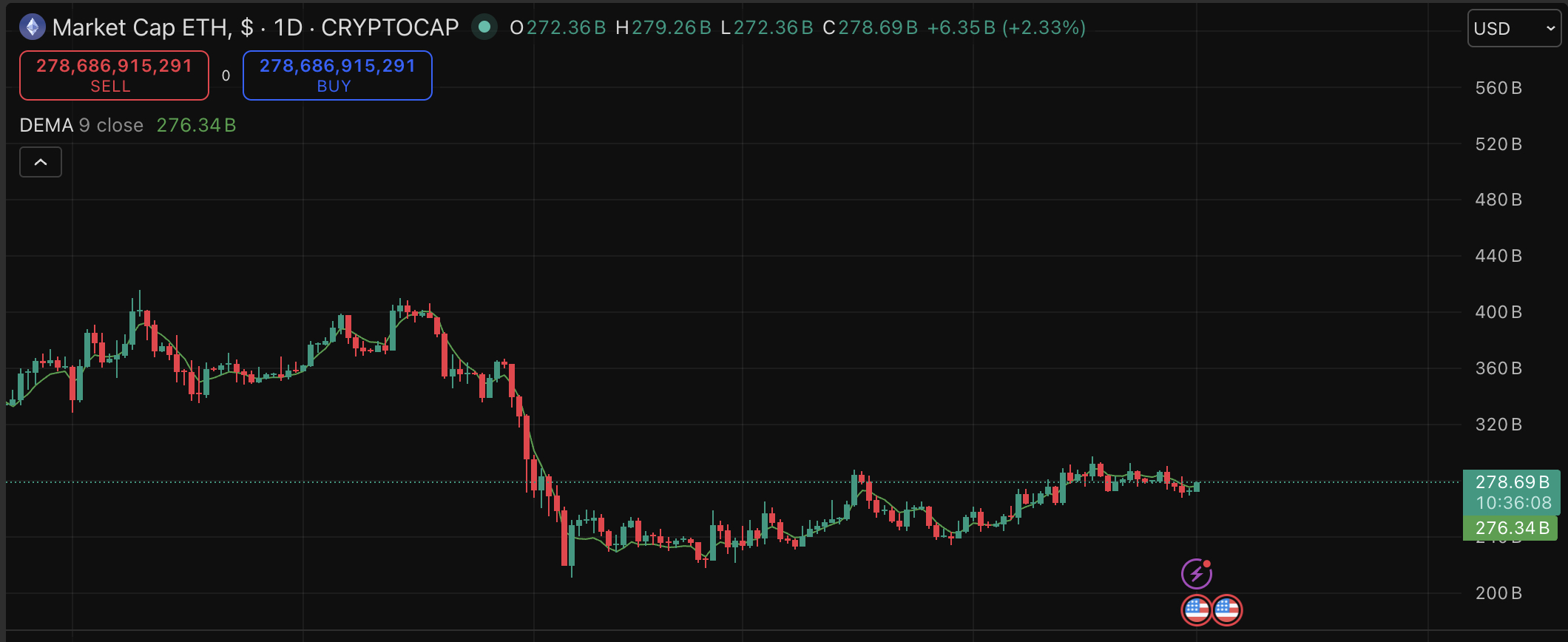
However, if the root cause of the vulnerability isn’t identified quickly, security premiums will narrow and asset rotation will accelerate.
Discover: The best pre-launch token sales
Bitcoin Hyper Targets Bitcoin Level Security
When Ethereum’s security narrative fractures, capital doesn’t vanish; it rotates. And right now, some of that rotation is flowing toward infrastructure plays built on stronger technical foundations.
Bitcoin Hyper ($HYPER) is positioned directly in that window. The project is the first Bitcoin Layer 2 to integrate the Solana Virtual Machine, delivering sub-second finality and low-cost smart contract execution while preserving Bitcoin’s underlying security model.
Hyper is addressing Bitcoin’s core limitations of slow transactions, high fees, and absent programmability in a single architecture.
The presale has already raised $32.5 million at a current price of $0.0136, with staking available for early participants.
Bitcoin Hyper presale details are available here.
The post Ethereum Price Prediction: Another Exploit, Can ETH Survive This? appeared first on Cryptonews.

MiLaysia Fulwiley, Mikaylah Williams & more college hoopers gear up to compete

Job or Business? Which Career Should You Choose | Financial Astrology | Prashant Kapoor

The Real Greek restaurant chain on brink of collapse

Manchester United reach agreement with Casemiro over contract clause amid transfer speculation

US brings back mandatory military draft registration

Steven Gerrard disagrees with Gary Neville over ‘shock’ Chelsea and Arsenal claim | Football
Job or Business? Which Career Should You Choose | Financial Astrology | Prashant Kapoor

#antique #coins #goldcollector #reseller #money #gold #business #goldjewellery #jewelry #ytshorts

400,000 Acre Farm Files for Financial Protection
-

 Tech4 days ago
Register Renaming | Hackaday
-

 Fashion7 days ago
Weekend Open Thread – Corporette.com
-
 Crypto World6 days ago
Hyperliquid $HYPE Rally Builds Momentum as AI Sector Enters Prove-It Phase
-

 Politics4 days ago
Drax board avoid their own AGM, accused of greenwashing & environmental racism
-

 Tech4 days ago
Images of Samsung’s rumored smart glasses have leaked
-
 Sports5 days ago
IPL 2026: Ruturaj Gaikwad registers slowest fifty of the season, enters all-time unwanted list | Cricket News
-

 Tech4 days ago
Why Blue Badges Disappeared From Toyota Hybrids
-

 NewsBeat5 days ago
LK Bennett closes all stores after entering administration
-

 Fashion3 days ago
Kylie Jenner’s KHY Enters a New Era with ‘Born in LA’
-
 Entertainment6 days ago
Mariah Carey Slams Deposition Claims In Brother’s Lawsuit
-

 Business3 days ago
Most Commercial Energy Audits Miss the Real Losses
-

 Business4 days ago
(VIDEO) Charlize Theron Climbs Times Square Billboard to Promote New Netflix Thriller ‘Apex’
-

 Crypto World3 days ago
CFTC’s AI will review U.S. crypto registration applications, chairman tells CoinDesk
-
 Crypto World7 days ago
Nvidia (NVDA) Stock Jumps 5% as Intel Earnings Ignite Semiconductor Rally
-

 Tech6 days ago
Microsoft to roll out Entra passkeys on Windows in late April
-

 Tech5 days ago
OpenAI’s Sam Altman apologizes for not reporting ChatGPT account of Tumbler Ridge suspect to police
-

 Business2 days ago
Barclay Brothers Avoid Bankruptcy: HSBC Drops High Court Petitions After IVA Deal
-

 Tech7 days ago
Apple’s Next CEO Has a Different Battle Ahead
-
 Business2 days ago
Tesla Officially Registers Elon Musk’s Stock: What Investors Need to Know
-

 Tech5 days ago
OpenAI CEO apologizes to Tumbler Ridge community
You must be logged in to post a comment Login