




Connect with us
DAPA Banner

Politics

Renters union Acorn welcomes new rights for tenants

Published

on

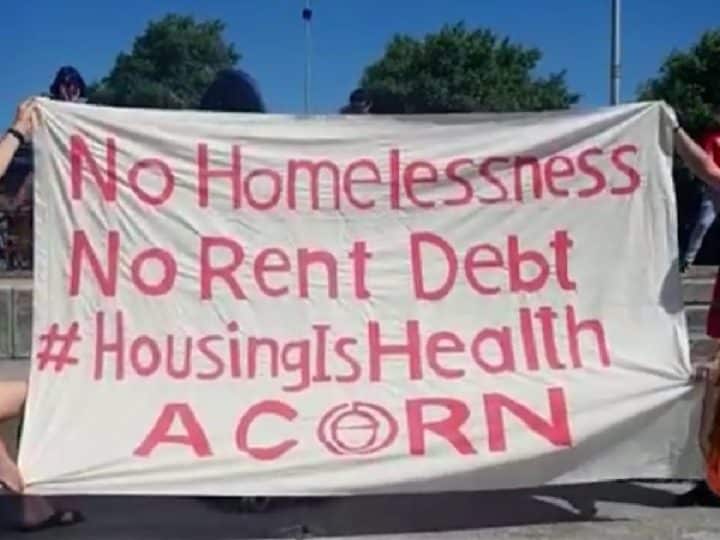
Banner from renters union Acorn, saying: No Homelessness No Rent Debt #HousingIsHealth Acorn

Banner from renters union Acorn, saying: No Homelessness No Rent Debt #HousingIsHealth Acorn

From 1 May 2026, the law changes, giving more protection for England’s 12 million renters.

Renters union Acorn issues statement:

After more than 10 years of organising and taking action, together we have won the biggest change to renters’ rights in a generation.

From stopping evictions on our streets, to marching on rogue landlords and letting agents, to forcing councils and politicians to act, ACORN has organised at every level to win this change.

Seven years, five prime ministers and two shades of government after Theresa May promised to scrap section 21 no fault evictions, the Renters’ Rights Act is finally about to become law.

Advertisement

For years, too many renters have lived with the constant threat of eviction, sudden rent increases, and the fear of speaking up in case it cost them their home.

Now, section 21 ‘no fault evictions’ are being abolished, ‘bidding wars’ are being banned, rent in advance is being capped at one month, rent rises are subject to stricter rules, and renters have the right to a pet.

To read more on the headline changes, and the history of the campaign, head to our web page here, or watch the video below:

This victory belongs to every renter who organised, spoke out, took action and refused to accept ‘the way things are.’

Advertisement

The new law changes won’t fix everything overnight, but it’s a huge step forward: a shift in power that shows what’s possible when renters organise.

We must now make sure these rights are enforced, and make sure that rule breaking landlords and letting agents aren’t let off the hook by councils and the government.

And until everyone has a safe, secure and affordable place to call home, there’s more to fight for.

The best way of fighting for housing justice, and making sure you and your housemates are defended, is by being a member of ACORN!

Advertisement

Featured image via Acorn

By The Canary

Source link

Advertisement
Continue Reading
Click to comment

You must be logged in to post a comment Login

Leave a Reply

Politics

Meryl Streep Turned Down Devil Wears Prada Until Bosses ‘Doubled’ Their Offer

Published

on

Meryl Streep at the London premiere of The Devil Wears Prada 2 last week

Meryl Streep has admitted that she came close to turning down one of her most iconic roles in The Devil Wears Prada.

Appearing on The Today Show to promote the sequel, Meryl recalled how as soon as she read the script for the original film, she knew immediately that it was “going to be a hit”, so seized an opportunity.

“I thought, it’s a great script. And they called me up and made an offer and I said, ‘No, I’m not gonna do it’,” Meryl recalled.

She continued: “I knew it was gonna be a hit, and I wanted to see if I doubled my ask, and they went right away and said, ‘Sure’.”

Advertisement
Meryl Streep at the London premiere of The Devil Wears Prada 2 last week

Meryl went on to share that it took her a long time to “understand that I could do that” and that “you can ask for what you want”.

“I was sure it would be a hit, and they needed me,” she added. “I wanted it, but if they didn’t want to do that, I was OK because I’m old. I was ready to retire.

“But that was a lesson. That was a great way to start, so I was in a good mood when we began.”

Alongside the returning faces from the original Devil Wears Prada film, Meryl is joined in the new follow-up by the likes of Bridgerton’s Simone Ashley, Justin Theroux, Lucy Liu and a wave of celebrity cameos.

Advertisement

The Devil Wears Prada 2 arrives in cinemas on Friday 1 May. Check out HuffPost UK’s review of the film here.

Correction: A previous version of this article erroneously stated that Meryl Streep initially turned down The Devil Wears Prada 2, rather than the first film. This has now been corrected.

Source link

Advertisement
Continue Reading

Politics

Ted, Gone Fishing Dog, Dies As Bob Mortimer And Paul Whitehouse Pay Tribute

Published

on

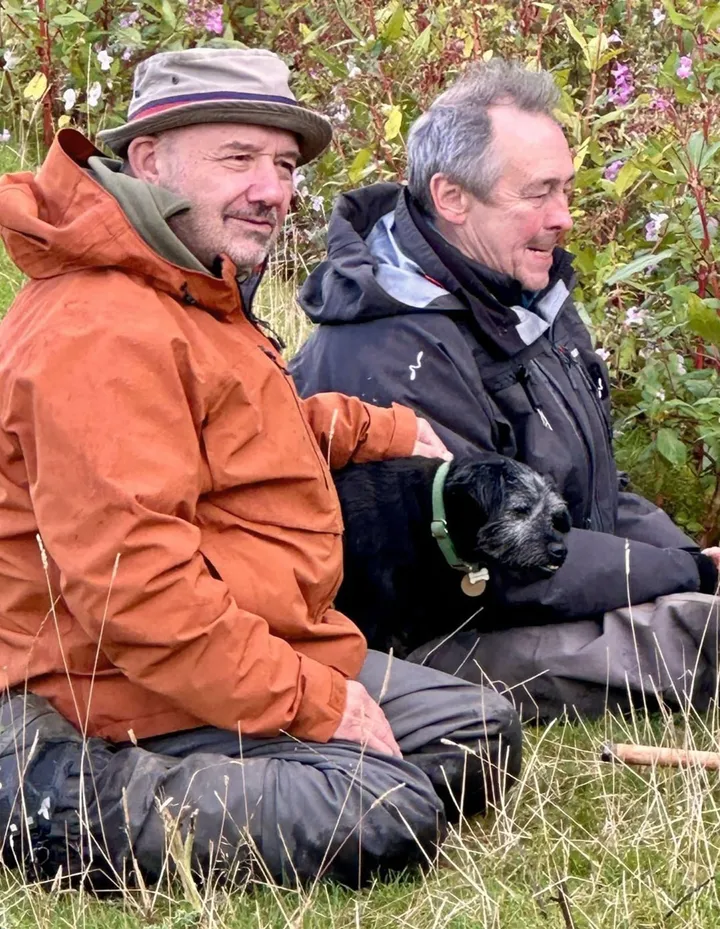
Bob Mortimer and Paul Whitehouse with Ted during last year's run of Gone Fishing

Comedians Bob Mortimer and Paul Whitehouse have paid tribute to the canine companion with whom they shared the screen numerous times over the years in their hit series Gone Fishing.

The pair first encountered the Patterdale Terrier mix Ted in season three of Gone Fishing, back in 2020, and he went on to make numerous on-screen appearances alongside the presenters.

On Monday morning, the BBC announced that Ted had died, with both of Gone Fishing’s hosts sharing touching tributes.

“So very, very sad,” Bob lamented, remembering “lovely Ted” as “the best companion and the greatest little chum”.

Advertisement

“Going to miss him so much.,. and away boss,” he added.

Paul agreed: “He wasn’t a dog, he was a species all of his own. He’s gone to the great briefcase emporium in the sky. We will really miss you mate.”

Bob Mortimer and Paul Whitehouse with Ted during last year's run of Gone Fishing
Bob Mortimer and Paul Whitehouse with Ted during last year’s run of Gone Fishing

Louise Meager/BBC/Owl Power/Louise Meager

After his first introduction in 2020, Ted became a fan-favourite with Gone Fishing viewers, and in the 2025 Christmas special, he was awarded an honorary Lifetime Achievement Award.

The BBC explained that when Ted was around six months old, he was rescued from a dog’s home and went to live with Gone Fishing’s executive producer Lisa Clark, who was his owner until he died.

Advertisement

In her own statement, the producer: “Ted was a much-loved family pet as well as a treasured companion to Paul and Bob on Gone Fishing. He took fame in his little stride and loved nothing better than messing around on the riverbanks, nicking jammy dodgers from Bob and bait from Paul.

“He will be sorely missed both at home and on screen. We’ll never forget him. He is survived at home by Bo the Briard.”

Ted is due to make one final posthumous appearance in Gone Fishing in its upcoming ninth season, which is expected to air on the BBC later this year.

Advertisement

Source link

Continue Reading

Politics

Beef Creator Says He’s ‘Perfectly Happy’ If Season 3 Doesn’t Happen

Published

on

Ali Wong and Steven Yeun as Amy and Danny in Beef

Beef creator Lee Jung Sin is weighing in about what’s next for the award-winning show.

After Beef’s inaugural series proved to be a huge success with both critics and viewers, Netflix made the decision to turn it into an anthology series, focussing on a different set of characters – and, indeed, a different central feud – each time.

However, in a candid new interview with The Hollywood Reporter, the three-time Emmy winner made it clear that he’s at peace if Beef were to come to an end without a third iteration.

Advertisement

“I’d be perfectly happy if this were the last season,” he claimed. “I think it’s really emotionally taxing, the making of it and the rollout of it.”

He continued: “I feel like I’ve said it through two seasons of Beef. But I do remain open if the universe shows me something in the future and it feels right for Beef. I’m definitely open.”

The first season of Beef featured Ali Wong and Steven Yeun as a pair of strangers who become engrossed in each other’s lives when a chance road range encounter bubbles over into an all-encompassing vendetta.

In the follow-up, the stakes were raised even higher, with Carey Mulligan, Oscar Isaac, Charles Melton and Cailee Spaeny playing two feuding couples on opposing sides of a generational and class divide that leads both pairs to ask big questions about their partners, and themselves.

Advertisement
Ali Wong and Steven Yeun as Amy and Danny in Beef

Back in 2023, while promoting season one, Lee told Rolling Stone that he’d always envisaged Beef telling three separate stories.

“I have one really big general idea that I can’t really say yet, but I have three seasons mapped out in my head currently,” he claimed.

Seasons one and two of Beef are now streaming on Netflix.

Source link

Advertisement
Continue Reading

Politics

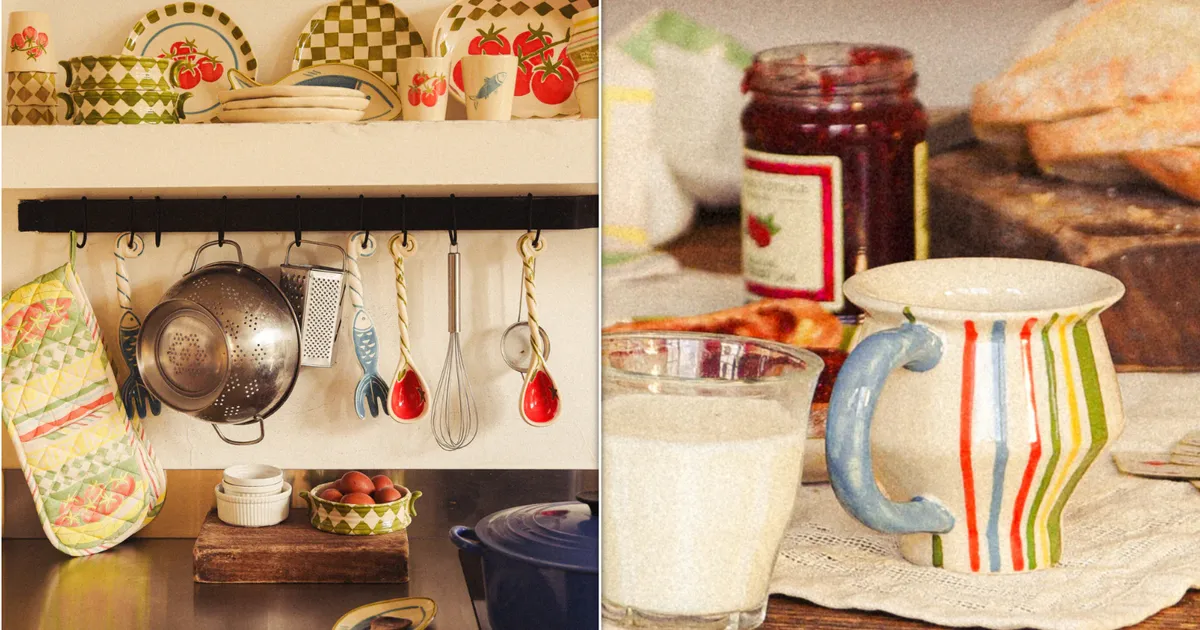
Damson Madder Just Launched Homeware That Will Transport You To Rural Italy

Published

on

Damson Madder Just Launched Homeware That Will Transport You To Rural Italy

We hope you love the products we recommend! All of them were independently selected by our editors. Just so you know, HuffPost UK may collect a share of sales or other compensation from the links on this page if you decide to shop from them. Oh, and FYI — prices are accurate and items in stock as of time of publication.

Let’s take a moment to wish we could spend the entire summer stashed away at our grandma’s houses. A season marked by delicious food served on delicate platters, by a woman with exquisite taste.

Unfortunately as adults, that’s not an option. But here’s the good news: you can be your own nonna. Or be the nonna to your friends, there are no rules.

If you’re planning on getting your hosting on in the heat, Damson Madder has just released its spring lifestyle collection, which takes a heavy dose of inspiration from your grandma’s kitchen and dining table.

Advertisement

From tomato-printed serving platters, to frilly aprons, it has everything you need to serve lashings of saucy salads soaked up by piles of perfectly crunchy bread to your loved ones.

Sound like a life you want to be living? Here are our shopping writer’s favourite picks from the collection.

Source link

Advertisement
Continue Reading

Politics

Is The ‘Special Relationship’ Between The UK And The US Dead?

Published

on

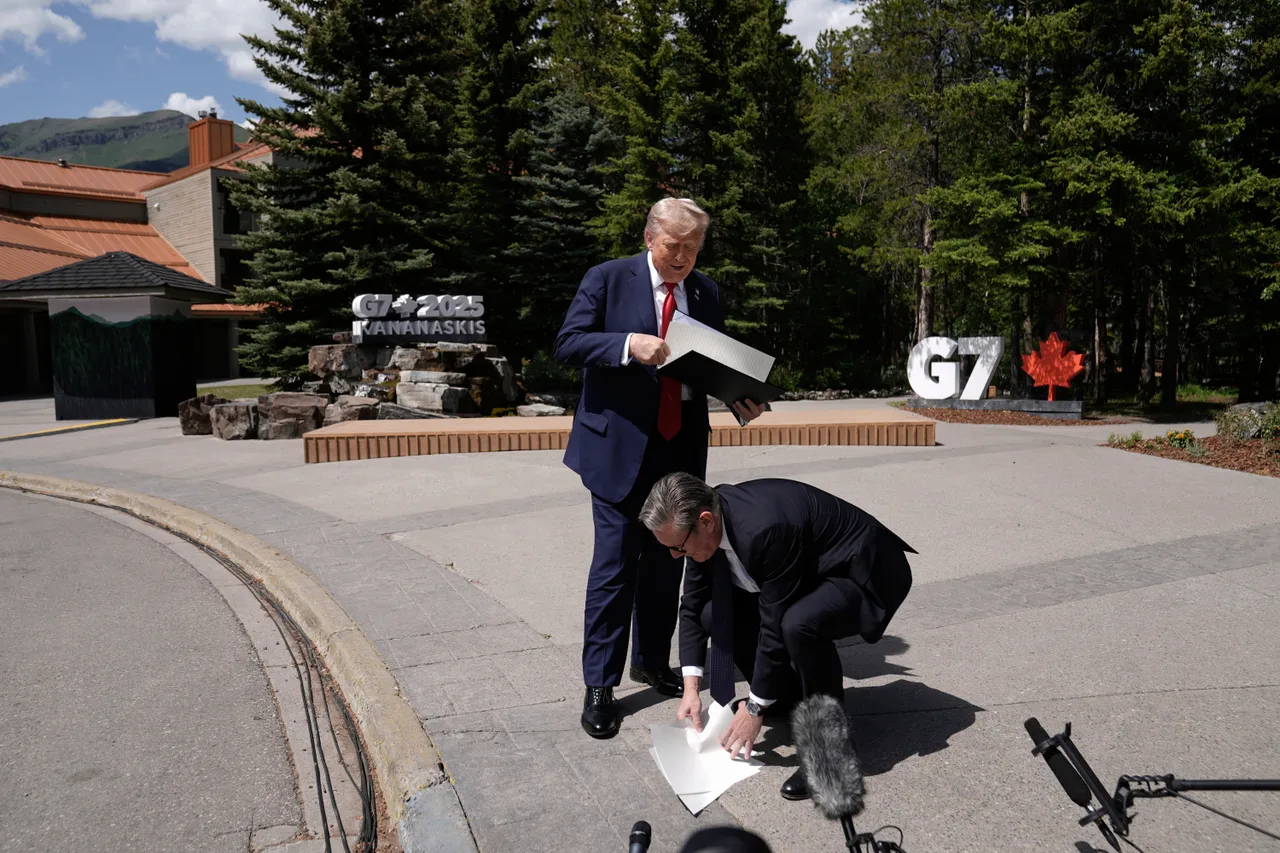
Starmer picks up the UK-US trade agreement papers dropped by Trump before speaking to the media at the G7 summit in Kananaskis, Alberta, Monday June 16, 2025.

Donald Trump has never been bothered about maintaining tradition.

Despite decades of work on both sides of the Atlantic to build and maintain the so-called “special relationship” between the UK and America, the president’s second term has put it under almost unbearable strain.

Prime minister Keir Starmer initially bent over backwards to woo Trump in a bid to secure a trade deal and keep the maverick Republic on side.

But then Trump began threatening to annex Greenland, undermining Nato, withdrawing support for Ukraine, tearing into British military capabilities and U-turning over the Chagos deal.

Advertisement

The scandal around Starmer’s decision to appoint, then sack, Peter Mandelson – a friend of convicted paedophile Jeffrey Epstein – as the UK’s ambassador to Washington, did not help either.

But the final straw came when Trump, together with Israel, bombed Iran.

Starmer rejected the US’s requests for UK support, leading to fresh verbal abuse from the president.

He’s even threatened to withdraw the US recognition of the Falkland Islands as a British overseas territory.

It’s unsurprising, then, that the UK’s ambassador to the US Christian Turner suggested the relationship between the two countries was not that special after all.

In comments dating back to February, leaked to the Financial Times this week, he said while there is a “deep history and affinity” there, the special relationship phrase was “nostalgic, it’s quite backwards-looking, and it has a lot of baggage to it”.

He’s not alone in this thinking. Less than half of Americans (43%) polled by Public First for Channel 4 News agree that the UK is one of their greatest allies.

Advertisement
Starmer picks up the UK-US trade agreement papers dropped by Trump before speaking to the media at the G7 summit in Kananaskis, Alberta, Monday June 16, 2025.

So why do we still call it a “special relationship”?

The phrase has been bandied around British and American politics for years.

First coined by Winston Churchill in 1944 after America joined the Allies’ efforts to defeat the Nazis during the Second World War, the term has played a pivotal role in trans-Atlantic politics for decades.

Margaret Thatcher and Ronald Reagan were seen as ideological soulmates in the 1980s, while Tony Blair and George W Bush took the “special relationship” to new heights following the 9/11 terror attacks and Iraq war.

Over the decades, the lower rungs of government started working together on intelligence, defence and security too, encouraged by the bond between leaders.

Advertisement

That’s not to say it’s always been plain-sailing. Lyndon Johnson and Harold Wilson, for example, repeatedly clashed over the Vietnam war.

But Trump’s recent behaviour threatens to take the “special relationship” to new lows.

So Starmer deployed one of the UK’s most powerful diplomatic weapons this week: the royal family.

King Charles III and his wife Queen Camilla headed to the US for a state visit in a bid to try to amend the fraying bond between Downing Street and the White House.

Advertisement

The King definitely won over his American audience with an extraordinary speech to US Congress, and a later one at the State dinner, where he made a series of tacit digs towards Trump.

He stressed the need for “executive power” to be kept in check and subtly reminded Trump that Nato allies jumped to America’s defence after the 9/11 terror attacks.

Charles even gave the president a golden bell from a World War 2 submarine, HMS Trump (the jokes write themselves).

Britain's King Charles III speaks during a State Dinner with President Donald Trump, first lady Melania Trump and Queen Camilla in the East Room of the White House State Dinner Tuesday, April 28, 2026, in Washington. (AP Photo/Alex Brandon)
Britain’s King Charles III speaks during a State Dinner with President Donald Trump, first lady Melania Trump and Queen Camilla in the East Room of the White House State Dinner Tuesday, April 28, 2026, in Washington. (AP Photo/Alex Brandon)

His trip marks a significant moment in the international relationship, especially as no British monarch has addressed Congress since 1991.

Trump, known for his infatuation with the royal family and their grandeur, told Charles this week: “Americans have no closer friends than the British.”

Advertisement

He previously told the BBC that Charles could “absolutely” fix the fraying relationship.

But any hopes that this Trump vs Starmer episode was just a blip seem to be short-lived.

Just after the monarch left Washington, Trump tried to create a fresh diplomatic row with Starmer by claiming the King agrees with him on Iran – though the Palace is yet to confirm or deny that allegation.

Considering the monarch is meant to be completely apolitical representative for Britain, their private conversations are highly confidential.

Advertisement

This revelation was a huge breach of diplomatic protocol.

The move suggests not only does Trump not grasp the nature of British politics, but he is clearly not be willing to “forgive” Starmer for not joining in with the Iran war.

Further tensions could come down the line, too, with so many of their initial grievances yet to be resolved.

The Ukraine war and the conflict in the Middle East rumble on, while the Trump adminstration could renew its ambitions to seize Greenland.

Advertisement

The UK-US trade deal still hangs in the balance too, as does the agreement to hand over the Chagos islands to Mauritius.

Former Nato secretary-general and UK defence secretary, Lord Robertson, told Chatham House pointed out that the States no longer tells Britain about its plans ahead of time.

Trump did not warn Downing Street about his air strikes on Iran, his plan to implement widespread tariffs or his threats to launch military aggression against Greenland.

Robertson said this demonstrated a “growing divergence” between the countries.

Advertisement

“All the while Washington’s diplomatic tone towards the United Kingdom has reached a historic low point,” he added.

While, acknowledging that the Trump administration does not represent the whole of the US, he warned that America is expected to become “more transactional” in its foreign policy – including in its approach to the UK.

British ministers have repeatedly claimed that frictions at the top were not too unusual, and that the lower levels of government would still continue to operate in sync.

But is that cooperation at threat if the leaders are at loggerheads?

Advertisement

Listen to this week’s Commons People as we unpack the origins of the “special relationship”, why it looks more precarious than ever and what that trans-Atlantic bond could look like in the future.

Subscribe to Commons People, the podcast that makes politics easy. Every week, Kevin Schofield and Kate Nicholson unpack the week’s biggest stories to keep you informed. Join us for straightforward analysis of what’s going on at Westminster.

Source link

Advertisement
Continue Reading

Politics

Corporate giants profit from the war on Iran, while 3 million households skip meals

Published

on

Corporations cash in on iran war

Corporations cash in on iran war

The war on Iran has led to a predicted 2026 inflation rate of up to 4%, meaning rising costs for UK households. Three million households are now skipping meals, while corporations like BP and Lloyds are making much more profit from rising inflation. Moreover, this year has seen corporations increase their profitability as costs surge.

Consumer confident plummets

A survey of consumers found confidence of -62, the lowest level since 2022 where the war on Ukraine led to high inflation. This sends demand for products and services spiralling further. Demand is already low because of high economic inequality, which is a reason banks generally aren’t lending to small and medium size businesses or corporations.

This is compounded by the survey finding that -71% of adults believe the economy will get worse in a year’s time. Consequently, corporations have faced increased scrutiny for their role in the inflationary environment.

Due to the high inflation, 43% of households are buying cheaper food and one in ten (three million) are going without some meals.

Advertisement

The cost of food has risen by more than 37% in five years across the board. Some essentials are even up by 69% since 2022. Meanwhile, Tesco’s operating profit has leapt from £1.8 billion in 2020/21 to £3.1 billion in 2024/25 — an increase of 72%.

Labour has done little to address the cost of living. Under pressure, the administration U-turned and removed the Tory party’s two child benefit cap. But that will actually only decrease child poverty — a direct result of the affordability crisis — by 1% as of 2029.

Mitigating the crisis

Structural changes to the system would be optimal, such as public ownership of essentials and cost-price housing to address the affordability crisis. Removing rent from utilities such as water, electricity, the national grid and trains, along with housing, would do a lot to address the cost of living crisis. In summary, reforms could ensure that corporations are not cashing in while public wellbeing.

Labour has nationalised the operating services for rail, but not the actual trains themselves, which we will still rent.

Advertisement

Failing a robust strategy to address the cost of living, a higher windfall tax on the increased profits of oil giants, along with one for companies like banks would ease UK households’ hardship.

Further, a government should heavily invest in public research and development in order to automate the economy through common ownership of robotics. That would be progress.

Featured image via Unsplash

By James Wright

Advertisement

Source link

Continue Reading

Politics

Everything You Need To Recreate Charli XCX’s Iconic Wedding On A Budget

Published

on

Everything You Need To Recreate Charli XCX's Iconic Wedding On A Budget

We hope you love the products we recommend! All of them were independently selected by our editors. Just so you know, HuffPost UK may collect a share of sales or other compensation from the links on this page if you decide to shop from them. Oh, and FYI — prices are accurate and items in stock as of time of publication.

You might have noticed, but when Charli XCX married George Daniel of The 1975 last year, there was a cosmic shift in the wedding world.

Vivienne Westwood wedding dresses have had a chokehold on pop culture since Carrie Bradshaw rocked one to be stood up at the altar by Mr Big.

Advertisement

But when The Brat singer paraded her own mini version through the streets of Hackney, she became instant wedding inspo for an entire generation of women.

Star-studded photos from the duo’s weddings dominate every Millennial bride-to-be’s Pinterest board (with the exception of one Actually Romantic singer).

And while you might not be able to splash out quite the same wad of cash on multiple designer dresses, shoes, and sunglasses as the creative duo, there is endless inspo to be had from their big day(s).

Just, maybe without flying hordes of A-list guests out to Sicily (but we don’t know you!).

Advertisement

Whether you’re infatuated with Charli’s mini wedding dress, or want to emulate the hidden-in-plain-sight vibes of their nuptials, here’s everything you need to recreate their wedding on a budget.

Wedding dresses

While Charli’s Vivienne Westwood gown came in at a sweet £3k, this Meshki number has the same corset feel, without the insane price tag.

This Nadine Merabi dress has the same trailing hem as Charli’s VW, for around a tenth of the price.

You’ll wear this cotton mini for years, but doesn’t it double as just the sweetest wedding dress – like if you’re getting married at Hackney Town Hall, for example.

For her second wedding dress, Charli rocked a sheer Danielle Frankel. If you’re not feeling quite so bold, this Simkhai option is a happy medium between bearing all, and a little lace.

Groom’s suits

While Charli stole the show in a white mini, George donned a simple tan suit.

If you’re marrying in colder climes, this corduroy jacket and matching trousers might make for warmer cladding.

Shoes, sunglasses, and more

Advertisement

Of course, Charli rocked her signature wrap around sunnies on her big day. The pair she actually wore from Port Tanger are, naturally, sold out, but this pair from Jimmy Fairly demands less cash.

This high street pair will help you channel the same levels of mystique.

Charli went for a clip-in veil moment like this one, which soared past the hem of her dress to bring the drama.

This short one won’t risk you tripping down the steps of your local town hall.

You can bet on one thing: Charli did not purchase her wedding day shoes from ASOS. But we can’t all be award-winning singers, so this pair of white pointed-heel court shoes is a cheaper alternative to her designer pair.

Not that Charli cares about daintiness, but this pair offers something more delicate to an otherwise skin-bearing look.

We can’t see Charli and George flying economy (although that is quite Brat…) but if you want to jet out to their second wedding destination – Sicily – there are Easyjet flights available for as little as £60. Romantic!

What better to serve your wedding cigarettes on than a silver platter? We mean, don’t smoke kids.

What does a dual musician couple do after they wed? Have a rave after-party of course – oh, and have personalised disposable cameras to memorialise the night with all their famous friends.

Source link

Continue Reading

Politics

British universities exploit data not just to grade students, but control them

Published

on

Bristol University die in over Israel arms

Bristol University die in over Israel arms

A joint Al Jazeera and Liberty Investigates report published on 20 April revealed that twelve British universities – including Oxford, Imperial, King’s College London, UCL, and the LSE – have paid a private intelligence firm called Horus Security Consultancy at least £440,000 since 2022 to monitor the social-media activity of pro-Palestine students and academics.

The firm is led by former military intelligence officers, and its directors include a co-founder of the Henry Jackson Society. As previous Canary coverage of the Horus revelations has already established, the operational facts of the investigation are not in serious dispute.

The question worth pressing is what the story discloses about what the modern British university has, by quiet stages, become.

A near-uniform defence

The implicated institutions have offered a near-uniform defence.

Advertisement

Sheffield calls its arrangement with Horus “horizon scanning”.

Imperial College says the work draws only on “publicly available information”.

King’s College London insists that public information cannot, by definition, constitute surveillance.

The implication shared across the statements is that what students have posted voluntarily has already been ceded to the public domain. The university’s reading of it is therefore something other than the act it appears to be.

Advertisement

From discipline to modulation

The defence is precise, and it is precisely the point.

The disciplinary institutions of the modern era – the school, the factory, the prison, the hospital – used to operate by enclosure. They placed the subject inside a bounded institutional space governed by its own rules, and moved her in turn through a sequence of such enclosures across the course of a life.

What the philosopher Gilles Deleuze called the “society of control” works differently. The enclosures dissolve into a continuous network of monitoring and scoring that does not stop at the institutional wall, because there is no longer a wall. Power no longer disciplines a body inside an enclosure. It modulates a profile across a network.

The Horus arrangement is a textbook instance of this shift. The student does not enter a panopticon when she opens X. The panopticon is in the network itself. The university pays £900 a month for an “encampment briefing” service that aggregates her posts, her affiliations, and her organisational ties, and feeds the resulting profile back to the institution that admitted her.

Advertisement

The disciplinary university used to expel transgressors. The control university scores them.

The institution as data node

What this means in practice is that the university is no longer a discrete institution purchasing a surveillance service from an external contractor. It has become a node within a wider apparatus of monitoring, scoring, and threat assessment – one which links its administrative machinery to private intelligence firms, to police forces, to counter-terror infrastructure, and, through the Henry Jackson Society pedigree of Horus’s leadership, to particular ideological currents in British foreign policy.

The University of Bristol reportedly provided Horus with a list of six student organisations on which it wished to receive bespoke alerts.

Manchester Metropolitan University commissioned a “counter-terror threat assessment” on a 70-year-old Palestinian-American scholar invited to deliver a memorial lecture for Tom Hurndall, the British student killed by an Israeli sniper in Gaza in 2003.

Advertisement

The LSE received daily encampment briefings during the 2024 protests, within which the social-media activity of named PhD students was collated and circulated.

Gina Romero, the UN special rapporteur on freedom of peaceful assembly, has described the cumulative effect as a “state of terror” among UK student activists. She told the investigators:

Most students I have reached out to are experiencing psychological trauma, mental exhaustion, and burnout. Many of them are leaving activism altogether.

The withdrawal Romero describes is not incidental to the surveillance regime. It is the regime working as designed.

The corrective is structural, not contractual

The institutional response to the Horus revelations has so far focused almost exclusively on the contracts. Cancel them, the argument runs, and the problem is resolved. The University and College Union has called the arrangements “shameful”. Petitions are circulating. The contracts will, in some cases, be reviewed.

Advertisement

This response treats the surveillance as an aberration grafted onto an institution whose underlying purpose remains intact. The harder reading is structural; the surveillance is not a contract but a tendency.

A university that regards its own students’ political organising as a security risk requiring private-intelligence assessment is no longer the institution the word used to denote. It is a continuous-monitoring environment in which the activity called “study” is one variable among many being scored, and within which dissent persists formally while becoming an item that registers on a threat-assessment dashboard. Cancelling the Horus contract removes one supplier. It does not change what the institution has become.

What the revelations have made visible is the shape of that transformation. The freedom to dissent has not been withdrawn. The infrastructure that records, scores, and modulates the cost of dissent is now the institution itself.

By Rares Cocilnau

Advertisement

Source link

Continue Reading

Politics

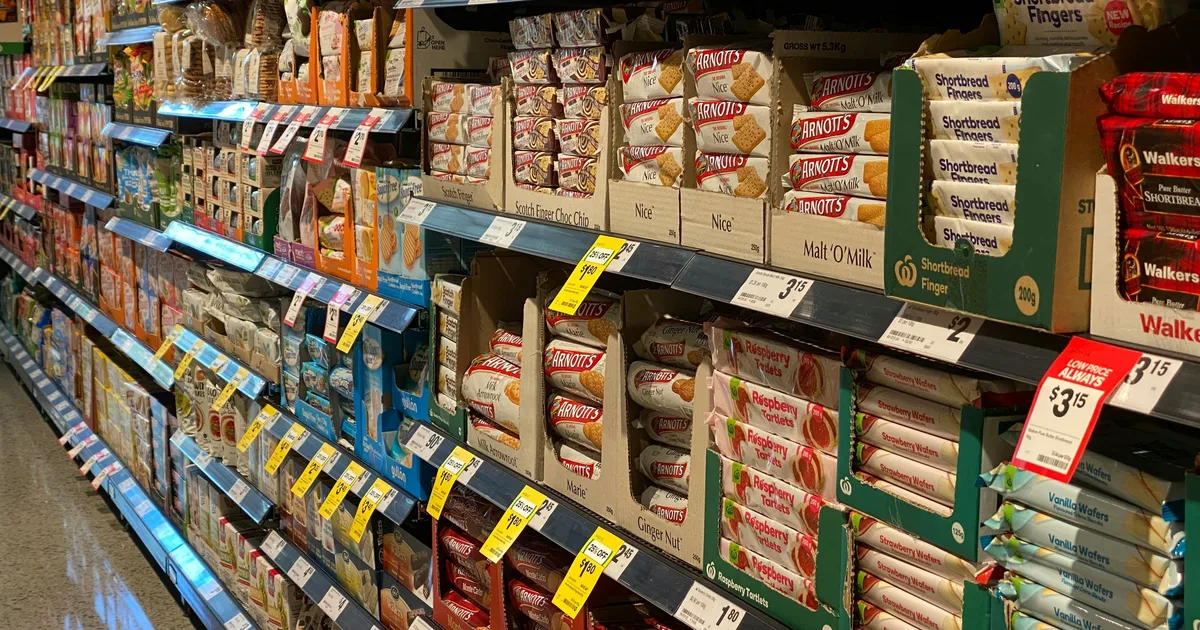
Will UK Supermarkets Bring In ‘Personalised Pricing’ Soon?

Published

on

Will UK Supermarkets Bring In 'Personalised Pricing' Soon?

Recently, the Bank of England suggested that UK supermarkets may bring in something called “dynamic” and “personalised” pricing.

It noted some sectors are experimenting with technology “that could enable dynamic pricing in the future, such as electronic shelf labels in supermarkets”.

But when HuffPost UK asked the British Retail Consortium, which represents multiple UK supermarkets, whether this is likely, its director of food and sustainability, Andrew Opie, said: “Supermarkets do not use, and have no plan to use, dynamic or surge pricing in their stores.”

He added that digital pricing displays, which some supermarkets use, allow retailers to update and check thousands of prices “in an effective way, so they can continue to offer great value for customers”.

Advertisement

But what is dynamic and personalised pricing, why do some think it’s coming soon, and why do others call worries of hourly price surges a “fantasy”?

What is dynamic pricing?

Dynamic pricing involves “frequent, real-time adjustments in response to demand and supply,” the Bank of England said. It’s been used for years in hospitality and air travel.

It’s why hotels have an “off-season”; rooms are usually cheaper when fewer people are on holiday, and can climb rapidly during peak season and large events like the World Cup.

Advertisement

But as tech and algorithms advance, the Bank of England claimed the practice is “spreading and evolving”.

The Times said that, in theory, that could mean an ice cream would cost you more on a sunny day if dynamic pricing were applied to supermarkets.

However, The Grocer called the idea of live, hourly price surges in our supermarkets “pure fantasy”.

What is personalised pricing?

Advertisement

Personalised pricing “goes further still and may involve tailoring the price each consumer is offered to their personal circumstances and consumption patterns,” said the Bank of England.

It responds to a data-backed profile that algorithms have built on you, your behaviour, and your spending habits.

In short, it could mean that Peter would pay £150 for a flight Paul is only charged £70 for. That might, again in theory, be because the algorithms know Peter is on a birthday trip (so the date is non-negotiable) and lives in a posher postcode.

The Bank of England said personalised pricing is “widely adopted across all sectors”.

Advertisement

“Largely, these are still simple forms of personalised pricing, for example, using loyalty cards and online customer accounts, and are widespread in recreational services like gym memberships,” it said.

Both dynamic and personalised pricing can lead to either lower or higher than average prices.

Should I be worried about dynamic and personalised pricing in UK supermarkets?

Supermarkets are pushing back against the idea. The British Retail Consortium told us supermarkets don’t use, and have no plans to introduce, dynamic or surge prices in the UK.

Advertisement

The Bank of England’s statement mentioned changeable electronic supermarket labels, rather than static paper ones, when discussing dynamic pricing, as well as AI and improved algorithms.

They said: “Digital pricing allows firms to change prices frequently at negligible cost.”

But, as we shared above, the British Retail Consortium’s director of food and sustainability said these are used to “update and check thousands of prices in an effective way, so they can continue to offer great value”.

Digital supermarket labels have been in place for years

Advertisement

It’s also worth noting that digital labels have been in place for a while in many UK stores.

The Grocer shared an article in April 2023 which said Aldi, Lidl, Tesco, Sainsbury’s, and ASDA were trialling, discussing, or had partly implemented digital labels.

In 2024, an Aldi spokesperson told HuffPost UK: “I can confirm Aldi began introducing electronic labels in 2021 to give colleagues more time on the shop floor to provide great service to our customers”.

Worries about how they may hurt our wallets are relatively old, too.

Advertisement

In 2023, the BBC said that yellow discount stickers may become a thing of the past “because supermarkets are adopting dynamic pricing, controlled by artificial intelligence (AI) software”.

This, they reported, would track food’s sell-by date and update its cost accordingly, meaning there’d be “no need for members of staff to walk around the fresh food aisles with a sticker gun towards the end of the day”.

That has, thankfully, not stopped workers in my local shops from whipping out the machine in 2026, though digital labels can update prices in real time.

Speaking to ITV News, consumer expert Martyn James said “when companies aren’t under scrutiny, sometimes the temptation [of dynamic or surge pricing] can get a little bit too much”, but a bigger threat could come from price hikes and greater food inflation following the US-Iran conflict.

Advertisement

Source link

Continue Reading

Politics

May 2026 Has Two Moons: How To See Blue And Flower Moons

Published

on

May 2026 Has Two Moons: How To See Blue And Flower Moons

May 2026 kicks off with a full “flower” moon. Because the moon is at its furthest point from the Earth – its apogee – this month’s lunar debut will be a smaller-looking “micromoon”.

But this month will see two full moons, and the second is a rare “blue moon”.

Here’s the date of both and how to catch them, as well as what a “blue moon” means:

What is a blue moon?

Advertisement

We usually get one full moon a month, or 12 a year.

But we get monthly “blue moons”, which is the kind that describes this May’s second moon, for roughly the same reason we get leap years: the maths isn’t exactly even.

There are different types of blue moons: more on that later.

Royal Museums Greenwich explained that the moon takes 29.5 days to complete all of its phases, while most months have 30 or 31 days.

Advertisement

So, while our calendar years have 365 days (except for leap years), 12 cycles of the moon take about 354 days. That’s a decent amount of leftover days.

As a result, every two to three years, we experience a 13th moon. This is called a “blue” moon, because unlike our regular moons, which are all called things like the “flower”, “blood”, and “wolf” moons, they aren’t named.

In 2018, we had two blue moons in a single year, a phenomenon not expected to happen again until 2037.

The last blue moon took place in August 2024, and the next one is set for May 2027.

Advertisement

There are different types of blue moons

As if that wasn’t enough information to take in, there are two kinds of blue moon: seasonal and monthly.

This May’s blue moon is a monthly blue moon. That means it’s the second full moon in a single month. Monthly blue moons are a newer phenomenon: the definition came about in 1946.

Monthly moons are technically “astronomically incorrect,” BBC Sky At Night Magazine explained, though this definition is the most common today. They were accidentally invented because James Hugh Pruett misunderstood some dates in a farmer’s almanack.

Advertisement

But 2027′s blue moon will be a seasonal blue moon, which is a much older term.

These relate to the astronomical season, which is marked by solstices and equinoxes; the period between a solstice and an equinox is an astronomical season.

Most of the time, these only get three moons, but sometimes, because the moon cycles aren’t perfectly aligned with these seasons, we get four.

A seasonal blue moon is the third moon in an astronomical season of four moons.

Advertisement

The next monthly blue moon will be on December 31, 2028.

When will we see May 2026′s flower “micromoon”?

This will rise at 6:23pm in the UK on Friday, May 1.

It’ll be visible in any dark, relatively clear sky throughout the night. And while some cloud cover is predicted, experts think this’ll be “patchy” – meaning catching the “micromoon” could be a waiting game.

Advertisement

When will we see May 2026′s “blue moon”?

It’ll rise on Sunday, May 31.

Like the flower moon, it should be visible in clear, dark skies.

Advertisement

Source link

Continue Reading

Trending

Copyright © 2025