
Crypto World
Bastion Secures Conditional OCC Nod for National Trust Bank Charter


Stablecoin infrastructure provider Bastion says the U.S. Office of the Comptroller of the Currency (OCC) has granted it preliminary, conditional approval to establish a national trust bank charter. The move would bring Bastion’s existing state-licensed trust activities under federal supervision—an important development for a sector that is increasingly expected to operate like regulated financial plumbing rather than experimental software.
Under the structure described by Bastion, the proposed entity—licensed as Bastion Platforms National Trust Company—would not function like a traditional commercial bank. Instead, it would be limited to activities such as stablecoin custody and wallets, payment infrastructure, and white-label issuance, according to the company’s statement.
Key takeaways
- Bastion received preliminary conditional approval from the OCC for a national trust bank charter, adding federal oversight to its state trust licenses.
- The charter would be housed in a federally regulated entity, but it would not allow the institution to accept deposits or make loans.
- Bastion’s planned offering is centered on stablecoin custody, wallet services, payment infrastructure, and white-label issuance.
- The company has been working toward federal supervision after acquiring a New York trust charter in February 2025.
What the OCC’s conditional approval changes
According to a news release, the OCC’s approval is conditional and preliminary, meaning it is an early regulatory step rather than a final operational green light. Still, the practical significance is clear: the charter would extend federal supervision from the OCC over operations that Bastion already conducts under state licensing.
The OCC structure also clarifies the scope of what this “trust bank” model is meant to do. Bastion said the proposed institution would be unable to accept deposits or make loans—distinguishing it from conventional banks and keeping the focus on stablecoin-related services and related financial infrastructure.
A custody-first model built for stablecoin rails
Bastion’s charter plan is tightly tied to stablecoin infrastructure use cases. If approved, it would support stablecoin custody and wallet offerings, provide payment infrastructure, and enable white-label issuance through a single federally regulated entity.
Bastion frames the charter push as a response to the industry’s maturation. In the company’s statement, CEO Nassim Eddequiouaq said: “Stablecoins have moved from emerging technology into core financial infrastructure, and that requires a different standard of trust, governance and regulatory rigor.”
That perspective matters for market participants who increasingly treat stablecoins as settlement and payments infrastructure rather than niche tokens. For custodial and issuance providers, being under the OCC umbrella could also make compliance processes more standardized, potentially simplifying how clients assess regulatory posture—though the final contours will depend on how the bank charter terms are implemented and supervised.
Bastion’s path toward federal oversight
The conditional approval does not appear out of thin air. Bastion said it has been moving toward federal supervision since it acquired its New York trust charter in February 2025. By first establishing trust licensing at the state level and then seeking federal alignment, the company has followed a staged approach that mirrors how other regulated crypto infrastructure providers have sought to scale compliance readiness alongside product expansion.
Earlier reporting by Cointelegraph also placed Bastion on the radar as a steadily funded stablecoin infrastructure company. In September 2025, Cointelegraph reported that Bastion raised $14.6 million in a round led by Coinbase Ventures, with participation including Japanese tech giant Sony, the crypto-related investment arms of Samsung (through its investment subsidiary), Andreessen Horowitz, and Hashed.
While funding does not replace regulatory approval, it does help explain why companies like Bastion can pursue complex chartering processes. It also highlights how stablecoin infrastructure has become a priority for major investors, particularly those positioned to support regulated financial rails.
Broader trend: more crypto firms pursuing OCC trust charters
Bastion’s conditional approval arrives amid an ongoing wave of OCC charter activity involving crypto infrastructure firms. Cointelegraph has reported that Ripple received conditional approval for a similar charter, while Circle and BitGo have received final approval. Cointelegraph also noted applications from Kraken parent Payward, Zerohash, and Block (Jack Dorsey’s company), among others.
This matters because the trust bank charter pathway is one of the more concrete ways for stablecoin and digital-asset infrastructure providers to fit into existing U.S. banking oversight frameworks. However, the differences in approval status—conditional versus final—and in each applicant’s planned scope (such as whether deposits or loans are involved) may result in uneven timelines and uneven expectations across the industry.
For readers watching the sector, Bastion’s announcement underscores a practical reality: stablecoin infrastructure is increasingly being built around regulatory architecture, not just technology. The next key step will be whether the conditional approval progresses to full approval and how regulators define the operational boundaries of the chartered trust bank.
Investors, builders, and business partners should watch what happens after this preliminary stage: whether Bastion’s application clears final OCC requirements, how the bank charter’s scope is implemented for custody, wallets, payments, and issuance, and whether other applicants in the same pipeline receive similar milestones.



A Hong Kong court has jailed a former China Construction Bank (Asia) relationship manager for four years after he took more than $470,000 in Tether (USDT) to authenticate forged bank instruments with a stated value above $1.6 billion.
The Independent Commission Against Corruption said Lam Chun-yin, 32, worked in consumer banking at a Causeway Bay retail branch. His duties never involved letters of credit, and the bank never authorized him to handle them.
How the Crypto Bribery Scheme Turned a Retail Banker Into a Guarantor
The paperwork traces back to Vesttoo Limited, an overseas fintech firm that has since ceased operations. Its platform facilitated insurance-related investment deals. Investors had to post bank-issued standby letters of credit as a guarantee.
Yu Po Holdings Limited became an investor through the platform in early 2022. A crime syndicate then arranged for Lam to falsely present himself as the contact point at China Construction Bank Corporation for issuing those guarantees.
Between April and June 2022, Lam conspired with a Vesttoo department head and associates to accept Tether, the ICAC said. He authenticated multiple standby letters of credit that falsely claimed to come from the bank, plus two collateral letters that falsely claimed to be issued by Yu Po and endorsed by it.
“The incident was uncovered in an internal investigation by CCB (Asia), after which the bank lodged a corruption complaint with the ICAC and rendered full assistance. The ICAC enquiries revealed that neither CCB nor its sister companies had issued any of the relevant standby L/Cs and collateral letters,” the press release said.
Judge Ernest Lin Kam-hung took six years as a starting point and cut a third for the guilty plea. He also ordered Lam to repay about HK$3.7 million to CCB (Asia), matching the bribes.
Follow us on X to get the latest news as it happens
Crypto Keeps Turning Up in Hong Kong Case Files
The ICAC said those involved attempted to conceal the scheme by channeling the bribe payments indirectly through cryptocurrency. The agency has applied to the court for arrest warrants for others implicated in the case.
Digital assets feature elsewhere in the city’s enforcement record. Hong Kong police froze virtual assets worth HK$480 million during 2025.
The city also prosecuted 16 people in November 2025 over a separate virtual asset trading platform fraud. That case involved more than 2,700 victims and losses above HK$1.6 billion.
With the ICAC seeking further arrests, the Hong Kong chapter of the Vesttoo affair is not closed.
Subscribe to our YouTube channel to watch leaders and journalists provide expert insights
The post Hong Kong Jails Ex-Banker Who Sold His Signature for Crypto appeared first on BeInCrypto.
According to recent data shared by Santiment Intelligence, Ethereum’s recent rise past $2,600 came on the heels of returning whale activity, an impressive record for non-empty wallets, and the broader developments on the staking front.
Although the rise in whale transactions does not necessarily indicate outright accumulation since large transfers can represent both buying and selling, the actual price moves of the underlying asset leaned toward purchases.
Wallet Count Hits New Record
The data from the intelligence provided notes that the number of non-empty Ethereum wallets has climbed to a new record of over 207 million. The figure suggests that ETH ownership continues to spread even after months of relatively weak price action. At the same time, a substantial portion of Ethereum’s circulating supply remains committed to the network rather than sitting idle.
With entities such as Bitmine actively staking their substantial tokens, the number of ETH currently staked has grown to over 40 million. In addition, Ethereum continues to secure the leading place in terms of total value locked in decentralized finance with roughly $50 billion.
This combination highlights a broader point behind the latest recovery that drove the largest altcoin from under $2,400 a few days ago to over $2,600 now. Ethereum’s investment case is not being driven only by short-term price speculation. Instead, ETH remains deeply embedded in staking, stablecoins, lending, DEXes, and other DeFi applications.
Separately, using the network has become increasingly cheaper as the average transaction fee has fallen to under $0.1, down more than 85% from this year’s peak in April at $0.72.
Can ETH Keep Pumping?
The improving on-chain backdrop comes as the underlying asset approaches another important technical area. Popular analyst Ted Pillows has outlined the current resistance zone as a major hurdle in ETH’s path to recovery, with a sustained breakout potentially opening the door to new local peaks.
On the short-term scale, Pillows said that if ETH closes above $2,550 this week, it will solidify its chances to run toward $2,900-$3,000, similar to what Ali Martinez predicted recently. The longer timeframe, though, might be even more positive for the altcoin, as Pillows outlined a massive target of up to $10,000 since the asset has “a lot of catching up to do with global M2 supply.”
Ethereum has a lot of catching up to do with global M2 supply.
$10,000 ETH remains the target by 2029. pic.twitter.com/u8M7KN9ywZ
— Ted (@TedPillows) September 19, 2026
The post ETH Breaks Out as Whales Wake Up and Ethereum Wallets Hit Record High appeared first on CryptoPotato.


But its numbers show no sign of them arriving. Solana’s decentralized exchanges processed about $17 billion during Sept. 10-16, down 8% from the preceding week, while PumpSwap, the exchange tied to memecoin launchpad Pump.fun, recorded $2.9 billion, down 36% against Pons’ 37%.
Specific tokens may have pulled traders between the networks, but the chain-wide figures do not show a wholesale migration from Robinhood to Solana.
However, direct bridge flows show some money did move toward Solana. deBridge, a platform that enables token transfers between the two networks, processed $8.2 million from Robinhood to Solana during Sept. 10-16 and just over $6 million in the opposite direction, resulting in a net outflow of about $2 million.
The previous week was almost perfectly balanced, with $13.4 million leaving Robinhood and $13.3 million entering. Transfer counts then moved toward Robinhood, with about 5,000 Solana-to-Robinhood orders during the latest week against 3,800 going the other way, per data accessed by CoinDesk.
Strip out the wildest days and the same picture holds. Robinhood Chain averaged 11.5 million transactions and about $4 million in daily fees during the seven days ending Sept. 4, against 10.8 million transactions and $641,000 in fees in the seven days ending Sept. 16.

A federal judge’s ruling in the U.S. government’s digital advertising antitrust case versus Alphabet (GOOGL) could have upside for companies that help publishers sell ads, say Wall Street analysts. Google stock edged up on Thursday after the federal judge unsealed a detailed remedies decision in the antitrust case. Magnite (MGNI) and PubMatic (PUBM) are among companies that operate supply-side platforms.…
Copyright ©2026 Investor’s Business Daily, LLC. All rights reserved. 87990cbe856818d5eddac44c7b1cdeb8

On August 5, Cencora (NYSE:COR) reported results for its fiscal third quarter, which closed on June 30, and the headline numbers looked clean. Revenue rose 5.1% to $84.8 billion, adjusted earnings per share climbed 12.0% to $4.48, and management raised its full-year adjusted EPS outlook to $17.75 to $17.95. The company also repurchased $1 billion of its own stock during the quarter. But the profit story has moving parts, and a few of them pull in opposite directions.

Profits Are Outrunning Sales
Start with the gap between profit growth and sales growth. Adjusted operating income rose 17.0% while revenue grew only 5.1%. Much of the help came from gross profit, which jumped 23.2% on an adjusted basis as both segments contributed and the OneOncology acquisition in February lifted margins in the US business. In plain terms, adjusted gross margin widened 61 basis points to 4.16%, so the company keeps more gross profit from every dollar it sells.
The strength was not confined to one corner, either. US Healthcare Solutions grew operating income 15.9% on higher pharmaceutical sales and the OneOncology deal, while specialty volume to health systems and physician groups lifted its revenue. International Healthcare Solutions did better still, with operating income up 20.8% on strength in European distribution and global specialty logistics. Management also put cash to work, completing in one quarter the $1 billion of buybacks it had expected to finish by the close of calendar 2026. The board declared a $0.60 quarterly dividend as well, payable August 31, to holders of record on August 14.
The Bill Behind the Growth
Growth is costing more than it first appears. Adjusted operating expenses jumped 26.8%, faster than adjusted gross profit, because OneOncology brought expenses along with its profits. Even so, adjusted operating income amounts to just 1.46% of revenue, a thin cushion on a business this large. Financing adds weight too. Cencora funded part of the purchase with new senior notes plus variable-rate term loans, and net interest expense rose $58.9 million from a year earlier.
The sales mix carries its own drag. GLP-1 drugs for diabetes and weight loss are adding to revenue, but they earn lower gross margins, so each dollar of that growth is worth less to profit. Meanwhile, an oncology customer Cencora lost in 2025, and lower sales to a large mail order customer both held back US revenue, as did lower manufacturer prices on some brand pharmaceuticals. Cencora is also exploring strategic alternatives for a group of other businesses, and its April divestiture of US Consulting Services trimmed consulting sales.
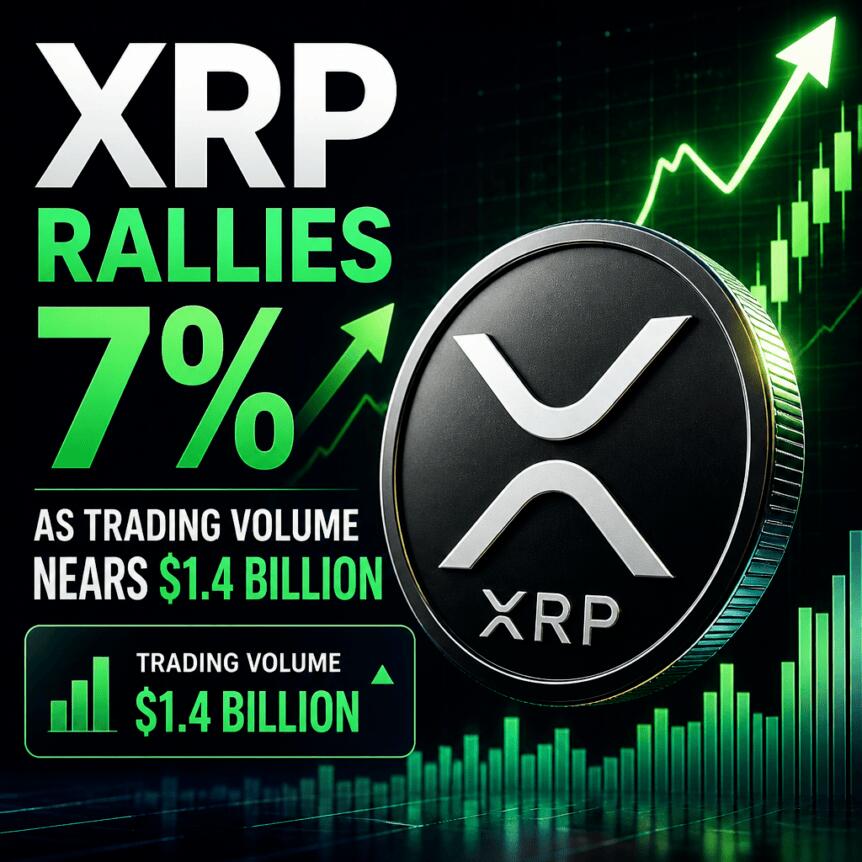
XRP jumped roughly 7% over the weekend, pushing the token back above $1.41. Spot trading volume surged to about $1.36 billion in 24 hours, and total tracked turnover across markets climbed close to $4.9 billion. The rebound followed a broader crypto rally after Bitcoin broke through $80,000.
The gains stemmed largely from a short squeeze rather than fresh buying pressure. Traders holding bearish XRP positions lost roughly $8 million as prices reversed higher. Long positions absorbed far smaller losses, near $2.4 million, confirming the move mainly punished short sellers.
Futures Activity Still Outpaces Spot Trading
XRP futures volume reached about $5.7 billion, more than four times the spot figure. That gap leaves the rally exposed if leveraged positions unwind quickly. Futures activity had already hit a six-month high in August, a pattern that previously came before sharp price swings.
The rally also arrived without any major fundamental trigger. XRP had slipped toward the $1.23 to $1.30 range earlier in September. That decline followed a failed Senate cloture vote on the CLARITY Act, which fell one vote short of advancing. Saturday’s bounce therefore looks more like a technical relief move than a shift driven by new developments.
ETF Demand Offers Support, But Whale Deposits Raise Risk
US spot XRP ETFs have now drawn in more than $1.7 billion in inflows. That steady institutional demand gives the token a measure of underlying support. Still, roughly 1.6 billion XRP moved into Binance wallets over the past 30 days, a six-month high for such deposits.
Analysts have suggested the deposits could reflect repositioning rather than an imminent sell-off. Binance’s XRP reserves, however, sit near a 69-day high, and further gains could still trigger new selling pressure. Ripple’s broader business case keeps building regardless, with XRP and its RLUSD stablecoin now integrated into payment platforms including Stripe and Tempo.
A new derivatives venue adds another variable. The Moscow Exchange plans to launch XRP perpetual futures contracts on September 22. That expansion could bring additional leverage into the market just as XRP works to hold its ground above the $1 mark.
Whether XRP can sustain the current move depends on volume holding above $1 billion through the week. Continued ETF inflows and slowing Binance deposits would support a push toward $1.45 and $1.50. Without that, the rally risks becoming another short-lived bounce within XRP’s recent $1.23 to $1.50 trading range.
“The dead cat continues to bounce,” wrote investor Jason Calacanis as bitcoin returned to the $80,000 level on Friday.
“What is Bitcoin, 17 years later?”
Calacanis went on to argue that Bitcoin isn’t great for transactions or smart contracts, has an intimidating user experience, and no longer captures the public’s imagination.
“If it comes up at the dinner party,” said Calacanis, “it’s followed by a hearty ‘remember that!’”
“Folks expect bitcoin to be stable and that it’s no longer a way to get rich quick,” he continued. “It’s boring … Advocates went from pirates to suits in orange ties, awkwardly sharing cringe memes — just like the cool kids do!”
“If Bitcoin were going to reach mass adoption and an important use case, it does better than anyone else, it would have by now.”
‘Preserving wealth across generations’
“You’ve watched Bitcoin grow since 2011,” responded Michael Saylor. “It’s now a $1.6 trillion success and the world’s most valuable digital asset.”
“Digital Capital is the killer app,” Saylor continued. “Preserving wealth across generations is a bigger ambition than entertaining a dinner party.”
“The orange tie stays.”


Two crypto projects, a16z-backed layer-1 network Linera and permissionless oracle protocol Switchboard, announced closures a day apart.
The shutdowns land in a year that has already buried more than 260 crypto projects, according to the tracker RootData, which is still adding names to its 2026 list.
Linera Ran Out of Road Before Mainnet
Linera told its community on September 18 that it had ceased operations immediately and for the foreseeable future. A sale on the Sonar platform attracted close to $900,000 in commitments, below the $1.5 million USDC minimum target. Thus, the team refunded every contribution.
Follow us on X to get the latest news as it happens
The team then looked for emergency funding to carry the company to mainnet, but the efforts did not succeed. Linera had raised $12 million across two seed rounds, with a16z crypto leading the first in 2022 and Borderless Capital leading the second in 2023.
Linera is switching off the app and closing its Discord server. Points balances will be preserved in the records, though the team said outright that it cannot guarantee the points will “receive any consideration in the future.”
“The decision does not reflect on the technology, the team, or this community…We know this is not the news you hoped for, and it is not the news we hoped to deliver. We still hope to finish the protocol and launch applications on it in the future,” the announcement read.
Switchboard Points to AI and the Crypto Bear Market
Switchboard Technology Labs followed on September 19. It told developers to move to providers such as Pyth or RedStone.
“In light of recent exploits and after having exhausted all possible alternatives, Switchboard Technology Labs Inc. (one of the core development contributors to the Switchboard Protocol & Switchboard Protocol Foundation Group) has made the difficult decision to wind-down remaining operations. Any remaining support will end on 09/25/2026. One week from now,” the team said.
Its statement blamed the market around it rather than the product. AI tools have cut the cost of building an oracle, the bear market has slowed new chain launches, and shrunk budgets.
“In many ways, crypto has won, there’s less of a need for data intermediaries,” the statement added.
RootData counts bankruptcies, announced closures, and long-dormant sites in the same tally, so its 200-plus entries describe very different endings. The bear market has thinned the field, while hacks have also pushed several teams over the line.
Subscribe to our YouTube channel to watch leaders and journalists provide expert insights
The post Crypto Bear Market Claims 2 More: Linera and Switchboard Shut Down Back to Back appeared first on BeInCrypto.

Bitcoin showed impressive resilience over the past several days, even as everything was seemingly going against it. From the CLARITY Act setback in the US Senate to the Fed and BOJ hiking rates, the cryptocurrency, being a risk-on asset, was expected to suffer.
And it did for a bit, slumping to a three-week low at $75,000 on Tuesday and Wednesday. However, the initial shock was quickly absorbed, and the bulls returned on Friday with a major push that drove the asset to over $81,000 for a two-week peak. Moreover, it has remained there on Saturday, unlike the previous breakout attempts, which has prompted some analysts to predict the start of the bull market – but only if this condition is met.
The Real Test
Crypto Rover and CryptoGoos jointly highlighted $81,000 as the immediate breakout level, arguing that a successful move through it could quickly put $100,000 back on the table, followed by potentially $120,000. The asset has already tested the first part of that highly optimistic scenario, but another closely watched technical barrier just sits above the current level.
CryptoGoos pointed to bitcoin’s 50-week moving average, positioned at around $81,700 at the moment. The analyst said reclaiming that line would represent confirmation that BTC has transitioned back into a bull market. Recall that bitcoin tested it on a couple of occasions several weeks ago, but to no permanent avail.
The level is particularly interesting because other data identifies the low-$82,000 region as an important resistance zone. Bitcoin’s 365-day MA has recently hovered there, reinforcing the idea that the current zone could be more significant than the psychological $80,000 mark itself.
As such, breaking past $80,000 and even $81,000 might not be enough for now, as BTC would need to overcome the $82,000 area to prove it has the power to turn this into something more than another failed breakout attempt.
Another Major Gate
Fellow analyst EGRAG CRYPTO offered an even higher threshold before declaring that BTC’s macro bullish structure has returned. He outlined the 100-period EMA on the asset’s five-day chart, which currently sits near $90,000. Falling below this indicator has historically coincided with bearish pressure, but reclaiming it, retesting it, and subsequently bouncing has provided much stronger bullish confirmation.
Consequently, the analyst believes a five-day close above $90,000 followed by a successful retest would be necessary before the bull can officially call it their own market phase.
The post Bitcoin Bull Market Confirmed If BTC Closes the Week Above This Key Level: Analysts appeared first on CryptoPotato.
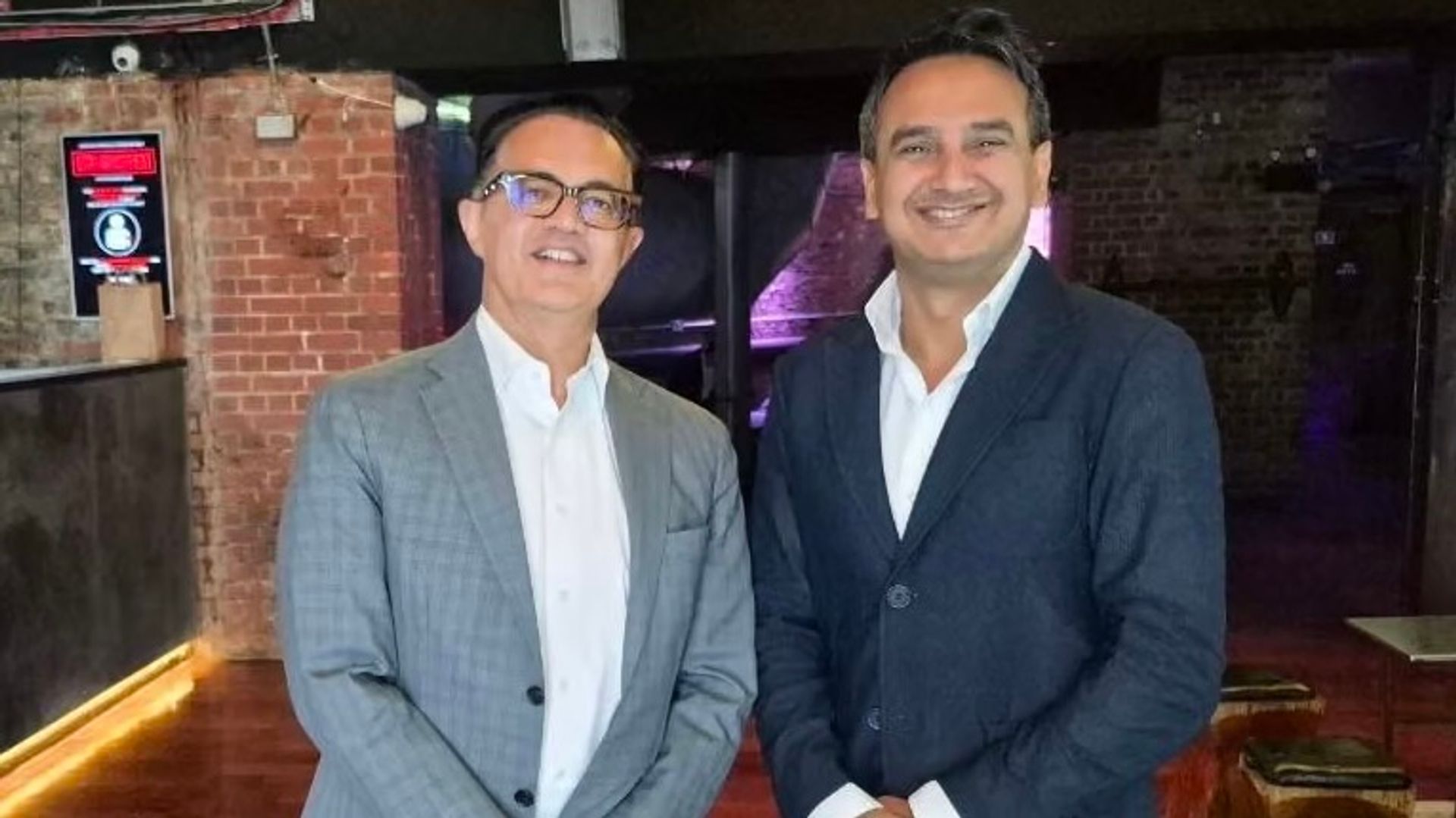
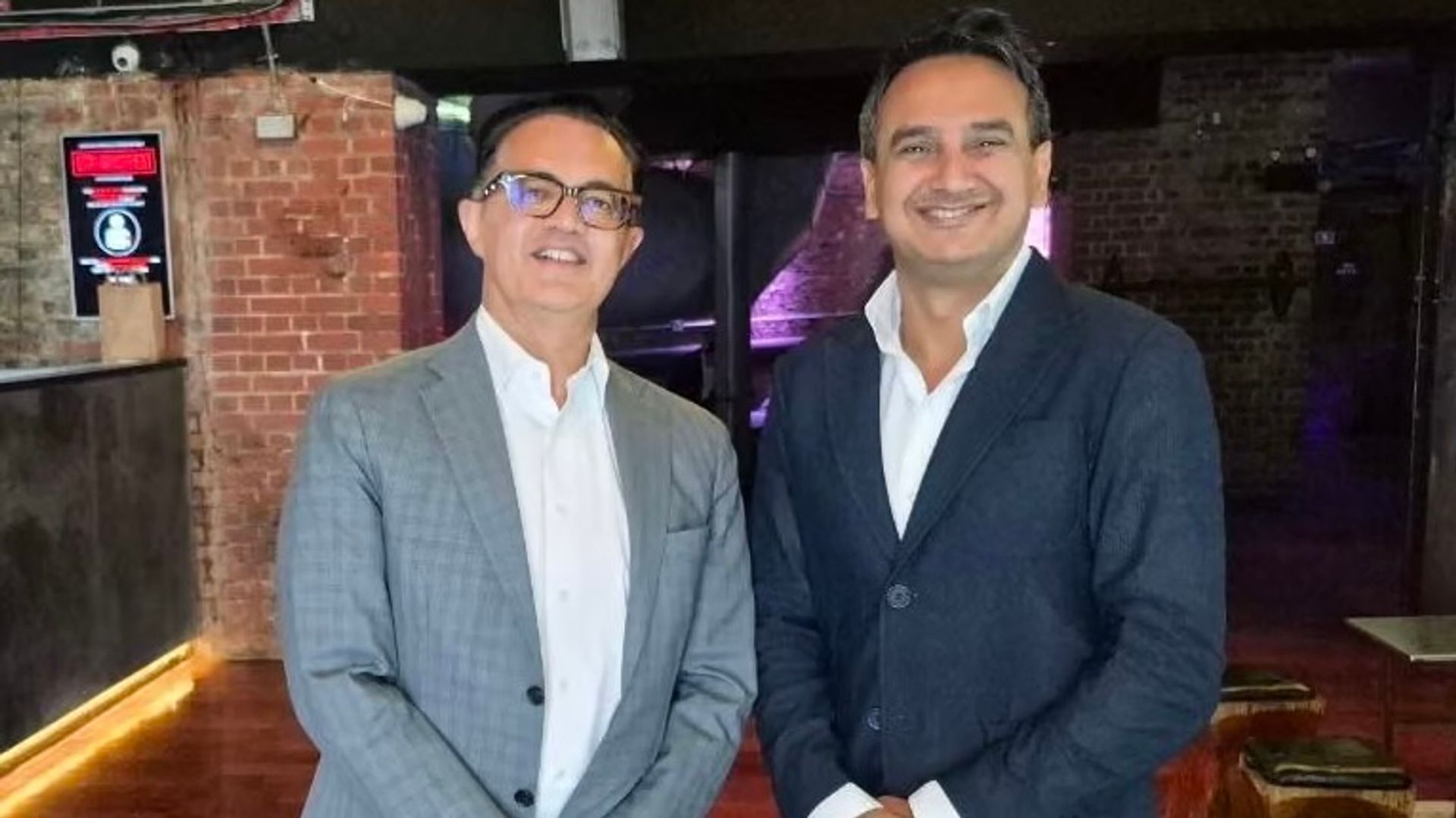
Treasury desks at major institutions are juggling three systems for the same job, said Jerald David, CEO of Lynq Network. A JPMorgan tokenized deposit for one client, a regulated stablecoin for another, a conventional correspondent account for a third. They move money on for the same reasons, but on different infrastructure.
“What clients can’t afford are separate pools of liquidity locked up on every network they access, because idle liquidity fragmented across five networks is five times the capital inefficiency of idle liquidity sitting in one place,” he said.
Unlike a stablecoin, a tokenized deposit remains a claim on the bank that issued it. It can bear interest, remain within the regulated banking system and potentially be programmed to settle against tokenized assets. The question is whether banks can deliver those benefits to consumers while maintaining privacy, compliance and control over who holds the deposit.
Interest-bearing deposits
Bhandari said Monument, unlike stablecoin issuers, holds a banking licence that allows it to pay interest on deposits and plans to offer tokenized savings accounts that earn yield.
President of the Midnight Foundation Fahmi Syed said public blockchain infrastructure presents a separate challenge: banks cannot expose clients’ transaction data and commercial relationships.
“Once you create a private blockchain, how do you then speak to another private blockchain? You then have to use a bridge or some other mechanism, and at that point, you have data leakage.” JPMorgan and Citibank have recognized this themselves, Syed said.
U.S., China top officials to meet in New York ahead of Trump-Xi summit – Bloomberg

Hong Kong Jails Ex-Banker Who Sold His Signature for Crypto

Sam Leavitt injury update: Is LSU QB playing vs. Ole Miss tonight?




![No Money [ DJ BEN RMX ]](https://wordupnews.com/wp-content/uploads/2026/02/1770218101_maxresdefault-80x80.jpg)

-

 Tech6 days ago
The Latest Weird Thing to Play Doom Is the Mapped-Out Brain of a Fruit Fly
-

 Fashion20 hours ago
Weekend Open Thread: Talbots – Corporette.com
-

 Crypto World5 days ago
Kraken Lets xStocks Holders Earn Yield Through DeFi
-

 Crypto World3 days ago
US Charges Robinhood Engineers Over Crypto Listing Trades
-

 Crypto World5 days ago
Revolut Attackers Warn of Ongoing Daily Customer Data Leaks
-

 Crypto World3 days ago
What Is the Status of the U.S.-Iran Peace Talks? Here's What Both Sides Are Saying
-

 Crypto World7 days ago
Can AI Build a Startup in 72 Hours? Elon Musk's Team Will Livestream the Test
-

 Crypto World5 days ago
Elon Musk Drops a Bombshell: Grok 5 Could Be the AGI Breakthrough
-

 Business6 days ago
Rivals Sam Altman and Elon Musk Rally Behind Dario Amodei’s Call for a Slowdown in AI Development
-

 Crypto World6 days ago
New Tesla Roadster Uses SpaceX Tech. Will It Impact the Stock Price?
-
 NewsBeat5 days ago
‘Sick conspiracy’: Trump says only guardrails AI needs is ‘a strong and smart (High IQ!) president’ in all-caps rant
-

 Crypto World4 days ago
Robinhood engineers charged over $50K crypto scheme
-

 Crypto World4 days ago
NVIDIA Analysis: Attempted Rising Wedge Breakout Amid Pressure on the AI Sector
-
Business5 days ago
SK Hynix ADRs Fall More Than 6% as Memory Rally Breaks on Fears of Slower AI Spending
-

 Crypto World5 days ago
DOJ Seeks to Seize $61M in Iran Oil Funds From Binance Accounts It Vouched For
-
 NewsBeat6 days ago
Last Night of the Proms pays moving tribute to Dolly Parton as Sheridan Smith wears a gold sequin jumpsuit in memory of the Queen of Country
-
Crypto World5 days ago
Can Circle’s Arc Repeat Robinhood Chain’s Meme Coin Boom?
-

 Crypto World6 days ago
Goldman Sachs backs 25bp Fed hike after CPI
-

 Crypto World5 days ago
3 Token Unlocks to Watch in the Third Week of September 2026
-
 NewsBeat15 hours ago
Trump says US has reached an agreement to take permanent control of Greenland’s security
You must be logged in to post a comment Login