

Crypto World
Binance Accused of Processing $850M in Crypto Tied to Iranian Networks


Key Points
- A Wall Street Journal investigation alleges that $850 million in cryptocurrency transactions connected to networks associated with Iran’s Islamic Revolutionary Guard Corps passed through Binance over a two-year period.
- Babak Zanjani, an Iranian businessman, allegedly operated a payment network via his company Zedcex through one Binance account that continued operating despite receiving more than a dozen compliance warnings.
- Internal compliance teams at Binance reportedly flagged Iranian access and recommended account closures, but the accounts allegedly remained operational for over 15 months.
- According to reports, Iran’s central bank transferred $107 million into Binance accounts in 2025, while a foreign law enforcement entity identified $260 million in transactions directly connected to sanctioned Iranian organizations.
- Richard Teng, Binance’s CEO, has rejected these allegations as “fundamentally inaccurate,” with the exchange pursuing a defamation case against the Journal.
The world’s leading cryptocurrency exchange, Binance, finds itself facing renewed allegations following a Wall Street Journal investigation that claims the platform processed $850 million in transactions connected to a sanctioned Iranian financier across a two-year timeframe.
The investigation pointed to Babak Zanjani, who was re-sanctioned by United States authorities in January, as running a cryptocurrency payment operation through Binance user accounts. The Journal reported that Zanjani’s company, Zedcex, operated alongside accounts registered to his sister, a romantic partner, and a company executive, all accessed via identical devices — a red flag that Binance’s internal compliance team identified as potential sanctions circumvention.
Compliance Warnings Allegedly Went Unheeded
Binance’s internal monitoring systems identified that the Zedcex account was being accessed from Tehran in late 2024. Despite generating over a dozen internal compliance alerts, the account allegedly continued to function for more than 15 months. Internal investigators reportedly pushed for the accounts to be terminated and for authorities to be notified, yet according to the Journal’s reporting, those recommendations were not implemented.
The allegations extend beyond the Zanjani-connected network. The Journal’s investigation claims that Iran’s central bank deposited $107 million in cryptocurrency into Binance accounts during 2025. Additionally, a foreign law enforcement agency reportedly traced approximately $260 million in transactions flowing directly between Binance accounts and Iranian entities throughout 2024 and 2025.
In 2023, Binance admitted guilt to violations of anti-money laundering regulations and sanctions protocols, resulting in a historic $4.3 billion penalty. The exchange committed to comprehensive compliance reforms as part of that settlement. Nevertheless, the Journal maintains that the purported Iranian-linked transactions recommenced soon afterward.
Exchange Leadership Disputes the Claims
Binance CEO Richard Teng has forcefully challenged the allegations through a statement on X, characterizing the Journal’s reporting as “fundamentally inaccurate.” He maintained that Binance has never authorized transactions involving sanctioned parties, and that any suspicious activity identified occurred prior to those individuals being designated under US sanctions.
Teng further stated that Binance had already conducted internal investigations into these matters before the Journal reached out, and that critical facts provided by the exchange were omitted from the published story. “Binance has zero-tolerance for illicit activity,” Teng declared.
The exchange has initiated defamation proceedings against the Wall Street Journal, requesting monetary damages and a jury trial. Binance informed Cointelegraph that it maintains ongoing cooperation with regulatory bodies and law enforcement agencies, while denying awareness of a Department of Justice probe that was reported separately in March.
In February, the Journal had previously claimed that Binance terminated an internal investigation into approximately $1 billion that allegedly reached networks connected to Iranian proxy organizations. Binance disputed those claims as well, asserting that its internal investigation remained active.
The US Department of the Treasury has cautioned financial institutions about potential repercussions for enabling transfers on behalf of Iran, and has seized $344 million in Iranian-controlled cryptocurrency through its “Economic Fury” initiative.
Treasury representatives also convened with Binance leadership in March to address compliance issues related to the 2023 plea agreement, including transactions involving Iranian entities, according to individuals with knowledge of the discussions.




Noam Shazeer, Google’s vice president of engineering and co-lead of its Gemini AI models, announced on June 18 that he is leaving the company to join OpenAI.
The departure lands less than two years after Google paid a reported $2.7 billion to bring Shazeer back from Character.AI, the startup he co-founded after leaving Google in 2021.
A Costly Exit for Google
Shazeer, who first joined Google in 2000, is one of the most consequential researchers in modern AI. He co-authored the landmark 2017 paper “Attention Is All You Need.” That paper introduced the Transformer architecture underlying virtually every major language model today.
The news was confirmed by Shazeer on X, and Google made a brief statement: “We are grateful for Noam’s meaningful contributions to Google over the years.”
Timing Raises Stakes for OpenAI’s IPO Push
The move comes as OpenAI pushes ahead with plans for a public offering. The company confidentially filed an S-1 with the U.S. Securities and Exchange Commission earlier this month. Goldman Sachs and Morgan Stanley are advising on a listing that could exceed $1 trillion.
Adding Shazeer to its roster strengthens OpenAI’s technical credibility at a sensitive moment. The company has faced growing pressure from rivals. For instance, Anthropic is gaining ground in enterprise markets and competing in a crowded 2026 IPO wave alongside SpaceX.
Whether Shazeer’s arrival shifts product momentum ahead of the public listing is a question investors will likely watch closely.
The post Gemini Co-Lead Noam Shazeer Quits Google, Joins OpenAI Before IPO appeared first on BeInCrypto.
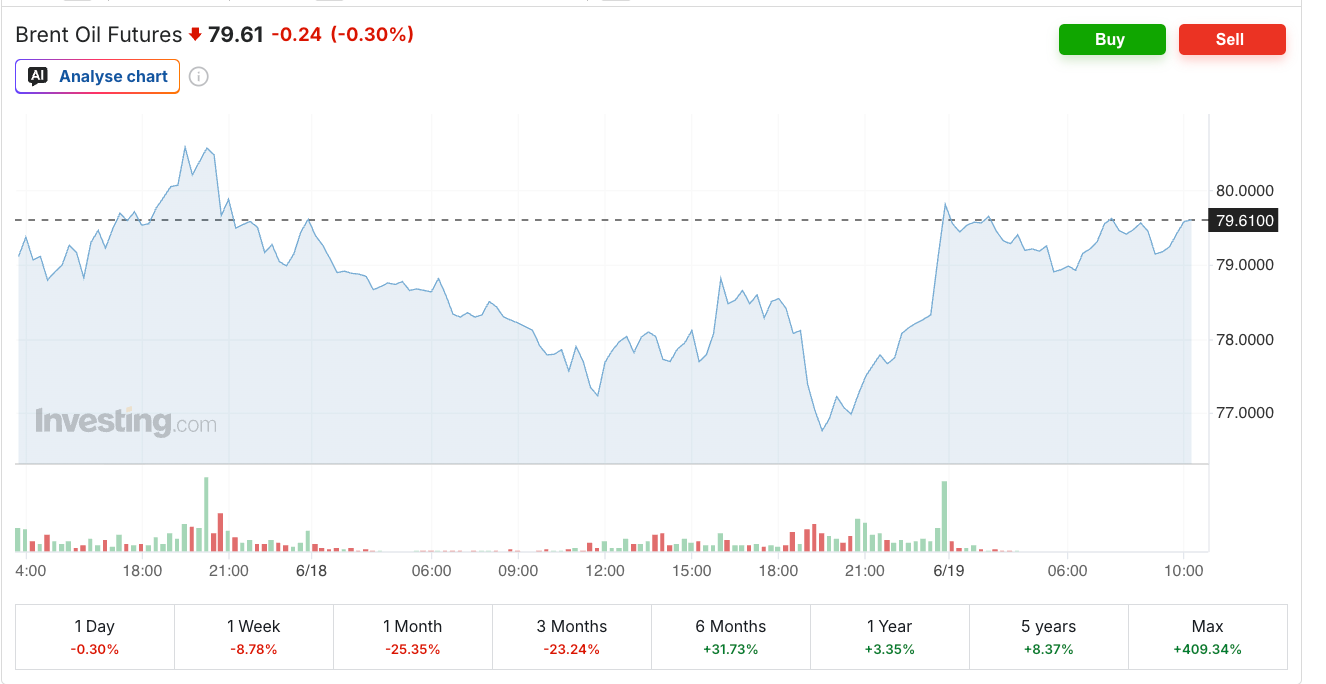
Brent crude just logged its steepest weekly drop in months, yet the Bitcoin (BTC) price barely budged. For the record, Brent is down 9% week-on-week against BTC’s 1%. That split is testing the oil and Bitcoin link many traders and market experts treat as a rule.
Several market participants read falling oil as a green light for a Bitcoin rebound. The real story runs through inflation, market positioning, and the network’s own miners, and it points somewhere unexpected.
Why Traders Tie Bitcoin’s Bottom to Falling Oil
Brent crude, the global oil benchmark, slid below $80 this week, down about 9%. WTI crude, the US benchmark, fell with it toward the mid-$70s.


The US-Iran deal to reopen the Strait of Hormuz drove crude sharply lower.
A view circulating among traders holds that whenever oil collapses, Bitcoin carves a macro bottom soon after. Some expect oil to climb again later this year on renewed Iran-Israel tension and a probable Hormuz toll. That rebound, they argue, would force one final Bitcoin flush that marks the low.
Meanwhile, that risk is not imaginary. Iran just suspended its 60-day talks with the US, which could lift crude again. Yet one price relationship rarely tells the full story, and five years of data barely back the Bitcoin oil link.
Five Years of Data Show the Bitcoin Oil Link Barely Exists
Over five years, the Bitcoin oil correlation with crude sits at just 0.036. Correlation runs from +1, where assets move in lockstep, to −1, where they move opposite. At 0.036, oil and Bitcoin show no reliable link.

Still, one average number can mislead. It is often suspected that the link only appears when oil turns turbulent. So we split the history into two groups, calm oil markets and wildly swinging ones. If oil and Bitcoin behaved differently in each, a single figure would blur it.

Even split, both readings come back near zero. The correlation is −0.02 when oil swings hard and +0.05 when it stays calm. Both sit close to zero, so neither setting shows a true link.
Want more token insights like this? Sign up for Editor Harsh Notariya’s Daily Crypto Newsletter here.
The latest 30-day reading is −0.21. That means oil and Bitcoin have drifted slightly opposite lately (agreed), but only weakly. In short, no market condition makes oil a reliable driver of Bitcoin.
The chain from oil to Bitcoin is also partly broken. Oil moves breakeven inflation, the market’s gauge of expected price growth, at a moderate 0.41. However, that inflation signal barely reaches real yields, which are bond returns after inflation. Those yields tie only weakly to Bitcoin. Therefore, the Bitcoin-Oil link loses its steam while traveling from the first point to the last.
Instead, the more direct pressure now comes from the Fed. New Chair Kevin Warsh held rates on June 17, and nine of 18 officials projected a 2026 hike.
Therefore, rate policy reaches Bitcoin faster than crude does. If oil is not steering Bitcoin, the next question is what is, and the charts point to behavior.
When Oil Spiked, Bitcoin’s Strongest Hands Held
History makes the point. When Brent hit a cycle high near $119 in late March, Bitcoin held steady instead of breaking down.

Long-term holders, the wallets that keep coins for many months (over 155 days), kept adding through that stretch. Their net position stayed positive into June, a clear shift from the heavy selling of late 2025. That pattern suggests the most patient owners were not rattled by costly oil.

The one genuine oil-Bitcoin link runs through mining. Energy is the main input to producing Bitcoin, so sustained high oil can squeeze miners’ margins. Yet the Bitcoin hash rate, the total computing power securing the network, has been rising recently even as WTI falls. Rising hash rate into cheaper energy points to miner conviction, not capitulation.
What’s interesting is that the hash rate remained steady even when the oil prices surged in March.

With holders and miners steady, the pressure is coming from a different place, the derivatives market.
What Is Really Pressuring Bitcoin Right Now
The pressure shows up in derivatives. Bitcoin open interest, the total value of active futures contracts, has climbed since June 11. It rose from $21.83 billion to about $23.45 billion. Over the same days, the Bitcoin funding rate flipped from roughly +0.0023% to about −0.002%.
Funding is the regular payment swapped between long and short traders. A negative reading means shorts now pay longs, a bearish tilt. More contracts plus negative funding suggests traders are building short bets, not going long on the oil-driven dip.
The logic matters. If cheaper oil were directly bullish, positioning would lean long. Instead it leans short. That setup could spark a short squeeze. In a squeeze, a small bounce forces shorts to buy back and cover, which speeds up gains.

Here is the trap. If that squeeze fires, many will again credit falling oil for the lift. But the bounce would come from shorts covering, not from crude. The underlying sentiment stays negative, so any push would be mechanical, not a clean oil signal.
For now, the Bitcoin oil link is too weak to drive the tape. Brent trades near $79, down about 9% on the week. Bitcoin sits near $62,800, roughly half its October record near $126,200, yet down just 1% over the same stretch. The next real move likely hinges on funding and the Fed, not the oil price.
If shorts capitulate, a squeeze could lift Bitcoin fast. If the Fed stays hawkish, the pressure holds, with or without oil. Oil still shapes inflation and the Fed’s path. But the Bitcoin oil link loses steam at each stage of that chain, fading before it reaches price.
The post Bitcoin Didn’t Care about the Oil Market Recovery, 5-Years of Data Shows Why appeared first on BeInCrypto.
Key Takeaways
- A major banking institution established an ambitious $100 valuation target for UNI, catalyzing significant blockchain network activity
- Large-holder transactions reached their highest level in seven months immediately after the bullish price projection
- Network participants rose to levels not seen since October
- Daily wallet generation experienced its most significant jump since the final weeks of December
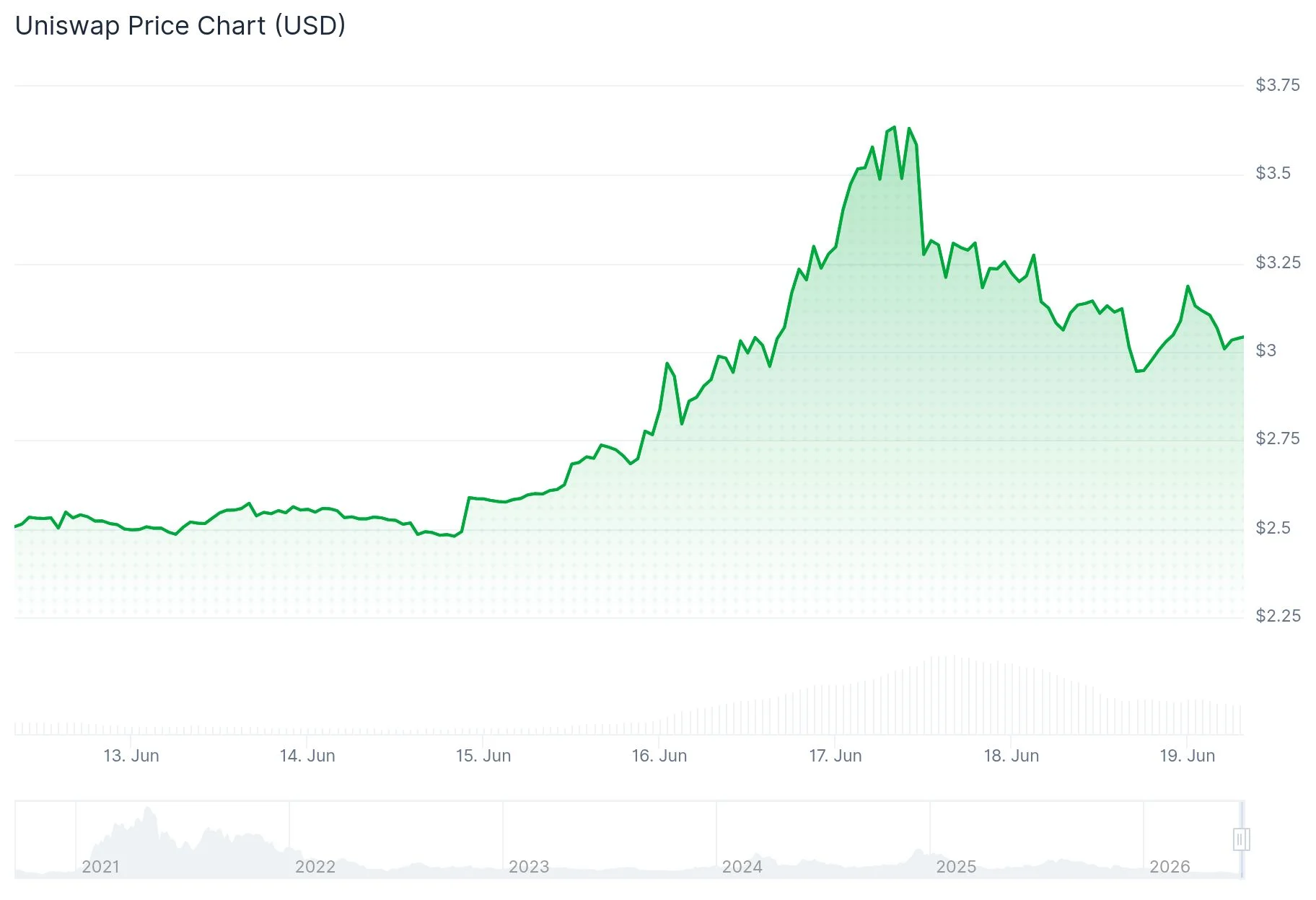
- The token is approaching critical resistance around $3.30, with $4.13 representing the subsequent major barrier
The blockchain metrics for Uniswap are displaying their most robust signals in several months. What sparked this shift? Standard Chartered, a prominent global financial institution, issued a $100 price projection for the protocol’s native token.
Blockchain analytics provider Santiment documented the activity spike immediately following the announcement. Their findings reveal widespread increases across numerous network indicators, signaling a resurgence in market attention toward UNI.
Participating addresses across the Uniswap protocol surged to their highest point in four months. Simultaneously, high-value transfers — substantial movements generally associated with institutional participants — hit a seven-month maximum.
Wallet creation also experienced a notable jump. Santiment documented the most substantial one-day growth in fresh UNI addresses since December’s closing weeks, further confirming the heightened engagement.
The analytics firm attributes this entire wave of activity to Standard Chartered’s price projection, rather than any protocol developments or technical updates.
Major Holders Accumulate at Levels Unseen in Months
Cryptocurrency market observer Zayn, known as @Zaynnode on X, disclosed a $10,000 spot purchase in UNI. He highlighted that the token had reversed an entire month’s worth of negative price movement within just several days. Zayn observed that UNI is currently positioned near price levels that preceded its significant 2020 rally, stating he’s building his spot holdings and allowing market forces to play out.
Institutional participants entering positions before widespread market movement represents a behavioral pattern closely monitored by market participants. The seven-month peak in substantial transactions indicates that significant stakeholders are establishing positions in anticipation of potential price appreciation.
The banking giant’s $100 forecast implies considerable upside potential from present valuations. This projection has redirected market focus toward Uniswap’s standing as a premier decentralized trading platform within the ecosystem.
Token Nears Critical Technical Threshold
From a technical perspective, UNI has remained confined within a descending formation for several months — characterized by progressively lower peaks and troughs. Recent purchasing momentum has elevated the asset toward the upper boundary of this formation, approximately $3.30.
Prior upward movements have encountered resistance at this zone. Surpassing this threshold would represent the first significant structural change in market dynamics for 2026.
The subsequent resistance objective stands at $4.13, representing a crucial level on the daily timeframe. Should bullish momentum persist, market observers have identified $6.34 as the following target. Conversely, price support exists within the $2.80–$2.90 zone.
Santiment’s analysis confirms that network engagement across Uniswap has climbed to multi-month peaks, propelled exclusively by the major bank’s valuation forecast.
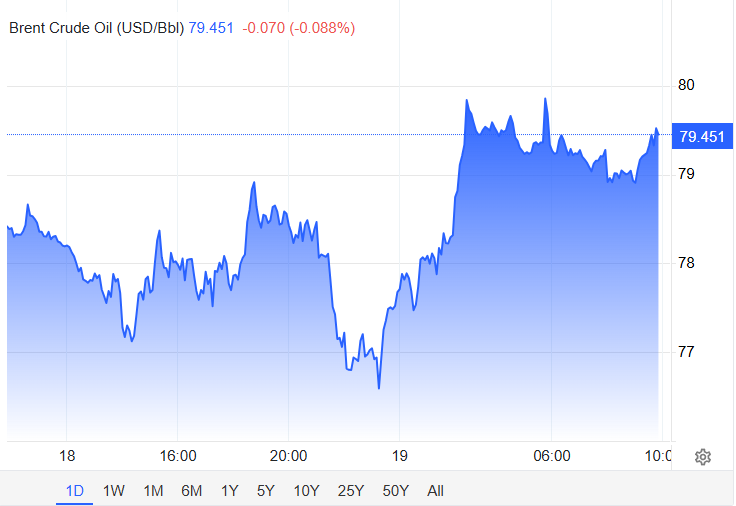
Brent crude traded at $79.46 a barrel on June 18, down roughly 30% from $112.93 a month ago, and with the Strait of Hormuz now open and ships moving again, many expected prices to fall further still. They haven’t.
The answer comes down to the forces quietly keeping a floor under crude even as supply returns.
Open Does Not Mean Flowing
Around 500 commercial vessels remain stranded inside the Persian Gulf, according to maritime intelligence firm Kpler, and the narrow strait cannot clear them at once. Hormuz shipping traffic remains a fraction of pre-war levels, with ship captains, insurers, and owners waiting for confirmed mine clearance and a return to internationally recognized transit lanes before committing their vessels.

The Energy Information Administration’s June outlook assumed Hormuz stays effectively closed through most of the summer, with oil shipments only ramping back toward pre-conflict traffic levels in early 2027.
Producers Face Their Own Timeline
Restarting oil fields shut in for over three months is not a switch that flips overnight. Claudio Galimberti, chief economist at Rystad Energy, put it plainly in a statement to the Associated Press.
“Sentiment has clearly improved. But sentiment is not the same as supply. It will take time for production to ramp back up, for logistics to normalize, and for the risk premium embedded in crude prices to dissipate.”
Economists at Capital Economics estimate energy flows could reach 80% of pre-war levels by September. Iraq, whose fields sustained deeper shut-ins, may need close to a year to fully recover.
Markets are also pricing in the possibility that the Iran deal doesn’t hold. The ongoing US Navy presence in the Gulf, combined with uncertainty over Iran’s compliance, means traders haven’t fully priced out a geopolitical disruption. That residual risk premium is acting as a price floor.
The post Strait of Hormuz Is Open: So Why Hasn’t Oil Crashed Harder? appeared first on BeInCrypto.

Capital allocation is one of the most important functions of any financial system. It determines where money flows, who gets access to funding, and how efficiently resources are used to create economic value. Traditionally, banks, investment firms, and financial intermediaries have played a central role in directing capital across the economy.
However, traditional financial systems often suffer from inefficiencies, high barriers to entry, geographical limitations, and slow decision-making processes. This is where Decentralized Finance (DeFi) is creating a meaningful transformation.
By leveraging blockchain technology, smart contracts, and permissionless financial infrastructure, DeFi is reshaping how capital moves around the world. Rather than relying on centralized institutions, DeFi enables capital to flow directly between participants, improving efficiency, accessibility, and transparency.
Understanding Capital Allocation
Capital allocation refers to the process of distributing financial resources toward productive opportunities.
Examples include:
- Banks lend money to businesses.
- Investors funding startups.
- Institutions allocating assets across markets.
- Individuals providing liquidity to financial systems.
The effectiveness of a financial system largely depends on how efficiently it allocates capital. Poor allocation can result in underfunded innovation, inefficient markets, and reduced economic growth.
The goal is simple: direct capital where it can generate the highest value while managing risk appropriately.
The Limitations of Traditional Finance
Traditional financial systems have historically facilitated economic growth, but they also introduce several challenges:
Multiple Intermediaries
Banks, brokers, clearinghouses, and custodians often stand between capital providers and capital seekers.
This can lead to:
- Higher costs
- Slower transactions
- Reduced transparency
- Limited market access
Geographic Restrictions
Many investment opportunities remain limited by jurisdiction, regulations, or banking infrastructure.
A business in one country may struggle to access capital from investors in another, even when both parties would benefit.
Inefficient Market Hours
Traditional markets typically operate within fixed business hours, creating delays in capital movement and settlement.
Limited Accessibility
Many financial products are only available to accredited investors or large institutions, preventing broader participation.
How DeFi Changes Capital Allocation
DeFi introduces a fundamentally different model where smart contracts automate financial interactions without requiring centralized intermediaries.
This creates a more efficient capital allocation framework in several ways.
Permissionless Access
Anyone with an internet connection and a digital wallet can participate in DeFi.
This dramatically expands the pool of capital providers and capital seekers.
A developer in Southeast Asia, a farmer in Africa, or an entrepreneur in Latin America can access the same financial infrastructure as users in major financial centers.
As participation grows, capital can flow more freely toward opportunities regardless of location.
Real-Time Market Efficiency
DeFi protocols operate 24/7.
Unlike traditional markets that close on weekends or holidays, DeFi markets continuously adjust to supply and demand.
This allows capital to be reallocated instantly when market conditions change.
Liquidity providers, lenders, and borrowers can respond to opportunities in real time, increasing overall efficiency.
Automated Lending Markets
One of the clearest examples of improved capital allocation is decentralized lending.
Instead of banks deciding who receives loans, lending protocols use transparent rules and collateral mechanisms.
Benefits include:
- Instant access to liquidity
- Transparent interest rates
- Global participation
- Reduced operational costs
Capital automatically flows toward borrowers willing to pay competitive rates, creating a more dynamic lending environment.
Yield Optimization
DeFi enables capital to seek the most productive opportunities automatically.
Users can move assets between:
- Lending protocols
- Liquidity pools
- Staking platforms
- Yield-generating strategies
As capital shifts toward higher-performing opportunities, inefficient pools lose liquidity while productive markets attract more resources.
This creates a self-correcting financial ecosystem.
Transparency and Data Accessibility
Traditional financial institutions often operate with limited transparency.
In contrast, most DeFi protocols publish financial activity on public blockchains.
Participants can view:
- Liquidity levels
- Interest rates
- Treasury balances
- Protocol revenue
- Transaction history
This transparency helps investors make informed decisions and allows capital to flow based on real-time information rather than opaque reporting.
The Role of Smart Contracts
Smart contracts are the foundation of efficient capital allocation in DeFi.
They automatically execute predefined rules without requiring human intervention.
Examples include:
- Distributing loan repayments
- Calculating interest rates
- Managing collateral
- Executing trades
- Allocating rewards
Automation reduces administrative overhead and minimizes delays that often exist in traditional financial systems.
As a result, capital spends less time sitting idle and more time being deployed productively.
Expanding Investment Opportunities
DeFi is creating entirely new financial markets.
Participants can gain exposure to:
- Digital assets
- Tokenized real-world assets
- Decentralized lending
- Structured yield products
- Synthetic assets
These innovations allow capital to reach sectors and opportunities that may have been difficult or impossible to access through traditional channels.
As market diversity expands, capital allocation becomes more efficient across a broader range of economic activities.
Challenges That Remain
Despite its advantages, DeFi is still evolving.
Several challenges continue to impact capital allocation efficiency:
Smart Contract Risks
Software vulnerabilities can lead to financial losses if protocols are not properly audited.
Liquidity Fragmentation
Capital is often spread across multiple chains and protocols, reducing efficiency in some markets.
Regulatory Uncertainty
Changing regulations can affect participation and institutional adoption.
User Experience
Complex interfaces and technical barriers still prevent some users from fully engaging with DeFi.
As infrastructure matures, many of these challenges are expected to become less significant.
The Future of Capital Allocation in DeFi
The next phase of DeFi may involve deeper integration with real-world assets, institutional finance, and AI-driven financial systems.
Emerging trends include:
- Tokenized bonds
- Tokenized private credit
- On-chain treasury management
- Autonomous financial agents
- Cross-chain liquidity networks
These developments could enable capital to move more efficiently than ever before, connecting global investors with productive opportunities in real time.
As barriers continue to disappear, capital allocation may become increasingly data-driven, transparent, and accessible.
Conclusion
DeFi is fundamentally transforming how capital is allocated across financial markets. By removing intermediaries, enabling permissionless access, automating financial processes, and providing unprecedented transparency, DeFi creates a system where capital can flow more efficiently toward productive opportunities.
While challenges remain, the direction is clear: decentralized finance is building a financial infrastructure that is faster, more inclusive, and more responsive to market demands. As adoption grows and technology matures, DeFi has the potential to significantly improve global capital allocation, unlocking new opportunities for investors, businesses, and communities worldwide.
In the long run, the most successful financial systems will not simply move money—they will direct capital where it creates the greatest value. DeFi is increasingly positioning itself as a powerful mechanism for achieving that goal.
REQUEST AN ARTICLE


Strive CEO Matt Cole said digital credit saw its hardest session yet after sharp moves in STRC and SATA.
Summary
- Cole said STRC and SATA fell on forced selling, not weaker credit quality.
- STRC dropped to $82.50 while SATA fell to low $90s before recovering intraday on Friday.
- Strive says reserves remain intact as digital credit investors review leverage and liquidity risks.
In a post on X, Cole said it was “the most difficult day in the history of Digital Credit.” STRC fell as low as $82.50 before recovering, according to Cole. SATA also dropped from par to the low $90s before rebounding. Jeff Walton later said on X that SATA had hit $92.88 intraday before recovering to $97.71.
The moves drew attention because both products sit inside a new market for preferred equity-style digital credit. That market links income products with Bitcoin treasury strategies and public market structures.
Cole separates liquidation from credit risk
Cole said the selloff was “a leverage liquidation event” and “not a deterioration in underlying credit quality.” He said forced selling appeared to drive the fall after leveraged investors came under pressure.
He compared the move with past income-market stress in traditional finance, where investors borrow against assets viewed as stable to lift returns. When prices move against them, margin pressure can force sales and push prices lower.
Cole said the selling became disconnected from the underlying credit profile. He added that Strive’s dividend reserves remain intact, the company is not under stress, and the firm remains able to meet its obligations.
“A liquidation event and a credit event are not the same thing,” Cole said. He also said there was strong demand near intraday lows, with both STRC and SATA drawing buyers after the sharp drop.
Strive’s digital credit push adds context
As previously reported by crypto.news, Strive listed SATA on Nasdaq as part of its Bitcoin treasury and digital credit strategy. The company said SATA raised $160 million through a 2 million-share initial public offering.
Crypto.news earlier reported that Strive held 7,525 Bitcoin after the SATA listing. The company described SATA as a variable-rate preferred equity product tied to its wider plan to grow Bitcoin per share over time.
Strive has also said SATA aims to trade in a target range of $99 to $101. The company’s website says SATA carries a 13% annual dividend rate and moved to business-day dividend payments from June 16.
Strive has presented digital credit as a way to pair income products with Bitcoin-backed corporate finance. The sharp session now puts attention on how these products trade when investors use leverage.
Market watches leverage and liquidity
Cole said the day showed how leverage can create stress even when issuers say credit quality remains unchanged. He said investors, issuers, and market participants may learn from the event while the market is still small.
The price action also showed how quickly income products can move when forced selling reaches thin markets. A fall below par can draw buyers, but it can also raise questions about liquidity, leverage, and market depth.
For Strive, the main message from management was that the company remains stable. Cole said the firm’s reserves are intact and that the underlying credit profile had not changed from before the volatility.
For investors, the next test is whether STRC and SATA can hold their recoveries after the liquidation pressure fades. Trading near the $99 to $101 range would support Strive’s stated market goal for SATA, while further volatility would keep attention on leverage across digital credit products.
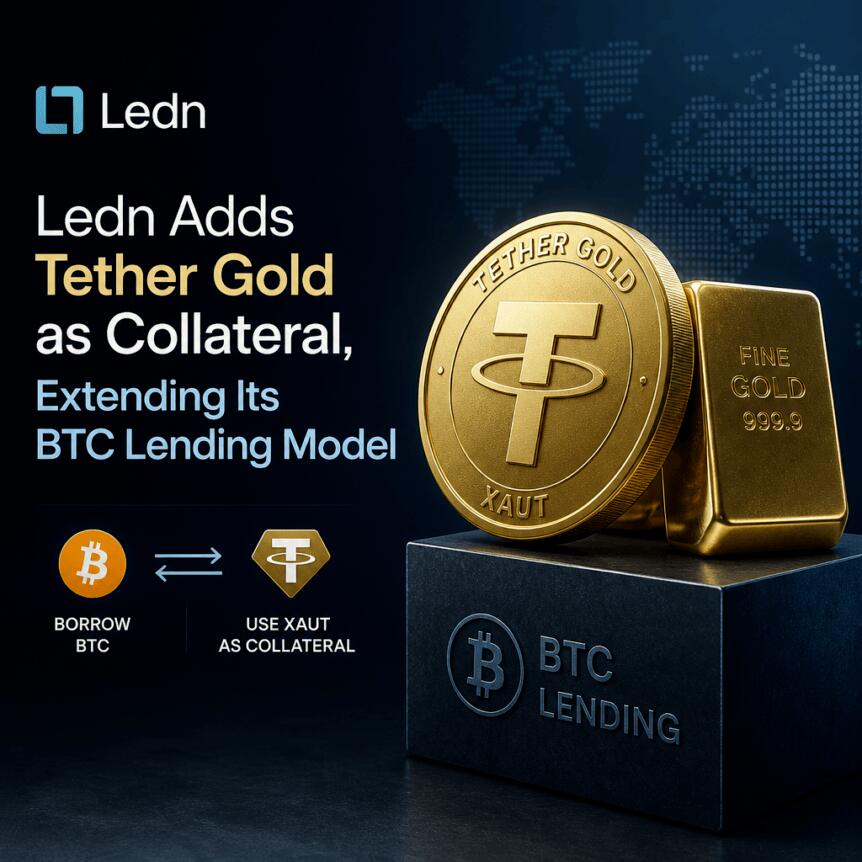
Bitcoin-focused lending platform Ledn is adding support for Tether Gold (XAUt), giving clients a way to pledge tokenized gold as collateral instead of selling their holdings for cash. The move extends Ledn’s collateral-based borrowing model to an asset that more closely tracks the real-world bullion market.
According to Ledn’s announcement on Thursday, clients can use XAUt to secure loans under the firm’s existing structure, where posted collateral is held one-to-one and is not rehypothecated, lent out, or used to generate yield. That design contrasts with lending arrangements where collateral may be reused elsewhere.
Key takeaways
- Ledn is enabling XAUt (tokenized gold) as collateral for loans, expanding beyond its current approach that centers on Bitcoin collateral.
- Collateral is held one-to-one and is not rehypothecated or deployed for yield within Ledn’s model.
- Loans are issued and repaid using Tether stablecoins—USDT or USAt—and borrowers can repay at any time.
- The service rollout is available in most Ledn jurisdictions, but is not offered in Canada or the European Union.
- The addition of tokenized gold reflects a broader shift toward real-world assets (RWAs) inside crypto financial services.
How Ledn’s XAUt collateral model works
Ledn says the new functionality allows clients to borrow against XAUt rather than converting the token into fiat or stablecoin liquidity upfront. That matters for users who want to access cash-like funding while retaining exposure to gold price movements—at least indirectly through the tokenized asset.
As with its existing lending framework, the company notes that collateral is maintained one-to-one. It does not reuse customers’ collateral for additional lending activity or yield strategies, a point that investors often watch for because collateral deployment can affect risk profiles in stressed markets.
The loans themselves are issued and repaid in Tether stablecoins: either USDT or USAt. Ledn also highlighted that borrowers can repay at any time, without scheduled monthly payments tied to a fixed calendar schedule.
USAt is a Tether stablecoin launched in the United States, with the goal of aligning with the GENIUS Act, according to earlier reporting from Cointelegraph. That regulatory-oriented detail is relevant because it connects the product expansion to the broader push for compliant stablecoin rails in major jurisdictions.
Why tokenized gold changes the “borrow without selling” equation
Bitcoin-backed lending has become a mainstream feature of crypto finance, but adding a tokenized commodity introduces a different kind of underlying exposure. Tokenized gold is intended to represent ownership tied to the precious metal, enabling transfers and settlement on-chain while maintaining the commodity link for investors.
Ledn’s decision broadens the range of assets that can be used to access liquidity in a borrowing workflow—something that can reduce the need for a taxable sale in some jurisdictions compared with direct conversion from an appreciating asset into cash. The availability of an alternative collateral type may also appeal to investors who prefer diversification away from purely crypto-native volatility while still using crypto-native credit.
The expansion also aligns with a market environment where gold has been drawing attention. In this year’s rally, gold has pushed to record highs above $5,600 per troy ounce, before later cooling to around $4,300 per ounce, according to figures referenced in the original reporting. Ledn’s product launch positions tokenized gold as a collateral option while bullion remains a focus of investor interest.
Ledn isn’t the first to push RWAs—commodities are a growing slice
The XAUt collateral rollout arrives as commodities and other real-world assets continue to gain visibility within the tokenization sector. A Token Terminal report cited in the earlier coverage suggests tokenized financial assets have surpassed $43 billion, with commodities representing nearly 17% of that total.
Token Terminal’s framing highlights a key difference between tokenized commodity ownership and traditional derivatives. Where commodity futures and derivatives can be structured for exposure without direct ownership, tokenized assets like gold are described as being backed by the underlying asset. In practice, that means token holders are designed to hold representation of the commodity, while benefiting from blockchain-based transfer and trading mechanics.
There’s also a structural reason this matters for crypto credit markets: as more tokenized assets become available in liquid formats, lenders can expand collateral choices beyond a narrow set of native cryptocurrencies. That can potentially attract a wider set of customers—especially those seeking to finance positions without fully exiting exposure to underlying real-world assets.
Where the product is available—and where it isn’t
Ledn says the new XAUt and Tether-stablecoin lending products are rolling out across most jurisdictions where the platform operates. However, it is not currently available in Canada or the European Union.
For market participants, this uneven availability is a reminder that even when tokenized assets are globally issued, lending and custody services still face jurisdiction-by-jurisdiction constraints—often tied to stablecoin compliance, regulatory treatment of collateral, and broader financial services rules.
What to watch next
With XAUt now entering Ledn’s collateral lineup, investors should watch how quickly adoption grows and whether additional jurisdictions follow as Tether stablecoin infrastructure expands. Equally important will be monitoring how tokenized commodity collateral performs during volatility—when investors are most likely to need liquidity while trying to preserve exposure to the underlying asset.
Microsoft Threat Intelligence has issued a warning to Windows users about a cryptocurrency clipper malware strain that spreads through USB drives and has been active since February. The attack is designed to harvest wallet credentials directly from users’ clipboard activity and then maintain control of infected machines through a persistent “worm-like” component.
In a security blog post published Wednesday, Microsoft described how the malware combines rapid clipboard theft with screenshot capture and wallet-address substitution—turning routine wallet copying into a monetization path for attackers. Microsoft also said the malware can propagate to removable media without relying on a traditional installer or exposed IP-based infrastructure, increasing the challenge of blocking it with conventional perimeter defenses.
Key takeaways
- Microsoft says the crypto clipper has been affecting Windows users since February and spreads via USB devices.
- The malware targets “high-value financial artifacts” copied to the clipboard, including BIP39 seed phrases and private keys.
- It can replace copied wallet addresses with attacker-controlled ones across multiple blockchain ecosystems, including Bitcoin and Ethereum.
- Microsoft reports it deploys Tor on the victim device and uses Tor-routed command-and-control to hide operator infrastructure.
- Microsoft Defender Antivirus detects the threat as Trojan:Win32/CryptoBandits.A.
USB-based clipboard theft turns into credential exfiltration
At the core of the campaign is a tactic Microsoft described as “high-frequency clipboard theft” paired with screenshot exfiltration. According to Microsoft, once the malware runs on a Windows machine, it monitors clipboard contents to extract wallet credentials and then captures screenshots every ten seconds to provide additional context for the attackers.
More worryingly for users is what Microsoft says the malware does beyond stealing information. Microsoft characterized the clipper as including a backdoor capability, enabling attackers to execute additional code on compromised hosts at later times. That shifts the threat from “one-time theft” into a persistent foothold that can potentially support follow-on attacks, including ransomware-style intrusions.
Microsoft also said the malware can disguise its presence by hiding legitimate files and replacing them with lookalike shortcuts. That design encourages victims to run the malicious components without realizing they’ve been tricked—especially when the infection is triggered via removable media.
Persistence and propagation via scheduled tasks and “worm” behavior
Microsoft’s analysis indicates the malware deploys two obfuscated JavaScript payloads in the Windows Documents directory. It then creates scheduled tasks for both the worm and stealer components—an approach that helps ensure the malicious routines continue running even after reboot.
The “worm component” is central to the propagation strategy. Microsoft said the malware automatically pushes itself to USB storage devices, allowing infections to spread when the victim connects the drive to other systems. This is why Microsoft’s warning focuses on removable media hygiene: an environment where USB devices are shared among multiple machines becomes a multiplier for infection risk.
Microsoft also noted that the malware’s execution does not depend on a traditional installer or exposed IP-based infrastructure. In practical terms, this can reduce defenders’ ability to rely on common download/installer telemetry and may make it harder to block by tracking known malicious endpoints.
Tor on the endpoint and wallet-address substitution
Microsoft reported that the malware secretly installs a copy of Tor on the victim’s computer and renames it ugate.exe to look less suspicious. The malware then uses the anonymizing Tor network to reach hidden “onion” addresses operated by the attackers.
This Tor-routed approach matters because it makes command-and-control less dependent on a stable, easily enumerated host. Microsoft said the combination of Tor-routed C2, clipboard targeting, screenshot capture, and remote code execution gives attackers both immediate monetization paths and ongoing control of compromised devices.
On the monetization side, Microsoft said the clipper focuses on high-value financial artifacts from clipboard content, including BIP39 mnemonic seed phrases and Bitcoin and Ethereum private keys. Microsoft also described wallet-address substitution across multiple networks, replacing copied wallet addresses with attacker-controlled ones for Bitcoin, Tron, and Monero.
In addition to swapping addresses, the malware takes periodic screenshots, which can help attackers confirm what the user intended to send—even if the copied address has been altered. Microsoft also said that the malware collects this information to support the operators’ ability to act quickly once funds are ready to move.
What Microsoft recommends and how this fits a broader threat wave
Microsoft recommended several defensive measures aimed at breaking the infection chain. These include disabling autoplay on removable media, blocking .lnk execution from USB drives, and monitoring for proxy activity and spawned scripts—behaviors consistent with malware that uses scheduled tasks and anonymized communications.
Microsoft Defender Antivirus detects the threat as Trojan:Win32/CryptoBandits.A, which gives defenders a baseline for incident response and hunting on endpoints that show related artifacts.
The warning arrives amid a broader escalation in Windows-based crypto-stealing threats. Earlier this month, Foresiet Threat Intel identified a Windows malware strain called Lucid Stealer targeting browser extensions and crypto wallets. Taken together, the pattern suggests attackers are increasingly focusing on credential capture mechanisms that align with how users actually manage funds—through browser tools, wallet software, and copy/paste behavior that can be intercepted.
For users and security teams, the next step is to treat clipboard-handling threats as a high-risk category, not a niche one: watch for suspicious scheduled tasks, unexpected Tor-related processes renamed to masquerade filenames, and evidence of USB-driven propagation. With Microsoft stating the campaign has been active since February, organizations should also consider whether any infected removable media may still be in circulation and whether endpoint monitoring is catching the early stages—before clipboard theft and address substitution begin.
Digital asset company AllUnity is launching SEKAU, a Swedish krona-backed stablecoin issued under the European Union’s Markets in Crypto-Assets Regulation (MiCA).
The new token operates as an e-money token under MiCA, according to a statement shared with Cointelegraph on Friday. It is backed by segregated Swedish krona reserves and targets institutional settlement and cross-border payments.
The launch follows AllUnity’s Swiss franc stablecoin rollout, extending its multi-currency stablecoin strategy under the EU’s MiCA framework.
Banking Circle among SEKAU partners
The launch of SEKAU is supported by a growing ecosystem of partners.
Banking Circle, a regulated business-to-business bank and financial infrastructure company based in Luxembourg, will hold and manage the reserves backing the token, while Swedish Marginalen Bank supports the rollout as a banking partner.
Trust Anchor Group, a local digital asset infrastructure and technology company, provides infrastructure integration for broader ecosystem access to the stablecoin.
Swedish krona stablecoin launches on multiple networks
SEKAU debuts across five blockchain networks, including Ethereum, Solana, Base, Tempo and Polygon.
AllUnity said the multi-chain rollout is designed to improve access, interoperability and liquidity across major blockchain ecosystems. The company added that it plans to expand SEKAU to additional blockchain networks later in 2026.
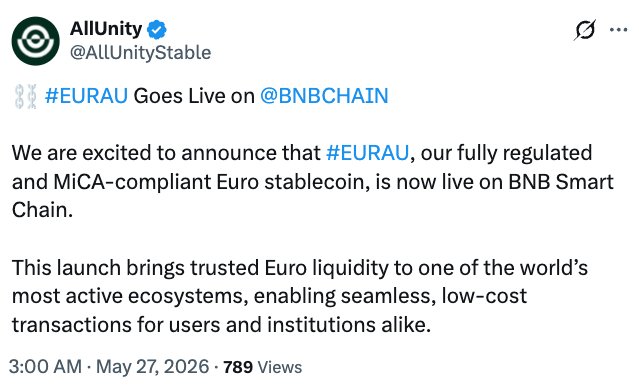
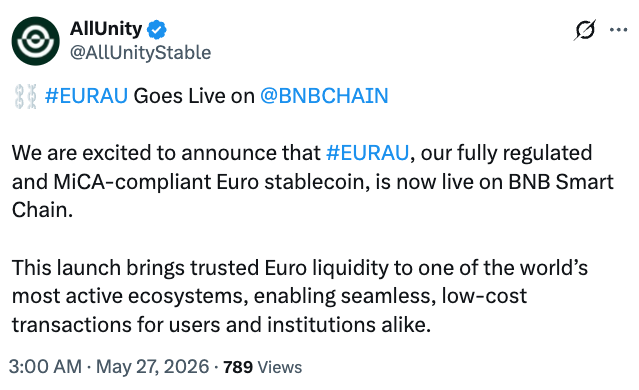
By contrast, AllUnity’s Swiss franc stablecoin CHFAU initially launched exclusively on Ethereum in February before expanding to Tempo. The company also operates EURAU, a euro-backed stablecoin launched in 2025.
Source: AllUnity
Since launch, EURAU has reached a market capitalization of $1.4 million and ranks as the 16th largest euro stablecoin among 23 tracked tokens, according to CoinGecko. The euro stablecoin market totals about $883 million in combined value at the time of writing.
AllUnity stressed that SEKAU is the first fully reserved Swedish krona-denominated stablecoin aligned with MiCA, issued as a regulated EMT backed 1:1 by SEK reserves.
“SEK exposure has previously existed mainly through early-stage concepts, which are not confirmed as a MiCA-authorized, fully regulated EMT,” a spokesperson for AllUnity told Cointelegraph.
Related: Tether winds down gold-backed derivative stablecoin aUSDT
The representative also mentioned that Swedish banking and fintech pilots have explored tokenized deposit money and settlement systems, but these remain “closed, experimental infrastructures” rather than publicly redeemable stablecoins.
AllUnity said the most relevant initiative is Sweden’s e-krona project by the Riksbank, a central bank digital currency exploring tokenized payments infrastructure, but it is fundamentally different from a stablecoin. Riksbank communicated earlier this year that there were no stablecoins in Swedish kronor.
Magazine: Crypto wanted to overthrow banks, now it’s becoming them in stablecoin fight
TLDR
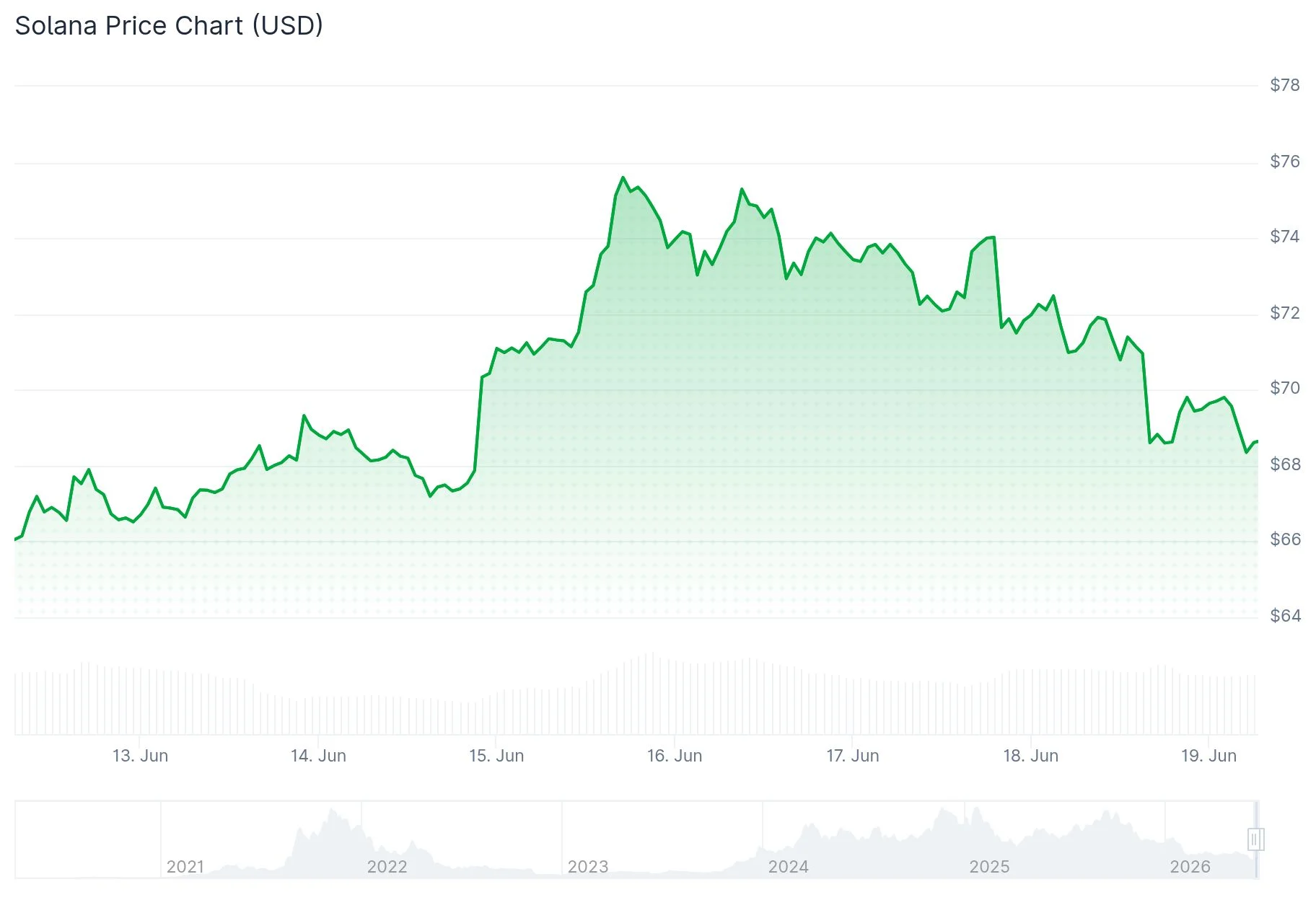
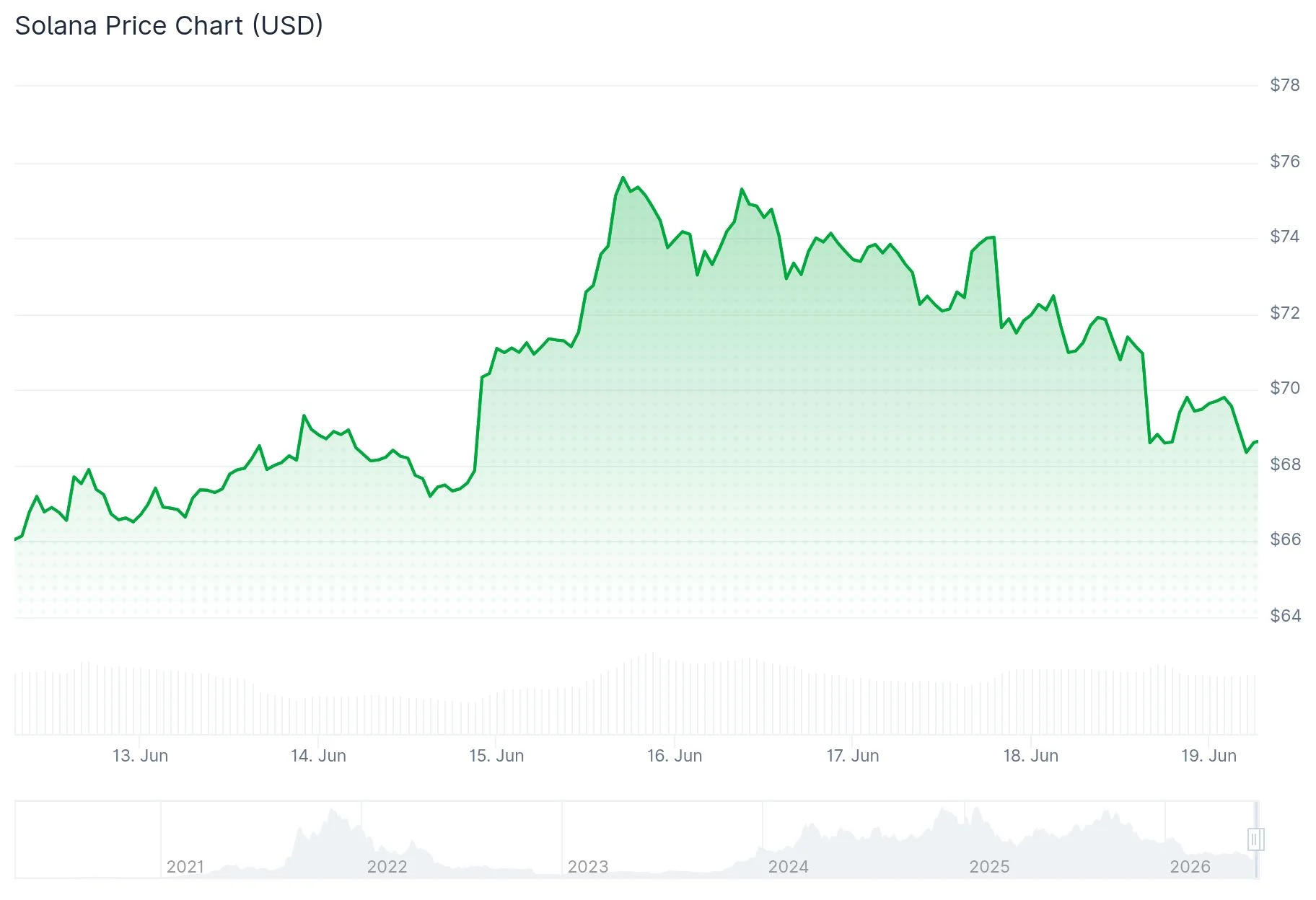
- SOL breached the $70 level on Friday, declining more than 6% from its June 15 peak at $75.60
- Morgan Stanley submitted an updated S-1 filing to the SEC for a Solana ETF product (MSOL)
- Weekly capital flows into SOL ETFs reached $7.11 million even as prices retreated
- Solana has emerged as the leading blockchain for tokenized Real-World Assets by holder count, surpassing 285,000 holders
- Critical support zone established at $70; breach could trigger decline toward June lows around $62
Solana experienced a sharp reversal from its recent $75.60 high, falling to an intraday bottom of $70.70 on June 18 before finding temporary support around $71. This downturn came after a strong 20%+ recovery from early June’s $62 floor.
The downward pressure intensified following the Federal Reserve’s decision to maintain interest rates within the 3.50%–3.75% range, coupled with cautionary language about persistent inflation threats. Fed officials signaled potential additional policy tightening through 2026, prompting investors to retreat from high-volatility assets such as SOL.
Bitcoin simultaneously retreated toward the $64,000 mark in response to the Fed’s stance. Many major altcoins experienced more pronounced declines compared to Bitcoin during this period.
Crypto analyst Ash Crypto observed that SOL’s monthly chart indicators show the most oversold conditions in its history. He further noted that Solana achieved a new milestone for tokenized stock trading volume in a single day, processing over $140 million in spot transactions—97% of the total crypto market share, outperforming all competing blockchains combined.
Despite the bearish price action, institutional appetite for Solana exposure has remained robust. SOL-based ETF products attracted $2.99 million in a single day on Thursday, contributing to a weekly total of $7.11 million in net inflows.
ETF Filing and Institutional Moves
Morgan Stanley submitted a revised S-1 registration statement to the SEC on Thursday for its Solana-focused exchange-traded fund, which will trade under the ticker MSOL. This filing represents the latest in a series of institutional developments surrounding SOL in recent weeks.
Eight consecutive months of positive net flows into SOL ETF products demonstrate persistent institutional conviction. Continued capital inflows throughout the coming week could potentially shift the monthly balance from marginally negative to positive territory.
RWA Adoption on Solana
On the retail adoption front, Solana has claimed the top position among blockchains by Real-World Asset holder count. The network now hosts over 285,000 holders of tokenized RWAs, with the tokenized SpaceX IPO serving as a significant catalyst.
Despite these positive on-chain developments, derivatives market data paints a more cautious picture. SOL futures Open Interest contracted to $4.85 billion on Friday, down from $5.18 billion just two days earlier on Wednesday.
Long position liquidations over the past 24 hours totaled $13.66 million, dramatically outpacing the $1.80 million in short liquidations, indicating clear bearish control of the market.
Market analyst BATMAN observed that Solana had been “rejected by its previous support level, now as resistance,” and that the stochastic oscillator had climbed to the same overbought zone that preceded the previous significant peak.
CoinGlass liquidation heatmap analysis reveals concentrated leveraged positions clustered between $74 and $76. Another significant liquidity pool exists in the $65–$66 range.
The critical near-term support level holds at $70. A confirmed daily close beneath this threshold could accelerate movement toward the June low near $62, with Fibonacci extension levels suggesting potential downside toward $60.
For bullish momentum to reassert itself, SOL needs a definitive daily close above the descending trendline, with overhead resistance barriers positioned at $74.80 and $79.30.

Funding Futures 4 to take part in fundraising sky dive today

Nutex Health: Good Value But Regulation Reliant

Gemini Co-Lead Noam Shazeer Quits Google, Joins OpenAI Before IPO


-

 Business5 days ago
No Jackpot Winner as $257 Million Prize Rolls Over to $269 Million Monday Draw
-

 Fashion7 days ago
Weekend Open Thread: Tuckernuck – Corporette.com
-
Crypto World4 days ago
Zimbabwe Requires Crypto Businesses to Register Annually Under New FIU Regulations
-

 Crypto World6 days ago
Bitget enters Argentina’s regulated crypto market through PSAV registration
-

 Tech6 days ago
NanoClaw integrates JFrog registries to secure AI agent downloads
-

 Tech7 days ago
This Week In Security: Microsoft On Microsoft, Register Your Domains, Linux On ARM, And FreeBSD Joins The File Cache Club
-

 NewsBeat7 days ago
FBI searches office of Ohio voter registration group
-
 Entertainment5 days ago
Matt Damon’s Viral Sci-Fi Thriller Has Taken Over HBO Max
-

 Business5 days ago
Anthropic staff to meet White House officials next week, Axios reports
-

 Tech5 days ago
As AI companies race to go public, who else is along for the ride?
-
 Crypto World5 days ago
Bitcoin could crash to $48,000, if this historical pattern is triggered
-

 Politics5 days ago
“Israel’s” ban on ICRC visits ruled illegal, but Knesset moves to stop them permanently
-
 NewsBeat5 days ago
Warning of disruption as Cardiff Crossrail works to start
-

 News Videos5 days ago
Financial Accounting | Last Day Revision Strategy and Booster | CMA Inter – June 2026
-
 NewsBeat5 days ago
Tributes to former deputy head teacher at Cambridge school among death and funeral notices
-
 Crypto World5 days ago
Market Preview: SpaceX (SPCX) IPO Record, Federal Reserve Meeting, and Iran Nuclear Agreement
-
 NewsBeat5 days ago
what doctors are seeing in ebike crashes
-

 Entertainment5 days ago
Deion Sanders Shares Powerful Post After Viral Advice To Deiondra
-
 Entertainment5 days ago
Kate Middleton Glare Goes Viral After Kids Booed At Royal Event
-

 Business5 days ago
Invesco Quality Income Fund Q1 2026 Commentary
You must be logged in to post a comment Login