
Crypto World
Binance tightens grip as crypto trading volume drops in Q1



Crypto exchange activity slowed in the first quarter of 2026 after the market cooled from its earlier peak.
Summary
- Crypto exchange trading volume fell sharply in Q1 2026 as market participation weakened after the cycle peak.
- Perpetual futures dominated March activity, with volume reaching four times the level of spot trading.
- Binance held the top position in spot and derivatives despite rising competition from secondary exchanges.
CryptoQuant data showed lower participation across centralized venues, while Binance kept the lead in both spot and derivatives trading.
Centralized exchange trading volume dropped about 48% from the October 2025 peak. The figure fell to $4.3 trillion in March 2026, its lowest level since October 2024.
The pullback showed lower participation from traders and investors after the earlier market run. Activity narrowed toward the biggest exchanges, as users favored liquid venues during periods of price movement.
Perpetual futures remained the main source of trading activity during the quarter. Perpetual volume rose to $3.5 trillion in March, while spot volume stood at $0.8 trillion.
That gap showed how strongly derivatives shaped market structure in Q1. Perpetual volume reached four times spot volume in March, and cumulative perpetual trading hit $4.5 trillion this year.
The rise in derivatives activity also picked up during the relief rally in the third week of March. Binance recorded the largest 24-hour open interest increase for both Bitcoin and Ethereum by mid-March.
Bitcoin open interest on Binance rose by $829 million in 24 hours, while Ethereum open interest increased by $1.6 billion. Across exchanges, Bitcoin and Ethereum perpetual futures open interest climbed to $23 billion and $16 billion.
Binance keeps lead in derivatives trading
Binance led the perpetual futures market with a 40% share and $1.4 trillion in monthly volume. OKX followed with 19%, while Bybit held 13%.
The data showed that most open interest growth flowed to Binance during the March rebound. Other exchanges, including Gate and Bybit, also posted gains, but none matched Binance’s scale.
Binance remained the largest spot trading venue in March. The exchange recorded $248 billion in spot volume and controlled 32% of the market.
That share was down from 37% in October 2025, but Binance still held a lead well ahead of rivals. MEXC and Bybit followed with 9% and 7%, while Gate and Crypto.com posted growth without changing the broader market order.

Morgan Stanley expects bitcoin to reach U.S. bank balance sheets, though key hurdles remain, according to Amy Oldenburg, the bank’s head of digital asset strategy.
Speaking at the Bitcoin Conference in Las Vegas, Oldenburg, who was appointed new head of digital-asset strategy this year, outlined how the firm is laying the groundwork for the expansion of its digital asset business as client demand builds.
“It’s been many years that we’ve been involved in the broader digital asset space the regulatory environment has been more supportive for us doing that”, Oldenburg said.
Oldenburg, who will be speaking at CoinDesk’s Consensus Miami conference this week, also said that U.S. banks may eventually hold bitcoin on their own balance sheets. However, she pointed to several barriers, such as the Federal Reserve, Basel rules and the need for multiple global regulators, before a bank of Morgan Stanley’s scale could start putting bitcoin on its balance sheet.
This isn’t the first time a banking giant has said that banks will eventually push further into the digital asset sector. BNY CEO Robin Vince said in March that large financial institutions will drive the next phase of crypto adoption by serving as a bridge between traditional finance and digital assets. Although the banks first need regulatory clarity before going all-in on the sector.
However, Morgan Stanley isn’t standing still and has already started its push into the digital asset space, Oldenburg said. The banking giant recently launched MSBT, a bitcoin-backed exchange-traded product and the first of its kind from a U.S.-chartered bank. The product drew more than $100 million in its first six days of trading.
What made those inflows particularly striking is that they came entirely from self-directed clients, Morgan Stanley’s own financial advisors hadn’t even begun offering the product yet, Oldenburg said.
“All of that was self-directed, it was not even available in advisory on the wealth platform,” she said. This dynamic shows that there is significant demand for such products from clients.
Oldenburg said that there is a significant gap between what the advisors are offering clients and where demand lies. While Morgan Stanley recommends 2%-4% bitcoin allocation to clients, the slow adoption among advisors is due to an education problem, Oldenburg said. She also noted that 80% of ETP exposure on the wealth platform is self-directed and that the bank has launched internal training programs to bring financial advisors up to speed.
The appetite for regulated bitcoin exposure is well established, BlackRock’s IBIT has amassed over $61 billion in assets, becoming the fastest-growing ETF in history since launching in January 2024.
Additionally, Oldenburg said that Morgan Stanley is pursuing an OCC digital trust charter, which would allow the bank to custody crypto directly and offer spot crypto trading on its wealth platform. The MSBT product itself uses Coinbase and BNY Mellon as dual custodians.
Read more: Wall Street’s crypto push has been years in the making, says Morgan Stanley

Strategy, the world’s largest public Bitcoin holder, is taking a pause on new BTC purchases ahead of its first-quarter earnings release. Executive Chairman Michael Saylor posted on X that there would be “No buys this week,” signaling the company’s cautious stance as it prepares to report results.
The latest notable activity shown in an 8-K filing with the U.S. Securities and Exchange Commission confirms a fresh purchase window: Strategy bought 3,273 Bitcoin for about $255 million between April 20 and 26. The firm now holds 818,334 BTC, with an average acquisition price of approximately $77,906 per coin, lifting its overall cost basis to around $75,537 per BTC. Bitcoin was last observed trading near $78,787, according to data from CoinGecko.
These moves come as the broader market has shifted in April, with Strategy’s activity contributing to a roughly 12% rise in Bitcoin’s price for the month, a stretch that some observers connected to U.S. spot BTC inflows and the company’s purchases. The earnings report for the quarter is due on Tuesday, and management’s upcoming disclosures will be closely watched for any implications tied to Strategy’s balance sheet and its exposure to Bitcoin’s price swings.
In connection with the earnings cycle, Strategy is also navigating questions about its perpetual preferred security, STRC, and the implications of its dividend. Analysts expect the company to report a quarterly loss, driven primarily by mark-to-market accounting on Bitcoin holdings, a framework that has been a continuing point of debate among investors and commentators alike.
Key takeaways
- Strategy halted new Bitcoin purchases for the current week as it heads into first-quarter earnings, according to a post from Michael Saylor on X.
- The company’s Bitcoin stash stands at 818,334 BTC, bought at an average price of about $77,906 per coin, with a reported cost basis near $75,537 per BTC.
- A recent purchase added 3,273 BTC for roughly $255 million between April 20 and 26, reinforcing Strategy’s long-term confidence in Bitcoin, at least for the moment.
- Analysts expect a Q1 loss of about $18.98 per share, largely due to mark-to-market accounting on Bitcoin holdings, compared with a $16.49 loss in the year-ago period (Yahoo Finance data).
- STRC’s 11.5% dividend yield remains a flashpoint for investors and critics, with questions about the sustainability of the dividend and the company’s ability to cover it if Bitcoin underperforms.
Quarterly outlook and near-term catalysts
The upcoming earnings release is central to understanding Strategy’s trajectory for 2024 and beyond. The market has been watching how the company accounts for its Bitcoin position under mark-to-market rules, a methodology that can amplify reported losses or gains based on short-term price swings. The consensus forecast from Yahoo Finance points to an $18.98 per-share loss for the quarter, a step up from the $16.49 per-share loss a year earlier, underscoring ongoing accounting headwinds tied to Bitcoin’s price movements.
Beyond the numbers, Strategy’s executive leadership has signaled a broader strategic focus on capital discipline and risk management as it navigates the regulatory and macro backdrop. Michael Saylor is slated to participate in the Consensus 2024 industry conference in Miami Beach, where he is expected to discuss the company’s position on Bitcoin, corporate governance, and the evolving role of digital assets in a traditional finance framework.
STRC dividend scrutiny and investor sentiment
A core point of contention for Strategy’s stock narrative centers on STRC, the company’s perpetual preferred security, which distributes a double-digit cash yield to investors. The high yield has attracted a mix of support and skepticism from market observers. Some critics question the sustainability of the dividend, arguing that the cash reserves may be insufficient to cover two years’ worth of STRC payments if Bitcoin underperforms and mark-to-market losses mount. In a notable critique, Peter Schiff, chief economist at Euro Pacific Asset Management, has labeled Strategy a “Ponzi scheme” in past commentary, a position he reiterated in a recent X post, arguing that the dividend’s structure relies on continued appreciation in Bitcoin rather than sustainable cash flow.
On the flip side, industry data platforms reflect a more favorable view from a portion of the analyst community. A Seeking Alpha analysis around Strategy’s dividend strategy cautioning about STRC noted the cash reserve concern but did not uniformly condemn the business model. TipRanks aggregates a different sentiment, showing a consensus rating of “Strong Buy” for Strategy’s Nasdaq-listed shares, highlighting a divergence between dividend sustainability concerns and other catalysts investors may be watching—such as Bitcoin price trajectories and strategic Bitcoin accumulation.
These debates matter because they shape how investors price Strategy’s equity and its willingness to add new BTC in a period of rising or falling crypto markets. If bitcoin prices extend the April rally, Strategy could leverage its growing BTC position to signal confidence in a longer-term bull case. If, however, BTC faces renewed volatility or adverse macro conditions, STRC’s dividend and the buybacks/gross leverage associated with its strategy could come under renewed scrutiny from both shareholders and credit markets.
For now, the market appears to be balancing the potential upside of Strategy’s Bitcoin hoard against the acknowledged accounting and dividend risks. The company’s next disclosures will be critical in clarifying whether the pause in new purchases is a temporary risk-control measure or a signal of a broader recalibration of exposure and capital allocation strategies.
What to watch next
Investors should monitor Strategy’s earnings release for clarity on the impact of mark-to-market accounting on reported results, the trajectory of its Bitcoin inventory costs, and any commentary around STRC’s dividend coverage. Saylor’s Consensus appearance will also be a telling signal about the company’s strategic posture in the crypto governance landscape and the management’s willingness to engage with institutional audiences on risk factors and long-term objectives.
As market conditions evolve, readers should keep an eye on Bitcoin’s price path and any regulatory developments that could affect institutional holdings and reporting practices. The dynamic between STRC’s yield, cash reserves, and Bitcoin performance will help determine whether Strategy can sustain its controversial yet historically high-yield strategy or if a shift in capital allocation will be necessary to preserve shareholder value.
Sources cited include Strategy’s 8-K filing with the SEC detailing the April Bitcoin purchase and holdings, Michael Saylor’s post on X confirming the pause in buys, and market data from CoinGecko reflecting current BTC pricing. Commentary from Peter Schiff on X and Seeking Alpha’s analysis provide context for the dividend debate, while Yahoo Finance and TipRanks supply the earnings and rating snapshots that frame the near-term expectations.
The US-Iran war has not lowered a single FICO score. Yet borrowers across America are being denied mortgages and auto loans they would have secured months ago.
Lenders are quietly raising internal cutoffs and adding underwriting overlays. The shift reflects oil-driven inflation and Federal Reserve uncertainty, not any change in consumer credit data.
Why lenders are Pulling Back
The conflict has disrupted the Strait of Hormuz, the chokepoint for roughly 20% of global oil supply. Brent crude spiked above $120 a barrel at recent peaks.
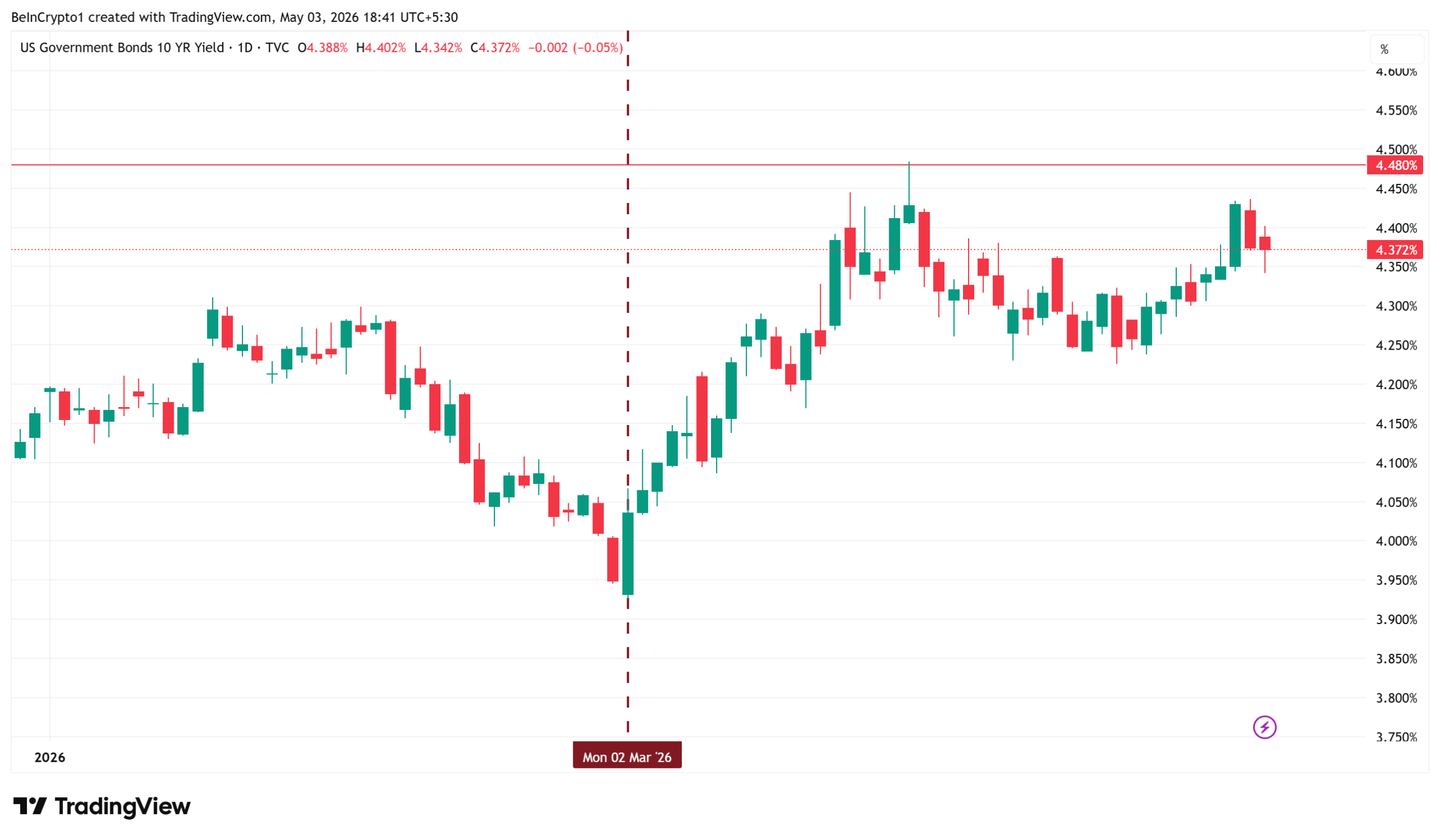
Higher energy costs pushed US inflation to 3.2% in March 2026, well above the Fed’s target. The 10-year Treasury yield jumped to 4.48%. Fixed 30-year mortgage rates have climbed for five consecutive weeks since the war began.

That repricing has filtered through to underwriting desks. Banks now treat geopolitical risk as a reason to demand more documentation and raise minimum scores.
Files that previously cleared without friction are getting second looks.
Who Gets Hit Hardest
The squeeze is concentrated in the 640 to 720 FICO range, where most first-time buyers and middle-income borrowers sit. Auto loans and mortgages have absorbed the brunt of the pullback.
“Nobody’s credit score dropped because of Iran. But try getting approved for a mortgage right now with a 670 FICO and see what happens,” Alexander Katsman, founder of Credit Booster AI, told CNBC that the shift is invisible by design.
He added that lenders rarely announce these moves. They simply happen.

Markets now price in zero Federal Reserve rate cuts for 2026. Chair Jerome Powell has flagged that oil pressure will persist near term. Until the Strait stalemate eases, the bar for borrowing is likely to keep rising quietly.
The post How the Iran War Is Quietly Crushing Americans’ Credit Access appeared first on BeInCrypto.
Why is crypto up today and what does this rally mean? Bitcoin climbed past $78,000 after spot ETF products posted $1.97 billion in April inflows, the strongest monthly total of 2026 according to SoSoValue. The total crypto market cap sits at $2.68 trillion, and BTC dominance holds at 58.5% as capital returns to the sector.
The green candles are back, and Pepeto at presale pricing with a Binance listing approaching is the entry that separates a recovery from a year that changes everything.
Why is crypto up today starts with institutional money. Yahoo Finance reported that Bitcoin spot ETFs pulled in $1.97 billion through April, with BlackRock and Fidelity driving the largest single-day sessions since October 2025.
Bitcoin rose 12% during April and opened May above $78,000 for the first time since February, according to CoinMarketCap. Ethereum added 1.6% to $2,296 on the same session. The Fear and Greed Index reads 26, deep in fear, which means most traders missed this move while institutions bought through ETFs. That is why crypto is up today.
Why Is Crypto Up Today and How Pepeto Turns This Rally Into a Wealth Event
Pepeto: The Presale Running a Full Exchange While the Market Turns Green
Crypto is up today, the charts show strength, and the Pepeto presale still sits at $0.0000001868, the kind of price that early meme coin holders locked in before tokens turned small positions into seven figure returns.
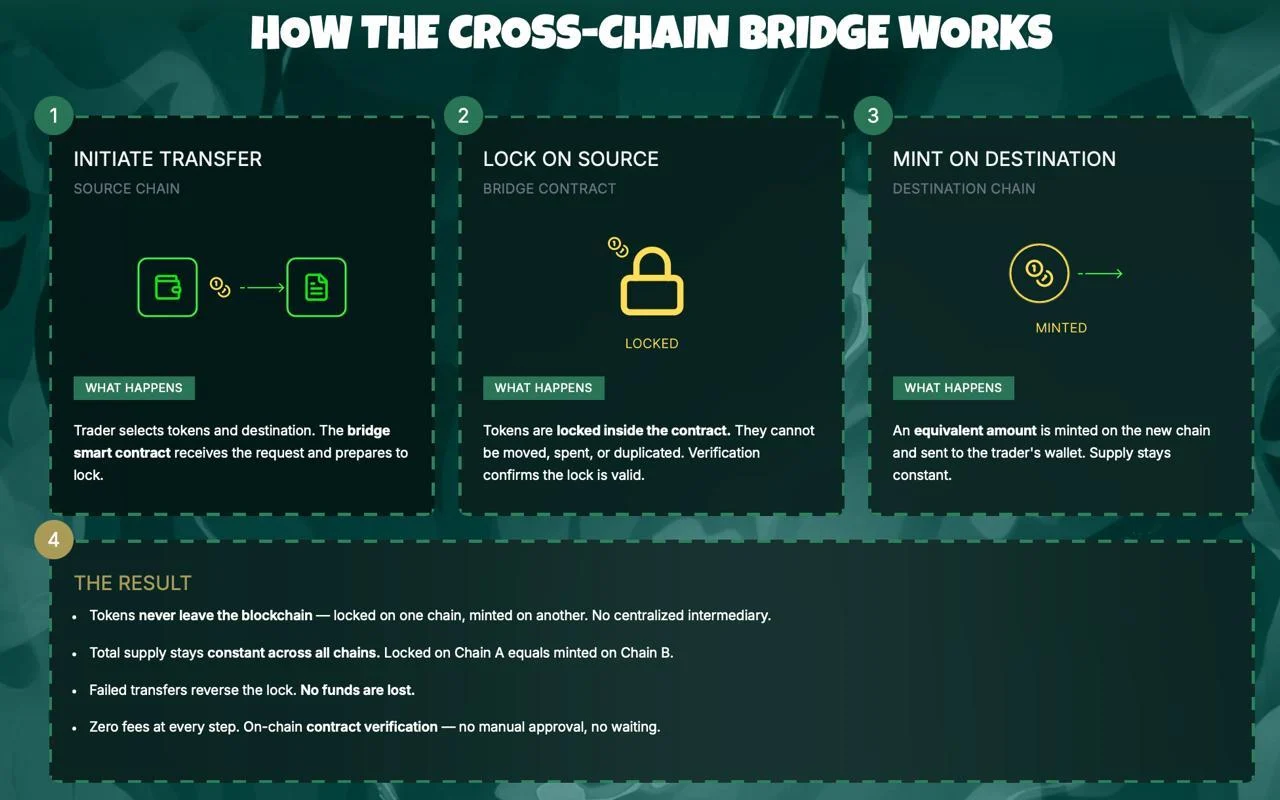
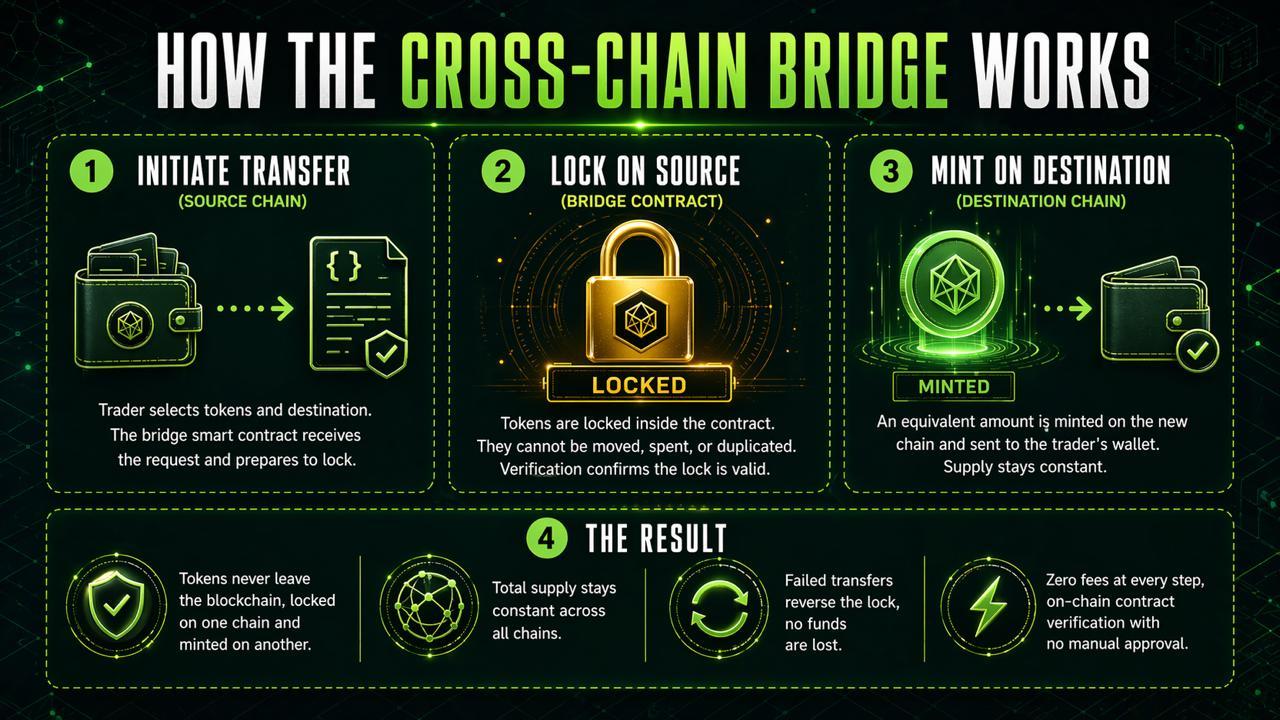
The full exchange platform processes trades right now. PepetoSwap clears every trade at zero cost across Ethereum, BNB Chain, and Solana, keeping full position value on each swap. The token scanner runs a contract check on every project before it reaches the trading floor, and the cross-chain bridge connects all three networks without taking any fee from the transfer. A Pepe cofounder who built the original token into an $11 billion market cap leads the project alongside a senior Binance operations veteran.
Over $9.7 million flowed into this presale while the market sat in fear, and that number shows the commitment behind these positions. SolidProof completed a full audit before the first dollar entered. Staking pays 176% APY that compounds daily, and the Binance listing timeline continues to tighten.
Large caps that hold billions in market cap recover in percentages. Pepeto at presale cost with a working exchange and a Binance debut approaching is where the distance that changes financial outcomes gets built, and the wallets entering now through the Pepeto presale are positioning for that moment.
Cardano (ADA) Price at $0.2482 as Van Rossum Hard Fork Targets Q2 Launch
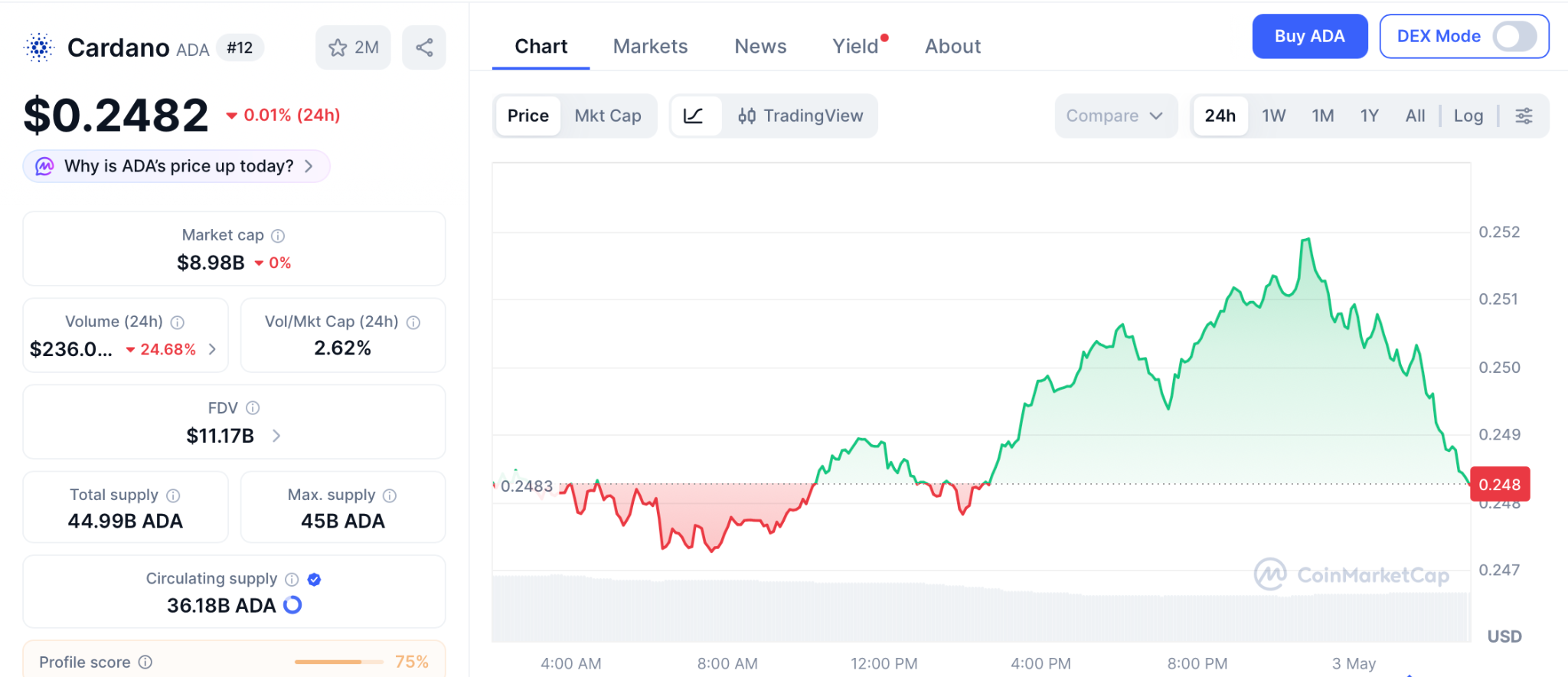
Cardano (ADA) trades at $0.2482 according to CoinMarketCap, down 0.57% over the past 24 hours. ADA has stayed flat since the start of 2026, unable to clear the $0.28 resistance that opens a path toward $0.40.
The Van Rossum hard fork scheduled for Q2 2026 brings Protocol Version 11 and improved smart contract tools, giving Cardano its strongest technical catalyst in months.
Changelly targets $0.80 to $1.50 for Cardano price prediction in 2026, but that move requires multiple catalysts landing at once. ADA needs a breakout while Pepeto needs one listing day.
Canton (CC) Price at $0.1498 as Institutional Partnerships Expand
Canton (CC) trades at $0.1498 according to CoinMarketCap, down 0.11% in 24 hours and sitting 23% below its all-time high. Canton holds a $5.7 billion market cap backed by Northern Trust and Euroclear partnerships.
Support sits at $0.139 with resistance near $0.17, but a $5.7 billion cap limits how fast gains build from here.
Conclusion:
Why is crypto up today? Record ETF money is flowing in, BTC holds above $78,000, and the charts are green across the board. Cardano (ADA) is moving higher. Canton (CC) is holding ground. The market feels strong again. But a green day and real wealth are two different things.
Every cycle, the portfolios that performed best held their large caps and added one early entry before the rest of the market caught on. The Pepeto presale is still accepting entries. The Binance listing is close. The gap between a portfolio that only recovered and one that produced life-changing gains is one presale position at $0.0000001868, priced below where SHIB sat before it made millionaires.
The listing sets the whole move in motion. And the wallets that entered first will be the ones that everyone else spends 2026 wishing they had followed.
Visit Pepeto to Enter the Presale Before the Listing Closes This Window

FAQs
What is the Cardano price prediction for 2026?
The Cardano price prediction for 2026 ranges from $0.80 to $1.50 according to Changelly. ADA trades at $0.2482 with $0.28 resistance and a Van Rossum hard fork due in Q2 2026 as the main catalyst.
What is Pepeto and why is the presale attracting attention?
Pepeto is a meme coin presale at $0.0000001868 backed by a live exchange platform that handles trades at zero cost. The project raised $9.7 million with 176% APY staking, a SolidProof audit, and a Binance listing approaching.
Disclaimer: This is a Press Release provided by a third party who is responsible for the content. Please conduct your own research before taking any action based on the content.

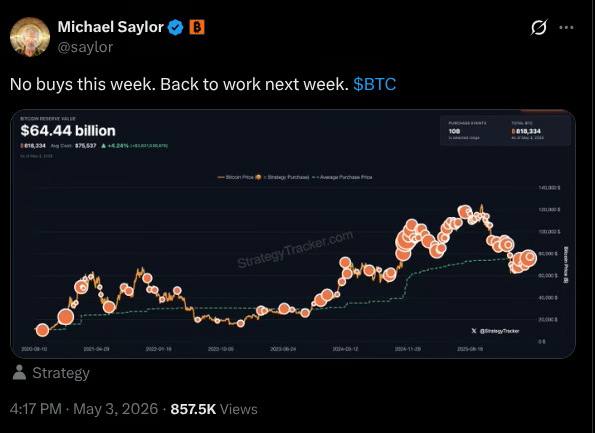
Strategy, the world’s biggest public Bitcoin holder, is taking a break from crypto purchases as the company readies its first quarter earnings report, slated for Tuesday.
On Sunday, Executive Chairman Michael Saylor announced “No buys this week” in a post on X, where he has regularly provided a signal of planned purchases.
In its most recent purchase, the Tysons Corner, Virginia-based company acquired 3,273 Bitcoin for $255 million between April 20 and 26, according to an 8-K filing with the US Securities and Exchange Commission on April 27.

Source: Michael Saylor on X
The company now holds 818,334 BTC, bought at an average price of $77,906 per coin, raising Strategy’s cost basis to $75,537. The biggest crypto by market cap was last trading on Sunday at $78.787.08, according to CoinGecko data.
Strategy’s purchases last month, along with US spot price exchange-traded fund inflows, helped stoke a 12% increase in BTC’s price during April.
Related: Bitcoin preps highest weekly close since January as BTC price nears $79K
Quarterly loss expected amid scrutiny over STRC dividend
Wall Street analysts are expecting Tuesday’s earnings report to show a loss of $18.98 per share, mainly due to management’s mark-to-market Bitcoin accounting. That compares to the year-earlier period’s loss of $16.49, according to Yahoo Finance data.
On Wednesday, Saylor is scheduled to speak at the Consensus industry conference in Miami Beach, Florida.
The company’s reliance on STRC, Strategy’s perpetual preferred security, has raised concerns among some stock watchers, primarily because of the 11.5% dividend yield that the asset offers investors.
Peter Schiff, chief economist and global strategist at Euro Pacific Asset Management, who has previously called Strategy a “Ponzi scheme,” on Sunday repeated his allegation, questioning the company’s ability to sustain the dividend.
“Gambling that Bitcoin will rise by more than 11.5% a year does not change the Ponzi like structure of STRC,” he said in a post on X.

Source: Peter Schiff on X
Concern about the STRC dividend also came from Seeking Alpha blogger Joseph Parrish, who said in his April 28 post that the current cash reserves are insufficient to cover two years of STRC dividends, which will ultimately force continued sale of Strategy’s common stock and raises investor risk if Bitcoin underperforms.
He rates the company stock, which trades under the MSTR ticker, as a “Hold,” citing increased leverage, uncertain catalysts, and challenging risk management despite a lower stock price. His opinion stands in contrast with other analysts, according to financial engine TipRanks, which shows a consensus of a “Strong Buy” rating on Strategy’s Nasdaq-listed shares.
Related: ‘Historical average’ could push Bitcoin bottom at $57K level: Analyst


Fundstrat co-founder Tom Lee says half the equity market and crypto already moved through a hidden bear phase. Short positioning and liquidity withdrawal sit at levels typically seen near market bottoms, not at cycle tops.
Lee argues too many investors have already turned bearish, with markets historically moving in the direction that inflicts the most pain. Raoul Pal frames the same setup as a mid-cycle correction rather than a cycle top.
Hidden Bear Phase Already Played Out
Speaking on the Fundstrat research channel, Lee said software stocks have already taken deep drawdowns. Crypto, tied to the same liquidity unwind, has tracked the move lower.
Short positioning, in his read, sits at levels typically seen at the height of a bear market.
That backdrop matters because positioning has shifted faster than headlines. Sentiment turned defensive while leading indicators stabilized. Lee sees that divergence as more typical of past inflections than the start of a deeper drawdown.
He drew a line between cyclical credit stress and systemic risk. Recent strain in private credit, he said, looks more like a credit cycle than a repeat of 2008. Large banks, in his view, can prosper through that rotation.
Macro Setup Turning Under the Surface
Real Vision founder Raoul Pal made a similar case. He pointed to global M2 at all-time highs and a weakening dollar. The Institute for Supply Management reading is improving, and US liquidity conditions are turning upward.
“I don’t think it’s the end of the cycle. I think it’s a mid-cycle correction,” Pal said in the interview.
He pointed to the Crypto Fear and Greed Index as the clearest sentiment marker. The gauge has spent its longest recorded stretch below 10.
Pal treats that reading as a reversal setup rather than a continuation signal.
Lee said AI and tokenization reinforce the structural case for blockchain. Stablecoin payment rails and onchain settlement, he argued, are the infrastructure AI agents will use at scale.
That overlap could pull capital toward Bitcoin (BTC) and Ethereum (ETH) once macro pressure eases.
Whether the setup resolves higher will depend on how fast liquidity expands. It will also depend on whether sentiment keeps lagging the underlying data.
The post Tom Lee Says Crypto Already Moved Through a Hidden Bear Phase appeared first on BeInCrypto.
Bitcoin closed April with an 11.87% gain, its strongest monthly performance in a year, renewing attention on the cryptocurrency’s directional path as traders turn to May. While the April rally has sparked cautious optimism, analysts say the road back to all-time highs remains long and uncertain.
Nic Puckrin, founder of Coin Bureau, captured the sentiment on X, noting, “Long way to go back to ATHs, but good to see some green.” April’s 11.87% gain stands as the best monthly showing since April 2025, when Bitcoin rose about 14.08%, according to CoinGlass. However, CoinGlass also points out that April’s performance still sits slightly below the historical April average of roughly 12.98%.
In raw terms, Bitcoin’s price action in April came as it traded around $78,190—roughly 38% below the October all-time high near $125,100, per CoinMarketCap. Market mood remains mixed: the Crypto Fear & Greed Index hovered in the “Fear” territory around 39, signaling ongoing caution among investors.
Key takeaways
- April delivered an 11.87% gain for Bitcoin, its strongest month in a year, but still modest relative to the long-run April average of about 12.98% (CoinGlass).
- May’s historical average returns for Bitcoin sit near 7.78%, suggesting potential continued gains but with a softer pace than April’s breakout (CoinGlass).
- Bitcoin trades around $78,190, about 38% below the Oct. all-time high of $125,100 (CoinMarketCap).
- Market sentiment remains cautious, with the Crypto Fear & Greed Index at 39, signaling ongoing risk aversion among traders.
- Analysts are divided: CryptoQuant warns of a potential multi-month correction after a futures-led rally, while others argue a move above $100,000 could occur without a new narrative driving it (various sources).
April momentum vs May horizons
April’s rally appears to have resurrected a debate about whether the upside can sustain beyond a single month. CryptoQuant researchers flagged that the April strength appeared to be disproportionately driven by futures activity, a dynamic that could set the stage for a pullback if traders unwind bets or if macro conditions temper risk appetite. This view underscores a broader theme: headline momentum can outpace on-chain fundamentals, leaving the market vulnerable to reversals if liquidity conditions shift.
On the other side, prominent bulls argue that Bitcoin does not always require a fresh narrative to push into new price territory. Michael van de Poppe, founder of MN Trading Capital, recently suggested that Bitcoin may not need a new catalyst to reclaim the $100,000 level, which it has not revisited in several months. That line of thinking implies that price action could be driven by renewed demand or technical momentum rather than a single macro event.
From a probabilistic standpoint, investors should keep a close eye on how May historical performance aligns with this cycle. CoinGlass data shows May historically averaging around 7.78% in gains, a figure that could be supportive if the current risk sentiment remains subdued and if liquidity conditions remain supportive. Still, traders should be mindful that May’s track record doesn’t guarantee a repeat of April’s strength, and the market could drift in narrower ranges as participants assess risk and potential catalysts.
Market mood, catalysts, and what to watch next
Beyond price levels, traders are parsing sentiment signals that have swung between cautious optimism and risk-off posture. The Fear & Greed Index’s current reading near the 40 mark highlights a market that is still weighing downside risks against the possibility of another leg higher. In this environment, a few factors could shape the near-term trajectory: shifts in macro risk appetite, evolving dynamics in futures markets, and on-chain indicators that may confirm sustained demand or faltering momentum.
Bitcoin’s price context remains critical: trading at about $78,190 places it well below its all-time high but above levels seen during earlier pullbacks in the current cycle. The last time BTC traded at $100,000 was November 2023, a reminder that the path back to that level could be non-linear and influenced by a confluence of liquidity, macro cues, and investor psychology.
In sum, April’s gains have rekindled attention on Bitcoin’s intermediate-term trajectory. While some analysts warn of a potential multi-month pullback if futures-driven enthusiasm fades, others argue that price could resurface toward the $100,000 threshold without a fresh narrative, driven by technicals and renewed demand. Investors will be watching how May unfolds, with attention to liquidity, risk sentiment, and the evolving relationship between spot prices and futures positioning.
As the market digests these mixed signals, readers should monitor upcoming price action and sentiment shifts, staying alert to any changes in liquidity conditions, regulatory developments, or macro surprises that could tilt the balance between risk and reward.
TLDR:
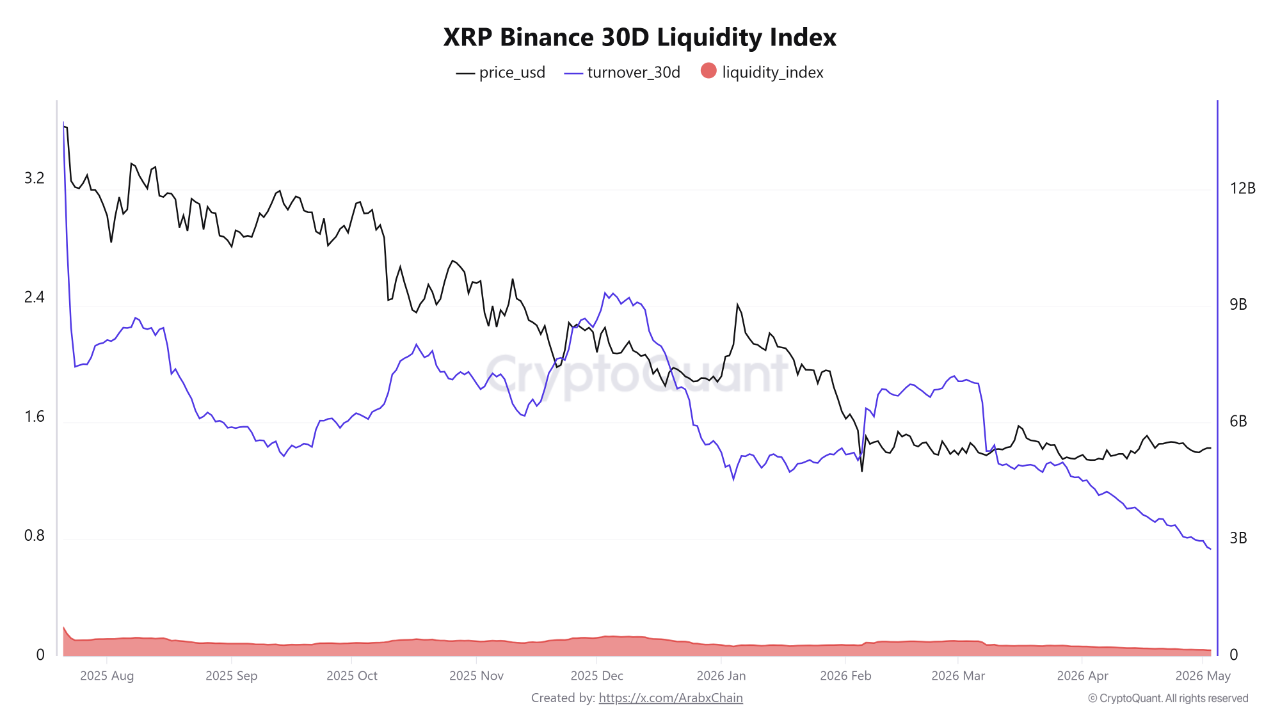
- XRP’s 30-day liquidity index on Binance has dropped to 0.038, marking its lowest recorded level since 2020.
- Despite the liquidity decline, XRP price holds near $1.39, creating a divergence that points to a consolidation phase.
- The XRP futures market remains neutral, with analysts watching for a breakout signal before any directional move begins.
- Reduced institutional activity and thin market depth leave XRP exposed to sharp swings from even moderate capital inflows.
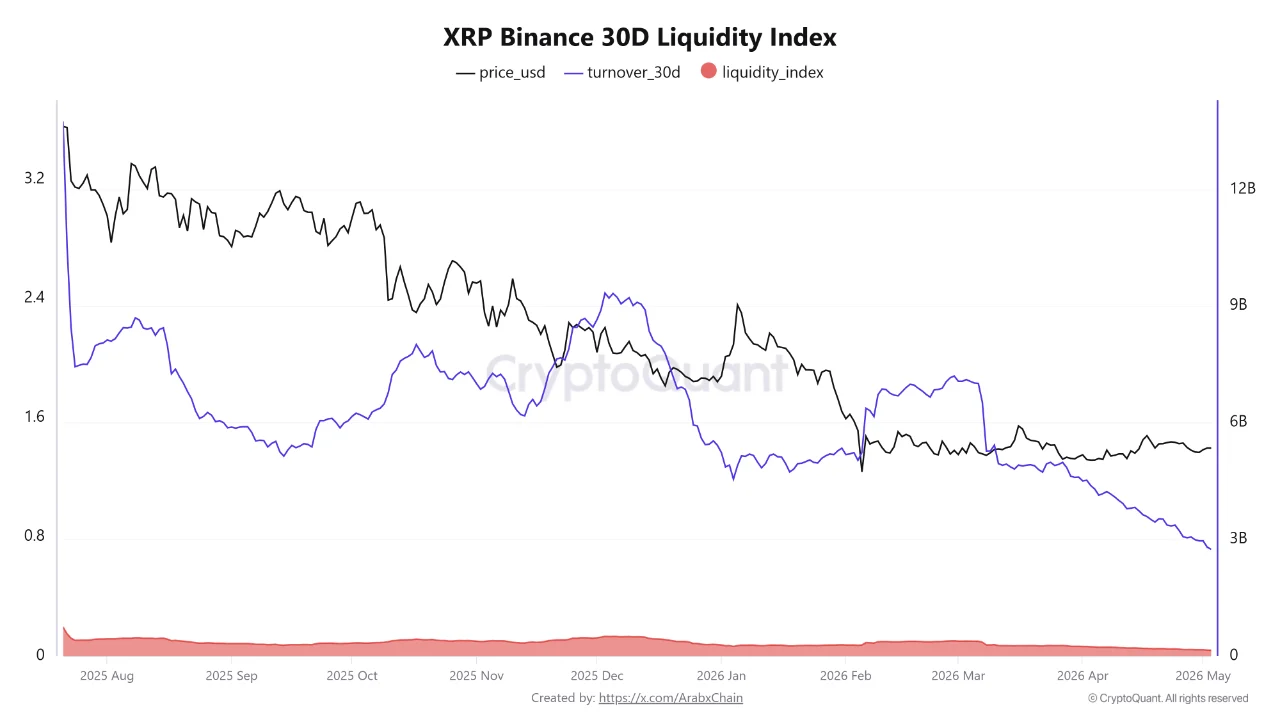
XRP liquidity on Binance has dropped to its lowest point since 2020, raising concerns across the crypto market. The 30-day liquidity index has fallen to 0.038, while XRP trades near $1.39.
Trading volume over the past month reached approximately $2.74 billion. This decline in market depth is drawing attention from traders and analysts watching for potential price volatility ahead.
Market Depth Weakens as Liquidity Index Hits Multi-Year Low
The liquidity index drop to 0.038 marks a clear shift in XRP’s market structure on Binance. At this level, the market’s ability to absorb large buy and sell orders becomes notably limited.
Even moderate capital inflows can now trigger sharp and unpredictable price swings. This creates a fragile environment for both retail and institutional participants.
When market depth thins out this way, price stability becomes harder to maintain over time. Large orders that would normally pass through smoothly can now move the market considerably.
This makes risk management more challenging for active traders on the platform. The current conditions demand greater caution from anyone with sizeable XRP positions.
Source: Cryptoquant
Despite the liquidity drop, XRP’s price has held relatively steady around the $1.39 mark. This creates a divergence between price action and the underlying liquidity data.
Such divergence often points to a consolidation phase before a larger directional move. The market appears to be pausing rather than reacting immediately.
The gap between stable prices and weakening liquidity is worth monitoring closely. Historically, such divergences tend to resolve in one direction or the other within a defined period.
Whether the price catches up to the liquidity weakness or liquidity rebounds remains to be seen. Market participants are watching both sides of this equation carefully.
Futures Market Stays Neutral While Institutional Activity Pulls Back
The decline in the liquidity index also points toward reduced activity from larger market players. A gradual exit by institutional traders can leave markets thinner and more reactive.
This kind of pullback increases overall fragility in price action. The longer it persists, the more exposed the market becomes to sudden moves.
Crypto analyst CW8900 noted on X that the XRP futures market is currently showing no movement. According to the post, the market remains neutral and is quietly preparing for an upward move.
The analyst stated that when the futures market moves again, XRP’s rise will begin. This observation adds another layer to the current market picture.
A sudden influx of capital into a low-liquidity environment could spark a rapid rally. On the other hand, continued weak demand may push prices lower without much resistance.
Both scenarios are plausible given the current setup. Traders are advised to watch volume and order book depth closely.
The XRP market on Binance is at a clear crossroads as liquidity sits at a four-year low. Price stability has held for now, but the conditions underneath remain fragile.
The next move, when it comes, could be fast and sharp in either direction. Monitoring the futures market alongside liquidity data will be key in the sessions ahead.
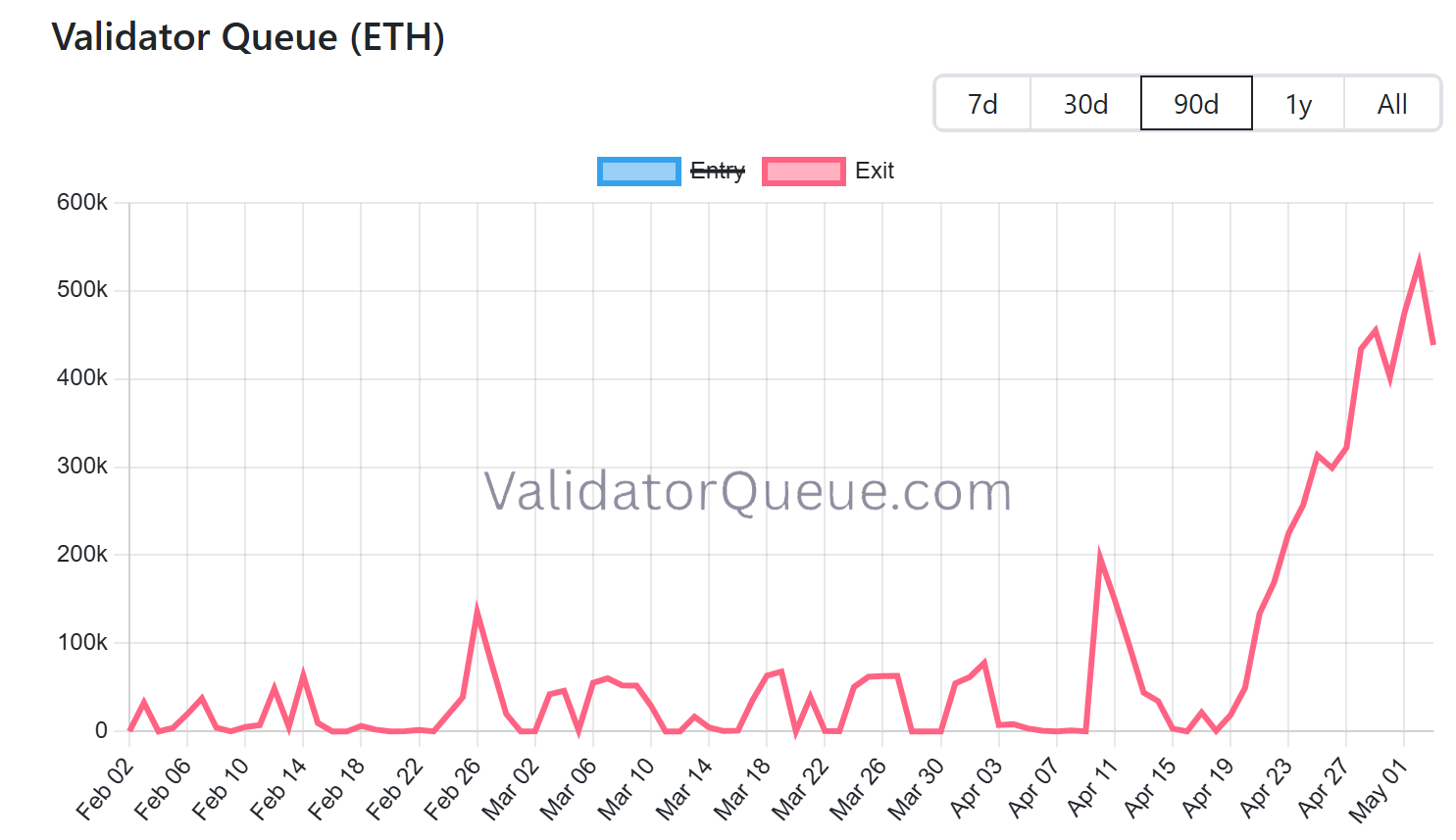
Ethereum’s validator exit queue swelled to 433,158 ETH on May 3 with a seven-day wait. The figure climbed roughly 72,000% in two weeks as Decentralized Finance (DeFi) exploits triggered restaking withdrawals.
The shift tracks April’s $625 million in DeFi losses. A $292 million KelpDAO bridge breach drained restaked ether and rattled lending markets.
DeFi Exploit Wave Pushes Capital Out of Restaking
The April 18 KelpDAO bridge attack drained 116,500 rsETH through a compromised cross-chain bridge. LayerZero traced the heist to North Korea’s Lazarus Group. Aave’s deposits then fell from $45.8 billion to $28.6 billion as withdrawals spiked.
April logged $625 million in stolen funds across 30 incidents. It was the worst month for crypto exploits in history.
Liquid restaking tokens, bridges, and lending markets bore the brunt. DeFi total value locked has dropped roughly 30% in 12 weeks.
On X, on-chain analyst Checkmatey put it bluntly.
Capital leaving all forms of ‘defi’ because the risk is heavily skewed towards a zero return OF capital,” commented on-chain analyst Checkmatey.

Entry Queue Still Dwarfs Exits
The bearish read isn’t the whole picture. Validatorqueue.com data shows 3.6 million ETH waiting to enter staking. The 62-day queue is roughly 7x the size of exits.

Total staked ether holds at 38.6 million, or 31.72% of supply. Annual yield sits near 2.92%, with active validators near 900,000.
The split signals rotation rather than a structural retreat from staking.
If exploits subside, queues should return to normal as they have in the past.
The post Ethereum Exit Queue Explodes 72,000% After DeFi Hack Wave appeared first on BeInCrypto.
Crypto World
BlackRock Buys $284M In Bitcoin On May 1 As The Best Crypto To Invest In For 2026 Sits Below A Pending Binance Listing
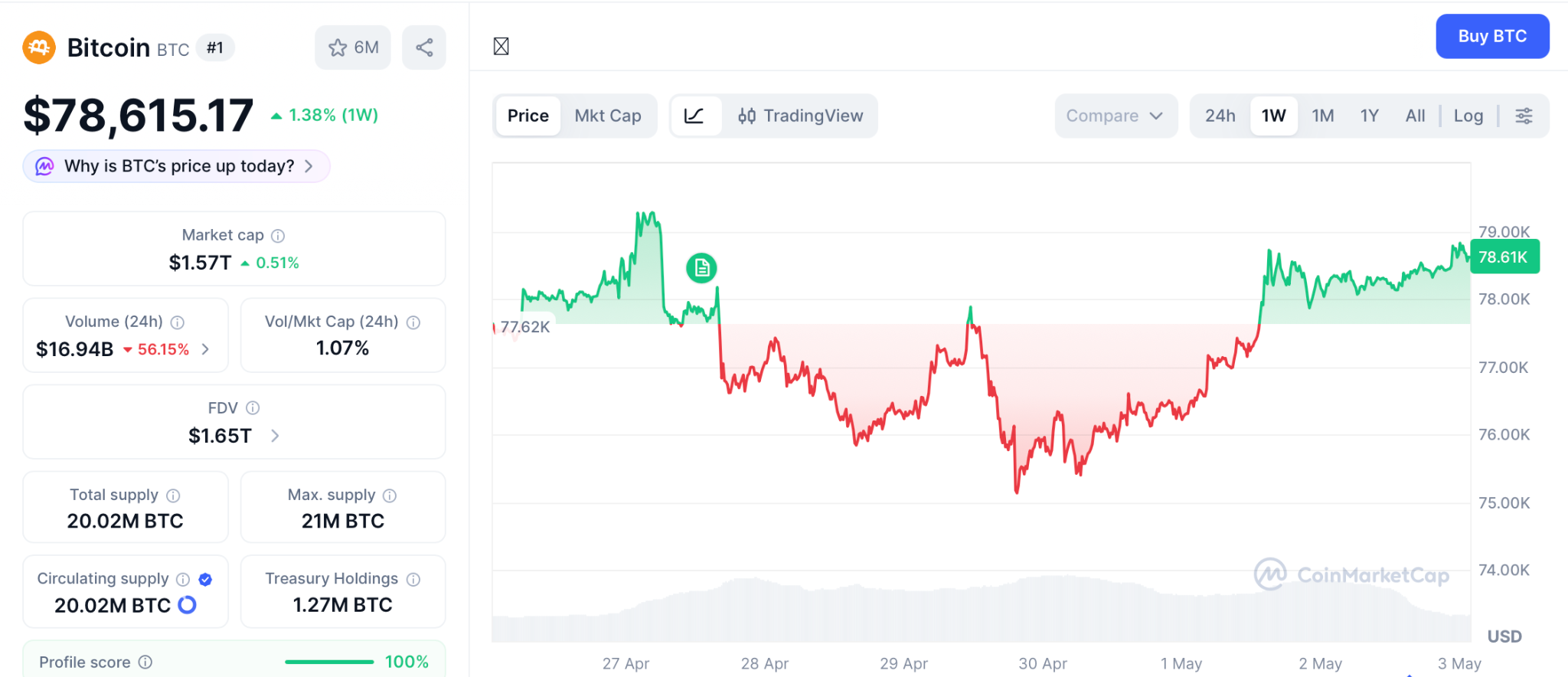
The best crypto to invest in came into focus on May 1 when BlackRock alone routed $284.4 million into spot Bitcoin funds and total daily inflows climbed to $629.8 million per CoinPedia. Bitcoin (BTC) holds $78,615 and XRP sits at $1.39 per CoinMarketCap, and the tape shows institutional buyers turned fully bullish into May.
That backdrop is why one pre-listing entry keeps drawing serious capital. Pepeto pulled in $9.66 million at $0.0000001867 even as the broader market trades sideways.
The iShares Bitcoin Trust pulled $284.4 million on May 1, joined by Fidelity at $213.4 million, with the spot BTC ETF complex landing $629.8 million in a single session per CoinPedia. April closed with $2.44 billion in net inflows, the strongest month so far this year.
The Federal Reserve held rates last week, the S&P 500 printed a fresh all-time high, and Bitcoin reclaimed $78,000 inside the broader risk-on rotation. Sentiment is no longer pinned to Q1’s extreme fear, so the question reduces to which entry returns the largest multiple from here.
Where Smart Capital Is Lining Up For The Next Cycle Multi-Bagger
Pepeto: Pre-Listing Entry Below A Pending Binance Debut
A pre-listing token with a working product, a Binance debut on the calendar, and presale pricing intact is what Pepeto, considered the best crypto to invest in, delivers. The contract holds $9.66 million at $0.0000001867, the founders trace back to the original Pepe team with a former Binance executive on the build side, and SolidProof finished the audit before retail capital came in.
The product separates Pepeto from any other meme launch. The swap layer charges nothing on every trade, the bridge moves tokens across Ethereum, BNB Chain, and Solana inside one application, and a contract scanner reads token-level risk signals. Each tool routes value through the Pepeto token, the recurring utility that lifted BNB from $0.15 in 2017 to above $600 today.
Analyst models point to 100x from $0.0000001867 once trading opens, and staking pays 176% annual yield through to listing. Coordinated attacks have hit the original Pepeto domain, so the team activated the working address at Pepetoswap to keep the entry open ahead of trading.
Bitcoin (BTC) Price At $78,615 As BlackRock Anchors Institutional Demand
Bitcoin (BTC) prints $78,615 per CoinMarketCap, up 1.38% on the session and pushing toward the $80,000 ceiling that capped April.
BlackRock holds over 810,000 BTC across $50 billion in Bitcoin assets, and Christopher Jensen of Franklin Templeton told TheStreet on April 30 the firm sees BTC above $100,000 across 2026 in its base case. That climb prints 28%, useful for steady positions but well short of an early entry below a fresh listing.
XRP Price At $1.39 As Whale Buying Holds Through The April ETF Rebound
XRP trades at $1.39 per CoinMarketCap with April spot XRP ETF inflows at $83.9 million per SoSoValue, the strongest tally since December 2025.
Whale wallets add 11 million XRP per day per FXStreet, and a daily close above $1.45 opens the path through $1.75 toward $2.15. That is a 53% move on real catalysts, solid for a regulated large cap but well short of a sub-cent entry under a fresh listing.
Conclusion
BlackRock just put $284 million into Bitcoin in a single trading day, and the best crypto to invest in is no longer about which large cap caught the most inflows. It is about which entry actually delivers multiples from here.
BNB sat at $0.15 in 2017 before it ran past $600, and the wallets that bought when most people had never heard of Binance built positions they still ride today. That same setup is forming around Pepeto right now with $9.66 million committed at $0.0000001867 while institutional money rotates back into crypto.
Pepetoswap still holds presale pricing, and entering now while the Binance listing approaches is exactly how those early BNB believers built everything they hold today, because the market always pays the most to the earliest wallets and this is the window that closes permanently the moment trading begins.
Click To Visit Pepeto Website To Enter The Presale

FAQs
What is the best crypto to invest in after BlackRock’s $284M Bitcoin purchase on May 1?
Pepeto is the best crypto to invest in for 2026. The presale raised $9.66 million at $0.0000001867 with a SolidProof audit complete and a Binance listing approaching.
How does Pepeto compare to Bitcoin (BTC) and XRP for current targets?
Pepeto targets a 100x return at listing per analyst models. Bitcoin needs $100,000 for 28% per Franklin Templeton, and XRP needs $2.15 for 53% per chart projections.
Why is the earliest entry always the move that returns the most?
The earliest entry is always the best crypto to invest in because pre-listing pricing has the widest gap to listing. Wallets that bought BNB at $0.15 in 2017 and SHIB in early 2021 captured the largest multiples of those cycles using this same setup.
Disclaimer: This is a Press Release provided by a third party who is responsible for the content. Please conduct your own research before taking any action based on the content.

NYT Connections hints and answers for Monday, May 4 (game #1058)

Yahoo Finance Live: Dow, S&P 500, Nasdaq rise after record highs as earnings roll in | May 1, 2026

Alphabet Inc. 2026 Q1 – Results – Earnings Call Presentation (NASDAQ:GOOGL) 2026-05-03

Manchester United reach agreement with Casemiro over contract clause amid transfer speculation

US brings back mandatory military draft registration

Steven Gerrard disagrees with Gary Neville over ‘shock’ Chelsea and Arsenal claim | Football
Yahoo Finance Live: Dow, S&P 500, Nasdaq rise after record highs as earnings roll in | May 1, 2026

CA Final Financial Reporting MCQ solutions may 26 #financialreporting #fr #cafinal #mcqsolution

Walz dealt FINANCIAL BLOW as latest fraud investigation sparks POLITICAL EXPLOSION
-

 Tech6 days ago
Register Renaming | Hackaday
-

 Politics6 days ago
Drax board avoid their own AGM, accused of greenwashing & environmental racism
-

 Fashion5 days ago
Kylie Jenner’s KHY Enters a New Era with ‘Born in LA’
-

 Tech7 days ago
Why Blue Badges Disappeared From Toyota Hybrids
-

 Tech6 days ago
Images of Samsung’s rumored smart glasses have leaked
-
 Tech2 days ago
Trump’s 25% EU auto tariff breaches Turnberry Agreement that also covers semiconductors and digital trade
-

 NewsBeat7 hours ago
Channel 5 – All Creatures Great and Small series 7 new post
-

 Business5 days ago
Most Commercial Energy Audits Miss the Real Losses
-

 Business6 days ago
(VIDEO) Charlize Theron Climbs Times Square Billboard to Promote New Netflix Thriller ‘Apex’
-

 Crypto World5 days ago
CFTC’s AI will review U.S. crypto registration applications, chairman tells CoinDesk
-
 Sports2 days ago
Paul Scholes issues Marcus Rashford reality check as agreement emerges over Man United star
-

 Business5 days ago
Barclay Brothers Avoid Bankruptcy: HSBC Drops High Court Petitions After IVA Deal
-
 Business4 days ago
Tesla Officially Registers Elon Musk’s Stock: What Investors Need to Know
-
 Entertainment6 days ago
Alicia Keys Calls Out Music Industry ‘Boys Club’
-

 Tech5 days ago
Get Ready for More Brain-Scanning Consumer Gadgets
-
 Crypto World6 days ago
Robinhood Phishing Scam Exploits Gmail Dot Feature to Bypass Security
-

 Entertainment6 days ago
Sister Wives: Janelle Posts New Scary Warning
-

 Crypto World6 days ago
Gmail Dot Trick Underpins Robinhood Phishing, Sending Real-Looking Emails
-

 Business3 days ago
Two Powerball Tickets Split $143 Million Jackpot in Indiana and Kansas
-

 Tech7 days ago
The next iPhone moment might come from an AI company, not Samsung or Apple
You must be logged in to post a comment Login