

Business
Thailand worst-case economic scenarios if Iran war continues


If the Iran war escalates into a prolonged global conflict lasting six to nine months or extends to a full-scale global confrontation involving major powers, Thailand faces the most severe economic outcomes.
Under these worst-case scenarios, GDP growth could plummet to just 0.2% or result in an outright economic contraction, while inflation could surge to 5.8% or higher, creating a high risk of stagflation.
GDP and Inflation: A Descent into Stagflation
- Severe Growth Contraction: The National Economic and Social Development Council (NESDC) warns that prolonged conflict could slash 2026 GDP growth to just 0.2%, a dramatic fall from the baseline forecast of 2.1%. TRIS Rating projects a 6-month conflict could reduce growth to 1.0%.
- Runaway Inflation: Inflation is expected to surge to 5.8%, well above the Bank of Thailand’s 1-3% target. SCB EIC warns a regional war could push inflation above 4%, driven by soaring energy and food costs. This combination of low growth and high inflation creates a high risk of stagflation, severely eroding household purchasing power.
Energy Shock and Supply Chain Breakdown
- Oil Price Spike: Dubai crude has already reached $115/barrel (up 61% since the conflict began). In a worst-case scenario, prices could hit $120–150/barrel if the Strait of Hormuz is closed, a critical chokepoint for 34% of global oil trade.
- Critical Input Shortages: Thailand imports 8.3% of its total goods from the Middle East. Key vulnerabilities include:
- Fertilizers: Roughly one-third of Thailand’s fertilizer imports come from the region, threatening agricultural output and food security. Current stockpiles are expected to last until August 2026.
- Aluminum and Petrochemicals: The country sources about 10% of its aluminum and significant amounts of plastic resins and chemicals from the Middle East, impacting manufacturing and construction.
Tourism Collapse and Financial Strain
- Massive Tourism Decline: The worst-case scenario projects a 25% drop in tourist arrivals, falling from a 36.7 million target to 27-29 million. Even a base-case scenario sees an 18% decline. Airspace closures in key Middle Eastern hubs are deterring long-haul travelers from Europe and the US.
- Revenue and Job Losses: This could result in a revenue loss of 150 billion baht (about $4.1 billion). The Tourism Authority of Thailand (TAT) has already downgraded its 2026 revenue forecast to 1.52 trillion baht.
- Currency Depreciation and Capital Flight: The Thai baht is expected to weaken to 33-35 per US dollar due to capital outflows and higher import costs, further fueling inflation.
- Fiscal Exhaustion: The government’s Oil Fuel Fund, used to cap diesel prices, is under immense strain. Former minister Narongchai Akrasanee warns that fiscal limits mean subsidies cannot be sustained, as the fund previously ran a deficit of over 100 billion baht.
Thailand Economy in Crisis: Iran War Triggers Investor Flight
Thailand’s hard-won economic recovery is unraveling as the Iran war triggers a mass exodus of foreign capital and exposes the nation’s deep vulnerabilities. With global oil prices nearing $100 a barrel, investors are fleeing Thai assets, pulling back on hopes for a revival under Prime Minister Anutin Charnvirakul and highlighting a “policy paralysis” in Bangkok.
Investor Confidence Evaporates
Foreign investors have sharply reversed course, selling off Thai stocks and bonds. In March alone, the country saw an $823 million net selloff in equities and $705 million in bond outflows—the largest combined capital flight since October 2024. This retreat comes just months after $1.7 billion in foreign stock purchases in February, fueled by hopes for political stability.
“The risk remains that markets remain complacent about the long-term impact from this energy shock,” said Daniel Tan, a portfolio manager at Grasshopper Asset Management. “Higher fuel costs could hit consumption and disrupt exports and tourism, two key drivers of the Thai economy.”
A Nation on the Brink
Thailand is among Asia’s most exposed economies, with the Middle East supplying nearly half of its oil and gas. The conflict has upended the nation’s economic outlook, which was already fragile with just 2.4% growth in 2025 and a public debt of 66% of GDP, perilously close to the 70% ceiling.
The Bank of Thailand has slashed its 2026 growth forecast to 1.3%, warning there are almost “no limits” to the worst-case scenarios if the war continues. In a prolonged conflict, GDP growth could plummet to 0.2%, with inflation surging to 5.8%, pushing the economy into a dangerous period of stagflation.
Tourism, Currency, and Policy Paralysis
The tourism sector, a vital economic pillar, is reeling. Tourist arrivals from Gulf countries, which account for 7% of total tourism spending, fell to near zero in March as regional airports closed. The Thai baht has slid nearly 3% since the war began, and forecasts predict it could weaken to 35 per US dollar.
The government is caught in a policy bind. With limited fiscal space, it has ruled out broad fuel subsidies but will absorb higher costs to keep electricity tariffs stable. “The central bank has limited room to hike without derailing the recovery, but little urgency or space to ease,” said Gary Tan, a portfolio manager at Allspring Global Investments, describing the policy as “restrictive by default.”
Other People are Reading
Continue Reading


Big business’s rush to tap AI meets reality of rising costs

Bayer says no plans to restructure despite litigation threat


The cheesecake is blended with KD cheese.

Quantinuum Upsizes IPO. The Year’s Biggest Quantum Offering Is Getting Even Bigger.
Business
Exclusive-SpaceX targets $1.75 trillion valuation in all-primary IPO next week, sources say


Exclusive-SpaceX targets $1.75 trillion valuation in all-primary IPO next week, sources say

I’m a full-time investor focused on special situations and opportunistic ideas across the public equity markets. My capital is concentrated in a small number of names at any given time. I’d rather own eight to fifteen high-conviction positions than a diversified basket, and I typically hold through multi-quarter or multi-year time horizons rather than trading around short-term price action. Special situations are where I spend most of my research time: spinoffs, post-bankruptcy equities, recapitalizations, activist setups, complex capital structures, forced-seller dynamics, and underfollowed micro- and small-caps where the market is mispricing fundamentals or asymmetrically discounting future cash flows. I’m drawn to ideas where there’s a clear catalyst, where the bear case is well understood, and where information asymmetry creates a window before the broader market catches up. Sector-wise, I gravitate toward companies riding durable secular tailwinds, defense and the broader national-security supply chain, AI infrastructure (the picks-and-shovels layer more than the pure-play LLM names), space and dual-use technology, and digital transformation in legacy industries. The screen is strong unit economics, high incremental returns on invested capital, defensible moats, and management with meaningful skin in the game.
Analyst’s Disclosure: I/we have no stock, option or similar derivative position in any of the companies mentioned, and no plans to initiate any such positions within the next 72 hours. I wrote this article myself, and it expresses my own opinions. I am not receiving compensation for it (other than from Seeking Alpha). I have no business relationship with any company whose stock is mentioned in this article.
Seeking Alpha’s Disclosure: Past performance is no guarantee of future results. No recommendation or advice is being given as to whether any investment is suitable for a particular investor. Any views or opinions expressed above may not reflect those of Seeking Alpha as a whole. Seeking Alpha is not a licensed securities dealer, broker or US investment adviser or investment bank. Our analysts are third party authors that include both professional investors and individual investors who may not be licensed or certified by any institute or regulatory body.
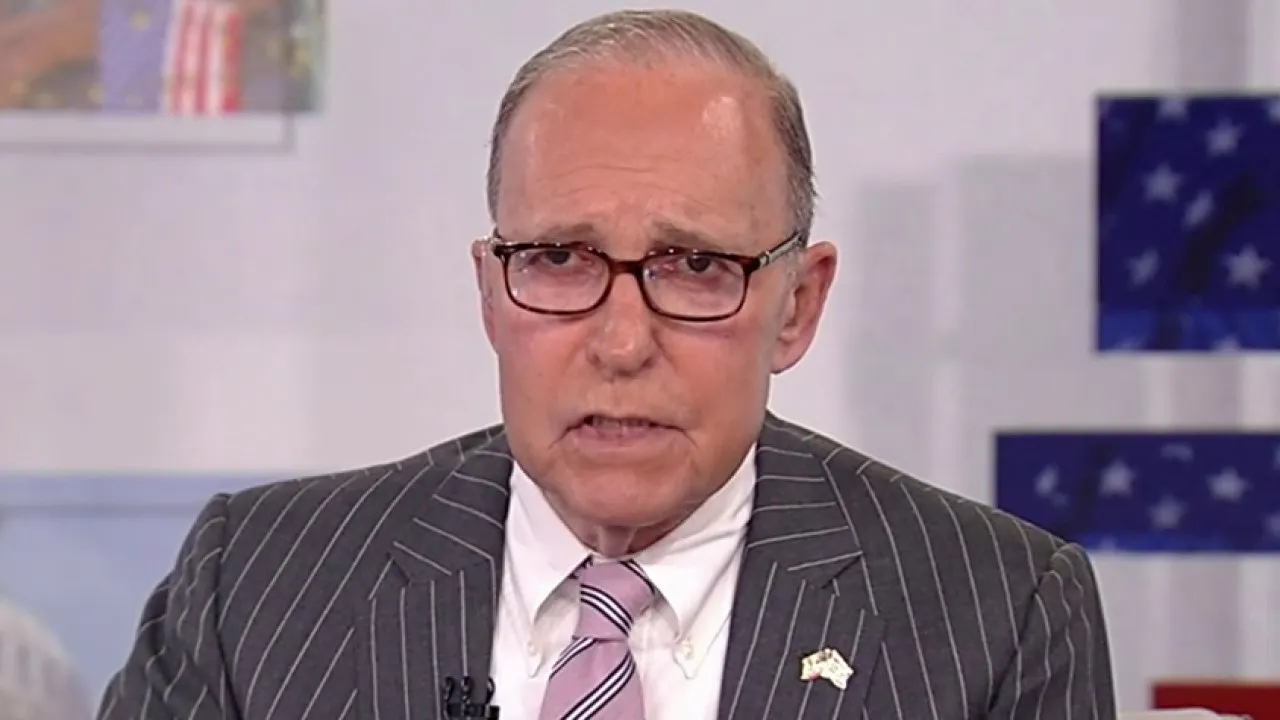
FOX Business host Larry Kudlow discusses the future of California amid the primary election on ‘Kudlow.’
Once upon a time California was a truly great state. After World War II people were moving West. It was beautiful. It worked. It had good cops. It had fabulous business opportunities. Taxes were modest. Roads were being built. GI’s coming home from the war went to live there, went to school there, married there, had kids there, got educated there. Wow, what a place.
Richard Nixon came out of California. Ronald Reagan came out of California. S.I. Hayakawa, California. George Murphy. The great Pete Wilson. George Deukmejian. Even the liberals weren’t all that liberal. And most of all, California worked. But that was then.
Now, it doesn’t work anymore, as everybody knows. So today is the big election day, jungle primary day, and the big race is really for Los Angeles’s mayor. Now I won’t forget my pal Steve Hilton, with a Trump endorsement — I hope he does well in the gubernatorial race, but all the talk is about Spencer Pratt running for Mayor against Karen Bass.
This is a very important race, but it’s not really a policy debate, and it’s not really a partisan political race in the usual sense. I think it’s more a question of whether moms can win back Los Angeles as a good place to live. And this chap Spencer Pratt is going for the moms’ vote. Of course it’s about the fires. It’s about the homeless, it’s about drugs, and schools, and safety. That’s why I think it’s about moms. And I have a feeling they’re going to vote their gut. It’s not so much about policies as it is about moms and their families.
Hoover Institution senior fellow Victor Davis Hanson discusses the Los Angeles mayoral race and candidate Spencer Pratt’s promise to bring ‘common-sense’ solutions to the city’s problems on ‘Kudlow.’
My friend Victor Davis Hanson writes how the Democratic party itself has been hijacked by a bunch of left-wing Jacobins. Crazy people of whom Mayor Karen Bass is a card-carrying member.
Today’s Democrats don’t mind Nazi tattoos. They want the southern border to be open. Everything is about racism, DEI. They’re for cashless bail. Biological men in women’s sports. Arrest violent felons and put them back on the streets. Radical abortion on demand. And virtually no place for God and religion.
For some reason, these democratic left-wing Jacobins have completely lost touch with working-class folks of all colors, shapes, and sizes, which is why President Trump has whooped them two out of the last three elections: maybe three out of the last three elections.
As I said before, I really don’t think this election is a heavy dose of policy. Today’s election is not about Mr. Trump. It may not even determine whether Los Angeles ends up in dystopia or recovery for the next 20 years. Instead today’s election is about a nice guy whose home was burned in the fires, with a clever sense of humor, a lot of common sense, and an appeal to Los Angeles moms to please come home.

Exclusive-Warsh pledges to follow best of Fed’s traditions, while also looking for change
As governments across the world restricted the movements of their citizens during Covid lockdowns from 2020, people spent more time online. We bought more online and socialised more online, and this brought us closer to the people who want to scam us. At the same time, realistic video impersonations, voices, websites, and texts became more commonplace, and scammers increased their use of social media including WhatsApp.

PDO: Best For A Normalizing Interest Rate Environment

‘A new approach’: Microsoft CEO claims its “AI Superfactory” will use the same amount of water each year as a neighborhood restaurant

Solid Wales ratings as sub follows in father’s footsteps in Ghana draw

Morning Headlines



-

 NewsBeat6 days ago
Israel says it has killed new Hamas military leader in Gaza City airstrikes
-

 Tech7 days ago
NASA taps Blue Origin to deliver lunar rovers for Moon Base initiative
-

 News Videos4 days ago
This is BROKEN! INSANE 5x MONEY CAR WASH WEEK! The NEW GTA Online UPDATE Today! (GTA5 New Update)
-

 News Videos7 days ago
XRP *JUST* SUCCEEDED!!!! CLARITY ACT EXPOSED!!! (SHE EXPOSED IT)
-
 Tech4 days ago
SpaceX just won a second Golden Dome contract. This one is $4.16 billion.
-

 Business7 days ago
Selena Gomez Reportedly Upset Over Benny Blanco’s Comments on Her ‘Terrible’ Diet
-

 Tech5 days ago
Waymo dominates autonomous vehicle registrations as Tesla trails behind
-
 News Videos4 days ago
SHE IS KILLING XRP!!! WATCH URGENT AND ACT FAST
-
 NewsBeat4 days ago
FIRST NIGHT REVIEW: Take That bring the Circus back to life in spectacular sun-soaked style
-

 Business1 day ago
Jade Biosciences, Inc. (JBIO) Discusses Positive Interim Results From JADE101 Phase I Healthy Volunteer Study and Development Plans Transcript
-

 Tech6 days ago
The Samsung pay deal is the moment Korean unions changed register
-

 Tech7 days ago
Millions of AI agents imperiled by critical vulnerability in open source package
-
 Crypto World4 days ago
CFTC Has Approved the First Regulated Bitcoin Perpetual Contract in the U.S.
-
Crypto World7 days ago
SpaceX’s $2 Trillion IPO: Why Tech Giants Nvidia (NVDA), Apple (AAPL), and Microsoft (MSFT) May Face Pressure
-
 Entertainment7 days ago
The Most Misunderstood Sci-Fi Horror Movie of the Last 10 Years Just Took Over Netflix
-
 Crypto World4 days ago
Snowflake (SNOW) Stock Rallies on Strong Q1 Results and AI Product Growth
-
 NewsBeat4 days ago
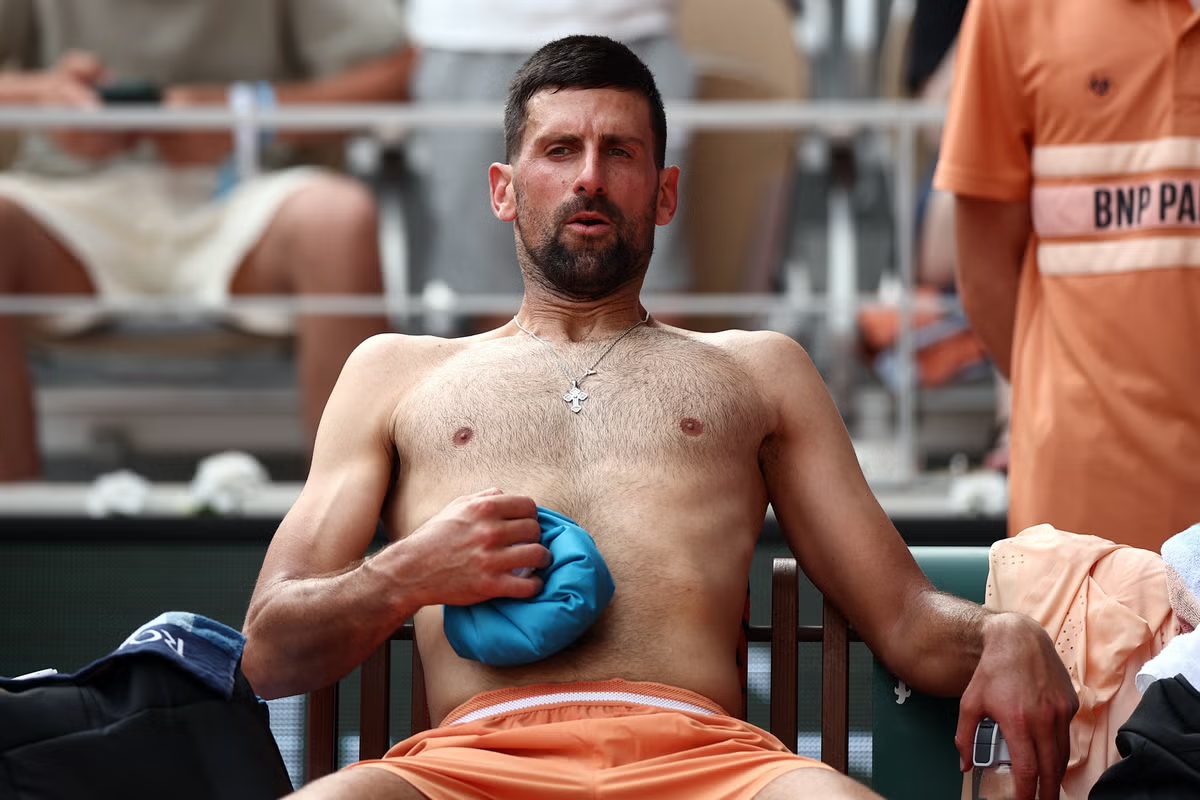
Novak Djokovic v Joao Fonseca LIVE: French Open latest scores and results after Jannik Sinner’s shocking collapse
-
 Entertainment4 days ago
Weak ‘Supergirl’ Box Office Tracking Amid Milly Alcock Backlash
-

 Business3 days ago
Is the Spurs Phenom Already Better Than Prime Diesel?
-

 Business4 days ago
Demand Conditions Improve In Chemicals Sector In April 2026
You must be logged in to post a comment Login