
Crypto World
Bitcoin Asia 2026 Adds CZ to Speaker Lineup, Full Conference Agenda Released


HONG KONG — August 3, 2026 — Bitcoin Asia 2026, Asia’s largest Bitcoin conference, today released its full conference agenda and announced Changpeng Zhao (CZ) as the newest addition to its speaker lineup for the two-day event taking place August 27–28 at the Hong Kong Convention and Exhibition Centre (HKCEC). The event is organized by BTC Inc., a subsidiary of Nakamoto Inc. (NASDAQ: NAKA), and presented by Metaplanet.
The full agenda, now live at asia.b.tc/agenda, maps out two days of main stage keynotes, panels, and programming tracks including the Bitcoin for Corporations Symposium, Deal Day, the Deal Flow Zone, and the Open Source Hub. Attendees can now plan their conference experience session by session ahead of the August event.
CZ joins other headliners on the confirmed speaker roster. Founder of Giggle Academy, CZ has spent recent years focused on education and mentorship initiatives within the Bitcoin ecosystem, alongside advising governments on regulation and tokenization. He is also the founder of Binance.
CZ will take the Nakamoto Stage on August 27 from 3:00pm to 3:30pm. Immediately following his session, CZ will hold a live signing for his memoir, Freedom of Money: A Memoir of Protecting Users, Resilience, and the Founding of Binance, in the Expo Hall. Exact location within the Expo Hall to be announced.
“Too often we talk about Bitcoin with an over emphasis on adoption in the West. Bitcoin is a global phenomenon and the Asian market is crucial to its growth, success, and narrative. We are proud to, once again, bring together the East and West bitcoin communities, with great leaders like CZ, Simon, Balaji, and many more, to write the next chapter in bitcoin’s history, and continue to foster and invest into the growth of Bitcoin,” said Brandon Green, CEO of BTC Inc.
This year’s programming centers on the convergence of Eastern and Western Bitcoin ecosystems at a defining moment for institutional adoption, with sessions spanning macro and monetary policy, corporate treasury strategy, Bitcoin infrastructure, and the regulatory landscape across Asia.
Additional speakers and programming details will be announced in the weeks ahead. Ticketing and full event information are available at asia.b.tc. Press credentials can be requested at asia.b.tc/contact/press-pass.
About BTC Inc.
BTC Inc. is the world’s leading Bitcoin media enterprise, operating Bitcoin Magazine, the Bitcoin Conference, and Bitcoin for Corporations. Through its media, events, and educational platforms, BTC Inc. delivers trusted news, research, and experiences that advance Bitcoin adoption among individuals, institutions, and enterprises worldwide.
BTC Inc. is a subsidiary of Nakamoto Inc. (NASDAQ: NAKA), a publicly held Bitcoin company that owns and operates a global portfolio of Bitcoin-native enterprises.
Forward-Looking Statements
Certain statements in this press release constitute forward-looking statements, as defined under U.S. federal securities laws. Forward-looking statements can be identified by the use of words such as “estimate,” “project,” “predict,” “believe,” “expect,” “anticipate,” “potential,” “intend,” “could,” “would,” “may,” “plan,” “will,” “seek,” “target,” or the negative of such terms or other variations thereof. However, the absence of these words does not mean that a statement is not forward-looking. Forward-looking statements in this press release include, but are not limited to, statements regarding BTC Inc.’s business plans and strategies, including plans for new products, services, and media platforms; projected or targeted audience size, reach, impressions, and distribution; expected launch dates and production schedules; the Company’s advocacy positions and the expected outcomes of industry and regulatory engagement; and the anticipated role and growth of Bitcoin-related media, events, and educational services.
These forward-looking statements are inherently uncertain and involve numerous assumptions and risks. Factors that could cause actual results to differ materially from those projected include, but are not limited to: (i) the volatility of Bitcoin prices and its effect on audience interest, advertiser demand, and the commercial viability of Bitcoin-focused media; (ii) changes in audience size, engagement, or platform distribution that could affect BTC Inc.’s reach or revenue; (iii) the risk that new products or services, including new media platforms, may not launch on schedule, achieve projected audience levels, or generate anticipated revenue; (iv) the risk that advocacy or industry engagement efforts may not achieve their intended outcomes; (v) dependence on third-party distribution platforms whose policies, algorithms, or terms of service may change; competition from other media companies and content providers; (vi) the evolving regulatory environment for digital assets and its potential impact on BTC Inc.’s operations, content, and audience; (vii) reliance on key personnel and creative talent; the risk that projected audience metrics, impressions, or distribution figures may not be achieved or sustained; (viii) risks associated with the integration of BTC Inc. into Nakamoto Inc.’s operations following the February 2026 acquisition; (ix) general economic conditions and their impact on advertising and events revenue; and (x) other important factors detailed in Nakamoto Inc.’s Annual Reports on Form 10-K, Quarterly Reports on Form 10-Q, Current Reports on Form 8-K, and other documents that are filed, or will be filed, with the SEC and that are or will be available on Nakamoto’s website at www.nakamoto.com and on the website of the SEC at www.sec.gov.
Because Nakamoto Inc. (NASDAQ: NAKA) is the parent company of BTC Inc., investors in Nakamoto Inc. common stock should be aware that the performance and risks of BTC Inc.’s media, events, and educational operations may affect the consolidated financial results, reputation, and regulatory profile of Nakamoto Inc. and its subsidiaries. Any forward-looking statement speaks only as of the date on which such statement is made, and neither BTC Inc. nor Nakamoto Inc. undertakes any obligation to update any forward-looking statement, whether as a result of new information, future events, or otherwise, except as required by applicable law.

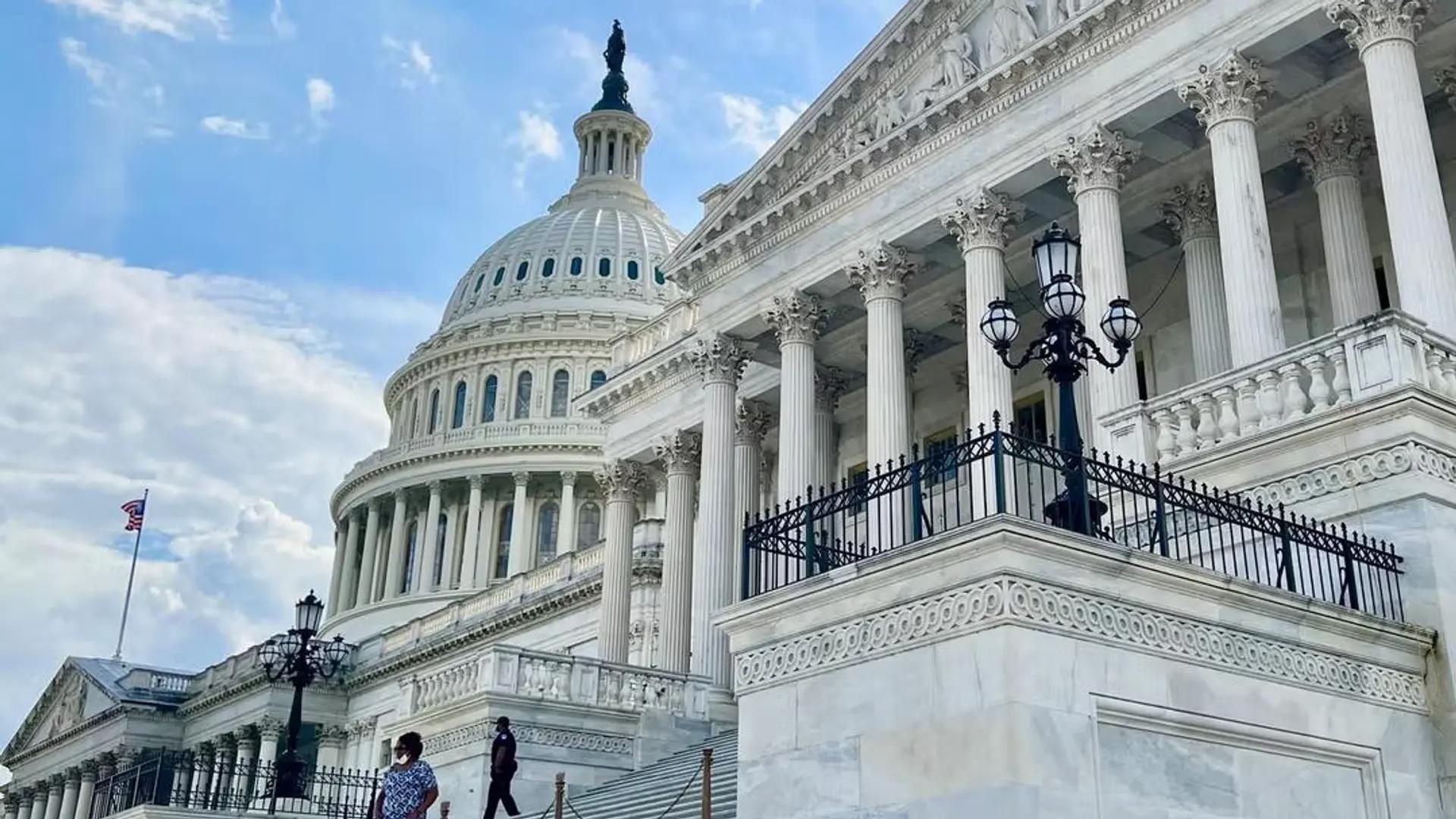
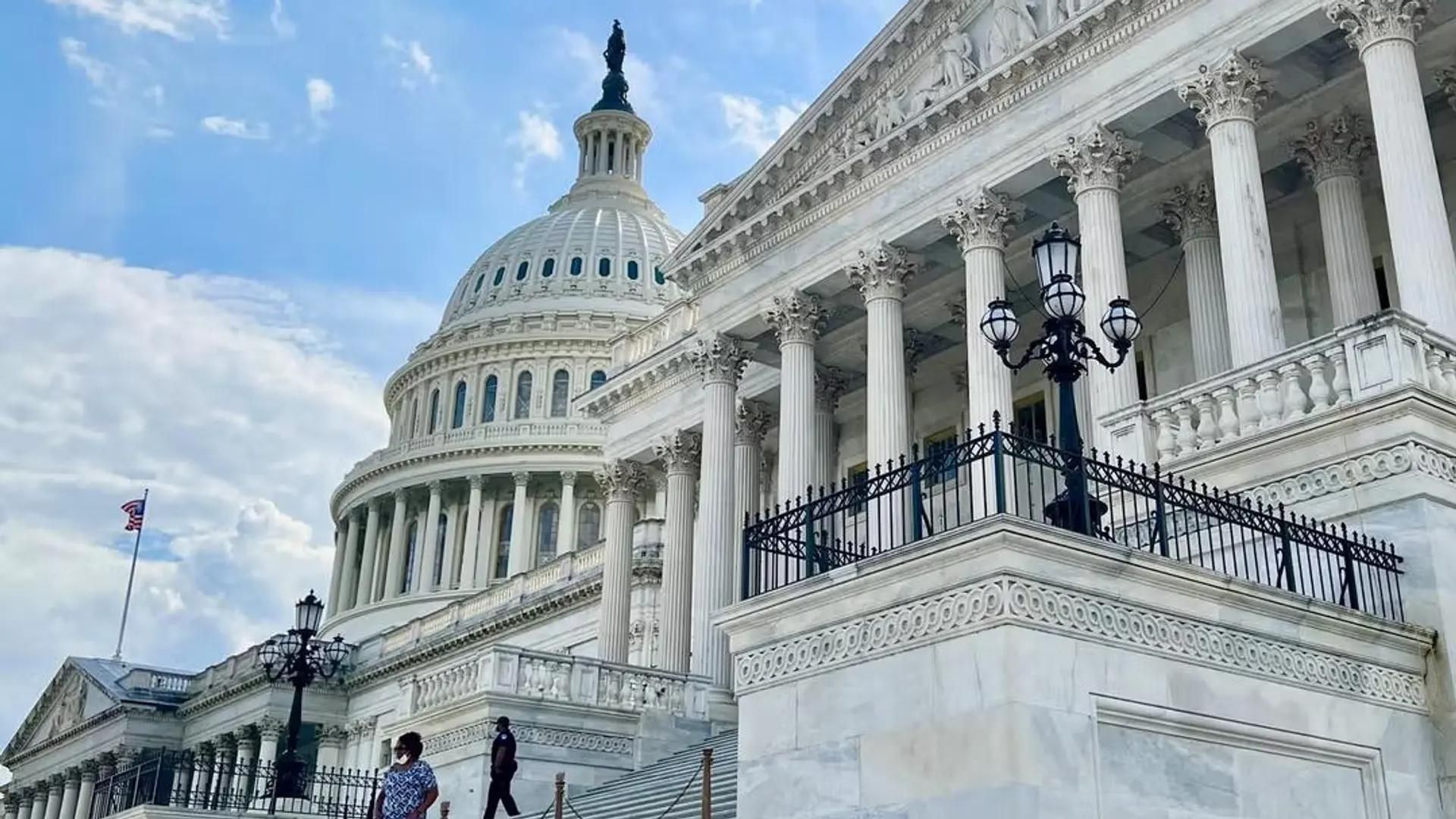
The crypto industry is angry and disappointed that the Senate is not holding a procedural vote on the Clarity Act this month, but that isn’t the worst possible outcome.
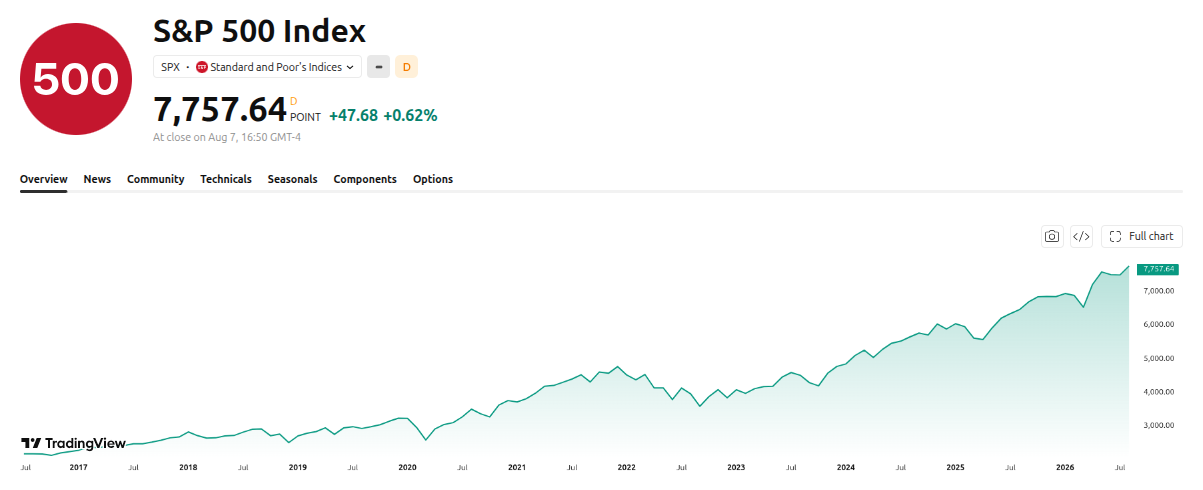
Wall Street keeps setting records, yet a growing chorus of institutional voices now names artificial intelligence (AI) itself as the biggest threat facing global markets.
The S&P 500 sits at the center of that argument, and its concentration explains why.

Why Fund Managers Now Fear AI Most
A tail risk is a low-probability event with severe consequences, the kind fund managers watch even when markets look calm. AI just claimed the top spot on that list.
Bank of America’s July Global Fund Manager Survey found 45% of respondents naming an AI bubble as the biggest tail risk, up from 28% the previous month.
Follow us on X to get the latest news as it happens.

That figure displaced second-wave inflation from its first-place position. The same survey identified long positions in global semiconductors as the world’s most crowded trade.
Respondents also flagged a specific trigger. Hyperscaler spending on AI infrastructure is ranked as the most likely source of a credit event.
Analyst Mac10 sharpened the warning on August 8. He argued that forward earnings growth is accelerating at a record pace only because companies are pouring unprecedented cash into artificial intelligence.
His concern centers on accounting mechanics. That spending often appears as a one-time boost on profit statements rather than sustainable operating performance.
Institutional bodies echo those doubts. The Bank for International Settlements warned earlier this year that Big Tech’s spending spree risks becoming a prolonged investment bust. The numbers behind that alert are substantial. The five largest hyperscalers are expected to deploy more than $1 trillion across 2025 and 2026.
Household exposure raises the stakes further. Ordinary investors now hold more stocks relative to their wealth than in past cycles, so any sharp drop would hit harder than the dot-com crash.
What the S&P 500 Actually Reveals
The structural problem explains why the index matters. J.P. Morgan Global Research estimates that the top 20 stocks now account for roughly 50.8% of total market capitalization.
That concentration has no modern precedent. Half a century has passed since the index depended so heavily on so few companies. The practical implication is uncomfortable. Buying the market increasingly means buying the AI trade, regardless of how the remaining 480 companies perform.

Capital commitments keep expanding regardless. Goldman Sachs estimates annualized AI-related spending could exceed $800 billion by the end of 2026.
Morgan Stanley projects even larger flows. Its research points toward nearly $3 trillion of AI infrastructure investment by 2028, with over 80% still ahead.
Summer has already delivered a stress test. The Nasdaq fell almost 10% from its June peak by late July before staging a near-9% rebound in early August to a new all-time high, according to TradingView data.
Momentum names showed particular fragility. Sandisk and Western Digital, up roughly 396% and 145% year-to-date, both displayed sell-the-news vulnerability during earnings season.

The bull case rests on delivered results, however. Goldman Sachs found 64% of reporting S&P 500 companies beat consensus earnings by at least a standard deviation.
BlackRock rejects the bubble framing outright. Today’s leaders generate real profits, maintain strong balance sheets, and largely fund investments from their own cash flow.
Extraordinary earnings are buying time for the AI trade. Whether returns eventually justify trillions in capital expenditure remains the question holding up the entire index.
The Situational Awareness Collapse: A Warning Shot for the AI Trade
If markets needed a case study of AI concentration risk, July delivered one. Situational Awareness, the hedge fund founded by former OpenAI researcher Leopold Aschenbrenner, grew to as much as $45 billion before steep losses on AI infrastructure stocks like SK Hynix forced it to sell its entire public portfolio to Ken Griffin’s Citadel.
The timing was brutal: on July 24, Aschenbrenner had sent investors a letter reporting a 439% net return for the first half of 2026 — even suggesting it was a good time to add funds.
Six days later, Citadel absorbed a stake once estimated at $16 billion in one of the largest rushed equity transactions in Wall Street history. A cascade of margin calls shrank the fund’s assets from $45 billion to roughly $10 billion in a matter of weeks.
Yet the story did not end there. Just days after the near-collapse, Aschenbrenner returned to the market with a $400 million investment in a privately held company — bringing his combined commitment to that unnamed target to $500 million, alongside the fund’s retained private stakes.
The episode does not prove the AI trade is over, but it exposes how concentration, leverage, and thin liquidity can destroy a portfolio before a long-term thesis has time to play out — the same fragility now embedded, at index scale, in the S&P 500 itself.
Subscribe to our YouTube channel to watch leaders and journalists provide expert insights.
The post AI Spending is Slowing Down. How Will the S&P 500 React? appeared first on BeInCrypto.
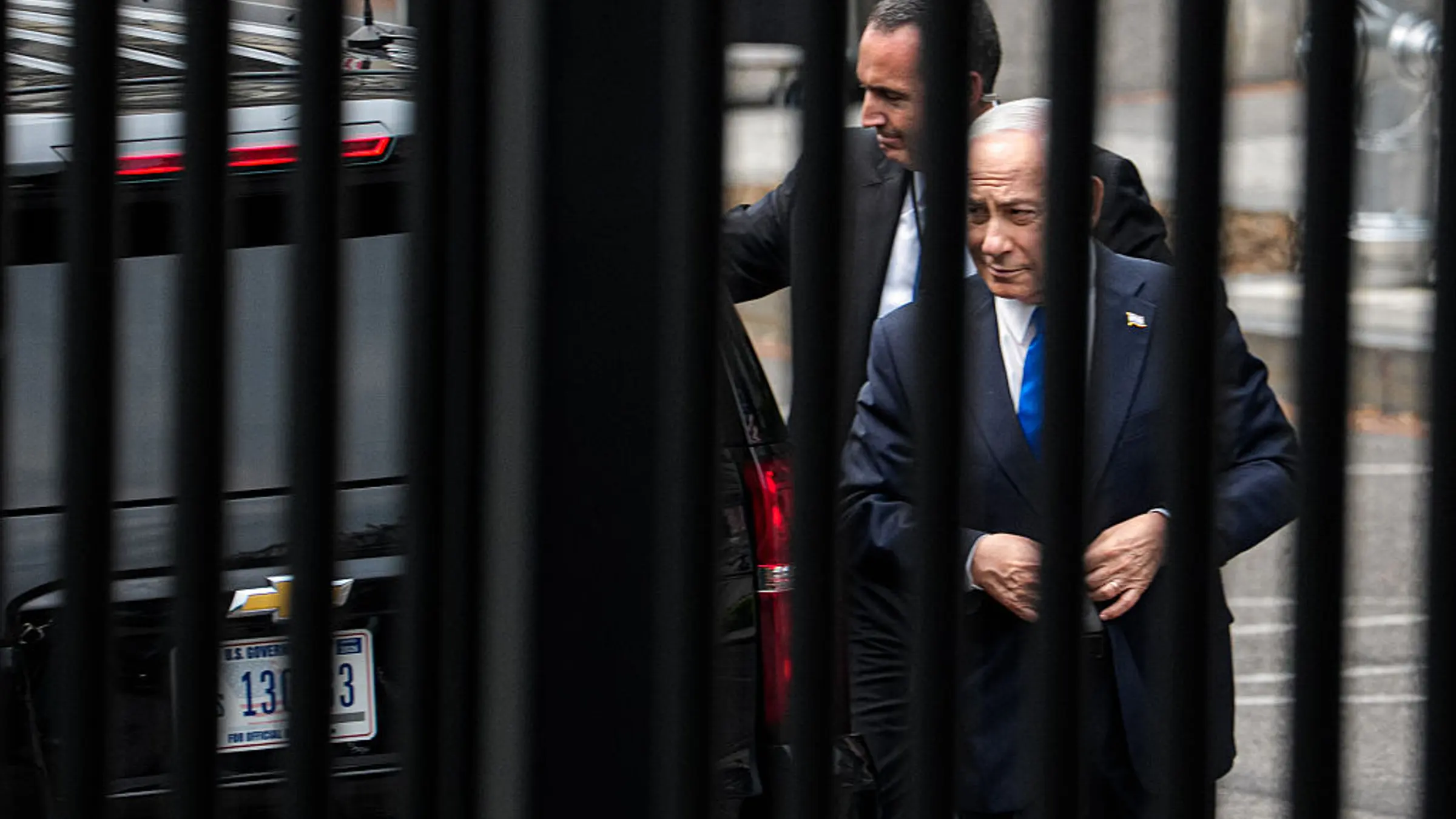
Soon after Netanyahu’s comments, Hamas encouraged mediators to continue putting pressure on Israel.
Basem Naim, a senior Hamas official, wrote on X that the group is still “committed to the roadmap reached.”
“We expect the mediators and the American guarantor to press Netanyahu and his government to compel him to adhere to the roadmap and not obstruct the path for internal political and electoral reasons,” he said.
More than 1,250 people have been killed in the Israeli attacks since the original ceasefire in October 2025, most of them civilians, according to the Gaza Health Ministry. Over 73,000 Palestinians have been killed in Gaza since the war began, the ministry said. Hamas has not disclosed how many of its fighters have been killed.
What Is Netanyahu’s Response to Trump?
Netanyahu has long enjoyed a cordial relationship with the U.S. President, whom he has called “the greatest friend that the state of Israel has ever had in the White House.” However, the relationship has appeared more strained since the countries worked together in strikes against Iran on Feb. 28.

Berkshire Hathaway’s second-quarter filings confirmed $23.5 billion in stock purchases, the conglomerate’s first net buying in 14 quarters. Yet the documents name only one new position, a $10 billion stake in Alphabet (GOOGL).
That leaves roughly $13.5 billion in fresh buying without a name. The answer arrives by August 14, when Berkshire files its 13F, the quarterly disclosure that lists every US stock large investors hold.
The Trade Berkshire Hathaway Has Not Named Yet
Berkshire turned net buyer for the first time since 2022, and its famous cash pile finally shrank.
However, the more revealing math hides across two filings. The 10-Q shows $39.4 billion of equity purchases in the first half. However, the first-quarter report recorded just $15.9 billion of that total.
Berkshire therefore bought $23.5 billion of stocks between April and June while selling only $3.7 billion. BeInCrypto reported the Alphabet investment at $10 billion in June. Subtract it, and about $13.5 billion in quarterly buying remains publicly unidentified.
The filing offers one clue. The cost basis of its commercial, industrial and other equity bucket jumped $21.1 billion during the quarter. That category likely includes Alphabet, suggesting the mystery money targets similar businesses.
Meanwhile, Alphabet’s arrival pushed Chevron out of the top five holdings, a quiet shift from oil to technology. Warren Buffett had already offered an earlier Alphabet endorsement, so the direction surprises less than the scale.
Abel’s Fingerprints Are All Over the Filing
The repurchase section carries a detail most reports skipped. Buyback decisions now rest with the chief executive, who consults the chairman, the role Buffett retains.
Greg Abel used that authority immediately. Berkshire repurchased $4.5 billion of its own shares in the quarter, up from $235 million in the previous three months. In effect, the new chief executive declared his own stock undervalued.
The buying came from strength rather than desperation. Operating earnings climbed 16% to $13 billion, while insurance float reached $177.5 billion.
Acquisitions also drained the vault. Berkshire closed the $9.4 billion OxyChem chemicals purchase in January and completed the $6.8 billion Taylor Morrison homebuilder deal on July 24. Consequently, cash and Treasury holdings fell from a record $397.4 billion to $365.5 billion.
That war chest still towers over most markets. It exceeds every crypto asset except the Bitcoin (BTC) market cap, which currently sits near $1.31 trillion. Traders have long treated Berkshire’s cash as a fear gauge, so its first decline in years reads as a risk-on signal.
Abel has shown no appetite for digital assets so far, leaving questions about Berkshire’s future in crypto unanswered.
The August 14 disclosure will show whether the unnamed billions deepen the technology tilt or spread across old-economy names. Either way, Wall Street’s most-watched cash pile is finally moving, and the fine print now matters more than the headline.
The post A $13.5 Billion Berkshire Hathaway Mystery: What Is Greg Abel Buying Beyond Alphabet? appeared first on BeInCrypto.
Bitcoin remains trapped in a broader consolidation structure, with the latest recovery failing to generate convincing bullish momentum. The price is again approaching overhead supply, but buyers have yet to produce the type of breakout needed to signal a meaningful structural shift.
Bitcoin Price Analysis: The Daily Chart
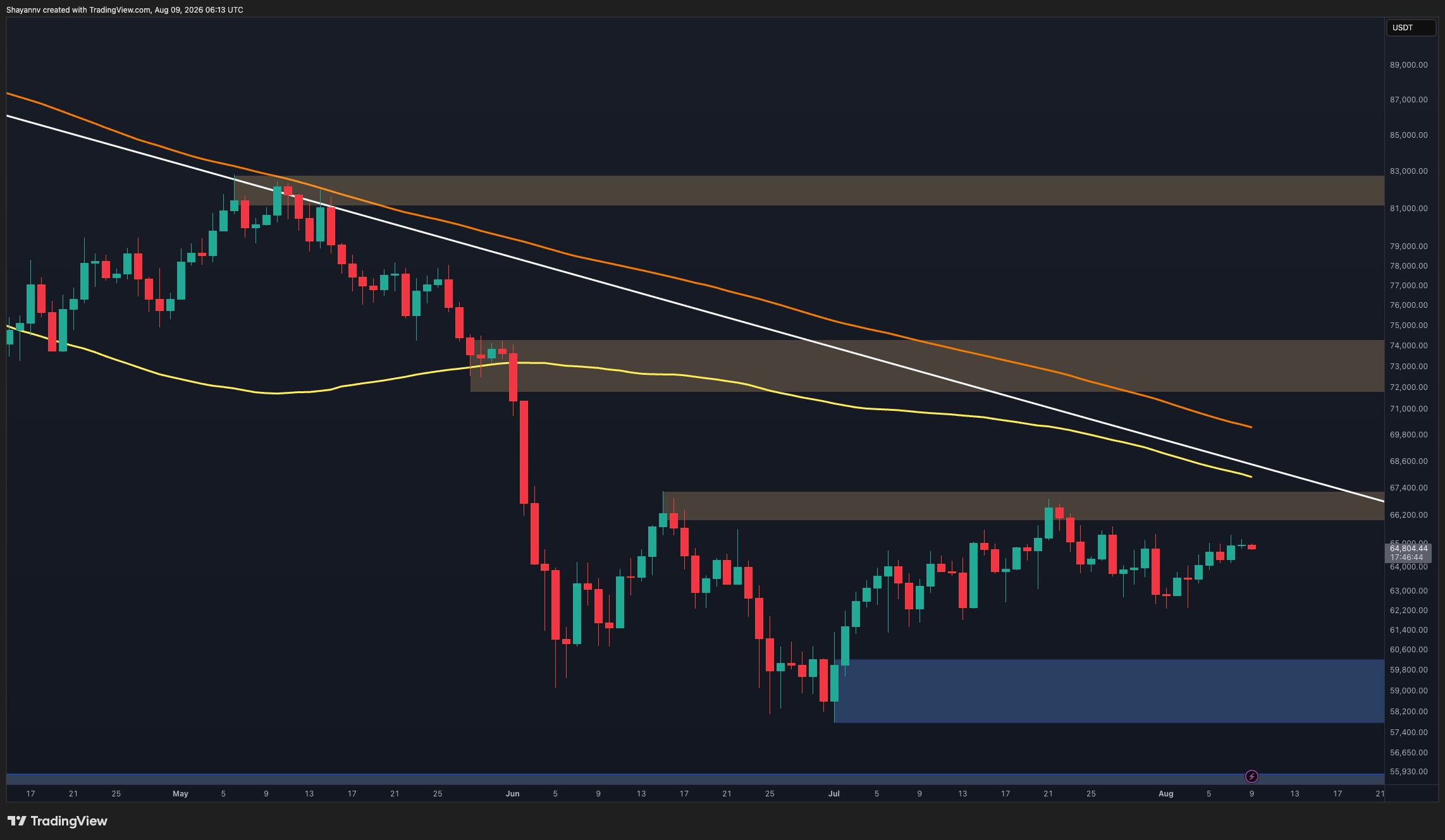
On the daily timeframe, BTC is trading around $65K after recovering from the late-June lows. However, the rebound continues to lack strong bullish momentum, with recent candles becoming relatively compressed as the price approaches the $65.8K-$66.8K resistance zone.
This area has already capped previous recovery attempts and is now reinforced by the descending white trendline approaching from above. More importantly, Bitcoin remains well below the declining moving averages, leaving the broader market structure tilted to the bearish side despite the recent stabilization.
Therefore, the current advance still appears more like consolidation beneath resistance than the beginning of a confirmed bullish reversal. A decisive daily breakout above the $65.8K-$66.8K zone and the descending trendline would improve the outlook, while another rejection could shift attention back toward the major $57.8K-$60K demand region.
The hesitant price action also appears consistent with a market awaiting greater macro and geopolitical clarity. Developments surrounding US-Iran tensions and the Strait of Hormuz, along with upcoming US inflation data this month, could provide catalysts for volatility. Until a decisive move occurs, Bitcoin may remain vulnerable to sharp liquidity-driven fluctuations within its broader range.
BTC/USDT 4-Hour Chart
The 4-hour chart makes the immediate challenge for buyers even clearer. BTC has recovered significantly from the $61.8K-$62.3K support zone, but the rally has repeatedly struggled to reclaim the orange resistance box around $64.8K-$65.4K.
Recent candles are consolidating around the lower boundary of this supply zone rather than breaking decisively through it. This inability to reclaim resistance despite the recovery from $62K suggests that bullish momentum is fading near a critical threshold.
As long as BTC remains below the $64.8K-$65.4K region, another rejection remains a significant possibility. Such a move could initially unwind the latest recovery and eventually expose the $61.8K-$62.3K support box once again.
Conversely, a clean breakout and sustained acceptance above $65.4K would weaken this bearish scenario and could allow buyers to challenge the larger $65.8K-$66.8K resistance area.

Onchain Analysis
The Realized Price UTXO Age Bands provide additional context for Bitcoin’s current market structure. The chart shows the realized prices of the 1-3 month and 3-6 month holder cohorts, which currently sit above spot price at approximately $67K and $72K, respectively.
With BTC trading near $65K, both groups are therefore holding coins at an aggregate unrealized loss. This creates an important overhead cost-basis structure. In particular, the 1-3 month cohort’s realized price around $67K is relatively close to the market and could act as resistance if BTC continues recovering, as recently underwater holders may use a return toward their cost basis to reduce exposure.
The 3-6 month cohort’s realized price around $72K represents another higher threshold. Reclaiming these realized-price bands would indicate that the market is absorbing potential supply from recent buyers and would strengthen the recovery narrative. Until then, their position above spot price complements the technical picture, where Bitcoin continues to face substantial resistance overhead.

The post Bitcoin Price Analysis: Here’s What the Charts Suggest for BTC Next Week appeared first on CryptoPotato.


Bitcoin’s BIP-110 split widened further on Aug. 9, with the enforcing branch still unable to produce a third block hours after mandatory signaling began.
Summary
- BIP-110 remains frozen at block 961,633 while Bitcoin’s main chain has advanced through block 961,744.
- Current-period signaling stands at zero among 113 main-chain blocks mined since mandatory signaling began Saturday.
- OCEAN reports 257 PH/s on its BIP-110 endpoint, with no new block for 17 hours.
- Roughnecks mined both BIP-110 blocks using OCEAN’s DATUM system at Bitcoin’s 127.48 trillion difficulty level.
- Saylor estimates 99.85% of hashpower rejected the fork, though that figure remains his own calculation.
The latest BIP-110 Monitor snapshot showed the minority chain stuck at block 961,633 while Bitcoin’s dominant, non-enforcing chain had reached 961,744. That increased the gap to 111 blocks from 88 earlier Sunday.
The stall offers the clearest test yet of how much mining support BIP-110 has attracted. Only 51 of the 2,016 blocks in the previous difficulty period signaled for the proposal, equal to 2.53%. Since the mandatory window started at block 961,632, the monitor had recorded zero signaling blocks among the first 113 blocks on the dominant chain.
Bitcoin BIP-110 branch remains frozen after two blocks
BIP-110 enforcing nodes began rejecting non-signaling blocks at height 961,632 on Aug. 8. Roughnecks then produced an alternative block at that height and followed it with block 961,633. OCEAN’s BIP-110 block record confirms that Roughnecks mined the first block using its DATUM system at a difficulty of 127.48 trillion.
Progress stopped shortly afterward. OCEAN’s BIP-110 mining endpoint showed its latest block remained 961,633 roughly 17 hours later, with displayed hash power around 257 PH/s at the latest retrieval. Meanwhile, the non-enforcing Bitcoin chain continued adding blocks at its normal pace.
As crypto.news reported, the gap had reached 98 blocks when Bitcoin stood at 961,731 earlier Sunday. The newer monitor data shows another 13 Bitcoin blocks were added without a corresponding BIP-110 block, bringing the difference to 111.
The branch has not technically ceased to exist. Miners can still direct additional computing power toward it and attempt to extend its chain. However, the latest data provides no evidence that enough hash power has arrived to restore anything close to Bitcoin’s regular block production rate.
Full Bitcoin difficulty makes the minority fork difficult to advance
The problem comes from Bitcoin’s difficulty adjustment system. BIP-110 split away at the start of difficulty period 477, but the enforcing branch inherited the same mining target as the dominant chain. Losing most of its mining power therefore did not immediately make its blocks easier to find. OCEAN records the difficulty at 127.48 trillion.
Bitcoin normally recalculates difficulty after a 2,016-block period. Since the BIP-110 branch has produced only blocks 961,632 and 961,633 in the current window, it still needs to work through the remainder of that period before a normal retarget can provide relief. With block production already measured in many hours rather than roughly ten-minute intervals, the time required could become extremely long unless additional miners join.
Michael Saylor seized on that weakness Sunday. In an X post, the Strategy executive chairman said “about 99.85% of Bitcoin’s hashpower stayed with Bitcoin” and called the result decisive. That 99.85% figure is Saylor’s estimate rather than a measurement published by the Bitcoin protocol or BIP-110 specification.
Saylor separately estimated that, at “~0.15% of Bitcoin’s hashpower,” the fork could take “~25 years” to reach its first difficulty adjustment. That projection should also be treated as an estimate based on the hash power assumption he used at the time. Mining power can enter or leave either branch, so the expected timeline can change sharply.
Mandatory signaling continues despite the miner rejection
The unusual feature of BIP-110 is that missing its voluntary signaling target did not end the deployment. The official BIP-110 specification sets a 55% threshold during voluntary signaling but also includes a mandatory window between blocks 961,632 and 963,647. Nodes enforcing the proposal reject blocks during that period unless their version field signals bit 4.
The previous difficulty period ended with just 51 supporting blocks out of 2,016, or 2.53%. Period 477 has been even more one-sided on the dominant chain so far. At block 961,744, the monitor counted zero signaling blocks out of 113 produced since the new period began.
This is why BIP-110 can create a minority branch despite low miner support. Nodes running its rules reject blocks that ordinary Bitcoin nodes accept, causing the two groups to disagree about which blocks are valid. The dominant chain retains far greater observed mining activity, while BIP-110 enforcing nodes remain on the two-block branch.
Saylor and Blockstream co-founder Adam Back had warned before the split that enforcing BIP-110 without broad support could divide the network. Supporters, including Bitcoin Knots maintainer Luke Dashjr, have instead argued that temporary consensus restrictions are necessary to curb non-monetary data storage. These remain opposing positions in the broader dispute over Bitcoin block space.
Holders still face replay risk while both chains exist
The stalled branch also leaves a practical issue for anyone considering moving pre-fork coins. BIP-110 does not inherently give those balances replay protection, meaning a transaction signed on one branch can potentially remain valid on the other under some circumstances.
Bitcoin developer Kevin Loaec warned users that attempting to sell coins on the minority fork without first separating balances could expose corresponding BTC on the dominant chain. The danger arises because both histories began with the same pre-split transaction outputs.
The risk does not mean someone automatically gains control of an entire Bitcoin wallet. Rather, a transaction valid on both chains could be copied and rebroadcast, potentially moving the same transaction inputs on each network. Users who leave pre-split coins untouched do not create a signed transaction that can be replayed.
The economic relevance of that issue will depend partly on whether exchanges, wallets and users begin assigning value to the minority chain. So far, its two-block history and slow production leave little infrastructure for normal transfers or trading.
What happens next for BIP-110
The next formal checkpoints remain block based. Under BIP-110, mandatory signaling continues through block 963,647. The proposal is designed to enter LOCKED_IN no later than block 963,648, then move to ACTIVE one difficulty period later. Its actual reduced-data consensus rules would begin at block 965,664 and run for 52,416 blocks, or roughly one year at Bitcoin’s intended block rate.
Those heights are straightforward for the dominant Bitcoin chain to reach if current block production continues. They are much harder for the enforcing branch while it remains at 961,633. The two chains can therefore reach nominally identical block heights on very different calendars.
BIP-110 supporters have also prepared a more radical fallback. An Aug. 1 GitHub branch maintained by Chris Guida contains 12 commits involving a potential proof-of-work change, including code for selecting another algorithm and configuring a hard fork time. No activation time is set in the code.
Guida has described the work as contingency code rather than an immediately scheduled fork. That means the present BIP-110 split remains governed by Bitcoin’s existing proof-of-work difficulty unless supporters adopt another change later.
For now, the latest measurable trend remains one-sided. At 15:27 UTC Sunday, Bitcoin had extended the gap to 111 blocks, BIP-110 had not produced a third block, and no block in the dominant chain’s new difficulty period had signaled support. Whether that changes depends primarily on miners directing substantial new hash power toward the enforcing branch.
European stock exchange-traded funds (ETFs) recorded a month of positive net flows in July, their first since the US-Iran conflict began in late February, according to Bloomberg data.
The return of capital signals renewed investor appetite for the region. A strong earnings season and easing oil prices have restored Europe’s appeal as a hedge against volatile technology stocks.
Investor Money Returns to Europe
BlackRock highlighted that its European equities products attracted $4.4 billion in July. The asset manager described the flows as evidence of anti-momentum allocations away from volatile chipmaker stocks.
A July sell-off in global semiconductor stocks had pushed investors toward regions less tied to technology and artificial intelligence stocks. Europe emerged as a favored destination.
Strong corporate results reinforced the shift. Companies in the Stoxx Europe 600 are on track for 22% year-on-year earnings growth in the second quarter, the strongest since 2022.
Banks led the performance. BNP Paribas saw quarterly profits surge by a third, while UBS profits jumped 17% to a record, both driven by trading revenues.
Follow us on X to get the latest news as it happens
Banks Turn Bullish on the Rally
Meanwhile, UBS raised its year-end target for the Stoxx 600 to 690 points from 630. Against Friday’s close, that implies roughly 5% further upside.
Goldman Sachs echoed the confidence in its August picks. The bank projects 168% upside for UK clean energy developer Ceres Power and 102% for German defense contractor Rheinmetall over 12 months.
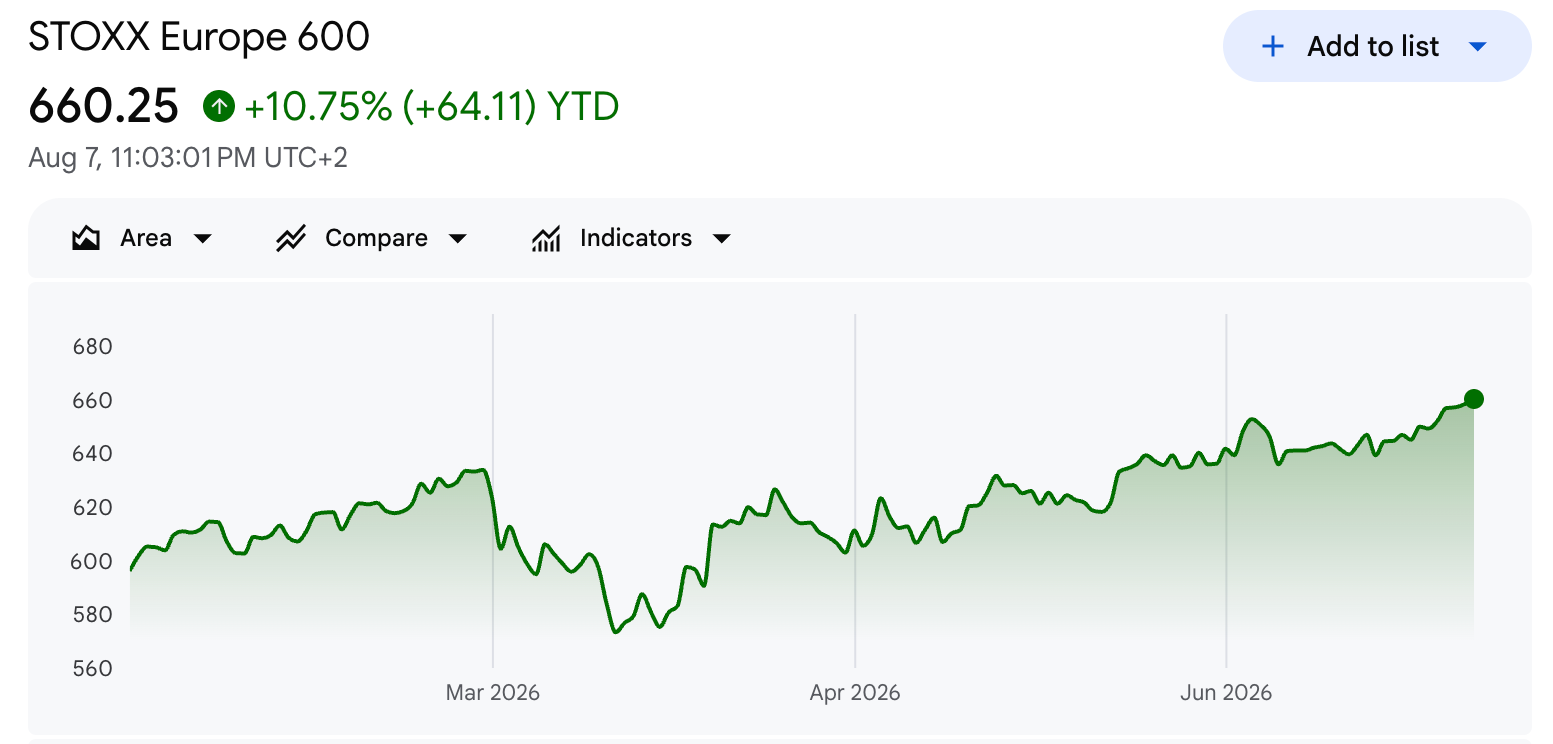
The Stoxx 600 has gained 10.7% in 2026 and touched a record 663.4 points this month. Germany’s Dax, the FTSE 100, France’s Cac 40, and Spain’s Ibex also reached highs.

Not every strategist agrees. Societe Generale expects the Stoxx 600 to fall to 600 points, while TFS forecasts a 9% decline to 585.
Subscribe to our YouTube channel to watch leaders and journalists provide expert insights
The post European Stock ETFs Post First Positive Month Since the Iran War Started appeared first on BeInCrypto.
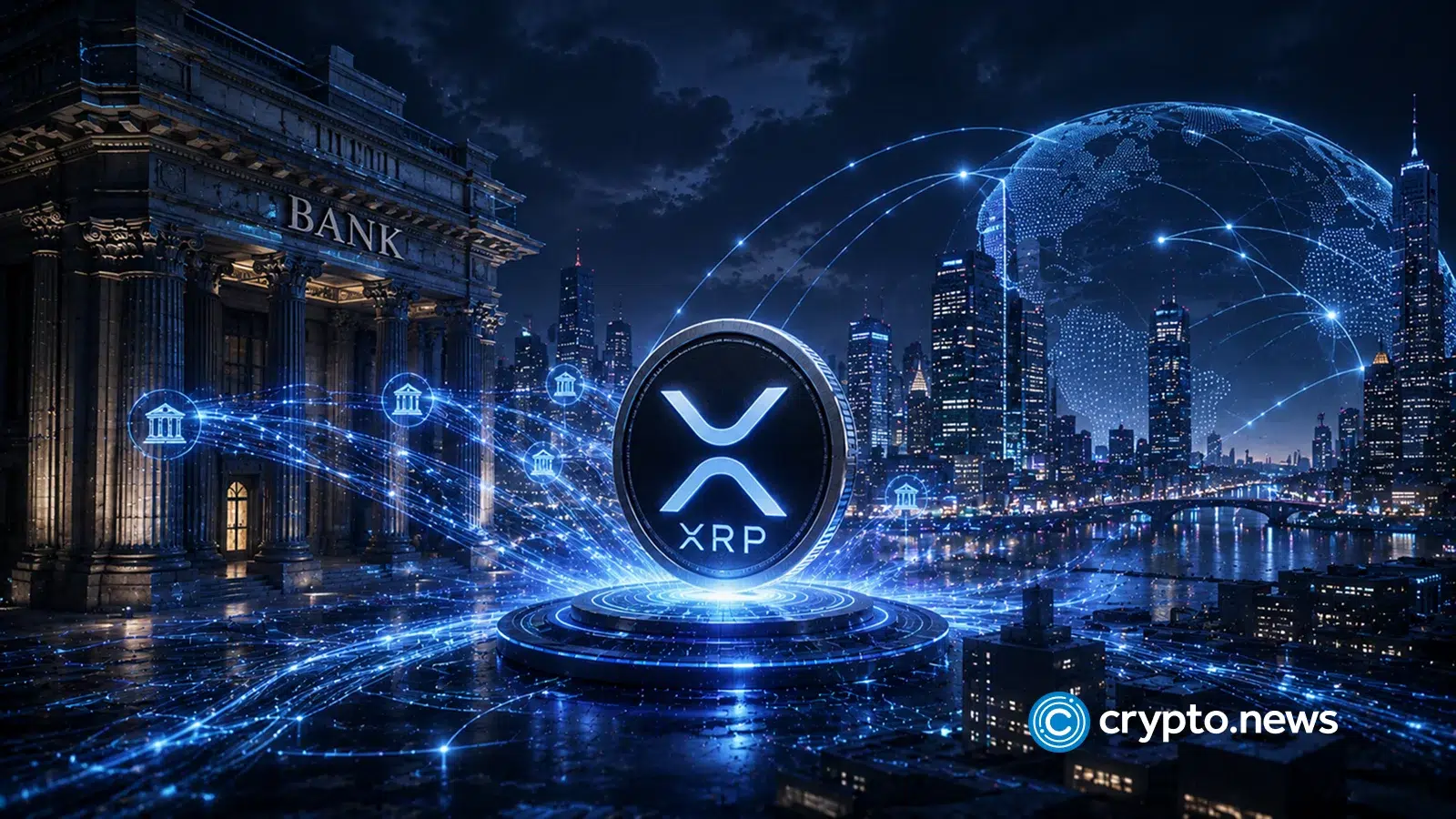
XRP Ledger developers have retired five long active protocol amendments in xrpld version 3.3.0, but the move does not remove their features or require XRP holders to take action.
Summary
- XRPL 3.3.0 retires five long-active amendments, making their post-activation behavior permanent within the core protocol.
- Clawback remains available after retirement because only obsolete pre-amendment code is removed from xrpld software.
- XRPL documentation allows amendment retirement after two years of Mainnet activation to reduce legacy complexity.
- Six new amendments entered version 3.3.0, but each still requires validator approval before Mainnet activation.
- Node operators should upgrade to version 3.3.0 promptly, while users face no retirement-related action required.
RippleX software engineer Mayukha Vadari explained on X that retirement removes old pre-amendment code left behind after a protocol change has operated for years. The amended behavior itself stays in place. Official XRPL documentation confirms that retired amendments become unconditional parts of the core protocol.
The distinction became important after the Aug. 6 release of xrpld 3.3.0, which retired Clawback, fixDisallowIncomingV1, fixInnerObjTemplate, fixNFTokenReserve and fixUniversalNumber. In other words, “retiring Clawback” does not mean XRP Ledger issuers lose clawback functionality. The network is instead dropping the older code path that described how transactions behaved before the amendment became active.
XRP Ledger retirement makes old rules permanent
The XRP Ledger amendment system allows protocol changes to be introduced without immediately forcing every new rule onto Mainnet. Validators vote on amendments, and a proposal must maintain support from more than 80% of trusted validators for two continuous weeks before it becomes active. Once enabled, the new behavior applies permanently unless another amendment later changes it.
During the period after activation, xrpld keeps both the current logic and some pre-amendment code. That legacy code can help developers reproduce old ledger behavior when debugging or verifying historical transactions. However, keeping years of obsolete branches also adds complexity to the codebase.
The official amendment documentation says a Mainnet amendment can be retired once it has been enabled for two years. Retirement removes its old code path, stops treating the change as a conditional amendment and incorporates the newer behavior into the protocol unconditionally.
Vadari described the process as “purely a codebase cleanup” and said it “won’t affect any users.” She added that developers generally wait two years because the previous implementation can still be useful when debugging older transactions. XRPL’s own testing documentation similarly warns that historically accurate transaction replay may require running the xrpld version that originally processed the transaction after old amendments have been retired.
Clawback is not being removed from XRPL
Clawback is the most recognizable of the five retired amendments and the easiest to misinterpret. The feature became active on Mainnet on Feb. 8, 2024 and allows qualifying issuers to recover issued tokens from holders when the issuing account has enabled the required clawback setting. It does not allow an issuer to claw back native XRP.
Retiring the amendment therefore means the network no longer needs code for a version of XRPL where Clawback did not exist. Current Clawback behavior remains part of the protocol. The XRPL known amendments page now explicitly marks its pre-amendment functionality as retired.
The other four retirements follow the same principle. fixDisallowIncomingV1 corrected a trust line authorization issue. fixInnerObjTemplate addressed errors involving inner AMM objects. fixNFTokenReserve added reserve checks when NFT offers are accepted, while fixUniversalNumber unified parts of XRPL’s decimal floating point calculations. Their post-amendment rules remain in effect even though the older paths are being removed.
This is not a new governance mechanism. XRPL has retired earlier amendments after their rules became sufficiently established. Version 3.2.0, for example, retired older changes covering Checks, Deposit Authorization, account deletion and other protocol functions.
Version 3.3.0 also starts a new amendment cycle
While five old amendments are leaving conditional status, version 3.3.0 adds six new proposals to xrpld. They are BatchV1_1, ConfidentialTransfer, DynamicMPT, PermissionDelegationV1_1, Sponsor and fixCleanup3_3_0. Their inclusion in the software does not mean those capabilities are already active on Mainnet.
As crypto.news reported, ConfidentialTransfer would support privacy preserving Multi-Purpose Token transfers, while BatchV1_1 would allow an account to submit as many as eight inner transactions together. Sponsor would allow third parties to cover fees and reserve requirements, while DynamicMPT would provide more flexibility over selected token properties.
Each proposal must still clear XRPL’s validator process independently. More than 80% support must persist for two weeks before an amendment activates, and support can fall below the threshold and reset the timer.
The difference between these new amendments and the five retired ones is therefore substantial. The new proposals are awaiting network approval. The retired amendments already passed that stage years ago, became established network behavior and have now reached the point where maintaining their older code is no longer considered necessary.
What happens next for XRPL operators
For ordinary XRP holders, no migration, wallet update or transaction is required specifically because the five amendments were retired. Clawback and the other affected protocol behaviors continue operating under the established rules.
Server operators have a different consideration. The XRPL 3.3.0 release notice tells operators to upgrade to version 3.3.0 as soon as possible to maintain service continuity. Staying current is also important because servers need software containing the code for amendments that may later become active. A server lacking an activated amendment can become amendment blocked and stop participating normally in the network.
In related coverage, that mechanism was demonstrated in July when activation of fixCleanup3_2_0 left nodes running older incompatible versions amendment blocked.
Attention now shifts from the retired amendments to validator decisions around the six additions in version 3.3.0. As previously reported, ConfidentialTransfer is among the proposals aimed at expanding XRPL’s tools for institutional tokenized assets, but its use still depends on validator approval.
For the five retired amendments, however, there is no comparable vote ahead. Retirement marks the end of their transition period rather than the end of their functionality: the amended rules are now simply part of XRP Ledger’s permanent core behavior.
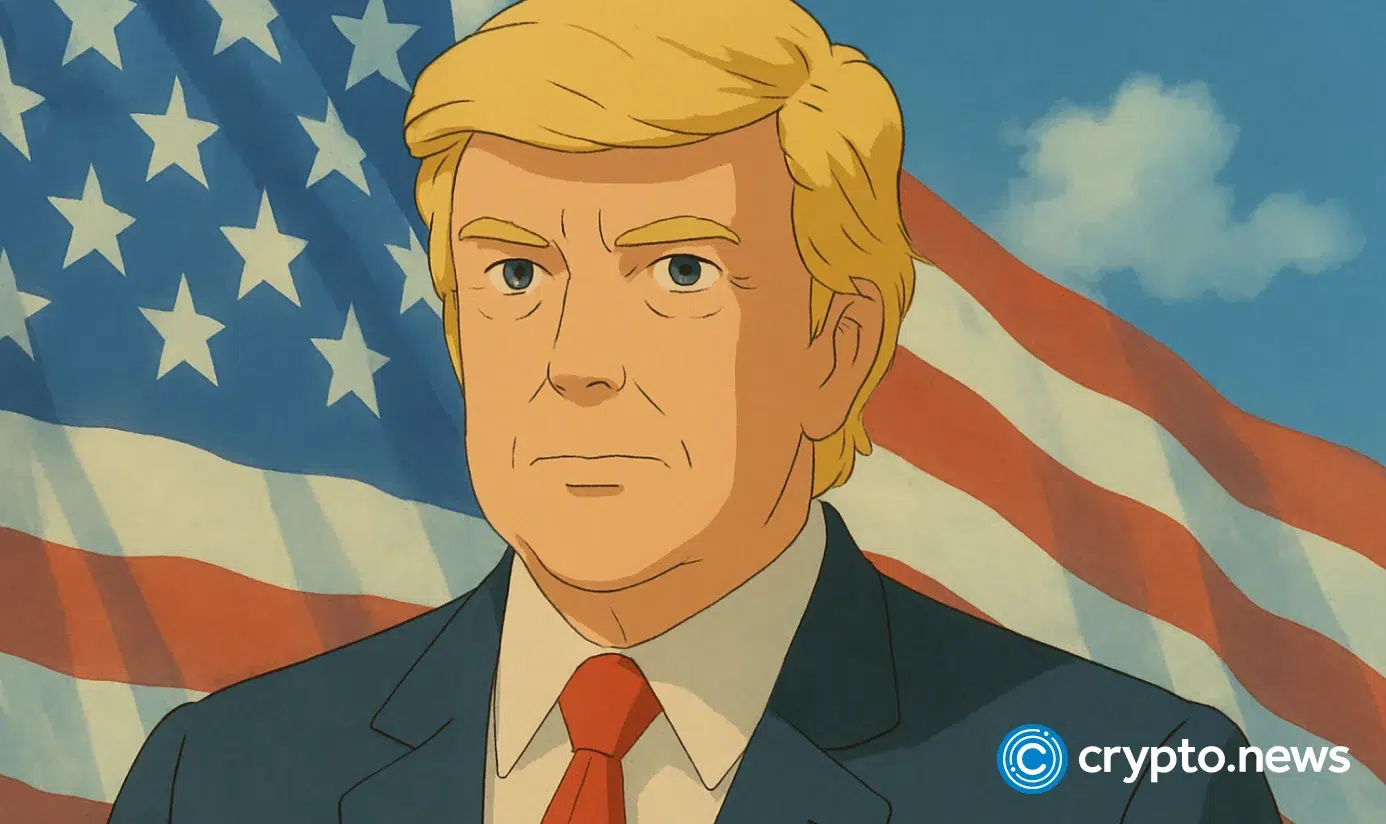
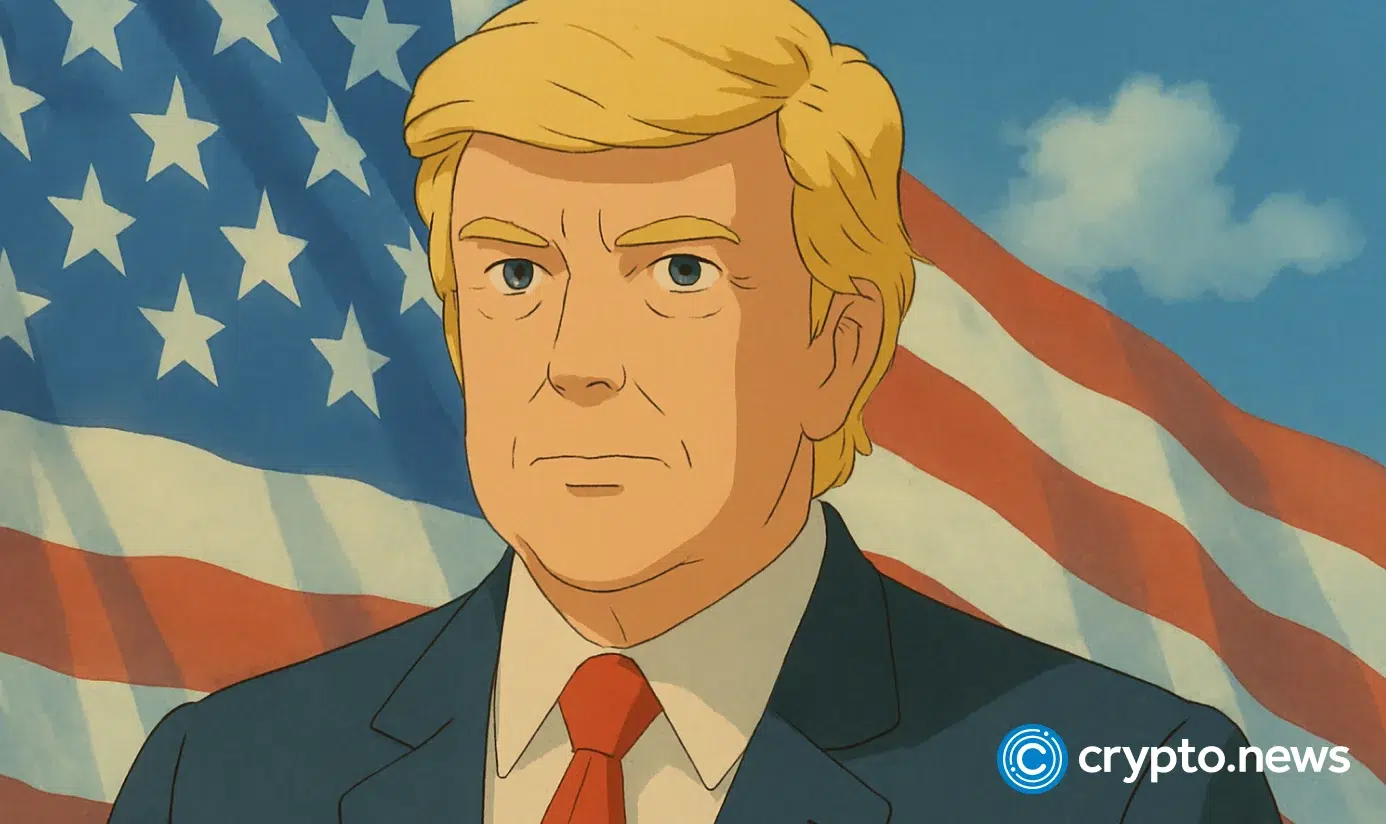
President Donald Trump has privately told senior aides he could end the U.S.-Iran war without securing a nuclear agreement if Tehran fully reopens the Strait of Hormuz, the Wall Street Journal reported on Aug. 9, citing U.S. officials.
Summary
- Trump reportedly told aides he could end the Iran war without securing a nuclear deal.
- Iran says Hormuz reopening requires U.S. compensation, sanctions relief, freed assets, and broader security concessions.
- An Iran-Oman shipping agreement is in final stages, but Tehran says it cannot reopen Hormuz.
- Brent crude settled at $83.55 Friday, up 1.3%, as traders awaited clearer Hormuz negotiations details.
- Washington says it would lift Iran’s port blockade once commercial shipping resumes freely through Hormuz.
The report comes as Iran raises the price for reopening the waterway, tying compensation, sanctions relief and wider security demands to any durable arrangement.
The White House has not publicly confirmed that Trump has changed his nuclear objective. Its latest published Iran remarks, from July 28, instead repeated that Iran cannot obtain a nuclear weapon and said military options remain available if diplomacy fails. The reported willingness to “walk away without a nuclear deal” therefore remains a private policy consideration, not an announced shift in U.S. strategy.
Iran’s latest demands complicate the Hormuz exit path
The Journal reported that Iran is seeking billions of dollars in U.S. payments, the withdrawal of American forces from the region and an end to the U.S. naval blockade. Reuters separately reported that Foreign Minister Abbas Araqchi is demanding compensation for U.S. attacks, while Mohammad Baqer Zolqadr, secretary of Iran’s top security body, called for sanctions relief, freed Iranian assets and an end to U.S. military pressure on Iran and its regional allies.
Tehran has also separated its talks with Oman from a broader settlement with Washington. Araqchi said an Iran-Oman agreement defining new shipping lanes is in “final stages,” but said the waterway would not reopen simply because that technical arrangement is completed. He added that Iran and the U.S. are not in direct talks, although messages continue through intermediaries.
A U.S. official told Reuters that Washington would lift its blockade of Iranian ports once commercial shipping resumes without impediments. That creates a sequencing problem: Washington wants shipping restored before lifting the blockade, while Iran says broader U.S. concessions must come first.
The proposed arrangement also remains politically sensitive because Reuters reported that one version could give Tehran a role in controlling ships entering the Gulf. U.S. officials have repeatedly opposed Iranian control of Hormuz and mandatory tolls, leaving another unresolved issue even if technical shipping lanes are agreed.
Trump’s public nuclear line has not formally changed
The strongest reason to treat the latest report cautiously is the gap between Trump’s private comments and public position. In a July 28 White House statement, Trump maintained that Iran could not obtain a nuclear weapon and warned that U.S. forces could strike additional sites if diplomacy failed. The administration has not issued a public statement reversing that position.
The Journal, however, reported that Trump has privately told aides Tehran may be unable to rebuild its nuclear program during his presidency after earlier U.S. strikes damaged major facilities. According to the report, he believes U.S. intelligence could detect renewed work and that the threat of more military action could deter rebuilding. Those judgments are not a negotiated nuclear settlement.
A White House official told the Journal that the administration considers its military objectives completed and is now focused on restoring energy flows through the Strait of Hormuz, while keeping military options available if Iran attacks shipping. That would make reopening Hormuz the near-term test for de-escalation even if the nuclear dispute remains unresolved.
Domestic politics add pressure. The Journal reported that Trump is prepared to wait through the latest negotiating difficulties as long as gasoline prices remain manageable. It put the U.S. national average at $4.02 a gallon on Saturday, compared with $3.16 a year earlier, with the midterm elections less than three months away.
Hormuz keeps oil and crypto markets sensitive
Markets remain focused on whether shipping can normalize. Reuters reported that most Gulf stock markets ended Sunday subdued while investors waited for clarity on the Oman-Iran arrangement. Brent crude settled Friday at $83.55 a barrel, up $1.06, or 1.3%.
Bitcoin was trading near $65,184 on Sunday. There is no evidence that the Journal report alone caused the move, especially with U.S. markets closed. Still, the conflict has repeatedly fed into crypto risk sentiment through oil prices, inflation expectations and broader geopolitical risk.
As crypto.news reported on July 31, Bitcoin fell below $64,000 as renewed Iran fighting lifted oil and revived fears over energy disruption. Bitcoin later moved back above $64,000 as expectations for a Hormuz agreement improved. Those episodes help explain why crypto traders continue watching the negotiations even when the trigger is outside digital asset markets.
The Strait handled about one-fifth of global oil and liquefied natural gas shipments before the current disruption, according to Reuters. A durable reopening could therefore affect energy prices, transport costs and inflation expectations, although the market response would depend on the terms and whether shipping normalizes in practice.
What happens next in the Iran talks
The next verifiable step is an Iran-Oman shipping agreement. Araqchi says the deal is close, but no final text has been published and Tehran says it will not be enough by itself to reopen the strait. Washington says its blockade can be lifted once commercial shipping resumes freely.
The broader demands remain harder to resolve. Iran is seeking compensation, sanctions relief, access to frozen assets and security concessions. As previously reported, access to frozen Iranian assets has surfaced in earlier negotiations as one potential bargaining point, although no current deal on that issue has been announced.
Meanwhile, the U.S. has not publicly agreed to Tehran’s latest terms, while the White House has not confirmed the Journal’s report that Trump would accept ending the war without a nuclear accord. Iran also continues to say there are no direct U.S.-Iran talks at present.
For now, reopening Hormuz appears to be the most tangible off-ramp available to Washington. Whether it becomes the basis for ending the conflict will depend on published terms, actual shipping access and whether both sides can sequence concessions without triggering another round of military escalation.


Fresh HYPE supply is moving through trading venues after HyperLabs unlocked 433,025 tokens worth more than $23 million, adding another test for Hyperliquid’s market as scheduled team distributions continue.
Summary
- HyperLabs unlocked 433,025 HYPE worth about $23.46 million and moved tokens toward trading venues afterward.
- Lookonchain linked transfers to Flowdesk and OKX, but exchange deposits do not confirm sales occurred.
- HYPE traded near $54.6 Sunday after falling from levels above $56 before the unlock activity.
- Hyperliquid team distributions follow a vesting schedule that began in January and continues through 2027.
- Protocol buybacks provide HYPE demand, creating a counterweight to supply released through scheduled team vesting.
On Aug. 8, onchain tracker Lookonchain reported that the development team had redeemed the tokens from staking and was gradually moving them toward Flowdesk and OKX.
Further transaction tracking indicates that at least part of the allocation has already been sold rather than merely deposited. Onchain analyst Ember reported that 165,000 HYPE, worth about $9.23 million at the time, went to market maker Flowdesk. Of that amount, 75,000 HYPE worth roughly $4.19 million was moved onto Hyperliquid and exchanged for USDC, while another 90,000 HYPE worth approximately $5.04 million was routed to OKX and Bybit deposit addresses.
HYPE sales go beyond simple exchange deposit speculation
The latest data adds an important distinction to the original reports surrounding the unlock. Exchange deposits alone cannot prove that an asset was sold, since tokens can move to centralized platforms for custody, liquidity management, market making or other purposes. Lookonchain therefore described the transfers as “likely to sell,” making clear that its initial conclusion was an interpretation of the wallet activity.
However, the separate Flowdesk trail provides firmer evidence for part of the distribution. PANews, citing Ember’s onchain monitoring, reported that 75,000 HYPE was converted into USDC on Hyperliquid. The remaining 90,000 tokens tracked in that batch reached deposit addresses associated with OKX and Bybit, where their eventual disposition cannot be established from the deposit alone.
The wallet identified as HyperLabs can be tracked through HypurrScan. It has also appeared in earlier team distributions, making the latest movement part of a broader vesting pattern rather than an isolated token transfer.
Hyperliquid’s team unlocks have been moving monthly
The latest 433,025 HYPE release follows a team vesting program that began at the start of 2026. Hyperliquid Labs unstaked 1.2 million HYPE in late December 2025 ahead of the first scheduled Jan. 6 distribution under a 24 month vesting plan. Future team distributions were expected to follow monthly.
The amount distributed to the team has not necessarily remained constant. In February, Hyperliquid’s team related allocation was reduced by roughly 90%, resulting in about 140,000 HYPE being released instead of an initially expected 1.2 million tokens. Broader HYPE emissions continued through other allocations, meaning headline unlock figures can include supply categories beyond team compensation.
Earlier unlocks have already tested whether market demand can absorb new supply. In related coverage, another 422,000 HYPE worth about $17.5 million was scheduled for release in May. Meanwhile, a much larger February event placed roughly 9.92 million HYPE into circulation without immediately causing a major price breakdown.
That history matters because unlocking and selling are separate events. Vesting makes previously restricted tokens transferable, but price pressure depends on how much of that supply holders actually sell and how much buying demand meets it.
HYPE traded around $54.6 on Sunday, Aug. 9. Market data showed the token had closed around $56.16 on Aug. 7 before falling to approximately $54.06 on Aug. 8. The move coincided with the team transactions, although the timing alone does not establish that the unlock caused the entire decline.
The token remains well below its June record near $77. However, Hyperliquid has a demand mechanism that distinguishes its supply picture from a simple unlock schedule. The protocol’s Assistance Fund uses most trading fee revenue to acquire HYPE, creating recurring market demand that can absorb part of the supply entering circulation.
As crypto.news reported in an earlier examination of Hyperliquid’s buybacks, the key question is therefore the balance between tokens becoming liquid and HYPE being purchased through fee generated demand. Unlocks can add available supply, while continued trading activity can fund purchases on the other side of the market.
The February market response showed that large unlocks do not automatically produce equivalent price declines. HYPE remained above its prior breakout area after the roughly $340 million February release, while trading activity and buybacks helped absorb additional supply. That precedent does not guarantee the same outcome after later distributions.
What happens next for HyperLabs and HYPE
Wallet movements are now the clearest near term metric. Roughly 165,000 HYPE from the latest batch has been tied to the Flowdesk route, including the 75,000 tokens reported sold for USDC and 90,000 transferred toward OKX and Bybit. That leaves additional tokens from the original 433,025 release whose eventual use remains relevant to traders watching supply.
Further transfers into exchanges would increase the amount of HYPE positioned where it could potentially be sold, although deposits should not be treated as sales without transaction or market evidence. Conversely, movement back into staking or long term wallets would carry a different supply signal.
Another factor will be the next scheduled team vesting cycle. Hyperliquid’s previously disclosed 24 month distribution structure means team related unlocks are not finished, and markets can continue to monitor them in advance rather than treating each release as an unexpected event.
For now, the strongest verified conclusion is narrower than claims that HyperLabs is dumping the entire $23 million allocation. Onchain tracking shows that 433,025 HYPE became available, substantial amounts were routed through Flowdesk and exchanges, and 75,000 HYPE was reported exchanged for USDC. The fate of the remaining tokens will determine how much of this particular unlock ultimately reaches the open market.

Stakes shows grit to win at Caulfield Heath in 2026

IF YOU OWN XRP LISTEN BEFORE TOMORROW! clarity act emergency

One in hospital after crash on A19 at Deighton near York


-

 Fashion2 days ago
Frugal Friday’s Workwear Report: Cap-Sleeve Pointelle Crewneck Sweater
-

 Fashion2 days ago
Weekend Open Thread: Mattifying Sunscreen
-

 Business7 days ago
DTCR: Deleveraging And A Hedge Fund Collapse Point To A Possible AI Bottom
-

 Sports4 days ago
Jordan Coyle & Cordiamo take Laya Arena Stakes at RDS
-

 News Videos1 day ago
Can Astrology Help Find Gold and Silver Trends? A Financial Astrology Guide
-
 Crypto World6 days ago
US Tech Stocks See Largest 5-Week Inflow in History: Can Nasdaq Break Its Downtrend?
-
 Business4 days ago
US stocks: Dow closes at record on Mideast optimism; SpaceX, AMD drag Nasdaq
-

 Politics3 days ago
Reform UK And Greens Sink To Lowest Favourability Ratings To Date
-

 Business5 days ago
Nvidia Stock Climbs 2.5% as Chip Sector Rally Builds Ahead of AMD Earnings, Nvidia’s Own Report Looms
-

 Tech7 days ago
OpenAI teases Astra, its next major AI model, after it solves 10 long-standing math problems
-

 Crypto World5 days ago
Polymarket targets $20 billion valuation as competition heats up in prediction market sector
-

 Business4 days ago
Supply chain issues impact Ingredion
-

 Tech5 days ago
OpenAI, Anthropic AI agents targeted real people and systems in cyber tests
-

 News Videos7 days ago
#crypto #cryptocurrency #cryptonews #cuet2026 #ceuta
-

 Business7 days ago
Myspace owners announce plans to relaunch the once-popular platform
-

 News Videos7 days ago
Crypto.com Partners with UFC for UFC 331 Event
-
 Crypto World5 days ago
CLARITY Act Senate Vote Locked In, But 60-Vote Hurdle Looms Large
-

 News Videos7 days ago
Huge SPINS!! (for me) #slots #casino #gambling #money #jackpot
-

 Tech2 days ago
Rinn Pharma & Biopharma to join NordicPharmaTrain network
-

 News Videos7 days ago
#xrp #xrpripple #xrparmy #xrpnews #bitcoin #btc #crypto #cryptocurrency #blockchain #viral
You must be logged in to post a comment Login