
Crypto World
Bitcoin ETFs Extend Inflow Streak to 9 Days With $242M Added

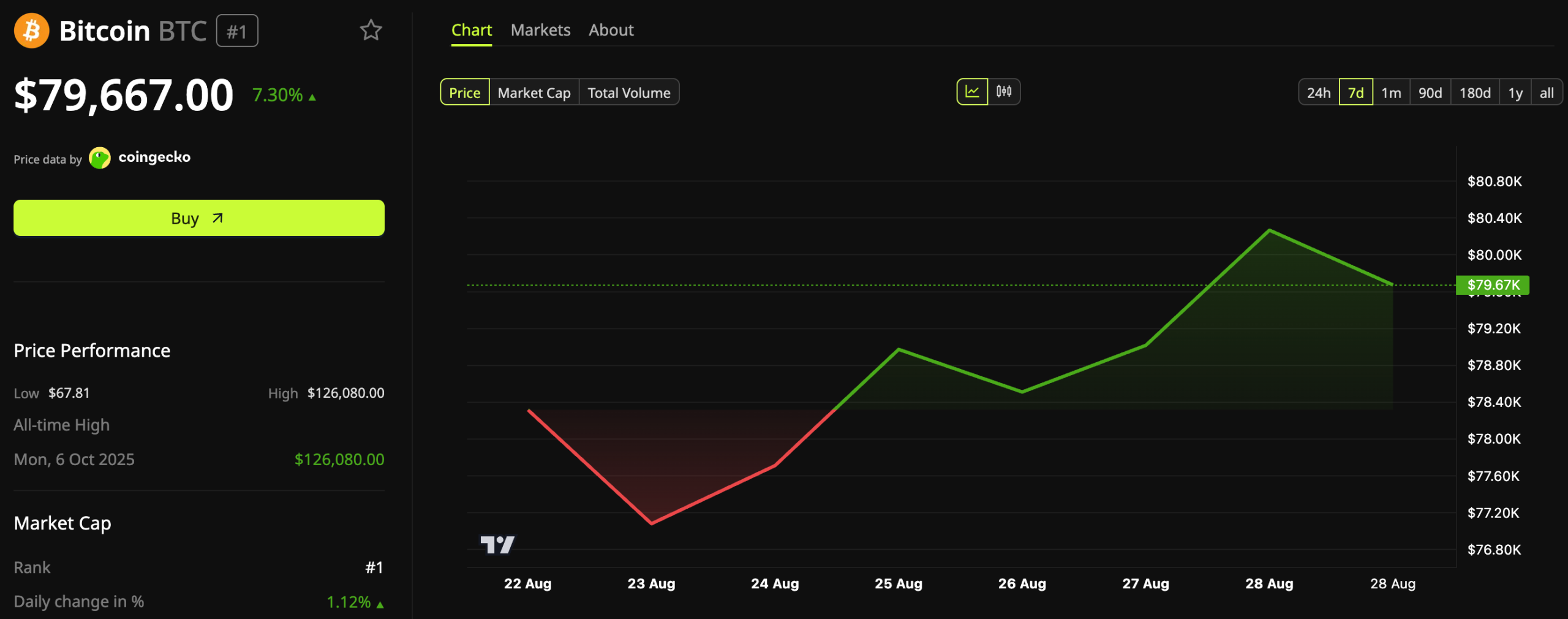
Spot Bitcoin (BTC) exchange-traded funds (ETFs) added $242.30 million in net inflows on Aug. 27. The gain extended their streak to nine consecutive trading days.
Spot Ethereum (ETH) ETFs matched the pace. The category added $235 million on the same day, marking its own ninth straight inflow session.
Bitcoin And Ether Funds Move In Lockstep
The parallel streaks follow a stretch of heavy institutional buying. BlackRock’s iShares Bitcoin Trust (IBIT) contributed $209 million of a $338 million Bitcoin ETF inflow on Aug. 24. Its Ethereum fund, ETHA, added $90.92 million of that day’s $116 million Ethereum ETF haul.
Bitcoin traded near $80,000 on Thursday, up 2.12% over 24 hours. Ether changed hands near $2,480 over the same period.
Total net assets across spot Bitcoin ETFs stood at $79.16 billion. Trading volume across the category reached $8.23 billion, according to CoinGlass data.
The two categories also posted their biggest combined week since October last week, drawing $2.3 billion between them. That run suggests institutions are building positions across both assets rather than rotating between them.
The current streak traces back to Aug. 17, when both categories began a run that reached four days by Aug. 20. It has continued uninterrupted through Aug. 27.

Smaller crypto funds joined the advance. Spot Solana (SOL) ETFs added $60.91 million, and spot Hyperliquid (HYPE) ETFs drew $24.42 million, both on Aug. 27.
Both smaller funds remain far behind Bitcoin and Ether in scale. The same-day gains suggest institutional demand extends beyond the two largest crypto assets.
Sustained ETF demand can matter beyond the daily headline. Steady inflows reduce available supply on spot exchanges, a dynamic that has historically supported price during past accumulation phases.
Nine straight days of buying across both major categories signals broad, not narrow, institutional appetite. Whether that appetite holds into next week may depend on whether Bitcoin and Ether can extend their recent price gains.
The post Bitcoin ETFs Extend Inflow Streak to 9 Days With $242M Added appeared first on BeInCrypto.



All three proposals have cleared quorum, but a plan to slow new SOL creation is only narrowly passing while a separate vote to sharply increase token burns remains below the two-thirds support needed.


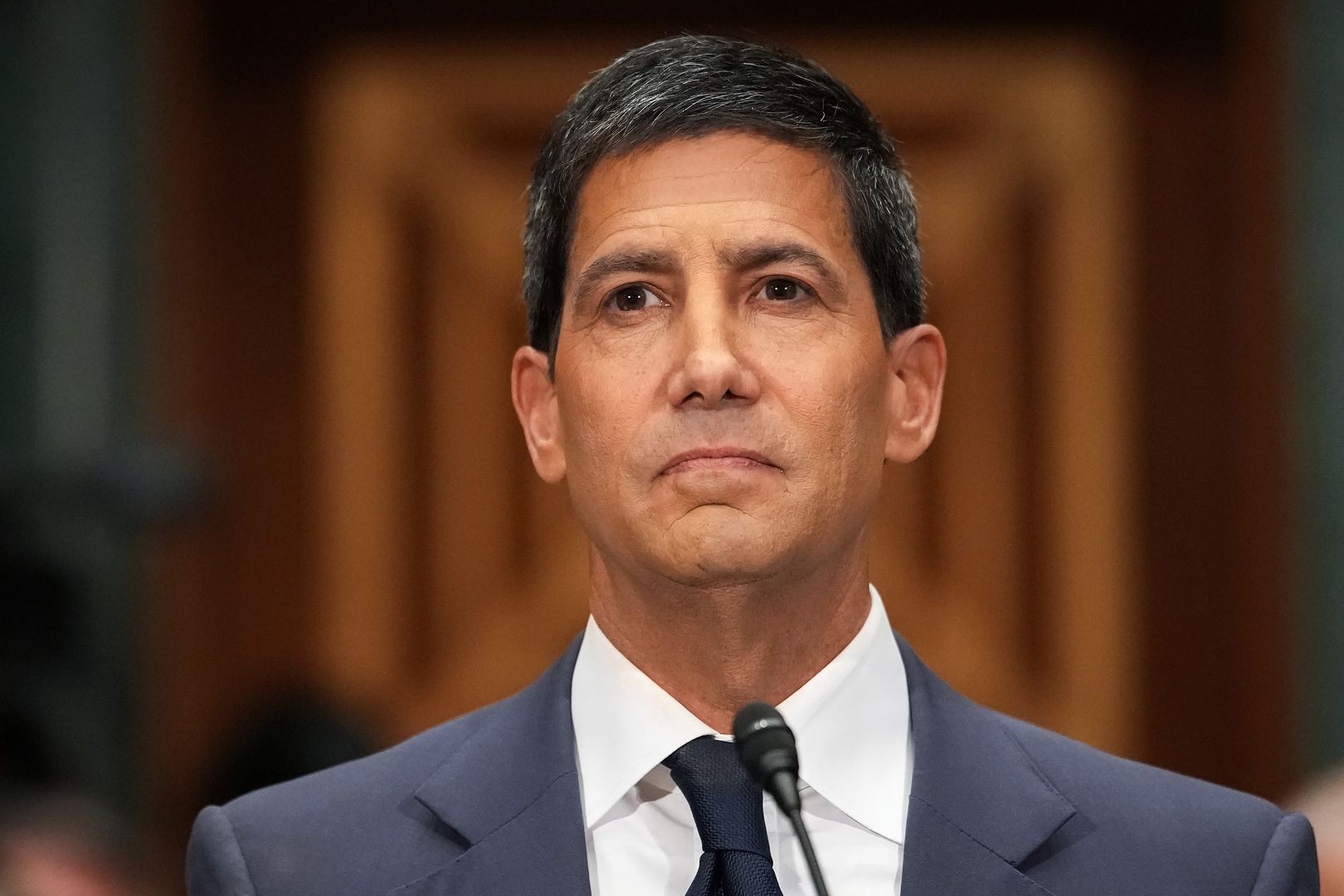
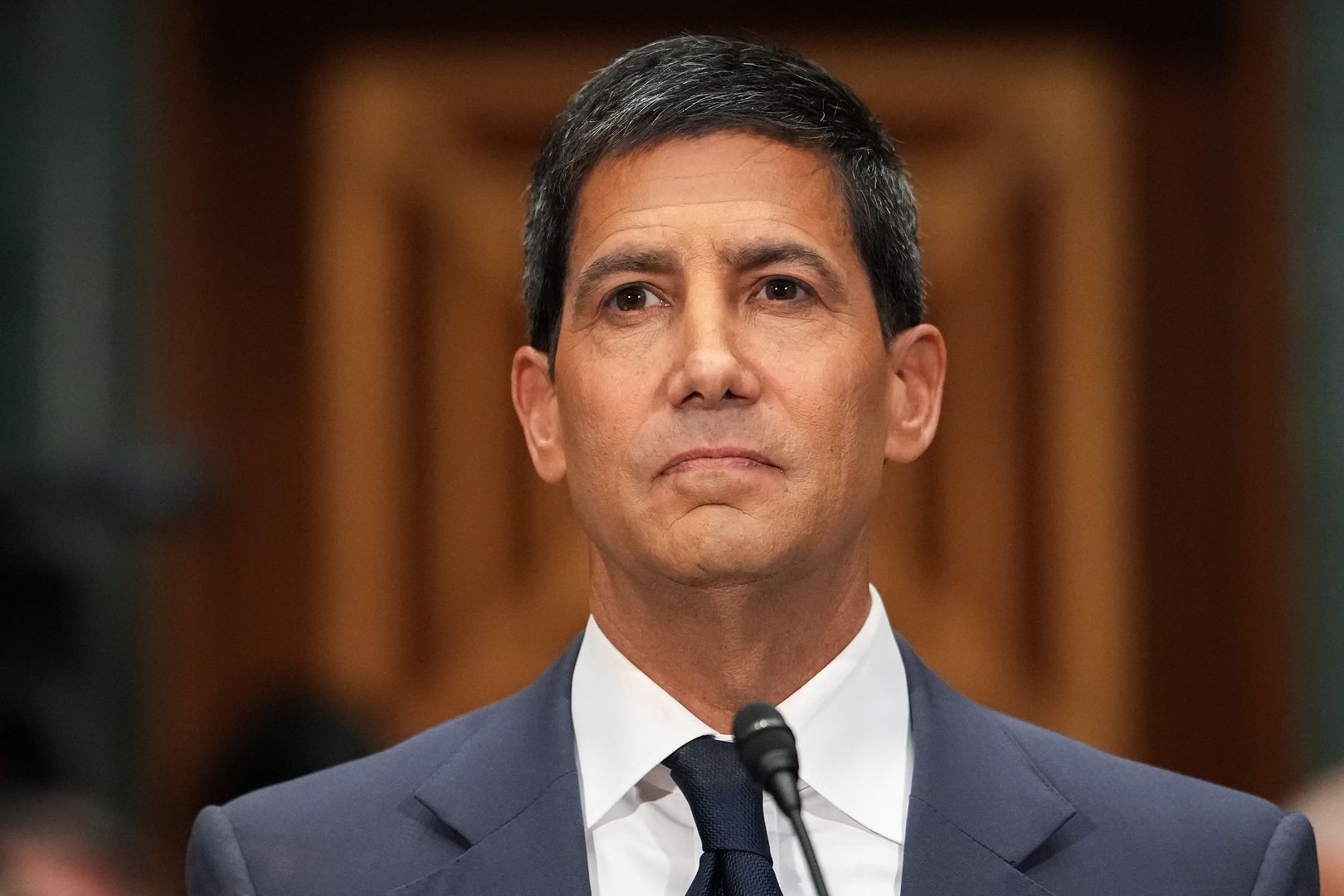
Warsh’s Jackson Hole speech could shape expectations for Fed support of Treasury buybacks, with implications for bitcoin, gold and long-term yields.



The AI race has increasingly become an electricity race, as companies sprint to build the power infrastructure necessary to power data centers. Joe Dominguez, president and CEO of Constellation Energy, is betting that nuclear energy will be one of the most important sources of that power.
To do that, Constellation has signed a series of agreements with hyperscalers to provide long-term nuclear power to their data centers. No such deal has received more attention than Constellation’s partnership with Microsoft to restart a reactor at Three-Mile Island nuclear facility. The deal will provide Microsoft carbon-free power for the next 20 years. (The facility, renamed the Crane Clean Energy Center, is best known for the infamous 1979 meltdown, though it occurred at a different reactor).
The project is part and parcel of a broader transformation Dominguez has helped drive. For decades, nuclear plants struggled to compete with cheap natural gas and renewable energy. Now the relentless, around-the-clock electricity needs of AI have made existing reactors enormously valuable assets.


Blockchain gaming platform The Sandbox has pledged to repay eligible SAND holders 1:1 after an Aug. 21 bridge exploit drained 14.744 SAND, worth about $700,000, from an Ethereum vault.
On Thursday, the company published a post-mortem, saying users who legitimately held bridged SAND on Base or BNB Smart Chain before the attack will receive an equal amount of Ethereum-based SAND. Compensation will come from The Sandbox treasury, with no new tokens minted.
The claims process is expected to open within two weeks and remain open for another two weeks. Two centralized exchanges hold more than 72% of eligible balances and will distribute compensation directly to their affected customers, according to The Sandbox.
The project said the attacker exploited a configuration flaw in SAND’s Base and BNB Chain contracts, allowing them to become the sole verifier of incoming bridge messages and mint unbacked tokens. The Sandbox confirmed that about 14.7 million SAND tokens were drained, equivalent to about 0.5% of the token’s 3 billion maximum supply.
Although more than 339 trillion unbacked SAND was minted on the two networks, those tokens have been isolated and cannot be bridged or redeemed. SAND on Ethereum and Polygon was unaffected.
The compromised bridge contracts will be permanently retired. The Sandbox said any future Base or BNB Chain bridges would use newly deployed contracts.
SAND traded at about $0.04 at the time of publication, down 10.4% over the previous seven days, according to CoinGecko.
Related: Hugging Face hack exposes the open-weight AI cybersecurity paradox
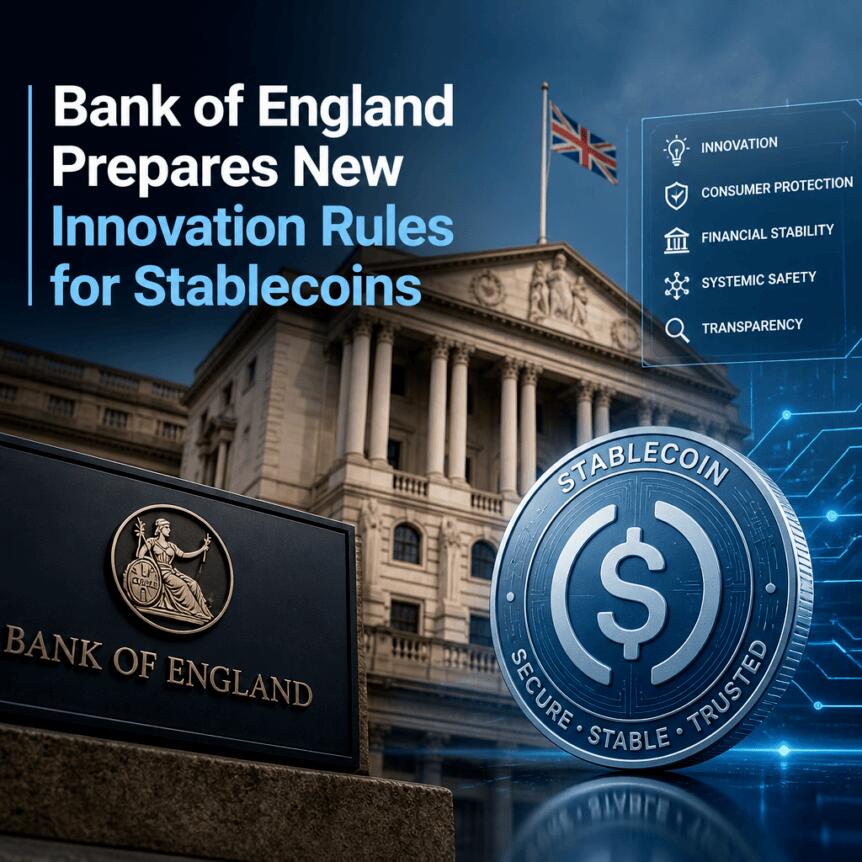
The UK government has proposed expanding the Bank of England’s remit to explicitly include support for innovation in digital payments, with stablecoin-based payment systems in scope. The Treasury said the Bank would receive a secondary objective focused on improving payment innovation—while keeping financial stability as its top priority.
Announcing the change this week, HM Treasury said the central bank’s new innovation goal would cover payment systems that settle using digital settlement assets, including stablecoins. The government also signaled that the measure will be pursued through legislative amendments, with further scrutiny expected in the House of Lords in early September.
Key takeaways
- The Bank of England would gain a secondary mandate to support innovation in payment systems using digital settlement assets such as stablecoins.
- Financial stability remains the primary objective; the innovation goal is intended to “support,” not override, stability considerations.
- The Bank would report annually to Parliament on its progress toward the payments innovation objective, potentially increasing public scrutiny.
- The proposal is expected to be implemented through amendments to the Financial Services and Markets Bill, with House of Lords debate scheduled for Sept. 7 and 9.
- Industry focus remains on how the Bank operationalizes stablecoin requirements—particularly reserve and backing rules for systemic issuers.
How the Bank of England’s mandate would change
HM Treasury said the Bank of England’s new responsibility would extend an approach the central bank already uses for regulating central counterparties (CCPs) and central securities depositories (CSDs), which play key roles in how financial assets are cleared, held, and settled.
Under the proposal, the Bank would provide an annual report to Parliament detailing its progress toward the innovation objective for payments and emerging forms of digital money. Officials framed the change around the potential of newer technologies—including tokenisation and distributed ledger technology (DLT)—to reshape aspects of financial markets.
City Minister Lucy Rigby said developments in digital payments technology, including tokenisation and DLT, have the potential to transform financial markets globally.
The Treasury expects to deliver the objective via amendments to the Financial Services and Markets Bill. That bill is scheduled for further debate in the House of Lords on Sept. 7 and 9, placing the timing of any final implementation squarely in the coming legislative window.
Industry concerns center on implementation details
While the innovation objective would be secondary to financial stability, its practical impact could depend on how the Bank structures its annual reporting and enforcement priorities. Maksym Sakharov, co-founder and CEO of on-chain banking infrastructure provider WeFi, told Cointelegraph that the mandate’s wording matters less than how the Bank chooses to execute it.
Sakharov emphasized that the objective is designed not to “override nothing,” but the annual publication requirement could still intensify public and market attention on how stablecoin rules are evolving—especially those finalized by the central bank in June.
One element highlighted by Sakharov concerns systemic stablecoin issuers’ reserve composition. He pointed to requirements stating that at least 30% of backing assets must be held in non-interest-bearing deposits at the Bank of England. In his view, “the reserve split is the first thing to fix,” because it may influence whether a stablecoin issuer can sustain its business model.
His comment underlines a broader issue: innovation mandates may encourage experimentation, but firms’ real-world viability often hinges on balance-sheet mechanics and compliance costs—particularly where reserve rules and custody arrangements are involved.
As readers look for clues about what comes next, the key question is how the Bank will translate an innovation goal into measurable outcomes without loosening or changing the core stability framework. Annual parliamentary reporting will likely become one of the primary channels through which that tension is expressed.
UK stablecoin momentum builds alongside policy and pilots
The BoE innovation mandate is the latest development in a UK push to work through stablecoin use cases—from regulation to experimentation—while aligning with international counterparts. The announcement follows several steps that indicate stablecoins are increasingly being treated as a mainstream component of digital payments planning rather than a peripheral technology.
In August, participants in the Bank of England’s Digital Pound Lab began testing whether a stablecoin could interoperate with a simulated digital British pound for cross-border trade payments. The experimental platform, HM Treasury and related BoE materials indicate, does not involve real customers or funds; its purpose is to evaluate mechanics and interoperability rather than to launch a live commercial product.
Earlier, in mid-July, the UK and US published a joint statement on stablecoins. The governments said they “intend to enable the use of stablecoins in cross-border finance” and called for greater alignment of regulatory frameworks. The direction of travel is therefore not only domestic: it also aims to coordinate approaches so stablecoin-related payments can operate across jurisdictions with fewer friction points.
More broadly, the UK has also adjusted its stablecoin framework over time. Cointelegraph previously reported that the Bank of England dropped earlier plans to cap individual stablecoin holdings at 20,000 British pounds and business holdings at 10 million pounds. Instead, the approach shifted toward a temporary issuance cap of 40 billion British pounds (about $52.9 billion) for each systemic stablecoin.
That move signals that regulators are searching for a structure that both allows usage and limits systemic risk—an approach that will likely shape how the new innovation mandate is interpreted. If innovation is the goal, then limits on issuance, reserve backing, and eligibility for systemic designation become the practical tools used to manage risk.
What to watch as legislators and the BoE move forward
The next phase will largely be determined by how amendments to the Financial Services and Markets Bill are drafted and whether they preserve the clear hierarchy placing financial stability above payment innovation. Investors and builders should also watch for the first annual reporting cycle: it could reveal what the Bank of England considers “innovation progress” in stablecoin-related payments, and how far the regulator will go in encouraging experimentation while maintaining its stability standards.
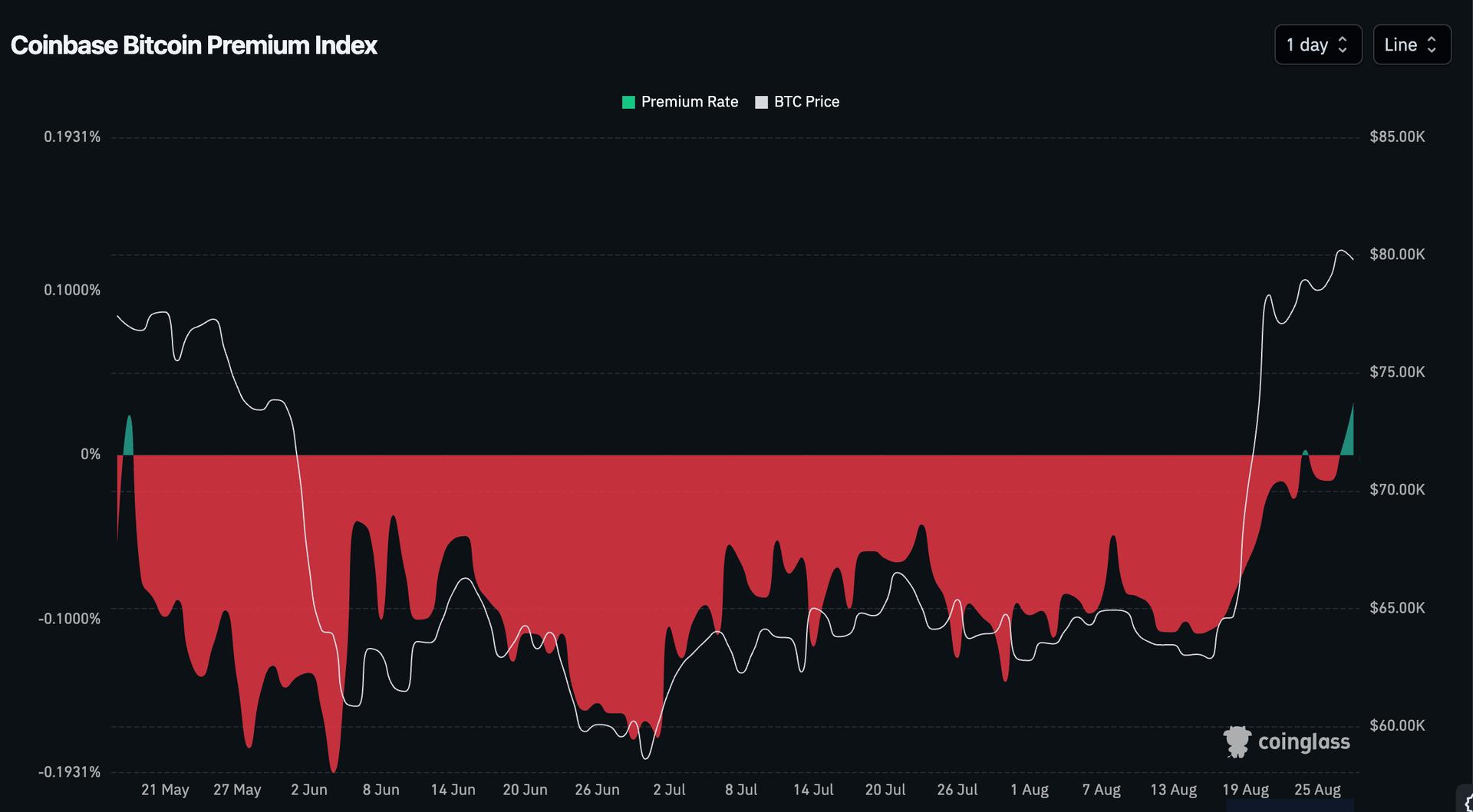
The indictor has flipped positive for the first time since May as BTC looks to establish a foothold above $80,000.


Crypto World
Independent Research Details Liquidity Conditions in Bitget UEX’s Tokenized Equity and Gold Perpetual Markets
[PRESS RELEASE – VICTORIA, SEYCHELLES, August 27th, 2026]
Independent research published by digital-asset analytics firm Block Scholes measured order-book depth, spreads, and slippage across four tokenized real-world-asset (RWA) perpetual futures contracts listed on Bitget’s Universal Exchange (UEX) platform, finding that resting liquidity on the exchange’s Nvidia-tracking contract reached roughly three-quarters of the depth available on Bitget’s own BTC/USDT spot market by mid-May 2026.
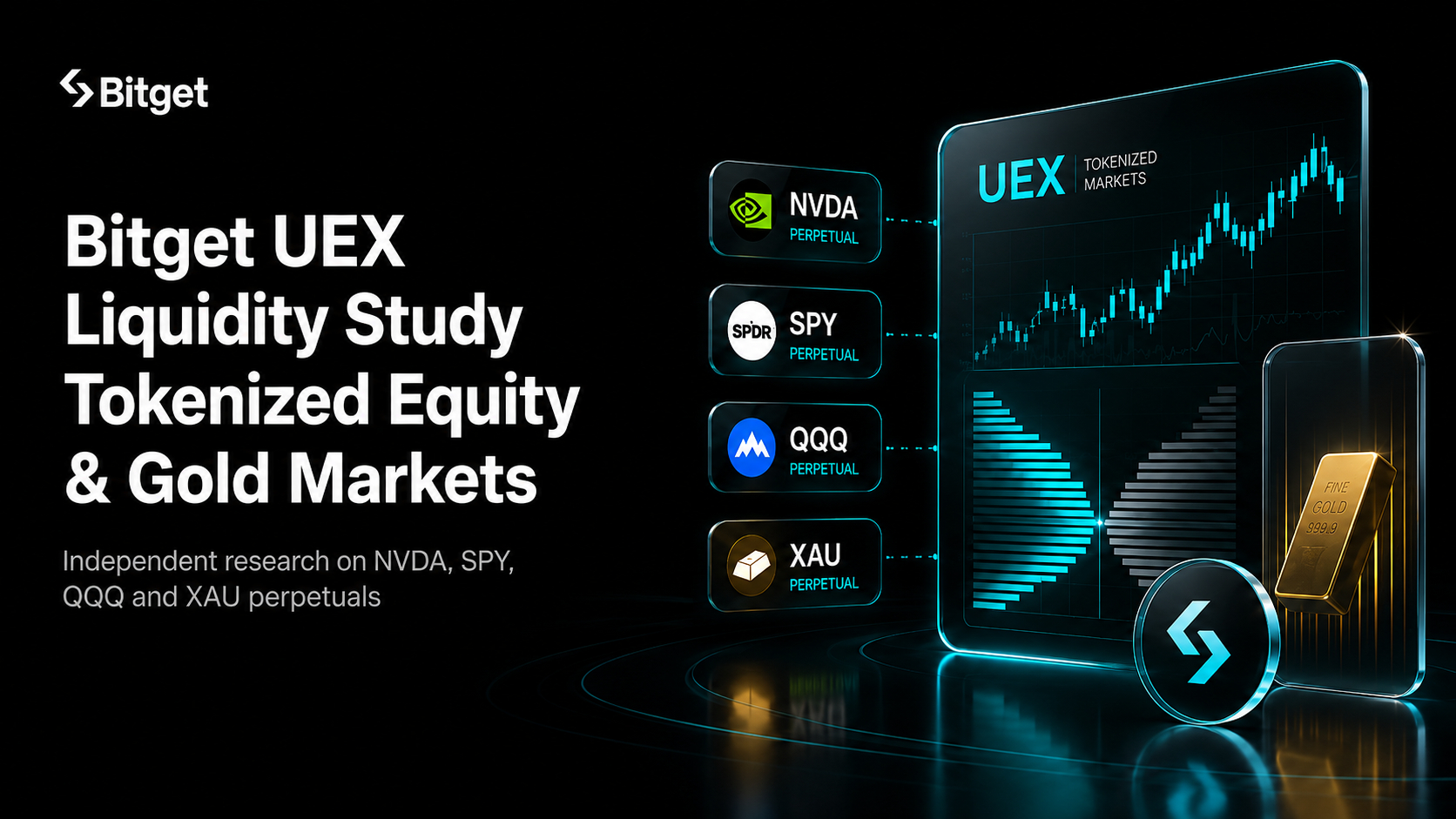
The study, published by Block Scholes on June 15, 2026, examined four USDT-margined perpetual contracts that track the price of traditional assets — gold (XAU-USDT), the SPDR S&P 500 ETF (SPY-USDT), Nvidia stock (NVDA-USDT), and the Invesco QQQ Nasdaq-100 ETF (QQQ-USDT). These are derivative contracts that give traders synthetic price exposure to the underlying asset; they do not confer equity ownership, dividends, or voting rights in the referenced companies or funds.
Using order-book snapshots roughly one hour into the U.S. equity session on May 18, 2026, Block Scholes recorded top-of-book spreads of approximately 0.02 basis points on the gold contract, 0.14 basis points on both the SPY and QQQ contracts, and 0.44 basis points on the NVDA contract — meaning less than half a basis point separated the best bid and best ask on three of the four instruments at that point in time. By comparison, the same contracts had quoted noticeably wider spreads three minutes after the U.S. market opened that day, with SPY’s spread narrowing from 1.76 basis points to 0.14 basis points within the hour.
Slippage on larger simulated orders followed a similar pattern of improvement as the session progressed. A modeled $100,000 market buy order on the SPY contract cost 14.88 basis points of slippage at the open, narrowing to 10.66 basis points an hour later; a $500,000 order improved from 46.07 to 24.90 basis points over the same window, according to the report.
Depth held up outside standard trading hours, with some seasonal thinning
Because RWA perpetuals trade continuously while their underlying assets do not, Block Scholes separately measured how liquidity behaves outside the referenced markets’ regular hours. Trading volume on the contracts fell substantially on weekends — by 65 to 90 percent compared with weekday levels, varying by contract — but median bid-ask spreads stayed close to their weekday levels across the full week sampled, at roughly 0.02 basis points for gold, 0.8 for QQQ, 1.0 for NVDA, and 1.3 for SPY.
Spreads widened briefly, then recovered, during acute market stress
The report also examined how the four contracts behaved around the February 28, 2026 announcement of U.S. strikes against Iran. Spreads widened across all four contracts in the immediate aftermath — for example, NVDA’s spread rose from a baseline near 0.6 basis points to a peak of 3.4 — but Block Scholes found the widening was brief, with NVDA’s spread back near its pre-announcement level within minutes and QQQ’s within the hour. Order-book depth thinned more visibly than spreads did on the day of the announcement — QQQ’s resting depth within 1% of the mid-price fell to roughly $109,000 from a typical Saturday median of about $191,000 — but Block Scholes recorded depth returning to that typical range within a week.
Methodology
Block Scholes calculated bid-ask spread as the gap between the best bid and best ask divided by the mid-price, and modeled slippage by walking the visible order book for market orders of specified sizes, using a combination of Bitget’s public API and historical order-book data covering September 2025 through May 2026. The firm’s methodology note states that depth figures reflect visible resting liquidity at a point in time or over a sample period, not guaranteed executable liquidity, and that slippage estimates exclude trading fees, funding payments, and hidden or replenished liquidity.
The full report, including supporting charts and the complete data tables referenced above, is available on Block Scholes’ research site.
About Bitget
Bitget is a global cryptocurrency exchange operating as a Universal Exchange (UEX), offering crypto, tokenized stocks, gold, and other asset classes within a single account. Bitget has published monthly proof-of-reserves disclosures since December 2022.
Website | Twitter | Telegram | LinkedIn | Discord
The post Independent Research Details Liquidity Conditions in Bitget UEX’s Tokenized Equity and Gold Perpetual Markets appeared first on CryptoPotato.

Johnny Gaudreau’s Wife Meredith Says His Death ‘Haunts’ Her

Gurus roll out chatbots as people turn to AI for spiritual guidance

SomnoMed Limited (SOMNF) Q4 2026 Earnings Call Transcript





-

 Fashion7 days ago
Weekend Open Thread: Madewell – Corporette.com
-

 Crypto World2 days ago
SpaceX stock could rise 75% to $240, JPMorgan says
-

 Business6 days ago
Musk’s Tesla, SpaceX Confirm $16.8 Billion ‘Terafab’ Chip Plant as World’s Largest Building in Texas
-

 Crypto World6 days ago
anatomy of crypto’s biggest liquidation event since 2021
-

 Crypto World3 days ago
A $30 Billion AI Fund Implodes, Now the SEC Is Investigating Wall Street’s Role
-

 Politics6 days ago
6 months on, Irish renters crushed by effects of government housing bill
-

 Crypto World2 days ago
Did Trump Just Move SpaceX Stock With One Truth Social Post?
-

 Business5 days ago
Mystery AI Model ‘Ox Alpha’ Draws Developers With Free Access as Chinese Lab Origins Remain Debated
-
 NewsBeat6 days ago
The ‘Lucky Dip Gang’ causing carnage for clicks: After five thugs were killed speeding in the wrong direction on a motorway, GUY ADAMS investigates a sick new trend… and why police aren’t even allowed to pursue them
-

 Crypto World2 days ago
Warsh Jackson Hole keynote puts financial innovation first
-

 Crypto World6 days ago
Nvidia Stock Suffers Longest Losing Streak Since 2022: Will Q2 Earnings End It?
-

 Business4 days ago
Moderna CEO warns China is pouring state money into mRNA technology
-

 Business3 days ago
NVIDIA Stock Drops Nearly 2 Percent to $210 on Seventh Losing Day Ahead of Critical AI Earnings
-

 Business2 days ago
Walmart takes aim at younger shoppers with new fashion brand
-

 Tech6 days ago
Unitree’s New Superman Robot Claims to Outjump and Outrun Every Human, Usain Bolt Included
-

 Business7 days ago
UK firms in critical financial distress rise 9% to 53,756
-

 Business6 days ago
Will Tesla Stock Be Higher or Lower a Year From Now? Here’s What Wall Street Analysts Are Saying
-

 Sports5 days ago
Deshaun Watson fires back at Browns fans after being booed: ‘It’s a disrespectful thing’
-

 Crypto World5 days ago
Google Gemini AI Predicts Ethereum Could Become the Trade Retail Misses in 2026
-

 Tech7 days ago
Faster chip in a familiar form factor
You must be logged in to post a comment Login