
Crypto World
Bitcoin Follows US Bond Yields Higher as BTC Returns to $81,000

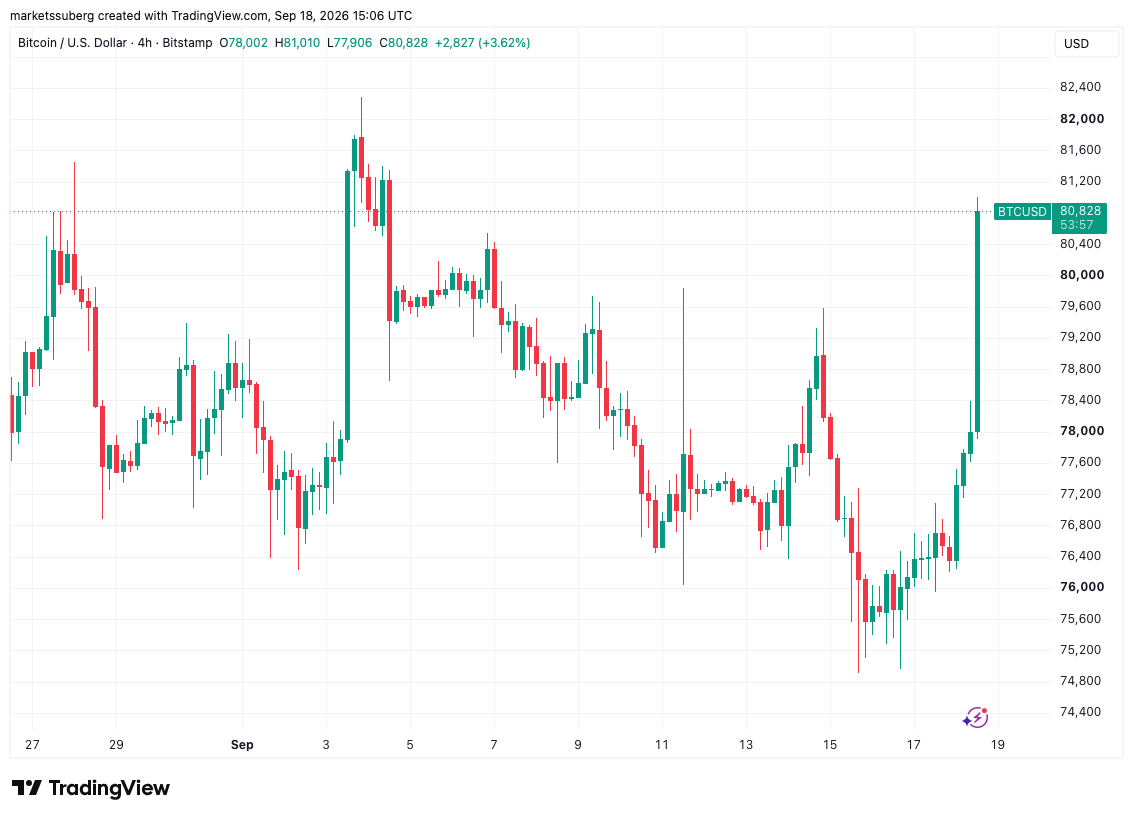
Bitcoin (BTC) jumped past $80,000 around Friday’s Wall Street open as fuel-crisis woes spread through global markets.
Key points:
- Bitcoin gained 6% on Friday as concerns about oil supply saw US bond yields reverse higher.
- Crypto markets liquidated $250 million in short positions over four hours.
- BTC price momentum now faces the familiar resistance levels first encountered in May.
BTC surges 6% as US bond yields turn upward
Data from TradingView showed BTC/USD filling pockets of upside liquidity to reach local highs of $81,034 on Bitstamp.
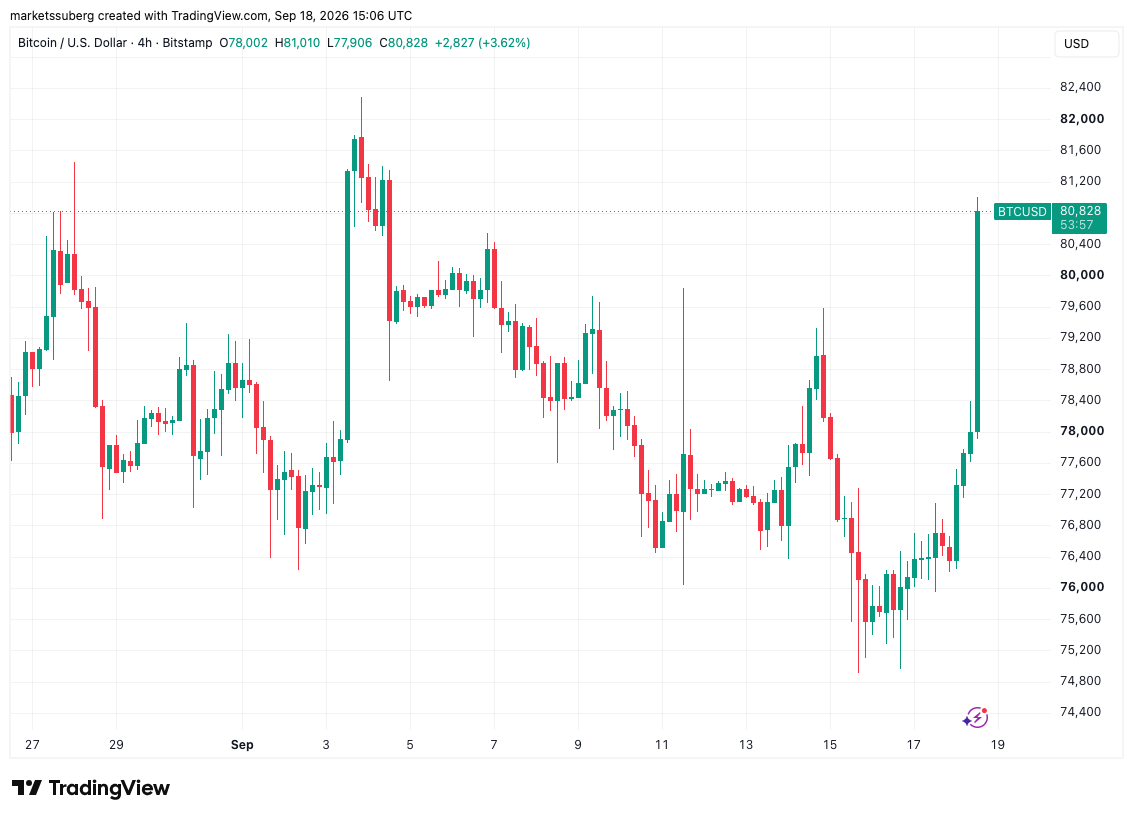
BTC/USD four-hour chart. Source: Cointelegraph/TradingView
A cluster of short positions above the spot price came under fire as a result. Per data from CoinGlass, cumulative cross-crypto short liquidations sat near $250 million over four hours.
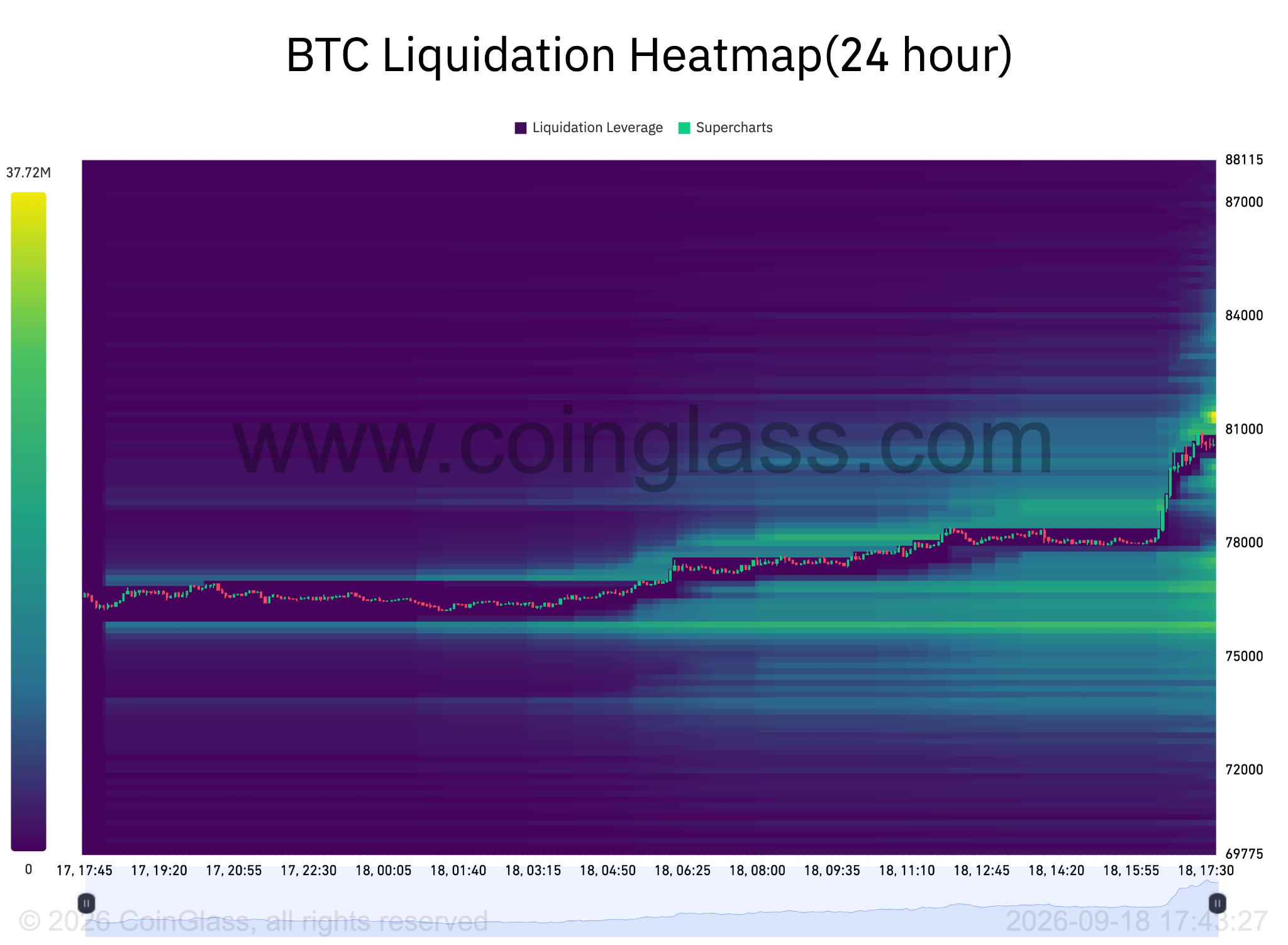
BTC liquidation heatmap. Source: CoinGlass
US WTI crude fell to lows of $94.8 per barrel, only to begin climbing again during the Asia trading session. It is circling $98 at the time of writing.
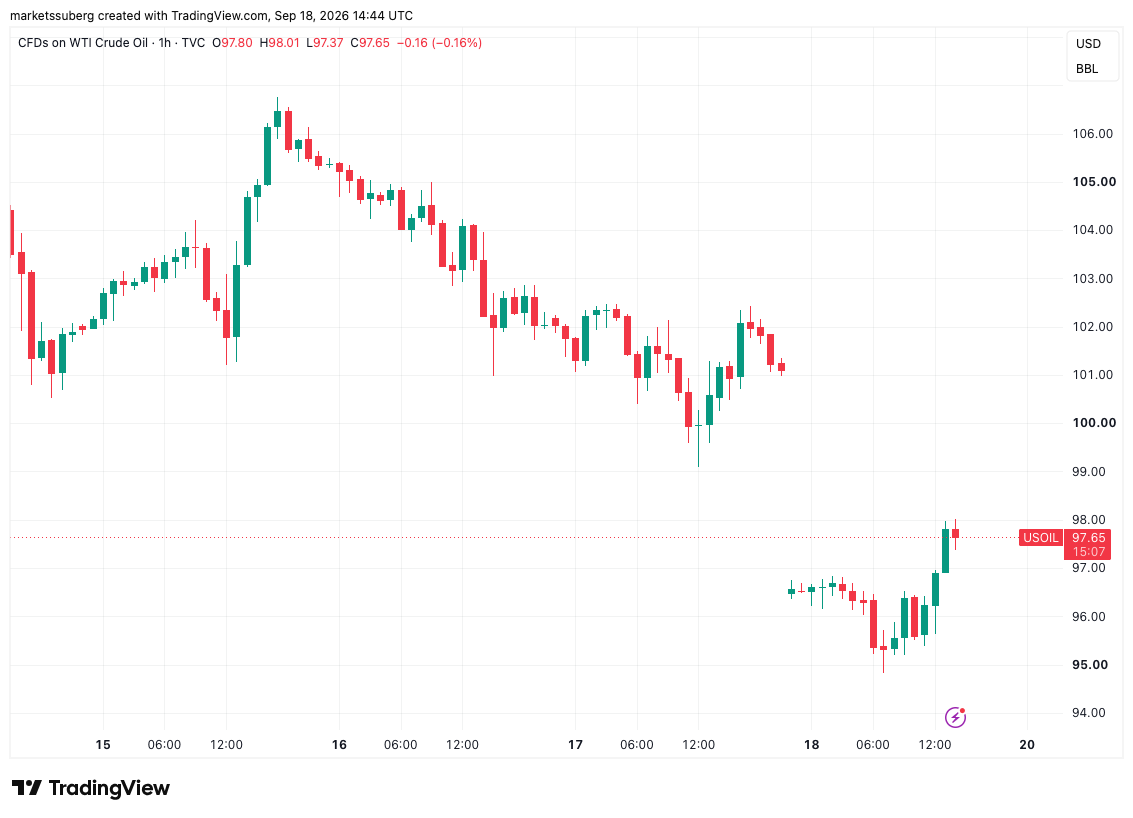
CFDs on WTI crude oil one-day chart. Source: Cointelegraph/TradingView
In a report on Friday, the International Energy Agency (IEA) warned that countries may have no choice but to cut usage. In March, the IEA released 400 million barrels from its emergency reserves amid the closure of the Strait of Hormuz.
“Prices for crude and oil products had eased from their April peaks in the months that followed as emergency IEA stocks were released, Strait of Hormuz bypass routes boosted Middle East exports, producers outside the region raised output, flows out of the Persian Gulf partially recovered and global demand softened,” it wrote.
“But if Gulf supplies remain constrained in the coming months and commercial inventory buffers continue to deplete rapidly, higher prices and further demand reductions may be required to close the supply-demand gap.”
The report calculated oil flows through Hormuz at 7.6 million barrels per day in August, 13.1 million below the daily tally before the US-Iran war.
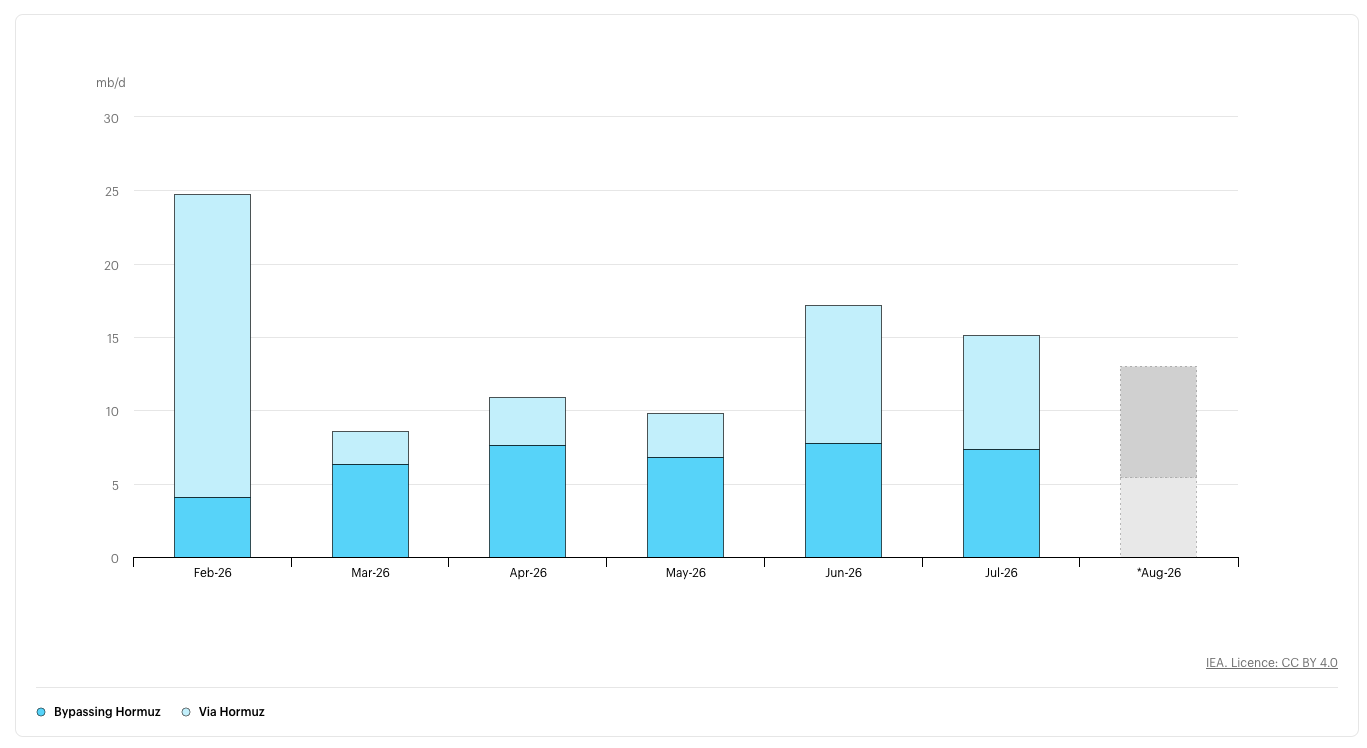
Gulf producers oil exports, February-August 2026 (millions of barrels/day). Source: IEA
US bond yields once again rose amid the oil uncertainty. The US 30-year yield reached 5.34% on the day, up 90 basis points.
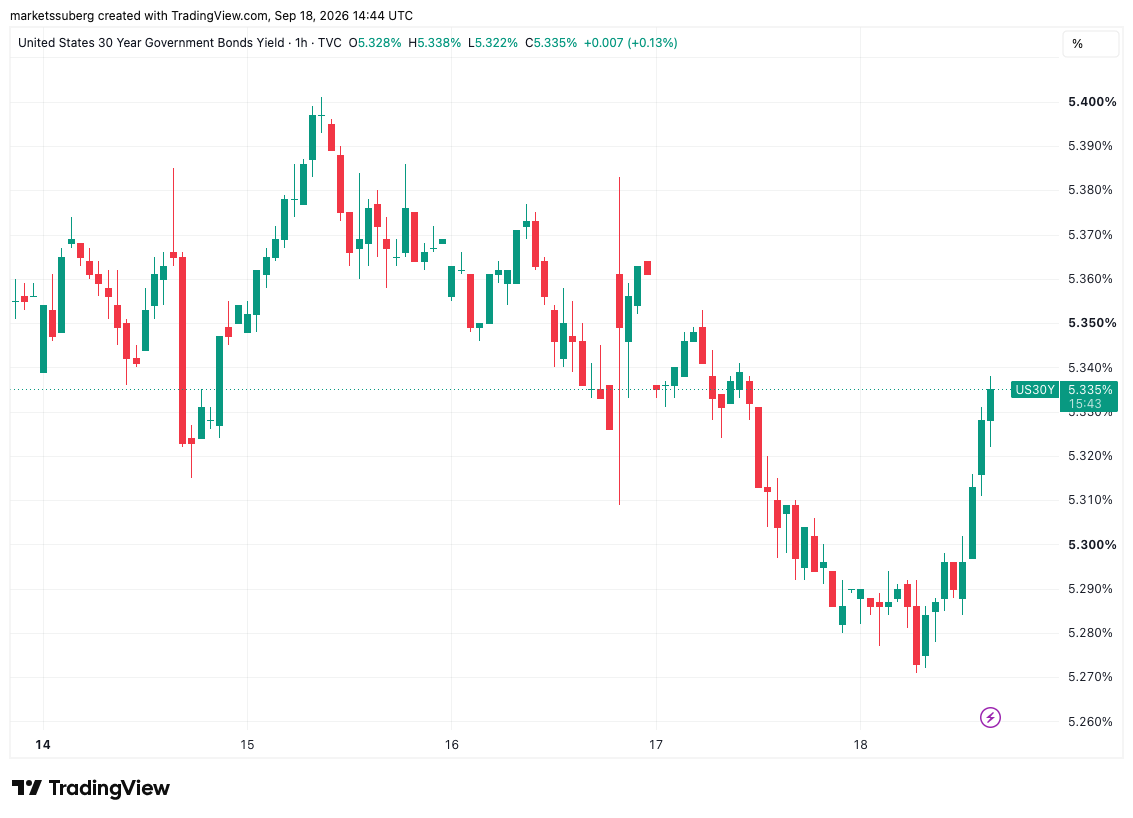
US 30-year bond yield one-month chart. Source: Cointelegraph/TradingView
Earlier, Cointelegraph reported on rising yields in multiple nations forcing central banks to raise interest rates — a move seen in both the US and Japan this week.
Analyst: Bitcoin price faces key breakout test next
Commenting on low-time frame BTC price action, trader and analyst Rekt Capital said that bulls now faced a “moment of truth.”
Related: Bitcoin adds to bull-market hopes as price metric prints fourth-ever bullish cross
A chart uploaded to X showed $82,000 as a key level for BTC/USD to break though. Failing to do so would constitute a double rejection pattern together with the price action that ended the mid-May rebound.
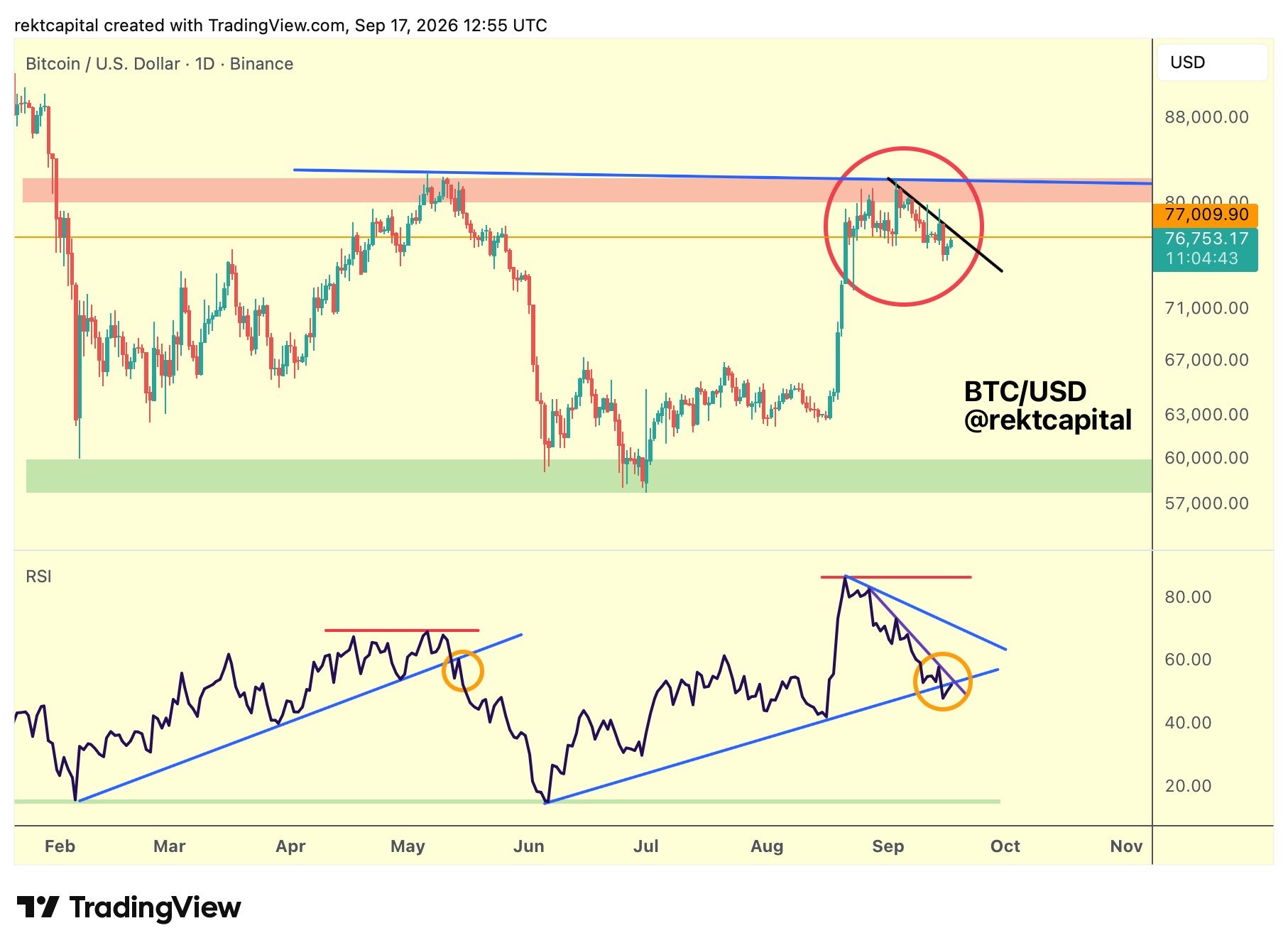
BTC/USD one-day chart. Source: Rekt Capital on X.com
Bitcoin’s latest upside saw it reclaim its True Market Mean, the aggregate cost basis of all coins acquired on secondary markets, which currently sits at $76,660.
“That puts price back above a crucial level and back into a bullish regime,” onchain analytics platform Glassnode told X followers on Friday.
The cost basis for Bitcoin’s corporate treasuries, meanwhile, lies at $80,500, further reinforcing the significance of the current local range.
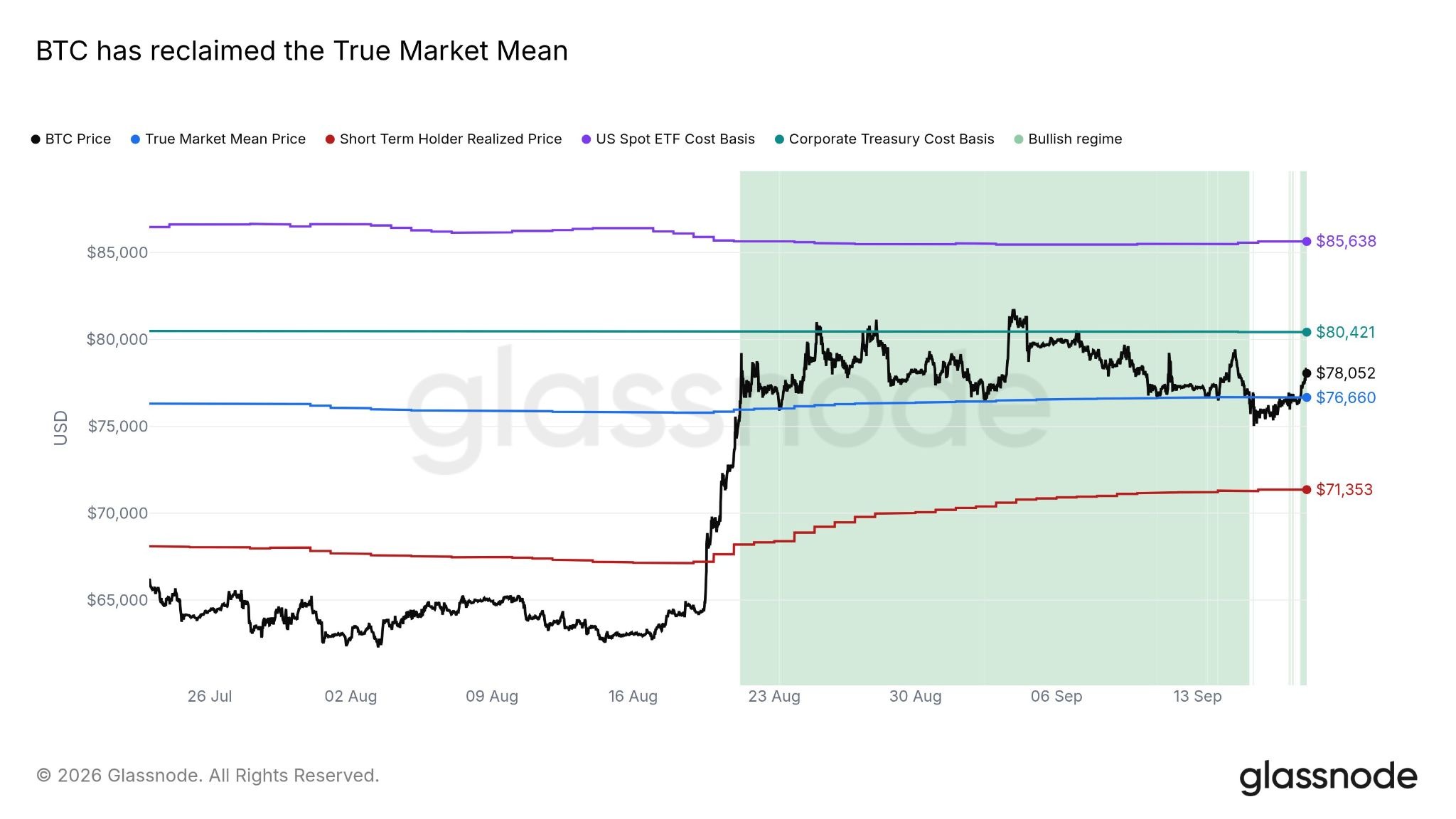
Bitcoin cost-basis data. Source: Glassnode on X.com

Cointelegraph is committed to providing independent, high-quality journalism across the crypto, blockchain, AI, and fintech industries.
All news, reviews, and analyses are produced with full journalistic independence and integrity. For more details on our standards and processes, please read our Editorial Policy.


BlackRock has said stablecoins must remain interchangeable with bank deposits and central-bank money if they are to function as regulated settlement assets.
Summary
- Stablecoins must provide recognizable claims and recourse across banks, according to BlackRock.
- Banking systems would need to accept stablecoins and convert them into deposit liabilities.
- Central banks could provide the final settlement layer through fiat money or wholesale CBDCs.
- U.S. rules now govern permitted payment stablecoin issuers under the GENIUS Act.
Stablecoins need recognition across banking systems
The European Blockchain Convention’s Day 1 media briefing attributed the position to Nikhil Sharma, BlackRock’s head of digital assets, during a panel on how tokenized forms of money can operate together.
Sharma said the central issue is the “singleness of money,” a principle under which different forms of the same currency remain interchangeable at face value. The form of payment may change, but users must understand the claim, backing, access conditions, and recourse attached to it.
“When you think about what you’re using as cash for payments and settlement, you look at what’s the claim, what’s the backing, what’s the form, what’s the access,” Sharma said.
His comments addressed how privately issued stablecoins, commercial-bank deposits and central-bank money could operate within one financial system. A user paying with a dollar stablecoin, for example, would need the recipient’s bank to recognize the asset and convert it into a deposit liability without creating uncertainty over its value.
“In tangible terms: I could pay through a stablecoin, and the banking infrastructure needs to accept that, transform it into a deposit liability, and provide that recourse.”
Banks would also require a settlement system for payments moving between institutions. Sharma placed central banks at that final layer, where obligations between regulated financial institutions can be settled in central-bank money.
Different forms of cash create different risks
Sharma said investors can benefit from having several forms of digital cash, but each form carries its own economic exposure and redemption structure.
“From an investor-optionality standpoint, having different forms of cash is a good thing. But from a recourse, economic exposure, and risk standpoint, singleness of money is an imperative.”
A commercial-bank deposit represents a liability of the bank, while a stablecoin represents a claim structured by its issuer and governing terms. Central-bank money carries a direct claim on the monetary authority.
Stablecoin users therefore depend on the issuer’s reserves, custody arrangements, and ability to process redemptions. Even when a token tracks one dollar in normal trading, liquidity pressure or concern over its backing can cause it to trade below its stated value.
Interoperability alone would not remove those differences. According to Sharma, banking acceptance, conversion into deposits, and access to a final settlement mechanism must work together if stablecoins are to serve regulated financial markets.
Speaking from a central-bank perspective, Philipp Müller of the Swiss National Bank said commercial banks could issue stablecoins if they chose to do so. His institution, however, must provide banks with a safe payment method suited to their requirements.
“That could be wholesale CBDC, it could still be fiat money. Only time will tell,” Müller said.
His remarks separated retail products from central-bank infrastructure. Commercial banks may offer cash instruments to customers, while the central bank concentrates on settlement between regulated institutions and financial stability.
Dollar stablecoins have created a U.S. policy question
For U.S. users, BlackRock’s argument concerns both the safety of stablecoins and their place in the dollar system. Most large stablecoins reference the U.S. dollar and keep substantial reserves in cash, Treasury bills, or similar liquid assets.
The United States enacted the GENIUS Act in July 2025, creating a federal framework for payment stablecoins. Under the law, only permitted issuers may issue payment stablecoins in the country, subject to reserve, disclosure, and regulatory requirements.
Dollar-linked tokens can extend access to the currency outside conventional banking hours and across national borders. Their growth can also increase demand for the reserve assets issuers use to support redemptions.
As crypto.news previously reported, European Central Bank Executive Board member Isabel Schnabel said dollar-backed stablecoins could strengthen the dollar’s international position as the sector approached a market value of $300 billion. Euro-denominated stablecoins accounted for only a small share of the market, according to her remarks.
The same development has raised concerns in Europe about dependence on dollar payment products. Schnabel supported the digital euro as a public payment option, with a pilot expected in 2027 and potential readiness for issuance targeted for 2029.
Stablecoin reserves also connect token holders with the U.S. government-debt market. When issuers use short-term Treasuries to back circulating tokens, growth in stablecoin supply can translate into additional demand for those securities.
For holders, reserve quality does not make a stablecoin identical to an insured bank deposit. Redemption terms, legal priority, eligible customers and access to deposit protection can differ by product and jurisdiction.
Tokenized markets still depend on settlement cash
Sharma said the infrastructure needed for stablecoins and tokenized deposits begins with bank acceptance before moving to interoperability between institutions and final settlement.
“How will that happen? It’s about the layers of infrastructure coming together, starting with the banking infrastructure, in terms of acceptance and interoperability between tokenised deposits and stablecoins,” he said.
The final stage would involve a settlement layer capable of completing obligations without disrupting existing banking systems. Sharma said the mechanism could be provided in a “potentially unintrusive way,” although he did not specify one technical model.
Tokenized securities make the cash question more urgent because trading an asset on a blockchain does not guarantee that the payment side can settle on the same schedule. Markets may offer continuous transfers while banks, payment systems and foreign-exchange services continue to observe limited operating hours.
A recent examination of the weekend dollar funding gap found that always-open tokenized markets can face liquidity pressure when conventional dollar rails are unavailable. Settlement may remain incomplete even after the asset side of a transaction moves onchain.
During another Day 1 panel, ARK Invest’s Lorenzo Valente put the digital-asset market at about $3 trillion, with stablecoins accounting for roughly $300 billion and tokenized assets between $30 billion and $40 billion.
Valente said crypto had primarily been a retail market during its first decade because institutions lacked scalable tools, privacy, and sufficient compliance controls. He argued that the market had become large enough to draw more institutional capital as those gaps began to narrow.
BlackRock’s Sharma focused instead on how institutions could use different forms of regulated cash without losing a common settlement value. Banks would accept stablecoins, convert them into deposits, and settle their obligations through a layer supported by central-bank infrastructure under the model he described.

SOL has followed the green wave sweeping through the broader cryptocurrency market, surging 6% in the past 24 hours to $105.
Many analysts believe the asset’s rally might be just starting, with one envisioning a potential explosion to as high as $1,300.
Parabolic Jump on the Way?
Earlier this week, the landmark crypto bill known as the CLARITY Act failed in the US Senate and could not advance to formal discussion. The development caused a brief correction for the crypto sector, with Ali Martinez noting that SOL plunged from $101 to around $95.60.
However, he argued the asset found solid support despite the pullback and outlined several bullish factors. First, he pointed to strong institutional demand, with spot SOL ETFs recording several consecutive green weeks and attracting over $200 million in the past month alone. Martinez also mentioned that 3 million tokens were withdrawn from exchanges in the last 30 days and that network growth remains “elevated.”
Shortly after, the analyst opined that a breakout is near, spotting a potential bull flag forming on SOL’s 4-hour chart. He said the key level to watch is $105 and claimed that a sustained close above could confirm the bullish breakout and open the door to an ascent to $130.
Most recently, Martinez claimed that the asset is “ready to go parabolic.” He opined that SOL has spent the last few years building a massive cup-and-handle pattern, with the neckline sitting near $360.
“A confirmed break above that level could mark the beginning of a much larger expansion toward $1,300,” he maintained.
Additional Forecasts
X user CRYPTOKRALI argued that SOL has started to “look interesting” again. The analyst noted that after weeks of compression, the price has finally broken above the descending resistance that kept rejecting every attempt higher. They said $98 has held repeatedly as support, and the strong daily candle through the trendline provides the necessary confirmation.
“Now the key is whether SOL can hold above the breakout and turn that old resistance into support. If it does, I’d be watching $110 first, with room for a bigger continuation if momentum follows through. The downtrend is breaking. Now we see how far the next leg can run,” the analyst added.
Scient also weighed in. The market observer expects one more leg up to around $130, saying they will then de-risk 50% of their spot bags and look to reload if the price dips to $90.
The post Solana to Go Parabolic? Here’s Why SOL Can Explode by 1,100% appeared first on CryptoPotato.

The Philadelphia semiconductor index, known as SOX, rose for a fourth consecutive day on Friday, with a new batch of chip stocks leading the charge. Macom Technology Solutions (MTSI) jumped on a fresh buy rating. On Thursday, the SOX surged 3.1%, led by chipmakers exposed to the buildout of data centers for artificial intelligence. Big gainers included Astera Labs (ALAB),…
Copyright ©2026 Investor’s Business Daily, LLC. All rights reserved. 87990cbe856818d5eddac44c7b1cdeb8
Crypto World
Three words from Kevin Warsh have Wall Street wondering how far the Fed will go with rate hikes
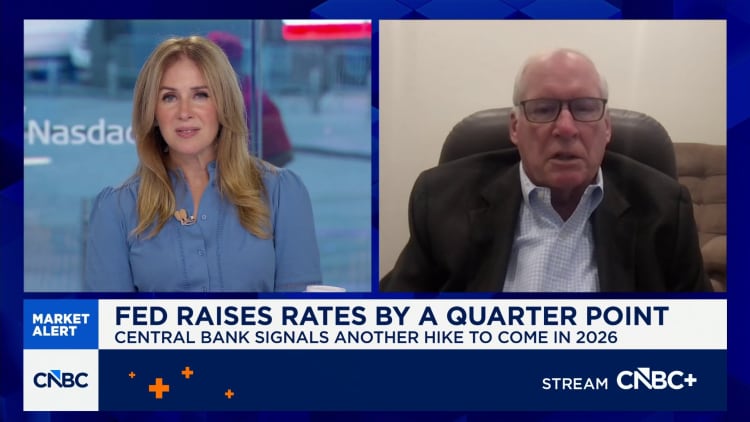
US Federal Reserve Chair Kevin Warsh speaks during a news conference at Federal Reserve Headquarters on September 16, 2026 in Washington, DC. Kevin Warsh discussed the central bank’s decision to raise interest rates for the first time since 2023 at a press conference following its latest policy meeting.
China News Service | China News Service | Getty Images
With a few carefully chosen words, Federal Reserve Chairman Kevin Warsh both explained this week’s decision to hike interest rates and raised vexing questions about what comes next.
Warsh described Wednesday’s decision to lift the central bank’s benchmark rate by a quarter percentage point not specifically as a tightening of policy but rather as removing “a dose of accommodation.” Further, he explained that the move was possible because of a U.S. economy that appears to have “strengthened” and financial conditions that have become less restrictive.
While the language may sound like central bank semantics, it gets to the heart of what markets are debating now: How far will the Warsh Fed go if it has only removed a “dose” of help, and what are the guidelines it will be using to formulate policy?
The phrase was “the one stand-out hawkish element” of Warsh’s post-meeting commentary to the press, Krishna Guha, head of economics and central bank strategy at Evercore ISI, said in a client note.
“This was not a mistake; it was a phrase he repeated several times and looked very much a deliberate choice to frame policy in this way,” Guha added, noting that “the framing is substantively different to that used by the Fed in recent years, and raises the possibility of a more open-ended approach to the number of hikes that might be required.”
That framework has included a calibration of where policy should sit relative to the so-called neutral rate, one that neither boosts nor holds back growth. By extension, benchmark rates that sit well above the neutral rate are considered restrictive, while those closer to or below neutral are regarded as accommodative.
What about neutral?
Warsh’s framing of the hike as removing “a dose” of accommodation could be seen as the first of multiple steps toward withdrawing support the Fed no longer feels is necessary. The Fed is looking to return inflation to 2%, and policymakers generally consider raising rates as a way to tamp down demand and control price pressures.
“Warsh’s framing, if taken literally, raises the possibility that rates might have to keep going up until financial conditions facing the private sector are no longer ‘accommodative’ – however that is defined,” Guha said. “This is a relatively open-ended prospect.”
Warsh had the chance to clarify what benchmark he was using to determine how much accommodation remains in policy.

Asked by CNBC’s Steve Liesman to explain how far he sees the current rate — in a target range of 3.75%-4% — sitting above neutral, Warsh essentially rejected the framing, in a statement that runs counter to how central bank policy has operated for more than a decade.
Warsh said measuring the benchmark rate relative to neutral is “useful academically. It’s a discussion to help us think about policy. Do I think it has any operational effect of decisions that we make today? No, I don’t.”
The answer helped add a layer of mystery to a Fed chairman already developing a reputation for being cryptic when it comes to how he views the wheels of policy needing to be tuned.
Markets wonder what’s next
A round of post-meeting speculation on Wall Street about what’s to come has ensued.
One of the initial reactions was pricing in higher odds for another hike when the Fed next meets in October. Goldman Sachs added an October increase to its forecast, as does Bank of America, which also expects another move in December. The market-implied odds of an October increase were near 58% Friday morning, according to the CME Group’s FedWatch gauge. A week ago, the probability was 42%.
“The word ‘accommodation’ means ‘stimulus” at the Fed; this comment implies that the current monetary policy stance is meaningfully stimulative,” wrote James Egelhof, chief U.S. economist at BNP Paribas Securities.
“With policy starting at a stimulative stance, a strong cyclical impulse, and persistent inflation, we think significant rate increases, perhaps more than the three we expect, may be necessary to stabilize the unemployment rate from below and prevent overheating next year,” he added.
Egelhof agreed that the “dose of accommodation” remark was “the most striking feature” of Warsh’s abbreviated news conference.
Markets are pricing in the likelihood that the Warsh Fed removes a few more “doses” before it is finished. Futures are implying a fed funds rate of 4.635% near the end of 2027, which would argue for three or four more hikes ahead.
If that’s the case, the Fed at the very least will undo many of the FOMC rate cuts approved under Warsh’s predecessor, Jerome Powell, who now sits on the committee as a governor.
The “dose of accommodation” remarks “seemingly helped to underscore this hawkish tone, implying that [the] committee no longer views policy as modestly restrictive,” said Jack Janasiewicz, portfolio manager and lead portfolio strategist at Natixis Investment Managers Solutions.
“We remain unconvinced that this is the start of an aggressive new tightening cycle,” he added. “Rather, we see this as a removal of the insurance cuts the Fed delivered in the fall of 2025.”

NEAR exploded 25% in the past day to reach about $3.60, its highest level since the start of 2025.
Many analysts have praised its strong performance and expect further short-term gains. At the same time, two important indicators suggest a correction is just as plausible.
‘Phenomenal’ and ‘Fabulous’
The broader cryptocurrency market has flashed green today (September 18), and NEAR is among the top performers. However, the sector’s revival isn’t the sole reason for the asset’s rally.
Several hours ago, NEAR Protocol revealed on X that users can now trade perpetual futures by default. Specifically, they can open a position from the account they already use, and no one can trace their actions. The feature is powered by Hyperliquid.
Michael van de Poppe classified the asset’s price chart following the resurgence as “absolutely phenomenal.” He suggested NEAR is nearing its final point of resistance and said it’s just a matter of time before it reaches $5. Shortly after, he used another superlative to describe what has happened to the token:
“NEAR is such a fabulous chart. Probably we’ll be getting near towards a short-term top on this one, and therefore, buying the dip is the game. Next target remains to be $5 for me.”
Other market observers who recently chipped in include X users CW and Altcoin Sherpa. The former claimed that NEAR has three sell walls up to $4.80, with the first almost broken. The latter said they are waiting for a potential dip to $3.20 to enter but think “this goes decently higher in the future.”
The Bearish Signals
NEAR’s sudden price explosion has pushed its Relative Strength Index (RSI) into overbought territory at 82. This typically indicates the asset may be gearing up for a pullback, while ratios below 30 are often seen as buying opportunities.

Another cause for concern is NEAR’s exchange netflow. Over the past few days, inflows have significantly outpaced outflows, suggesting some investors have shifted from self-custody to centralized platforms, increasing immediate selling pressure.

The post NEAR Hits Highest Price in 20 Months: Why One Analyst Calls the Chart ‘Phenomenal’ appeared first on CryptoPotato.
Just a few days after receiving major blows from the US Federal Reserve and the Senate, bitcoin’s price suddenly skyrocketed by a few grand and topped $80,000 for the first time in over ten days.
The altcoins have followed suit, with ETH surging past $2,550, while XRP has rocketed to over $1.35. Naturally, the liquidations are on the rise.
Recall that the primary cryptocurrency slumped to $75,000 on Tuesday evening after the CLARITY Act setback in the US Senate. Although the asset defended that zone, more volatility ensued a day later when the Fed hiked rates for the first time since July 2023.
However, BTC rebounded almost immediately after the initial shock and went past $76,000. It kept fluctuating in the following days, but the bulls appeared to be in control. Today’s decision by the Bank of Japan to increase the rates to a 31-year high was well received by the cryptocurrency, which jumped to just over $78,000.
It remained there for hours before it went on the offensive minutes ago, skyrocketing to over $80,000. This level was last breached on September 7.
Most altcoins have marked substantial 2-3% gains over the past hours as well. Ethereum has seemingly reclaimed the $2,550 level after a 2.3% hourly jump, while XRP is above $1.35 after a 3% increase. SOL and BNB have marked slightly more modest gains.
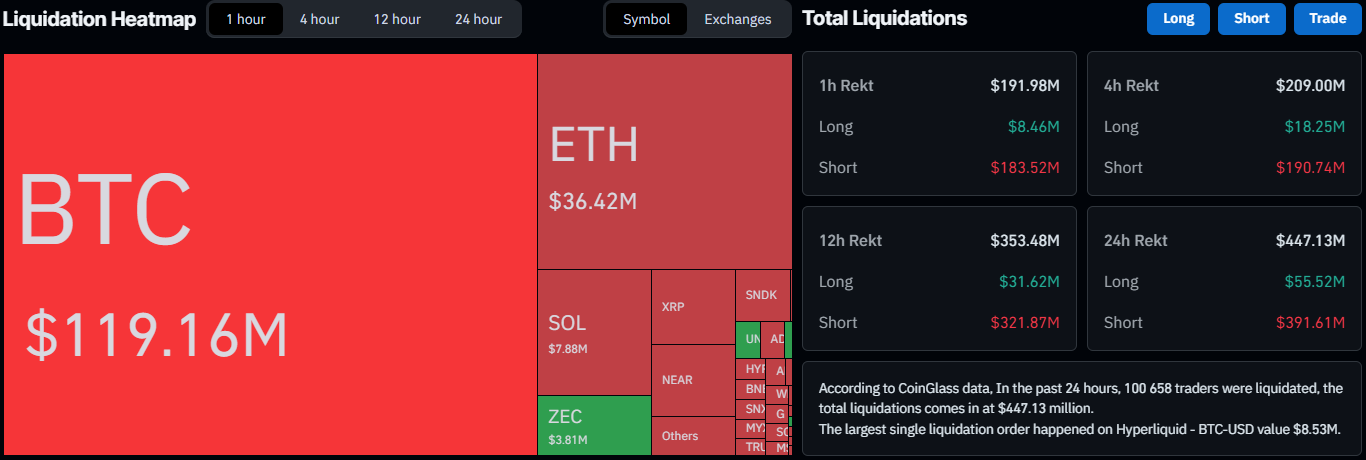
Data from CoinGlass shows that $192 million worth of over-leveraged positions were wrecked in the past hour, with shorts responsible for more than $183 million. BTC holds the lion’s share ($119 million), followed by ETH ($36 million).
On a daily scale, the numbers are even higher, with $450 million wrecked. $390 million was from shorts. In total, more than 100,000 traders have been wiped out within this timeframe.
The post Bitcoin Price Suddenly Rockets Past $80K Leaving $180M in Shorts Liquidated appeared first on CryptoPotato.

Investor’s Business Daily’s IBD 50 index is on track for a third straight down month, and some of its components are sputtering. Various factors help decide when to sell stocks, and five have already triggered sell signals. AngloGold Ashanti (AU) broke out above a 113.30 buy point on Aug. 20. Nearly a month later, the stock is struggling, down 10%…
Copyright ©2026 Investor’s Business Daily, LLC. All rights reserved. 87990cbe856818d5eddac44c7b1cdeb8

Artificial intelligence has come under renewed scrutiny of late, with many plays in the space coming off highs. But AI stock NetApp (NTAP) is now eyeing a potential buy point after getting support at a key level. California-based NetApp offers data storage systems and cloud data services. It operates through two segments, hybrid cloud and public cloud. It derives the…
Copyright ©2026 Investor’s Business Daily, LLC. All rights reserved. 87990cbe856818d5eddac44c7b1cdeb8

Long before they met, Ramakrishnan was a huge fan of Patriot Act, a Netflix series in which Minhaj wielded punchlines and PowerPoint presentations to unpack politics and the perils of unchecked capitalism.
“The first time I met you was way later at one of your first ever performances of Hasan Hates Ronnie / Ronnie Hates Hasan,” she tells Minhaj, referring to his live comedy tour with Ronny Chieng.
“And you were in full costume, right? You were dressed as Princess Leia or something like that?”
“It wasn’t a costume,” says Maitreyi. You can hear the eyeroll in her voice. “It was fashion.”
“Wait wait,” Minhaj says, shrinking.
“But it’s fine. Whatever. Wouldn’t expect you to know, Minhaj.”
“You had a full hood.”
“It was a karate gi meets Obi-Wan Kenobi up top.”
This jabbing rapport reads as a playful generational tete-a-tete between millennial and Gen Z, but it also speaks to the exchange of perspectives that informed their collaboration on Best of the Best. “What you’re seeing in the movie,” says Minhaj, “is Maitreyi and Lena coming together, and really masterminding and creating the tone and the feeling of the film.”

Phase two in motion at Wizz Financial!

‘Princess Diana’s brother Earl Spencer has thrown down the gauntlet to King – how he responds will be telling’
GXO Logistics options sweep points to asymmetric bullish bet through January 2027




-

 Tech5 days ago
The Latest Weird Thing to Play Doom Is the Mapped-Out Brain of a Fruit Fly
-

 Crypto World4 days ago
Kraken Lets xStocks Holders Earn Yield Through DeFi
-

 Crypto World2 days ago
US Charges Robinhood Engineers Over Crypto Listing Trades
-

 Entertainment7 days ago
News Specials, Movies, Shows, More
-

 Crypto World6 days ago
Can AI Build a Startup in 72 Hours? Elon Musk's Team Will Livestream the Test
-

 Crypto World4 days ago
Elon Musk Drops a Bombshell: Grok 5 Could Be the AGI Breakthrough
-

 Business6 days ago
Rivals Sam Altman and Elon Musk Rally Behind Dario Amodei’s Call for a Slowdown in AI Development
-

 Crypto World3 days ago
What Is the Status of the U.S.-Iran Peace Talks? Here's What Both Sides Are Saying
-
 NewsBeat4 days ago
‘Sick conspiracy’: Trump says only guardrails AI needs is ‘a strong and smart (High IQ!) president’ in all-caps rant
-
 Crypto World5 days ago
New Tesla Roadster Uses SpaceX Tech. Will It Impact the Stock Price?
-

 Crypto World7 days ago
Robinhood Chain Never Stopped But its Blobs Did Stop Reaching Ethereum For 14 Minutes
-

 Crypto World3 days ago
NVIDIA Analysis: Attempted Rising Wedge Breakout Amid Pressure on the AI Sector
-
 Entertainment7 days ago
New Horror Movie Officially Earns a Rare Stephen King Recommendation
-

 Business6 days ago
Marvell: Most Potent Setup Of The AI Factory Decade
-

 Crypto World4 days ago
Revolut Attackers Warn of Ongoing Daily Customer Data Leaks
-

 Crypto World4 days ago
DOJ Seeks to Seize $61M in Iran Oil Funds From Binance Accounts It Vouched For
-

 Crypto World7 days ago
Bitcoin ETFs lose $462.7M as Ethereum funds gain $196.9M
-
 Crypto World5 days ago
3 Token Unlocks to Watch in the Third Week of September 2026
-
Business4 days ago
SK Hynix ADRs Fall More Than 6% as Memory Rally Breaks on Fears of Slower AI Spending
-
Crypto World4 days ago
Can Circle’s Arc Repeat Robinhood Chain’s Meme Coin Boom?
You must be logged in to post a comment Login