
Crypto World
Bitcoin Heads Toward $81,000 As Nvidia Earnings Beat Fuels Risk-Asset Gains

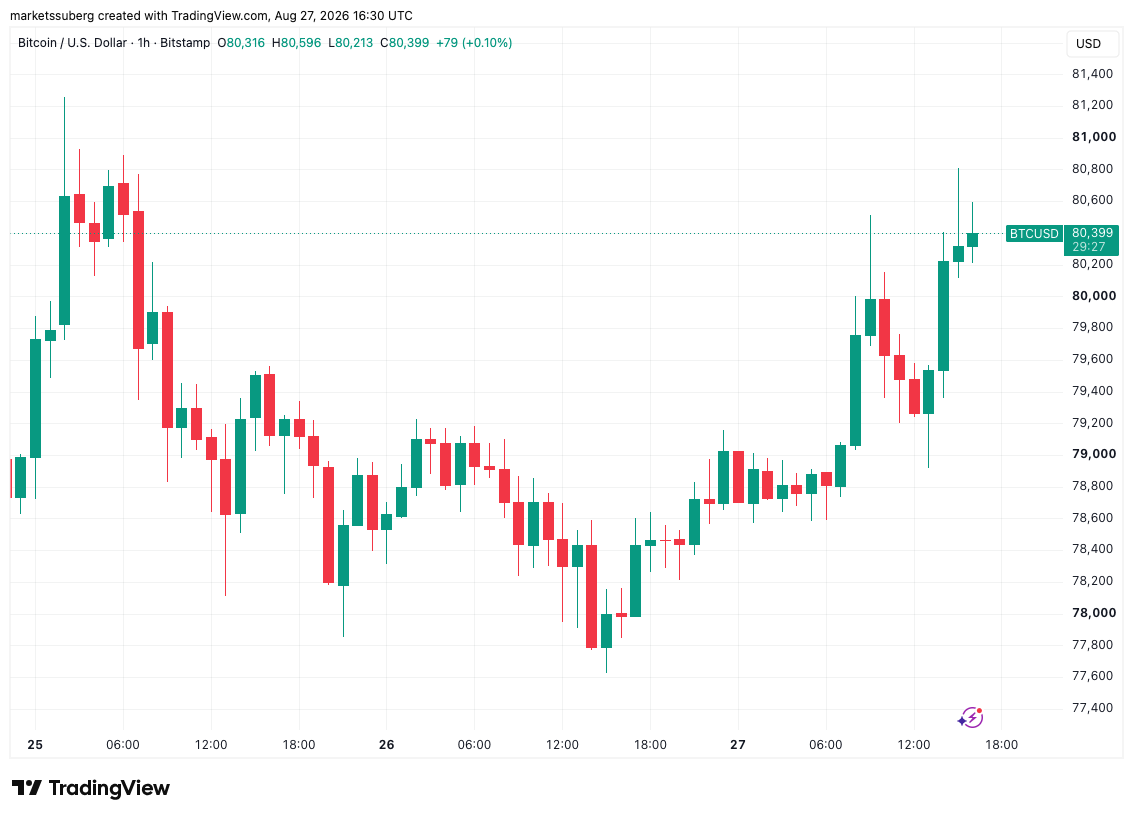
Bitcoin (BTC) rebounded toward $81,000 around Thursday’s Wall Street open as Nvidia earnings boosted US stocks.
Key points:
- Bitcoin reclaims $80,000 as $96.2 billion Nvidia earnings provide a boost to crypto and US equities.
- Expectations are running high ahead of Fed chair Kevin Warsh’s keynote speech at the Jackson Hole economic symposium on Friday.
- Bitcoin analysis sees sell-side pressure lessening above $82,000 ahead of the $6.6 billion August options expiry.
Nvidia earnings beat sends stocks, crypto higher
Data from TradingView showed new local highs of $80,808 for BTC/USD, with bulls again seeking to cement the $80,000 mark as support.
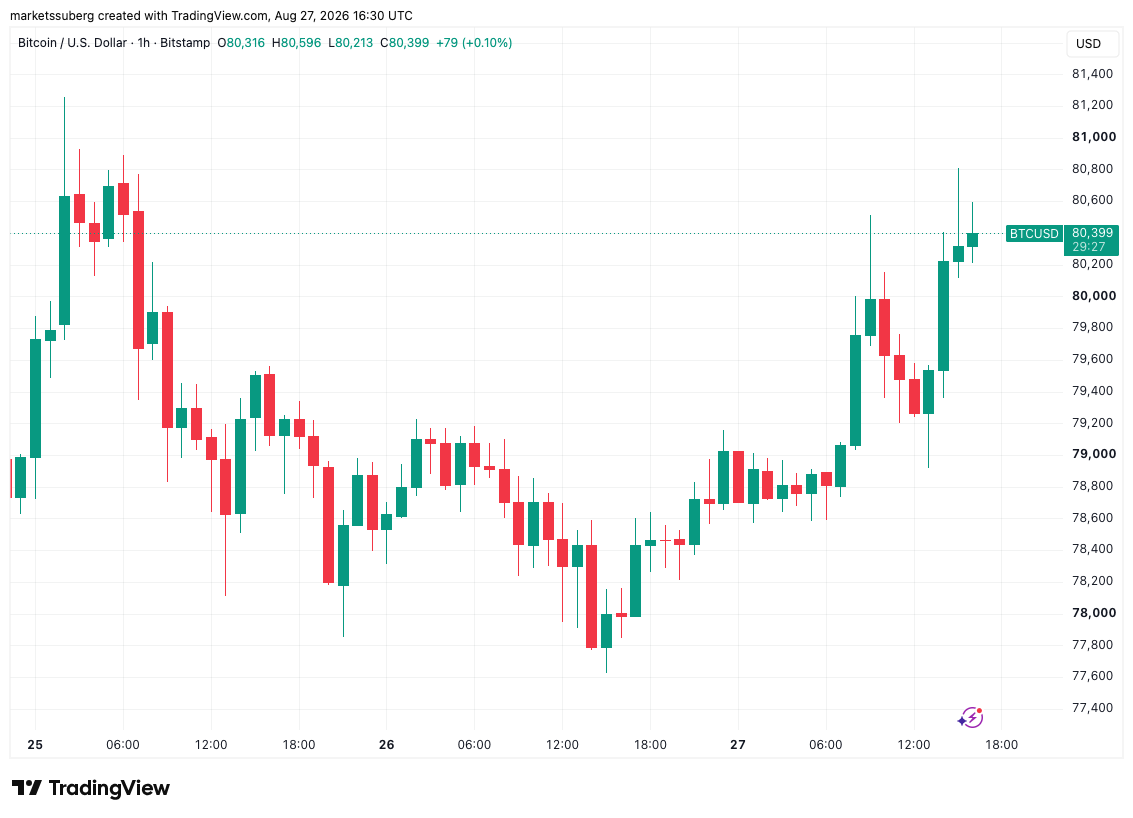
BTC/USD one-hour chart. Source: Cointelegraph/TradingView
Nvidia surprised to the upside after Wednesday trading, posting Q2 earnings of $96.2 billion — nearly $4 billion more than expected. On Thursday, its stock surged more than 9% and its market cap gained over $400 billion, with the tech-heavy Nasdaq Composite Index 1% higher at the time of writing.
“Nvidia is now on track to post the 3rd largest single-day market cap gain by a stock in history,” trading resource The Kobeissi Letter wrote in a reaction on X.
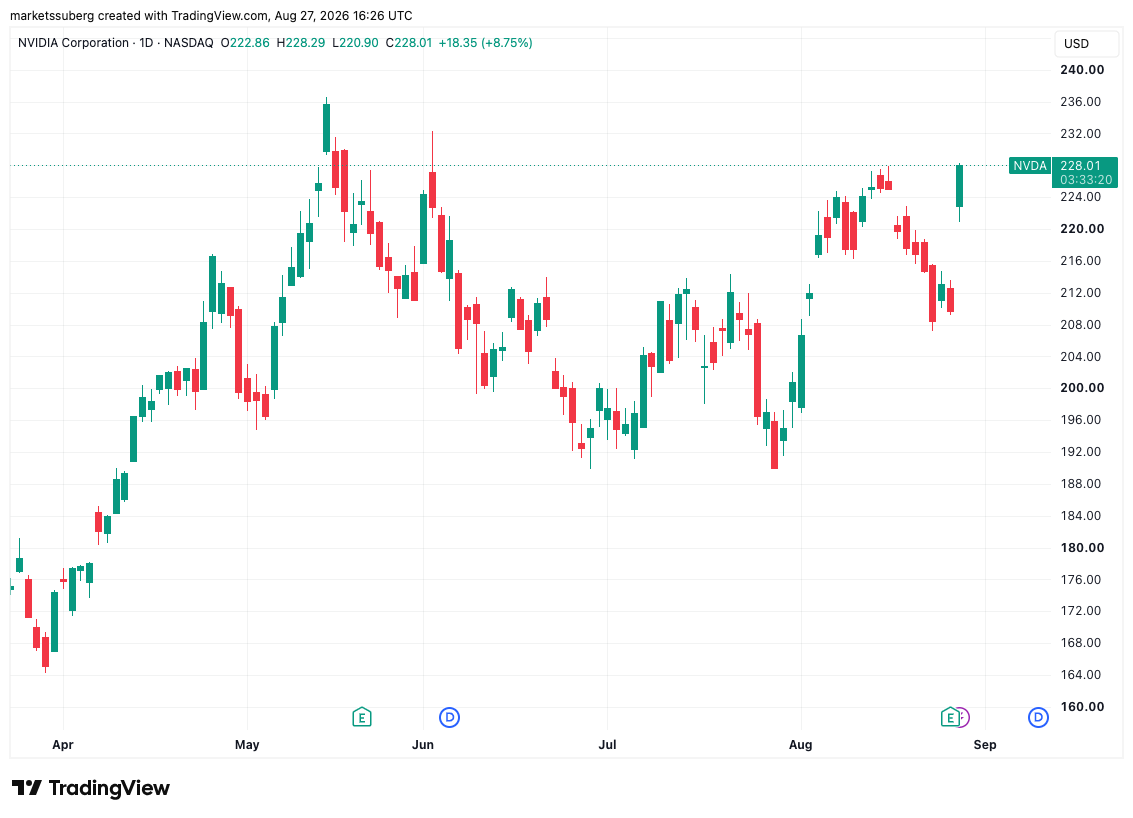
Nvidia stock one-day chart. Source: Cointelegraph/TradingView
Markets are now turning to the US Federal Reserve’s Jackson Hole economic symposium, already underway, ahead of chair Kevin Warsh’s keynote speech on Friday. Hopes are that Warsh, known for being tight-lipped on future policy shifts, will nonetheless tame market uncertainty amid mixed US inflation data and volatile government bond yields.
“Chairman Warsh’s address is poised to be extremely key given the jump in long-term interest rates and high uncertainty over the path of inflation and Fed’s reaction function going forward,” Nationwide chief US economist Kathy Bostjancic said, quoted by CNBC.
Analyst sees Bitcoin sell wall thinning ahead of options expiry
Crypto liquidations edged higher at around $417 million over 24 hours, per data from CoinGlass, after Bitcoin buyers chipped away at an area of significant ask liquidity.
Related: BTC RSI bullish divergence draws 2022 comparisons as analysis weighs new price trend
Previously, Cointelegraph reported that this zone extended up to $86,000, creating friction for further price upside.
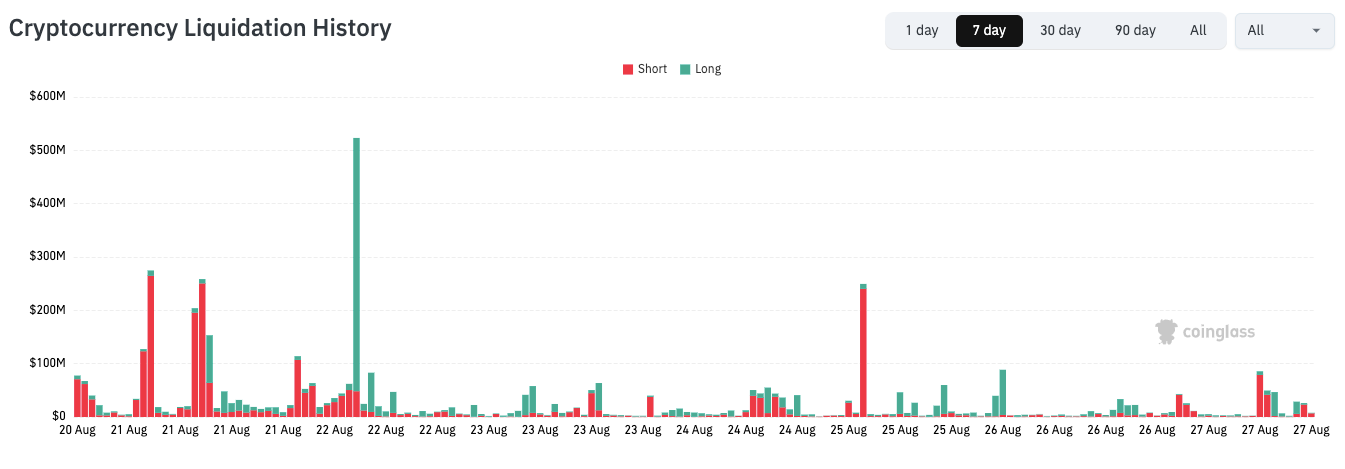
Crypto liquidation history (screenshot). Source: CoinGlass
Commenting, analyst David Eng described this liquidity wall as “weakening” ahead of Friday’s $6.58 billion (81,700 BTC) August options expiry event on crypto exchange Deribit.
“BTC is compressed under resistance just as the derivatives structure holding it there is about to weaken. Break $82K and the path to $85K+ gets much cleaner,” he told X followers.
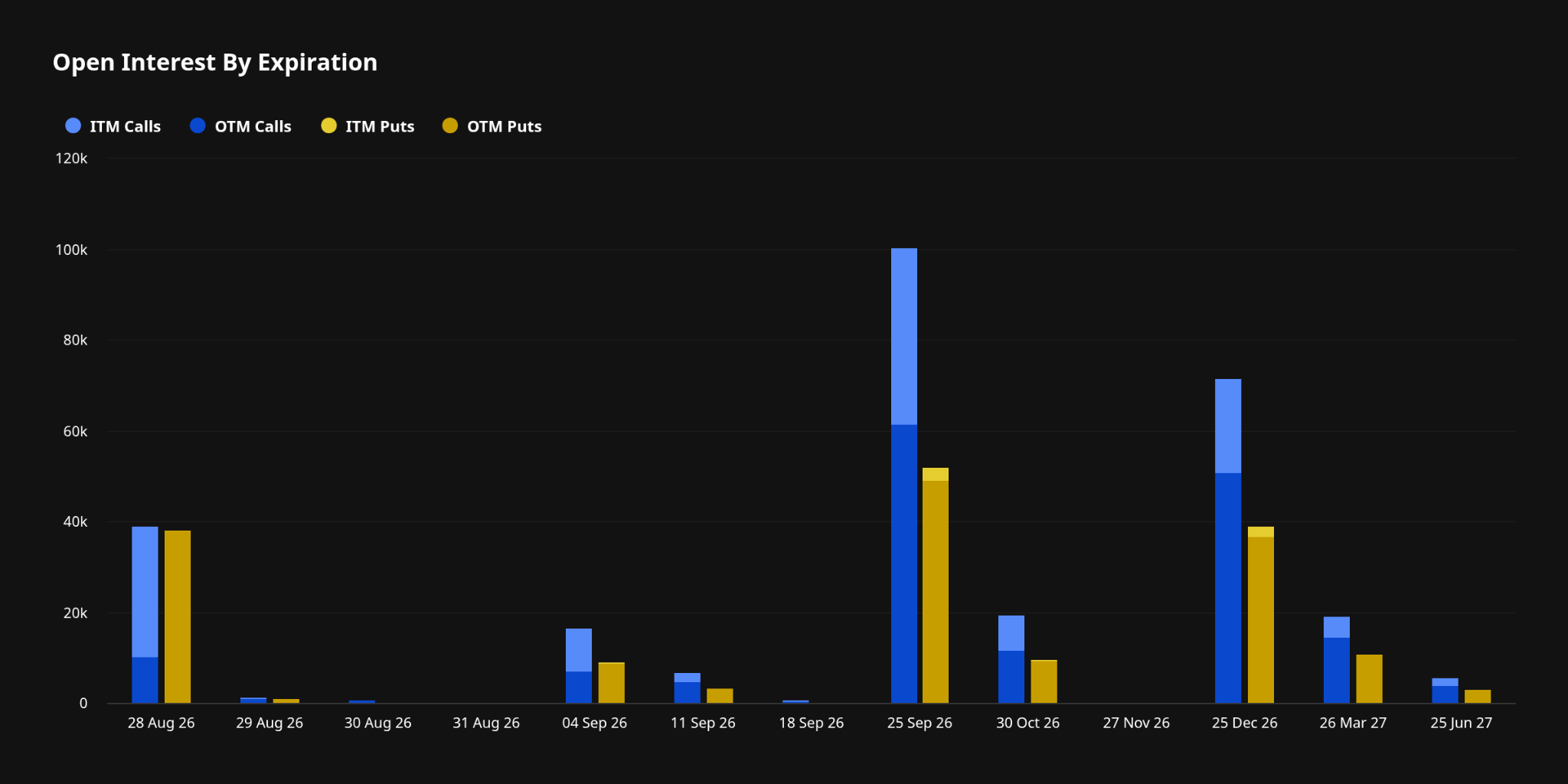
Bitcoin options open interest by expiry date. Source: Deribit
Bitcoin options expiry events are when options contracts end, allowing traders to buy or sell BTC for a specific price. This can spark increased market volatility, with price gravitating toward a particular strike price.


How does the body adapt to seasonal temperature changes?
Spending most of your time indoors in the air conditioning might slow the body’s changes, come summer. “But if we spend time outside exercising, or even just being physically active outdoors, we’ll adapt to those conditions,” Périard says.
When you go for a walk on a hot summer day, before you’ve adapted to the heat, both your skin temperature and your core temperature may go up. That sets off alarms in the body, announcing heat stress. “With that, we trigger lots of sweating, and we increase our skin blood flow,” says Périard. Sweat evaporates from the skin, cooling skin down, and blood sent to the surface of the body helps shed heat.
The volume of blood pumping through the body also goes up. More blood volume allows more heat to be shed and supports greater sweating without dehydration. There are also changes at the level of the cell, with some proteins’ production going up to protect normal functioning in greater heat. The process of reaching a fully adapted state might take a few weeks, although the precise details will depend on the situation.
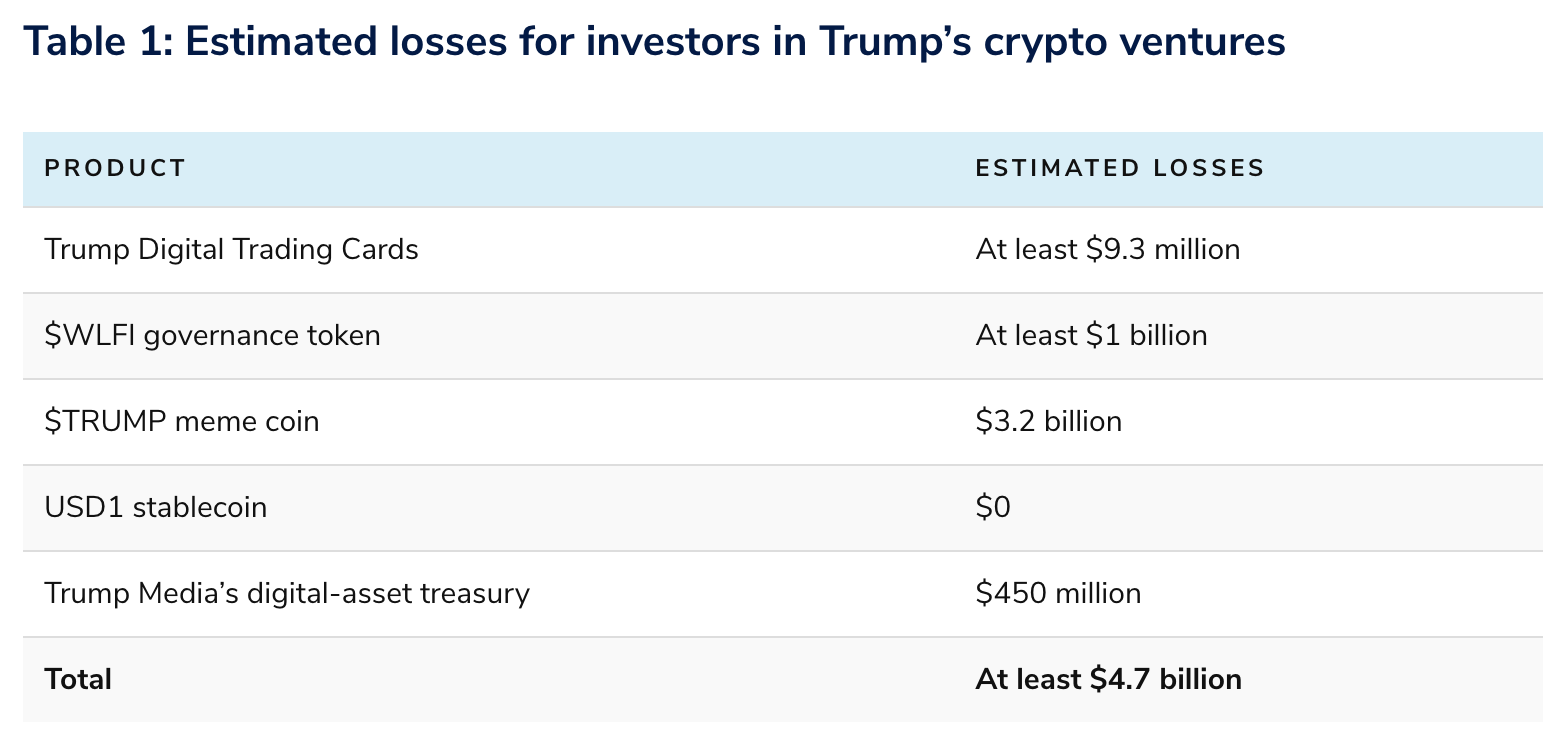
The nonprofit consumer advocacy organization Public Citizen reported that US President Donald Trump “left investors at least an estimated $4.7 billion underwater” since 2022 through his and his family’s digital asset ventures.
According to Public Citizen, investors lost billions of dollars through the Trump family World Liberty Financial governance token, the president’s nonfungible token (NFT) trading cards launched in 2022, his memecoin Official Trump (TRUMP) and Trump Media’s digital asset treasury.
The bulk of the estimated losses, according to the organization, came from investors in the TRUMP memecoin, with $3.2 billion lost, while buyers of World Liberty Financial‘s USD1 stablecoin “haven’t suffered major losses.” Public Citizen said that in the case of the memecoin, the losses represented “wealth transferred to a small group of early buyers rather than money that simply vanished.”
Estimated losses for investors in Donald Trump’s crypto ventures. Source: Public Citizen
According to Public Citizen, amid the $4.7 billion in investor losses, Trump earned $7.2 million from the NFT licensing fees and royalties, more than $600 million from World Liberty token sales and selling an equity stake, $635 million in licensing fees for his memecoin and $197 million in revenue from capital contributions to World Liberty. This did not reflect the stakes in companies and ventures he continues to hold. Some of the figures were included in the president’s 2025 disclosures, reporting $1.4 billion in earnings tied to crypto.
Related: Most Americans say the Trump family’s crypto investments are not ‘appropriate’: Poll
Cointelegraph reached out to the White House for comment but did not receive an immediate response. Spokesperson Anna Kelly has repeatedly said in response to questions on Trump’s crypto investments that there were “no conflicts of interest.”
Crypto bill still weeks away from potential vote
Amid the crypto ventures and more “potentially on the way” from Trump, the group renewed calls for ethics provisions in a cryptocurrency market structure bill, the Digital Asset Market Clarity (CLARITY) Act, claiming that “the president’s policy choices and personal portfolio cannot be separated” and any legislation should require a US president and his family to divest from projects in the industry.
Trump met with crypto company executives last week, calling for a “fair version” of the CLARITY Act to pass once the Senate returns to session next month. The bill is scheduled for a cloture vote on Sept. 15, which will require votes from at least 60 senators to advance.
Magazine: SEC’s proposed crypto rules probably won’t spark new ICO boom
Solana’s native token has posted an 8% increase over the past 24 hours, prompting analysts to make highly bullish bets for the near future.
At the same time, some remain cautious, projecting potential double-digit declines, while certain factors reinforce the pessimistic thesis.
SOL’s Bullish Targets
Just a few hours ago, the asset’s price briefly exceeded $105, marking the highest point since early February. Currently, it trades at around $104, which translates into a solid 42% pump on a monthly scale.
SOL’s strong performance appears to stem from a blend of bullish factors working together. The most obvious one is the broader market resurgence driven by monetary policy changes in the US, among other reasons. Another element is the rising institutional interest, with spot SOL ETFs registering seven consecutive green days: something last observed in May this year.

Next on the list is the return of some of the big players. Analytics platform Lookonchain revealed that a smart trader (who has been inactive in the past two years) has purchased almost 96,000 SOL for nearly $10 million. The analytics resource noted that the market participant has previously completed two Solana swing trades, buying low and selling high both times, ultimately making $4.95 million in total profit. Of course, this has led to speculation that the player might know something the rest of us don’t.
For his part, X user Sweep disclosed that a whale opened a $14.8 million long position in Solana, stating that the investor previously made $1.1 million trading the asset with a 100% win rate.
Many analysts applauded SOL’s revival, expecting further short-term gains. X user Daan Crypto Trades argued that everything “looks good” as long as the price remains above $98.
SKYLINE opined that it is only a matter of time before SOL rises beyond $150, whereas Fuel projected an eventual explosion to $1,000. It is important to note that the higher target seems a bit far-fetched, but yet again, nothing is impossible in crypto.
Going South?
Unlike the aforementioned bulls, Sweep outlined a rather cautious forecast. He thinks SOL could nosedive to $70, giving investors a chance to hop on the bandwagon at lower prices. “After that, Solana will go parabolic,” he added.
The asset’s exchange net flow backs the theory of a short-term decline. According to CoinGlass, investors have been moving aggressively from self-custody to centralized exchanges, which in turn boosts immediate selling pressure.

The post Solana (SOL) Reclaims $100: Is It Time for a Parabolic Rally? appeared first on CryptoPotato.
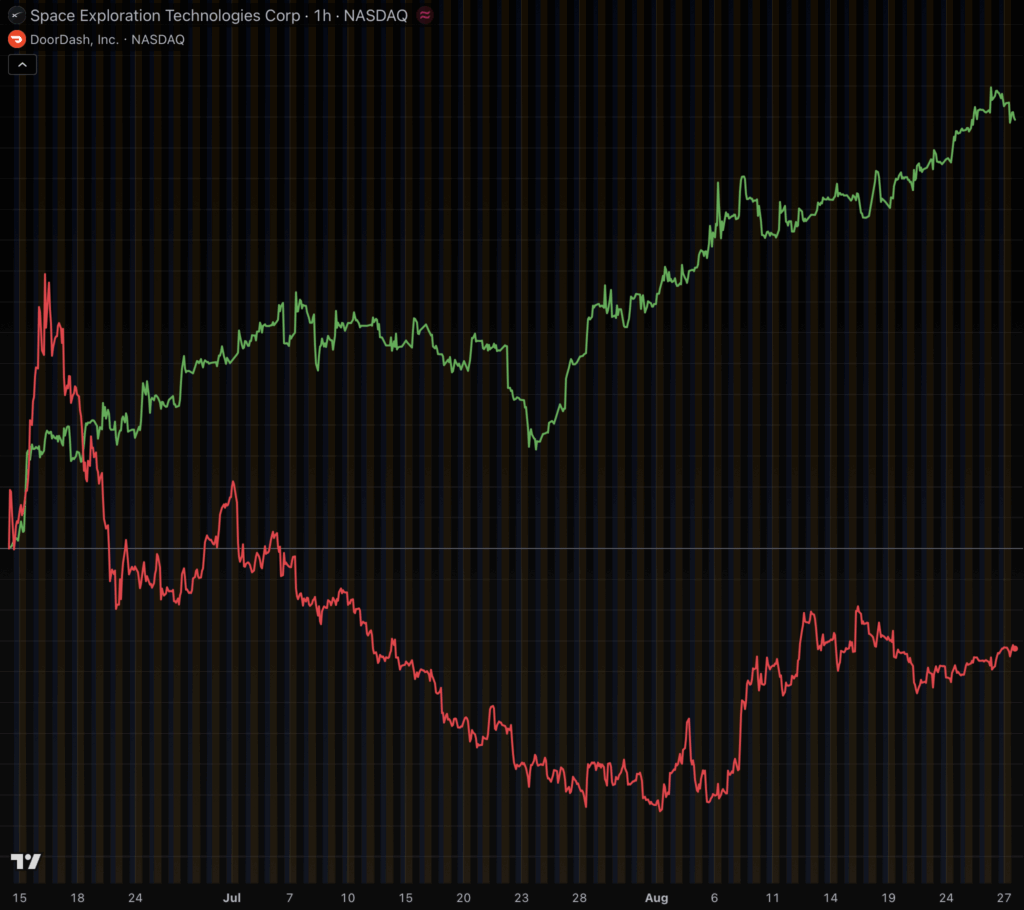
DoorDash has performed 48% better than SpaceX since Elon Musk’s rocketship company launched for public trading at $150 per share on June 12.
While SpaceX, which famously lost $1 trillion of market capitalization for its investors has crashed 6%, DoorDash has increased in value by 42%.
In fact, based on current stock prices, it would have been better to buy any number of restaurant stocks instead of SpaceX on the Nasdaq. Texas Roadhouse has performed 13% better, Flanigan’s has trounced by 35%, and Cracker Barrel has outperformed by 12%.
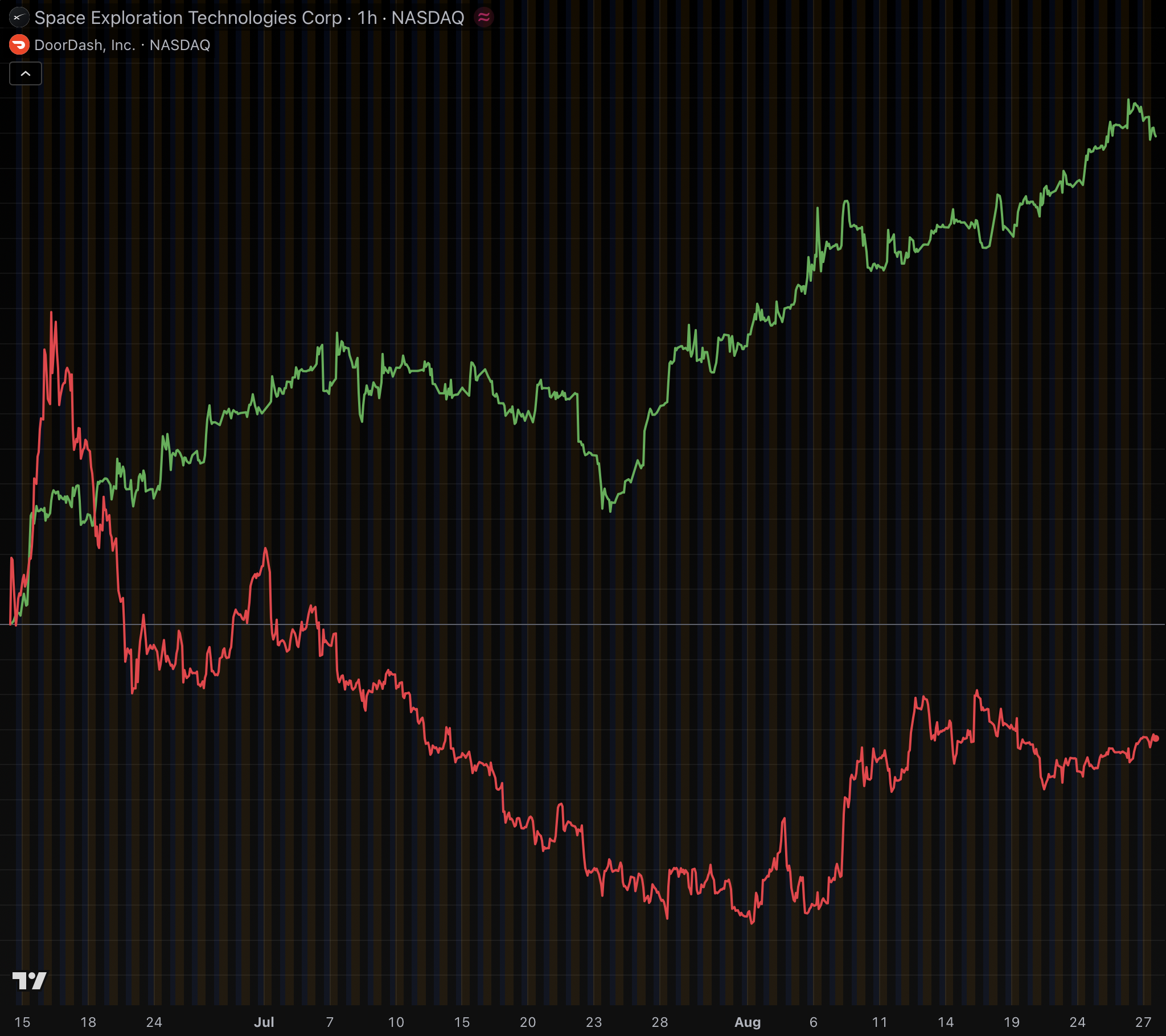
Measuring the drawdown from SpaceX’s peak is even more embarrassing.
Since June 16, SpaceX has declined 37%. It hit an intraday high of $225.64 that day, and performance has been down-only since.
DoorDash opened for trading at $155.24 per share on June 12, while SpaceX began trading at $150 — $15 higher than its formal IPO price.
Almost everyone has unrealized losses on SpaceX as a reward for patiently holding their IPO investment through today.
At this point, insiders who bought at the pre-Nasdaq open of $135 per share are the only shareholders who could possibly have an unrealized gain on a position held since SpaceX’s IPO.
Read more: SpaceX crashed too hard for insiders’ bonus unlock
Better earnings from DoorDash than SpaceX
Both companies reported quarterly results during this comparison period. Management asked investors to process entirely different numbers.
Earlier this month, DoorDash reported 970 million delivery orders for the quarter, $33.1 billion of marketplace gross order value, and a healthy $4.5 billion of revenue.
Orders still grew 17% and revenue grew 24% even after adjusting out a Deliveroo acquisition.
It also generated $944 million of operating cash flow and $742 million of free cash flow.
SpaceX filed its own quarterly results this month, revealing that while revenue reached $7.8 billion, the company lost $541 million. The company also disclosed $18.4 billion worth of capital expenditures.
As of this morning, $10,000 invested in DoorDash as of the June 12 open would be worth about $14,200. The same bet on SpaceX would be worth roughly $9,400.
Got a tip? Send us an email securely via Protos Leaks. For more informed news and investigations, follow us on X, Bluesky, and Google News, or subscribe to our YouTube channel.
Federal Reserve Chair Kevin Warsh speaks during a news conference at Federal Reserve Headquarters on July 29, 2026 in Washington, DC.
Win Mcnamee | Getty Images
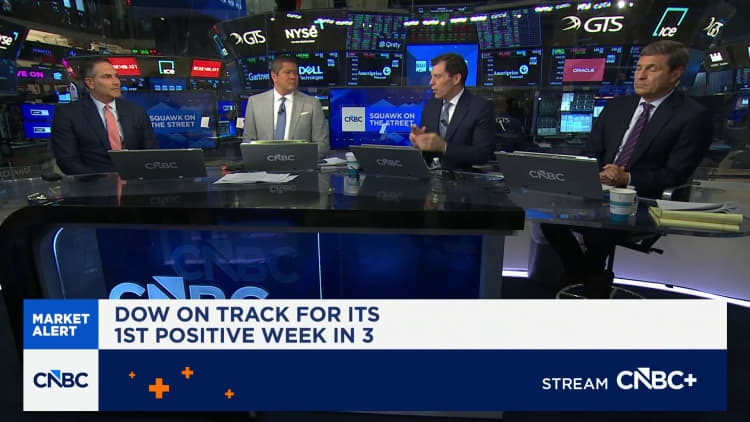
The Federal Reserve‘s cryptic chairman is set to deliver his much-awaited keynote address Friday in Jackson Hole, with markets trying to anticipate what, if anything, he will have to say on key matters affecting the economy and monetary policy.
Kevin Warsh will speak during the Fed’s annual symposium in Wyoming, an event this year that is titled “Financial Innovation: Implications for Payments and Policy.”
Prior Fed chairs have used the speech as an opportunity to discuss broad policy frameworks and intentions on where they see policy and interest rates headed, beyond the main focus of the conference.
But given his approach so far since taking the reins in May, a time during which Warsh has placed a far greater emphasis on market direction than cues from the Fed, it’s hard to know what to expect.
“People keep asking me what I’m expecting, and I’m not really expecting much of anything. I think it’s hard to predict what he’s going to say,” said Luke Tilley, chief economist at M&T Bank and Wilmington Trust Investment Advisors. “If I had to guess, I would say that he’s going to give a very high-level, broad look at the work of the task forces and how he thinks the Fed should operate, as opposed to a nuts-and-bolts assessment of the economy and expectations for policy.”

Warsh has set up five task forces aimed at taking what he calls a “first principles” look at Fed functions.
Among their tasks are an assessment of how policymakers view inflation, the balance sheet, the data points that influence decisions, communication strategies and communications.
On the final point, Warsh has taken a unique approach compared to his recent predecessors: Rather than seeking to steer reaction through carefully placed signals, he has preferred a more hands-off approach that lets markets interpret data and send signals to the Fed.
It’s a strategy that has met with mixed reviews so far and could generate adverse reaction.
Looking for more information
“I would appreciate some more detail on how he personally thinks inflation happens, or how he personally thinks monetary policy affects inflation, either in timing or through which channels,” Tilley said. “That doesn’t even have to address the reaction function. It’s just the basic plumbing of financial markets and monetary policy, because there are a lot of channels.”
With rising Treasury yields heavily in focus, that makes the stakes particularly high for Friday’s speech.
“We have the most unusual Jackson Hole monetary symposium in recent memory on deck because of Warsh’s unforced errors early in his tenure,” said Joseph Brusuelas, chief economist at RSM. “The market has now bid this up to be something that I think the Federal Reserve would rather it not be.”
There’s more at stake, though, than market reaction.
Coinciding with the rise in yields, Treasury Secretary Scott Bessent announced an initiative last week in which the department will double the size of its buybacks on off-the-run, or already issued, debt offerings. Treasury usually buys back $2 billion per weekly operation, but will “at least” double that when the next round begins Sept. 9.
While that’s a relatively small chunk of the massive U.S. debt load, the move still sets up a possibly uncomfortable scenario for Warsh. Market interventions from fiscal and monetary authorities seem to contradict Warsh’s stated intentions so far.
“We’re in a unique set of conditions here, where actions by the Treasury have undermined Warsh’s move. Therefore, the Fed chair is in between a rock and a hard place,” Brusuelas said.
Market impacts
One common complaint about Warsh thus far is his reluctance not only to provide so-called forward guidance on where he thinks the Fed is headed but also neglecting to delineate the “reaction function,” or the conditions that would warrant a move in either direction.
Failing to do so again could have significant market consequences, said Mark Cabana, head of U.S. rates strategy at Bank of America.
“In short, we expect Warsh to signal that he is prepared to raise rates again if inflation does not continue to moderate,” Cabana said in a client note earlier this week. “By contrast, if he uses the speech to focus solely on broader structural themes such as productivity or demographics, we worry markets could interpret the message as dovish.”
In such a case, Cabana said he would expect a sell-off in long-dated Treasurys that could send the 30-year yield to 5.5% or higher, which would be more than 0.3 percentage point from the current level to highs not seen since at least the early part of the 21st century.
Specificity, then, could be Warsh’s friend as he prepares to deliver the most important remarks of his tenure so far.
“Warsh is not going to be able to engage in cryptic discourse,” Brusuelas said. “He’s going to need to be a little bit more forthright and clear on what he means.”


Mastercard deepens its ties to the Ripple ecosystem right as XRP ETF flows show signs of life again. The token is still nowhere near its old highs, but the combination of institutional plumbing and fresh capital rotation is enough to put XRP back on trading desks’ watchlists this week.
The XRP Ledger Foundation confirmed Mastercard as a sponsor of the XRP Ledger Hackathon, a 36-hour event running October 24-25 ahead of Ripple Swell 2026 (October 27-29). The Foundation called the payments giant’s involvement “thrilled,” worthy news, framing the decade-old XRP network as “ideally suited for payment use cases.”
This announcement also follows Mastercard’s March move to enlist Ripple alongside Binance, PayPal, Circle, and others in a broader blockchain-payments partnership program.
Meanwhile, 21Shares has adjusted how its XRP ETF prices the underlying asset, a technical but telling shift arriving just as ETF inflows show renewed momentum after a rough patch.
Discover: The Best Crypto to Diversify Your Portfolio
Can XRP Price Hit $1.50 This Week?
XRP’s intraday range has spanned $1.38 to $1.46, with the current print at the $1.45 area sitting closer to the top of that band. Trading volume has picked up alongside the move, consistent with its August 2026 ETF activity, which saw $56.86 million in net inflows.
Not just ETFs, its trading volume sees the strongest showing since January. The $1.40 handle is now acting as immediate support, with resistance clustering in the mid-$1.40s near the recent high.

For XRP, a clean break above $1.46 opens room toward $1.60-plus, especially if the CLARITY Act clears its September 15 cloture vote and formalizes XRP’s status as a CFTC-regulated commodity. Consolidation between $1.30 and $1.46 could happen too while the market digests whale activity and ETF flow data.
The bear case sees XRP slip below $1.34 and risks a retest of the $1.00 psychological zone that held support in mid-August. Roughly 60% of supply reportedly sits underwater relative to the $1.48 realized price, an overhang worth watching before chasing strength here.
Trade XRP on Bybit and Get a Chance to Win Our $1,000 USDT Airdrop
Bitcoin Hyper Targets Early Mover Upside as Ripple Token Tests Key Levels
XRP holders riding this bounce have earned it; a move off $1.00 back toward $1.45 isn’t nothing. But at a roughly $90 billion market cap, doubling from here means finding another $90 billion in fresh capital, a heavier lift than most presale-stage assets face.
Standard Chartered’s cut of its 2026 target from $8 to $2.80 underscores how institutional expectations have already been recalibrated downward. That gap between JPMorgan’s original $8 billion inflow call and the roughly $1.5 billion actually delivered is exactly the kind of asymmetry that pushes capital toward earlier-stage bets.
Enter Bitcoin Hyper ($HYPER), a Bitcoin Layer 2 built with Solana Virtual Machine integration, pitched as faster than Solana itself while inheriting Bitcoin’s base-layer security.
The presale has raised $33 million to date at a token price of $0.01368, with a huge 35% APY staking rewards offered. Its Decentralized Canonical Bridge aims to solve Bitcoin’s long-standing programmability gap without sacrificing trust assumptions.
Research Bitcoin Hyper before the presale window closes.
Discover: The Best Token Presales
The post Ripple Gets Mastercard Boost as XRP ETF Makes Major Changes appeared first on Cryptonews.


South Korean financial group Mirae Asset plans to build a 150 trillion won ($109 billion) digital asset business around Digital X, the crypto exchange formerly known as Korbit, according to The Korea Times.
The report said Digital X will focus on crypto, stablecoins, real-world assets and security token offerings, with plans to tokenize physical assets including gold, silver and electricity.
The expansion plans follow Mirae Asset Consulting’s acquisition of a 97.15% stake in Korbit in July for a cumulative 141.4 billion won. The exchange was subsequently rebranded as Digital X, marking the first time an affiliate of a South Korean financial group acquired control of a domestic crypto exchange.
Founded in 2013, Korbit was South Korea’s first cryptocurrency exchange. Despite its long history, the exchange accounted for just 0.5% of South Korea’s cryptocurrency trading market in 2025, according to the country’s Fair Trade Commission.
Mirae Asset founder and chairman Park Hyeon-joo outlined the plans at a Digital X employee event in Seoul on Wednesday. “Our initial goal is to make Digital X a core pillar of ‘Mirae Asset 3.0,’” he said, according to The Korea Times.
On Monday, Digital X began waiving trading fees across all won-denominated assets, with the zero-fee policy set to run through Aug. 24, 2027.
Magazine: Bitget CEO isn’t buying the Bitcoin rally — She’s waiting for $50K


Bitcoin price prediction has the leading digital asset trading at $79,400, down -0.4% on the day, as the market digests a violent breakout that briefly punched the price above $81,000 before sellers stepped in.
The pullback looks orderly rather than panicked, more consolidation than capitulation. There’s a bigger question sitting underneath this chart, and it involves a number most retail traders haven’t heard yet.
The move followed a decisive break above the long-standing descending trendline and the $66K-$67K resistance band that had capped BTC for months. Price then cleared the $72K-$74K supply zone in a single expansion leg, tagging roughly $79K-$81K before easing back.
Stronger-than-expected US PCE inflation data triggered some of the profit-taking, hitting gold and equities alongside crypto. That macro sensitivity is worth flagging: rate-path repricing still moves BTC more than most technical levels do, and the next several CPI/PCE prints will matter more than any chart pattern.
Bitcoin Price Prediction: Can BTC Hit $83K This Week?
BTC is consolidating in the high-$78K to $79K range after tapping a three-month high near $81,235.Recent price-prediction coverage flags $80K-$83K as the critical resistance shelf, a former swing-high zone likely to attract sellers on approach. Volume has stayed elevated through the pullback rather than collapsing, which typically favors trend continuation over reversal.
Bull case: daily acceptance above $83,000 would satisfy the threshold CryptoQuant analysts cite for confirming a fresh bull-cycle leg, opening a path toward the $94K-$98K supply zone. Bernstein’s standing $150,000 target sits well beyond that.
Base case: continued chopping between $77K and $81K while the market absorbs the recent gain.
Bear case: a break below the $72K-$74K zone, which would undercut the structural-reversal thesis and point back toward deeper trend support near $65K-$66K. Options positioning into upcoming expiries could accelerate whichever direction wins.
Make Your Prediction Count With $25 For Free on Kalshi
Bitcoin Hyper Targets Early Mover Upside as Bitcoin Tests Key Levels
A position taken near $66K looks smart right now. Bitcoin price prediction says that buying BTC at $79,500 and chasing a move toward $83K is a different trade; the easy asymmetry has already happened.
For traders who missed the trendline break, chasing spot exposure at these levels means capped upside for outsized risk. That’s pushed capital toward earlier-stage plays with more room to run.
Bitcoin Hyper ($HYPER) is building the first Bitcoin Layer 2 with native SVM integration, smart contracts running faster than Solana itself, settled with Bitcoin’s base-layer security.
The presale has raised $33,083,950.35 at a token price of $0.0136853, with staking rewards on offer at an unspecified high APY. Core features include a decentralized canonical bridge for BTC transfers and low-latency execution to address Bitcoin’s long-standing throughput and programmability gaps.
Trade Securey With 0% Trading Fees on MEXC
This is not financial advice. Crypto markets are highly volatile and presale tokens carry elevated risk. Always conduct independent research before investing.
The post Bitcoin Price Prediction: Can BTC Reclaim $80K This Week? appeared first on Cryptonews.
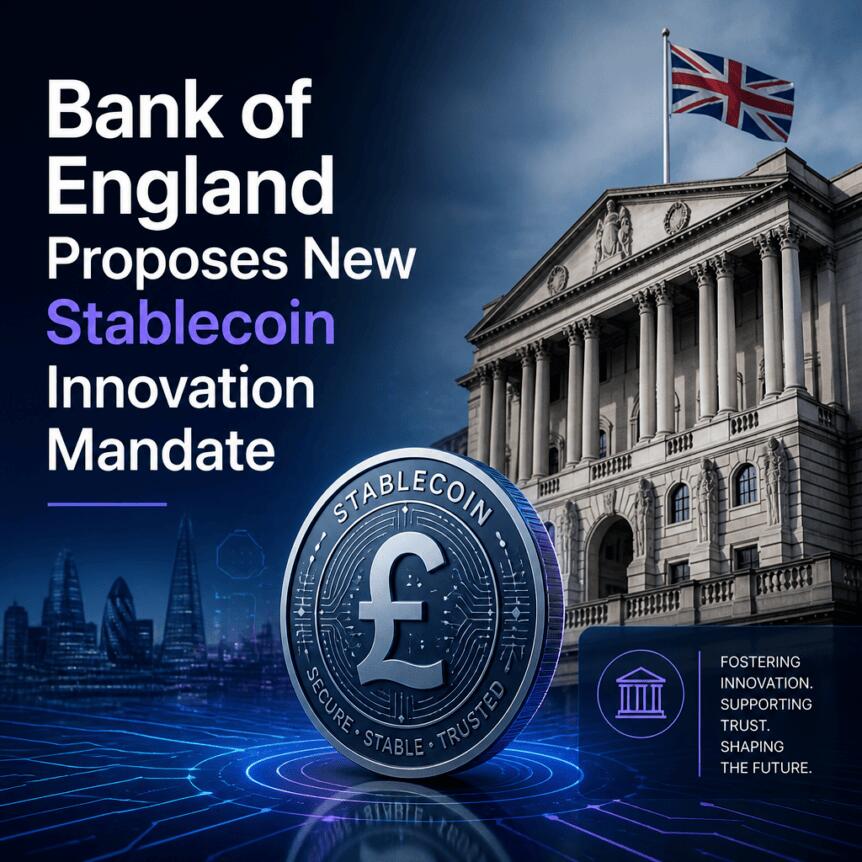
The UK government is proposing to give the Bank of England a secondary mandate focused on innovation in digital payments, explicitly covering payment systems that rely on “digital settlement assets” such as stablecoins. The move, announced by HM Treasury on Thursday, keeps financial stability as the Bank of England’s primary responsibility while carving out room for experimentation and development of emerging forms of digital money.
According to HM Treasury, the change would apply to the central bank’s oversight of payment infrastructure, with the expectation that the Bank of England will report progress to Parliament each year on how it is advancing the new payments innovation objective. The government plans to embed the mandate through amendments to the Financial Services and Markets Bill, which is set for further debate in the House of Lords on Sept. 7 and 9.
Key takeaways
- The Bank of England would gain a secondary objective to support innovation in payment systems and digital money, while financial stability remains the top priority.
- The mandate is intended to cover systems that use digital settlement assets, including stablecoins, linking UK stablecoin policy more directly to payments development.
- The Bank of England would provide annual updates to Parliament on its innovation work, potentially increasing public accountability for how stablecoin-related rules are implemented.
- The proposal is set to be incorporated through amendments to the Financial Services and Markets Bill, with House of Lords debates scheduled for Sept. 7 and 9.
- Industry reaction may hinge on the practical details of how the Bank of England’s annual reporting is used alongside existing stablecoin requirements.
Why the Bank of England’s “innovation” role matters for stablecoins
The announcement effectively broadens the Bank of England’s remit beyond purely stability-focused oversight. Under the proposal, the Bank of England would extend an existing regulatory approach applied to core market infrastructure—specifically central counterparties (CCPs) and central securities depositories (CSDs)—to also incorporate a payments innovation goal.
The significance for stablecoins is that the mandate is not limited to abstract research or central bank digital money alone. HM Treasury states that the mandate would cover payment systems using digital settlement assets, a phrasing that includes stablecoins and helps clarify that they are part of the UK’s wider payments technology agenda.
For market participants, this matters because regulatory emphasis can shape how quickly new payment rails move from pilot to deployment. A formal “innovation objective,” paired with parliamentary reporting, may also influence how the Bank of England balances caution with experimentation as stablecoin rules and related infrastructure testing develop.
Parliamentary reporting could intensify scrutiny
While the innovation mandate is described as secondary to financial stability, the details of implementation may determine how much room it creates for the stablecoin market to grow under the UK’s framework.
According to Maksym Sakharov, co-founder and CEO of WeFi, the annual reporting requirement could shift the balance toward greater public scrutiny. Sakharov told Cointelegraph that because the innovation objective is “secondary to financial stability,” it “overrides nothing,” but the Bank of England would still have to publish annual accounts of its work on payments innovation and digital money.
He suggested that this publication requirement could matter particularly because it would place additional attention on the stablecoin rules the central bank finalized in June. In other words, even if the innovation mandate cannot dilute stability obligations, the reporting component could increase the visibility of how those obligations are applied in practice.
Existing stablecoin requirements and a key reserve debate
Sakharov focused on specific requirements for “systemic stablecoin issuers,” including a reserve structure that—per his comments—requires issuers to keep at least 30% of their backing assets in non-interest-bearing deposits at the central bank.
He argued that the “reserve split is the first thing to fix,” adding that the requirement could influence whether a stablecoin business is commercially viable. This is a notable point for investors and operators because reserve rules directly affect cost structure, risk management, and the economics of issuance—factors that can shape which issuers can scale while still meeting compliance expectations.
Importantly, the Bank of England’s innovation mandate does not automatically change those reserve mechanics. However, by tying central bank reporting to digital payments innovation, the proposal could create additional pressure—politically and publicly—for regulators to explain how stablecoin market design aligns with broader payments modernization goals.
UK stablecoin momentum: from interoperability tests to cross-border alignment
The new mandate arrives as the UK increases its operational and policy work around stablecoins. In August, a group participating in the Bank of England’s Digital Pound Lab began testing whether a stablecoin could interoperate with a simulated digital British pound for a cross-border trade payment. HM Treasury and project reporting described the experimental platform as not using real customers or money.
Earlier, in mid-July, the UK and US published a joint statement on stablecoins that signaled intent to enable their use in cross-border finance and called for closer alignment between regulatory frameworks. The statement indicates the UK is seeking interoperability not just at the technical level, but also in how rules may converge across jurisdictions.
The UK’s approach also shows a pattern of adjusting earlier constraints. Cointelegraph previously reported that the Bank of England dropped plans to cap individual holdings at 20,000 British pounds and business holdings at 10 million British pounds, replacing those limits with a temporary cap of 40 billion pounds (about $52.9 billion) on issuance for each “systemic stablecoin.” That shift, paired with the July and August policy and testing activity, suggests UK regulators are working toward a structure that emphasizes systemic risk while allowing broader participation than earlier retail- and business-specific limits.
Additionally, the UK government’s direction to expand the Bank of England’s mandate fits within a broader effort to support innovation in tokenized and distributed ledger-based approaches—an idea echoed by City Minister Lucy Rigby, who said tokenisation and DLT could transform financial markets globally.
As lawmakers prepare for House of Lords debates on Sept. 7 and 9, market participants should watch not only whether the mandate is adopted, but also how the Bank of England translates “innovation” into measurable actions—especially in areas like systemic issuer requirements and reserve design that currently influence stablecoin business economics.


The courtroom combat across state and federal courts is so far producing roughly split outcomes, suggesting a big job may be coming for the Supreme Court.

New study shows German football remains male-dominated

Pentagon presses NATO allies to boost Europe’s defense

Nvidia Stock Gains Ahead of Earnings Report





-

 Fashion6 days ago
Weekend Open Thread: Madewell – Corporette.com
-

 Crypto World2 days ago
SpaceX stock could rise 75% to $240, JPMorgan says
-

 Business5 days ago
Musk’s Tesla, SpaceX Confirm $16.8 Billion ‘Terafab’ Chip Plant as World’s Largest Building in Texas
-

 Crypto World6 days ago
anatomy of crypto’s biggest liquidation event since 2021
-

 Crypto World3 days ago
A $30 Billion AI Fund Implodes, Now the SEC Is Investigating Wall Street’s Role
-

 Politics5 days ago
6 months on, Irish renters crushed by effects of government housing bill
-

 Crypto World2 days ago
Did Trump Just Move SpaceX Stock With One Truth Social Post?
-

 Business4 days ago
Mystery AI Model ‘Ox Alpha’ Draws Developers With Free Access as Chinese Lab Origins Remain Debated
-
 NewsBeat5 days ago
The ‘Lucky Dip Gang’ causing carnage for clicks: After five thugs were killed speeding in the wrong direction on a motorway, GUY ADAMS investigates a sick new trend… and why police aren’t even allowed to pursue them
-

 Business3 days ago
Moderna CEO warns China is pouring state money into mRNA technology
-

 Business3 days ago
NVIDIA Stock Drops Nearly 2 Percent to $210 on Seventh Losing Day Ahead of Critical AI Earnings
-

 Crypto World6 days ago
Nvidia Stock Suffers Longest Losing Streak Since 2022: Will Q2 Earnings End It?
-

 Business6 days ago
UK firms in critical financial distress rise 9% to 53,756
-

 Sports5 days ago
Deshaun Watson fires back at Browns fans after being booed: ‘It’s a disrespectful thing’
-

 Tech6 days ago
Unitree’s New Superman Robot Claims to Outjump and Outrun Every Human, Usain Bolt Included
-

 Crypto World4 days ago
Google Gemini AI Predicts Ethereum Could Become the Trade Retail Misses in 2026
-

 Tech6 days ago
Faster chip in a familiar form factor
-

 Crypto World7 days ago
SEC Regulation Crypto vs CLARITY Act: which framework wins
-

 Business5 days ago
Will Tesla Stock Be Higher or Lower a Year From Now? Here’s What Wall Street Analysts Are Saying
-

 Business4 days ago
Tesla Recalls Nearly 3 Million Cars in China Over Hidden Door Handles Linked to Multiple Deaths Amid New Ban
You must be logged in to post a comment Login