

Crypto World
Bitcoin Near $58K as Dollar Soars vs Yen at 40-Year High

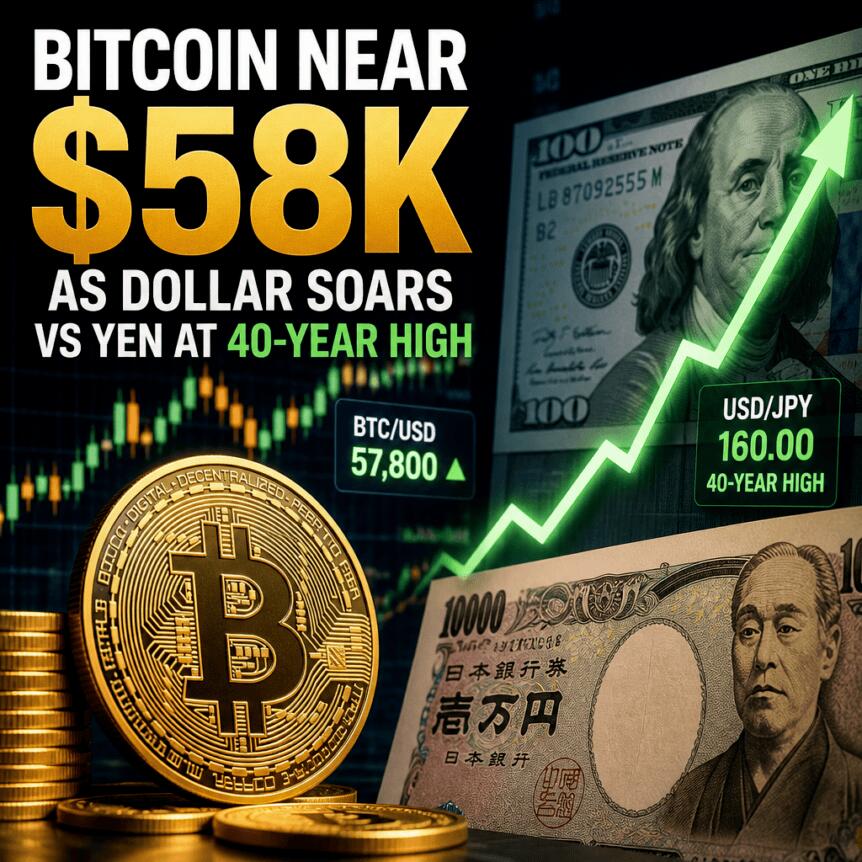
Bitcoin slid toward the $58,000 area during the early Tuesday Wall Street session, extending a broader risk-off feel that has left crypto lagging behind equities into the quarter’s final stretch. With traders heading into a “quarterly close” backdrop, BTC’s weakness stood out as US stocks logged strong gains for Q2.
At the same time, macro pressures tied to a firmer US dollar and renewed attention on Japan’s currency policy risk added another layer of uncertainty for crypto traders. On-chain signals from CryptoQuant also pointed to growing sell-pressure from investors associated with prior cycle highs, reinforcing the idea that hands are being shaken as price compresses.
Key takeaways
- Bitcoin fell toward about $58,000 during the US open, with volatility picking up into the session.
- US equities reported strong Q2 momentum while BTC continued to underperform, with Q2 losses approaching the high teens.
- A multi-decade USD/JPY move toward the mid-160s raised the odds of Japanese intervention and added pressure to risk assets.
- CryptoQuant analysis highlighted exchange inflows dominated by coins last moved around cycle-high periods, consistent with capitulation among late-cycle buyers.
Volatility rises as Bitcoin struggles to hold key levels
TradingView price action captured a shift toward bearish control as the US session began. Commentators noted that with $60,000 looking increasingly fragile as support, the market’s short-term “bulls vs. bears” battle remained active—particularly on lower time frames.
Exitpump, referencing open interest and positioning changes, suggested that the market could accelerate: “Open Interest pumping… it’s about to get spicy,” according to a fresh X post. Other traders described the price action as compressed, with BTC consolidating in a relatively narrow range and marginally higher lows alongside equal highs.
That type of structure can matter because it often sets up sharp directional moves when liquidity thins. As Daan Crypto Trades argued, the next breakout could arrive quickly after the consolidation tightens further. For short-term participants, the practical takeaway is that the range itself may be less important than what happens when it finally breaks—especially with volatility increasing into the session.
Crypto diverges from stocks as Q2 performance gaps widen
Bitcoin’s slide gained context when compared with US market performance. According to The Kobeissi Letter, the S&P 500 was up about 14% for the quarter—its best showing since 2020—while the Nasdaq 100 was up roughly 25%, also described as on track for its strongest quarterly performance in about five years.
That kind of divergence matters because it challenges a simple “crypto follows stocks” narrative. Even as equities absorbed risk positively into Q2, BTC remained under pressure. For investors, this gap suggests that crypto may currently be reacting more to its own internal liquidity/positioning dynamics and macro cross-asset stress—rather than simply mirroring equity beta.
Dollar strength and yen policy risk re-enter the trade
Macro conditions added a notable headwind. The US dollar pushed to new multi-decade highs versus the Japanese yen, raising the probability of government action—an issue traders often watch closely because intervention expectations can influence carry trades and global liquidity conditions.
In the reporting cited by Cointelegraph, USD/JPY reached 162.50 on the day, the highest level since the mid-1980s. The level is important not just as a data point, but as a proxy for how quickly currency volatility can transmit into broader risk sentiment—including markets where leverage is common.
Analyst George Gammon framed it in terms of “dollar liabilities” and the need to source dollars, warning that selling assets for dollar liquidity can place downward pressure on a range of holdings—from local currency exposures to speculative assets like Bitcoin. While that’s a general macro argument rather than a direct forecast, it aligns with why currency stress can quickly change the tone for crypto traders.
On-chain data points to capitulation pressure from late-cycle buyers
Beyond price charts, CryptoQuant’s latest work warned of a renewed capitulation dynamic among Bitcoin investors associated with cycle-top entries. In a new research Quicktake published by CryptoQuant, the platform argued that exchange inflows have been rising notably at sub-$70,000 price levels.
Crypto Sunmoon, a contributor to the Quicktake, noted that the coins moving into exchanges appear to be held for roughly six to twelve months—an age band often linked with accumulation during earlier bull phases, including portions of late-cycle buying near prior highs. The core claim was that “cycle-top buyers” are now selling at a loss, with the observed exchange flow pattern matching capitulation behavior.
CryptoQuant’s framing emphasizes not only the existence of selling, but the composition of it. When exchange inflows are skewed toward coin lots that last moved around all-time-high periods, it can indicate investors who bought during the mania phase are exiting during the drawdown. The report added that these capitulation events among cycle-top investors have historically coincided with long-term bottom formation, citing patterns seen in both the 2018 and 2022 cycles.
Importantly, CryptoQuant did not claim an immediate bottom is guaranteed—capitulation can occur over multiple stages. Still, the on-chain angle provides traders and longer-term holders with a clearer map of who may be selling (and why). If the inflows represent forced or loss-driven exit rather than fresh liquidation from new entrants, the market may be closer to a “supply digestion” phase than it would be if only new buyers were being squeezed.
As of this report, the data suggests investors are beginning to reduce exposure rather than fully capitulating through a one-off event. That nuance matters: steady distribution can keep price capped, while concentrated capitulation sometimes clears the way for a more durable reversal later.
Going forward, traders will likely watch two things closely: whether BTC breaks out of its compressed range on accelerating volatility, and whether exchange inflows tied to those late-cycle coin cohorts continue to rise or begin to fade. Until either the chart structure resolves or on-chain selling pressure stabilizes, the risk of further downside volatility remains high.



Investment firm Spiko has integrated Coinbase’s stablecoin payment infrastructure into two regulated EU Treasury-bill funds, allowing eligible investors to fund subscriptions and receive redemption proceeds using USDC and EURC.
Coinbase said Tuesday the integration covers Spiko’s EU T-Bills Money Market Fund and US T-Bills Money Market Fund. Both are structured as Undertakings for Collective Investment in Transferable Securities, or UCITS. Coinbase Payments will provide the payment, wallet and application programming interface (API) infrastructure, with the transactions settling on Base, Coinbase’s layer-2 network.
The exchange said the products are the first UCITS funds in Europe to accept direct stablecoin payments.
The move into UCITS funds comes as net sales of the assets rebounded in April, the latest data from trade group EFAMA showed on Monday. UCITS saw net inflows of 104 billion euros that month, compared to net outflows of 41 billion euros in March. Net sales reached a new record in 2025, totaling 828 billion euros and surpassing the previous 2021 high of 813 billion euros.
Tokenized funds push toward 24/7 utility
Coinbase described the integration as an example of how stablecoins could reshape payments infrastructure for mutual funds by removing bottlenecks for investors as they enter and exit a product. It positions stablecoins as settlement infrastructure, connecting onchain capital with regulated investment funds.
Investors can submit subscriptions at any time, including weekends and holidays. At the same time, redemption proceeds can be delivered to a stablecoin wallet within minutes after a position is liquidated.
Despite this, round-the-clock stablecoin transfers do not necessarily mean that the underlying fund continuously processes subscriptions and redemptions. Spiko said the Coinbase integration introduces a new payment method rather than changing the funds themselves.
Cointelegraph reached out to Coinbase for more information on order execution, but did not receive a response before publication.
Related: Coinbase, Kraken and OKX move to swoop up EU users affected by MiCA restrictions
Other asset managers have tested ways to provide 24/7 access to tokenized funds. In February, WisdomTree received approval for round-the-clock secondary trading and instant USDC settlement of its tokenized Treasury fund, with liquidity supplied by its broker-dealer while primary fund processes remained unchanged.
Tokenized money market funds are also increasingly being used as infrastructure beyond subscriptions and redemptions. In February, Franklin Templeton and Binance introduced a program allowing institutions to pledge tokenized fund shares as off-exchange trading collateral while the assets remain in regulated custody
Magazine: China’s 107 Bitcoin memory thief, Bithumb CEO booked: Asia Express


Taiwan has passed its Virtual Asset Service Act, giving crypto exchanges and stablecoin issuers a clear licensing path after years of legal uncertainty.
Summary
- Taiwan’s new crypto law requires exchanges and other virtual asset firms to obtain FSC licenses.
- Stablecoin issuers must secure central bank and FSC approval while keeping full reserve backing.
- Existing registered crypto firms get a transition period before the new licensing system fully applies.
Taiwan’s Legislative Yuan passed the Virtual Asset Service Act in its third reading on June 30, sending the bill to President Lai Ching-te for the next step. The Financial Supervisory Commission said the law moves Taiwan’s crypto oversight from anti-money laundering registration to wider supervision of operations, market order and customer protection.
The act creates rules for seven types of virtual asset service providers, including exchanges, trading platforms, transfer firms, custodians, underwriters and lending service providers. The law covers internal controls, cybersecurity, asset listing reviews, customer asset segregation, outsourcing, civil liability and financial reporting, according to the FSC statement.
Taiwan sets new licensing rules for crypto firms
Under the new law, crypto businesses must obtain approval from the FSC before operating. Existing firms that already completed anti-money laundering registration before the law takes effect will have 12 months to apply for approval and 21 months to obtain the required license, according to the FSC.
The law also gives firms a limited buffer if more time is needed. The FSC said the transition period may be extended by three months, but only once. Firms that fail to complete the process by the deadline will not be allowed to continue virtual asset business in Taiwan.
Stablecoins get central bank role
Stablecoin issuers will need approval from both Taiwan’s central bank and the FSC before issuing tokens in the country. The law requires issuers to maintain full reserve assets, place reserves in trust and carry out regular audits and public disclosures, according to the FSC.
As previously reported by crypto.news, Taiwan’s FSC had earlier planned a draft law that would allow local banks to issue stablecoins tied to the New Taiwan dollar. That plan gave the central bank a role in stablecoin oversight and placed local stablecoin approval under the FSC.
The final law also creates criminal penalties for unlicensed activity and market abuse. Focus Taiwan reported that illegal VASP operations or stablecoin issuance can bring up to seven years in prison and fines of up to NT$100 million, or about $3.14 million.
Fraud and market manipulation carry heavier penalties. Offenders can face three to 10 years in prison and fines from NT$10 million to NT$200 million, according to Focus Taiwan.
New rules end legal gray area
The law gives Taiwan’s crypto sector a formal legal base after a period where many businesses relied on anti-money laundering registration rather than a full license. The legislative document said the act aims to protect customers, support sector development and bring Taiwan closer to global standards used in markets such as the European Union, Japan and South Korea.
Moreover, the FSC released the draft Virtual Asset Service Act in March 2025 with licensing rules for crypto firms, stablecoin standards and investor protection measures. The new passage turns that draft direction into a law awaiting promulgation and an effective date from the cabinet.
Previously, crypto.news reported that Taiwan’s central bank and FSC were pushing tighter stablecoin rules while lawmakers debated the government’s seized crypto holdings. That earlier debate showed how digital assets had moved from a narrow compliance issue into a wider policy topic in Taiwan.
The FSC said it will continue drafting authorized sub-rules and will consult industry groups and other stakeholders. The next stage will decide how licensing standards, personnel rules, internal controls and stablecoin procedures work in practice.
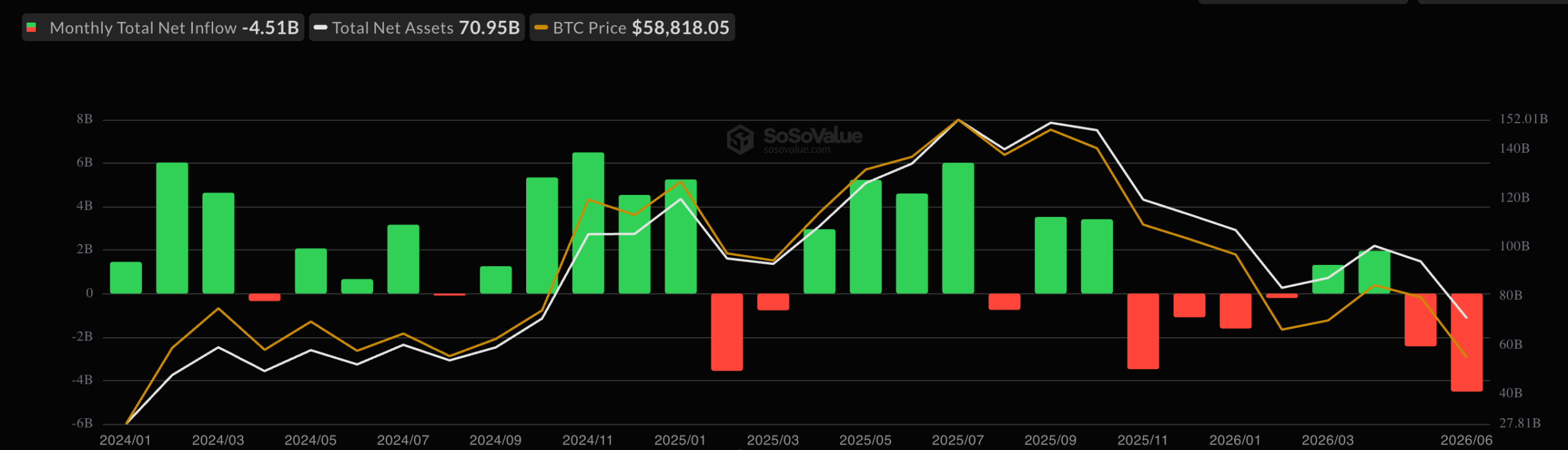
US-listed Bitcoin (BTC) exchange-traded funds (ETFs) recorded $4.5 billion in net outflows during June 2026. This was the worst monthly figure since the products launched in January 2024.
The redemptions coincided with a sharp price decline. Bitcoin fell 20.48% over the month, its steepest monthly drop since June 2022, when the asset shed 37.28% during that cycle’s collapse.
IBIT Leads the Institutional Retreat
June’s outflows broke the previous monthly record of $3.56 billion, set in February 2025 during an earlier stretch of market stress.
Follow us on X to get the latest news as it happens

BlackRock’s iShares Bitcoin Trust (IBIT) accounted for the bulk of the outflows. The fund alone shed $3.55 billion, close to 79% of the category’s total redemptions.
That concentration is striking. IBIT’s single-fund outflow nearly matched the entire category’s prior monthly record on its own.
The price data reinforces the pressure. Bitcoin closed four of 2026’s first six months in negative territory, with June’s 20.48% decline the deepest of the year.
How Crypto ETFs Performed in June 2026
The weakness extended beyond Bitcoin, though the scale varied across categories. Ethereum (ETH) ETFs posted $528.99 million in June outflows, SoSoValue data showed.
Solana (SOL) ETFs recorded net outflows of roughly $786,580. The figure is small, but it marks the first monthly outflow for Solana ETFs since their launch, ending a run of positive months.

Not every category turned negative. XRP (XRP) ETFs drew $59.46 million in net inflows during June, holding positive despite the broader downturn.
Hyperliquid (HYPE) ETFs led the group with $161.05 million in inflows, the strongest June showing across the products.
The split suggests capital rotated within crypto rather than exiting entirely. Newer altcoin products absorbed fresh money even as the two largest categories saw sustained redemptions.
Whether that rotation hardens will depend on how Bitcoin trades in July, since a price rebound could pull capital back toward the incumbents.
Subscribe to our YouTube channel to watch leaders and journalists provide expert insights
The post Bitcoin Spot ETFs Post Worst Month on Record With $4.5 Billion June Outflow appeared first on BeInCrypto.
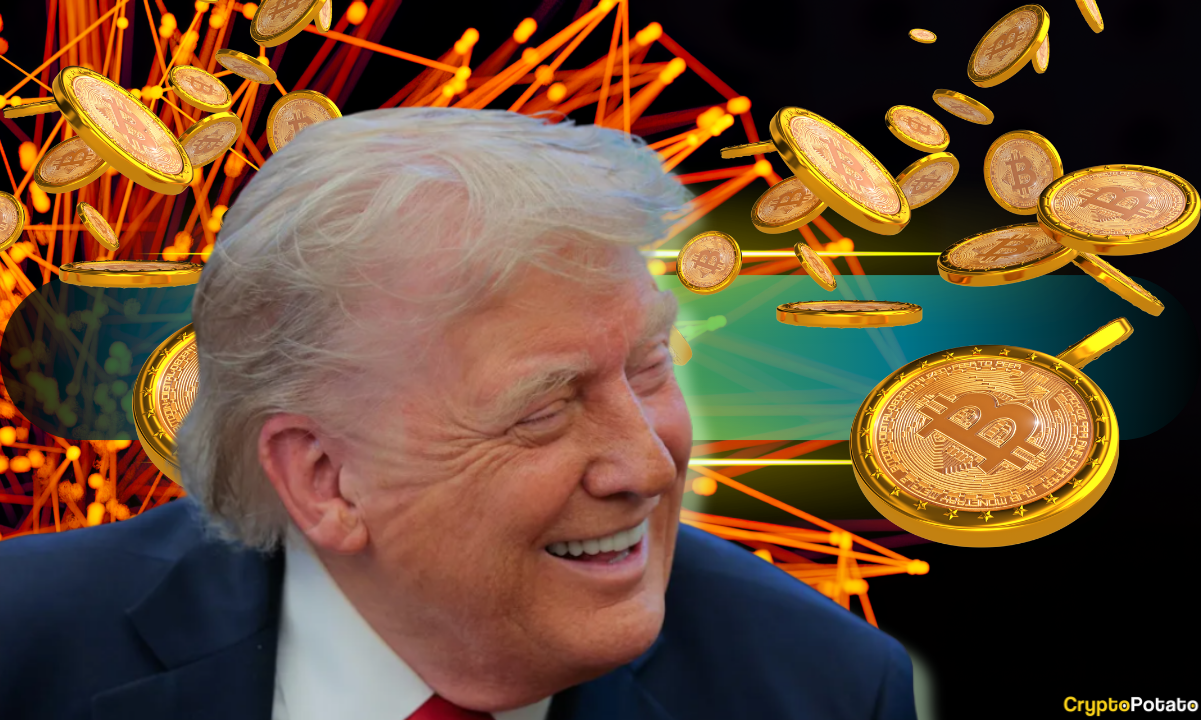
A newly released federal financial disclosure has revealed that US President Donald Trump holds more than $50 million worth of Bitcoin in a cold wallet.
According to a 927-page document released by the US Office of Government Ethics, the Bitcoin is held under CIC Digital LLC as a “Cryptocurrency Wallet Virtual Bitcoin Key (held in cold wallet)” and is worth “Over $50,000,000,” the highest reporting category available on the form. Because the disclosure does not require an exact figure above that threshold, the actual value of the BTC holdings could be higher.
Trump’s BTC Stash
The filing shows that the Bitcoin is held in the Donald J. Trump Revocable Trust, with Trump listed as the sole beneficiary. The trust also controls his stake in Trump Media & Technology Group, the parent company of Truth Social.
Interestingly, the BTC is stored in cold storage, meaning the private keys are kept offline rather than on internet-connected systems or with a third-party exchange, a setup widely used to reduce online security risks.
The filing shows that Bitcoin is only one part of the digital assets held by CIC Digital LLC.
It also lists an Ethereum wallet, which is worth between $5 million and $25 million, a staked Ethereum position through a Coinbase staking agreement that generated $510,808 in validator rewards, a USDC stablecoin holding worth between $5 million and $25 million, and a smaller dollar-denominated wallet.
Based on the reported valuation ranges, the combined disclosed value of the Bitcoin and Ethereum holdings alone stands above $100 million. The same disclosure also reveals the scale of Trump’s crypto-related earnings during the reporting period. It states that World Liberty Financial (WLFI) generated more than $500 million from the sale of governance tokens and other crypto products, while CIC Digital LLC generated more than $635 million from sales of Trump-branded meme coins launched shortly before his inauguration.
Overall, Trump’s crypto earnings exceeded $1 billion during his first year back in office.
White House Rejects Conflict Claims
The disclosure has drawn significant scrutiny, to which White House spokesperson Anna Kelly responded that neither Trump nor his family has engaged in, nor will they engage in, conflicts of interest. She added,
“All actions by President Trump and his administration are taken in the best interest of the American people – and any so-called ‘reporters’ pushing otherwise are recycling the same, tired, false narrative that Democrats and the legacy media have been pushing for a decade”
The post New Federal Data Reveals Donald Trump Holds $50 Million in Bitcoin in Cold Wallet appeared first on CryptoPotato.
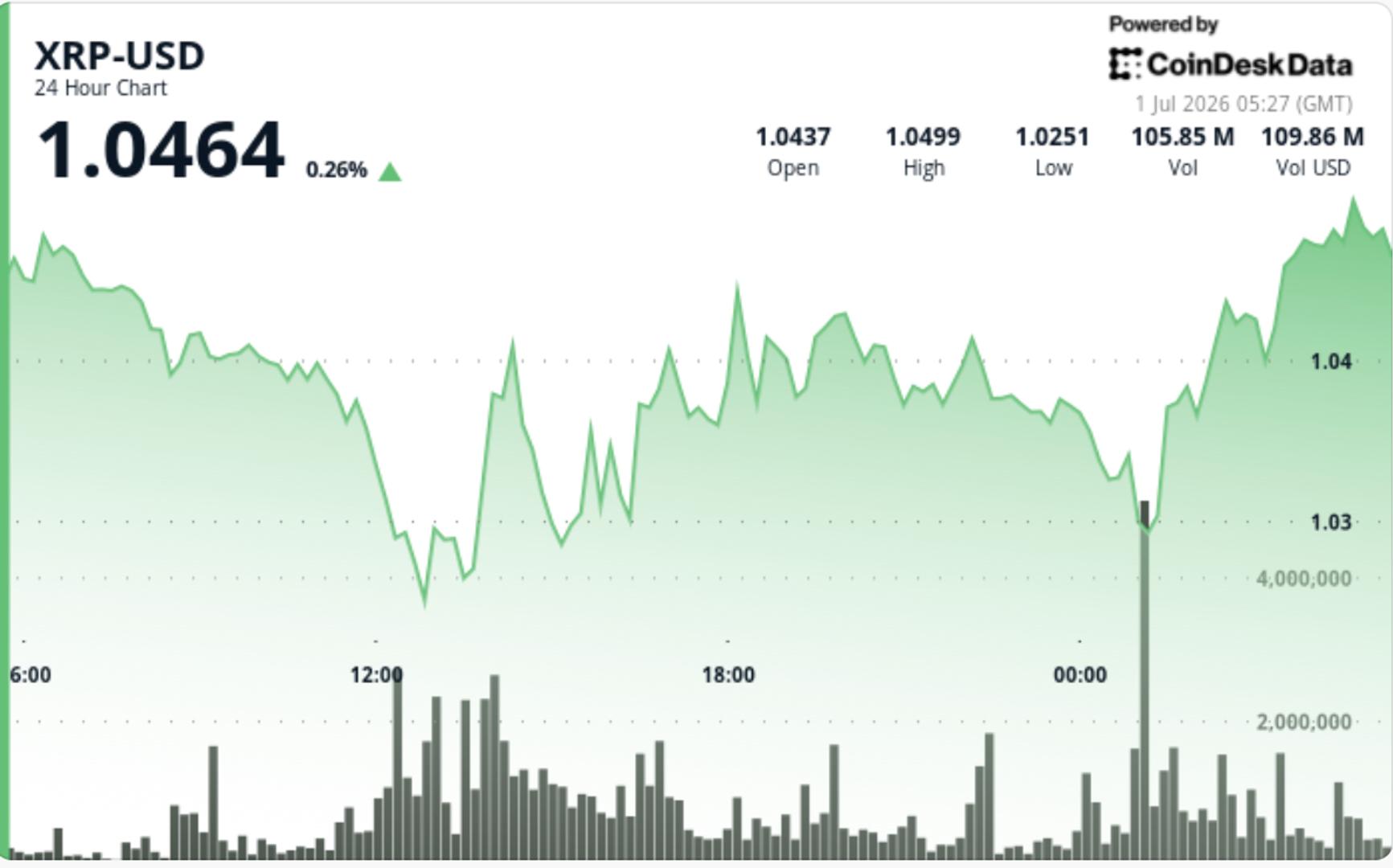
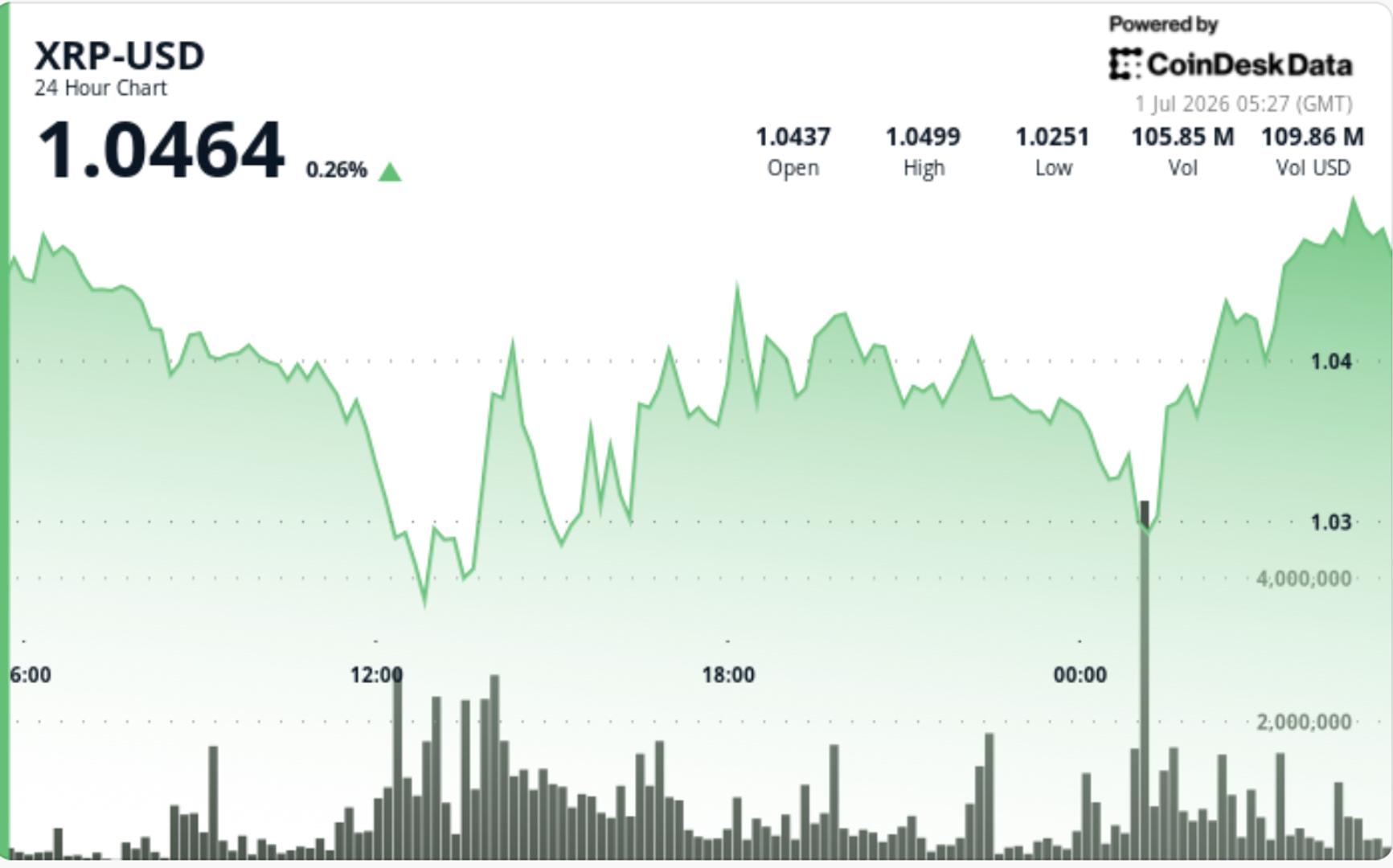
• Selling pressure broke support near $1.0350 during the June 30 session before XRP tested $1.0249 and stabilized.
• Buyers stepped in near the lows, with volume rising to 92.73 million XRP at 01:00 UTC, about 134% above the 24-hour average.
• A late rebound pushed XRP from $1.024 to $1.038, with volume spiking to 3.88 million during the break above $1.032 resistance.
Technical Analysis
• The key development is that XRP continues to defend the $1.00 area even as sentiment across crypto remains weak.
• The leverage reset improves the short-term setup. Open interest has collapsed, funding rates have turned negative and forced liquidations have cleared out crowded long positions.
• The bounce from $1.02 showed buyers are still active near support, but the move has not yet reclaimed the levels needed to shift momentum higher.
• XRP remains below major moving averages, with the 20-day EMA near $1.11, the 50-day near $1.20, the 100-day near $1.31 and the 200-day near $1.52.
• The 14-day RSI has recovered to about 33, showing selling pressure has eased, but momentum remains weak and below neutral levels.
• Bollinger Bands have narrowed after June’s selloff, pointing to lower volatility, but XRP still needs to reclaim the middle band near $1.12 to show a stronger recovery.
Zero-knowledge scaling company StarkWare has released a quantum-resistant roadmap for Starknet, arguing that other chains will remain exposed if the industry is “too stubborn or stupid” to act.
In an announcement on Tuesday, Starknet framed its three-phased quantum-resistant roadmap as evidence that the crypto industry has no excuse for remaining vulnerable to future quantum computing attacks.
“The tried-and-tested cryptography exists to secure every crypto key in the world, if necessary changes are made, and the only reason anyone will remain vulnerable is if heads remain buried in the sand,” said Eli Ben-Sasson, CEO at StarkWare.
Efforts to quantum-proof blockchains are accelerating as some researchers warn that quantum computing could outpace blockchain’s defenses and cryptographically relevant quantum machines could be ready before 2030.
The Bitcoin community remains divided on how to approach securing old coins against the quantum threat, while other networks are forging ahead with quantum roadmaps.
Ben-Sasson said Starknet can become resistant to quantum attacks by “seizing on its architecture advantage,” pointing to its zero-knowledge STARK (Scalable Transparent Argument of Knowledge) proofs, which are “inherently post-quantum safe.”
“There’s an awful irony in the notion that a young industry born from rejecting the way things have always been done is stalling and procrastinating about making changes for quantum security.”
Speaking to Cointelegraph, Ben-Sasson said that “we are currently in a position where the necessary cryptographic tools to secure our future actually exist.”
We aren’t waiting for a miracle invention; we have the solutions. It is legitimate for people to hesitate before taking on the human coordination required. That concern is real and valid. But the issue is that if we don’t address this, we will have missed the chance.
Related: Trump signs orders for quantum computer, cryptography upgrades
He added that crypto has an “elliptical illusion,” distorting reality around elliptic-curve cryptography, the current standard for securing blockchains.
Believing that this will be quantum resistant is “false confidence” that is leaving the industry “dangerously complacent,” he said.
“The migration paths we’re discussing are objectively difficult,” he said. “There are hard technical trade-offs, complex governance decisions, and a massive amount of human coordination involved. The changes needed are definitely not trivial, and I fully acknowledge the scale of the task ahead.”
“The crypto industry shouldn’t need wake-up calls from the White House or anyone else. We should all be acting and seizing on the best cryptography that exists.”
Starknet’s three-phase roadmap
The first phase involves swapping out some of its current security math (Pedersen hashing) for quantum-resistant versions and adding quantum-resistant signatures.
Phase two focuses on migration tooling that quietly upgrades existing smart contracts to the new quantum-safe standard, without forcing developers to manually rebuild apps.
Phase three covers dependencies that Starknet cannot resolve alone, which largely depend on Ethereum’s quantum upgrade roadmap.
Circle, Ethereum, Solana, Tezos and Algorand have all proposed quantum-proof roadmaps, while the Bitcoin community remains at loggerheads.
Magazine: Bitcoin slides to $58K, XRP hits $1 but onchain data promising: Market Moves
Crypto World
Taiwan passes key crypto law, raising the bar with with licensing, reserve mandates, and tough penalties


Taiwan has taken a major step forward in overseeing its digital asset sector by enacting comprehensive new regulations for cryptocurrency operations.
On Tuesday, lawmakers in the Legislative Yuan approved the Virtual Asset Service Act during its third reading, forwarding it to President Lai Ching-te for formal signing, which is anticipated within the next ten days.
Once signed, the Executive Yuan will set the official start date for the rules.
The legislation requires all virtual asset service providers, including cryptocurrency exchanges and platforms, to secure explicit licensing from the Financial Supervisory Commission (FSC) before they can legally operate in the country.
It also brings in tougher standards around cybersecurity protections, keeping customer funds separate from company assets, and strengthening internal governance and risk management.
Platforms that are already registered for anti-money laundering compliance will receive a 12-month grace period to submit license applications and up to 21 months in total to obtain full FSC approval and any other required permits. Until now, crypto businesses operating in Taiwan only needed to register for anti-money laundering compliance.

Wedbush initiated coverage of SpaceX (SPCX) with an Outperform rating and a $190 price target. The firm called SpaceX an artificial intelligence infrastructure play, not a traditional space business.
Wedbush’s Global Head of Tech Research, Dan Ives, made the case on CNBC’s Fast Money. He argued SpaceX’s AI compute business could make it one of the market’s top long-term hyperscaler bets.
Ives Builds His SpaceX Bull Case
The $190 target implies about an 11% upside from SPCX’s close on Tuesday at $170.86. Wedbush values SpaceX with a sum of the parts model. AI compute forms a major piece of that long-term thesis.
“It’s much more of an AI play, and that’s our whole view from a data perspective.”
Dan Ives, CNBC
Ives admitted the stock looks expensive against current revenue. He said execution over the next two to three years could make SpaceX one of the market’s best AI plays.
SpaceX is heading toward Nasdaq 100 inclusion. Shares recently tested a critical support level after the company’s record IPO. A later bond sale prompted some bubble warnings.
Starlink Still Anchors the SpaceX Bull Case
Starlink remains SpaceX’s real engine. The satellite broadband unit brought in roughly $11.4 billion in revenue last year, about 61% of the company’s total, and turned a solid operating profit even as SpaceX posted a net loss overall.
Wedbush’s $190 target leans heavily on Starlink’s recurring subscriber revenue and expanding margins, with the launch business and the newer AI unit layered on top.
Launch is the strategic moat, not the profit driver. Falcon 9 dominates the global launch market, and Starship aims to cut costs further by carrying more satellites per flight. But the segment brings in far less revenue than Starlink, and most of its launches simply deploy SpaceX’s own satellites rather than generate outside sales.
That breakdown is why investors are watching Starlink’s subscriber growth and margins so closely. If that business keeps scaling, it can carry a large share of SpaceX’s valuation on its own, with AI infrastructure adding upside rather than shouldering the entire bull case.
The post SpaceX Is ‘Much More Of An AI Play,’ Wedbush’s Dan Ives Says appeared first on BeInCrypto.


A community takeover, or CTO, is when the holders of an abandoned token band together and run it themselves after the original developer walks away. It is one of the defining rituals of Solana memecoin culture. Here is how a CTO works, why most fail, and what separates the rare survivor from the rest.
Summary
- A community takeover (CTO) is when the holders or broader community of a token take over running it, marketing, socials, and coordination, after the original developers abandon the project, walk away, or lose credibility.
- CTOs are most common with Solana memecoins, where tokens are fully liquid from launch, so the token keeps trading on a decentralized exchange even after the creator leaves.
- The mechanics involve the community seizing the social accounts, organizing on Telegram and X, sometimes getting listing trackers to relabel the token as a CTO, and rallying new marketing and momentum.
- The appeal is an underdog, level-playing-field narrative: with the original developer gone and no insider advantage, holders feel they finally own the project outright.
- The hard reality is that most CTOs fail and the token stays near zero, because a new logo and a Telegram group do not create real demand, and the same speculative dynamics that sank the project remain.
A community takeover, almost always shortened to CTO, is what happens when the people who hold a token decide to take over and run the project themselves after its original developers abandon it, walk away, or lose the community’s trust. It is one of the most distinctive rituals of memecoin culture, particularly on Solana, where the fast, cheap, fully liquid nature of token launches makes both abandonment and revival routine events. In a typical CTO, the founding developer of a memecoin disappears, sells their holdings, or is exposed as untrustworthy, and the token, which would normally just collapse to nothing, instead gets a second life when a group of remaining holders bands together to keep it alive.
They take over the project’s social media accounts, organize themselves in group chats, raise money for marketing, and try to generate fresh momentum around a token that technically has no team behind it anymore. The contract on the blockchain stays the same; what changes is who is steering the narrative and the community around it. The holders, in effect, seize the wheel of a car the driver has jumped out of.
Understanding the CTO is essential to understanding how the memecoin trenches actually work, because abandonment and revival are not edge cases there but core features of the landscape. This guide explains what a community takeover is and why it is possible at all, the mechanics of how a CTO unfolds step by step, why these takeovers happen so often on Solana specifically, a worked example tracing a typical CTO from abandonment to revival attempt, what separates the rare CTO that succeeds from the many that fail, and an honest look at why most CTOs go to zero and how to think about the risks.
The aim is to give you a clear and unromantic picture of a phenomenon that memecoin culture often wraps in heroic, underdog language, because the narrative of a community heroically rescuing an abandoned token is emotionally powerful and frequently used to draw in buyers, and the reality is far more sobering than the story.
This is educational material, not investment advice, and the memecoin environment it describes is among the riskiest corners of crypto.
What a CTO is and why it is possible
Start with why a community takeover can happen at all, because the answer reveals something fundamental about how memecoins are structured. When a memecoin launches on a platform like those common on Solana, the token is created with its liquidity placed in a pool on a decentralized exchange, which means the token can be bought and sold by anyone the moment it exists, with no central party required to keep the market running. The developer who launched it does not control the trading; the market lives on-chain, in a liquidity pool that functions independently of whether the creator is still involved.
This is the structural fact that makes a CTO possible. Even if the original developer completely abandons the project, sells everything, and deletes the social accounts, the token itself keeps existing on the blockchain and keeps trading on the exchange, because the liquidity pool and the contract do not depend on the creator’s presence. The project as a social and marketing entity may be dead, but the token as a tradable asset survives.
This separation between the token and its creator is what gives the community something to take over. In traditional contexts, if a company’s founders walk away, the company often simply ceases to function. But a memecoin is not a company; it is a freely trading token with a community attached, and the community can continue even when the founder does not. A community takeover is the act of that community formally adopting the orphaned token, declaring that they will now run the things the developer used to run, the social media presence, the marketing, the coordination, the narrative, and attempting to carry the project forward on collective effort alone.
Crucially, a CTO does not change the underlying token or its contract; the holders cannot rewrite the code or mint themselves new control. What they take over is everything around the token: the story, the channels, the momentum. The token is the same; the stewardship is new. This is why a CTO is sometimes described as the community inheriting a project rather than acquiring it, they take possession of an asset that was left behind, with all its existing properties intact, good and bad.
How a CTO unfolds
The mechanics of a community takeover follow a recognizable sequence, even though the details vary from case to case. It begins with the trigger: the original developer abandons the project. This can take several forms. The developer might pull the liquidity or sell their entire holding in a rug pull, crashing the price and signaling they have given up; they might quietly disappear, going silent on social media and ceasing all activity; or they might be exposed as having acted in bad faith, destroying the community’s trust even if they have not formally left. Whatever the form, the result is a token with no active team, a collapsed or collapsing price, and a community of holders sitting on losses and a decision: walk away, or try to save it.
If enough holders choose to try, the takeover organizes itself. A core group, often the most committed remaining holders, coordinates through group chats on Telegram and through posts on X, rallying the community around the idea of continuing without the developer. They take over or recreate the social media accounts, establishing new official channels under community control, since the original accounts may have been deleted or abandoned.
They frequently seek to have the token’s listing on price-tracking sites relabeled to reflect the takeover, since major trackers have processes for marking a token as community-run when the original team is gone, which updates the project’s public information to point at the new community channels. The community then tries to do the work a team would normally do: organizing marketing pushes, raising funds for promotion, sometimes coordinating to provide or lock liquidity, and generating social momentum to attract new buyers.
In the best cases, the community also pushes for transparency about who is now leading and takes steps to reassure potential buyers, such as confirming that the liquidity is locked or burned so it cannot be pulled again. The whole effort is a bet that collective enthusiasm can substitute for a founding team and breathe new life into a token the market had written off.
Why CTOs happen so often on Solana
Community takeovers are not unique to Solana, but they are far more common there than anywhere else, and the reasons are structural to how the Solana memecoin ecosystem works. The first reason is the sheer volume of memecoin launches. Solana’s low fees and fast transactions, combined with launch platforms that make creating a token nearly effortless, have produced an enormous number of memecoins, far more than could ever succeed, which means abandonment is constant and the raw material for CTOs, orphaned tokens, is abundant.
Where thousands of tokens launch and the overwhelming majority fail or are abandoned, there is a steady supply of projects a community could potentially take over. The second reason is that Solana memecoins are fully liquid from day one, trading freely on decentralized exchanges, so an abandoned token does not vanish; it keeps trading, which is the precondition for any takeover.
The third reason is cultural and narrative. The Solana memecoin scene has developed a powerful underdog mythology around the CTO, in which a community rescuing a token abandoned by a faithless developer is framed as a triumph of the people over insiders. This narrative has real emotional force in a market where traders are acutely aware that many tokens are stacked in favor of developers and early insiders. When the developer leaves, the community feels it is finally operating on a level playing field, with no insider dumping on them and no hidden team allocation, just the holders and the token.
That underdog framing, the sense of a genuine community reclaiming something and proving the doubters wrong, turns a failed launch into a movement, at least in the storytelling, and movements attract attention and buyers. The combination of constant abandonment, full liquidity, and a culture that celebrates the takeover as a heroic act makes Solana uniquely fertile ground for CTOs. It is worth being clear-eyed that this same narrative is also a marketing device, deployed precisely because it is effective at drawing in new money, which is part of why the romance of the CTO deserves scrutiny rather than acceptance.
A worked example
Trace a representative case to see how a CTO actually plays out, using an illustrative example rather than any specific real token. Picture a memecoin that launches with an appealing theme and a charismatic developer who builds an early community. The token runs up quickly as buyers pile in, reaching a meaningful market value within days. Then the developer, having accumulated a large position at launch, sells their entire holding into the buying, crashing the price by most of its value in minutes, and goes silent, deleting the project’s social accounts. The remaining holders are left with a token that has lost the vast majority of its value, no team, and no official channels. By the normal logic of memecoins, this token is dead, and most would simply go to zero from here.
But a group of holders decides to attempt a community takeover. They form a new Telegram group, recreate the project’s presence on X under community control, and begin coordinating. They publicize that the original developer is gone and frame the situation as an opportunity: the insider who was dumping on everyone has left, the liquidity that remains is now locked so it cannot be pulled again, and the token is in the hands of the community. They petition the major price-tracking sites to relabel the token as a community takeover, updating its public listing to point at the new channels.
They organize a marketing push, pooling funds to pay for promotion and rallying members to post about the revival. For a while, this can work: the CTO narrative attracts fresh attention, new buyers come in drawn by the underdog story and the apparent absence of an insider threat, and the token’s price recovers some ground on the renewed momentum. Whether this recovery lasts is the crucial question, and in the great majority of cases it does not, because, as the next section explains, enthusiasm and a new logo do not generate the durable demand a token needs to hold value. The example shows the mechanism clearly; it does not imply the mechanism usually succeeds.
What separates a rare success from the many failures
Among the flood of community takeovers, a small number achieve a real and lasting revival while most fade, and the differences between them, though they do not guarantee anything, are instructive. The first factor is transparent and credible new leadership. A CTO led by identifiable, communicative people who articulate a clear plan and follow through tends to fare better than one run anonymously with vague promises, because trust is the scarce resource in a project that has already betrayed its community once.
The second factor is the state of the liquidity. A takeover where the remaining liquidity is verifiably locked or burned, so it cannot be pulled out from under buyers again, removes one of the biggest risks and gives new participants a reason to believe the rug cannot happen twice. Checking whether liquidity-provider tokens have been burned or locked is one of the most important pieces of due diligence in any CTO.
The third factor is the distribution of holdings. A CTO where the token supply is spread across many holders is healthier than one where a few large wallets dominate, because concentrated holdings mean a small number of people can crash the price by selling, recreating the very dynamic the takeover was supposed to escape. A diversified holder base gives a revival a more stable foundation. The fourth factor, the hardest and least common, is genuine sustained effort and some reason for the token to attract ongoing attention, real marketing, real community activity, sometimes an attempt to build something beyond pure speculation.
Even with all of these factors present, success is rare, and it is essential to understand that these are markers that improve the odds at the margin, not formulas that produce a winner. The base rate is failure. The point of knowing the success factors is not to identify guaranteed revivals, which do not exist, but to recognize the warning signs in their absence: anonymous leadership, unlocked liquidity, and concentrated holdings are signals that a CTO is especially likely to fail, and their presence should make anyone considering participation far more cautious. The factors are a filter for avoiding the worst, not a recipe for finding the best.
The hard truth about CTOs and how to think about the risk
The unromantic reality, which the heroic CTO narrative tends to obscure, is that the overwhelming majority of community takeovers fail, and the token settles at or near zero regardless of the community’s effort. This is not a cynical exaggeration but the base rate of the phenomenon, and understanding why is essential. A community takeover changes the stewardship of a token, but it does not change the fundamental problem that sank the project in the first place: a memecoin has no inherent product, revenue, or utility, and its price depends entirely on continued speculative demand.
A new Telegram group, a recovered social account, and a wave of marketing can generate a burst of renewed attention, but attention is not the same as durable demand, and once the initial CTO excitement fades, the token is left exactly where it was, a speculative asset with nothing underneath it, now without even the novelty of a fresh launch. The community can work tirelessly and still fail, because the thing they are trying to revive never had a foundation to stand on.
Compounding this, the same dynamics that make memecoins dangerous in the first place persist through a takeover. The people coordinating a CTO are often the same speculators who bought in originally, with the same incentives to sell into any strength, so a price recovery driven by the CTO narrative can itself become an exit opportunity for early holders at the expense of the new buyers the narrative attracted. The underdog story that draws fresh money into a CTO is, viewed coldly, sometimes a mechanism for transferring losses from the people who held through the crash to the people who buy the revival. There are also coordination and trust problems inherent in running anything by committee with anonymous participants and no formal structure.
For anyone weighing involvement in a CTO, the honest framework is this: treat it as among the highest-risk activities in crypto, assume the base rate is failure, do the specific due diligence that can at least rule out the worst cases, checking that liquidity is locked or burned, researching who is now leading, examining whether holdings are concentrated, and never commit money you cannot afford to lose entirely, because losing it entirely is the most common outcome. The CTO is a real and fascinating feature of memecoin culture, and it occasionally produces a genuine revival, but it is a casino bet dressed in the language of community heroism, and seeing it clearly means holding both the appeal and the brutal odds in view at once.
Frequently Asked Questions
What does CTO mean in crypto?
CTO stands for community takeover. It refers to a situation where the holders or broader community of a token take over running the project after its original developers abandon it, walk away, or lose the community’s trust. The community assumes the roles a team would normally fill, controlling the social media accounts, organizing marketing, coordinating through group chats, and trying to generate fresh momentum, even though there is no longer an official team behind the token. CTOs are most common with memecoins, especially on Solana, where tokens trade freely on decentralized exchanges and so keep existing even after the creator leaves. A CTO changes who steers the project’s narrative and community, but it does not change the underlying token or its contract.
How does a community takeover work?
It usually starts when the original developer abandons the project, by selling out in a rug pull, going silent, or being exposed as untrustworthy, leaving a token with a collapsed price and no team. A core group of committed holders then coordinates, typically through Telegram and X, to keep the token alive. They take over or recreate the social accounts under community control, often get price-tracking sites to relabel the token as a community takeover, and organize marketing and fundraising to attract new attention. They may also confirm that the remaining liquidity is locked or burned to reassure buyers. The goal is to substitute collective community effort for the missing team and revive a token the market had written off. The token’s code itself does not change.
Why do community takeovers happen on Solana?
Three structural reasons. First, Solana’s low fees and easy launch platforms have produced an enormous volume of memecoins, the vast majority of which fail or are abandoned, creating a constant supply of orphaned tokens that communities could take over. Second, Solana memecoins are fully liquid from launch, trading on decentralized exchanges, so an abandoned token keeps trading instead of vanishing, which is the precondition for any takeover. Third, the culture has built a powerful underdog narrative around the CTO, framing a community rescuing an abandoned token as a triumph over faithless insiders, which has emotional force and attracts attention. The combination of abundant abandonment, full liquidity, and a celebratory culture makes Solana uniquely fertile ground for community takeovers.
Do community takeovers succeed?
Rarely. The overwhelming majority of CTOs fail, and the token settles at or near zero despite the community’s effort. The reason is that a takeover changes who runs the project but not the underlying problem: a memecoin has no inherent product, revenue, or utility, and depends entirely on speculative demand. A new social account and a marketing push can create a burst of attention, but attention is not durable demand, and once the excitement fades the token is left as a speculative asset with nothing underneath it. A small number of CTOs do achieve real revivals, usually those with transparent leadership, locked or burned liquidity, and a diversified holder base, but these are exceptions. The base rate is failure.
How can I tell if a CTO is legitimate?
There is no way to be certain, but several checks can rule out the worst cases. First, examine the new leadership: transparent, identifiable, communicative people with a clear plan are a better sign than anonymous accounts making vague promises, because the project has already betrayed its community once. Second, verify the liquidity: check whether the liquidity-provider tokens have been burned or locked, which prevents another rug pull and is one of the most important pieces of due diligence. Third, look at the holder distribution: a supply spread across many wallets is healthier than one where a few large holders could crash the price. These checks improve your odds of avoiding disasters, but they cannot identify a guaranteed winner, because most CTOs fail regardless.
Is buying into a CTO a good investment?
It is among the highest-risk activities in crypto, and this is not investment advice. The honest framework is to assume the base rate is failure, because most community takeovers end with the token near zero. The underdog narrative that draws money into a CTO can itself be a mechanism for early holders to exit at the expense of new buyers, transferring losses to the people the story attracted. The same speculative dynamics and trust problems that sank the original project usually persist. If you choose to participate anyway, do the due diligence that can rule out the worst cases, locked or burned liquidity, transparent leadership, diversified holdings, and never commit money you cannot afford to lose entirely, because total loss is the most common outcome.
This article is educational information, not financial or investment advice. Memecoins and community takeovers are among the highest-risk activities in crypto, and most result in total loss. Examples are illustrative and not references to specific tokens. Nothing here is a recommendation to buy or participate in any project. Do your own research and never risk money you cannot afford to lose.
A Manhattan federal judge sentenced Carl Erik Rinsch to 30 months in prison in an $11 million fraud case tied to an unfinished Netflix science-fiction series.
Summary
- Rinsch got 30 months after prosecutors said Netflix production funds fueled crypto and luxury spending.
- His Dogecoin trade reportedly turned about $4 million into $27 million before the case widened.
- Prosecutors sought five years, but the court imposed prison, supervised release, forfeiture and mandatory assessments.
According to the U.S. Attorney’s Office for the Southern District of New York, Rinsch was also sentenced to three years of supervised release, $11 million in forfeiture and $700 in mandatory special assessments.
Rinsch, known for directing the 2013 film “47 Ronin,” was convicted in December 2025 after a one-week trial. The case centered on funds he received to complete a streaming series called “White Horse,” which was later renamed “Conquest,” according to federal prosecutors and court records.
U.S. Attorney Jay Clayton said Rinsch sought $11 million from a subscription streaming service by falsely claiming the money would be used to finance the television show he was creating.
“Instead of using the money to make the show, Rinsch made risky bets on highly speculative stock options and cryptocurrency, and spent millions of dollars on luxury goods for himself,” said Clayton.
Production money moved into trading
Federal prosecutors said the streaming company had already paid Rinsch about $44 million between 2018 and 2019 before sending another $11 million in March 2020. The added funds were meant to complete the show, but prosecutors said Rinsch moved the money through several accounts and into a personal brokerage account.
According to the original indictment, Rinsch used the funds to trade stock options and lost more than half of the $11 million in less than two months. Prosecutors said he placed trades tied to pharmaceutical companies and the S&P 500 before moving remaining funds into cryptocurrency.
The government said Rinsch later used the money for personal expenses and luxury goods. The spending included credit card bills, legal fees, furniture, antiques, mattresses, watches, clothes, five Rolls-Royces and a Ferrari, according to the case filings.
Dogecoin profit did not end the case
As previously reported by crypto.news, Rinsch was arrested in March 2025 after prosecutors accused him of using Netflix production funds for crypto and stock bets. The case named the company as “Streaming Company-1,” but several reports identified it as Netflix.
Previously, crypto.news reported that Rinsch allegedly turned about $4 million in Dogecoin into roughly $27 million. Prosecutors said the crypto gains did not change the source of the funds, which had been provided for production work.
The Dogecoin trade became one of the most watched parts of the case. However, the court focused on whether Rinsch obtained the extra production money through false claims and used it outside the agreed purpose. Rinsch never finished the show or returned the added funds.
Prosecutors sought five years
Rinsch was convicted of one count of wire fraud, one count of money laundering and five counts of engaging in monetary transactions in property derived from unlawful activity. Wire fraud and money laundering each carried a maximum sentence of 20 years in prison, while the five other counts each carried a maximum of 10 years.
Prosecutors asked the court to sentence Rinsch to five years in prison, according to sentencing filings. His defense sought a sentence without prison time and argued that he had mental health issues, with friends and family writing to the court about changes in his behavior.
Actor Keanu Reeves, who starred in “47 Ronin,” also wrote to the court in support of Rinsch, according to AP News. The court imposed a prison sentence below the five years requested by prosecutors, but still ordered prison time, forfeiture and supervised release.
The sentence closed a case that began with Rinsch’s March 2025 arrest and continued through his December 2025 conviction. The U.S. Attorney’s Office also announced the sentencing in a post on X, saying the director had been sentenced for an $11 million production fraud.

Alito Made ‘History and Tradition’ His Signature Weapon. Too Bad He Doesn’t Seem To Know Any History.

The best seaside towns near London to commute from in 2026
Why is Weichai Power stock rallying today?





-

 Fashion5 days ago
Weekend Open Thread: Staud – Corporette.com
-

 Politics5 days ago
The House | Manchesterism won’t survive the painful trade-offs unless it gets citizens on board
-

 Crypto World1 day ago
Strategy authorizes up to $1.25B in Bitcoin sales under new capital plan
-

 Politics5 days ago
Potential 2028er World Cup attendee leaderboard
-

 Business5 days ago
Asia stock markets slide as tech shares slump
-

 News Videos2 days ago
MAJOR BITCOIN & MARKET UPDATE!!!! (MUST WATCH ASAP!!!)
-

 Tech5 days ago
A Look At A Gaggle Of Transputer Boards
-

 Crypto World7 days ago
Securitize Wraps Roubini's SEC-Registered ETF as Dubai VARA Digital Security
-
 Crypto World6 days ago
Dell (DELL) Shares Tumble Over 5% Following Analyst Downgrade to Hold
-

 Crypto World4 days ago
Coinbase, Circle Deepen Crypto Stock Losses Despite Resilient S&P 500
-

 Business1 day ago
Australia treasurer says alleged access of prime minister’s bank data ’incredibly concerning’
-

 Crypto World4 days ago
Kraken's xStocks Opens Bending Spoons IPO Registration to EEA Retail
-

 Sports4 days ago
FIH Pro League: India defeat Pakistan 7-1, register biggest win of campaign | Other Sports News
-

 Crypto World5 days ago
Bitcoin Sparks $600M Hourly Liquidations With $65,000 Set To Become Resistance
-

 Tech3 days ago
Bluekit phishing kit adopts browser-in-the-middle for login theft
-

 Tech4 days ago
Russian hackers now target Signal backup recovery keys
-
 Crypto World5 days ago
Hyperliquid Named on Singapore MAS Investor Alert Register
-
 Crypto World6 days ago
Ripple and SBI launch RLUSD in Japan after JFSA approval
-

 Crypto World5 days ago
RTX holders must register wallets before token distribution begins
-

 Tech1 day ago
Anonymous researcher drops 0-day ‘exploitarium’ repo
You must be logged in to post a comment Login