
Crypto World
Bitcoin Price Gains Stall As Key Liquidity Strengthens Below $86,000

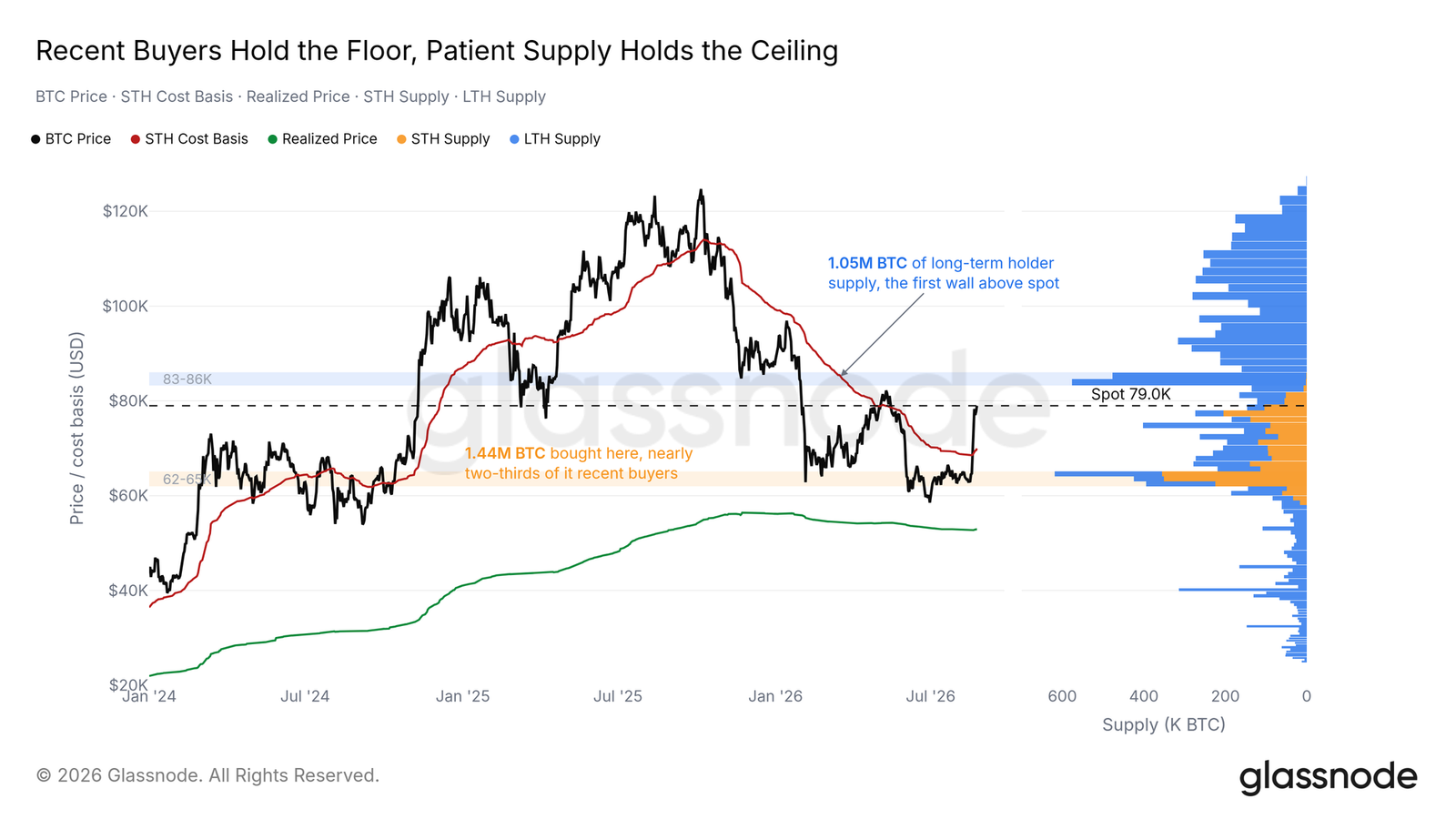
Bitcoin (BTC) has struggled to flip $80,000 into support in recent days, but bulls’ real challenge is still to come, new research says.
Key points:
- Bitcoin long-term holders add to BTC price resistance below $86,000, Glassnode reveals.
- Buyer demand must overcome this area as Bitcoin struggles to advance beyond $80,000.
- Multiple key trend lines sit around spot price, increasing the implications of an eventual loss or reclaim.
Glassnode: Key overhead liquidity structures sit between $81,000 and $86,000
In the latest edition of its regular newsletter, The Week Onchain, crypto analytics platform Glassnode flagged multiple pools of coins that could be released into the market below $86,000.
Of particular interest are long-term holders (LTHs) — wallets holding BTC without selling for at least six months.
“Above, the first heavy structure is $83K-86K, and effectively all of it is long-term holder supply that has sat through the entire drawdown,” it wrote, predicting that reaching $83,000 would test the resolve of the LTH cohort not to sell at breakeven.
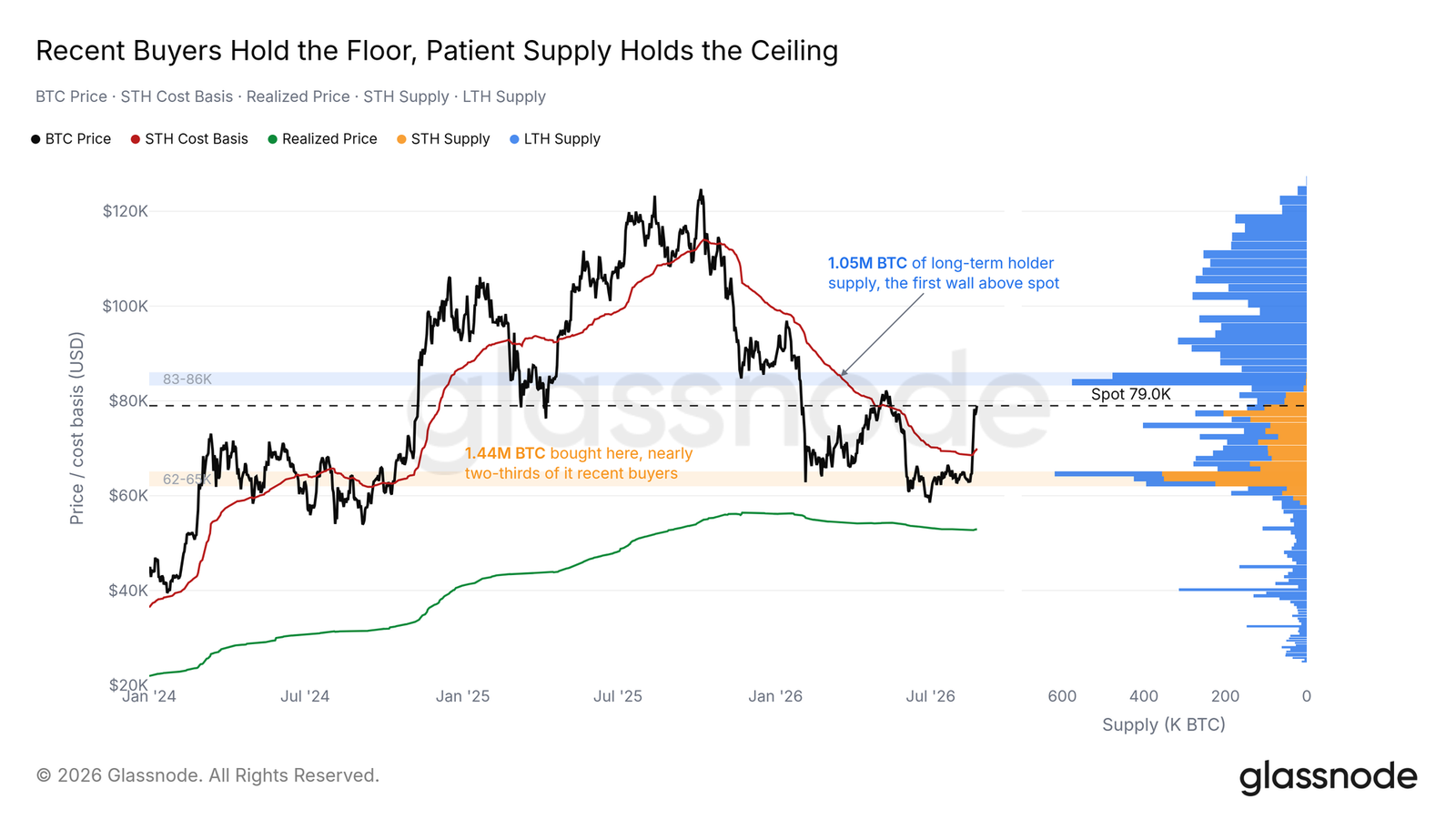
BTC supply distribution by wallet cohort. Source: Glassnode
In the same zone, new ask liquidity has appeared on exchange order books. Its owners, Glassnode notes, may not intend for their orders to be filled, instead aiming to stay above spot price should it rise further.
“The re-laddered asks join a stack of independent structure pointing at one zone. The first self-custody cost-basis shelf begins at $80.8K, dealer gamma flips negative at $82.3K, the surviving liquidation shelf runs to $86K, and the patient-supply wall fills $83K-86K,” it continued.
“Every overhead structure we track now sits between $81K and $86K; that band is where the recovery’s demand meets its test.”
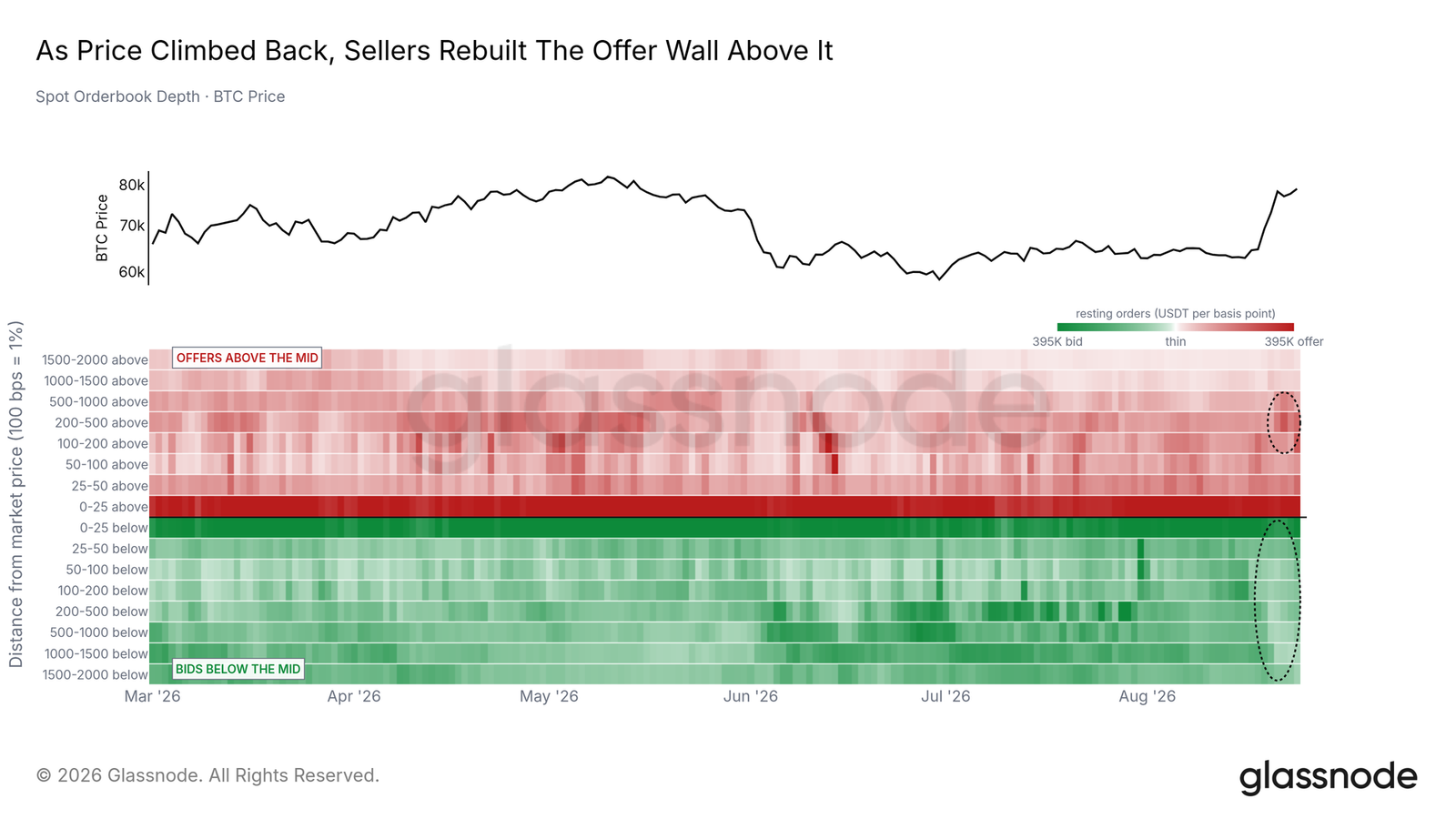
BTC spot order-book heatmap. Source: Glassnode
Trend lines converge on a narrow BTC price corridor
The area around $80,000 has also seen multiple price trend lines converge, strengthening its status as a resistance hurdle.
Related: BTC RSI bullish divergence draws 2022 comparisons as analysis weighs new price trend
Bitcoin’s 50-week and 100-week exponential moving averages (EMAs) currently sit at $77,353 and $78,485, respectively, per data from TradingView. Additionally, Bitcoin’s 365-day volume-weighted average price (VWAP), a moving average that factors in volume, sits around $82,600.
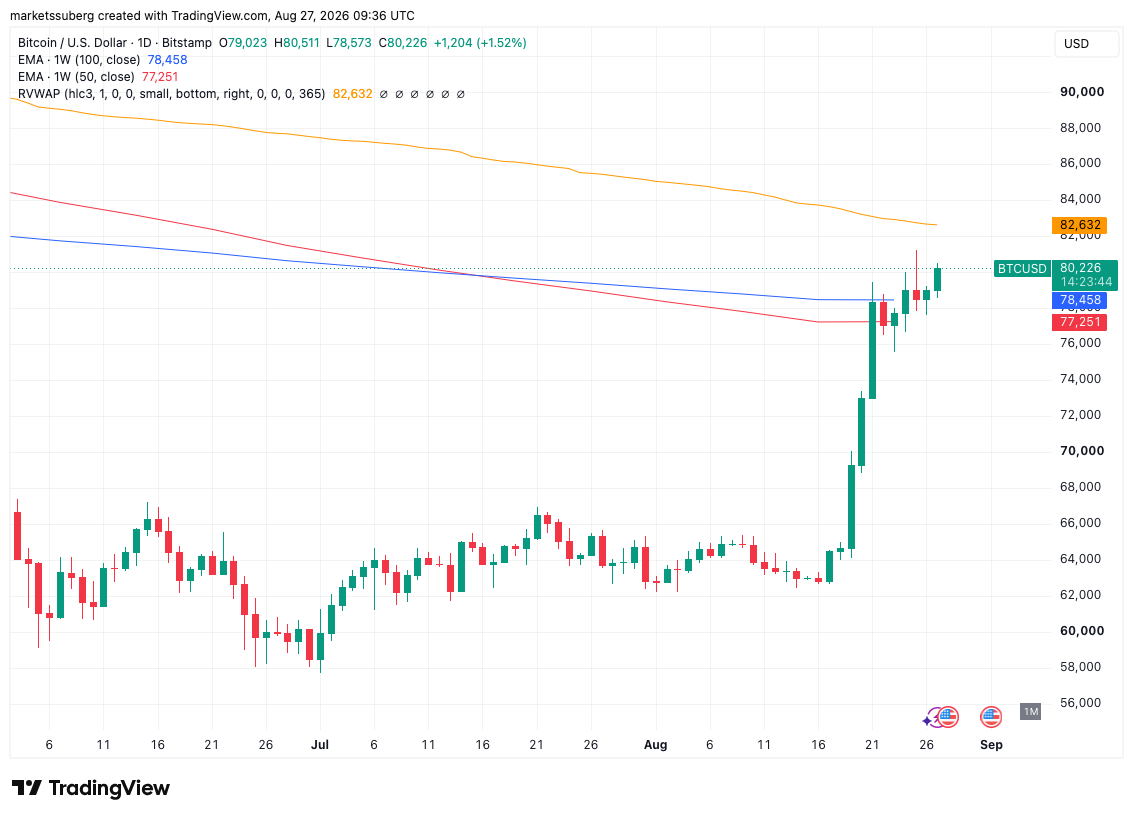
BTC/USD one-day chart with 50-week, 100-week EMA; 365-day rolling VWAP. Source: Cointelegraph/TradingView
Previously, Cointelegraph reported on the skepticism of market participants over whether Bitcoin’s rapid rebound would endure. With regular bear market timing due to continue until the end of 2026, trader and analyst Rekt Capital stressed that price needs to hold the 50-week EMA for longer before a meaningful trend change can be considered.


How will other tech companies respond?
The settlement has an unusual quirk: Meta agreed to pay 70% of the settlement total—some $12.7 billion—over the next decade. But the remaining $5.3 billion is conditional, depending on whether YouTube and TikTok implement similar or more restrictive settings, including a one-hour daily time limit.
At a time when Meta faces fierce competition in the teen market from those competitors, the company is planning to run full-page print ads on Thursday in the The Washington Post, New York Times and the Los Angeles Times calling to make those settings the “new industry standard.” Neither TikTok nor Google, which owns YouTube, have commented.
In the past, tech companies have often copied one another’s safety policies. How competitors will respond to Meta’s settlement agreement is an open question.
What happens to similar cases focused on youth safety?
In addition to the action brought by state attorneys general, school districts and families have filed thousands of lawsuits against tech platforms including Meta, Google, Snap, and TikTok, alleging that the design of their products caused harmful consequences for teens. In March, a jury found Meta and YouTube’s product design led to the mental distress of a young woman, and ordered the companies to pay $4.2 million and $1.8 million in damages respectively.
Crypto World
Solana Votes on Plan to Cut $1.5 Billion in Future SOL Emissions: What It Means for Price?
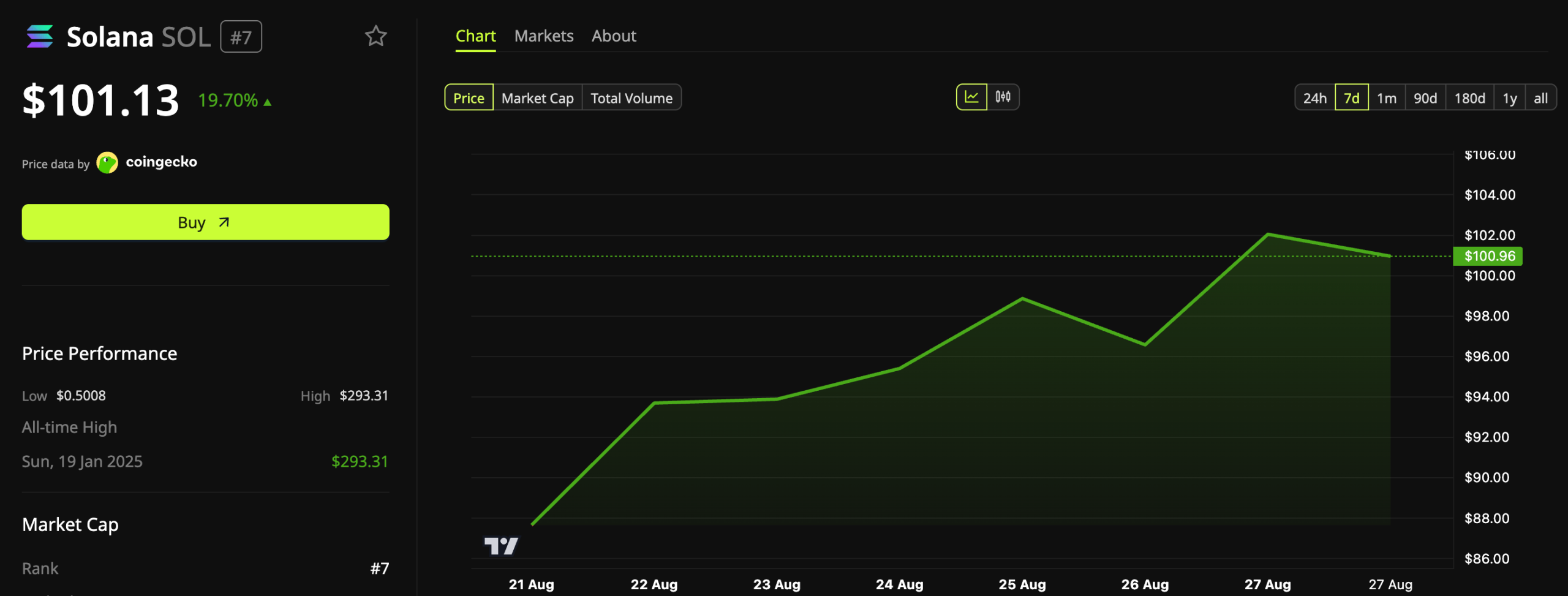
Solana (SOL) validators are voting on two supply proposals. One would raise the disinflation rate, and the other would burn more SOL.
Together, they would reduce projected emissions by about $1.4 billion to $1.5 billion over six years. But what could that mean for Solana’s price? Other protocols may offer some precedent.
What Solana Is Voting On
Solana’s staking yield sits near 5.25%, drawing mainly from protocol inflation of about 3.78%. Transaction fees and maximal extractable value (MEV) supply the rest.
SGP-0002, which corresponds to the technical proposal SIMD-0550, proposes reducing the inflation schedule. This would be done by increasing the disinflation rate.
“It doubles Solana’s annual disinflation rate from -15% to -30%, compressing the timeline to Solana’s 1.5% terminal inflation rate from approximately 5.7 years to 2.8 years, reaching that level by H1 2029 rather than H1 2032,” 21Shares explained.
Under this, nominal staking yield falls to roughly 4.34% in the first year. It drops to 3% in year two and 2.25% in year three.
SGP-0003, based on SIMD-0553, would divide Solana’s current 5,000-lamport signature fee into two parts: a 2,500-lamport base inclusion fee paid to the block leader and a resource fee determined by requested compute units and the applicable resource fee rate, which would be burned.
“At current network activity, daily SOL burns would rise from approximately 600–800 SOL to approximately 7,500–9,000 SOL, or $712,500 to $855,000, as of August 24. It is a meaningful acceleration in supply destruction, though not sufficient alone to offset current inflation of roughly $4.5 million per day,” the blog added.
Voting is set to continue through epoch 1023. According to 21Shares, the two proposals could roughly halve staking yields within two years and make the asset “structurally scarcer.”
Follow us on X to get the latest news as it happens
Ethereum and Cosmos Offer an Imperfect Comparison
21Shares pointed to two previous upgrades to gauge how markets could react to Solana’s supply-reduction proposals.
Cosmos’ (ATOM) Proposal 848 cut maximum inflation in November 2023. ATOM gained 25% over the following month and 10% over three months. However, the period also coincided with growing optimism around the approval of spot Bitcoin (BTC) ETFs.
Ethereum’s EIP-1559 introduced a burn mechanism in August 2021. ETH climbed 37% in one month and 60% over three months. However, broader market conditions also supported the rally as the crypto market approached its cycle peak.
The two examples suggest that supply-reduction upgrades can strengthen a token’s narrative. However, broader market conditions can have a larger influence on price.
“In both cases, the near-term move (1–3 months) likely came from a mix of the deflationary signal and supportive market conditions, not the upgrade alone. At the same time the subsequent 6–12 month drawdowns had little to do with the upgrades: for ETH, the onset of the 2022 bear market and the Fed beginning its rate hiking cycle; for ATOM, the broader summer 2024 slump,” the team added.
21Shares suggested that for SOL holders, the precedents offer a potentially bullish signal, but they do not guarantee a similar price reaction.

SOL trades near $101 after gaining close to 20% over the past week. The advance tracks a broader market rally rather than the governance vote itself.
Neither proposal alters the protocol on its own. Approval would hand developers a mandate, with the technical work and activation timing still to be settled.
That leaves two open questions for holders. Whether the changes reach mainnet and whether tighter supply extends the current rally will take months to answer.
Subscribe to our YouTube channel to watch leaders and journalists provide expert insights
The post Solana Votes on Plan to Cut $1.5 Billion in Future SOL Emissions: What It Means for Price? appeared first on BeInCrypto.


BeInCrypto has partnered with MetaQuotes, the company behind MetaTrader 4 and 5, the world’s most widely adopted retail trading platforms to bring curated crypto news directly to millions of traders, creating a unified experience across traditional and digital markets.
As crypto markets continue to intersect with forex and other traditional trading markets, traders are increasingly seeking insights beyond standard currency pairs and CFDs. With this partnership, traders using MetaTrader platforms can access relevant crypto news and analysis without leaving the tools they already trust for their daily trading activities.
“Crypto is no longer a separate conversation from traditional trading, it’s part of the same one” said Alena Afanaseva, CEO and Founder of BeInCrypto. “Partnering with MetaQuotes puts our reporting where traders already are, on a platform they rely on every day. We hope this gives MetaTrader users a clearer view of what’s happening in digital assets and how it affects broader market movements.”
Under the terms of the agreement,BeInCrypto will syndicate news across MetaQuotes’ platform and content portal metatraders.com.
The partnership reflects a broader trend in the financial industry with the convergence of traditional and digital markets. As more investors explore digital assets alongside conventional portfolios, access to reliable and timely news becomes a critical advantage. By working together, we are positioning users to navigate both markets with confidence.
Readers and traders can now access the latest updates by visiting beincrypto.com and metaquotes.net
BeInCrypto is part of the BeInNews Group, an independent media group covering the convergence of finance and digital assets. We help professionals act with confidence in a complex and fast-changing industry through our newsroom, research reports, events, expert network and multimedia studio.
The post BeInCrypto Partners with MetaQuotes to Bring Crypto News to Millions of Traders appeared first on BeInCrypto.
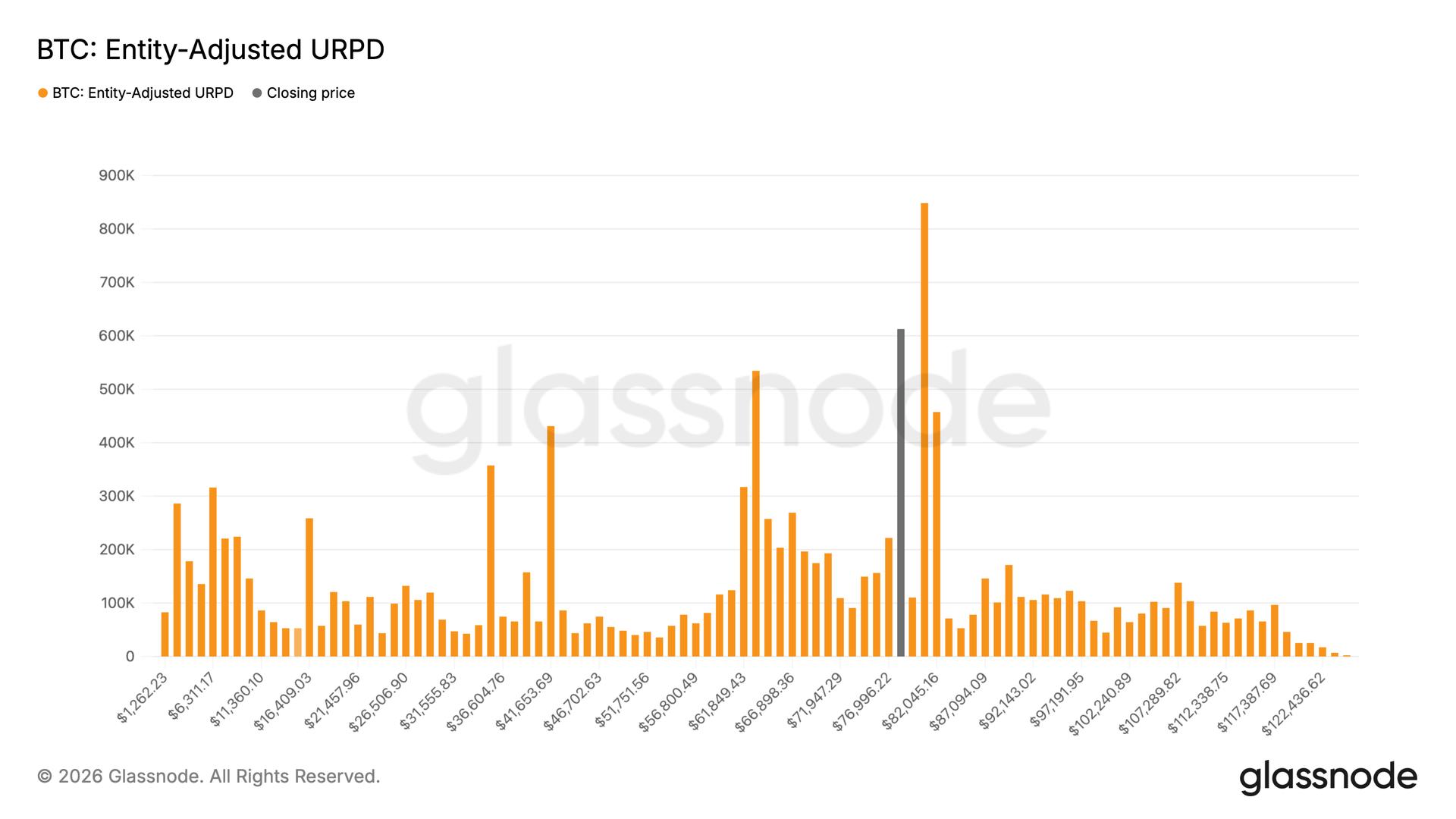
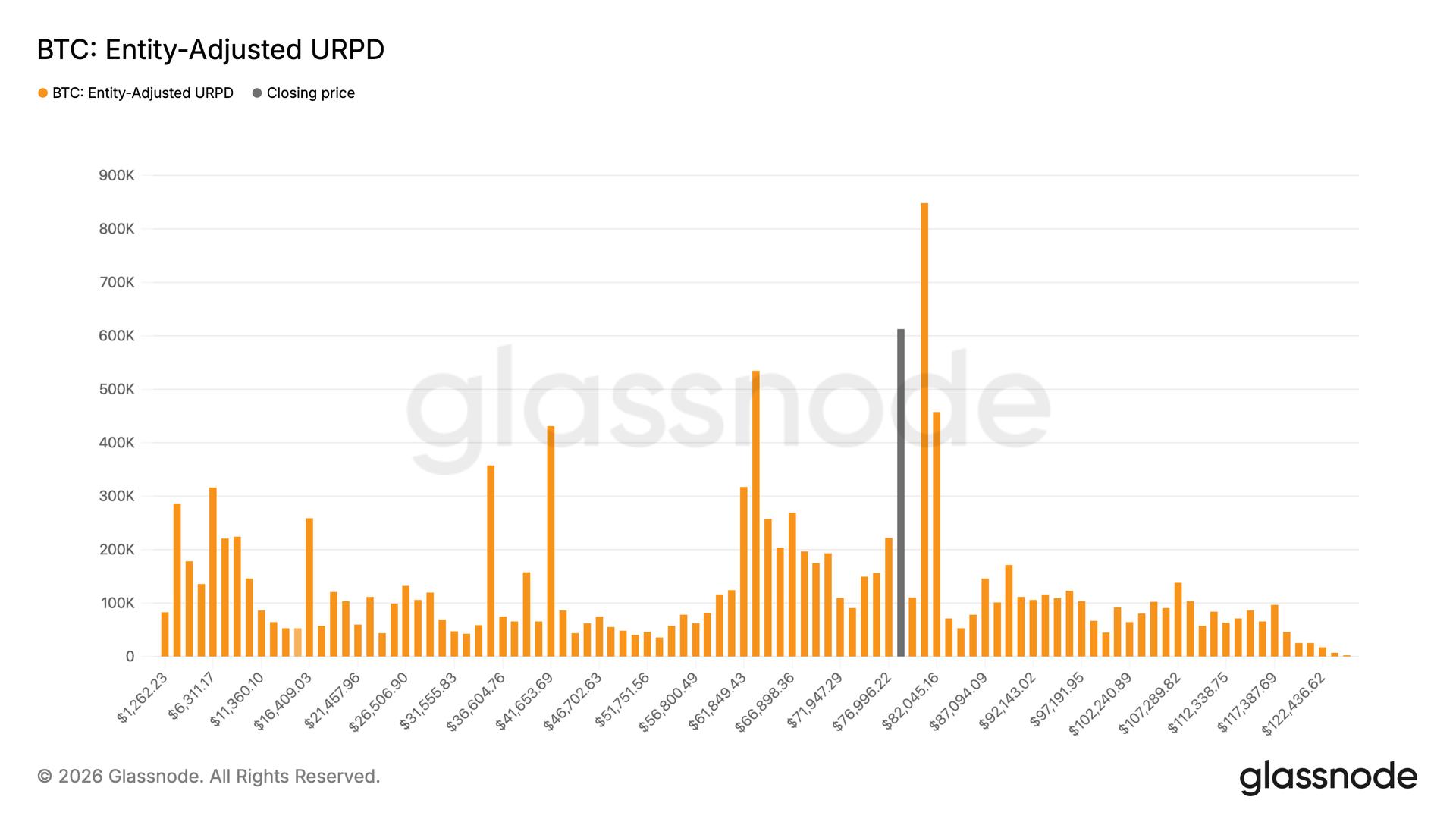
Bitcoin is testing its largest supply cluster alongside the key 50-week moving average.
The primary cryptocurrency once again jumped above $80,000 earlier today, reinforcing the view that the resurgence could be the start of a full-blown bull market.
However, some industry participants warned that unless BTC clears crucial resistance zones, it remains at risk of sliding back all the way down to $50,000.
The Necessary Conditions
Bitcoin has been on an evident uptrend over the past several days, with its price climbing by 15% on a weekly scale. At one point, it surpassed $81,000, with the catalysts behind that rally detailed in our article here. As of press time, the asset trades at around $79,600 (per CoinGecko), while its market capitalization has soared past $1.6 trillion.
Despite the positive performance and prevailing optimism, the analyst known as Gerla on X issued a note of caution. He believes BTC’s price must make a clean break above $82,000 to change the bearish structure.
“Until then, I wouldn’t rule out a deeper move below the $58K-$60K zone before the real breakout,” the analyst added.
X user cyclop joined with a similar thesis. They claimed that if BTC fails to hold above $83,000, “we’re still in a bear trend.” Should that happen, the analyst expects a dump toward $50,000 by November.
Other analysts who recently made bearish predictions include AlejandroBTC and Nonzee. The former argued that BTC faces a major downturn ahead that could take its valuation as low as $40,000, while the latter opined that the asset’s surge was triggered by a liquidity squeeze and envisioned an eventual crash to $45,000.
The Opposite Theory
The analytics firm CryptoQuant also analyzed BTC’s recent performance. In fact, eight of its ten market indicators (including its bull score) have entered bullish territory, suggesting that the current conditions may represent the early phase of a major rally. At the same time, the company noted that BTC needs a daily close above its 365-day moving average (around $83,000) for confirmation.
X user Gordon did not mention any obstacles, simply declaring that the bear market is over. He congratulated investors who bought BTC at $60,000, claiming that the rest are still early anyway.
Certain signals, including the amount of Bitcoin stored on exchanges, support the bullish outlook. Data show that, despite the price increase, investors have been abandoning centralized platforms in favor of self-custody methods over the last several days, thereby reducing immediate selling pressure.

The post Bitcoin Isn’t Out of Danger Yet: BTC Must Clear These Crucial Levels appeared first on CryptoPotato.
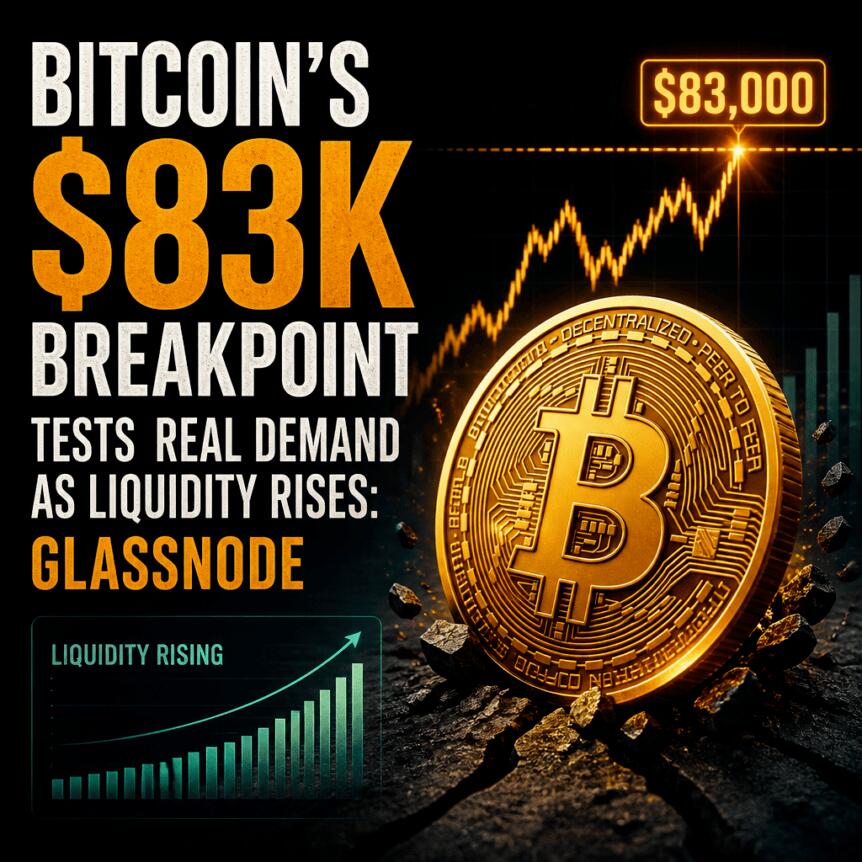
Bitcoin’s push to reclaim the $80,000 area is running into a familiar problem: overhead liquidity. New on-chain research from Glassnode suggests that the path higher is likely to be tested by long-term holders and fresh sell-side supply clustered between roughly $81,000 and $86,000.
While bulls may want $80,000 to act as support, Glassnode’s latest The Week Onchain analysis argues that the more difficult hurdle may arrive closer to $83,000—where long-term holders who bought through a prior drawdown could face an incentive to sell near breakeven.
Key takeaways
- Glassnode identifies a dense long-term holder supply band between $83,000 and $86,000 that has persisted through a full drawdown cycle.
- Additional “ask” liquidity has reappeared on exchange order books in the same broader zone, potentially limiting upside momentum.
- Glassnode says multiple tracked overhead structures now overlap, placing recovery demand and selling pressure in the $81,000–$86,000 range.
- On the chart, several widely watched moving-average levels cluster around the current price area, reinforcing $80,000 as a resistance test.
Glassnode points to long-term holder supply under $86,000
In its latest edition of The Week Onchain, Glassnode flagged multiple pools of BTC that could be released back into the market if Bitcoin rises toward $86,000. The most notable segment is long-term holder (LTH) supply—coins held without selling for at least six months.
Glassnode’s analysis emphasizes that the first heavy supply structure sits in the $83,000–$86,000 region and is “effectively all” long-term holder supply that survived the prior drawdown. The key implication: if price reaches that band, it may test whether LTHs remain willing to hold rather than sell at or near breakeven.
“Above, the first heavy structure is $83K-86K…,” Glassnode wrote, describing how $83,000 would pressure the resolve of the LTH cohort not to sell at breakeven.
Exchange asks and “overhead shelves” reinforce the same resistance band
Beyond on-chain holder behavior, Glassnode also pointed to new sell-side liquidity appearing on exchange order books. According to the report, these re-laddered asks may not be intended to execute immediately; instead, their owners could be aiming to keep orders positioned above spot price should Bitcoin push higher.
Glassnode framed this as part of a broader stack of overlapping supply structures rather than a single isolated wall. It cited several elements across price ranges, including a “self-custody cost-basis shelf” starting around $80.8K, dealer-related “gamma” flipping negative near $82.3K, and a liquidation shelf extending to $86K. It also referenced a “patient-supply wall” filling the $83K–$86K area.
Most importantly for traders, Glassnode summarized that every overhead structure it tracks currently sits between $81,000 and $86,000—describing the band as where demand for recovery meets a concentrated test.
“Every overhead structure we track now sits between $81K and $86K; that band is where the recovery’s demand meets its test.”
Price action: multiple trend indicators converge near $80,000
On top of the on-chain supply picture, Glassnode’s discussion aligns with chart-level constraints around $80,000. The area has seen multiple trend lines converge, strengthening its role as a resistance hurdle.
According to TradingView data referenced in the article, Bitcoin’s 50-week and 100-week exponential moving averages (EMAs) currently sit at $77,353 and $78,485, respectively. The same dataset places Bitcoin’s 365-day volume-weighted average price (VWAP) around $82,600—another figure that sits relatively close to today’s decision zone.
That clustering matters because it can compress the market’s “decision space.” If price trades within or near multiple major averages while overhead liquidity remains intact, upside attempts can repeatedly meet sellers—particularly when they overlap with historical supply bands.
Why this matters for bulls: $80,000 may not be the final hurdle
Earlier reporting from Cointelegraph highlighted market skepticism about whether Bitcoin’s rebound would last, and noted calls for patience before declaring a durable trend shift. In particular, trader and analyst Rekt Capital stressed that Bitcoin needs to hold the 50-week EMA for longer before a meaningful change can be considered, with expectations for bearish market timing to continue until the end of 2026.
Read alongside Glassnode’s findings, that framing suggests bulls may need more than a single reclaim of $80,000. If the $81,000–$86,000 band truly concentrates both long-term holder supply and exchange ask liquidity, then any breakout may require sustained buyer demand to absorb supply—especially as price approaches the $83,000–$86,000 segment.
There’s also a timing asymmetry to consider. Once liquidity is already sitting overhead—particularly from long-term holders and re-laddered sell orders—upside can stall quickly if buyers fail to step in before the market reaches the highest-concentration area.
For readers watching the next phase, the key is whether Bitcoin can progress through the $81,000–$86,000 corridor without triggering a meaningful sell response from long-term holders and order-book liquidity. Until that’s clearer, $80,000 may remain less a floor than a gateway—one that leads into a narrower, harder test farther up.


TRM Labs has appointed former Monetary Authority of Singapore official Ziqing Ang as Head of Policy for Asia-Pacific as the blockchain intelligence firm tracks more than $103 billion in adjusted crypto crime volume in 2025.
Summary
- TRM Labs has appointed former MAS official Ziqing Ang as Head of Policy for Asia Pacific, where she will work with regulators, law enforcement and private institutions.
- TRM tracked adjusted crypto crime volume rising from about $123 million in 2020 to more than $103 billion in 2025.
- Investment scams, including pig butchering schemes, accounted for 62% of fraud inflows last year, while AI enabled scam activity increased 40%.
- Ang spent more than eight years at MAS before moving into institutional digital assets through roles at Sygnum and BPI Financial Group.
- Her appointment follows TRM’s hiring of former MAS regulator Claudia Hui as Head of Compliance Advisory for APAC last month.
According to details shared with crypto.news, Ang will work with regulators, policymakers, law enforcement agencies and private institutions across Asia-Pacific, focusing on illicit financial networks and policy responses as governments develop rules for digital assets and artificial intelligence.
Her appointment comes as criminal groups across the region increasingly use cryptocurrency alongside new technology to run investment scams and other fraud operations. TRM tracked adjusted crypto crime volume rising from about $123 million in 2020 to more than $103 billion in 2025, while investment scams, including pig-butchering schemes, accounted for 62% of fraud inflows last year.
Generative AI has also become part of scam operations, according to TRM, which recorded a 40% increase in AI-enabled scam activity. The company has tracked uses ranging from deepfake recruitment videos to fabricated account dashboards as criminal groups incorporate the technology into operational infrastructure.
TRM Labs puts APAC policy under Ziqing Ang
With more than a decade of experience across regulation, financial markets and digital assets, Ang enters the position after working on both the government and private-sector sides of financial services.
She began her career at the Monetary Authority of Singapore, spending more than eight years across financial markets development and reserve management. During that period, Ang worked with industry and public-sector participants on initiatives involving Singapore’s capital markets and its role as an international financial center.
Her work at MAS later included managing fixed-income portfolios and contributing to macroeconomic and investment research connected with Singapore’s official foreign reserves.
After leaving the regulator, Ang joined Sygnum, which describes itself as the world’s first regulated digital asset bank, as vice president of business development. Her responsibilities there included supporting digital asset adoption among institutional and accredited investors.
Ang most recently served as chief business officer at Bright Point International Digital Assets, part of BPI Financial Group, where she led development of its over-the-counter brokerage operations. Her work covered licensing as well as the institutional infrastructure needed to support the business.
Ari Redbord, TRM Labs’ global head of policy, said Ang’s experience moving between the public and private sectors would support the company’s work with authorities and institutions in Asia-Pacific.
“This is a moment when the public and private sectors must come together to get ahead of the threats emerging in this region,” Redbord said. “Ziqing brings deep expertise and experience working across both the public and private sectors, and the credibility to bring regulators and industry together around this work.”
Hiring officials with regulatory backgrounds has also become common among digital asset companies expanding in Asia. In June, crypto.news previously reported that former TRM executive Angela Ang joined BitGo as managing director for APAC and president of BitGo Singapore after previously spending more than a decade at MAS.
Singapore tightens crypto licensing and oversight
Ang’s appointment also comes while Singapore continues to enforce its licensing rules for digital asset firms.
In May, MAS revoked Bsquared Technology’s Major Payment Institution license after identifying weaknesses in risk management, conflicts of interest and outsourcing arrangements. The regulator also found that the company had provided false or misleading information during its license application and subsequent inspection, with the Bsquared license revocation taking effect on May 14.
The regulator has separately continued using its Investor Alert List to identify companies that consumers could mistakenly view as regulated.
Bybit was added to the list in June, with MAS stating that the exchange was not licensed or regulated to provide services to users in Singapore.
Hyperliquid was also added to the list during the same month. The decentralized trading platform responded that it had never claimed to hold a Singapore license or authorization, while MAS clarified that inclusion on the list was not itself an enforcement action.
By July, Bitget had issued its own notice confirming that it did not hold a license, approval, registration or authorization from MAS and did not offer or target services to people in Singapore. The company also said Singapore remained a restricted market for its platform.
Ang said Asia-Pacific is reaching an important point in the development of rules covering both AI and digital assets.
“Asia-Pacific is at an important stage in how it regulates technology in the age of AI, and the decisions made over the next few years will shape the safety of the ecosystem,” she said.
“I’ve spent my career moving between regulators and the institutions they oversee, and I’ve seen how much good regulation and strong partnerships between the public and private sector can do.”
Crypto scam compounds remain an APAC enforcement target
TRM’s figures on investment fraud come as authorities continue pursuing scam networks operating across Southeast Asia, where pig-butchering operations have been linked to large compounds and human trafficking.
In March, the FBI and Thai police froze about $580 million in cryptocurrency and seized around 8,000 phones during a cross-border fraud operation targeting Southeast Asian pig-butchering groups accused of defrauding U.S. victims.
Authorities said organized groups operating industrial-scale compounds have used fake cryptocurrency investment platforms to obtain funds from victims. Some operations have also relied on trafficking victims who were forced to participate in online scams.
A separate investigation opened in India in July after reports that Indian nationals had been trafficked to Myanmar and forced to work inside crypto scam compounds. Police in Maharashtra registered a criminal case after the wife of a 24-year-old man said he had been taken near the Thailand-Myanmar border after accepting what he believed was a job in Bangkok.
Law enforcement cases have also documented how funds from pig-butchering schemes move through both conventional banking channels and cryptocurrency.
Chinese national Jingliang Su was sentenced to 46 months in a U.S. prison in January after pleading guilty in connection with a network that prosecutors said transferred more than $36.9 million from U.S. bank accounts before converting funds into USDT and sending the assets to Cambodia. Prosecutors said 174 victims had been targeted through social media, text messages and dating platforms and directed toward fake investment services that displayed fabricated profits.
Fake dashboards resembling legitimate trading platforms have also appeared in enforcement actions involving scam compounds. U.S. authorities previously seized a fraudulent website linked to an operation in Burma that displayed false deposits and fabricated investment returns while directing some victims toward malicious mobile applications.
TRM said generative AI is increasing the range of tools available to fraud networks, with deepfakes and fabricated interfaces becoming part of scam operations instead of remaining experimental uses of the technology.
TRM Labs expands its APAC compliance team
Alongside Ang’s appointment, TRM has been building out its regional policy and compliance personnel as governments develop digital asset frameworks.
The company appointed former MAS regulator Claudia Hui as Head of Compliance Advisory for APAC last month. TRM said the hire formed part of its expansion across policy, compliance and go-to-market operations in the region.
Ang said her new role would involve working directly with regulators, law enforcement agencies and industry participants as those frameworks develop.
“TRM’s focus on building a safer world is the kind of work I want to be part of, and I’m looking forward to working with regulators, law enforcement, and industry across the region to support responsible innovation,” she said.
Crypto World
WasabiCard enhances web3 payroll solution, connecting stablecoin funding with local fiat payouts

Disclosure: This article does not represent investment advice. The content and materials featured on this page are for educational purposes only.
WasabiCard is helping web3 businesses streamline global payroll by connecting stablecoin funding, fiat payouts, and card payments.
Summary
- WasabiCard connects stablecoin payroll with global fiat payouts, helping web3 teams pay employees across borders and currencies.
- It enables web3 businesses to fund global payroll with stablecoins while supporting bank payouts, cards, and compliance.
- WasabiCard bridges stablecoin treasury and real-world payments with global payroll, batch payouts, fiat access, and compliance tools.

Web3 companies expand globally, their teams are increasingly distributed across countries and time zones, while corporate funds are often managed and moved on-chain in stablecoins such as USDT and USDC. As both teams and treasury operations become more global, efficiently and compliantly paying a distributed workforce is becoming an increasingly important consideration for web3 businesses looking to scale.
Traditional cross-border payroll often relies on banking networks and multiple intermediaries, involving different currencies, payment rails, and settlement processes. At the same time, simply transferring stablecoins to an employee’s wallet does not fully address how those funds can be converted into local currency, received in a personal bank account, and used for everyday expenses.
For global web3 businesses, the challenge is therefore no longer simply how to send stablecoins. It is how to connect on-chain funds with global fiat payment networks so employees can receive and use their salaries efficiently and compliantly.
Web3 payroll goes beyond stablecoin transfers
Stablecoins provide a new payment rail for global payroll. With 24/7 availability and faster settlement, they can reduce reliance on some of the intermediaries involved in traditional cross-border payments and improve the efficiency of distributing funds to teams across markets and time zones.
However, stablecoins are not simply a replacement for fiat payroll. Requirements around wage payment methods, employment, and taxation vary across jurisdictions, while employees ultimately need their salaries for rent, everyday spending, savings, and other real-world needs.
Scalable web3 payroll therefore requires infrastructure that connects stablecoins, fiat currencies, bank accounts, and card payment networks, with compliance and risk controls embedded throughout the payment flow.
WasabiCard: Building the rails from stablecoins to local fiats
To address the payroll needs of globally distributed web3 businesses, WasabiCard is working with regulated partners to bring stablecoin funding, global fiat payout rails, bank account payouts, and card payment capabilities into a unified payment infrastructure. The goal is to support the journey from stablecoin funding and batch payroll distribution to how employees ultimately receive and use their funds, where available and subject to applicable licensing, partner availability, jurisdictional restrictions, and product terms.
1. Aligning payroll with web3 treasury
Web3 businesses can use stablecoins such as USDT and USDC as a funding source for payroll and distribute funds to global teams through WasabiCard.
According to a 2026 industry analysis by international labor and employment law firm Ogletree Deakins, traditional international payroll can incur fees of 3%–8% and take days to process. Stablecoins, by comparison, can provide a faster and more cost-efficient way to move payroll funds across borders. Their 24/7 availability also makes them well suited to Web3 businesses operating across countries and time zones.
For companies already managing treasury in stablecoins, this creates a payroll model that is more closely aligned with how their funds are held and moved.
2. Global coverage across 200+ countries and regions
Stablecoin-funded payroll does not mean employees have to hold their salaries in digital assets.
WasabiCard’s payment capabilities cover 200+ countries and regions and support 30+ fiat currencies. Businesses can use USDT, USDC, and other supported stablecoins as a funding source for payroll, while employees can, subject to availability and through regulated banking partners, receive funds in supported local currencies directly into bank accounts held in their own names.
Beyond bank account payouts, employees can also access their funds through WasabiCard virtual or physical cards for online and in-store spending, as well as ATM withdrawals, giving them greater flexibility in how they use their salaries.
By connecting stablecoins with global fiat networks, bank accounts, and card payment rails, WasabiCard enables businesses to fund and distribute global payroll with stablecoins while giving employees the flexibility to receive and use their salaries through familiar local payment channels.
3. Scaling global payroll with batch payouts
As web3 teams grow from a handful of employees to hundreds of people across multiple markets, processing individual transfers becomes increasingly difficult to manage.
Through a unified API, batch payouts, and transaction management capabilities, WasabiCard enables businesses to manage payroll across multiple countries, currencies, and recipients without building and maintaining separate payout integrations for each market.
For web3 businesses and payroll platforms, global payroll can therefore be managed as a unified fund distribution operation rather than a collection of individual cross-border transfers.
4. Embedding compliance across the payment flow
Efficiency alone is not enough to scale web3 payroll globally. Compliance is equally important.
WasabiCard integrates KYB, KYC, KYT, and AML controls across key stages of the payment flow, including business onboarding, user verification, fund movement, and transaction execution, supporting appropriate verification and monitoring of businesses, recipients, and transactions.
By bringing compliance controls together with stablecoin payments and global payout capabilities, WasabiCard helps Web3 businesses manage the compliance requirements associated with cross-border payroll while improving the efficiency of global fund distribution.
Borderless Teams need borderless payroll
Web3 businesses are global by nature. As their teams continue to scale, payroll is evolving beyond simple on-chain transfers toward payment infrastructure that connects digital assets with the financial systems employees use every day.
Stablecoins make it possible to move funds efficiently across borders. Global payment infrastructure makes those funds accessible and usable by employees around the world.
By connecting stablecoins, fiat currencies, bank accounts, and card payment networks, WasabiCard is helping bridge on-chain treasury with real-world financial access, providing web3 businesses with a more efficient, flexible, compliant, and scalable infrastructure for global payroll.
About WasabiCard
WasabiCard is a global payment infrastructure platform enabling enterprises, fintechs, and internet-native businesses to issue cards, distribute payouts, and manage cross-border payments through stablecoin-powered financial infrastructure. Its platform supports global card issuing, multi-currency settlement, stablecoin funding, and embedded payment capabilities designed for modern global commerce. WasabiCard powers payment use cases across media buying, SaaS subscriptions, global payroll, treasury management, and digital financial applications.
Follow WasabiCard on X and LinkedIn for the latest updates on product developments, partnerships, and insights into the future of stablecoin-powered payments.
Disclosure: This content is provided by a third party. Neither crypto.news nor the author of this article endorses any product mentioned on this page. Users should conduct their own research before taking any action related to the company.

The event produced several eye-catching moments, including when humanoids beat human records at the high jump and the 400m. Just a few days before Ultra’s race, Lightning, a robot developed by phone company Honor, ran the 100m in 9.39 seconds, again thundering home quicker than Bolt.
But these tumbling records will likely be, in the pop cultural consciousness, eclipsed by something far more entertaining: tumbling robots. Along with the epic wins, there have been some seriously old-school, epic fails. One humanoid at the weightlifting event lost its balance with a weedy 15kg barbell, started jerking and slammed into the judges’ table, its helpless arms aloft, as if to say, “Why me?” Most memorably, a robot ended his dash by careering into a safety mat, Tom and Jerry style, before cartoonishly arching backward and setting on fire. Each spark was like a beautiful firework.
These slapstick scenes are deliciously satisfying. It’s deeply reassuring to watch robots fizzle out into smithereens. I myself have fond memories of watching the fire-hazard creations on Robot Wars in the U.K. (the successor to BattleBots in the U.S.) get shredded into shrapnel. This time, it’s a reassuring reminder that we can beat robot replicants at our own games.


Bitfinex Securities is preparing to list a new security linked to a Luxembourg-based industrial metals platform built around a $1.6 billion stockpile of high-purity nickel wire.

Hamilton West Side plays Iowa in Little League World Series | Live

The Godfather Of Crypto Trading: My Final Warning To Bitcoin Holders

Home Bargains confirms closure of all 76 Scottish stores on these three days





-

 Fashion6 days ago
Weekend Open Thread: Madewell – Corporette.com
-

 Crypto World1 day ago
SpaceX stock could rise 75% to $240, JPMorgan says
-

 Business5 days ago
Musk’s Tesla, SpaceX Confirm $16.8 Billion ‘Terafab’ Chip Plant as World’s Largest Building in Texas
-

 Crypto World5 days ago
anatomy of crypto’s biggest liquidation event since 2021
-

 Crypto World2 days ago
A $30 Billion AI Fund Implodes, Now the SEC Is Investigating Wall Street’s Role
-

 Politics5 days ago
6 months on, Irish renters crushed by effects of government housing bill
-

 Crypto World1 day ago
Did Trump Just Move SpaceX Stock With One Truth Social Post?
-
 NewsBeat5 days ago
The ‘Lucky Dip Gang’ causing carnage for clicks: After five thugs were killed speeding in the wrong direction on a motorway, GUY ADAMS investigates a sick new trend… and why police aren’t even allowed to pursue them
-

 Business4 days ago
Mystery AI Model ‘Ox Alpha’ Draws Developers With Free Access as Chinese Lab Origins Remain Debated
-

 Business3 days ago
Moderna CEO warns China is pouring state money into mRNA technology
-

 Business7 days ago
Five Below: Kids Discount Retailer Reaps Rich Rewards
-
 Crypto World6 days ago
Nvidia Stock Suffers Longest Losing Streak Since 2022: Will Q2 Earnings End It?
-

 Business3 days ago
NVIDIA Stock Drops Nearly 2 Percent to $210 on Seventh Losing Day Ahead of Critical AI Earnings
-

 Sports4 days ago
Deshaun Watson fires back at Browns fans after being booed: ‘It’s a disrespectful thing’
-

 Business6 days ago
UK firms in critical financial distress rise 9% to 53,756
-
 Crypto World4 days ago
Google Gemini AI Predicts Ethereum Could Become the Trade Retail Misses in 2026
-

 Tech6 days ago
Unitree’s New Superman Robot Claims to Outjump and Outrun Every Human, Usain Bolt Included
-

 Crypto World7 days ago
Optimism-funded team's deciding vote shifts $49 million in OP tokens away from users
-

 Tech6 days ago
Faster chip in a familiar form factor
-

 Business5 days ago
Will Tesla Stock Be Higher or Lower a Year From Now? Here’s What Wall Street Analysts Are Saying
You must be logged in to post a comment Login