
Crypto World
Bitcoin Reclaims $80,000 as Weak Dollar Meets Suspected Yen Intervention

Bitcoin (BTC) rallied 5% during US trading hours, reaching $81,000.
Key points:
- Bitcoin rallies above $81,000 in US trading, having risen more than 5% over the past 24 hours.
- USD/JPY drops to 155.4 amid suspected Bank of Japan (BOJ) intervention, dragging the US Dollar Index (DXY) down to 99.
- Polymarket odds for a BOJ rate hold collapse further from 12% to 1%, with a 98% probability now priced in for a 25-basis-point hike on Sept. 18.
Weaker dollar drags crypto higher
At the time of writing, BTC stands at $81,000, near the highs seen during last month’s surprise upside.
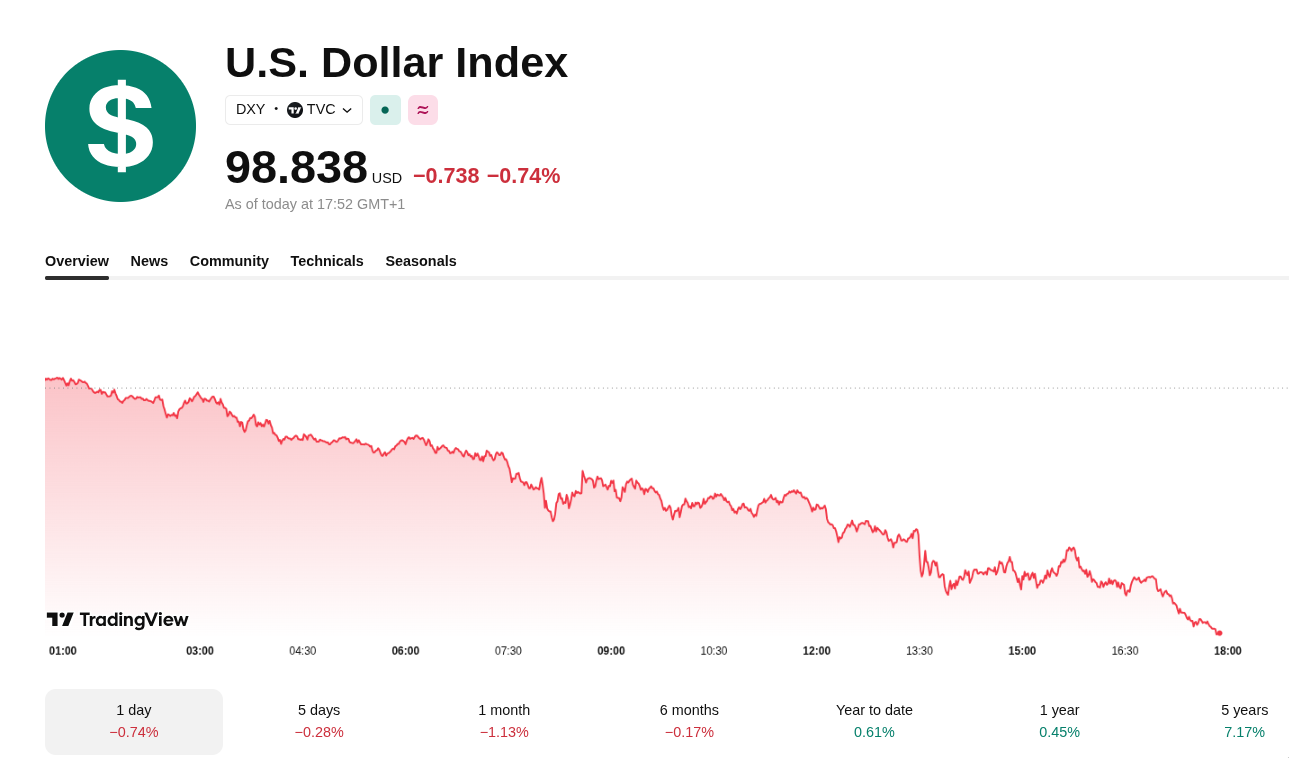
The move comes as the Japanese yen (JPY) continued to strengthen in a suspected central bank intervention, which Cointelegraph first reported on Wednesday. After dropping to 158.5 on Wednesday, the USD/JPY pair saw further downside to 155.4. This put pressure on the US dollar index (DXY), which fell to 99. Downside in the DXY has historically been positive for Bitcoin.
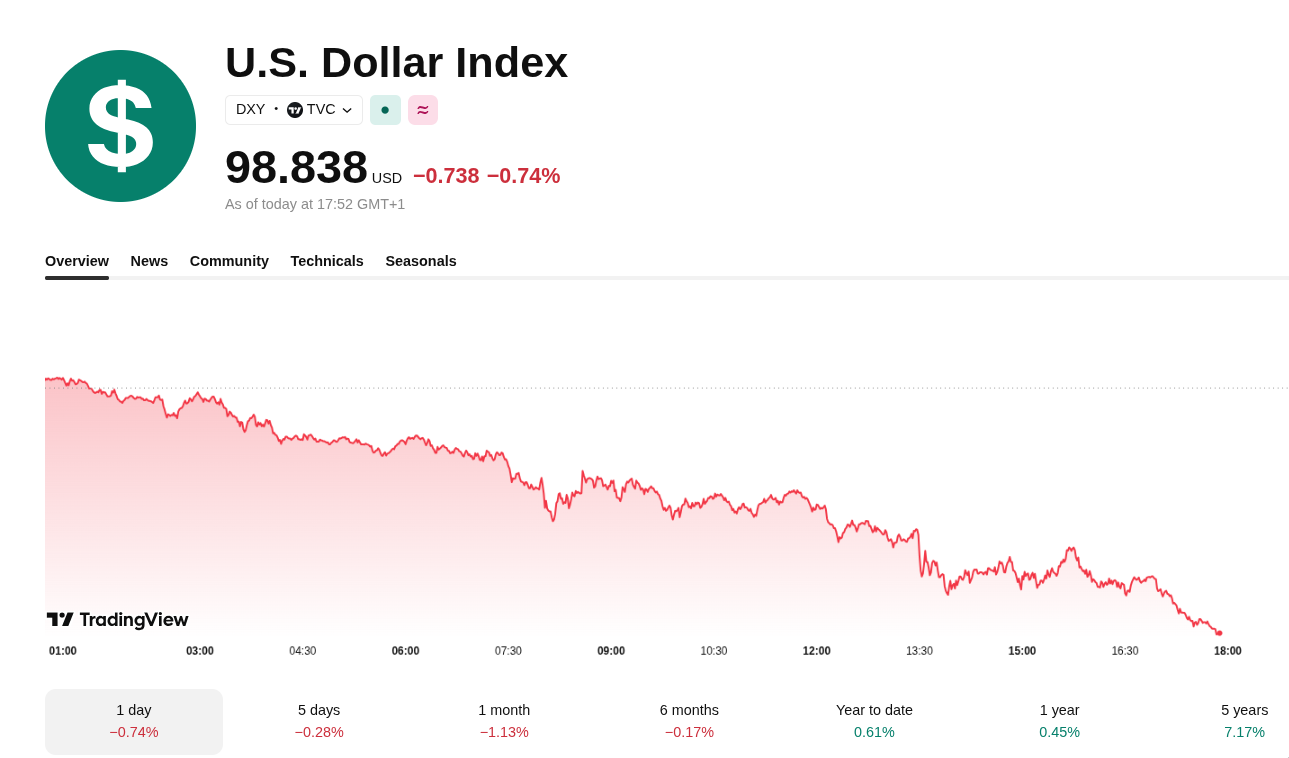
US Dollar Index 1-day chart. Source: TradingView
Shares of Michael Saylor’s Strategy (MSTR) participated in the rally and rose 8.6% on Wednesday. The stock is up 70% from its lows in late June, but still down roughly 10% year-to-date. Strategy’s perpetual preferred stock STRC, which had been frequently compared to a money market fund, is still trading below its par value of $100 and remains stuck at $97.80 at the time of writing.
Related: Strategy turns 1,690 BTC into $108.6M STRC buyback
Analysts divided on impact of yen intervention
The latest suspected intervention to support the yen, coupled with the prospect of a Bank of Japan rate hike later this month, has also revived fears of another carry-trade unwind. The Macro Paper commented on X:
“In the last 24 hours, USD/JPY has dropped almost 2.5%, which doesn’t happen without any major intervention. On top of that, BOJ is most likely expected to hike rates this month, with more rate hikes possible in Q4,” it wrote.
“This is the exact thing that happened in Q3 2024, when BOJ intervened and hiked rates together. The result was a $5 trillion wipeout from the global markets, and the VIX spiked to its highest level since the Covid crash.”
The Polymarket probabilities for a rate hold dropped from 12% to 1% Wednesday, cementing the prospect of a rate hike. The current market-implied probability of a 25-basis-point rise in the policy rate by the Bank of Japan (BOJ) in the upcoming meeting on September 18 is now 98%.
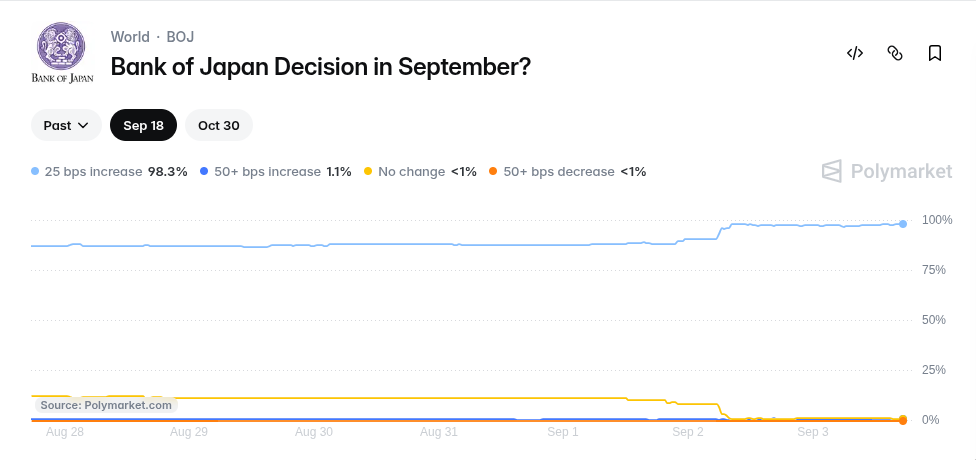
Polymarket probabilities for BOJ rate decision on Sept 18. Source: Polymarket
Some have also seen the currency intervention as liquidity-positive. Arthur Hayes, CIO of Maelstrom, has long held that the Foreign and International Monetary Authorities’ (FIMA) repo facility will provide Japan with dollar liquidity against Treasury collateral, easing global liquidity conditions. While no funds appear to have been drawn from this facility so far, Treasury Secretary Scott Bessent raised the prospect in late July.



Have you heard of AGI? Artificial General Intelligence. It’s the idea that AI can handle cognitive work at a human level. For years, it was just hypothetical, a Hollywood movie concept at best. Now, OpenAI says they have achieved it – with ChatGPT 6 Astra.
In theory, an AGI could read a legal document, write an article, solve a maths problem, plan a trip, learn a new software tool, and explain its reasoning – all at the same time. OpenAI just showed this exact thing in a ChatGPT 6 demo video.
In plain English, Astra is designed to do more than answer questions. It can use a computer, browse websites, work across software, and keep going through long tasks with less hand-holding.
How Powerful is ChatGPT 6.0 Astra?
OpenAI’s own benchmarks show the biggest gains in areas where AI has traditionally struggled: acting on its own.
What is being tested?
GPT-6 Astra
GPT-5.6 Sol
Claude Fable 5.1
Completing multi-step tasks
41.4%
18.1%
31.4%
Advanced coding
74.1%
70.8%
67.4%
Scientific computer work
64.6%
22.4%
52.6%
Extremely difficult maths
97.6%
83.0%
87.8%
Turning images into 3D designs
95.9%
83.3%
84.3%
The comparisons come from OpenAI and vendor-reported evaluations, so independent testing will matter.
So if you’re a ChatGPT user, what does this new model provide? Astra should be better at actually doing things for you.
OpenAI says it can browse webpages, fill forms, work through spreadsheets, and complete multi-step tasks faster than earlier models. It is also the first OpenAI model to reach the company’s “critical” cybersecurity threshold.
What are ChatGPT Users Getting for $20?
Astra is rolling out first to selected enterprise and cybersecurity customers. OpenAI says Plus, Pro, Business and Enterprise users will receive it over the coming days. Free access has not been announced.
That makes the $20-a-month ChatGPT Plus plan more interesting. Standard Astra will be included within existing Plus allowances.
Astra Pro, the higher-end version, is reserved for Pro, Business and Enterprise customers.
Does that make Astra AGI? OpenAI has stopped short of a formal declaration.
OpenAI president Brockman called AGI a “gray, fuzzy thing,” while saying he personally believes people may later look back at this model as the moment it arrived.
There is still reason for skepticism. Astra’s eye-catching ARC-AGI-3 result was produced using an OpenAI agent setup with memory and tools around the model, making it harder to isolate Astra’s raw intelligence from the system supporting it.
So, is this the end of human creativity? Perhaps not. But Astra does push ChatGPT further toward something that can increasingly do the work, rather than simply tell you how.
The post Meet ChatGPT-6 Astra: A Supercomputer for Only $20? appeared first on BeInCrypto.
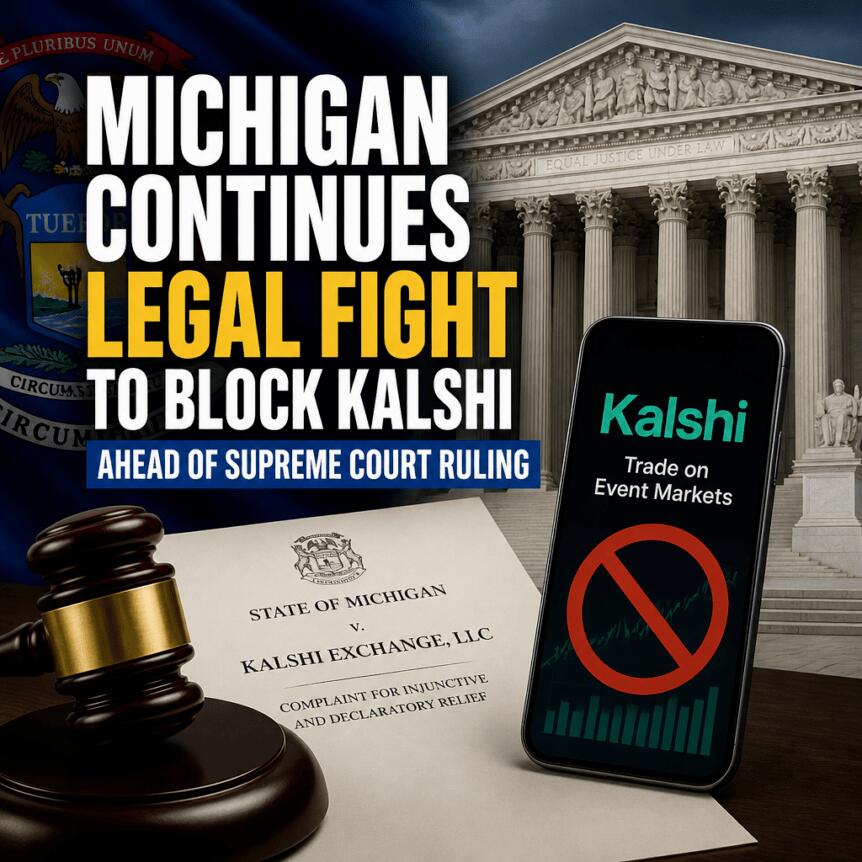
Michigan’s attorney general says a state court has issued a preliminary injunction against Kalshi, preventing the prediction markets platform from offering event contracts to residents. The order, announced by Attorney General Dana Nessel this week, is framed by officials as an effort to curb what they describe as unlicensed “sports betting” conducted under an investment-like presentation.
According to Nessel’s office, the Circuit Court for the 30th Judicial Circuit in Ingham County granted the state order blocking Kalshi from providing event contracts to Michigan residents. The notice also states that Kalshi could face fines of up to $500,000 per day if the court’s directive is violated.
Key takeaways
- Michigan obtained a preliminary injunction limiting Kalshi’s ability to offer event contracts to state residents.
- Officials argue the activity amounts to sports gambling presented as an investment opportunity, which they say remains unlicensed under Michigan law.
- The injunction follows an earlier Michigan restraining order in June that Kalshi said placed it in conflict with a CFTC directive.
- New Jersey simultaneously moved the dispute toward the US Supreme Court, raising the possibility of a higher-court resolution of regulatory jurisdiction.
- Lawmakers have also proposed legislation targeting prediction market contracts that resemble sports betting or casino-style games.
Michigan targets Kalshi’s event contracts
In a Wednesday notice, Attorney General Dana Nessel said the state court’s order halts Kalshi from offering event contracts to Michigan residents. Nessel linked the action to her ongoing lawsuit filed earlier this year, alleging Kalshi violated Michigan law governing sports gambling.
In her statement, Nessel said Kalshi had attempted to operate in a way that mischaracterized its activities, and she presented the injunction as further protection for residents against what she described as “predatory, unlicensed practices.”
The court’s filing, as summarized in the attorney general’s notice, includes the potential for significant daily penalties for violations, which underscores that Michigan is treating the case as more than a procedural dispute.
How this fits into the broader prediction market legal fight
Michigan’s latest order adds to a series of legal battles in the US involving prediction market platforms such as Kalshi and Polymarket. In many of these cases, state regulators argue the products function like regulated gambling—particularly sports wagering—while the companies and other opponents often argue prediction markets fall under federal oversight frameworks.
Nessel filed the Michigan lawsuit against Kalshi in March, asserting that the platform’s event contracts run afoul of state sports gambling rules. The new preliminary injunction is the most recent step in that enforcement effort.
Notably, the Michigan court’s action follows a June restraining order that barred Kalshi from offering sports betting to Michigan residents. That earlier development triggered a direct conflict between state and federal regulators: the US Commodity Futures Trading Commission (CFTC) ordered Kalshi not to comply with the state order and to keep operating.
Kalshi characterized the CFTC’s response as creating an “impossible position,” according to earlier reporting, highlighting the practical problem that emerges when state courts and federal agencies issue competing instructions.
Cointelegraph reached out to Kalshi for comment but did not receive an immediate response.
New Jersey pushes for Supreme Court review
While Michigan moved forward with its preliminary injunction, New Jersey officials announced the same day that they filed a petition seeking a writ of certiorari from the US Supreme Court. The petition centers on the state’s case against Kalshi and the question of whether federal regulators (through the CFTC) or state authorities have jurisdiction over prediction market offerings.
If the Supreme Court agrees to hear the matter, the ruling could help resolve competing legal theories that have emerged across different states—particularly the extent to which event contracts are treated as subject to federal regulation versus state gambling rules.
Melinda Roth, a visiting professor of practice at New England Law in Boston, told Cointelegraph she could see the Supreme Court taking the case, though she suggested the justices might also wait to address issues on the merits rather than procedural questions like whether a preliminary injunction should be granted. Roth also argued that the Supreme Court may act sooner rather than later given the ongoing litigation in the area.
“If and when SCOTUS takes it up, then this will likely decide whether sports event contracts are federally regulated by the CFTC or the states have the right to ban and/or regulate them as they see appropriate. I say ‘likely’ because Congress might actually act too. They could act before a SCOTUS review, or even after too.”
Legislative proposals aim to separate prediction markets from sports betting
In addition to court-driven outcomes, some US lawmakers are attempting to address the underlying policy dispute through legislation. Earlier coverage noted proposals aimed at limiting the use of insider information in event contracts.
In March, Senators Adam Schiff and John Curtis introduced a bipartisan bill that, as described in reporting, would prohibit CFTC-registered platforms from listing any event contract that “resembles a sports bet or casino-style game,” shifting the authority for regulation to individual states.
The same tension that shows up in Michigan and New Jersey—federal versus state control—appears in these legislative efforts. If enacted, such measures could reduce uncertainty by drawing clearer lines about which prediction market products are treated as sports wagering versus other forms of event-based trading.
At the moment, however, the fate of the sector remains tied to how courts reconcile these jurisdictional questions, and how lawmakers choose to intervene.
For market participants, the immediate watchpoints are straightforward: whether Kalshi appeals or seeks further relief in Michigan, how New Jersey’s Supreme Court petition progresses, and whether Congress advances reforms that could change the regulatory map before the courts fully resolve the issue. Until then, overlapping state enforcement and federal oversight continue to create the kind of uncertainty that can quickly reshape access to event contracts.


Justin Sun’s reputation in China has been taking a serious hit on a daily basis for almost a week, with his latest reply to his haters bordering on near-insanity.
In his most recent diatribe, Sun offered to get his height measured on a livestream so people would stop calling him short and got into an irrational argument about the definition of the word “decency.”
But, first, if you haven’t been following the Chinese drama with capitalistic characteristics, it’s worth getting caught up.
Sun’s first huge mistake
About a week ago, Sun posted a lengthy and very strange story to X, claiming that it was both a work of fiction and as close to the truth as he could recall.
The tale told by Sun involved the Chinese actress Jing Tian and claimed that she was going to donate her eggs to a surrogate so that she and Sun could have a baby.
Sun alleges that when she demanded more money to go ahead, he refused and filed a lawsuit to clawback the gifts he’d given to her thus far.
The sharing of extremely personal details about Sun’s relationship with Jing didn’t go down the way he expected. Indeed, there was an immediate negative reaction from Mainlanders who considered it intentionally harmful to Jing and her career.
If Sun had removed the story at that point and apologized for his behavior, there’s no doubt everyone would have moved on.
But he didn’t.
Compounding errors go exponential
After getting lambasted by everyone in China, including fellow crypto billionaires and journalist Hu Xijin, aka “the Troll King of China,” Sun defended his decision to go public with the story and even took part in an interview with a Chinese media outlet.
Despite saying he’d allow courts to deal with the problem, Sun persisted in discussing the story publicly and in a way that would do untold damage to Jing’s career.
Read more: Justin Sun seeks out Chinese ‘troll king’ in dispute with ex
A nasty back and forth makes Sun look terrible
Picking a fight with Hu was a mistake to start with, but when Hu replied with an offhand comment about “having a chat in Beijing” — seemingly implying that Sun would never dare to return to the nation where he was born — the affair went nuclear.
Sun has, again, taken to X to post a lengthy response where he argues with Hu about the definition of the word “decency.”
Sun suggested that older generations, like Hu’s, believe the word to mean swallowing one’s pride and having a strict moral code, whereas newer generations, like Sun’s, believe decency is contractual and about speaking out when you feel wronged.
The reply from Sun feels both tone-deaf and disrespectful toward Hu, and there is little-to-no chance that it will find an audience in China.
A final bizarre straw
In a final act of ineptitude, Sun put out a post suggesting that, due to the fact that Chinese social media users were repeatedly calling him short, he would willingly do a livestream where a metrology institute measures his height down to the millimeter.
Famously, tall people have always felt the need to prove their height by livestreaming someone measuring them.
Perhaps because of his odd behavior over the past few days, it comes as no surprise that Chinese social media platforms appear to be removing Sun’s name from trending topics and making the drama fall into the back pages of the nation’s consciousness.
Got a tip? Send us an email securely via Protos Leaks. For more informed news and investigations, follow us on X, Bluesky, and Google News, or subscribe to our YouTube channel.
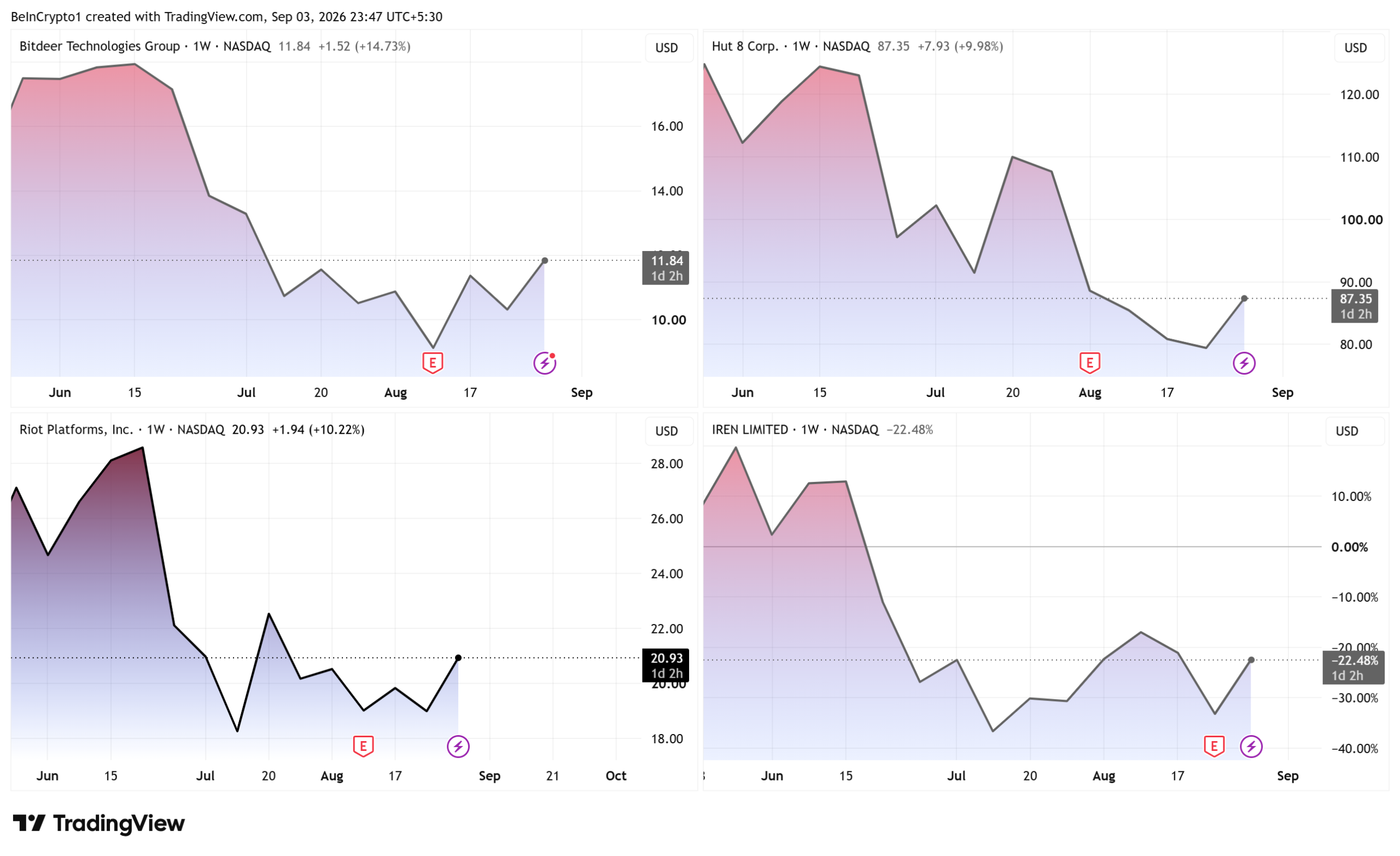
Stanley Druckenmiller’s family office put $125.6 million into Bitcoin mining stocks last quarter. It sold out of major American AI chip stocks like Broadcom, Intel, and Micron Technology to make room for BTC.
Druckenmiller is famous for investing without a single year of loss for more than 30 years straight. His average annual return is 30%. During the 1992 currency crisis, he helped George Soros make about $1 billion betting against the British pound.
That’s why Wall Street still watches what Druckenmiller buys.
Understanding Druckenmiller’s $125 Million Bitcoin Bet
Duquesne Family Office listed the four new stakes on August 14. The disclosure came in a Form 13F, the quarterly report big investors must file with regulators. It shows what he held on June 30.
Bitdeer Technologies was the largest at $64.7 million. Hut 8 followed at $36.3 million, then Riot Platforms at $20.7 million and IREN at $4 million.
The total is small, at roughly 2.4% of a $5.21 billion portfolio.
It still marks a change of mind. In October 2023, Druckenmiller said he owned no Bitcoin, adding that he probably should. He had held it earlier and sold. He is back now, but sideways, through the miners.
Why Miners, Not Bitcoin
He skipped Bitcoin (BTC) itself and the spot funds too, buying electricity instead. A new grid connection can take years to secure. Miners spent a decade locking up cheap power. AI firms want that capacity now and cannot wait for their own.
Bitdeer shows the pitch, having mined 2,694 BTC last quarter. It also signed a $4.7 billion, 16-year lease with Volta. The deal covers a Norwegian site running Nvidia chips for an AI lab. Riot’s data center pivot copies the model.
Druckenmiller did not quit AI, though. He raised Taiwan Semiconductor to $281.6 million from $167.4 million. He also opened stakes in Advanced Micro Devices, Lam Research, Equinix, and Alphabet.
The Most Profitable Investor’s Bitcoin Bet is Down 24%
So far, the trade has not worked. All four Bitcoin miner stocks have fallen since June 30. Bitdeer is off 25.5%, Hut 8 is down 24.4%, Riot is down 24.3%, and IREN is down 10%.

Those same share counts are worth about $94.9 million today. That is a paper loss of about $30.7 million. Bitcoin went the other way. It has climbed roughly 33% since late June, from about $58,600 to levels above $81,000 as of this writing.
The bridge trade therefore lagged the asset it was built to capture. MARA and CleanSpark posted heavy quarterly mining losses in August as the same squeeze hit the sector.
Still, there is one caveat that matters. A 13F is a snapshot, not a live feed. Druckenmiller may have bought more or sold out since June 30. His next filing lands in November.
The post Investor Who Went 30 Years Without a Loss Just Bet $125 Million on Bitcoin appeared first on BeInCrypto.
Now, experts across the country are deeply concerned about what might occur in the coming months, whether it’s false allegations that cast doubt on individual races, state officials refusing to certify election results as required by law, or baseless efforts to block House members from taking their seats in January.
The good news is the success of these efforts to undermine the midterms is not inevitable. To the contrary, enormous work has already been done to protect the integrity of November’s election from those who would undermine it.
Now, it is time for leaders who haven’t yet joined that effort to get off the sidelines no matter what their politics are. Losing our system of fair and free elections would not just affect one element of American life. It would affect all elements of American life.
There are many ways for institutions to meet the moment and keep our country’s elections free and fair. First, many leaders, particularly those from the business community, meet regularly with members of the executive branch and Congress. They should use these relationships to remind elected officials of the need to respect election results no matter who wins or loses.
The Administration is now pursuing what amounts to a strategy of intermittent military force combined with sustained economic pressure. Last week, it announced “Operation Economic Outcast,” an effort to further isolate Iran from its remaining trading partners. But the campaign has so far produced limited results, and imposing sanctions aggressive enough to cripple Iranian trade could require confronting countries including China, India, and Russia.
Secretary of State Marco Rubio said this week that the Administration expected the principal pressure on Iran going forward to be economic, while reserving the right to use military force when necessary.
Iranian uprising
Trump himself has resumed publicly encouraged Iranians to challenge the regime, writing on Truth Social on Tuesday, “When are the Iranian people going to rise up and fight?”
When asked by TIME on Thursday whether the Trump Administration was considering arming Iranian dissidents or providing them with other direct assistance, Vance declined to provide more details. “Everything that could happen is on the table: economic pressure, military pressure, diplomatic pressure, covert pressure,” he said. “Of course, these are tools in the President’s toolkit.”

Bitcoin has gained almost 23% over the past month, but a few choppy sessions briefly dragged the asset below $76,500. BTC has since stabilized above $77,700 following a minor 1.4% surge on Thursday.
The latest uptick came mainly from short covering rather than a fresh increase in leverage, according to QCP Capital, as markets continued to face a firm Federal Reserve stance.
Fragile Positioning?
Kevin Warsh reinforced the Fed’s focus on maintaining a 2% PCE inflation target, while headline PCE remains at 3.7%. This leaves little visible support for near-term rate cuts. Treasury long-end buybacks were doubled to $4 billion quarterly, but QCP said the amount represents only 0.013% of the $31.5 trillion Treasury market, which points to liquidity support rather than a policy pivot.
Heavy long-dated investment-grade issuance is also adding pressure, as technology companies account for 38% of 10-year-plus supply. Additionally, ETF inflows near the 95th percentile indicate genuine spot demand, although MSTR’s Bitcoin accumulation was funded through equity issuance.
“With policy guidance scarce and liquidity narrow, is this conviction or fragile positioning?”
Meanwhile, analyst NoName said that Bitcoin’s next major move could depend on whether it can close above $83,000. The analyst is also watching a CME futures gap above the current price and sees it as an important level separating a genuine reversal from another relief rally. A daily close above the level, supported by strong spot volume, would be needed to confirm a new uptrend.
Without that confirmation, NoName said that the recent bounce was a retest of previous supply. They warned that a rejection at $83,000 followed by a break below $74,000 could send the crypto asset toward $50,000-$55,000.
CryptoPatel also flagged the exact level and said that Bitcoin could face further losses if it fails to reclaim it with a higher-timeframe candle close. In that scenario, the analyst expects potential declines toward $70,000, $65,000, and $60,000. If the bearish market structure remains intact, the crypto asset could eventually fall toward the $50,000-$40,000 range. However, a higher-timeframe close above the $83,000 level would invalidate the bearish setup.
Another market watcher, Rain, noted that Bitcoin is starting to lose the demand support that helped the August rally.
The Case for Further Upside
Not everyone sees further downside ahead. Doctor Profit, for one, reiterated his stance that the bear market is over. He had previously stated that BTC broke out above key resistances and entered the Soft Bull Market, which he expects to turn into a full bull market escalation.
“Many desperate investors that wish for a lower Bitcoin price, some even call for a new low, and others say the bear market isn’t over. In fact, and I say it with my full conviction, I consider the bear market as over!”
More on the current market state can be found in our latest video below.
The post Bitcoin (BTC) Rally Driven by Short Covering, Not Fresh Leverage: QCP appeared first on CryptoPotato.

An effective altruism-linked organization, as of last month, is paying $2,000 in weekly compensation for an ostensibly grassroots anti-AI media campaign.
Irreplaceable, which employs a campaign strategist who also works for the effective altruism-funded Center for AI Safety, supports protests against AI as a way to advocate for regulations that could benefit the effective altruism agenda.
“What’s missing is coordinated action that forces the government to respond,” it claimed.
It’s currently recruiting student protest leaders for an anti-AI uprising in October. They’ll help to coordinate walkouts at more than 100 colleges to demand new regulations to affect the AI industry.
Read more: FTX-funded charity Effective Ventures agrees to return donations
Effective altruists want you to vote for AI regulators
Irreplaceable’s campaign says that AI should be paused and placed under public control, allowing effective altruists to recommend further policy changes.
According to a job description, each paid organizer will coordinate about a dozen flagship campuses and will carry out high-volume outreach, forge political partnerships, and run a digital creator program.
A skeptic called it an astroturfing campaign.
Effective altruism has strong historical ties to the crypto industry, especially via its most infamous criminal, Sam Bankman-Fried, a once-devout effective altruist, as well as other criminals who worked with him at FTX like Caroline Ellison and Gary Wang.
Irreplaceable launched on August 28 with veterans of climate change groups like Sunrise Movement and 350.org.
Its privacy page names an Education Fund and Action Fund but discloses no donors, leaving the public guessing about who is funding it, even though The Atlantic has already identified Jeremy Ornstein as an Irreplaceable strategist who concurrently serves at the Center for AI Safety.
The group’s public pages don’t identify Irreplaceable’s literal financiers.
On August 27, the founder of an AI Safety fellowship announced to the effective altruism community that it was proudly introducing 14 new “AI Safety Communicators,” naming Ornstein as an Irreplaceable strategist and describing Irreplaceable as originating from the Center for AI Safety itself.
Got a tip? Send us an email securely via Protos Leaks. For more informed news and investigations, follow us on X, Bluesky, and Google News, or subscribe to our YouTube channel.
Crypto World
Who Will Win the Privacy Coin Battle in 2026: ZEC, XMR, or Another Competitor? (3 AIs Weigh In)
ZEC and XMR are among the market’s top performers over the past 30 days, both experiencing double-digit price increases.
The former remains the largest in the privacy coin sector, so we wanted to check whether it will keep its throne by the end of 2026 or be replaced by some of its competitors. Here’s what three widely used AI-powered chatbots said on the matter.
ZEC Has a Solid Chance
As of this writing, Zcash has a market capitalization of more than $14 billion, making it the 10th-biggest cryptocurrency, and ChatGPT expects the token to finish the year as number one in its niche for various reasons.
First, it noted that ZEC has better exchange accessibility, stating that it is available on major platforms like Binance and Coinbase. In contrast, its biggest competitor, XMR, was removed from the biggest crypto exchange in 2024 and has never been listed on Coinbase.
“This gives ZEC deeper liquidity and easier access for speculative and institutional capital,” the chatbot said.
Another positive development is the recent launch of the first Zcash ETF. The product is issued by Grayscale and represents a conversion from the existing Trust to an exchange-traded fund.
The financial product saw the light of day on August 25, and the social buzz prior to the launch drove a rally to a historic peak above $870. In the following days, ZEC experienced heightened volatility, briefly surpassing that record after reaching nearly $890 before retracing to the current $847 (per CoinGecko).
It is important to note that ChatGPT also praised XMR as a “strong privacy product,” but gave it a 33% chance of topping the ranking by the end of 2026. ZEC, in turn, has a 65% likelihood of keeping its first spot.
Perplexity also ranked Zcash’s token as the leading candidate on this front, giving particular attention to XMR:
“Monero will almost certainly remain the go-to for maximal privacy, but it’s unlikely to outperform ZEC on price and access by year-end under the current regulatory regime.”
More in Favor
Google’s Gemini agreed with the theories presented by the aforementioned chatbots. It claimed that the existence of a ZEC ETF could capture Wall Street liquidity, making it really difficult for XMR to keep pace. Additionally, it noted that the current market cap gap between the two coins is nearly $5 billion.
“For Monero to overtake Zcash by the end of 2026, it would need a massive surge to overcome major hurdles like centralized exchange delistings, slower P2P liquidity, and ZEC’s strong lead from institutional ETF capital. With only a few months remaining, XMR would have to drastically outpace ZEC’s growth – an unlikely scenario barring an unexpected regulatory shift,” Gemini concluded.
The post Who Will Win the Privacy Coin Battle in 2026: ZEC, XMR, or Another Competitor? (3 AIs Weigh In) appeared first on CryptoPotato.

But if the writing sometimes comes off as winking and belabored, the acting is not. Malkovich and Rockwell are a joy to watch, and that, after all, is what we continue to go to the movies for: to see actors at play, even as they work. Malkovich’s Chris and Rockwell’s Lee are an odd-couple duo who have been working together long enough to intuit one another’s thoughts and moods. They also bicker, a lot. Lee seems annoyed by his elder partner’s tendency to tootle down trails of fanciful thought. In an early scene, Chris complains that his apartment in Santiago is riddled with moths, and he doesn’t want them to ruin his clothes. But he also doesn’t want to kill them. Instead, he says, “I’ve been escorting them outside.” It’s 1973, not long before socialist president Salvador Allende will be overthrown in a military coup—Chris and Lee know that’s going to happen, given that their job is to destabilize democratic governments here and there around the world. In one of his many pensive moments, Chris muses, “Sometimes I think I care about the moths in Chile more than I care about the people in Chile.”

Stefanos Tsitsipas says Kyrgios’ cocaine ban was widely expected by many | Other Sports News

OpenAI Cut Off a Billion-Dollar Customer to Avoid Elon Musk

On-the-run capybara is spotted for first time in five months after it escaped from Hampshire zoo





-

 Fashion6 days ago
Weekend Open Thread: Maeve – Corporette.com
-

 Crypto World7 days ago
Bitcoin’s 22% rally now needs real demand to outlast Treasury liquidity boost
-

 Business7 days ago
Apple Confirms September 9 Keynote and Reveals Its Full Pre-Order Schedule
-

 Crypto World20 hours ago
CLARITY Act could advance within weeks, Atkins says
-

 Business7 days ago
Salesforce Stock Soars 19% as Blowout Earnings and Agentforce AI Growth Silence Software Skeptics
-

 Business6 days ago
Onto Innovation Stock: AI’s Next Bottleneck Is Yield (NYSE:ONTO)
-

 Crypto World6 days ago
Bitcoin price tests $82K resistance as Brandt stays long
-
 Tech5 days ago
Hugging Face built a $4.5 billion empire on free AI models. Now Nvidia is buying it for $12.9 billion
-

 Business6 days ago
iPhone 18 Pro Pre-Orders Could Shift to Saturday as Apple Reportedly Avoids September 11 Anniversary
-

 Crypto World2 days ago
Elon Musk Says Grok 4.7 Lands in 10 Days and Will Beat Every Model
-

 Crypto World7 days ago
Truflation calls for Fed rate cut after PCE forecast
-
 Entertainment6 days ago
‘Adults’ Creators Break Down Season 2’s Most Shocking Moments and Tease a Potential Season 3
-

 Tech7 days ago
The fix for the AI agent that hijacked a company’s DNS: it can propose the change, but it can’t approve it
-

 News Videos4 days ago
Charlie Munger on Robinhood: No one should believe that Robinhood’s trades are free
-

 Tech6 days ago
PaperCut releases second emergency patch for exploited flaws
-

 Tech5 days ago
Tamagotchi Ring Takes the 30-Year Digital Pet and Places it on Your Finger
-

 Tech5 days ago
As the influencer economy drives retail sales, Seattle startup raises $22M to play matchmaker
-
 Crypto World2 days ago
Bitcoin slips below $77.5K as macro pressure offsets ETF inflows
-

 Crypto World16 hours ago
Kalshi seeks CFTC approval for WTI perpetual
-
 NewsBeat5 days ago
Trump posts AI video of ‘Lake America’ being protected by an army of bequiffed ‘Donald Ducks’
You must be logged in to post a comment Login