
Crypto World
Bitcoin Short Liquidations Top $7.9B as $80K BTC Price Holds Firm

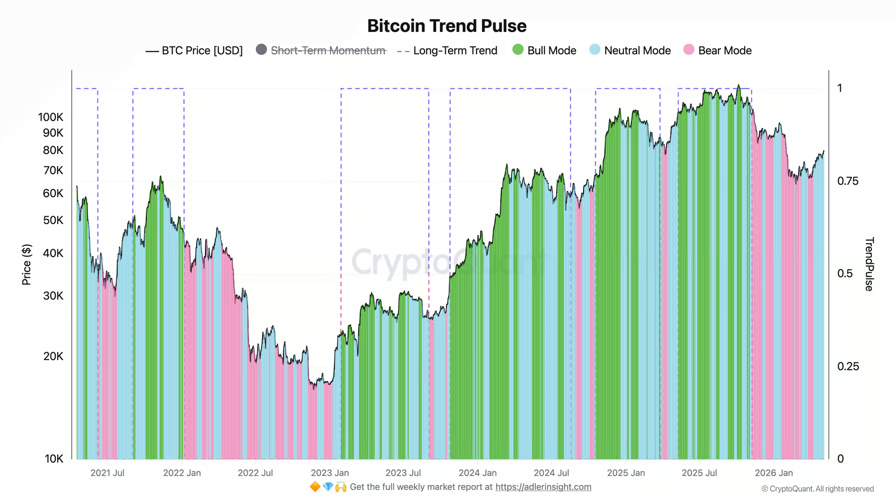
Bitcoin (BTC) may have a clear path to $90,000 after $7.9 billion in short liquidations in February put pressure on the bears. Data show liquidations came in three waves that extended from February through April. The liquidations highlight a growing imbalance as BTC traders continue to build short positions above $80,000, while the price holds firm, creating repeat conditions for future short squeezes.
Repeat short squeezes pressure bears
Bitcoin researcher Axel Adler Jr. tracked over $7.9 billion in forced short liquidations since early February. The largest spike hit $737 million on Feb. 13, followed by multiple waves through March and April.
The liquidation volumes ranged from $2–28 million per day before jumping back to $175 million on May 4. That spike came during a quiet week, pointing to renewed short exposure near $80,000. The pattern shows consistent reloading of bearish positions at higher levels.
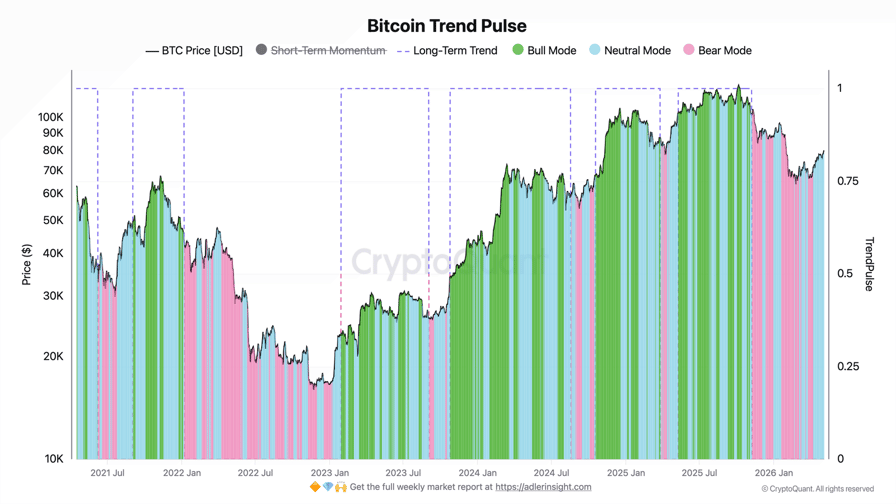
Bitcoin trend pulse. Source: Axel Adler Jr.
The trend pulse data adds context to this behavior. The model moved from bear mode into neutral mode in early April. The short-term momentum has turned positive, while the long-term trend awaits confirmation from a bullish crossover of the 30-day and 200-day simple moving averages (SMAs).
Axel Adler Jr. said each major liquidation wave formed while the trend pulse sat in neutral mode, a transition phase after bear mode without a full bullish confirmation.
The largest spikes all occurred during this phase. The price was effectively at a crossroads, while traders kept adding short positions.
That pattern shows repeated strength fading, followed by forced liquidations, creating pressure that can extend higher if current levels hold above $80,000-$81,500.
Related: Bitcoin price nears $82K as ‘big level’ sparks warning of fresh macro rejection
BTC price holds key breakout zone above $80,000
Market analyst Coin Niel pointed to continued BTC exchange outflows, with net flows of -837 BTC on May 5. The move signals ongoing accumulation, though smaller than the -6,590 BTC outflows on Monday, keeping the spot sell pressure limited.
.png?prefix=media%2Fcontent)
Bitcoin open interest on all exchanges. Source: CryptoQuant
Funding rates hold near -0.0045, suggesting longs are not crowded while the short-side pressure remains active. BTC open interest climbed 6% to $29 billion, its highest level since Jan. 31, increasing sensitivity to large price swings.
The BTC price action has turned constructive after Bitcoin broke above a descending trendline that capped rallies through April. The 100-day exponential moving average (EMA) now sits just below the price, acting as dynamic support.
BTC is also holding near $81,500, aligned with the short-term holder cost basis, a key level that keeps recent buyers in profit, and may further reduce selling pressure.
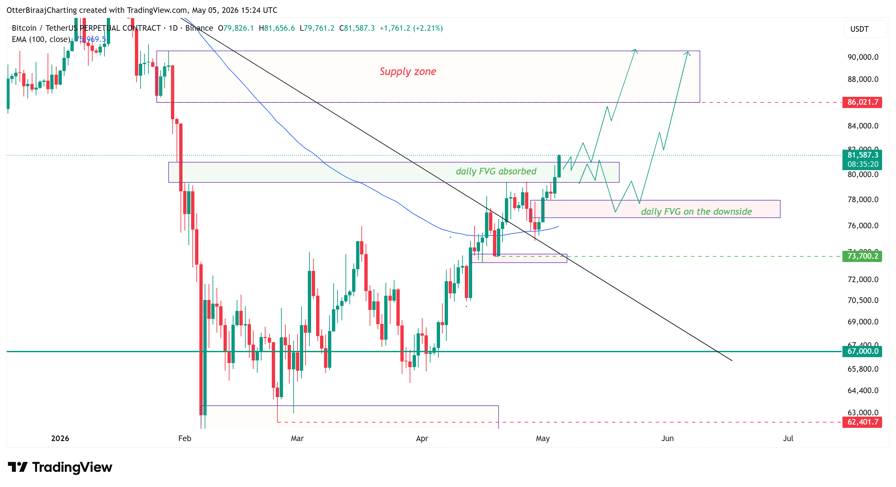
BTC/USDT on the one-day chart. Source: Cointelegraph/TradingView
The upside range of $86,000 to $90,000 aligns with a prior supply zone, where sellers stepped in and halted the recovery. This area marks a cluster of past selling activity, with relatively fewer resistance levels before it.
Below, the $76,000–$78,000 range serves as the first demand zone, supported by recent activity and a developed daily fair-value gap from last Friday.
Crypto trader KriptoHolder noted that liquidation clusters are shaping the near-term direction. The short liquidations sit around $81,000–$82,000, while a larger pool of long exposure rests between $77,000 and $78,000.
Data indicates $1.12 billion in cumulative shorts are at risk near $82,500, compared with over $4.2 billion in long positions facing liquidation near $77,000, defining a tight liquidity imbalance.
Related: Bitcoin short-term cost basis approaches profitability, but $80K must flip to support first



Ripple CEO Brad Garlinghouse defended Clarity Act progress at Consensus 2026, calling the past week a “big positive shift.”
Summary
- Garlinghouse spoke live at Consensus 2026 in Miami, expressing renewed confidence in the Clarity Act’s path through the Senate.
- The Ripple CEO pointed to growing Senate support as evidence that legislative momentum behind the bill is real.
- His comments arrive as the Clarity Act faces simultaneous industry backing and resistance from major US banking groups.
Ripple CEO Brad Garlinghouse took the Consensus 2026 stage in Miami today and told attendees the Clarity Act is gaining genuine ground in Washington. He called the past week a “big positive shift,” pointing specifically to growing Senate support as proof that the bill is moving.
His confidence arrives at a tense moment for the legislation. The Clarity Act has secured backing from major crypto trade groups, with Coinbase and Circle both urging the Senate Banking Committee to advance the bill after a stablecoin yield compromise was brokered by Senators Tillis and Alsobrooks. Banking associations have pushed back against those yield provisions, arguing the deal introduces systemic risk to traditional financial institutions.
The regulatory backdrop behind Garlinghouse’s optimism
Garlinghouse has made regulatory clarity the centrepiece of Ripple’s public positioning for years. A Ripple survey published earlier this year found 72% of institutional respondents consider digital assets essential to their financial operations. Garlinghouse has used that figure repeatedly to press the case for federal legislation that gives institutions a clear legal framework to operate under.
Ripple’s own legal history with the SEC has made Garlinghouse one of the most closely watched figures on crypto regulation. His Consensus 2026 remarks put him at the centre of what is shaping up to be the most consequential stretch for US digital asset legislation since the FTX collapse triggered regulatory urgency in late 2022.
Consensus 2026 drew over 20,000 attendees to Miami, with SEC Chair Paul Atkins and CFTC Chair Brian Selig both in attendance, signalling the highest level of regulatory engagement the conference has seen. Whether Senate momentum translates into a committee markup in the coming weeks will determine whether Garlinghouse’s optimism proves well-founded.


Bitcoin zoomed past $81,000 in Asian hours Tuesday, according to CoinDesk market data, up 6.7% on the week and riding the broader risk-on tape that has equities printing records on fading Iran tensions and renewed AI optimism.
Other crypto majors caught the bid. Solana zoomed 3% to $87.35. Dogecoin added another 4% to $0.1158, extending its weekly gain to 14.5% as futures open interest sits at year-highs. XRP, BNB and TRX all printed green on the day.
Ether is the laggard, off 0.3% over 24 hours despite holding a 3.9% weekly gain at $2,376. Spot ETH ETF flows turned negative last week, ending a three-week inflow streak.
Wall Street gauges closed at all-time highs Tuesday after President Donald Trump signaled progress toward a “final agreement” with Iran and announced a pause on Operation Project Freedom for a short period. Brent crude fell 1.7% to about $108 a barrel. The dollar, which had been the haven of choice through the US-Israel war on Iran, weakened against all its G-10 peers.
Asian equities zoomed to an all-time high on Wednesday morning, with the MSCI Asia Pacific index advancing 1.8%. South Korea’s Kospi jumped more than 6% to a record, with Samsung Electronics surging 15% to reach a $1 trillion valuation, the second Asian company ever to clear that mark.
Strong earnings from Advanced Micro Devices and Super Micro Computer added to the AI-trade momentum, with Nasdaq 100 futures up 0.6%.
A key development came as Strategy executive chairman Michael Saylor told in the company’s Q1 2026 earnings call that it may sell a portion of its bitcoin holdings to fund dividend payments.
“We will probably sell some bitcoin to pay a dividend just to inoculate the market and send the message that we did it,” Saylor said.
The world’s largest corporate bitcoin holder, sitting on 818,334 BTC at an average acquisition cost of $75,537, has not sold any of its position before. The model has always been to buy and hold.
Strategy posted a $12.54 billion Q1 net loss as bitcoin’s slide from October’s $126,000 peak weighed on the company’s mark-to-market accounting. The firm carries roughly $1.5 billion in annual dividend obligations across preferred stock and outstanding debt, with about 18 months of USD reserves to cover them at current run-rates.
MSTR shares dumped over 4% in after-hours trading on the announcement and BTC briefly slipped under $81,000 before recovering.
Saylor framed the move as a feature of the model rather than a break from it.
“You buy bitcoin with credit, you let it appreciate, and then you sell bitcoin to pay the dividend.”
That is a different sentence than every prior Strategy quarter, where the playbook was to issue more debt or equity to fund obligations rather than touch the BTC stack.


The Solana-based perpetuals exchange will issue burn-on-redeem recovery tokens funded by exchange revenue, a $127.5M Tether commitment, and another $20M from partners.

TLDR
- Coinbase selected Centrifuge as its preferred tokenization infrastructure and took an equity stake in the firm.
- The agreement positions Centrifuge as the default issuance layer for tokenized assets across Coinbase’s ecosystem, including Base.
- The companies expect to launch the first wave of institutional assets on Base in the coming weeks.
- Coinbase Asset Management continues expanding tokenized offerings through partnerships with Superstate and Apex Group.
- Tokenized real-world assets have reached about $27 billion onchain, with treasuries and fixed income products accounting for $16 billion.
Coinbase selected Centrifuge as its preferred tokenization infrastructure and disclosed a strategic equity investment on Tuesday. The agreement sets Centrifuge as the default issuance layer for tokenized assets across Coinbase’s ecosystem, including Base. The companies said they will launch the first wave of institutional assets on Base in the coming weeks.
Coinbase and Centrifuge Formalize Tokenization Partnership
Coinbase positioned Centrifuge as its core infrastructure partner for onchain asset issuance. The company will use Centrifuge as the default layer across its products, including those built on Base. The firms confirmed that institutional assets will begin launching on Base within weeks.
Coinbase said the arrangement supports asset managers seeking to issue products onchain. However, the deal does not appear to grant exclusivity to Centrifuge. Coinbase Ventures had already invested in Centrifuge during a 2022 strategic funding round.
Centrifuge provides infrastructure for tokenized investment strategies. It powers onchain products for Apollo, Janus Henderson, and S&P Dow Jones Indices. The platform crossed $1 billion in total value locked in mid-2025 and now reports $1.66 billion, according to DeFiLlama.
Coinbase expanded its tokenized capital markets strategy across several asset classes. The exchange targets ETFs, credit products, and structured offerings through blockchain issuance. This partnership adds a dedicated issuance framework within its ecosystem.
Coinbase Expands Onchain Asset Issuance Across Base
Coinbase Asset Management advanced separate tokenization initiatives in recent weeks. Last week, it said it would issue its CUSHY stablecoin credit fund through Superstate’s FundOS platform. In March, it worked with Apex Group to tokenize a share class of its Bitcoin Yield Fund on Base.
The exchange continued building infrastructure for institutional access to tokenized products. It aligned its Base blockchain as a primary venue for these issuances. The Centrifuge partnership supports this rollout with a standardized issuance layer.
The broader real-world asset sector has expanded onchain in recent months. Tokenized real-world assets total about $27 billion across blockchain networks. Tokenized treasuries and other fixed income products account for roughly $16 billion of that figure.
Securitize and Ondo Finance currently lead the RWA sector by issuance volume. Tether and Circle also operate tokenized products, including tokenized gold and money market funds. These platforms compete across stablecoin and asset-backed offerings.
Centrifuge CEO Bhaji Illuminati addressed asset selection standards. He said, “What matters now isn’t getting assets onchain, it’s getting the right assets onchain in the right way.” He made the statement as the companies outlined their partnership.
Coinbase CEO Brian Armstrong also announced workforce reductions on Tuesday. He said the exchange would lay off 14% of employees. Armstrong stated that AI tooling had made certain roles redundant.



The three-way partnership pairs Securitize’s broker-dealer rails with Jump’s PropAMM liquidity engine and Jupiter’s Solana-wide aggregation layer.


The Security Council has been in the spotlight in recent weeks after its decision to freeze over 30K ETH connected to the Kelp bridge exploit.


Pi Network co-founders took the Consensus 2026 stage in Miami, six days before Protocol 23 activates on May 11
Summary
- Dr. Chengdiao Fan spoke at Consensus 2026 on May 6 on aligning Web3, AI, and blockchain for utility at the Convergence Stage.
- Nicolas Kokkalis joined a May 7 panel on proving human identity online without exposing personal data.
- Both sessions are timed to build momentum ahead of Pi Network’s Protocol 23 launch, which activates on May 11.
Pi Network co-founders Dr. Chengdiao Fan and Nicolas Kokkalis both appeared at Consensus 2026 in Miami this week, speaking to over 20,000 attendees including institutional investors and government representatives. Fan addressed the Convergence Stage on May 6, delivering a session titled “Aligning Web3, AI, and Blockchain for Utility,” while Kokkalis joined a May 7 panel called “How to Prove You’re Human in an AI World (Without Doxing Yourself).”
The appearances are precisely timed. As crypto.news reported, Pi Network’s Protocol 23 activates on May 11, four days after the conference closes, introducing full smart contract functionality to the Pi blockchain for the first time. The Consensus stage gives the co-founders maximum public visibility immediately before their most consequential technical upgrade.
Identity and AI as Pi’s central argument
Kokkalis’s panel placed Pi Network’s KYC-verified user base at the centre of one of the most pressing problems in the AI era: how to confirm that a user is human when AI can simulate human behaviour convincingly. Pi Network argues its 18 million verified users and 526 million completed KYC validation tasks give it a structural answer that pure code-based blockchains cannot replicate.
Fan’s session argued that utility, not speculation, must drive the next phase of crypto adoption. Pi Network’s official X account confirmed that Fan stated on stage: “This is the infrastructure Pi has been building since 2019,” directly connecting the network’s years of identity verification work to the AI era’s governance challenge.
With Protocol 23 days away, Consensus 2026 gave Pi Network’s founders a high-profile window to frame what the upgrade delivers before the launch itself defines the story. As crypto.news tracked, PI rose more than 5% on April 29 when both founders were confirmed as speakers, with the token near $0.187 entering conference week.
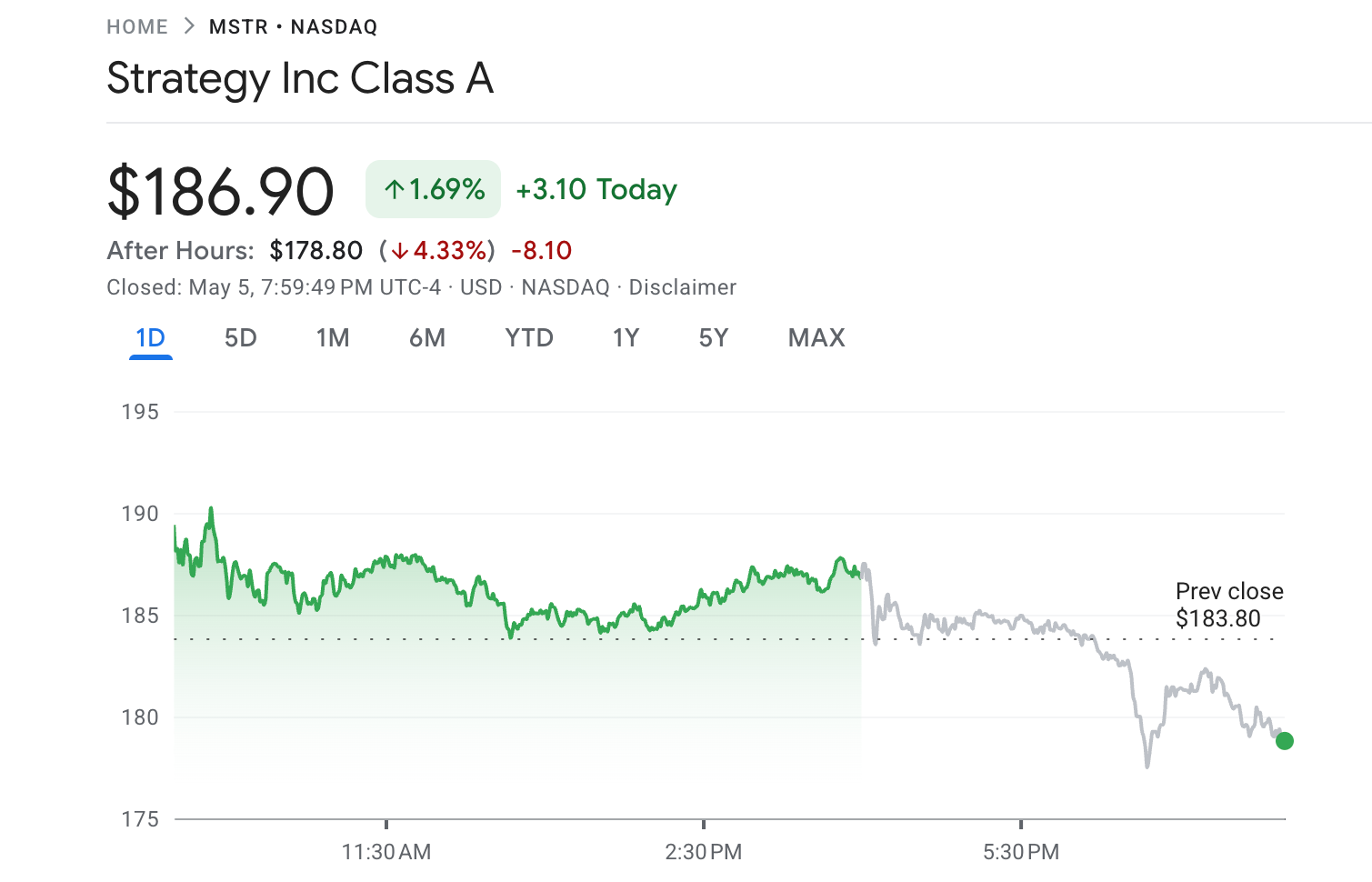
MicroStrategy shares fell after executive chairman Michael Saylor suggested that the firm may sell some Bitcoin (BTC) to fund dividend payments.
“We will probably sell some Bitcoin to pay a dividend just to inoculate the market and send the message that we did it,” he said.
Saylor explained that the strategy involves using credit to accumulate Bitcoin, allowing the asset to gain value over time, and then liquidating a portion when needed to fund dividend payouts.
“You buy bitcoin with credit, you let it appreciate, and then you sell bitcoin to pay the dividend,” he added.
The remarks reverse the company’s longstanding “never sell” position. The shift came during a Q1 2026 earnings call where Strategy reported a $12.54 billion net loss.
Follow us on X to get the latest news as it happens
MicroStrategy CEO Says Bitcoin Sales Are on the Table When Accretive
Meanwhile, CEO Phong Le said the firm would also consider selling Bitcoin “when it’s advantageous to the company.” He stressed that the company remains focused on being a net Bitcoin aggregator while prioritizing growth in Bitcoin per share, which he believes will be the most accretive to MSTR stock’s long-term value.
“Our ability to sell bitcoin either to buy U.S. dollars or sell bitcoin to buy debt if it’s accretive to bitcoin per share is something that we would consider doing going forward,” Le said. “We’re not going to sit back and just say, We’ll never sell the bitcoin.”
Google Finance data showed that MSTR closed up 1.69% at $186.9 on Tuesday. Shares reversed sharply after markets closed. MSTR dropped more than 4% in after-hours trading.

Strategy holds 818,334 BTC at an average cost of about $75,537. The firm is the largest publicly traded corporate holder of the asset. Polymarket traders now price a 48% chance that Strategy sells any of its BTC by December 31, 2026.
Subscribe to our YouTube channel to watch leaders and journalists provide expert insights
The post MSTR Shares Fall as MicroStrategy Weighs Potential Bitcoin Sale appeared first on BeInCrypto.


Figure Technology Solutions (FIGR), the blockchain firm helmed by former SoFi CEO Mike Cagney, is planning on taking on Fannie Mae and Freddie Mac in first-lien mortgages.
Speaking at Consensus Miami, Cagney cited origination costs of $1,000 on the firm’s blockchain platform against $11,000 through the GSEs, the federally chartered firms that buy mortgages from U.S. lenders.
The pitch combines cost and speed. Figure says HELOC applications get approved in 5 minutes and loans fund in 3 days, against an industry norm of 30-45 days.
The platform also gives originators a guaranteed buyer for the loans they make, the same role Fannie and Freddie play in the traditional system.
The first-lien market is 25 times larger than Figure’s existing second-lien HELOC business, which runs through 308 partner originators according to Cagney.
Cagney said the sub-$300,000 segment is the target because the fee structure that supports smaller GSE-channel loans does not work at Fannie and Freddie’s cost levels.
Cagney also said Figure’s HELOC tokens are the ninth-largest crypto asset on public blockchain by market value, passing roughly six weeks ago.
That number sits at the center of a fight over what counts as onchain. DeFiLlama founder 0xngmi argued in a September article that Figure’s claimed $12 billion in tokenized real-world assets is not visible in any meaningful sense on Provenance, the firm’s affiliated chain.
He documented roughly $5 million in BTC and $4 million in ETH on Figure’s exchange, plus $20 million in YLDS stablecoin supply. DeFiLlama tracks Figure’s TVL at about $140 million and has declined to count the larger figure.
Beyond that debate, margins reflect a shift away from balance-sheet lending. Figure’s adjusted EBITDA margin moved from 30% to 55% in 2025 as the firm pivoted to a marketplace model. Cagney guided to 80–85% over the next one to two years.
Revenue was $339 million in 2024 and $510 million in 2025, with sell-side estimates of $650 to $680 million for 2026. Figure crossed $1 billion in monthly originations for the first time in March.
Cagney also said Figure is in talks with Consensys’ MetaMask to integrate Democratized Prime, the firm’s DeFi protocol for lending against onchain mortgage and auto collateral.
He also announced a second listing on OPEN, Figure’s blockchain-native equity venue. The first listing was for Figure’s FIGR shares alongside a $150 million secondary offering.
Crypto World
Hyperliquid Price Prediction Stalls as Pepeto Goes Viral and the Presale Window Shrinks
Hyperliquid just activated prediction markets and logged $6 million in contracts on day one, but the Hyperliquid price prediction still has HYPE sitting 30% below the peak it set last September.
Product launches do not always spark immediate breakouts, and traders who recognize the pattern are scanning for entries where the math works on a different scale.
As a presale raising more than $9.78 million ahead of a Binance listing, Pepeto carries the rare mix of meme energy, working tools, and exchange backing that most tokens never assemble in one cycle.
Hyperliquid activated HIP 4 outcome markets on mainnet May 2, 2026, bringing prediction trading into the same accounts where users already run futures and spot positions according to Bitcoin.com.
The first contracts covered daily BTC price levels, and researchers tracked 6.05 million contracts in the opening session.
CoinDesk reported that Arthur Hayes called HYPE the competitive weapon against Polymarket because holders share directly in platform revenue. The prediction market sector hit $29.8 billion in monthly volume during April, and the Hyperliquid price prediction now factors in earnings from a completely new product line.
HYPE Forecast, Pepeto, and the Bigger Multiplier
Pepeto
While the HYPE forecast watches the token push from a $42.01 floor toward its old high, the distance is a 43% move inside a $10 billion cap, and that ceiling limits what new money can achieve. The shift toward presale entries where the listing itself creates the return is where the sharper math sits.
Pepeto has raised more than $9.78 million so far, and at $0.0000001868 per token the entry costs less than what most meme coins traded at on their worst day. The exchange behind the token solves problems traders deal with every session.
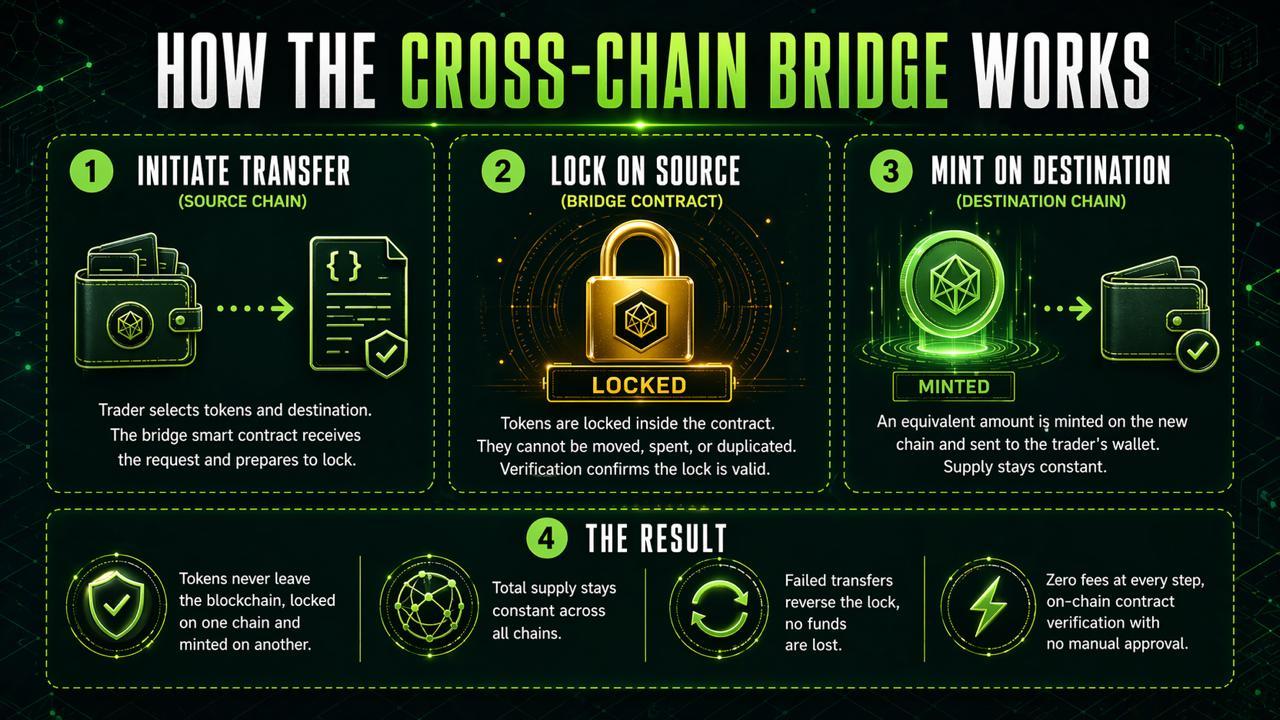
The bridge moves capital across chains at zero cost, so positions travel to the next opportunity without losing value on the way, and the token scanner audits every contract before money goes in, protecting wallets before a bad token can drain them.
Every contract cleared a full SolidProof audit before the presale opened, and that step came before the millions started flowing. Locking tokens through staking earns 176% APY while the presale remains active. Analysts project that the HYPE forecast crowd watching the token grind slowly would multiply faster by entering Pepeto before the listing removes the presale floor for good.
Hyperliquid Price Prediction: Can HYPE Reclaim Its September Peak?
HYPE trades at $42.01 on May 5, 2026, roughly 30% below the $59.37 record from September 2025 per CoinMarketCap. Support holds near $40, and analysts mark $44 as the resistance that must break for real momentum. CoinCodex targets a 2026 high near $175 in its bullish case, while DCo research sets fair value at $72.
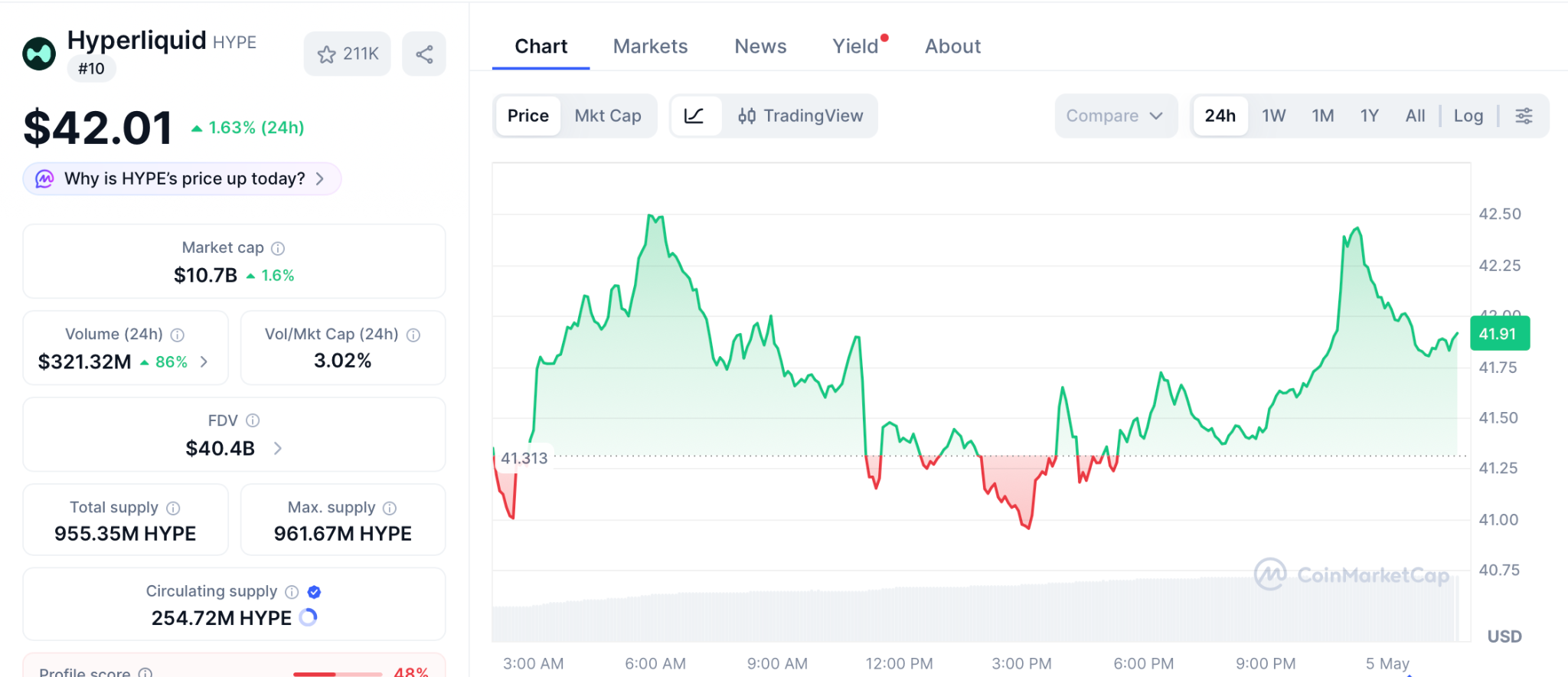
The Hyperliquid price prediction has real backing. The platform handles over $6 billion in daily futures volume, HIP 4 brings prediction market fees, and a governance vote to burn roughly $1 billion in HYPE tokens passed this year.
A confirmed break above $44 opens the path toward $50 and then the old peak. The downside risk is continued sideways action between $38 and $42 if demand stays flat.
Conclusion
Following the HYPE forecast means watching the token push from $42.01 toward $59, a strong move but one that still needs months to play out inside a $10 billion cap.
Meanwhile, meme energy backed by live exchange tools and a Binance listing approaching is the rarest combination crypto produces in any given cycle, and $9.78 million from wallets that already picked a side tells you the smartest capital is not waiting for HYPE to break $44.
The Pepeto official website is where the presale entry remains available, but that entry vanishes the second trading opens, and no one outside the presale knows the exact day. The wallets inside are not guessing, because meme coins built by proven founders with real products and Binance backing do not stay at these prices once trading begins.
A $1,000 entry at presale price turns into a position worth multiples the day the first exchange candle opens. Everyone else will open a chart that morning, see the listing price, divide it by $0.0000001868, and feel the full weight of what not buying actually cost them in dollars they could have had.
Click To Visit Pepeto Website To Enter The Presale

FAQs
What is the current Hyperliquid price prediction for 2026?
HYPE trades near $42.01, down 30% from its $59.37 all time high, with $44 resistance as the key breakout level. HIP 4 prediction market revenue and a token burn worth roughly $1 billion could tighten supply and push the Hyperliquid price prediction higher through 2026.
Why is the Pepeto presale attracting Hyperliquid price prediction followers?
Pepeto has $9.78 million raised at $0.0000001868 per token, backed by a SolidProof audit, a fee free trading hub, and a Binance listing on the way. The gap between presale price and listing price offers multiplier upside that HYPE at a $10 billion cap grinding toward $59 simply cannot produce.
Disclaimer: This is a Press Release provided by a third party who is responsible for the content. Please conduct your own research before taking any action based on the content.

Bitcoin & Ethereum are about to SKYROCKET! (SERIOUSLY)

Plan for new car sales site off Nelson Street, Great Lever

National fuel reserve 'future-proofed' in $10b plan

Manchester United reach agreement with Casemiro over contract clause amid transfer speculation

US brings back mandatory military draft registration

Steven Gerrard disagrees with Gary Neville over ‘shock’ Chelsea and Arsenal claim | Football


-

 NewsBeat2 days ago
Channel 5 – All Creatures Great and Small series 7 new post
-
 Business6 days ago
Tesla Officially Registers Elon Musk’s Stock: What Investors Need to Know
-
 Tech4 days ago
Trump’s 25% EU auto tariff breaches Turnberry Agreement that also covers semiconductors and digital trade
-
 Sports4 days ago
Paul Scholes issues Marcus Rashford reality check as agreement emerges over Man United star
-

 Entertainment6 days ago
Insider Claims Reason Behind Key & Peele Split
-

 Business7 days ago
Barclay Brothers Avoid Bankruptcy: HSBC Drops High Court Petitions After IVA Deal
-

 Entertainment4 days ago
Met Gala 2026 Rumored Guest List Is Turning Heads
-

 Entertainment6 days ago
Celebrities Who Are Attending the 2026 Met Gala Event
-

 Tech6 days ago
Texas Instruments made a new flagship graphing calculator: the TI-84 Evo
-

 Business6 days ago
Strait of Hormuz Remains Heavily Restricted on April 29 Amid Iran Conflict
-

 Crypto World6 days ago
Meta (META) starts stablecoin payout to creators in Circle’s USDC on Polygon, Solana via Stripe
-
Business5 days ago
Strait of Hormuz Blockade Persists Amid US-Iran Standoff, Sending Oil Prices Soaring
-
 Sports4 days ago
David Benavidez responds to team Canelo saying the fight will never happen
-

 Business5 days ago
Two Powerball Tickets Split $143 Million Jackpot in Indiana and Kansas
-

 Sports4 days ago
Cavaliers vs. Raptors Game 6 live score, updates, highlights from 2026 NBA playoffs first-round series
-

 Sports6 days ago
Saudi Arabia set to withdraw LIV Golf funding after 2026 season, per reports
-

 Entertainment4 days ago
Kylie Jenner Hit With Second Lawsuit From Ex-Housekeeper
-
Entertainment4 days ago
New on Prime Video in May 2026 — Full List of Movies and Shows
-

 Sports6 days ago
Arsenal, Atletico Madrid share draw after penalty drama in Champions League semi-final
-

 Sports4 days ago
Plane crash in Wimberley, Texas kills 5 pickleball players at tournament
You must be logged in to post a comment Login