

Crypto World
Bitcoin Trader Says ‘It’s 2022 Again’ As RSI Offers A Classic Bull Signal

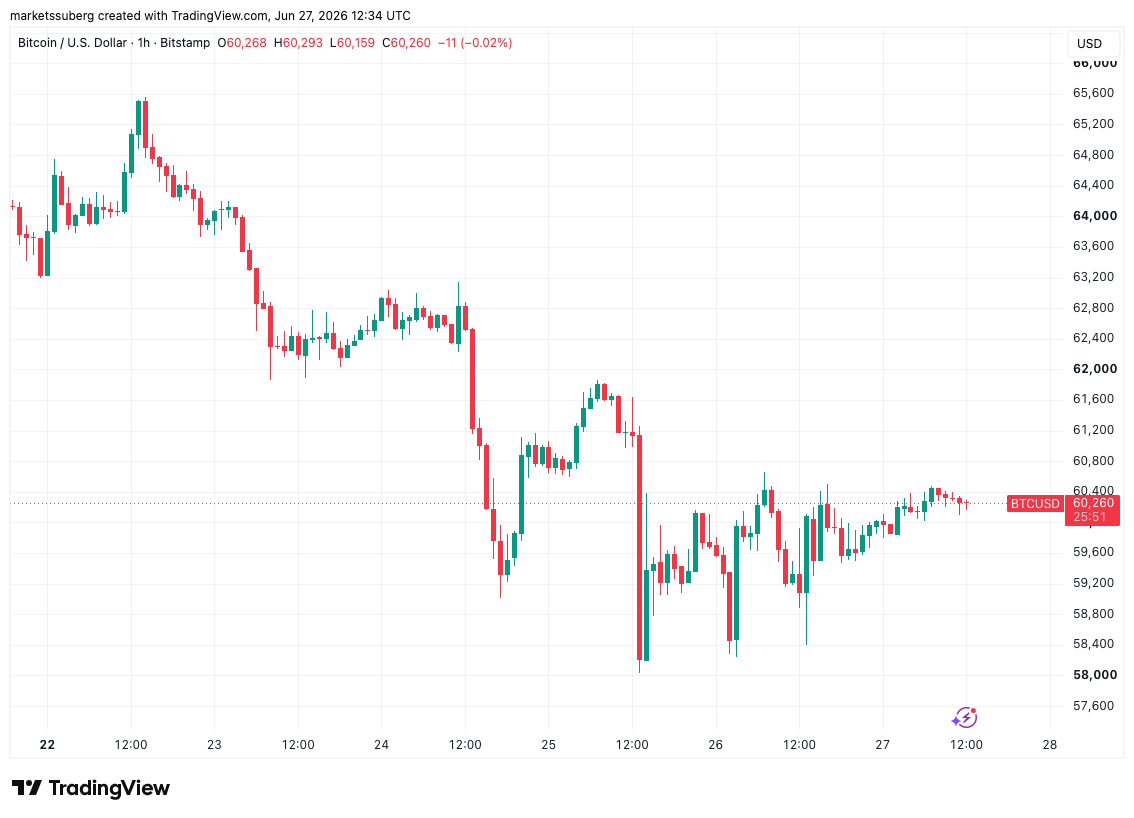
Bitcoin (BTC) continued its battle to reclaim $60,000 into the weekend as chart cues fueled hopes of a recovery.
Key points:
- Bitcoin RSI signals spark comparisons to the end of the 2022 bear market as a bullish divergence filters through.
- Analysis sees “encouraging” evidence of buyers defending the market at $60,000.
- Some traders still see new lows coming, but these could take until August.
Analysis on Bitcoin RSI: “It’s 2022 again”
Data from TradingView showed BTC/USD cooling volatility after returning above the $60,000 mark.
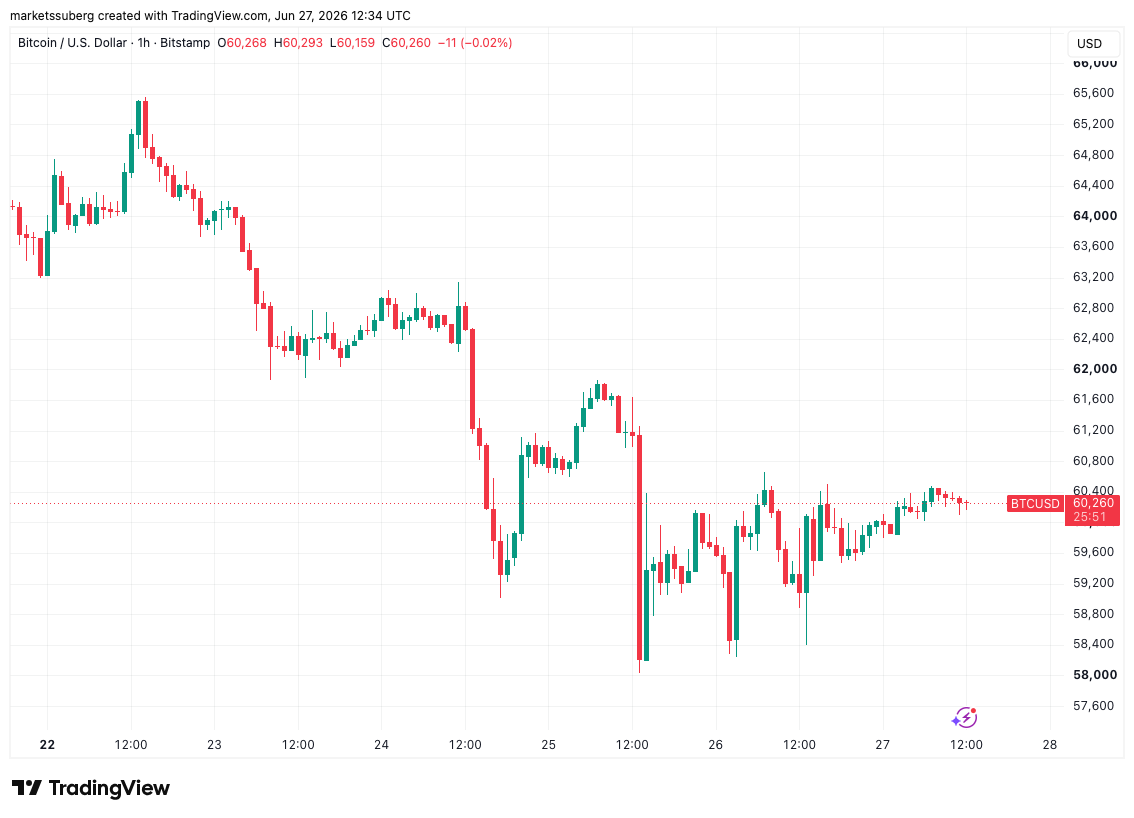
BTC/USD one-hour chart. Source: Cointelegraph/TradingView
A series of higher swing lows on hourly time frames combined with encouraging readings from the relative strength index (RSI) indicator.
On the four-hour chart, a bullish divergence was occurring, where RSI makes higher lows while price makes lower lows. This caught the attention of market participants, who began to anticipate a BTC price reversal as a result.
Uploading a chart comparing the current bear market with 2022, pseudonymous trader Rod argued that history was repeating itself.
“Once you see it, you can’t unsee it,” they wrote in a post on X.
“It’s 2022 again.”
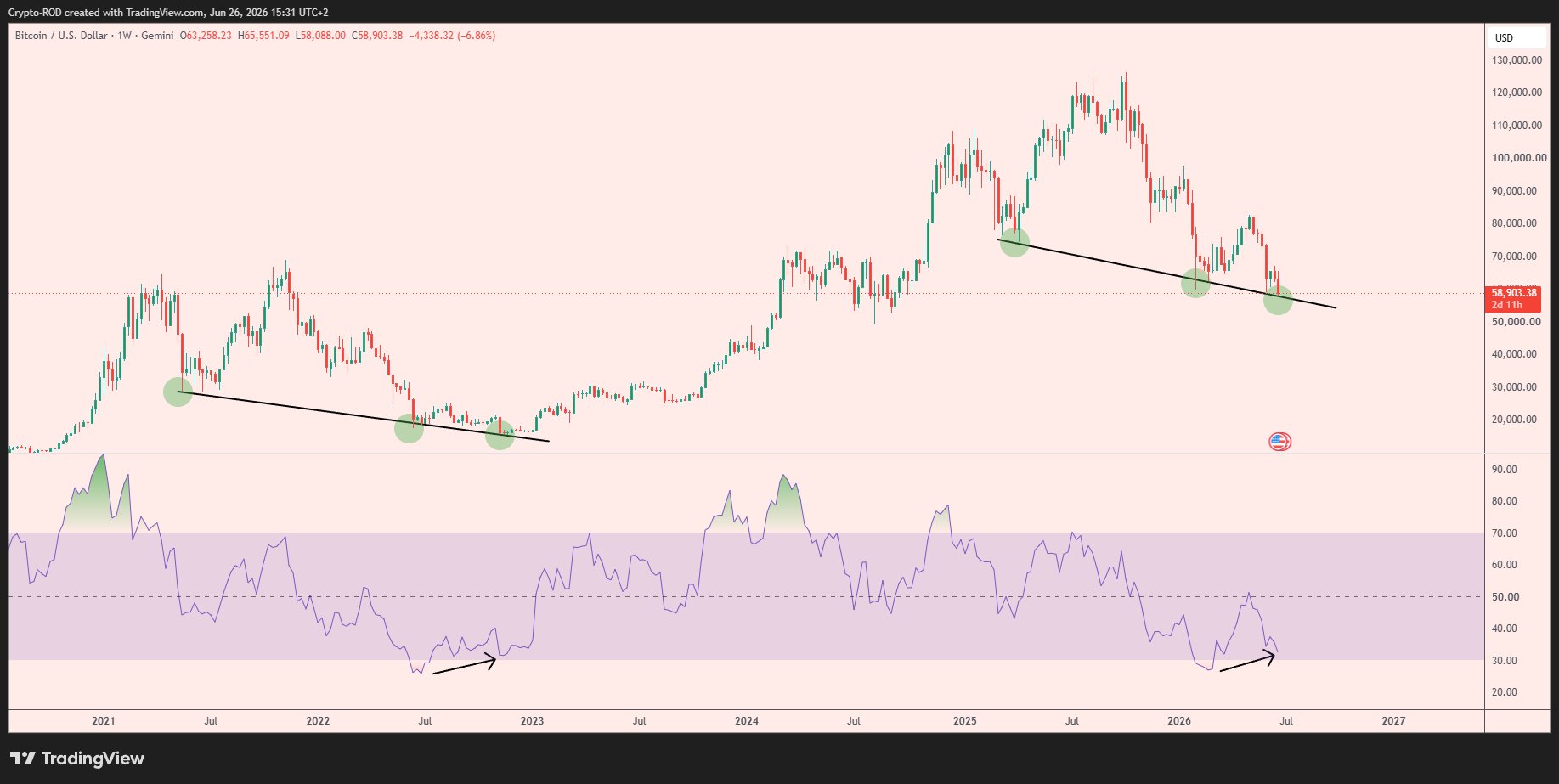
BTC/USD one-week chart with RSI data. Source: Rod/X
At the time, a weekly RSI bullish divergence kicked in while BTC/USD set its bear-market low of $15,600 — an event that subsequently provided a durable market floor.
Four-hour RSI, meanwhile, fell to just 11.4 at the start of June, marking one of its lowest levels on record.
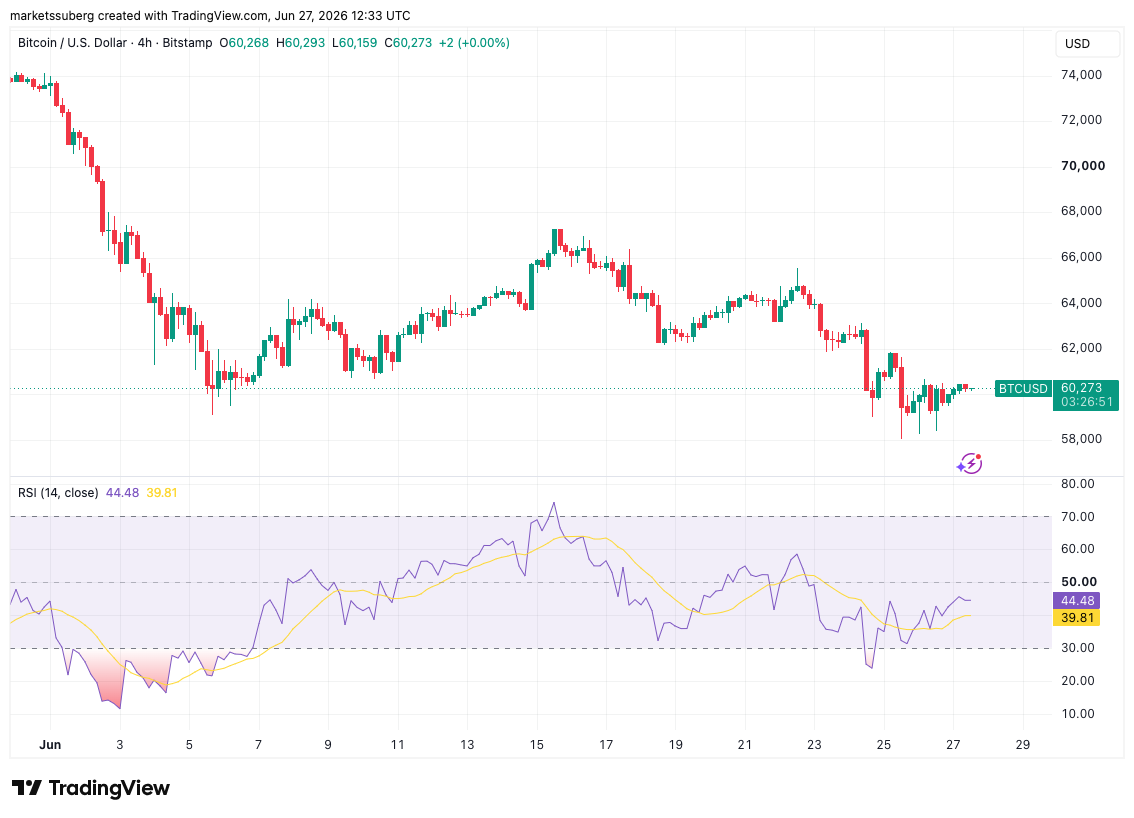
BTC/USD four-hour chart with RSI data. Source: Cointelegraph/TradingView
On Friday, crypto analyst Lukasz Wydra added daily time frames to the mix of RSI bull signals.
“The bullish RSI divergence on the Bitcoin chart has now been officially confirmed. It may still deepen, but at the same time we can clearly see that Binance continues to defend the price,” he told X followers.
Wydra described the RSI signals as an “encouraging sign.”
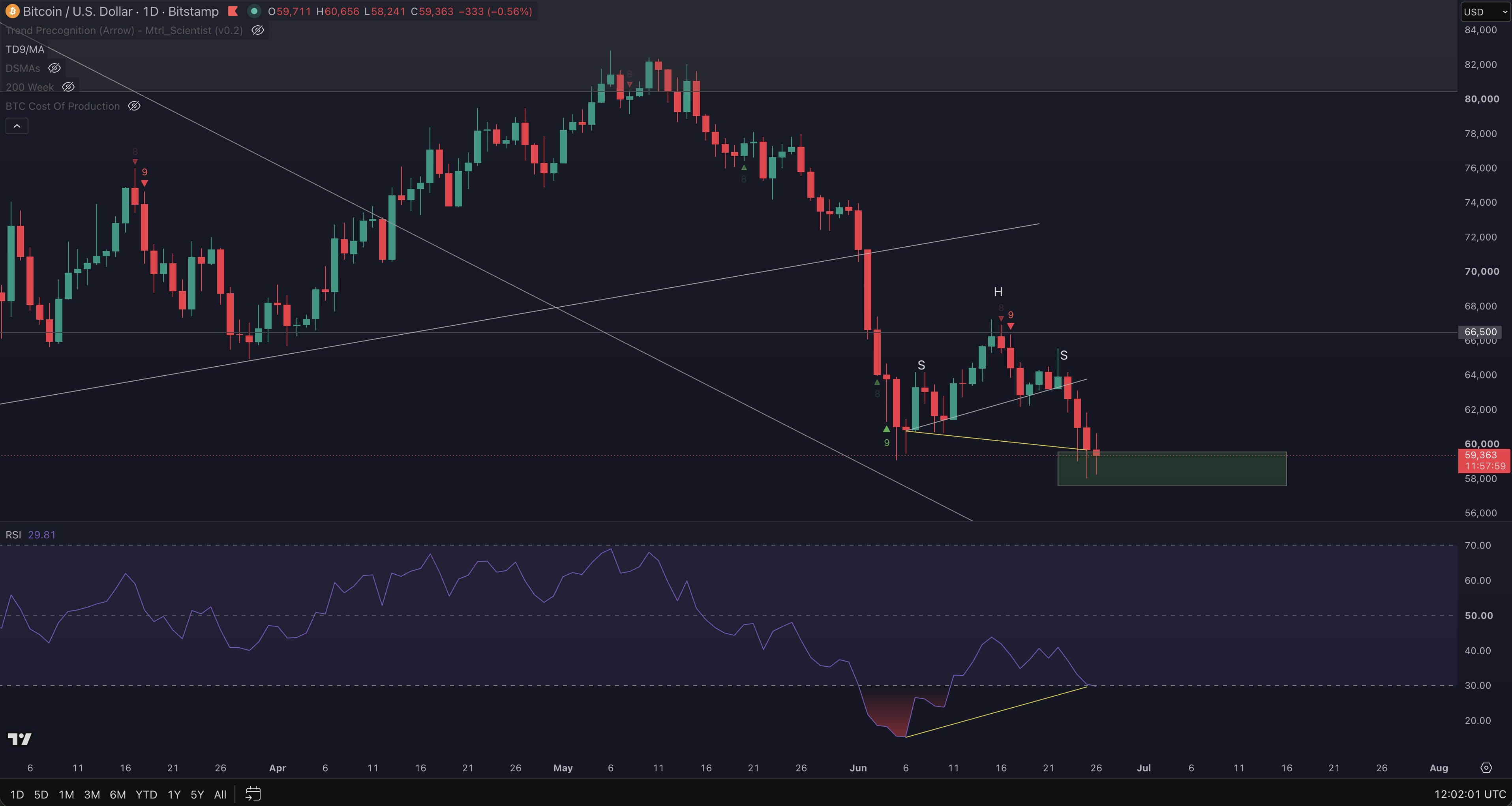
BTC/USD one-day chart. Source: Lukasz Wydra/X
New BTC price lows remain popular target
Other traders stuck to existing predictions of further downside pressure entering sooner or later.
Related: BTC price four-year trend calls for $76K as analysis says Bitcoin ‘not broken’
Niels Klaver, cofounder of crypto platform STABL Agency, repeated calls for a trip to $55,000 “before any big move” to change the status quo.
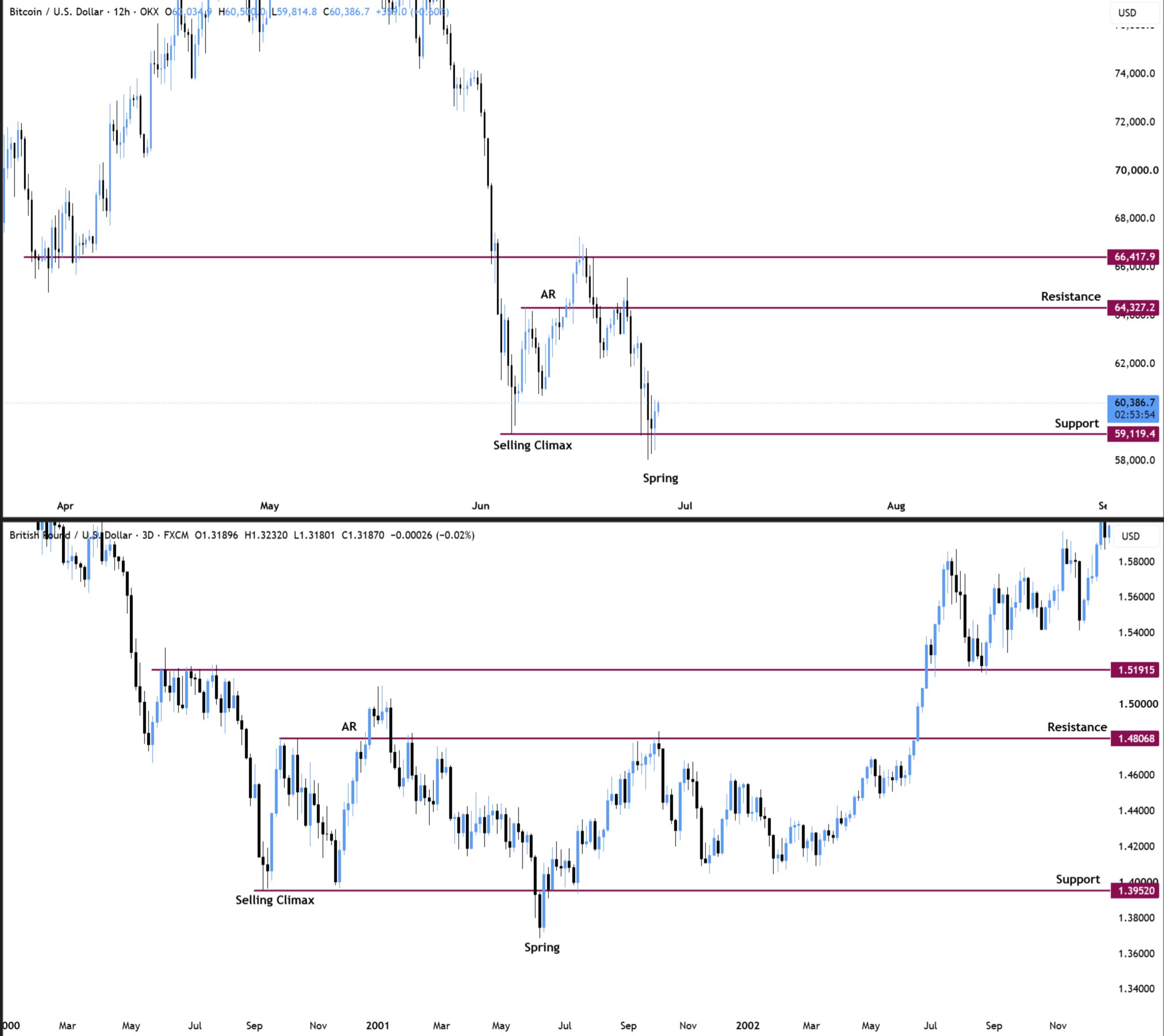
BTC/USD comparison. Source: Niels Klaver/X
Trader and analyst Rekt Capital suggested that a relief bounce could characterize the market next month thanks to July typically contrasting with June price action.
Once it confirmed the 50-month exponential moving average (EMA) as new resistance, BTC/USD would then see “August cancellation of relief and additional downside due to $60k weakening as support,” he wrote this week.
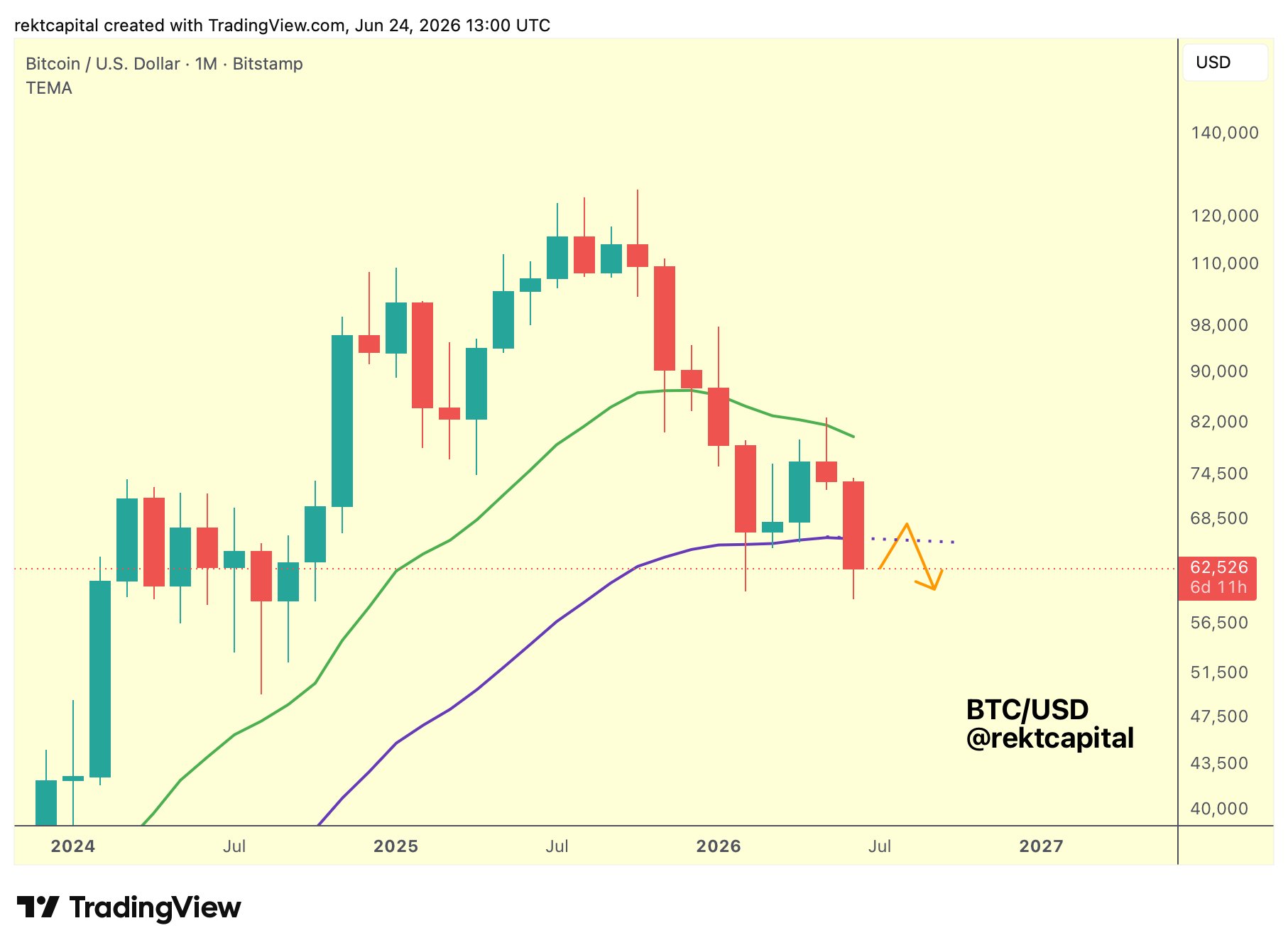
BTC/USD one-month chart with 21, 50EMA. Source: Rekt Capital/X



Loopring has announced the immediate closure of its decentralized exchange and automated market maker after concluding that years of limited adoption, business shortcomings, and technological competition left the project without a sustainable future.
Summary
- Loopring has shut down its decentralized exchange after citing weak adoption, business challenges and competition from newer Ethereum scaling networks.
- Users will receive their remaining balances through direct Ethereum wallet distributions, with Loopring covering the gas fees.
- More than 60 crypto projects have closed in 2026, with Pyra, Carrot, Botanix Labs and several others also ending operations.
Loopring disclosed the decision in a post on X on Sunday, confirming that all trading services have stopped and the protocol’s relayer has ceased operating. The team attributed the shutdown to three factors: weak user adoption, limited business development capabilities, and competition from newer zkEVM based Ethereum scaling networks.
The developers acknowledged that Loopring pioneered zero knowledge rollup technology but stated that the protocol’s architecture lacked a virtual machine, which prevented composability and limited practical payment use cases. These design constraints restricted ecosystem growth, the team wrote.
Engineers behind the project also admitted they excelled at technical development but failed to build the commercial side of the business. The announcement added that exchange delistings of LRC during 2026 accelerated a process that had already become unavoidable.
The team further stated that modern Ethereum compatible zkEVM networks eventually outpaced Loopring’s specialised design. Rather than continue operating what it described as a hollow service, the developers chose to discontinue the platform.
User withdrawals to continue after trading ends
Loopring confirmed it will calculate final user balances before distributing funds directly to users’ Ethereum wallets in batches. The team also committed to paying the gas fees associated with those withdrawals.
Wallet services had already closed in July 2025 after the project cited scaling challenges. The latest announcement completes the shutdown of Loopring’s remaining core products.
The protocol reached a total value locked of about $760 million during the crypto market peak in November 2021, but that figure has since fallen by almost 99% to roughly $8 million, based on L2Beat data. LRC has followed a similar trajectory, falling to about $0.01 from its all-time high of $3.75 recorded during the same month.
Loopring secured one of its highest-profile partnerships in 2021 when it agreed to power GameStop’s NFT marketplace, which launched the following year.
Crypto closures continue through 2026
RootData has recorded more than 60 crypto projects and protocols that have discontinued services during 2026, as prolonged market weakness and changing technology trends have affected businesses across the sector.
As previously reported by crypto.news, Pyra announced plans to wind down after concluding it could not recover from losses linked to the Drift exploit. The crypto payments platform halted new user registrations, cancelled payment cards, and gave customers until Sept. 15, 2026, to withdraw funds and export private keys through a dedicated web portal while it prepares to distribute any future Drift recovery tokens.
Other projects have also exited the market this year. Solana-based yield protocol Carrot attributed its shutdown to losses connected to the Drift Protocol exploit, while Bitcoin Layer 2 developer Botanix Labs stated that user demand had not reached a level capable of supporting long term operations.

The Bank for International Settlements (BIS) is warning that the current wave of AI investment could become a source of broader financial instability—especially if the optimism fueling new rounds of funding fades. In its annual economic report released Sunday, the Basel-based institution said heavy reliance on debt financing and elevated equity valuations raise the risk of a sharp market reversal and cascading defaults.
The BIS pointed to the sheer scale of expected spending: the five largest hyperscalers are projected to invest more than $1 trillion in AI-related capital expenditures from 2025 through 2026. Crucially, the bank said these commitments are outpacing earnings, leaving less room for setbacks if growth expectations fail to materialize.
Key takeaways
- The BIS warns that debt-funded AI expansion increases the risk of “cascading defaults” if investor sentiment turns.
- Projected AI capex from major hyperscalers through 2026 is larger than current earnings capacity, according to the BIS.
- High equity valuations and potential inflation pressure could amplify a downturn through “macro-financial feedback loops.”
- The BIS highlights systemic-risk concerns tied to AI firms’ rising leverage and their growing presence in credit markets.
- Rising hardware costs—often described as “chipflation”—may further complicate inflation dynamics that policymakers are trying to manage.
AI exuberance meets balance-sheet risk
At the center of the BIS’s concern is a mismatch between ambition and financial durability. The bank said equity valuations—particularly for companies central to AI development—remain elevated, and that sustaining high growth could become increasingly difficult.
The report links that valuation stretch to leverage. Where capital formation leans heavily on debt and highly leveraged financing structures, the BIS argues that optimism can unwind quickly. If that happens, distress can propagate beyond individual AI firms into wider financial channels, turning a market correction into a systemic problem.
“Should inflation rise significantly or AI-led investment turn to a bust, the macroeconomic consequences could be amplified by existing financial vulnerabilities.”
In other words, the BIS is not only warning about AI as a sector, but about the broader conditions that make a downturn more dangerous: fragile macroeconomic footing and financial vulnerabilities already visible elsewhere.
Why 2026 matters: from resilience to growing perils
The BIS acknowledged that the global economy showed “surprising resilience” in 2025 despite multiple shocks, and it credited AI investment as one of the forces supporting demand and growth.
But the tone shifts as 2026 approaches. The report says “perils have grown,” pointing to persistent inflation risks. According to TradingEconomics, US inflation (CPI) reached a three-year high of 4.2% in May. In such an environment, policymakers may need to tighten, and the BIS warned that tighter conditions could lead to a sharp pullback in AI asset prices after a prolonged stretch of risk-taking.
“A reversal of AI optimism could likewise have major financial consequences, given AI firms’ rising leverage and growing footprint in credit markets.”
For investors and market participants, the warning is practical: the main risk is not simply a decline in AI-related stock prices. The BIS suggests a wider set of linkages—policy tightening, valuation compression, leverage stress, and credit-market exposure—that could interact in destabilizing ways.
A “flashpoint” scenario and systemic-risk implications
The BIS cautioned that if AI valuations correct sharply, the resulting wealth effects could be stronger than in prior cycles, and consumption could pull back more abruptly. It also framed AI as a potential “flashpoint” for systemic risk, emphasizing that the United States’ market dominance could intensify the effects of any repricing.
In comments to Cointelegraph, Nick Ruck, director of LVRG Research, said the BIS was right to focus on the AI investment surge as a possible systemic trigger. He argued that financing has relied on “enormous debt” and “highly leveraged nonbank structures,” which can unwind quickly and magnify the cycle into a crisis.
“The current macroeconomic environment is already fragile from being stretched by inflation, record national debt, and disrupted commodity markets, so a bust of the AI capital stack could send shockwaves through an already strained global economy.”
Ruck’s point underscores why this matters for crypto and digital-asset markets as well: when traditional credit conditions tighten or confidence breaks, risk appetite often deteriorates quickly across asset classes. While the BIS discussion is framed in conventional finance terms, the transmission mechanisms—leverage, liquidity, and policy response—are the same forces that tend to spill over into broader markets.
The BIS also issued separate cautions about stablecoins, warning they could fragment the global financial system and weaken sovereign monetary control.
Chipflation may compound inflation pressure
Beyond financial leverage, the BIS also pointed to real-economy pressures tied to AI demand. It argued that AI-driven growth in data center capacity could strain semiconductor and memory supply, pushing chip prices higher. The result could be “chipflation”—a pathway where higher hardware costs ultimately feed into consumer and goods inflation.
That dynamic may be difficult for central banks to ignore. If the input costs associated with AI infrastructure raise broader inflation, it becomes harder to engineer a soft landing for risk assets.
The report references concerns previously raised by Morgan Stanley in June about chip-related inflation pressures. It also notes that BlackRock reported in March that surging semiconductor prices were posing upside risks to global goods inflation.
Some of that cost pressure is already reaching the consumer electronics cycle. For example, Apple has signaled that it would pass through part of the burden by raising prices across products, with increases described as ranging from 18% to nearly 33% due to higher memory and storage chip costs, according to an announcement covered by MSN.
Taken together, the BIS warning connects three moving pieces: an investment boom that relies on leverage, valuation levels that may not absorb shocks smoothly, and supply-driven cost inflation that can constrain policy flexibility.
Looking ahead, market participants should watch whether AI investment continues to translate into sustainable earnings rather than financing-driven growth, and whether inflation remains sticky enough to force tighter policy. The BIS’s core risk is a feedback loop: a valuation pullback triggered by macro pressure could stress leveraged balance sheets, and that stress could spread into credit markets—potentially faster than investors expect.

TLDR
- Analyst Alex Thorn at Galaxy Research lowered the CLARITY Act’s 2026 passage probability from 60% to 50%
- The crypto bill cleared the Senate Banking Committee 15-9 on May 14 but lacks a scheduled floor vote
- Limited Senate floor time remains available before the late July August recess begins
- Unresolved ethics requirements from Senate Democrats continue to stall progress
- Without a concrete schedule by early July, passage may delay until post-September
The CLARITY Act, a cryptocurrency market structure bill, secured bipartisan approval from the Senate Banking Committee on May 14 with a 15-9 vote. Yet despite this legislative advancement, Alex Thorn from Galaxy Research has reduced his probability estimate for the bill’s 2026 enactment to 50%, down from the previous 60% projection made just weeks earlier.
Currently positioned at number 423 on the Senate’s legislative calendar, the bill awaits scheduling for floor consideration.
The primary obstacle is the ticking clock. With the Senate’s August recess approaching at July’s end, only a handful of productive legislative weeks remain on the schedule.
Competing Priorities Consume Senate Session Time
Recent Senate proceedings lost an entire week to disputes surrounding an anti-weaponization funding measure. Additionally, efforts to reauthorize Section 702 of FISA collapsed when a procedural vote failed 47-52.
Section 702’s authorization expires June 12. Consequently, much of the upcoming week’s available floor time will address that urgent matter rather than cryptocurrency legislation.
While each individual delay appears minor, collectively they erode the already-limited window the CLARITY Act requires for passage.
For successful passage, Senate Majority Leader John Thune must allocate floor time during July. The legislation still requires floor debate, an amendment process, and reconciliation with corresponding Senate Agriculture Committee language before any House consideration can begin.
This represents a substantial procedural checklist with minimal calendar availability to accomplish it.
Democratic Support Remains Uncertain
Beyond scheduling challenges, a critical substantive obstacle persists. Senator Ruben Gallego and fellow Senate Democrats have established ethics provisions as mandatory requirements for their support. These provisions remain unaddressed after the committee deferred resolution to floor consideration.
The legislation requires a minimum of 60 votes for advancement. Galaxy Research anticipates two Republican opposition votes from Josh Hawley and Rand Paul, both of whom opposed last year’s GENIUS Act.
This vote arithmetic provides Thune limited incentive to schedule floor time without confirmed Democratic support.
Potential Factors That Could Improve Prospects
Thorn indicated he would increase his probability assessment if Thune publicly commits to scheduling floor time in early-to-mid July, and if the ethics and illicit finance concerns are demonstrably resolved with confirmed support from nine or more Democratic senators.
Announcement that the Banking and Agriculture Committee versions have been consolidated into a unified legislative package would also boost prospects.
Absent these developments within the next two to three weeks, Galaxy Research suggests the realistic timeline shifts to September. However, autumn legislative action encounters midterm election pressures, when floor availability becomes scarce and members concentrate on campaign activities.
Presently, Galaxy Research maintains the CLARITY Act is more likely than not to pass in 2026, though the probability margin continues narrowing.

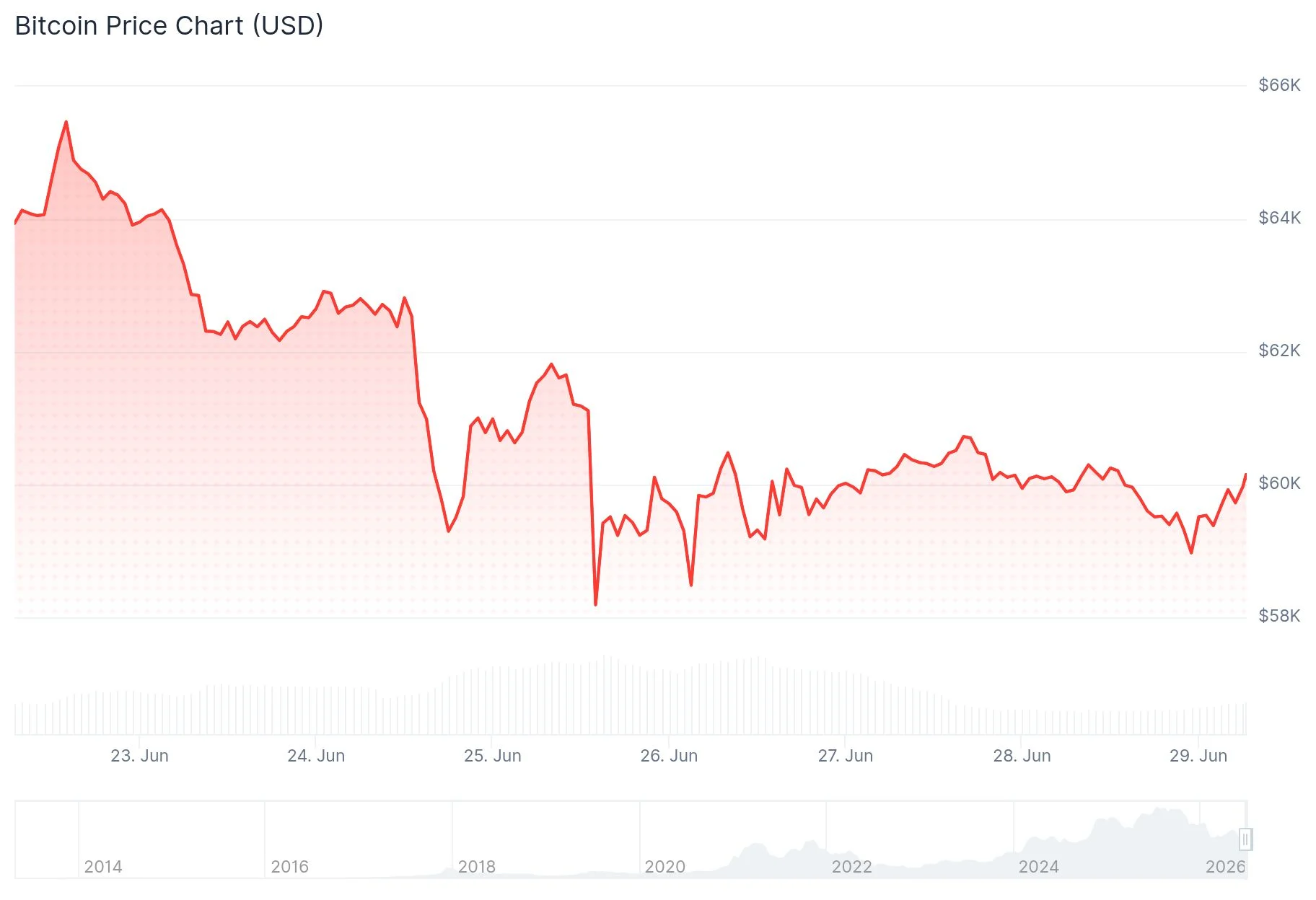
Key Takeaways
- June witnessed unprecedented net outflows of $4.06 billion from U.S. spot Bitcoin ETFs, marking the highest monthly withdrawal figure to date
- Bitcoin has slipped beneath the $60,000 threshold, experiencing approximately 30% decline year-to-date
- BTC approaches its second consecutive quarterly decline, down 13% for the current quarter
- The Federal Reserve’s restrictive monetary policy combined with dollar strength continues applying downward pressure
- Market analyst Ted Pillows forecasts potential 60–65% correction before Bitcoin establishes a floor
Bitcoin has slipped beneath the $60,000 level as June concludes, with the digital asset hovering around $59,765 on Monday. This represents an approximately 30% decline from the start of the year.
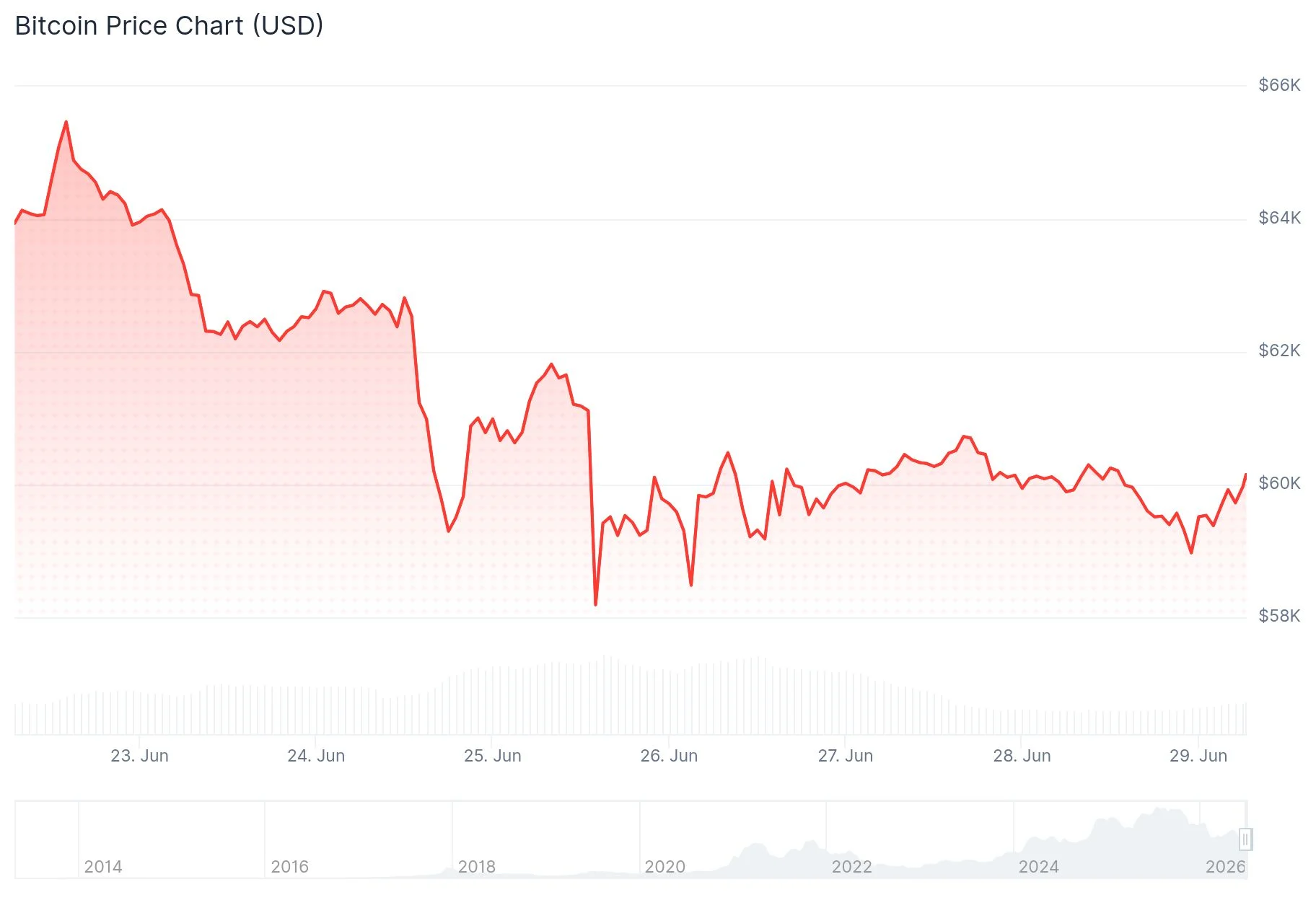
The quarterly performance paints an equally concerning picture. Bitcoin appears poised to conclude Q2 with a 13% deficit. Should this materialize, it would represent just the third occurrence in Bitcoin’s trading history of consecutive quarterly losses.
According to SoSoValue analytics, U.S. spot Bitcoin ETFs have witnessed $4.06 billion in net capital flight throughout June. This figure surpasses the previous monthly withdrawal record of $3.56 billion established in February 2025.
The preceding week alone experienced approximately $1.79 billion in redemptions, establishing it as the second-largest weekly outflow since these investment vehicles debuted in January 2024.
Persistent ETF Capital Flight Throughout 2026
June’s exodus represents part of a broader pattern. May recorded $2.43 billion in net withdrawals, pushing the combined two-month hemorrhage to nearly $6.5 billion.
Examining the full half-year picture, spot Bitcoin ETFs have experienced roughly $5 billion in net capital departure during the opening six months of 2026.
These investment products serve as critical barometers for institutional Bitcoin exposure. The magnitude of recent withdrawals signals diminishing enthusiasm among institutional market participants.
The erosion in institutional participation has mirrored Bitcoin’s price deterioration. Bitcoin has lagged behind virtually every significant asset category throughout 2026’s first half.
Strategy (MSTR), the prominent corporate Bitcoin holder, has experienced even steeper losses. The company’s equity has plummeted 45% year-to-date.
Federal Reserve Posture and Global Tensions
Beyond ETF dynamics, Bitcoin faces pressure from broader economic conditions. The Federal Reserve appears committed to maintaining elevated interest rates for an extended period, following recent indicators revealing persistent inflation and robust employment figures.
A strengthening U.S. dollar has compounded challenges for cryptocurrency valuations. Market participants have begun incorporating expectations for potential rate increases later this year.
Geopolitical instability in Middle Eastern regions has sustained market uncertainty. Weekend reports of tensions near the Strait of Hormuz disrupted energy markets before the U.S. and Iran reportedly committed to renewed diplomatic engagement.
Cryptocurrency analyst Ted Pillows (@TedPillows) offered perspective on Bitcoin’s potential trajectory, stating on X: “$BTC bottomed after 87% dump in 2015, 84% in 2018, and 78% in 2022. People are now thinking we’ll bottom after a 50% drop. IMO, Bitcoin will have at least a 60%–65% dump this time before the bottom.” His assessment highlights intensifying discussion regarding the depth of the current market correction.
Market participants are closely monitoring Friday’s U.S. employment data for insight into the Federal Reserve’s upcoming policy decisions.


SK Hynix has become the dominant supplier of those chips, a position that made it South Korea’s most valuable listed company this month, passing Samsung for the first time in 25 years. The two firms together supply most of the world’s HBM and have struck supply deals with Nvidia and OpenAI.
Such spending is a headwind for crypto because it is the same capital cycle that has competed with digital assets for investor money all year. Crypto fell through much of the month even on days when AI chip stocks rebounded – the divergence suggestive of how investors view the two classes.
Gabe Selby of CF Benchmarks said much of the new money and attention has flowed into AI plays, leaving crypto fighting for a smaller share of overall risk appetite.
The rotation has shown up in places that used to feed crypto directly.
When gold, silver and bitcoin sold off together in recent weeks as a hedge trade unwound, the cash leaving those hard assets moved into AI stocks rather than into bitcoin.
Even bitcoin miners have been redirecting computing capacity toward AI hosting, where contracted payments beat the swings of mining revenue.
South Korea’s $518 billion commitment is a decade-long bet that AI infrastructure spending is structural rather than a passing boom. Crypto has spent the year on the other side of that flow, and the open question is now whether the money chasing chips and AI listings eventually circles back or stays put.


Crypto opened Monday flat. Bitcoin traded near $59,700, down 0.3% on the day and 6.8% on the week, as a de-escalation in the U.S.-Iran conflict lifted equity futures but left digital assets unmoved, per CoinDesk data.
Ether edged up 0.3% to $1,572, Solana added 1.5%, while XRP and dogecoin continued to slide.
Axios reported Sunday that the U.S. and Iran agreed to fully halt strikes and meet this week in Qatar to resume talks over the Strait of Hormuz and a broader end to the conflict. S&P 500 and Nasdaq 100 futures gained 0.5% as of Monday, but crypto did not follow.
The non-reaction fits the pattern of the past two weeks. Bitcoin jumped on the peace deal signing June 19, then gave it back as the hawkish Fed and ETF outflows reasserted. Traders have now been burned by enough geopolitical relief rallies that the Qatar meeting registers as a maybe rather than a catalyst.
South Korea announced plans to double DRAM production capacity in the Seoul metro area over five years, with Samsung and SK Hynix committing 800 trillion won, about $518 billion, to build four new fabrication plants.
Asian tech hardware shares slid on the rotation, even as eight of eleven MSCI Asia Pacific subgroups gained. The same AI chip trade that whipsawed markets last week remains the dominant cross-asset current.
The test for crypto this week is whether the Iran talks in Qatar produce anything durable, and whether Thursday’s PCE print softens enough to shift the Fed narrative. Both need to land to give bitcoin a reason to move.

Crypto markets remained flat over the weekend following a week of heavy losses that saw a further $140 billion leave the space. Military action in the Middle East resumed with the US conducting strikes on Iranian military targets at multiple locations in response to Iran’s drone attack on a commercial ship.
Meanwhile, the TradFi fear and greed index is now down to 24.8, the lowest since early April, reported the Kobeissi Letter. The week ahead is heavy with labor market data, which could further influence the Federal Reserve’s monetary policy.
Economic Events June 29 to July 3
Monday will see the market’s reaction to the resumption of military action, and crypto is already in the red as Bitcoin fails to hold $60,000.
The economic data begins on Tuesday with May JOLTs Job Openings data and June’s CB Consumer Confidence report. These are followed on Wednesday by June’s ISM Manufacturing PMI data, which provides insights into industrial sector health and business conditions.
The big report of the week is the June Jobs report, which comes out on Thursday and may shape the direction of rates and markets, possibly into September, as it is the only employment report the Fed receives before its July meeting.
Continued labor market weakness would validate stagflation concerns about supporting growth versus containing prices, reported BarChart.
A hot report would result in higher rates priced in, which makes conditions tougher for risk assets such as crypto. However, the market is priced for a soft number, so the bigger danger would be a surprise to the upside.
Key Events This Week:
1. US Markets React to Strait of Hormuz Strikes – Today
2. May JOLTs Job Openings data – Tuesday
3. June CB Consumer Confidence data – Tuesday
4. June ISM Manufacturing PMI data – Wednesday
5. June Jobs Report – Thursday
6. US Markets Closed, Happy 4th…
— The Kobeissi Letter (@KobeissiLetter) June 28, 2026
Crypto Market Outlook
The overall outlook is not good, with negative sentiment increasing in the depths of a crypto winter. Total capitalization has fallen to its lowest level since September 2024 at $2.13 trillion, with Bitcoin leading losses as capitulation continues.
BTC lost 1.5% on the day, falling back to $59,000 during the Monday morning trading session in Asia before recovering slightly. It is currently hovering at critical support; if lost, it could trigger a rapid drop to the realized price of around $53,000, a historical bear market bottom.
ETH is already at its multi-year bear market bottom, struggling to make any moves above $1,570 and weakening by the hour.
The post Three Things Crypto Investors Should Watch This Week appeared first on CryptoPotato.
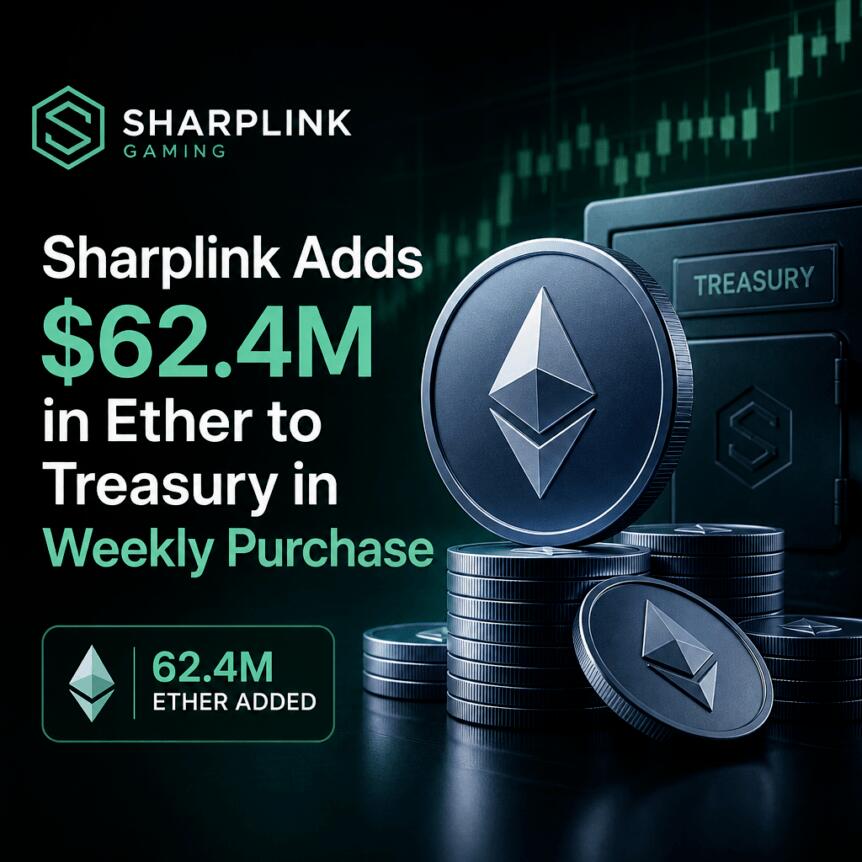
Sharplink, a crypto treasury firm that had paused its Ether purchases for roughly eight months, has restarted accumulation with a concentrated buy program. Arkham on-chain records reviewed by Cointelegraph show the company spent a total of $62.4 million on Ether purchases over the last three days.
According to Arkham data, Sharplink bought 5,000 ETH on Thursday, then added another 5,000 ETH (about $7.9 million) on Friday. On Saturday, it reportedly purchased 29,196 ETH (about $46.7 million) across three separate over-the-counter transactions, bringing the total to 62.4 million USD worth of Ether acquired since the resumption.
Key takeaways
- Arkham on-chain tracking indicates Sharplink accumulated 5,000 ETH on Thursday, 5,000 ETH on Friday, and 29,196 ETH on Saturday via OTC trades.
- The reported three-day total purchase value is $62.4 million, reinforcing the view that Sharplink has restarted active Ether treasury management.
- Sharplink has not publicly explained the timing or rationale for resuming buys after an eight-month pause.
- The Ether purchases coincided with Sharplink’s participation in backing Ethlabs, a new Ethereum-focused research and development nonprofit.
- Despite the accumulation, broader indicators cited in the report point to ongoing pressure on Ether investment flows, including continued outflows from spot Ether ETFs.
A renewed accumulation sprint after an eight-month break
The size and cadence of Sharplink’s recent purchases suggest the firm is not merely topping up occasionally. After halting Ether buying for eight months, it returned to the market last week and, based on Arkham entity tracking, quickly escalated the pace across three consecutive days.
The company was historically regarded as one of the closest competitors to Bitmine in the race for the largest ETH treasury holdings. While the latest trades do not provide an explicit reason for the restart, the pattern—multiple large orders concentrated over just a few days—implies a deliberate re-engagement with Ether as a core treasury asset.
When Cointelegraph initially reached out for comment, Sharplink declined to explain why it resumed buying Ether and why it did so at that specific time.
Ethlabs timing highlights a different angle: institutional readiness
Beyond treasury strategy, the buy activity arrived alongside a separate development tied to Ethereum’s longer-term positioning for institutional use. The same week that Sharplink restarted Ether purchases, both Bitmine and Sharplink—along with Ethereum co-founder and Sharplink chairman Joe Lubin—backed the launch of a new research and development nonprofit called Ethlabs.
In a Monday statement, Ethlabs was described as an effort to “ready Ethereum for the next phase of institutional adoption.” The organization’s stated aim is to ensure the network can handle demand at scale as tokenized assets, stablecoins, and other on-chain economic activity continue to move toward Ethereum as a settlement layer.
Sharplink’s accompanying remarks framed Ethereum’s role in terms of convergence: as stablecoins, tokenized real-world assets, funds, and AI-enabled commerce increasingly operate on-chain, the firm argued that Ethereum is becoming a “neutral, credibly permissionless settlement layer” for global economic activity. Ethlabs, in that view, exists to help the network absorb that demand.
For investors and builders, the practical relevance is twofold. First, large treasury operators signaling renewed commitment to Ether can be read as confidence in the asset’s role within the ecosystem. Second, an R&D initiative focused on institutional readiness points to a narrative push beyond price—toward infrastructure and capability that could support wider adoption over time.
Ether weakness persists as ETF outflows continue
Sharplink’s restarting buys comes at a moment when Ether has faced notable headwinds in the broader market. The report notes Ether is down 22.8% month-on-month and nearly 50% compared with the start of the year. It also references a period in which Tether’s USDT briefly surpassed Ether by market capitalization, underscoring how quickly sentiment can shift even as large holders accumulate.
Separately, the article highlights spot Ether ETFs as a near-term sentiment indicator. CoinShares data referenced in the piece shows US spot Ether ETFs recorded their seventh straight week of outflows last week, with $12.9 million in net outflows. Those withdrawals were reportedly driven mainly by outflows from BlackRock’s iShares Ethereum Trust (ETHA).
Taken together, the picture is uneven: while ETF investors appear to be reducing exposure, at least one major treasury player is increasing its Ether holdings with rapid, concentrated purchases. That divergence often matters for traders because it can influence how liquidity and narrative react during dips—particularly if treasury buyers provide consistent spot demand while exchange-traded demand remains soft.
What to watch next
Sharplink has not disclosed a reason for the resumption or provided guidance on whether the current pace is temporary or part of a longer accumulation cycle. Investors should watch for continued on-chain buying signals from the Sharplink entity and for whether ETF outflows persist or reverse, since those two data streams may increasingly determine Ether’s near-term market tone.
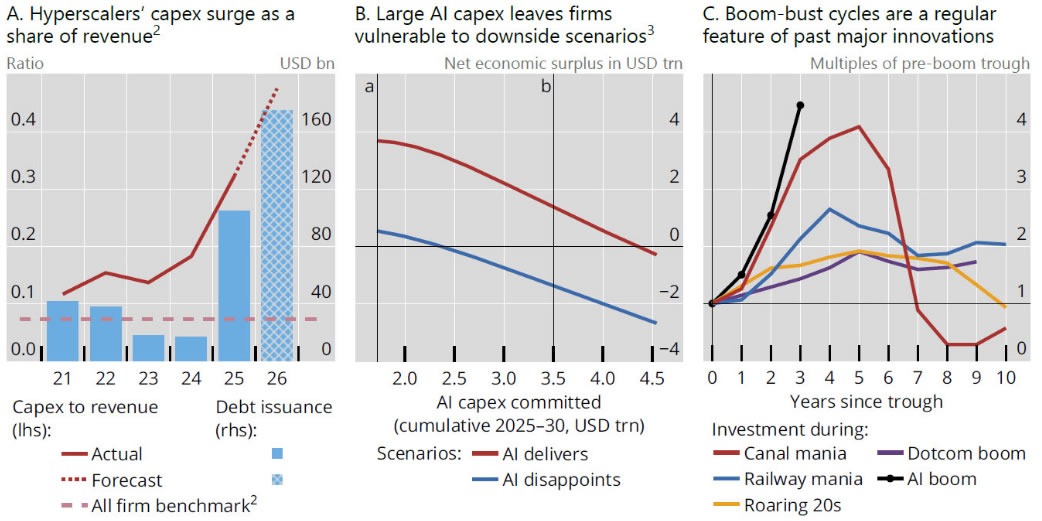
The Bank for International Settlements has warned that artificial intelligence “exuberance” could have major financial consequences, as heavy reliance on debt financing in AI ventures raises the risk of cascading defaults if investor optimism fades.
The five largest hyperscalers are set to spend more than $1 trillion on AI-related capital expenditures from 2025 through 2026, and these commitments are outpacing earnings, the Basel-based institution said in its annual economic report released Sunday.
“Equity valuations are elevated, particularly for firms at the core of AI development … sustaining such high growth could become increasingly challenging,” the bank said.
AI investment enthusiasm has surged with the recent SpaceX IPO and planned public offerings from Anthropic and OpenAI, leading some market observers to draw parallels to previous boom-bust cycles such as electrification exuberance in the late 1920s and the dot-com bubble in the late 1990s.
The global economy displayed “surprising resilience” in 2025 despite successive shocks, partly driven by AI investments, the bank said.
However, “perils have grown” in 2026, with concerns over the risks of persistent inflation, which rose to a three-year high of 4.2% in the US in May, according to TradingEconomics.
The sustainability of AI-related investments, “growing financial vulnerabilities and weakening fiscal positions,” has added to those perils, the BIS report said.
“Should inflation rise significantly or AI-led investment turn to a bust, the macroeconomic consequences could be amplified by existing financial vulnerabilities.”
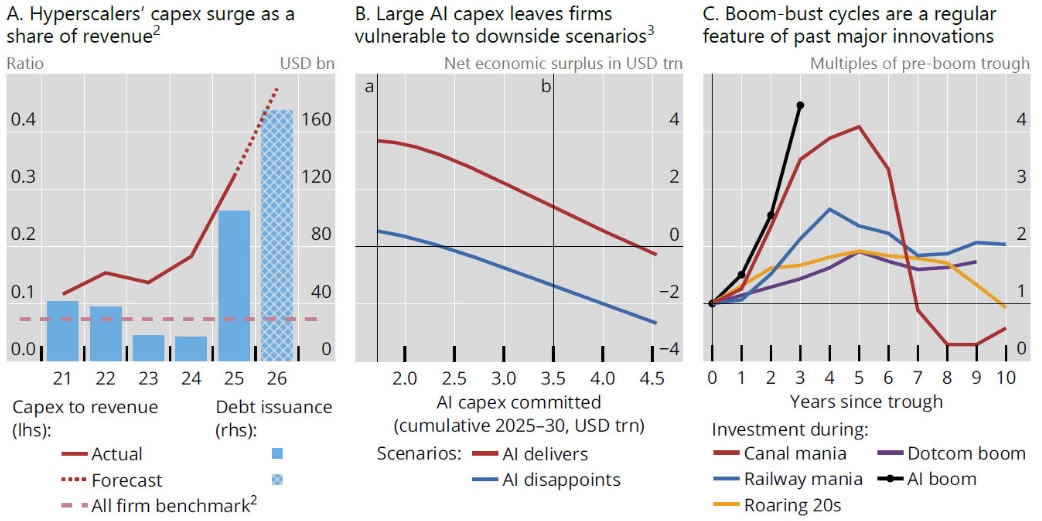
Rapid AI boom raises questions about its sustainability. Source: BIS
If central banks tighten policy to contain inflation, this could precipitate a “sharp pullback in [AI] asset prices after a prolonged period of exuberant risk-taking,” which could trigger “disruptive macro-financial feedback loops,” the BIS said.
“A reversal of AI optimism could likewise have major financial consequences, given AI firms’ rising leverage and growing footprint in credit markets.”
A potential flashpoint for systemic risk
The BIS cautioned that a large correction in AI valuations could have more pronounced wealth effects and a “sharper consumption pullback” than in the past, given US market dominance. “Financial stability could also be at risk in the event of an AI bust.”
Related: AI agents with crypto could escape and become ‘unstoppable,’ experts warn
Nick Ruck, director of LVRG Research, told Cointelegraph that the BIS was right to flag the AI investment surge as a potential flashpoint for systemic risk, “as financing has relied on enormous debt and highly leveraged nonbank structures that can rapidly unwind and amplify this cycle into a crisis.”
“The current macroeconomic environment is already fragile from being stretched by inflation, record national debt, and disrupted commodity markets, so a bust of the AI capital stack could send shockwaves through an already strained global economy.”
The BIS also cautioned about stablecoins, which risk fragmenting the global monetary system and could weaken sovereign monetary control, it said.
Chipflation could compound the problem
The AI industry could also become a victim of its own success, as surging semiconductor and memory chip prices, driven by increasing AI data center demand outstripping supply, could compound inflation, which consumers will ultimately have to bear.
This phenomenon, known as “chipflation,” is causing prices for devices from smartphones to laptops to climb, Morgan Stanley analysts cautioned earlier in June.
In March, BlackRock reported that surging semiconductor prices were “posing upside risks to global goods inflation.”
Meanwhile, Apple is already passing costs on to customers by hiking prices. The tech giant announced Thursday that a wide array of products, from iPads to Macs and home devices, would see increases from 18% to nearly 33% due to soaring memory and storage chip costs.
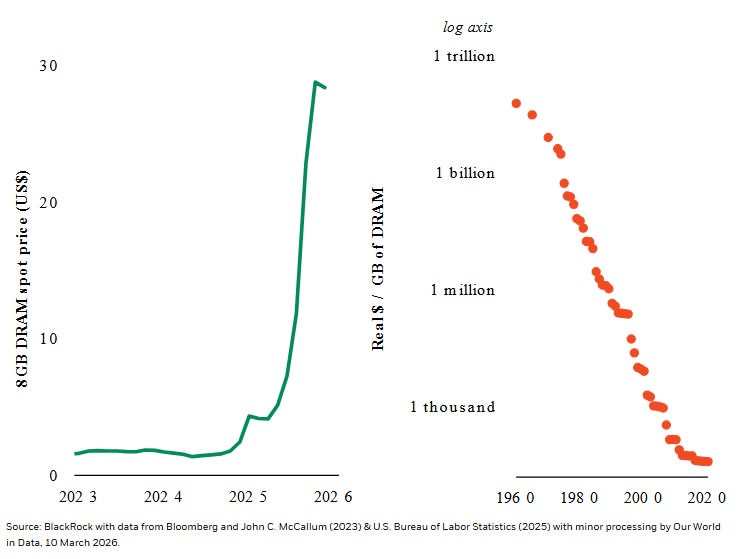
Price jumps for DRAM chips defy deflationary price dynamics. Source: BlackRock
Magazine: AI is banking the unbanked in Africa… faster than crypto
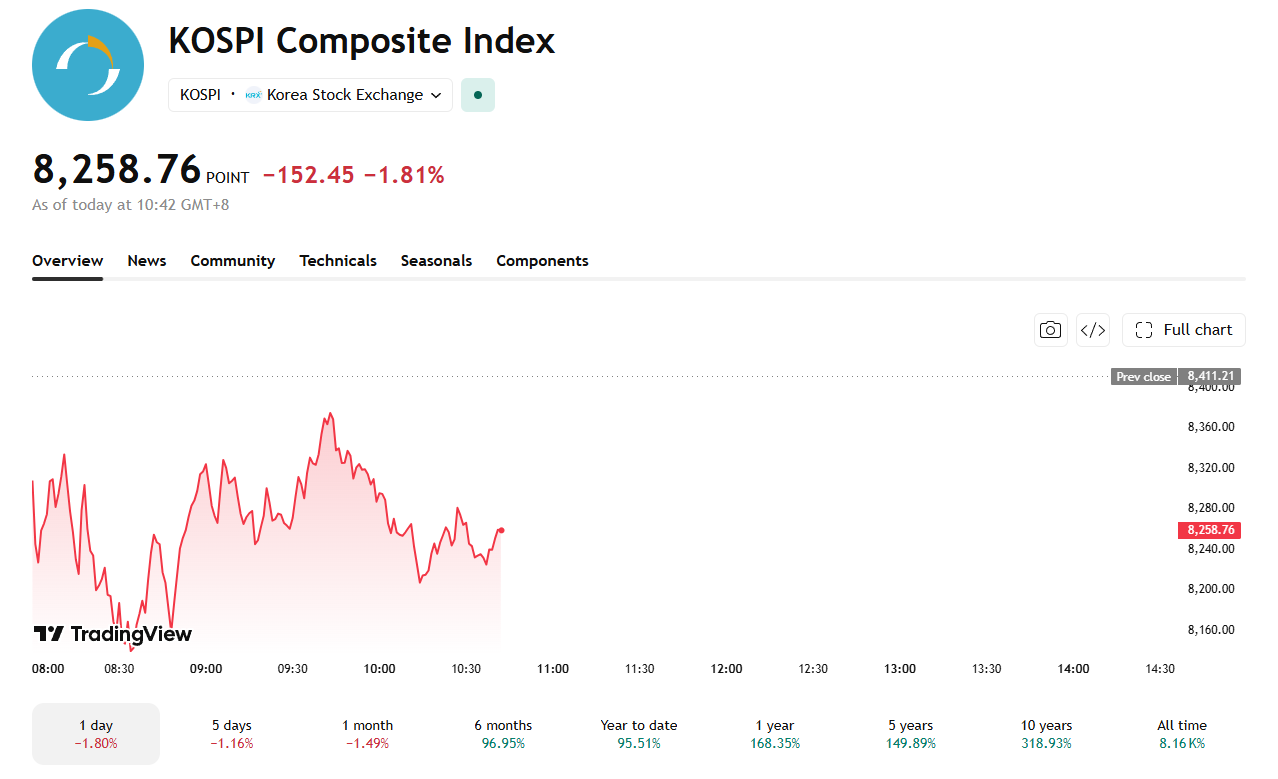
Samsung Electronics and SK Hynix each unveiled major chip investment plans Monday at a presidential briefing in Seoul. Neither announcement stopped their stocks from falling sharply.
Samsung dropped 5.3% to 321,500 won from a Friday close of 339,500 won. SK Hynix fell 3.4% to 2,583,000 won from 2,673,000 won. The KOSPI settled near 8,258, down from 8,411.
Why the Announcements Didn’t Move Markets Higher
Samsung Group presented a roughly 1,000 trillion won spending package to President Lee Jae-myung. SK Group followed with a separate 1,000 trillion won plan. Both cover new semiconductor fabs, AI data centers, and chip cluster development over the next decade. Fortune reported the combined figure at around $1.3 trillion.
Markets shrugged. The Korea Exchange scrapped its planned launch of weekly options contracts tied to Samsung, SK Hynix, Hyundai Motor, and LG Energy Solution. Regulators pulled the product after retail investors poured into daily double-leveraged ETFs, pushing KOSPI volatility to record highs. That decision removed a key tool for short-term traders and hit speculative appetite immediately.

Chip Selloff and Middle East Pressure Compound the Pain
Global tech sentiment stayed negative. Last week, South Korea’s market triggered circuit breakers twice on fears over AI chip valuations. Samsung and SK Hynix make up roughly 42% of the KOSPI, so chip selling anywhere hits Seoul hard. South Korean retail investors who borrowed heavily during recent rallies now face compounding losses.
Middle East tension added pressure. The US struck Iranian military targets over the weekend. Both sides then agreed to halt attacks and meet on Tuesday in Doha. Japan’s Nikkei 225 also fell as SoftBank retreated, extending a pullback after six consecutive record sessions.
The post Samsung and SK Hynix Fall Despite Separate $1.3 Trillion Chip Plans appeared first on BeInCrypto.

Politics Home Article | The Path to Net Zero: A special report to mark Net Zero Week 2026

Loopring shuts down Ethereum’s first zk rollup DEX after years of decline

World Cup 2026: Great stories, little jeopardy – does the new format work?


-
 Sports5 days ago
Two goals and an assist by sheer aura: Cristiano Ronaldo just entered the World Cup chat
-

 Tech7 days ago
Microsoft accidentally kills epic Outlook email threads
-

 Fashion3 days ago
Weekend Open Thread: Staud – Corporette.com
-

 Politics3 days ago
The House | Manchesterism won’t survive the painful trade-offs unless it gets citizens on board
-

 Politics3 days ago
Potential 2028er World Cup attendee leaderboard
-

 Business3 days ago
Asia stock markets slide as tech shares slump
-

 Tech3 days ago
A Look At A Gaggle Of Transputer Boards
-
Crypto World5 days ago
Bitcoin (BTC) Dips Below $62K, Ethereum (ETH) Plunges 6% Daily: Market Watch
-
 Crypto World4 days ago
Dell (DELL) Shares Tumble Over 5% Following Analyst Downgrade to Hold
-

 Crypto World5 days ago
Securitize Wraps Roubini's SEC-Registered ETF as Dubai VARA Digital Security
-
Business5 days ago
Entergy settles forward sale agreements, raises $672 million in cash proceeds
-

 Crypto World2 days ago
Kraken's xStocks Opens Bending Spoons IPO Registration to EEA Retail
-

 Sports2 days ago
FIH Pro League: India defeat Pakistan 7-1, register biggest win of campaign | Other Sports News
-

 Crypto World2 days ago
Coinbase, Circle Deepen Crypto Stock Losses Despite Resilient S&P 500
-

 Crypto World3 days ago
RTX holders must register wallets before token distribution begins
-
Crypto World3 days ago
Hyperliquid Named on Singapore MAS Investor Alert Register
-

 Tech1 day ago
Bluekit phishing kit adopts browser-in-the-middle for login theft
-

 Sports4 days ago
India vs Bangladesh LIVE Score, Women’s T20 World Cup: Bangladesh Opt To Bat; India Enter ‘Do-Or-Die’ Stage As Semi-Final Race Heats Up
-
Crypto World3 days ago
The DATA Foundation Launches to Tackle AI’s Multi-Billion Dollar Training Data Bottleneck
-

 Tech2 days ago
Russian hackers now target Signal backup recovery keys
You must be logged in to post a comment Login